
Tourists and travelers waiting for their fix – Rajma Chawal.
-0-
Previous post on famous dhabba of Peerah

in bits and pieces
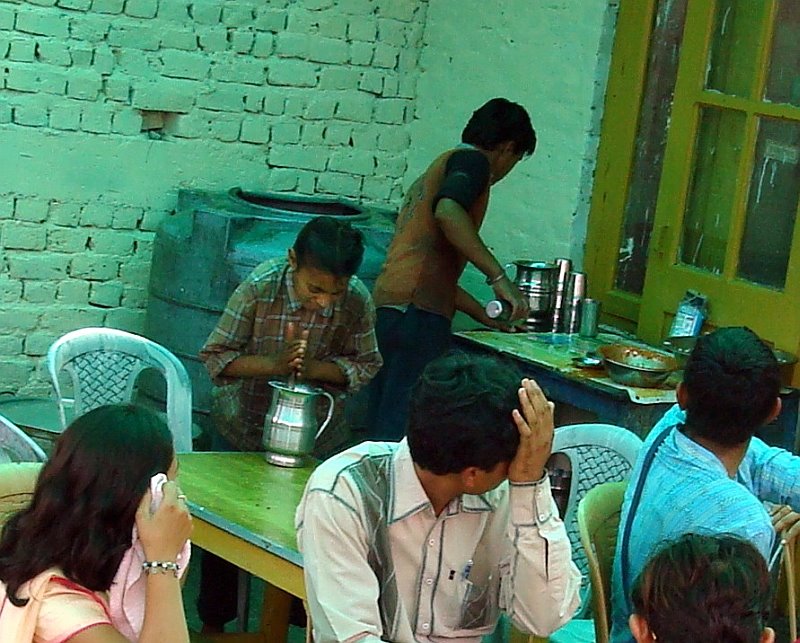
Tourists and travelers waiting for their fix – Rajma Chawal.
-0-
Previous post on famous dhabba of Peerah
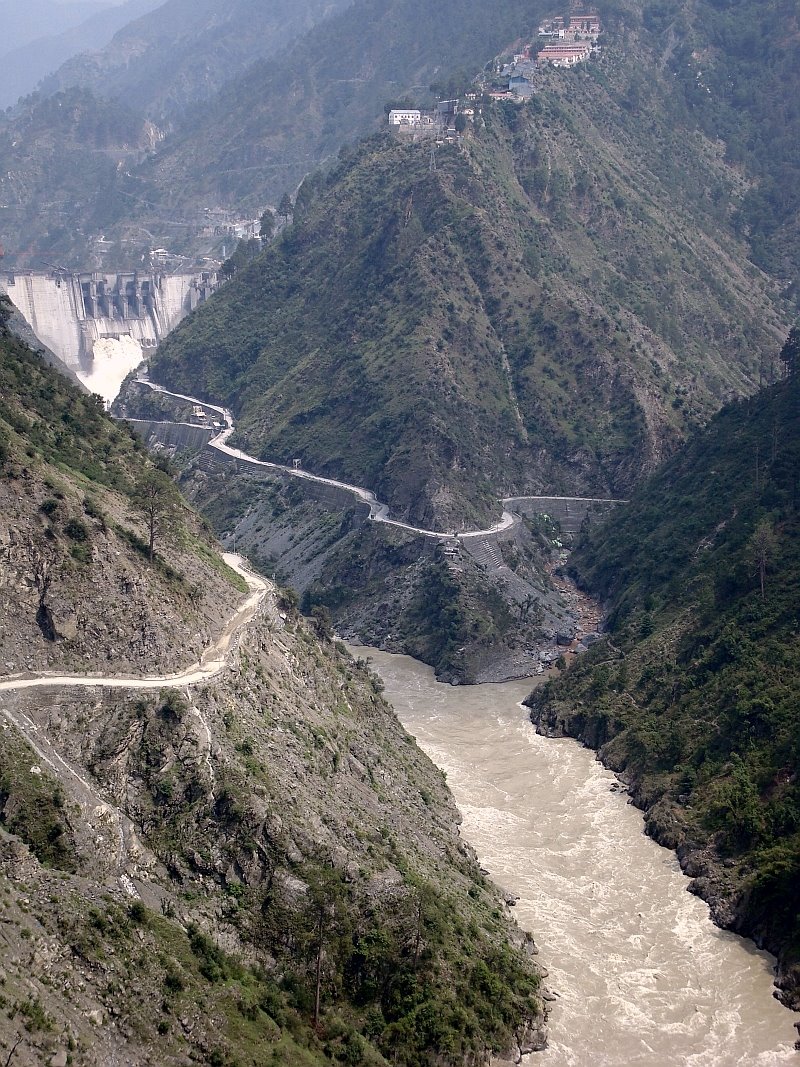

That’s no monastery perched on top of a hill.
Baglihar Dam on river Chenab as seen from a place called Peerah.
Baglihar Dam, also known as Baglihar Hydroelectric Power Project, is a run-of-the-river power project on the Chenab River in the southern Doda district of the Indian administered state of Jammu and Kashmir. This project was conceived in 1992, approved in 1996 and construction began in 1999. The project is estimated to cost USD $1 billion. The first phase of the Baglihar Dam was completed in 2004. On completion on 10 October 2008, Prime Minister Manmohan Singh of India dedicated the 450-MW Baglihar hydro electric power project to the nation.
In the 90s, this project was a one of the major source of discontent between India and Pakistan. Matter was sorted out amicably with the help of World Bank. Without doubt ‘Water’ is going to be the big issue of future.
-0-
Added this image to wikipedia page about Baglihar.
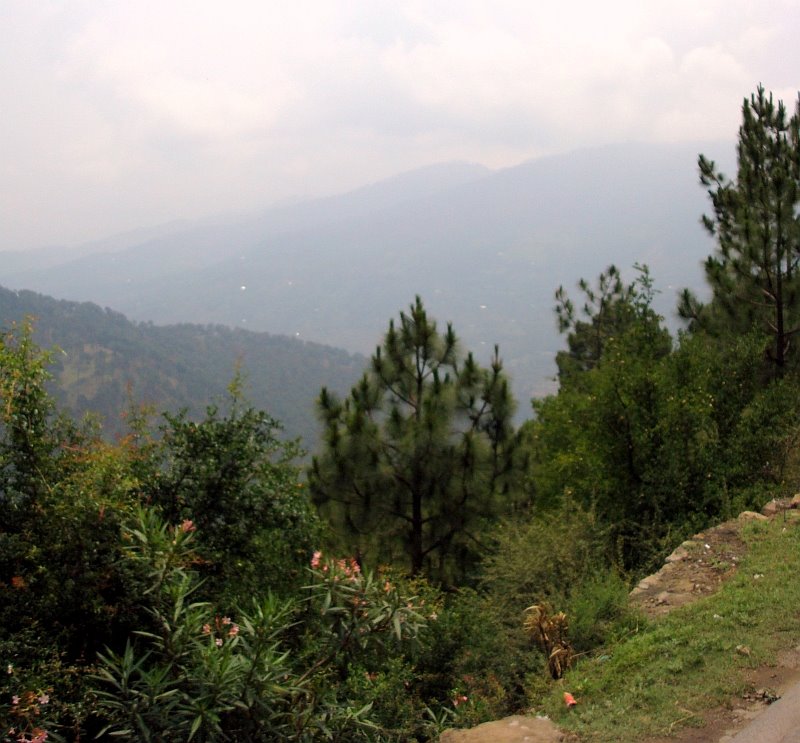
Photographs around Kud.
Kud, around 103 Kms away from Jammu, is a place of some great scenic beauty. Kud is popular as a spot for trekking and camping. But among the people of Jammu, Kud is famous for its sweets and sweet shops, actually the famous shop is just one. These sweets are made in the purest desi ghee possible. Pickles, aanchar, of Kud are equally famous.

Shiny steel roof tops of houses.
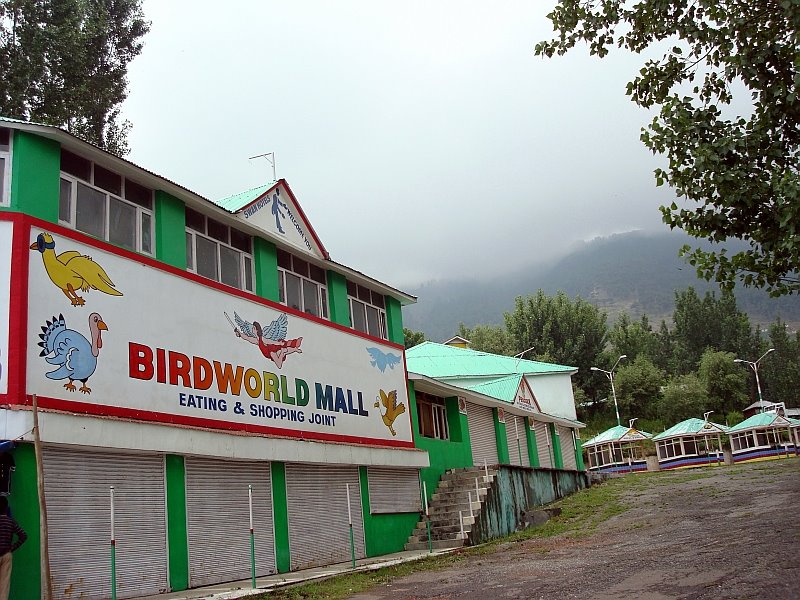
Birdworld Mall. Kud will be next know for this establishment. Hiring process for birds is still on.
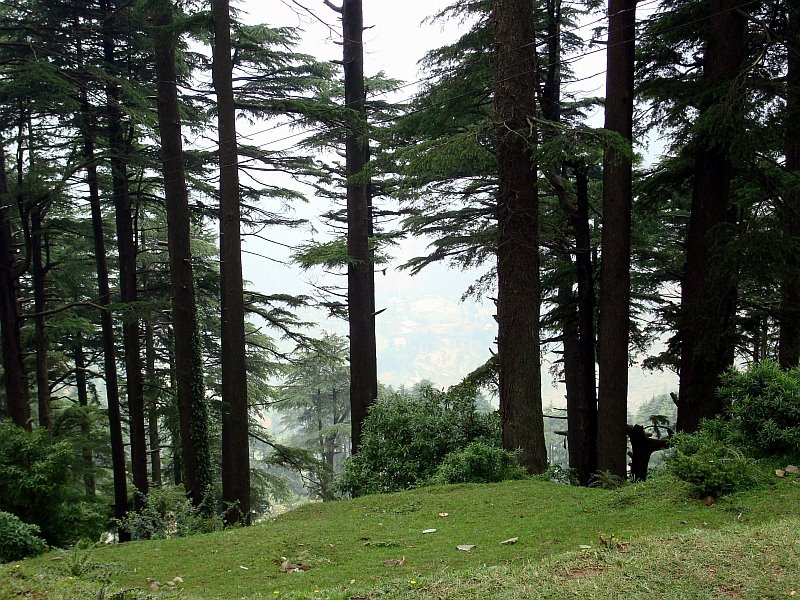
Pine trees. Electric wires.
NH1-A to Srinagar, built precariously along ravines, cutting thorugh dicey mountain sides, at times too narrow, nature reclaiming the ground, never too wide, is a highway of diesel fumes, trucks and buses. Kud provides some respite during the journey.
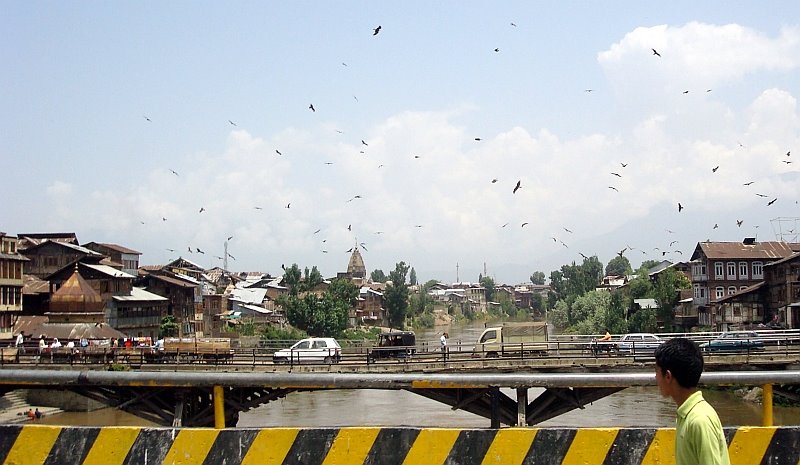

A boy looking at the old bridge of Habba Kadal from the new bridge of Habba Kadal.
A ghat, rusty dome of an old temple, another old temple and in the distance, new mobile towers. Eagles are the same.
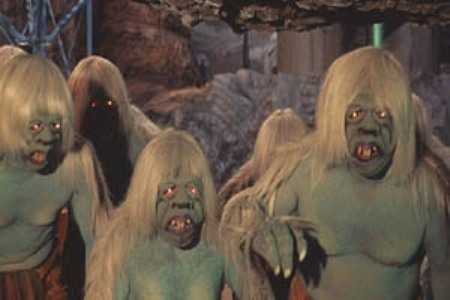

Trounz ain’t no ordinary Ponz.
One year, news spread all over Kashmir about a strange looking creature. It looked like an ape but had very little flesh or muscles on it, it was thin, in fact it was bone and skeleton, and hence its name: trounz. Trounz was believed to have emerged from underneath the earth, somewhere near Baramulla. But some people recalled that in older times trounz could even be sighted in cities in great numbers. The truth however was that nobody knew anything about trounz.
-0-
ponz: monkey
Image: Morlocks from the film H.G. Wells’ The Time Machine(1960). Morlocks were a fictional species created by H. G. Wells for his 1895 novel, The Time Machine. Morlocks dwelled underground in the English countryside of A.D. 802,701 in a troglodyte civilization, maintaining ancient machines that they may or may not remember how to build. Their only access to the surface world is through a series of well structures that dot the countryside of future England.
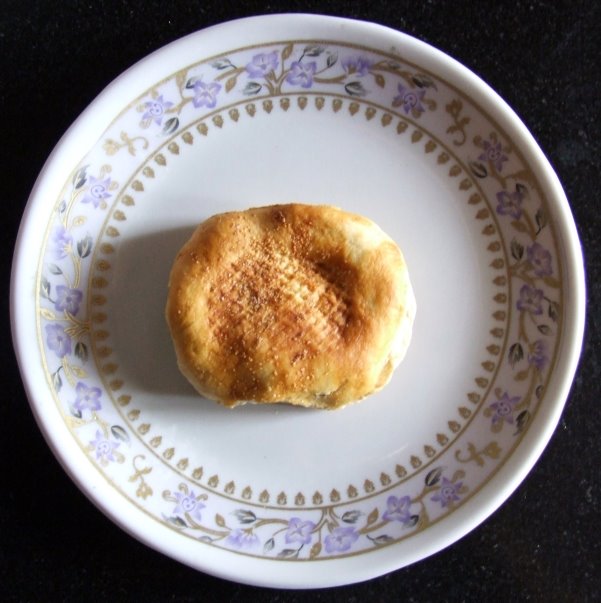

Photograph: Kashmiri Kulcha on a plate.
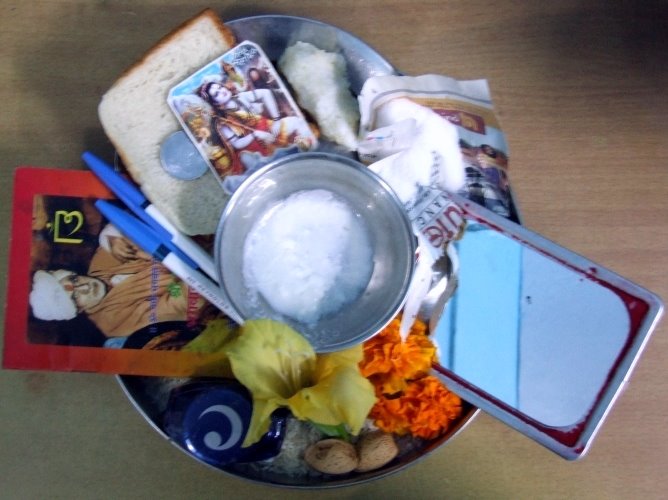

Summer is about to start, almanac,Vijeshwar Panchang, says today is the first day of Spring, Soonth.
First morning of spring, the first sight you are supposed to see: a big (here we have a small) thali having some cooked rice, a kulcha/bread, pen, inkpot, some currency notes (here we have some coins), milk or curd (we have curd), dooyn – walnut (here we only got some almonds, walnuts of hayrath didn’t last long enough), some salt (actually meant to be took noon or rock salt from Pakistan, probably called took noon because of took-took sound it produced on striking a thal while being consumed with rice), photograph(s) of anyone of the gods, some flowers – narcissus flower would be great, and a small mirror.
Traditionally, the thal was prepared on the preceding night of the first day of spring, then covered with a piece of cloth and kept overnight at the center of the house which often meant kitchen, chowke or may be the thokur kuth, prayer room right next to chowke. This was the rite of thaal barun for welcoming soonth spring.
In the wee hours of morning, eldest woman of the house, grandmother or mother, with the thal in her hand, wakes everyone up, one by one, from slumber of winter and asks each one to look at the thal, look one’s face in the mirror, take up the pen and write something, anything but OM would be prefect.
In the afternoon the family will probably eat Kaanul Haakh ti Gaa’de, fish cooked with fine fresh first Haakh of a renewed spring soil.
Heard:
Once, long ago, a foreign tourist was on a visit to Kashmir. He wanted to go from downtown Srinagar to Dal Lake, so this foreigner walked up to a nearby tangadda and asked a tangwol, tongawalla, who was at that time was grooming his not so big horse and mounting the sideblinds on its eyes. The foreigner gingerly asked the tangwol if he would give him a ride to Dal Lake. Tangwol replied, “Why certainly Janaab,” and while brushing the coarse sparse hair of his little horse using his own coarse long fingers, he added, “and it would only cost you rupees ten.” The foreigner was no fool. He had heard all about the wily ways of Kashmiris and their evil bargaining powers. And this particular foreign gent was also well read and at this particular moment he remembered a line written in 1783 by an Englishman named George Forster: Kashmiris are “endowed with unwearied patience in the pursuit of gain.”
The foreigner, crossing his arms across his puny chest, the big collar of his bush shirt looking stiff, said, ” I know the route and all the roads, it should cost me not more that five rupees,” and then, with some difficulty, putting his hands inside the side pockets of his tight at hip bell bottom pants, added, “I will only pay five. Fine.” At this the tangwol moved close to the foreigner and in a hush-hush tone said, “Ahista Bowlaow, not so loud,” and then moving still closer, into the foreigner’s ear, whispered, “mera Ghura sunaiyga toh hasaiyga, if my horse hears that, it’s going to throw a laughing fit. You see it knows all the routes.” After this the bargaining session ended.
After a ride that lasted around forty minutes, the foreigner reached Dal Lake and paid the tangwol the promised sum of rupees ten.
-0-
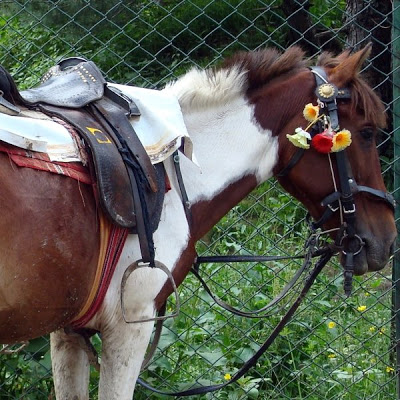
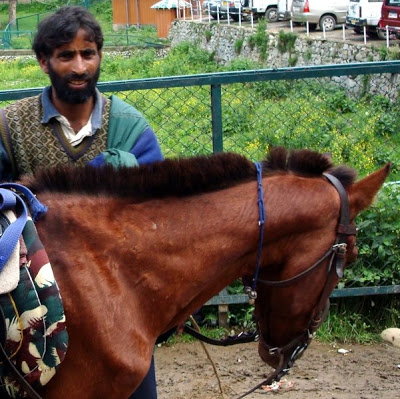
Photographs: A horse and a Horseman at Gulmarg

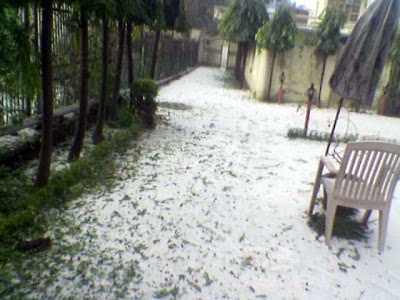
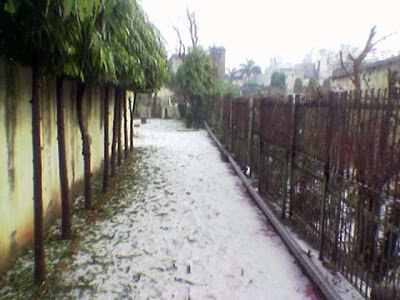
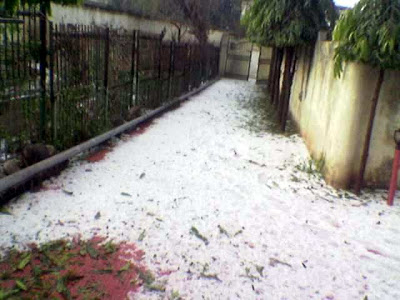
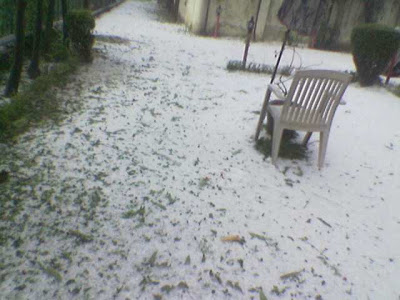
I was in Jammu last month. The trees in the garden looked devastated, most of tress were leafless and leaves that were still clinging on to some of them looked rusty. I asked around if it was the work of locust or was it some tree disease.
“Didn’t you read about it! It was the snow”. And I remembered reading about it in papers and I remembered being told about it after a telephone conversation call from Jammu. It was the freak hailstorm – greatest in last twenty years – that caused it. I had often heard about the kind of destruction that hailstorm causes to the vegetation and standing crops, and now I got a glimpse of it. It had been almost a month since then and still the green here hadn’t recovered.
On the morning of 27th January 2009, people in most areas of Jammu woke up to see the ground covered in about 6 inches of hail. Even as the warm sun came out, it took almost the entire day for the hail to melt away. During my visit to Jammu, I read an article written by an uncle of mine for a Kashmir Pandit magazine. He remembered snow of Kashmir. He remembered sheen’e bhagwan – Shivling made and setup in courtyards and gardens from freshly fallen snow and he remembered snowman that children used to enjoy making from the first snow of winter, snowman that for its eyes had two pieces of black charcoal, Tchyin, often taken from a dead Kangri.
That article carried a photograph of a garlanded sheen’e bhagwan and a snowman made from the hail that fell down upon Jammu in the wee hours of 27th January 2009.
-0-
Got these photographs of hail from another uncle of mine.


Heard:
Found them all sleeping in the courtyard one early morning, the entire family of a neighbor. They hadn’t slept inside their house that night and probably many more nights.
When asked, they replied, ‘Don’t you know? Sek’lyob is about to fall! We are just prepared for the worst.’ Walking on street, people were playing pranks on reach other: ‘Watch your head, look at the sky, sek’lyob is falling. Haha! Got’ya!’
Read:
July 1979
The American Sky lab vehicle, nine stories tall and weighing 77.5 tons, was expected to slip into the earth’s atmosphere. Somewhere, ten fragments, each weighing 1,000 Ibs. or more, were to crash down to earth at speeds of up to 270 m.p.h. with the force of a dying meteor. Thus would have be observed, after a series of miscalculations, the tenth anniversary of man’s proudest achievement in space, the walk on the moon.
NASA’S statisticians contended that the chance of any remnant striking a human being was only 1 in 152; the probability of any specific person being struck was 1 in 600 billion—far less than the chance of being hit by a bolt of lightning or winning a lottery.
One of the heaviest pieces of Skylab, a two-ton lead-lined vault used for film storage, was capable of digging a hole 5 ft. wide and 100 ft. deep. And within the band of Skylab’s orbital paths lied some of the world’s most populous areas, including all of the U.S., much of Europe, India and China. Indeed, the chance of debris falling in some city of at least 100,000 inhabitants was a sobering 1 in 7. Only 10% of the earth’s inhabitants could be considered totally free of any risk from Skylab’s metallic fallout.
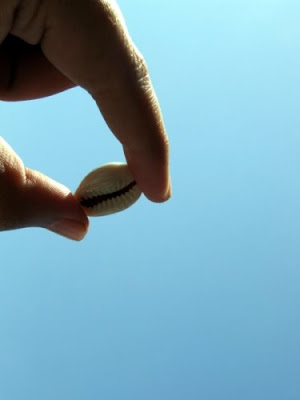
Image: Haar