For many Kashmiri Pandits born after 1990, the mother tongue arrives as something inherited but not quite possessed: heard at home, half-spoken, and almost never read. In this guest post, Pratush Koul traces what it took to close that distance for one poem. Marsiya, written in 1992 by Shri Moti Lal Saqi (1936–1999) in the displacement of Udhampur and Jammu, is an elegy for a lost home. The search led through a Hindi translation, a rare copy of the original, recordings made with community elders, and months of translation. The result now has a place in The Big Book of Kashmiri Literature (2006), edited by Onaiza Drabu.
What is it like to not know your own mother tongue?
The daily struggle of recalling words and their meanings for regular conversations with your parents, the blunders you make in pronouncing even the most basic words, and becoming a subject of laughter. It’s like trying to express love to your muse but struggling to find the right flowers. Struggles like these have been a part of my life growing up, and even today.
Being born away from Kashmir, the home I inherited only through memory, the struggle to cling to my culture in a foreign land takes a toll on one’s understanding of home itself. Inside the four walls, living with my parents, surrounded by articles and photographs from Kashmir, I find myself in this oasis amidst an unknown land.
The noise around culture and traditions today makes me wonder what I’m experiencing in my own life. Was this the actual culture, or was it our elder generation’s longing, an attempt to hold on to whatever could still be held onto?
The elder generation of Kashmiri Pandits understood this very well. As they were trying to provide the best life for the next generation, they held on to the culture of their homeland so as to preserve its memory for those who came after them.
To bridge this gap in my own life, I began delving deeply into Kashmiri literature. What started as a personal attempt to understand my mother tongue soon evolved into a profound engagement with our literary heritage. I found myself reaching out to various displaced Kashmiri authors and their families. Through these conversations, I forged deep connections, collecting their anecdotes, and learning how these writers used vivid imagery and storytelling to document the longing and loss of different generations.
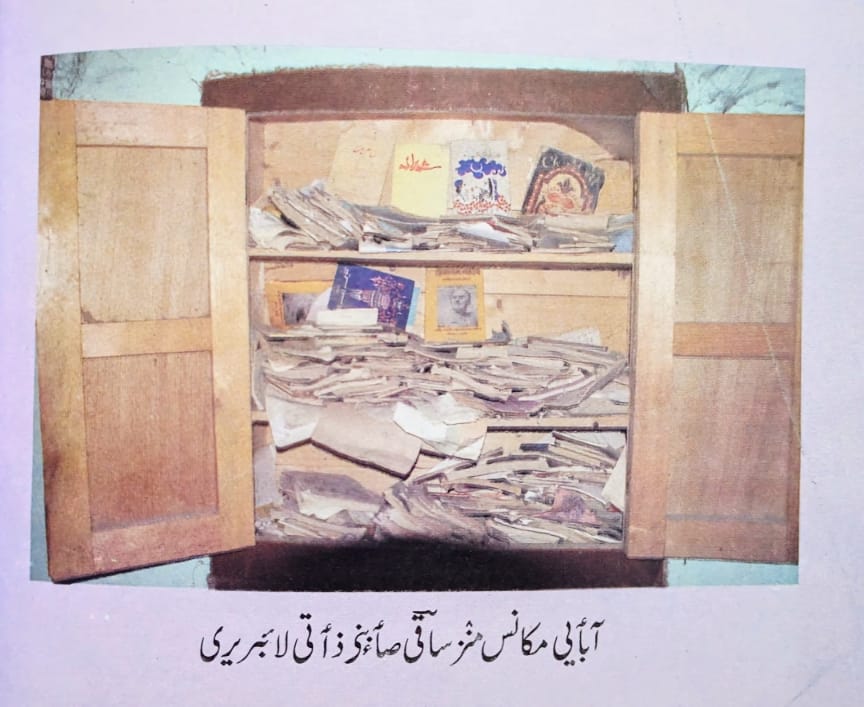
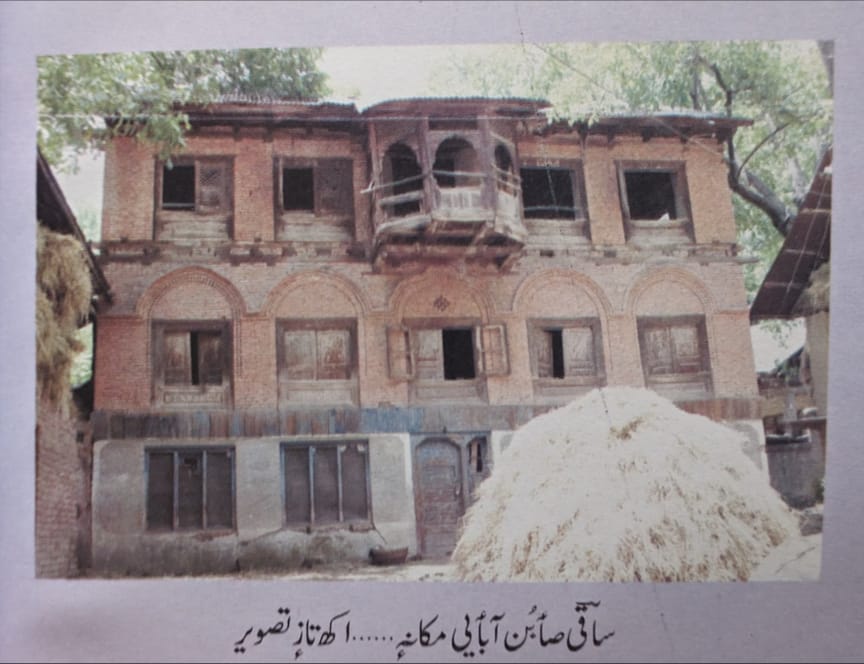
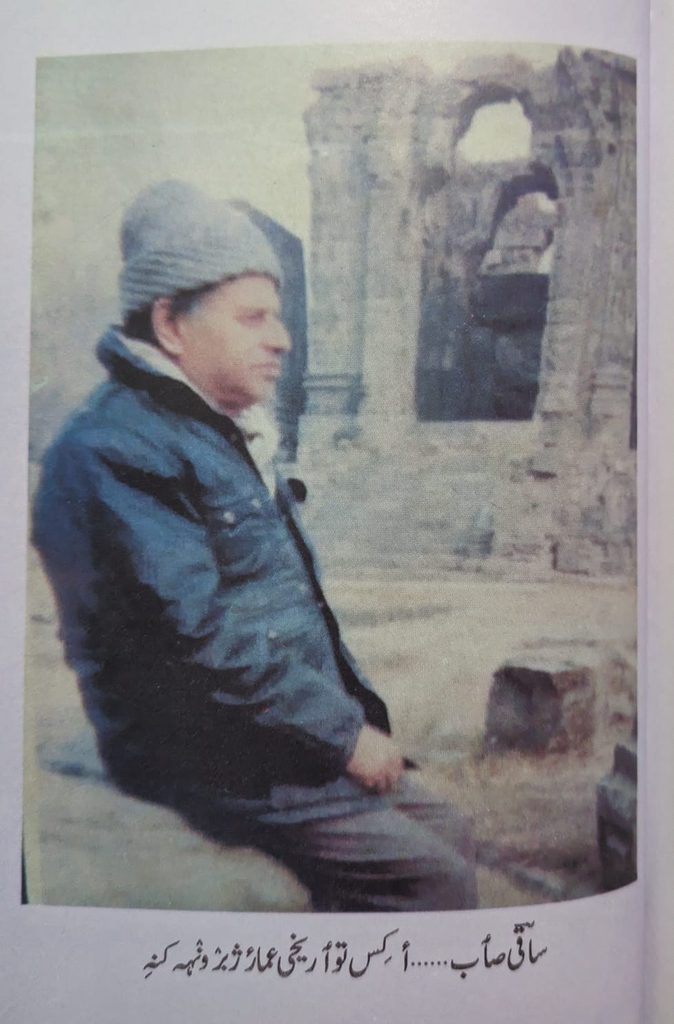
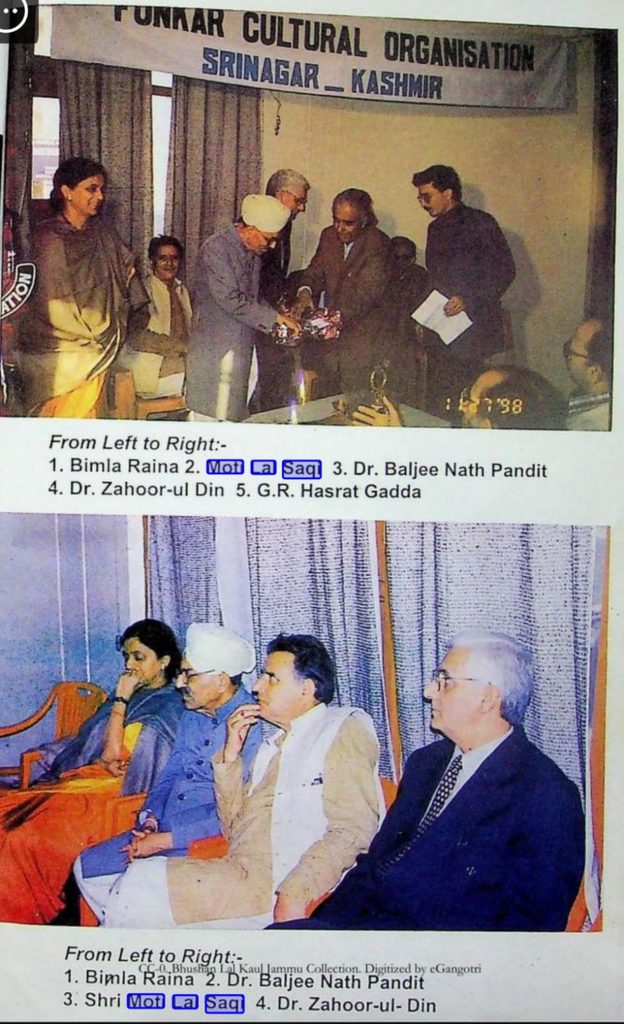
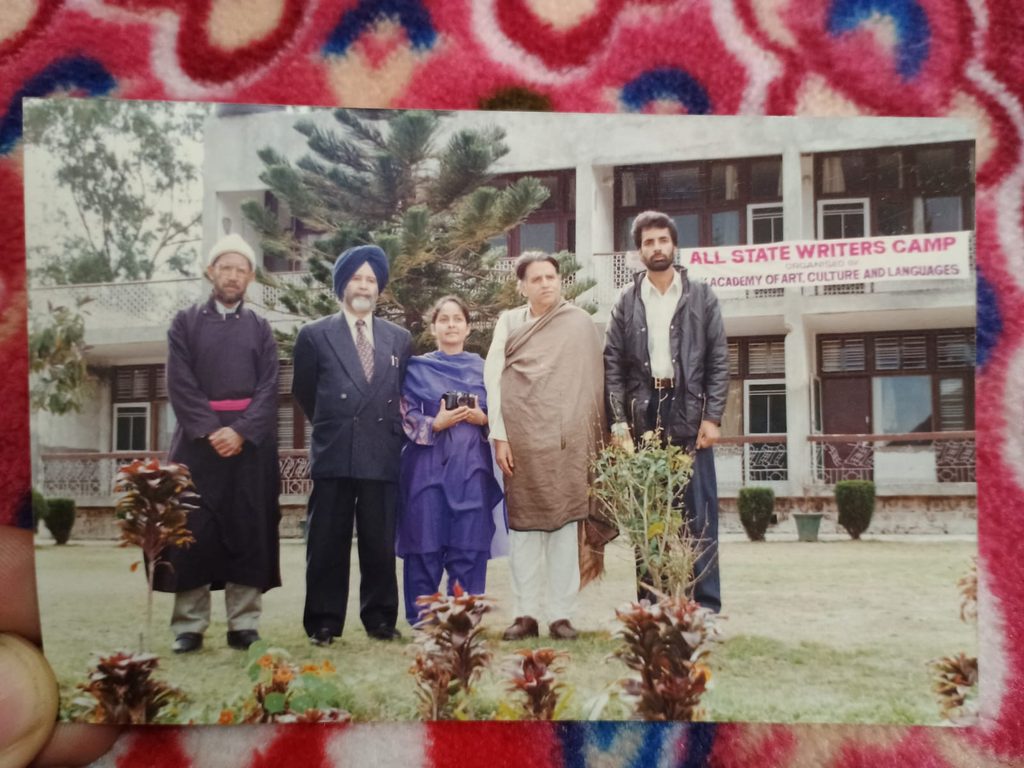
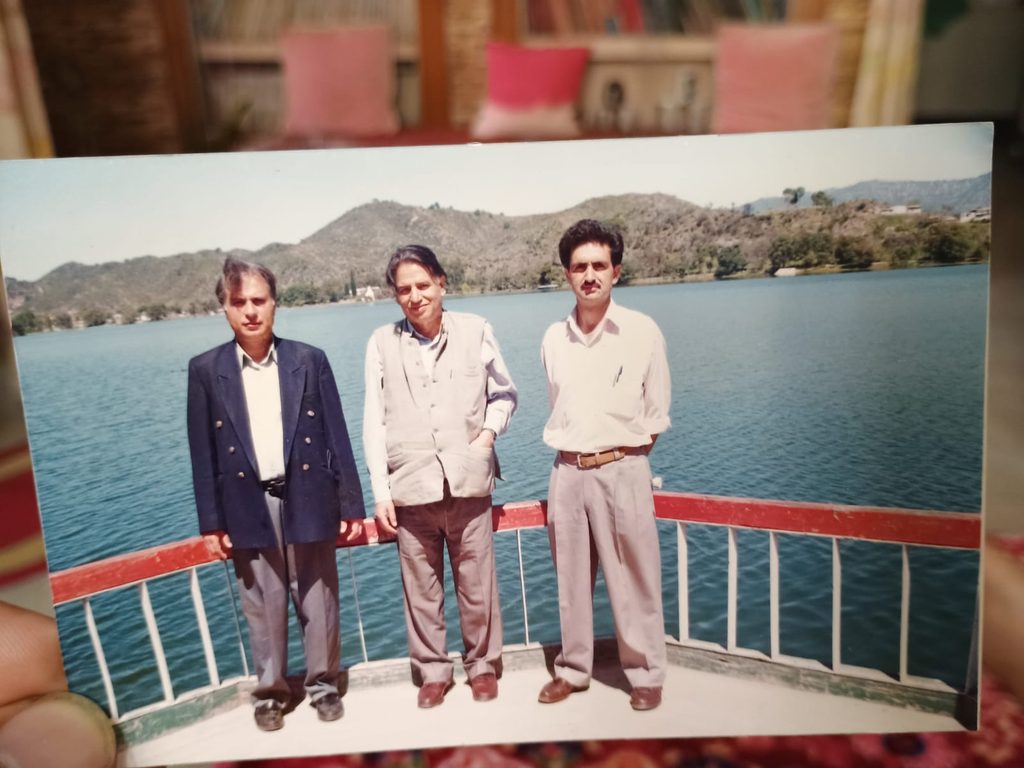
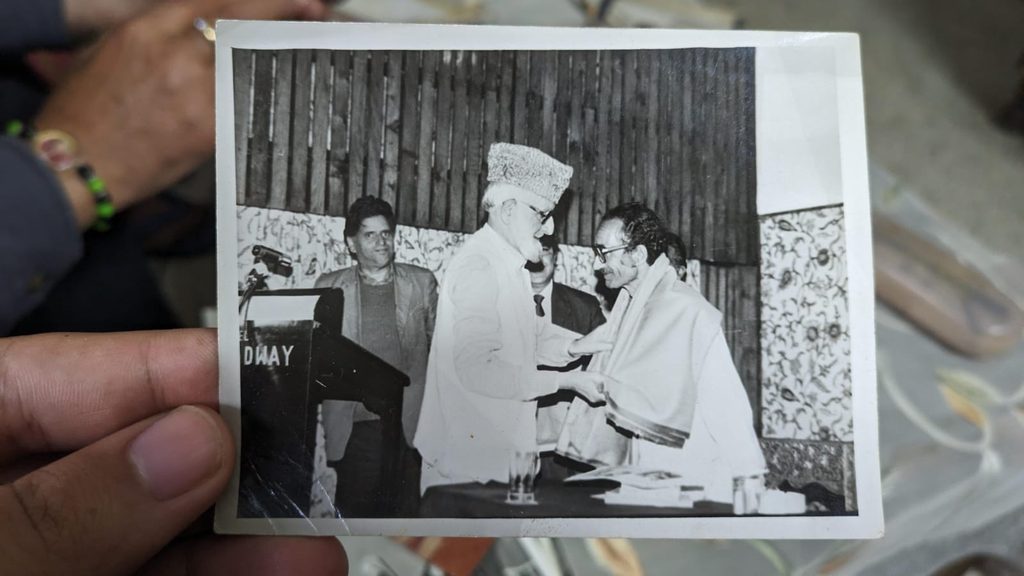
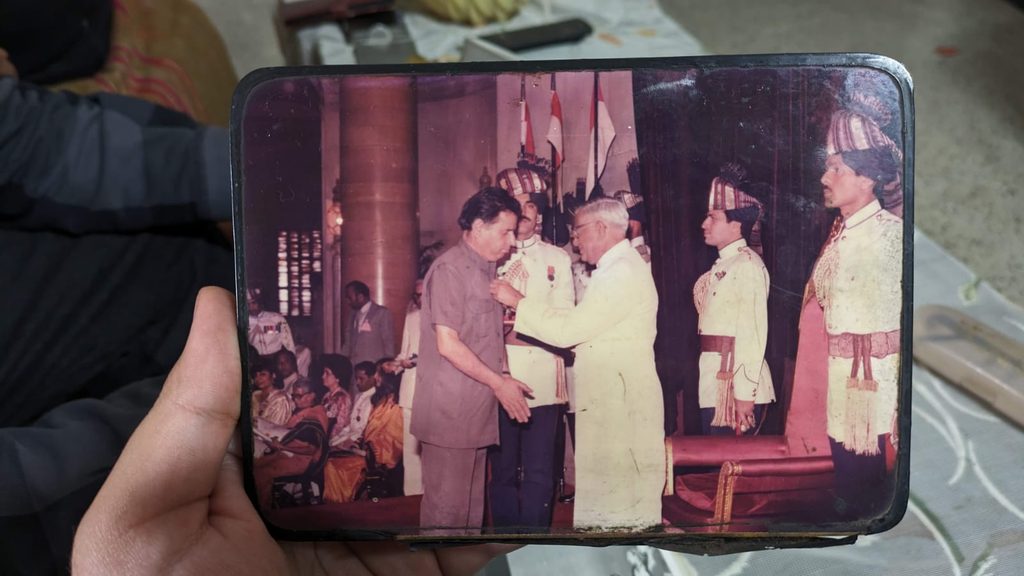
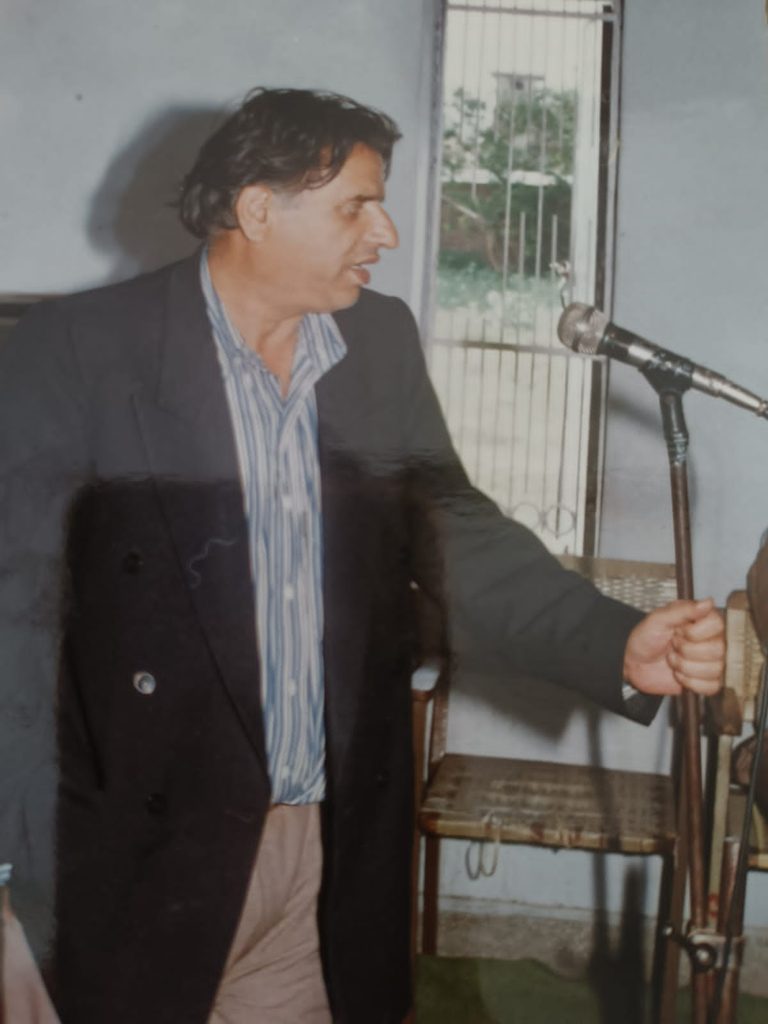
One such poet I found myself seeking was Shri Moti Lal Saqi. Prior to the events of 1990, he was already a well-established poet and scholar. His works on Kashmiri ethos and cultural history were popular among scholars and general readers alike. His deep understanding of philosophical concepts gave his prose and poetry a universal appeal.
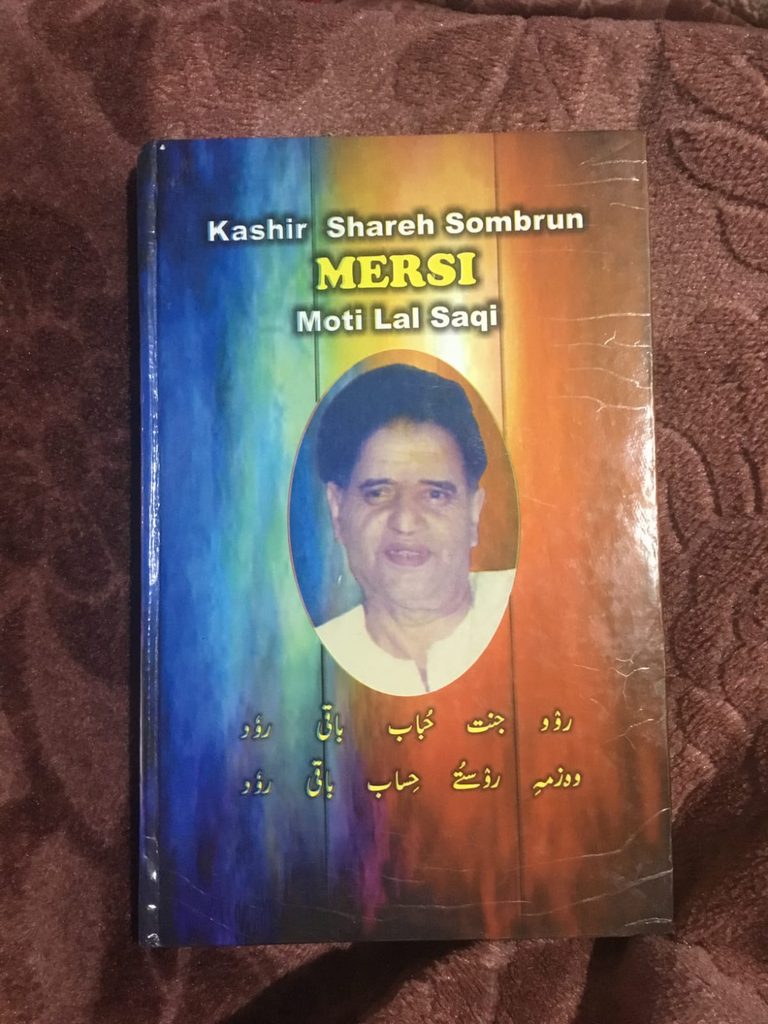
When the events of 1990 unfolded and the Kashmiri Pandit population of the Valley was forced to leave their homes and hearths, Saqi too had to leave along with his community and seek shelter in Udhampur and Jammu. There, he witnessed the plight of his community and the atrocities they were facing. He carried this intense grief within him, and in 1992, he let it flow through his pen in the form of a poem—Marsiya. While normally a genre reserved for the Shia tradition of mourning the battle of Karbala, in Kashmir it is often employed for personal and other forms of mourning too.
My first encounter with this poem was through a Hindi translation done by another Kashmiri writer, Dr. Rattan Lal Shant. He translated it for the Sahitya Akademi’s Hindi journal Samkalin Bharatiya Sahitya. His translation left a deep mark on me, as the content resonated with what I had heard from the elders of the community.
I tried to search for the original work but couldn’t find it anywhere. At last, I was able to locate a copy with Dr. Agnishekhar, who graciously gifted it to me.
After that, I took the help of many elders to obtain an authentic recitation of the poem. After many recordings and listening sessions, I played back the recordings and was able to transcribe the poem into Roman script.
Many Kashmiri poets have written, and continue to write, their works in the Nastaliq script, which becomes a challenge for the newer generation of Kashmiri Pandits to read. It is ironic to think that a grandson cannot even read his grandfather’s work as it was originally written.
Now that I had somewhat tackled this transcription problem, the main task was translating the work—a painstaking process that unfolded over a long period of time. I spent months wrestling with the nuances of the text, making sure not to lose the soul of the poem. Once I had finally gathered my thoughts and documented this journey of seeking Saqi, I wrote a piece about it for my medium page. As fate would have it, Onaiza read that, and asked if I would contribute this translation to her upcoming book, to which I was more than happy to do.
Like many other languages of the world, Kashmiri too has different dialects defined by geographical regions. The Kashmiri spoken in Srinagar differs from the Kashmiri spoken in, say, Anantnag. This dialectal shift was also evident in Saqi’s poem.
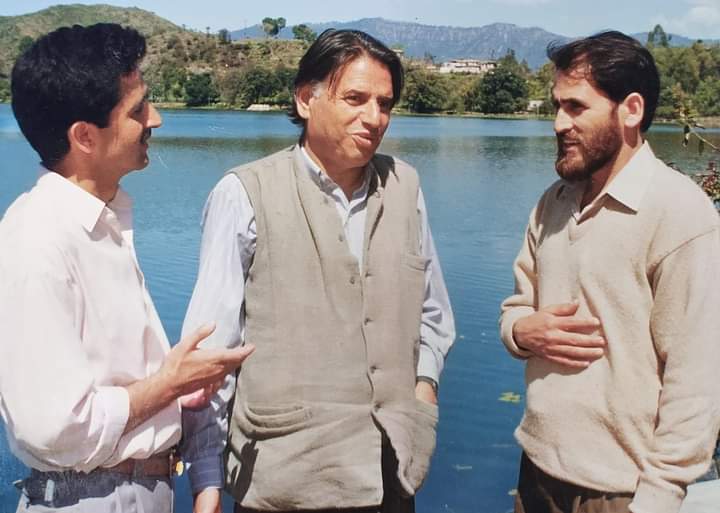
Whenever I got stuck on an unfamiliar phrase or word, I would consult Saqi’s son, Shri Virender Razdan. While discussing many such phrases, he would often recall the memories or experiences that had influenced a particular sentence. Sometimes, it would bring back memories of camp life and the daily struggle to survive.
For me, these conversations opened a window into the poet’s mind and revealed how his surroundings shaped and influenced his work.
Throughout the course of the translation, I was guided by many elders, some of whom had known Saqi Sahib personally. Their insights and anecdotes transformed this translation into a community-driven project.
A son’s quest to relive his father’s memories.
A friend’s remembrance in sharing his personal moments.
And a fellow poet’s ode to a guru who taught him the deeper meaning of life.
Marsiya, or Elegy, is not just a poem. It is the legacy of three generations who suffered the loss of home, both as a physical place and as an idea, and who kept trying to find meaning amid that loss, in the hope of discovering a reason to endure. I am deeply honored that this legacy has now found a permanent home in The Big Book of Kashmiri Literature, edited by Onaiza Drabu. It brings me immense peace to know that through this anthology, Saqi Sahib’s poignant verses will continue to reach new readers, echoing our eternal longing for home.