
Photographs of Srinagar city by Douglas Waugh (for what seems to have been a series on ‘modes of transportation’ and covering almost all of India). Came across these at University of Wisconsin-Milwaukee Libraries – AGSL Digital Photo Archive. The photographs are dated ‘not after 1964/63’ but I believe these are from late 1950s. I have added (with help from family) location to some of the photographs. Take a peek. Rewind.
Gucci/Kani’ghitch, the famous Kashmiri mushroom
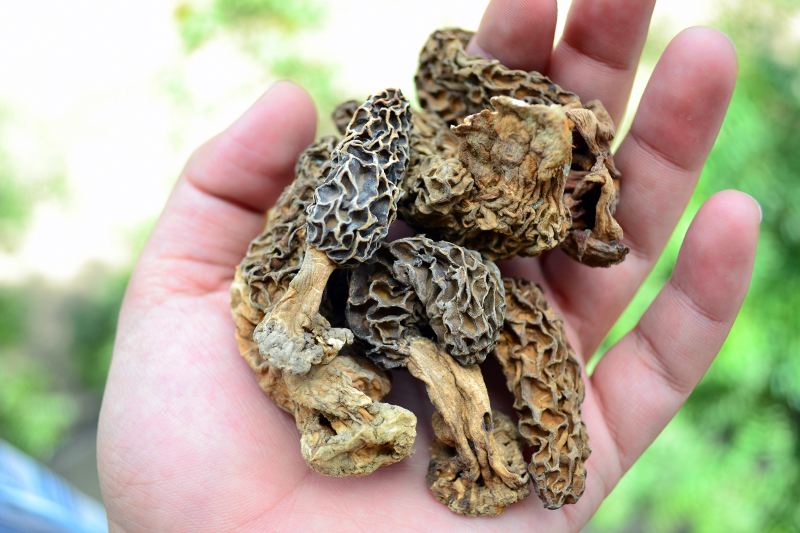
Finally managed to get my hands on the famous Kashmiri mushroom, known in Kashmir as ‘kani’ghitch’ and in rest of the world as ‘Gucci’, the one that is believed to be found only on high mountain tops but only by one who is white of heart and/or dark of skin. The morel mushrooms sell at a rate almost at par with Gold. Eating it is almost like eating gold. I tell my father this must be the first time even he has held them. He gives me a ‘You crazy! your magaz dalmit!’ look and says,’You have had them before. When you were a kid, I bought them once from Handwara.’
These he bought from someone in Kistawar. The rate there is relatively less.
 |
| A Kilogram of these go for around Rs. 26000 in Jammu |
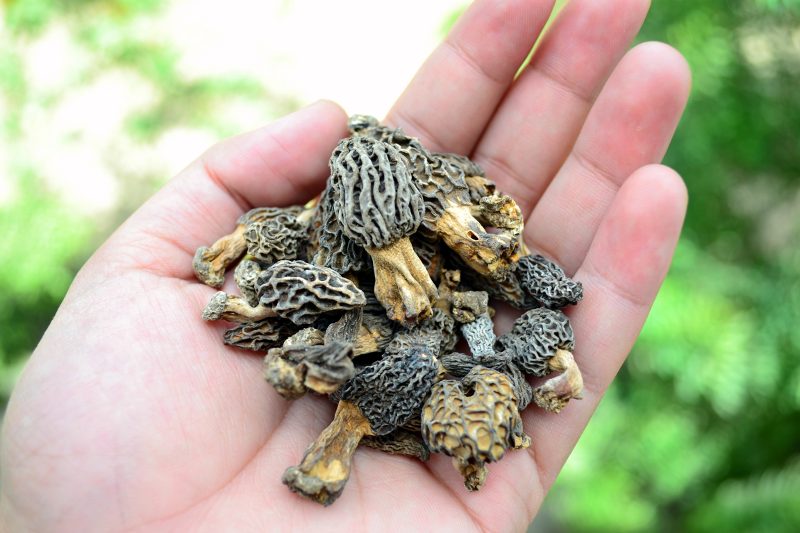 |
| Smaller in size. These go for around Rs. 15000 a Kilogram in Jammu. |
-0-
Map of Kashmir and Jamu, 1901
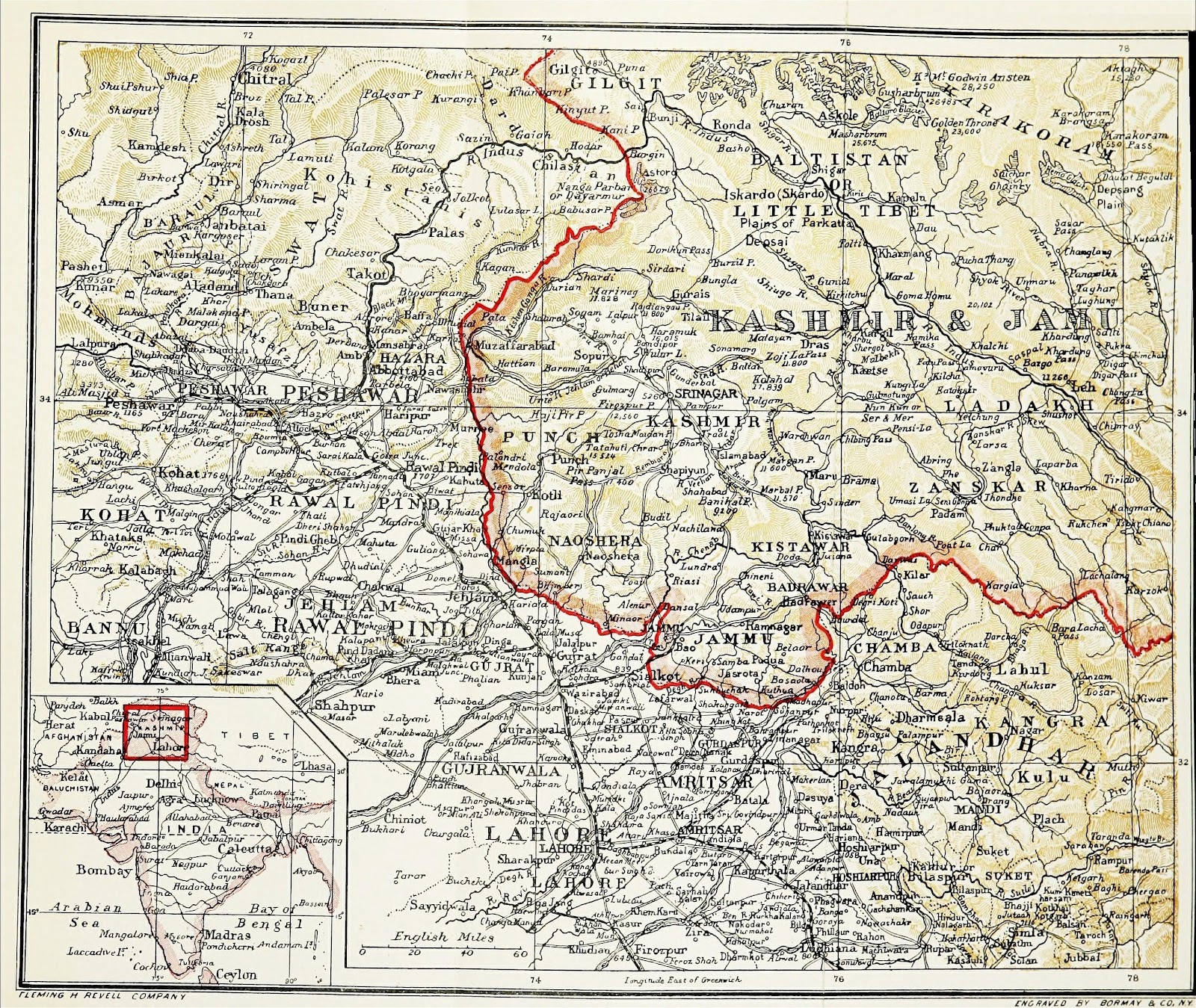

from ‘A woman’s life for Kashmir: Irene Petrie, a biography by Ashley Carus-Wilson.
(1901).
Previously:
Kashmir Photographs from ‘Irene Petrie : Missionary to Kashmir’ (1903).
Kashmir Lithographs, 1840
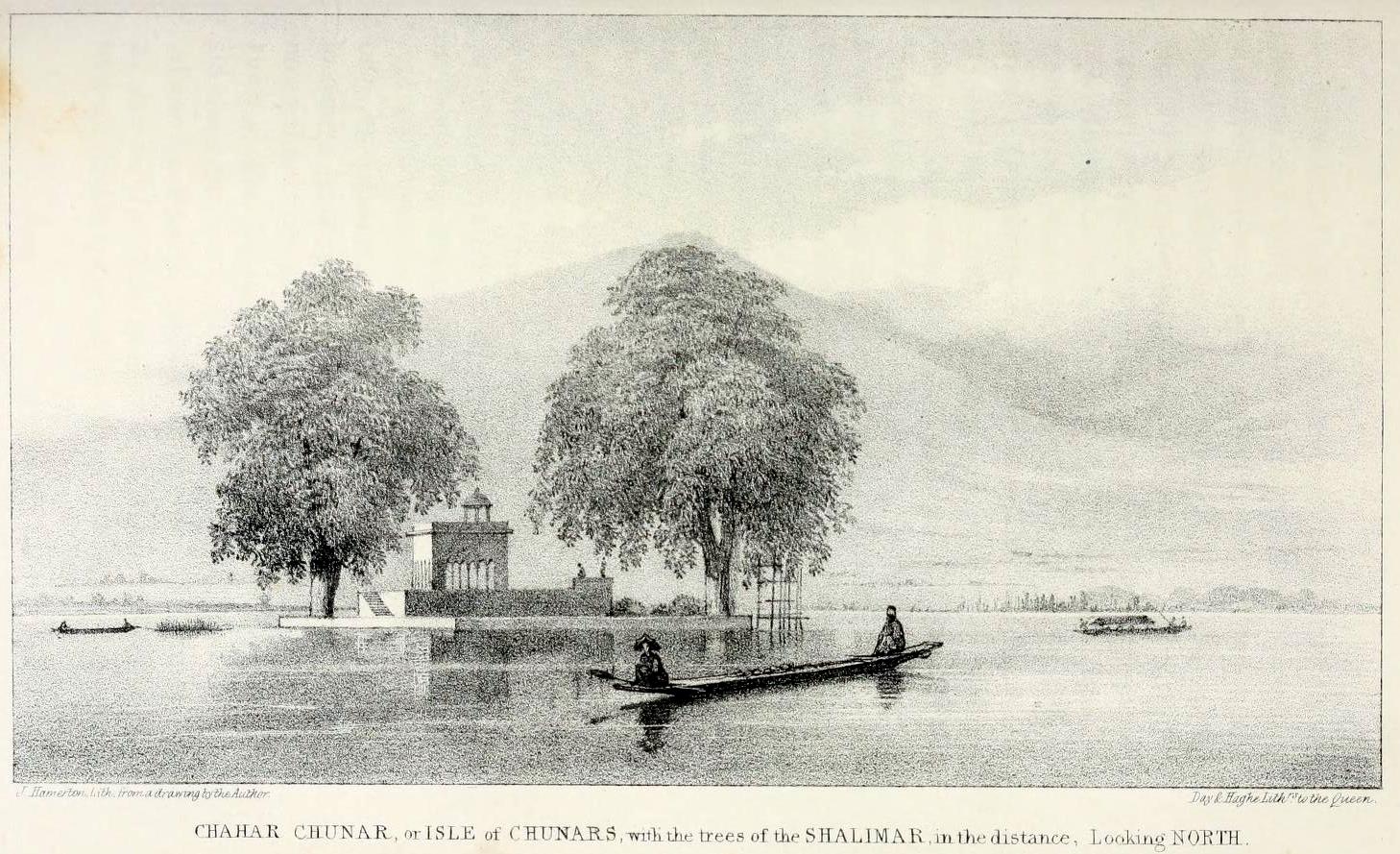
From ‘Travels in Kashmir, Ladak, Iskardo ‘ (1840), G.T. Vigne’s book about his travels in Kashmir in 1835.
 |
| Char Chinari |
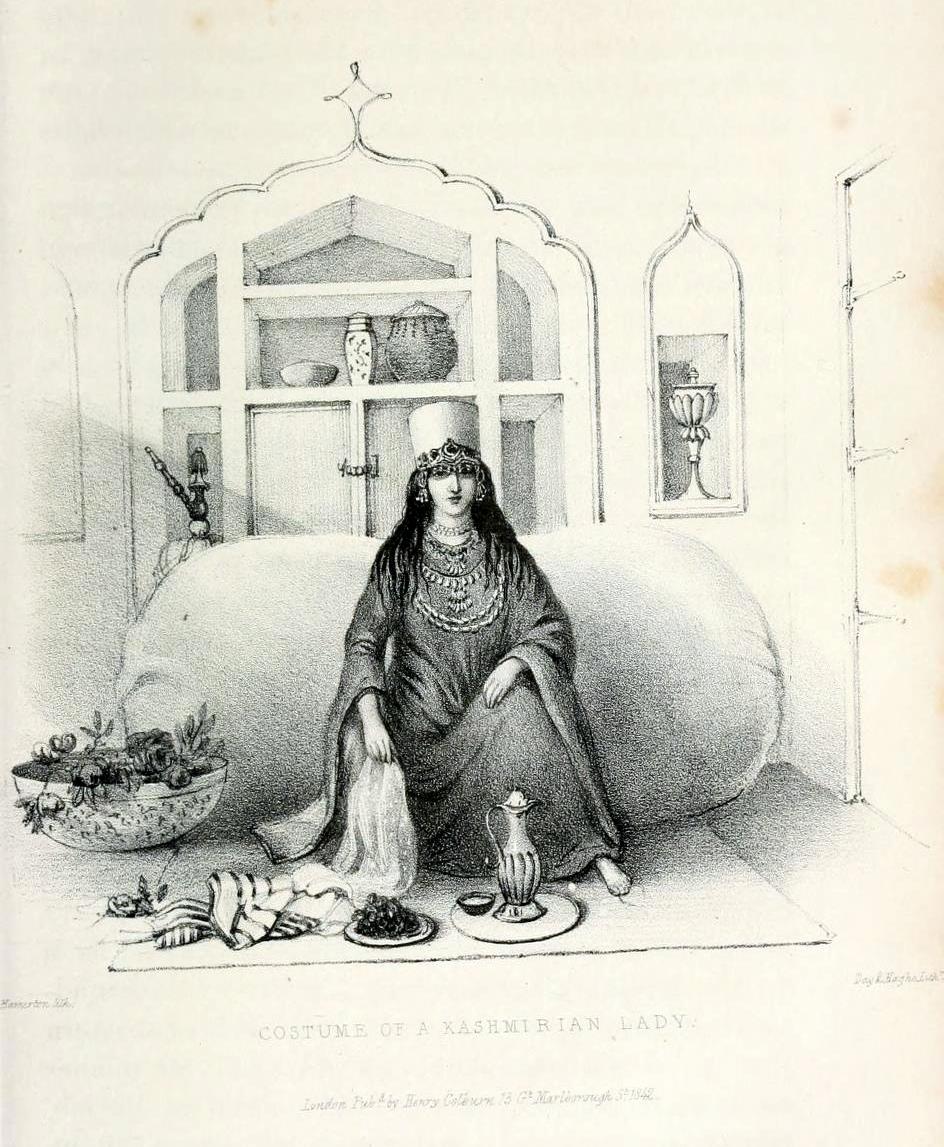 |
| Costume of a Kashmirian Lady |
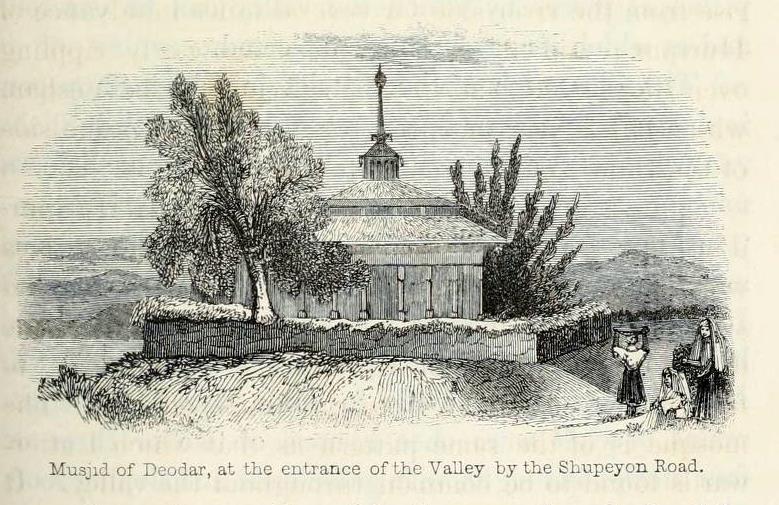 |
| Masjid of Deodar, at the entrance of the Valley by Shopian Road |
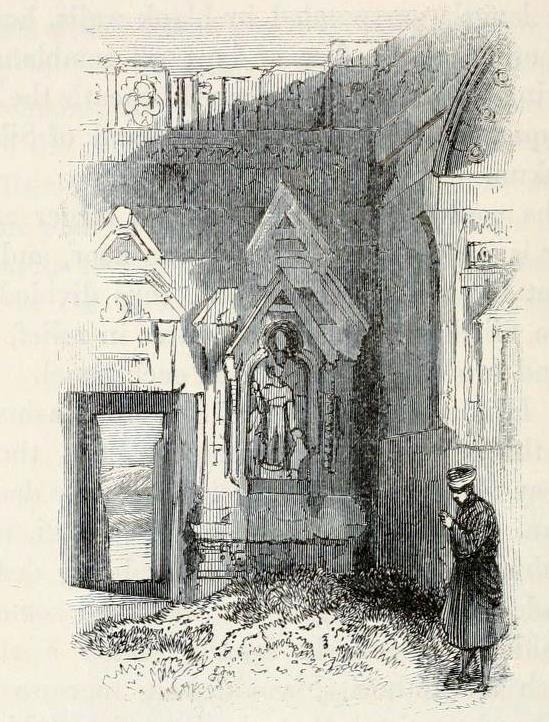 |
| Inside Mattan Sun Temple |
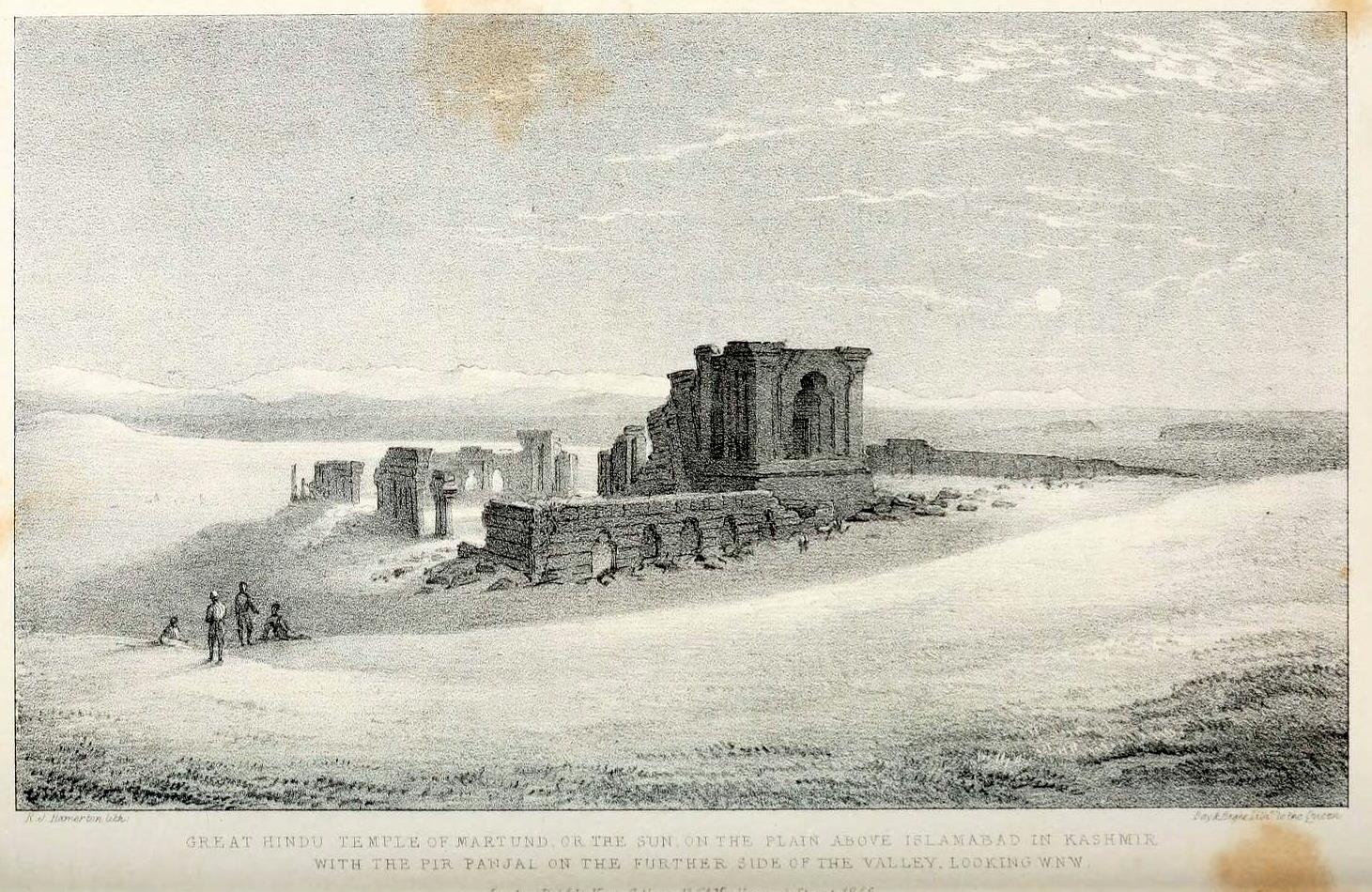 |
| Great Hindu Tempe of Martund |
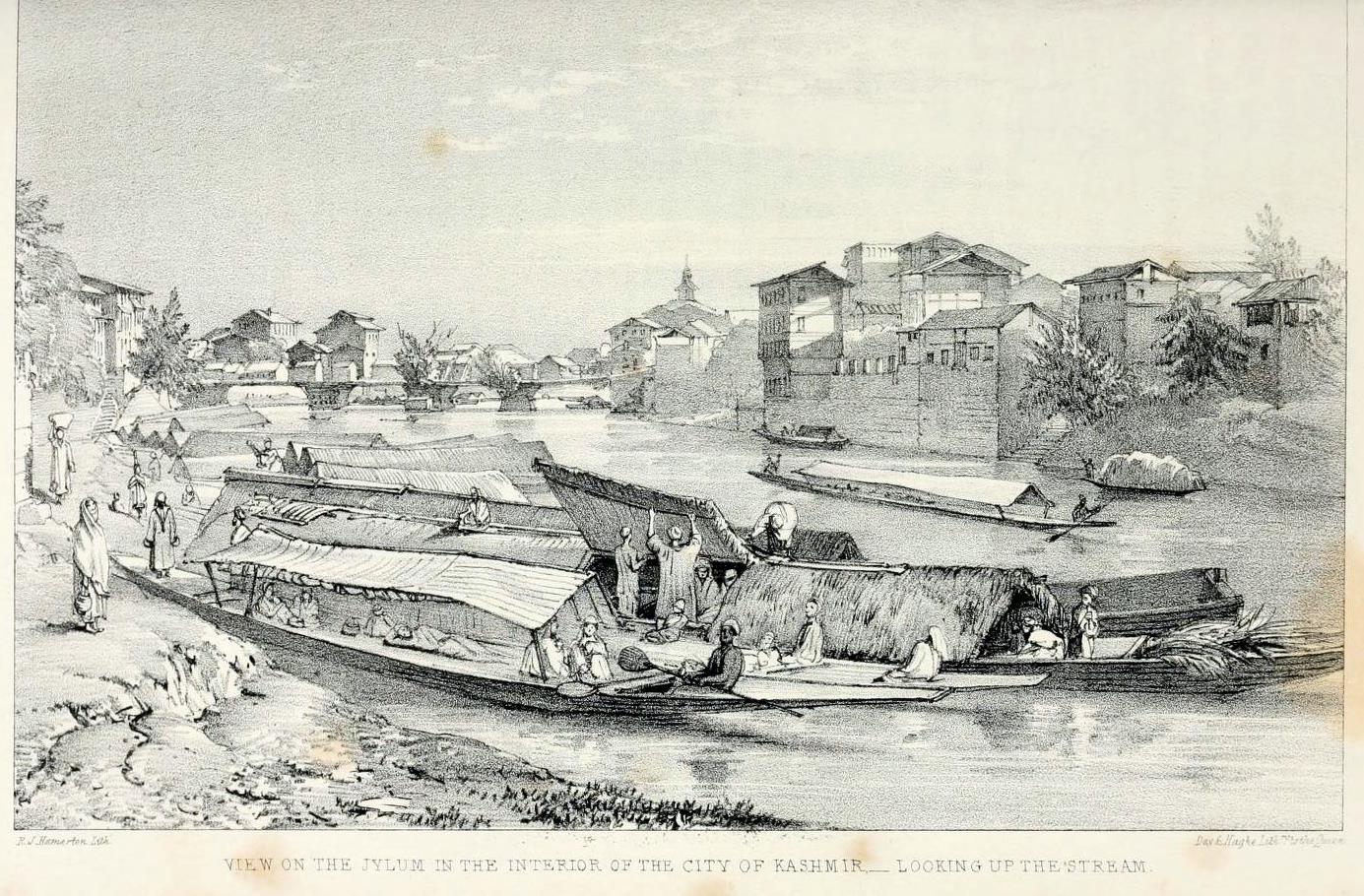 |
| View of the Jhelum in the interior of the city of Kashmir |
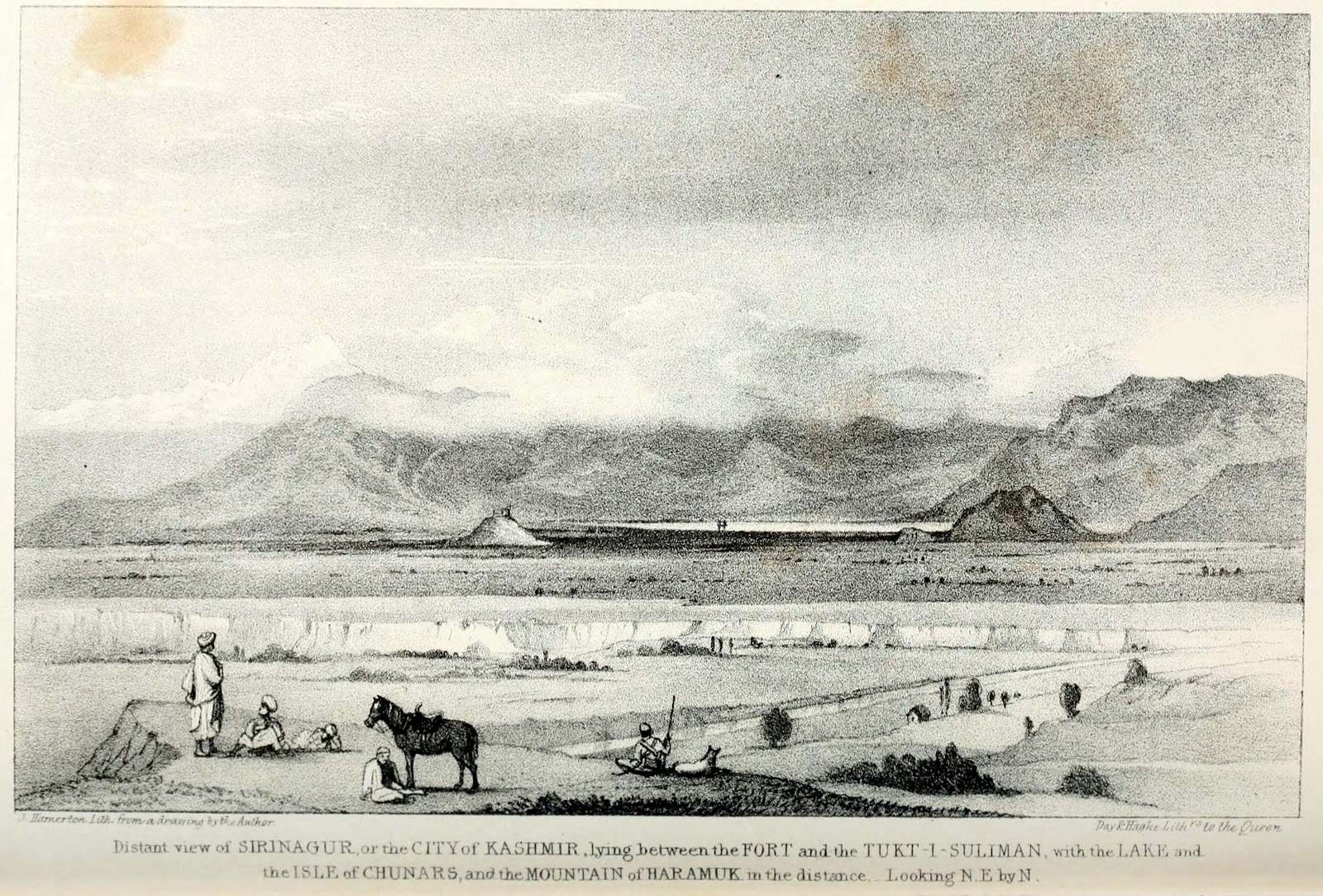 |
| Distant view of Srinagar or the City of Kashmir, lying between the Fort and the Tukh-i-Suliman with the Land and the Isle of Chunars and the mountain of Harmukh in the distance.
Wonderful note about the above image by Man Mohan Munshi Ji via email: |
-0-
Map of Chenab and Jhelam Valleys, 1913
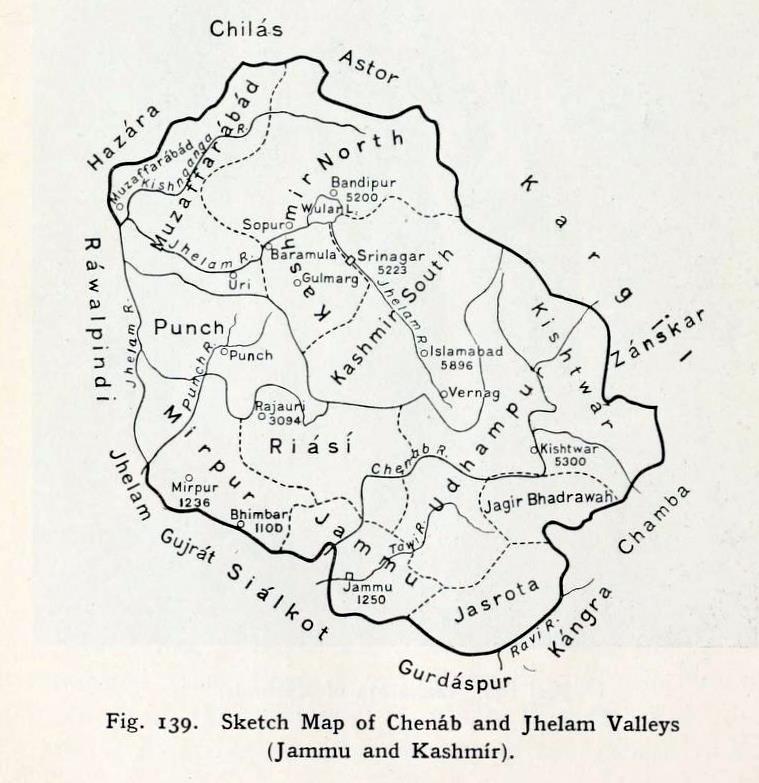

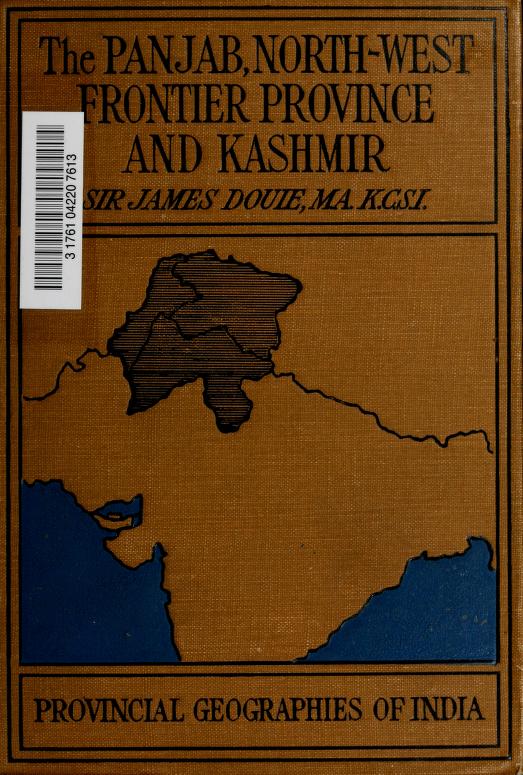
from ‘Provincial Geographies of India’ (1913)
-0-
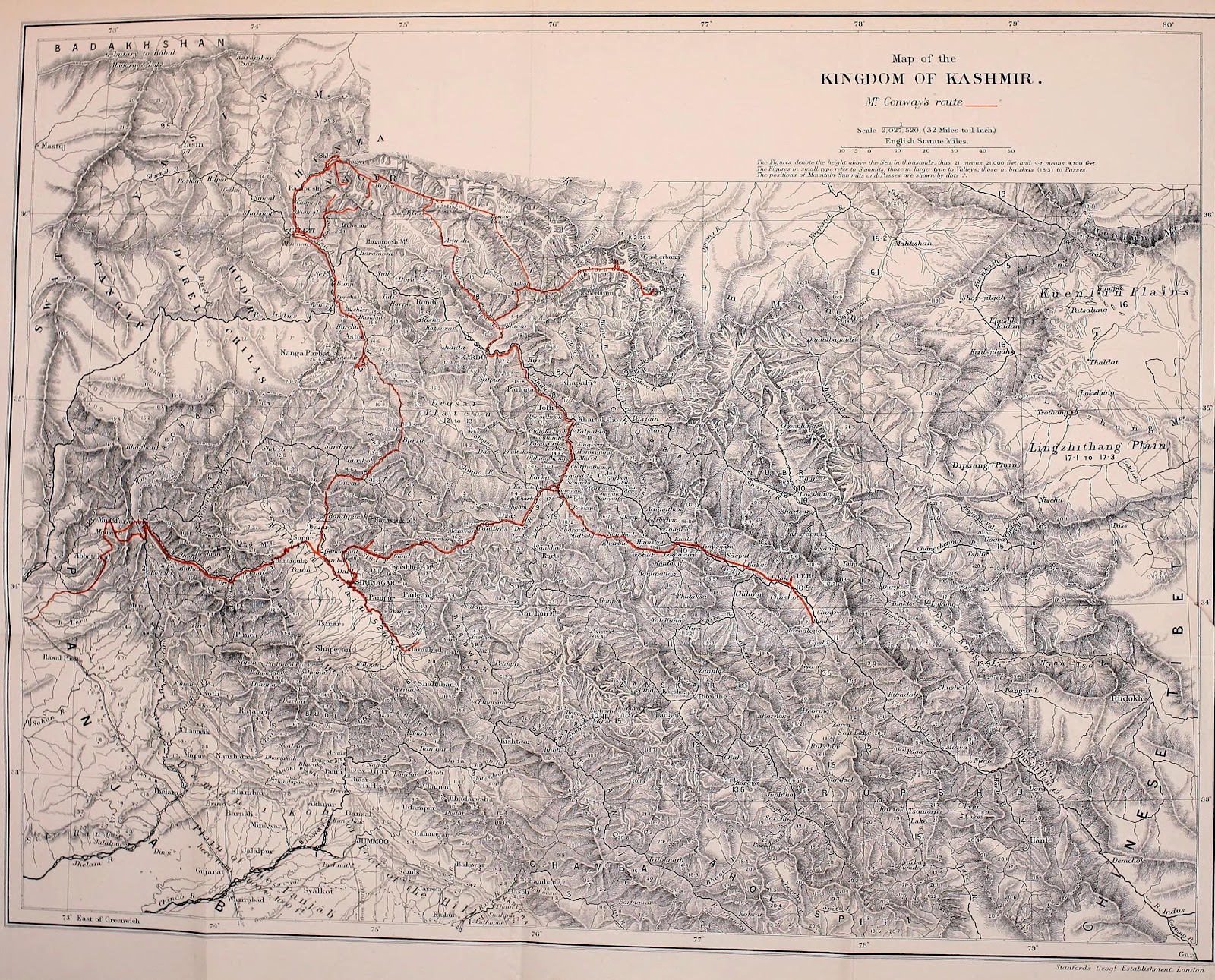
Map of the Kingdom of Kashmir, 1895

Harihar Kalyan – Shiv Lagun by Krishna Razdan,1938
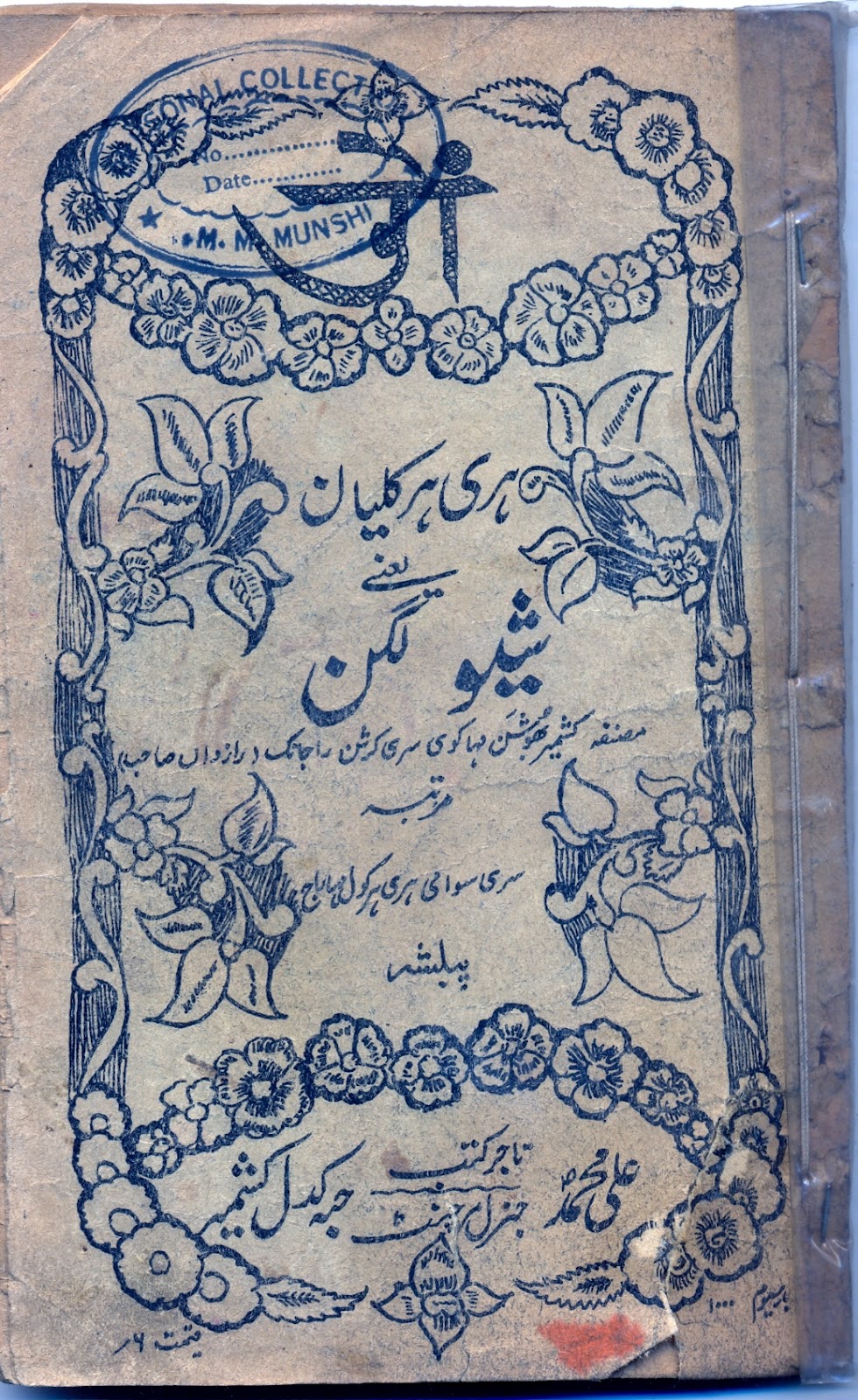
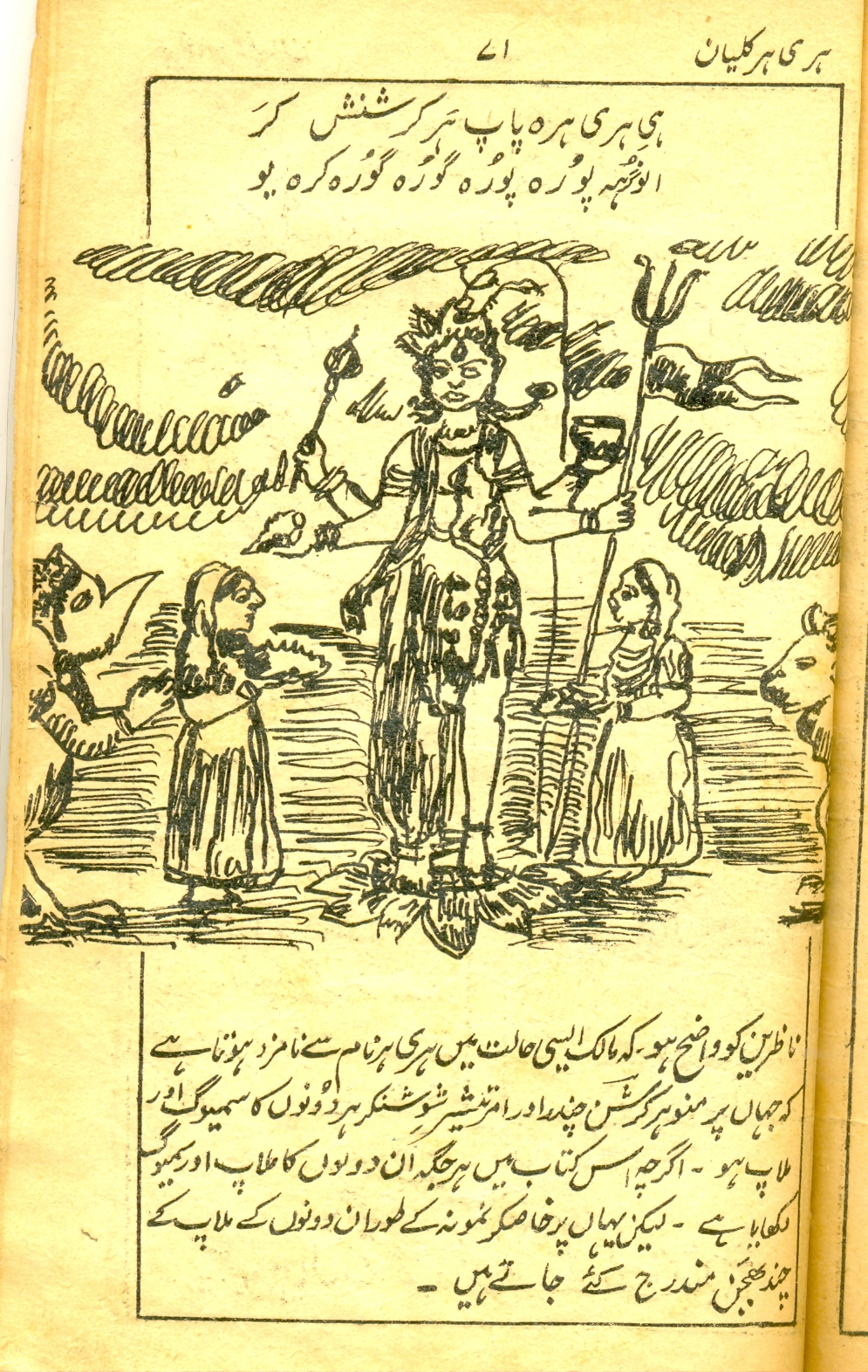
Man Mohan Munshi Ji shares these pages from ‘Harihar Kalyan – Shiv Lagun’ by Krishna Razdan (c 1850-1925, village Vanpoh) published in 1995 Bikarmi (1938). At the end I am adding the interesting entry for this book given in Encyclopaedia of Indian Literature (1988).
 |
| Title cover of the book |
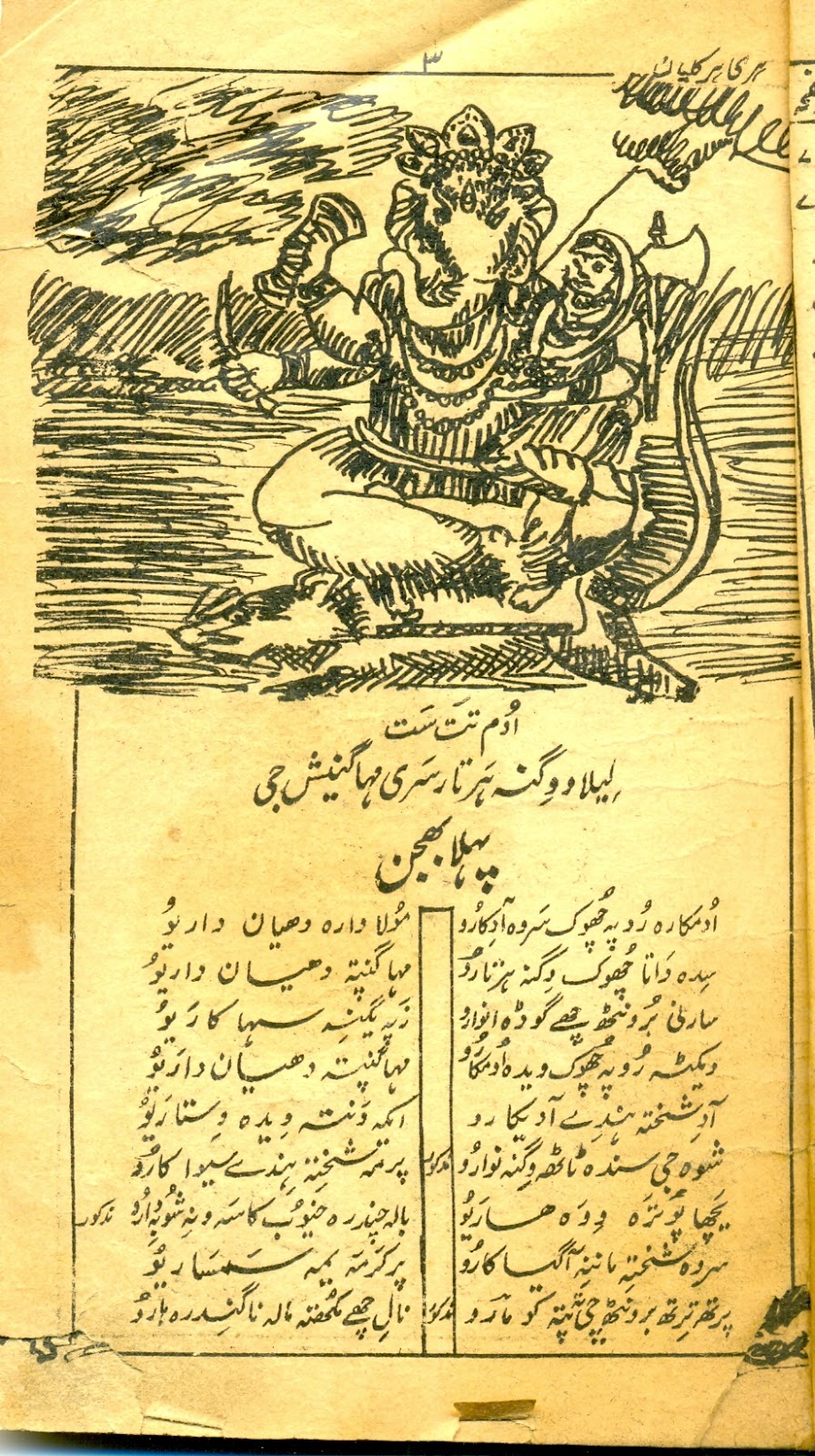 |
| Ganesh Leela ‘Omkara roop chuk Sarva’ |
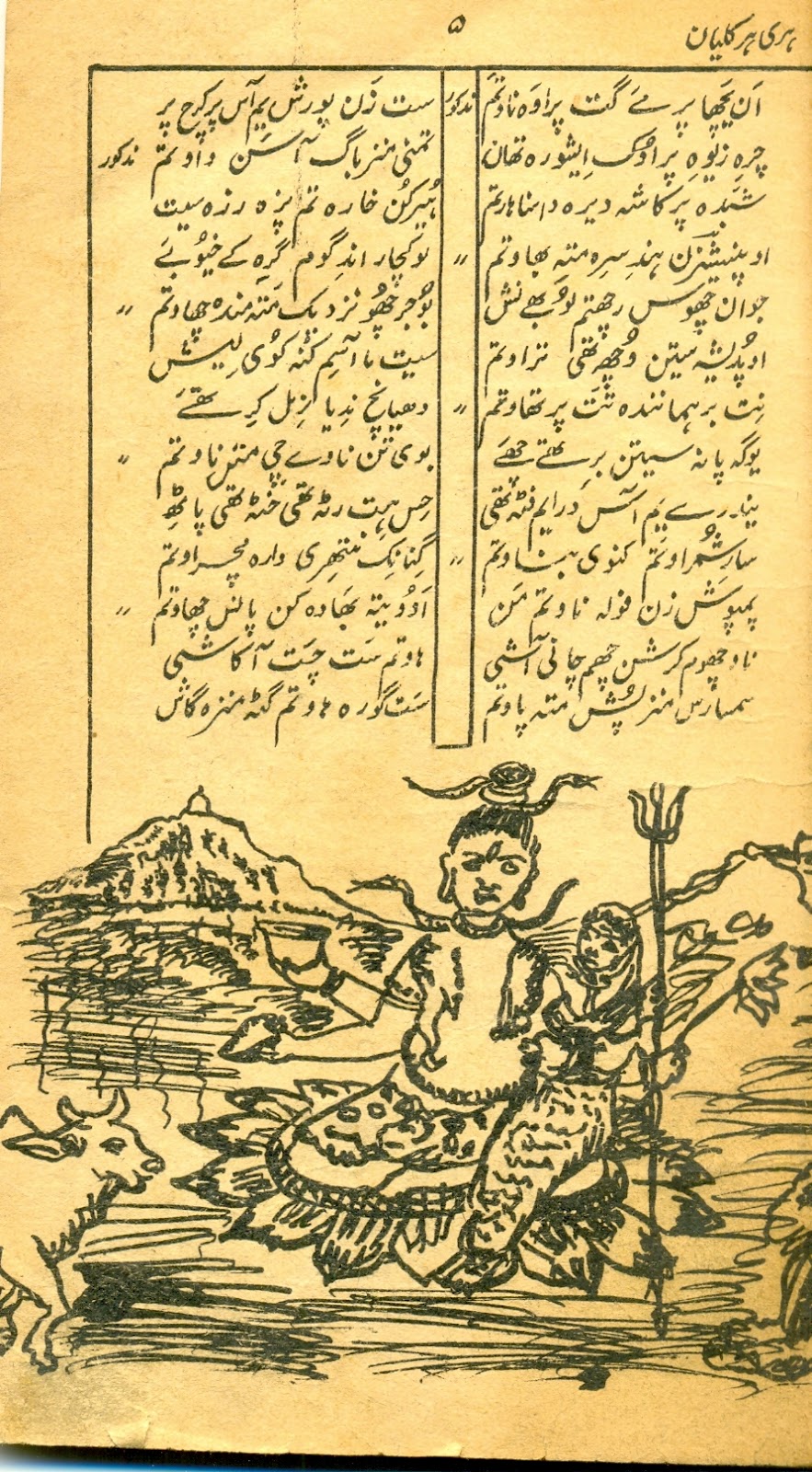 |
| Shiv Leela‘Sat Chat annanda amrit chavtum’ |
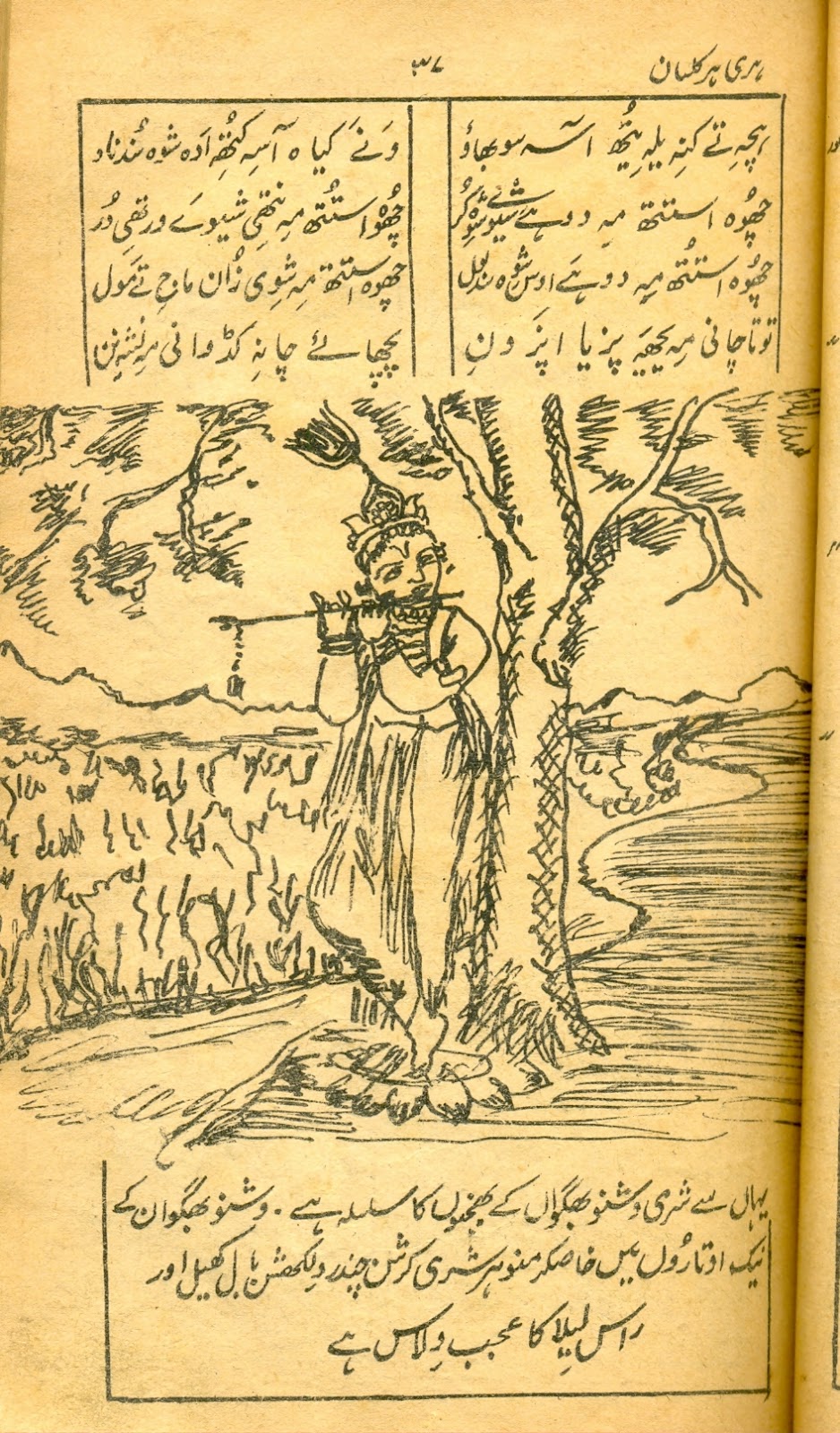 |
| Krishan Leela ‘Patmeeshwar Purno ‘ |
 |
| Vishnu Leela ‘Madha Kant marvaney Vesh Darvaney’ |
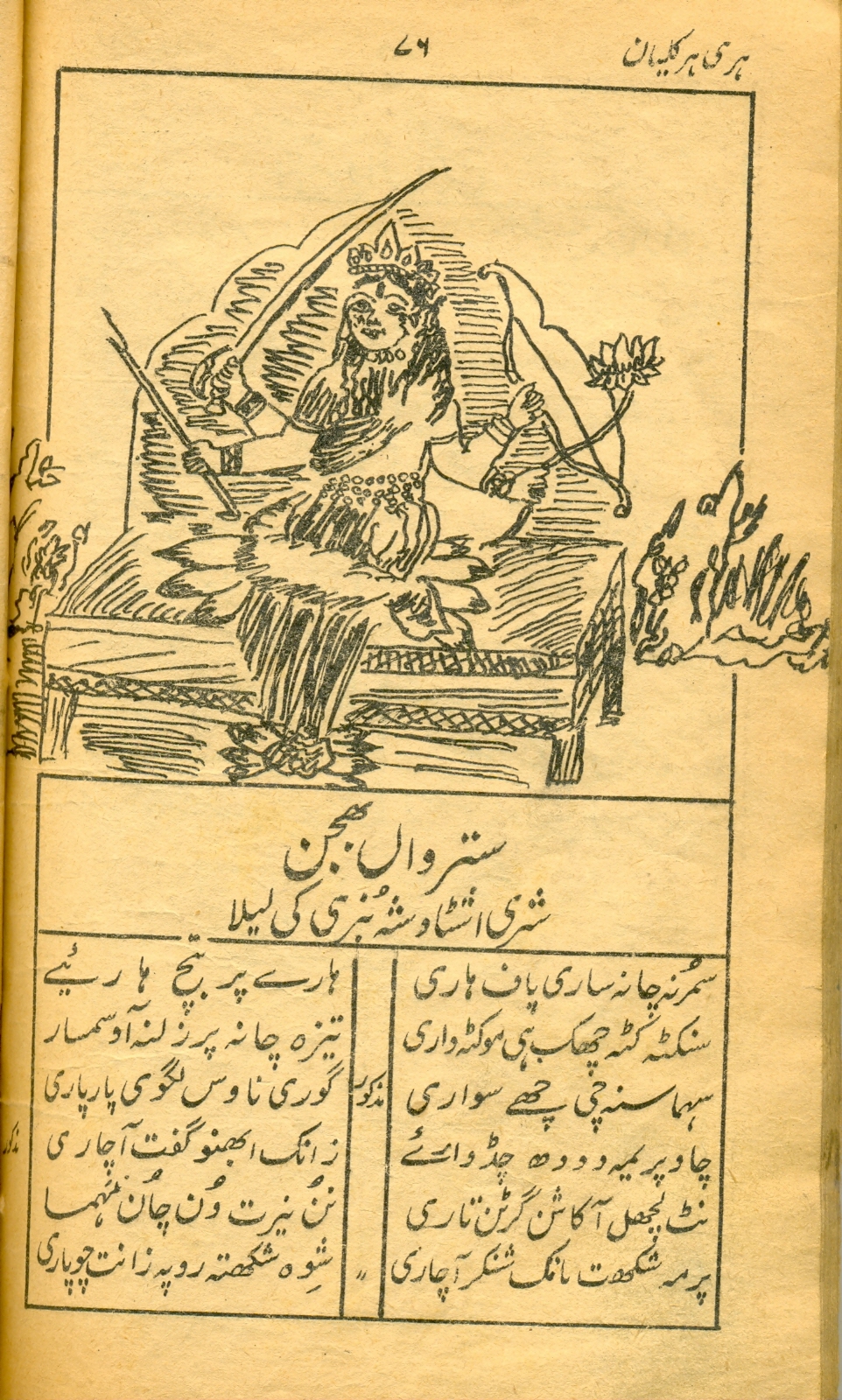 |
| Ashta Dasbazi Devi leela‘Sumran Chaney sari Paaph hari Hari Parbatch Hari Yay’ |
-0-
Harihar Kalyan (Kashmiri) (grace of Shiva) is the only collection of the poems of the prominent Bhakti poet of Kashmir Krishna Razdan in Persio-Arabic script. The book was published posthumously in 1930. Since then it has been published several times. Its last edition appeared in 1955 from Srinagar. All the earlier editions were published from the same place.
The publication is in fact an abridged edition of Shiva parinayah an anthology of poems of Krishna Razdan, published by the Royal Asiatic Society of bengal in six volumes from 1914 to 1924 with Sanskrit Chaya by Mukundram Shastri. The book appeared in the life-time of the poet under the editorship of George Abraham Grierson in Devanagri script. [available here]Harihar kalyan is the main title of the book and its subtitle is Shiva lagun (The wedding of shiva) as there are several sweet songs pertaining to the marriage of Shiva with Parvati inculded in the book. Both the titles appear on the front page of the book in bold letters. This excellent book is prized by all those who have some taste for good and genuine poetry that is why this book can be seen almost in every Hindu household. But the genuine and creative poetry of Razdan has attracted the attention of the learned and cultured Muslims also. A keen observer will not fail to see the copies of Harihar kalyan in sophisticated Muslim households. Though this book is small in size and volume as compared to Shiva parinayah, the fame of Razdan as a poet of repute rests on this book alone.. Shiv patinayah is no doubt comprehensive, well arranged and neatly printed verse anthology of Krishna Razdan but it is till now known only to a few researchers and readers of Kashmiri because it is not available in the market and its Devanagri script has not been popular enough so far. The book contains some of the most popular compositions of the poet, which form an invaluable part of our verse literature. The compoosition inculded in Harihar kalyan are generally termed as ‘lila’ (the play or the sport). In fact all the religious songs in Kashmiri have been classed or termed as lila literature, but speaking in the language of literature, ‘lila’ in itself is not separate form of poetry.
~ entry for the book in Encyclopaedia of Indian Literature (1988).
-0-
“In spite of being a philosophical and religious poet,” says [ Abdul Ahad ] Azad, “he never chose esoteric themes and notions, but made his language of the earth, earthy. His bhajans and leelas could naturally not be in the highly Persianized Kashmiri.”
~ entry for the poet in A History of Kashmiri Literature by Trilokinath Raina.
-0-
Gyan Prakash, Kashmiri Leelas, 1949
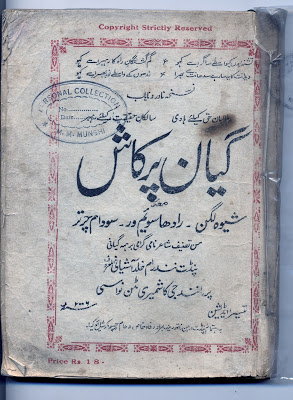
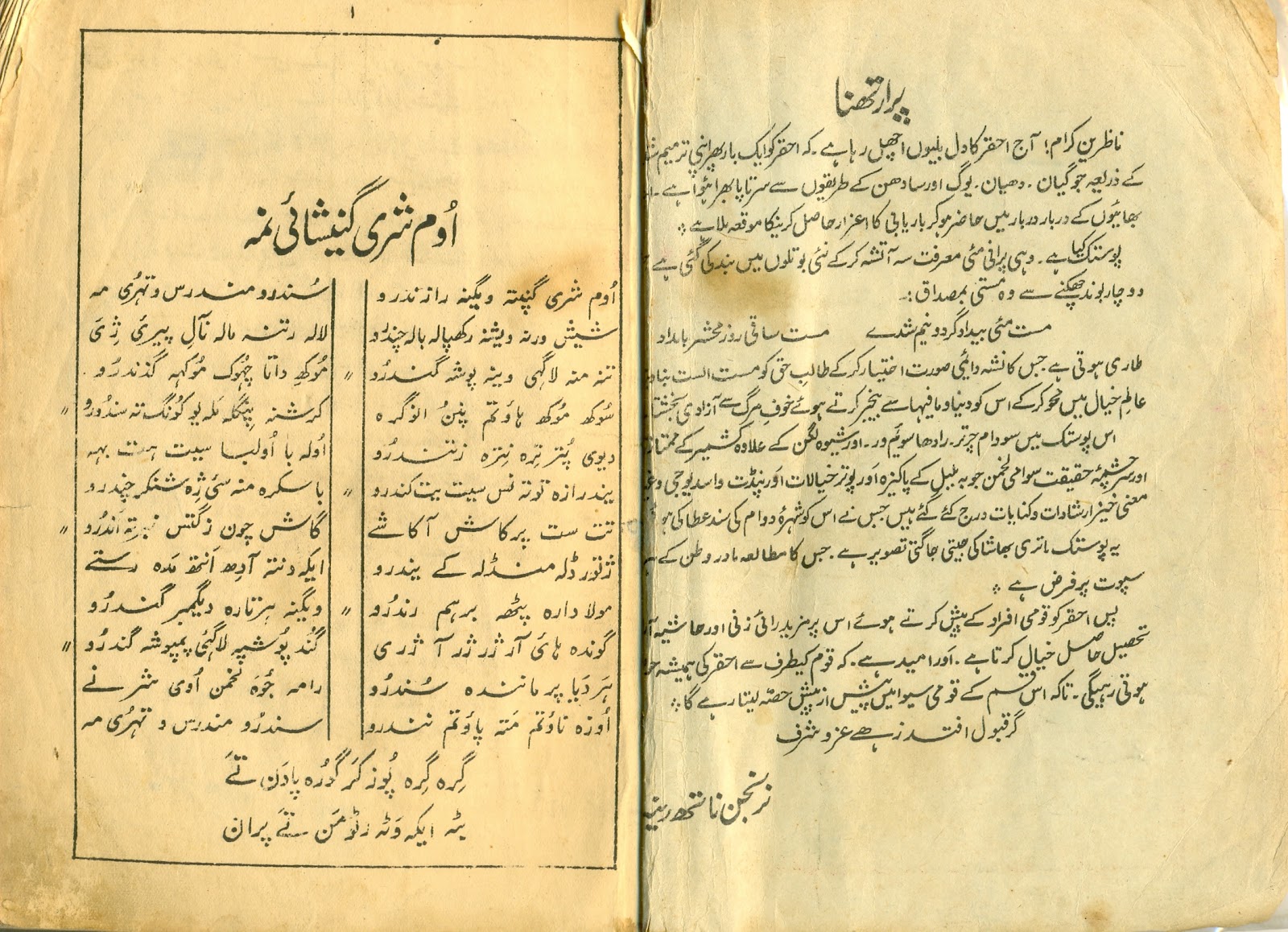
Man Mohan Munshi Ji shares some more from his treasures. These are pages from a collection of Kashmiri Leelas published under the title ‘Gyan Prakash’. This was the third edition of the book published in 2006 Bikarmi (1949).
 |
| Title Cover |
 |
| First Leela |
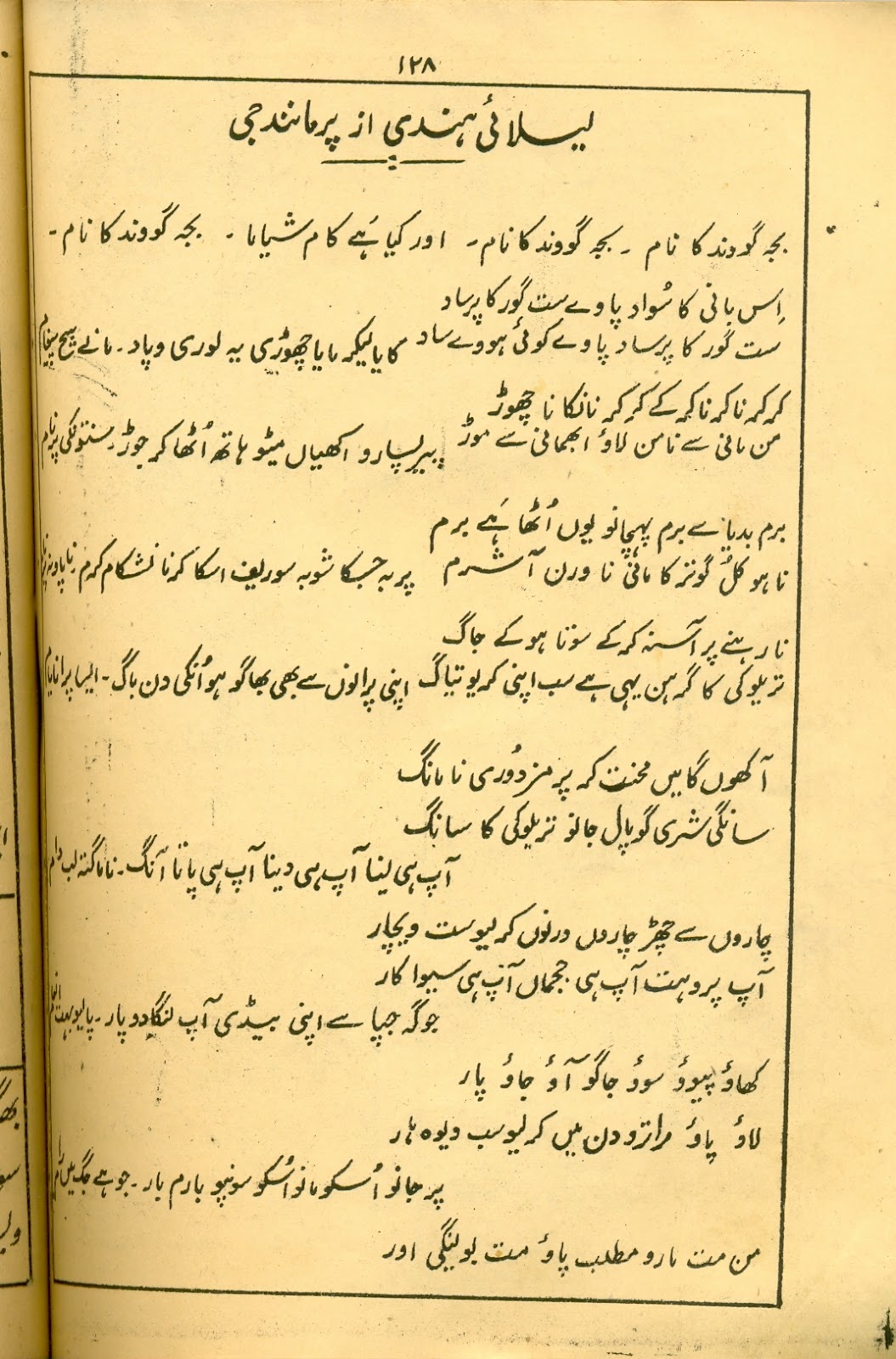 |
| A Hindi Leela |
-0-
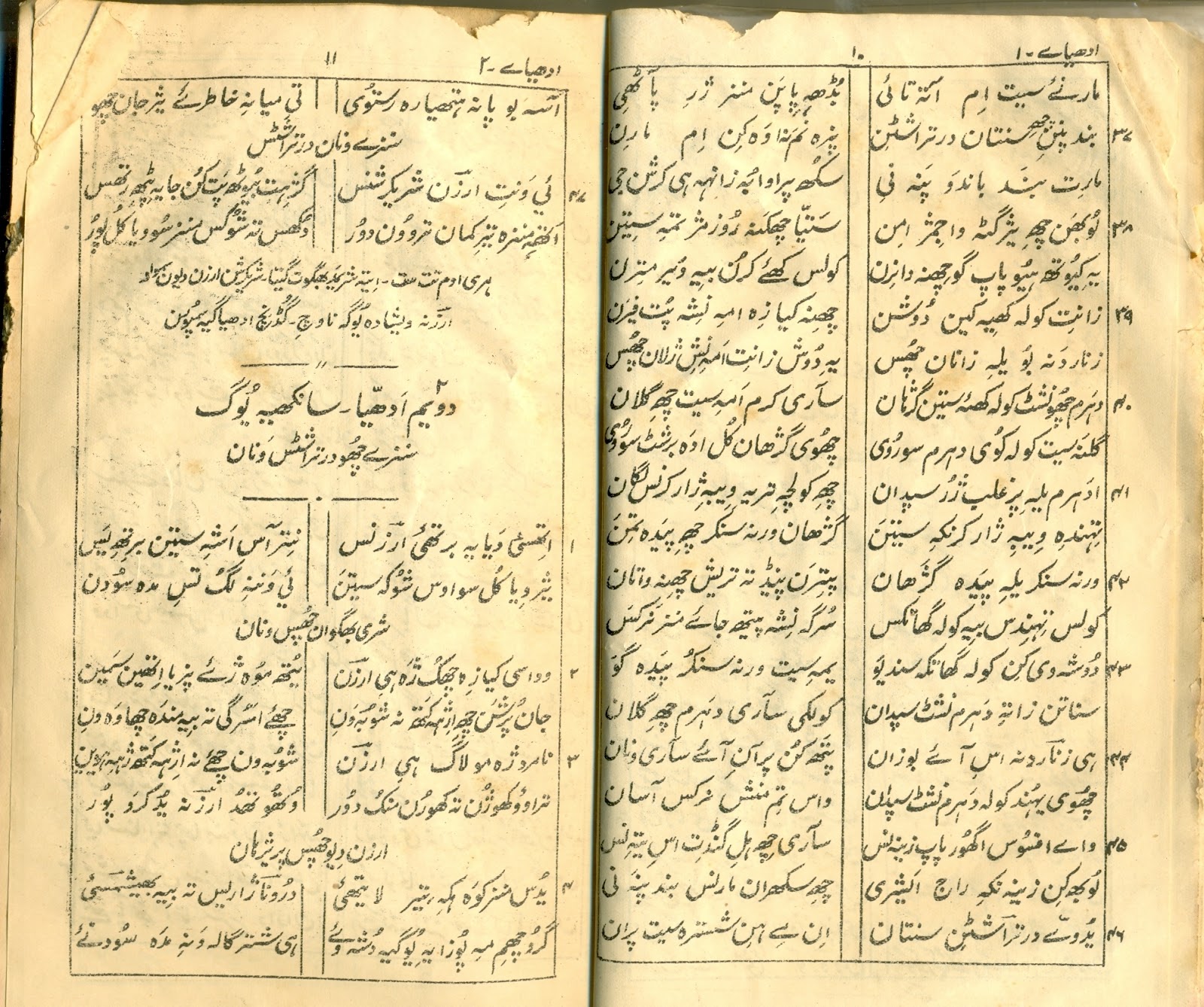
Kashmiri Shreemad Bhagvad Geeta by Pandit Krishan Joo Dhar, 1932
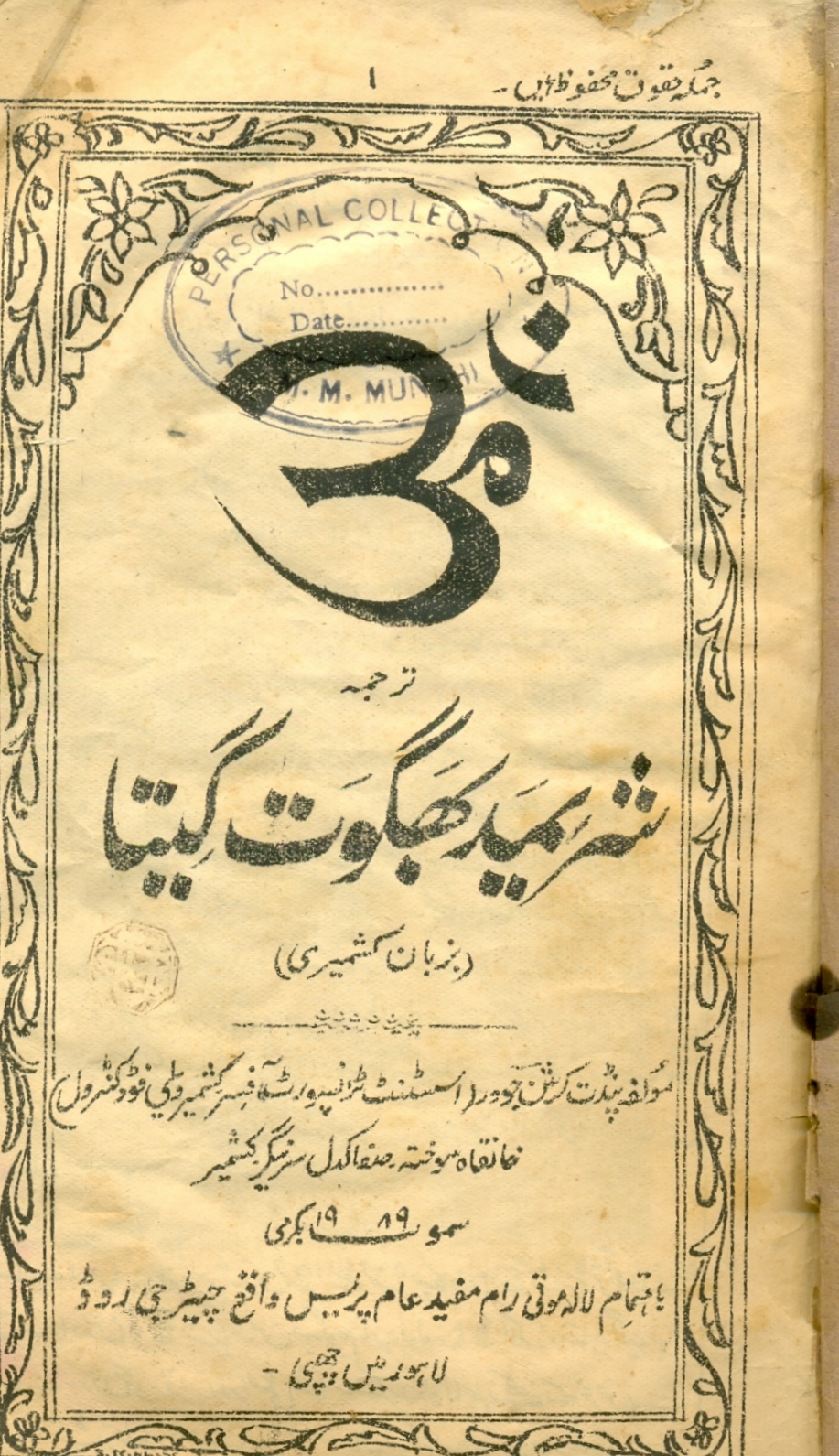
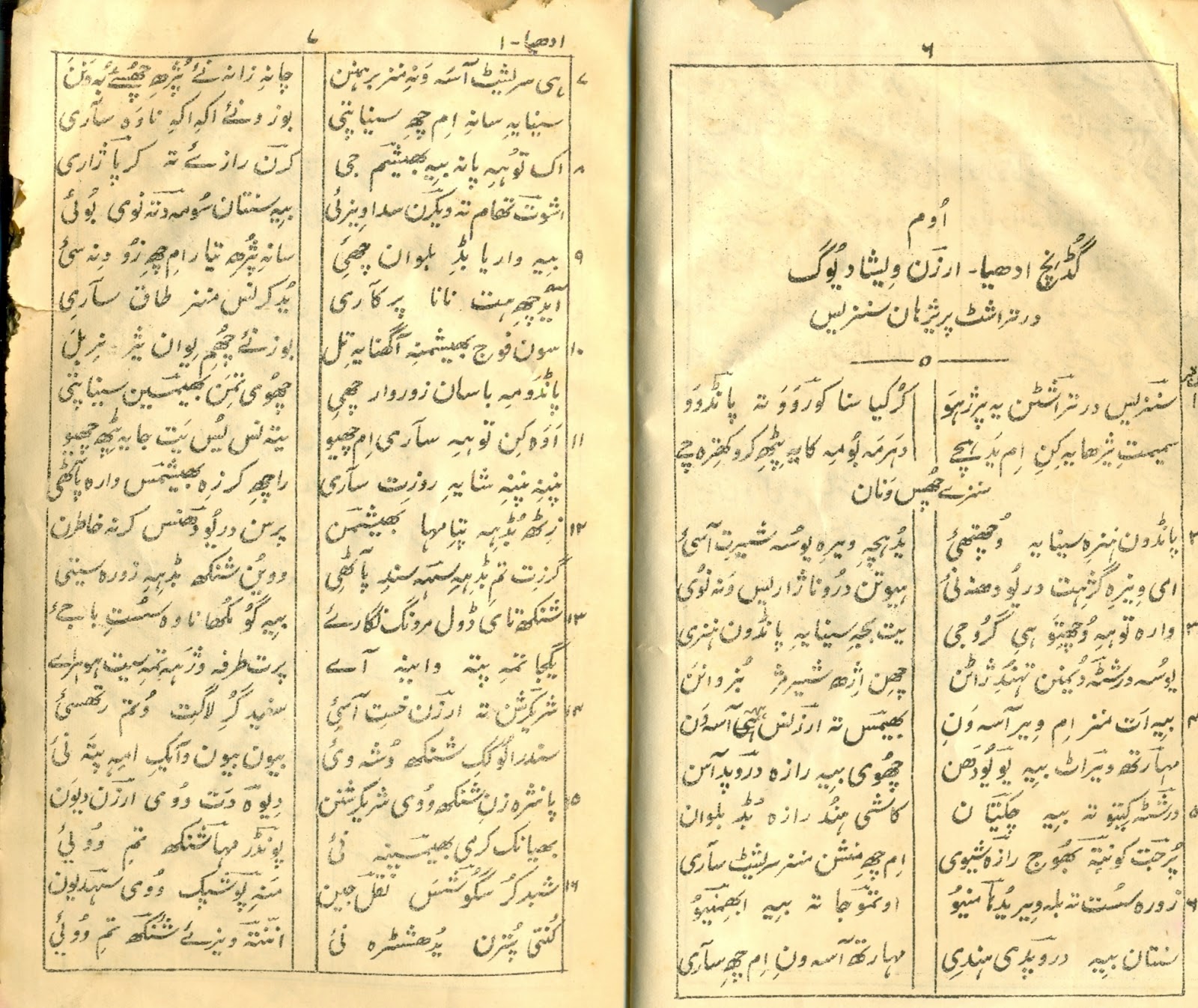
Man Mohan Munshi Ji shares pages from Kashmiri Shreemad Bhagvad Geeta written in 1989 Bikarmi (1932) by Krishan Joo Dhar (D. 1974).

-0-
Untitled Post
In winters
a woman
arrives in city
She walks house to house
door to door
Claiming to be a Hindu
a Pandit
driven
Out she asks for money
For Poor Children.
To Feed.
a woman
arrives in city
She walks house to house
door to door
Claiming to be a Hindu
a Pandit
driven
Out she asks for money
For Poor Children.
To Feed.
On some days
People
some they pay
But not before they hear
a sad story or two
Then on some days
she runs into
some other Kashmiris
In their offices, apartments and bungalows
‘But how can that be!’
They exclaim.
They think.
‘It happened wayback in 90s.’
And so they ask her
for a proof
Now, if you be a pandit
sing us a leela
in Kashmiri, if you can
any shall do.
The woman
taking a deep breath
holds it for a minute or two
and then bursts croaking
Shiva Shiva Shiva
Shiva Shiva Shiva
Shiva Shiva Shiva