Gogji

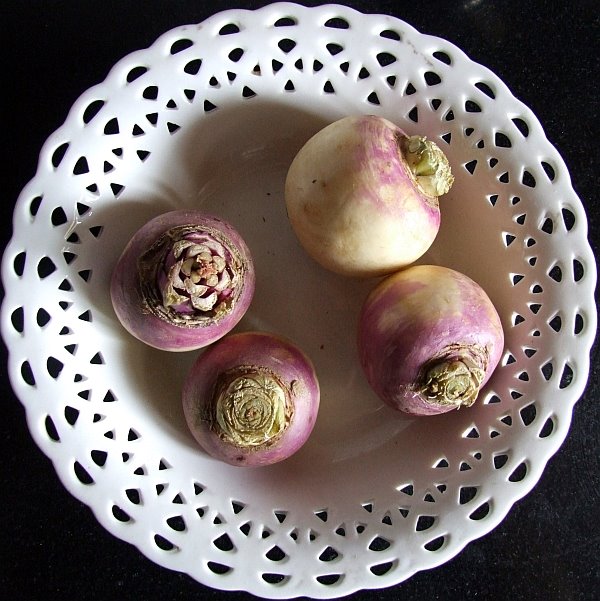
Gogji. Turnip. Gonglu.

A vegetabele.
A place in Srinagar called Gogji Bagh, Turnip garden.
A pandit who left Kashmir ages ago, but misses kashmir: Gogji Batt’e.

A song to be sung like a Kashmiri singing a Punjabi or a dogri song: Asi Gonglu pakaya, tusi khaan nahi aya. hata lo lo.

Nab’Ga’gal

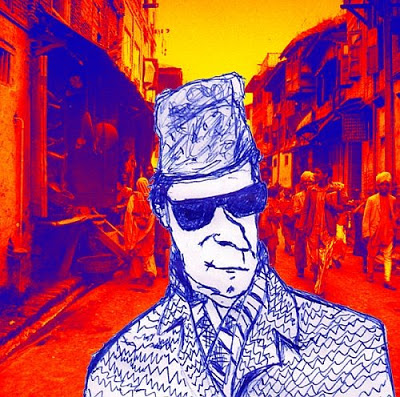
The man used to walk around the old mohalla of the city wearing a pair of dark sunglasses. Sun or no sun, morning, afternoon or sun-down, those dark glasses were always resting on the bridge of his beak. Hidden behind those dark shades, his sharp roving eyes, each one of the pair working independently, used to look for any and all unusual activities, foreign spies and people who frequently indulged in dangerous stories. He had his eyes on everyone and no body could tell. He could be looking at you and he could not be looking at you. This man was no ordinary man, he was a secret agent, his mind was always taking notes and the sunglasses were a perfect cover for his covert art. These sunglasses were his weapon of choice.

The man was C.I.D, it was well known. Goggles long ago gave away his ruse. People knew it all and they had a hearty laugh everytime he walked past. In the city, this man became known as ‘Nab’Ga’gal‘, Nabi of Dark Sun Goggles.

infamous Khooni Nala

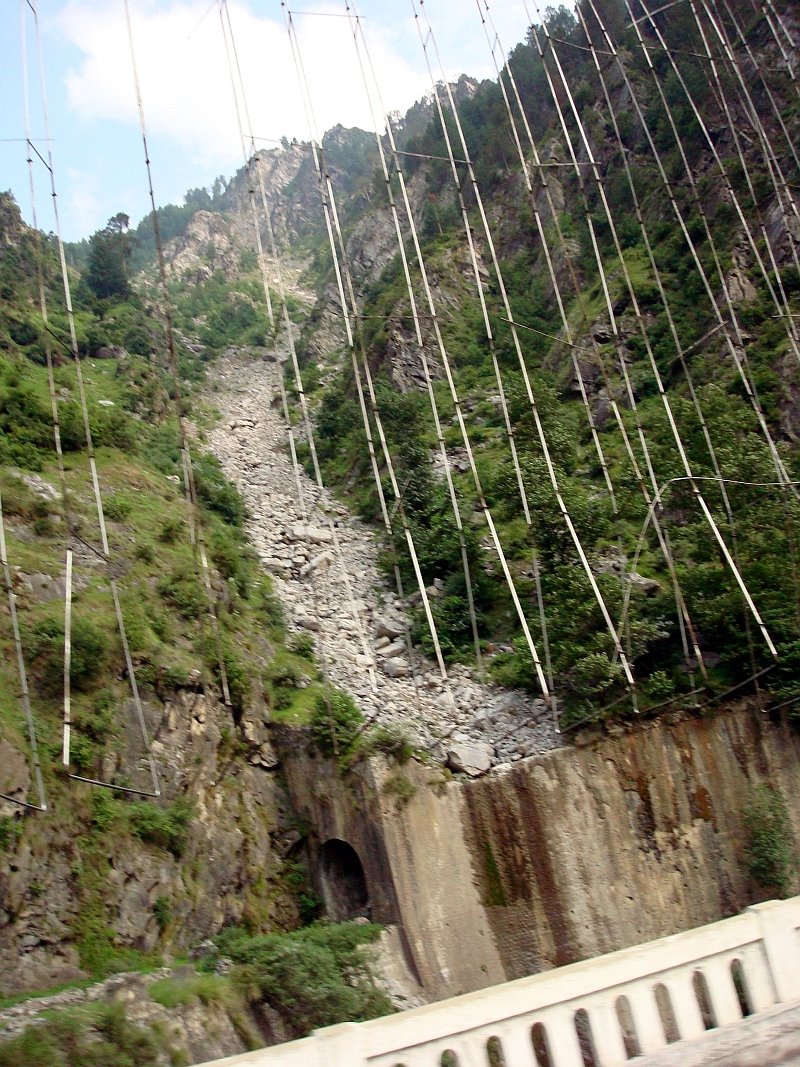
Before passing through the Banihal tunnel, one has to pass through a stretch of road simply known as Khooni Nala. Here the human race battles the powerful forces of nature. And you can almost see this struggle. Man maybe winning but once in a while nature lands in a crushing blow.

Khooni Nala got this name because of the alarming number of people who died in road mishaps and accidents at this very spot. It is the “Killer Rivulet”.

A steel mesh structure (a rather recent engineering solution) protects the passing vehicles from falling boulders. The steel nets need to be replaced every few months. During winter, this stretch of road becomes avalanche prone.

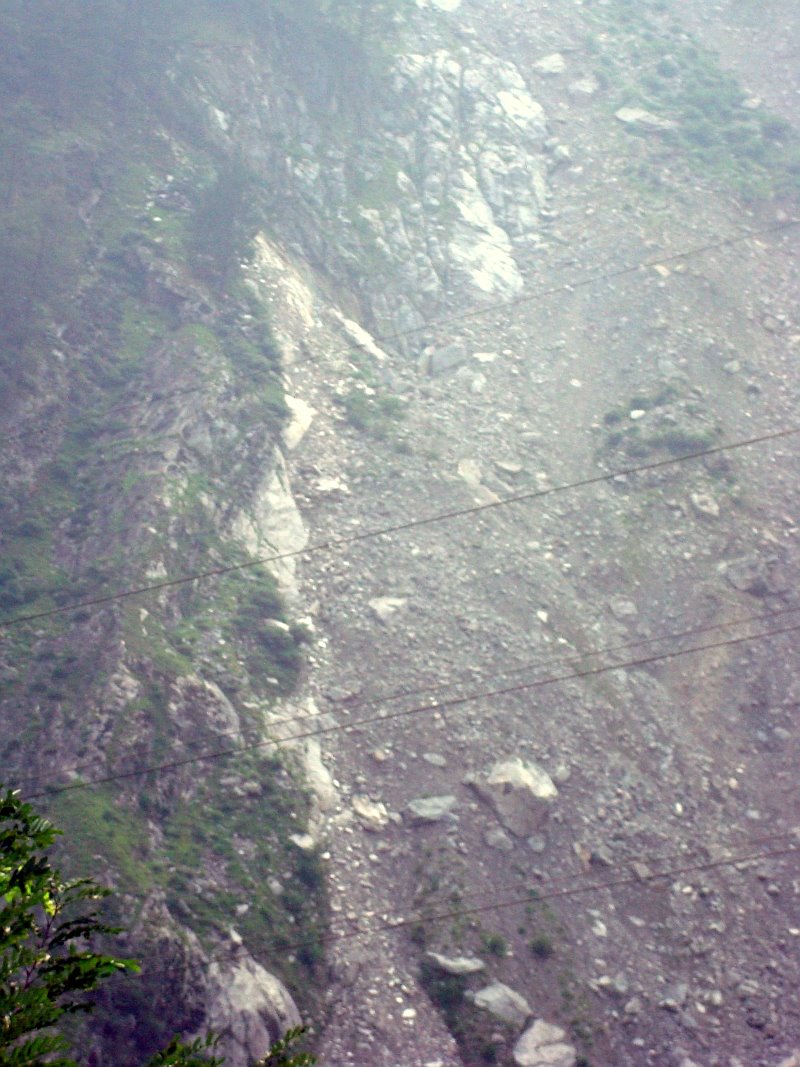
From the road in this area, you can see mountains that just seem to be melting away, eroding swiftly, mountains turning into sand and stone, mountains flowing down into rivers.

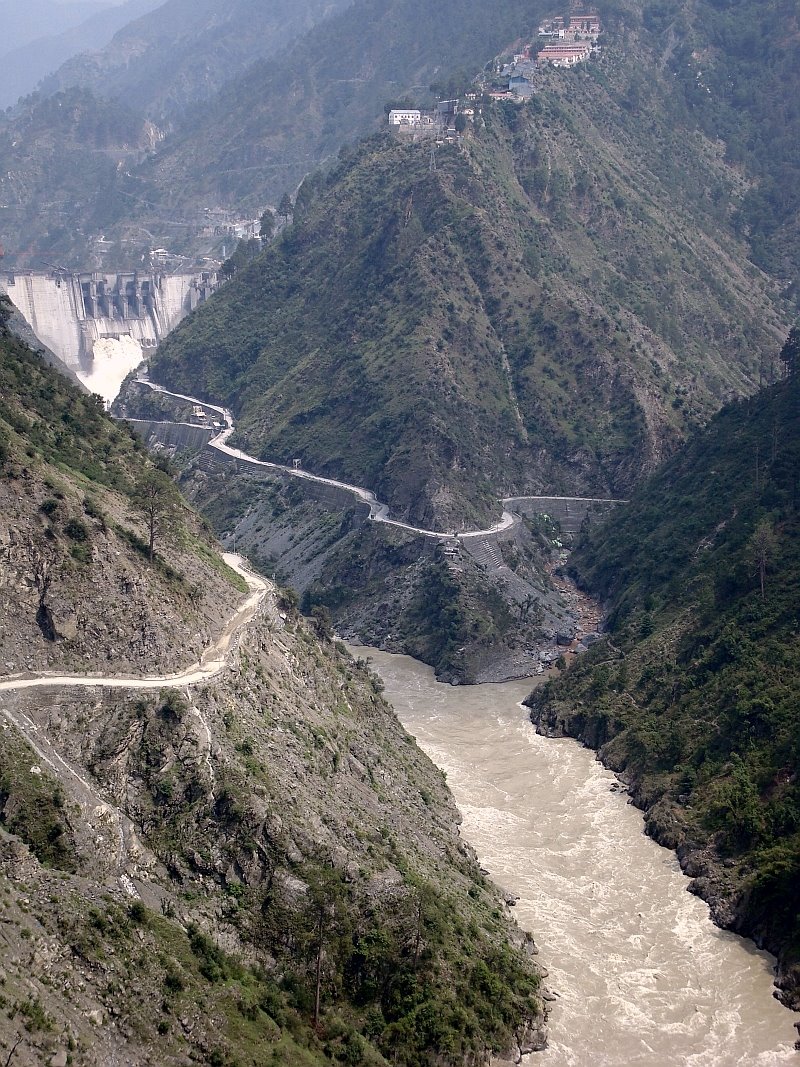
on road, Baglihar Dam, Chenab

That’s no monastery perched on top of a hill.

Baglihar Dam on river Chenab as seen from a place called Peerah.

Wiki Entry:

Baglihar Dam, also known as Baglihar Hydroelectric Power Project, is a run-of-the-river power project on the Chenab River in the southern Doda district of the Indian administered state of Jammu and Kashmir. This project was conceived in 1992, approved in 1996 and construction began in 1999. The project is estimated to cost USD $1 billion. The first phase of the Baglihar Dam was completed in 2004. On completion on 10 October 2008, Prime Minister Manmohan Singh of India dedicated the 450-MW Baglihar hydro electric power project to the nation.

In the 90s, this project was a one of the major source of discontent between India and Pakistan. Matter was sorted out amicably with the help of World Bank. Without doubt ‘Water’ is going to be the big issue of future.

 -0-

Added this image to wikipedia page about Baglihar.

on road, Kud

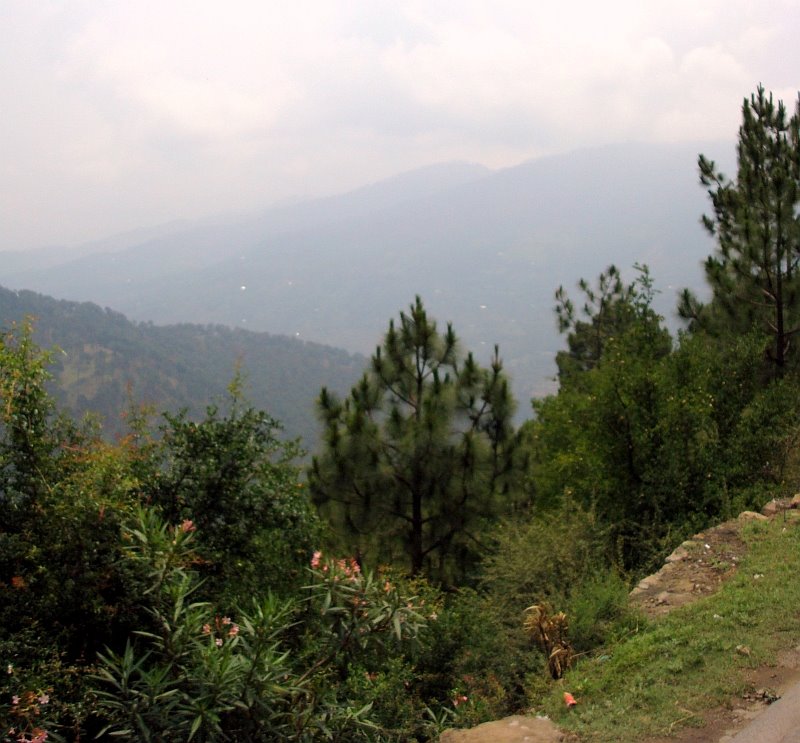
Photographs around Kud.

Kud, around 103 Kms away from Jammu, is a place of some great scenic beauty. Kud is popular as a spot for trekking and camping. But among the people of Jammu, Kud is famous for its sweets and sweet shops, actually the famous shop is just one. These sweets are made in the purest desi ghee possible. Pickles, aanchar, of Kud are equally famous.

Shiny steel roof tops of houses.

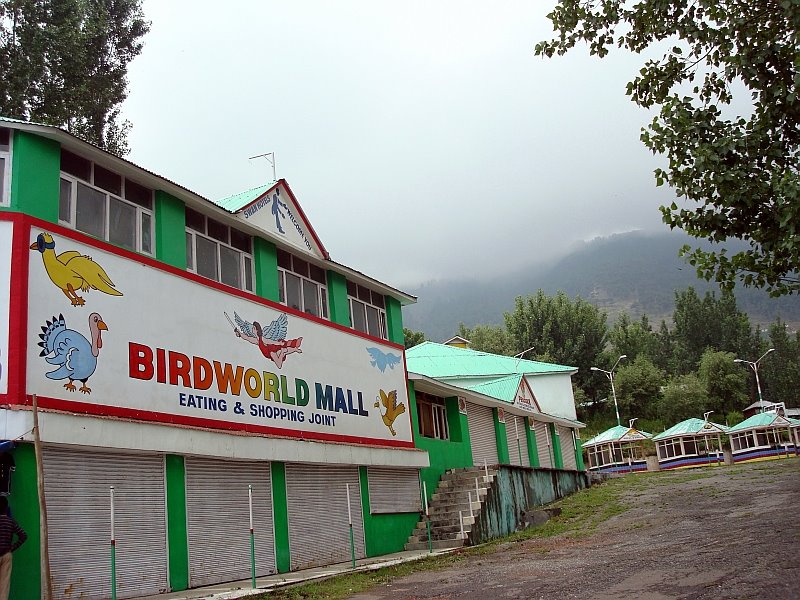
Birdworld Mall. Kud will be next know for this establishment. Hiring process for birds is still on.


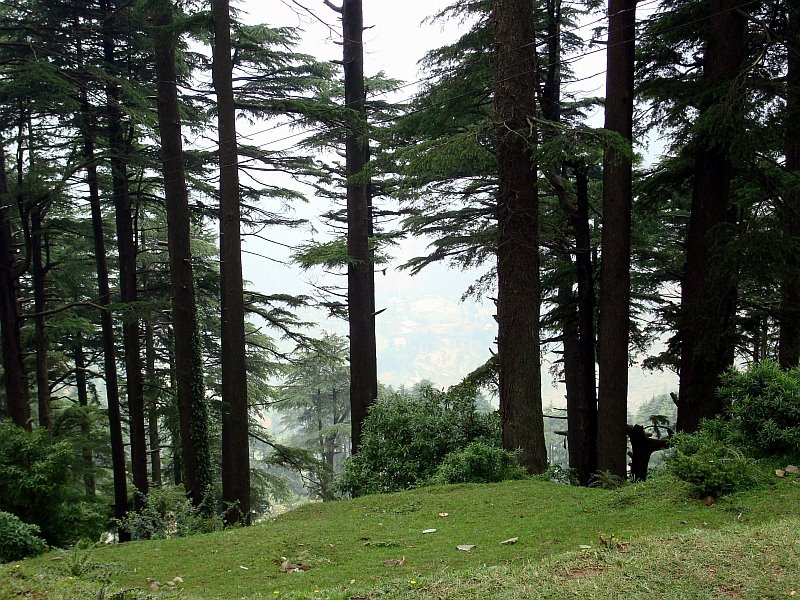
Pine trees. Electric wires.

NH1-A to Srinagar, built precariously along ravines, cutting thorugh dicey mountain sides, at times too narrow, nature reclaiming the ground, never too wide, is a highway of diesel fumes, trucks and buses. Kud provides some respite during the journey.

Trounz: Strange creature from Kashmir

Trounz ain’t no ordinary Ponz.

One year, news spread all over Kashmir about a strange looking creature. It looked like an ape but had very little flesh or muscles on it, it was thin, in fact it was bone and skeleton, and hence its name: trounz. Trounz was believed to have emerged from underneath the earth, somewhere near Baramulla. But some people recalled that in older times trounz could even be sighted in cities in great numbers. The truth however was that nobody knew anything about trounz.

-0-
ponz: monkey
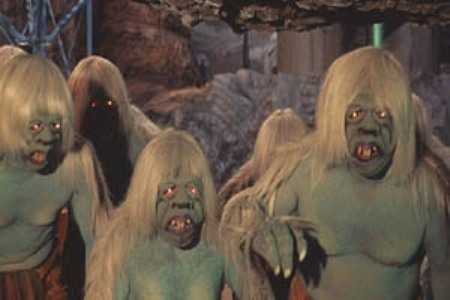
Image: Morlocks from the film H.G. Wells’ The Time Machine(1960). Morlocks were a fictional species created by H. G. Wells for his 1895 novel, The Time Machine. Morlocks dwelled underground in the English countryside of A.D. 802,701 in a troglodyte civilization, maintaining ancient machines that they may or may not remember how to build. Their only access to the surface world is through a series of well structures that dot the countryside of future England.

soonth, first day of spring

Summer is about to start, almanac,Vijeshwar Panchang, says today is the first day of Spring, Soonth.

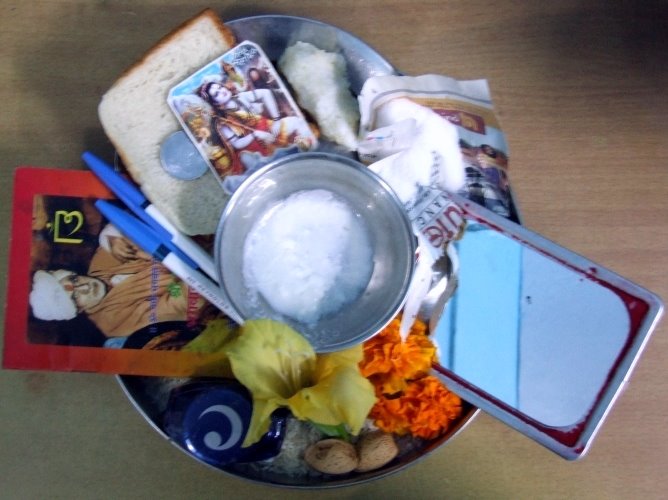
First morning of spring, the first sight you are supposed to see: a big (here we have a small) thali having some cooked rice, a kulcha/bread, pen, inkpot, some currency notes (here we have some coins), milk or curd (we have curd), dooyn – walnut (here we only got some almonds, walnuts of hayrath didn’t last long enough), some salt (actually meant to be took noon or rock salt from Pakistan, probably called took noon because of took-took sound it produced on striking a thal while being consumed with rice), photograph(s) of anyone of the gods, some flowers – narcissus flower would be great, and a small mirror

Traditionally, the thal was prepared on the preceding night of the first day of spring, then covered with a piece of cloth and kept overnight at the center of the house which often meant kitchen, chowke or may be the thokur kuth, prayer room right next to chowke. This was the rite of thaal barun for welcoming soonth spring.

In the wee hours of morning, eldest woman of the house, grandmother or mother, with the thal in her hand, wakes everyone up, one by one, from slumber of winter and asks each one to look at the thal, look one’s face in the mirror, take up the pen and write something, anything but OM would be prefect.

In the afternoon the family will probably eat Kaanul Haakh ti Gaa’de, fish cooked with fine fresh first Haakh of a renewed spring soil.