Neighbours, not mine. Name, not my name

Neighbours, not mine. 

“Simi Ji! Simi Ji!” A little girl living in that house would sometimes call out loud at odd hours. I never knew the caller by face. I could only hear a voice coming somewhere deep from the inside of that Muslim house and then I would hear the laughter. My mother would run to the window with a false start and then half-way, catching onto the prank, she would curse, “Trath Temis”. If it wasn’t enough that she had neighbours who would clear-out their spittoons and night soil into her courtyard, now she had to deal this bratty child’s game. Sometimes I would run to the window to catch the little jester. But I never saw anyone. Our game would continue.

My Nani had a strange habit. She would visit her daughter’s place but would try to keep her visits reticent. She wouldn’t knock on the door or ring a bell. She wouldn’t walk into the house and simply meet her daughter. No, for my Nani, these visits were part of a ritual of checking up on her daughter’s married life. As part of this ritual her would stand under the second-floor window of our house and call out my name, my Other name. On hearing my Other name, mother would look out from the window and find my Nani with maybe a bag of fruits, baker’s bread or something such. Moments later, she would run down and standing below that window, a bit embarrassed, she would ask her mother to be more proper and not create such scenes. But only weeks later my Nani would again be under the window calling, ‘Simi Ji! Simi Ji!’

My Nani wanted that I be named Sameer. Naturally, the nick name would have been symphonic and girly Simi. But then I was born on a wrong day. An elder Bhabhi of my Dadi vetoed that for someone born on such a great day, Vinayak Tchorum, and that too a Sunday, only Vinayak would be a proper name. Simi would have been lost like Sameer but for my Nani and the unseen neighbour girl, the two custodians of my other name.

-0-

Gadadhar Temple, Jammu

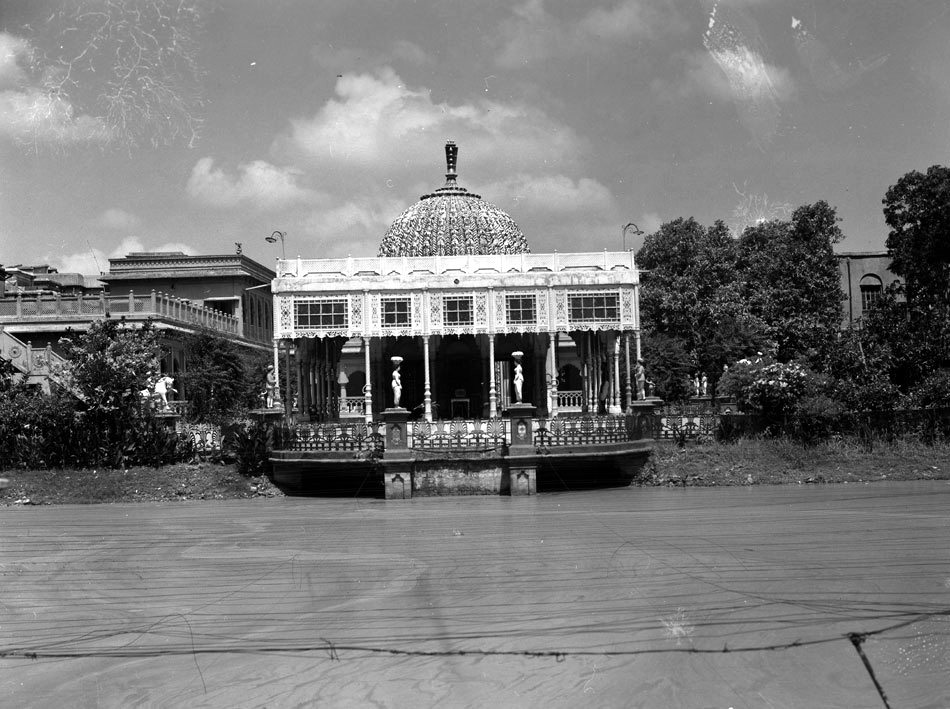
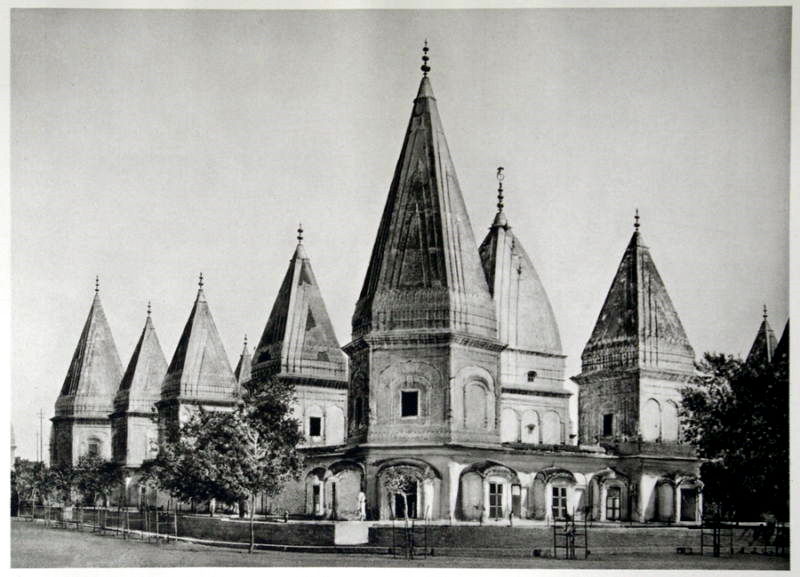
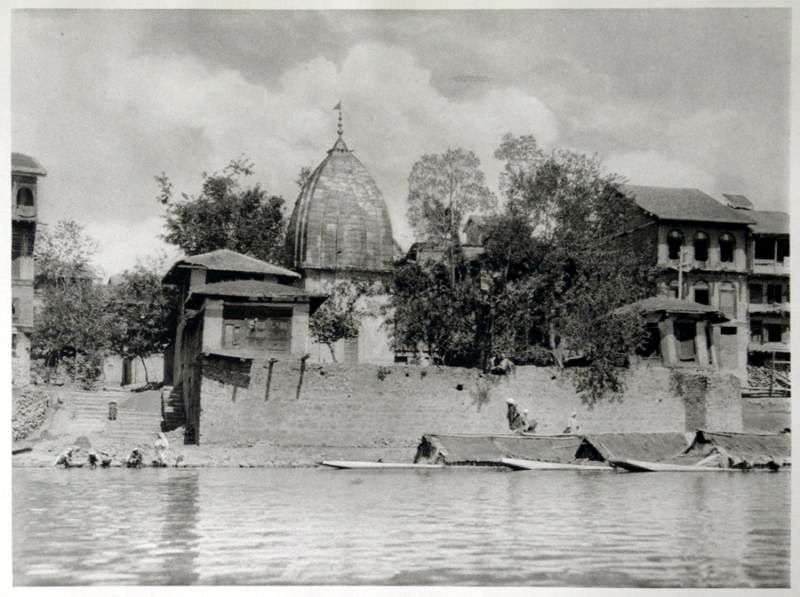
In the post ‘The Romantic Kashmir, 1906‘, I identified the below given image from 1945 as that of Gadhadhar Temple Srinagar.

The Gadhadhar Temple in Srinagar actually looks like this back in 1906:

I assumed that in next couple of decades it may have changed a bit. So made a connection between an unidentifiable location and an identifiable location. It turns out I was wrong.

Man Mohan Munshi Ji pointed out the mistake. Gadhadhar Temple in Srinagar still looks pretty much the same. The discussion lead me to an interesting fact that there is in fact a Gadhadhar Temple in Jammu too. It seems Dogras built twin temples separated by geographical locations and just next to their two seats of power.

The following photographs and description were sent by Man Mohan Munshi Ji of Gadadhar temple in Jammu.


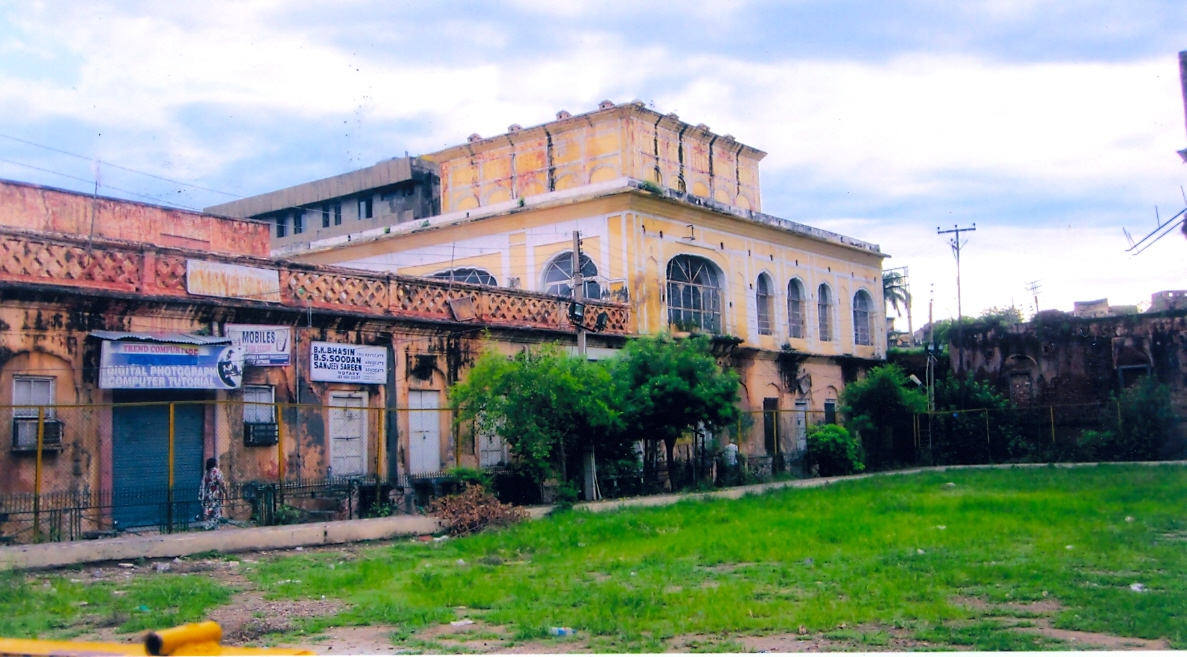
View of Gadadhar Temple Jammu from the south-western gate of Mubarak Mandi . (old Secretariat). Temple is located on the first floor and ground floor houses some shops and offices.


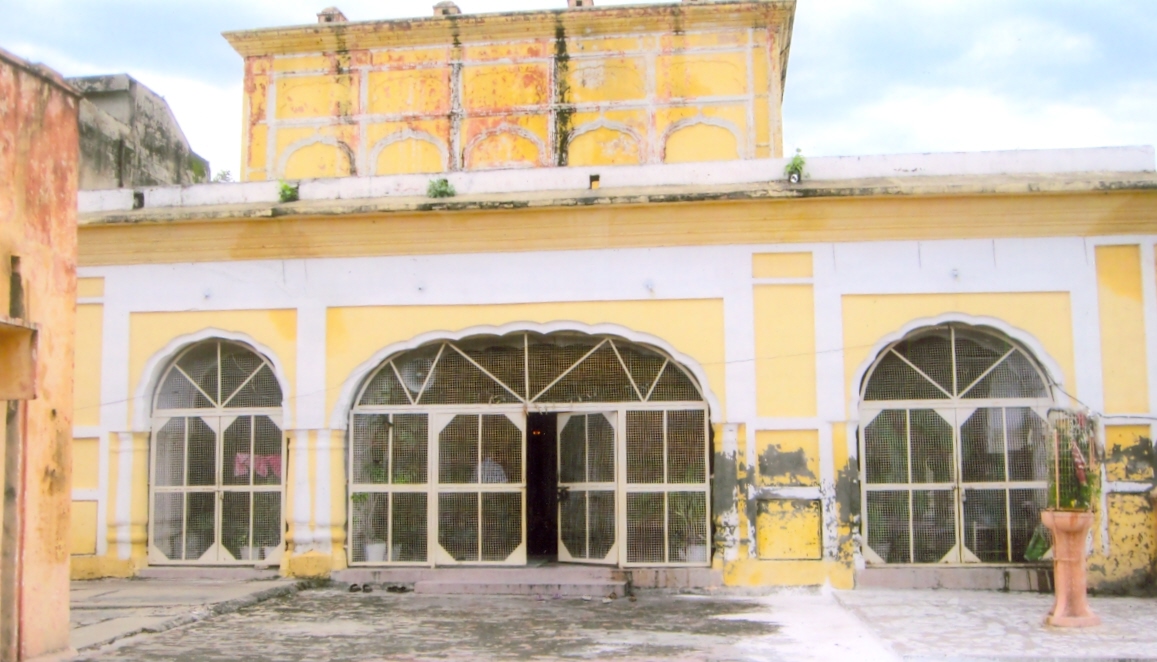
Front view of the Gadadhar temple on the first floor

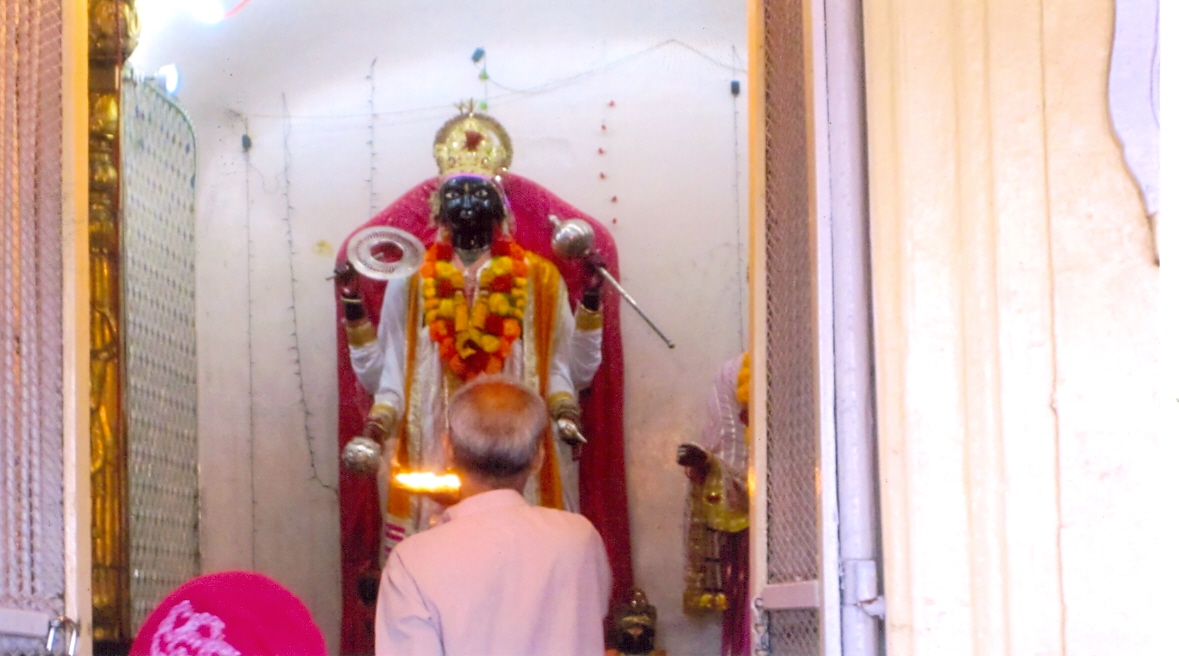
 Statue of the deity inside the temple, note the Gadha in the hand of the deity

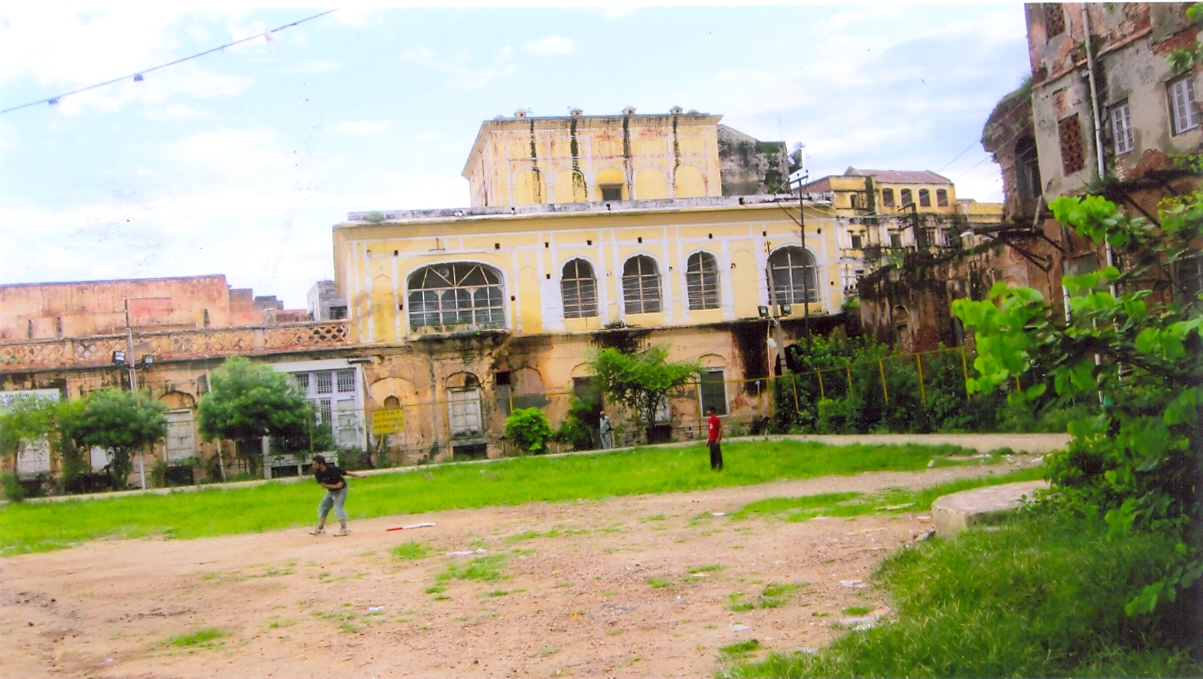
The filled up tank in front of the temple used by Dewan Badrinath School as play ground.
Note the western gate of the old Secretariat Jammu on the right side

-0-

Update: I now believe the original image to be of a Jain temple in Calcutta. Check original post (Kashmir in 1945) for updates.

Kherishu, Varishu. I love you, I need you!

In April 2009, four months prior to his death, Gulshan Bawra, one of the lyricists of Harjaee [1981], recounted how another song in the film was created:”We had gone for the shooting of a film in Kashmir and dusk had fallen over the valley. Near a ropeway, I heard two locals call out to each other in a language I did not understand. One of the silhouetted men seeded to ask a question and the other seemed to reply in the affirmative. My panic swelled as the only recognizable word sounded like “shoot”. I interpreted this as “Should I shoot?” and “Yes, shoot” respectively. I hurried away from the scene, understandably quickly. A couple of days later a friend of mine in Bombay clarified amidst relieved laughter that what I had heard was “Kherishu?” and “Varishu” which meant “How are you?” and the reply “I am fine”. When I told the two words to Panchan, he asked,”Which language is this? Russian?” “No, this is Kashmiri,” I replied. An amused Pancham used the words for an Asha Bhonsle-Kishore Kumar duet and the song “Jeevan me jab aise pal…Kherishu, Varishu was born.

From – ‘R.D.Burman The Man, The Music'(2011)  by Anirudha Bhattarcharjee and Balaji Vittal.

-0-
The two Kashmir words were finally passed off in the song to mean I love you and I need you.

Politics of Information

A couple of weeks back, on a Sunday at around 11 at night I finally started writing that story. I had been wanting to write it, get it out, for more than two years, but couldn’t find time. Writing takes too much necessary time. You have to bargain with time. That night too I was bargaining with time to finish a story. I had a job to report to in the morning. It was around 2 when I laughed to myself and thought,’Can’t stop now. I am never get down to writing it. May this be a long night!’ The story ‘Fish’ finished at around 4:30. I didn’t poofread it, I almost never do. Let it be ‘Kehu Main Pade Khuda. Time is nothing. It is just a unit. I hit the publish button, went to sleep. Woke up at around 8:30. ‘At least earlier they used to look like map of India, now they look like Antarctica.’ With that I bid my mother and her Parathas good-bye. After a two and a half hour commute that included cycle-rickshaw, Auto-Rickshaw, Metro and the again Cycle-Rickshaw, I was in office where I going to stay for entire next week, tying to design a social game. Now week’s days would be spent trying to understand behavior of people online, and nights would be spent bargaining with time. And on every second night, like a wound up monkey with cymbals for hand, a monkey in love with the noise he is making, [system crashes, dies, as it tries to recover, I pick up a half-read book, flip to the page with a folded top corner and read a few pages only to stop after the narrative reaches the part about lyricist Gulshan Bawra‘s ironic inspiration for an early 1980s Bollywood love song peppered with Kashmiri greeting, ‘Kherishu, Varishu’. I want to write some more. But my system does not respond. It crashes. I return next night to finish this post from a friend’s system. Like an automaton, I would religiously hit the publish button.

-0-

Last week, thanks to my super vanity – a habit of self-googling, I realize ‘Fish‘ got posted to some newspaper called kashmirmonitor [kashmirmonitor.org/krkashmirmonitor/08232011-ND-strange-tales-from-tulamula-10326.aspx]. Although my name as the author is there next to the miss-titled story, ‘Strange Tales from Tulamula’, no one wrote to me asking ‘Hey, nice stuff, can we use it?’, No, it just got posted, filled up a space. Served what purpose? No clue. What monkey business! And what harbingers of new social change.

-0-

Two nights ago, I run into more monkey business. I was going through comments section of various articles on Kashmir Current Affairs. My sorry excuse for this despicable exercise is that inspite of all my genuine efforts, I still regularly fail at entirely burying myself in Past, and sometime I too get tempted to get in touch with Present whose commentary offers us the LOLs of future. So I was digging comments. And I ended up the gallery of vintage photographs collected from “various sources” set up by an online newspaper called ‘kashmirdispatch’ [kashmirdispatch.com/gallery.html]. Yes, among other stuff ( some new even for me, sourced from who knows where) I saw Vintage photographs of Kashmir that I have been posting for more than two years now, with notes on dates, places, photographers and sources. That’s more than 60 post with more than  And I saw stuff that Man Mohan Munshi Ji  posted on this blog from his personal collection, like  The paperwallas just post it on their website as part of a gallery without any adjoining description. The exercise serves what purpose?

When I started posting, I could have easily put a big ‘Search Kashmir’ logo on all of them. But that would not have served the purpose of their existence. The fact that these photographs were shot by someone long ago, and that they were used in detailed narratives about an exotic foreign land written mostly by men (and in some cases by women) seemingly burning with a strange zeal for information, and the fact that these photographers were mostly always duly acknowledged, that these photographs were preserved for years, and only now scanned for free by billion dollar companies, that part of the story of these photographs tells us just as much about the politics of information as the manner in which we the ‘subjects’ now use or misuse these information. And right now I think we, in this part of the impoverished world, still don’t get it.

-0-

On one hand I have newspaperwallas who just Monitor and Dispatch and on other hand I have people who are kind enough to drop in a line before even posting stuff to their Facebook Walls. For people who use this blog, please feel to use use whatever you want but…try to give credit where it is due. If this post leaves you confused enjoy this video by Nina Paley.

Manto’s Kashmiri Coolie

When the smoke lessened, the policemen saw that their quarry was a Kashmiri coolie. He was lugging a heavy sack and running with admirable ease despite the weight on his back. The policemen’s throats ran dry with blowing their whistles, but the Kashmiri coolie’s pace didn’t slacken.
By now, the policemen were panting. Tired and fed up with the chase, one of them took out a gun anf fired. The bullet hit the man in his back. The sack slipped and rolled down. The man turned, and looked at the still-running policemen with frightened eyes. He also saw the blood seeping down his calf. But with a quick jerk, he bent bent, picked up the sack and began to limp away hurriedly. The policemen thought,”Let him go to hell.”
The Kashmiri coolie was limping badly when he staggered and fell heavily – the sack fell on top of him.
The policemen swooped down on him and took him away to the police station. The man kept pleading all the way,”Gentlemen, why are you arresting me? I am a poor man…I was only taking a sack of rice…to eat at home…why have you shot me…” But no one paid him any heed.
The Kashmiri coolie went on with his explanations at the police station, pleading and crying,”Sir, there were others in the bazaar…they were carrying away many big things…I have only taken one sack of rice…I am a poor man…I can only afford to eat plain rice.”
Till, finally, he gre tired and desperate. he took off his skull-cap, wiped the sweat streaming from his forehead, cast one last, lingering look at the sack of tempting rice, then stretched his palm before the Thanedar abd said,”All right, sir, you keep the sack with you…but pay me my labour charges – four annas.”

Extract from cameo titled ‘Payment’ from ‘Black Borders: A collection of 32 cameos’, Rakhshanda Jalil’s translation of Saadat Hasan Manto’s Siyah Hashiye (1947).
-0-
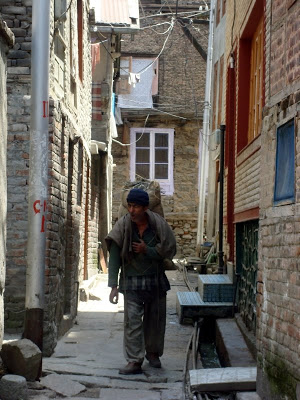
Image: Kralkhod, Srinagar, 2008
-0-
Previously: Pundit Manto’s First Letter to Pundit Nehru

Veena and Tabassum

‘You should not have left Kashmir’
The shawl seller from Kashmir concluded while trying to show his ware. Something about the statement ticked off Veena.
‘You should be glad my brother’s are not at home. They would have answered it better. No, I don’t want to buy anything. Please, leave!’

-0-

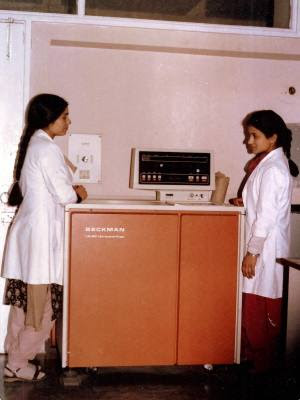
My first Id was at the house of Tabassum, friend and colleague of my bua Veena Didi. I remember eating sevaiya at the house of her friend somewhere in downtown Srinagar . I remember how excited about visiting the house of the famous friend of my dear bua. They would run experiments on rabbit blood. I would ask her if I were to visit her office, would I see rabbits, white rabbits. She promised, I went, but I never saw any rabbits. Her office smelt of hospitals. It was a hospital. That year, besides her impeding marriage, she was excited about the new imported machine in her office. This machine could churn blood at an unimaginable RPM, round and round, separating blood into fine individual components for study. Among her sibling she was the only one to have gone outside the state to study. It was a time she was to always remember fondly. I remember how excited I was about eating real sevaiya. I remember the shops in the area, the pistols, that looked too real and the police holsters, that were certainly real, handing from the roof of those shops. I was obsessed with Bandook that year. Guns were all I could think of that year. Diwali was just around the corner. I wanted a gun that year. The visit turned out to be a formal affair. We were sitting, on floor, in the drawing room of a house that looked newer than the house in which I was born. Tabassum served the dishes. Sevaiya were different and certainly better. And then we left.

-0-
She was the first one to leave.Veena didi finally got married in Jammu in middle of a cerfew over an issue that would roll-ball into what would be remembered as ‘mandal comission’.  A year after her marriage, some people from Kashmir paid her new home a visit.

‘Where is Veena?’ That is all the woman at the door wanted to know.
Veena’s mother-in-law was in a fix on hearing this question. At first she was suspicious of the Muslim brother-sister  duo that had come inquiring about the whereabouts of her daughter-in-law. Al though her family had a house at Chanapora, she had spent most of her own married life in Amritsar. How do they know? How did they find out? Terrorist? These thoughts filled her up instinctively. But on hearing a lengthy explanation on the nature and depth of relationship, she was convinced enough to tell them,’Veena is at the place of her parents. Perhaps you should come some other time. Sorry!’
‘Okay, take us there. I won’t leave without meeting her.’
Shocked as she was at this unabashed display of emotion, under duress and with a word of advice, ‘Take Care’, she deployed Veena’s husband to accompany the brother-sister duo to the place of Veena’s in-laws.

It was a colony which was in winter filled with ‘Durber move’ Kashmiris. It was the place were I celebrated a couple of more Ids growing up with boys from Kashmir who would bowl like Imran Khan and Wasim Akram. Boys who taught me reverse swing even before the rest of the world knew it.

‘How could you not invite me to your marriage? You thought I wouldn’t come?’
‘How could I?’
With that the two friends, Tabassum and Veena hugged each other. Veena welcomed her into the two-roomed house of her parents.

-0-

I have no recollection of the second event. It’s a story my Bua likes to recall sometime. She went on to teach herself programming just around the time when I first started to pick it up in school. In her exercises to keep herself busy, a thought that filled minds of a few pandits in Jammu, on weekdays she teaches computer science to village kids, who in Summer sometimes bring her offering of Mangoes, and on weekends she spends a lot of her time in the ashram of a Kashmiri Saint freshly relocated to Jammu. I think she misses her imported Beckman machine and the rabbits. She tells me she again heard from Tabassum a few years back. Tabassum is married and in U.K. May on somedays, she too misses that blood churning machine and those white rabbits.

-0-

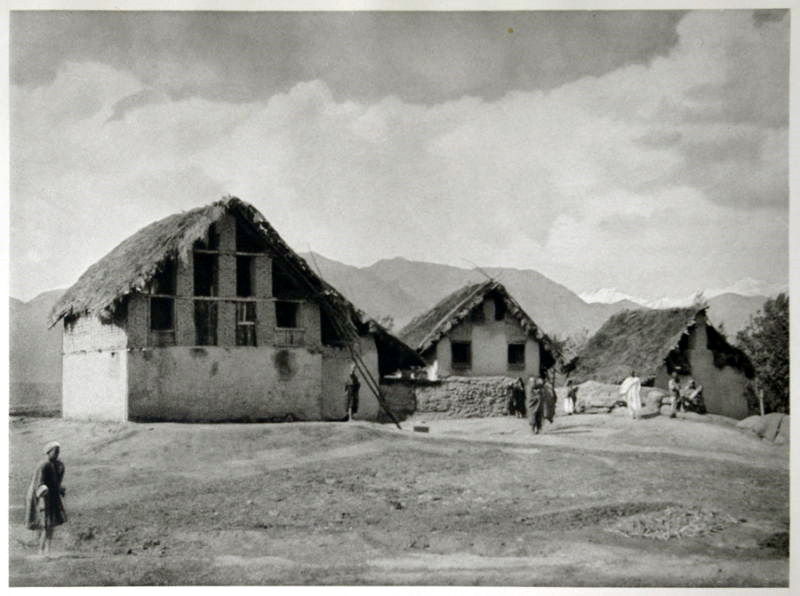
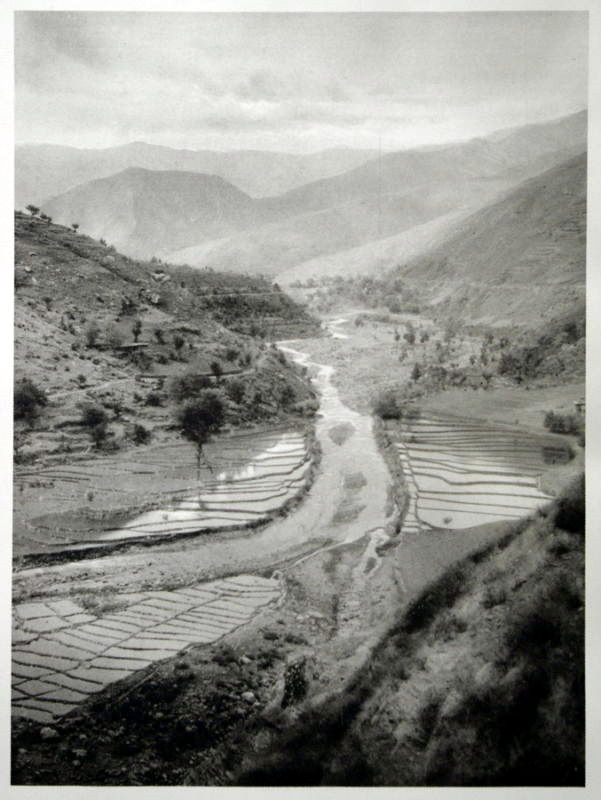
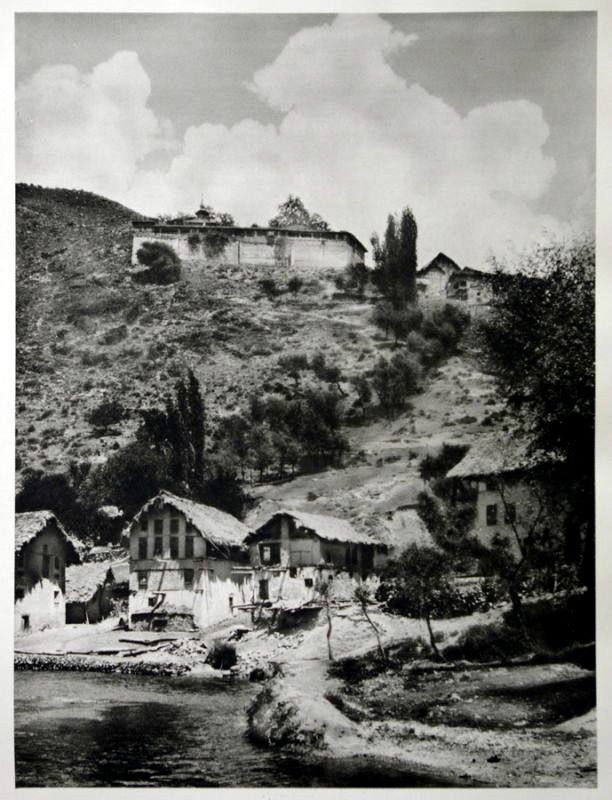
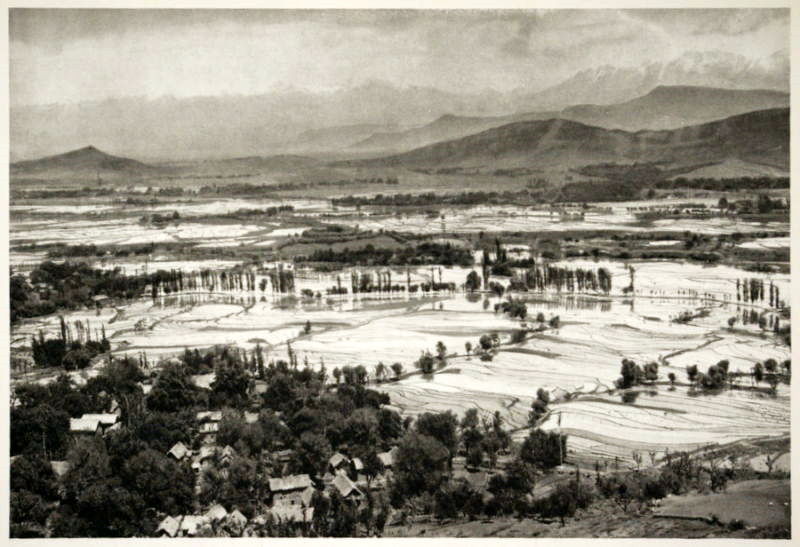
Kashmir by Martin Hürlimann, 1927

Came across these at ebay, unidentified. I recognized some of them, swiss photographer Martin Hürlimann with his brilliant use of vertical power shots is hard to miss (and hard not to be influenced by). These probably are from his Burma, Ceylon, Indo-China (1930).

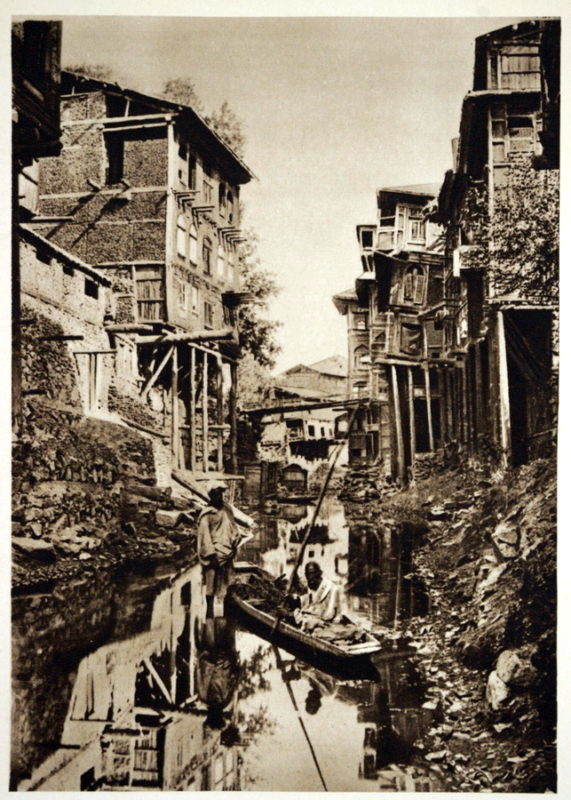
A Rural House. 1927
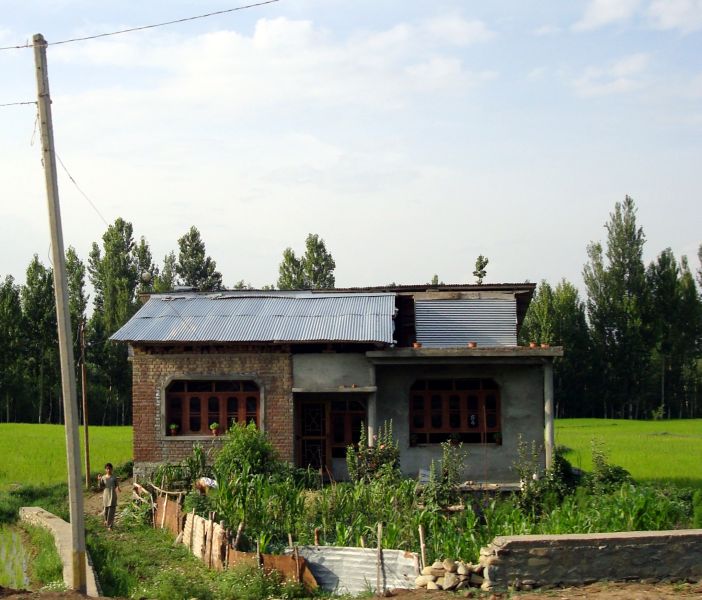
Some where on way to Gulmarg. 2008. [some more houses]

Mar Canal by Martin Hürlimann (?)

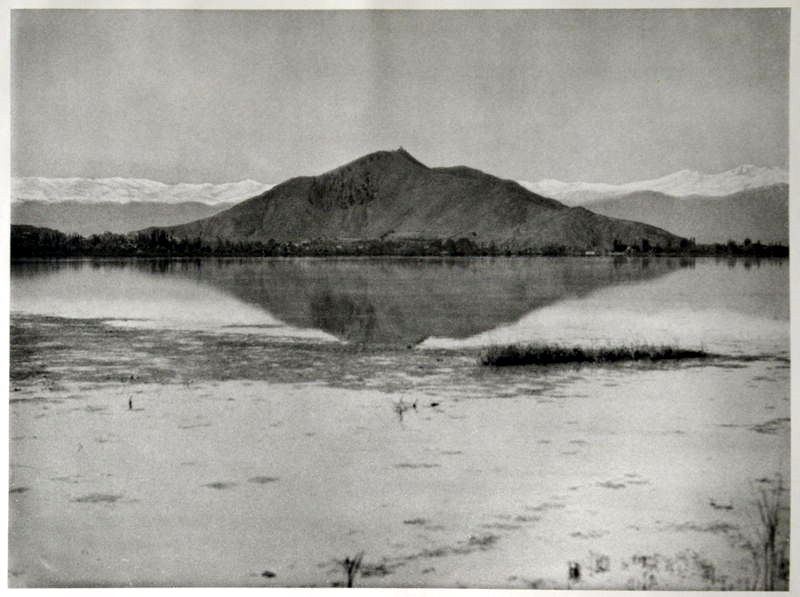
Dal Lake

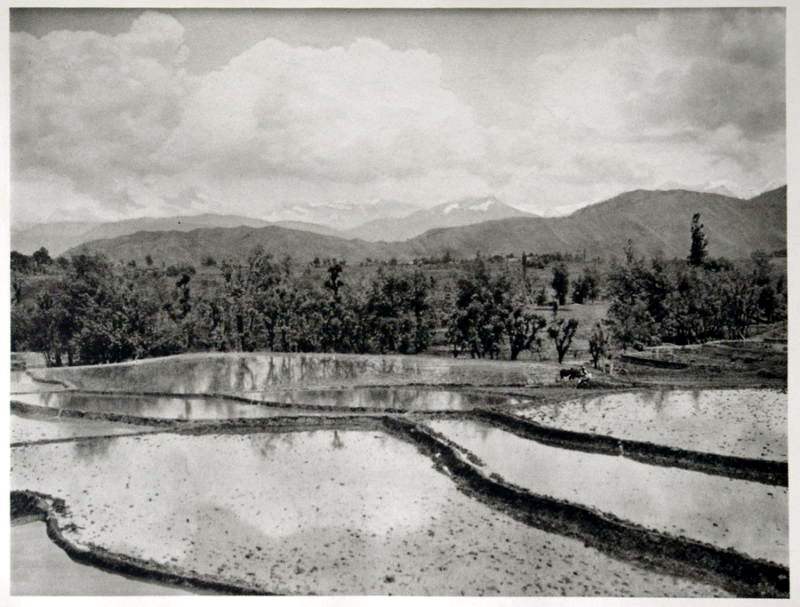
Paddy Fields
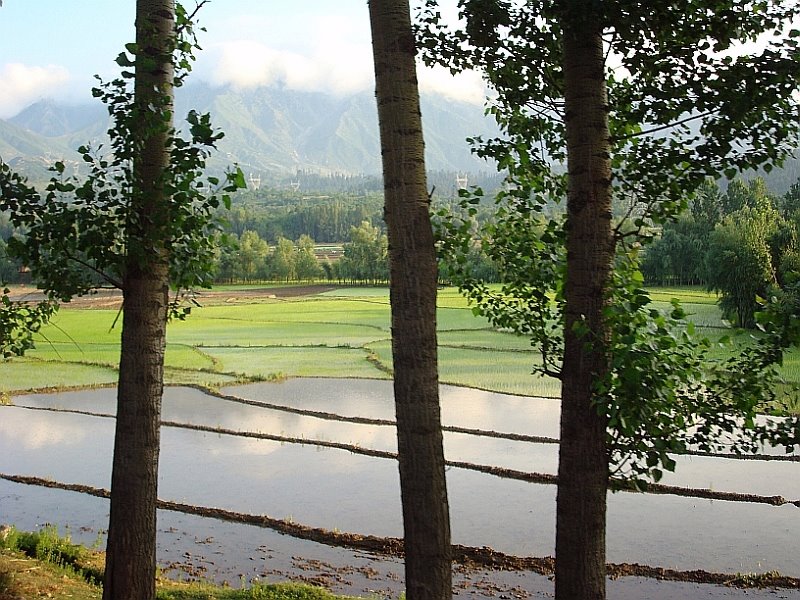
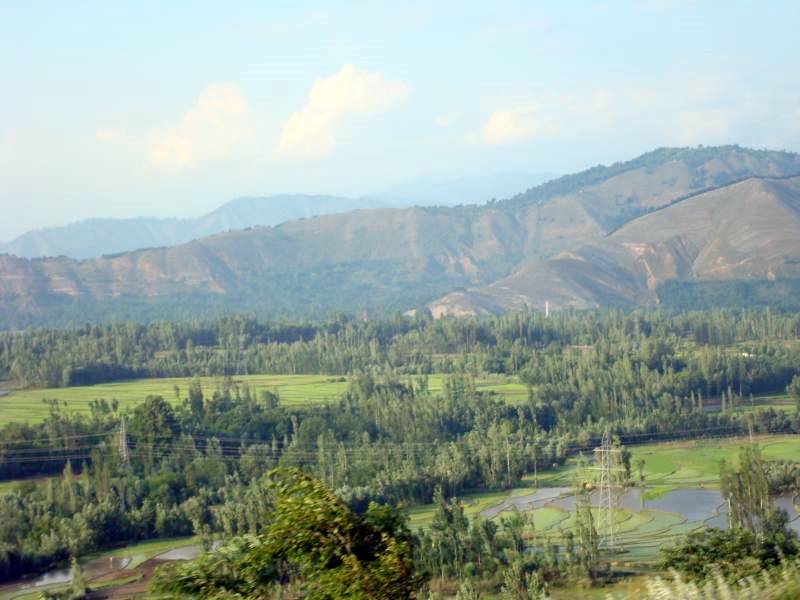
Paddy fields near Qazigund, 2008

view of Qazigund
View 2008. Previously: View of valley and Hügel’s Atmospheric phenomena 

Nishat
History of Nishat

Raghunath Temple Jammu

-0-

picked kashmir at Delhi book fair, 2011

August 28, 2011

Continuing with the tradition [pick from year 2010], this year’s loot include:

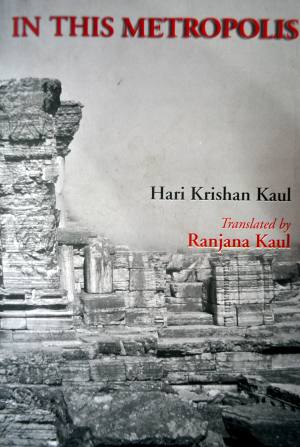
 In This Metropolis
by Hari Krishan Kaul.
Translated by Ranjana Kaul.
2011. Rs. 75.
It’s a collection of short stories by a Kashmiri writer (b 1934) known for his kafkaesque style. This is the translation of his year 2000 Sahitya Akademi Award winning collection ‘Yath Raazdaane’. This was the first time a Kashmiri won the award for short stories. The book starts with writer’s re-working of a Lal Ded saying rendered as: 
My wooden bow has but arrows
made of grass
This metropolis (of my mind),
has been entrusted to an unskilled carpenter’

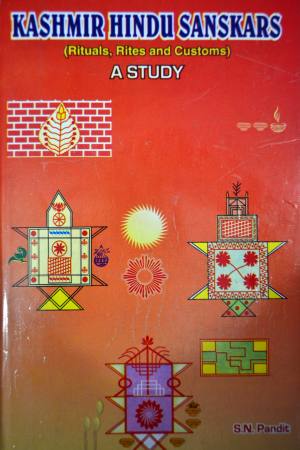
 Kashmir Hindu Sanskars: Rituals, Rites and Customs
by S.N. Pandit
2006.Rs 475
Published at Kashmiri Pandit run  Gemini Computers, Jammu
Sponsored by Indian Council of Historical Research, New Delhi
Based on year 1982 research paper by the author “Kashire Battan Hindi Rasim ti Rewaj”, this book is a definitive guide to living and dead rituals and festivals of Kashmiri Pandits.  Peppered with  arcane Kashmiri folk lyrics associated with various rituals and festivals, this book is a treasure. My mother, much to her delight, actually managed to recall and sing some like ‘Diri diri honya, yati kyo yati kyah’, ‘Go away; go away dog, what is here? Who is here?’, Kashmiri lyrics  reserved for times when inauspiciously dogs start howling.

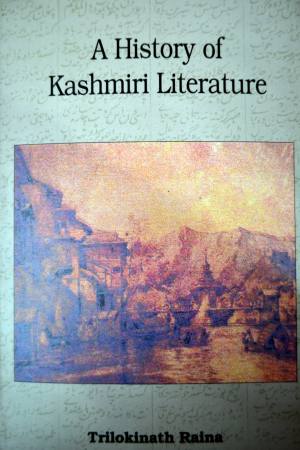
 A History of Kashmiri Literature
by Trilokinath Raina
First published by Sahitya Akademi in 2002.
2005. Rs.100

Trilokinath Raina’s erudite and precise contribution to Kashmiri Literature, its History. A must have!

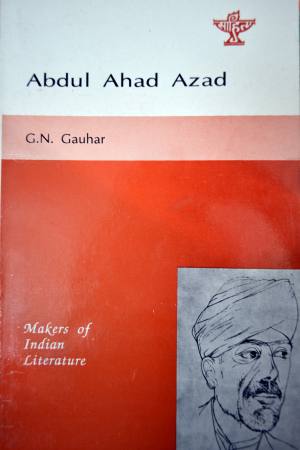
 Abdul Ahad Azad
by G.N. Gauhar
First published 1997. Rs.25
In the ‘acknowledgements’ to this biography of the great Kashmiri poet, we read ‘ The prevailing situation in Kashmir caused total damage to the approved typed manuscripts’ and about the poet we read that he was more of a Subash Chandra Bose fan than a Gandhi fan (unlike Mahjoor).

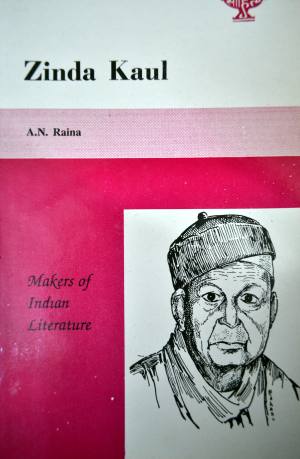
 Zinda Kaul
by A.N. Raina
First published 1974.
1997. Rs.25.
Life sketch of a man who was perhaps the last of the ‘saint-poet’ of Kashmir.

Children’s Literature in Indian Languages
by Dr. (Miss) K.A. Jamuna
1982. Rs. 18
Al though  Trilokinath Raina’s ‘A History of Kashmiri Literature’ does does upon children’s literature in Kashmiri language but given there isn’t much to right about, the section in actually only a paragraph. However, in this book we have a complete essay (not too detailed as compared to some other languages) by Ali Mohammad Lone on this oft ignored but important subject. And we get to read (in brief) about work of Naji Munawwar, perhaps the only dedicated Children’s writer from Kashmir.

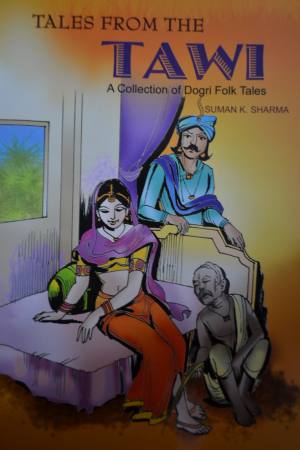
 Tales from The Tawi: a collection of Dogri Folk Tales
Suman K.Sharma
First published 2007. Rs. 60

Have no clue what to expect from this neat book for children. A good reason to get in Dogri folk tales!

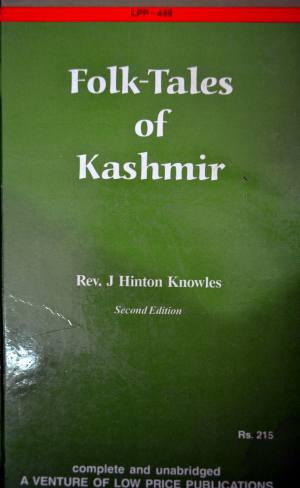
Folk-Tales of Kashmir
by Rev. J Hinton Knowles
Second Edition
First published 1893
This famous book starts with a Shakespeare quote,’Every tongue brings in a several tale’. I have read most of the tales in this book online, now I have a hardbound copy. Hopefully someone will come with a Amar Chitra Katha version of these engrossing tales someday.

 -0-

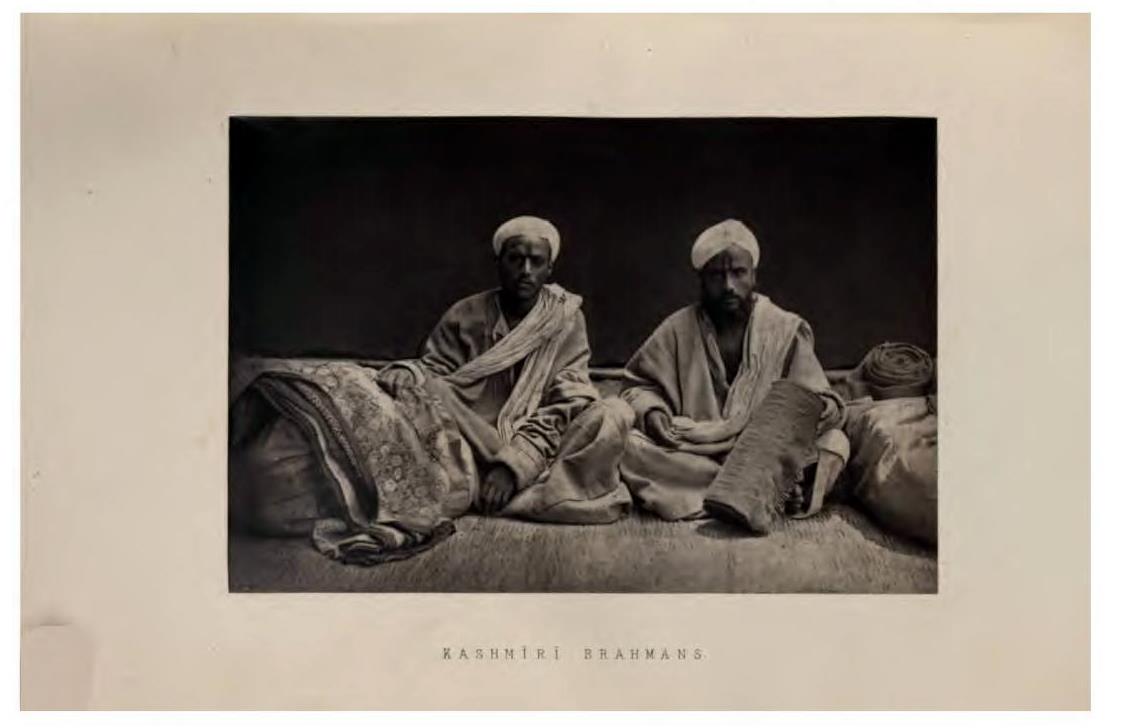
Kashmiri Brahmins of Francis Frith, 1875

I first came across this image some years ago on columbia.edu site who in turn had picked it from ebay. Cited as ‘Kashmiri Brahmans’ and photographed by Francis Frith in around 1875, the image offered an enigma in the sense that its subjects seemed out of place, all the other photographs of Kashmiri Pandits taken during that era has pandit in his usual place, handling scrolls or roaming around temples. So who were these Brahmans and what were doing with those bundles of cloths?

 I have finally managed to get through to the answers that this image demanded. The photograph is used and explained in ‘The Jummoo and Kashmir Territories: A Geographical Account’ (1875) by Frederic Drew. An excerpt:

First, standing out marked and separate from the rest, are the Pandits. These are the Hindu remainder of the nation, the great majority of which were converted to Islam. Sir George Campbell supposes that previously the mass of the population of Kashmir was Brahman. An examination of the subdivisional castes of both Pandits and Muhammadans, if it were made, might enable us to settle this question. Whatever may be the case as to that, we certainly see that at this day the only Kashmiri Hindus are Brahmans. These whatever their occupation-whether that be of a writer, or, may be, of a tailor or clothseller – always bear the title “Pandit” which, in other parts of India, is confined to those Brahmans who are learned in their theology. 

The Kashmiri Pandits have that same fine cast of features which is observed in the cultivating class. The photograph given, after one of Mr. Frith’s, is a good representation of two cloth- sellers who are Pandits, or Brahmans. When allowance has been made far an unbecoming dress, and for the disfigurement caused by tho caste-mark on the forehead, I think it will be allowed that they are of a fine stock. Of older men, the features become more marked in form and stronger in expression, and the face is often thoroughly handsome. In complexion the Pandits are lighter than the peasantry; their colour is more that of the almond.
These Brahmans are less used to laborious work than the Muhammadan Kashmiris. Their chief occupation is writing : great numbers of them get their living by their pen, as Persian writers (for in the writing of that language they are nearly all adepts), chiefly in the Government service. Trade, also, they follow, as we see ; but they are not cultivators, nor do they adopt any other calling that requires much muscular exertion. From this it happens that they are not spread generally over the country; they cluster in towns. Sirinagar, especially, has a considerable number of them; they have been estimated at a tenth of the whole of its inhabitants.

Reader may make allowance of Drew’s ‘i believe because I believe’ assertion that Pandits were not cultivators.

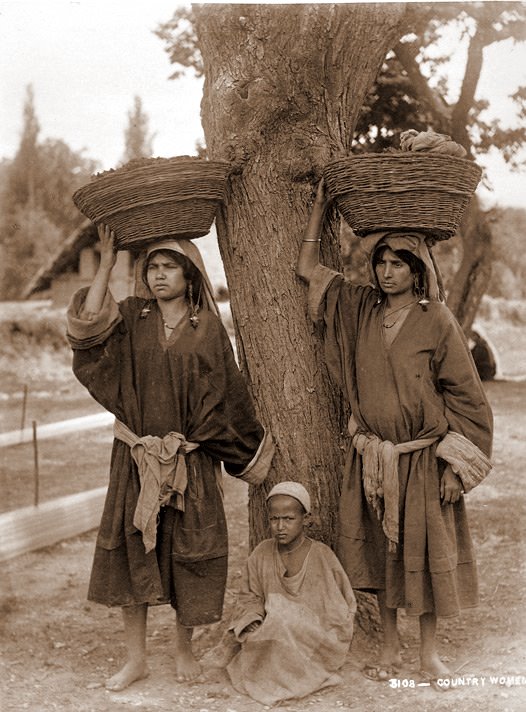
Kashmiri Pandit women working the fields, 1890.  [Update: They appear to be working in  field, dying cloth and yarn here]


Reader may also make allowance of the fact the Drew didn’t get into the breakdown of Kashmiri Pandits into Karkun Bhattas (Working Class Pandits, into Govt. Jobs, into Persian, the one described by Drew) and Basha Bhattas (Language Class Pandits, into Religious affairs, into Sanskrit, the one usually photographed with scrolls, Gors, Pandits, the ones that much later often derogatorily referred at Byechi Bhattas (?) or Begging Class Pandits). Besides that there were minority called Buhur, or the Trader Class, someone more likely to take up a trade like clothselling.


-0-