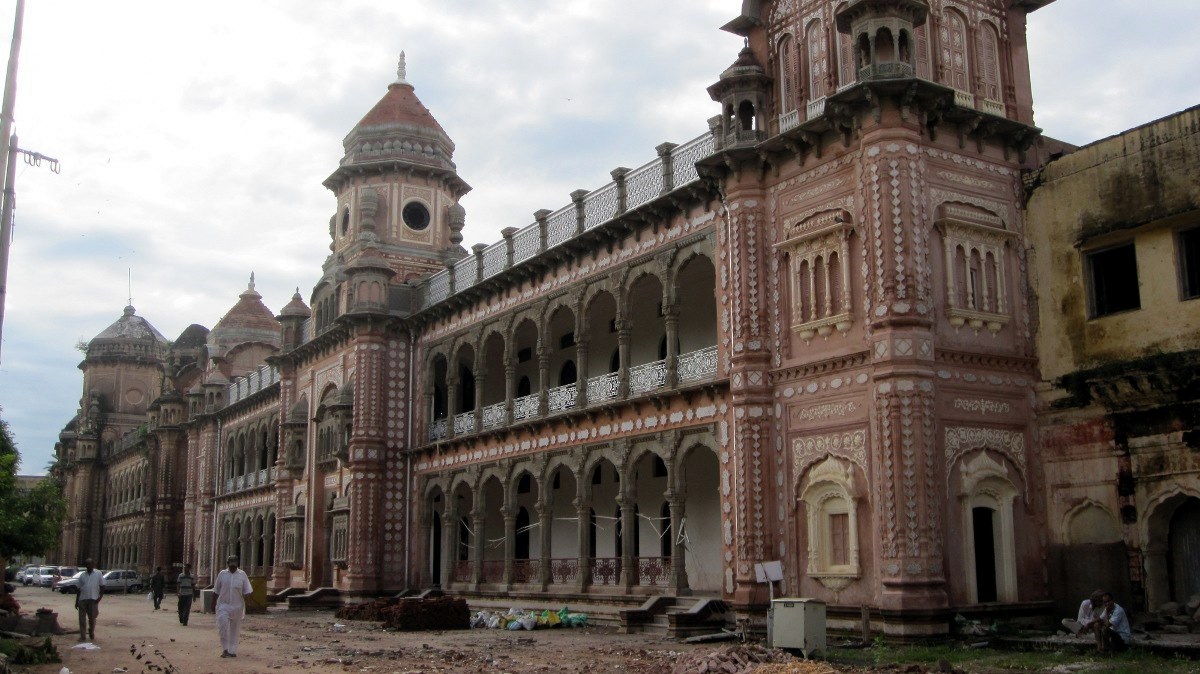
Photograph of the heritage building from Jammu sent in by Man Mohan Munshi Ji.

-0-

in bits and pieces
-0-
-0-
Mathura Devi (1878-1985) used to stay at Durga Nag in 1960s.
-0-
 |
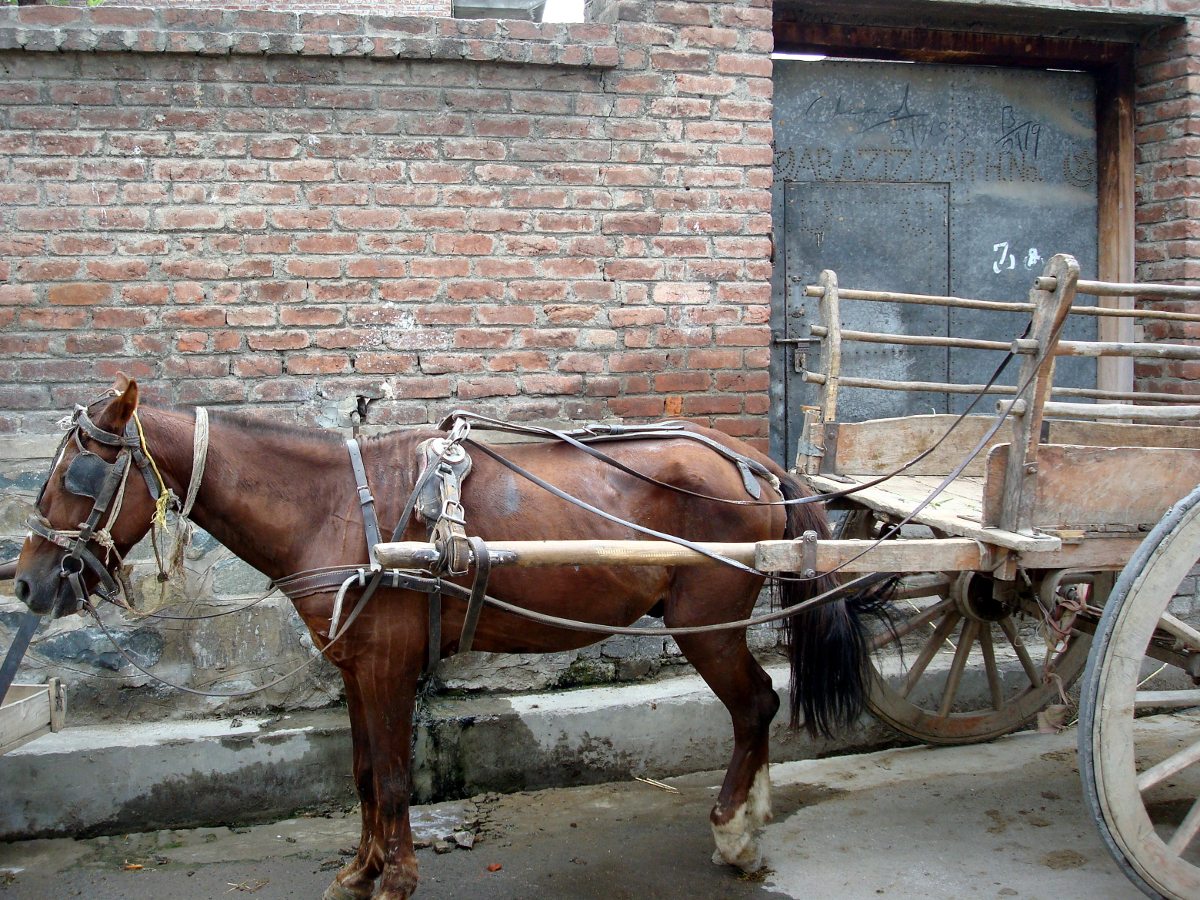
| Neighbour, gur tang’e wol. 2008 |
I turned the big wooden bolt and threw open the gates. I was in. The old house was on left, whining, grunting, wheezing, as usual. The horses were inside. Were they tied proper? I hoped they were. Nobody else home. I didn’t have much time to loose. I looked at the wall in front of me, our side of the common wall. Gauging from the speed at which beer’e ball shot off from my bat and the point and the angle at which the ball then crossed the wall, it was most likely to have dropped somewhere to the right. I turned right and my eyes met mounts and mounts of horse dung. The smell now hit me. It seemed half the courtyard was buried under 4-feet of dung. Further away from me, the dung seemed months old, hardened, but closer to me, one look and I knew it was fresh. On one of these mounts, not too far from me I found beer, the precious wooden ball that I had earlier in the day stolen from the cabinet of uncle Nanu. It was a remnant from his schooldays. I was not supposed to play with it till I grow-up a few more years. I never saw him play with it. He said it was dangerous, these were his words: It is so hard, it will break your empty skull. Having lost it, I now feared for my skull in any case. Last summer, I had started believing I was He-Man. I would return back from school, take off my uniform, but before wearing anything else, I would put on my marvelous winter gum boots, run out of the house, out the old wooden door and into the yard, holding up over my head a pencil in hand, screaming my lungs out, ‘Iiiiii haaave dhA PAawaaaR!’ This went on for days, or a few weeks and my Castle Grey Skull was only besieged when one day after my superb performance Nanu, simply pulled the shoes out of my feet and threw them out. A proper Kash’kadun, as they say in Kashmiri. One landed on the roof of Naya Kambra, the newly built room next to the main gate and the other, based on the angle it was tossed, probably crossed over the wall and landed on horse dung. I had tried to recover the shoe that landed on roof and failed (there was no proper stair to roof-top). The other, I hadn’t even thought as recoverable. I mean, this house was the ground of my most precious but forgotten nightmares. On some nights, even as the sound of distant trucks moving on national highway receded, these horses kept on singing their wheezy lullabies and they kept on thumping our house to sleep with their hooves. On some nights, I thought they were sad and in most nights I wished they would go to sleep. Were Ghardhivta giving them bad dreams? There were ghosts in that house. Wasn’t Mansaram the family house help from Orissa slapped one dark night in that house by an unseen hand? At one time, like most houses in the area, this house too used to belong to the Razdan clan. If stories are to be believed Razdans were settled here by Badshah. If one explanation is to be believed, the people who were settled in the marshes of Chattabal by Badshah were given the name Raz-Dan as they got to eat from royal oven. There is a pass near Gurez named Razdan pass. Pass that. Just before my birth, sometime in late 1970s, most of these families moved out of Kashmir to Indian plains, moved to Ghaziabad or Faridabad. Before leaving they sold on half of the house to a Gur Tang’e Wol. The way these houses were designed and the way these families lived meant that splitting a house wasn’t easy and often aesthetically unpleasant. So now the house next to us was owned by a Tongawalla.
It was house of horses and ghosts. A perfect setting for bad dreams and good adventures. So here I was trying to recover this stupid ball. I retreated from the house.
I returned. I stepped into shit. I had come back prepared. I was wearing my shiny new red snowshoes. I only had to take two steps in that valley of dung to reach the ball. One step in, I started sinking. I didn’t drown but I was ankle deep. I tried to roll the ball towards me using a stick. It worked. It wasn’t long before I had it in my hand. It was over. I did get it back. World was a beautiful place. Man could do whatever he willed. God was with those who help themselves. Thirty cross and his mighty pebbles. It was all true. I started to make my way back. As I pulled my one foot out of shit and on to the solid ground, the other foot somehow slipped deeper in shit. In the same instant, the shoe stuck and only my foot came out. I lost one more shoe.
-0-
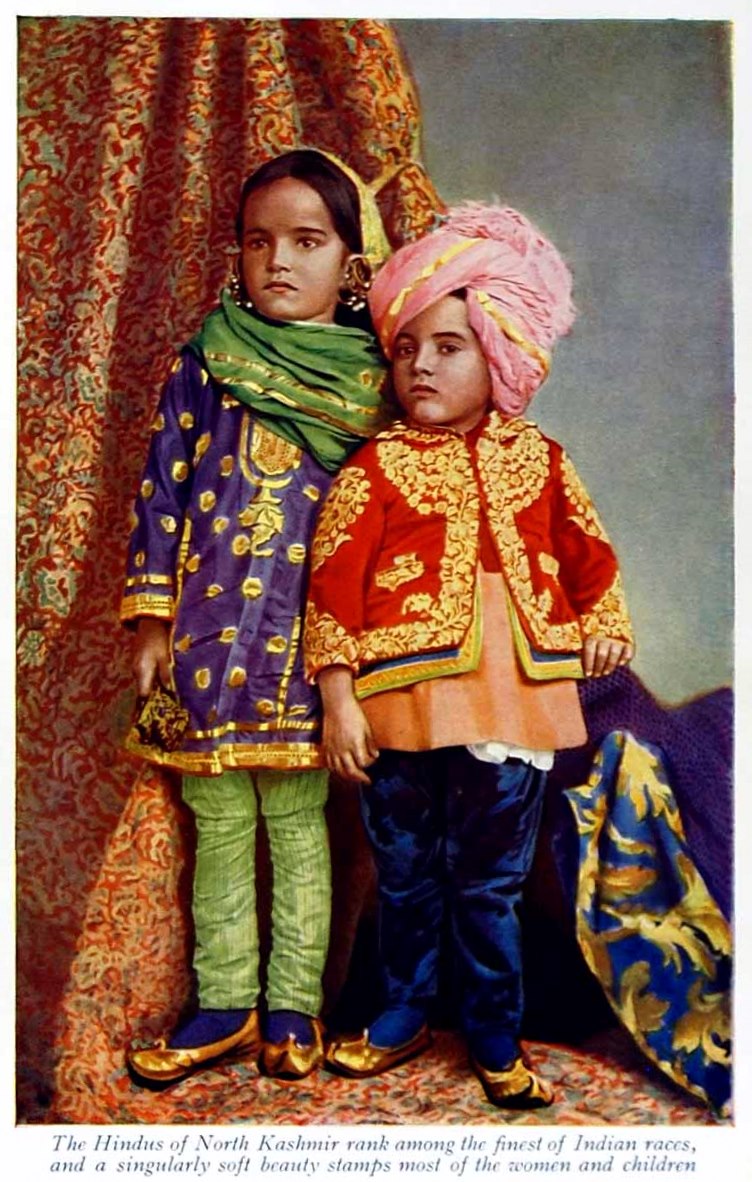
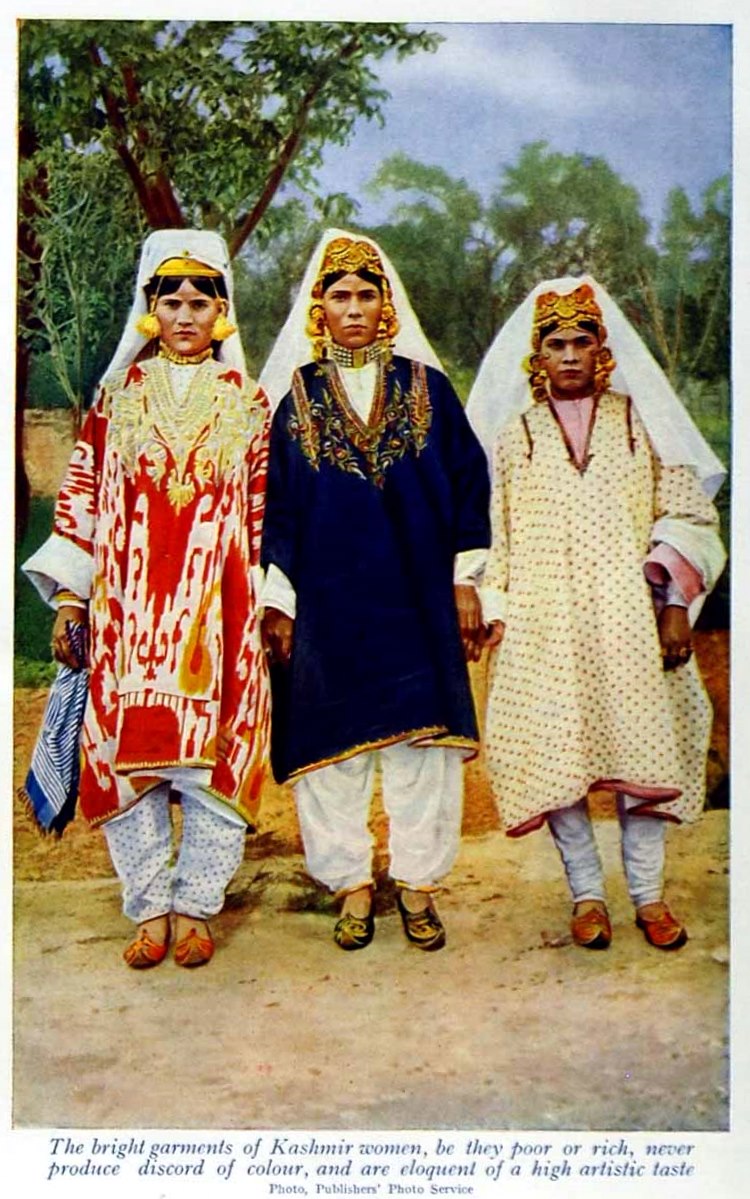
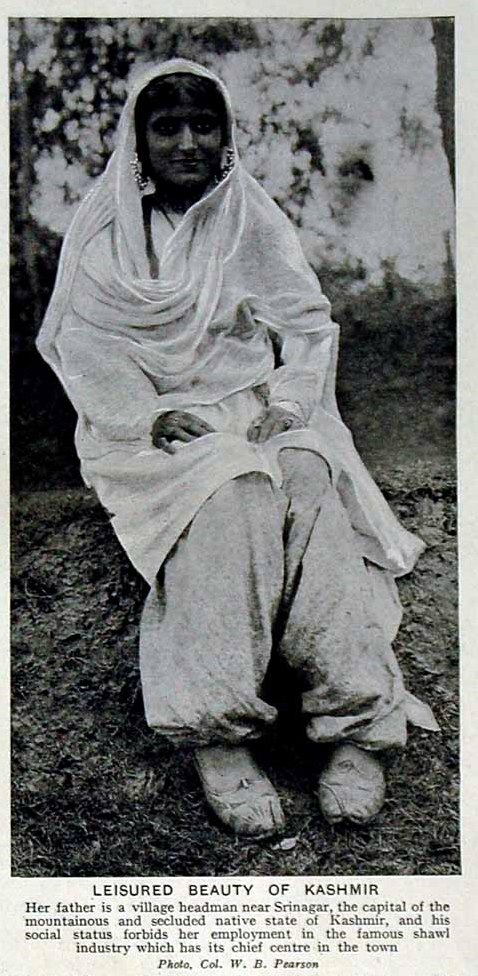
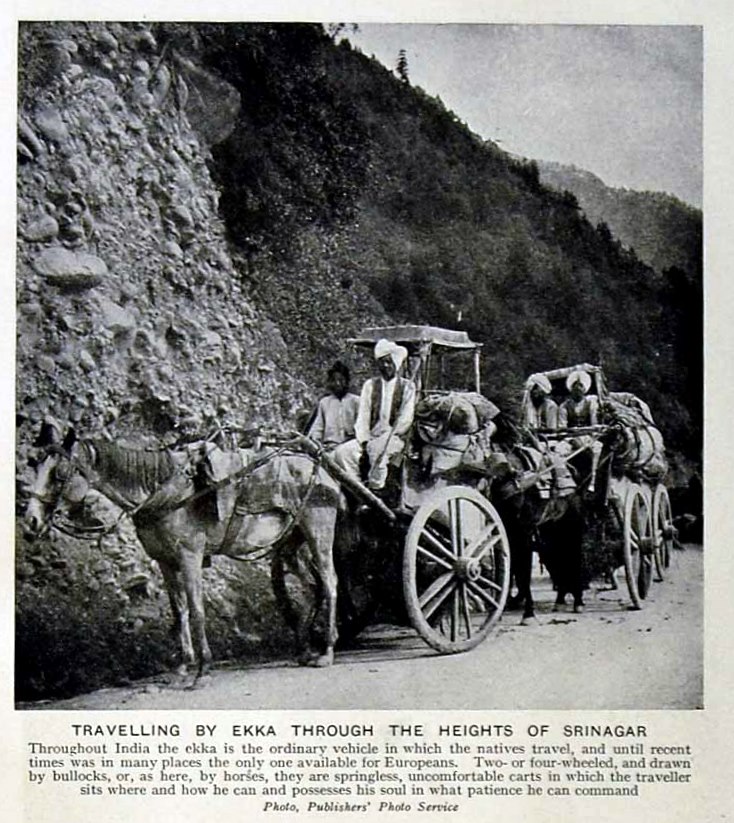
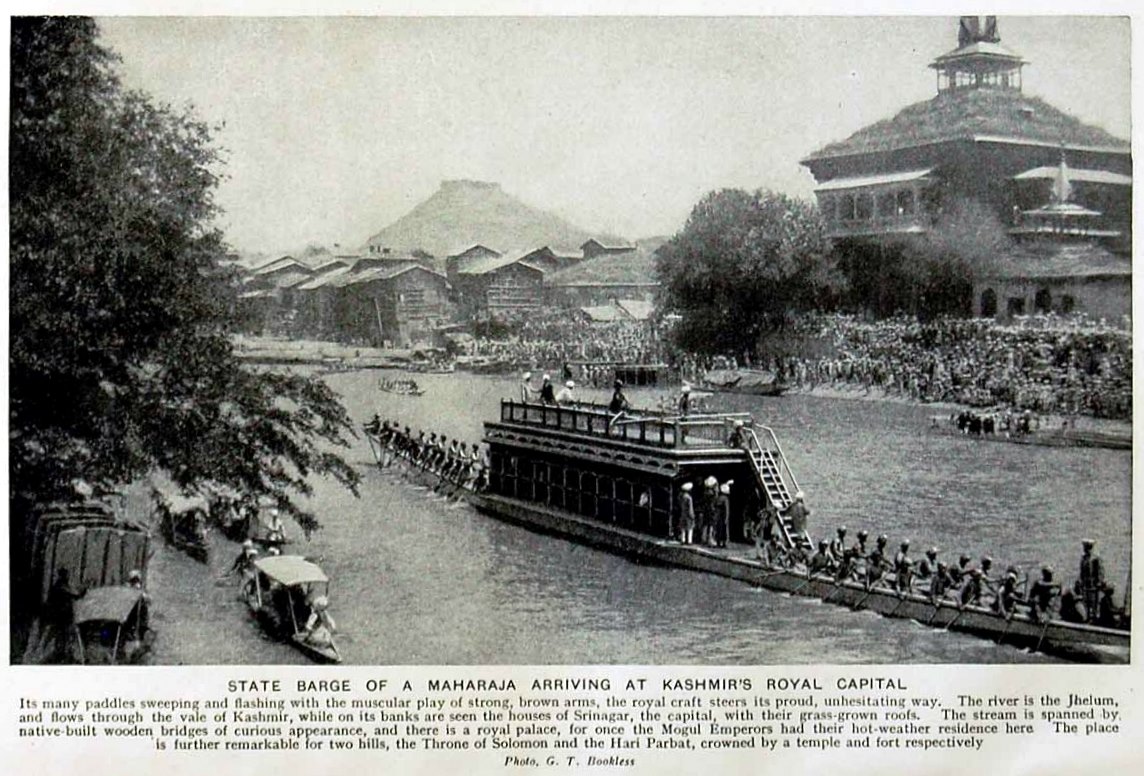
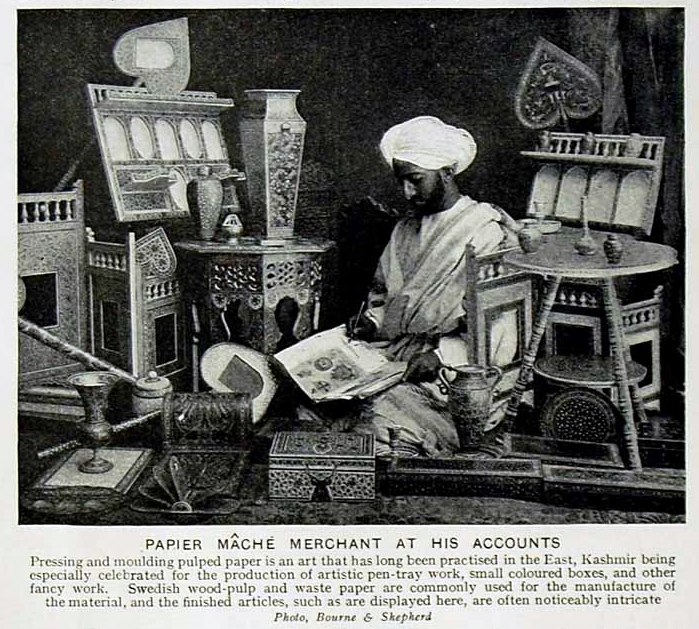
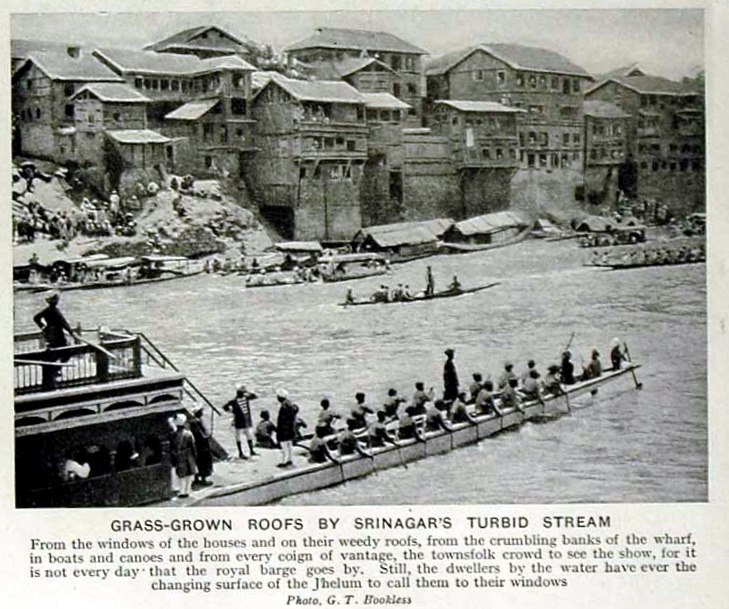
Here is Kashmir as it appeared in this book under the section ‘India & its myriad races’.
 |
| I was lead to this book looking for antecedents of the above image. |
-0-
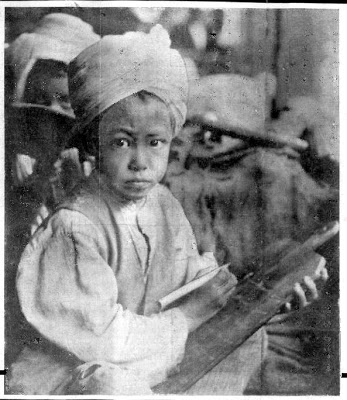

Kashmiri Kid with a rather big ‘nar’kon’ kalam and Mashak.
Photographed by Ewing Galloway.
This was the cover short for ‘The Oriental Watchman and Herald of Health: A Magazine for Health Home and Happiness’ September 1952. Caption: “A serious little student in Kashmir with wooden slate and huge pencil.”
Came across it in Adventist Archives.
-0-
 |
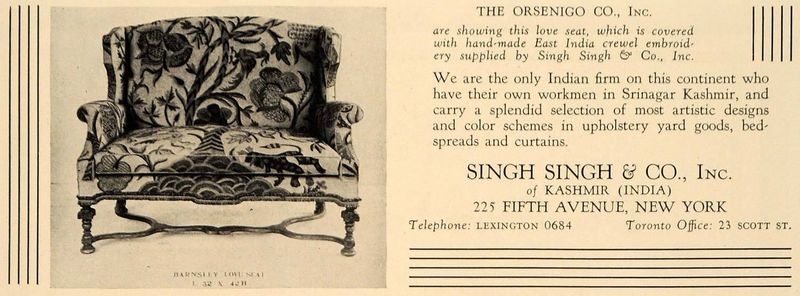
| Kashmiri Love Seat in NY, 1930 |
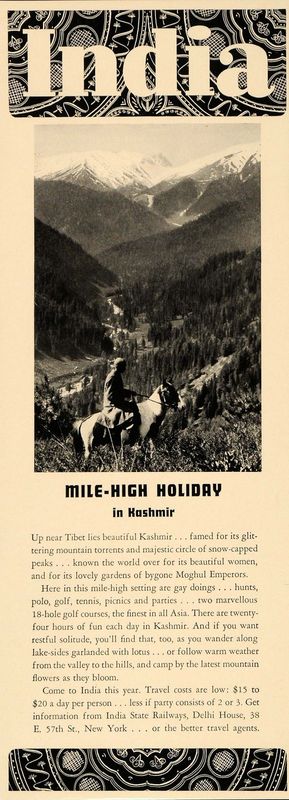 |
| India State Railways, 1936 |
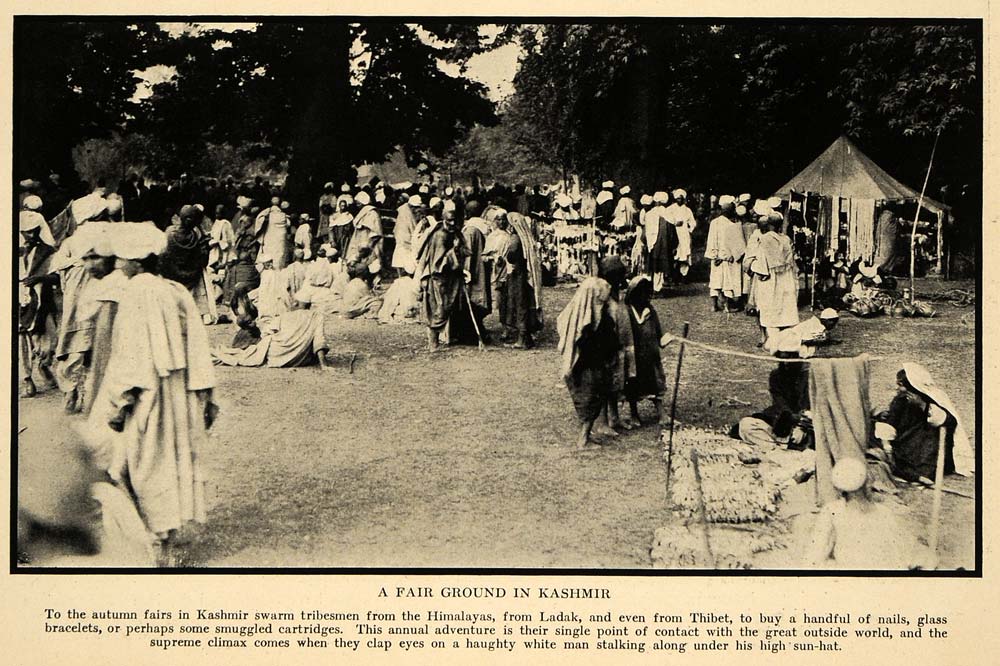 |
| Fair Ground in Kashmir 1923 |
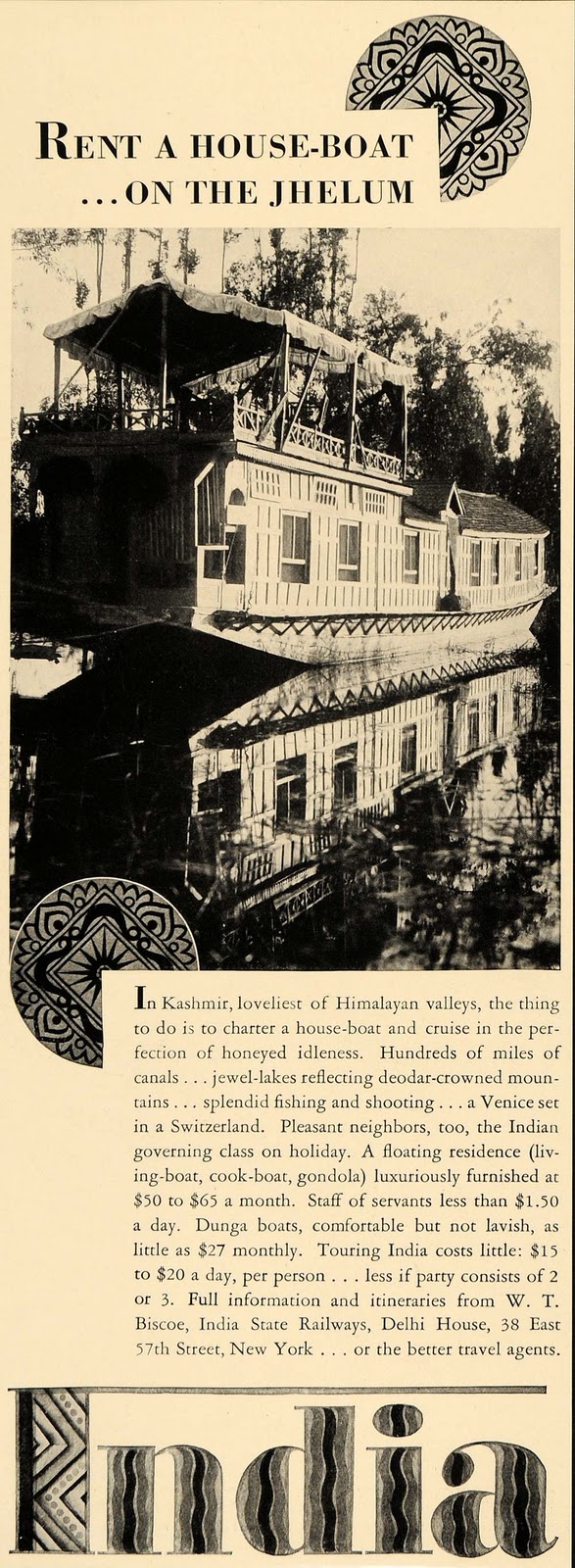 |
| 1935 |
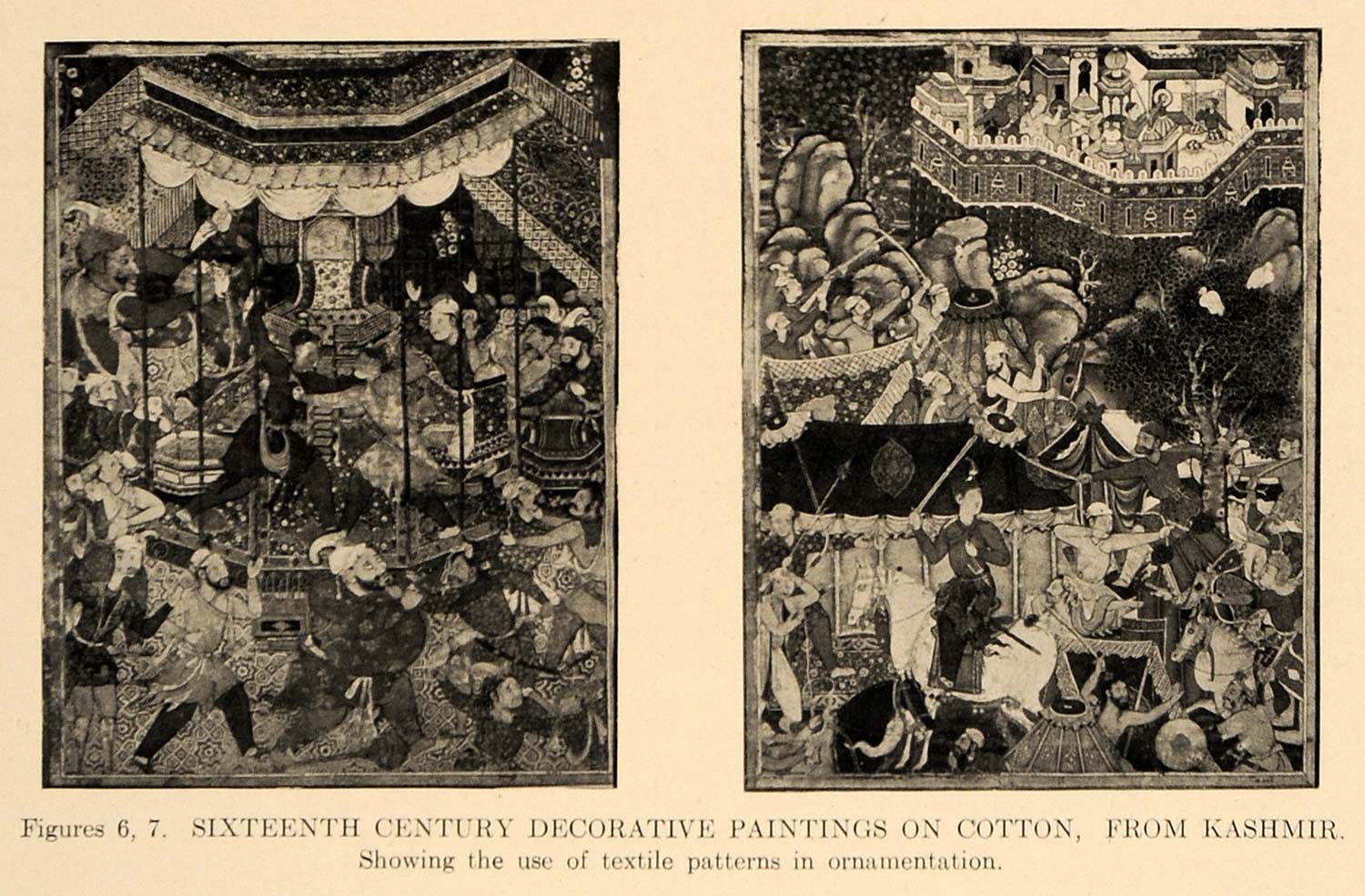 |
| 1918 |
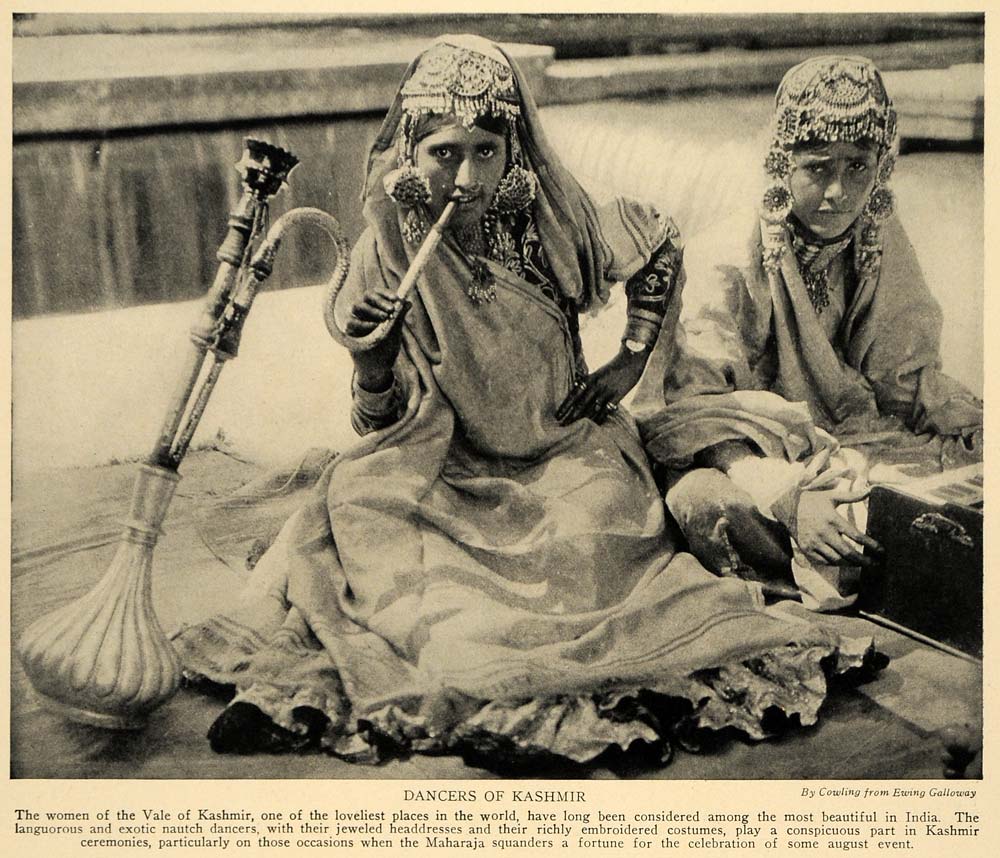 |
| Kashmiri Nautch Girls, 1928. (by Ewing Galloway ) |
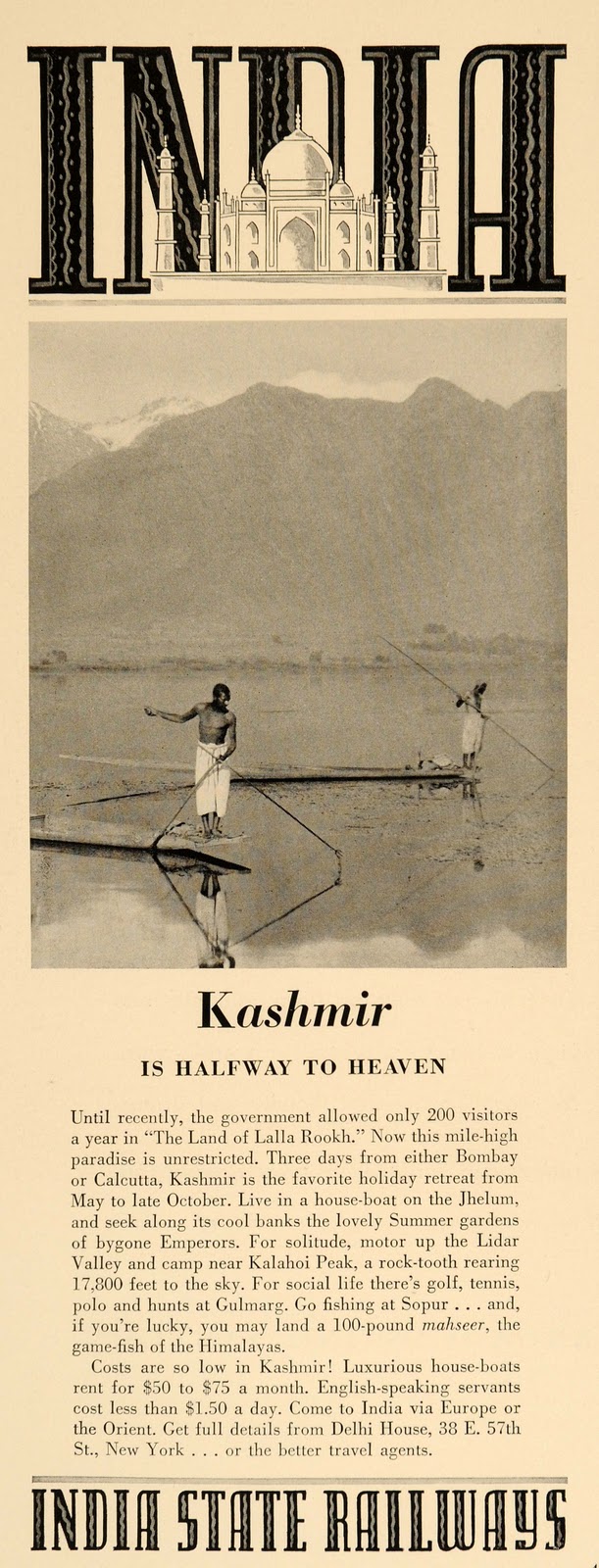 |
| Indian State Railways Ad, 1939 |
Came across these on ebay shop of periodpaper.
-0-
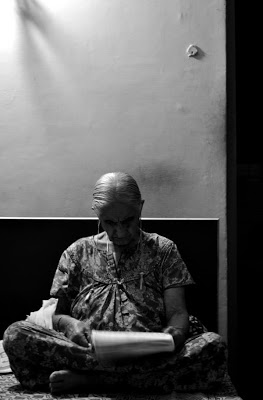

She often sings
She sings songs that I do not understand
She sings of Gods that I do not know
anymore
I wonder:
Who wrote it?
She often sings
…
Khir Khand Khyen’chi ae’sis pr’ye
kan-mool khey’th wo’yn kad’ya su dyeh
ga’yom hay’e Ram dand’ak wan
s’yeeth Seeta ti by’e Lakhman
ga’yom hay’e Ram dand’ak wan
ky’end ma’sy’nas tha’ye kho’ran
ga’yom hay’e Ram dand’ak wan
-0-
A transliteration of the lines:
He used to have Candy and Kheer
Now he lives on wild roots and vegetables
My Ram has gone to live in Dandaka Forest
Along with him have gone Sita and Lakshman
My Ram has gone to live in Dandaka Forest
Will not thorns bruise his soft feet
My Ram has gone to live in Dandaka Forest
 |
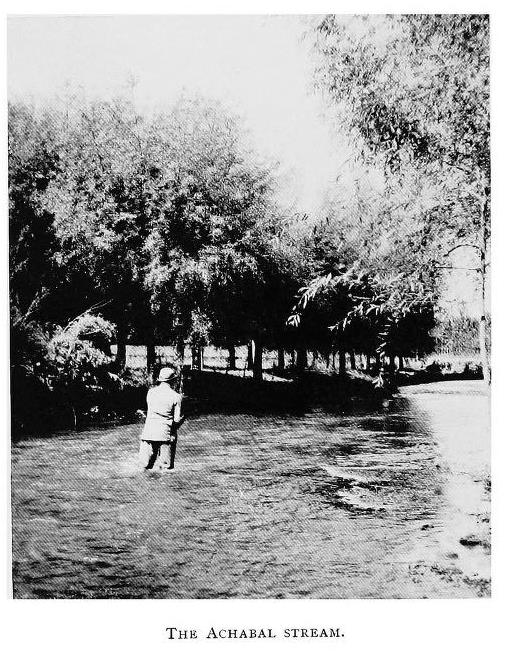
| Achabal |
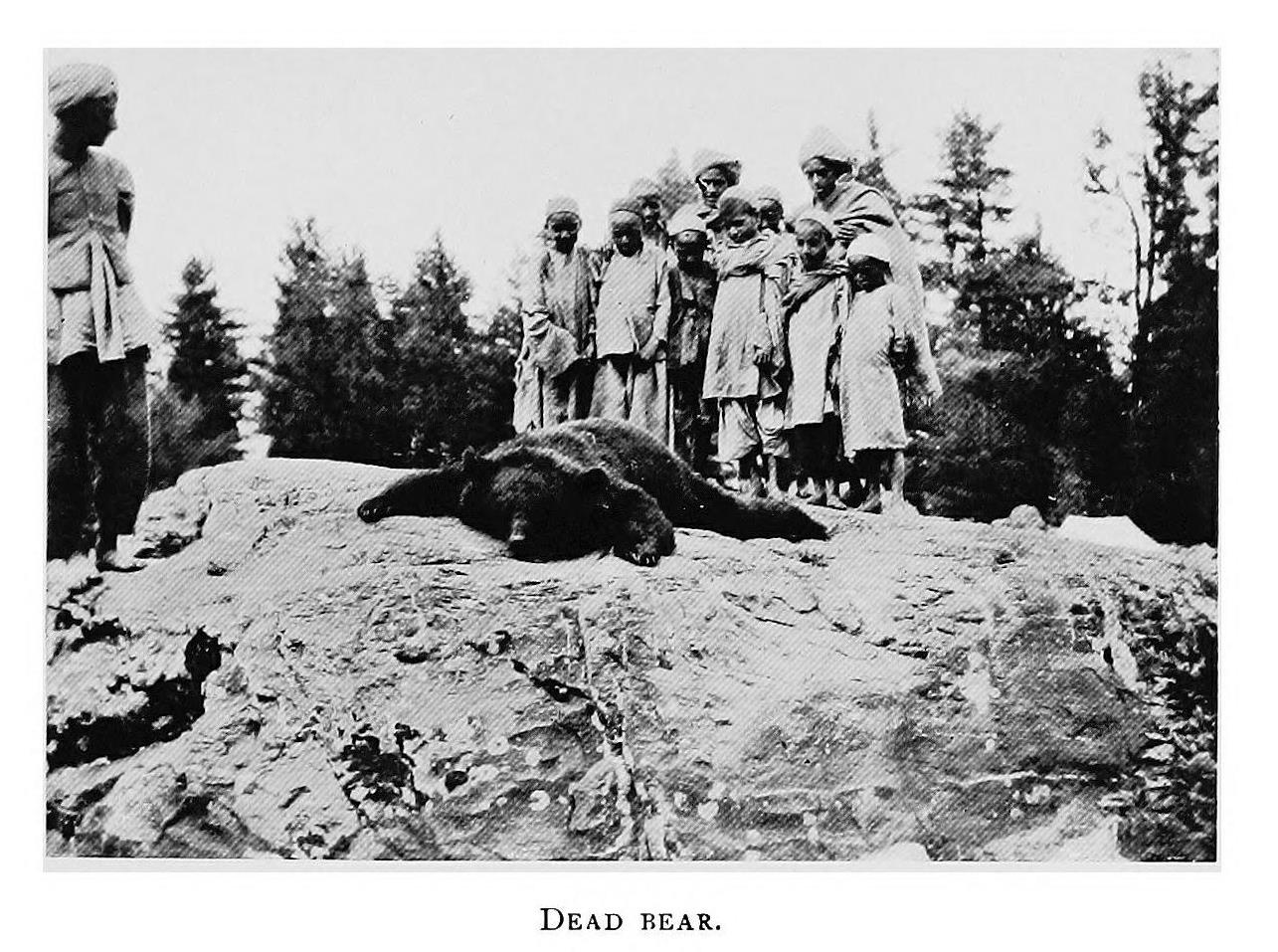 |
| Dead bears still make news in Kashmir |
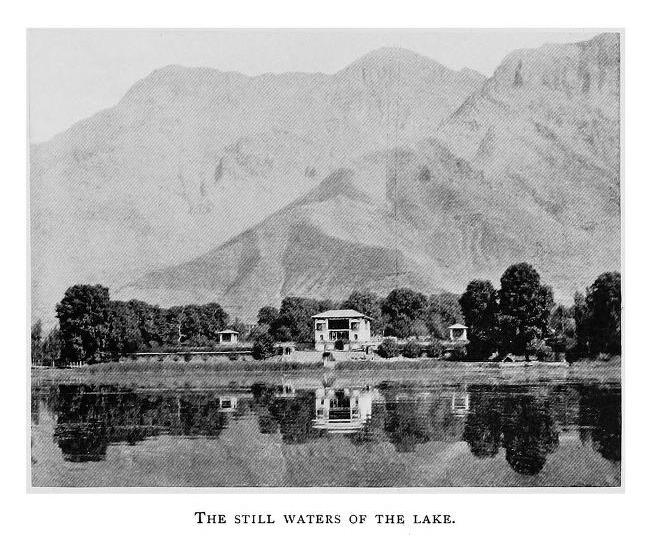
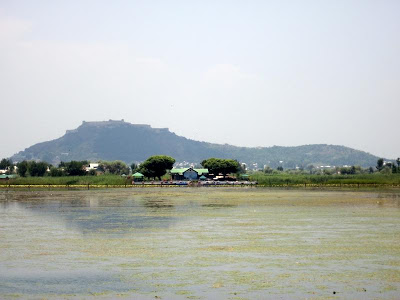 |
| kotarkhan (2010) |
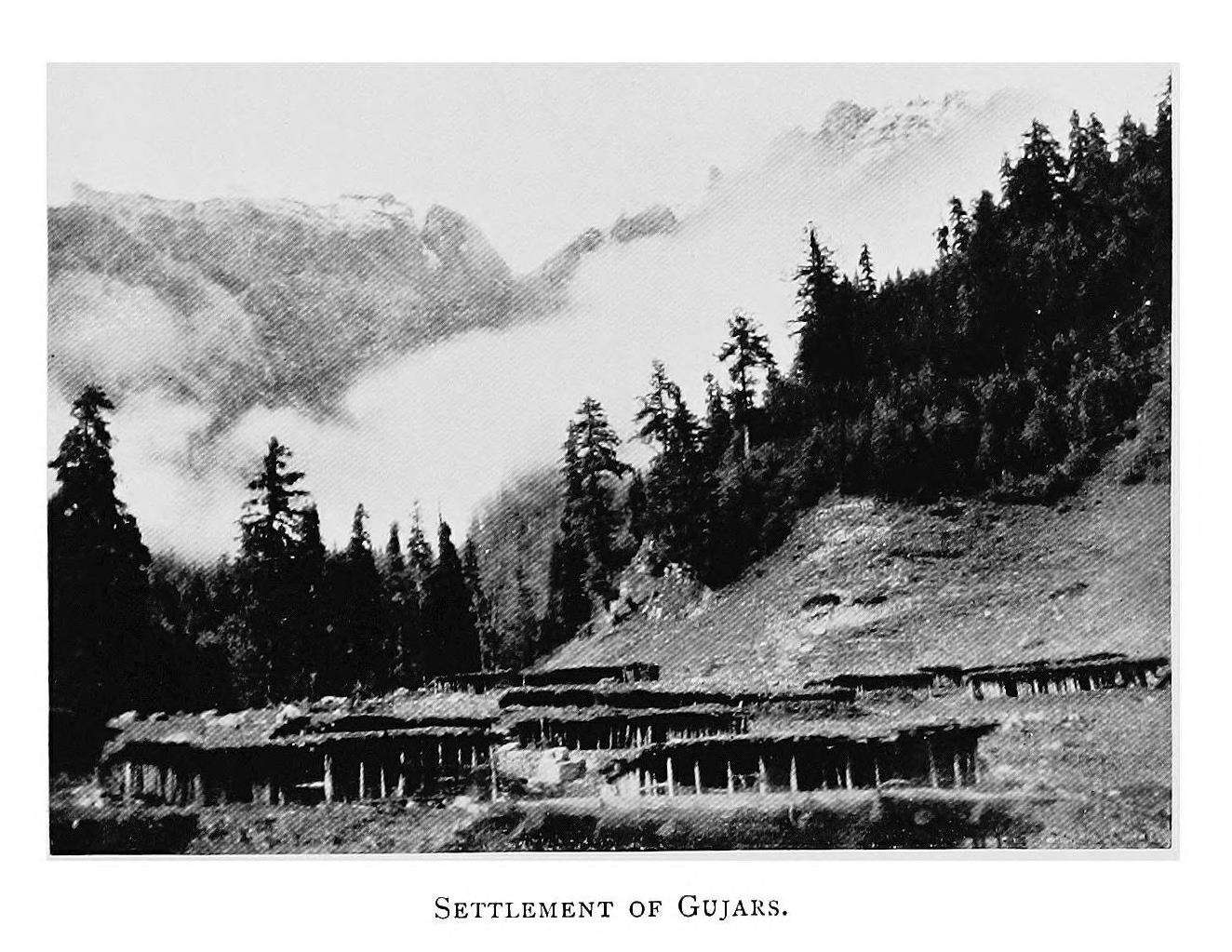
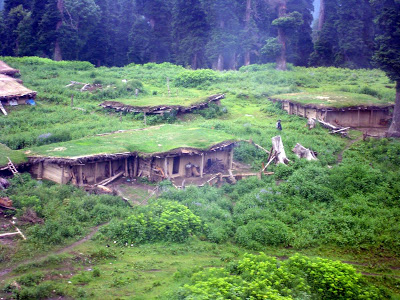 |
| Gujjar Settlement at Gulmarg. 2008 |
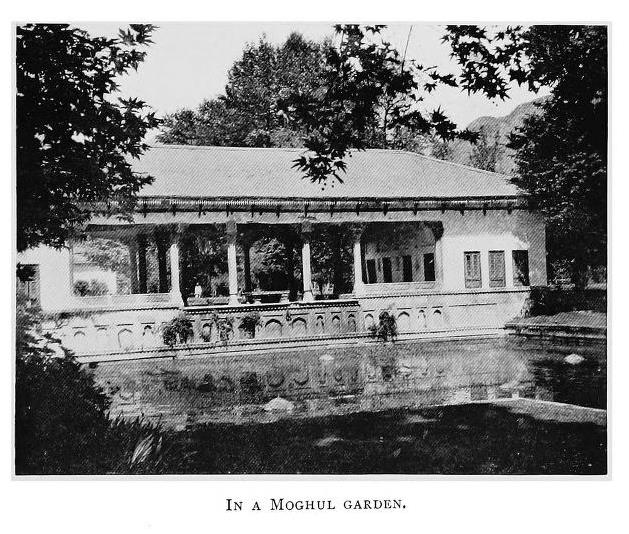
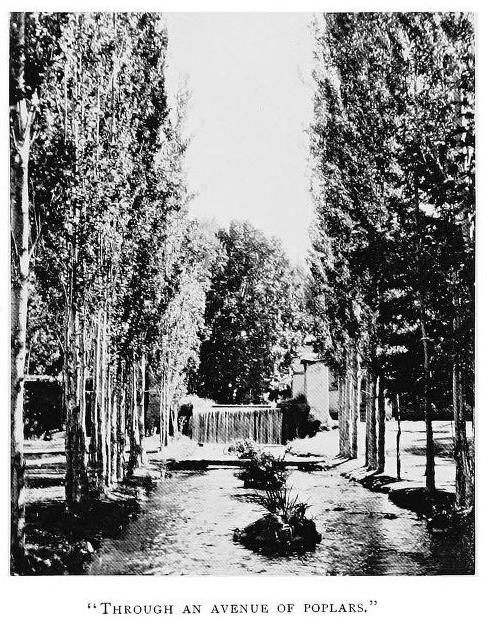
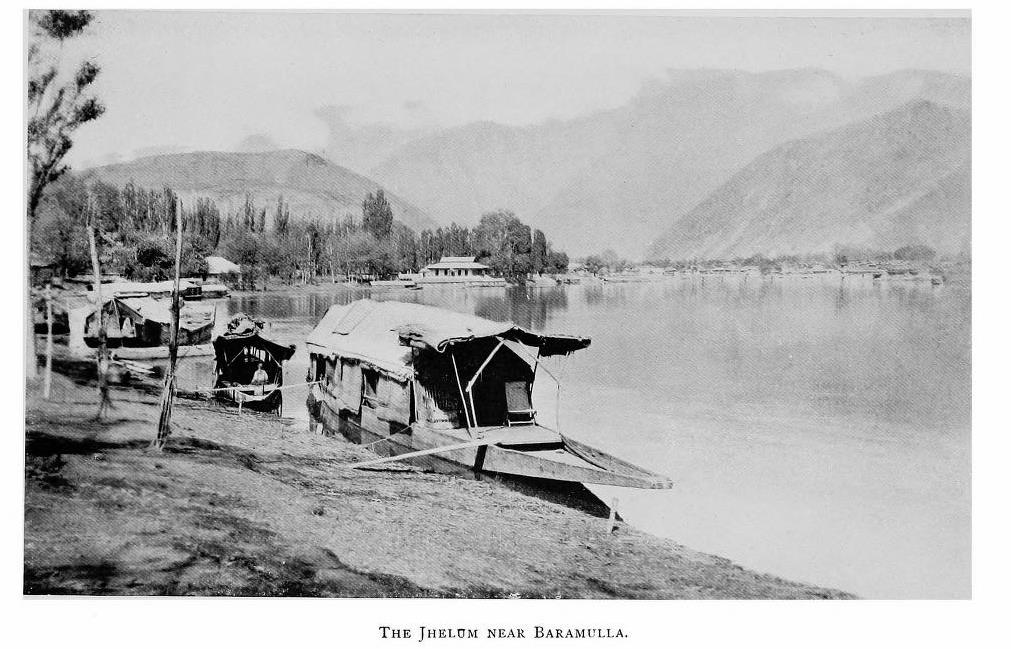
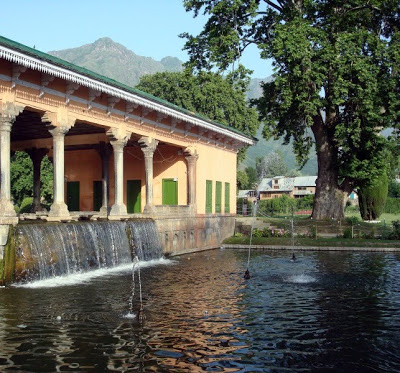 |
| Outer Pavilion , Shalimar Bagh. 2008. |
-0-
 |
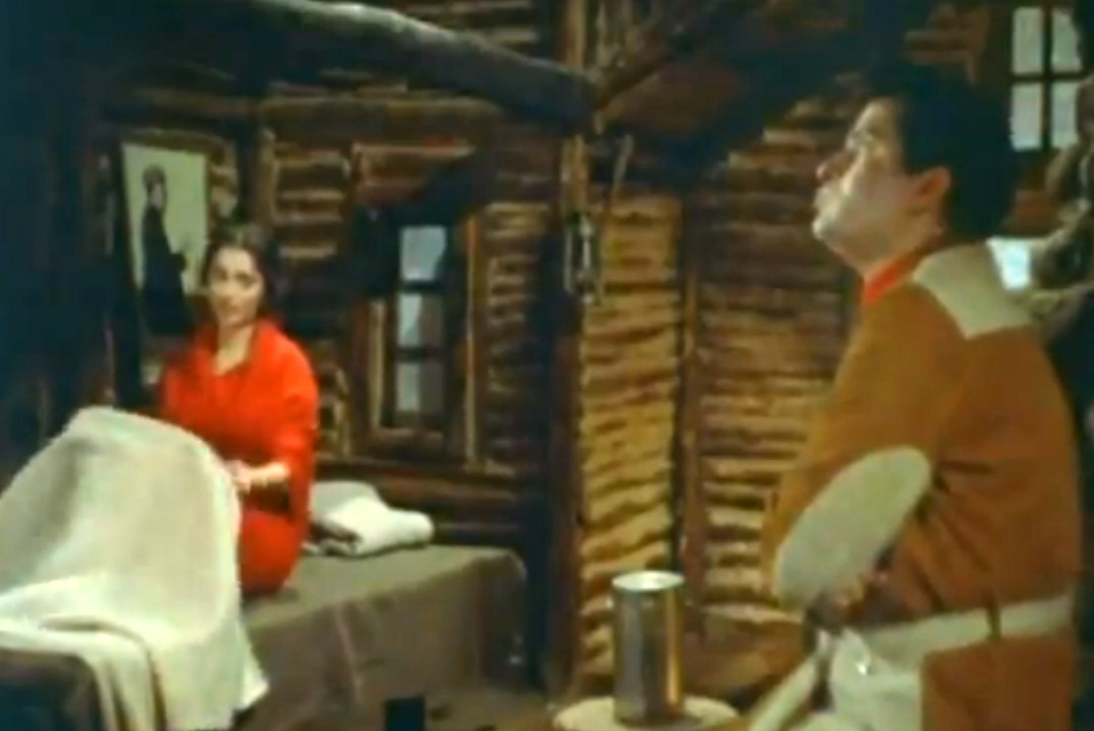
Bakshi Ghulam Mohamed, a mute and perhaps an unwilling witness to one of the funniest ‘log cabin’ sequence from Indian Cinema, listening in on ‘a storm outside-a storm inside’ innuendos being passed between Saira Bano and Shammi Kapoor in Junglee (1961). Don’t tell me that should have been Sheikh Abdullah.
Zaavyul Kamar aavyul badan shokas chaman
zokas chhu ban
Yaaduk sezar raaduk thazar fasrshas chhu kan
arshas chhu thum
-0-
Came across it in A History of Kashmiri Literature by Trilokinath Raina.
-0-
All I can think about right now is hearing the talk of these old aunts about some woman named Badshah Bai.
-0-