Kashmiriyat in Codex

In the beginning was the Word and the Word was with God, and the Word was Kashmir. This was beginning with God and the duty of every faithful monk would be to repeat every day with chanting humility the one never-changing event whose incontrovertible truth can be asserted. But we see now through a glass darkly, and the truth, before it is revealed to all, face to face, we see in fragments (alas, how illegible) in the error of the world, so we must spell out its faithful signals even when they seem obscure to us and as if amalgamated with a will wholly bent on evil.


-0-


Aassi aiys ta asi aasav
  Aassi dur kur patu-vath
Shivas sari na zyon ta marun
  Ravus sori na atu-gath!


We did live in the past and we will be in future also:
From ancient times to the present, we have activated
          this world.
Just as the sun rises and sets, as a matter of routine,
The immanent Shiva will never be relieved of birth and
        death!


~ Lal Ded


That Lalla of Padmanpore,
who had drunk the fill of divine nectar;
She was undoubtedly an avatar of ours.
O God! grant me the same spritual power.


~ Nund Reshi


Mohammad-radiates light all around
Pujari lost his wits,
While offering flowers,
Iswara showered rain,
Come, let us blow the Shankh
around Sankara.
Mohammad-radiates light all around.


~ Ahad Zarger


What do we accomplish?
by coming and going,
From one Janama (birth) to another?
I think nothing.
the way out is
‘So-ham-Soo’ (I am thou).
Explore, Brahma, Vishnu, Maheshwara,
They are all-pervading, the manifest.
Shall thou bear the reality?
When it dawns upon thou?


~Shah Ghafoor


Shastras, I have explored,
I- the Rahim Sahib, am wearing around,
A Shastra myself,
For Shastra is the crown of believers.


~ Rahim Sahib


Dew radiates brightness all around,
Atma (Soul) cannot get out of transmigration,
Siva, O Shah Qalandar, resembles none.


~ Shah Qalandar


Like a yogi I postured myself
In the solitude of vana (jungle),
And reduced my sharer (body) to ashes,
In the process of Prana-Abhyas


~ Asad Parray


Rig Veda, Yajer Veda, Sam Veda, Athar Veda
My revered guru (teacher) endowed me
With these four Vedas,
And gave upto me,
Apparels of a yogi and gyana


~ Shamas Faqir


Kur Batus Peth Zoo Fida Qudoos Gojwari,
Az Timai Kathe Yaad Paeyu Waen;
Reach Sirij Kakan Mussalman Gobrae Greinz,
Dil Tithai Paet Mila naeyu Pana Waen


“It is for a Bata (Kashmiri Pandit) that Abdul Qudoos Gojwari laid his life; today you (Hindus and Muslims) should remember these events for togetherness. And it was Rajkak (birbal Dhar’s son) who treated Muslims as his own children; today, you should seek union of hearts as you had done then.”


~ Mahjoor


Kiyaah kara paanchan dahan ta kahan
Yim yath leji wokshun kareth gai
Yikiwoti samahan akisey rai lamahan
Kovi maali ravihey khan gaav


(What can I do with these fives, tens and elevens?
Who spoiled the broth?
I wish they would unite
And would not be lost in wilderness)


~Shiekh Nooruddin Noorani


Gani kar paanis awlaadas
Hani hani maaz traav deryaavas
Patciye man panun kerzzen nihaar
Kaafar sapdith korum Iqraar


Cut into pieces your own child;
And throw his flesh in the river
If you like it, have it as breakfast.
I became an infidel to mould myself to become a 
faithful of God


~ Abdul Ahad Zargar


Thatha chha ashqini tsanji tehrunuey
ratci ratci matci maaz khuon ye lo
Pannuy khoon gatchi tresi kani chonuyey
Suy gatci tcaangi zaalunyey lo
Pannuy khoon gatci tresi kani chonuyey
Suy gatci tcaagni zaalunyey lo
tami key gaashi gatci yaar praznunyey
Ratci ratci matci maaz khuonye lo


(It is not easy to face a onslaught of love,
You shall have to eat your own flesh,
And drink your blood to quench your thirst,
And burn it to light a lamp;
You can then recognize you’re beloved
under the shine of that light,
First, eat up flesh from your wrist)


~ Momin Sahib


Kaafer-e-Ishqam musalamaani maraa darkaar neist
Har rag-e-jaan taar gashta haajab-e-zunnaar neist


(I am infidel of love; I don’t need to be a Muslim,
Each vein of my body has turned into a sacred thread- (of Hindus))


~ Amir Khusro


Soch Kraal karaan tas paiwandi
Yes assi dilas safaai
Chalith paanas dium diun gatsi randa
Khudawanda illahi


(Soch kral is a friend of pure ones
Who have a crystal clear heart?
Sharpen your self and make it shine;
The Almighty God is there to watch.)


~ Sochh Kraal


Akh tsi ta bey ba ganzar mabaa
Habaa yi chuy gumaanay
Yath faani saraayi diun chhuy shabaa
Ath manz mo dim dukhaanay
Pato ho marun az yaa sabaa
Habaa yi chuy gumaanay


(Don’t count yourself and myself
All this is a dream and nothing else.
In this mortal world, do spend one night
But don’t set up a shop in it
You shall have to die today or tomorrow
All this is nothing but a dream)


~ Sochh Kraal


Maal-odaulath chhuna rozaanay
Donway bewafa goy gumaan
Waataan koni chukh be zaanay
Wolo yuri yaari janaanay


(Wealth and affluence do not last longer,
Both are unfaithful, mind it.
Why don’t you delve deep into this point?
Come to me, O my beloved! )


~ Rahman Dar


Seerat traavith sooratas mozum
Doulatas sapdaan daas
Thazray thazray oosus
Azlan diutnam wodoluyey


(I gave up nobility and embraced beauty
I became a slave of wealth.
I was like a kind on top,
but my fate pulled me down)


~ Shamas Fakir


Anem soi, wawum soi
Lajem soi pane saai 


~ Kashmiri saying


Panun raeth pansei math


~ Kashmiri saying


Bulbul Na yeh, Wasiyat Ahbab Bool Jayen
Ganga ke Badle Mere Jehlum Mein Mein Phool; Hayen


~ Kashyap Bandhu


“May be it is the bone and blood of the very ancient Dravid (whatever goes with it) civilization which has survived as the ethinic/culture core and around which the present edifice has been built in collaboration with the Aryans, the Ionian Greek, the Konkan Brahmans, the gypsies and the Central Asians”


~ Akhter Mohi-ud-Din 


“You are for Kashmir, that you live for Kashmir, do well for Kashmir, and love everything of Kashmir”.


~ Mirza Arif


‘Speak of! people of Kashmir speak
O, kashmir thou art a thing of beauty
And a thing of beauty is a joy for ever
keats cheats himself when he believes and says so
Arif tells him to listen to a beloved’s woe 
tyranny for you, O! Dishonored land
You are  a charm for the one that has the upper hand’


~ Mirza Arif


“O Nila, the words of the sage will be effective for one Caturyuga. After that you will live in the company of men only. Here the Pisacas will always become weak…Prajapati is called Ka, and Kasyapa is also Prajapati. Built by him this country will be called Kashmira”


~ Nilmat Purana


The first Rishi was the prophet Muhammad;
The second in order was Hazrat Uways;
The third Rishi was Zulka Rishi
The fourth in order was Hazrat Pilas;
The fifth was Rum Rishi
The sixth in order was Hazrat Miran
The seventh (me) is miscalled a Rishi
Do I deserve to be called a Rishi? What is my name?


~ Nund Reshi


Shiv Chaai thali thali wochaan
Mau Zaan Huind tu Musalmaan
Toruk Hai Chookh Paan praznan
Soi Chaai Shiv seet Zaan


(Siva abides in all that is, everywhere
Then do not discriminate between a Hindu and a Musalman
If thou art wise, know thyself
That is true knowledge of the Lord)


I renounced fraud, untruth, deceit,
I taught my mind to see the one in all my fellow-men,
How could I then discriminate between man and man?
And not accept the food offered by brother.


The idol is but stone,
The temple is but stone,
From top to bottom all is stone.


He does not need the kusa grass, nor sesame seed,
Flowers and water He does not need,
He who, in honest faith, accept his Guru’s word,
On Siva meditates constantly,
He, full of joy, from action freed, will not be born again.


It covers your shame,
Saves you from cold,
Its food and drink,
Mere water and grass,
Who counselled you, O Brahmin?
To slaughter a living sheep as a sacrifice,
Unto a lifeless stone


The thoughtless read the holy books
As parrots, in their cage, recite Ram, Ram,
Their reading is like churning water,
Fruitless effort, ridiculous conceit


When can I beak the bonds of Shame?
When I am indifferent to jibes and jeers
When can I discard the robs of dignity?
When desires cease to nag my mind


The Guru (Sayyid Husain Simnani, or so we are told, not a mention of Sidha Mol)
gave me only one word;
Enter into thyself from the outer world;
the guru’s precept came to me as God’s word;
That’s why i started dancing nude.


In life I sought neither wealth nor power;
Nor ran after pleasures of sense;
Moderate in food and drink, i lived a controlled life;
And love my God.


Whether they killed a large sheep or a small one,
Lalla had her round stone (as her usual fare.)


Whatever I uttered with my tongue became a Mantra


I burnt the foulness of my soul;
I slew my heart, its passions all;
I spread my garments, hem and sat;
Just there, on a bended knees,
In utter surrender unto Him;
My fame as Lalla spread afar.


~ Lal Ded 


Passion for God set fire to all she had,
and from her heart raised clouds of smoke,
Having had a draught of adh-e-alat,
Intoxicated and drunk with joy was she,
One cup of this God-intoxicating drink,
Shatters reason into bits,
A little drowsiness from from it is heavier than
Intoxication from a hundred jars of wine.


~ Nund Rishi quoted by Suhrawardiyya Sufi Baba Dawud Mishkati*


Adam is the progenitor of the human race,
The Mother Eve has the same primordiality,
(So) from where have the ‘low-castes’ descended?
How can a ‘high born’ deride his own ancestry?


One who harps proudly upon one’s caste?
Is bereft of reason and wisdom,
Here the good alone can claim noble descent;
In the Hereafter ‘caste’ will be extinct,
Were you to imbibe the essence of Islam?
Then no one would be purer than you.


(By) displaying the caste in the world,
What will thou gain?
Into dust will turn the bones,
When the earth envelopes the body:
To utter disgrace will he come?
Who, forgetting himself, jeers at others


Among the brothers of the same parents
Why did you create a barrier?
Muslims and Hindus are one
When will God be kind to His servants?


~ Sheikh Noor-ud-Din


The three alphabets -Sha-Ra-Ka, are in fact the etymological representation of the three alphhabets – Ka-Sha-Ra or Kasheer


~ Professor Fida Hassnain


O, King! I hail from the land far away;
Where there is no truth and evil knows no limit.
I appeared in the Maleecha country, and I suffered at
 their hands.
I am known as Ishvara Putram (the Son of God)
Born of Kanya-Garban, the virgin
I teach love, truth and purity of heart,
I ask human beings to serve the lord.
The lord God is in the centre of the Sun, and the elements.
And God and the Sun are forever,
Bliss giving Lord being always in my heart,
My name has been established Isha-Mase


~ Bhavishya-Maha-Purana, 115 A.D.


‘During this period, Hazrat Yuzu Asaph, having come from the Holy Land to the Holy Valley, proclaimed his ministery. He devoted his days and nights in prayers, and having attained the highest status in spiritual hierarchy, declared himself as the Prophet sent to Kashmiris. I have seen in a work of Hindus that this Prophet was really Hazrat Isa, the Spirit of God, who had assumed the name of Yuzu-Asaph in Kashmir.’


~ Kashmiri historian, Mullah Nadri


‘I would like to see whole colonies of English artist, men of science and literature and divines, proceeding to Cashmer’


~ Joseph Wolff in Mission to Bokhara (1832)


When Kashmiris are prosperous, traitors are devastated
When Dhars are prosperous, Kashmiris get devastated


~a Kashmiri proverb


“There is one God
But with hundred names!”


“We belong to the same parents:
Then why this difference


Let Hindus and Muslims (together)
Worship God alone


~Nund Reshi


The mess we inherited. There are some select snippets from a collection of essays titled ‘Kashmiriyat through the ages’, edited and compiled by Professor Fida Mohammad Hassanain (who it seems spent an inordinate duration of his life trying to prove Jesus was in Kashmir and even talked to the famous charioteer of UFO gods, Erich von Däniken ) from various articles published over last decade or so by various people for various platforms. It arrived as  a gift to me from its Srinagar based publishers Gulshan Books.


An elder cousin caught me reading this book and paused at the name of the editor. 


‘He used to be our neighbour in Chanapora. We didn’t know he was a writer till the day his daughter-in-law got kidnapped.’


In 1991 Nahida Imtiaz, daughter of Saifuddin Soz was kidnapped by militants. Her release was secured in exchange for some other militants. My cousins tells me Nahida was Fida Mohammad Hassanain’s daughter-in-law.


None of it makes sense. Not at this late-hour. Not in this place. To call everything by its true name and the trouble to be reminded that everything is double.


“We must treat our lives as we treat our writings, put them in accord, give harmony to the middle, the end, and the beginning. In order to do this, we must make many erasures.”


Joseph Joubert, the French writer who spent all his life preparing to write a book but never published anything while alive. 


-0-


*Baba Dawud Mishkati and Abdul’l-Wahhab say that while the Shaikh and his brothers were once trying to break into a house. Lalla, who happened to be there, cried to Nurru’d-Din: “What will you get from this house? Go to a big house (i.e. God). you will get something there.” On hearing this Nuru’d-Din, who was thirty years old at the time, immediatley left his brothers and dug out a cave at the village of Kaimuh. Here for many years he performed his austere penances, withdrawing entirely from the life that surrounded him.


~Biographical encyclopedia of Sufis By N. Hanif


Baba Dawud Mishkati was a follower of Suhrawardiyya Baba Nasibuddin Ghazi of Bijbehara. In his ‘Asrar-ul-Abrar’, written around 1654 AD, and acknowledged as the first work to mention Lal Ded, Baba Dawud Mishkati mentions that word Rishi is derived from the Persian word raish or rish meaning the feathers or wings of a bird. 


-0-

Rahman Rahi by M K Raina

For me the interesting part in this film isn’t hearing the famous Kashmiri ‘poet of silence’ actually speak but it is the way his voice comes across as a person, when he talks about his life and then as a poet, when he talks about the thoughts that invade his mind. It is the way his poetry interacts with a listener and then how people interact with him in person, question him. ‘Why silent?’ isn’t the only question. The question could also be why words written decades ago, concerns that first etched them, why those words still offer quasi-resonance.

-0-
First section  of a Ranjit Hoskote essay titled ‘Winter Thoughts about Spring’ (link) starts with a conversation with Rahman Rahi and ends with part were Bollywood eats up culture.

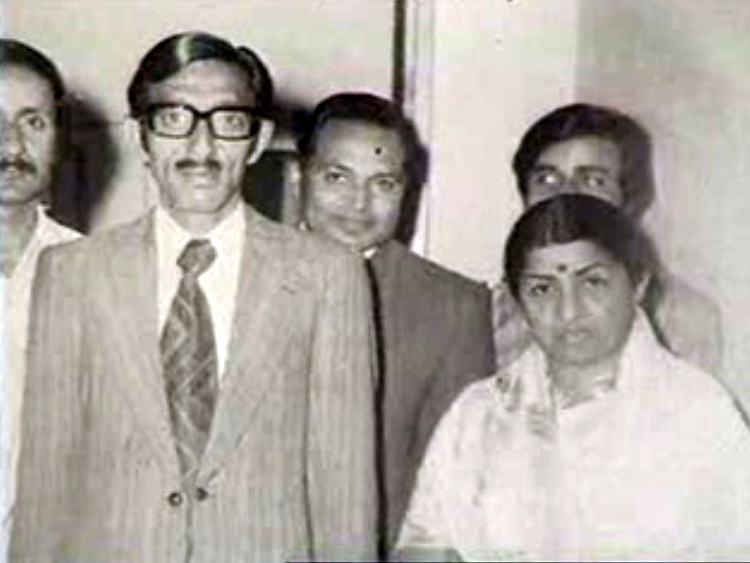
Right, Rahman Rahi with Lata Mangeshkar.

In this film, perhaps the most ironic part is when one sees a young Kashmiri girl in middle of a discussion about future of Kashmiri Language, trying to make a strong point and then struggling to find a Kashmiri word for her point. Or perhaps most ironic part is watching the poet quote Koshur poet Mahjoor and Dilli poet Mir with just as much ease. Or perhaps it is hearing him worry about losing his memories: ASI protected Sun temple ruins of military campaigner Lalitaditya and Muslim Auqaf Trust run Charari Sharief of soul campaigner Alamdar-e-Kashmir Hazrat Sheikh Noor-ud-Din Wali/Nund Reshi.

-0-
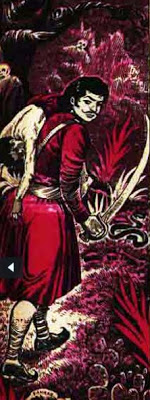
Raja Vikarmajitery Kath


  dyar hase chu saf’ras
     yar hase chu na as’nas
  ash’nav hasa chu as’nas
gaye tre kathe beye ze kathe hasa chy’au
  sa zanana chy’auvna pane’ny
     yesa na asi pan’es sai’th
beye hasa
     yus rats bedar rozi
     suy hasa zae’ni raje Vikramajit’ney kur

Monies, sirs, is for a journey.
A friend, sirs, is for when there is no money.
A near relation, sirs, is for when there is money.
That makes three things, and, sirs, there are two others : —
 That woman is not for you
 one not in know of herself
And, again, sirs : —
 He only will win Raja Vikramaditya’s daughter
Who keepeth awake by night.

I never imagined I will read these Kashmiri stories. But here they are, preserved. Preserved complete with all the intellectual rigor that their listening induced among its recorders. The above lines form a mishmash of a particular verse in ‘Hatim’s Tales: Kashmiri Stories and Songs’ (1928), recorded with the assistance of Pandit Govind Kaul by Sir Aurel Stein. I created this mishmash based on the two version offered by Aurel Stein and Pandit Govind Kaul.

The Kashmiri songs and stories in this book were recited to Sir Aurel Stein in 1896, at Mohand Marg, high in Haramukh range, in Kashmir, by one Hatim Tilwon of Panzil, in the Sind Valley, a cultivator and a professional story- teller. They were taken down at his dictation by Sir Aurel Stein himself, and, simultaneously, by Pandit Govinda Kaul. The work is unique in the sense that (as the introduction to the book explains):

“[…] Hatim’s language was not the literary language of Kashmiri Pandits, but was in a village dialect, and Sir Aurel Stein’s phonetic record of the patois, placed alongside of the standard spelling of Kashmiri Pandits, gives what is perhaps the only opportunity in existence for comparing the literary form of an Oriental speech with the actual pronunciation of a fairly educated villager.”

The stories that Hatim told included not just a story of fabled Vikarmajit, but also of Mahmud of Ghazni, albeit in a familiar fabled grab of a benevolent king who goes around town at night in the grab of a poor man. He also tells the story of a farmer’s wife who complains to a Honey-bee about harshness of a revenue collector. The stories are told in songs and verses. The most amusing Kashmiri song offered by this book is the one about the turmoil created in lives of Kashmiri working class by Sir Douglas Forsyth‘s mission to Yarkand in 1873-4.  The workers, cobblers, tillers, carpenters and all with a typical tongue-in-cheek Kashmiri humor sing:

Yarkand anan zenan

Khoni keth doda-not ware heth
bari drav
Lokan chu sapharun tav
Tahkhith doda-gur Jenatuk bagwan


Yarkand anon zenan
Watal dop watje bonay sara zah


Chim mangan dalomuy ta kah
Tsoratsh ta or heth met hay, pakanawan

I found Govinda Kaul’s translation (rather his pick of English works for certain Kashmiri work) a bit too easy on Imperialists, almost turning the song on its head.  Here’s what the song conveyed to be:

Yarkand he is conquering
Carrying a milk-pail in his haunch,
earthern pots in a load
he goes forth

For people
journey is exhaustion

He , forsooth

White horse

Heavenly God
Yarkand he is conquering

Cobbler said to Cobbler’s wife
“I shall not remember forever,
they want my leather and lace,
leather-cutter and awl,
and they want me.
O, they are taking me too”

Yarkand he is conquering

You may read the complete book here at openlibrary.org
-0-

Related Post:

-0-

Pandit Govinda Kaul belonged to the clan of famous Birbal Dhar. Famous D.P. Dhar was a direct decedent of Birbal Dhar.

-0-
Unrelated Post:
about short film that I was involved with in a minor way Raag Sarkari. (Nominated for IFFI, 2011).The story of a day in the life of a Jailer somewhere in U.P. and day happens to be D.P Dhar’s first death anniversary.

-0-
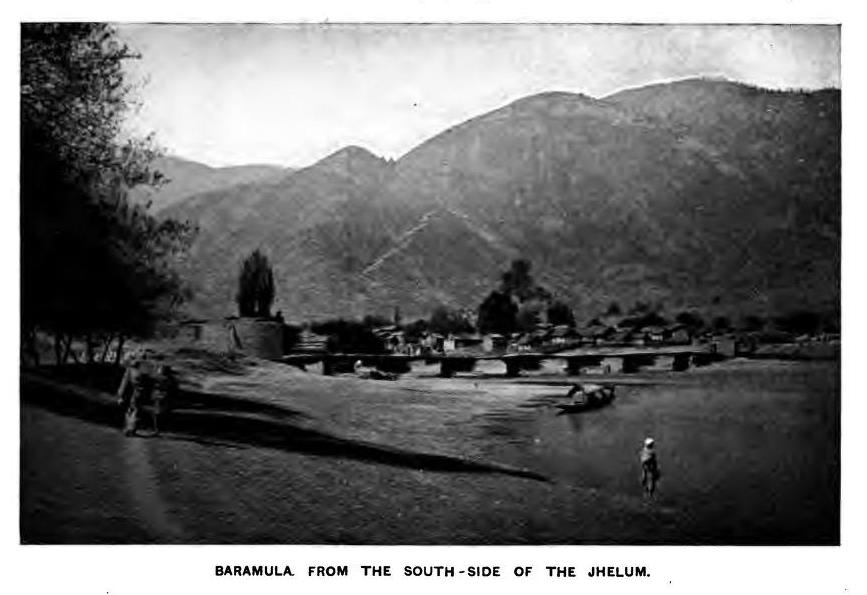
Kadal at Baramulla

Photograph fof Baramulla Bridge from Vignettes of Kashmir (1903) by E.G. Hull 

At Baramulla we saw the first of those extraordinary constructions which form so peculiar a feature of the river scene at Srinaggar a new form of bridge, in the variety of which structures this country seems so prolific.

It spans the river just above the town on a succession of six piers, and is composed entirely of undressed logs of pine and cedar timber. The whole tree trunk, in fact, lopped of its branches. The strongest and longest of them, laid side by side, are stretched across from pier to pier to form the roadway, and merely rest, without any further security, by two or three feet of their length at either end upon the tops of the opposite piers, which may be from twenty to twenty-five feet apart.

The piers are built up of similar logs arranged side by side in layers of a square shape, the logs of each successive layer crossing those of the other at right angles, and
lodging in notches cut in the logs below. The lowest layers are the broadest and diminish gradually as they ascend to the centre, above which they again expand successively up to the top, where the logs equal in length those at the bottom, thus giving the pier an hourglass sort of contraction. The piers rest on a foundation of stones embedded in the muddy bottom of the river, and are protected against its current by a cut-water pointing up the stream, and built of loose stones filled into a frame of logs. Above they are furnished with upright posts, which support the railing that runs on each side of the roadway span.

This kind of bridge is called Kaddal, which appears to be the Kashuri form of the- Hindi kathan “made of wood,” and is very strong and durable despite its
ricketty construction and very dilapidated appearance. There are six or eight of them on the river at Srinaggar, which bear the traffic of the two halves of the city, and
some of them are further weighted with a row of shops on each side the way ; most perilous looking abodes projecting in all degrees of obliquity above the main structure, and from its sides over the stream.

The timber being cedar is very durable, and accidents rarely occur, owing to the elasticity of the construction, and the outlet afforded to sudden floods through the many passages in the substance of the piers. I wit- nessed the behaviour of these bridges in the inundation of 1869, and though they were nearly swamped by the flood, none of them gave way, whilst many of the houses on the river’s bank the one I occupied amongst the first were completely destroyed.

~Kashmir and Kashghar. A narrative of the journey of the embassy to Kashghar in 1873-74 (1875)Author: Bellew, H. W. (Henry Walter), 1834-1892
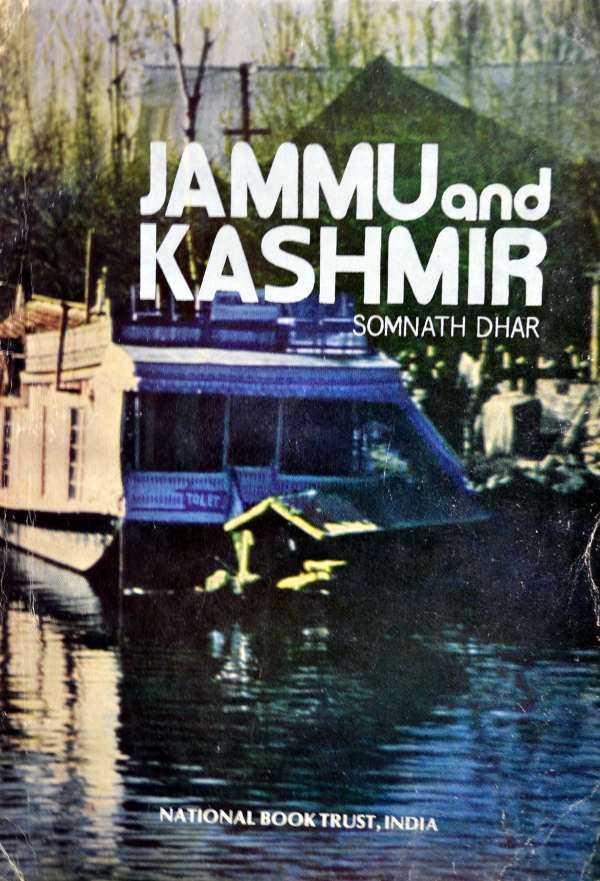
Jammu and Kashmir by Somnath Dhar

Jammu and Kashmir by Somnath Dhar
National Book Trust, India
Second Edition, 1982
Pages 200
Price Rs. 17 (bought for Rs. 200 at ebay from a Jaipur based seller of )

“Tell me what land can boast such treasures?
 Is aught so fair, is aught so sweet?
Hail! Paradise of endless pleasure!
Hail! Beautiful and beloved Kashmir!”
~ Iranian Poet “Toghra” of “Ispahan”

When I first started writing about Kashmir I came across a lot of writing by Kashmiri people. Most of it repeating the same old stories. But it was writings of  Somnath Dhar that I found really interesting and engageable.  Interesting  – because he had cataloged folk songs and folk tales. Engageable – because when he writes that Abdul Ahad Azad mentions a series of articles entitled “Mahmud Gami’s Yusuf Zulekhan” that appeared in a German magazine in 1895, you search online and find that the articles and partial translations were done by Karl Friedrich Burkhard. When he quotes an Iranian poet on Kashmir, you find that the lines may have been part of Ta’rif-e Kashmir-e Toghra. His writings offer a process of learning. [He was one of the teachers of  T.N. Madan] His writings, which till recently I had only accessed online, were certainly an inspiration for me. Often while looking for a piece of information, I ended up coming across something written by him [like for the post on ‘Origin of Kashmiri Houseboat‘]. Finally, I have managed to get my hands on one of his many works on Kashmir.

Somnath Dhar’s Jammu and Kashmir (first published in 1977, re-published in 1982, 1992 and 1999) is supposed to be a beginner’s guide to Kashmir but somehow in just around 200 pages Somnath Dhar manages to offer a lot more than a brief snapshot of the state. he manages to cover almost everything. The content from this book is still used, re-used ad-lib.

In fourteen chapters Somnath Dhar covers People, Language, History, Heritage, Music, Songs, Folklore, Literature, Poems, Drama and Monuments. In addition it even offers details on government developmental plans, and numbers stuff like this population breakdown of the state:

                      1961               1971
Muslims        24,32,067      30,40,129
Hindus         10,13,193       14,04,292
Sikhs            63,069            1,05,873
Buddhists     48,360            57,956
Christians     2,848              7,182
Jains             1,427               1,150
Other religions 3                  8
Religion not stated 9            42

Jains? Probably from Jammu. Religion not stated? Probably too poor to care or probably too educated to care. That’s why I like reading stuff like this. There are also subtle lessons on how various historical narratives are used in a grand ‘conflict’ to make seemingly innocuous but potent comments in favour of a political position. It’s a practice that Kashmiri are still finding too addictive and hard to resist. That too interests me. The myth-making.

The best part of the book is perhaps the songs from Leh and Dogra Land and of course, Kashmir.

From Leh we hear Ladakhis singing the song of Zorawar Singh’s wife:

I do not wish to eat bread received from the sinful northerners
I do not wish to drink water received from the sinful northerners
Amidst the inhabitants of this land I have no friends and relations…
When arriving at the Zoji-la-Pass, my fatherland can be seen…
Although I can see my fatherland, I shall not arrive there…

In Jammu a woman sings:

Tera miga ladga i manda, O gadda,
tera miga lagda i manda,
Eh Patwari migi khat rehyum liki dinda,
sau sau karnian Chanda.
Kehsi banai Rama
Jange di Chakri

I am sick of separation, my love,
I am sick of separation,
I entreat the Patwari again and again,
To write a letter for me, but he refuses,
So you leave the army and return home.
Why, O God Rama, have you created a permanent institution like the Army?

In Kashmir girls dance while singing:

O you must tell me
Where my boy has gone.
Is he a fountain in life’s garden,
Or, a well of nectar, sweet and delicious?

Another thing of my interest, description of Kashmir by the early western visitors. People who pronounced the name of this place as “Cassimere, Chismeer or Ouexmir”.

 In addition the book offers there views of Kashmir:
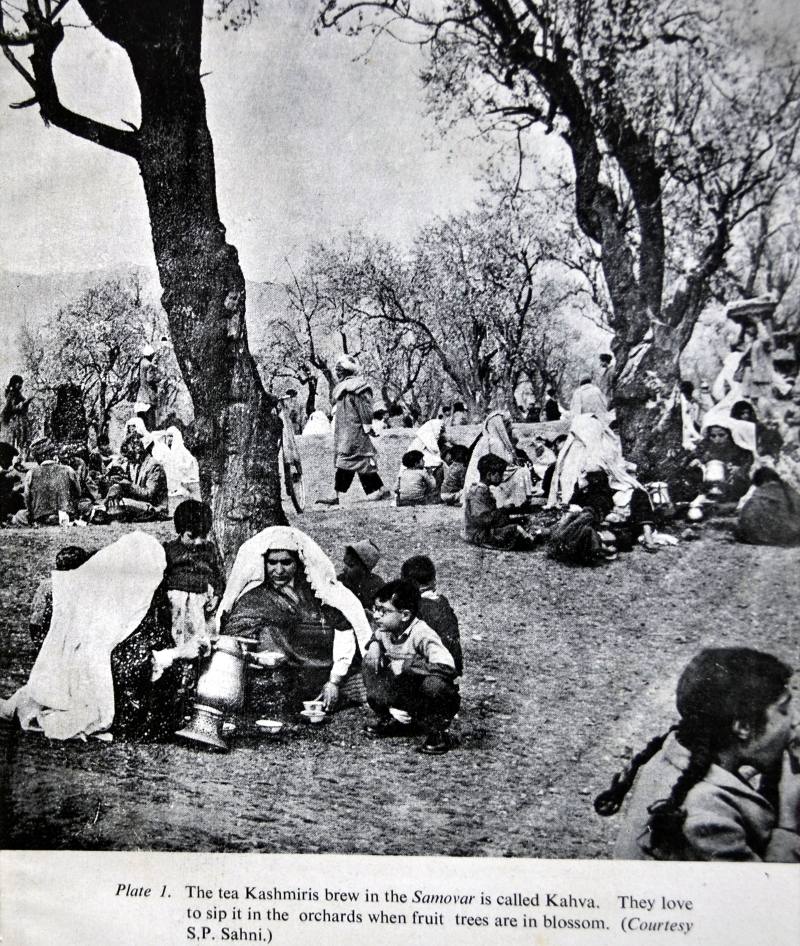
The tea Kashmiris brew in the Samovar is called Kahva. they love to sip it in the orchards when fruits are in blossom. (Courtesy S.P. Sahni)
Kashmiris open a bottle of cold-drink at Chasmeshahi. 2008.

That fold in the lower portion of pheran, I still find interesting.

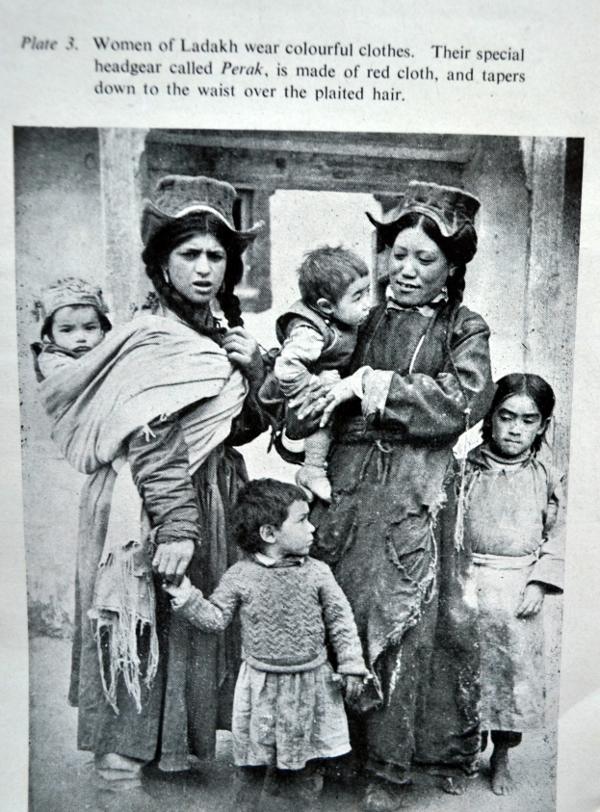
Women of Ladakh wear colorful clothes. Their special headgear called Perak, is made of red cloth
and tapers down to the waist over the plaited hair.

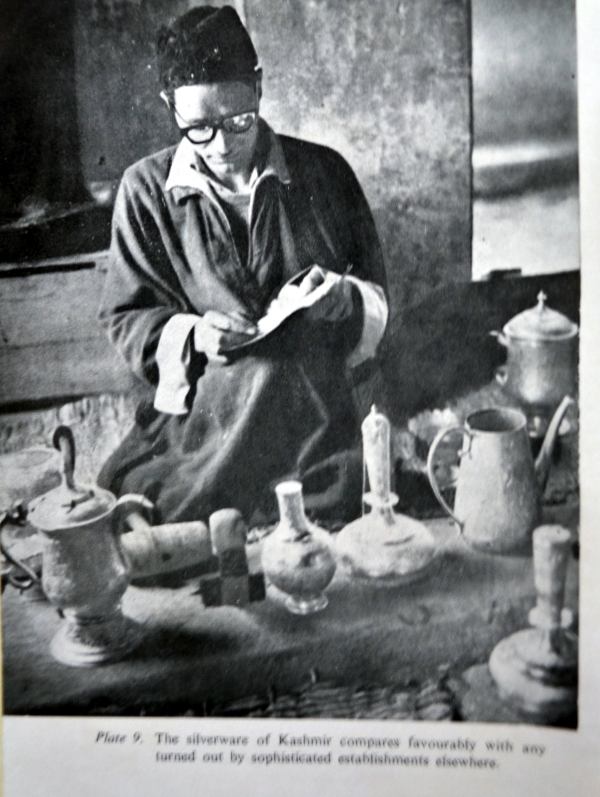
The silverwate of Kashmir compares favorably with any turned out by sophisticated establishments elsewhere

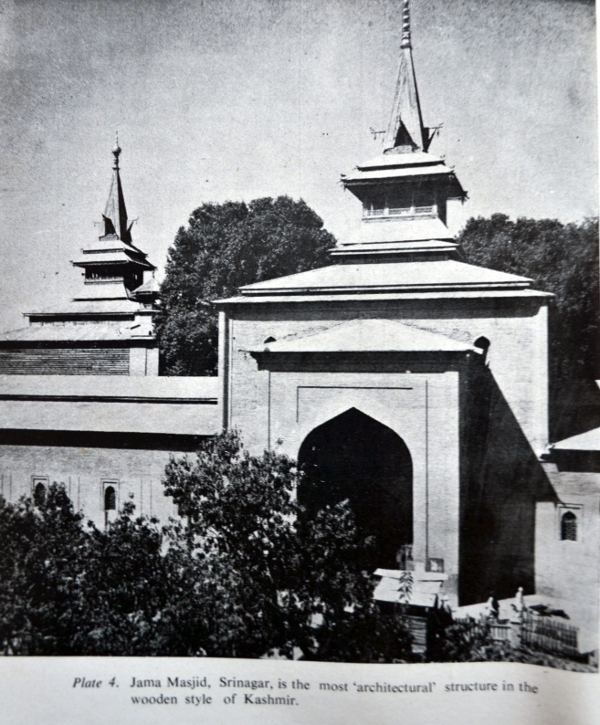
Jama Masjid, Srinagar, is the most ‘architectural’ structures in the wooden style of Kashmir.

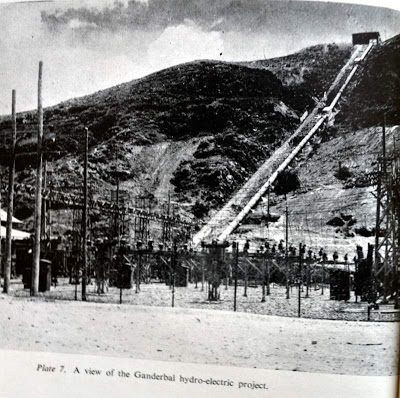
A view of the Ganderbal hydro-electric project

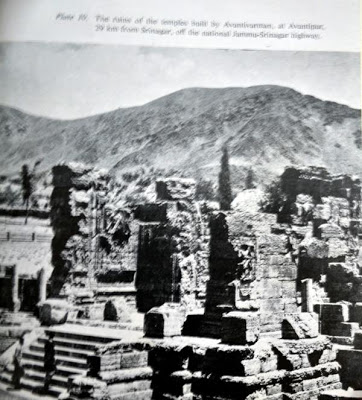
Avantipur

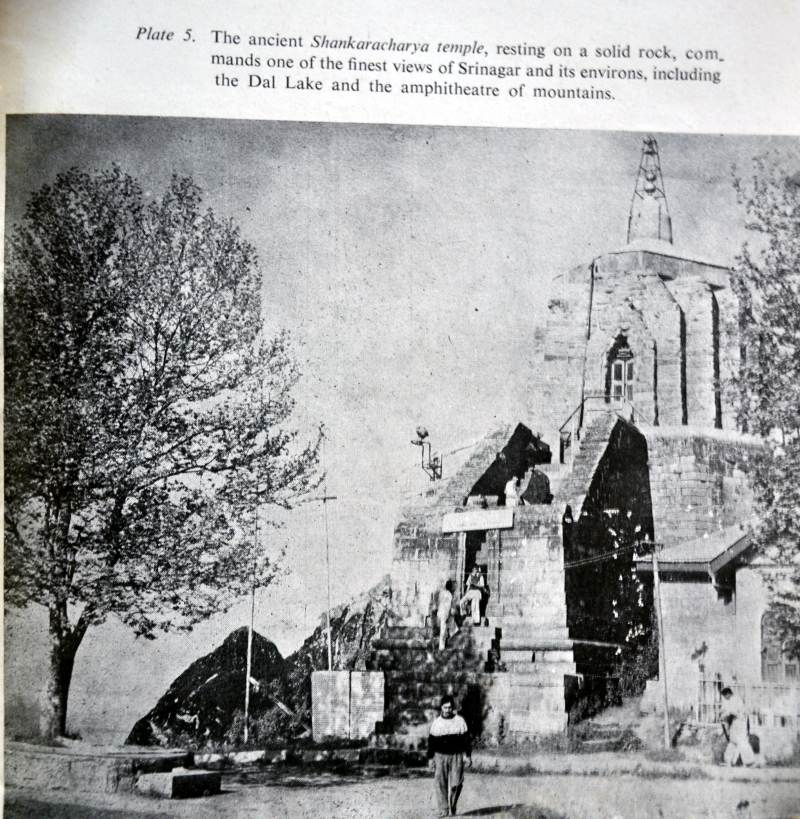
Shankaracharya Temple

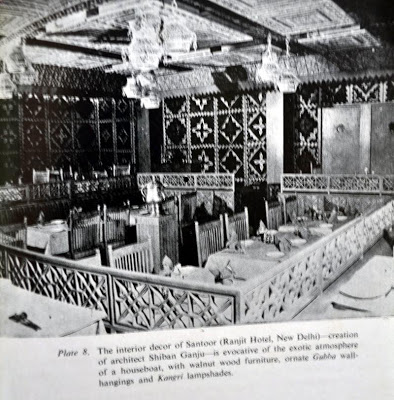
The interior decor of Santoor (Ranjit Hotel, new Delhi)-  creation of architect Shiban Ganju

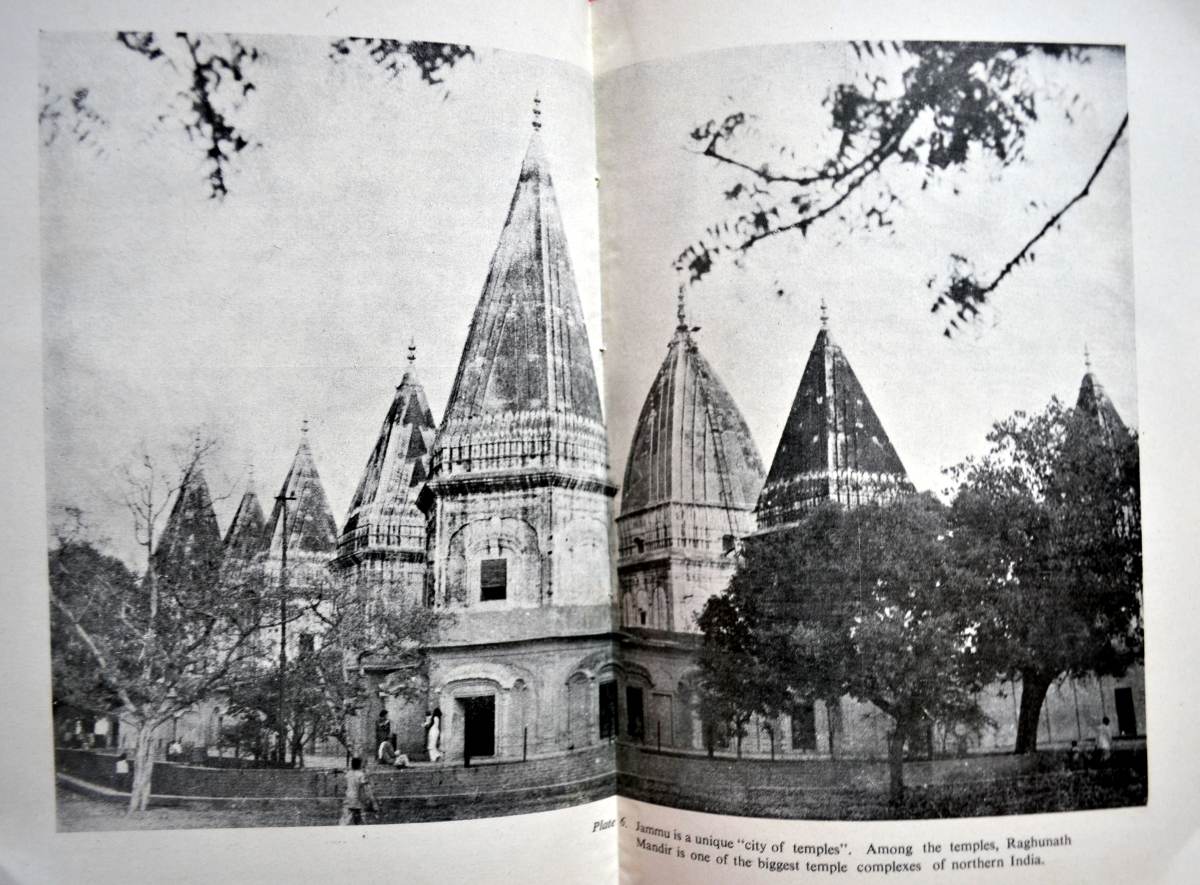
Raghunath Temple

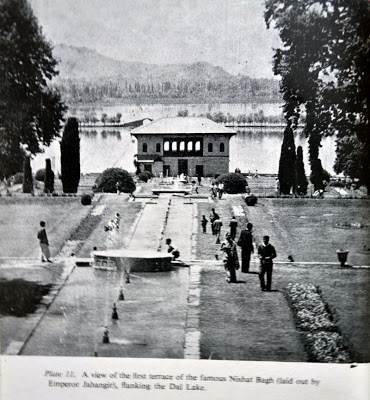
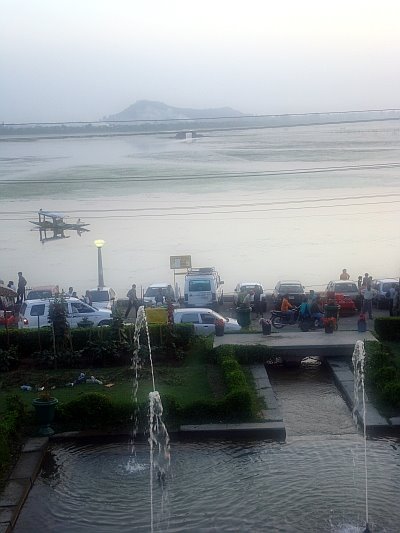
Nishat
Nishat.2008.

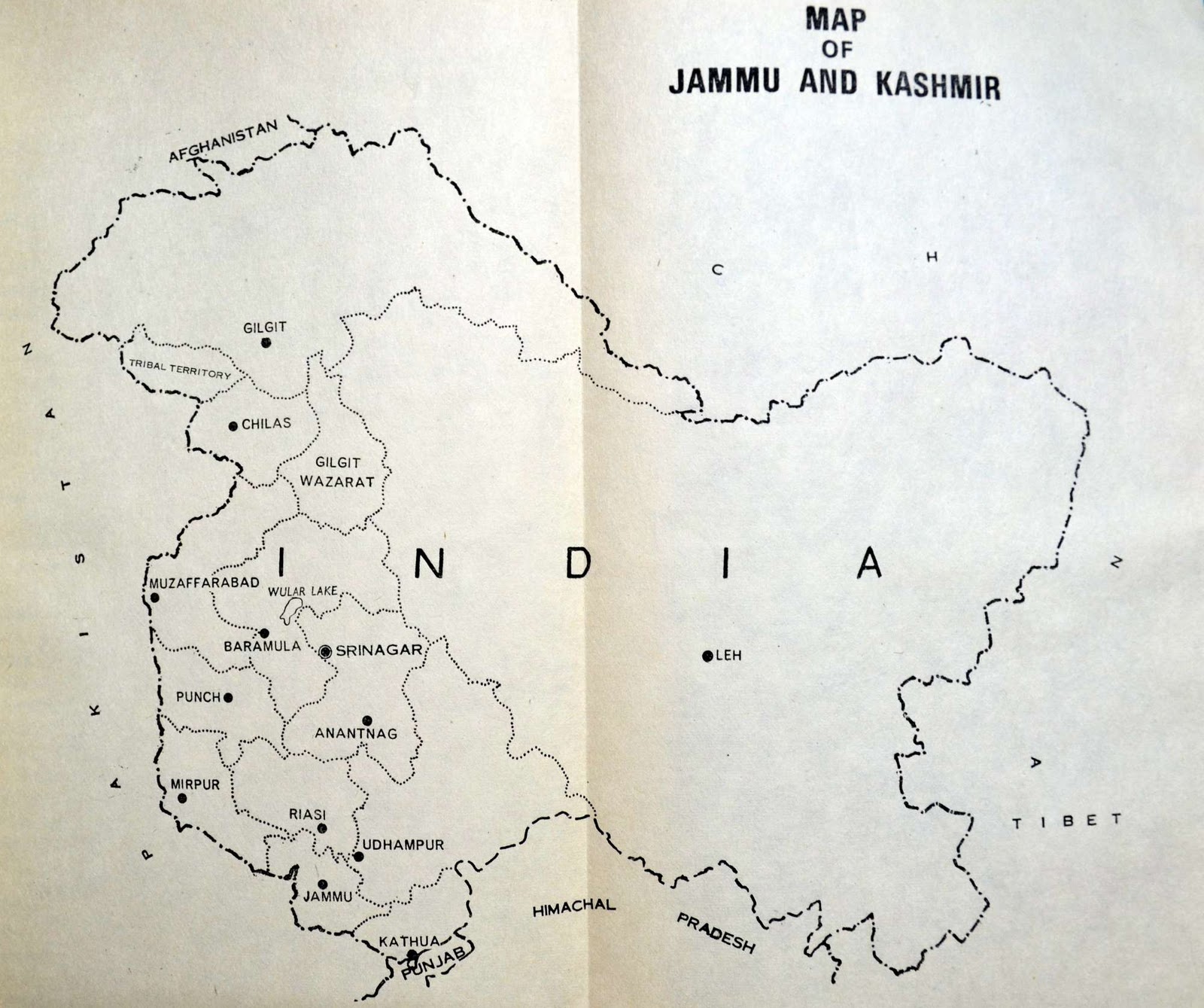
The Map

-0-

You can buy a recent edition of the book here for around Rs.75:
Buy Jammu and Kashmir by Somnath Dhar from Flipkart.com
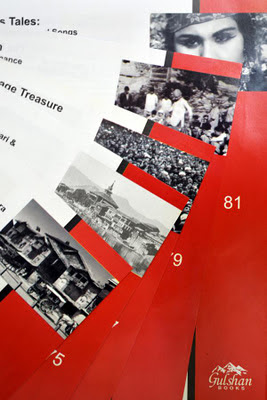
from Gulshan Books, Srinagar


A couple of weeks back I got an email from Sheikh Aijaz, Chairman Gulshan Books, a publisher based in Srinagar, Kashmir. He wanted to send me their catalogue. I thought he wanted me to promote it. I told him I would be more than happy to share it around with my readers. In the next mail he asks me for my address and praising my Kashmir blog promises to send me two books as a token of appreciation. I was more than happy.

This week, in office, I received a package addressed to ‘Chairman Search Kashmir’. People in office had a good laugh about it. ‘What’s the Deal Bhai! Bum hai Kya!Kaha ka chief hai bhai!’ Later at my place as I go through their catalogue, I am pleasantly surprised to see the pages embellished with photographs of Kashmir (at least one of them, my own click) that I have been posting to my blog.

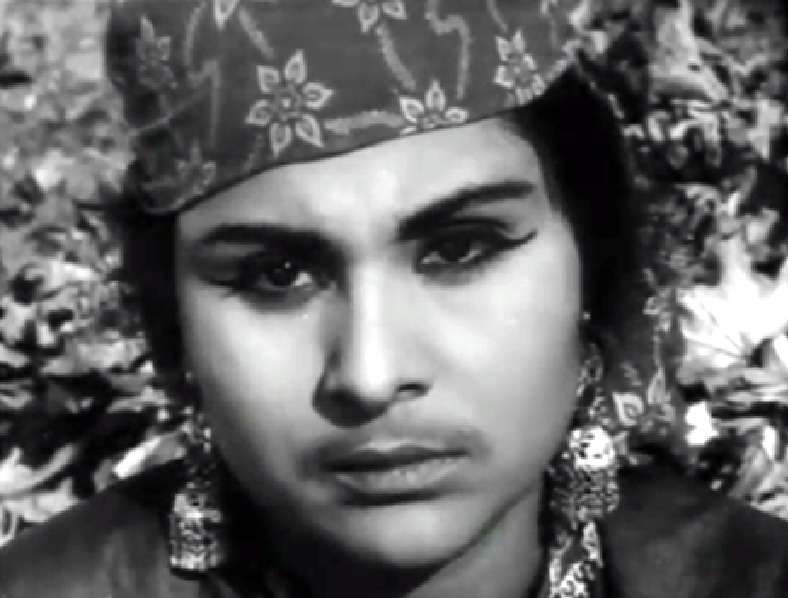
from my review of First Kashmiri Film Mainz Raat (1964).
The actress is Krishna Wali. My father went to school with her son.

The catalogue now offers me names of some more rare and interesting books on Kashmir to hunt for. Gulshan Books has re-published some really old and out of print book on Kashmir. Those in Kashmir can check out their store at Residency Road or their stall at Srinagar Airport. Rest can check out their website and order online [gulshanbooks.net, I had a tough time finding their website when I first heard from them. Hopefully, Google will be kind to them now!].

The two books that they sent me – ‘Kashmiriyat through the ages’ Edited by Prof. Fida Mohammad Hassanain and ‘Srinagar: My City My Dream’ by Zahid G. Muhammad – are turning out to be engrossing reads that are going to provide more ideas for this blog. ‘Kashmiriyat through the ages’ is a collection of essays on…um…Kashmiriyat while ‘Srinagar: My City My Dream’ offers a nostalgic trip around Srinagar city. The books having a combined hefty price of $50 that had me wondering how would a common man afford them. And these are certainly books that ought to be more easily available (a few of them are already available for free online) but I guess publishing books from Kashmir is not an easy business affair.

I wrote back to thank them and to tell them that I am no chairman of anything. I told them that I am just a log keeper and that I was eight years old when my family had to move out of Kashmir.

-0-
You can buy it from here:

Buy Srinagar My City My Dreamland from Flipkart.com

Hair like Mathra Devi

The wittiest wisecrack came from my grandmother. She said I now look like Mathra Devi.
Who?
I had to ask. My long hair reminded her of a sanyasin named Mathra Devi who used to live at Durga Nag near  Shankarcharya Hill. Apparently she had such long hair that it used to take five attendants to help  wash.

-0-
Mathura Devi (1878-1985) used to stay at Durga Nag in 1960s.
-0-

Neighbour, gur tang’e wol

Neighbour, gur tang’e wol. 2008

I turned the big wooden bolt and threw open the gates. I was in. The old house was on left, whining, grunting, wheezing, as usual. The horses were inside. Were they tied proper? I hoped they were.  Nobody else home. I didn’t have much time to loose. I looked at the wall in front of me, our side of the common wall. Gauging from the speed at which beer’e ball shot off from my bat and the point and the angle at which the ball then crossed the wall, it was most likely to have dropped somewhere to the right.  I turned right and my eyes met mounts and mounts of horse dung. The smell now hit me. It seemed half the courtyard was buried under 4-feet of dung. Further away from me, the dung seemed months old, hardened, but closer to me, one look and I knew it was fresh. On one of these mounts, not too far from me I found beer, the precious wooden ball that I had earlier in the day stolen from the cabinet of uncle Nanu. It was a remnant from his schooldays. I was not supposed to play with it till I grow-up a few more years. I never saw him play with it. He said it was dangerous, these were his words: It is so hard, it will break your empty skull. Having lost it, I now feared for my skull in any case. Last summer, I had started believing I was He-Man. I would return back from school, take off my uniform, but before wearing anything else, I would put on my marvelous winter gum boots, run out of the house, out the old wooden door and into the yard, holding up over my head a pencil in hand, screaming my lungs out, ‘Iiiiii haaave dhA PAawaaaR!’ This went on for days, or a few weeks and my Castle Grey Skull was only besieged when one day after my superb performance Nanu, simply pulled the shoes out of my feet and threw them out. A proper Kash’kadun, as they say in Kashmiri. One landed on the roof of Naya Kambra, the newly built room next to the main gate and the other, based on the angle it was tossed, probably crossed over the wall and landed on horse dung. I had tried to recover the shoe that landed on roof and failed (there was no proper stair to roof-top). The other, I hadn’t even thought as recoverable. I mean, this house was the ground of my most precious but forgotten nightmares. On some nights, even as the sound of distant trucks moving on national highway receded, these horses kept on singing their wheezy lullabies and they kept on thumping our house to sleep with their hooves. On some nights, I thought they were sad and in most nights I wished they would go to sleep. Were Ghardhivta giving them bad dreams? There were ghosts in that house. Wasn’t Mansaram the family house help from Orissa slapped one dark night in that house by an unseen hand? At one time, like most houses in the area, this house too used to belong to the Razdan clan. If stories are to be believed Razdans were settled here by Badshah. If one explanation is to be believed, the people who were settled in the marshes of Chattabal by Badshah were given the name Raz-Dan as they got to eat from royal oven. There is a pass near Gurez named Razdan pass. Pass that. Just before my birth, sometime in late 1970s, most of these families moved out of Kashmir to Indian plains, moved to Ghaziabad or Faridabad. Before leaving they sold on half of the house to a Gur Tang’e Wol. The way these houses were designed and the way these families lived meant that splitting a house wasn’t easy and often aesthetically unpleasant. So now the house next to us was owned by a Tongawalla.
It was house of horses and ghosts. A perfect setting for bad dreams and good adventures. So here I was trying to recover this stupid ball. I retreated from the house.

I returned. I stepped into shit. I had come back prepared. I was wearing my shiny new red snowshoes. I only had to take two steps in that valley of dung to reach the ball. One step in, I started sinking. I didn’t drown but I was ankle deep. I tried to roll the ball towards me using a stick. It worked. It wasn’t long before I had it in my hand. It was over. I did get it back. World was a beautiful place. Man could do whatever he willed. God was with those who help themselves. Thirty cross and his mighty pebbles. It was all true. I started to make my way back. As I pulled my one foot out of shit and on to the solid ground, the other foot somehow slipped deeper in shit. In the same instant, the shoe stuck and only my foot came out. I lost one more shoe.

-0-