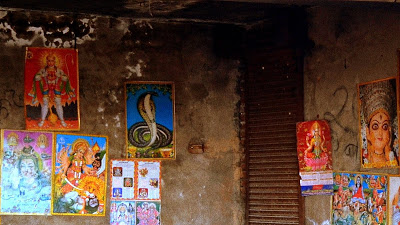
Life Cycle of a folklored Kashmiri Snake

Continuing with the snake tales.

An abandoned shop turned parking lot turned temple in Jammu

“Listen. If for the space of one hundred years the sight of no human eye falls on a snake a crest forms on its head, and it becomes a shahmar; if for another hundred years it comes not into the sight of a man, it is changed into an ajdar; and if for three hundred years it has never been looked on by a human being it becomes a viha. A viha can stretch itself to any length, possesses enormous power, and can change its appearance at will ; it is very fond of assuming the form of a woman, in order that it may live with men.”

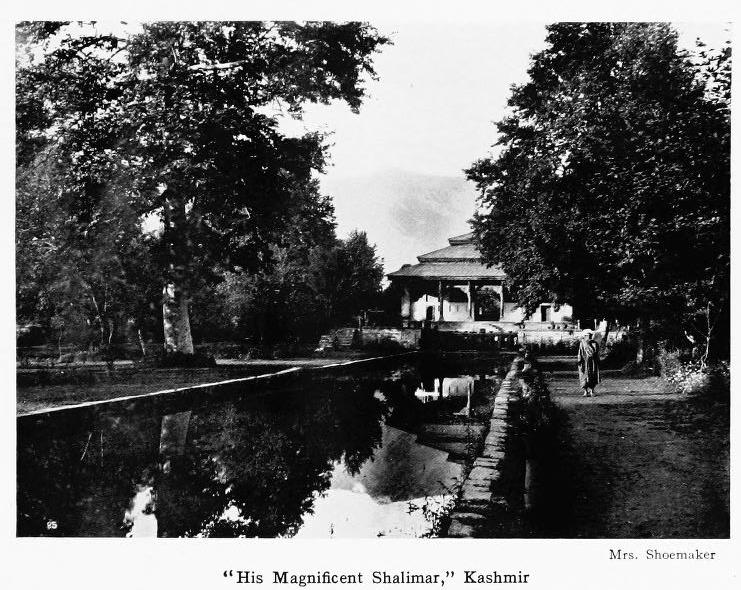
~ from a version of the story ‘The Philosopher’s Stone’ (another version of which features Kurdish govenor of Kashmir, Ali Mardan Khan) in ‘Folk-Tales of Kashmir’ by Rev. J. Hinton Knowles (Second Edition, 1893). The snake woman claims to be Chinese and Ali Mardan Khan  builds Shalimar Garden for her. In Kashmiri the name for the snake is given as Shahmar. Shahmar also appears in ‘Hatim’s Tales: Kashmiri Stories and Songs’ (1928), recorded with the assistance of Pandit Govind Kaul by Sir Aurel Stein.

Here’s the interesting part: Shahmar is the lord of snakes in Armenian folklore too. In one of its most popular appearance in a story, it gives a hunter named Purto a magical stone.* That’s not all, Viha in Uralic language means snake-poison as well as hatred. Considering that the The Levantine Viper (Macrovipera lebetina) infamous in Kashmir as Gunas is infamous in Russian belt as Gjurza makes me wonder if all our snakes and their gods and demons came from Urals.

-0-
*Encyclopedia of Russian and Slavic Myth and Legend by By Mike Dixon-Kennedy.

-0-
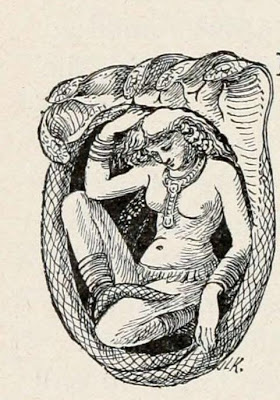
The snake woman or Lamia by J. Lockwood Kipling, father of Rudyard Kipling.
It accompanies the story of ‘The snake-woman and the king Ali Mardan’
in ‘Tales of the Punjab : told by the people’ (1917) by Flora Annie Webster Steel (1847-1929).

-0-
wolo myaani poshey madno

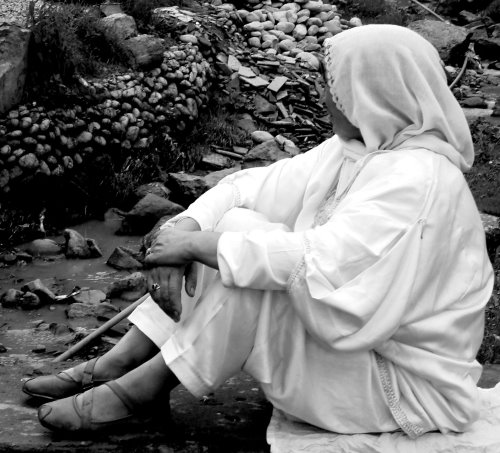
A woman at Gulmarg.
The Place is supposed to have been
discovered and patronized first by
Habba Khatoon.

Dil nith colham roshey,
Walo myaani poshey madano!


Wolai ve’si’ gachavai hiyey,
yus gav su katee yiyey,
Praaraan chhas channi ziyey,
Walo myaani poshey madano!


Wolai ve’si’ gachavai handey,
Laanyum nyai kati andey,
Loo’ka’ ma’ti ka’dnas randey,
Walo myaani poshey madano!


Wolai ve’si’ gachavai babrey,
Chhokh me’ loinam tabrey,
Zanh ti aam nai khabrey,
Walo myaani poshey madano!


Wolai ve’si’ gachavai krechhey,
Khalqav tuj has rechhey,
Timan tay myon hyu gachhey,
Walo myaani poshey madano!


Wolai ve’si khasavai vantai,
Khalqav b’ari’ has kan tai,
Tee booz ta’mi’ saadan tai,
Wo’lo myaani poshey madano!


Wolai ve’si gachhvai aabas,
Dunya chhu nendri ta khaabas,
Praaran chhas bo’ jawaabas,
Walo myaani poshey madano!

-0-
Having snatched my heart you have gone far off,
Come, my love, my flowery Cupid!

Let us go, mu friend, to gather jasmine,
Once dead, none can enjoy life;
I hanker for your prosperity, Love,
Come, O Come, my flowery Cupid.

Let us go, friend, to gather dandelion,
The tangled strands of destiny cannot be freed,
The populace relishes my humiliation,
Come, O come, my flower Cupid.

Let us go, friend, to gather basil,
Wounding my heart with the axe,
Disdains he even to inquire of me,
Come, O Come, my flowery Cupid.

Let us go friend to gather herbs,
Heartless people make fun of me,
Would that they were in a similar plight!
Come, O Come, my flowery Cupid.

Let us go, friend, to the woods:
People poison his ears against me,
Naively he gives credence to these tales!
Come, O Come, my flowery Cupid.

Let us go, friend, to fetch water:
The world is fast aslumber, Love,
I yearn for a response from you,
Come, O Come, my flowery Cupid.

~ A Translation by S.L. Sadhu offered in his ‘Habba Khatoon’ written for Sahitya Akademi’s ‘Makers of Indian Literature’ series.

An interesting thing about the books on Kashmiris written by Kashmiris under this series is that they seldom actually offer the original Kashmiri lyrics. It’s like they (the publishers, not the writers as it does seems the original lyrics were left out in the final edit) never thought other Kashmiris might be interested in reading these books some day and might want to read the originals too.

-0-
He stole my heart, then
enraged, he left.
Come back my flower, my God, my Love!

Come my friends, let us gather Jasmine,

One who is gone,
never returns.
And yet I wait on all your life.
Come back my flower, my God, my Love!

Come my friends, let us gather Dandelion,

It was fate,
not meant to be, they say.
All that people now offer is abjection.
Come back my flower, my God, my Love!

Come my friends, let us gather Basil,

My beauty
he threw to axes,
it went to pieces,
And he never even returned to know,
if I was alive
Come back my flower, my God, my Love!

Come my friends, let us gather wild herbs,

People mock and taunt,
Not if,
they too had gone through,
what I am going through,
Come back my flower, my God, my Love!

Come my friends, let us go to the woods,

People poison his two ears
That simple man,
what if he hears their tales of me,
what if he believes their falsehood!
Come back my flower, my God, my Love!

Come my friends, let us go to the river,

While the world is still asleep and dreaming,
I await,
I wait for an answer
Come back my flower, my God, my Love!

-0-
Some additional verses. Sung by travelling bard Noor Mohammad of Handwara.

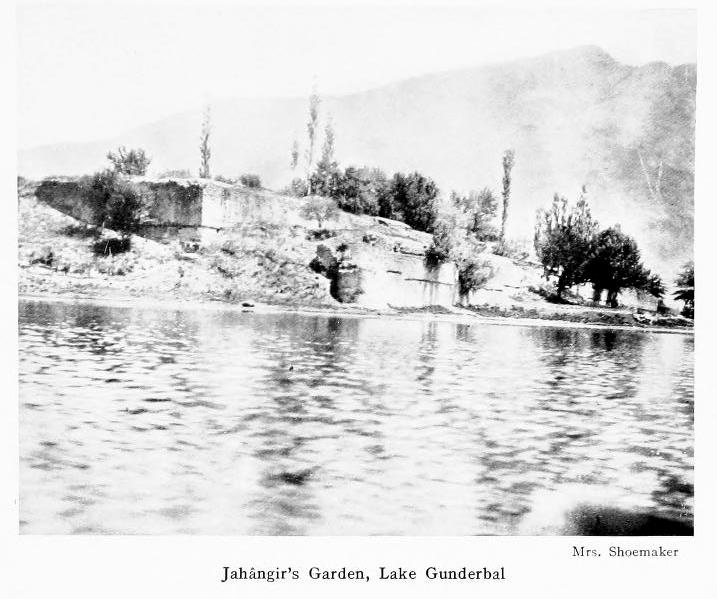
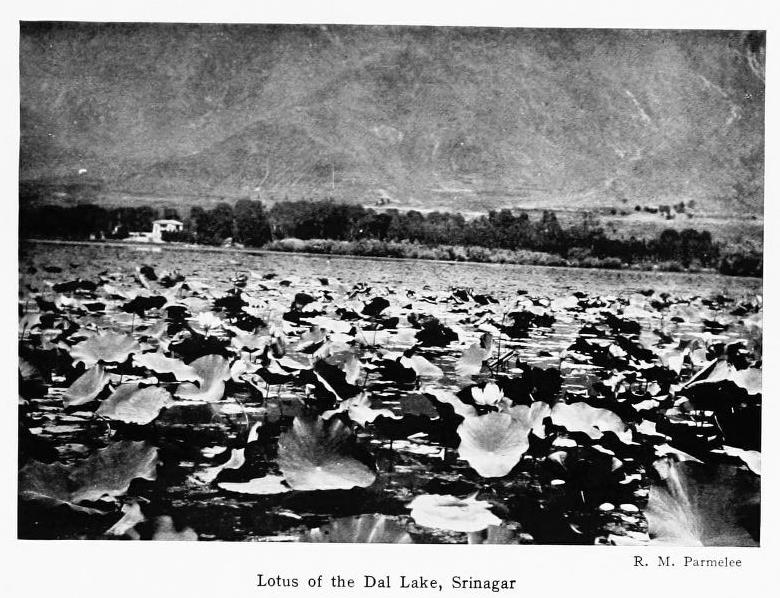
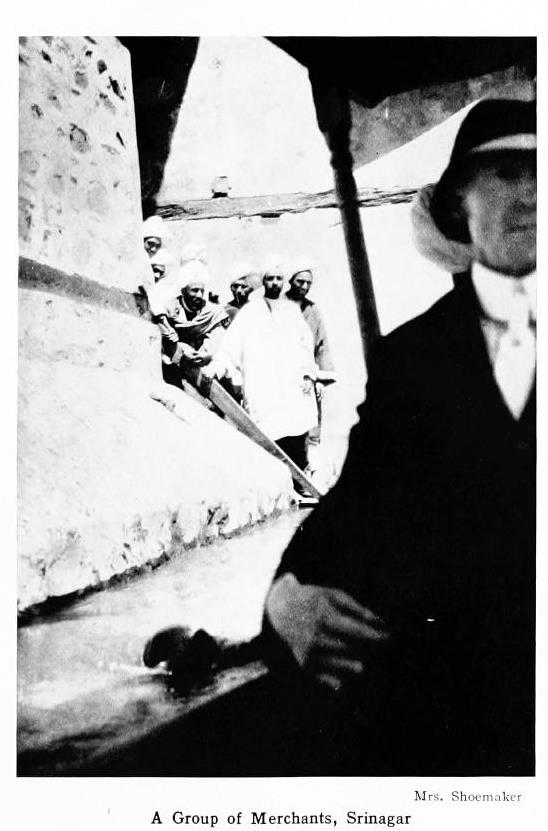
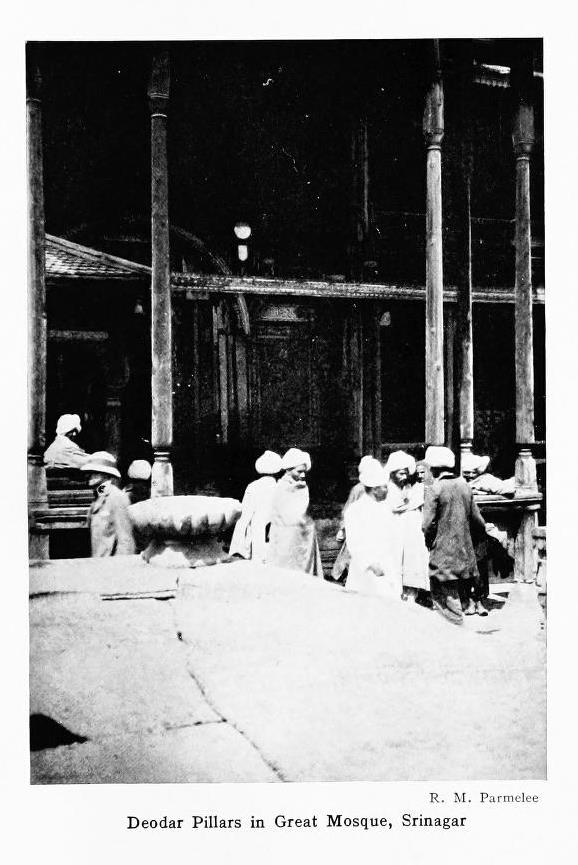
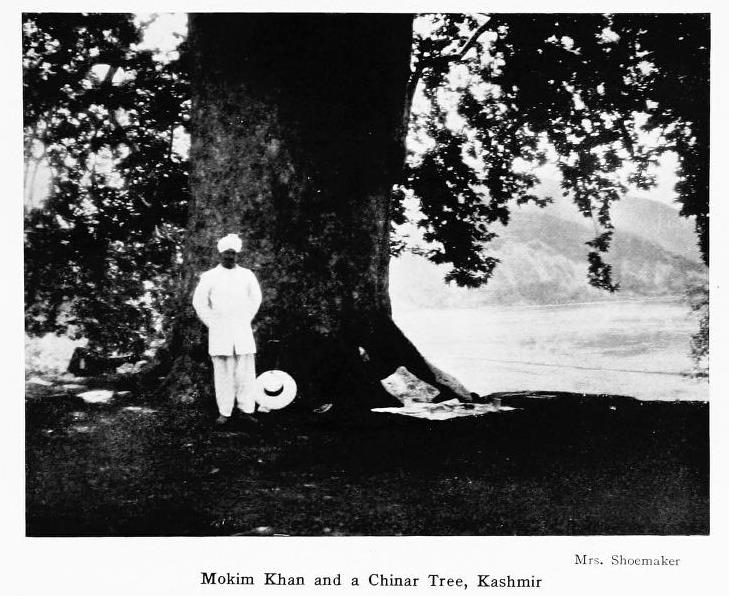
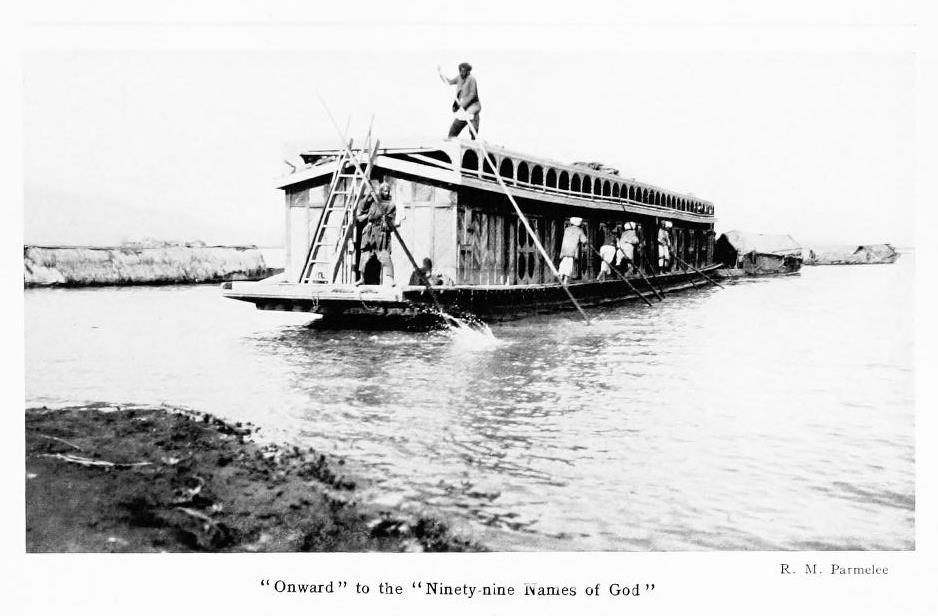
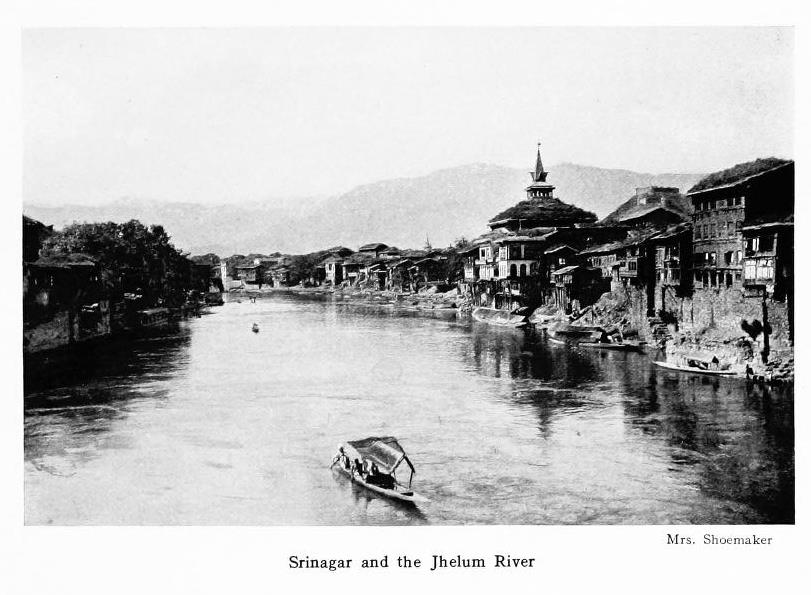
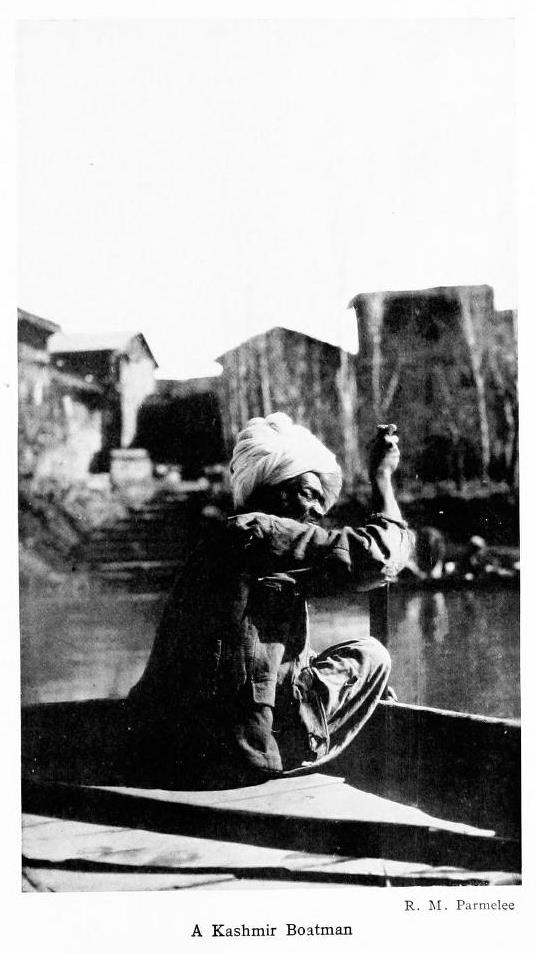
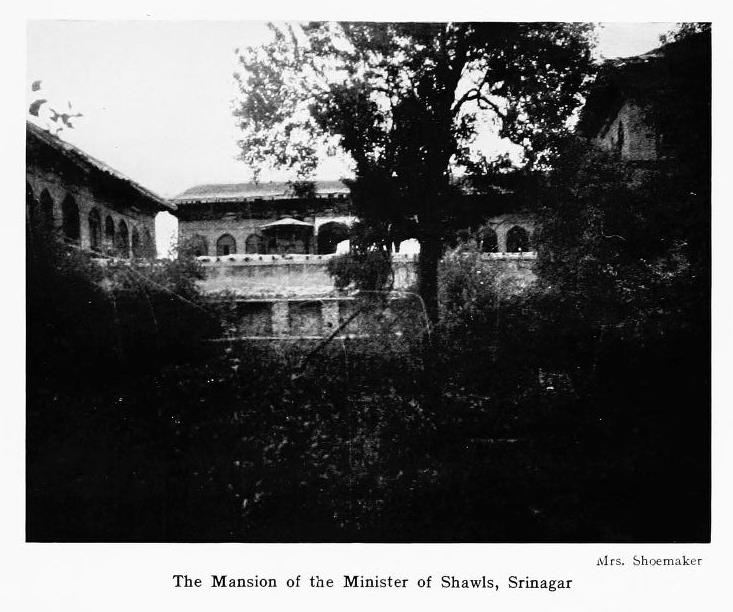
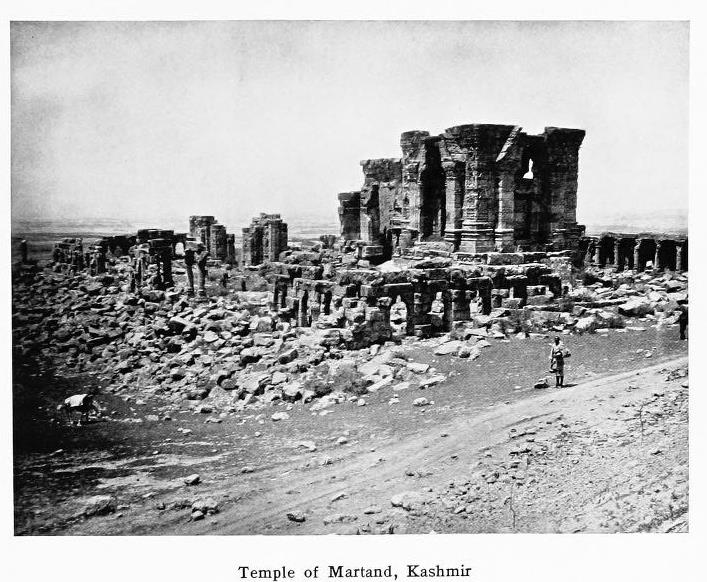
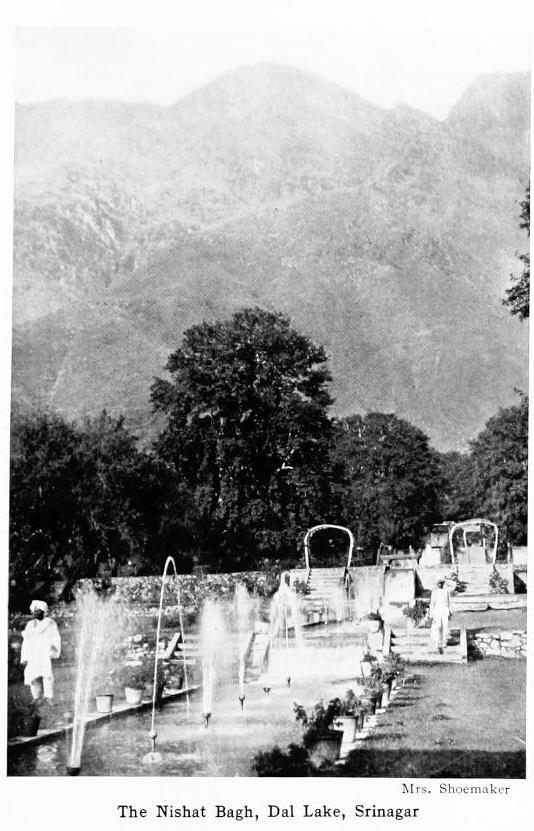
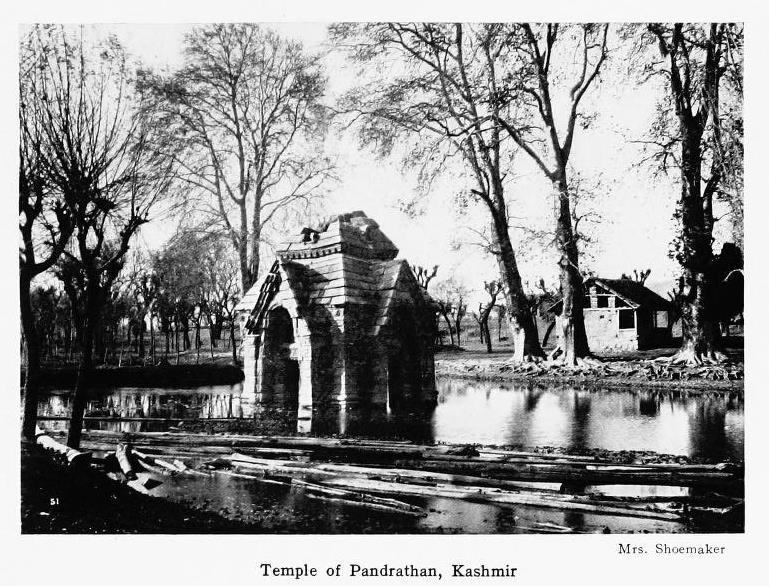
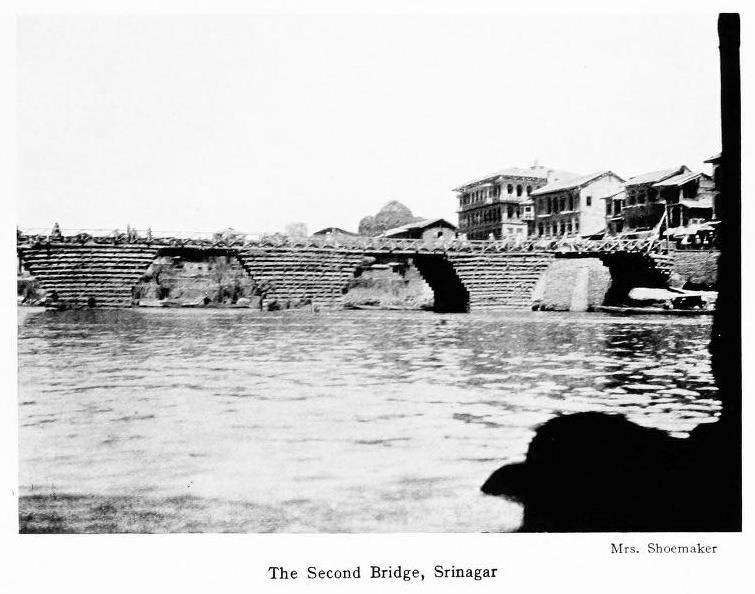
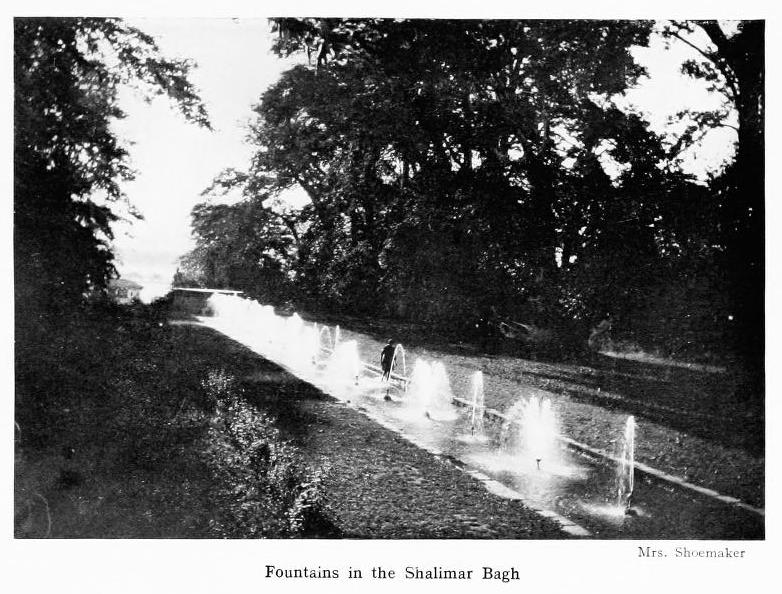
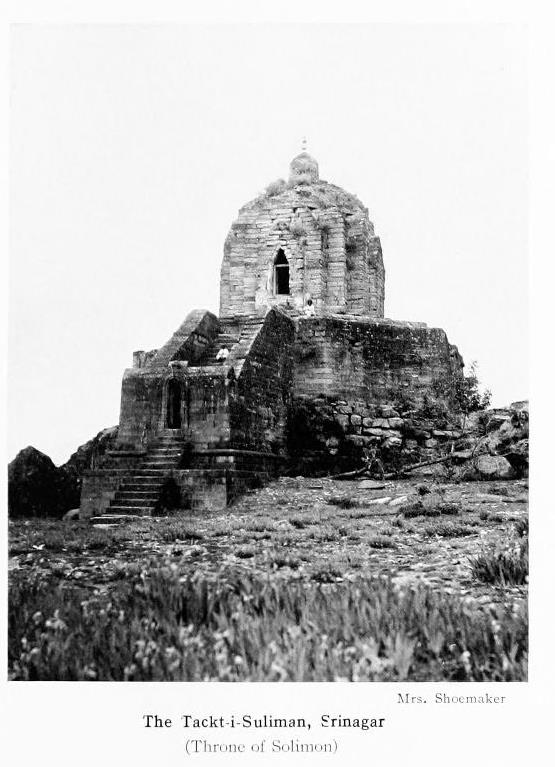
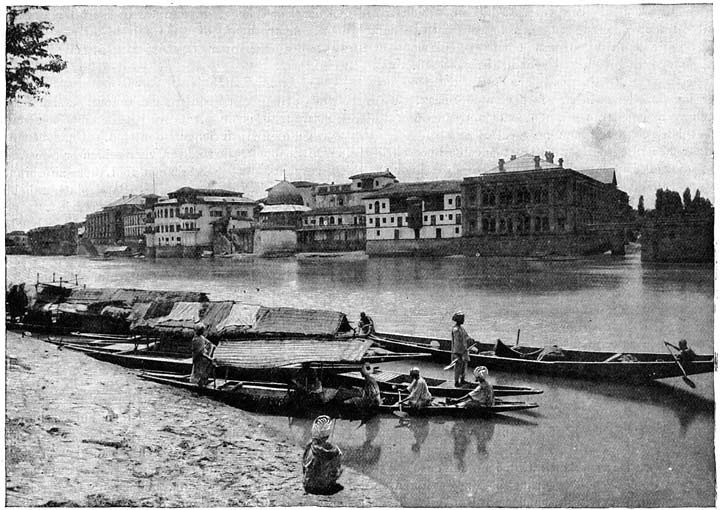
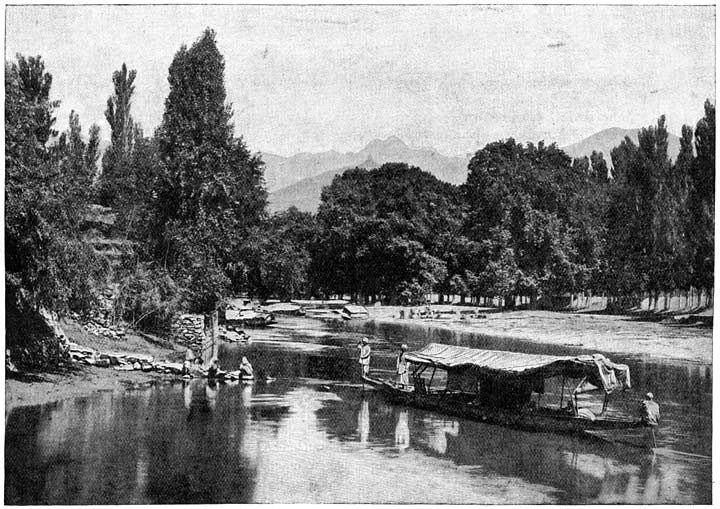
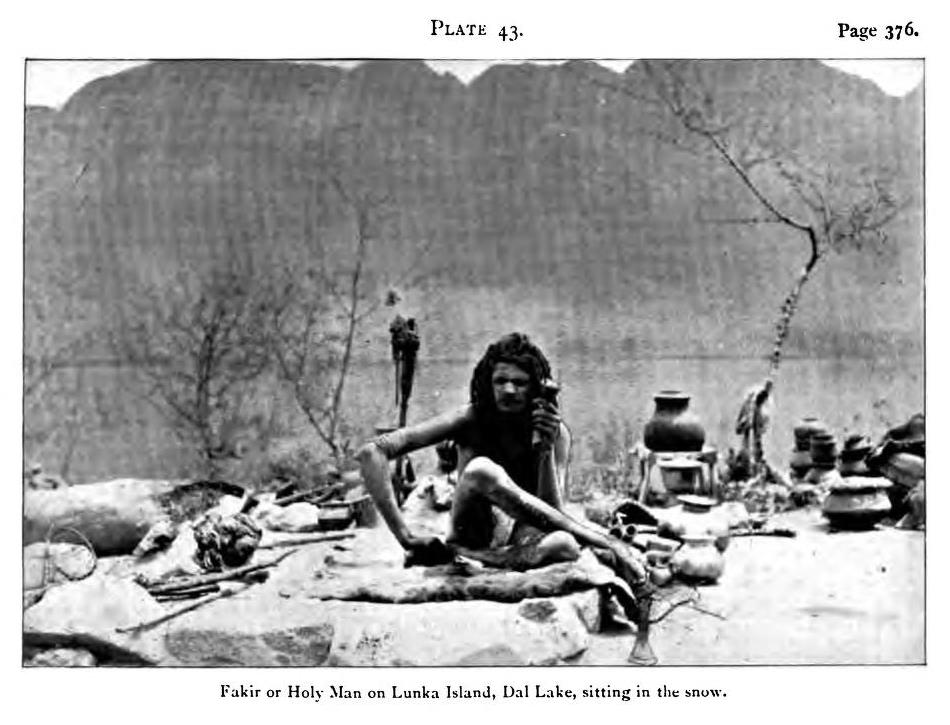
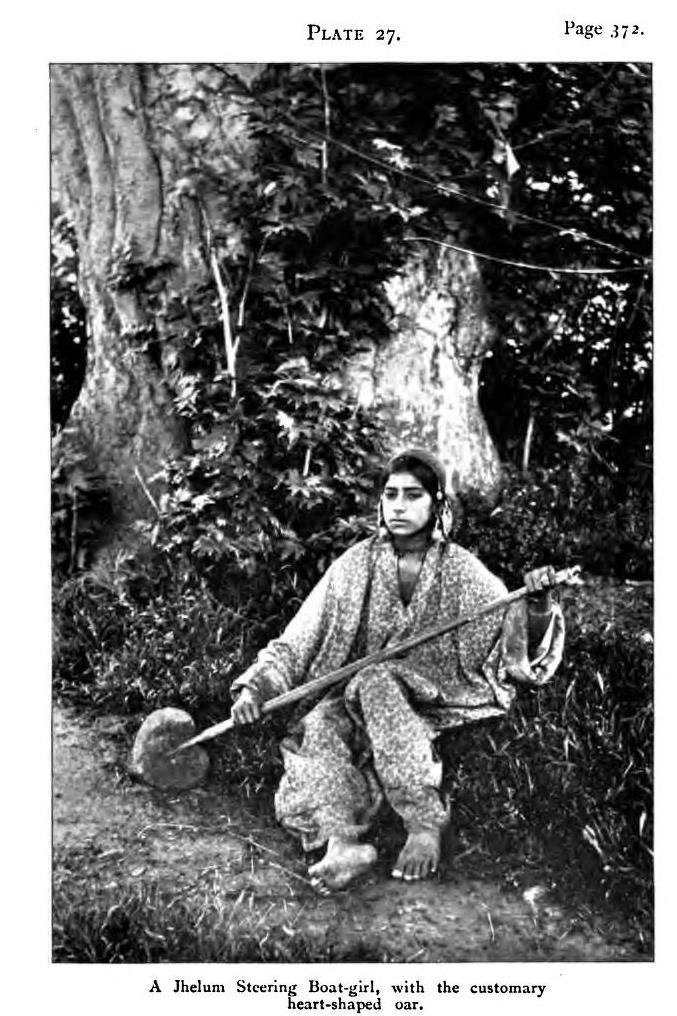
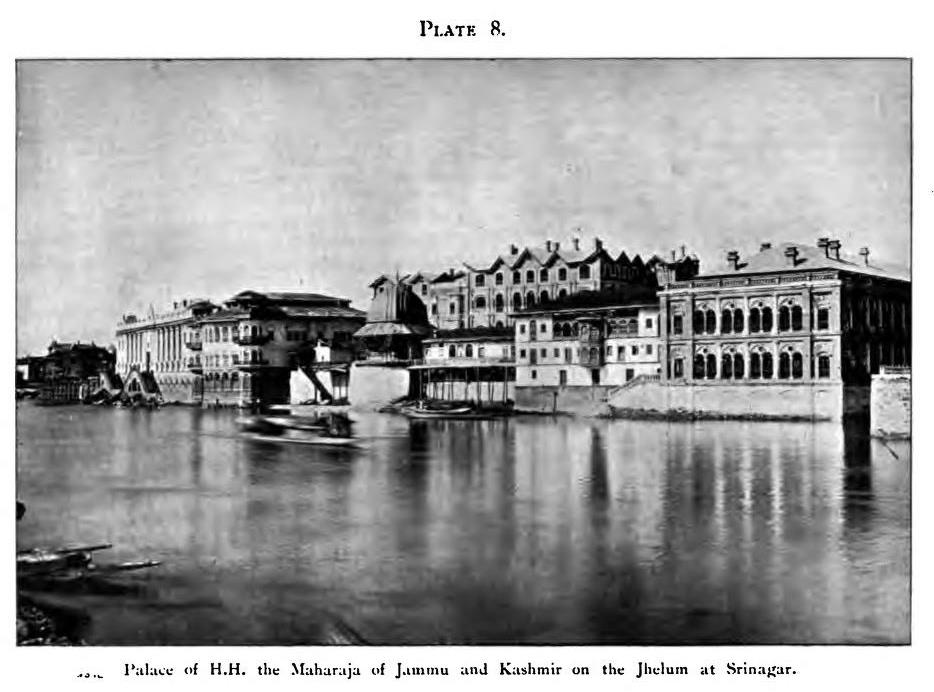
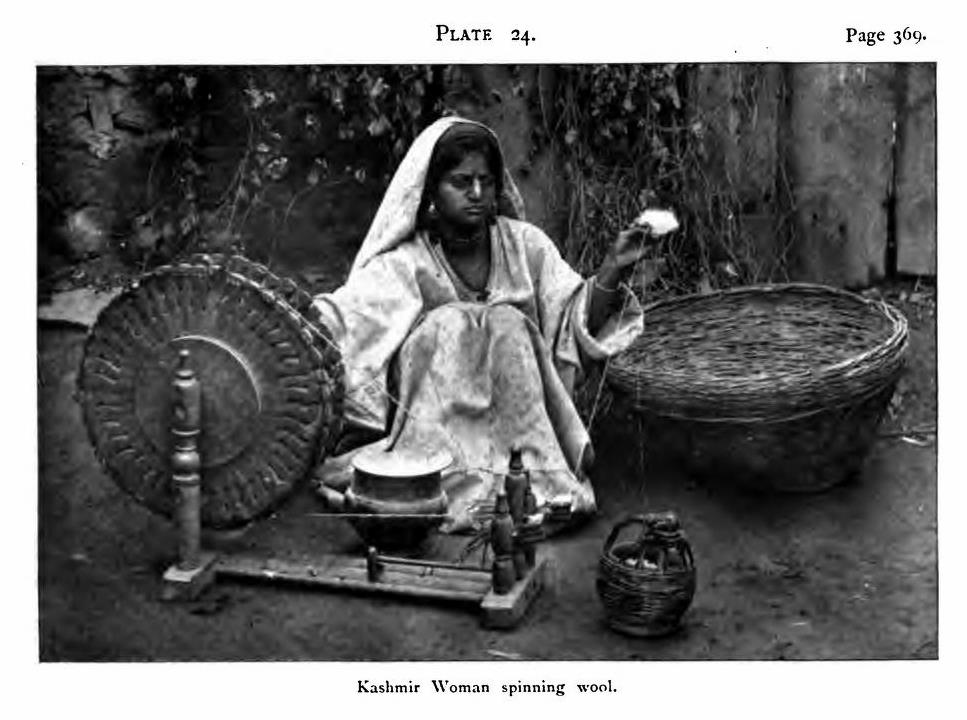
Kashmir pages and pictures, 1912

From ‘Indian pages and pictures: Rajputana, Sikkim, the Punjab, and Kashmir’ (1912) by Michael Myers Shoemaker (1853-1924).

Jahangir’s Garden, Lake Ganderbal

Lotus of Dal Lake

Shalimar

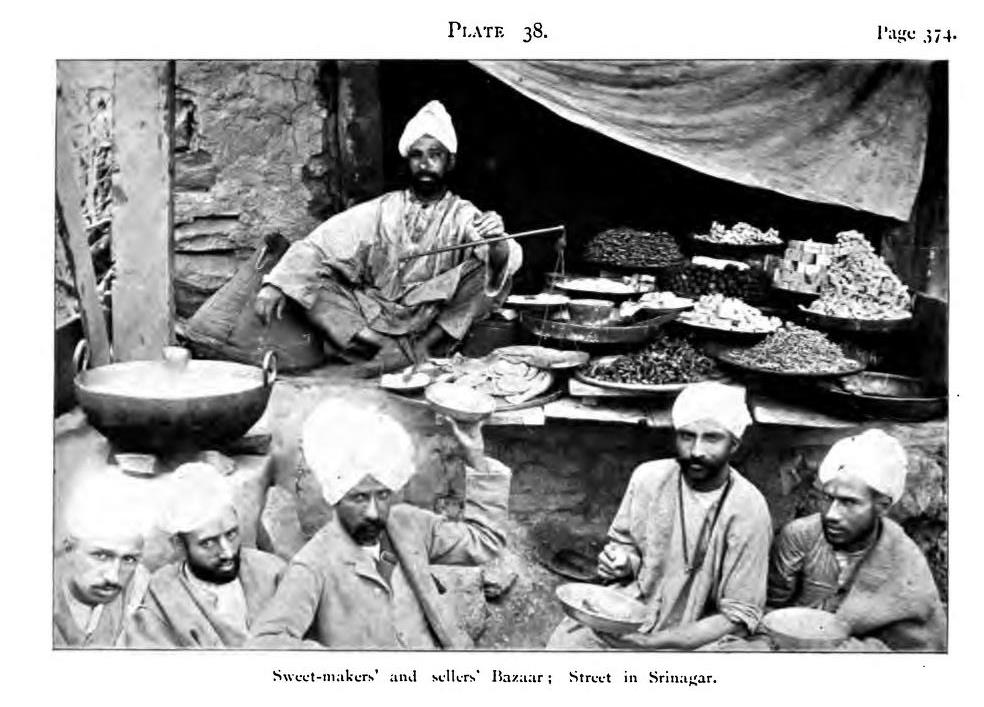
A Group of Merchants

Jumma Masjid 

Onward to the Ninety-nine names of God in a Doonga

Srinagar

A Kashmiri Boatman

The Mansion of the Minister of Shawls, Srinagar

Martand

Nishat

Pandrathan

Habba Kadal 

Shalimar

Shankaracharya/Takhat-i-Sulaymani/Gopadiri/Sir-i-Shur

-0-

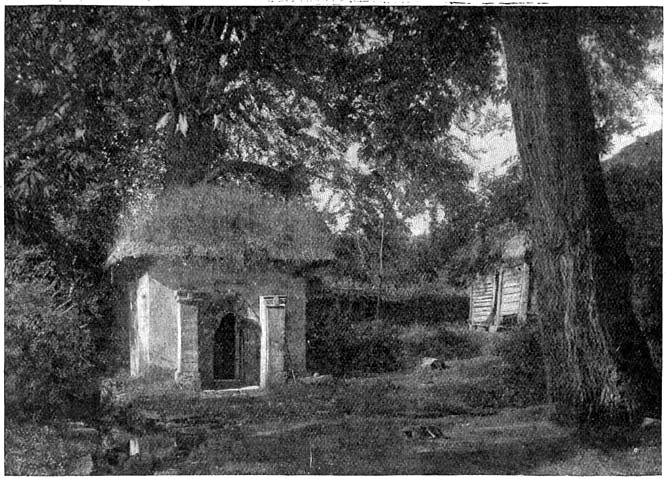
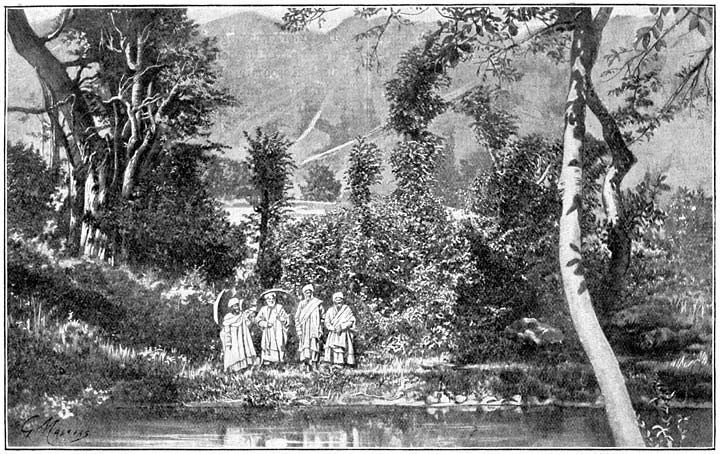
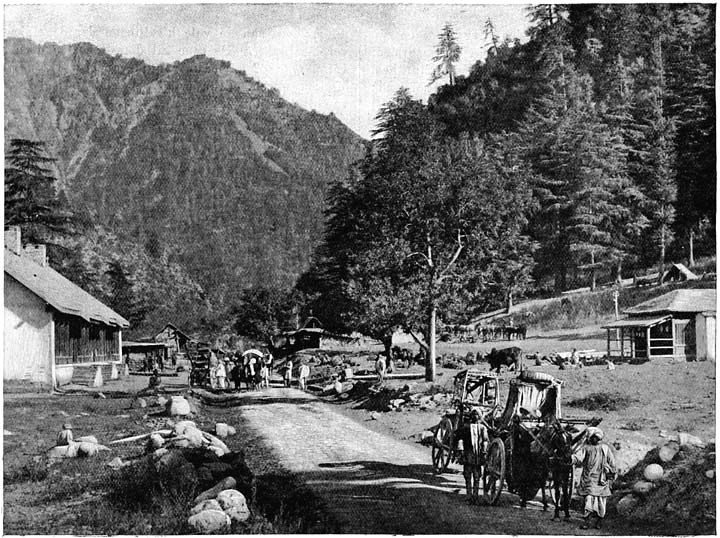
Kashmir Summer, 1907

From Dutch travelogue ‘De zomer in Kaschmir : De Aarde en haar Volken’ (Summer in Kashmir: ‘The Land and its Peoples) by F. Michel (1907).

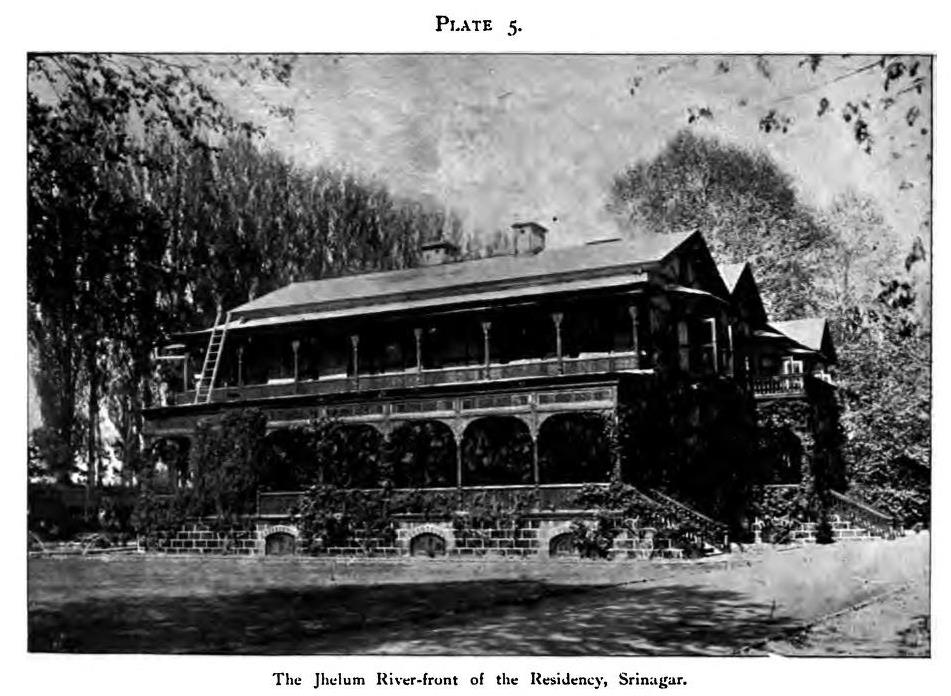
Sher Garhi Palace
Rustic Voetanar (?) temple
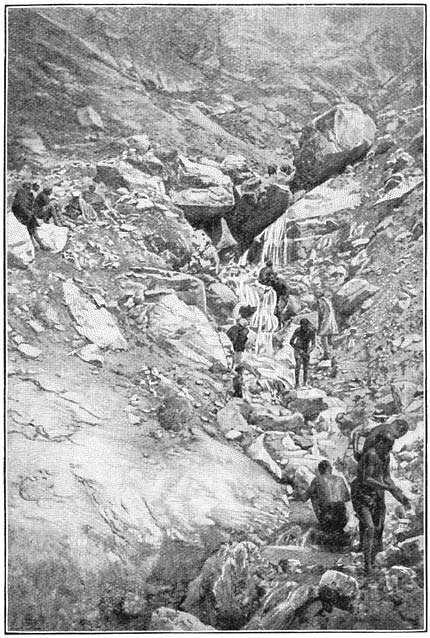
Pandits at a Holy Spring at Valtongoe (?)
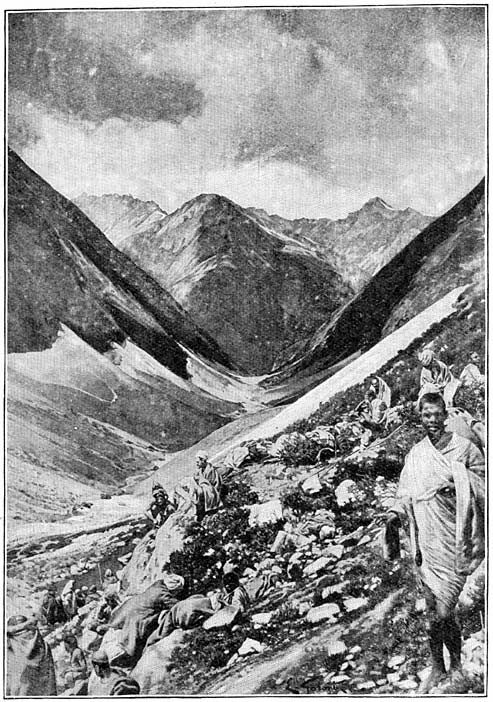
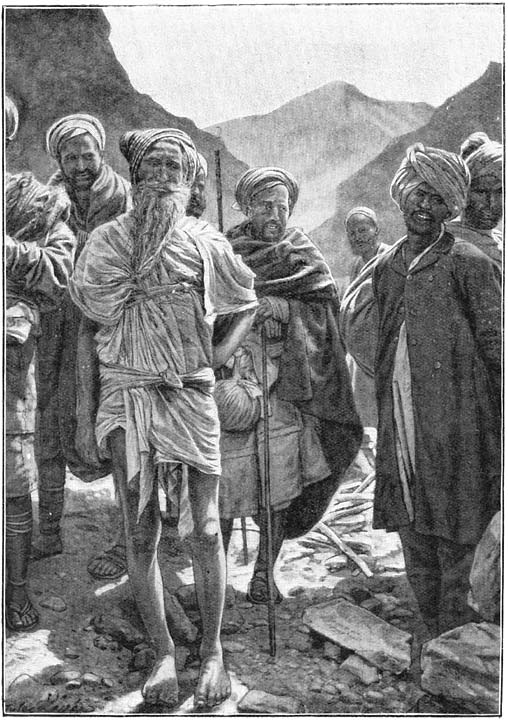
Amarnath Pilgrims
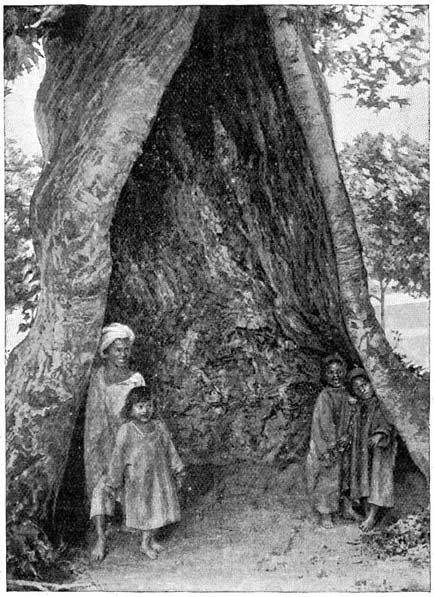
Children playing inside Chinar tree

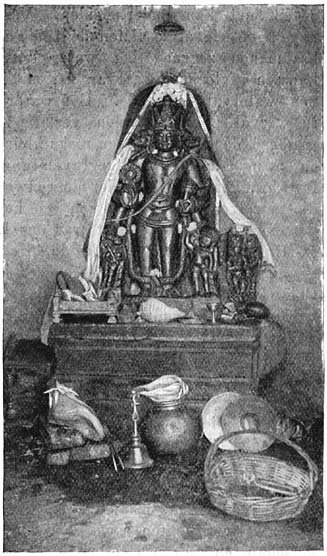
Narayan inside Voetanar (?) temple
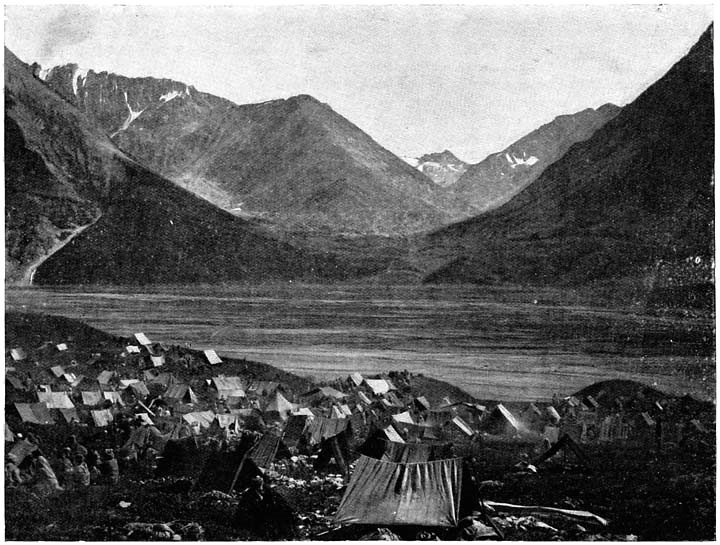
Amarnath Camp

Doonga 

Ekkas and Tongas

A pilgrim from Patiala

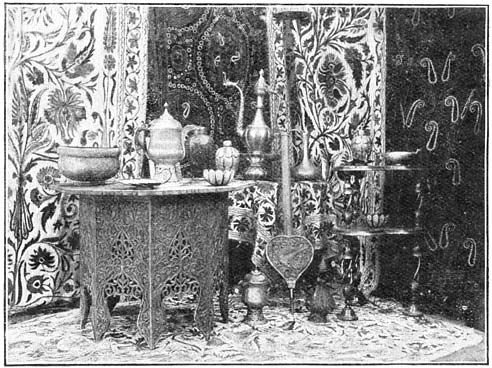
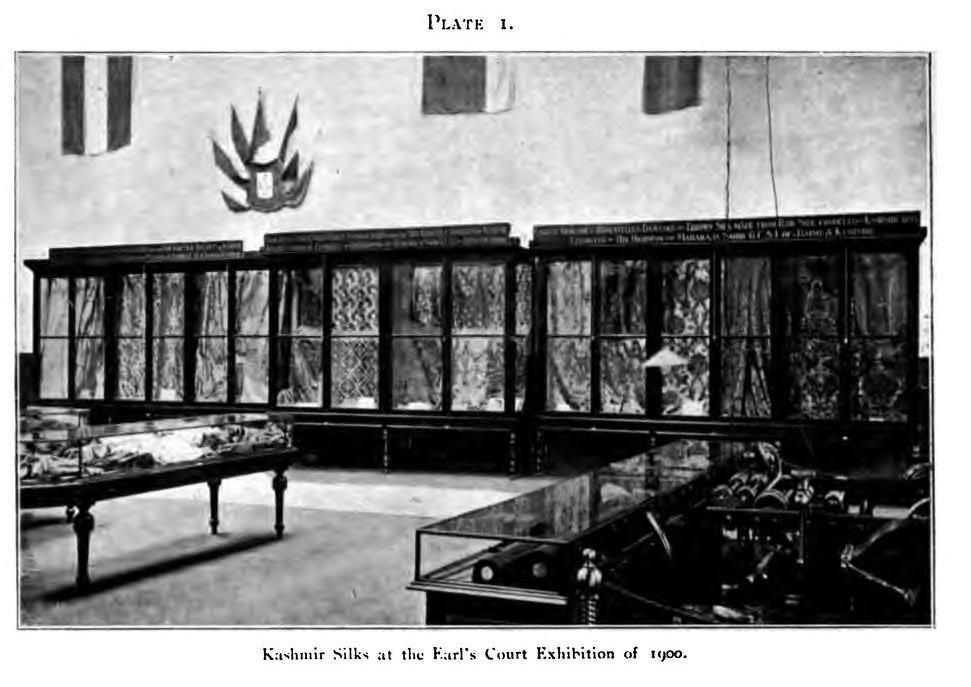
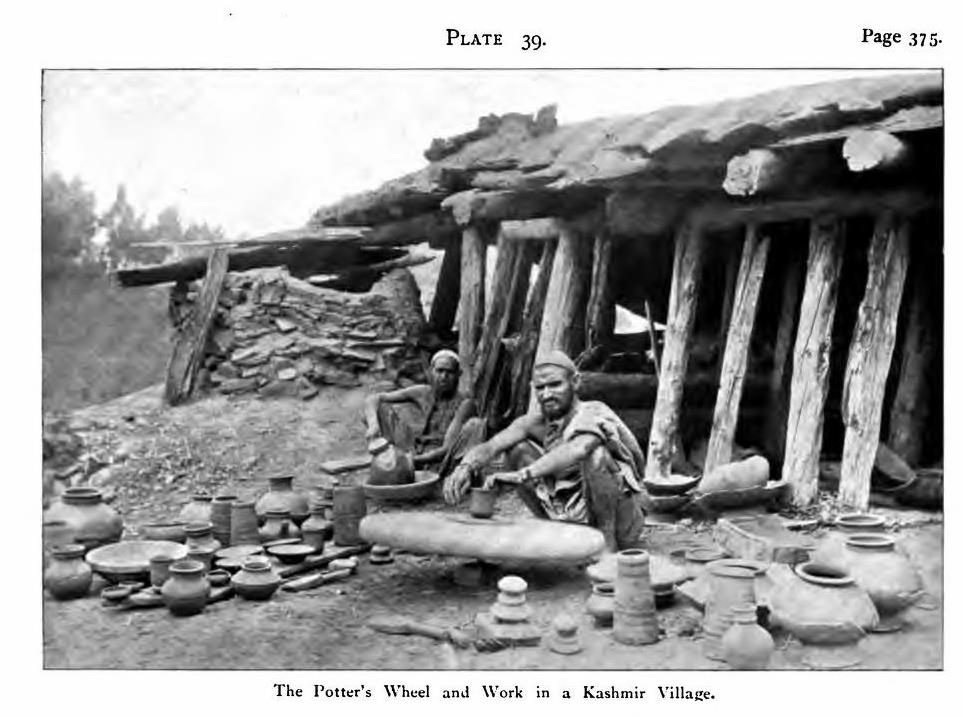
Kashmirir Handicrafts

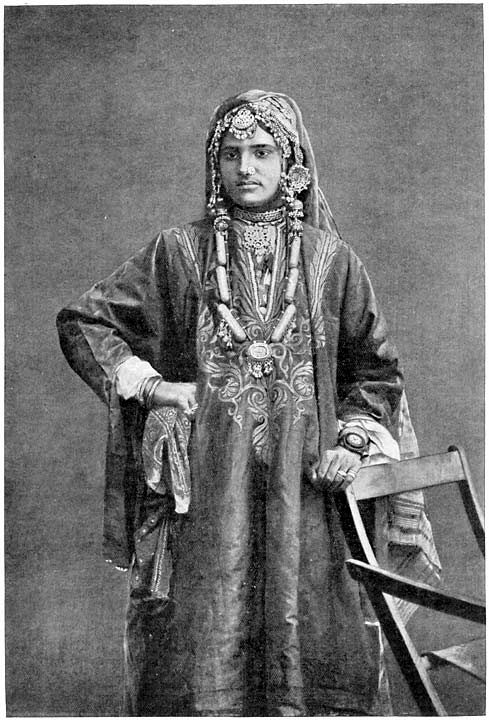
A Kashmiri Muslim Woman
[Update: Photographer is Henry Guttmann. 1900]

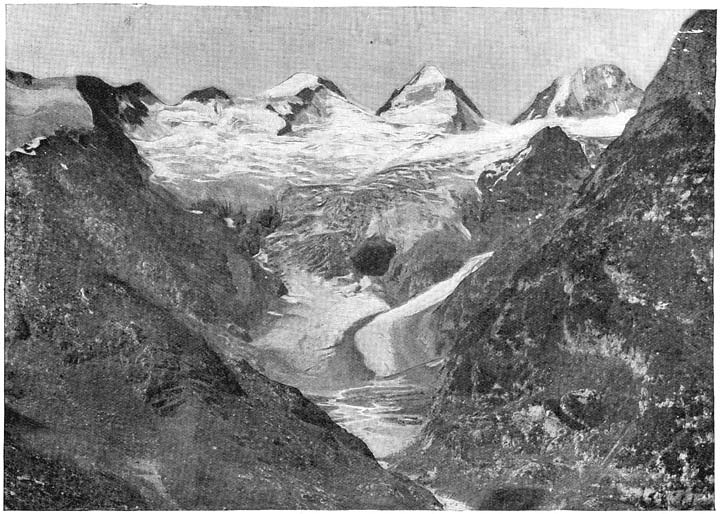
Koh-i-Noor Glacier

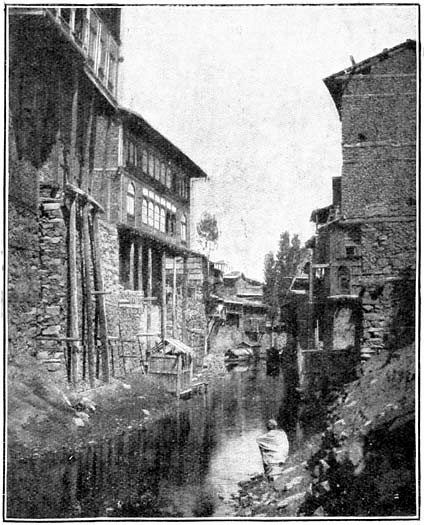
Mar Canal

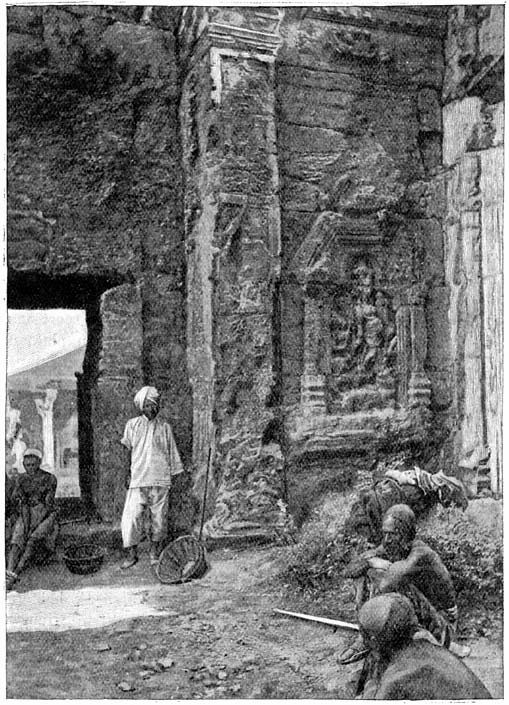
Martand

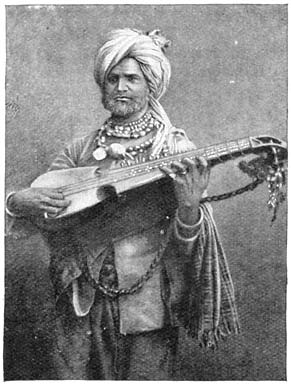
A Muslim Singer-Beggar

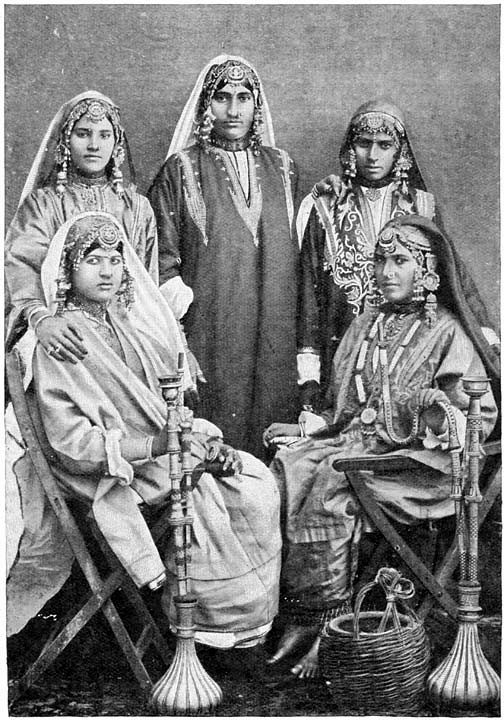
Kashmiri Musilm Women with Hookhas and Kangri

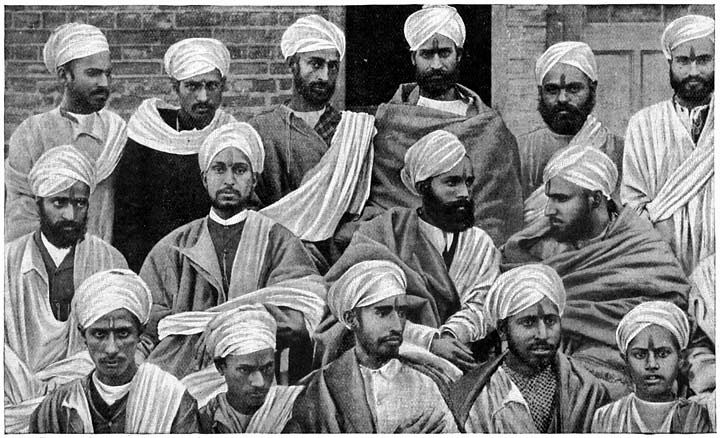
Pandit Men

Among other things, this book records what Pandit men were made to do by the community if say a Kashmiri Muslim man ‘stole’ their wife (as they say,zanana chori ho gaya!’ ). The loss of caste in case of woman was of course permanent, but as a penance, for three days she was to eat only in evening, then following three day she was to eat only in morning and then for next three days eat only what she was offered in alms. The husband on the other hand was not to touch food for three days. He was to not sleep and to constantly utter, ‘Ram,Ram’.  
Amarnath Route

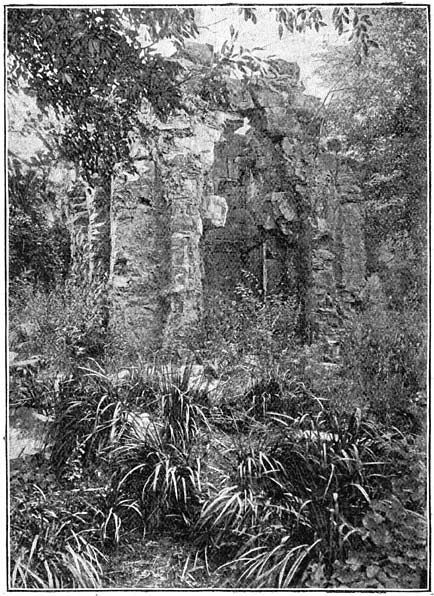
Ruins of temple at Khotair (?)

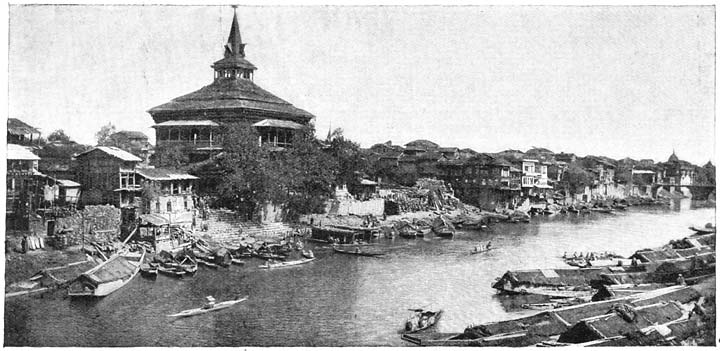
Shah Hamadan/Kali Temple

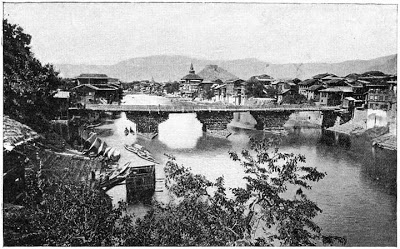
Third Bridge

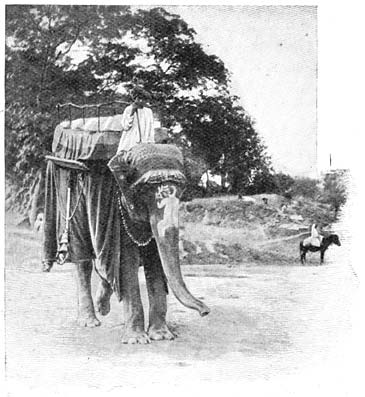
A tourist on Elephant

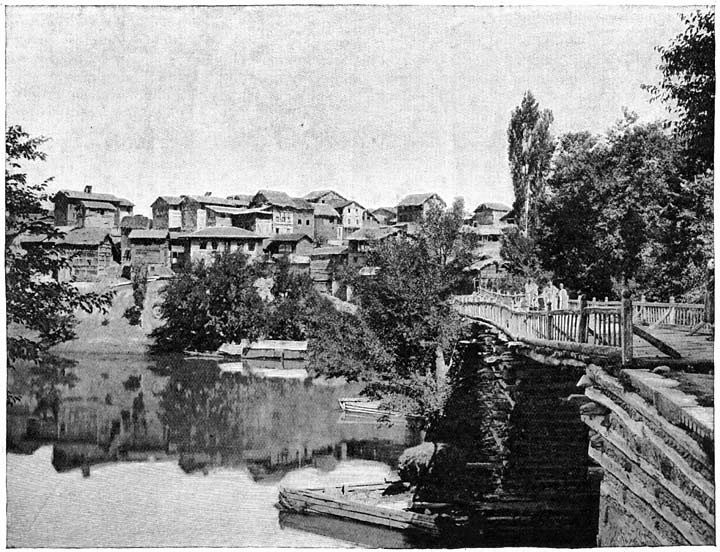
A village and a bridge

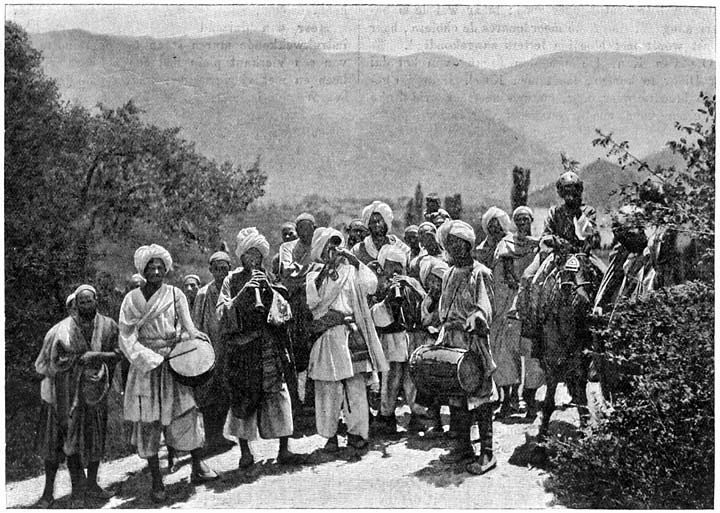
A marriage procession

-0-

notes on Kashmiri Painting

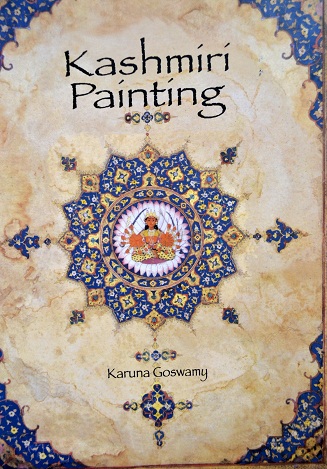
Kashmiri Painting by Karuna Goswamy
(with 90 color Plates)
Indian Institute of Advanced Study, Shimla
(Aryan Books International)
1998, Rs. 1800
 Buy Kashmiri Paintings by Karuna Goswamy From Flipkart.com

-0- 

Apparently there has been a lot of writing on Kashmir paintings but as the author of this beautiful and informative book writes:
‘A little like the thousand-petalled lotus of Indian myth, the art of Kashmir, especially its manuscript painting, has been more believed in than explored. The extent to which its roots extend, the sources from which it drew its nourishment, the direction of its growth across time, its texture, even the full, colorful range of its expanse, are but poorly known.’
 That probably makes this book by the good professor from Panjab University the first of its kind work that tries to explore the distinct Kashmiri art  produced in 17th to 19th century with a fusion of Pahari, Buddhist, Persian, Afghan and Mughal style. It’s not an easy task, its a formidable challenge, as Karuna Goswamy writes in her introduction to the ‘roots and development’ of Kashmiri paintings:
‘The chronology of Kashmiri painting as seen in illustrated manuscripts is not easy to establish. The material are widely scattered, and securely dated works from earlier than the eighteenth century are rather rare. This does not have to lead to the conclusion that there was no work done in the seventeenth century or earlier: documents may well have been lost. In any case, when we encounter, towards the end of the seventeeth century, an occasional dated document, the style seems to be well-formed, evolved, with an identity of its own, not simply a provincial version of Iranian work that it is sometimes taken to be. Here, one is not speaking of the much earlier work in painting, of the kind represented by the Gilgit book covers, the Toling leaves, or the murals of Ladakh and tabo- they lie far back in the past. Nor does one speak here of Persian or Mughal works – the Sadi of Fitzwilliam Museum, or the work of Muhammad Nadir Samarqandi, or that done for Zafar Khan: that work is recognizably of a different order. The paintings that are here regarded as Kashmiri, belong to illustrated manuscripts, or exist independently of them, represented by the manuscripts and paintings discussed and reproduced below: they constitute the mainstream of this work, work that is instantly identifiable once one has learnt to ‘recognize’ it.’

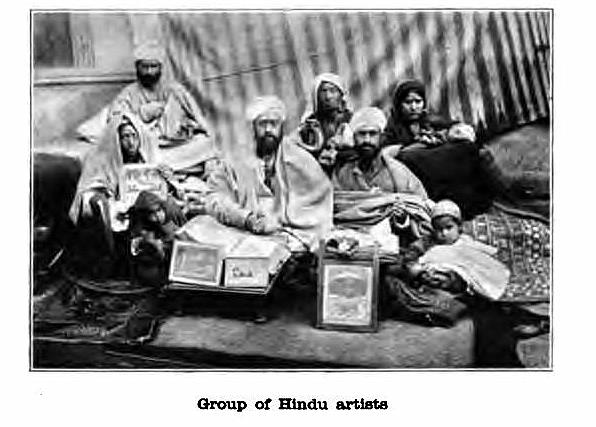
‘Group of Hindu artist’
from  â€˜Afoot Through the Kashmir Valleys’ (1901) by Marion Doughty.

In this book, she helps us recognize this art. In detailed notes and accompanying sketches she tells us how planes are drawn in a Kashmiri painting, how a war is sketched, a killing, gods, kings, queens, saints, a man, a muslim man, a pandit man, a muslim woman, a pandit women, a women (‘with no emphasis on breasts’), and so on. Then she also tells us about the people who created this art. Perhaps the most surprising of the tales here is of families of Kashmiri scribes who, just about the turn of previous century, would travel to the plains of Haryana to offer their skills as copiers of manuscripts. A tradition, a profession now done. I came across a photograph of one such artist family (with their art) in a book titled ‘Afoot Through the Kashmir Valleys’ (1901) by Marion Doughty. I didn’t grow up in a house that had ‘Kashmiri art’ on walls, there were the usual framed lithographs as found in any middle class Hindu household anywhere in India around two or three decades ago. The old Kashmir tradition of family Priest bringing a work of art to the house of his patron in a Holy Day (Gori’tri), as mentioned in this book too, was still there, but he took brought printed lithographs. Hand-painted stuff was already gone. [You can check some of these old hand-painted stuff here and some sketches from Kashmiri Ramayan here]. I don’t know much about art but there were somethings in this book that made me wonder – How precise can a writing be on a dead art that was once very much alive? How much re-interpretation is done to fill in missing gaps left by lack of information?

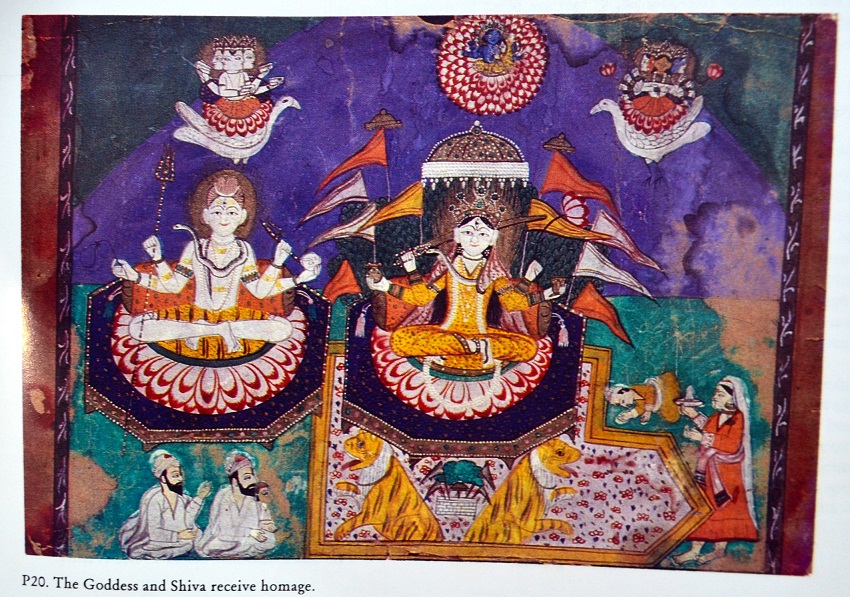
It was specifically the below given painting:

 ‘The Goddess and Shiva receive homage’, as it is called in this book, is lying in Chandhigarh Museum and is believed to be from around 1900 A.D.

On first look, it looked like any other similar painting given in this book, gods, goddesses and devotees. But a second look and I knew what I was looking it. I know this place. I have been there. With that in mind I found the explanation of the painting provided by the author very interesting.

‘What the artist presents here is homage being offered to the Goddess, and to Shiva, from all directions, celestial and earthly. The Goddess, seated cross-legged on lotus, which is placed in turn upon an octagonal, large chowki. is seen full-faced, four-armed, objects in her hands clearly specified: a vessel, a large sword, a lotus, and a cup. Crowned with a chahatra atop her seat, garlanded, a serpent adoring her neck and upper part of the chest, she looks resplendent her, the effect being added to by a large group of pennants – gaily colored in yellow, pink, red and white – that flutter around her, having been planted perhaps as offering.[…]It is possible that a ‘family shrine’, or at least one which is resorted to by the members of a pandit family, is shown here[…]the Kashmir, the women in particular, dressed in a long woolen gown, her middle secured by a scarf, a veil draped over her head and falling down to the ankles behind her, a small skull cap and jewellery adorning  her head and face. The men are not dressed in the usual fashion of Kashmiri pandits as seen in paintings from Kashmir, with kantopa caps, but in turbans. ‘

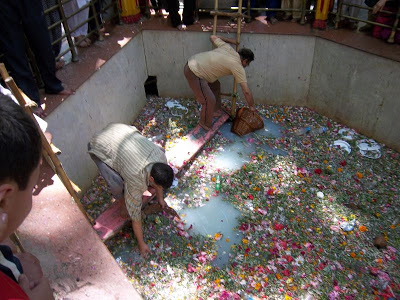
The writer gets it almost right. It is a shrine. The woman and men are Kashmir. There are flowers. But as the shrine is not identified, the writer misses the fact that the flowers are not planted there, in fact they are floating. This is a painting of famous Kheer Bhawani Shrine of Goddess Ragyna at village Tulamulla. The shrine is identifiable by the ‘seven-sided’ holy spring, an important icon in its tantric representation. The shrine is also identifiable because the it is one of the few places where Shiv and Shakti are kept and worshiped together. The Pandit woman on the right is holding a sugar candy in her hand (called ‘kand‘ locally) that is ritually offered to the spring, usually once a year on Jesht Ashtami ( May-June). The men on the right are in ‘realistic’ Kashmiri Turbans of the time and not the ‘unrealistic’ kantopa of earlier times. The artist has gone photographic in his representation of the spring. The spring is still covered with flowers when the devotees come visiting,  That the author got the representation of a water body wrong in her description is what I really found interesting. I see it as a gap in information. Hence, this footnote of a post. [The above painting can also be found in ‘A Goddess is Born: The Emergence of Khir Bhavani in Kashmir’ by Dr. Madhu Bazaz Wangu. According to that book the painting is lying in Kashmir Library Collection Kashmir.]

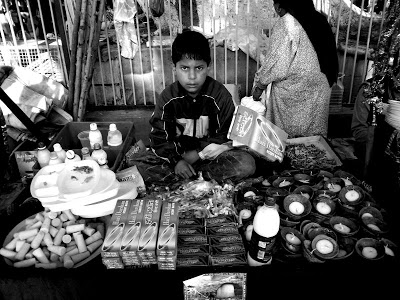
A Muslim Kid selling ‘Kand’ and other samagri at the Kheer Bhawani Shrine

Devotees clearing flowers collected in the Spring

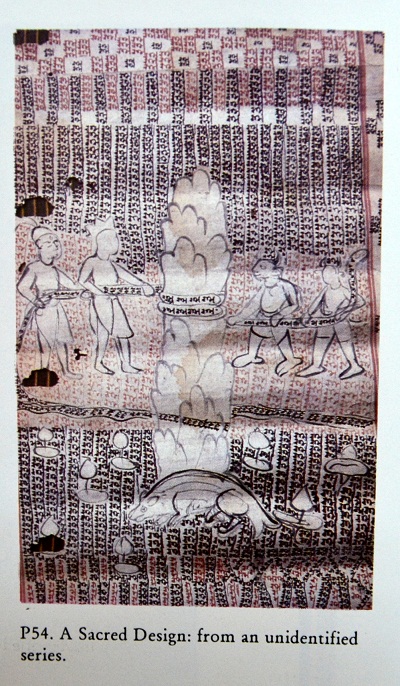
Another painting that I found in the book is this:

Called in the book ‘A Sacred Design’, the author sees it for what it is – a depiction of ‘Sagar Manthan‘, the great churning of the ocean, but it is the pattern that the author fails to decipher. Karuna Goswamy sees ‘Rama’ written in Sharda script all over this painting, in various patterns and colors and writes:
‘What the significance of all this is, whether the word ‘Rama’ is repeated a thousand times on this page as a virtuoso exercise, is not clear. Nor is it possible to make out why the writer/designer shifts from black into red. whether the consideration simply is to retain a memory of different colored backgrounds in different parts of the page, one would never be able to know. That there is some deeper meaning to the whole thing is all that one can guess at.’

We may never know, but a guess can be made. An educated guess. My guess, at one time it was a popular tantric ritual undertaken by a person seeking spiritual awakening.

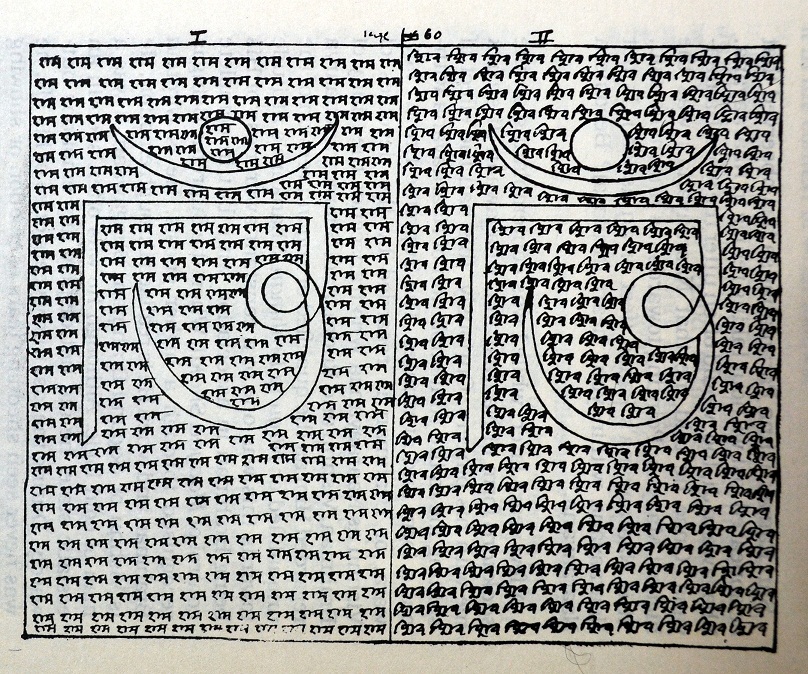
Given above is a handwritten drawing of Omkaara in Sharda script from around 1925 by a Pandit saint re-named Bhagwan Gopinath (1898-1968). He was around 27 at the time he drew it and was experimenting with all kind of ways to attain ‘oneness’. The note alongside this drawing in the saints biographical sketch (first published in 1974) by SN Fotedaar explains:
‘All the space around and within Omkaara I is filled with Raama Raama except that inside each double line forming the Omkaara. This suggests that Raama is an abjunct of Omkaara. Likewise, Shiva Shiva is written in the case of Omkaara II, the space between the two lines forming the Omkaara being blank. The blank spaces in the case of each Omkaara seem to represent the Formless, Immutable and Eternal Brahman round which everything centres.’

I don’t know what it all exactly means. But right now when I see at these symbols, empty space and space filled out by written word, I see a parallel to knowing something and not knowing and not knowing and knowing somwthing. I see an information theory. I ask myself, what do we read, what do we know.
-0-