Kashmir, past and present, 1903

From ‘India, past and present’ (1903) by C. H. Forbes-Lindsay. Photographer: uncredited.

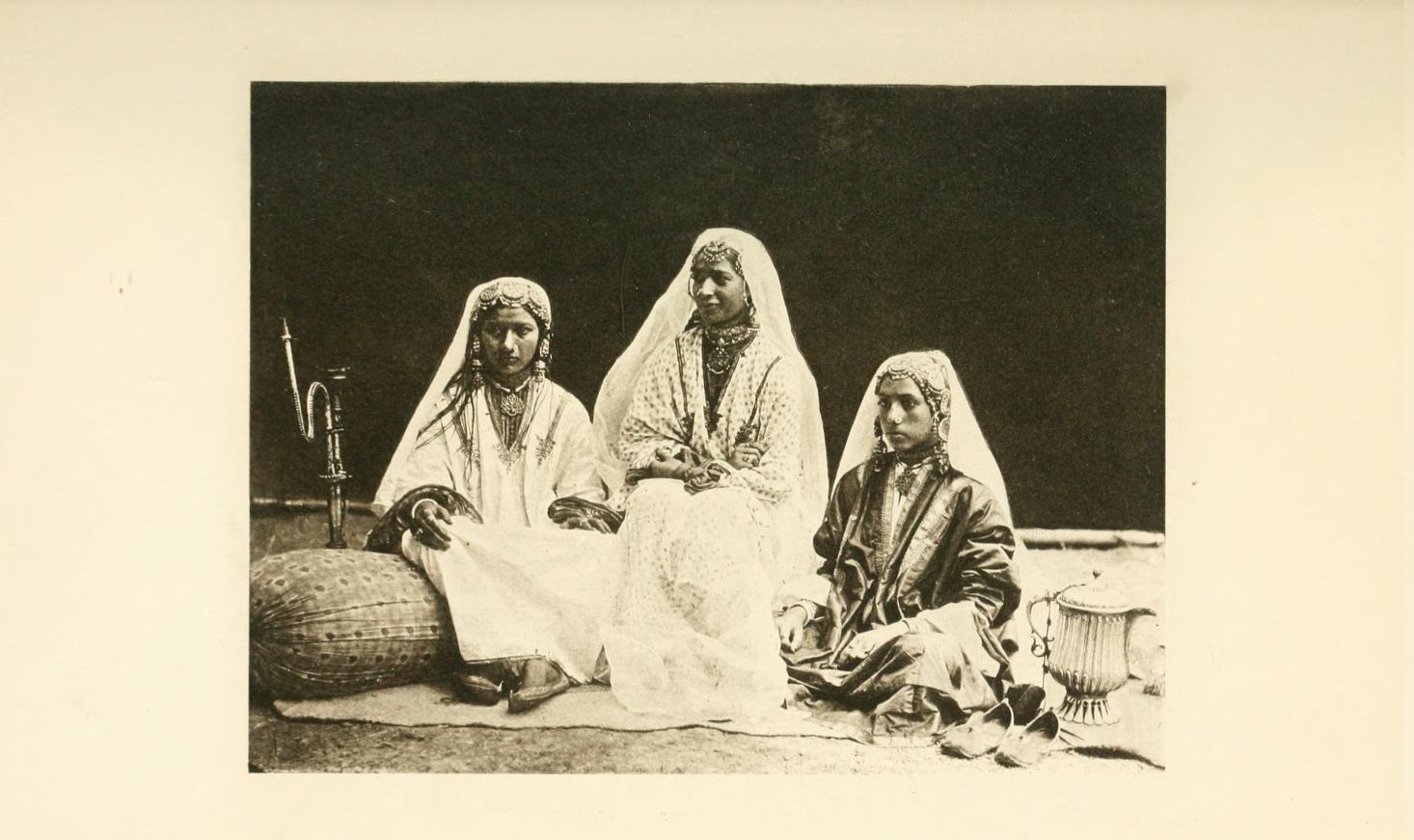
Girls of Kashmir

The above one is in fact ‘Natch Girls, albumen print by Francis Frith from 1870s’ (previously posted under Witches of Kashmir). Also, check out the comment section on Nautch Girls of Kashmir for a recent interesting conversation on Devdasis, Hafizas and women dancing.

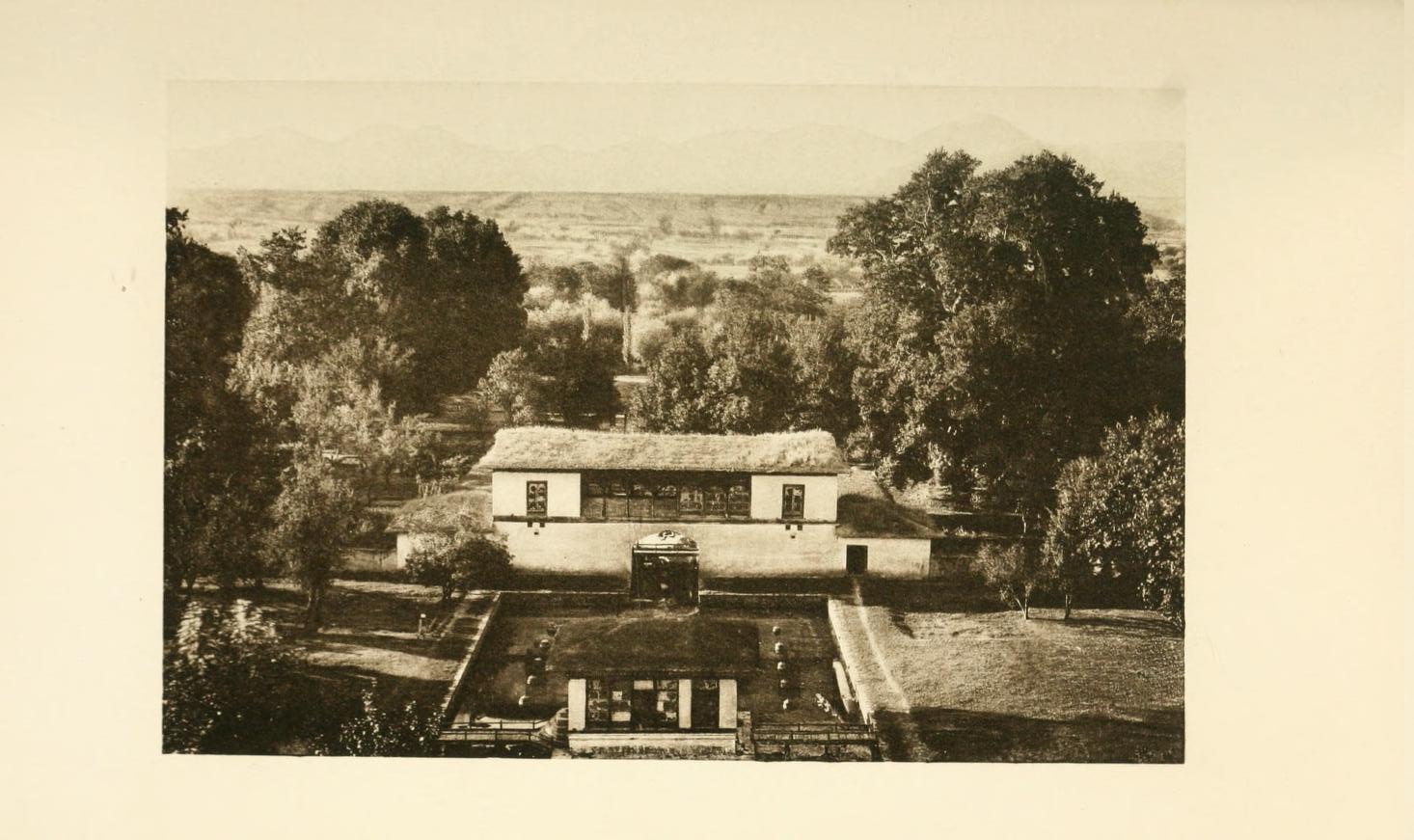
Panorama of Kashmir

The book offers no clue about the location captured. It is obviously a bagh. I believe it is the Nishat bagh. It seems to have been taken from its highest pavallion. The ‘lake’ in the background is a bit confusing, it looks like a crop field. I believe it is Dal in flood time.
-0-

Untitled Post

Mother sits by the side of
Jheeli Dal

Even as her grandchildren,
children, their wives

and even her old husband
now float on Jheeli Dal
like little yellow ducks
in a pitless bath tub

Mother
is still

counting the sound
her bones now make

as she sits by the side of 

Jheeli Dal

Never in her life has she been on a Shikara
or on anything afloat

She keeps to an ancient pledge,

‘Not for us. It is not meant for us.’

A son soon joins her company.
‘It is too hot anyway!’

Mother and son now sit side by side
by the side of
Dal Lake

On boulevard road
under one of those signature street lamps.

‘Mother, look mother, look,’
a man from Pattan approaches them.
A crowd gathers in response to the call.
Moji, wuch,’
he says as he takes off his khan dress
and turns his bare back
to an embarrassed and shocked old woman

‘Look mother, look, what they did to me!’

There are burn marks,
there are what were once wounds
of flesh and blood
She sees the maps,
carved
She sees islands,
She sees lakes,
She sees roads,
She sees men,
on move
always
She sees countries,
She sees continents,
She sees the world.
Spinning.
She sees me.

‘You remember when you where young, and in summers you used to run around shirtless.
And I used to tease you: you shirtless zyinmohnyu, you shirtless woodcutter, please cover up, go get a shirt.’

-0-

Photos by an American woman doctor in Kashmir, 1913


From ‘Jungle days; being the experiences of an American woman doctor in India’ (1913) by Dr. Arley Munson.

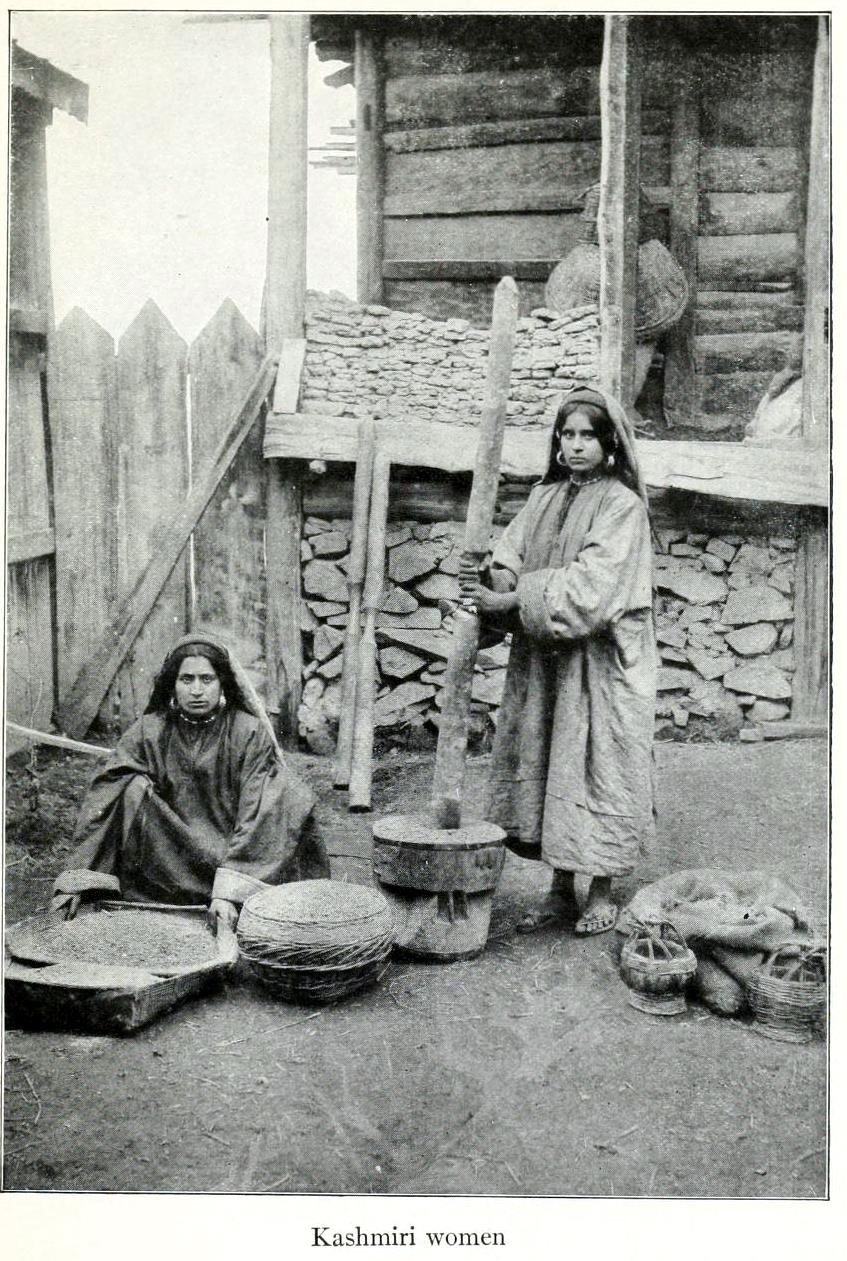
Kashmiri women.
Picket Fences. Kashmiri Picket Fences.
 Rest of the vigenettes captured in this photograph are standard ‘pose and shoot’ for its era.

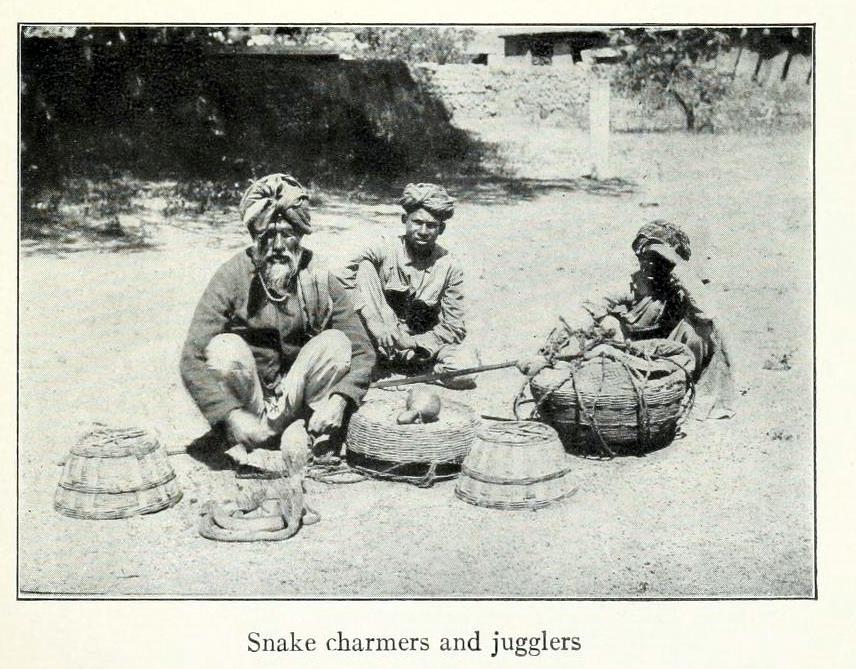
Snake charmers and jugglers.
The book offers no details on this intriguing image, But is sequentially placed in the Kashmir section.

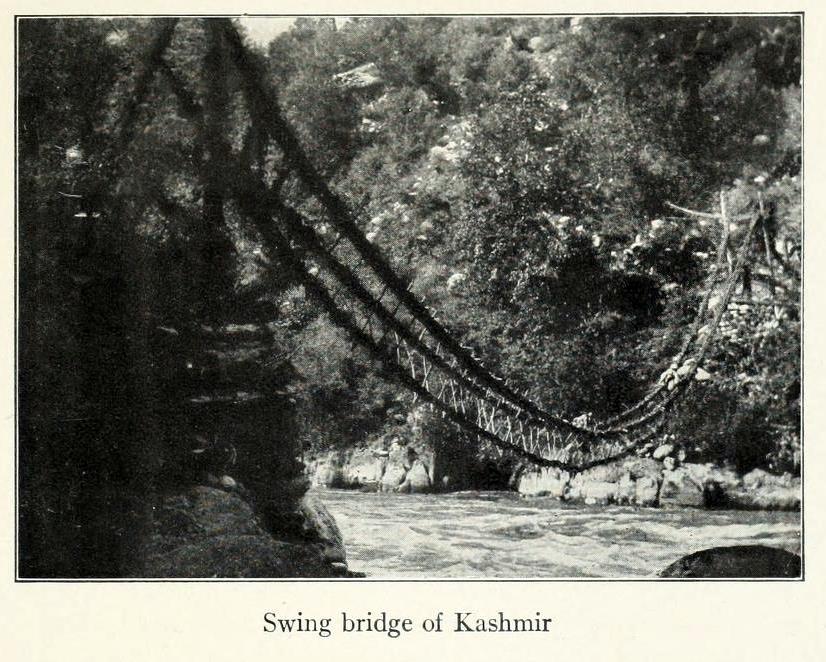
Swing bridge Kashmir
No details given in the book but the place is probably Hattian

-0-

Kashmir pictures, drawn with pen and pencil

From ‘Indian pictures, drawn with pen and pencil’ (1881) by William Urwick (1826-1905)

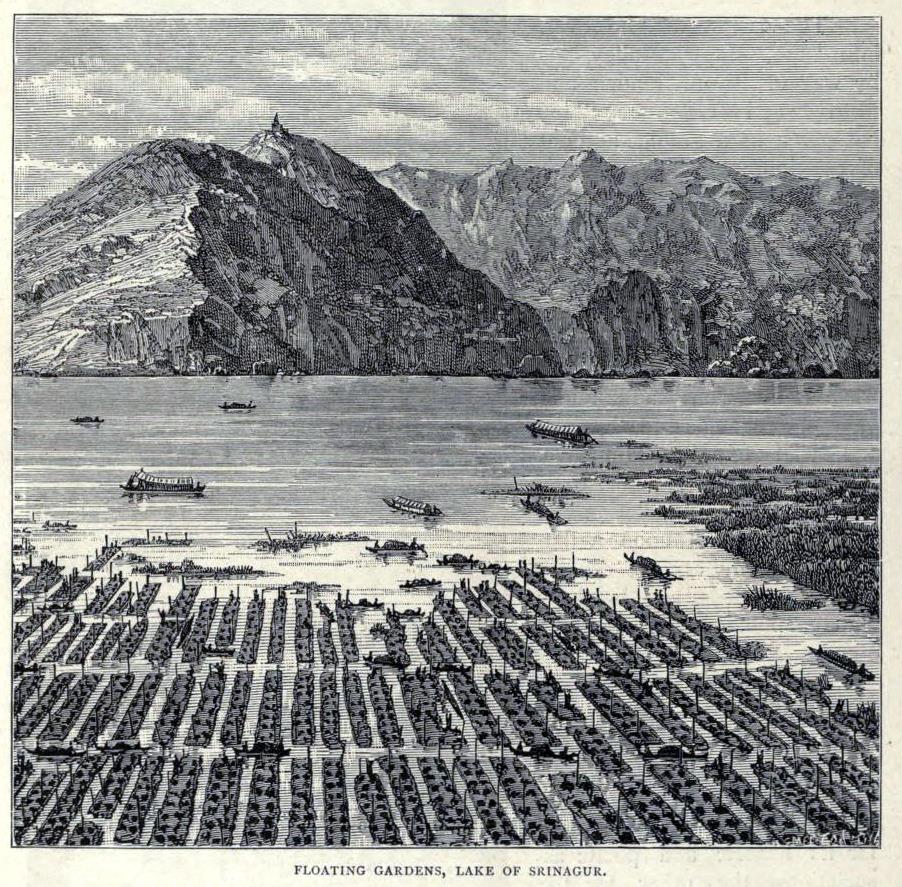
Floating  Gardens. Dal Lake, Srinagar.

 A description of how these floating gardens were created, from G.T. Vigne’s ‘Travels in Kashmir, Ladak, Iskardo, the countries adjoining the mountain-course of the Indus, and the Himalaya, north of the Panjab’ (1842):

“We now enter the division of the lake called Kutawal; it is chiefly around this that the far-famed floating gardens of Kashmir are anchored, or rather pinned to the ground by means of a stake. These, however, are very un-Lallah-Rookhish in their appearance, not being distinguishable from beds of reeds and rushes. Their construction is extremely simple, and they are made long and narrow, that they may be the more easily taken in tow. A floating garden ten yards long’ by two or three in width, maybe purchased for a rupee.

Mr. Moorcroft has well described the manner in which these gardens are made. The weeds at the bottom, cut by means of a scythe, rise and float on the surface; these are matted together, secured, and strewed with soil and manure; a protecting fence of rushes is allowed to spring up around them; — and upon this platform a number of conical mounds or heaps of weeds are constructed, about two feet in height. On the tops of these is placed some soil from the bottom of the lake; the melon and cucumber plants are laid upon it; and no further care is necessary.”

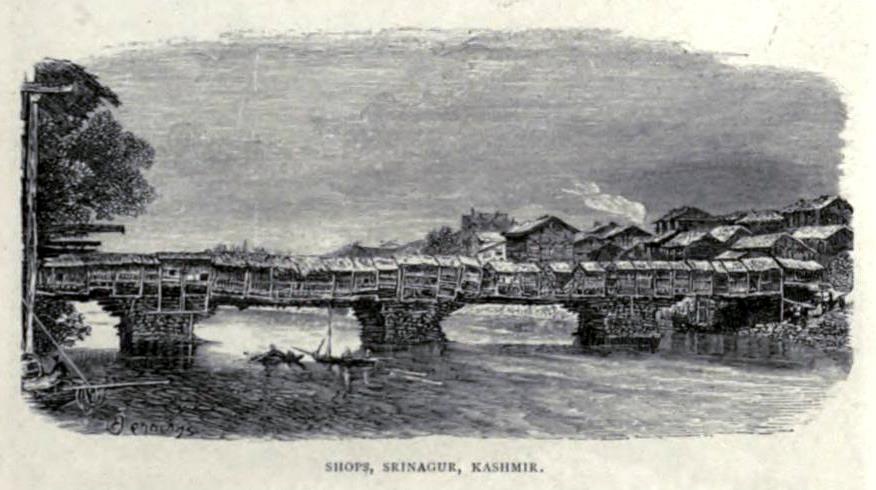
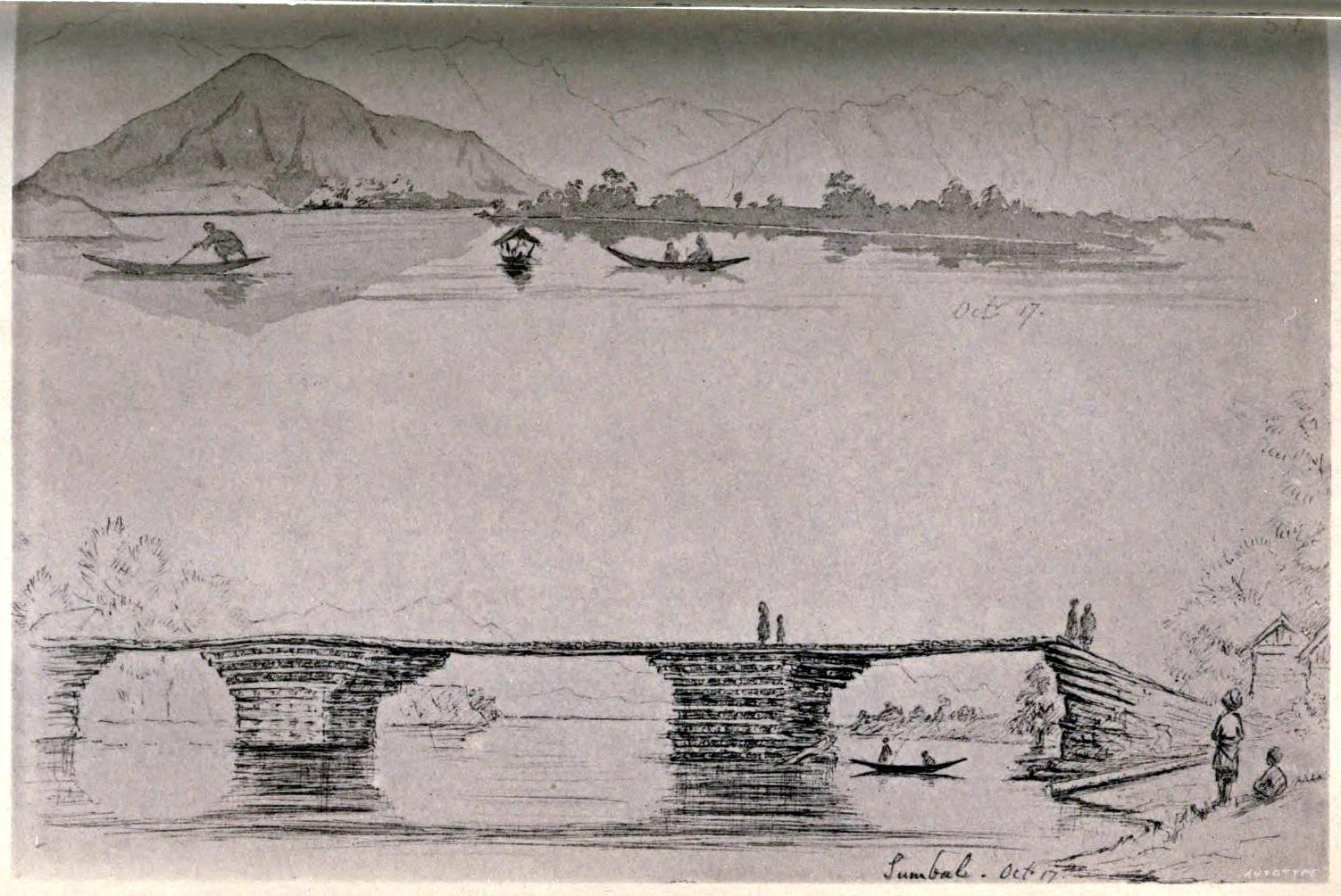
Shop Bridge. Srinagur. Kashmir.

-0-

Kashmir Illustrations, 1854

Illustrations from  ‘Church Missionary Intelligencer’ (1854), a book that among other things has an account of a bunch of Christian missionaries in Kashmir getting chased around by Muslim mobs and getting asked ‘trick’ questions by a Pandit.

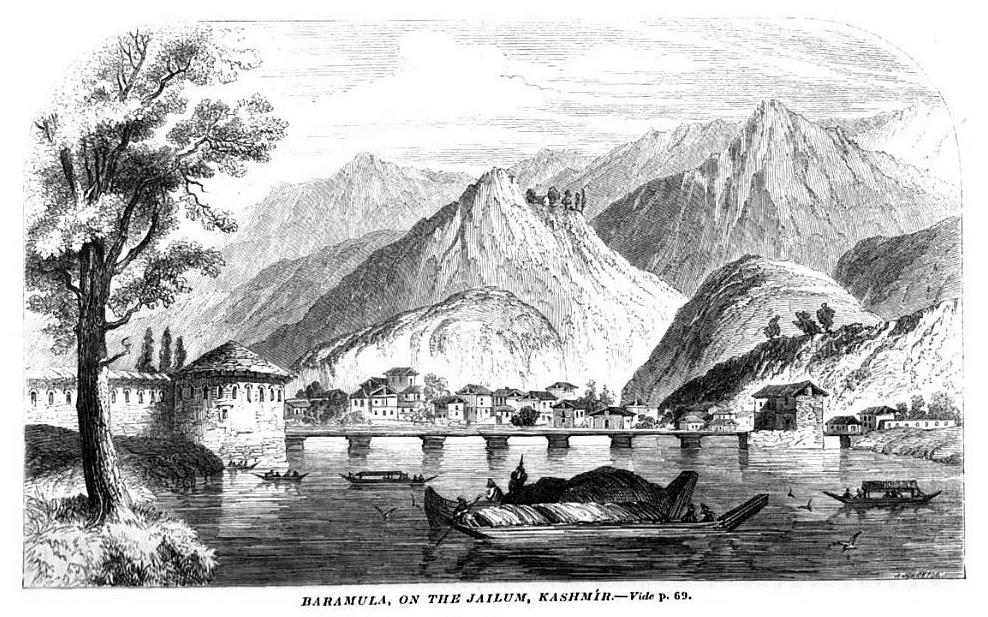
Baramulla on the Jailum, Kashmir

The geography of this place has been messing with my mind. Previously, I believed that the hillock in the background was misplaced, a figment of western imagination that mixed up Srinagar and Baramulla. It turns out that the composition of illustration is in all probability correct. The doubt created  my native imagination. This is Sumbul Bridge in Baramulla ( and the hillock is probably Aha Teng ?)

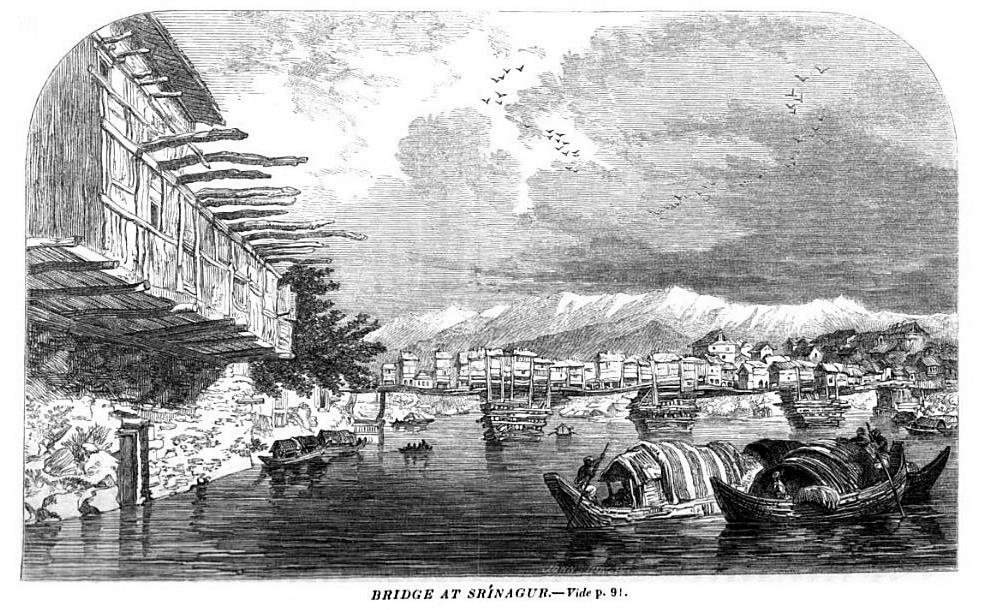
Bridge at Srinagur
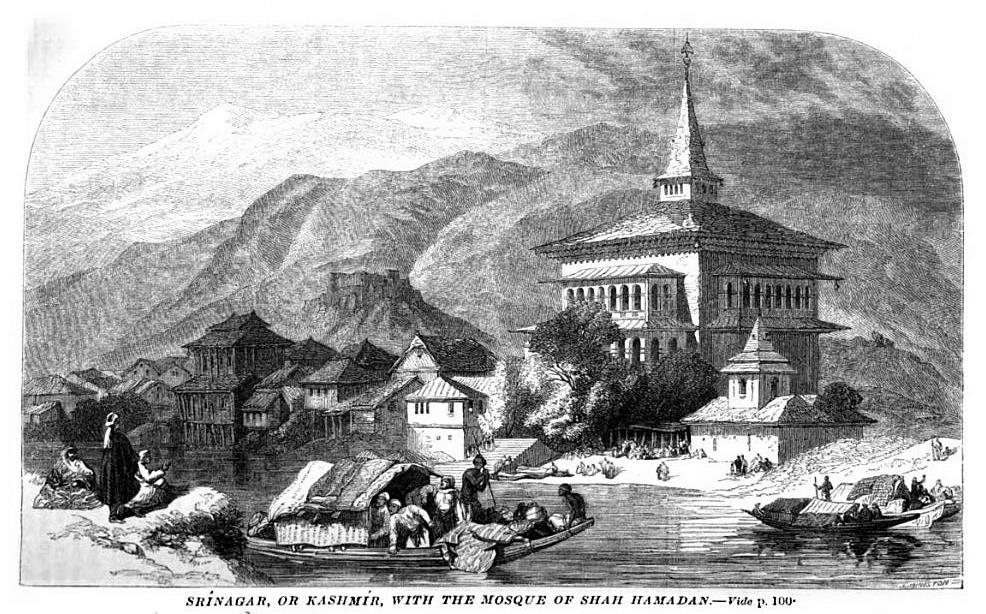
Shah Hamadan

-0-

Rise of Native Judge Sambhunath Pandit

“Oh! my brother Musalmans! I again remind you that you have ruled nations, and have for centuries held different countries in your grasp. For seven hundred years in India you have had Imperial sway. You know what it is to rule. Be not unjust to that nation which is ruling over you. And think also on this, how upright is her rule. Of such benevolence as the English Government shows to the foreign nations under her there is no example in the history of the world. See what freedom she has given in her laws, and how careful she is to protect the rights of her subjects. she has not been backward in promoting the progress of the natives of India, and is throwing open to them high appointments. At the commencement of her rule, except clerkships and kaziships, there was nothing. The kazis of the pergunah, who were called commissioners, decided small civil suits, and received very small pay. Up to 1832 or 1833 this state of things lasted. If my memory is not wrong, it was in the time of Lord William Bentck that natives of India began to get honourable posts. The positions of Munsiff, Subordinate Judge, and Deputy Collector on respectable pay were given to natives, and progress has been steadily going on ever since. In the Calcutta High Court, a Kashmiri Pandit was first appointed equal to the English Judges. at this time there are, perhaps,  three Bengalis in the Calcutta High Court, and in the same way some Hindus in Bombay and Madras. It was your bad fortune that there was for a long time no Mahomedan High Court Judge, but now there is one the Allahabad High Court.”

~ India by Sir John Strachey (1888).

Sambhunath Pandit was the first Indian Judge of the High Court of Judicature at Fort William. His wikipedia entry would tell you nothing about the way his rise was advertised by the Empire.

Here’s the entry against his name from ‘Dictionary of Indian Biography’ (1901) by C. E. Buckland:

SAMBHUNATH PANDIT (1820-1867)

A Kashmir Brahman, whose family had settled in Oudh, and a branch had been settled in Bengal for some generations : son of Sadasib Pandit : born in Calcutta, 1820 : educated at Lucknow, Benares, and the Oriental Seminary : beginningas an assistant to the Sadr Court Record-keeper on Rs. 20 a month, he rose, from being a Pleader, to be Junior Government Pleader, 18 3 : Senior, 1861 : Law Professor at the Presidency College, 1855 :and the first Native Judge of the High Court, Calcutta, 1863-7 : died June 6,1867 : an authority on Hindu law, and questions of land tenure.

0-

I am not coming up with these funny stories. I am not even challenged to apply my imagination here. These stories have all been already written. There is a street in Calcutta named after this man. Kashmiris visiting the city may want to check it out next time they visit that part of the world. And right now I can’t think of a street in Srinagar named after a Pandit.

-0-

Entering Srinagar, 1935

“We had, as usual, only the very vaguest idea of what Srinagar was going to be like. We knew that it was often referred to, in the tourist world, as ‘the Venice of the East’, and we knew the name of the principal hotel. ‘Very decent sort of place,’ everyone had said; ‘they’ll make you comfortable there.’ We imagined a small dining-room where half a dozen officers on leave propped Punch against the cruet.
Presently we struck the main road, metalled and straight. Notices in English flicked past in the headlights. ‘Srinagar’ said the driver, waving his hand towards the suddenly constellated darkness ahead of us; and soon we honked into crowded streets. ‘Escape Me Never’ said a hoarding, speaking aptly enough for civilization; the names of Bergner and of Beery figured largely. Srinagar was much bigger than we had imagined it.
So was the hotel. Its imposing portals loomed up and abashed us. Painfully conscious of uncouthness, of dusty clothes and blackened faces, we entered almost surreptitiously; and saw at once that we had chosen a bad moment to do so. People were gathering in the lounge for dinner. Alas for out vision of the little dining-room. the Punches propped informally! Everyone was in evening dress. Anglo-India, starched and glossy, stared at us with horror and disgust. A stage clergyman with an Oxford voice started as though he had seen the devil. A hush, through which on all sides could be heard the fell epithet ‘jungly,’ descended on the assembled guests. We were back in Civilization.”

~ News from Tartary: A Journey from Peking to Kashmir (1936) by Peter Fleming. For those who don’t know Peter Fleming was the younger brother of famous Ian Fleming of James Bond fame.

-0-

Pictorial tour round Kashmir, 1906

From ‘Pictorial tour round India’ (1906) by John Murdoch (1819-1904).

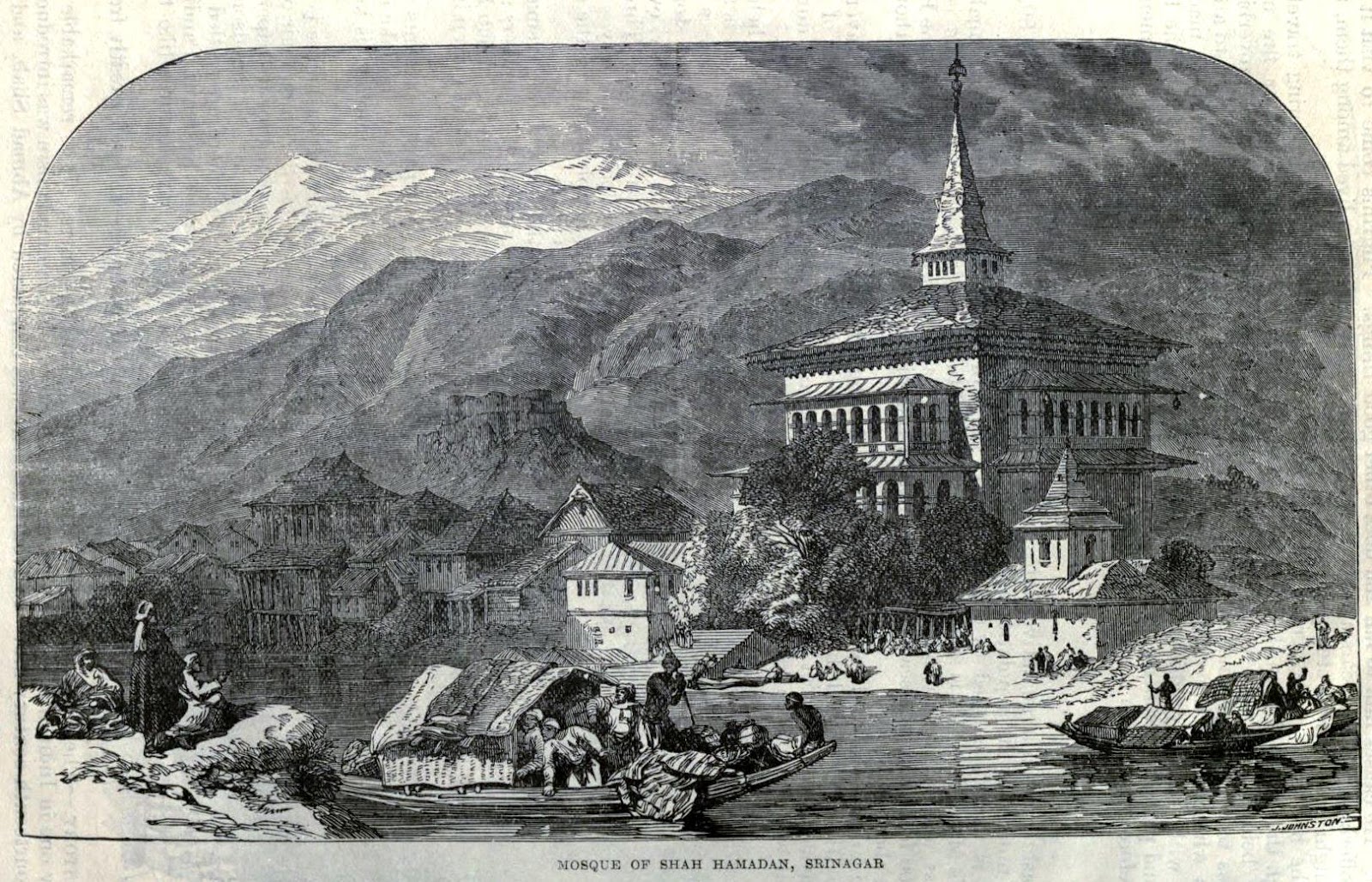
Mosque of Shah Hamadan/Kali Mandar, Srinagar

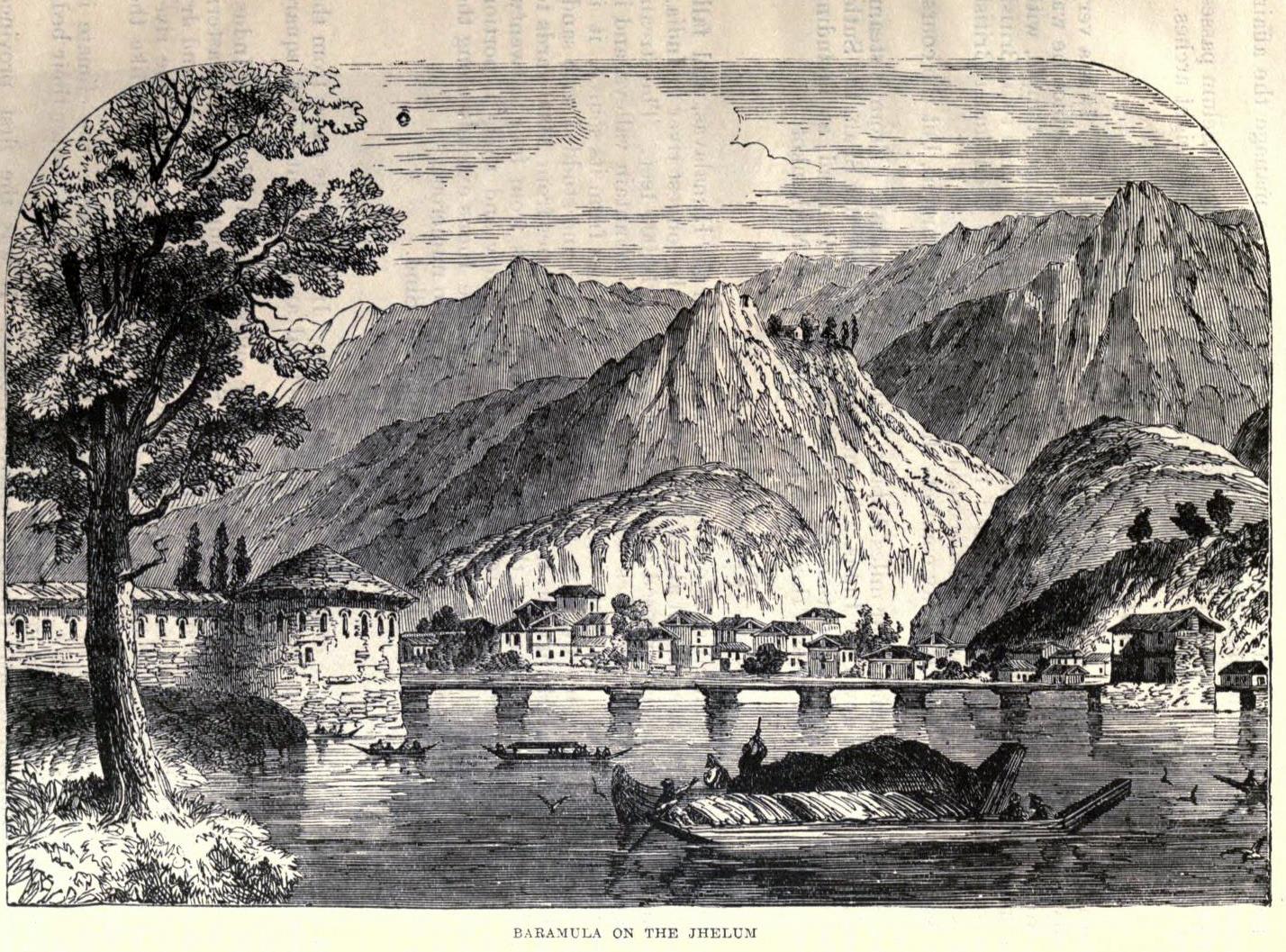
Baramula on the Jhelum
(with an out of place Shankracharya hill of Srinagar in the background)
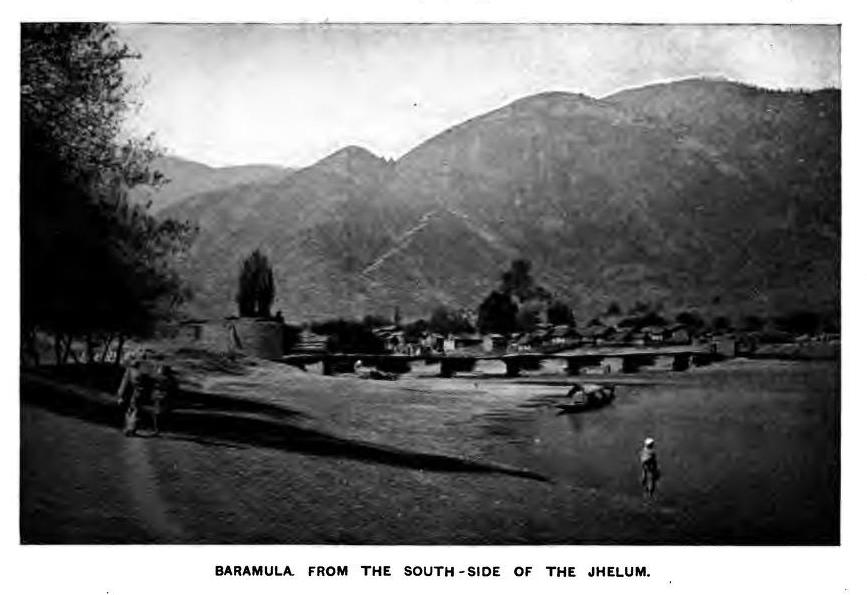
Update: The hillock  may not be entirely out of place
Photograph of Baramulla Bridge from Vignettes of Kashmir (1903) by E.G. Hull
More about the bridge here
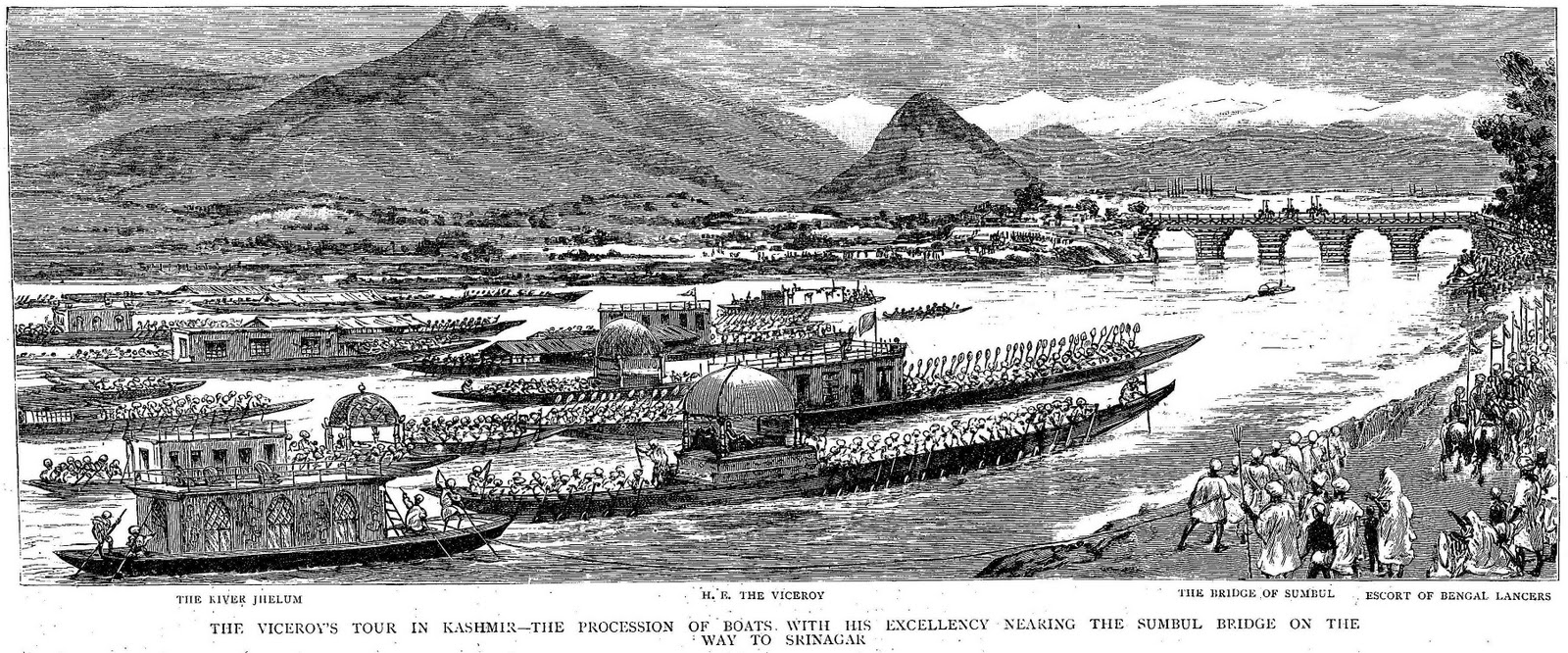
It seems that the hillock was certainly there. One can even notice the pathway going up it. Was there a shrine up there? Meanwhile here is another view of the bridge at Sumbal. Is that Aha-teng hillock? 

‘The Viceroy’s tour in Kashmir – The procession of boats with his excellency nearing the Sumbul Bridge (Sumbal in Baramulla district) on the way to Srinagar’
The Graphic. 18th December, 1891. 

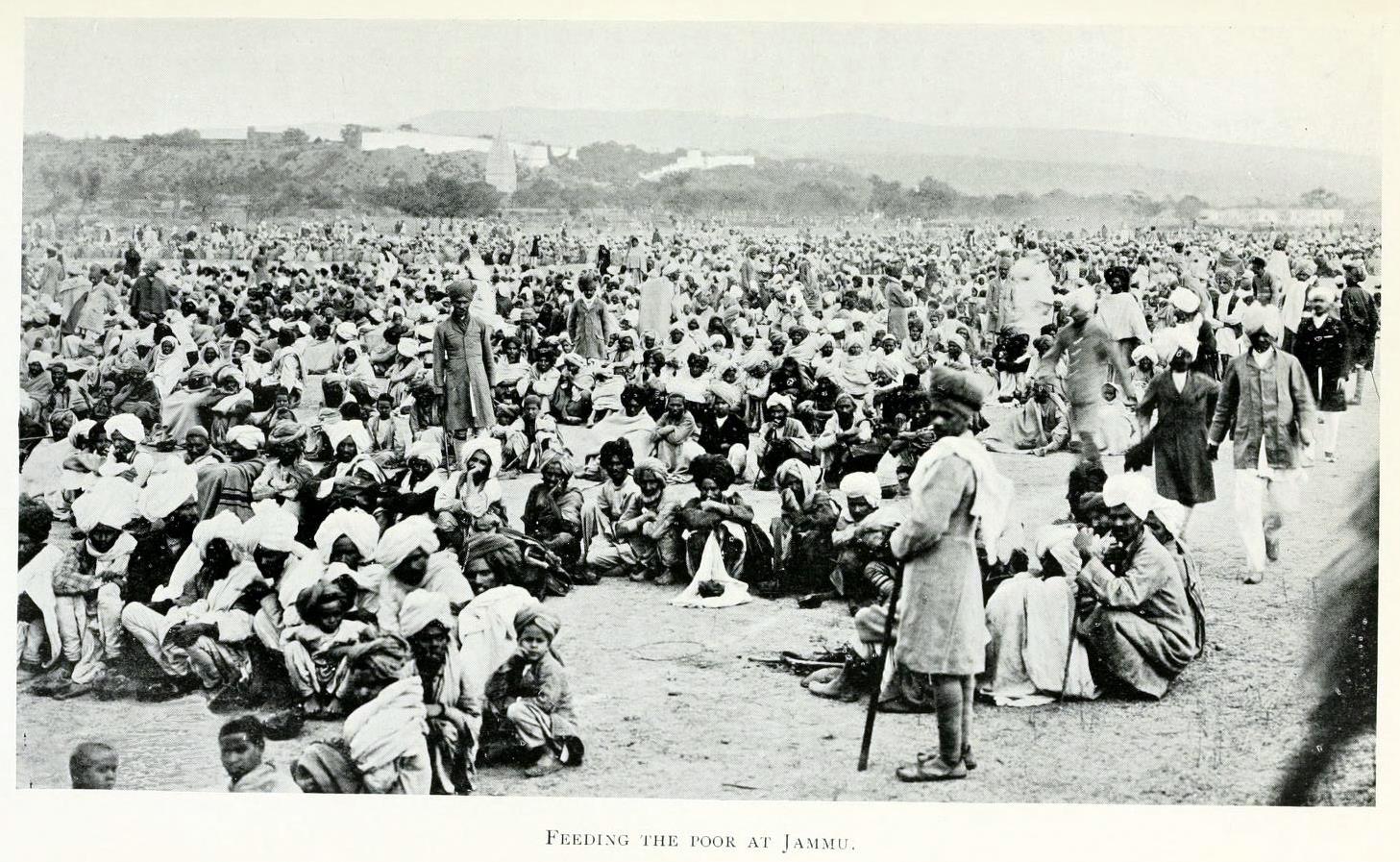
a feast in Jammu for the Prince of Wales, 1905

Feeding the Poor at Jammu. 1905

“At the appointed time the beggars gathered from far and near, on a spot surrounded by a cordon of regular troops and police, and divided into five separate blocks allotted to three following interesting classes of people in order of spiritual precedence: Hindus, Mahomedans, other castes, cripples, and sweepers. For the inhabitants of this land would rather starve in proud isolation than eat together.

At three o’clock in the afternoon began the feeding proceedings, and so earnest were they that a force of 250 military sepoys and police-constables had to be told off to keep the peace among the banqueters; but even these ministers of order had to be drawn from both the great castes, for a Hindu policeman could not interfere with a recalcitrant Mahomedan beggar in his dinner, nor would a Hindu beggar tolerate the contact of a Mahomedan constable. Thus they ate voraciously, and then washed the viands down with copious draughts from the Jogi Gate Canal, carried in skins of water-carriers of both sects. No fewer than 187 maunds of sweetmeats were that afternoon consumed in honour of the Prince of Wales. “

From ‘Through India with the Prince’ (1906) by George Frederick Abbott.