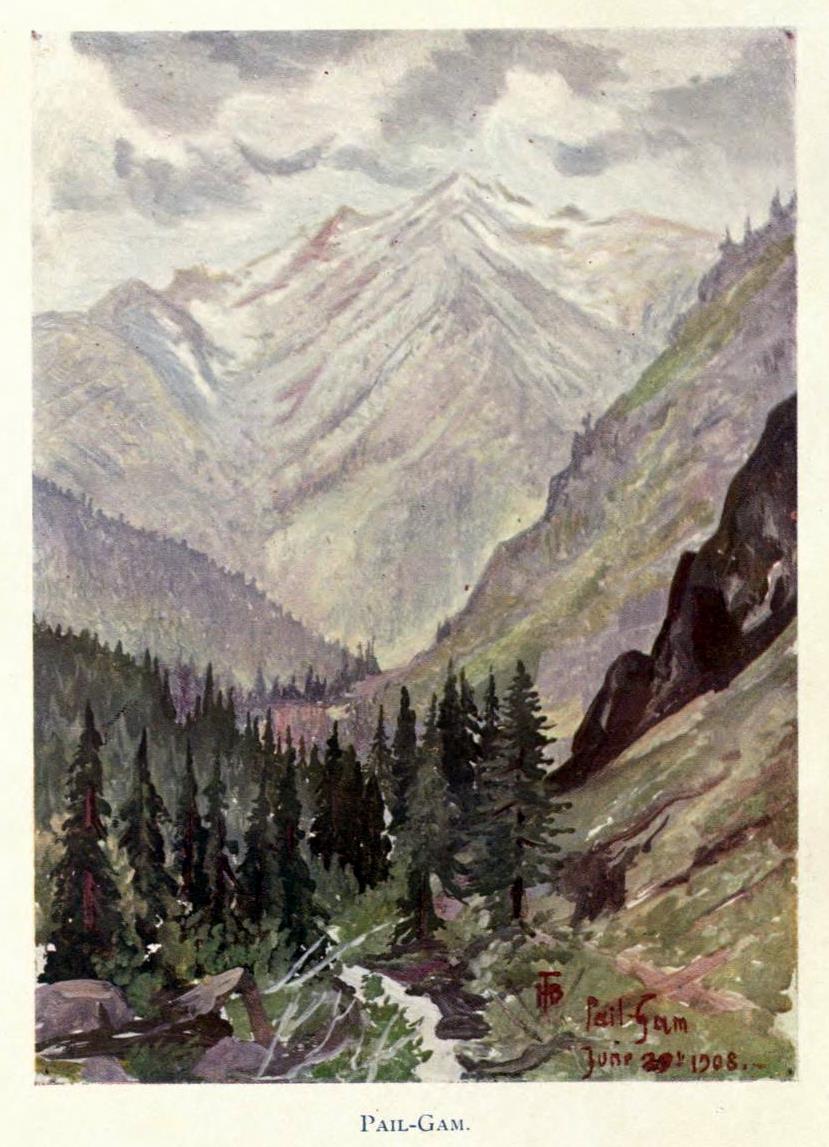
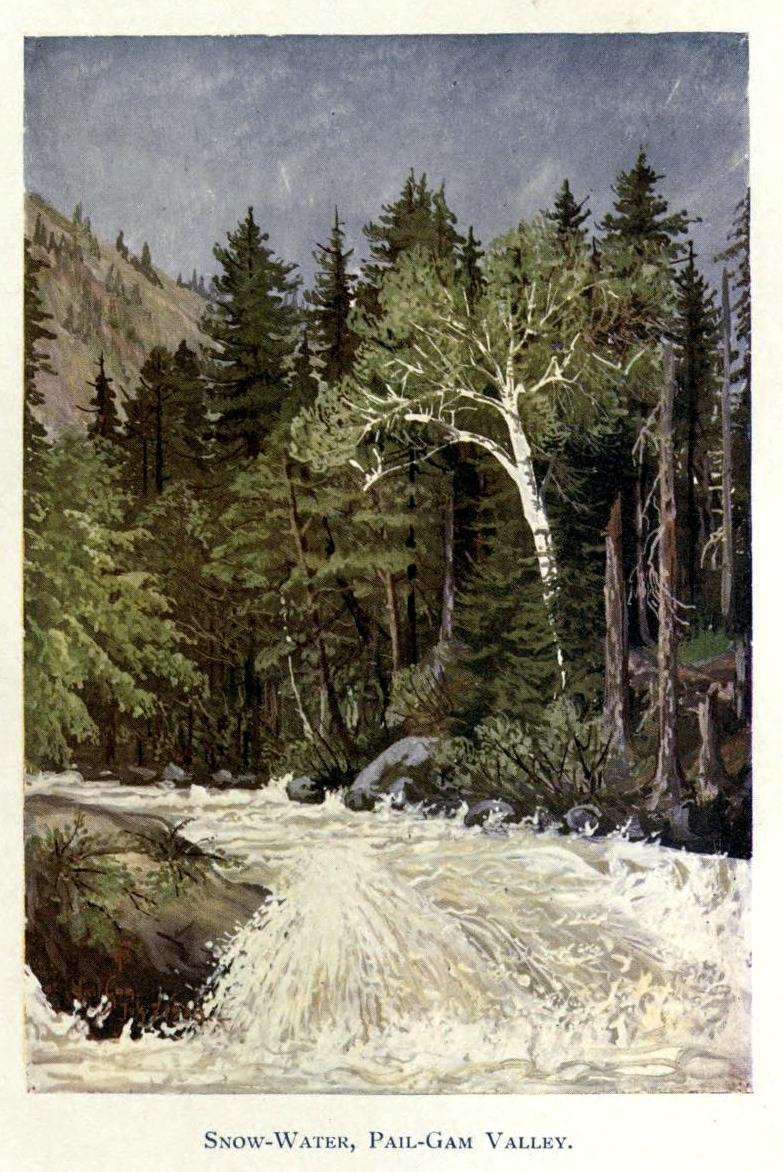
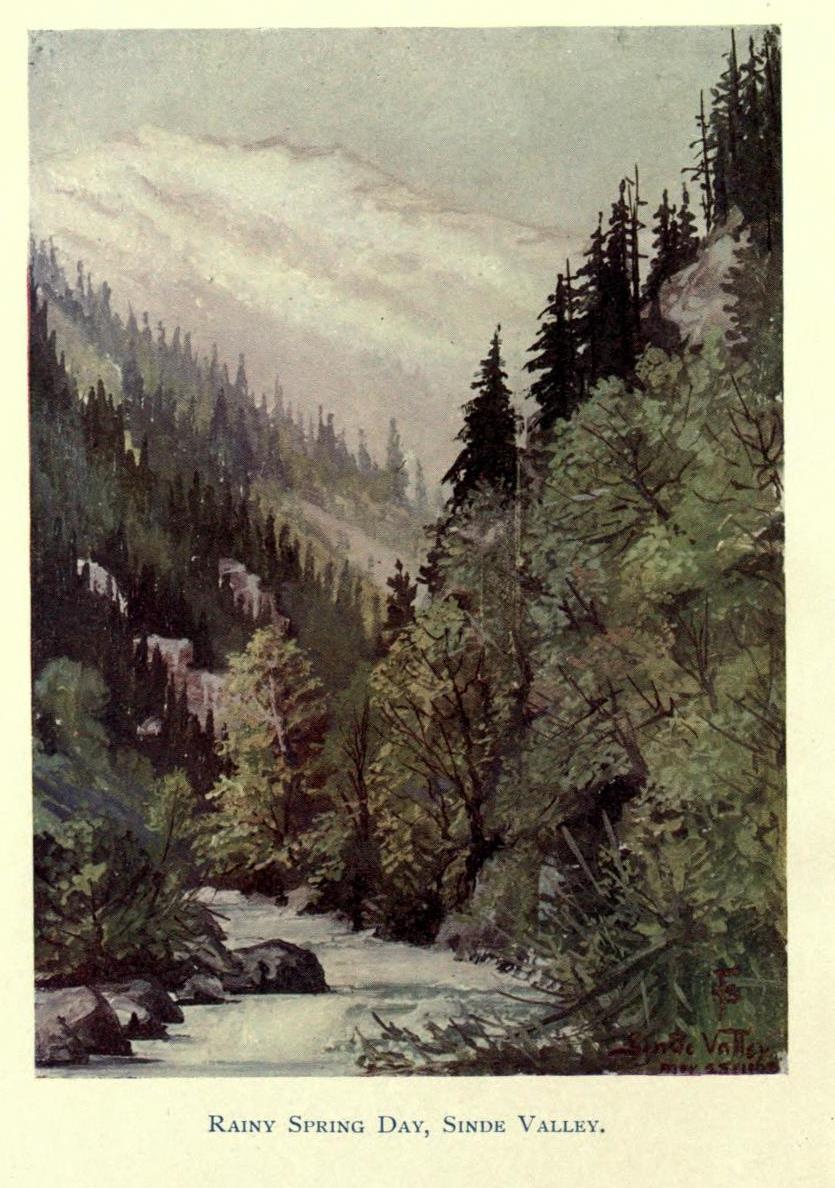
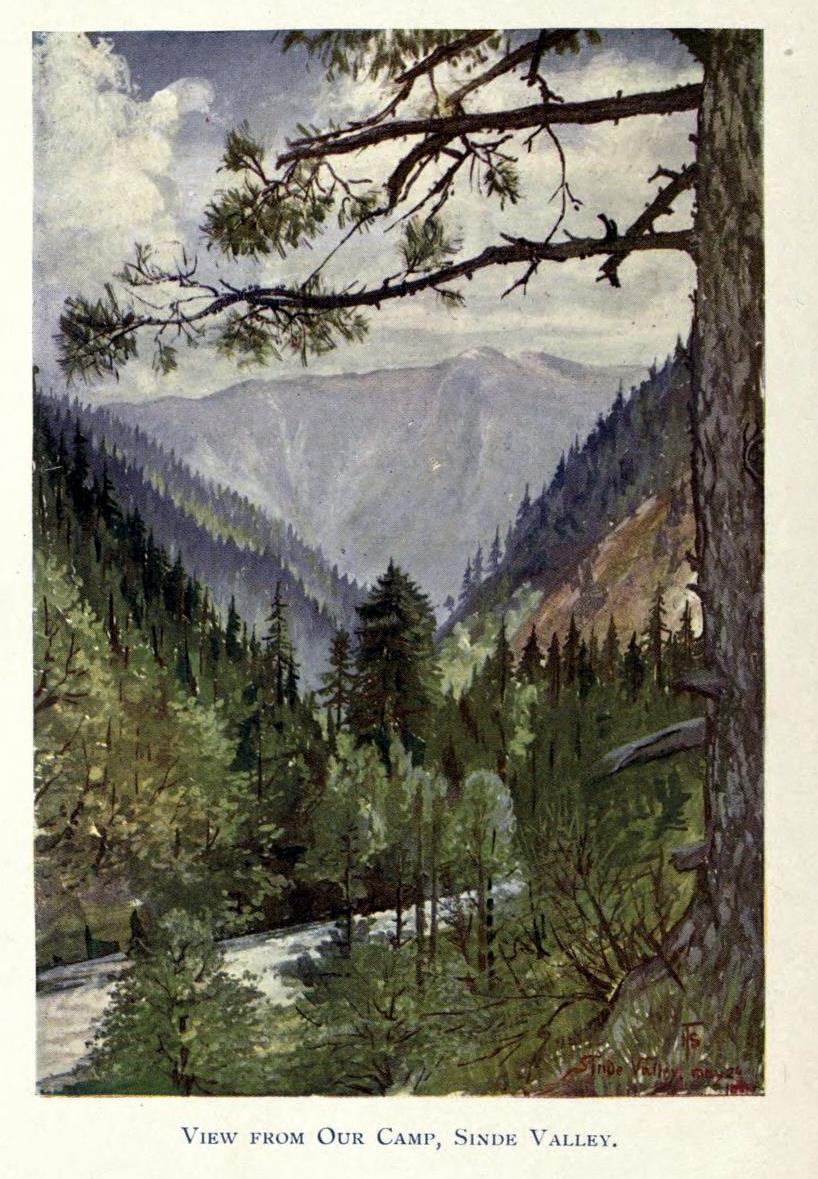
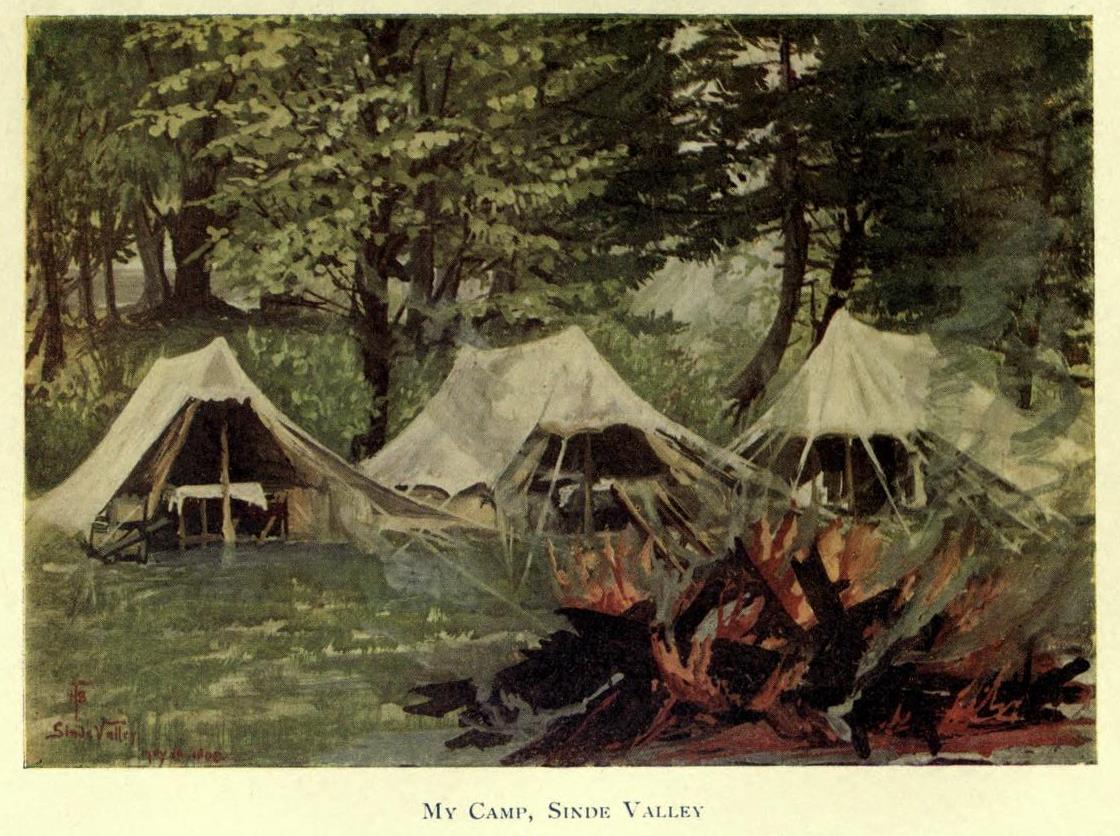
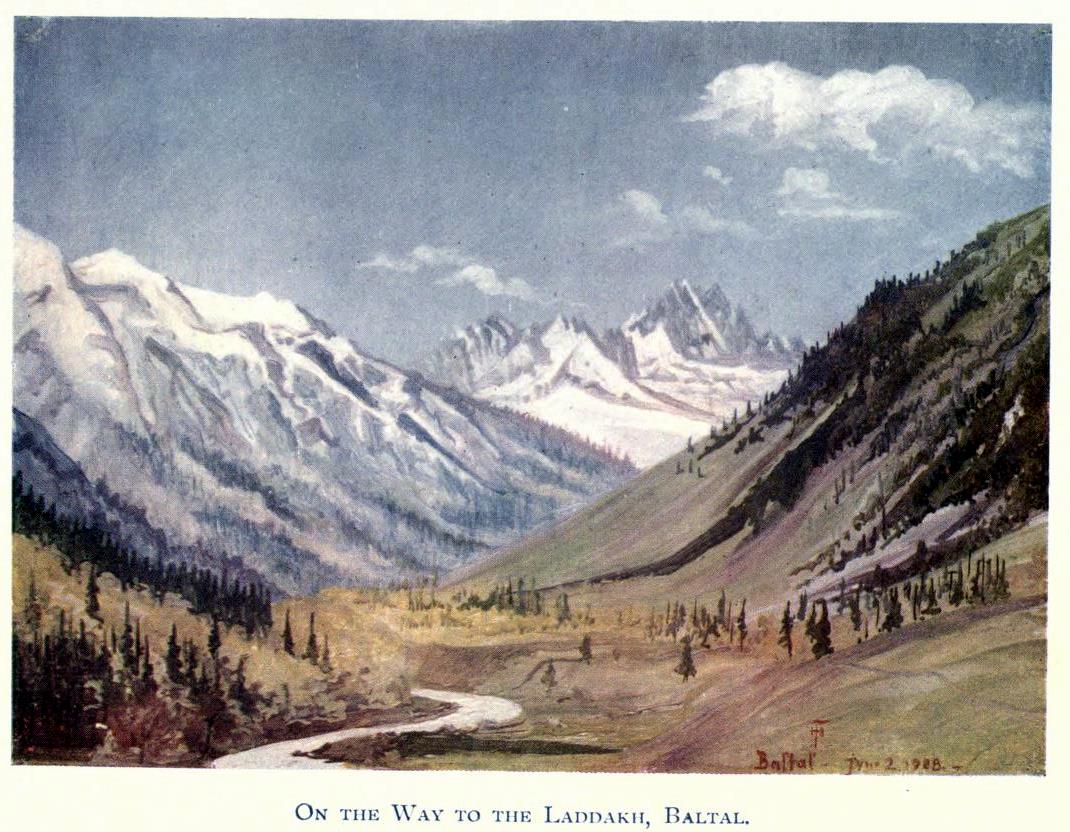
Paintings of Pahalgam and Sind Valley, 1908

Paintings from ‘An eastern voyage: A journal of the travels of Count Fritz Hochberg through the British empire in the East and Japan (1910) by Hochberg, Friedrich Maximilian, Graf von, (1868-1921) ,Volume: 1 and 2. Year 1908.

On way to Ladakh, Baltal 

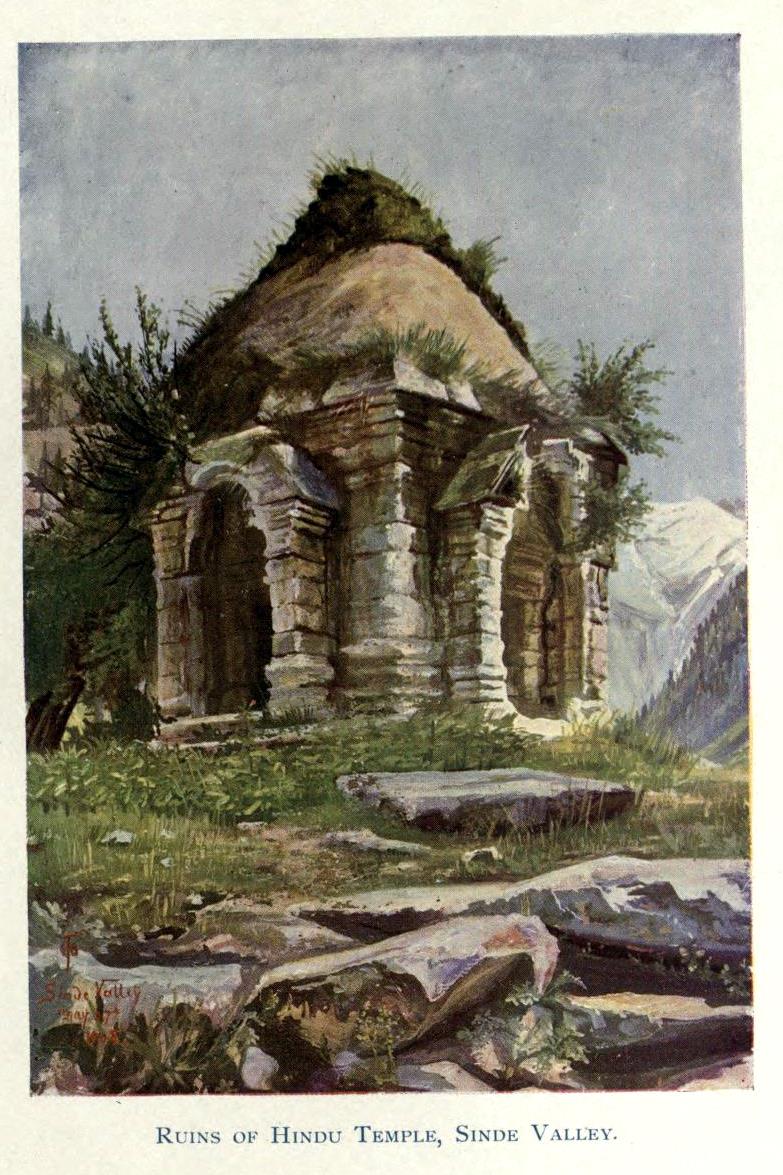
Ruins of Hindu Temple, Sind Valley

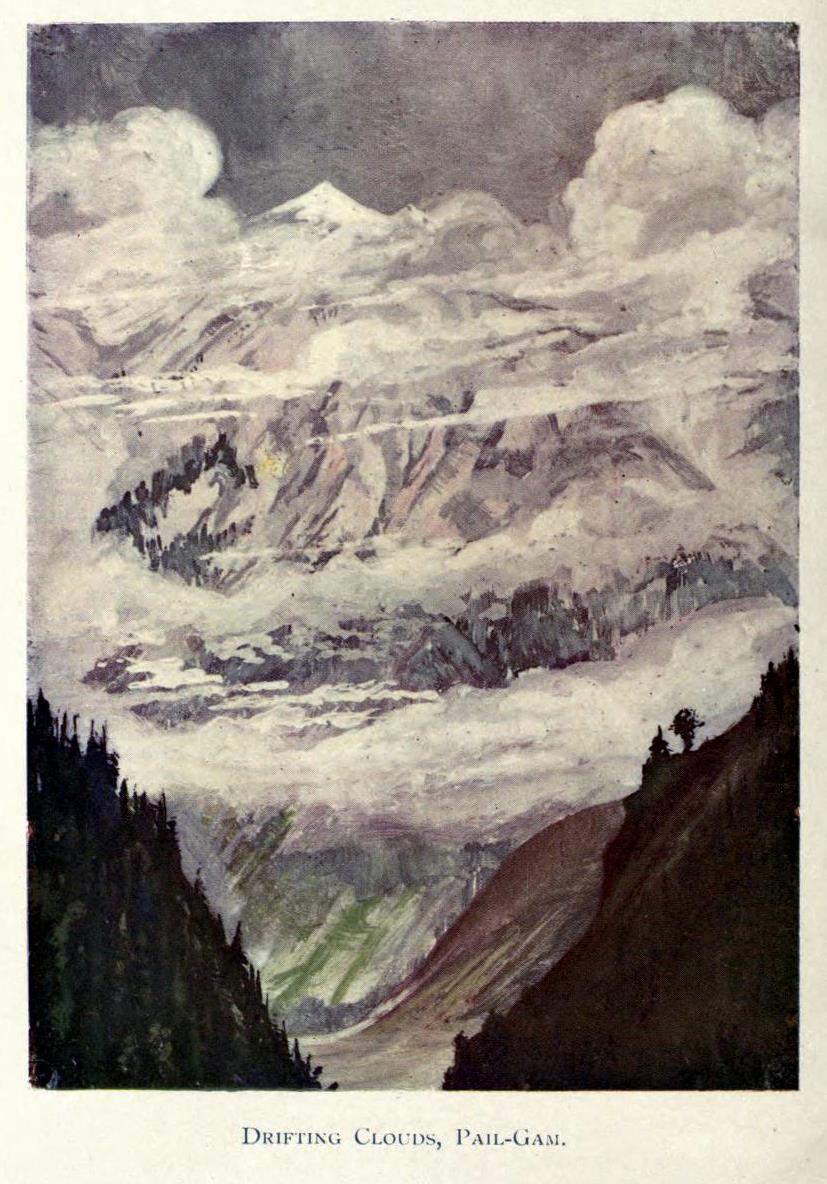
Drifting Clouds, Pahalgam

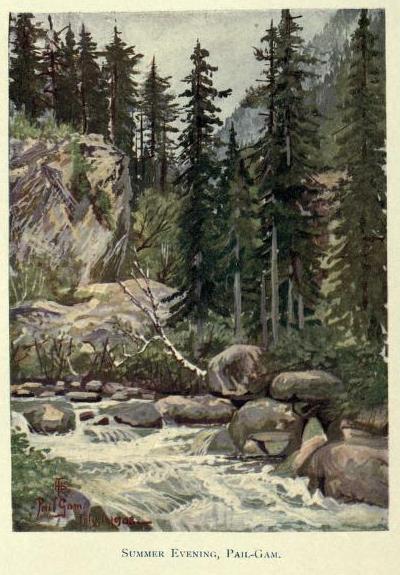
Summer Evening, Pahalgam

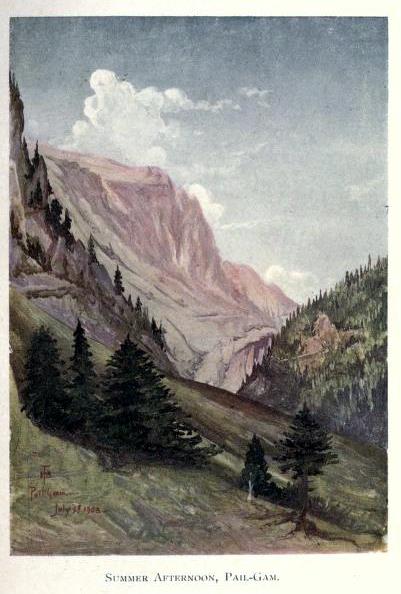
Summer Afternoon, Pahalgam

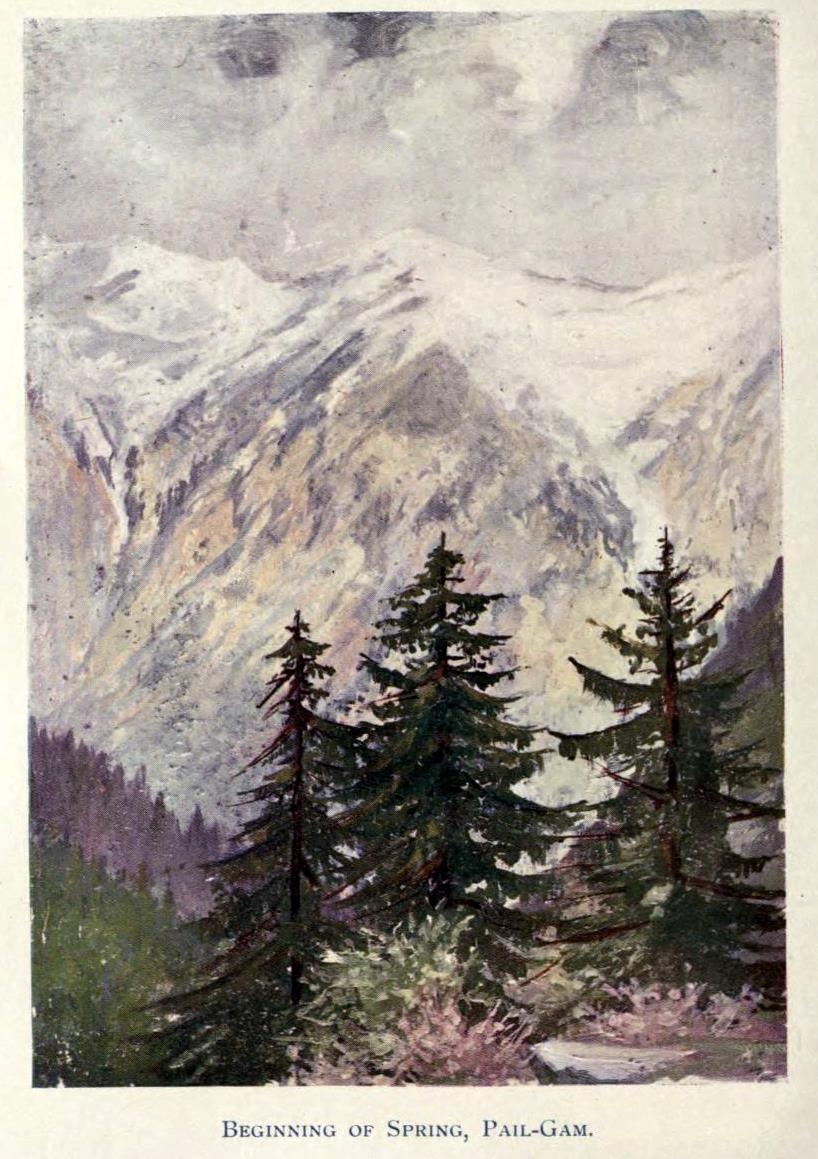
Beginning of Spring, Pahalgam

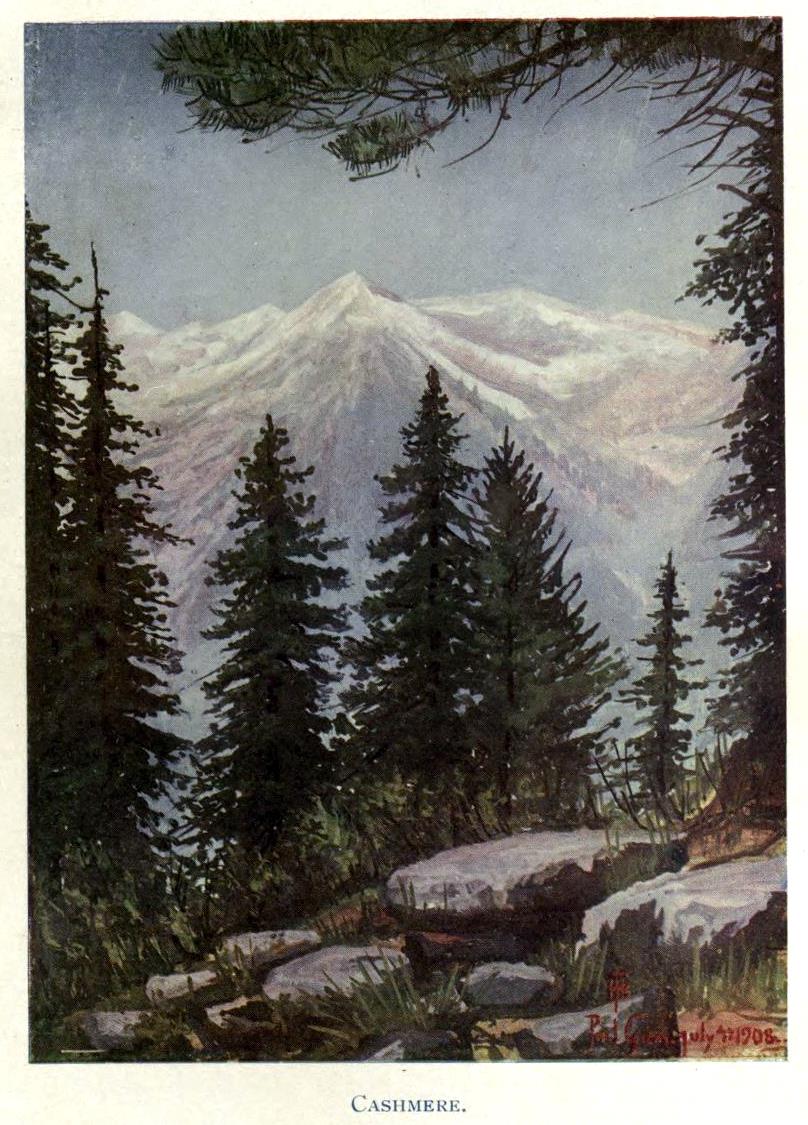
Pahalgam, Kashmir

-0-

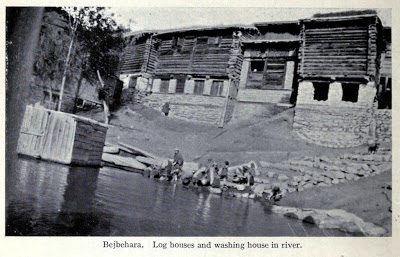
Breaking down Bijbehara

80, 65, 15, 8, 20, 10, 5, 5,9, 5, 4, 1, 2 ,3, 5, 7, 2, 10, 7, 8, 2, 2 , 3, 1, 12 , 40, 20.

Bijbehara. 1917.
From: 
‘Cashmere: three weeks in a houseboat’ (1920) by Ambrose Petrocokino

“At Bijbehara, immediately above which the Jhelam begins to narrow considerably, there is one of those, numerous and exquisitely picturesque-looking Kashmir bridges, resting on large square supports formed of logs of wood laid transversely, with trees growing out of  them and overshadowing the bridge itself. This town has 400 houses; and the following analysis, given by Captain Bates [in the ‘Gazetteer of Kashmir (1870-72)’], of the inhabitants of these houses, affords a very fair idea of the occupations of a Kashmir town or large village : Mohammedan zemindars or proprietors, 80 houses ; Mohammedan shopkeepers, 65 ; Hindu shopkeepers, 15 ; Brahmans, 8 ; pundits, 20 ; goldsmiths, 10 ; bakers, 5 ; washermen, 5 ; cloth-weavers, 9 ; blacksmiths, 5 ; carpenters, 4 ; toy-makers, 1 ; surgeons (query phlebotomists), 2 ; physicians, 3; leather-workers, 5 ;milk-sellers, 7; cow-keepers, 2; fishermen, 10 ; fish- sellers, 7 ; butchers, 8 ; musicians, 2 ; carpet-makers, 2 ; blanket-makers, 3 ; Syud (descendant of the prophet), 1 ; Mullas (Mohammedan clergymen), 12 ; Pir Zadas (saints!), 40; Fakirs, 20. It wi11 thus be seen that about a fourth of the 400 houses are occupied by the so called ministers of religion ; and that the landed gentry are almost all Mohammedan, though the people of that religion complain of their diminished position under the present Hindu (Sikh) Raj in Kashmir. For these 400 houses there are 10 mosques, besides 8 smaller shrines, and several Hindu temples, yet the Kashmiris are far from being a religious people as compared with the races of India generally. Let us consider how an English village of 4000 or 6000 people would flourish if it were burdened in this way by a fourth of its population being ministers of religion, and in great part ruffians without family ties. 

It is a very rough and uncertain calculation which sets down the population of Kashmir at half a million. The whole population of the dominions of the Maharaja is said to be a million and a half, but that includes Jamu, which is much more populous than the valley. Captain Bates says that the estimate of the Maharaja’s Government, founded on a partial census taken in 1869, gave only 475,000 ; but that is better than the population of the year 1835, when oppression, pestilence, and famine had reduced it so low as 200,000. It is, however, not for want of producing that the population is small ; for, according to the same authority, “it is said that every woman has, at an average, ten to fourteen children.” I do not quite understand this kind of average ; but it seems to mean that, on an average, every woman has twelve children. That shows a prodigious fecundity, and is the more remarkable when we learn that the proportion of men to women is as three to one. This disproportion is produced by the infamous export of young girls to which I have already alluded ; and it is impossible that such a traffic could be carried on without the connivance of the Government, or, at least, of a very large number of the Government officials. Dr Elmslie’s estimate of the population of Kashmir, including the surrounding countries and the inhabitants of the mountains, was 402,700 – of these 75,000 heing Hindus, 312,700 being Suni Mohammedans, and 15,000 Shias. His estimate of the population of Srinagar was 127,000; but the census of the Government in 1869, gave 135,000 for that city.”

~ ‘The Abode of Snow: Observations on a journey from Chinese Tibet to the Indian Caucasus, through the upper valleys of the Himalaya’ by Andrew Wilson (1875) .
-0-

Kashmir, 1903

From: ‘Sport and travel in the Far East’ (1910) by J. C. Grew.

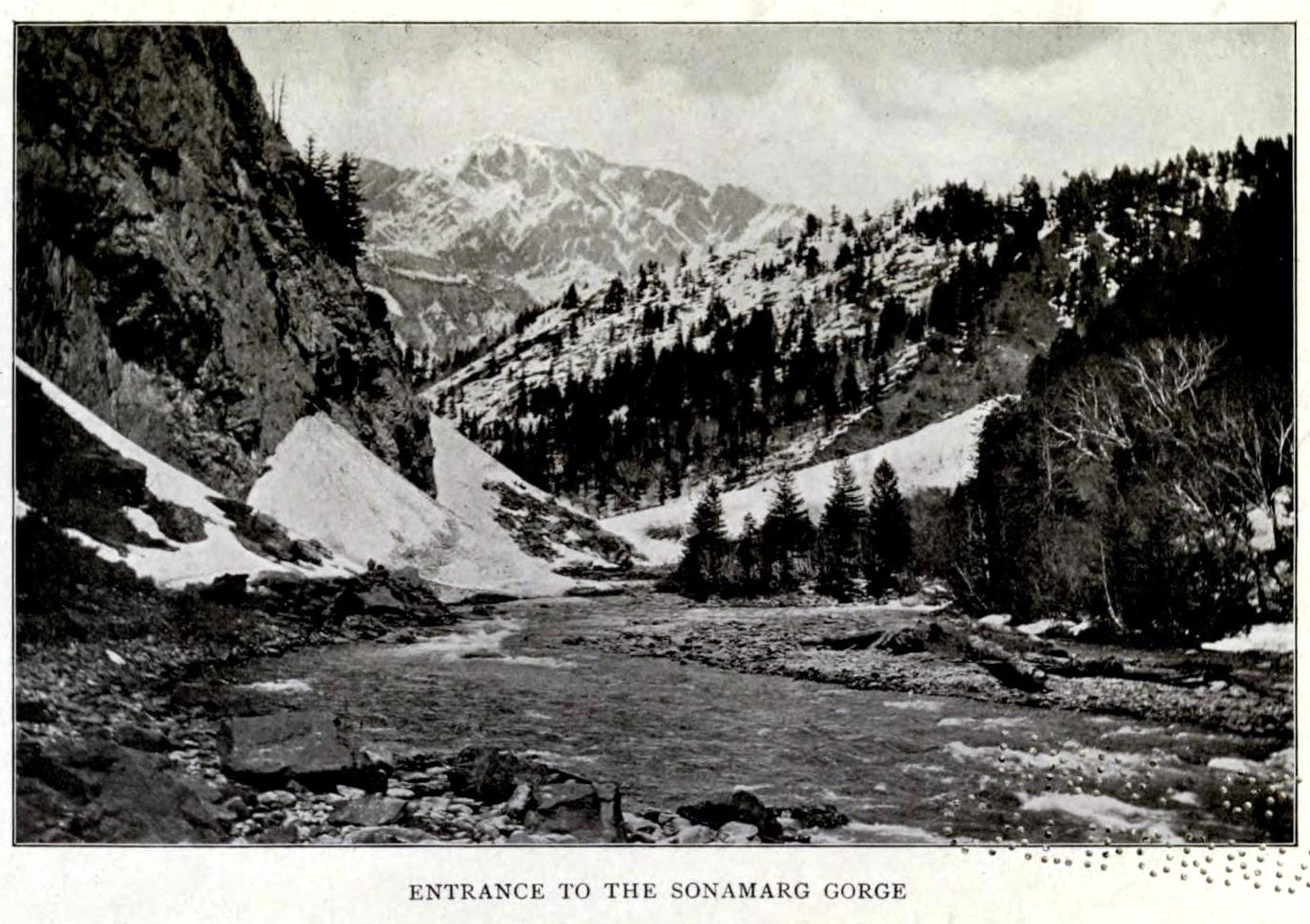
Entrance to Sonamarg Gorge

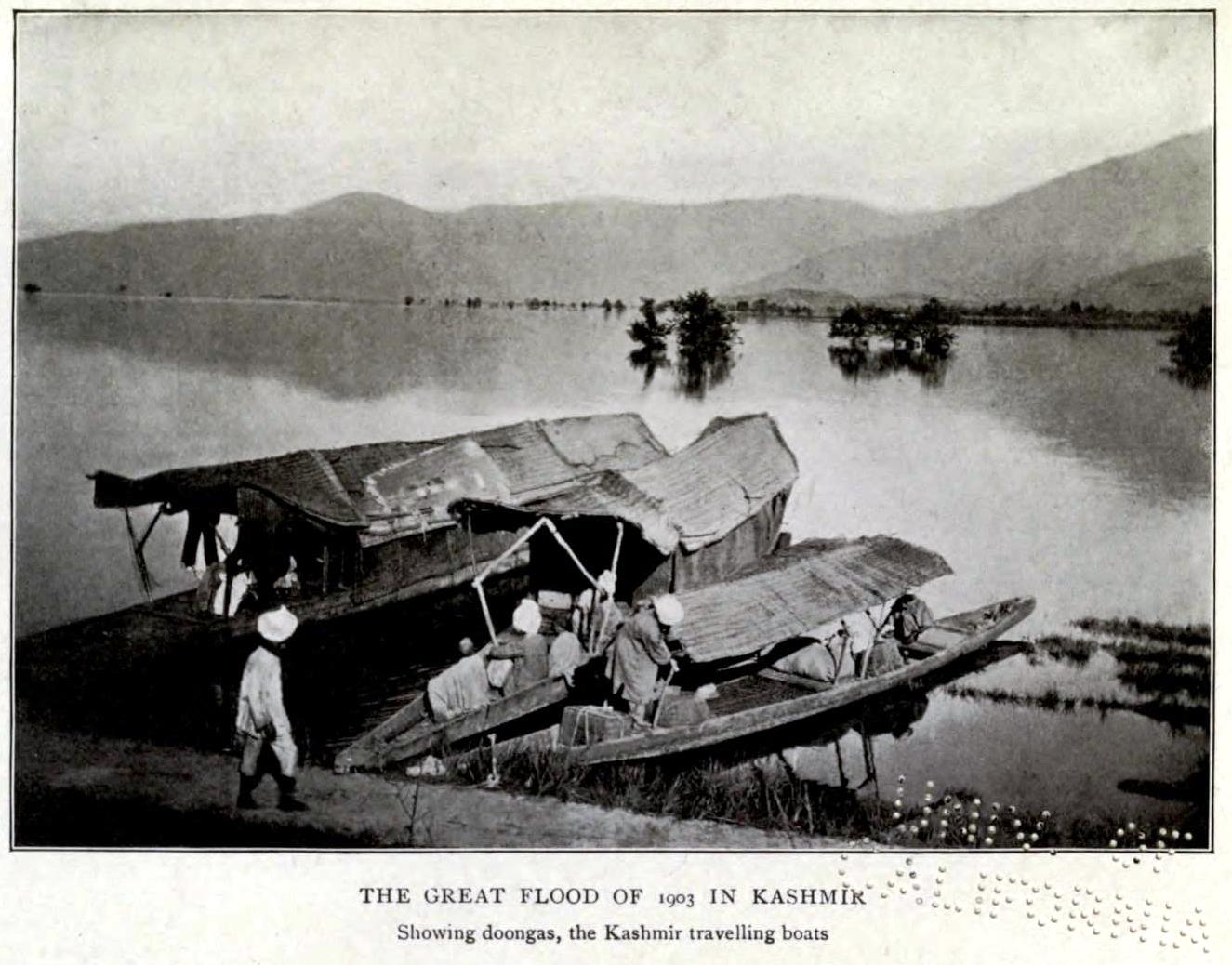
The Great Flood of 1903 in Kashmir. A Kashmiri poet of that time named Hakim Habibullah went on to write a work titled ‘Sylab Nama’ based on this natural calamity.

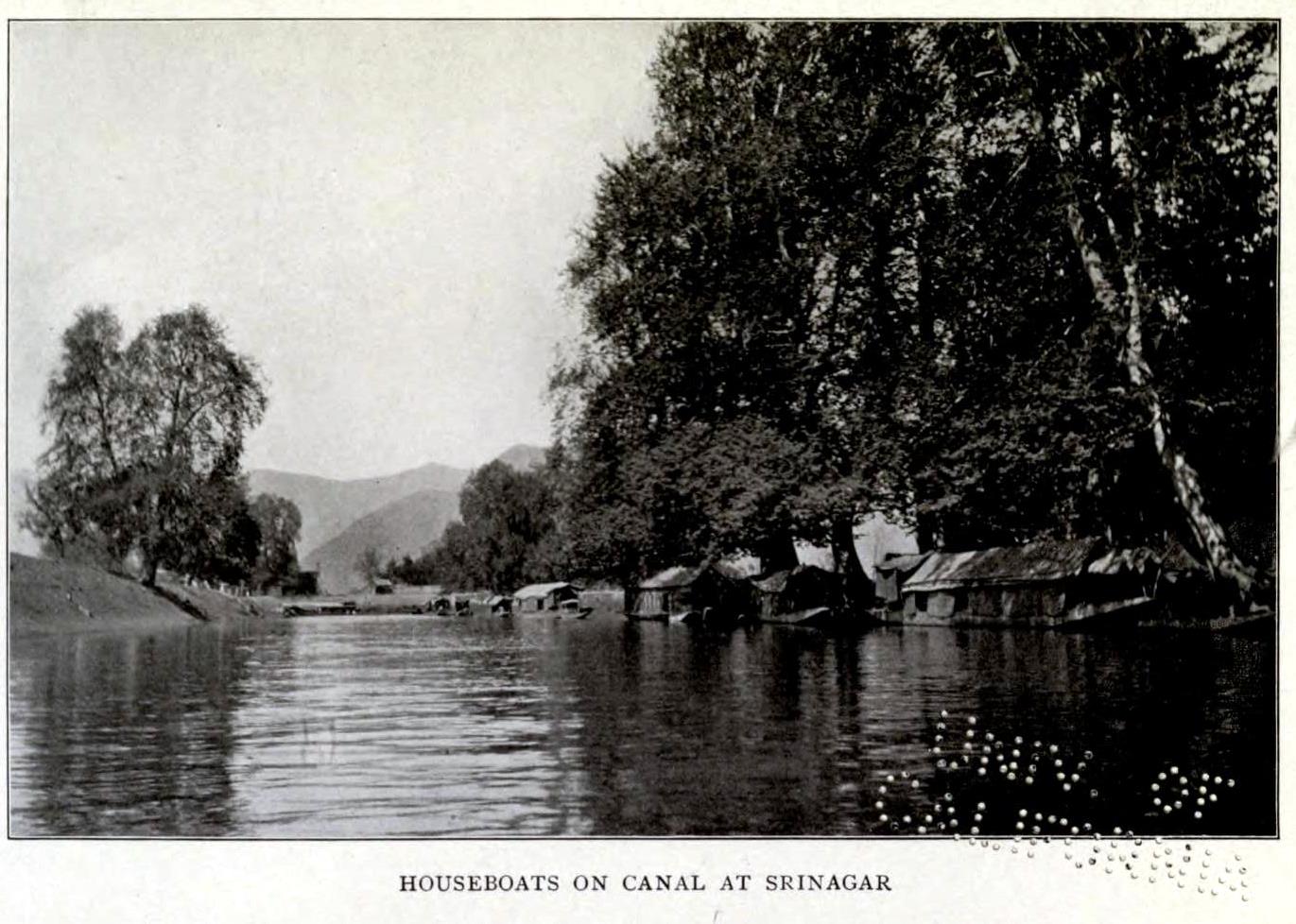
Houseboats on Canal at Srinagar

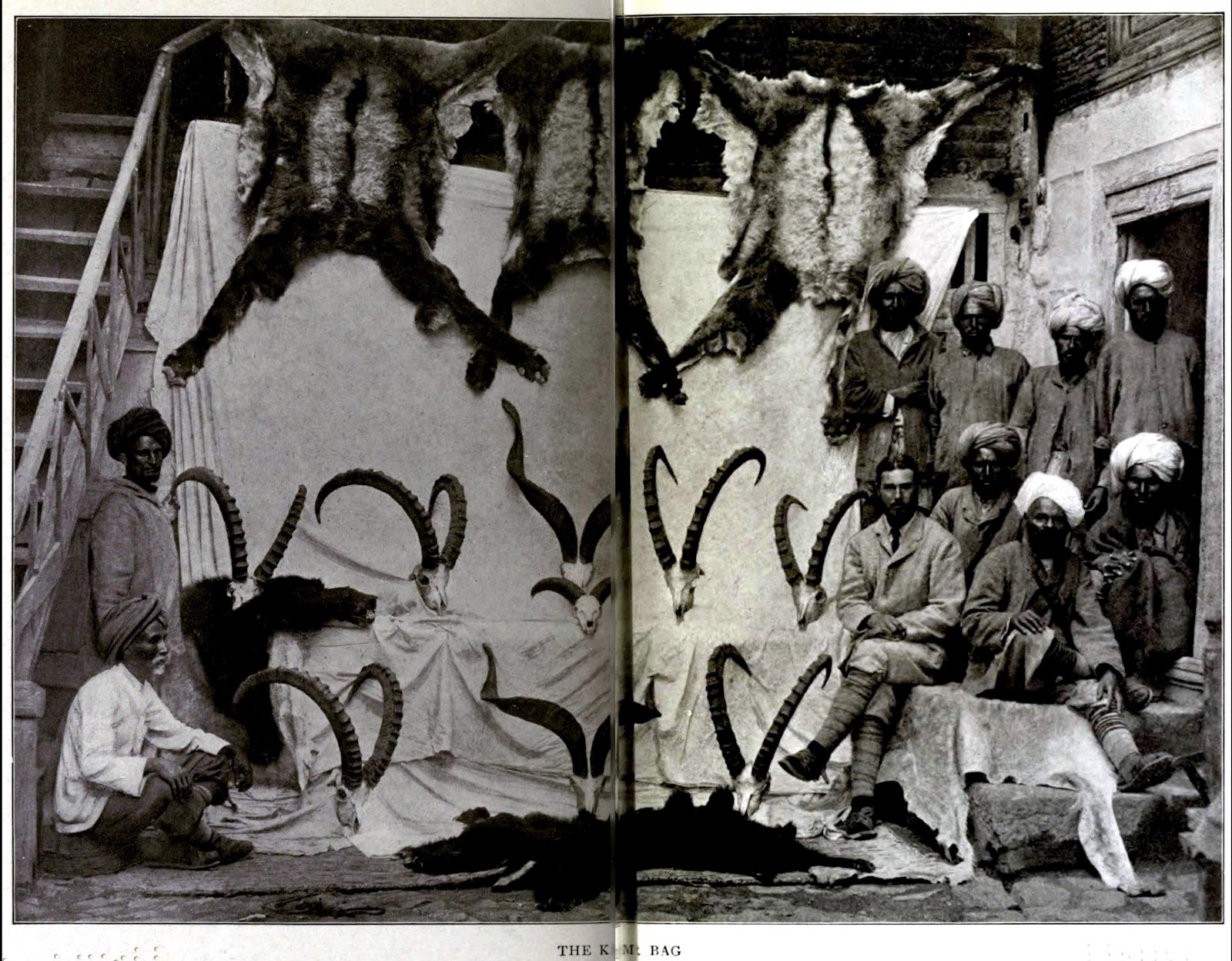
The Kashmir Bag [of a Hunter]

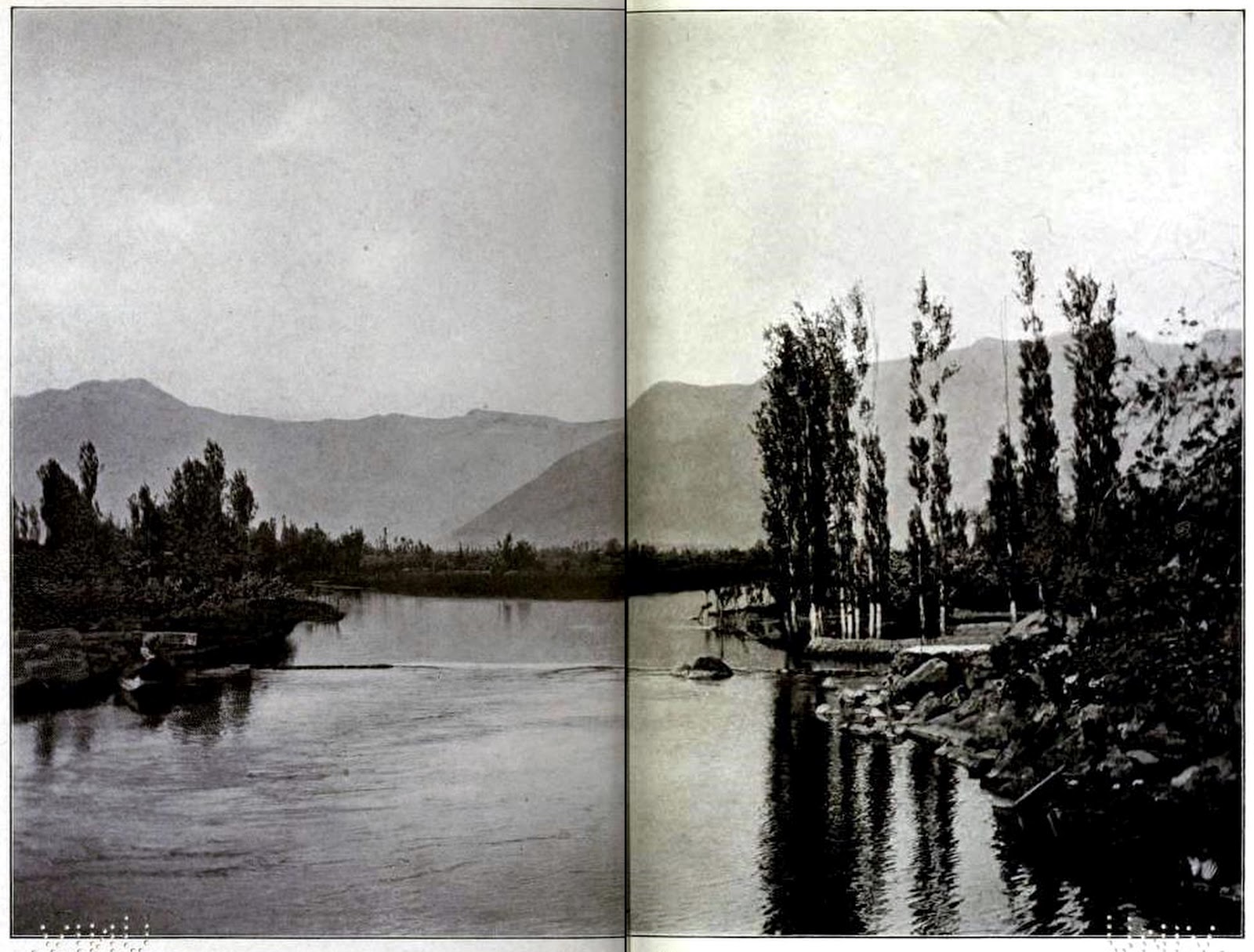
Scene at Srinagar

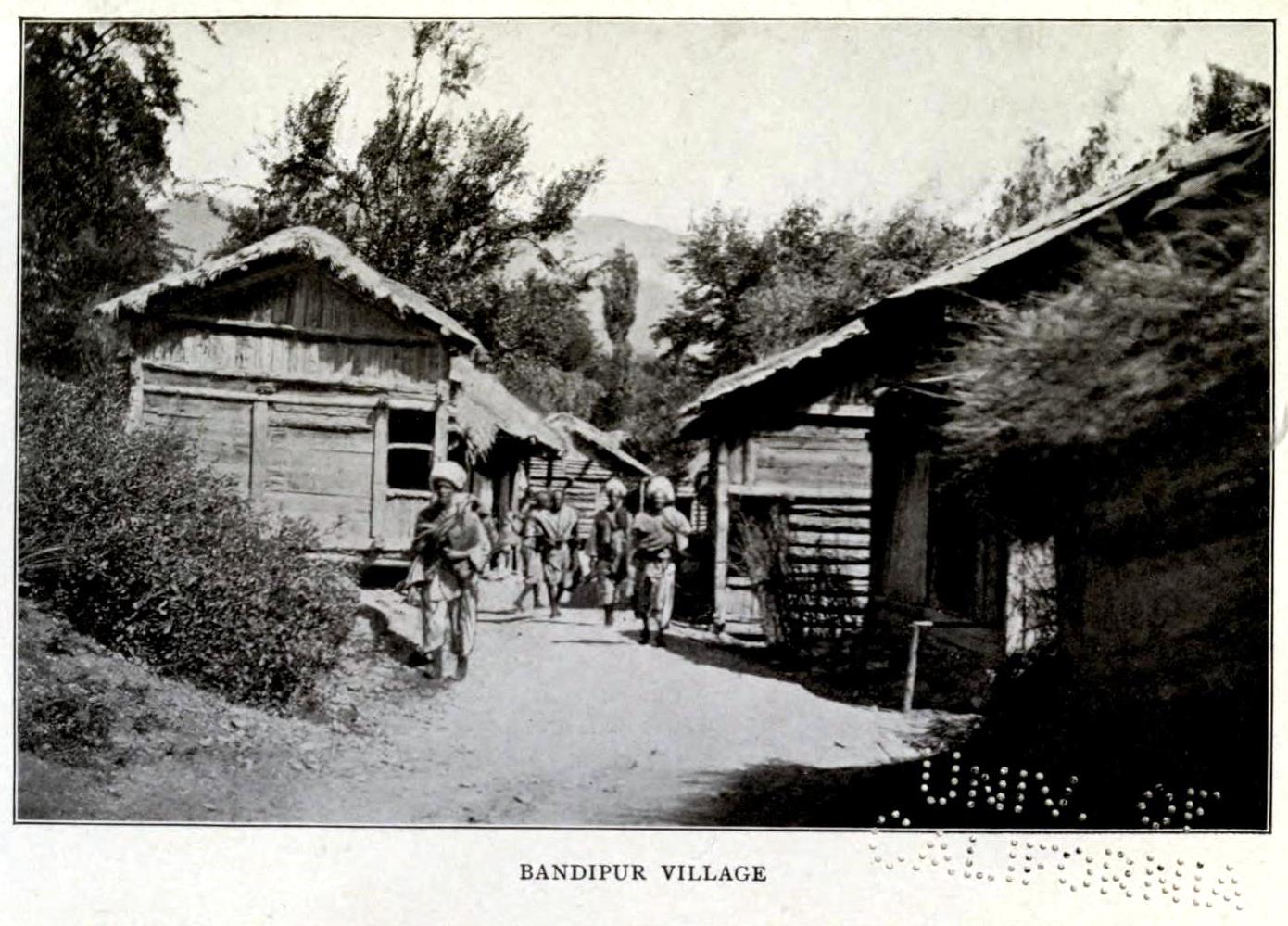
Village Bandipur

-0-

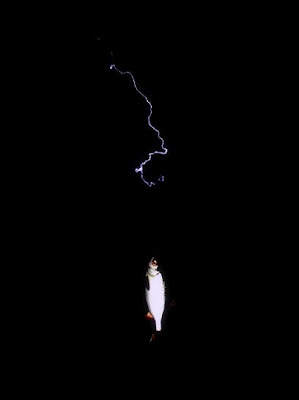
Electric Fish

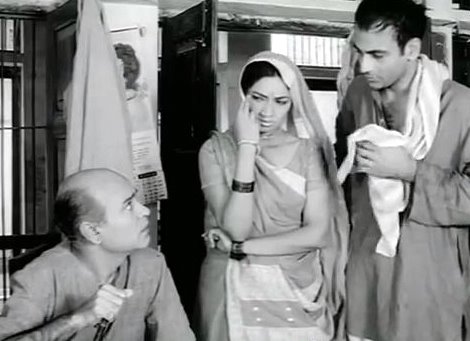
Based on a folk ‘medicine’ story I heard a couple of years back from an uncle of my father.

The man was sick – sick unto death with an agony that would have him praying for death.  They laid him in a cot, he felt his senses leaving him. When he regained his senses again, he found himself floating in the air through the trees, through the green paddy fields and towards the black mountains. For a minute he rejoiced at the thought that he was dead and probably being driven to paradise. Up and down. Up and down. Like on a boat. He smiled. But just then a familiar terrible pain, like a needle pick into eyeballs, shot up through his belly and through his body, blasting his head to bits. His body again developed cracks and broke down. He knew he was alive and the thought peppered his pain with grief. He opened his eyes but just then the noon-time sun broke through the foliage and raptured his eyes. He closed his eyes. Frozen, unable to even wither in pain, he felt his irises turning to glass, cutting at his eyelids. Tears rolled down his cheeks but to him it felt like he was crying blood. He knew his days were numbered. But he was losing count. This maddening pain could not go on forever. He would die soon, it was certain. The thought consoled him and he again passed out on the cot, still tied to it with ropes and carried on shoulder of his two sons.


The sickness first came to him a few months ago one sudden afternoon. It arrived in the simple form of stomach ache. Then the fever arrived. Then the burning sensation. He slept over it. Next day he was fine, he went on with his daily business, worked, had Kehwa with extra milk in the afternoon as a precaution, thanked his gods and just felt fine.  But in the evening, once he reached home, a smell of rotting flesh filled his nostrils, engulfed him, he vomited violently till he felt like he would vomit out his intestines. Then he felt like someone had tied his bowels in a knot. He felt shivery and started sweating. It was at that moment that a pain took birth in his stomach and the countdown to his death began. His two young sons took him to all the Hakeems, Veds, priests, saints and peers but none in the city could cure this man’s mystery illness. Then a man told them about a great Hakeem in a village who it was said could even breath life into the dead. The young men put him on a cot and carrying him over their shoulders, started their walk to the village of this miracle Hakeem.


‘I can’t help this man,’ said the Hakeen while still listening to the ebbing pulse of a dying man who was expectantly hearing each word coming from the lips of this gentle old man of Shafa. ‘I know the disease. I know the cure. But I can’t administer it. What this man need can’t be easily found. It is no use…instead…’ 
On hearing this, the fire in his pits, that had momentarily subsided on the sight of an elderly angelic man with ice cool hand, again ignited and reclaimed his body, burning all his hopes and his body. A lightening struck somewhere. A thunder boomed in the sky. The man again passed out. A furious storm raged outside.


Hakeen Sahib, taking his hand off the man, continued instructing the two boys without loosing a single syllable, ‘…give him nothing to eat for next seven days. Only water. With sugar and rock salt. No, it won’t cure him. But it will reduce the pain. When the time comes, it will make his death easier.’ 


The boys shocked at this prophecy of death, forgot all about seeking a cure, disheartened, again picked up the cot on their shoulder and started to head back to the city. But it was now raining outside. So they put down the cot and waited for the bad weather to pass. 


It was evening when the man again came to senses, there was no pain, yet. Instead there was now only a slow burning sensation in his stomach. But he was in senses enough to recognize it was fire of hungry that now haunted him. He cursed himself, for even if he was close to death, he still felt the need to feed himself, to throw things into this unending pit. This pit of death. He called out to his sons. Not getting a response, driven by hunger, he willed himself up. At a distance near a river bank, he saw his two sons sitting down munching on something. He imagined it must be fish. His sons were eating fish while he lay here hungry, while he lay here dying. In his anger he could even smell roasted fish. In a weak feeble voice, infuriated, he again called out the names of his two sons and asked to be fed some food. The sons didn’t even turn in response. Thinking that they must not have heard him, the man, a bit dejected, tired, his legs about to give up, turned back to his cot, mouthing curses for his two unworthy sons. Just then his eyes fell on a heavenly sight,  he saw on boulder next to his cot, a freshly roasted fish. Just lying there, waiting to be eaten. The sight of it filled his heart with shame and pride. As he began to dig into the fish like a mad man possessed, like a man hungry all his seven lives, he cried and praised his thoughtful sons, he blessed them and blessed them some more. And he blessed the fish which might well be his last meal and thanked the gods. When he finished eating, fear of impending pain put him into a deep sleep.


A week later, Hakeem Sahib walked from the village to the man’s house in the city to witness the miracle. He came to see the man who defied malakul maut – angle of death. A man that he had openly proclaimed dead was walking again. Men were now questioning Hakeem’s judgement. 


‘Where did you find it?’ was the first that Hakeem Sahib asked the two boys and the man who had been given up for dead only a week ago.


‘Find what?’ They all asked.

‘There was only one cure for the disease that this man had. And that was a ‘Trath-lej Gaad’, a fish that’s been thunderstruck.’

The sons were still at loss. But on hearing this everything became clear to the man who had been saved by a thunderstruck fish found on a roadside boulder. He began to laugh and told Hakeem Shahib the story of his Kismet. Kismet for having two dutiful sons and for finding the rarest of rare fish – a Trath-lej Gaad.

-0-
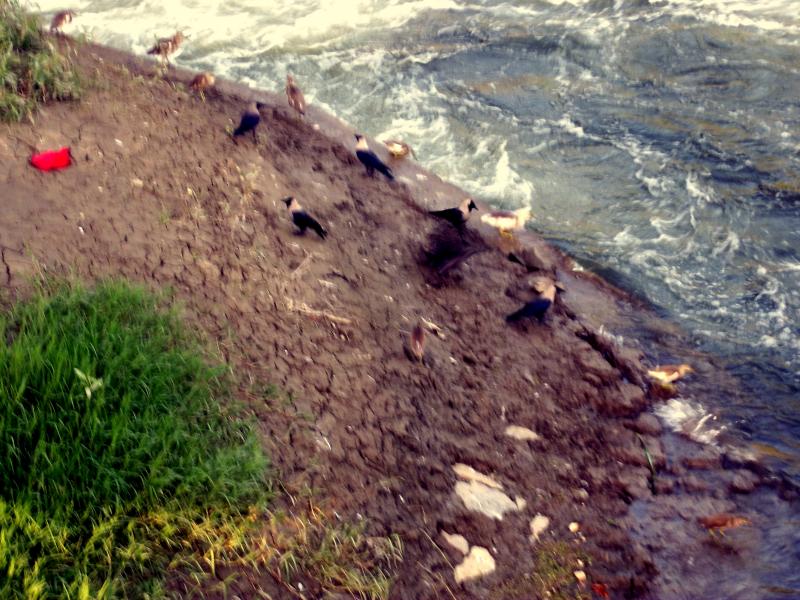
Kashmiri Folktale: Junky and the Dead Crow

In response to my previous post about short diminutive old Kashmiri women, Man Mohan Munshi Ji recalled an old Kashmiri folktale/song told to him as a kid by his grandmother and mother.


The story goes like this: A crow and a Shod [marijuana addict] were friends and they planned a picnic, got some mutton and cooked it in a lej [Kashmiri pot] on the bank of a stream. Shoda asked the crow to keep watch till he returned after having a wash.The crow out of curiosity lifted the lid [anuit] of the lej but unfortunately fell inside the cooking pot with the lid closed on him. When the Shoda returned he thought that the crow has consumed the mutton and run away. But, when he lifted the lid he saw the dead crow floating along with mutton pieces in the gravy. He was grief-stricken at the loss of his friend and as a sign of mourning shaved off his beard. The stream learning the reason for Shoda’s missing beard dried its water. A deer who came to take water dropped one of its antlers in sympathy. A tree under which the deer used to feed also dropped its branch. A calf also used to come to feed under the tree and after hearing the tragic death of the crow, dropped its tail. The cow after hearing the story from the calf, dried her udder. The milkman in sympathy for the crow cut his finger. His wife after hearing the tragic story, started crying and cut her arm. Then, a camel passed by and after hearing the complete story said, “Both Shoda as well as the crow got what they deserved. Rest of you are fools. What did you gain by doing silly things?”


Here are the Kashmiri lyrics and a translation.


Shoda legeji kaw gow


Crow fell in Shoda’s lej


Shodan dar kas


Shoda shaved his beard


Pokri poin chumrov


Stream dried its water


Hanglan haing trov


Deer dropped its horn


Bran Kuil lang trow


Tree dropped its branch


Vatsth harith lot trov


Calf dropped its tail


Gav maji bab gai kain


Cow dried its udder


Gure chat kis


Milkman cut his little finger


Gure Baie chat nar


Milkmaid cut her arm


Wontan dupnak toi chew fatir


Camel said you are all fools


Toi kiaze karew baif kufi


What did you do silly things?


-0-