lyrics, madano pardeh royas tul

From Shameem Azad Collection, 1978

Someone asked for a translation of the song. Here are the lyrics and an attempt at translation (corrections are welcome).

madano pardeh royas tul
be lagay’e dard’hetay gul
t’che mo’laag bewafa bilkul
be lagay’e dard’hetay gul
madano pardeh royas tul


Beloved lift that veil off your face
love ached
I want to offer you a flower
You don’t play
a compete unfaithful
I want to offer you a flower

Beloved lift that veil off your face
walo maya’ne kaal bomburoo
at’chan hind gash ta’ey nooro
sula yamberzal my’oz’tul
be lagay’e dard’hetay gul
t’che mo’laag bewafa bilkul

be lagay’e dard’hetay gul

madano pardeh royas tul


Come my black bumblebee
light of my eyes and my sight
A narcissus I picked, earlier
love-ached
I want to offer you a flower
You don’t play
a compete unfaithful
love-ached
I want to offer you a flower
Beloved lift that veil off your face

walo maya’ne lockcharo ve
zolvin nov bahaaro ve
dama chu maar vyun’chay sul
be lagay’e dard’hetay gul
madano pardeh royas tul

Come my Childhood
swarming new spring
a sip of wine remains
come
there is still some time
love-ached
I want to offer you a flower
Beloved lift that veil off your face

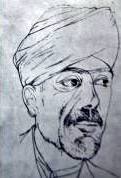
~ Abdul Ahad Azad (1903-1948)
-0-
Although Abdul Ahad Azad is now mostly remembered for his revolutionary songs tinged with socialism, but as the above composition proves, his hold on romanticism rooted in Kashmiri idioms was just as fine. He should also be remembered for his contribution to documenting the oral poetic works of Kashmir. A translation of Kashmiri Zaban Aur Sairi, his three volume history of Kashmiri literature, is long overdue.

-0-

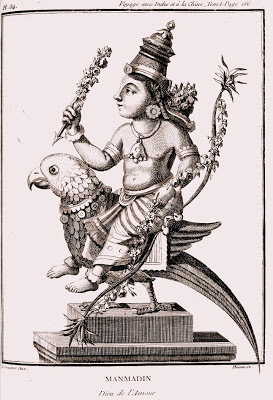
Manmadin/Madan/Madano

-0-
Update 2017

Young Kashmiri Pandits singing in Delhi!

video link

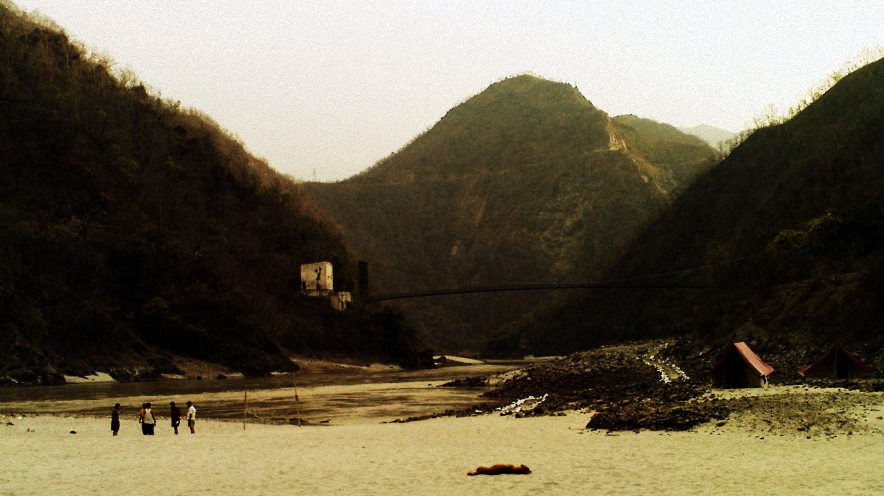
Ganga Yamuna in Kashmir

Ganga Bank, Rishikesh. 2009

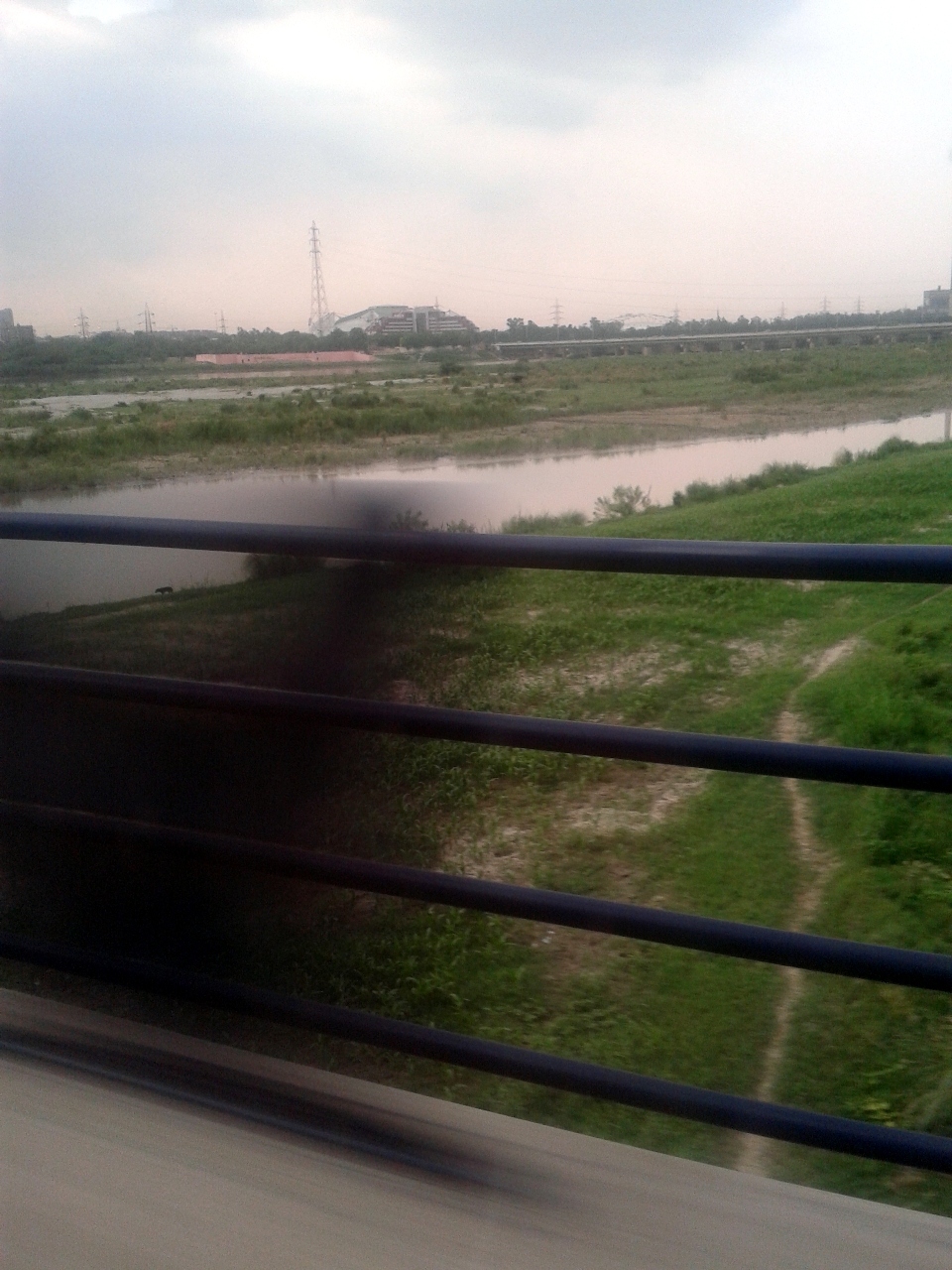
Yamuna Bank. Delhi.2012.


-0-

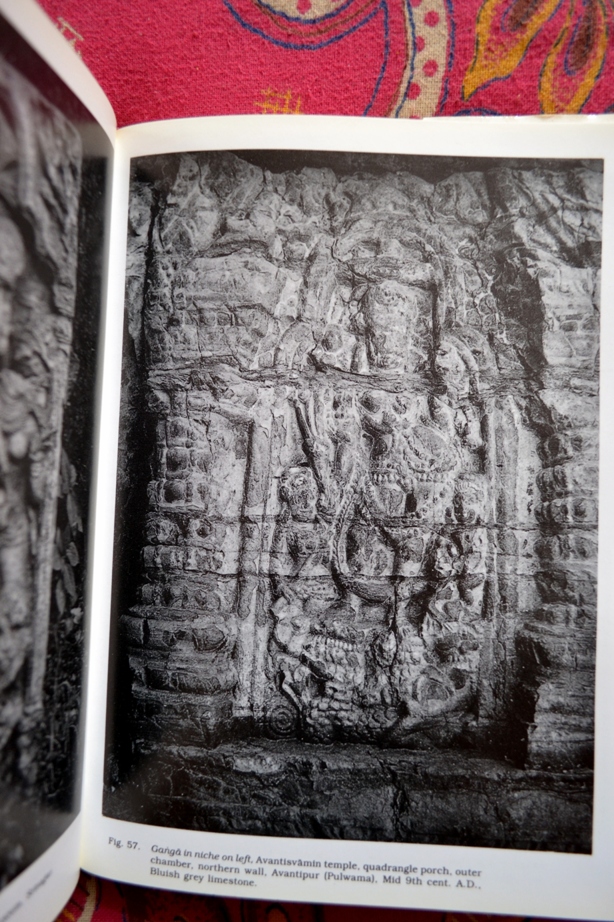
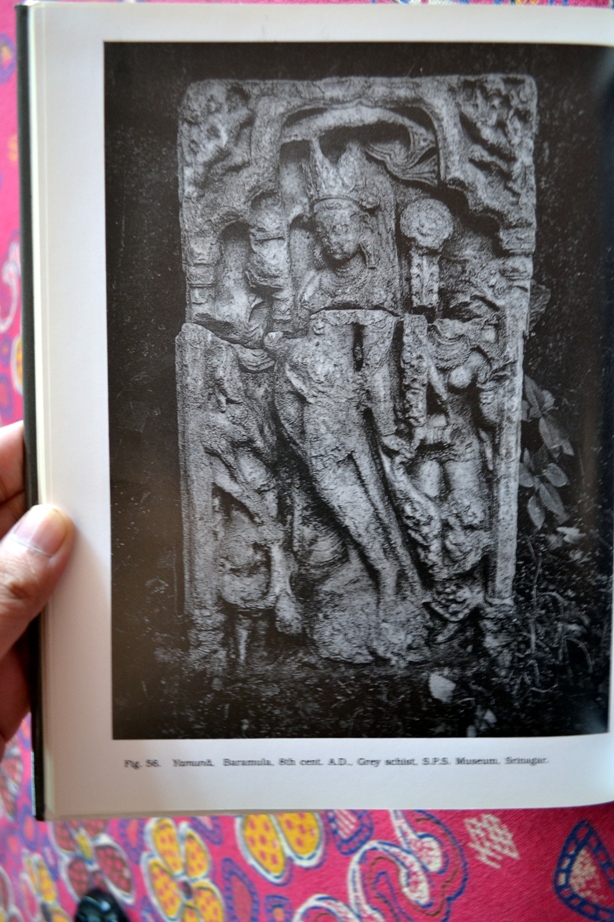
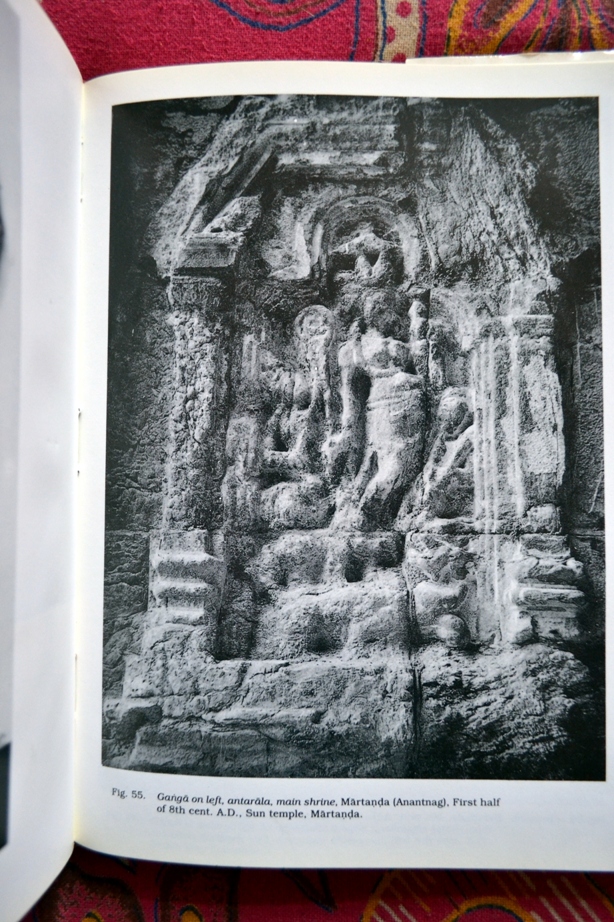
Below some pages from ‘Vaishava Art and Iconography of Kashmir’ (1996) by Bansi Lal Malla

Ganga in niche on left, Avantisvamin temple, quadrangle porch, outer chamber, northern wall, Avantipur (Pulwama), Mid 9th cent. A.D., Bluish grey limestone.

 Yamuna in niche on right, Avantisvamin temple, quadrangle porch, outer chamber, southern wall, Avantipur (Pulwama), Mid 9th cent. A.D., Bluish grey limestone.

 Yamuna, Baramulla, 8th cent. A.D., Grey schist. S.P.S. Museum, Srinagar.

Ganga on left, antarala, main shrine, Martanda (Anantnag). First half of 8th cent. A.D., Sun temple, Martanda.

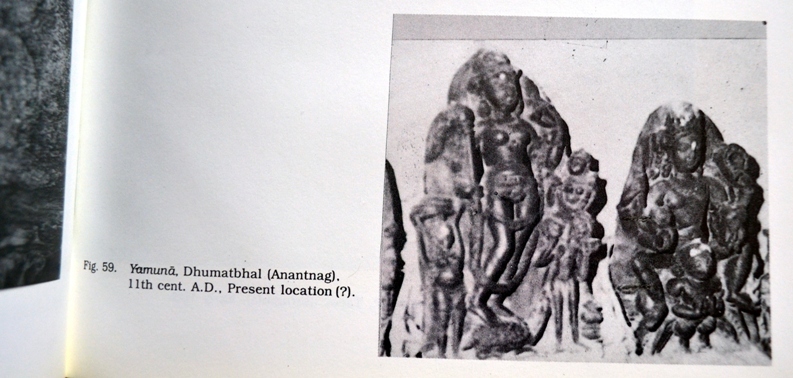
Yamuna, Dhumatbhal (Anantnag). 11th cent. A.D., Present location (?)


-0-

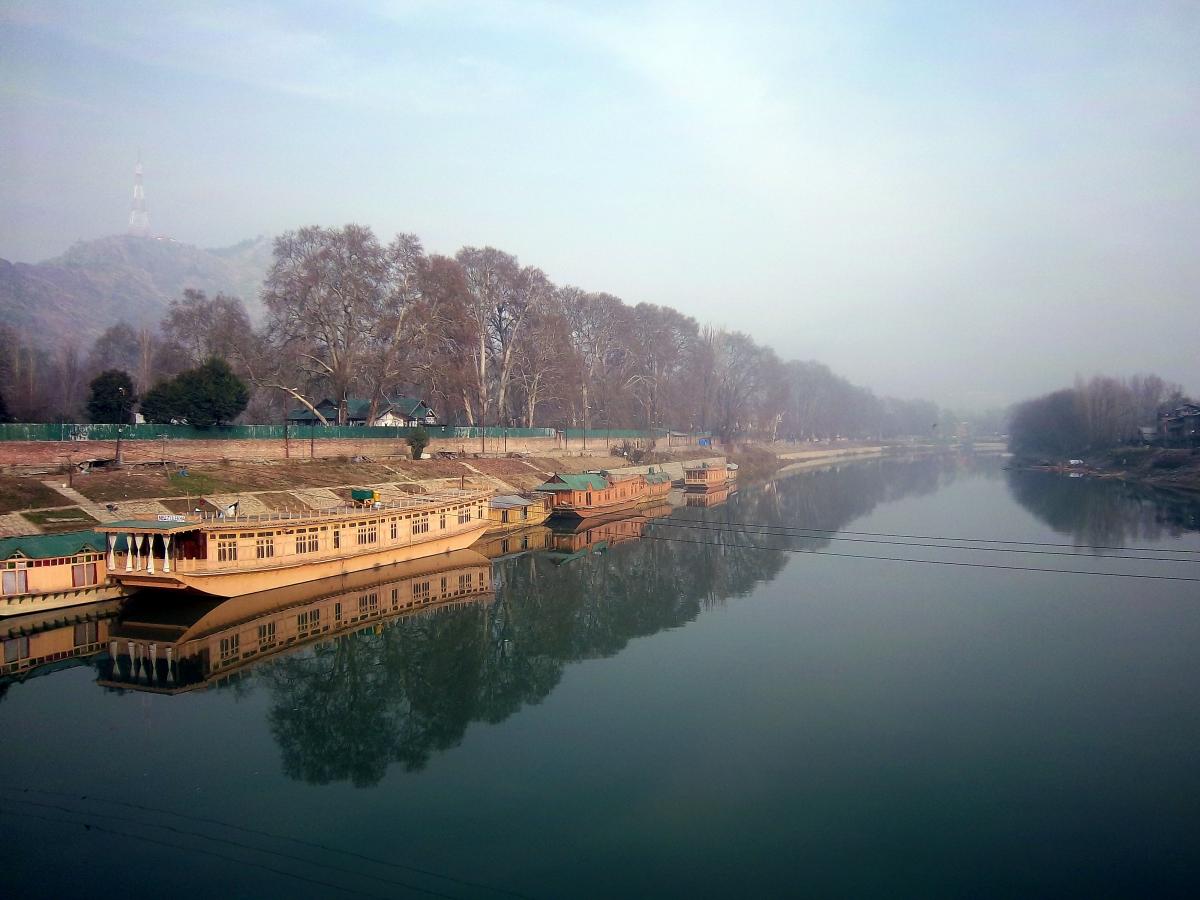
Vitasta at Zero Bridge. 2010.

-0-

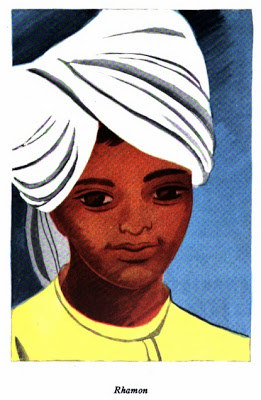
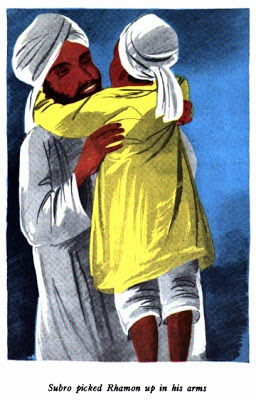
Rhamon a boy of Kashmir, 1939

From ‘Our summer in the vale of Kashmir’ (1915) by Frederick Ward Denys. Below you can see the impact that these images from Kashmir had in shaping the western imagining of this land.

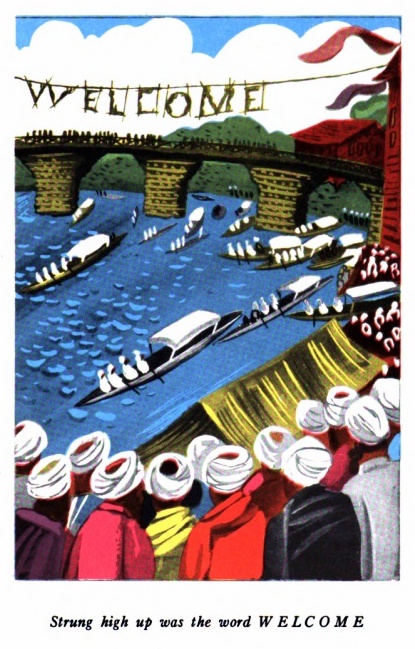
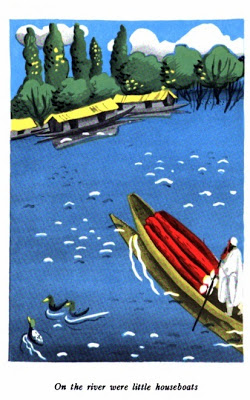
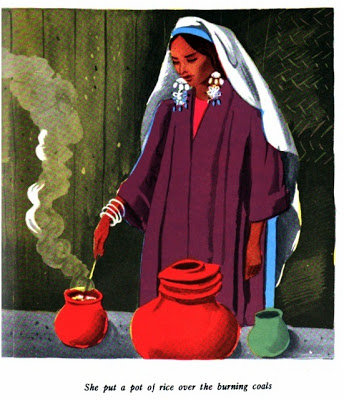
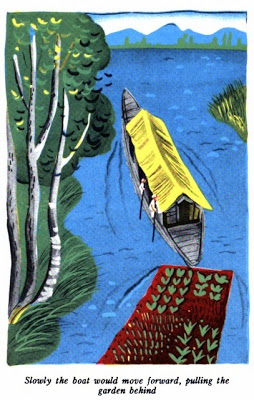
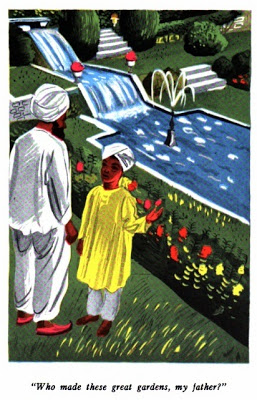
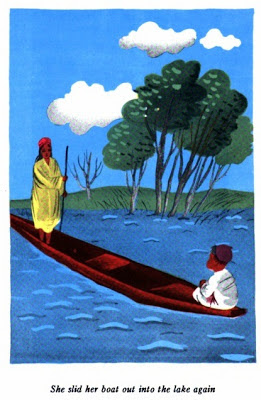
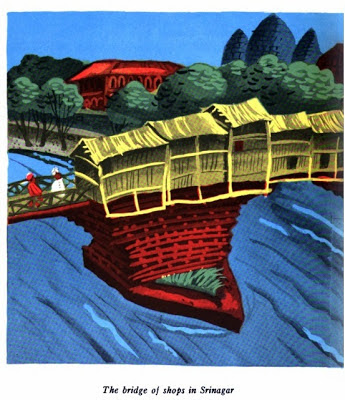
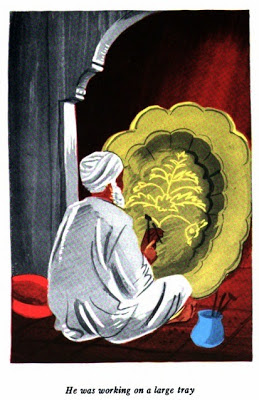
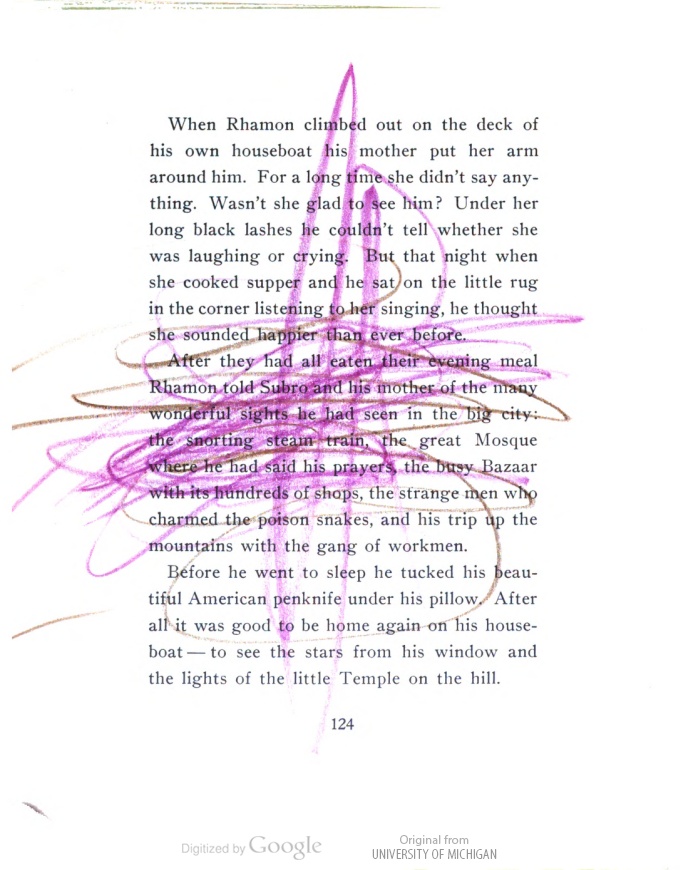
A page from a children’s book set in Kashmir and written around 1939.

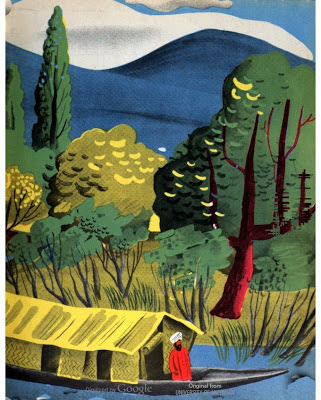
 ‘Rhamon  a boy of Kashmir by Heluiz Washburne,  pictured by Roger Duvoisin‘ (1939).

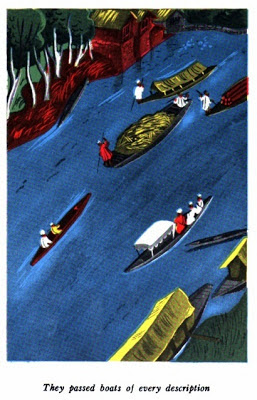
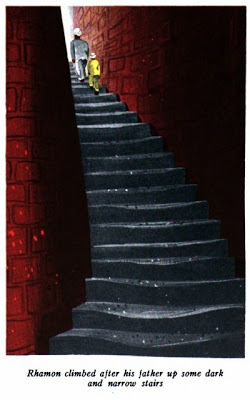
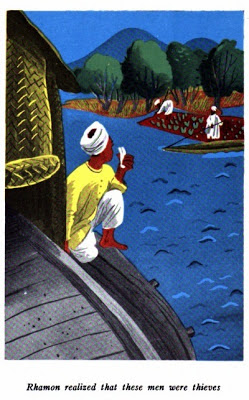
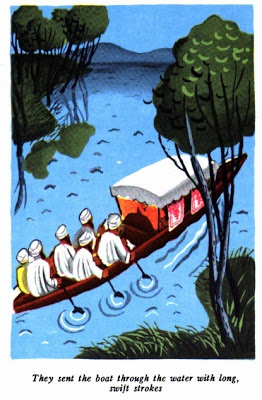
The book tells the story of a little Kashmiri boat boy who is deputed by the King to visit the city on a special mission. There is houseboats, floating gardens, a mela, a trip to the big city alone, adventure, all the ingredients that would trigger the imagination of a young child. Most of the illustrations in the book are based on some old photograph of Kashmir, and in some cases (like the case of stealing of floating gardens) based on an old travelogue.

This is from a time when you could tell children wonderful stories about Kashmir – a far-off exotic land of simple, beautiful people, with a nice king – without you having to worry that they would one day grow-up and probably think that the world is actually a very messy place to be.

Yes, definitely it is a book meant for children

-0-

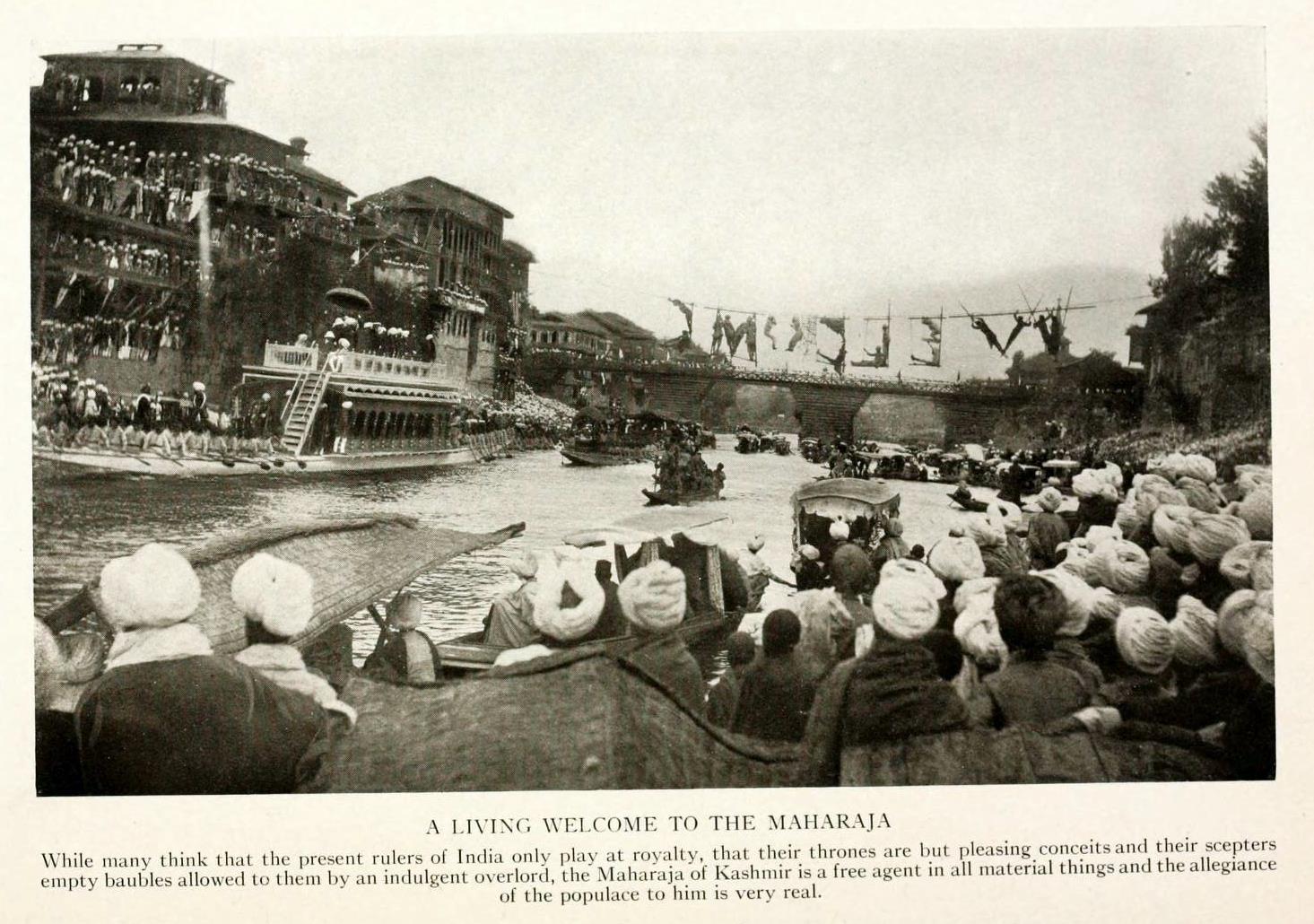
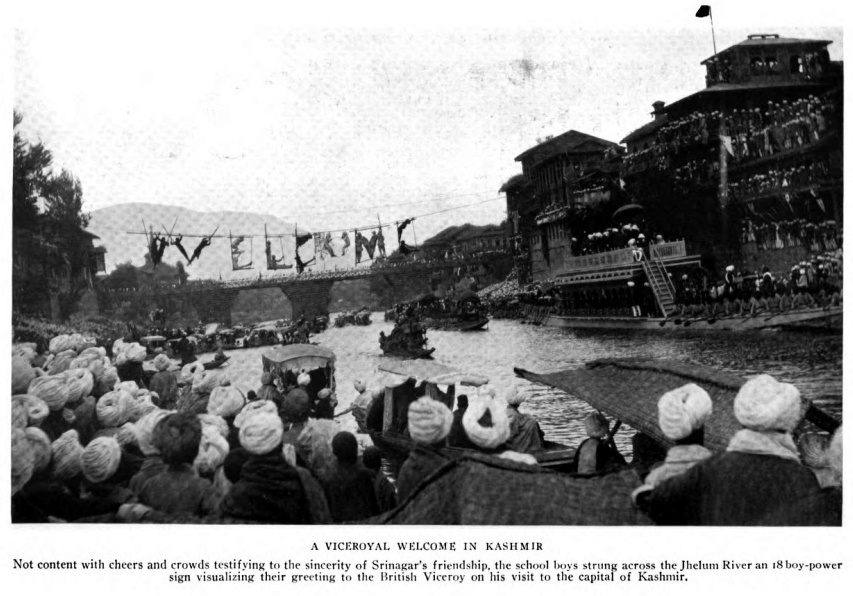
Update: Below is an alternative view of the first image of “Living Human Welcome” published in National Geographic, Vol 40, 1921. We can see here that unlike the first image the word “welcome” is not mirrored, it actually spells right. Also, if one goes by the caption, the event was held to welcome the British viceroy (should be Minto and his wife) into Kashmir and not the Maharaja as claimed in the book ‘Our summer in the vale of Kashmir’ (1915) by Frederick Ward Denys.

-0-

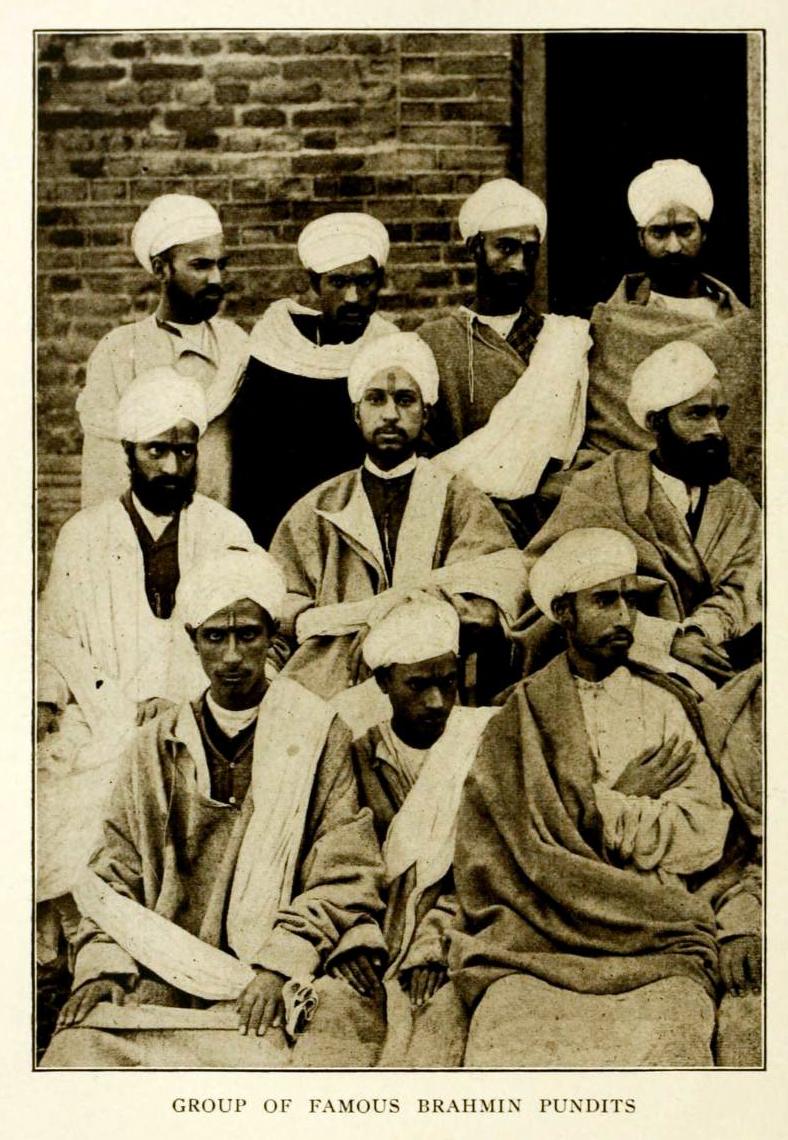
Group of Kashmiri Pandits, 1909

Came across it in ‘Modern India’ by William Eleroy Curtis (1909). Photographer: Unknown. In the book the group is not identified as Kashmiri pandits but the fact is obvious from their dress.

-0-

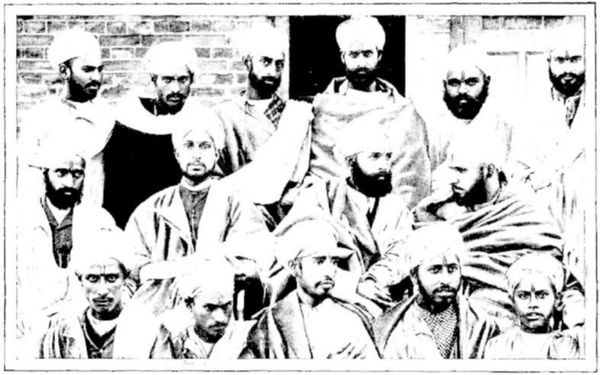
Update: Photographer was Jadu Kissen. Another (bigger) version of the same image. Came across it in ‘Le Tour du Monde; À travers la Perse Orientale Journal des voyages et des voyageurs; 2e Sem.’ (1905) which carried Kashmir travelogue by F. Michel.

-0-

Of Kings, Persian Princes, Kashmiri Damsels and European Art

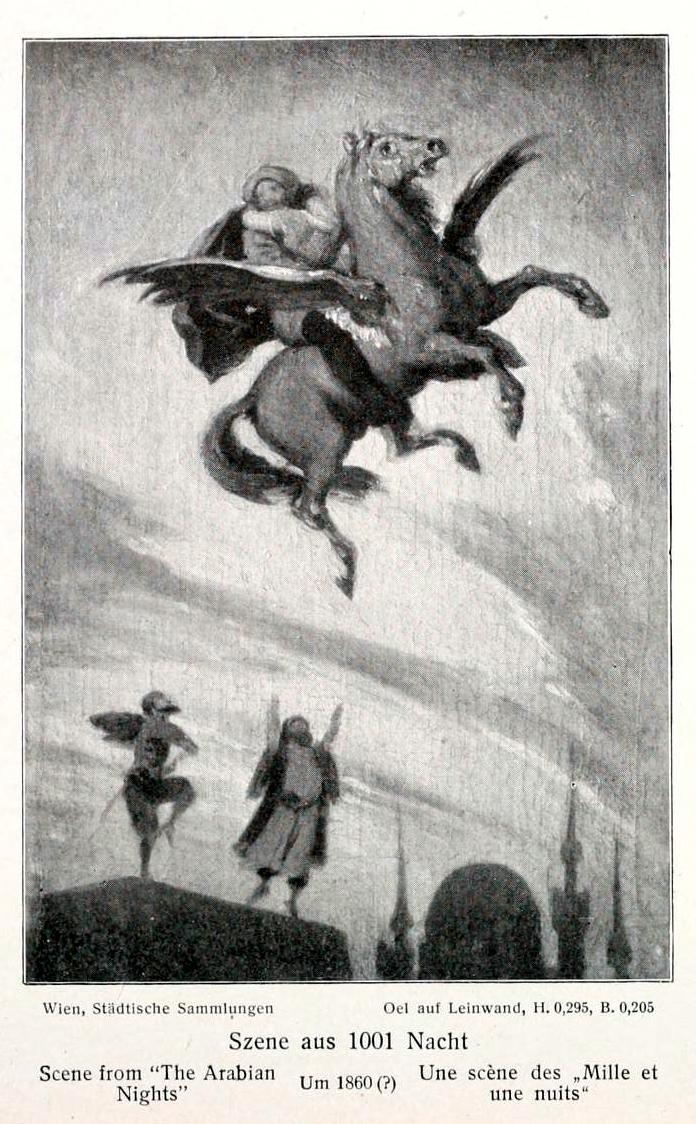
A drawing from 1860s by Austrian artist Moritz von Schwind (1804-1871). Found it in ‘Schwind des Meisters Werke’ (1906) by Otto Albert Weigmann. The drawing is based on the story of “The Magic Horse” that appears in The Arabian Nights/Thousand and one nights. The scene depicts a Prince of Persia rescuing a Princess of Bengal from a King of Kashmir.

The are a couple of variations of the story (as it reached west) but mostly goes something like this: An Indian arrives in Shiraz with a magical mechanical flying horse. The price of Shiraz takes it for a test ride without knowing the landing instruction. He somehow lands in Bengal and brings back a princess with her. The Indian steals the princess and flies away to Kashmir. The king of Kashmir rescues the princess from the Indian by killing him but wants to marry the princess much against her wish. Princess loves prince of Shiraz. Meanwhile, the prince of Shiraz arrives in Kashmir with a plan to take back the princess. His plan works and he flies away on magic horse with the princess.

What is interesting about Schwind’s this particular painting is that in an earlier version of it the reaction of King of Kashmir was muted, he was an amazed spectator. But in the later painting, the one we see here, the Kings and his courtiers are gesticulating in helpless anger. Schwind took the text, in which no mention is made of reaction of King of Kashmir and added a layer of emotion over it.

-0-

Aakho Sherer-e-Sheerazo‘ (You have come from city of Shiraz) remains a popular Kashmiri song at weddings. It’s about women singing about an ideal bridegroom who arrives from Shiraz. Probably not related to the tale but an interesting fact.

-0-

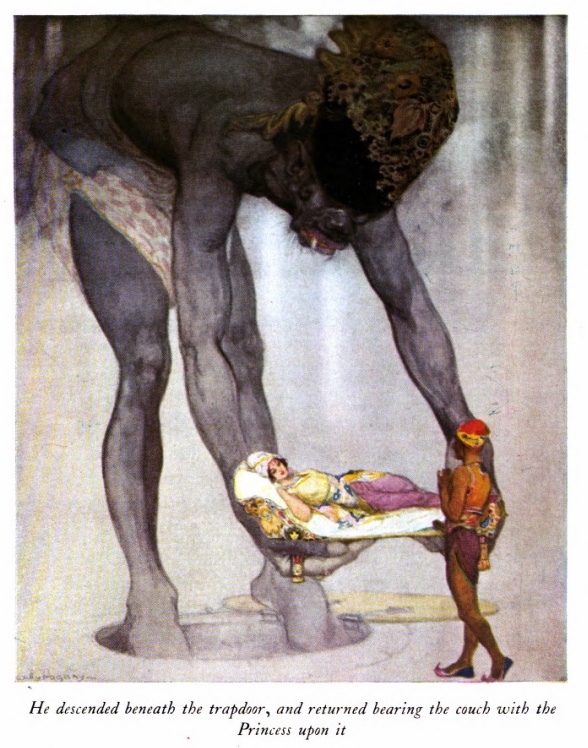
Hemjuneh, Princess of Kashmir, be-spelled and held prisoner behind a trap door.

From ‘Tales of the Persian Genii’ (1917) by Francis Jenkins Olcott. Illustration by Hungarian illustrator Willy Pogany(1882 – 1955).

The story is told by Mahoud, a jeweller of Delhi, who tries to free her from a merchant of Fez who serves an an evil Enchantress, but is turned into a red toad. Her story is something like this:

A King of Kashmir wants to marry her daughter to the prince of Georgia but the girl does not want to get married at all. Then one day an enchantress in the form of an old woman hands her a handkerchief having a sketch of a handsome man. Enchanted, the princess resolves to marry that man. She seeks that old woman’s help and is flown away to Fez only to realized that the Enchantress has brought her there on request of a local merchant who had heard her beauty. She is now stuck in a foreign land with a bunch of evil types. Luckily for her a good genie, a servant of Soloman, arrives who tries to help her. This genie first admonishes the princess for leaving home of her parents on her own will driven by words of some stranger. He then puts a spell on her to protect her. The spell works in a strange way. If the merchant of Fez looks at the princess, she shall fall asleep till the next full moon. She shall sleep behind a trapdoor that the merchant can only find on the night of full moon and can only be opened by a friend of his. It is in this scenario that the jeweller of Delhi opened the trapdoor for the merchant of Fez but then tried to help the princess.

-0-
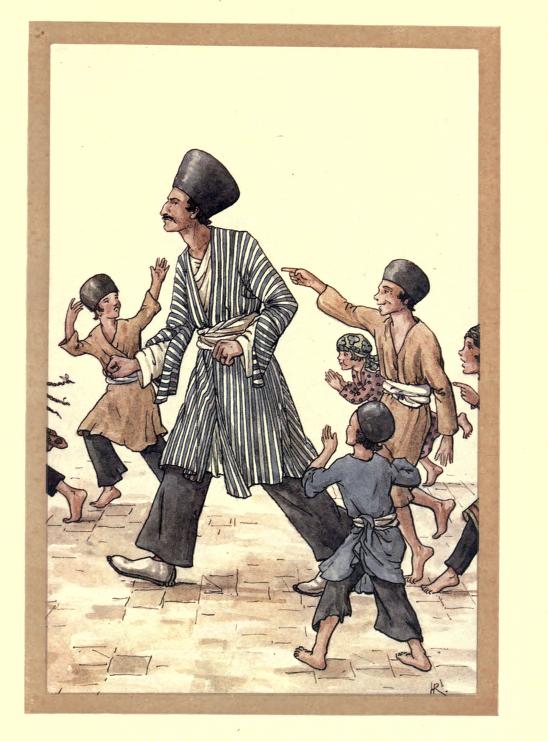
Kids chanting “Samamber has a lover in Iran” in front of  would-be husband of Samamber, daughter of Qazi of Kashmir. Haider Beg of Persia, a silent admirer of Samamber pays them to do it.

Illustration by Hilda Roberts for “Persian tales written down for the first time in the original Kermani and Bakhtiari, and tr. by D. L. R. Lorimer and E. O. Lorimer. (1919). The story is a Bakhtiari tale presented in the book. In this a story a woman from Kashmir goes to a place in Persia to collect herbs once every year. A man sees her and falls in love with her. The woman does’t like it, challenges him, almost kills the guy and goes back to Kashmir where her father arranges her marriage. The man from Persia arrives in Kashmir and tries to win her even as she is about to be married. After some twists, the woman falls for the Persian man and  goes away with him, gets married. Later still in the story, the man asks his wife to leave him and marry his best friend as his best friend has fallen in love with her (a scenario on Hindi cinema was to make countless flicks). She agrees. But at last moment truth is revealed, she is re-married to her original husband and everything turns out fine.

-0-

Princess Farruchnas daughter of Togrul bey, who ruled over Kashmir. Doesn;t want to get married but later falls for Persian prince Farruchshad. From ‘Gulistan: Tales of Ancient Persia’ (1977) by Gotlinde Thylmann Von Keyserlingk, Karl Thylmann. The story is identified by Richard Burton as “Farrukh-Shad, Farrukh-Ruz, and Farrukh-Naz”.

-0-

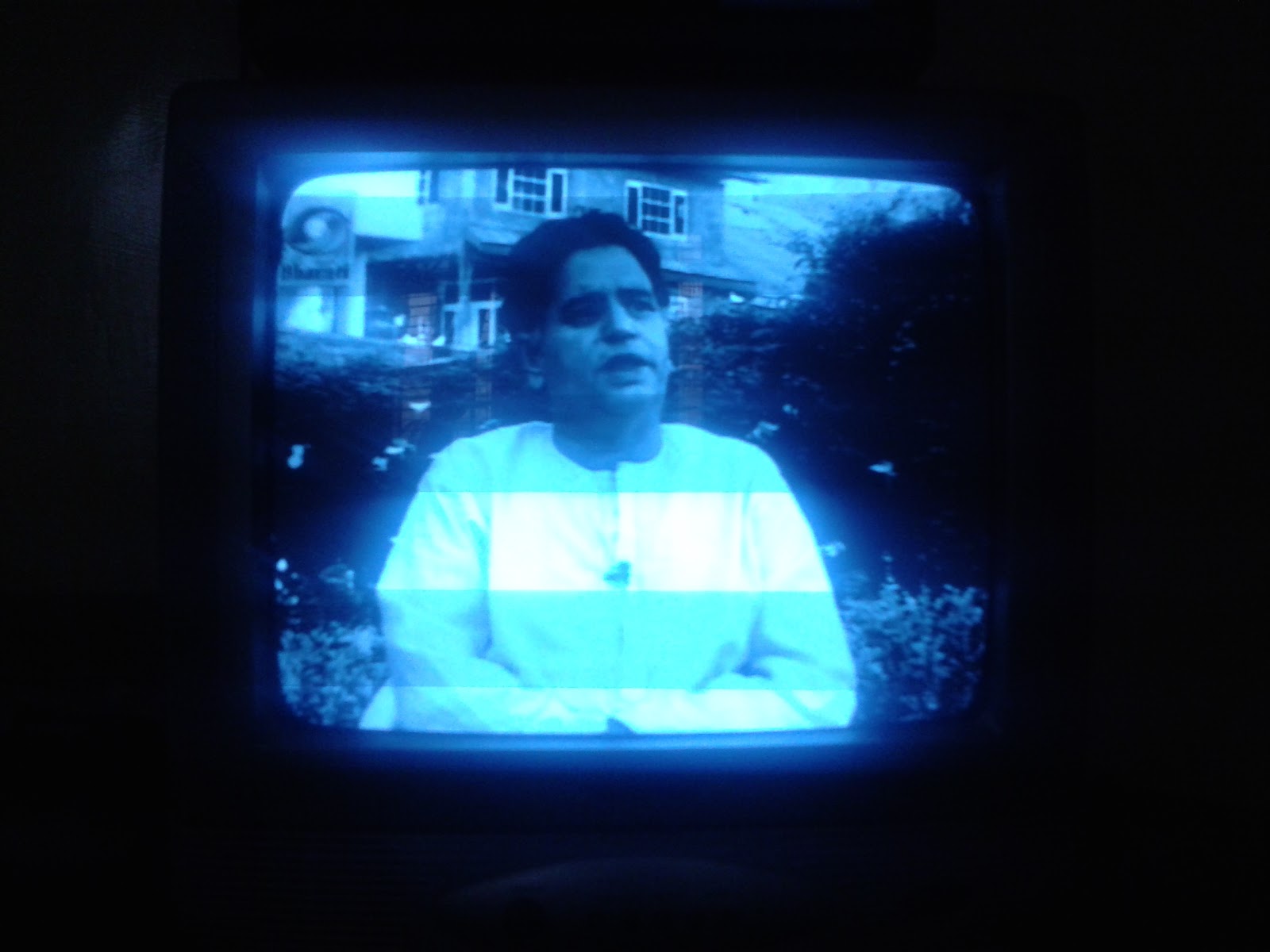
Saqi

Moti Lal Saqi (1936-1999)
a screen grab from an old docu on Kashmir made in 1980s.

-0-
I would go home to my village, 
This city has stolen my rest…
My head on a stone in the willow-grove,
I’d sleep and sleep till end of day.
The shade of chinar in these mine eyes,
I’d drain the spring and cool myself …
~ Saqi writing in Jammu.
Tr. by Neerja Mattoo
-0-

Kashmiris by Bourne & Shepherd, 1908

Photo by Bourne & Shepherd. Samuel Bourne, a prolific British photographer who first visited Kashmir in 1864. The photograph is probably from around that time.

From ‘The world’s peoples; a popular account of their bodily & mental characters, beliefs, traditions, political and social institutions’ by A.H. Keane (1908).
-0-

Maps, 1891

From ‘The Earth and Its Inhabitants, Asia, Volume 3’ (1891) by Elisée Reclus. [The universal geography : earth and its inhabitants ([1876-94]) V8]

Map of Srinagar. Names of some of the place are hard to identify with present Srinagar. Suggestion and corrections are welcome.[Update: some input from Yaseen Tuman on Facebook page of the blog:
road from Saidakadal bridge to Ashaibagh is no where
Amdakadal is exactly where Sadrebal is today
Sodarbal has to be corrected with Naushahar
]

Map of Jammu

Some other

Zoji La Pass [Based on a photograph by Samuel Bourne, 1864]

Srinagar Bridge

Map of Kashmir

-0-