Disjoint Images and Text

While we are still on subject of how images impact us. A related post of another impact of images, previously posted to my other blog. 

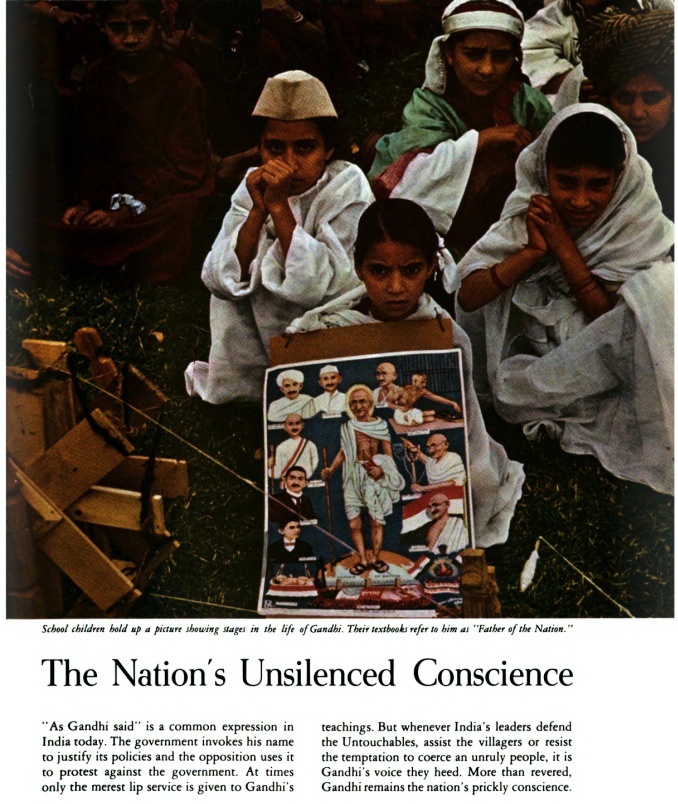
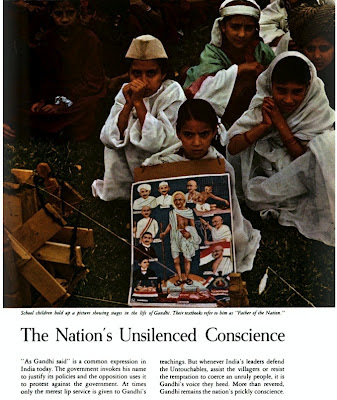
Stages in Life of a Gandhi Photograph

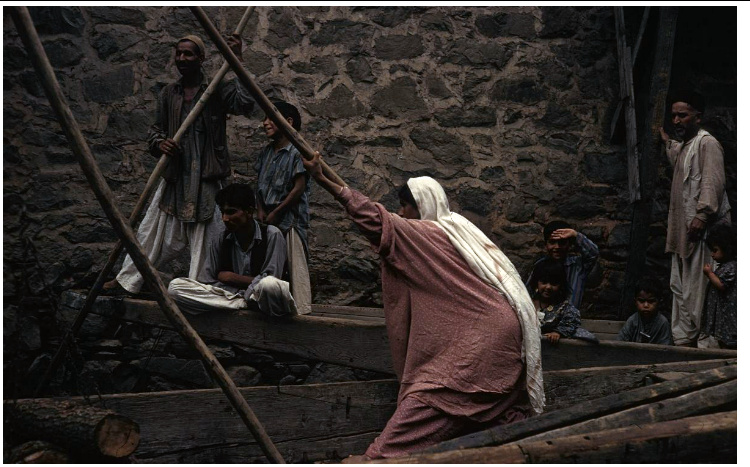
Photograph by great Brian Brake published in ‘India, by Joe David Brown and the editors of Life’, 1961 [complete book available at Hathi] as a visual aid to the text that deals with relevance of Gandhi in India, The Nation’s Unsilenced Conscience. It would have you believe Gandhi was alive, in heart and spirit of Indians.

As I looked at this beautiful picture, something about it made me realize that this can be a case study about  disjointedness of images, context and text. About giant sweeps of history. Of loss of footnotes. Of lost in footnotes. Of seduction by images. About loss.

One may ask why. After all it does look like a perfect picture for an article on Gandhi. Children = innocence = unsilenced Conscience. Children in love with Gandhi = The Nations’s un-silenced conscience. Simple and brilliant.

The problem is with the details. The book only tells you that it is by Brian Brake and appears courtesy of Magnum. Place where is was taken in not mentioned. No year is given. Online, the only other place where you will find this image (besides the online version of the book) is an Arabic page dedicated with love to Gandhi, his life and work. This, as often happens, after I post stuff at this blog, will not be the case for long. It will probably end up on Gandhi Love or Gandhi Hate pages on Facebook, adding a new cycle to the life of this image. And will probably be again lost in indifference of text and context.

So what is it that I know about this photograph that makes this entire setup ironic. What is it about this setup that makes me often doubt everything I read and see. Why do I want to try and rescue it from the narrative in which it is wrapped?

The little girl in green at the back is attired as an elderly traditional Kashmiri Pandit woman.

The photograph was shot in 1957 during a ‘national’ day, an Indian one, with cultural parade and all, organised under Prime Minsiter of Kashmir, Bakhshi Ghulam Mohammed in Srinagar. He was the man who replaced imprisoned Sheikh Abdullah.

Another photograph from the event shot by Brian brake.
Via: Museum of New Zealand
Although I couldn’t find the Gandhi photograph there, but the conclusion
that both very shot as the same event is quite easy to make based on the dress that children are wearing in the background.

“The close alignment of the Conference with the politics of the Congress was particularly distasteful to Bazaz. Bazaz had been moving away from Gandhian and eventually Congress politics throughout the 1930s. He had been taken aback by Gandhi’s dismissive reply to his letter asking for advice on the path Kashmiri Pandits should follow in the political movement in Kashmir: “Seeing that Kashmir is predominantly Mussalman it is bound one day to become a Mussalman State. A Hindu prince can therefore only rule by non ruling i.e., by allowing the Mussalmans to do as they like and by abdicating when they are manifestly going wrong.””

Lines about strange case of Prem Nath Bazaz From ‘Languages of Belonging: Islam, Regional Identity, and the Making of Kashmir’ by Chitralekha Zutshi. Prem Nath Bazaz was later exiled from Kashmir (after differences with Sheikh Abdullah) to Delhi and spent his later life advocating Kashmir’s merger with Pakistan, returning only in 1970s after Shiekh-Indira accord to help Janta Party and attempting to create a democratic opposition to Shiekh.

Looking now at the grand narratives of the national myths of India, Pakistan and Kashmir, and looking at the realities as they often dwell on hard ground. where these myths crumble into incoherent bits and pieces, one does tend to agree, history is a nightmare. And that there is no waking up from it. For it is a nightmare within a nightmare. It is narratives ingesting narratives, facts ingesting fiction, fiction vomiting facts. An on top of it, it is always a book with a beautiful cover.

-0-
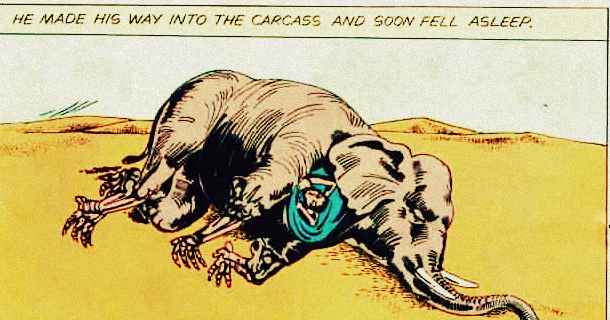
A panel from an old Indian comic based on story of Rupinika, from Somadeva’s Katha Sarit Sagara (The Ocean of Streams of Story)

 
-0-

A Beautiful Chain of Borrowed Beautiful Images

Last year, I came across an interesting photograph in a book published in 1961 called ‘India, by Joe David Brown and the editors of Life’ that intrigued me. It was accompanying an essay on India and relation of its people to the Gandhian thoughts. That confused me all the more. Although the book didn’t offer any clues about the place where it was taken. But I saw something familiar in it. Something that made the photograph out of place. Even ironic. The quest to confirm its place of origin led me to some wonderful discoveries. The first clue: It was taken by famous photographer Brian Brake, best known in India for ‘The Monsoon Girl’.

The little girl at the back in green dress with white headgear in this photographs told me that she is portraying in Kashmiri Pandit woman. That told me that there was a good chance that it was shot in Kashmir. Told me that the great photographer must have been to Kashmir. What beauty he must have captured!

A quick search lead me to site Museum of New Zealand where most of Brian Brake’s awesome 22 years of work is showcased. Here I found his extensive work on Kashmir done in late 1950s and early 1960s.

I have been going over and over these photographs for months now. And every time I look, the beauty of them drowns me in a weird feeling that the Kashmir we see now is just like navel lint. It’s just something.

But, I don’t want to write about. I have not time for ugliness. Too much of that abound.  Instead I am going to write about beauty, about the photographs, the photographer who took them, a legendary photographer who inspired some of them and a living photography genius who was probably inspired by it.   And about beautiful things that are now gone, only remaining in these photographs.

The story starts in 1957 with Henri Cartier-Bresson suggesting Kashmir as a subject to young Brian Brake. Among the photographs he shot in Kashmir we see some shot which as an obvious tribute to his mentor Bresson. Also, it is here that we see Brake try out his technique of ‘Set-up’ to get the perfect shot. The technique that mimics the unparalleled moment capturing abilities of Bresson by deliberately putting the subjects in a staged, controlled environment and setting the camera to get the right moment. It was this technique that much later gave us beauty of ‘The Monsoon Girl’ when he shot Aparna Das Gupta (later Aparna Sen) in fake rain in 1960. But there is a certain rawness to the ‘set-ups’ he shot in Kashmir, or possibly the viewer now gets that feeling because he can see all these photographs together, a viewer can almost see the various stages of a ‘set-up’. Back then, when a single photograph was published in magazine, a viewer could only see the final best product and form an opinion about the moment and beauty of it based on that. Some people done appreciate this ‘set-up’ approach to photography. But in the end, I guess it doesn’t actually matter much.

“A photograph is only a fragment, and with the passage of time its moorings come unstuck. It drifts away into a soft abstract pastness, open to any kind of reading.” – Susan Sontag, On Photography.

What is interesting is that in some photographs Brian Brake can be seen directly trying to recreate some images that were shot by Henri Cartier-Bresson a decade ago in Kashmir in 1947. That he was able to do it tells us about the pace of life back then in Kashmir.

Look at these:

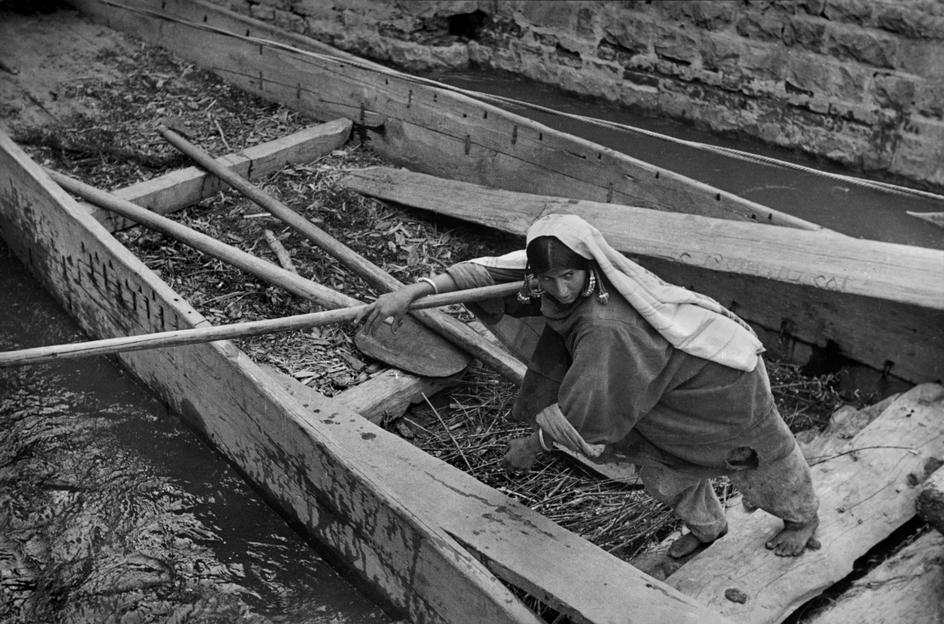
Kashmiri boatwoman by Henri Cartier-Bresson, 1947. via: Magnumphotos.com

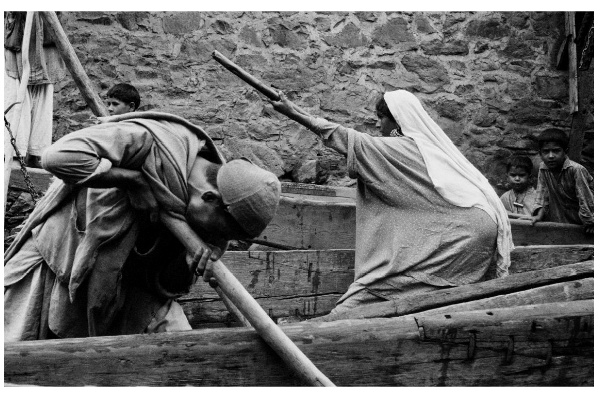
And now look at this:

Kashmiri boat people by Brian Brake, 1957. The two photographs could have been from the same set and by the same photographer. Even the woman in two look the same. And even the place looks the same. It is almost like he sought out the same place where Bresson had been and in this was possible helped by Bresson.

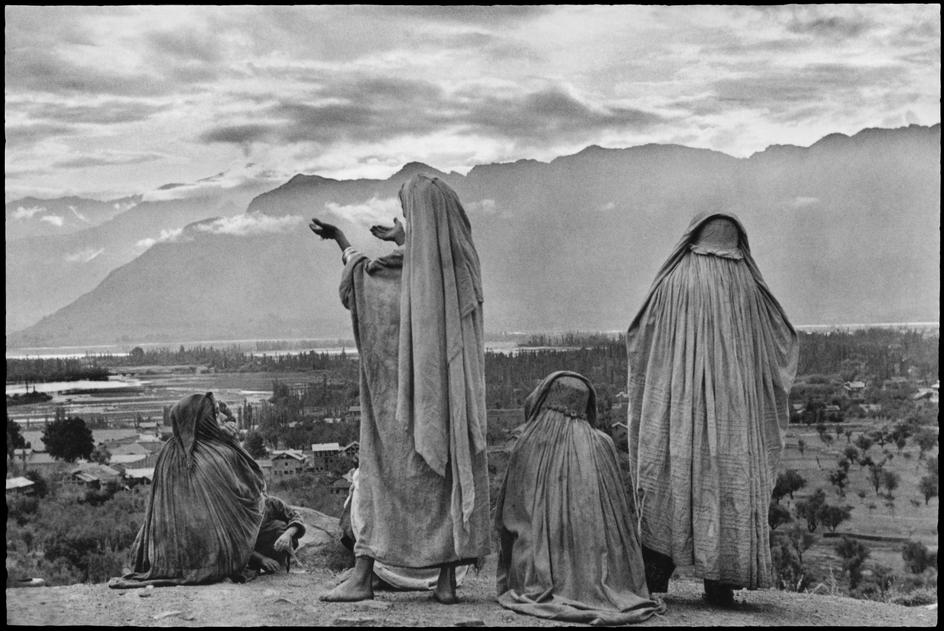
Brian Brake even tried to recreate one of the most famous shot by Bresson.

Kashmiri women praying on Hari Parbat near Ziarat of Makhdoom Sahib. By Henri Cartier-Bresson, 1947. via: Magnumphotos.com

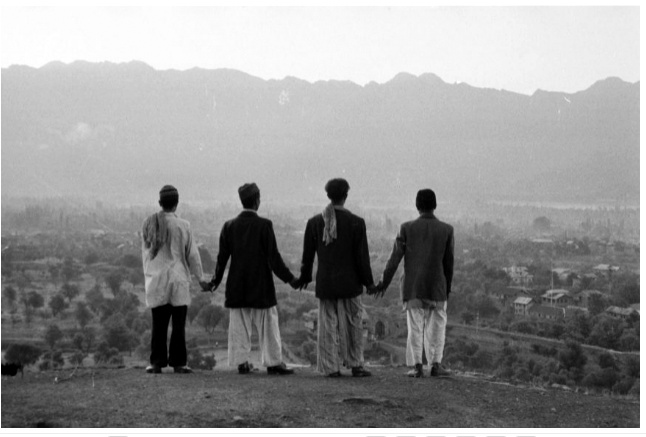
Now see Brian Brake’s one of the interesting obvious ‘set-up’ re-creation. (He actually did more than one version of it):

Kashmiri men on a Hill, Brian Brake, 1957.

B&W photographs, because of their obvious lack of more color, have this strange power of transporting their subjects to a realm where the viewer instantly knows he is probably looking into past. But that past for the viewer overtime becomes monotoned. The viewers stops thinking that the scene he is looking at was once alive, and actually had color. That it had life. That an apple back then too was red.It is colors that cast a more powerful spell over the viewer. The viewer instantly realizes that the past was once alive too and that the past and present have something in common, a shared color spectrum. The same sun. The same colors. And yet somehow, or rather due to the expertise of the photographer, those past colors look more appealing. See see colors you thought never existed.

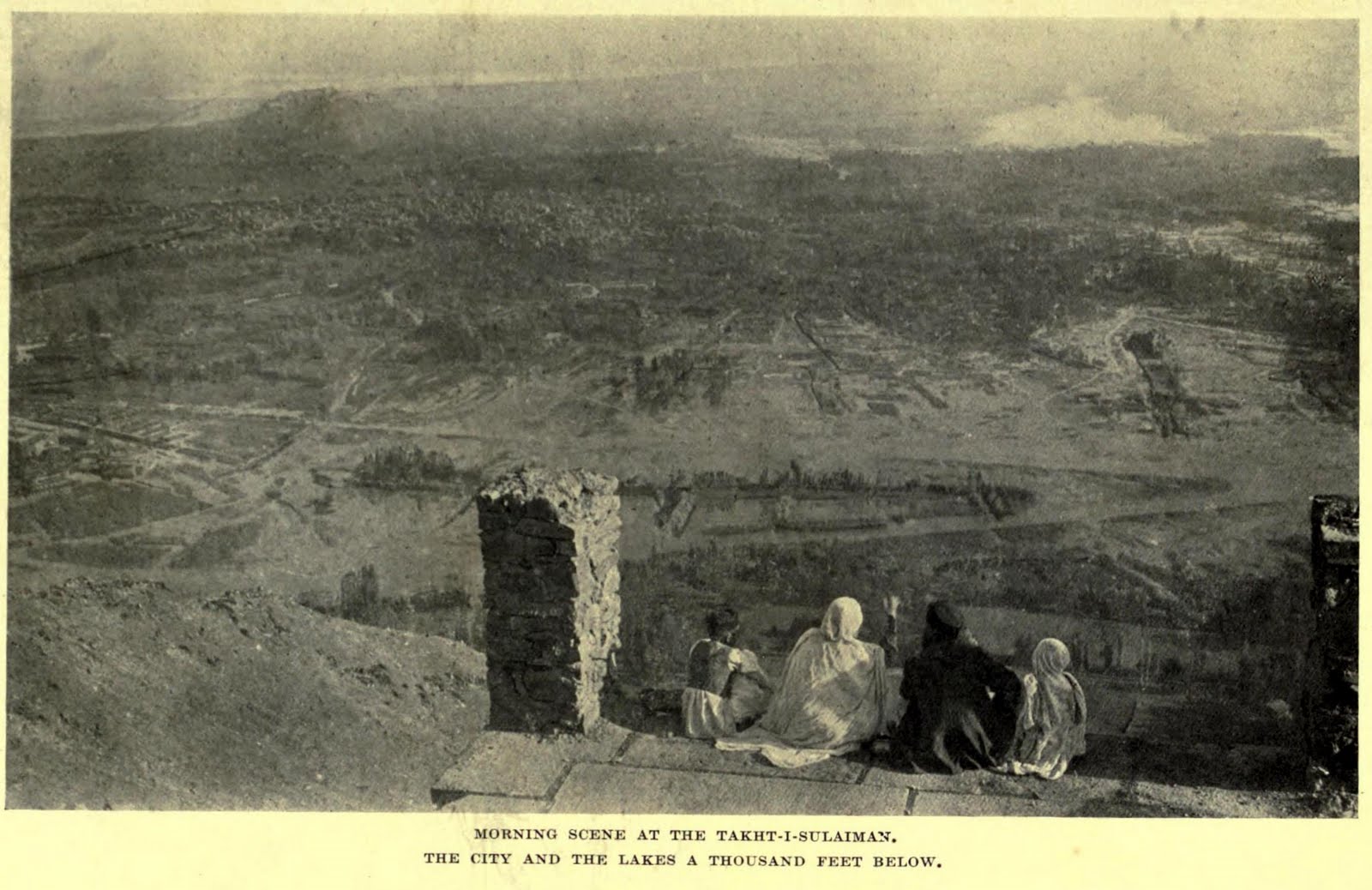
Update: Now, also see an image predating both these images:

From the book ‘The Charm of Kashmir’ (1920) by V.C. Scott O’connor. Photographer: probably R.E. Shorter.

Look at ‘boatwoman’ in color  by Brian Brake. It’s almost like both Bresson and Brake were at the same spot looking at the same woman.

Color photography was taking off arrive in a big way back then. Quite a few people were starting to experiment with it. And the colors of Kashmir were proving to be one of the palette. Something about its summer sun made Kashmir just perfect for color photography. The charm of Kashmir was again at work and now people could see it in all its colors.

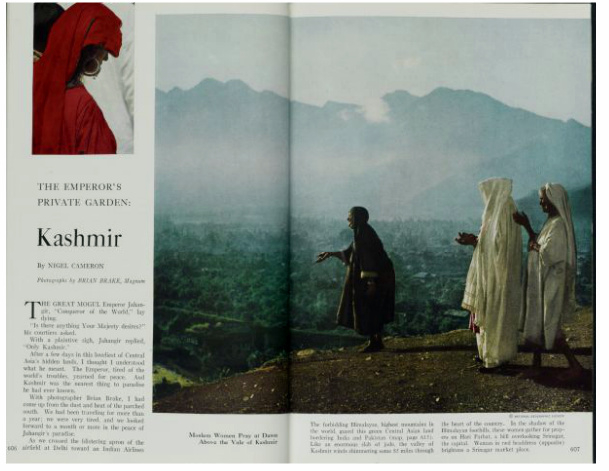
Brian Brake’s work in National Geographic vol.144 no.5, November 1958. Notice that Bresson re-enactment.

Brian Brake’s color work in Kashmir was going to inspire another great photographer. Steve McCurry acknowledges Brake as one of the photographers who’s work inspired him a lot as a kid. He was eleven when ‘Monsoon Girl’ was published. Much later he went on to chase that feeling.

Sometimes images just provide a name or a setting of a subject.

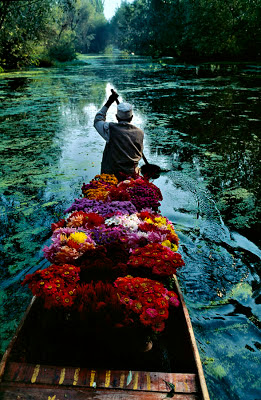
Let’s take a look at one of the most famous Kashmir photograph by McCurry:

Flower seller, Srinagar, Dal Lake, 1996.

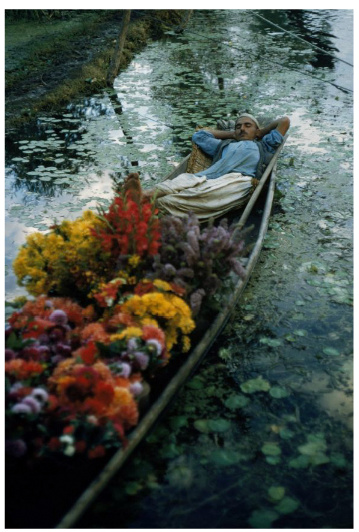
Now let’s one of the earliest color images of Kashmiri flower sellers. Shot in 1957 by Brian Brake.

Now look at this photograph by McCurry.

And then this beauty captured by Brian Brake in 1957.

And that’s how images live on. And so do memories.

-0-
Some other photographers inspired by  Henri Cartier-Bresson

Vogue fashion shoot in 1969.
Photographer was David Bailey. Who at the age of 16 was inspired by Carier-Bresson’s famous photograph of Kashmir

-0-
Kashmir, 1955. By Sam Tata,  a Parsi photographer mentored by Cartier in late 1940s.

-0-

Next, I am going to post some of my favorite works of Brian Brake in Kashmir.

-0-

Listing of posts based on Brain Brake collection:

passings

Winters are not easy on elderly. Bhabhi, one of my grand aunts, passed away recently. Last month, thanks to a chance visit to Jammu, I met her for the last time. It was obvious she was in much pain. Cancer isn’t easy on body. And extreme diabetes, blood pressure, don’t  make it any easier either. You live on a diet of medicines, drips and biscuits. You live on warmth of relations. That helps till a point. Till it all again comes down to a diet of medicines, drips and biscuits.

There is no ‘touch-feet-of-elders’ among Kashmiris. We hug and kiss. As I hugged her that day, even in pain, she kissed me and repeated our old joke. In my ears she said, ‘I stole you from your room while your were sleeping. Remember!’

I remember.

I once passed into sleep. When I woke up, I realized I hadn’t woken up in my room, the naya Kamra, the new room. I hadn’t woken up to the familiar sight of a Philips B&W TV, instead a smiling curly haired Baba in Saffron robes was showing me white of  his one palm from a photograph sitting cozy inside a cabinet of an almirah. But this too was a familiar sight.  I was looking at the Gods Cabinet of Bhabhi.  She was sitting in front of it, praying, lighting agarbattis, diyas, arranging and re-arranging marigold and rose petals around more than a dozen photo-frames of various gods. A silvery bracelet studded with beautiful blue and green stones jingling on her left wrist. ‘It is for pressure,’ she would always say when I would often quiz her about that strange piece of jewellery. A few years later, her son, my uncle, also got one. ‘It is for pressure,’ he says. As I looked at that bracelet, I knew I had woken up in Bhabhi’s room which was right across our naya Kamra. 

Still in a daze, I crawled my way to her and asked ‘How did I get here? Did I sleep here last night?’ She looked away from her gods and staring at my face, reading the confusion which must have been well writ on it, she replied with a straight face, ‘No. I stole you from your room while your were sleeping. At night, after you went to sleep in your room, I sneaked in and quietly picked you up and brought you here.’

‘Is that possible? If that is possible, any body can walk in and steal me at night. Am I safe? How could they let this happen!’ These troubling thoughts crept into mind. I got up with a start and ran out of the room to find my grandmother and ask her if it is true and if yes how could she let this happen. As I ran out of that room, and out of the door, the sullen darkness of a Kashmiri living room suddenly gave way to the brightness of the  glorious Kashmiri summer sun. In an instant my mind cleared. I understood the joke. I went back into her room and screamed at her ‘You are quite a thief Bhabhi!’ We laughed for sometime. Then she went back to her pooja as I sat next to her, watching in silence.

-0-

Summer 2008.

The spot where once stood Bhabhi’s room. It is now a garden lawn or a saw mill. Just across it, my naya Kamra, my sleeping roomalthough now looking worn out, with the smoothness of its outer walls all gone. It is the only old structure that survived.

-0-

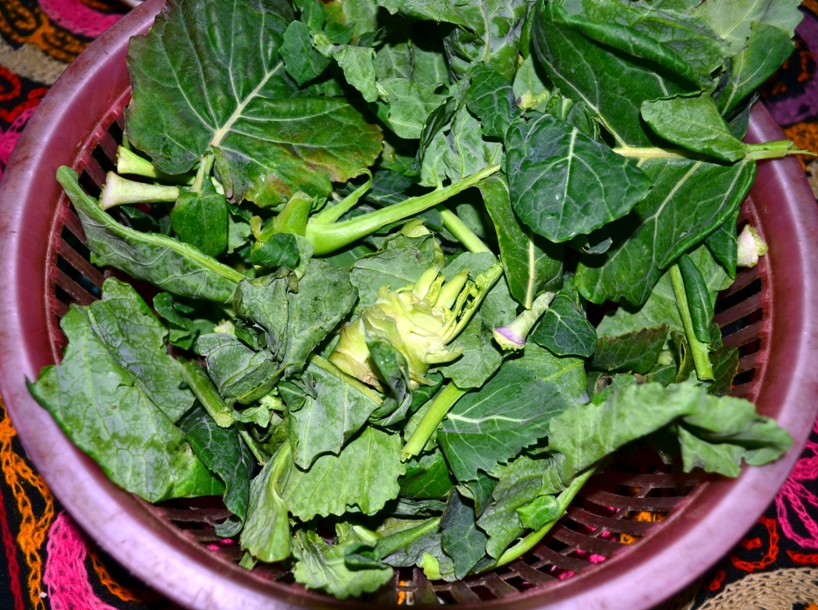
Tol’e Hakh

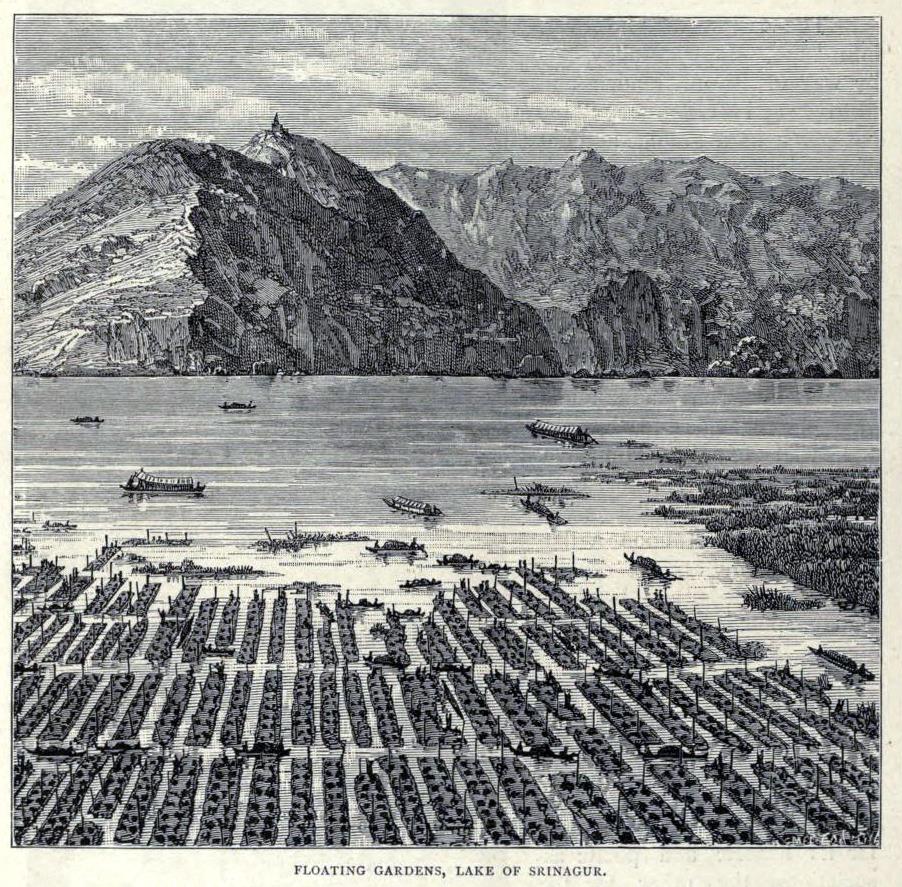
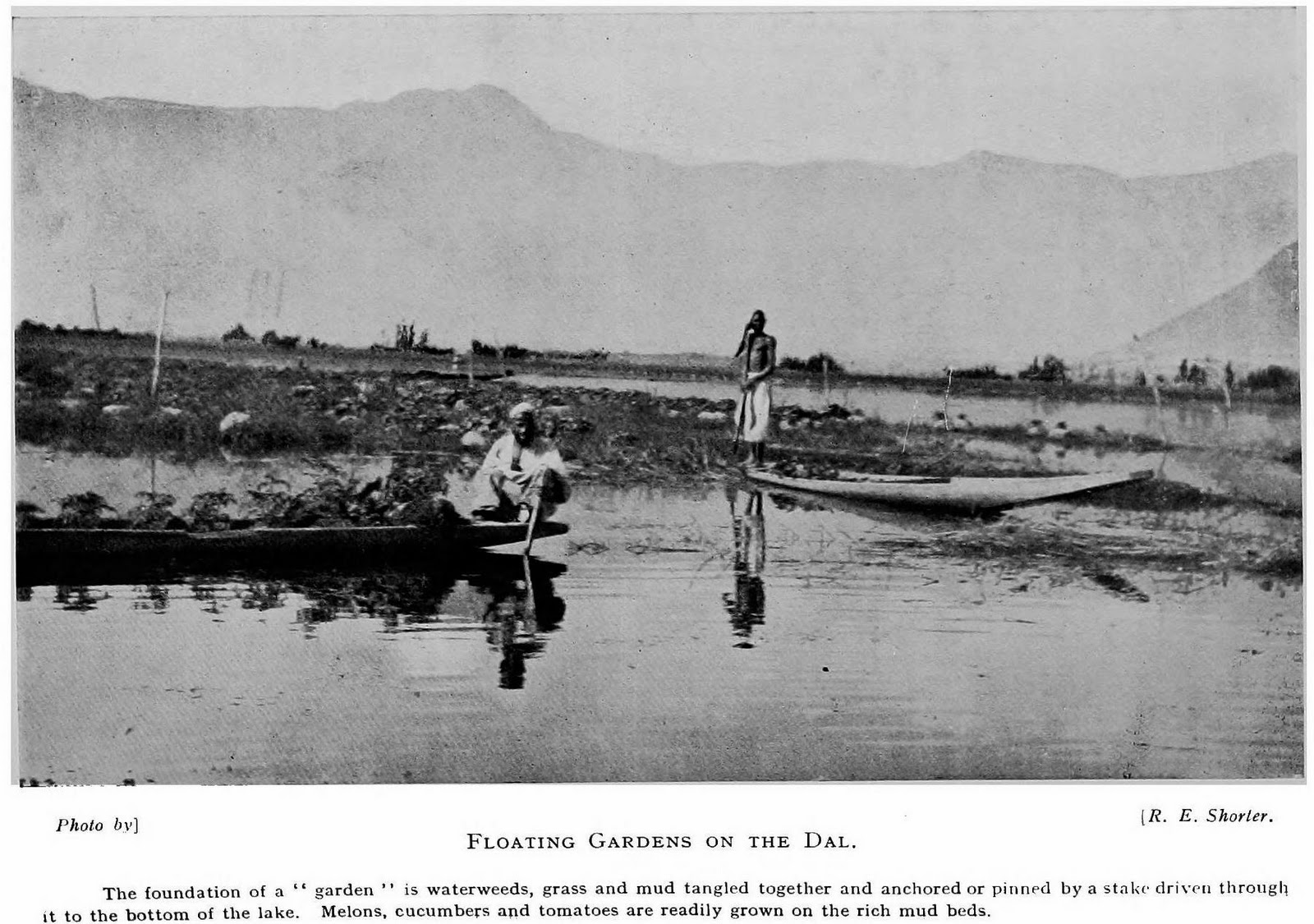
Tol’e Hakh is a particular variety of Hakh that is grown in floating gardens of Dal Lake. It is supposed to be a delicacy. My grandmother compared it to having sheep liver.

One among many things that Pandits living in Jammu bring back with them from trips to Srinagar and distribute among friends and relatives.

From ‘Indian pictures, drawn with pen and pencil’ (1881) by William Urwick (1826-1905)
From ‘Kashmir in Sunlight & Shade: a Description of the Beauties of the Country, the Life, Habits and Humour of its Inhabitants, and an Account of the Gradual but Steady Rebuilding of a Once Down-trodden People’ by Cecil Earle Tyndale-Biscoe (1922)

-0-

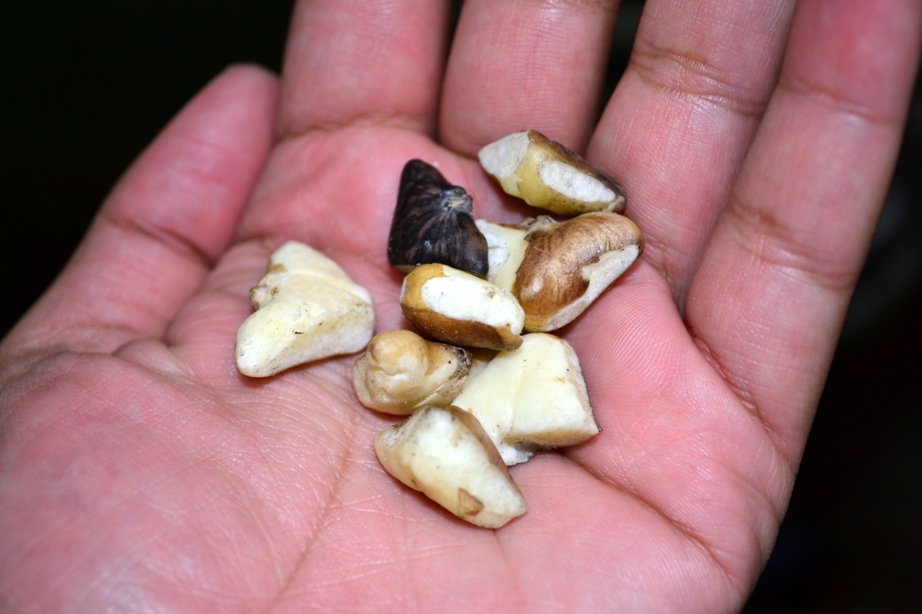
Mess in Kangri


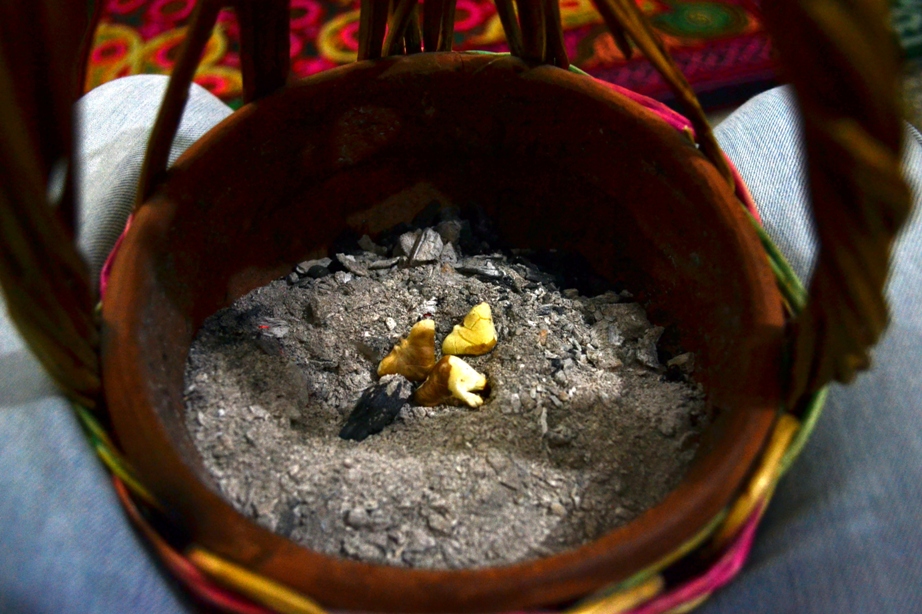
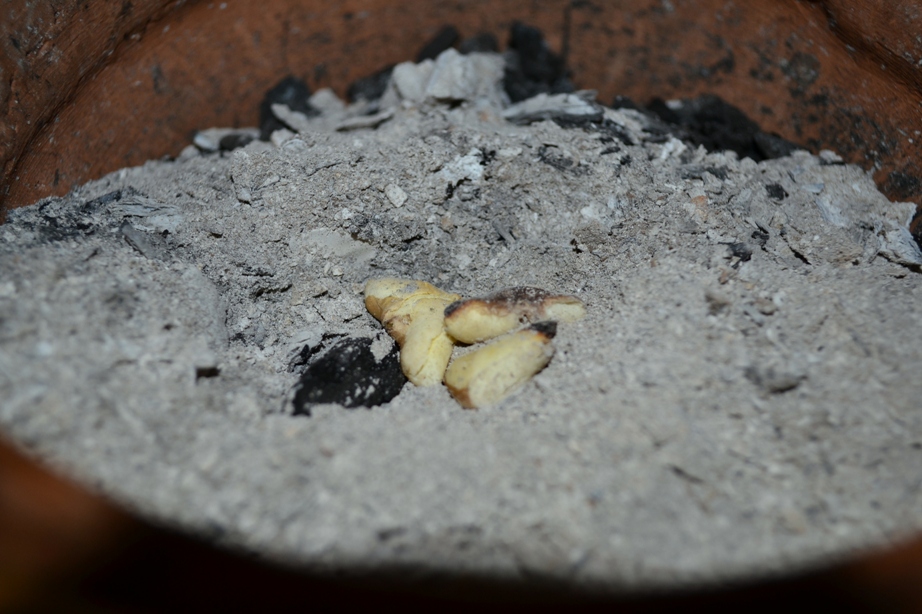
Mess or the water chestnut (G’aaer). Once the staple winter food of Kashmir. Part of winter life. One of the best things about winter. And the best way to have them…

Roasted in a Kangri.

I don’t even remember clearly when I last had them. I think I was eight and still in Kashmir.

-0-
Previously:
Panjayeeb G’aaer

Baking no help

[Dec 14, 2012] Follow up on Help the local Kashmiri Bakery [Dec 5, 2012]

‘So you received no money.’
‘No.’
‘But, I know quite a few people are interested in helping.’
‘Yes, some people did call. Said they have collected money. Wanted to know if they should send cash or cheque. Then they wanted to know some bank number. I told them I don’t know all this.’
‘So still no money.’
‘No.’

Just then a late middle-aged Panditji, probably a regular customer who lives nearby, walked into the shop and exchanged Namaskars with the Baker. Then it was business as usual. He asked about the price for Wangan Hat’ch (dried Brinjal, which seemed to have freshly arrived from Kashmir or Jammu). Then he started to bargain for a discount worth ten rupees.

I continued.

‘How much did you lose in fire? It was an electric short-circuit?’
‘Yes. Lost some quintals of walnuts, pulses (Var’muth), masalas and stuff like that. All from Kashmir. We were preparing for Shivratri season. It was a good thing I hadn’t ordered for new Janthris. I was going to order 8000 of them. But I didn’t have money at that time to pay upfront. It was a good thing. We would have lost them too.’

Panditji interjected,’Fire? Was there a fire here? That is bad. Very sad.’

I talked some more to the baker and then started to leave. But the Baker stopped me and handed me a  some freshly baked warm biscuits packed in a sheet of newspaper. He refused to take money for it. It was free. Embarrassingly, I was still getting freebies from the bakery.

Again posting.

Name: Roshan Lal
Bank and Branch: J & K Bank. Sector 18, Noida. [IFSC Code: JAKA0GHAZIA]
Account No: 0319040100093092
-0-

Roohafza and Flit, 1960

A couple of photographs I came across in the book ‘Asia’ by Dorothy W. Furman (1960).

Roohafza and Flit!
Michel Serraillier – Rapho Guillumette

Roohafza is still Roohafza. But Flit. My father still calls an insect killer, of any brand as ‘Flit’. It must have been quite effective at getting rid of those lovely T’chars, Khars and Kan’hepins.

Dal Lake
Ewing Krainin – Monkmeyer.

-0-

Ghulam Da’en, the three card trickster

Based on a random conversation with my father and some uncles. Story of Ghulam Da’en, Golaam the witch, perhaps the greatest three card trickster from Kashmir.

Every month. At the start of every month he would pocket half of my salary. He was a real  trickster. No one could catch him. He would clean your pockets with you only complying willingly. And he had all these techniques. Some so obvious. Like at first, after his cries of – Begam ko Pakdo, Begum par Lagao – had your attention and you moved in to see what was going on, why the crowd, you could always see him handing over money, to some lucky winner who had just picked the queen from three random cards. And then another one from the crowd would win. Then another. You would feel lucky. Like this day your luck would hold out against Ghulam Da’en, Golaam the witch. You too would bet. And of course, you win. Your lucky day. Crowd cheering. You bet more. You loose. You bet more. You loose. And soon you realize what happened. That Ghulam Da’en tricked you again. It was a setup. It should have been obvious. Those other winners were of course with him on it. Wearing a fur cap on his head and an old worn pheran, he would do this to random people at Pratap Park and to tourists at Boulevard Road, but his favorite haunt was Karfali Mohal near Sharabi chowk, near Parimoo Chemist, Habba Kadal where even his victims were his regulars. And fast. He could switch cards with a gentle flick of his nails. You wink and you miss. Once while dealing he showed me a deck full of queens. From the deck placed three cards down. Asked me to bet and catch. Of course, I bet and picked a card. And I lost. I lost. Then to rub it in, he turned the other cards too. Not one of them was queen. Not one. He would play you. He would play you like a fool. But some days he would let you win too. Go home with a real winning. He would show you three cards. He would show you which one is the queen. Before the serve, while the cards are still in his hand, you would notice that the queen card has a little tear on a corner, or a fold, or a quirky mark. You would memorize it. This is easy. He would lay the cards. You would place the bet, pick a card. He would flip it and of course, you win. He would give you the money. He would tell you this is your lucky day. You bet to play again. The mark is there. Raise the bet. You win. You start believing in you good stars, in God, in Ghulam Da’en’s bad luck and your smartness. You raise the bet. He tells you not to steal livelihood for a poor man on his bad day. You raise the bet even higher. You want round. There is old debt to be settled. You would clean the house this time. He serves the three cards. You can’t believe your luck. What treachery is this! What witchery! All the three cards this time have the same exact little tear on the corner, the same exact fold, the same exact not so quirky mark. And that is how you would lose half you salary to Ghulam Da’en. Go home to get an earful about it from your wife or parents. And you couldn’t fight him over it. It was all fair and square. You definitely couldn’t fight him. He once pulled a snake on me. He actually had a live snake in his pocket. That Ghulam Da’en, the three card trickster.

-0-

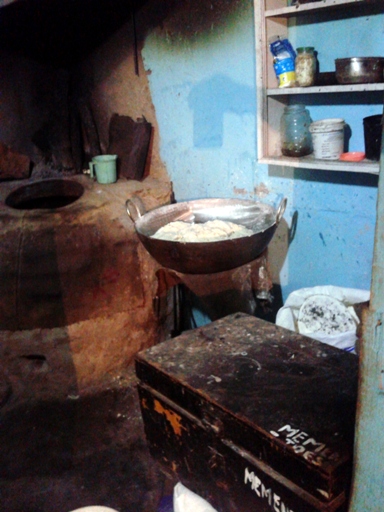
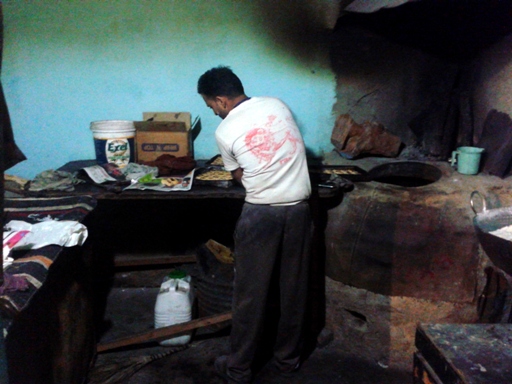
Help the local Kashmiri Bakery

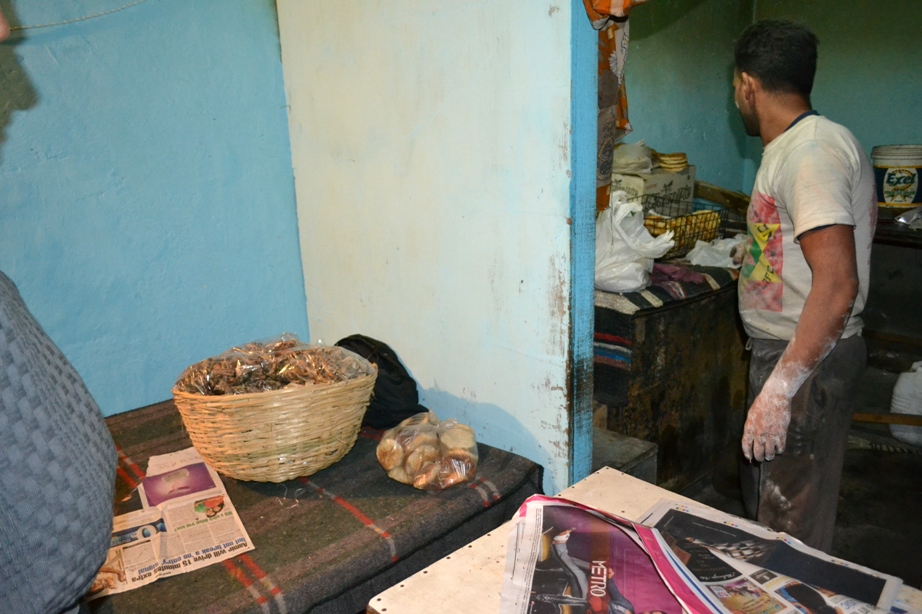
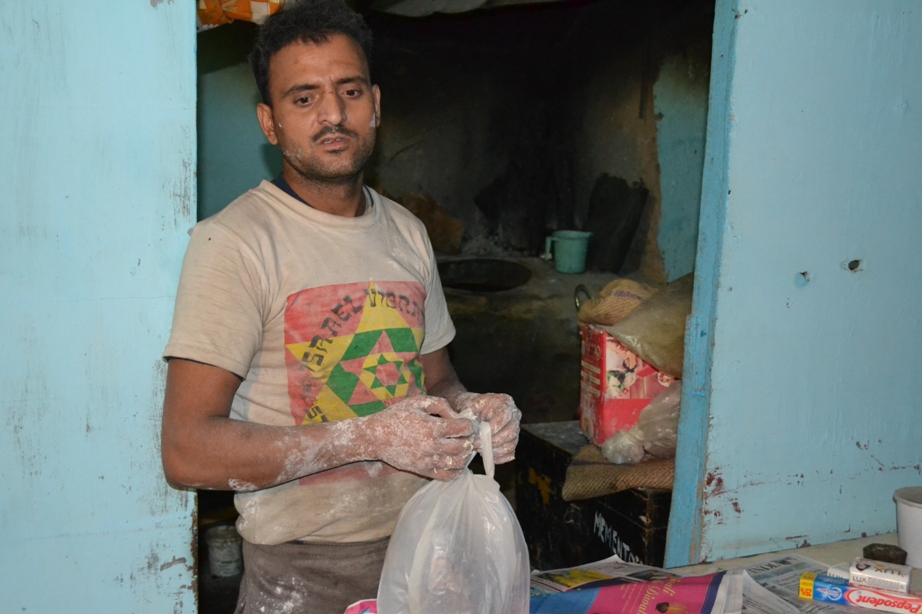
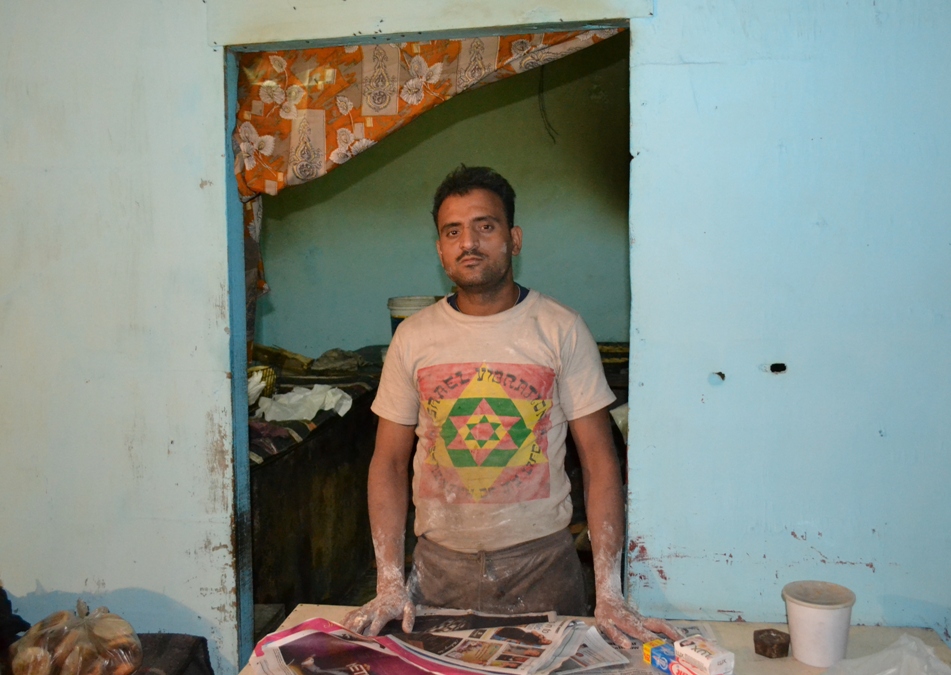
Back in 2009 I had written about Kashmiri Bakery in Noida Sector 53. [here] Over the years, I have posted quite a few photographs of their produce. Some of which are now doing the random rounds of social networks. I have a crazy theory about these bakeries: you can tell the state of Kashmiri society, or any society, by the state of its bakeries and the state of the people running them. On one of the photographs of Kashmiri bread that I posted to Facebook page of this blog, someone from Srinagar actually complained about the fact the now these varieties of bread [roth] are even rare in Kashmir. It is nothing-less of a miracle that these things are relatively easily available to the Pandits living outside Kashmir in Delhi thanks to a handful people. This bread culture is a remnant of  a way of living. If you were a kid in Kashmir, and if one day your family sent you out to buy the bread from the local bakery, you knew you were not a kid anymore, you were now a grown-up ready for all kind of responsibilities. I remember of first few visits to the local bakery in Srinagar. I remember dogs getting fed by patrons and kids getting freebies from the baker. There was a kind of good freebie culture in Kashmir, I guess…even Milkmen, Dahi sellers/Zamdod wol often used to offer freebies to kids. Anyway…

Recently someone wrote in to inform that the good folks running the Bakery in Noida Sector 53 are in real trouble. Mukund wrote in to say:

 “The KASHMIRI BAKERY talked about in this blog is in SERIOUS TROUBLE. There were two brothers working at this bakery one of whom died(i don’t know how). It brought all the responsibility of his family(plus his own family)on the second brother who was running this bakery alone, until a few days back. I went to his shop today and to my horror his ENTIRE SHOP WAS BURNT because of an electricity accident. According to him the accident caused damages worth A FEW LAKHS, which is a lifetimes earning by this man’s standards. Poor guy was still working on the choolah which was the only thing that seemingly survived. The guy was so depressed that wasn’t even accounting properly and was making mistakes which were lowering his profit(i.e. asking for lesser money than he was due), until an elderly gentleman told him. Im saying all this just to let our people know that this is the only kashmiri bakery in the entire Noida/greater Noida area and has been around with us for at least past 10 years(maybe more). And every kashmiri in this area have had his girdas, lavassas, telwurs etc at some point in time.WE SHOULD SPREAD THIS ND HELP HIM AS MUCH AS WE CAN VIA MONETARY DONATIONS.
PS: he hasn’t asked me to do anything, its just that i felt moved by what ill fate he has struck.”

I hope the community living in the area would come forward to help. Here are the bank details of establishment. I the folks running the bakery and they already plan to open it this week.

Name: Roshan Lal
Bank and Branch: J & K Bank. Sector 18, Noida. [IFSC Code: JAKA0GHAZIA]
Account No: 0319040100093092

-0-