Picked Kashmir at Delhi Book Fair, 2013

This is the fourth year of the ritual. And it seems the well has finally dried up. Couldn’t find much that I hadn’t already read. This year’s pick:

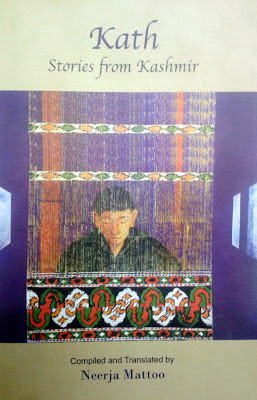
Kath – Stories from Kashmir
Compiled and translated by Neerja Mattoo
Sahitya Akademi
First Edition, 2011
Rs. 175

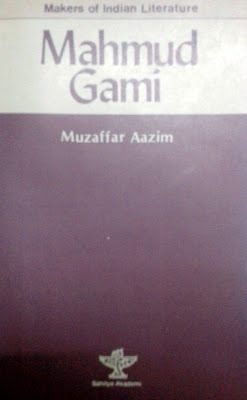
Mahmud Gami
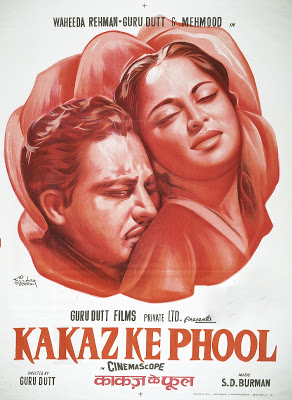
by Muzaffar Aazim
Sahitya Akademi (First published 1991), Rs.15)
(Thanks to this one, made an edit to note on Wahab Khar’s Shekh Sana)

Next ones are in a language I can’t read. Kashmiri. Maybe, I will pick it up someday.

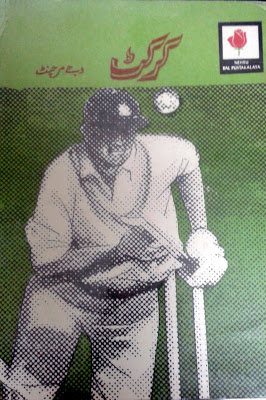
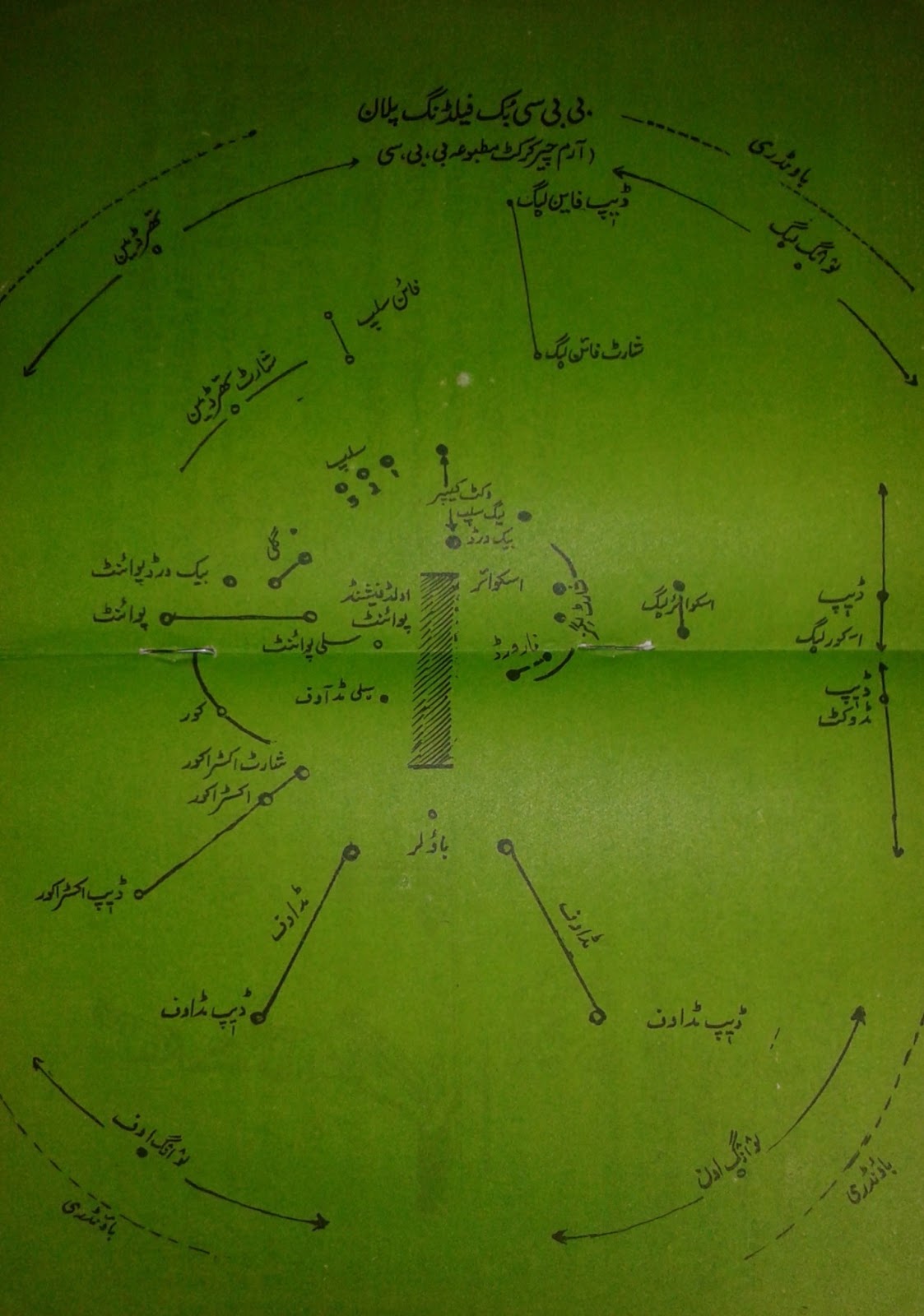
Cricket
Nehru Bal Pustakalaya
First published 1975
2001, Rs.21

A beautiful page from the book that sold it to me:

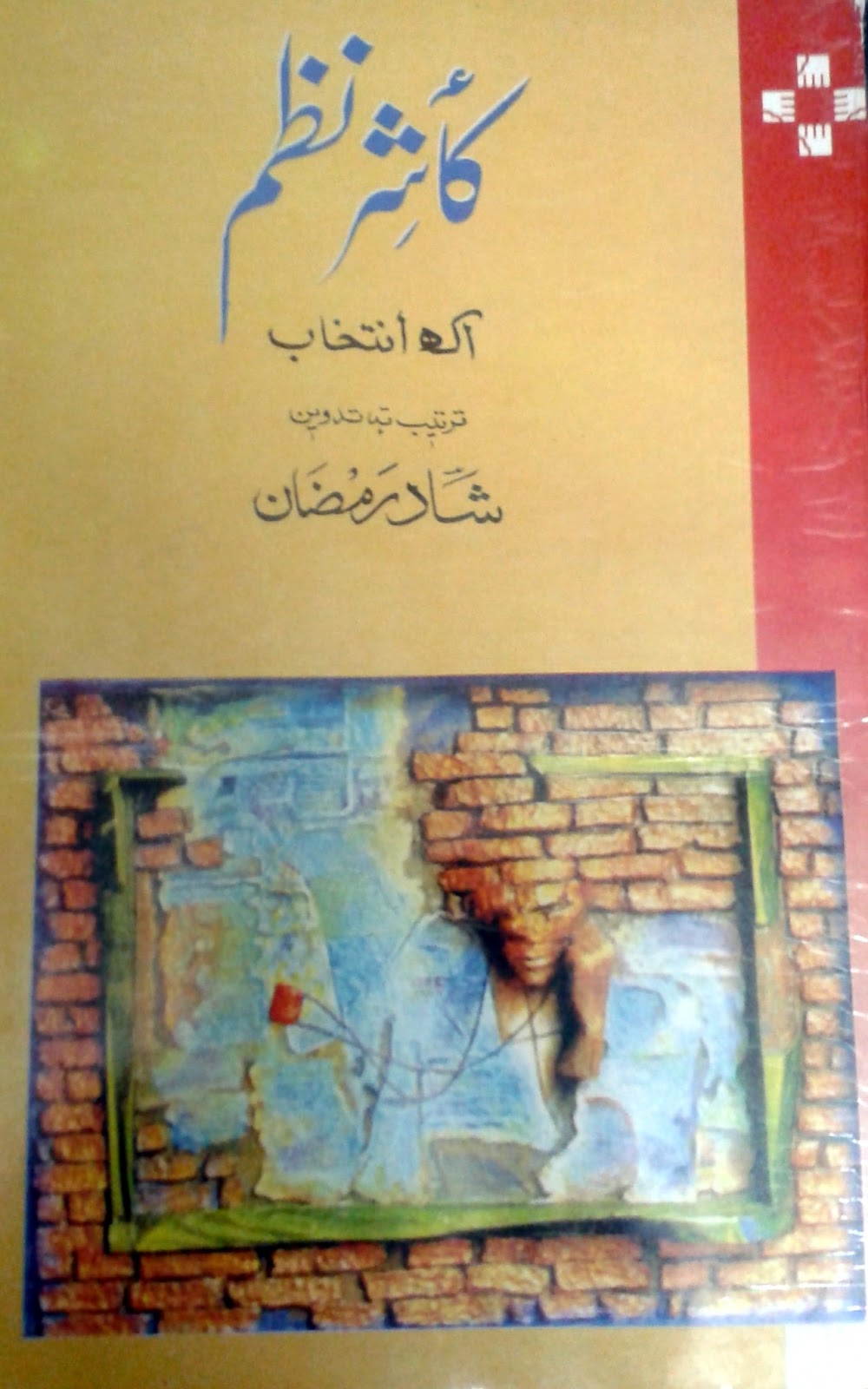
And then sold this book too.

An Anthology of Kashmiri Poem
National Book Trust, India
2000, Rs. 65

-0-

Previously:

  1. Picked Kashmir at Delhi Book Fair, 2010
  2. Picked Kashmir at Delhi Book Fair, 2011
  3. Picked Kashmir at Delhi Book Fair, 2012
  4. Picked Kashmir at Delhi Book Fair, 2012 (Part 2)

Our Zoon isn’t Cheese enough

“Either it brings tears to their eyes, or else -“
“Or else what?” said Alice, for the Knight had made a sudden pause.
“Or else it doesn’t, you know.”

I still recall that late night phone call. Someone, a relative, had been killed in Srinagar. That killing became a vindication for my parents that the decision to move to Jammu, a decision much contested by my Grandfather, was right. A storeroom on roof of a relative was the right place for us, it was our refuge.

The stories of Pandit migration that most people read and write, is a story of a single night, and it goes like this, ‘And then that morning our family left in a …’ In my family’s case, it didn’t happen in a single moment. It wasn’t just one morning. We moved in parts. And there was more than one such morning. First one to leave was my choti Bua, who back then I used to call Didi. This was the time when threats to Pandit women were openly advertised. Then a few months later, as the frequency of killings increased, it was the turn of wives, children and some essential goods, mostly clothing and gold. My grandparents stayed back. After dropping his wife and children at a relative’s place, my father and some uncles went back for their respective parents. They got stuck in the city for a few week. It was the time when Srinagar experienced some of its first few long spells of curfew. During a brief pause in these spells, they too reached Jammu. My family reached Jammu from Chattabal.

And all this time, feeling of fear was unknown to me. In a way, my feeling of normality was protected by my parents and grandparents even as they were experiencing a situation that was questioning their sense of normal. In Srinagar, a city burning under a thousand guns, I was busy chasing cats and dogs. In Jammu, a city burning under a thousand suns, I got busy tracking toads and frogs.

Even that late night phone call didn’t change much for me, except for seeding a feeling that something terrible was in fact happening. That it all was not a game that gods were playing. That it was a game of men who believed in gods and paradise. That maybe I should remember it all.

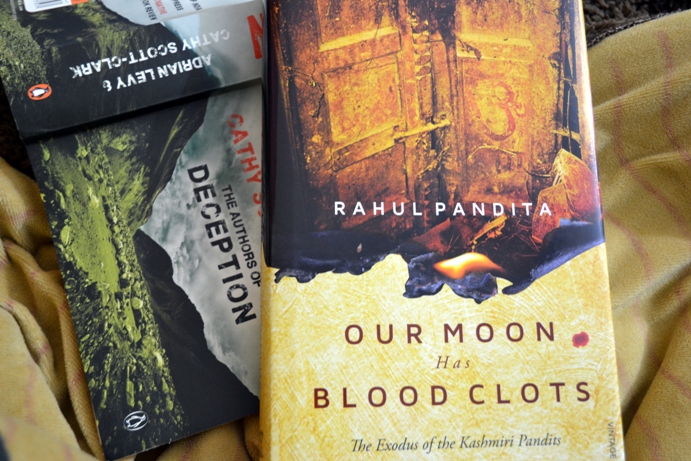
The stories of those days arrived much later. Only after we learnt to speak again. As we learnt to revisit our memories. I heard these stories, over and over again, and because I was listening carefully, I saw them change and evolves, tales getting appended and deducted from the narrative  Till they achieved a definitive narrative form. Rahul Pandita’s Our Moon Has Blood Clots captures all the major points of this narrative. It’s a narrative that most Kashmiri Pandits believe in and hold close to their heart. And now for some families Rahul Pandita’s ‘Our Moon Has Blood Clots’ too will become part of a family heirloom and an inheritance that consists of books like ‘My Frozen Turbulence in Kashmir’ by Jagmohan, ‘Converted Kashmir by Narender Sehgal  (Utpal Publications, 1994) and some old issue of various community magazines. Based on one’s political position, one can judge whether it is a good or a bad company of books to keep. But one can’t deny that this book is trying to do what these older publications were never even aiming to do, or had no chance of doing. Trigger a debate, bring the narrative of Pandits into the mainstream, even perhaps rescuing it from right-wingers. A few years ago, the possibility that a Ramachandra Guha or a Patrick French should be interested in the story was there, but that they would openly talk about it, or even back it, wasn’t. So, I do think it is an improvement. It is something that Pandits were waiting for a long time. A public telling of their personal sorrows.

On page 86 of the book are the details of that phone call. Description of that killing which I grew up listening to in much more brutal details. A story recounted many times by my mother. It goes like this: They say when the killers shot him down on that bridge, the man fell to ground. His killers, with pistols in hand, came around to check on him and to make sure he was dead. The man on ground, in pain, raised his one hand and told his killers, ‘Bas. Be ha Mudus. Stop. I am already dead.’ A killer shot him through his hand.

The dead man’s son, a distant cousin of mine and more of a friend, just about the same age as me, went to a college only miles away from the college that I went to. Even during college days he remained one of the most decent guys I knew.  The decadence of college life barely touched him. They say he is a copy of his father, a man about whom a poet friend (in a poem quoted in the book) asked:

“I used to ask him every time
why doesn’t he possess the cunningness of Srinagar
I still await his response
My friend! Yes, I changed my address
since after your murder
it ceased to exist
the bridge of friendship, this Habba Kadal”

The son of that man is not online trolling Kashmiri Muslims, asking for their mass-killing at the hands of Indian Army. He is busy working, building a life, raising a family. He isn’t clinging to any sense of victim hood. But that doesn’t mean that the killing on that bridge didn’t take place. It shouldn’t be brushed aside just because it complicates an already complicated situation. Usually at this point, it becomes a question of who suffered more: ‘A lot of innocent Kashmiri Muslims, not just one, died on these bridges at the hands of Indian security forces.’ And then the usual. ‘True.True. But in this case, the perpetrators of these crimes are known to you. You know where to put your anger. The Security forces. The State. But who were killing the Pandits? Men with a dream. Men funded by another State. Men with orders. Men who were worshiped as saviors. Men who inspired at first fighters and later writers. Men who after spilling blood of innocents in the day, at night went back to a life of wives and children. Together dreaming of a bright future. Of course, Pandits question this dream itself. They curse the men who were dreaming. This idea of a religious state that will be a paradise. They point at the present and ask if this is the future they wanted. They point at the state of the State that funded it. They curse the idiot who first labeled these killers ‘Secular’. Then they curse the ‘Sickulars’. They curse the idiots who formed cozy narratives about what transpired.’

A million things transpired. You need a microscope, not a telescope.

In a world where victims, to prove a point, are increasingly either setting themselves aflame or blowing themselves up along with a few more people, it is not surprising that even well meaning people find it difficult to understand Pandit response (or even a lack of it). They fail to see a possibility that it is a community in which I can still have the freedom to argue with relatives of a dead terror victim about the political nature of help offered by Shiv Sena. I can critique their single track narrative of 1990s. It is a community in which I can keep asking my father questions, uneasy questions, till he acknowledges that he did see an innocent Kashmiri Muslim die at the hands of Security forces on a street outside his home during the weeks he was stuck in Srinagar back in 1990. Yes, this free space is at times shrinking and at times expanding too. It is a community always evolving. Always changing. There are Pandit writings from 1920s in which old men complain that the young are not following the ways of the old! That a way of life is dying. Of course, it is dying. But something new is always born.

What Kashmiris ask of each other, ask of the world, ask of the written text, is something that they themselves, the world in general and the text itself, seldom offers. They ask for an absolute truth.

Me, I am only interested in nature of text and its relativity. ‘Our Moon Has Blood Clots’ provides some interesting twists to the known text about the events of 1947. From my family, I had already grown on stories of an earlier pandit migration, flight of relatives, from the border towns of Princely State of Kashmir to the capital Srinagar during the Kabili raid . But I first read about the scale of this migration in a Pandit community magazine some years ago. It was an entire series documenting the hardships faced by these people, all told mostly in personal narrative. I believe bits of these have gone into ‘Our Moon Has Blood Clots’ in the section dealing with 1947. Here, in this section I found an interesting bit. In most of the historical texts dealing with the events of 1947, destruction of Mahura power grid by tribal men and the subsequent plunging of Srinagar into darkness is one of the most dramatic events of Kashmir story of that time. But in ‘Our Moon Has Blood Clots’, we read that the Mahura power grid may well have been switched off by an unnamed Pandit to signal fellow Pandits in a nearby village that their lives were in danger. Isn’t that interesting. Is it a literary invention? Is there space for invention in memoir? Or did the earlier texts miss this detail because no one even back then asked migrant Pandits their end of the story?

This book is letting the Kashmiri Pandits connect their stories and experiences in a way that no other book has done before. Rahul Pandita’s house was in Chanpore. Chanpore was my Matamal, the place of my Mama and Massi. I know that place. It too have taken walks along Doodhganga. Walks organized by my Nani, who would sometimes take the kids to a Gurudwara too. Rahul Pandita mentions the evening when the mosque got stuck by a lightening. I was there that evening. I was in the crowd that had gathered in front of it. Rahul Pandita mentions the night of 19th January. My sister was in Chanpore that night. Only six, and about two years younger than me, she doesn’t remember but when the mosques started playing the ‘Jihadi Tapes’, my Massi stuffed her mouth with Parle-G biscuits to shut her up. Rahul Pandita in Jammu went to Luthra Academy, it was the first school in Jammu that I too could find admittance in. I lost a school year in the process. Rahul Pandita changed 20 homes in Jammu. For me the number is more like 5. He writes about living at a place called Bhagwati Nagar. My Matamal, my Massi’s place in Jammu for a couple of years was Bhagwati Nagar. I know the sweet spot along the Neher where the water falls off with a gush. He writes about not belonging anywhere. I have spent last ten years moving from one place to another, living out of a bag. For him Kashmir is home, rest are all a house. And so it is with me.

In ‘Acknowledgments’, among many other people, Rahul Pandita thanks me and this blog for triggering memories of home. I am content to say that my contribution to this saddening book has been addition of some happy memories. Memories that I can’t truly call my own. I was delighted to see Deen’e Phila’safar‘s ‘Man in the river’ proof used in this book to embellish a sentence. It’s a story that I can’t call my own as it was shared by a friend of my father. I am told Professor Dinanath’s progenies are now settled in Germany. I was delighted to see the sentence that mentioned the play of bursting fish bladders. It’s a game I have never played, it was a memory shared at this blog by a reader, Arun Jalali. 
While I am on nature of memories, isn’t is wonderful that bits and pieces from this blog have already gone into an Indian Publication, into Kashmiri Muslim publications and now a Pandit Publication too.

-0-

Buy Our Moon has Blood Clots: The Exodus of the Kashmiri Pandits from Flipkart.com

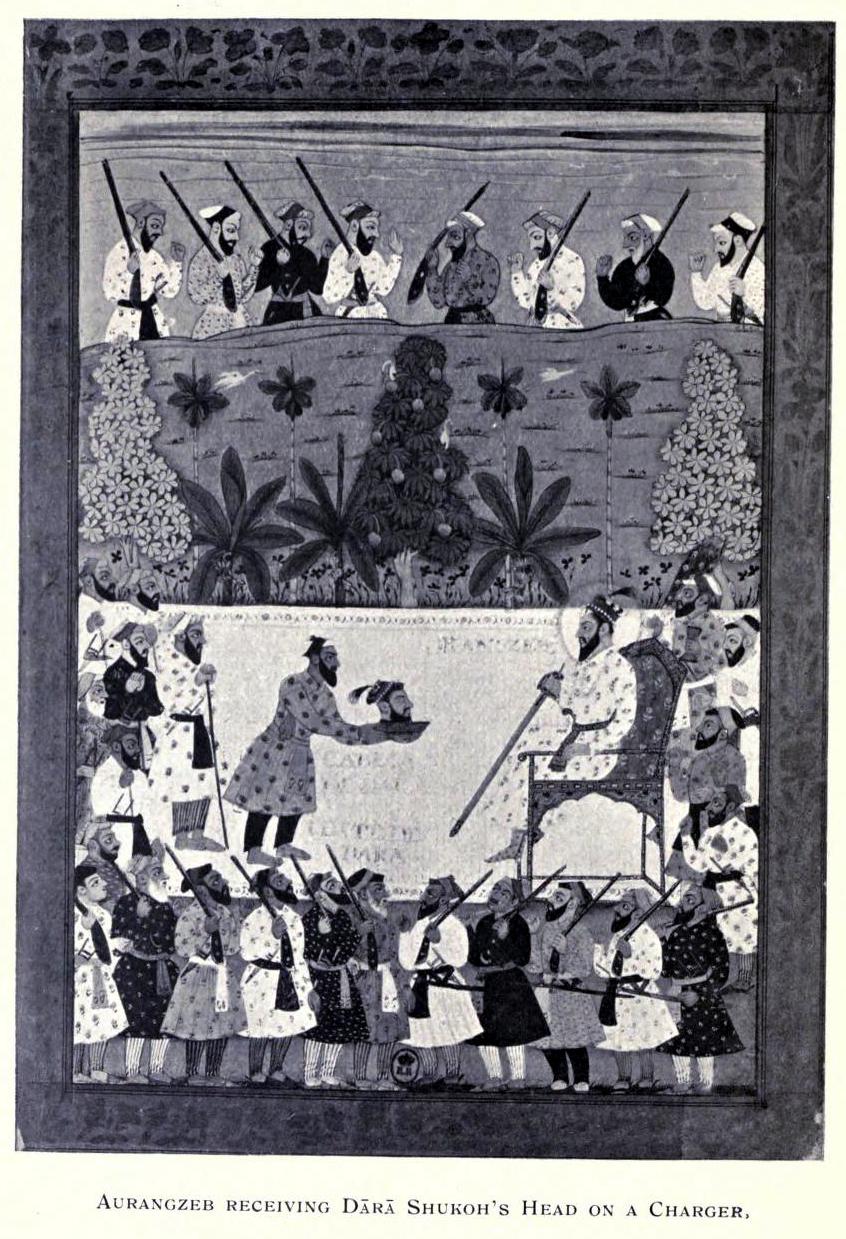
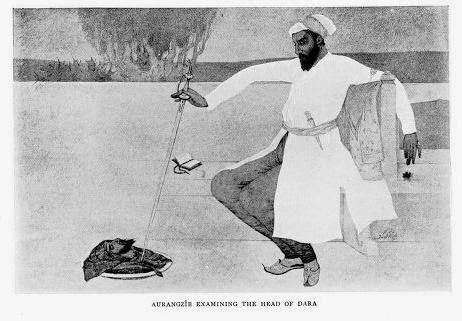
Beheading of Dara

“During the time that Aurangzeb was in Kashmir his usual diversion was going out to hunt, of which he was always very fond. It happened once that, tired out, he sat down in the shade of a tree, having with him only one huntsman  a great favorite, who had formerly served Dara in the same capacity. They held together conversation on various subjects, and encouraged thereby, the huntsman asked Aurangzeb why he ordered Dara’s head to be cut off. Such a question put the royal person into some fear, and so he answered that it was his (Dara’s) ill luck. Then, rising, he made for the palace, where he commanded that his huntsman should never again appear in his presence. The mere sight of the man acted as a reproof for his unjust deed. “

~ Storia do Mogor; or, Mogul India 1653-1708; (1907) by Niccolò Manucci (1638 – 1715).

-0-

Abanindranath Tagore’s Aurangzeb Examining the Head of Dara. Around 1908.

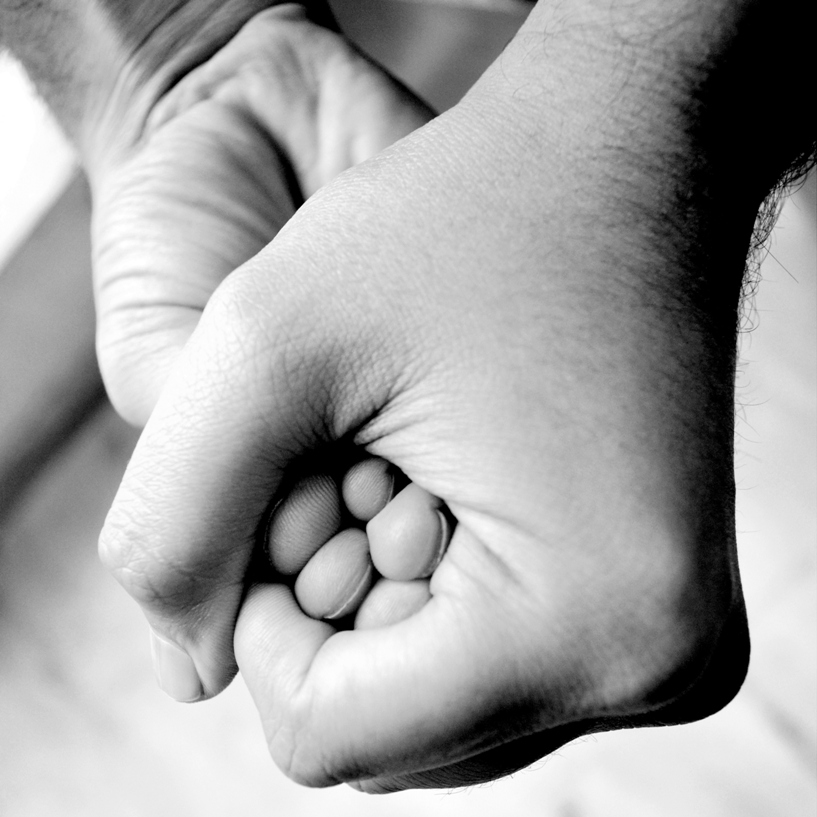
Picking the Middle

Hiding it is easy
when you are much younger.
Your hands are supple
and fingers not yet set
by work.
Index, Middle, Pinky and Ring
all look the same.
In some cases even
the sore Thumb!
That’s when
picking the Middle,
the longest finger
is a fine game
to be played by two
or more.
-0-

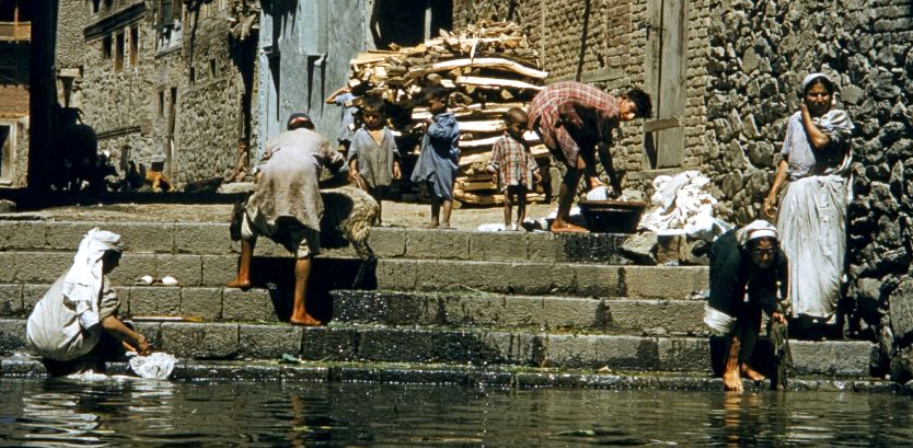
Ghat/Yarbal, 1957

While in some parts of India there are still issues like which caste can claim upstream and which caste can claim downstream of a river, the below image captures how Kashmiris, Muslims and Hindus (two women on right are Pandit) were sharing a river, probably without even realizing the significance of it.

‘Jhelum Ghat Scene’ by Brian Brake, 1957

-0-

Won’t you come to the Yarbal dear?
I would wash your footlings;
My wounds are unhealed –
Come my Love.

~ Mahmud Gami (1750- 1855)

Shah Hamadan/Kali Mandar, 1957

3–5 minutes
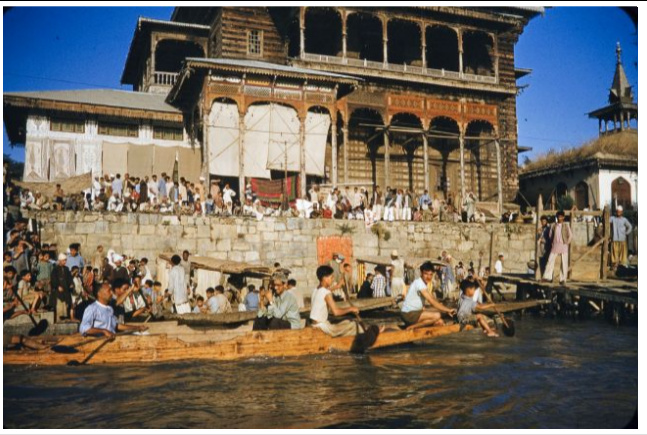
There are some photographs in Brian Brake’s 1957 Kashmir collection that I feel deserve individual attention.  This one because comparatively Babri and Hydrabad are simple.

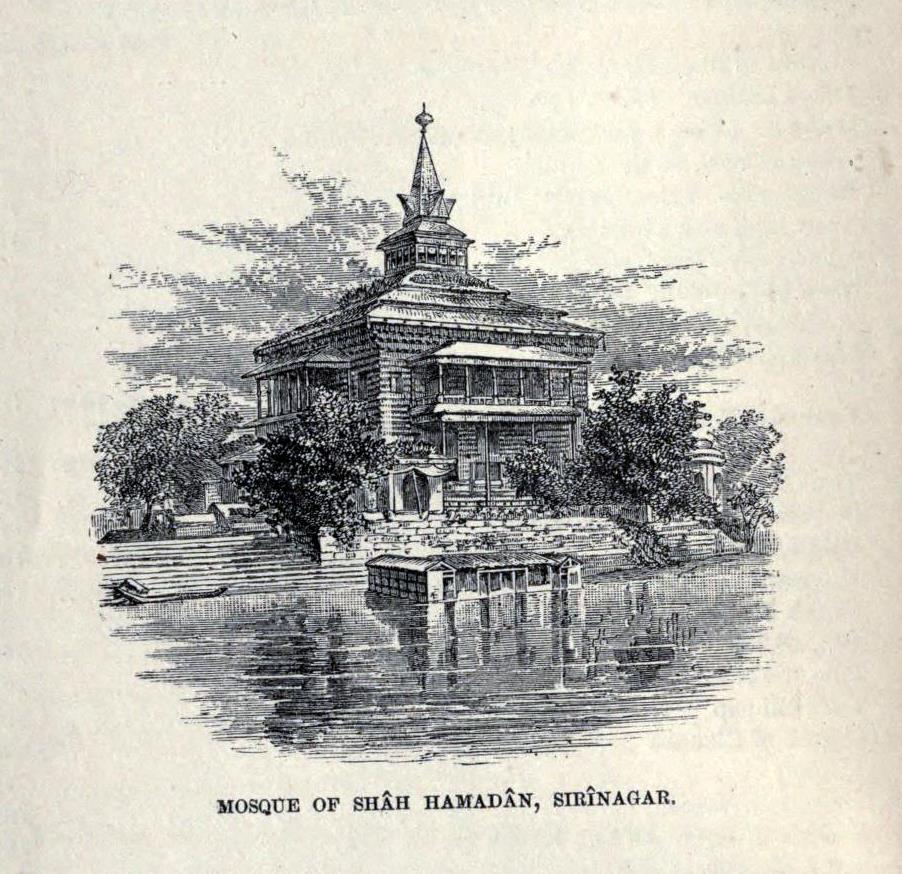
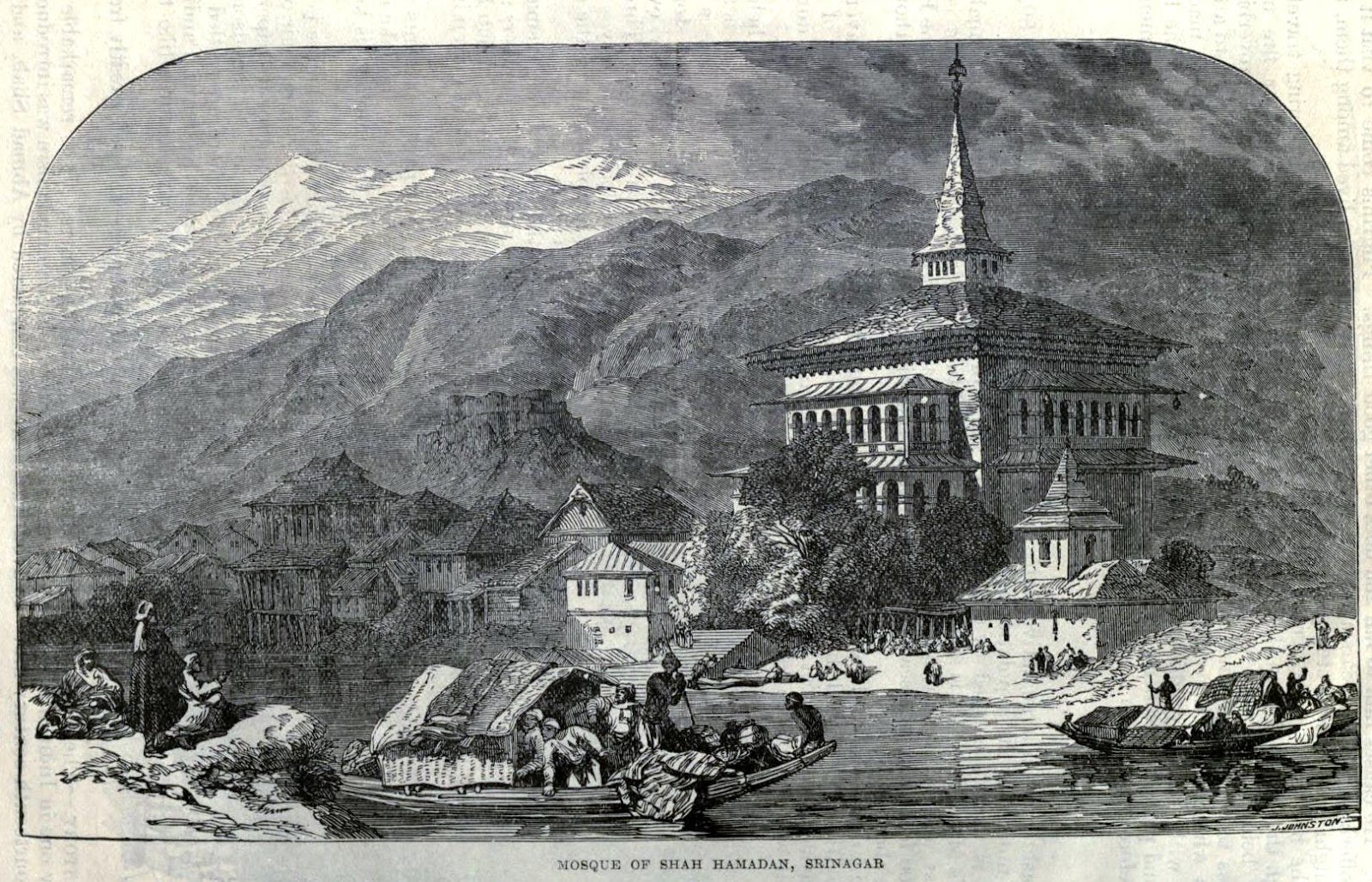
The thought occurred to me a few years ago when I showed a few images on this blog to my Nani. Among these images was an old photograph of Mosque of Shah Hamadan and just for the fun of it I quizzed her if she knew which place it was.

From ‘The northern barrier of India: A popular account of the Jummoo and Kashmir territories’ (1877) by Frederic Drew
From ‘Pictorial tour round India’ (1906) by John Murdoch (1819-1904). 

Her answer was quick. With hands held in a namaskar she said, ‘ Kali Mandar’.

I knew the history of this place, both the oral and the written one, about the fights, about how this spot stood for both a mosque and a temple and probably a Buddhist shrine too, but this knowledge didn’t make me realize what this place would have meant for people who lived in Srinagar during a particular era. Most of the old western travelogues I read simply referred to it as the Mosque of Shah Hamadan. Discussed it’s architecture and importance is discussed. In one book, ‘Houseboating in Kashmir’ (1934), an angrez woman, Alberta Johnston Denis, probably finding ‘men only’ policy of the shrine incomprehensible wrote:

Shah Hamadan was holy, according to the Mohammedans of Kashmir; but whatever he may actually have been, in their loyalty to him, at least, they were intolerant. To this day, this is evidenced in the inscription, elaborately carved on the verandah over the entrance, which, translated, reads: “This is the tomb of Shah Hamadan, who was a great saint of God. Whoever does not believe this, may his eyes be blinded and if he still does not believe it, may he go to Hell.” 

In one of these books, I did read about Pandits who while going about their daily business, would pass along this place, stop at a particular spot where water could be seen oozing out and bow down and wash their hands and face. The pull of a hidden holy spring. A spring of strange stories, stories of Kali Nag, an ancient spring, that apparently sprang up just at the moment when Ram killed Ravan, a spring that kids are told holds broken bits of ancient sculptures, a dark spring they say turns you blind if you look into it. Stories of flying chappals and falling gods.

An interesting account on birth and survival of the spot is given by Pandit Anand Koul in his book ‘Archaeological Remains In Kashmir’ (1935):

Going up by boat, one’s attention is arrested farther on by a large building on the right bank between the 3rd and the 4th Bridges, which is called Shah-i-Hamamdan.
There is on this spot a spring, sacred to Kali. There was a Hindu temple over it which was built by Pravarasena II (110-70 A.D.) and was called Kali-Shri. The Mahall, in which it was situated, is still called Kalashpur, a corruption of Kali-Shri-pur. This temple was destroyed by Sultan Qutb-ud-Din (1373-94 A.D.) and, with its materials, he built a khanaqah. The later got burnt down twice and was rebuilt.
Soon after the conquest of Kashmir by Sikhs (1819) the Sikh Governor, Sardar Hari Singh, ordered the demolition of the mosque, saying that as it was a Hindu shrine, the Muhammadans should give up their possession of it. He deputed a military officer, named Phula Singh, with guns which were levelled towards the mosque from the Pathar Masjid Ghat, and everything was ready to blow it away. The Muhammadans then went to Pandit Bir Bal Dhar [a hero, a villian based on which Kashmir narrative you hold dear] who, having brought the Sikhs into Kashmir, was in great power, and requested him to intervene and save the mosque. He at once went to the Governor and told him that the Hindu shrine, though in the Muhammadans, was in a most protected condition and the removal of the mosque would be undersirable as it would simply lay it open to constant pollution by all sorts of people. There upon Sardar Hari Singh desisted from knocking it down.
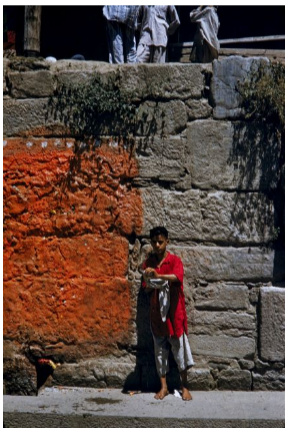
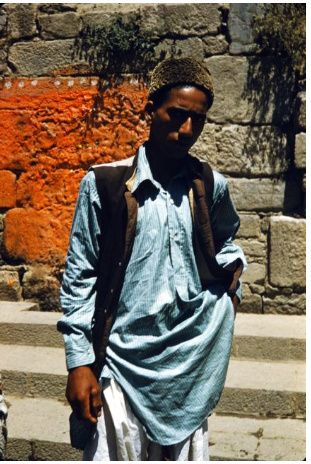
On the wall fronting the river the Hindus have put a large ochre mark, and worship the goddess Kali there. 

The spot captured by Brian Brake in around 1957. A spot that is now claimed and hidden by a tree gone wild. Claimed by a grayness that now fills the recent photographs of Kashmir. A place very simply once claimed in speeches made in Indian parliament floor as proof of syncretic culture of Kashmir.

 -0-

Kashmir War Speak, 1948

From ‘Kashmir Speaks’ by Prithvi Nath Kaula and Kanahaya Dhar (1950), these things, a reminder, wars make for sad quotes and sadder lives. It makes spartans out of apostles and apostles out of spartans.

Above is the only known photograph of Maqbool Sherwani. Or rather an illustration based on a photograph published in the book. The original photograph, published in a Kashmir war pamphlet from 1948, was shared by Andrew Whitehead sometime ago on his website [here]. When he did it became the only online available photograph of Maqbool Sherwani. Now above posted image is going to be the second, and more in focus, image of Maqbool Sherwani available online Wherein lies an interesting fact about the way history works. And even the way web works. Back in those days poems were penned in name of Sherwani in Kashmir, novels were written in India. Acclaimed as savior of Kashmir. And yet, because of the way history shaped over the years, and because of the way it in turn shaped the opinions of those who are online now, his image is only to be found old propaganda material.

-0-

Flag Day


I remember exactly what I was doing on the day of 26th January in year 1990. I remember it because I was playing stupid that day.

Just before the winter of 1989 set in, at Biscoe school, in a crafts class, I learnt a useful lesson. I had learnt how to make the flag of India.

On 26th January, I was bored. But a thought occurred to me. Since the nation, with all its glory, had arrived at the footsteps of my house in Srinagar, with its uniformed men and bunkers and armoured vehicles, all apparently to guard us from something horrible, I decided to celebrate the Republic day of India in grand style. I decided to make Indian flags, not just one or two but as many as I could and put them all over the house. The process of making the flag was simple and I had all the materials it needed. The process went like this: You tear a fresh page from a notebook, you turn this page around so that the length become the breadth and the breath becomes the length. Then using a pencil you draw two parallel lines on it in such a way that it divides the page into three equal part. If the partitions don’t look good, erase the lines using a rubber and start afresh. If you still fail, tear a fresh page and start all over again. Once you get the division right, in the center partition, make a circle touching the two lines and inside this circle draw exactly 12 lines dissecting each other and meeting in the center of the page, inside the circle at a single point. They will magically give you the Dharma wheel of Ashoka with its 24 spokes. Now, take two sketch pens, one orange and other green, and using your teeth pull out the caps from both of them and get their wet spongy innards out. You might get your hands dirty and colored in the process, but that’s the fun part. After this, take the orange filler,  leaving the center partition untouched, paint one of the partitions orange. Take the green filler and paint the other partition green. Your flag is almost ready but have to attach it to a staff to be able to hold it or stick it somewhere. For this you will need a broom and some cooked rice. Get them from your grandmother. Don’t tell her what’s it for. There is good chance your will be denied access to both, if you do tell her. Once you have the broom, take a twig out of it, and using the rice as gluing agent, attach the flag to it. While attaching, keep in mind that the orange partition is supposed to be at the top of flag and green at the bottom, and not the other way round. If you follow all the steps to the T, you will have your Indian flag. The symbol of your nation.

I repeated the process over and over, till I made about two dozen flags. Then I went about putting them all over inside the house. I put them on windows and on doors, looking for familiar cracks on the ageing wooden structure. I stuck them inside rose bushes and on evergreens. The last one I put on the wobbly old wooden handle-lock of the main door to the house. This one hung outside the house for everyone to see. There was no curfew that day, there was much movement on the road, so a lot a people could see it. I wondered if the men in bunker could see it, but there was no movement there.

It was done and it had taken me less time than I had expected. The afternoon was over but the day still remained. I was again bored. I decided to play another game. I had seen these other kids on road outside who would nail a used and empty boot polish tin pack to one end of a stick and would then run the contraption around like they were driving a wheel. A wheel-stick. That seemed fun. I was going to make me a wheel-stick. I already had a stick with me. A stick from a cloth roll. It was perfect for the job. I knew where to find the nails, a box in the dark storeroom. All that was missing was a pack of Cherry Blossom. No matter where I looked, I couldn’t find a single empty pack. I found some filled one, but somehow decided that in the end the play may not be worth a beating. However, a lack of a wheel was not going to stop me. I held the stick in my right hand and just imagined that there a wheel at the end of it and started running around, with the other end of the stick touching the ground. I ran and ran, faster and faster, past all the fluttering flags greeting my parade from the rose bushes and the evergreens. It was fun till the stick suddenly caught a bump in the courtyard and in response the other end in my hand slipped out in recoil, catching me in my nutsack. In a never experienced before kind of pain, I fell down on the ground and rolled and rolled, hoping it would end before the white stars that I was seeing would engulf me. Saw saw Shankar Bhagwan laugh. A single tear rolled down my face. It was over soon enough but felt like an eternity. I threw away the stick and swore on the name of all the gods I knew, I would never play this game again.

I was still lying on the ground when an unfamiliar old man walked into the house. A man unlike anyone I had ever seen. This man had a black karakul cap on, and was dressed in all black. He walked upto me and in a very respectful manner asked if this is where the Razdans lived. I looked at him and although there was a gentle smile on his face, a smile that a dirt rolled kid would elicit, I could see this was face of a sad man. A very sad man. Smile couldn’t cure the deep lines on his brow. I told him, he was at the right place and pointed him to the building that was our house. He walked on slowly keeping his head low. It seemed like he was climbing up Shankracharya hill.

Much later, in fact decades later, I learnt that the old man was the boss of my Choti Bua. Since Bus had stopped going to office, he had come to enquire if everything was okay. Nothing was okay. There were direct threats in papers. There were dress diktats. He was told that Bua had already left for the safety of Jammu.  

While I was still in the courtyard, I saw the old man go out the way he had come, out the main door. As he opened the door to go out, I noticed that the flag on the main door’s handle was missing. I ran out to the door, indeed it was not there. I looked around. And found it. On the outer top floor window of a house just across the street. I knew the kid who lived there. We had recently become friends. My parents were probably worried I spent too much time playing with my sisters or inventing too many games that could be played alone. They probably thought I had reached the age when some male friends would be more appropriate for proper all round personality development. So this kid from across the road, a gour boy, son of a priest was introduced to me as a friend. He would often come over to my house and we would play cricket. And now this phoney friend had stolen my flag. I would not let it pass. I walked over to his house, called him out and asked him to return my flag. He denied stealing it and said he had made it himself. Had he not planted it so high up on his house, I would have just taken it and ran. But in this situation, there was one one thing to be done. I went back home and complained to my grandmother. I told her how this nasty kid, the one they call my friend had stolen my flag. Her response wasn’t the one I expected.

‘What flag?’

I told her how I had spend much of the afternoon making these beautiful flags. She walked out into the courtyard and was for some reason horrified by what she saw. She looked at all those flags I had placed all around the courtyard and yelled, ‘Myani Bhagwaano! You are going have us killed! Why? Why would you do such a stupid thing?’

Then she went about pulling out the flags from all the places and tearing them up.

‘That old man too must have seen them. We are going to die. We are going to get struck by lightening! Reign of darkness descends!’

I wanted to protest. I couldn’t understand what it was that I had done wrong. But there was nothing I could do to stop her. She was angry about something and I had never seen her angry about anything, ever. Even when one time I got her to catch an injured parakeet for me and it bit her fingers. And yet here she was tearing these harmless flags with such violence that her hands were shaking. And her hands never used to shake, never, never ever even as she would descale and cut to pieces quivering big fish using a knife. Yet here she was, meting out violence on pieces of paper and twigs. Then her eyes fell on something on the ground that made her a bit less angry and a bit more sad.

‘And you destroyed my broom too! My la’tchul!’

A few days later, I overheard the news about some members of a Kashmiri Pandit family living across our street getting shot in their house by ‘militants’. Many years later, as I first tried to understand the concept of nations, I wondered if it was the flag thief’s family that was killed.

-0-
 

Summer 2008. The courtyard where it happened, in front of the old house that doesn’t exist.
-0-