
Kashmiri Bakery at Top Sherkhani, Jammu. The bread here is Gyav Shrumaal, made on special orders after Shivratri to distribute among relatives.
-0-

in bits and pieces
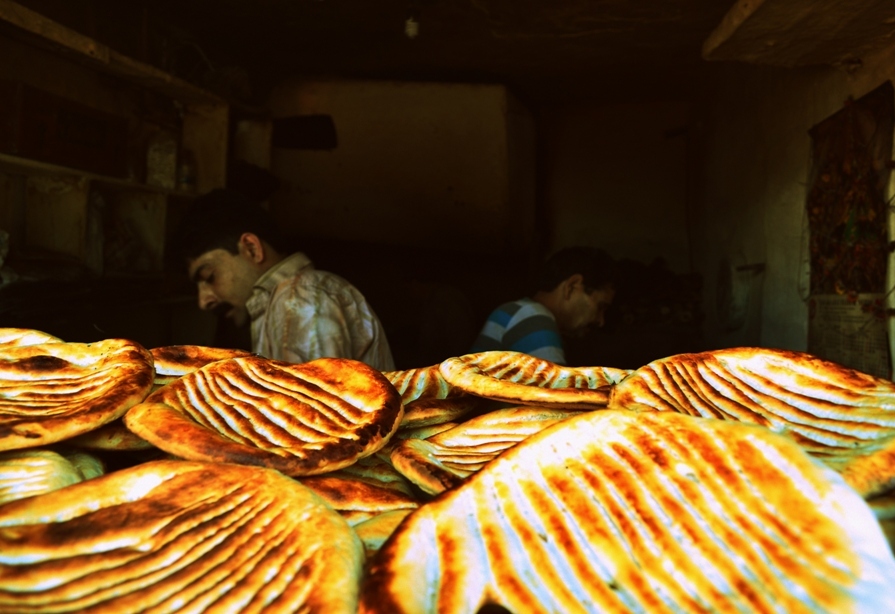
Kashmiri Bakery at Top Sherkhani, Jammu. The bread here is Gyav Shrumaal, made on special orders after Shivratri to distribute among relatives.
-0-
Shepherds of Paradise from rajakhan on Vimeo.
-0-
Pushkar Bhan's immensely popular Machama series was first broadcast on Srinagar Station of All India Radio in 1950s 1960s and went on to have more than 54 installments in coming decades. A selection of the series was published in book format in 1977 and won Pushkar Bhan a Sahitya Akademi Award in 1978.
Till recently, not any of the recordings were available publicly, but then last year Kashmiri Pandit community radio station Radio Sharda based in Jammu, thanks to family of Pushkar Bhan, re-broadcast a story from the Machama series. The story was Sindbad Machama:
Machama has a hearty meal served by his wife Khatij, goes to sleep and then dreams himself a modern day Sindbad out on fantastical sea adventure with his friends Sula Gota and Rehman Dada to seek distant strange islands, a quest that will may him immensely rich but only after running into a lord of Jinns, a baby Jinn named Tua, a strange giant bird named Rakh and two love-struck Jinn hoorie sisters Zangari-Singari, and somewhere along the journey Machama establishes democracy among Jinns.
A recording of the radio show is now available for purchase in Jammu (at the store 'Vir House', Sarwal...best place in town for Kashmiri recordings). I am sharing the radio play here:
[archiveorg SindbadMachama width=640 height=140 frameborder=0 webkitallowfullscreen=true mozallowfullscreen=true]
The satirical Kashmiri employed in the play by Pushkar Bhan had me in splits. Pure LMMOF.
Listen and Enjoy. Sindbad Machama Zindabaad! Tau! Tua!
-0-
Something about the cast of the drama by an original cast member. From a comment (touched up here) on Facebook page Moderate Voice of Jammu, Kashmir & Ladakh where it was shared [link]:
Bansi Raina: Sindbad Machama series was scripted and produced by Pushkar Bhan in 1968-1969 for Radio Kashmir. It became extremely popular, so much so that a mobile magistrate was deployed outside woman college on MA Road because the students from the adjoining SP College used to eve tease girls by calling them, 'Zingari-Singari'. It became a law and order problem. Besides the main characters i.e Machama (played by Pushkar Bhan), Sulla Gota and Rehman Dadda...M.L.Saraf was Zingari, P.L. Handoo was Singari...Bansi Raina (Tuwa's father, the main Jinn) and Shariefudin (Jinn Bacha, Tuwa). The cast had other characters as well which I am unable to recall. Some of the popular dialogues were, 'Walla..maiyani Shoga', 'hatai Zingari wa'ne Singari'.
-0-
Word 'Machama' is a Kashmir dish of yore consisting of rice, vegetables, raisins, coloring matter and sugar.
-0-
9th March 2023
Update
English transcript of Kashmiri Radio play 'Machama' by Pushkar Bhan that first was broadcast in 1960s. Translation by Trilokinath Raina, unpublished manuscript. Shared by Pratush Koul
The boys, it seemed, were in middle of some kind of game. And they were much enjoying it. I had some trouble understanding the game: a guy from a distance flipping coins into a small hole in the ground, a bunch of guys brimming with loud excitement.

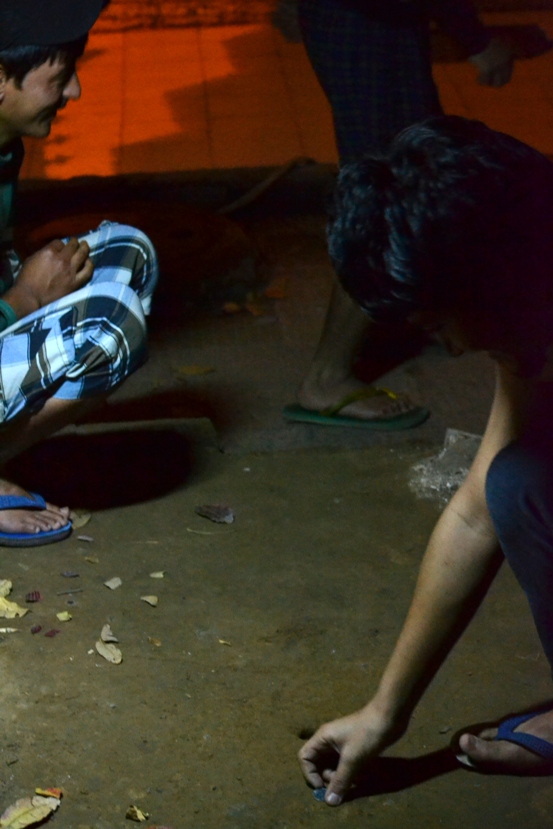
My father later told me he has also played this game as a kid in Kashmir. There they called it ‘Posi Gu’it‘ (Coin-Hole). The rules are simple: A player has a number of coins with him which he has to flip from a distance into a small hole in the ground. After trying to flip all the coins in, some of the coins which make it into the hole, can be retained by him, but to claim the rest of the coins that didn’t make it into the hole, he has to accept a challenge from his opponent. The opponent will challenge the first player to hit a particular coin of his liking (based on his sense of difficulty) among these coins lying around the hole. If the player manages to hit the coin, he retains all, or else he loses these coins to the opponent. The game goes on till one of the player runs out of all his coins.
-0-
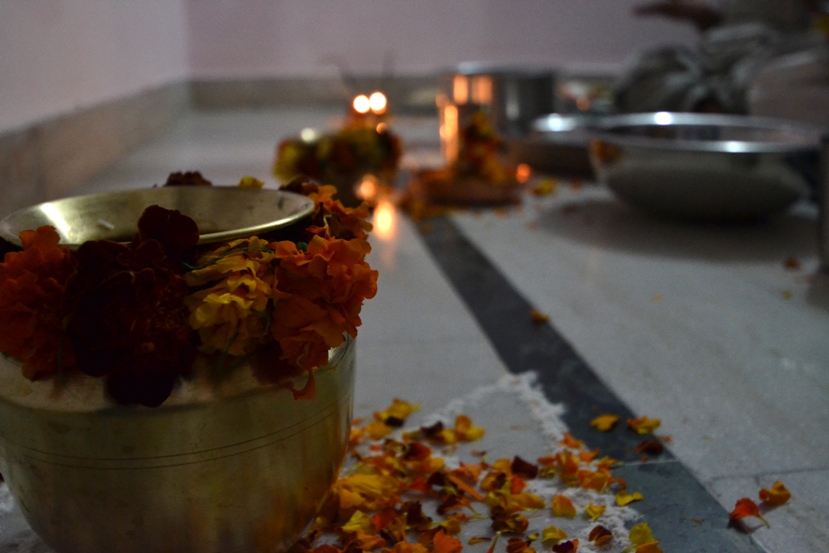

Vagur Barun. Fill Vagur.
Since Kashmiris are not very good at explinations, one of the weirdest explanation of Wagur I have heard is that Vagur represents ‘Wahay Guru’.
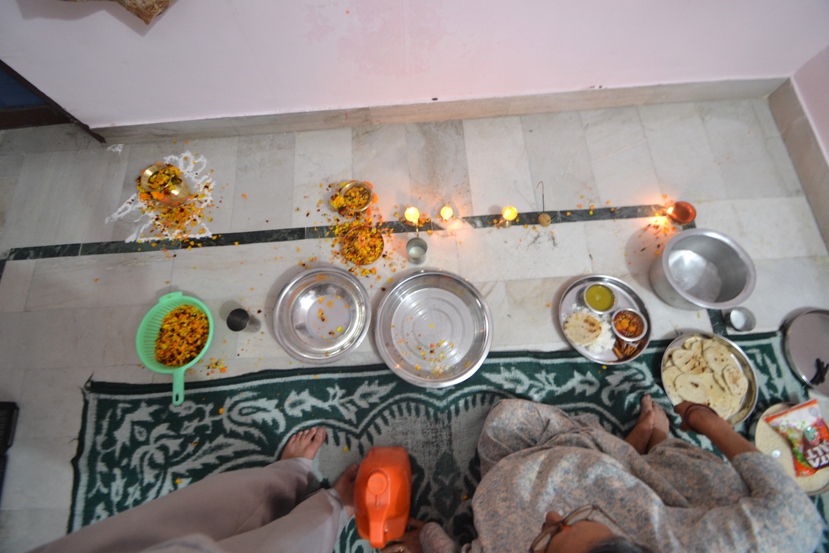
Day of Thirteenth. Herath Day. Preparation.
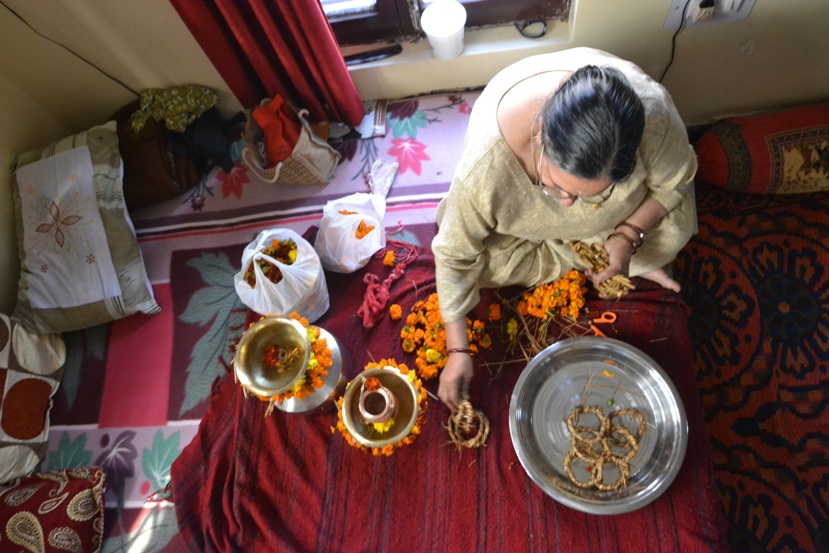
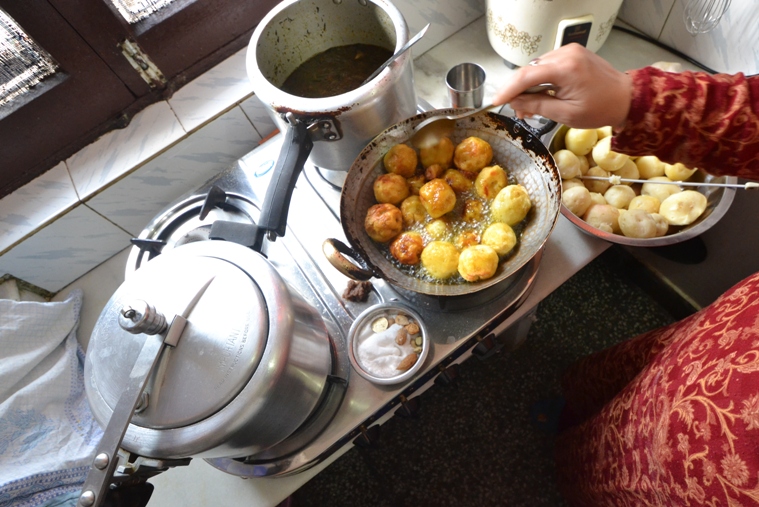 |
| Preparing Dam Aloos |
Night of Thirteenth. Herath.
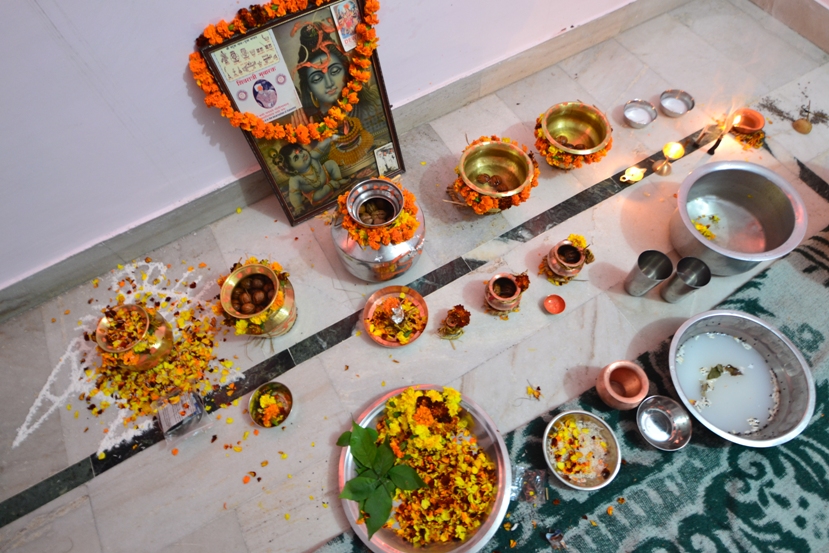 |
| At Night, The final Herath Setup. |
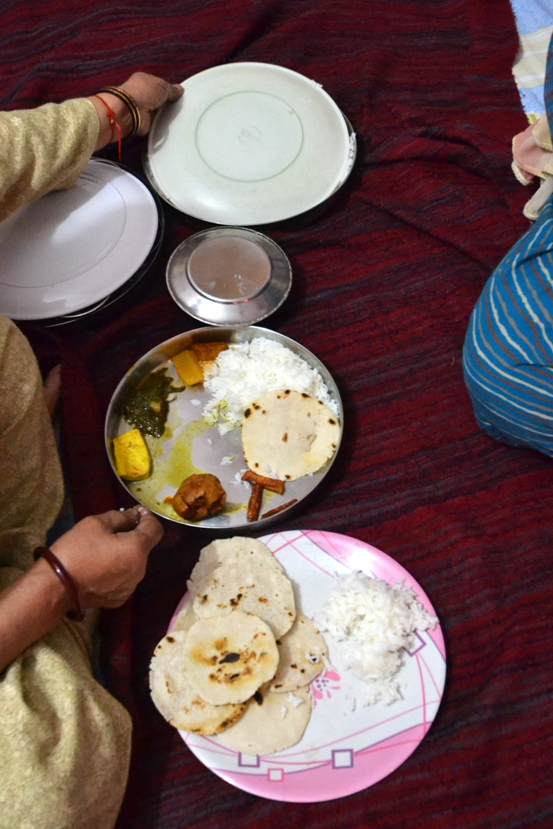 |
| Offering Food to the gods. |
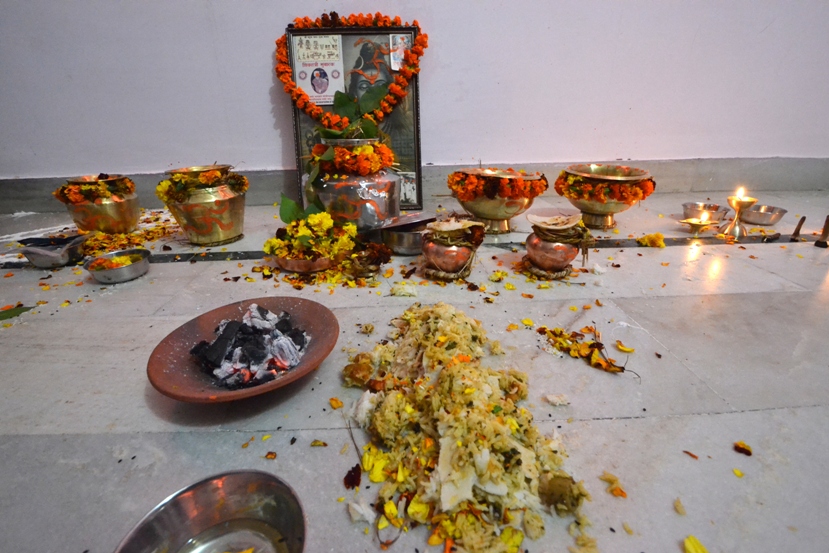 |
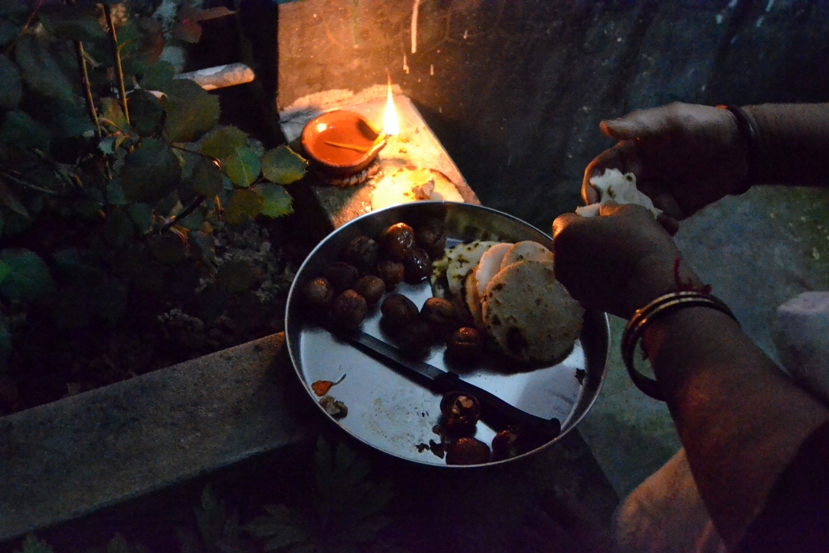
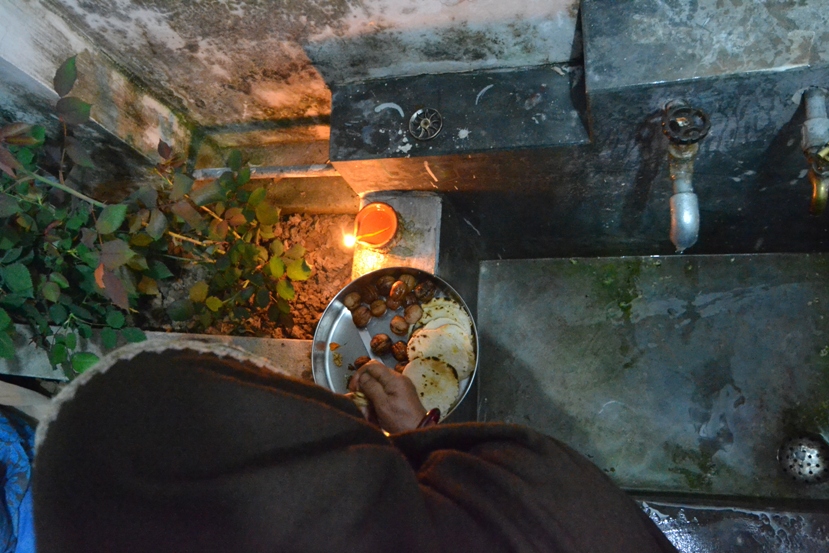
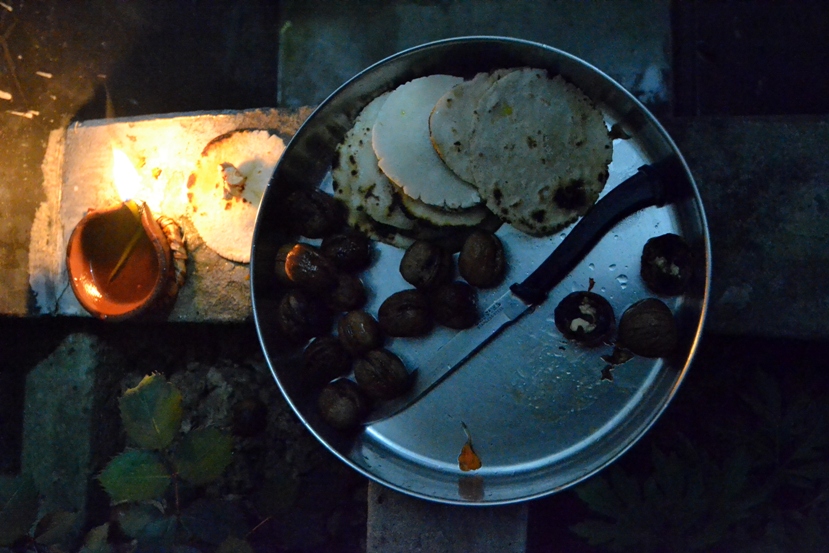
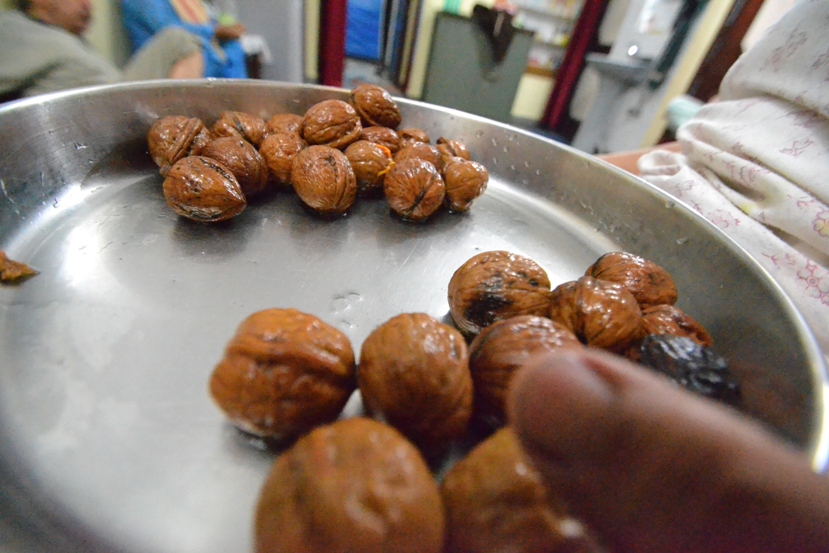
Night of Fifteenth. Preparing to eat the walnuts. The next set of rituals are actually meant to be performed at a river bank. But a tap will also do.
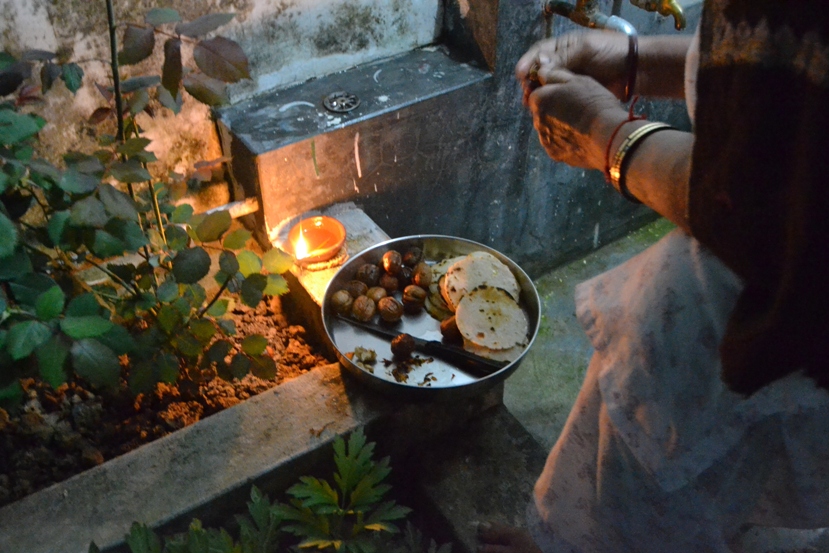
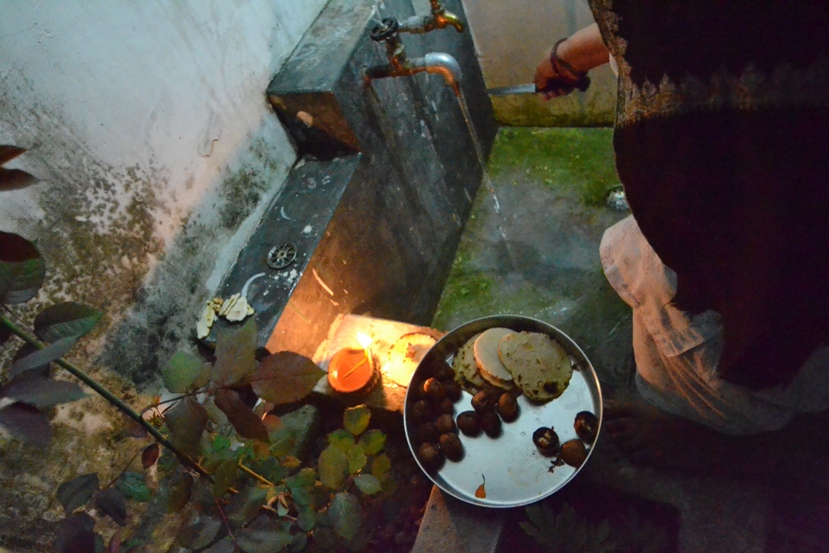 |
| Actually meant for cutting river water with knife. |
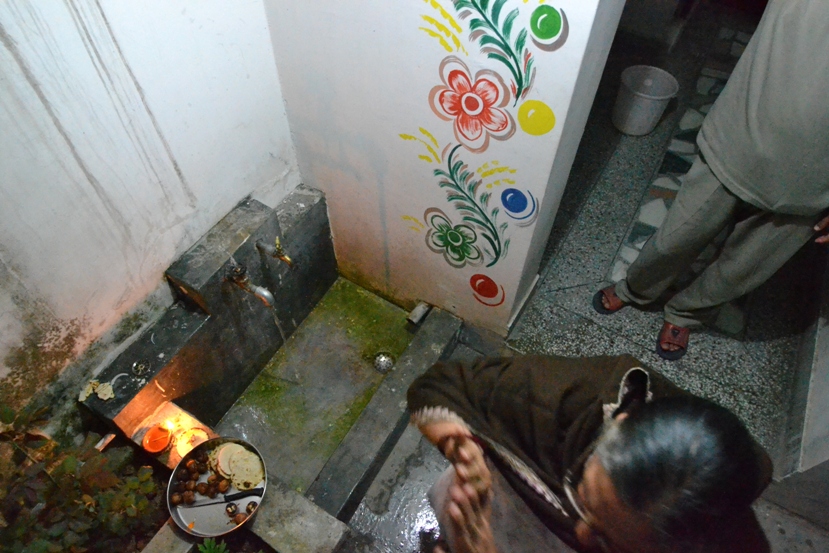
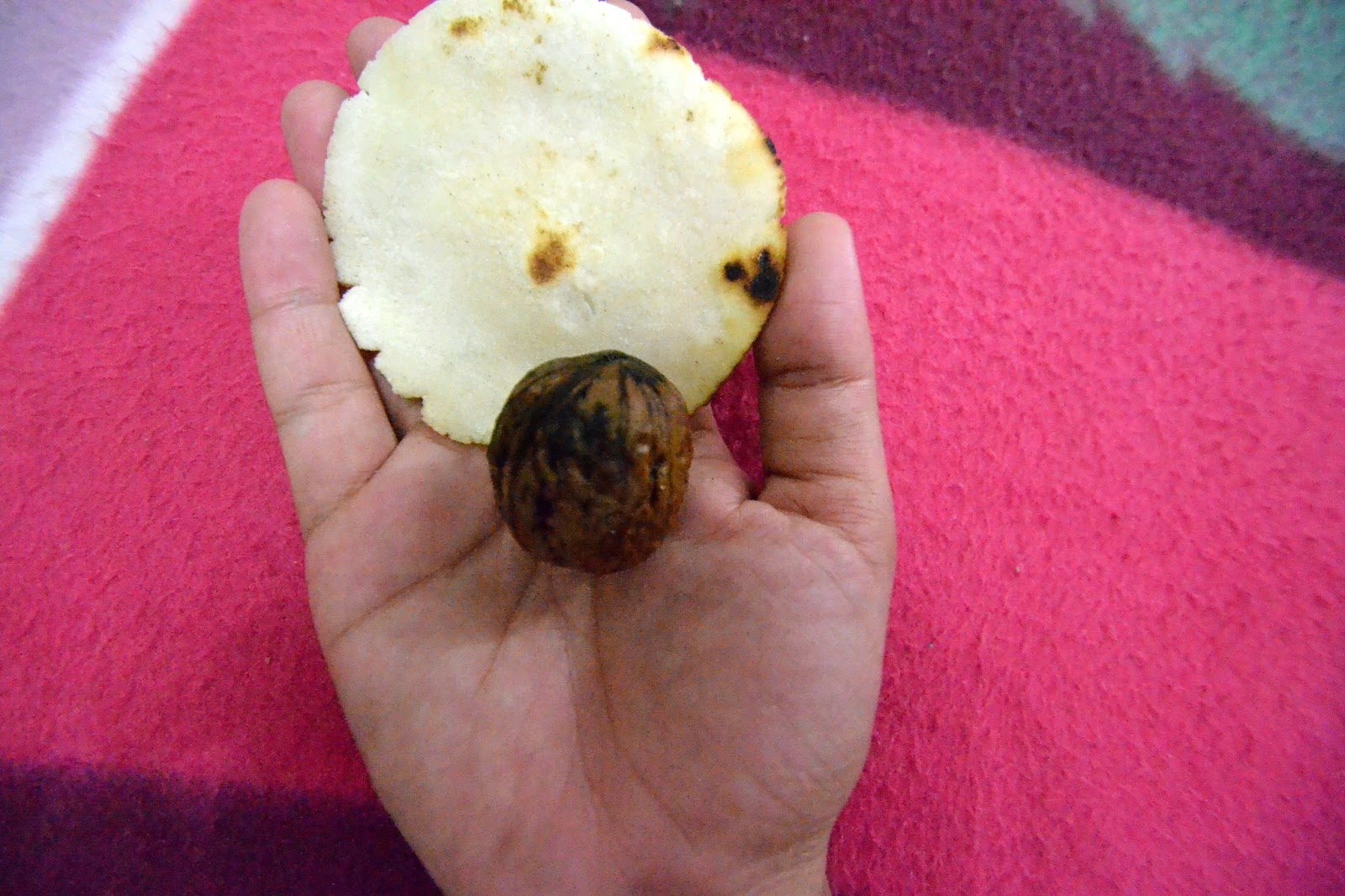 |
| The final Herath Prasaad. |
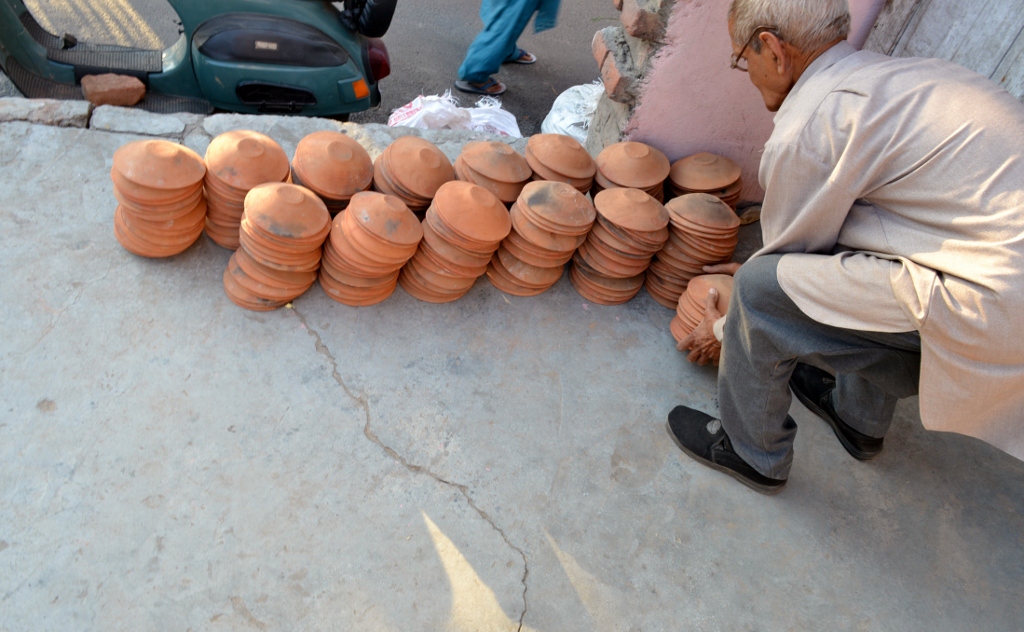

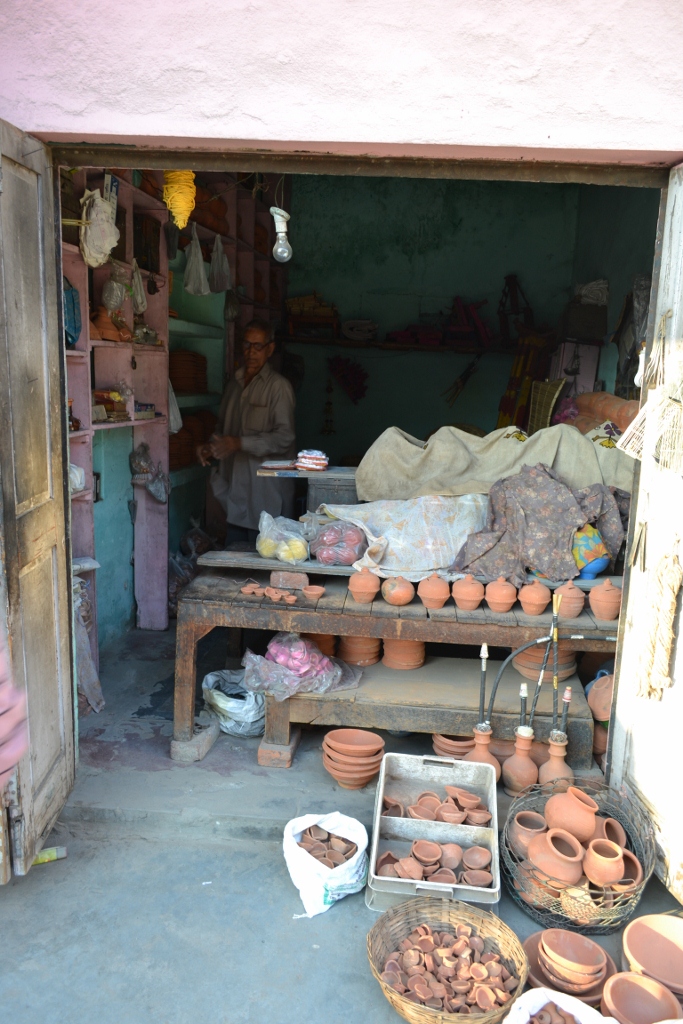
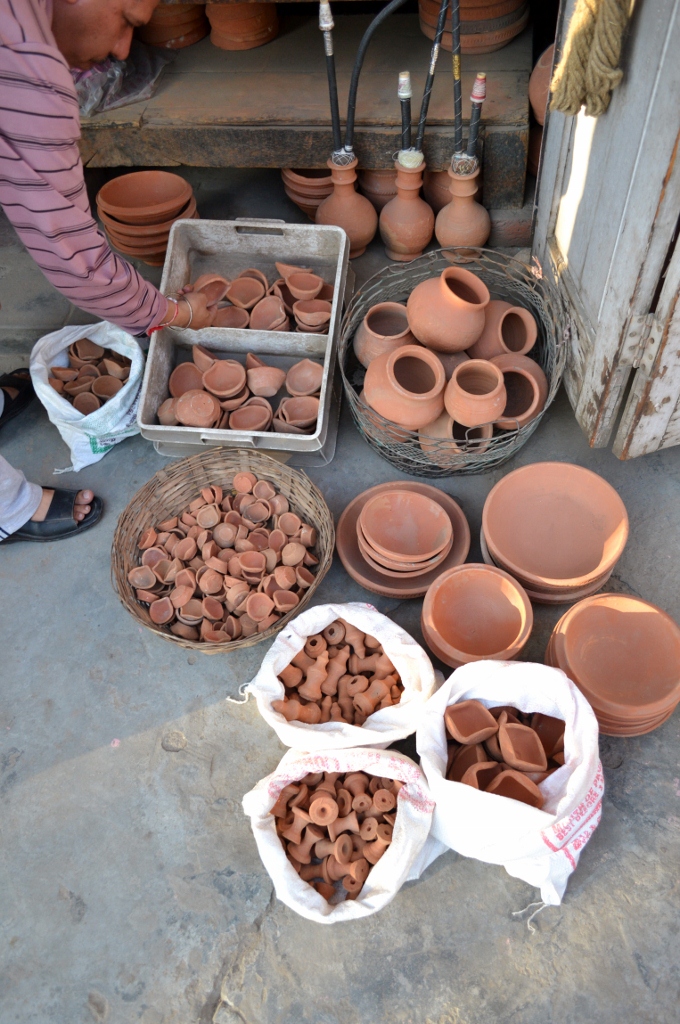
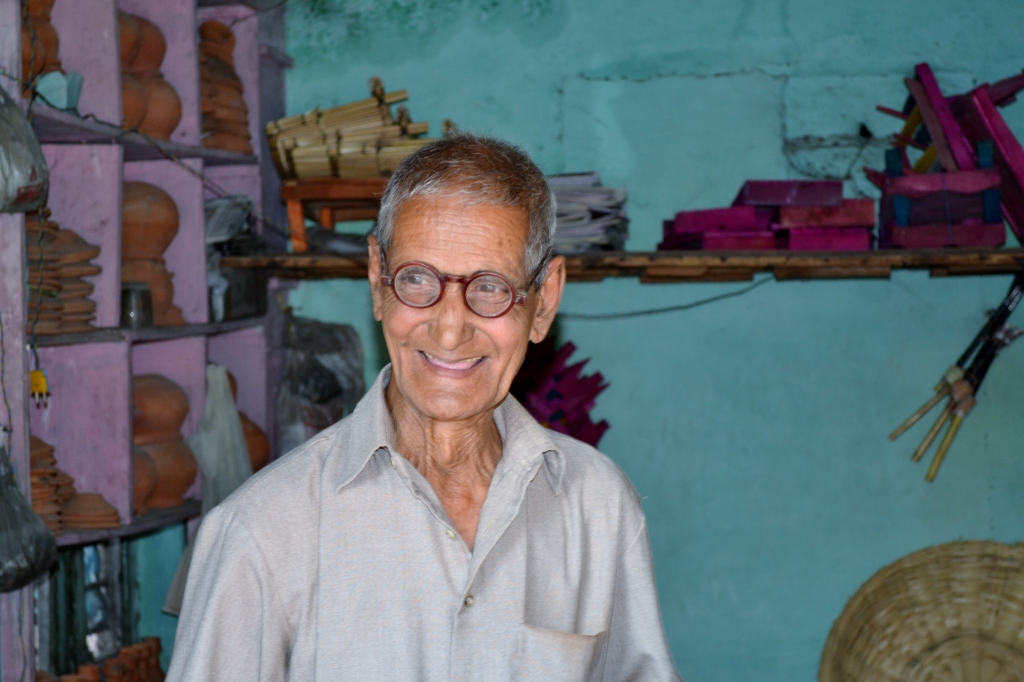
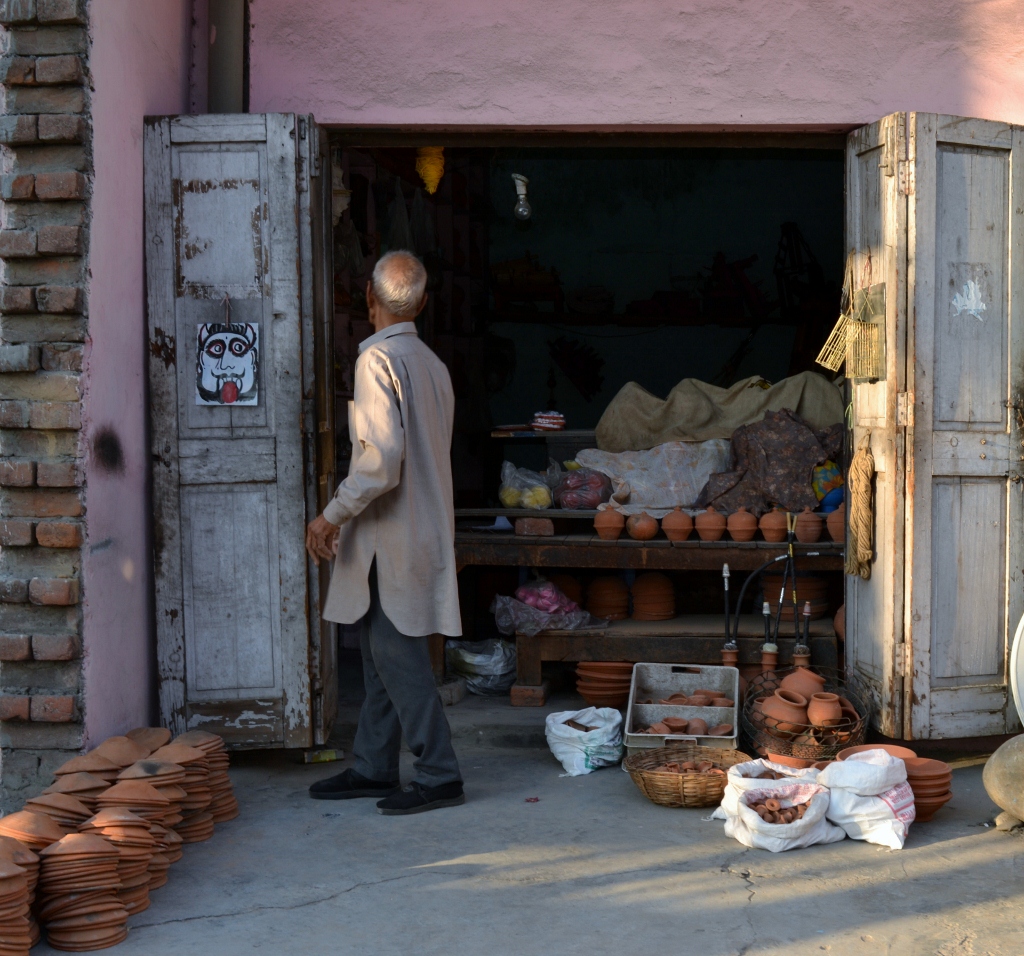
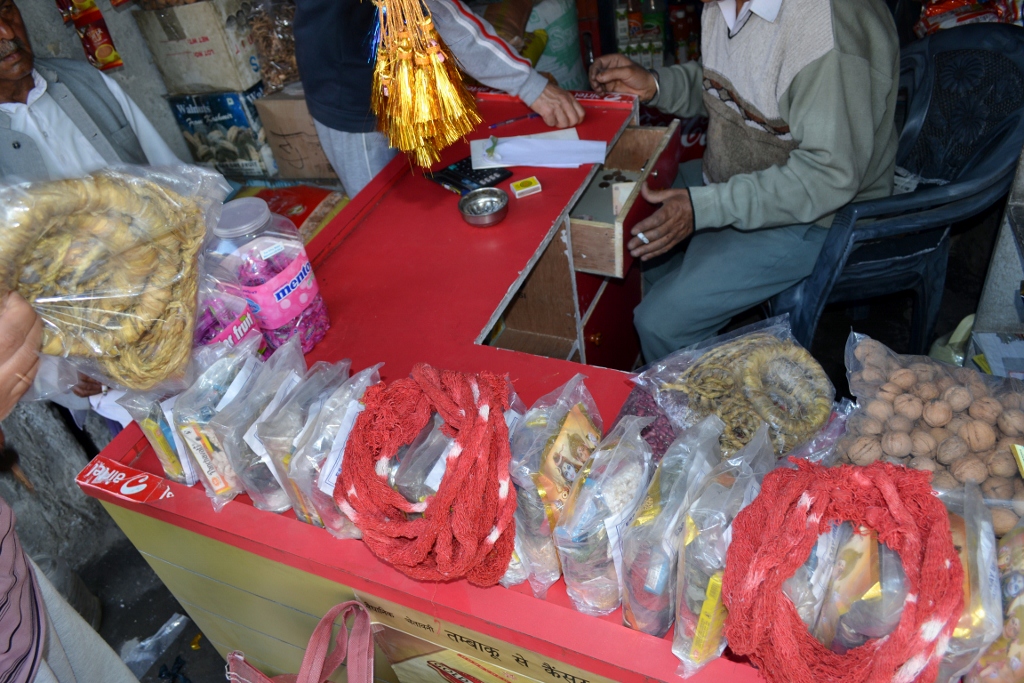
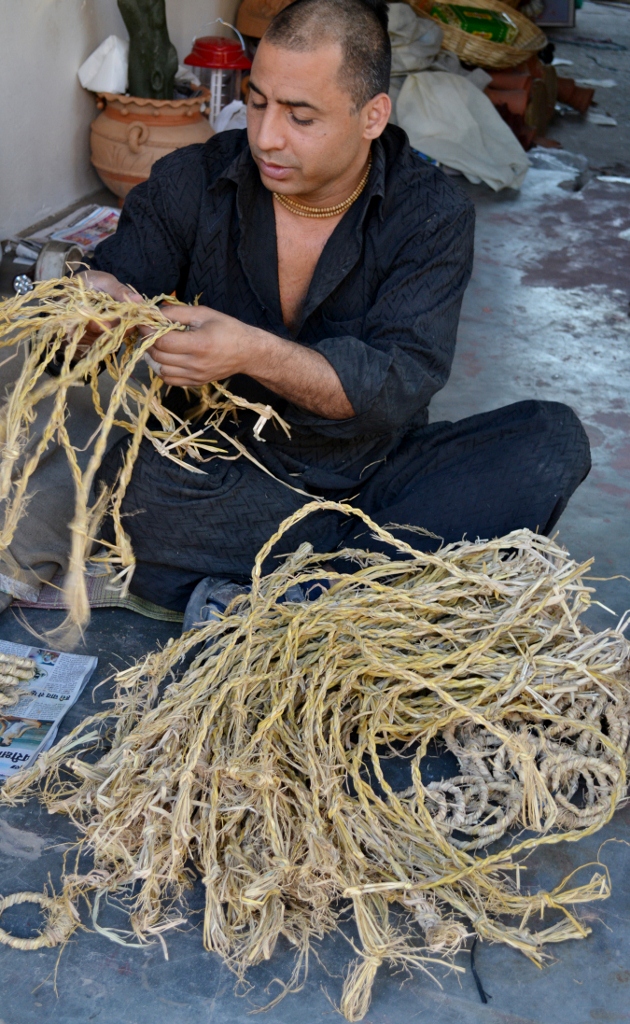
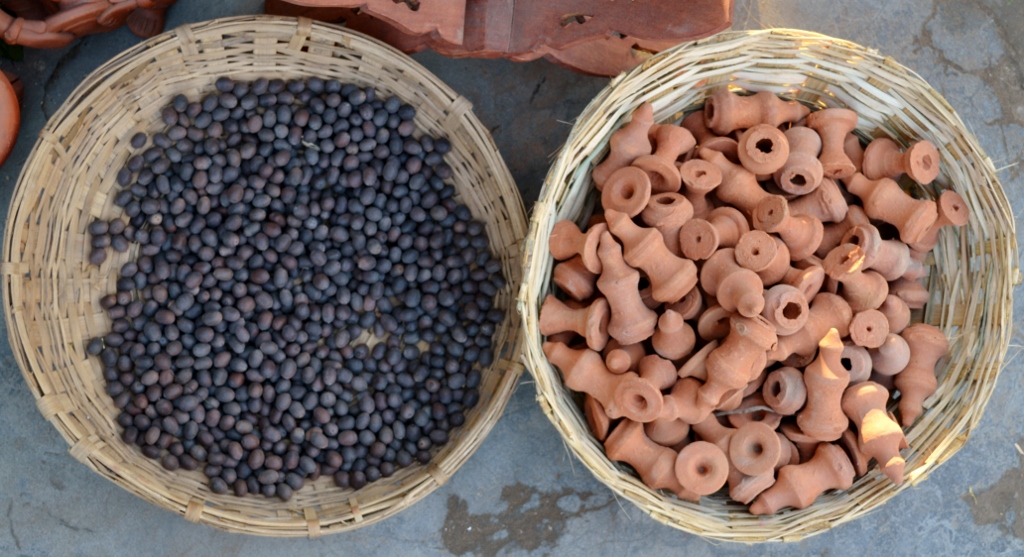
Shopping for Shivratri in Jammu.
-0-
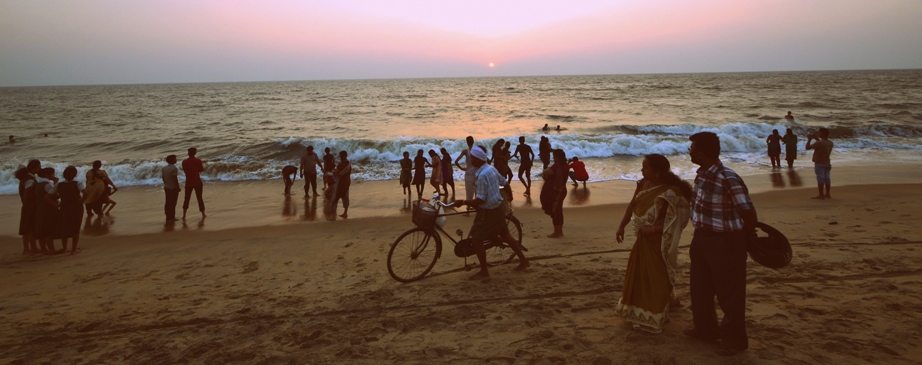
Inane meanderings of people of conflict. On the ground it is all the same: Student wing of CPI(M) having street fights with RSS people. Young people thinking BJP rule, or a Jam-ath rule, will be a good experience. Some old things: Muslims, bachelors, ‘girls-in-shorts’ and Film-wallas and their troubles finding rented accommodation in a society run by association of Family-wallas. But somehow there is peace. Normality. Calmness.
 |
| Cherai Beach |
And yet, I did find Kashmir in Kochi.
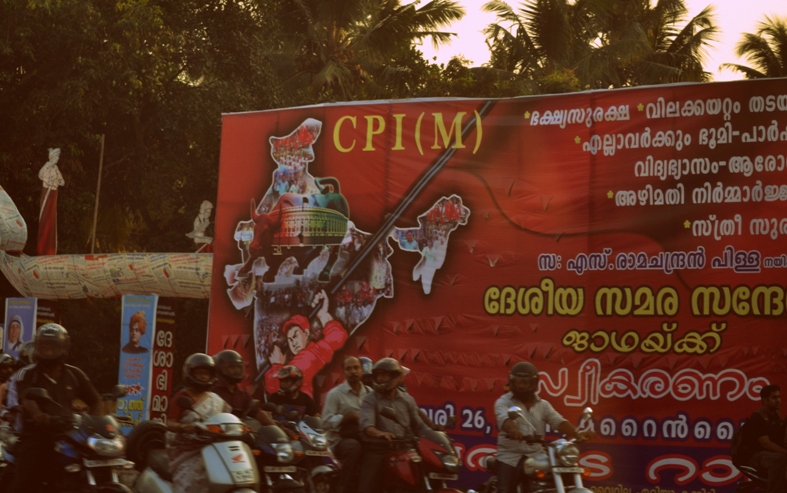
At least half of it. In an indifferent map.
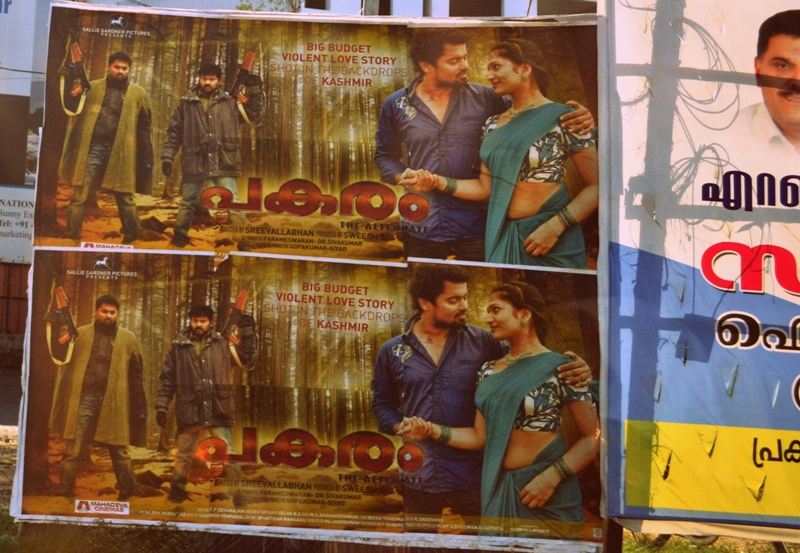
And in fantasies. Lavish, beautiful and morbid.
What am I doing here?
But then accidently I found some fellow Kashmiris too. They too traveling for rozi-roti. At a place that long ago provided refugee to another set of Pardesi, foreign immigrants.
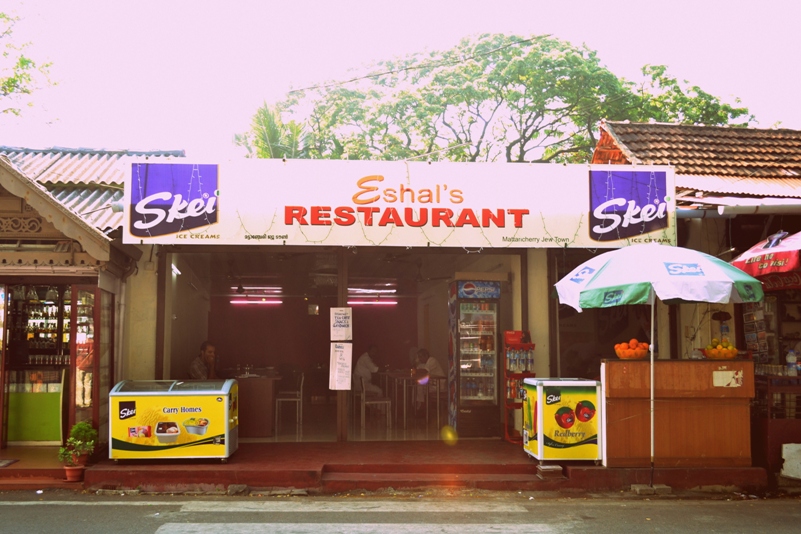
At Mattancherry, Jew Town, for lunch my friends walked into a restaurant that turned out to be run by a Kashmiri family. Of all the places. I had my first formal conversation in Kashimiri with a stranger in Kerala! They opened up their kitchen for me and I was able to peek inside. Typical Kashmiri set-up.
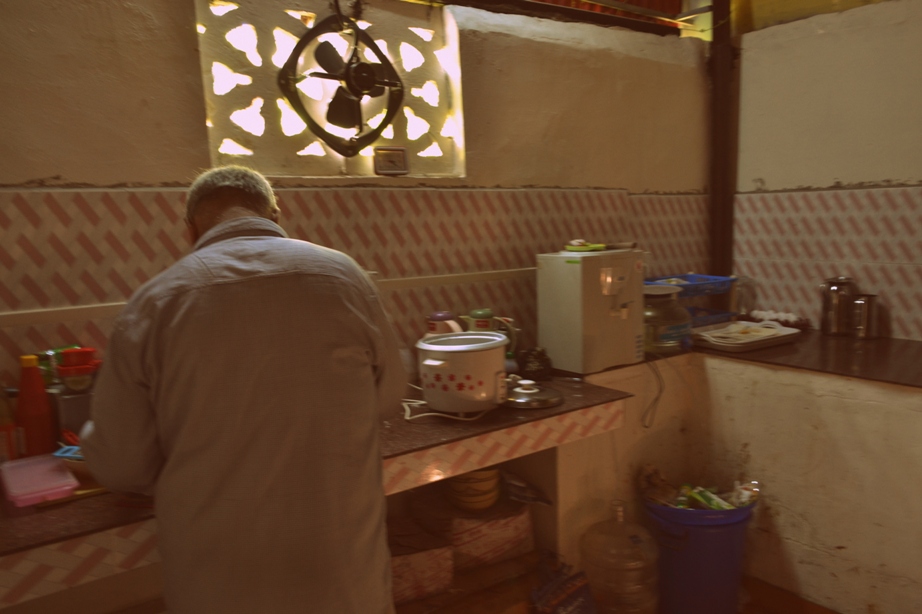
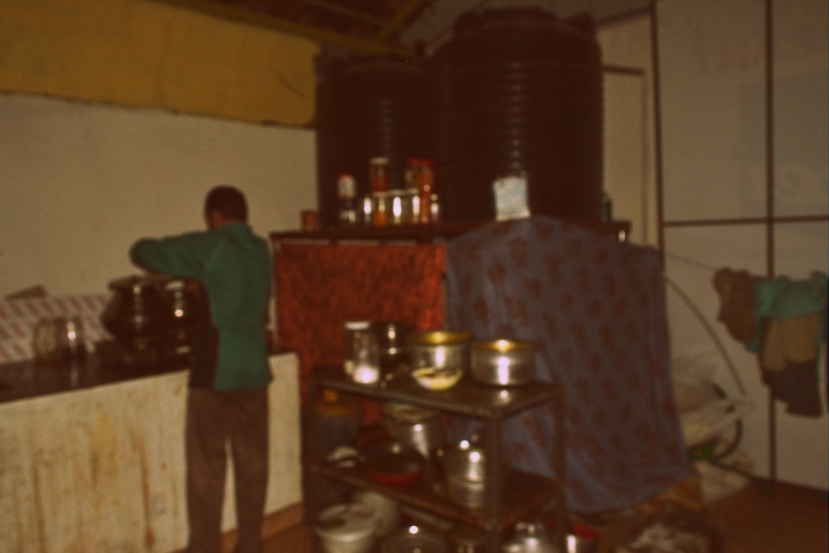
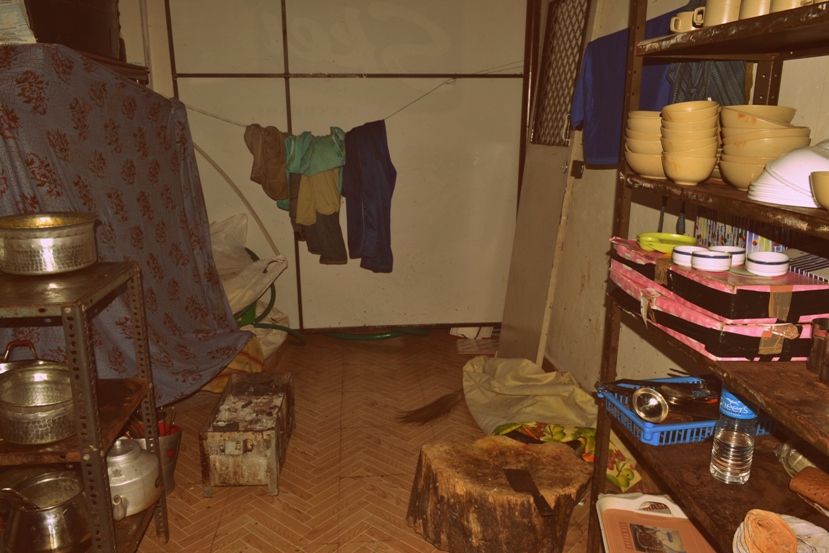
‘Takhtaa Mondhur‘, the wooden log traditionally used for cutting meat, brought all the way from Kashmir. We ordered two pieces of Gostaba, four bowls of Rista with two piece each and rice for four.
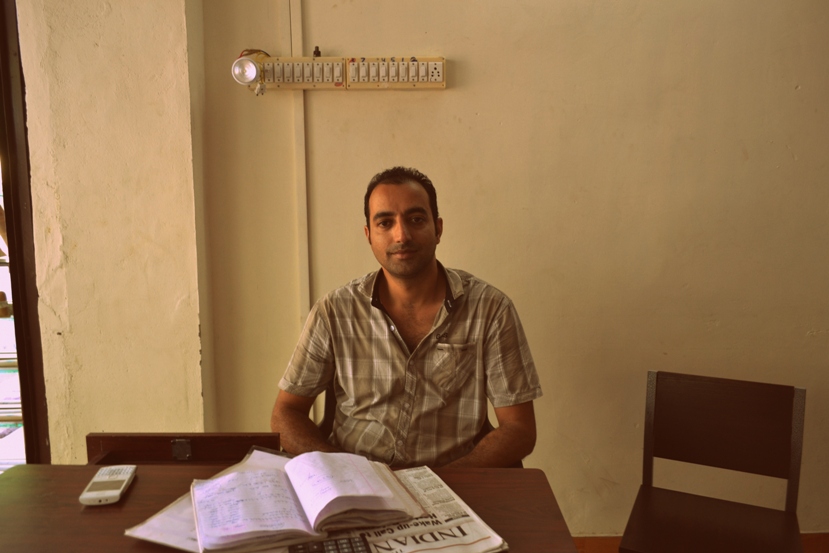
Ejaz opened up the place around 25 days back. I noticed that Rista had a more soupy feel to it and a different taste. Ejaz mentioned that here they add extra saffron to everything, apparently the foreign tourists love it, so all the traditional recipes have been modified. Bill was around Rs.1000. Meat is a lot costly in Kerala while cheaper options are fish (available obviously in plenty), beef (a good decent plate of fry for breakfast can cost as little as Rs. 40. Most of the cattle is imported from T.N) and chicken (available universally).
-0-
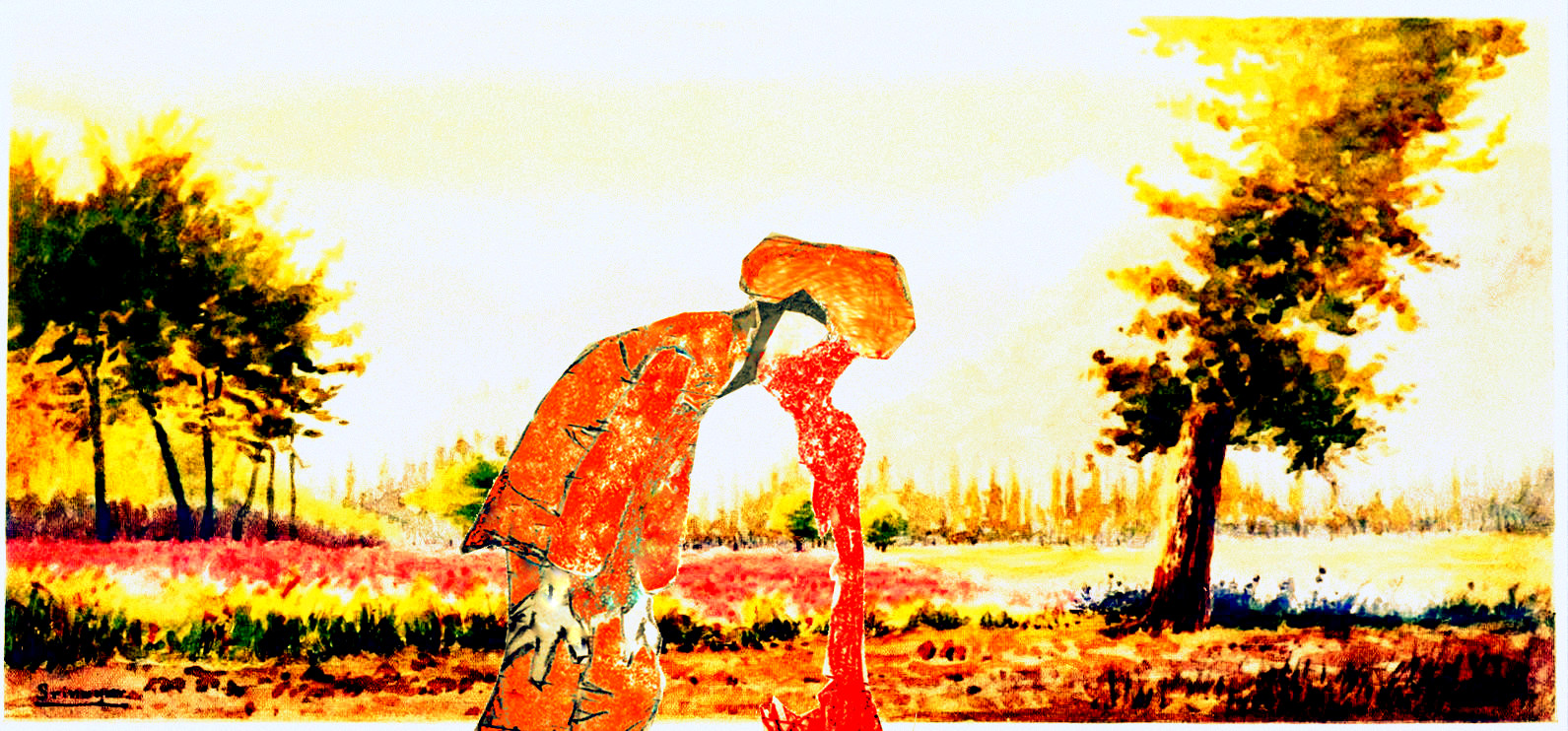

Years were 1897-98. Vivekananda wanted to set up as Math in Srinagar. He needed some land. Like most visitors, he stayed on houseboats, traveled on boats. Camped at sweet European camping spots. Met the royalties. But land was refused by the British Regent Adelbert Talbot. With his foreign friends, he celebrated American Independence day floating on Jhelum, holding on to a locally made crude American flag. He even wrote a poem about the day: Bethink thee how the world did wait, And search for thee, through time and clime. A few years later, died on the same day of July. In Kashmir, he visited Mughal gardens – Shalimar, Nishat… and ancient temples – Bijbehar and Mattan. He climbed hills- Shankaracharya and Hari Parbat, and trekked his way to mountain abode of god Amarnath. Here he told shell shocked Sadhus to not treat Muslims, and others, as infidels. Suffered what his doctor called a ‘massive heart attack’. Survived and claimed: ‘Now I have seen Shiva too’. In valley, he worshiped four-year-old daughter of his Mohammedan boatman as goddess Uma. He told Pandits that it is fine to send their children to a missionary school. At Khir Bhawani, he wondered why Goddess of this land didn’t protect herself from the Muslims. Claimed Mother Goddess answered, ‘It’s alright! I protect you, not the other way around.’ Here he picked up a Muslim devotee, a man he cured of migraine by a roll of a hand over the head. Here he made a mistake and found himself in middle of an ancient game of metaphysical star war. This man used to be a devotee of a local Muslim Fakir. The Fakir on losing a soul, cursed the man in orange robe, ‘Before you leave this valley, you shall taste your own blood. You shall remember, you too have a body. You shall vomit blood. Mark my words!’ And the words soon turned true. The story goes: Just before leaving the valley, Vivekananda vomited blood. It shook his core: ‘I have seen gods, talked to them, understood their mind, and yet something as crude as this can happen to me. I can be cursed. How? Why? What chance do the common folk have? What are we up against?’ His mind tossed and turned. His disciples took notes. Once back in his land, virgin-widow of his dead Guru advised, ‘Even Shankaracharya couldn’t survive these machinations. Even your Guru Ramakrishna was once cursed and vomited blood. Don’t worry. It probably saved your life. Had the blood gone to your head, you would have surely died. It’s probably all the yoga that you do.’ Some disciples wrote: Even gods are susceptible to craft. Rules of craft- words, written, said and thought – are all binding even on Gods.
-0-
* Based on ‘The Life of the Swami Vivekananda’ by Swami Virajananda (Publisher K.C. Ghosh, 1912) [archive.org]
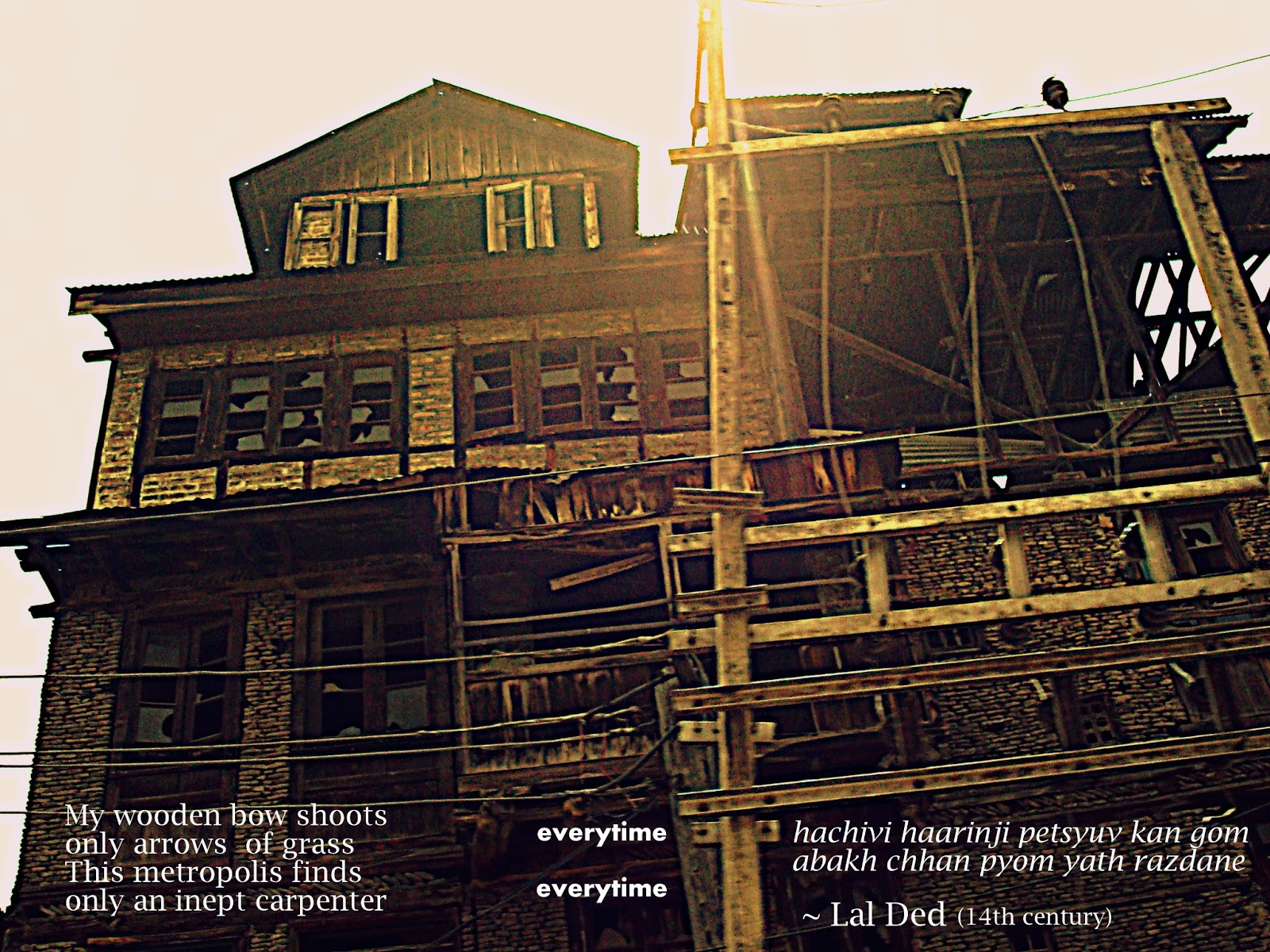

“My wooden bow shoots
only arrows of grass
This metropolis finds
only an inept carpenter”
-0-
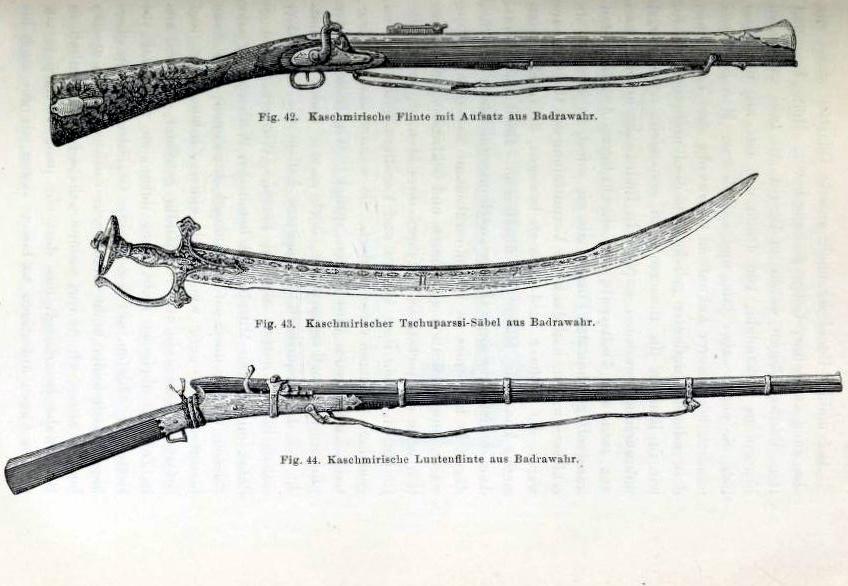

Came across these in a German work titled ‘Aus dem westlichen Himalaya: Erlebnisse und Forschungen’ by Károly Jenö Ujfalvy (1884). All these specimen appear to be from Bhaderwah. In Kashmir, the art of gunmaking was introduced during era of Afghan rule. Best of the gunsmiths had shops at Nawatta in Srinagar. There still remain some old makers at Bandook Khar Mohalla, Rainawari (Gunsmith Lane) of the town.
1.
-0-
Previously:
Kashmiri Swords, Divine Bow and Arrows, Shalimar the Clown