-0-
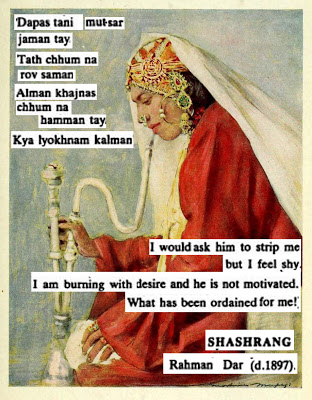
Original painting by Mortimer M. Menpes
Found the lines and translation in Encyclopaedia of Indian Literature: sasay to zorgot edited by Mohan Lal, from a section by Shafi Shauq on the poet.
A rendition of the lyrics, @Youtube

in bits and pieces
-0-
Original painting by Mortimer M. Menpes
Found the lines and translation in Encyclopaedia of Indian Literature: sasay to zorgot edited by Mohan Lal, from a section by Shafi Shauq on the poet.
A rendition of the lyrics, @Youtube

Har ek admi apne mulk ko Kashmir samajhta hai
Every man thinks his own country Kashmir.
~ A line from a translation exercise in ‘Domestic Hindustani, a simplified and abridged grammar of simple colloquial Hindustani’ by D C Phillott; William George Grey (1907).
-0-
Previously:
Garmiyon may Kashmir jannat hai, 1886
 |
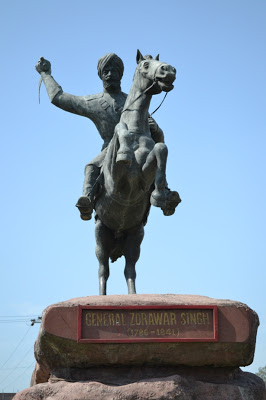
| A monument dedicated to General Zorawar Singh in Jammu |
Zorawar kay ghoday dhoday
Kuch log ujhday
Kuch desh bhasay
My Great-Great-Great Grandfather was a man named Kamal Joo Razdan/Raina, a cashier in Zorawar’s Army, posted at times in Gilgit. The family lore has it he even had a sword, a royal gift.
-0-
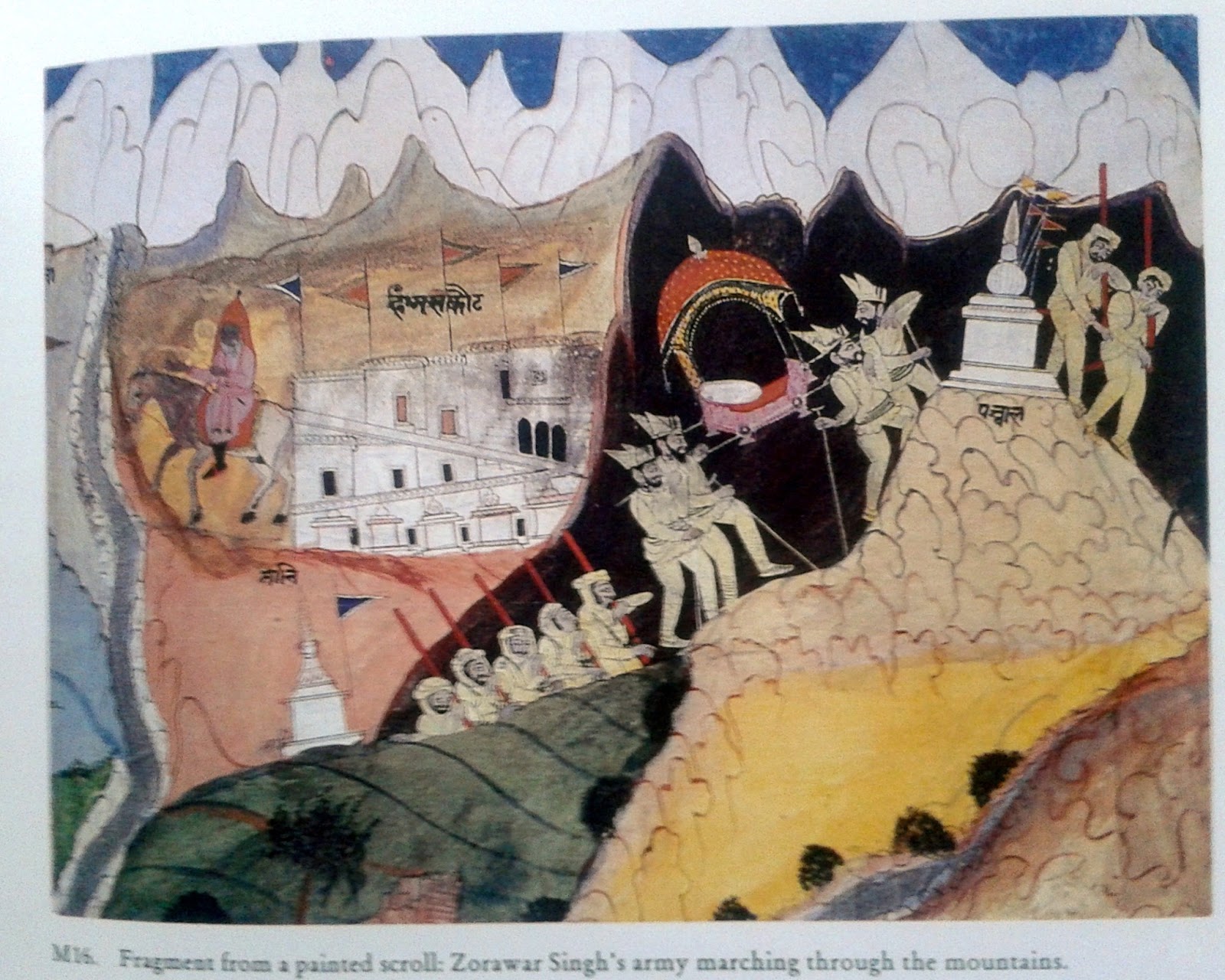 |
| Fragment from a painted scroll: Zorawar Singh’s army marching through the mountains |
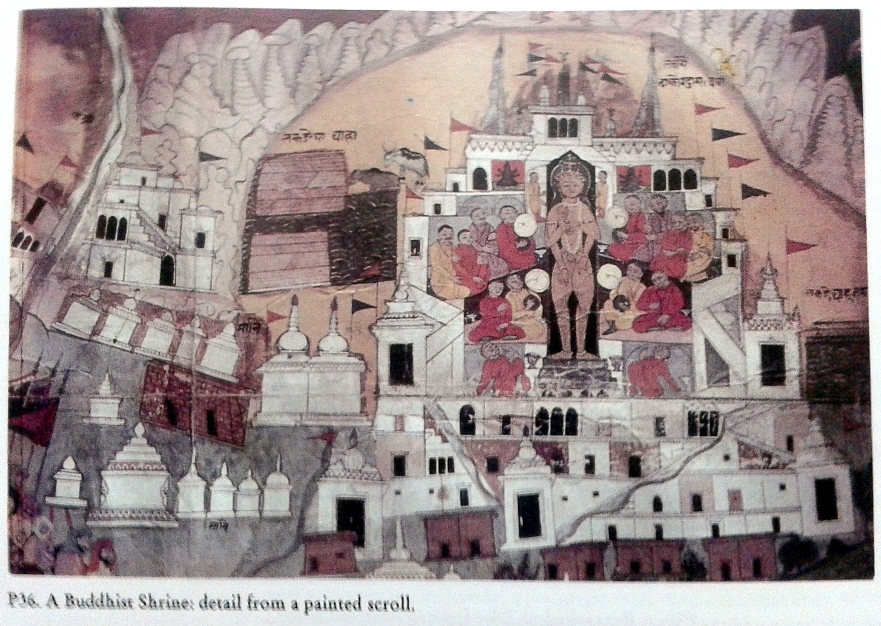 |
| A Buddhist Shrine: detail from a painted scroll. [In the bottom left corner can be seen Zorawar’s Army, looking on] From Kashmiri Painting by Karuna Goswamy, 1998. |
-0-
In Leh, we hear Ladakhi women singing the song of Zorawar Singh’s wife:
I do not wish to eat bread received from the sinful northerners
I do not wish to drink water received from the sinful northerners
Amidst the inhabitants of this land I have no friends and relations…
When arriving at the Zoji-la-Pass, my fatherland can be seen…
Although I can see my fatherland, I shall not arrive there…
In Jammu, a wife of a soldier sings:
Tera miga ladga i manda, O gadda,
tera miga lagda i manda,
Eh Patwari migi khat rehyum liki dinda,
sau sau karnian Chanda.
Kehsi banai Rama
Jange di Chakri
I am sick of separation, my love,
I am sick of separation,
I entreat the Patwari again and again,
To write a letter for me, but he refuses,
So you leave the army and return home.
Why, O God Rama, have you created a permanent institution like the Army?
~ lines found in book, ‘Jammu and Kashmir’ by Somnath Dhar (1982) [link]
-0-
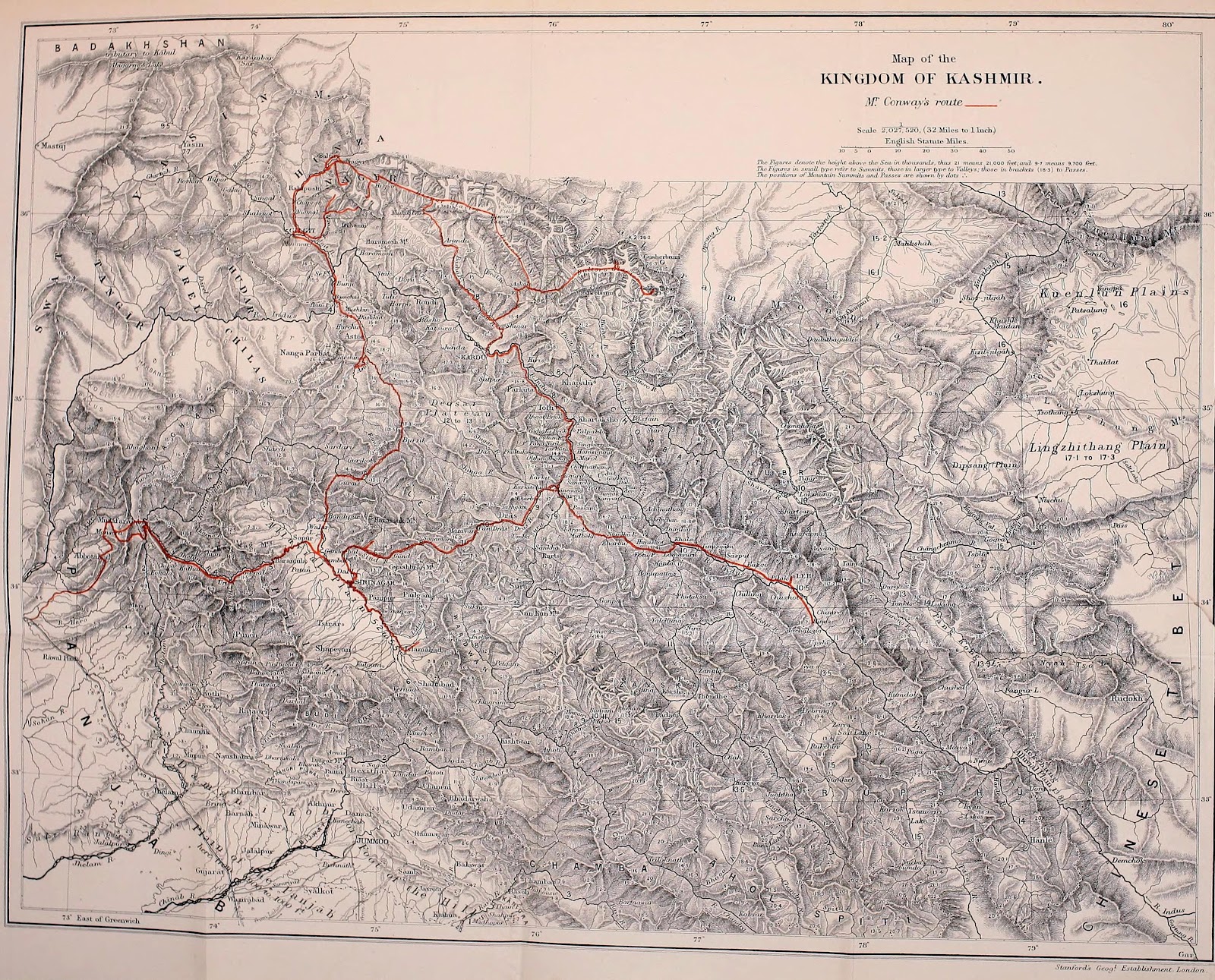 |
| Map of Kingdom of Kashmir from David McCormick’s ‘An artist in the Himalayas’ (1895). |
-0-
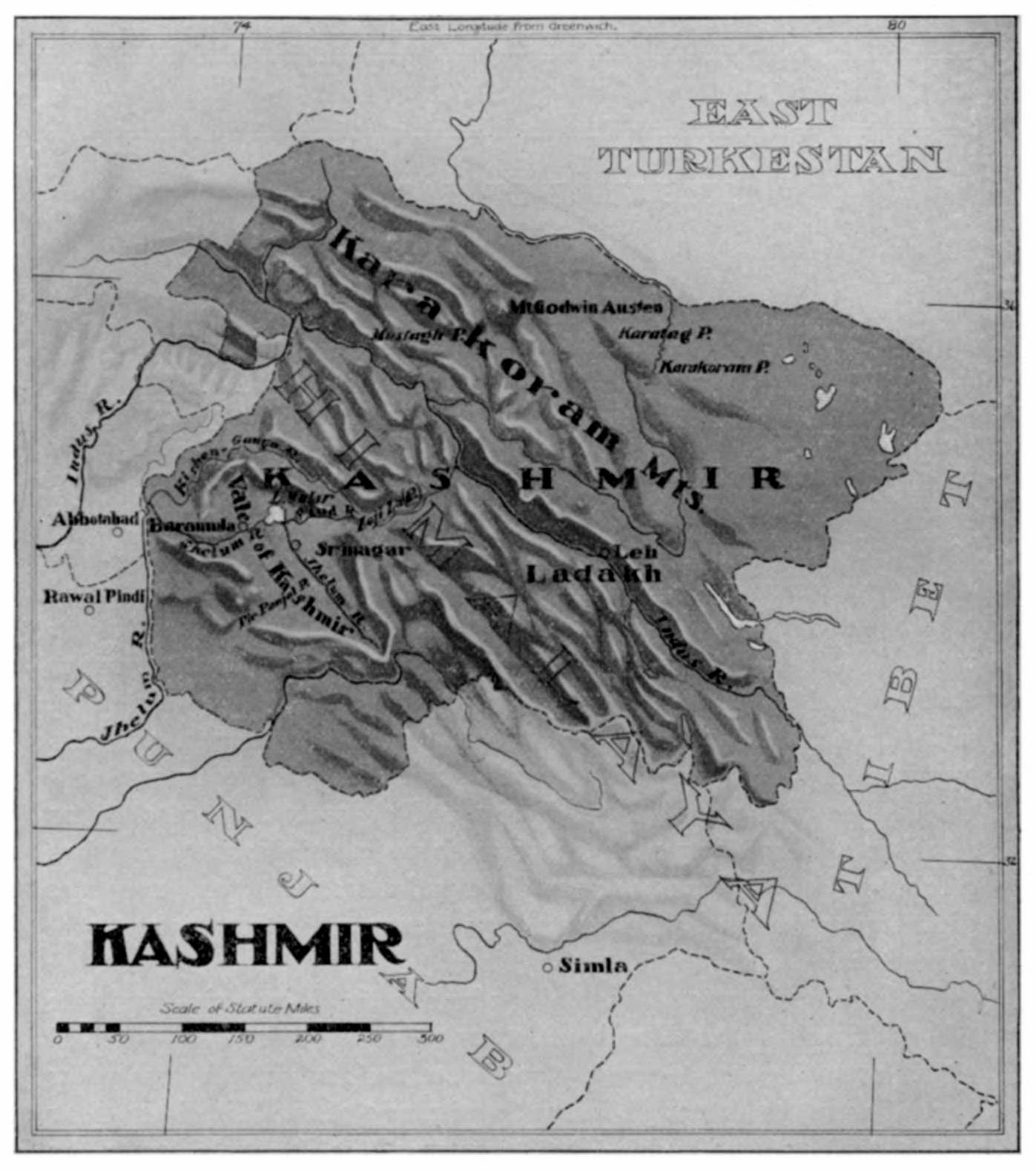

From ‘The Vale of Kashmir’ (1906) by Ellsworth Huntington
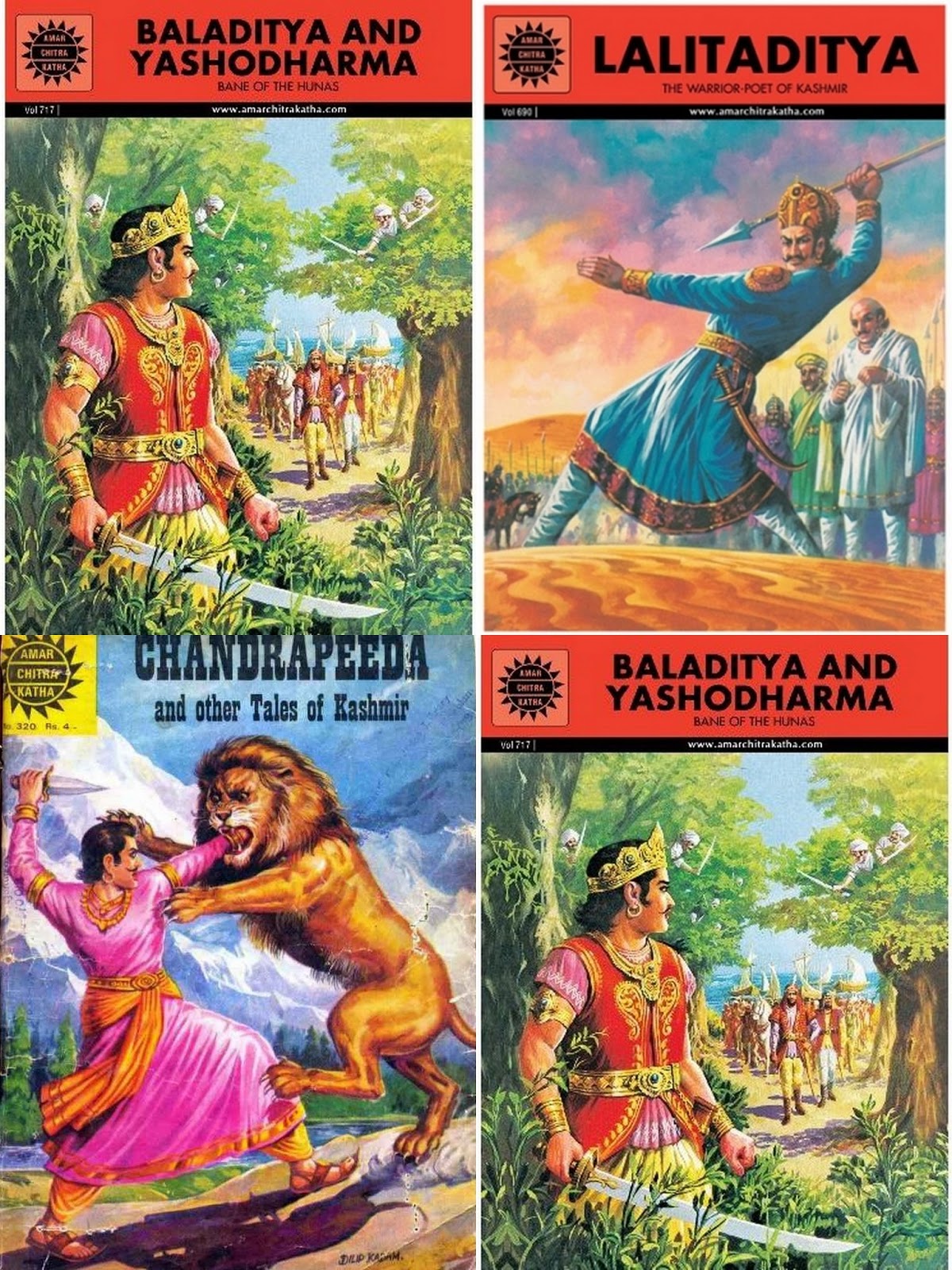
It was around 1989 in Kashmir that I first discovered the world of comics. I came across a treasure chest belonging to an elder cousin. I remember staying up all night, my first all nighter, to go through his entire collection comprising mostly of Phantom of Indrajal comics. I remember witnessing my first break of dawn from a window of my Massi’s place in Chanpore. I was seven, I couldn’t actually read those comics. Comprehending words was a challenge. Bubbles in the panels, a puzzle. But it was the colorful images in those panels that spoke to me. They spoke of some other magical worlds. A world were guns went ‘RaTaRaTa’, punches went ‘WHAAM’ and men went ‘UUg’.
Recently, after having helped in a minor way in the creation of a new generation of comic in India on Kashmir and that too with a high dose of History, I couldn’t help but wonder what Kashmir, the place, its people, looked like in earlier Indian comics.
The most obvious place to start was Amar Chitra Katha.

If it’s Amar Chitra Katha, it has to be history. Amar Chitra Katha has a bunch of issues based on stories from Kalhana’s Rajatarangini. Here the action is based in Kashmir (and please note Dharmendra or Amitabh was not the first hero to battle a wild cat, Jaydpeeda of Kashmir was). Some issues carry stories from Somadeva’s Katha Sarit Sagara (in which we have more of Ujjain), and there are are some ancient ‘travelogue’ issues in which we see a panel of Kashmir (like in case of comic on Hiuen Tsang). That’s about it.
Next, we pick Indrajal. In its ‘War-Series’ comics, in one on China war of 1962, we see a glimpse of peaceful Ladakh.
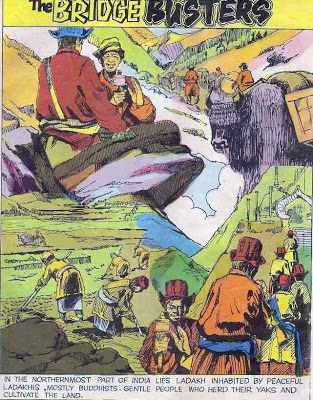
That’s about it. But then in late 1980s, just as Kashmir began to simmer like never before, and just as Indrajal’s readership was dwindling, Kashmir became a central prop for one of the ‘newest’ action hero’s created indigenously at Indrajal.
Dara, urf Rana Vikram Bir Singh, urf Raja Saheb, an flamboyant ex-prince of Kashmir who secretly works for Indian Intelligence Wing run by one Mr.Rao. In all there were about 8 issues published after which not only the series but Indrajal too shut shop. Of these 8 issues at least two stories are based in Kashmir – ‘The Savage Mercenary’ (with some of the action taking place on snow capped mountains) and ‘Sparks of Treason’. Of these two, ‘Sparks of Treason’ is the most interesting specimen of ‘Kashmir issue in Indian Comics’.
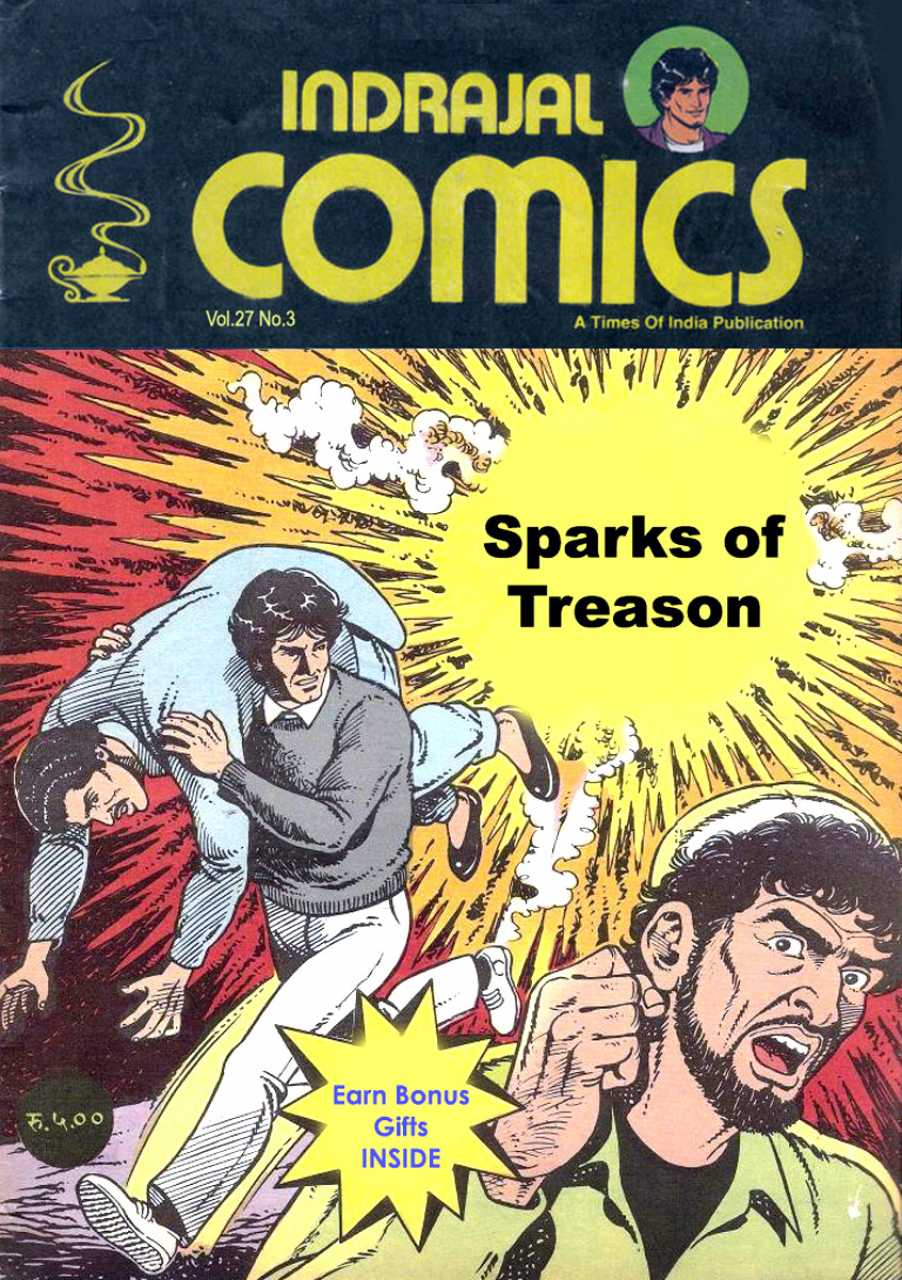
The title and the cover sets the tone. Dara the super spy is called in by Mr.Rao to save Kashmir from a gang of Agent provocateurs who are tying to spark treason.
The way that story unfold reminds one of the gratuitous Hindi films on Kashmir made in 1990s. And this comic came out in 1989.
Some interesting panels.
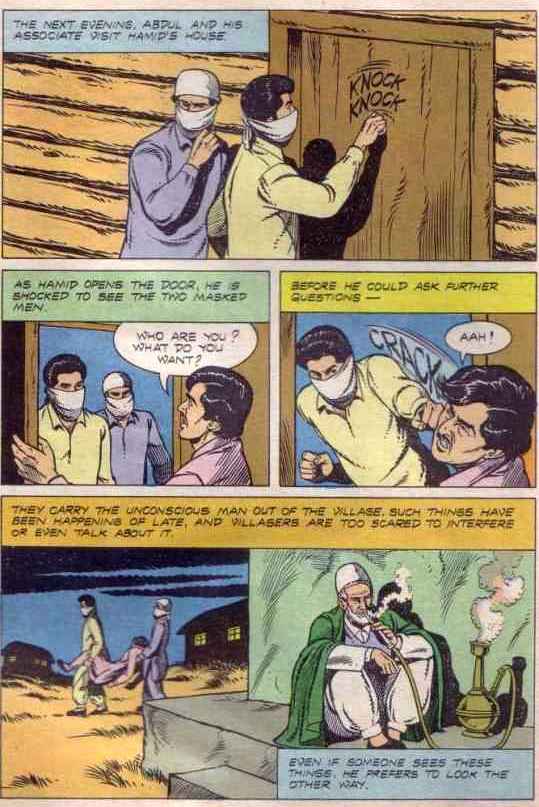
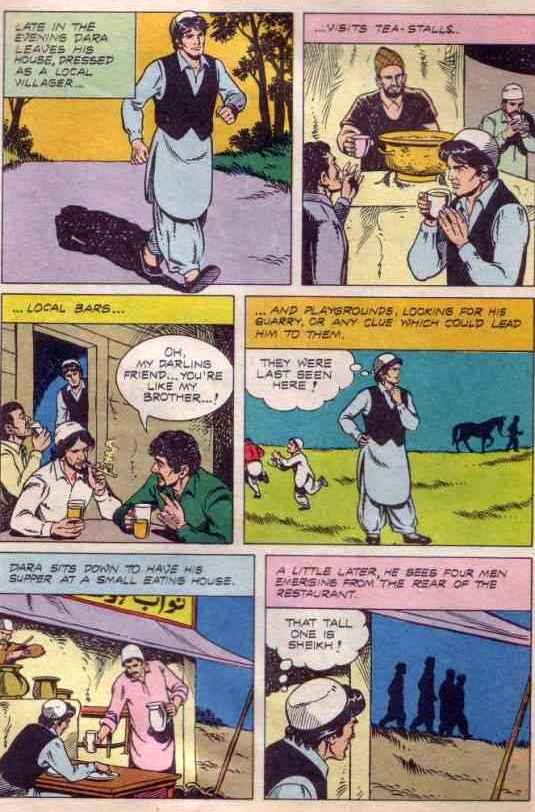
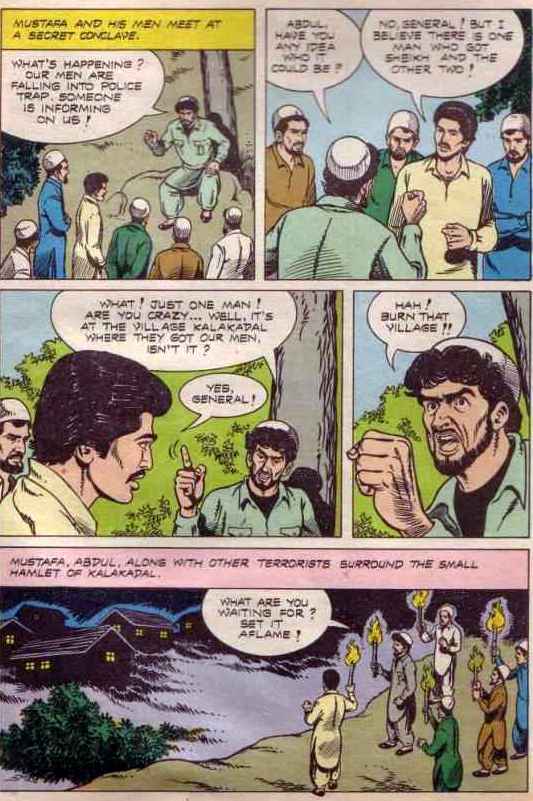
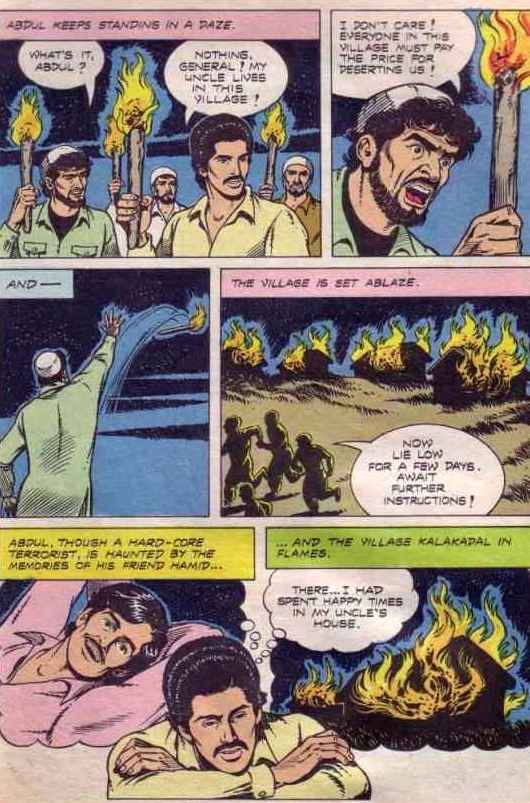
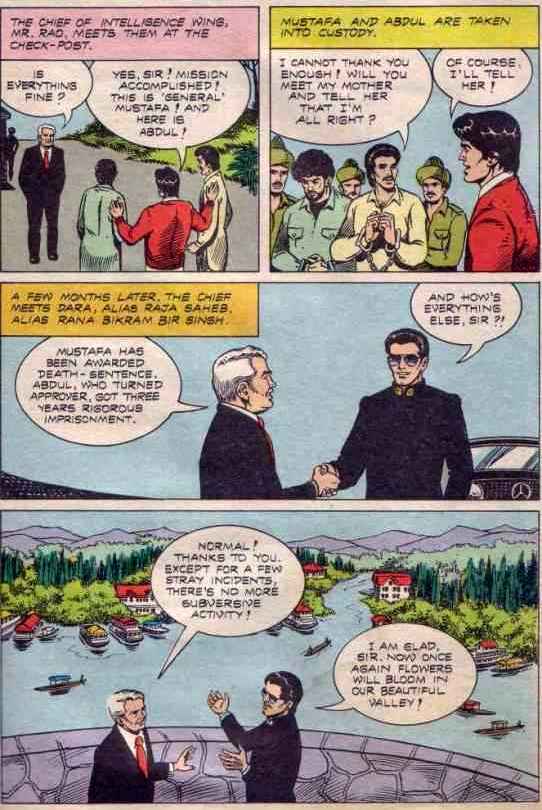
The way the situation is sorted out in the comic reminds one of a recent statement by Union minister Jairam Ramesh, “Spy agencies dictate Kashmir policy.“
-0-
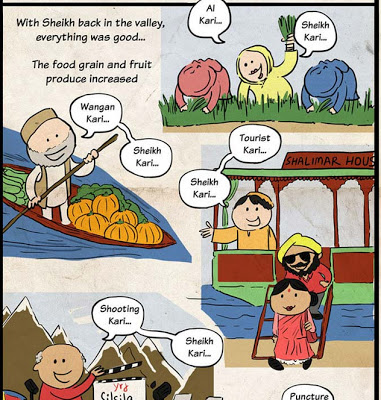

With expert inputs from yours truly…first part of the last concluding part of Sumit Kumar’s ‘Kashmir Ki Kahani’ is out. Read and become an instant expert on Masala-e-Kashmir. Check it out at newslaundry.com
Expert comments like: “But…but… Ornub, back then times-n-climes were different… we forget Maqbool Butt was handed over to the police by a Kashmiri Mob who didn’t know or care who he was…I am only talking about the social narratives that have been undermined by the mainstream media….” are welcome. As are comments like: “Indian Trith”
-0-
Previously: Comic Story of Kashmir
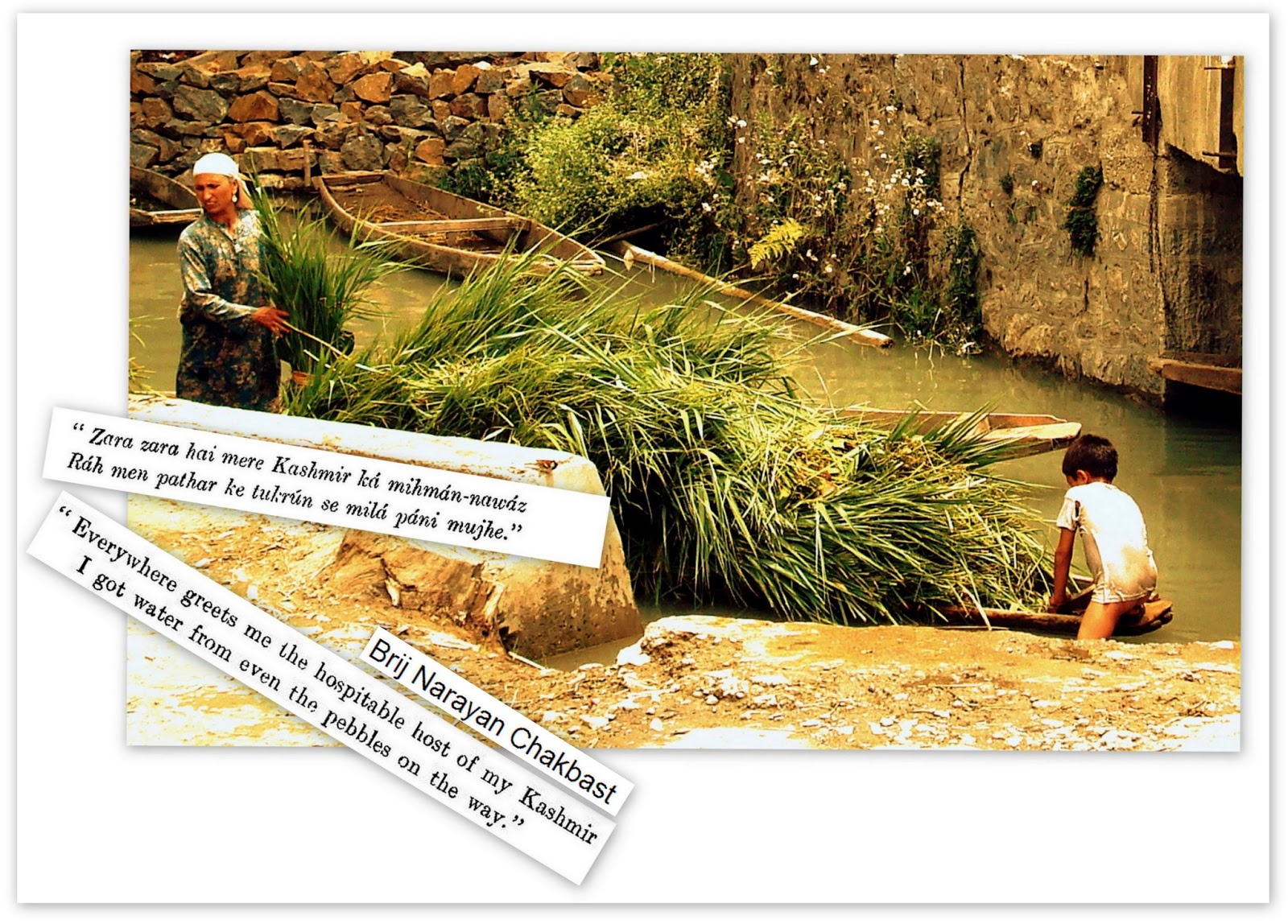

Village Tulamula, 2008.
“Zara Zara hai mere Kashmir ka mihman-nawaz
Rah men pathar ke tukrun se mila pani mujhe”
I first came across these lines (typically, unattributed ) in the book ‘Kashmiri Pandits’ by Pandit Anand Koul (1924). Recently, picked up that the lines are by an Urdu poet of Kashmiri origins, Brij Narayan Chakbast (1882–1926).
-0-
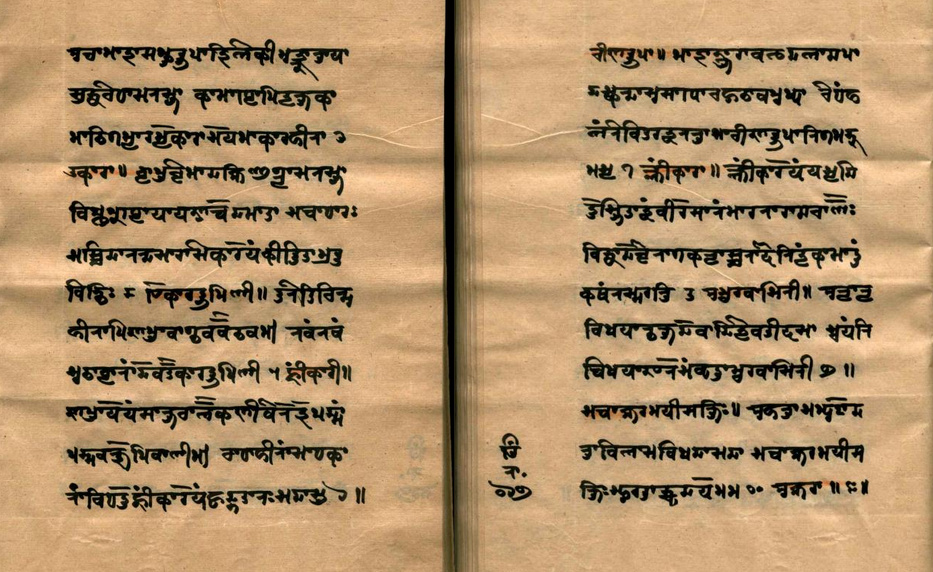

A page from 17th century poet Sahib Kaul’s Devi Naam Vilas (archive.org)
-0-
October, 2016
Update: The book was scanned and uploaded by eGangotri, an initiative based in Delhi that provides free scanning of ancient manuscripts and old books.
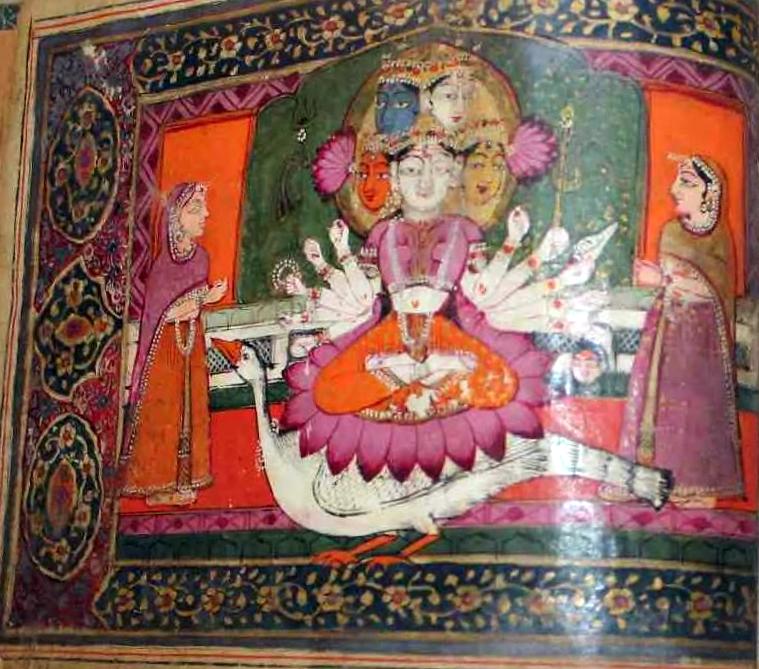
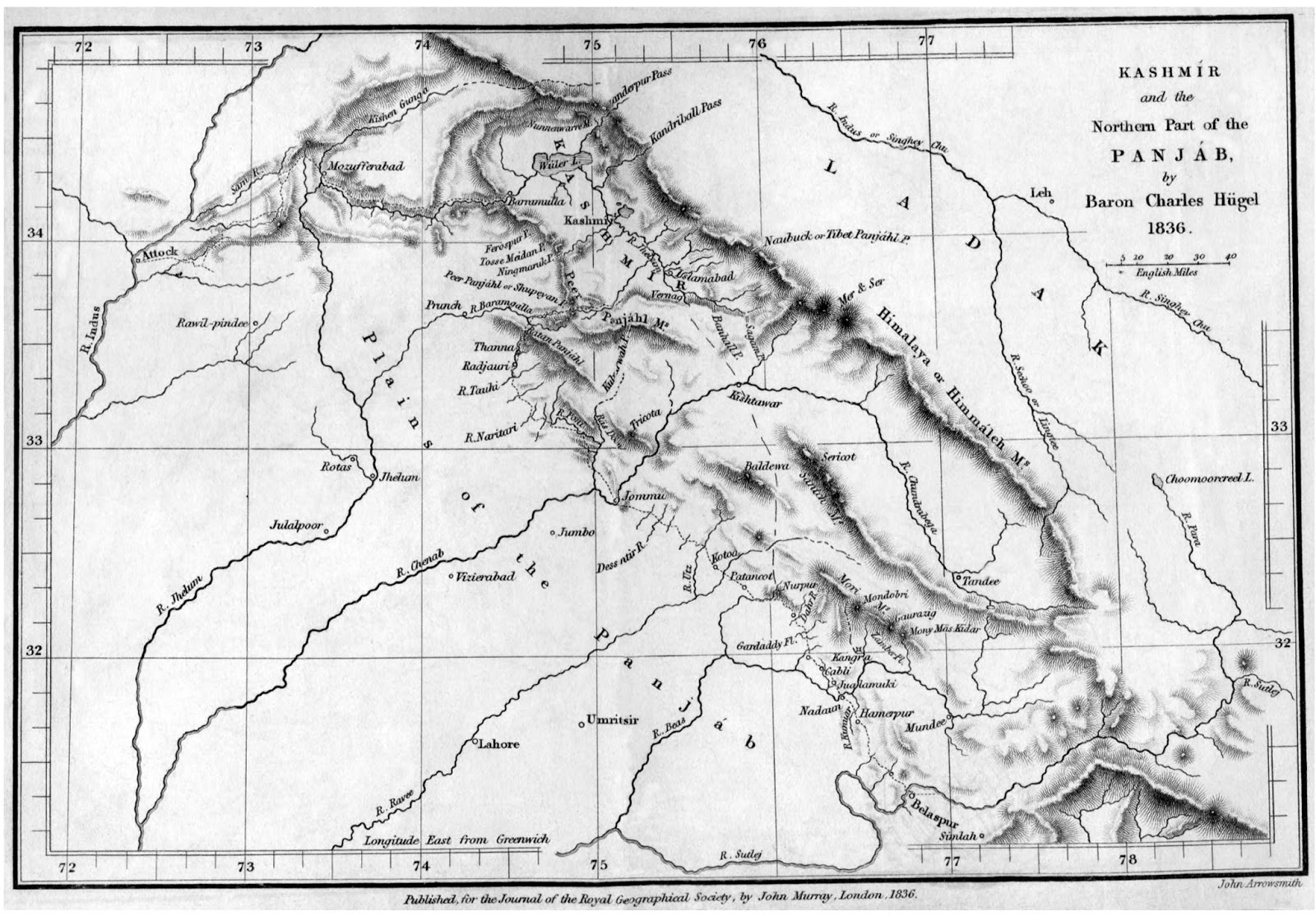

‘Kashmir and Northern Part of Panjab’ from ‘Notice of a Visit to the Himmáleh Mountains and the Valley of Kashmir, in 1835 ( by Charles von Hügel, January 1, 1836)
-0-