The Pundits of Kashmir by J.J. Modi, 1915

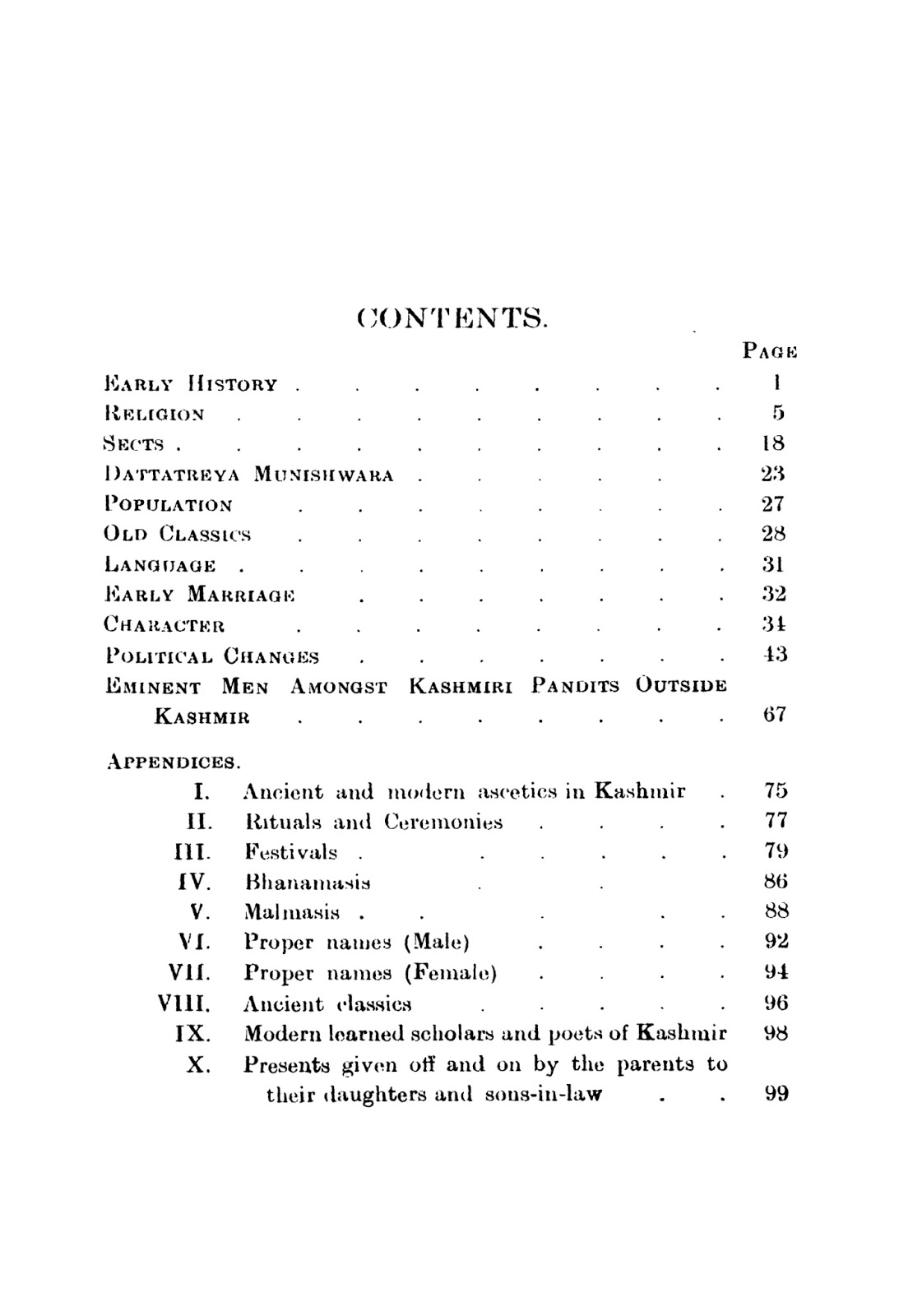
Jivanji Jamshedji Modi’s paper ‘The Pundits of Kashmir’ (1915) for Journal of the Anthropological Society of Bombay (Vol. X, No. 6, pp. 401-85) was probably one of the first writing on pandits that looked at them from the prism of an ethnographic questionnaire. An interesting work because some of the topics touched here were mostly left unsaid by Pandit writers of the time.

Check: An additional division of Pandits along language spoken, Malechchas of Mirkhula as Zoroastrian fire worshipers, no marriage with outsiders, no talking in front of elders for married couple, no to polyandry but yes some cases of polygamy, mechanics of divorce, dressing differences between followers of Shiva and those of Shakti, river in Lar as nakali Ganga, rare cases of private prostitution, yes to meat, no to beef, pork and eggs, no to onions, tomatoes, carrots as they can cause ‘excitement’, can only eat uncooked food sitting with other Hindus and no food with others, yes to opium, charas and wine while some non-pandit Kashmiris brew Kehwa with snuff.

Read:

Download link

We have come a long way.

-0-

Unrelated post:

Vessels Redux

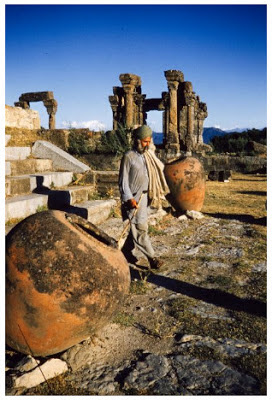
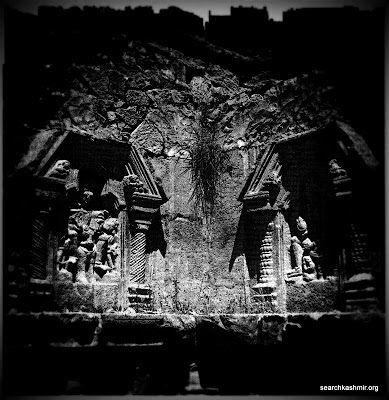
Above: Martand shot by Brian Brake in around 1957.

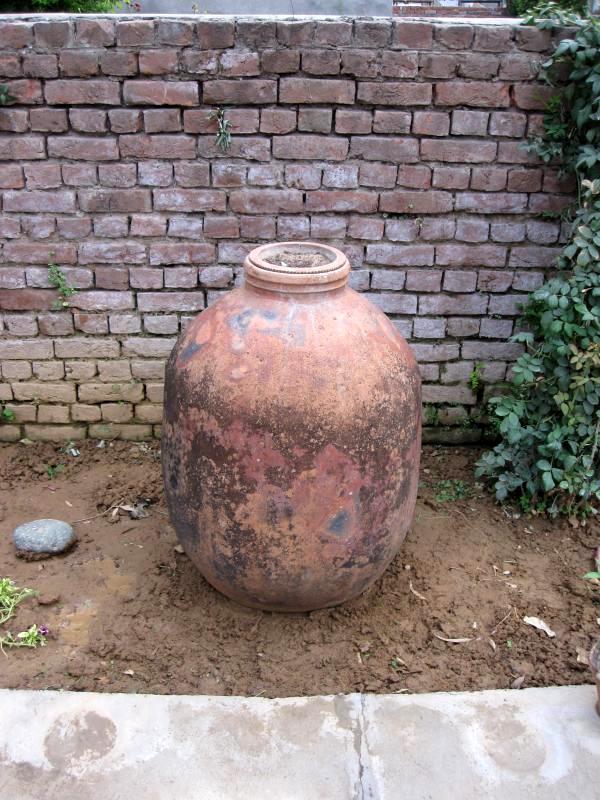
Below: A photograph of an old terracotta Kashmiri vessel brought to Jammu along with other things. Shared around two years ago by Man Mohan Munshi ji.

-0-

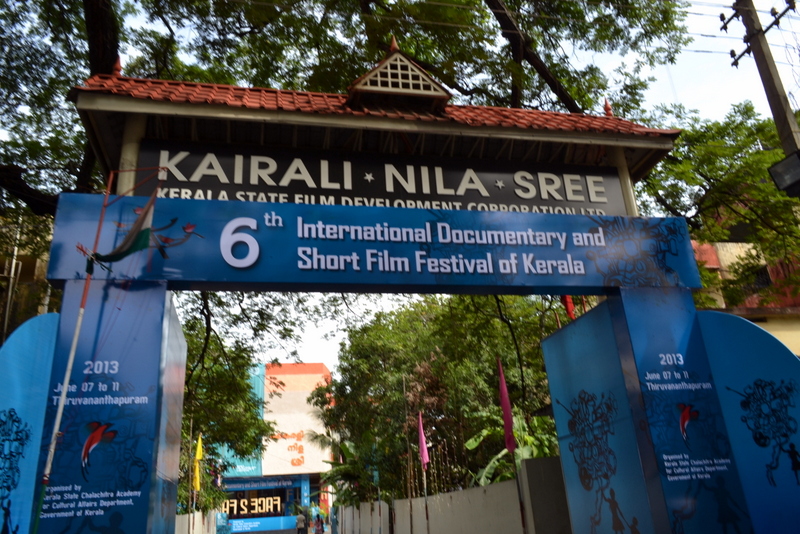
Kashmir in Kerala film fest

I spent this Sunday doing nothing but watching films and just films. Traveled from Cochin to Trivandrum to catch some short films made by Kashmiris on the “Pandit” experience.

First up was in “showcase” segment Siddharth Gigoo’s The Last Day (12 min.). Siddharth Gigoo was already was a poet, then a novelist and now he is a filmmaker. The scene he picked to shoot is something that a lot a pandit’s witnessed and can relate to. Old pandits slow dying in Jammu with fading memories of Kashmir. The execution is simple. Not bad for a first attempt.

Second up was Rajesh Jala’s 23 Winters (30 min.), competing in ‘Fiction’ category. The story follows the “Back to Kashmir” trip of a pandit in Delhi named Bhota (a popular nickname among pandits of a certain generation) who is suffering from schizophrenia. It makes strong use of visuals and sounds to put the viewer in the mind of the protagonist. The experience is unnerving. Specially when you know it is not fiction.

The director was present at the function, so later had a little chat with him over a coffee (which he generously sponsored). Rajesh Jala was living with the real life protagonist Bhota as a neighbor in a Delhi camp for nine years. When he started shooting him last year, he didn’t know Bhota was going to visit Kashmir and have a breakdown. Rajesh went back to Kashmir to trace him and get him medical help.

I could hear sneers in the hall during the screening. Rajesh probably heard that. Even though I didn’t ask, he did mention its not a film for everyone and its the only way he could have made this film.

The use of radio sounds in the film reminded me of a little video I made around 4 years ago:

In addition to these two movies, there was Firdous/Paradise (11 min) by Tushar Digambar More. What this film offers is the ‘military’ experience of Kashmir. The episode takes place inside an abandoned Pandit house where a group of troops and a local Muslim villager, under some sort of protective custody, take shelter during a “cordon and search” operation. Here they share a brief conversation on the former owners of the house. By the end of the story we realize, unknown to him, the helpful and decent villager has lost his house to the operation.

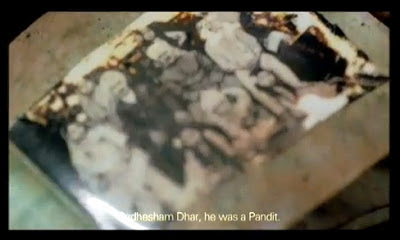
The surprise for me in this little film was a sequence in which an officer goes through an old family album he finds in the house. The bits and pieces from this blog have again helped someone fill a gap.

A screenshot from the film

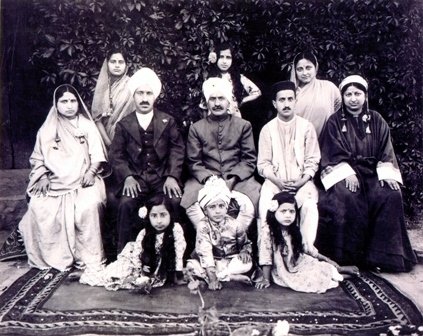
Photograph of of a Kashmiri Pandit Family taken in front of their farm house at a stones throw from the famous Neolithic site of Burzahom, Kashmir in 1930s.
Shared by a reader, Man Mohan Munshi Ji, in 2010

Although the makers didn’t give credit or a line of thanks. Some of those images are from this this blog. Some from vintage books. Some shared generously by readers from their private albums.

-0-

Oddly enough there was a Bulgarian film too that somehow reminded me of Kashmir. Tzvetanka by Youlian Tabakov (66 min). This stylish documentary tells the story of modern Bulgaria, mapping it to the events in the life of a girl born in a bourgeois family just before World War 2. By the end of the war, her idyllic life is destroyed with the coming of communist regime. The regime ends in 1989, democracy comes, she thinks the world will now be a better place. It turns out to be a mirage. She realizes world is still the same. It’s the same men from the regime now championing the cause of democracy. Revolution came and nothing changed. It is clear that this woman has seen a lot in her life and yet her love for life is unshakable and inspiring.


-0-

-0-
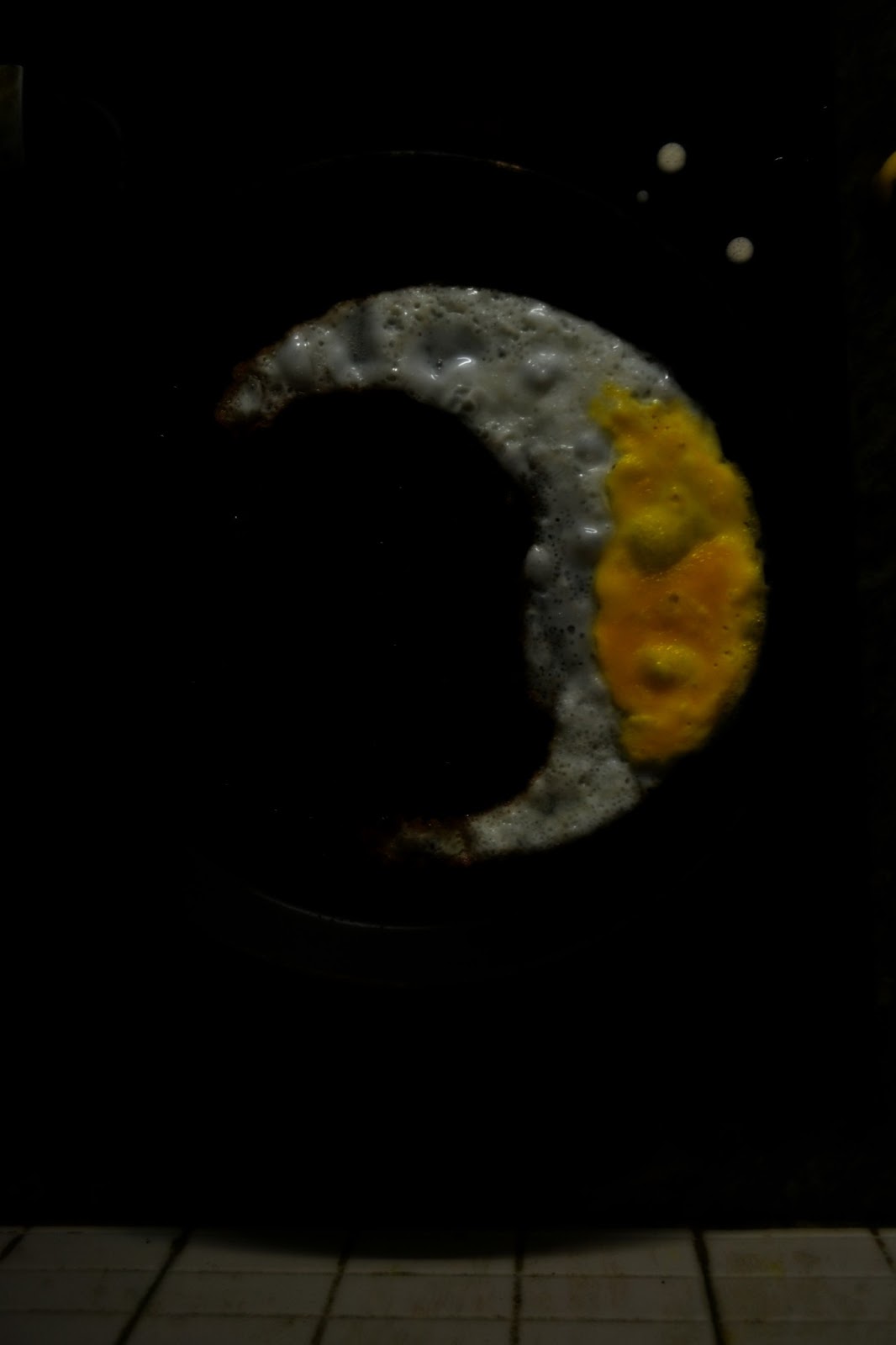
After catching these films (and around 15 others), I headed further south to Kanyakumari. Where I was greeted by this:

-0-

The Day Jumoo went Mad

Jumoo wasn’t his real name. Although he was from a migrant
camp in Delhi, nobody at college called him Dilli. They called him Jumoo for
the way he pronounced Jammu.
‘You can keep two. But I will keep one.’ That’s how he
introduced himself to me when we first met. He was just behind me in queue for
submission of admission forms to an engineering college. I turned around to see the face of the person who had whispered those cryptic lines into my ears. I found a sun
burnt face with a long beak and two squinty eyes. I stepped back a little to look at the complete form. He
was skinny, like a boy just out of teens, and short, like a man shortchanged by
evolution. I couldn’t understand what he meant by that “two-one” business. The
boy read my face and pointed to the girls in the alternate queue. He meant the
pandit girls. He let out a big laugh. The smell of his soul engulfed me. The
boy had horse breath. His innards were eating him inside. But he looked like a
cheerful person, a person full of cheers even though he probably didn’t have
much to cheer in life. I knew he was trying to be friends with someone from his
own kind. At that moment I knew I was going to avoid this person for rest of my
coming years in college. But something told me it wasn’t going to be easy.
Next time I saw him, he was crouched in a ‘murga’ position
on top on an almirah, his head only inches away from ceiling. These were the
first day of ‘first year’ ragging. We both were getting ragged. A boy in the
room had ordered me to fetch water for him. This boy was a super senior, which
meant he had been in college for years and wasn’t going to pass out anytime
soon. He was really from Jammu. While I was fetching water for him, he had found better entertainment. As
I entered the hostel room, the boy on the almirah greeted me by flapping his
arms like a chicken and laughing. The tone of his relation with this world was
set.
Although for a year we lived in the same hostel, our friend
circle was different. I moved in with guys from Delhi. He moved in with guys
from Bihar. So I only heard stories about him. Jumoo was  seen dancing on the road pretending to be Hritik
Roshan. Jumoo was seen at a roadside stall pretending to be Sunny Deol, trying
to lift a bicycle on his head. On Holi, a group of boys ganged up on Jumoo and
torn off all his cloths and left him without a stitch on his body. Sometimes he
would come to meet me, ask me to help him with studies, then would suddenly change topic tell me about some
girl that he thought liked him but who he thought I might like, then he would
suddenly try to sing English songs…mixing Metallica with Backstreet boys and lot of cuss words. He
would stay till some of my roommates would ask me to show the door to my mad friend.
I would tell them he isn’t my friends. He is just another mad Kashmiri. A Jumoo. Jumoo would
leave but not before making some more self deprecating jokes. The world
avoiding him like something of him would rub off on them.
A year ended. Before the start of next session all the
students went back to home towns. I didn’t go home. I went to Jammu. Jumoo went to Delhi. Then
one day in summer, he showed up at my place in Jammu. He had some relatives in
Jammu and was staying with them. While in Jammu he thought of catching up with
me.  During our conversations I had only
given him brief details about the place where I lived and yet he managed to
find my house. As cruel providence would have it, while trying to trace my
address, in the bus he asked a woman about directions to a certain locality. This
woman lived in the same locality so she asked him some more question. The woman
he met was my aunt and she led him straight to our house thinking Jumoo was my college
friend. I was angry. The rules of randomness that govern the universe, should
not have let this happen. Even my real friends, my best of friends had not been
to my house. The last time I had invited a friend home, I was in Kashmir, I was
at home, at our real house. And now this mad boy knew my corner on this planet.
My hiding place. Jumoo invited himself to lunch after an inspection of our
house. I made an excuse about some urgent work in the city and told him I could
accompany him the way back to town. We got in the bus together. I got down from
the bus at a stop, waived him goodbye and returned home. It was all an inconvenience,
something not even worth remembering.
Back at college, I passed to second year. Jumoo failed most
of the papers. He somehow blamed me. We both moved out of the hostel. I was
still with people from Delhi and he was with people from Bihar. Over the next
couple of months I heard less and less about Jumoo and his performances.
Meanwhile, I was having my own set of problems with the world. I was reading books.
And what I read of the world and what I saw of the world, didn’t match. I read
some more. Marquez, Nabokov, Coetzee, Dostoevsky, Kundera, Bellow, Burgess, Conrad,
Camus, Faulkner, Eco, Heller, Huxley, Gandhi, Malamud, Koestler, Orwell…Puzo,
Sheldon, Newspapers, Comics, Magazines… whatever I could find. Still nothing
made sense. I was training to be an engineer, but the drabness of its technical
text was making me mad. I knew I was being taught bull crap. My grades were
dropping. It’s not that I didn’t understand the topics, I did. What I  didn’t understand was how any of this was relevant. They taught you Turing and Chomsky but told you nothing
about their lives. Maybe I was at the wrong place. Over the next coming year, I
was to know failure in its truest sense. I failed at everything. I knew I was
going down into a dark pit that probably had no end.
During this time, one day a roommate told me some terrible
news about Jummoo. ‘Your friend Jumoo has finally gone completely mad!’
That morning, Jumoo had been found lying unconscious on the
steps leading to the rooftop of the college by some girl students who run away screaming on witnessing the scene. The people who arrived in response to the alarm found Jumoo conscious
but in a state in which he was not able to comprehend anything he was seeing or
hearing. His eyes were blank. It seemed he had spent the whole night on those
stairs. An ambulance was called and he was sent to a hospital. At the hospital
after some basic test they discharged him as they couldn’t find anything wrong
with him. A few days later his parents came from Delhi and took his back with
him. I thought they should have come for him earlier. He wasn’t meant to be
there.
A year passed. One hot afternoon, I found Jumoo at our door ringing
the bell. He had a big smile on his face, his usual smile, a smile that seemed
like a conscious attempt at hiding uneven teeth. Expecting that he be denied entry,
he had brought along a gift: a girlie magazine and a Nagraaj comic. It seems
his breakdown had made everyone sympathetic to him. None of my roommates raised
an objection to his presence.
After the usual catching up, some casual ‘Hi and Hellos’,
some ‘Haa-Hees’ and after savoring his gifts, everyone went back to whatever
they were doing. Jumoo on his part went back
to his usual mode, sitting silently in a corner, trying to stay out of everyone’s
path, but still hanging around, like an apparition. It was just like old times.
I went back to computer, writing a program for ‘Snakes and
Ladder’. An hour later he quietly sat next to me and asked if I would like to
hear the story of the day he went mad. I kept typing on the keyboard while he told his story: 
“After migration my family moved to Delhi where Kashmiris
were living in a camp near … It wasn’t much of a camp…there was a hall where
a lot of families put up… each camping in a particular corner, the households separated
by pardhas… people fought all the time among themselves over things like right
to window, right to turn on-off light switches, right to a better spot under the ceiling fan, right
to use toilet first…one time a man abused my mother in front of me…I wanted to
kill him…I fell in love with a girl…I put a hole in a pardha to peep at her secretly,
sleeping, changing…you know…there there was no privacy…it drove me mad…I would beat-off
in toilet and my mother would be outside knocking asking if my stomach is
alright (laughs)…I am mad…no I am really mad. Why do you think I act like
this? Why I look like this? Look at my face…my parents took me to Dr. Razdan in Jummoo.
Are you related to him? He gave me some pills…I stopped taking them some years
ago… we never had much money…your house was big… a few years ago we moved to a
migrant apartment at Dwarka…My father had a private job in Kashmir, in Delhi he
took job as a lab technician in a private school. …I studied in that school…I
was never good at studies…then I came here…to the college…you didn’t help…I
moved in with those Biharis…no one else would live with me…hostel fees was too
much…But those guys turned out to be benchods…they would steal money from me…one
of them would beat me up with a belt… sometimes just for fun…you know the guy…I
hear you had a run in with him not long ago…still it was all good…then the
results came…I failed…I didn’t send the news home…still my parents said they were
coming to see me…that day I was really worried about the idea of them staying
with me with these Biharis…that day Biharis were really giving me a headache…when
they heard that my parents were coming they said they would throw me out…I thought they were
kidding me…but then they really locked me out…so that day I just walked around
the city all day…thinking what shall happen of me…I had no money in pocket…when
evening came I didn’t know what to do…where to sleep…I was sure my roommates were
not going to let me in…so I thought maybe I will sleep in the college…it was
the best place…so I started walking to college… on way to the college I saw a
truck on the road heading my way…a thought occurred to me:  This truck cannot harm me. If God exists, this
truck will stop if I were to come in front of it, or it will just pass right through
me, I am air, I don’t exist…so I walked in front of the truck…the truck stopped…the truck did stop…but the
driver started abusing me, I ran and ran (laughs aloud)…I ran towards college…it was night by the time I reached…there were no guards…nobody stopped
me…all the rooms were locked so I headed for the roof…the roof was also locked…I
was tired…so I slept on the stairs to the roof…in the morning some girls caught
me sleeping on the stairs and started screaming…I was caught…when the people
came…I didn’t know how to explain my situation, so I pretended I had gone mad. Imagine a mad man pretending to be mad. I
pretended I couldn’t see or hear them. I couldn’t understand them. You should have seen their face…they carried me
down the stairs like I was some king…I was taken to a hospital in an ambulance…at the
hospital, a lady doctor asked me question…I continued acting…responding with
umm-umm-aa to her queries…kidar darad ho raha hai…I even sang to her in Kashmiri (laughs). She concluded I had
lost my mind…I was only acting…it was a classic performance of a mad guy…like in movies…classic Sanjeev Kumar…you know…I should have won a medal for it…let’s go out to have tandoori chicken…how come you are always busy? Are you even listening?”
A year later, Jumoo waylaid me in college. At the same place
where we had first met. From his back pocket he took out an album of
photographs, it was a family album and all the photographs were of him posing with
a car, a Santro that his father had recently purchased. He was carrying the
album in his pocket and showing it to anyone and everyone walking that way.
That was the last performance of Jumoo that I unwillingly witnessed.
-0-

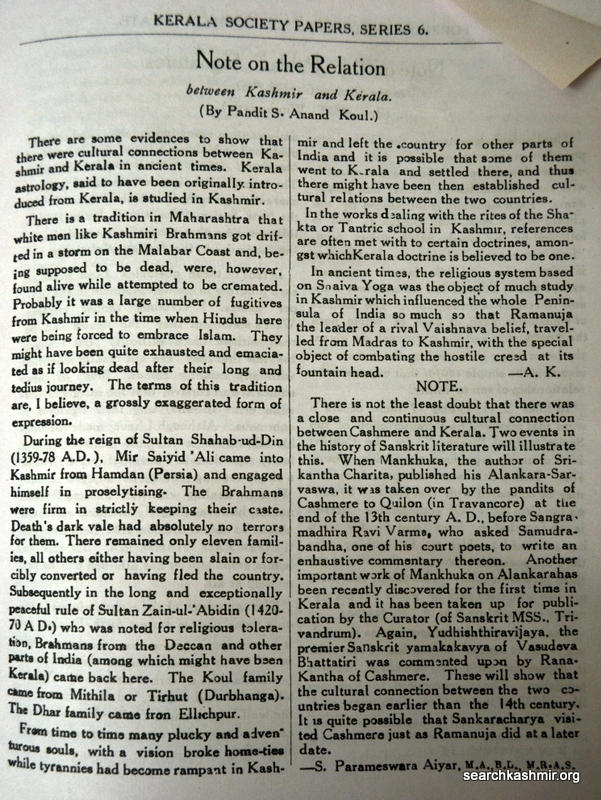
Kashmir and Kerala by Pandit S. Anand Koul, 1928


Note on the Relation between Kashmir and Kerala
(By Pandit S. Anand Koul. Kerala Society Papers -1928. T. K. Joseph (Ed.) )

-0-

Aside:

I waited a week for the book to arrive. All for a paper that I expected would throw up something interesting. But Koul Saheb’s paper turned out to be a bit disappointing. Much of what he writes her already was presented by him in his book on Kashmir Pandits. Besides reference to Kerala astrology in Kashmir and (in comments) Mankha’s work traveling to Kerala, there isn’t much. The story of white men on Malabar coast could well have been of Parsees or the Jews, but Koul Sabheb mentions in any case and tries to imagine them as Pandits. He seems to have been quite fascinated by the story, mentioning it in his Pandit book too. In an attempt to reach borders of Kerala, his only manages to reach Durbhanga (Bihar, where from returned the Kouls), Ellichpur (Maharashtra, where from returned the Dhars) and then Madras (where from came Ramanuja). It’s a sad attempt. I wish there was more.

Why more was I expecting? Consider this: there is Thiruv’anantha’puram in Kerala and there is Anantnag in Kashmir. Two cities dedicatedly named after a snake. King Solomon’s ships sailed to Kerala coast. Solomon’s throne is supposed to be in Kashmir. Ancient Jews lived in Kerala. And according to some at one time only Jews were allowed to enter Kashmir. (and not to forget, Kashmiri obsession with Jews. Interestingly, first person to broach up persecution of Jews in Germany during world war into a discussion about persecution of Pandits in medieval Kashmir was one Mr. GMD Sufi in his book Kashir (1948) while trying to form a defense for Sikandar Butshikan’s actions in response to popular discourse on the subject, an example of which would be writings by Anand Koul. Weird circular world, like a snake eating it’s own tail). Malayalam, the language that survives today was considerably shaped by westerners (particularly Rev.Benjamin Bailey and Hermann Gundert) who pulled it closer to Sanskrit (even at cost of other variants). The language is alive and kicking. In case of Kashmiri,  which is much older than Malayalam, here is the difference, one time opium agent Grierson’s work still divides the people on origins of the language as it pulls it away from Sanskrit. The is no single definitive script. Result: My Christian friend from Kerala, who is great at using programming languages, uses Malayalam in regular life, can sing some Sanskrit prayers as they are quite popular in the land, know sHindi as it was part of school curriculum but is not so great with English. In my case, I am not so great at programming, can barely speak Kashmiri, definitely can’t read or write it in anything besides Roman script, don’t know Sanskrit, can’t truly appreciate Hindi and can just about manage English, using it as a tool to earn my bread and butter.
-0-

“Even the gods must die”~Kalhana~Gautier

Martand

One the exercises I indulge in at this blog is looking at the “meta-information” and usage of information. What happens to information over the years?

Exercise

Problem: Why do some books (starting from 1950s, ending in 2013!) attribute the following beautiful lines to Kalhana when even a basic Google search says that the lines belong to a Frenchman, Théophile Gautier?:
“Even the gods must die; But sovereign poetry remains, Stronger than death”

Solution:
The lines do indeed represent thoughts of Gautier. These line were used by Ranjit S. Pandit in 1933 to end his invitation (introduction) to his translation of Kalhana’s Rajatarangini (1935). He wrote: “Kalhana knew that everything withered with age and decayed in time; only the artist could seize the passing form and stamp it in a mould that resists mortality”. And then to put emphasis on the thought, he quoted a poem by Gautier.

The complete poem goes like this:

All things pass; strong art alone
Can know eternity;
The marble bust
Outlives the state:
And the austere medallion
Which some toiler finds
Under the earth
Preserves the emperor
Even the Gods must die;
But sovereign poetry
Remains,
Stronger than death.

That much is fine and clear even if quoting Frenchman Gautier’s poetry to explain greatness of Kashmiri Kalhana’s poetry now appears to be a ludicrous. Over the years what happened was even more ludicrous as it became a victim to a curious phenomena observed by Aldous Huxley during his visit to India and Kashmir in mid 1920s. He laughed at Indian fascination for starting passages with ‘apophthegms, quotations’ and ending it with ‘cracker mottoes’, and for saying things like ‘ As the Persian poet so beautifully puts it ‘.

“Even gods must die” is a powerful thought, occurring in Nordic and Greek myths, Buddhist and Hindu works and even used in Superman comic). The first instance of that poem’s wrongful attribution appears in “Mārg̲: A Magazine of the Arts” (1954). Then this wrongful attribution kept getting replicated over the decades in other books and publications. It seems as if people, given the beauty of the lines, and the context it was used, wished and then believed that the lines were actually written by Kalhana. Most recent case: a pandit book on history.
This seems like a good time to remember Jonaraja’s explanation of Rajatarangini. As Jonaraja, the Sanskrit poet so beautifully put it, Rajatarangini is “a tree of poetry in whose shades those travelers who are kings can cool the heat of the prideful ways of their forebears”*
-0-

Kashmiri songs and stories for Rustam

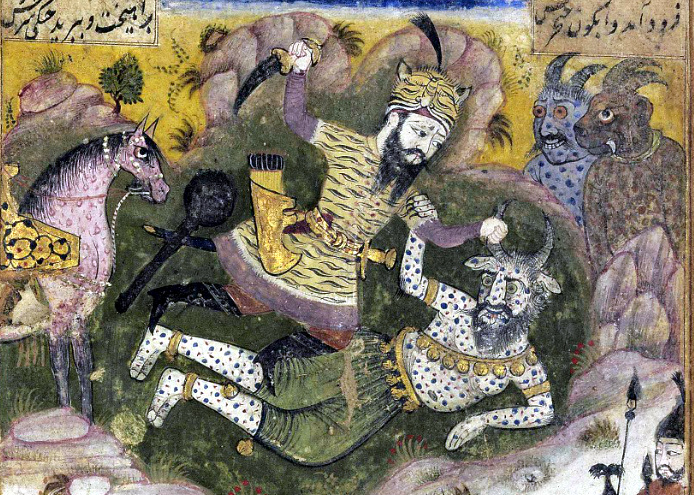
An illustration to the Shahnama (“Book of Kings”): Rustam and the White Div, Kashmir, circa 1800
Source: christies

“Even now, the people of cashmere read and hear with pleasure, some of the touching episodes about the ancient persians in the Shahnameh of Firdousi. During my visit to that country, last May I frequently heard the Pandits saying:

i.e.,”the person who reads Shahnameh, even if he were a woman, acts like a hero.” The episodes are rendered into Cashmiri songs, and sung on special occasions by musicians and singers, before large assemblies at night. In the midst of a very touching episode, when, owing to the difficulty or the danger of the favourite hero of the episode, who has for the time become a favourite of the audience as well, the excitement of the hearers is raised to the highest pitch,the singer suddenly stops and refuses to proceed further. The hearers get impatient to know the fate of their favourite hero, and subscribe among themselves, a small sum to be given to the singer as the price for releasing the favourite hero from what they call his “band,” i.e., difficulty or danger. It is only, when a sum is presented, that the singer proceeds further. They say, that even on marriage occasions, some of the marriage songs treat of the ancient Persians. For example, I was told that one of the marriage songs, was a song sung by the mother of Rustam, when her son went to Mazindaran to release king Kaus.

It was for the first time, that I had heard in Kashmir, the following story about Rustam and Ali. I do not know, if it is common to other parts of India. They say, that Rustam was resuscitated about 500 years after his death for the following reason. Ali, the favourite of the holy Prophet, had fought very bravely in the war against the infidels. The Prophet complimented him, saying: “You have fought as bravely as Rustam.” This remark excited the curiosity of Ali, as to who and how strong this Rustam was. To satisfy the curiosity of Ali, but without letting him know about it, the Prophet prayed to God to resuscitate Rustam. God accepted the prayer. Rustam re-appeared on this earth, and met Ali once, when he was passing through a very narrow defile, which could allow only one rider to pass. Rustam bade Ali, Salam Alikum, i.e., saluted him. Ali did not return the Alikum Salam. Having met in the midst of a narrow defile, it was difficult for anyone of them to pass by the side of the other, unless one retraced his steps. To solve the difficulty, Rustam lifted up the horse of Ali together with the rider hy passing his whip under his belly, and taking him over his head, placed him on the other side of the defile behind him. This feat of extraordinary strength surprised Ali, who on return spoke of it to the Prophet.
After a few days Ali again met Rustam, who was sitting on a plain with his favourite horse, the Rakhsh, grazing by his side. On seeing Ali, he bade him Salum Alikum, but Ali did not return the salam. Rustam then requested Ali to bring to him the grain bag of his horse, which was lying at some distance. Ali found it too heavy to be lifted up, and it was after an amount of effort that he could carry it to Rustam. Ali thought to himself: What must be the strength of the horse and of the master of the horse, if the grain-bag of the horse was so extraordinarily heavy? On going home, he narrated to the Prophet, what be had seen. The Prophet then explained the matter to him, and said that it was Rustam, whom he had seen during these two visits, and that God had brought him to life again at his special request. He then reprimanded Ali for his want of respect towards Rustam, in not returning his salams, and said, that, had Ali been sufficiently courteous to Rustam, he would, have prayed to God to keep him alive some time longer, and in that case, he (Rustam) wouid have rendered him great help in his battles.”

~ Cashmere and the Ancient Persians, Jivanji Jamshedji Modi, B.A. (1871), read on 9th December 1895 for Asiatic Papers Papers Read Before The Bombay Branch Of The Royal Asiatic Society. Published 1905.
-0-

Kashmir in British Vogue

“Barbara Mullen floating in the water in a cotton mousseline dress by Atrima in Dal Lake, Kashmir, India. Norman Parkinson, British Vogue, 1956.”
Image via: sighs and whispers
-0-
The story goes that in 1957 in Kashmir, one Sultan Wangnoo, gave Norman Parkinson a traditional handmade embroidered Kashmiri wedding cap. Norman Parkinson got so superstitious about it that he took to wearing it all the time while shooting as he believed if he wasn’t wearing one the photographs wouldn’t come out at all.

Norman Parkinson at work in his Kashmiri Cap

-0-
Waters of  Kashmir were again the background canvas for a  Vogue fashion shoot in 1969. This time the photographer was David Bailey. At the age of 16, David Bailey was inspired to take up photography after  seeing the famous Cartier-Bresson image of Kashmir: Muslim Women Praying at Dawn in Srinagar (for Cartier’s influence on Kashmir photographs and phographers, check this ). The model was a teenaged Penelope Tree, a style icon from swinging 60s whose fashion career ended due to acne.
The Lake this time was Wular.

Images for this issue via: modern vintage clothing
-0-


Shakyashri – the Great Kashmiri Pandit of Tibetans


An undertaking accomplished without analysis, 
But who would regard it as wise? 
After worms have eaten, 

Although a letter may appear, they are not skilled writers.


Sakya Pandita, student of Shakyashri 

http://nicbommarito.com/translation/sakyalegshe/sakyalegshe.pdf

-0-

“Jagadhala, name of a place in Orissa where Sakya Sri Bhadra of Kasmir had taken refuge, after his flight from Odantapuri vihara when that place was sacked bv Bakhtyar Khilji in 1202 A.D.35”

The Indian Historical Quarterly – Volumes 30-31 – Page 144, 1954

books.google.co.in/books?id=A98BAAAAMAAJ

According to Taranatha, at Odantapuri the vihar was turned into a Tajik fort and pandits fled to other countries.9 Sakyasri went to Jagar- dala (Jagaddala) of Odivisa, i.e. in Orissa, and from there, three years after, to Tibet. Ratnaraksita went to 


Studies in Asian history: proceedings – Page 46 


books.google.co.in/books?id=2lrRAAAAMAAJ 


Indian Council for Cultural Relations 1969

http://en.wikipedia.org/wiki/Taranatha

http://en.wikipedia.org/wiki/Vikrama%C5%9B%C4%ABla_University

http://en.wikipedia.org/wiki/Bakhtiyar_Khilji

-0-

Shakyashri Bhadra (1127­1225), whose immense learning was incomparable even in
India, who was head of the famed dharma universities of Vikramashila and Nalanda, and  who was continually blessed with visions of the mother of the buddhas, Arya Tara, was
the last of the great Indian panditas to visit Tibet. He is somehow less well­known to  Westerners than his two predecessors, perhaps because, unlike them, he did not compose
a major text of his own; yet his impact was immense. In Tibet, the name Shakyashri Bhadra, or Kha­che Panchen (‘the Mahapandita of Kashmir’), was known in the gompas of every tradition across the entire Himalayan plateau.

At Nyang, northeast of Sakya in Tsang, he was visited by the 23 year­old Khon lama and
future ‘Sakya Pandita’, Kunga Gyaltsen, whose knowledge of Sanskrit greatly impressed
the mahapandita. The descendants of Sachen had already inherited a vast ocean of
dharma, unrivalled by other institutions, of which the foremost were the tantric teachings
of the great lotsawas Bari, Drokmi and Mal.Through his studies with the mahapandita
and the junior panditas, the young Khon’s learning was increased yet more with works of
sutra, tantra and, importantly, classical secular subjects which were previously unknown3
in Tibet, brought from the now destroyed universities of India. Sapan returned to Sakya
to continue his studies with Sugatasri, one of the learned assistant panditas.

In 1214, after ten years in Tibet, he set out on the road back through Gungtang and Ngari
in the west of Tibet. Before departing Tibet, he donated his considerable remaining gold
to the astounded Trophu Lotsawa who had accompanied him that far. After a long but unmolested journey across the Himalayas by the now very aged mahapandita, he arrived  back in the luscious valley of his Kashmiri homeland, not seen since his youth. There, he
restored many viharas and greatly increased the teachings, as the sun of dharma was
setting on the country of the Aryas. Shakyashri Bhadra passed into nirvana in 1225. His
life was one of remarkable accomplishments, and great historical significance. For the
fortunate followers of Shri Sakya, the blessings of Shakyshri Bhadra endure in the precious jenangs and sadhanas held by contemporary Sakya masters.

http://www.dechen.org/resources/pdfs/shakyashri.pdf

Śākyaśrībhadra was born in Daśobharā, in Kashmir, in 1127 (some sources have or 1145). He had a brother named Buddhacandra. At the age of ten he studied grammar under the brahman Lakṣmīdhara. At the age of twenty-three, in 1149, he was ordained by Sukhaśrībhadradeva who gave him the name Subhadra.
At the age of thirty he went to Magadha where he received initiations from Ṥāntākaragupta, Daśabala, and Dhavaraka.
When Śākyaśrī was seventy-seven he was invited to Tibet by Tropu Lotsāwa Rinchen Sengge (khro phu lo tsA ba rin chen seng+ge, b. 1173) who went to the Chumbi Valley in search of him; they met in a town called Vaneśvara. Śākyaśrī was initially disinclined to accept the offer, as Tropu Lotsāwa was, at the time, quite young. Tropu Lotsāwa was able to ask questions on doctrine to each of the paṇḍitas in his retinue, and the following discussion impressed Śākyaśrī sufficiently to convince him to go to Tibet, arriving in 1204.
He was accompanied by several Indian paṇḍitas: Sugataśrī, an expert in Madhyamaka and Prajñāpāramitā; Jayadatta, in Vinaya; Vibhūticandra, in grammar and Abhidharma; Dānaśīla, in logic; Saṅghaśrī, in Candavyākaraṇa; Jīvagupta, in the books of Maitreya; Mahābodhi, in the Bodhicaryāvatāra; and Kālacandra in the Kālacakra.

http://www.treasuryoflives.org/biographies/view/sakyasribhadra/2810

-0-
Kha che pan chen (‘The Great Kashmiri Pandit“; Kha che, which literally means ‘big mouth‘, being the appellation by which the Tibetans refer to Kashmiris and Moslems). Kha che pan chen spent the years between 1204 and 1214 preaching
-0-

 The Royal Chapel (Chogyel Lakhang) depicts clay images of the ancient kings. Images of AtishaKamalashilaPadmasambhavaShantarakshitaManjushri, eleven-faced Avalokiteshwara,Vajrapani and Shakyashri of Kashmir are also seen in this chapel

http://en.wikipedia.org/wiki/Palcho_Monastery

-0-

kha che – 1) Moslem. 2) Kashmir. 3) person from Kashmir, Kashmiri. 4) saffron
kha che skyes – saffron [lit. the produce of Kashmir]
kha che gur gum – Kashmiri saffron
kha che mchog – saffron [lit. the chief article of Kashmir]
kha che ‘dus bzang – Hinayana proponent
kha che pan chen – the great scholar of Kashmir, Shakya Shri
kha che paN chen – the great scholar of Kashmir, Shakya Shri
kha che pan chen zla ba mngon dga’ – Kachey Panchen Dawa Ngön-Ga. Same as {kha che pan chen}
kha che pan chen lugs – the tradition / system of {kha che pan chen}
kha che paN chen lugs – the tradition / system of {kha che pan chen}
kha che ba – syn {kha che bye brag smra ba}
kha che bye brag smra ba – the Kashmiri sub-school of Vaibhasheka
kha che bye smra – {kha che bye brag smra ba}
kha che dbang thang – wealth, possessions, property
kha che yul – syn {kha che lung pa} Mohammedan country, Kashmir
-0-
‘grel pa zla zer – by the Kashmiri pandita {zla ba mngon pa dga’ ba} a commentary on {slob dpon dpa’ bo’i yan lag brgyad pa}
tsong kha brgyad bcu pa – Eighty Tsongkhas, eighty verses in praise of Tsongkhapa by the Kashmiri Pandita Punya Shri

-0-

He: Sakya Pandita


A Treasury of Aphoristic Jewels: The Subhāṣitaratnanidhi of Sa Skya Paṇḍita in Tibetan and Mongolian

Sa-skya Paṇḍi-ta Kun-dgaʼ-rgyal-mtshanJames E. Bosson, 1969
-0-