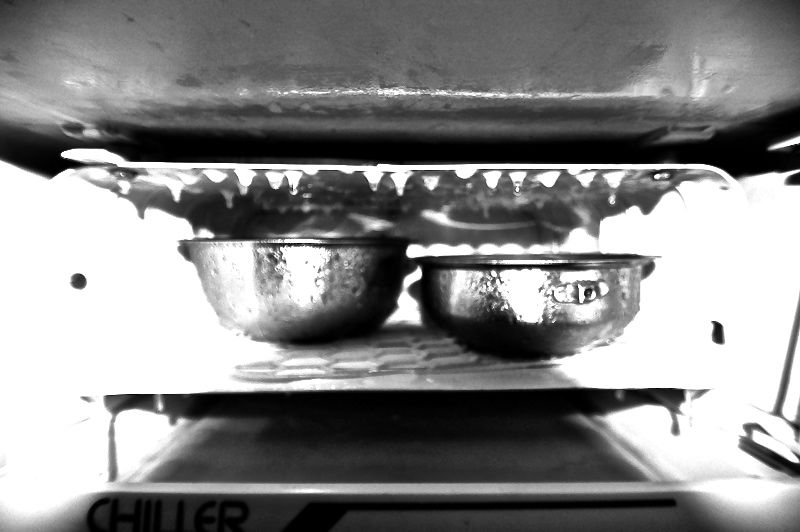
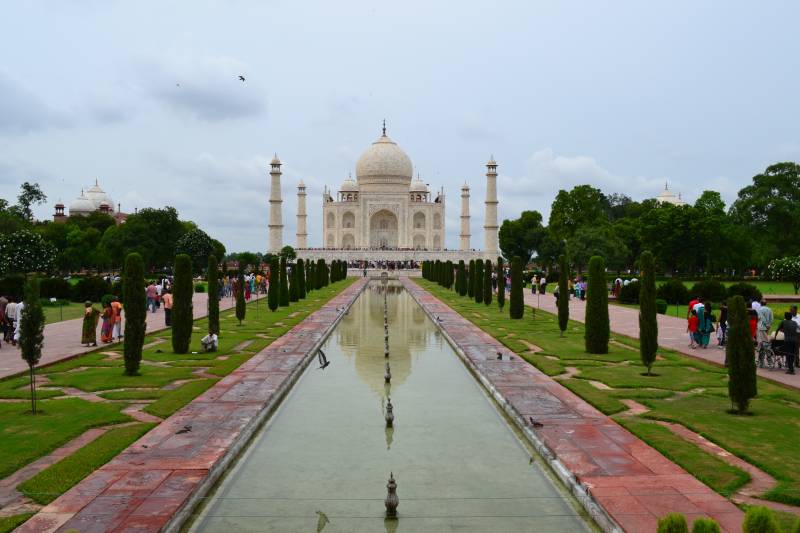
Freezer = Kashmir

Something like idea of Home.
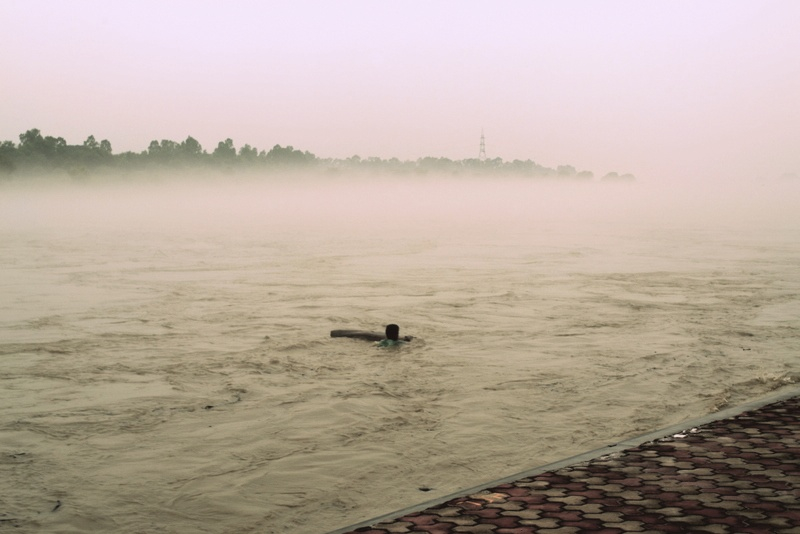
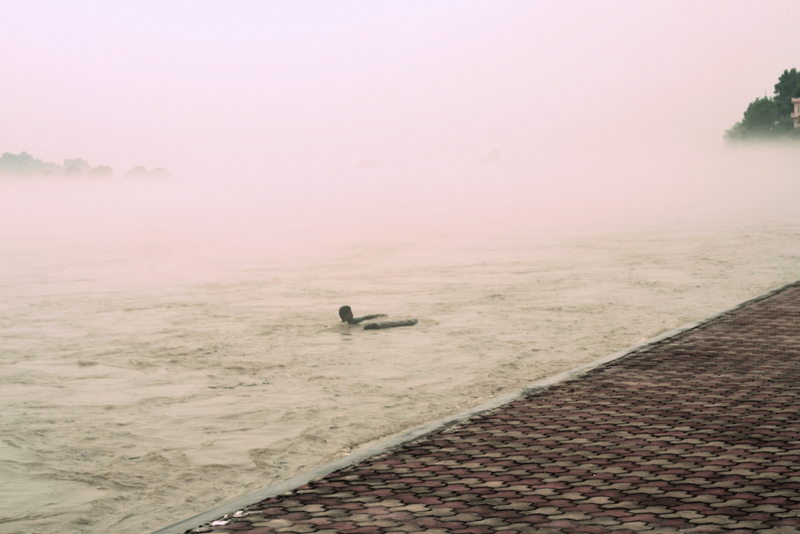
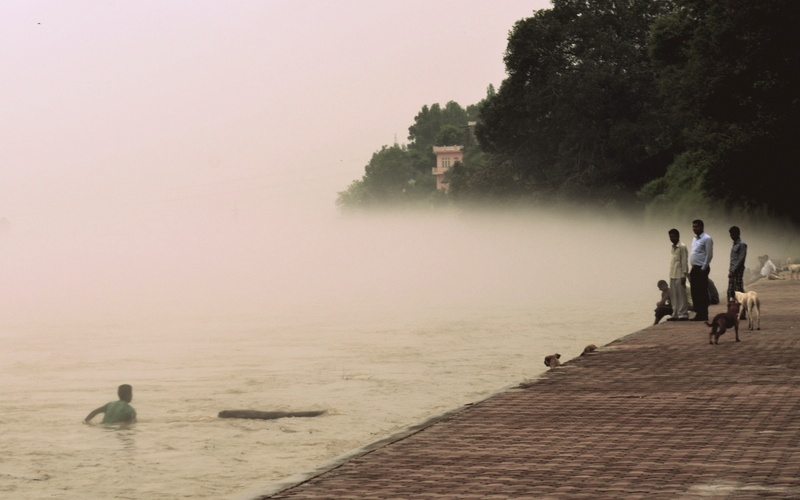
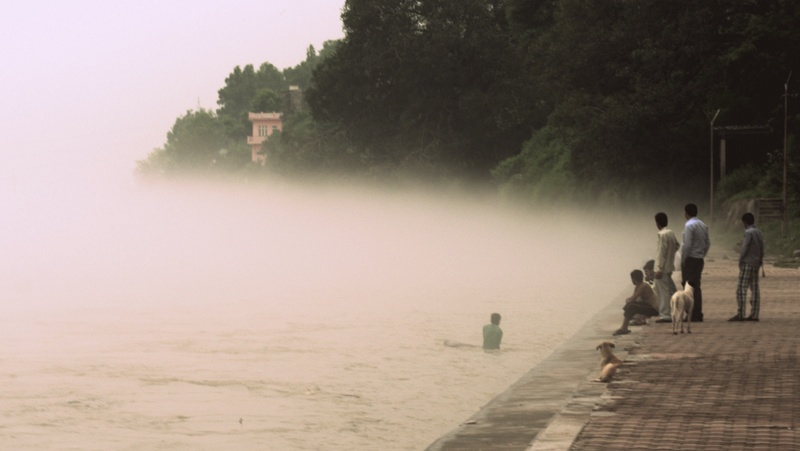
Jammu. July. 2013. 

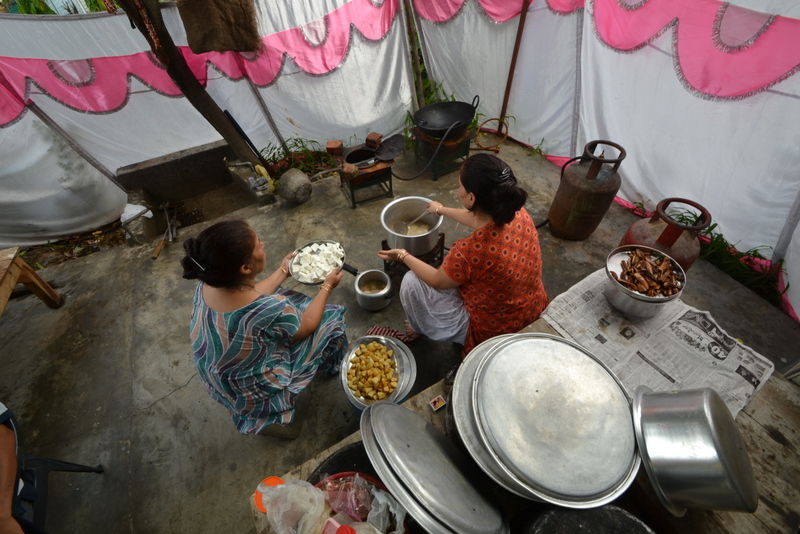
“One hot summer day when I was six years old, my mother opened the refrigerator, and pointed to the ice compartment and below it to the pears and the plums. She exclaimed:”This is Kashmir!” In our home at Jaipur, the capital city of the arid state of Rajasthan, every scorching summer our thoughts, like those of innumerable indians, would turn to the cool heights of the Himalayas. From antiquity to the age of the computers, countless Indians have been beguiled by Kashmir, a land of learning as well as of lakes and lofty mountains.”

~ Raghubir Singh’s opening lines from introduction to his beautiful photo-book ‘Kashmir: Garden of the Himalayas’ (1983).

Manja Makers

Jammu. July 2013.

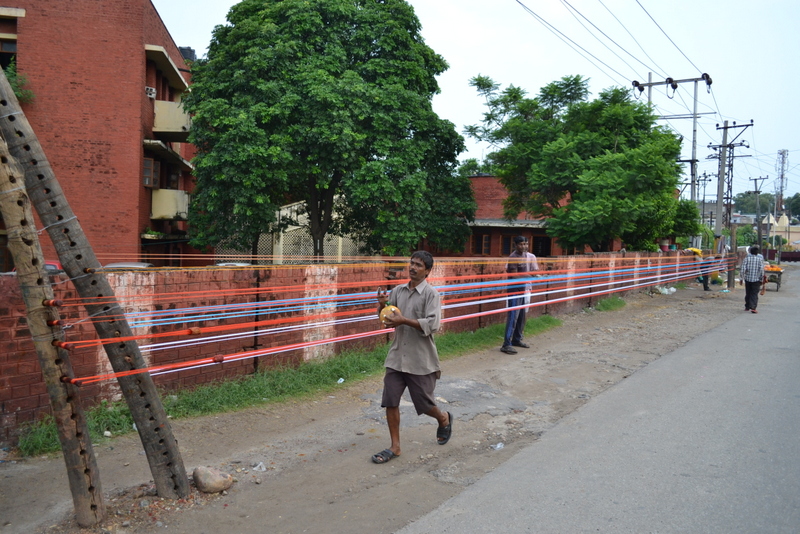
My first experience with kites was in Srinagar. It was a failed experiment. I tied a pangot thread to a kanni and ran around, pretending it was flying. That was the last summer.

I really learnt the art in Jammu. But it was a different art. In Srinagar, it was a leisurely sport. You just tried to fly it high. But in Jammu, kite flying was like learning to fight a war. The art of this war required you scream, run, fight and capture. You need the right weapons. The perfect threads. The Manja of rough thread with the sharpest of glass. For short plays. You could even make it at home, powdered glass, glue and flour. Or you could use thread with more smoothness. Surtis. For longer plays. You need the perfect kite. A tactical Guddi. Or a mighty Gudda. A bhoot is perfect. You need to learn to read the cane backbone of the kite. Is it hard? Is it soft? Should the thread be tied near or a bit further down. You need the perfect crew. Someone to give the perfect Kanni. You need to learn to read the wind. You need to learn read the signal’s from your enemies. Is he challenging you? You need to know when to pull the thread and when to let go. You need to burn the skin. Blend in. Sweat it out. Watch the skies. It is all an art. The only real art I know.

In fact, I even mastered the highest level of it. At the peak of my prowess, I could even lapet-in a lost kati patang. Sometimes two.

And I did it all but never ever even buying a Manja. My Manja was always put together from the threads that came in with the kites I looted. A Manja both Smooth and Sharp. With threads of colours red and greens. And blue and grey. And yellow and white…

-0- 

Kadalnama – Bridges of Srinagar

Compiling all the bridge data from previous posts into a single post for easy reading…

First one to build was Pravarasena-II.

7-9-13-

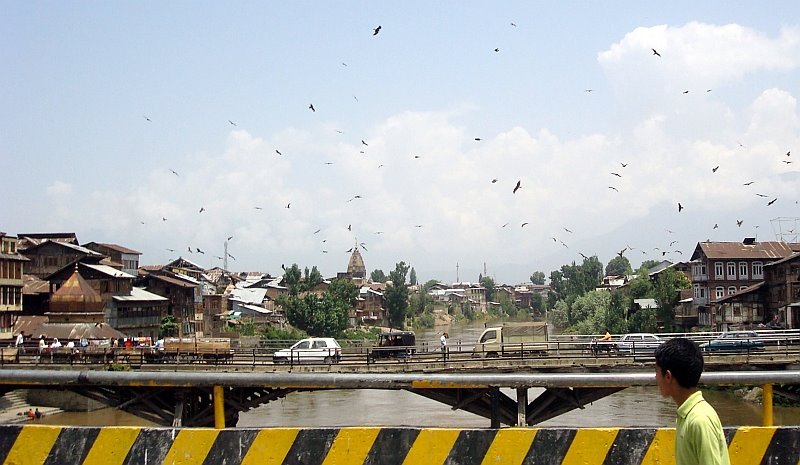
2008
[Photograph 1]

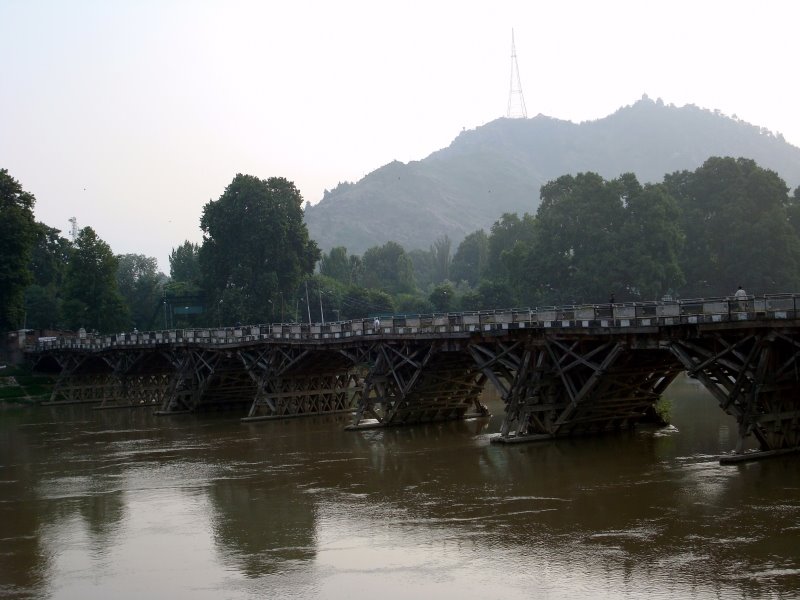
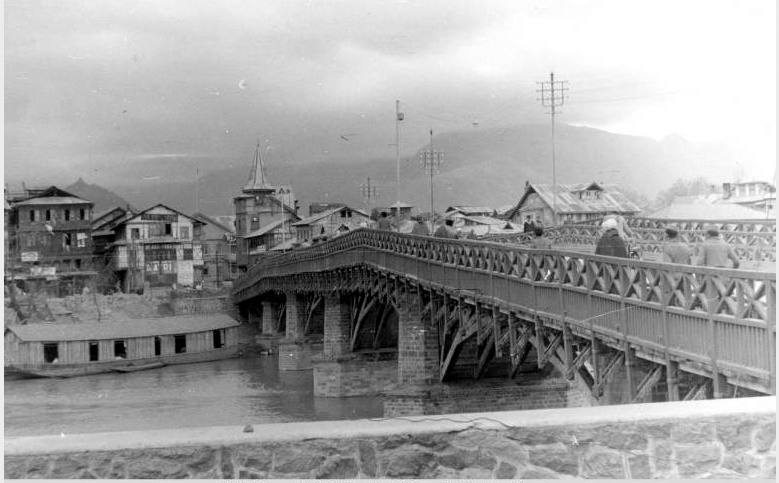
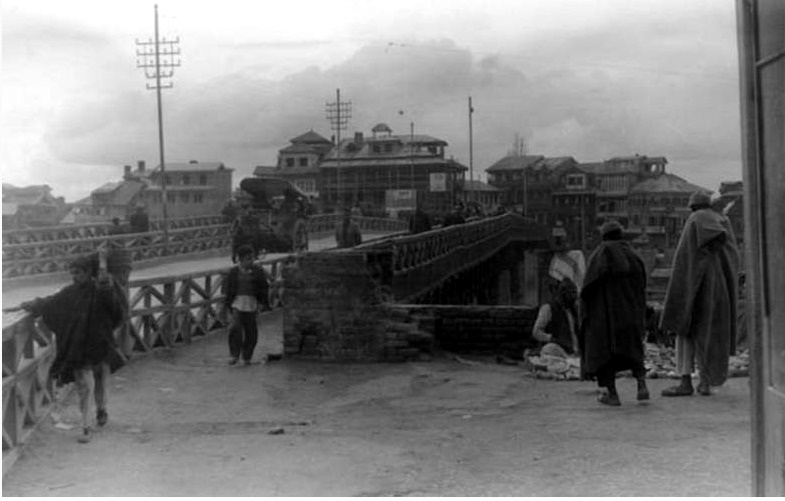
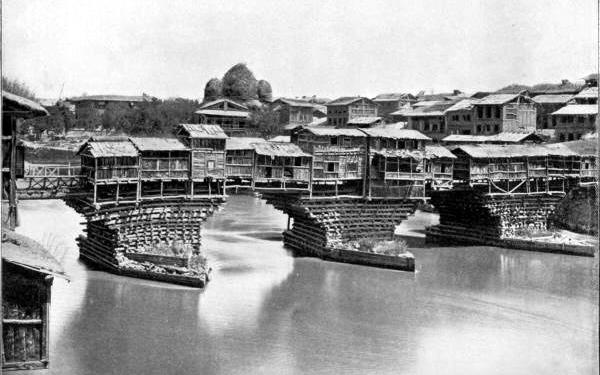
Zor Kadal/Zar Kadal/Zero Bridge. The zeroth bridge. Said to have been constructed by a deaf contractor in 1950s.

– from the book ‘Afoot Through the Kashmir Valleys’ (1901) by Marion Doughty. Also from the book:  note on how these bridges were built in Kashmir
[Photograph 2]
[Photograph 3]
1950s.
[Photograph 4]

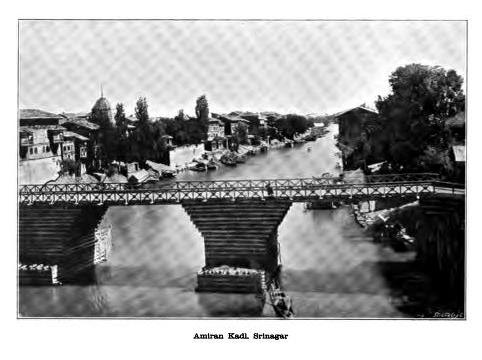
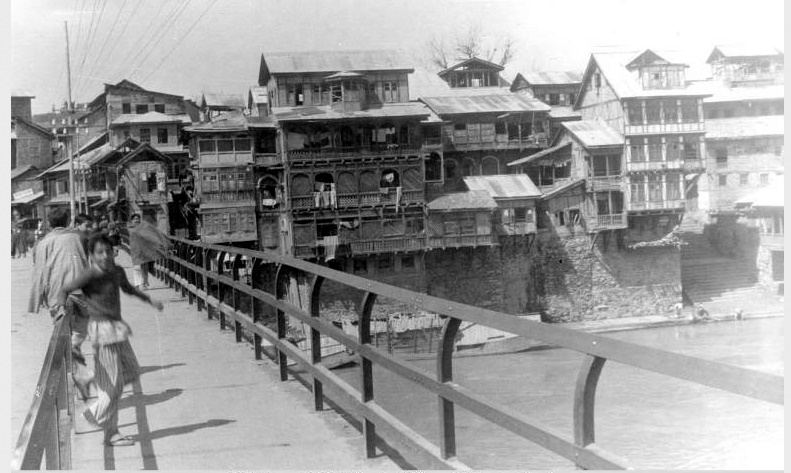
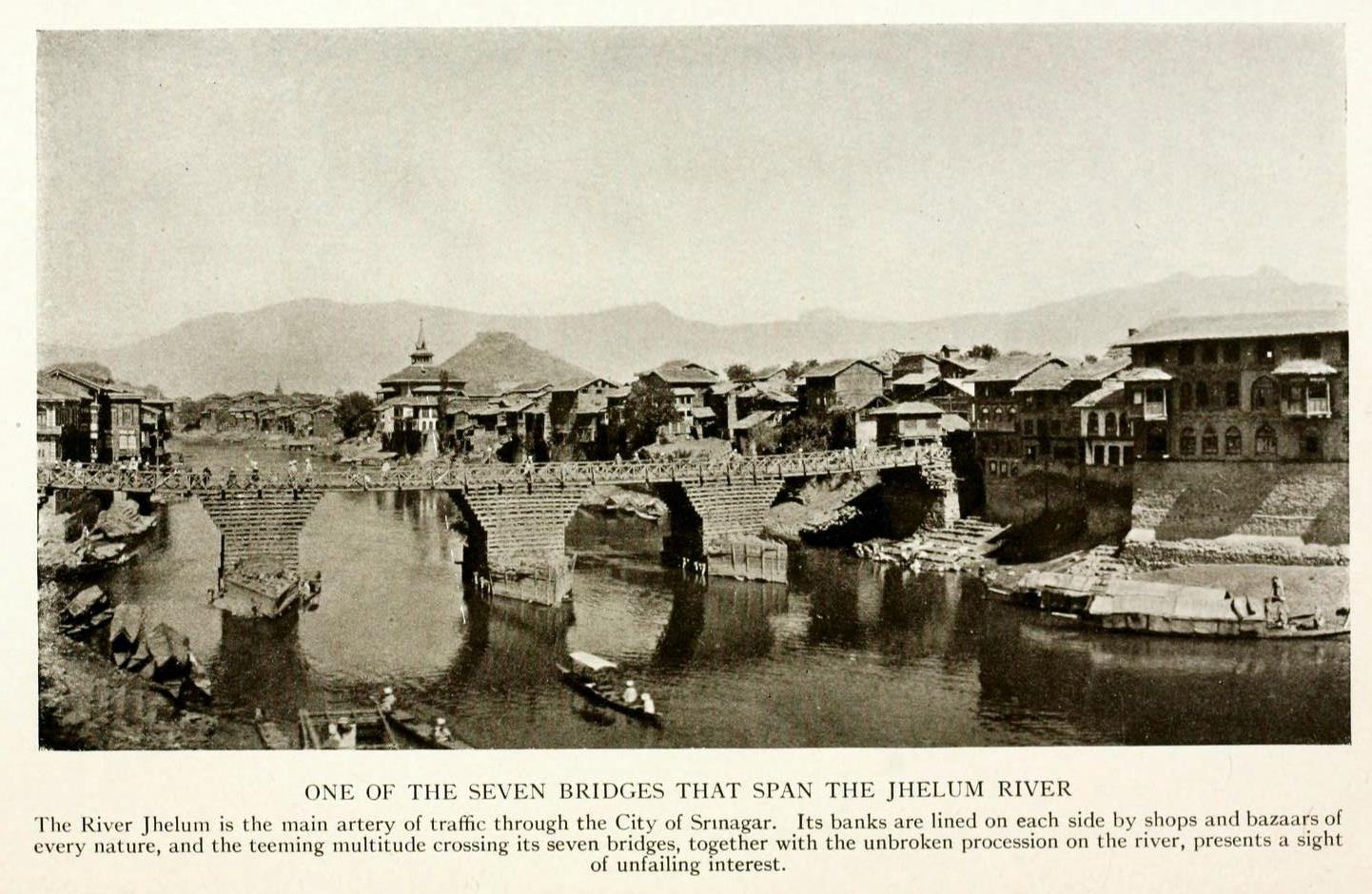
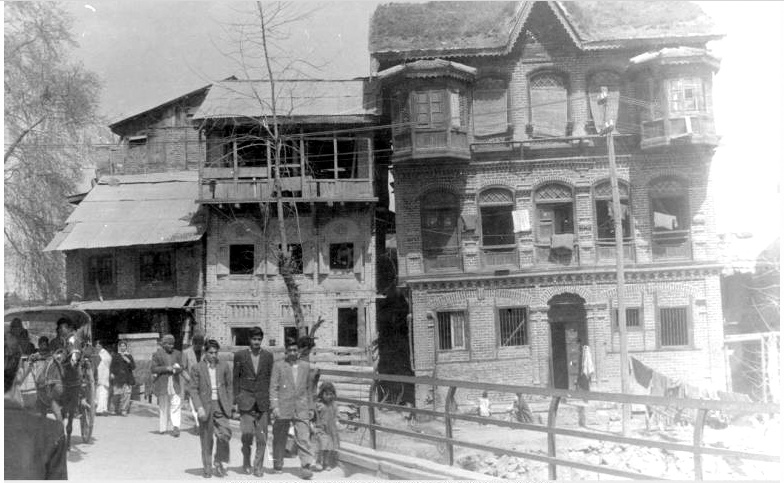
Omra Kadal/Womra Kadal/Amira Kadal/Amiran Kadal. First bridge. Built by Afghan governor Amir Khan Sher Jawan in 1774-1777.

From ‘Indian pages and pictures: Rajputana, Sikkim, the Punjab, and Kashmir’ (1912) by Michael Myers Shoemaker (1853-1924).
[Photograph 5]
1950s
[Photograph 6]
2008
[Photograph 7]
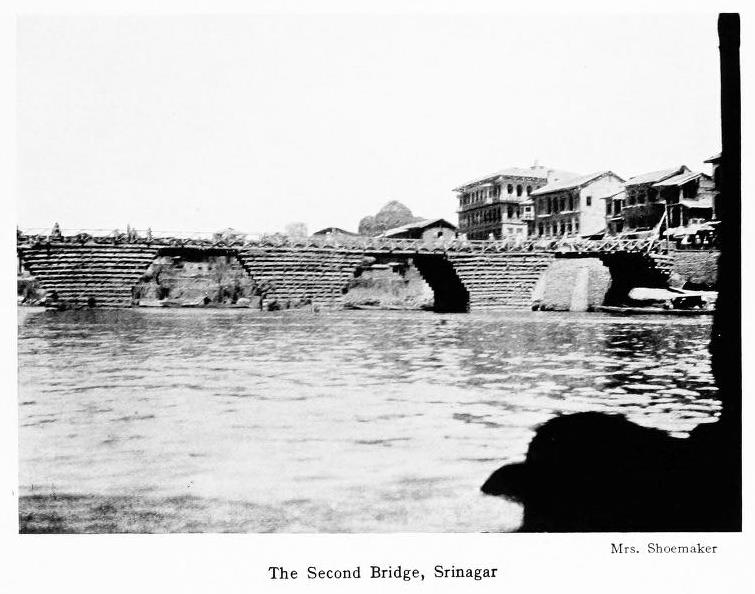
Habb’e Kadal/Habba Kadal. Second bridge. Built by Habib Shah, ruler in 1551. Or believed to be by Yusuf Shah Chak (1510-17) and named after Habba Khatoon.
from ‘The Romantic East: Burma, Assam, & Kashmir’ by Walter Del Mar (1906)
[Photograph 8]
from ‘Our summer in the vale of Kashmir’ (1915) by Frederick Ward Denys.
[Photograph 9]

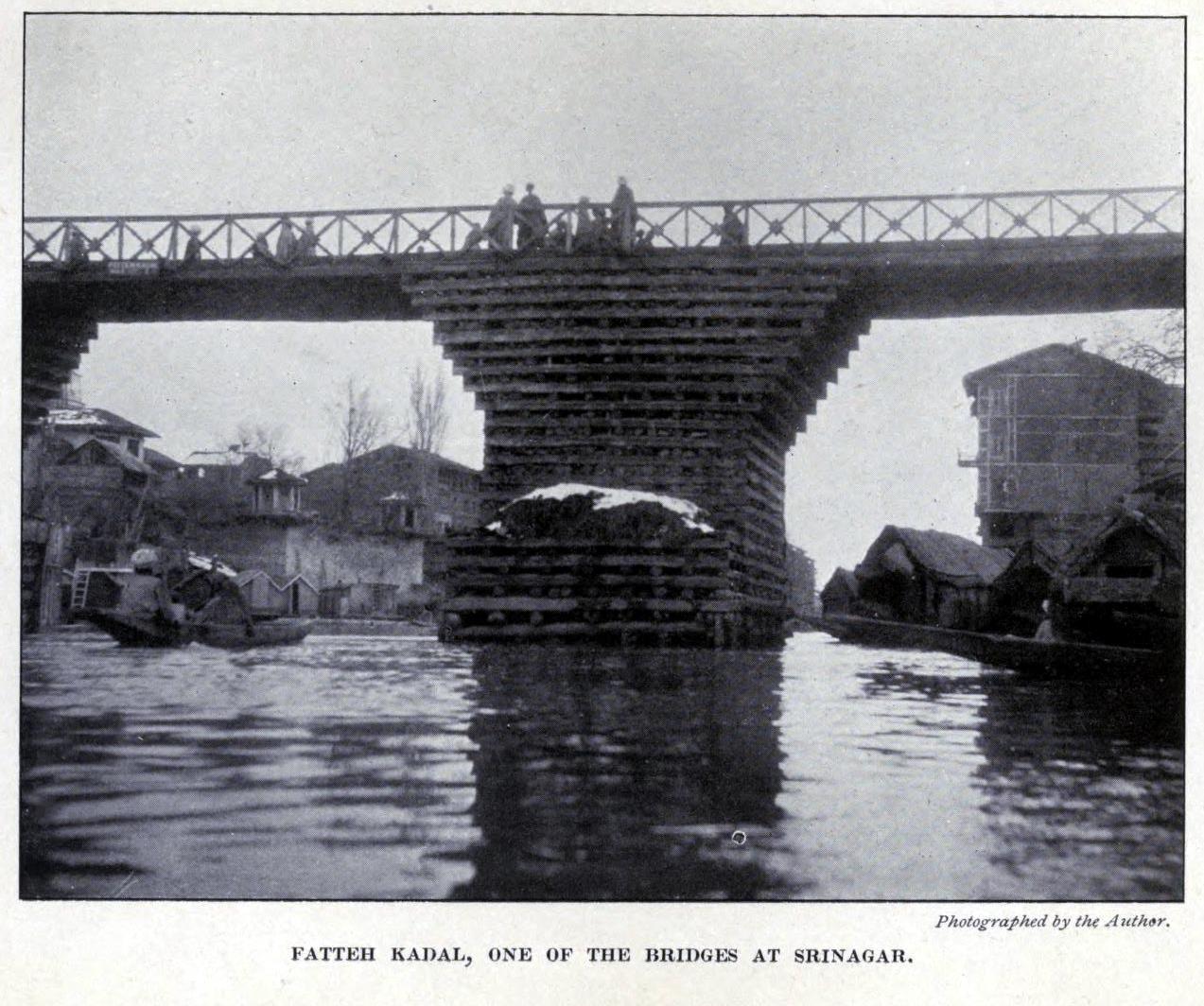
Fateh Kadal. The Third bridge. Built during Fateh Khan’s rule (1510- 17 AD).

from ‘The Romantic East: Burma, Assam, & Kashmir’ by Walter Del Mar (1906)
[Photograph 11]
[Photograph 12]
from the book Irene Petrie : Missionary to Kashmir (1903). Photographs by Geoffroy Millias.
[Photograph 13]

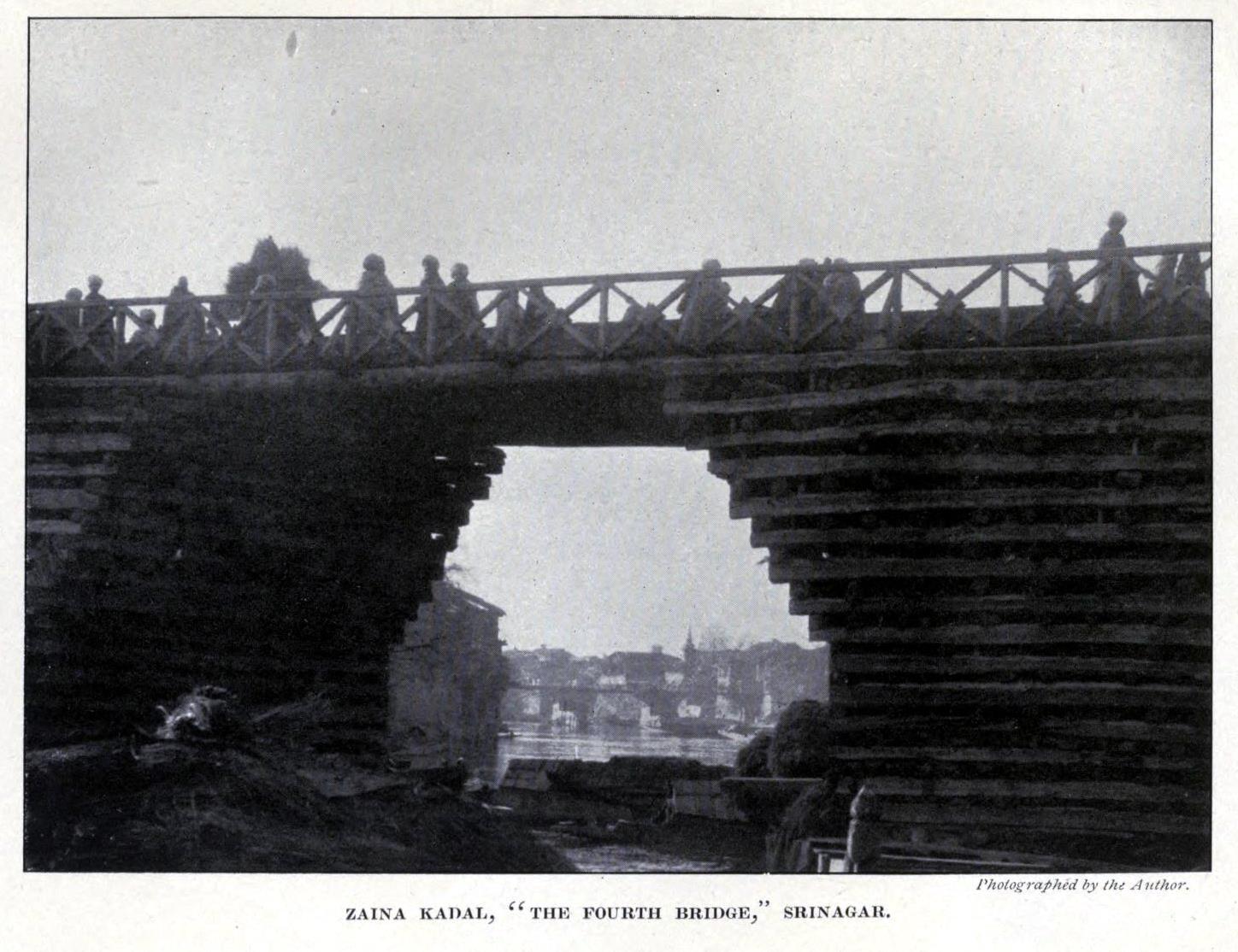
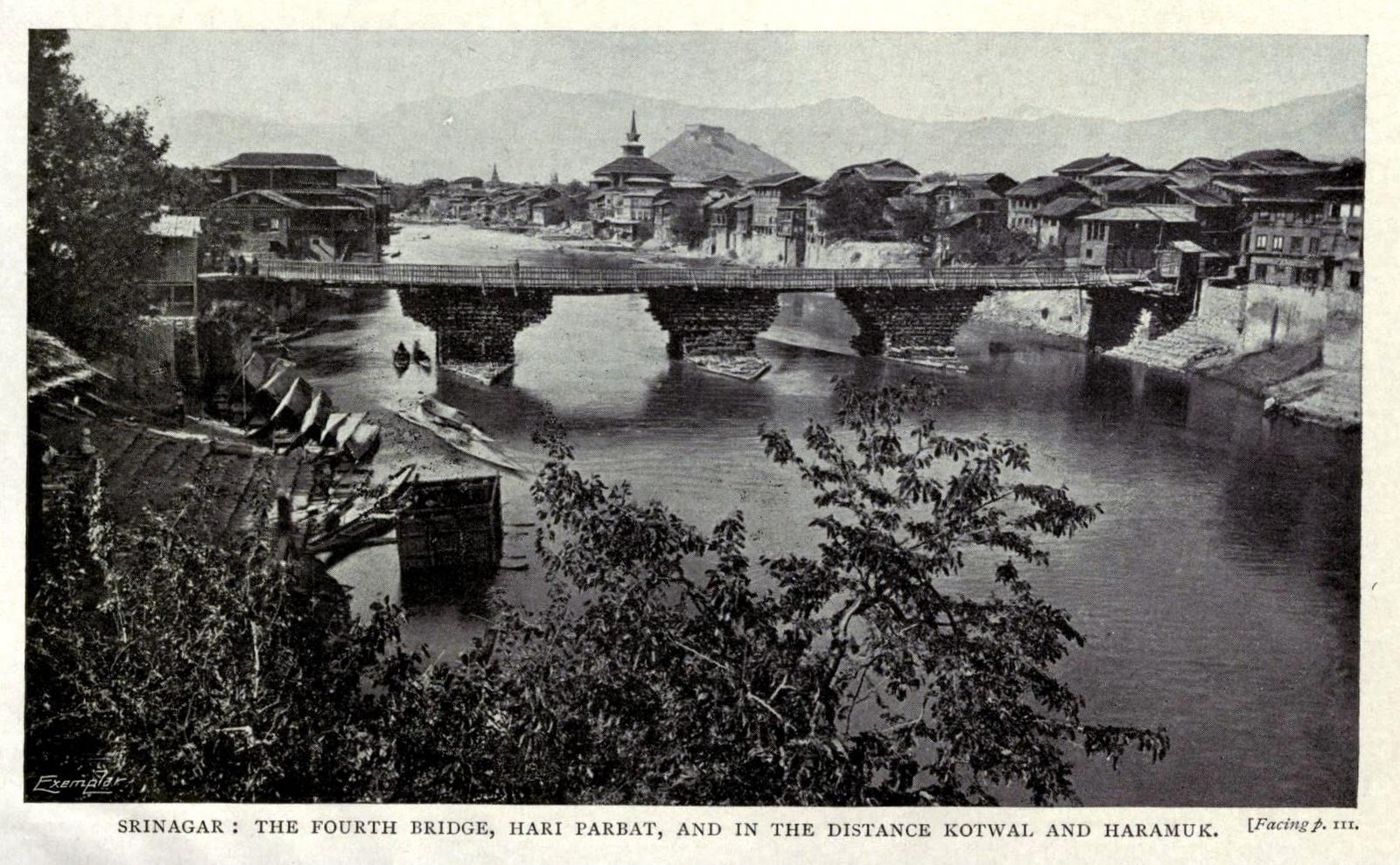
Zaein Kadal/Zaina Kadal. The fourth bridge. Built by Zain-ul-Abidin (1420-74). 

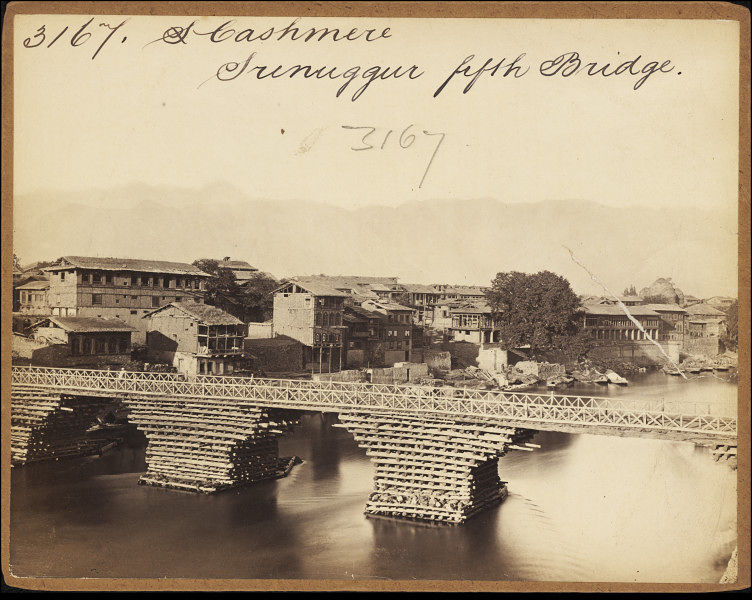
By Francis Frith around 1875.
Via: V&A
[Photograph 14]

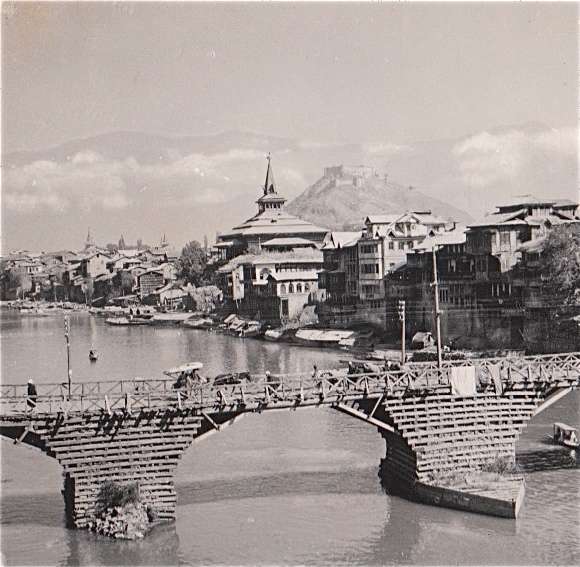
A’el Kadal/Aali Kadal/Ali Kadal. The fifth bridge. Built by brother of Zain-ul-Abidin, Sultan Ali Shah (1413-19) in 1415.

Nawa Kadal/Naw Kadal. New Bridge/Boat bridge. The sixth Bridge. Named after one Nur Din Khan in A.D. 1666.* Rebuilt in 1953 by Sheikh Abdullah, completed by Bakshi.

[Photograph 15]

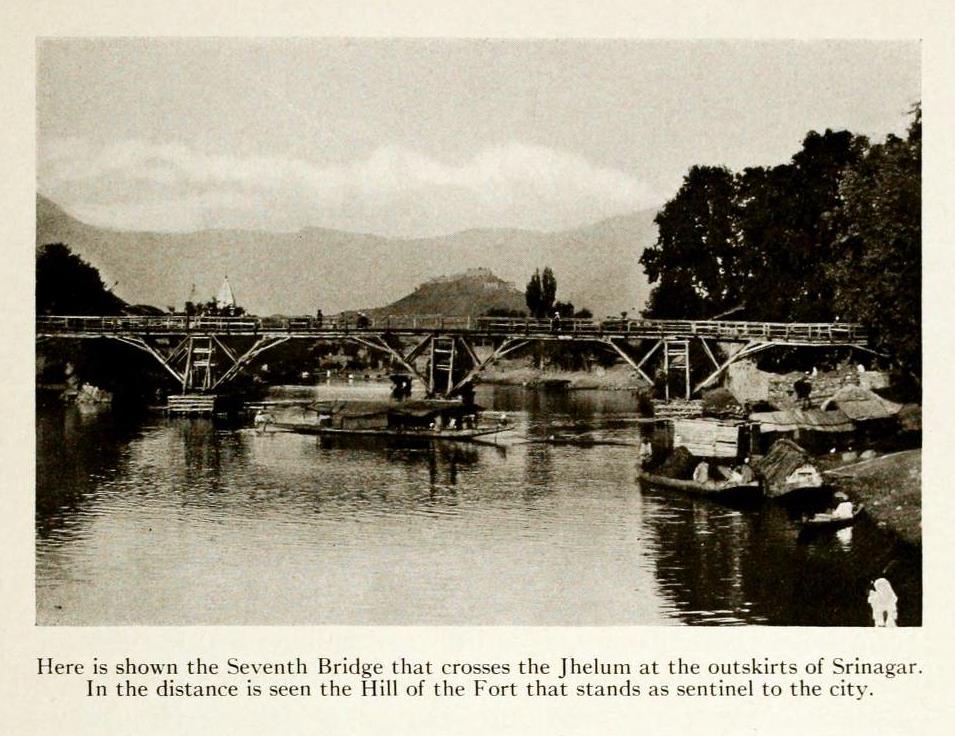
Safa Kadal/Saifa Kadal/Saf Kadal/Safr Kadal. The seventh Bridge. Clean Bridge. Or bridge of departure. Said to be the Oldest. Built by Saif-ud-Din urff Suha Bhatt, Chief Wazir of Sikandar Butshikan and Ali Shah.  Or by one Saifulla Khan.*

And…
1950s
[Photograph 16]
Kani Kadal. Stone Bridge.

Dareesh Kadal

Gaw Kadal

Badshah Bridge…

1912
[Photograph 17]

Bohri Kadal…
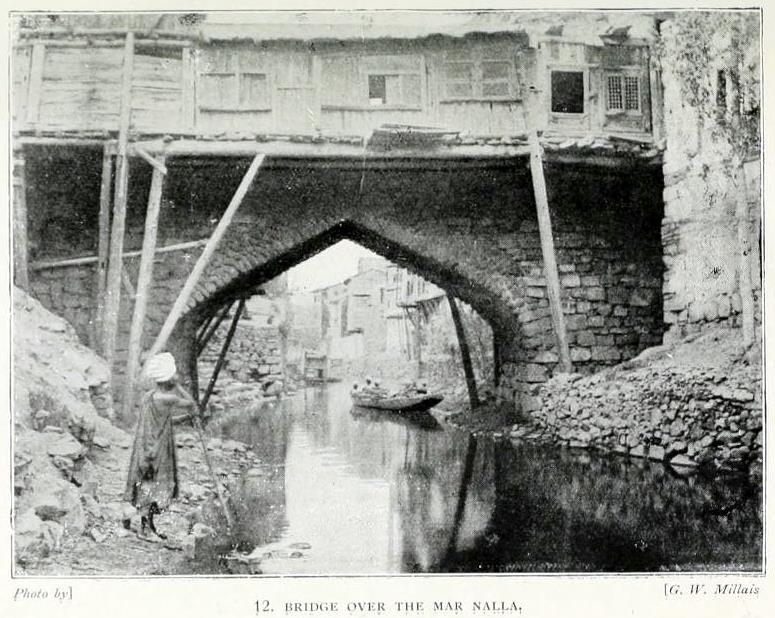
…Rajvir Kadal/Razvir Kadal.** Built over Mar Canal by a princess from Rajouri.

-0-

* ‘Kashmir in Sunlight & Shade: A Description of the Beauties of the Country’ by Cecil Earle Tyndale-Biscoe. (1925)
**’History of the Panjab Hill States’, Volume 1 by John Hutchison, Jean Philippe Vogel

-0-

Kadalnama

Zero
Zor Kadal/Zar Kadal
First
Omra Kadal/Womra Kadal/Amira Kadal/Amiran Kadal
Second
Habb’e Kadal/Habba Kadal
Third
Fateh Kadal
Fourth
Zaein Kadal/Zaina Kadal
Fifth
A’el Kadal/Aali Kadal/Ali Kadal
Sixth
Nawa Kadal/Naw Kadal
Seventh
Safa Kadal/Saifa Kadal/Saf Kadal/Safr Kadal
-0-

Ram Joo’s Lament for Sheep

Puj Waan
Kani Kadal
Srinagar
2008

As told by a grandaunt.

Ram Joo made his living in an odd way. He worked for municipality. His job was to visit slaughterhouses and stamp the dead animals with seals of approval in ink, declaring them fit or unfit for human consumption. A sensitive man, it is said the violence of his job eventually drove him mad. While stamping the dead sheep he took to singing to them, asking them:

Kat’a Kha’sh Kya’zi Kor’voy
Hai K’yah Gh’oom
Kat’a Mash Kosho’ya
Hai K’yah Gh’oom

Kat’a Kalas chuya doon
Hai K’yah Gh’oom

Sheep, why did they slay you?
Oh, what it did to me!
Sheep, have they sheared you?
Oh, what it did to me!
Sheep, is your head aching?
Oh, what it did to me!

The neighbourhood kids took to teasing him with the same lines. A sensitive man, it is said the experience eventually made him a saint. Around Habba Kadal area, he came to be known as Ram Joo Tabardar – Ram Joo the Woodcutter.

-0-
A note on an interesting word and a phenomena. Picked from an Uncle.

Slaughterhouses and the areas around them tend to have a peculiar smell that may offend most people visiting. But the people living in the area never notice it. In Srinagar, slaughter houses were around Chotta Bazaar area. The people living in that area never noticed the smell. They had developed a gaenz’nas – meaning their nose had got numb to the stink.

-0-

Aside: Earlier this year caught one of the most famous documentaries on the subject of animal slaughter, considered a milestone in the history of realistic documentary film making, ‘Le Sang des Bêtes’ by Georges Franju (Blood of the Beasts, French, 1949). [link, avoid if you are too sensitive]. A film that isn’t completely repulsive because it wasn’t made in color. It is not known if any saints were born in France after the film came out.

-0-

Complete song added by Narinder Safaya, Ram Joo’s grandson. He adds [via FB]:

He [Ram Joo] had joined Srinagar Municipality around 1920. He was happily married, sired 4 children , three sons and one daughter. He worked as sanitary inspector for fifteen years. He was a spiritual person. He abandoned the job for reason stated by you. For this he was also teased as Ram Joo Maskas. He abandoned his family. His wife probably died of tuberculosis the same year when Kamla Nehru succumbed to T B in Switzerland [1936]. It said in our family she died of “HeH”. His children were taken care of his younger brother.Pt Shyam Lal Safaya (Taberdar) . We are from Chinkral Mohalla are known as Taberdars. My great great great grandfather Pt. Ganesh Dass Safaya got the nickname Taberdar as he had a partner who was Taberdar and he had been taken by him as partner in supply of fire wood business to the city dwellers through river by boats known as Bahech [Cargo boats]. In 1960 or 61 when I was 8/9 years old I remember Ram Joo came one day,  took tea and left. For five years we could not trace him. Ultimately my father traced him living in Rock Temple Tiruchirapalli.
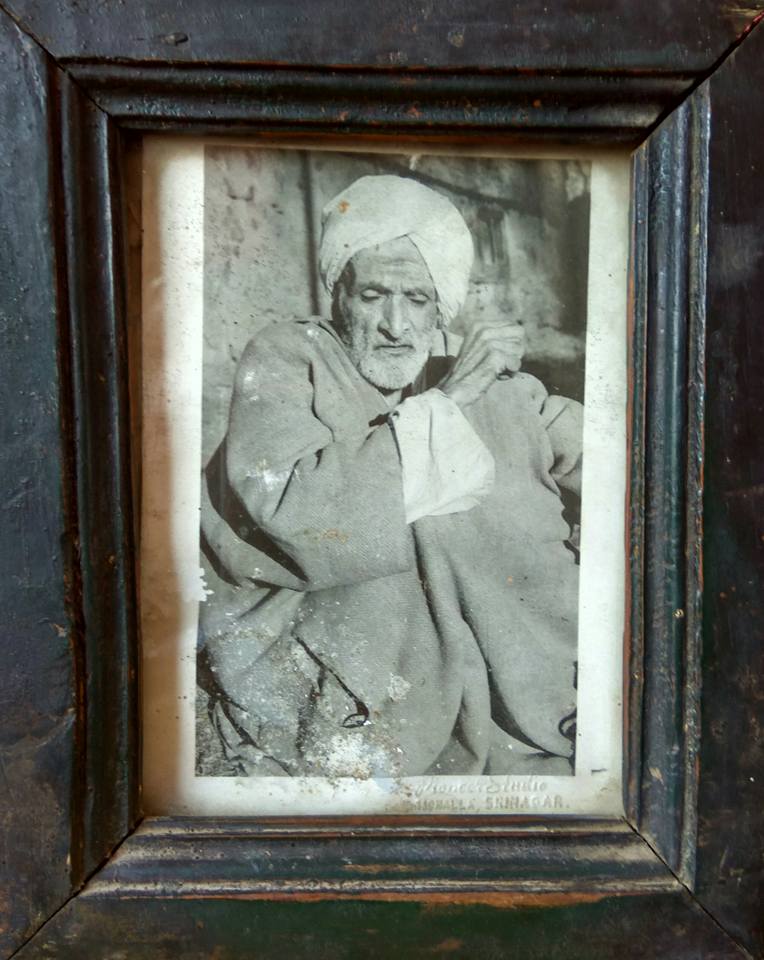
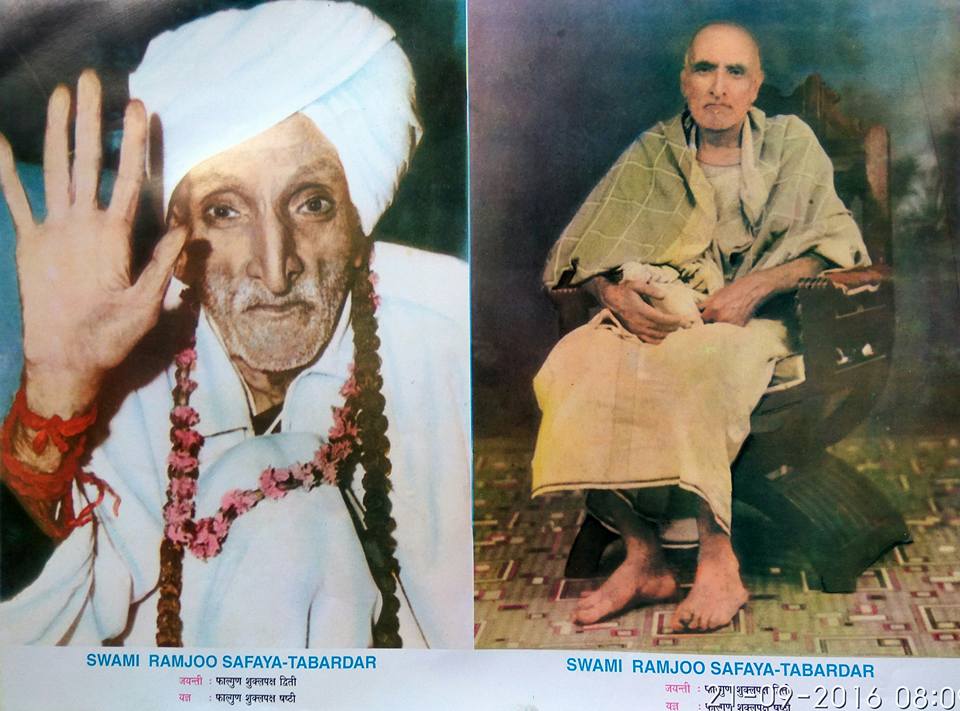
1.Four days before Nirwana 2.During his eight years stay at Rock Temple, Tricinapali, T.N.
After return from Tricy.TN.
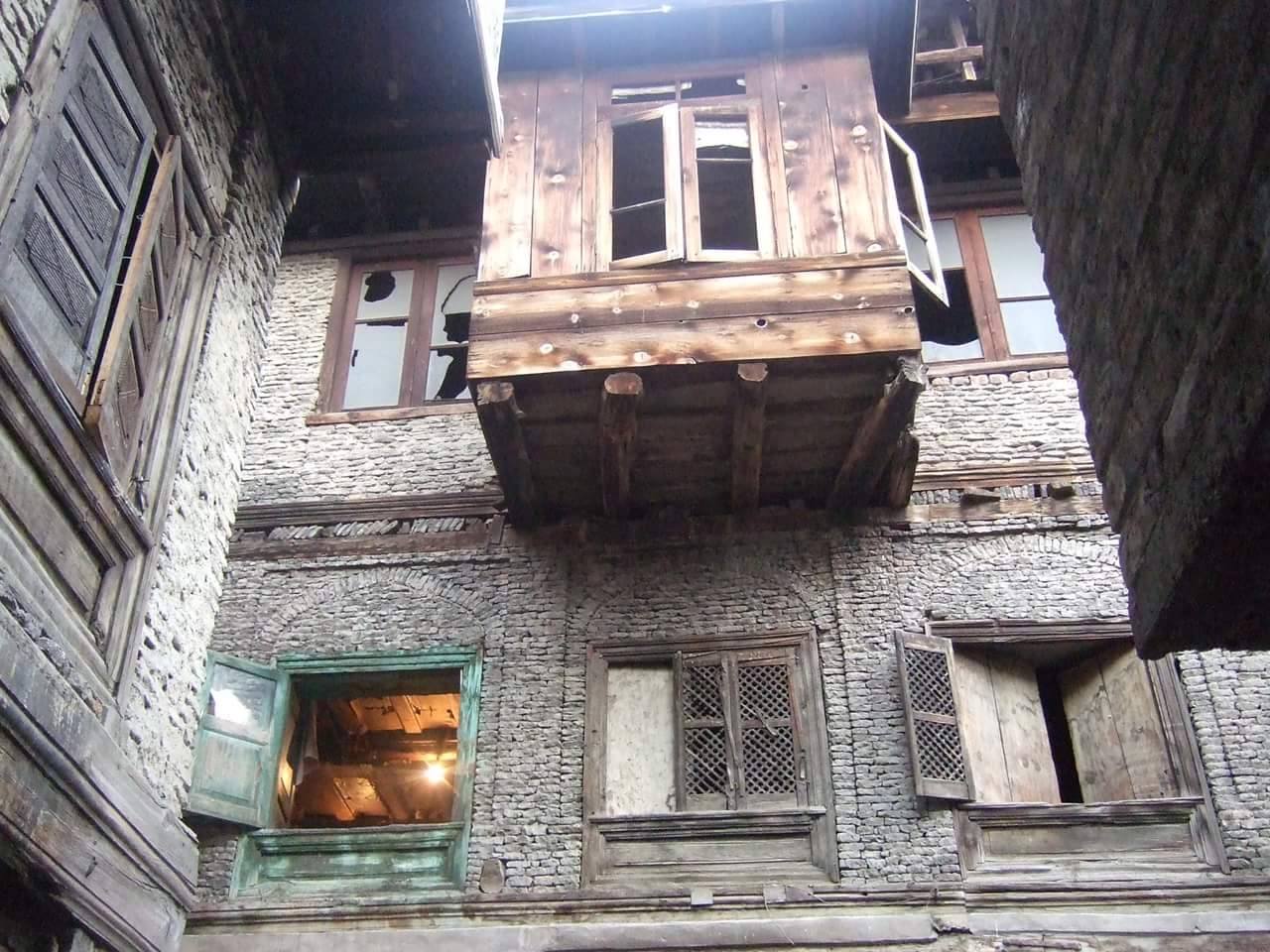
The house at Chinkral Mohalla

Story of “Taberdar house” at Chinkral Mohalla Srinagar by Narinder Safaya ji as told in 2013:

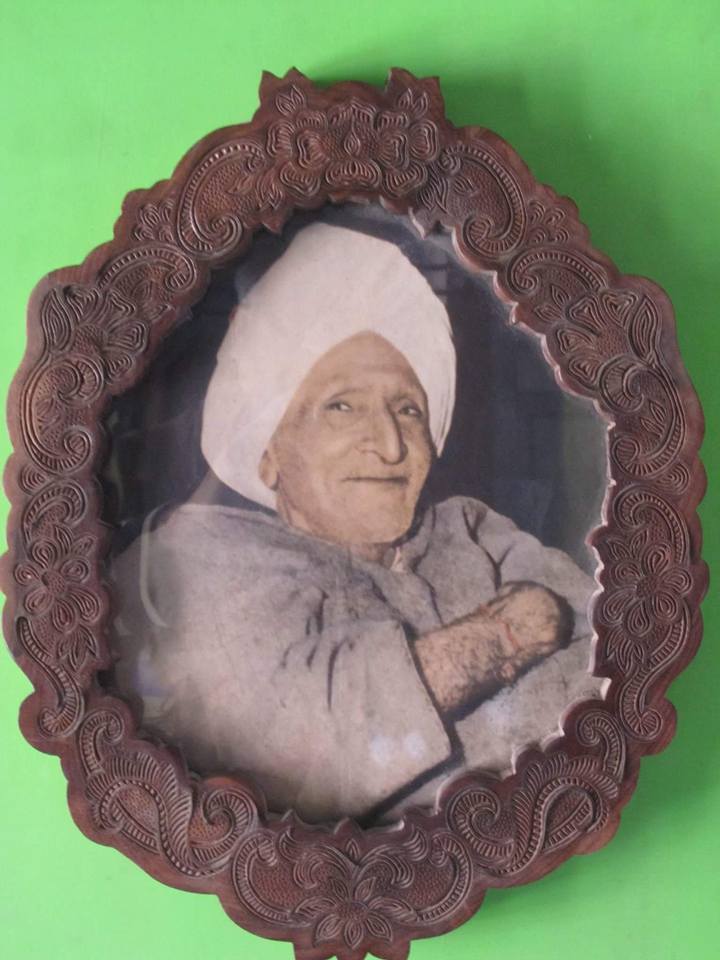
” It is about 200 years old. One Pt. Sukh Ram Safaya was a minister with one of the Afghan Rulers. He had a sister who was married to the son of a big landlord in Marraz (now district Anantnag). The woman was very beautiful. From this marriage she had a son. The local Afghan governor of the area had an eye on her.  For protection, she was sent in the dark of night by her husband to her brother’s house. Her husband was killed by the said local governor. As Sukh Ram Safaya was very influential revenue collector, nothing bad happened to him. The woman stayed with the brother after being widowed. The child, Nank Chand, grew up under the protection of his maternal uncle and as such came to be known as Nank Chand Safaya. His uncle gave this house to him. Nank chand’s son was Pt.Ganesh Dass Safaya Taberdar, grand father of Swami Ram Joo Taberdar. In the last decade of 19th century, the upper storey got gutted and was rebuild by Pt.Ganesh Dass. We added a floor to it in 1970 and changed the roof to tin from birch and soil. From our kani we could see a ring of mountains which cover the entire valley.”

-0-
 
17th May, 2025

It is with deep sadness that I note the passing of Narinder Safaya ji yesterday. He first contributed to SearchKashmir back in 2013. In Delhi, he fostered connections among people with roots in Kashmir through “baithak” meets. Over the years, we discussed Kashmiri songs; he suggested songs for coverage and provided helpful corrections and advice regarding music and videos. A poet who wrote in Kashmiri, he appreciated any attempt to promote its use among the young. He remained supportive, even knowing more and understanding the struggles young people sometimes faced with pronunciation or word accuracy. His critique was always delivered with a sense of humor. One year, he promptly sent me the route for a walking temple tour in Srinagar via messages and another year shared books on Kashmiri Ramayan from his personal collection, which are now part of Archive project. He connected people with one another, serving as a unifying force, always with a smile. He will be missed.

Rituals in Death

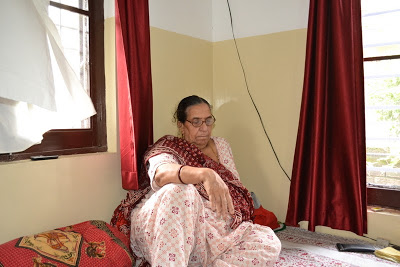
I picked lot of things from my grandfather, including a love for books. In death, he offered me some bits about the death rituals of Kashmiri Pandits. He also gave me a fear. Although he read a lot, he remembered little. And in the end he forgot everything. Because I too forget, I write…

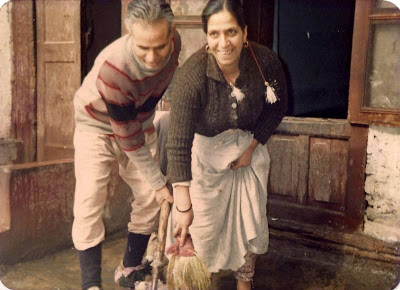
Daddy and Badi Mummy clearing snow. Winter 1988. Srinagar.
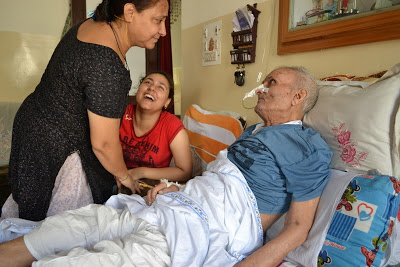
With his youngest daughter-in-law and youngest grandchild.
21,  July 2013. Jammu
Mourning: the house is essential divided into two parts. One section for women and one for men. Frequent wailing sounds can be heard for women’s side. In the men side there is mostly talk of bitter sweet past, sorry present and doomed future. 

5th August. 2013. Shakti Nagar Cremation Ground, Jammu. 

5th day
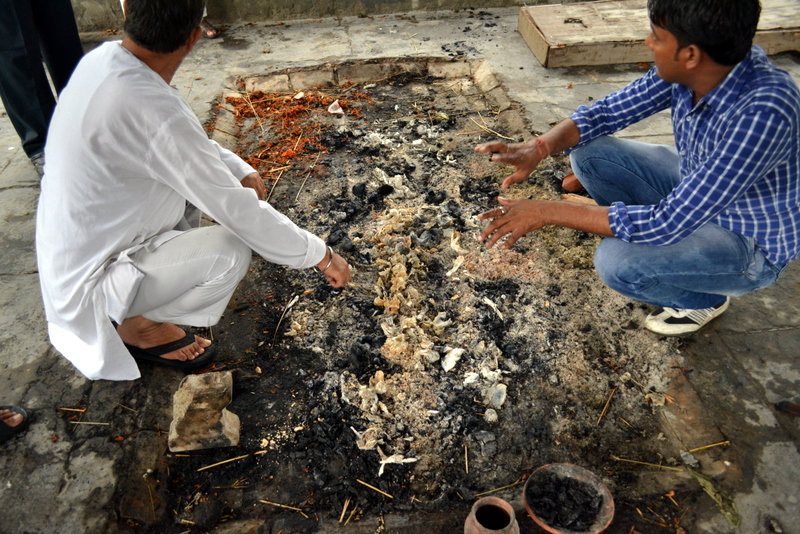
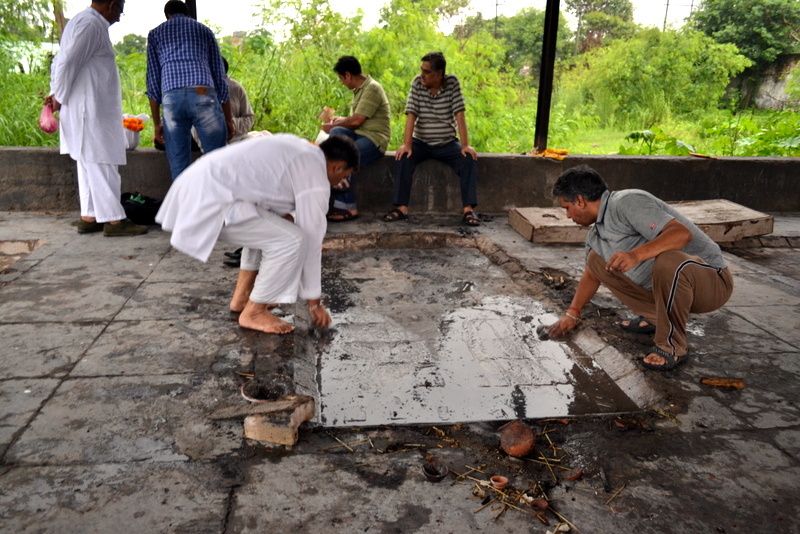
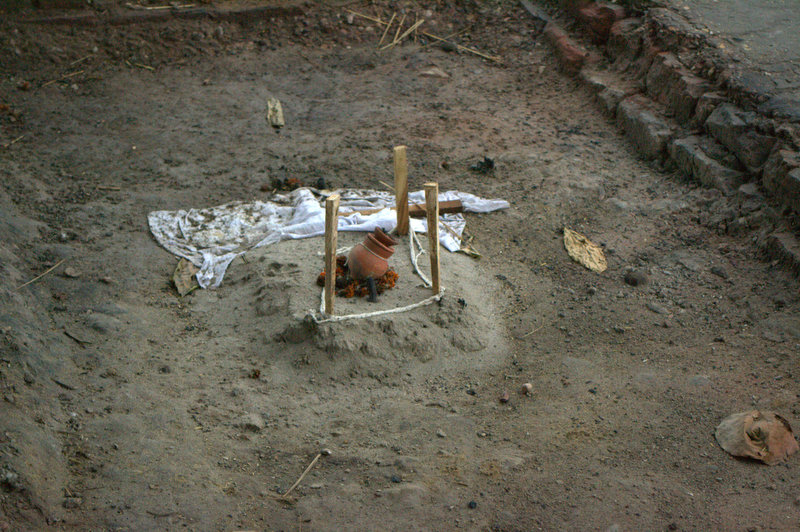
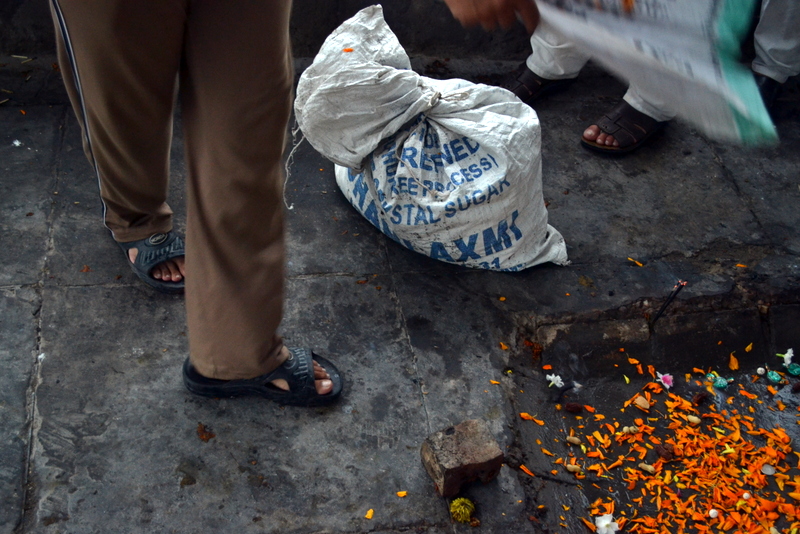
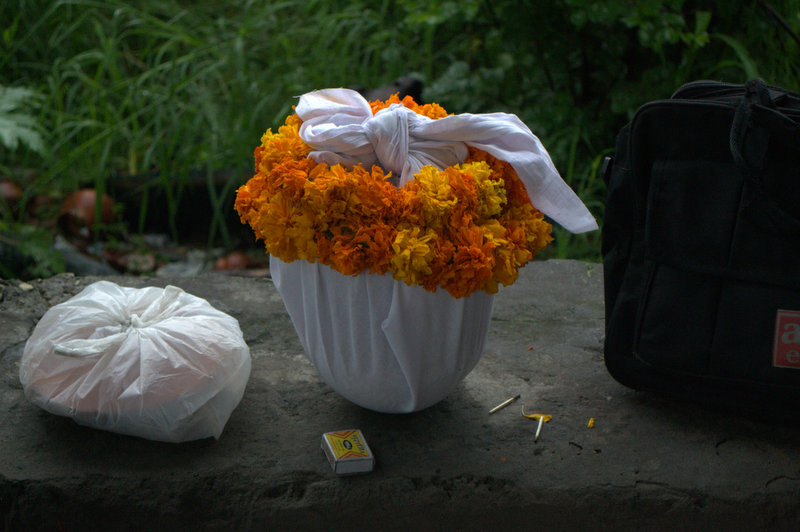
We go to the cremation ground to collect his bones and ashes. Among the bones is a bone known among Pandits as Porush (Man). It is part of upper vertebral column. The bone holds a special meaning as in its shape it is said to resemble a sleeping man, a symbol of departed body. While placing the body on pyre special care is taken by putting in in right posture to ensure that the Porush remains intact after burning.

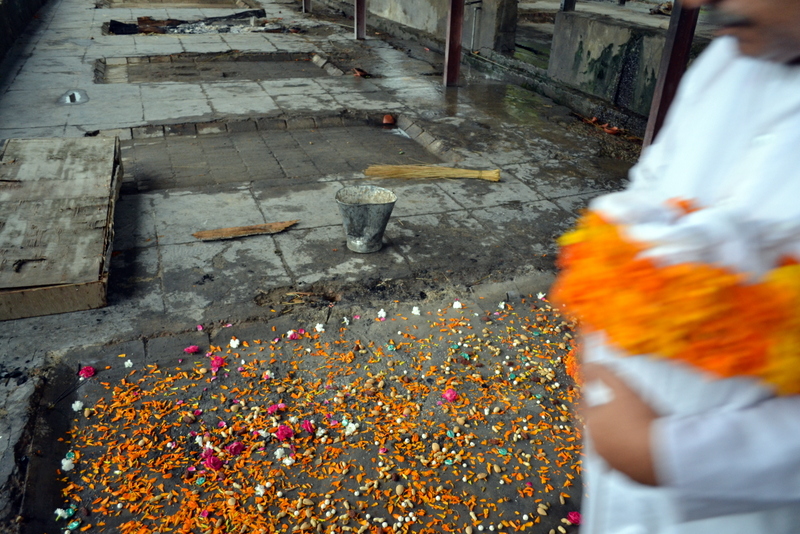
Cleaning of the spot by sons
The spot as it is left by locals of Jammu – the Hindu Dogras
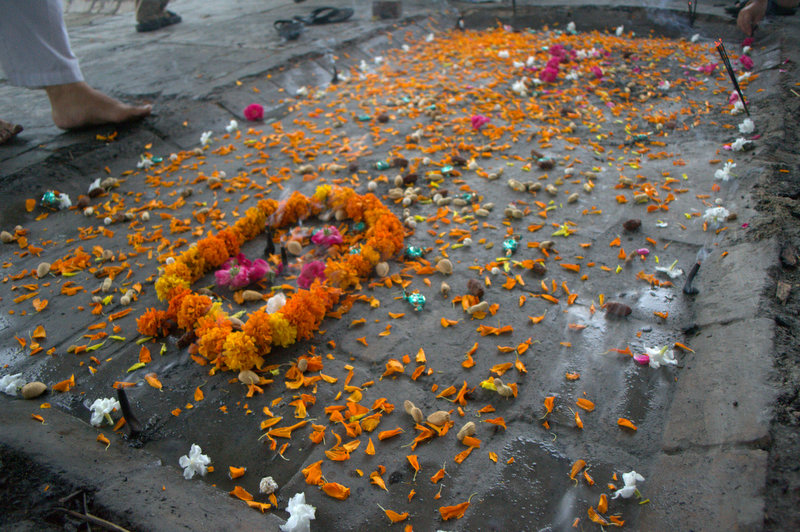
The spot as it is left by Pandits. Honey, sweets and candy is left
(possibly so that ants can do rest of the cleaning)
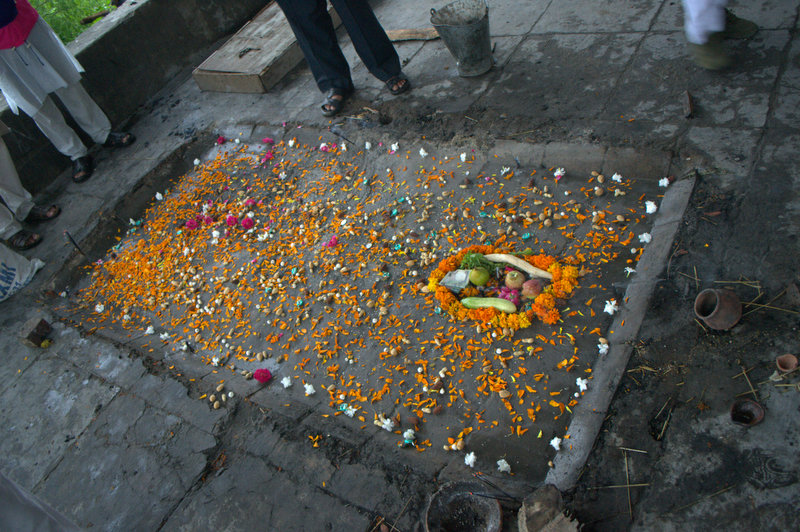
White radish or Mooli is an absolute essential part of the 5th day ceremony
 and is a must offering for the departed on this day. 
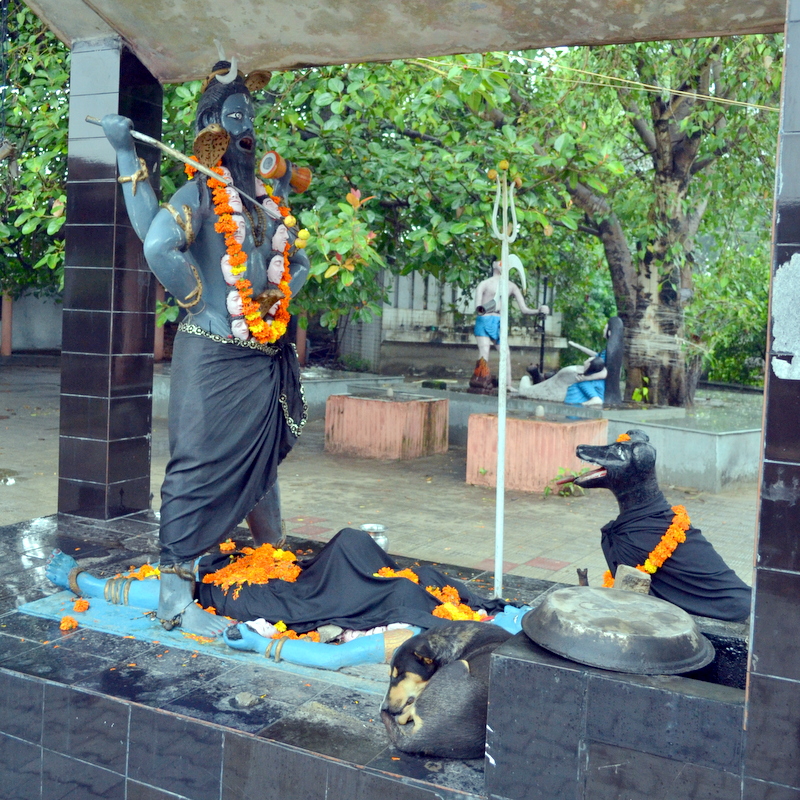
Mahakal Bhairava and his dog (s) at Cremation Ground

Still Day 5.
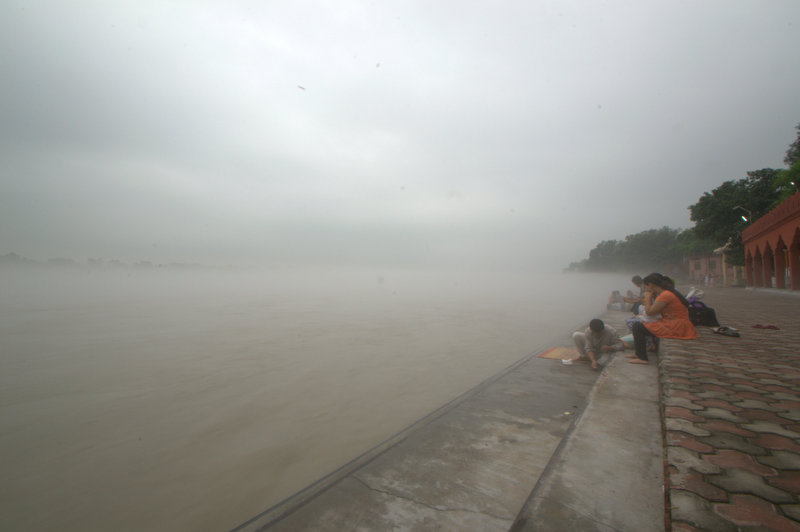
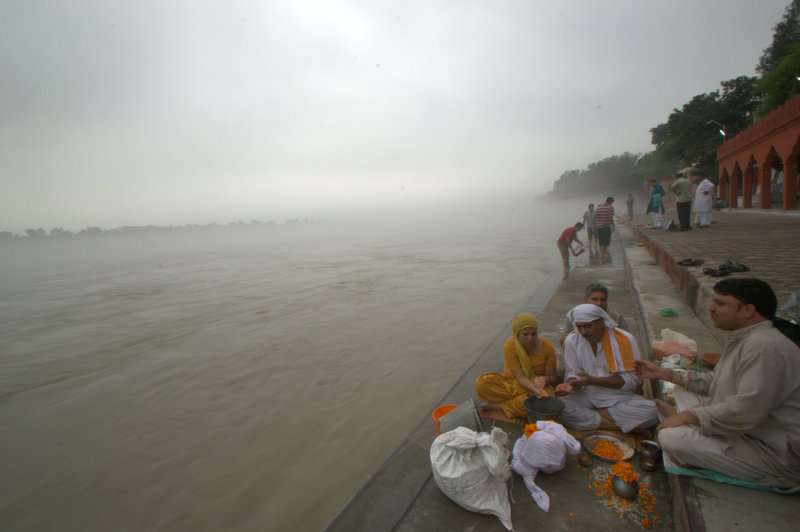
Ghat on Chenab river. Akhnoor.
Site for immersing the ashes.

In older times, in Kashmir, ashes were sometimes kept buried in a wall of the house till they could be immensed at Gangbal Lake in September.  Or, at Shadipur.
Pandit ji is a lot miffed when he finds out one of the daughter-in-laws is also present for the ceremony. It is pointed out to him that she took care of him like a daughter.  He says Kashmiri women come from the clan of Nagas, the snakes. Hence that headdress. Hence the separation.
Father and uncles remember Pandit ji as a haughty little kid growing up in lanes around Habba Kadal. Of course, his indignations are ignored. He believes in rules of Manu. He believes Kashmiris may be Jews, may be even Russian. He believes.  
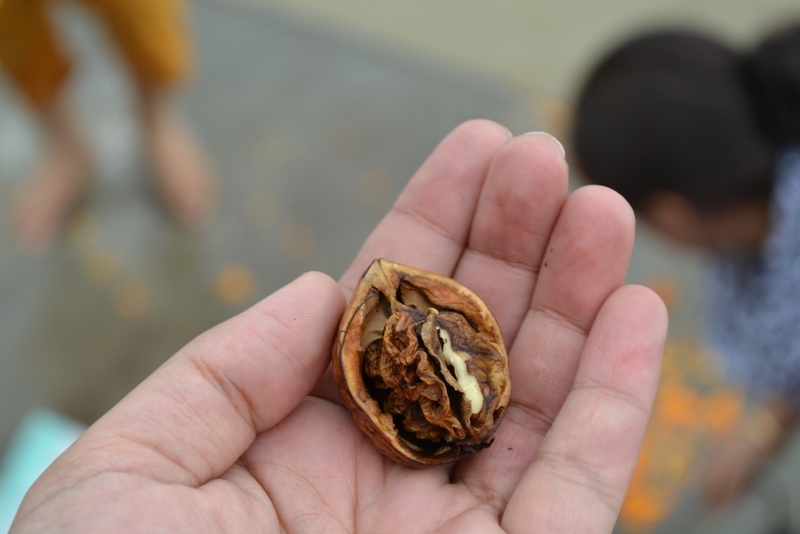
Prasadh at the end of the ceremony. Walnut.

Day 10.
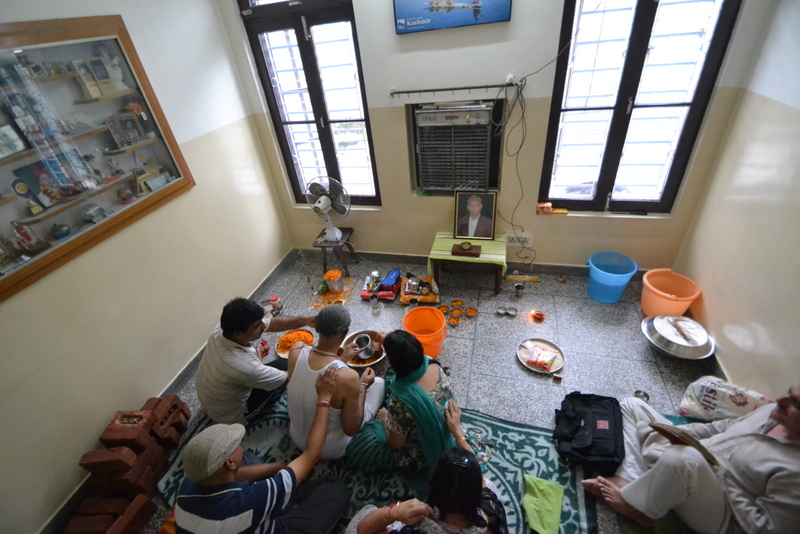
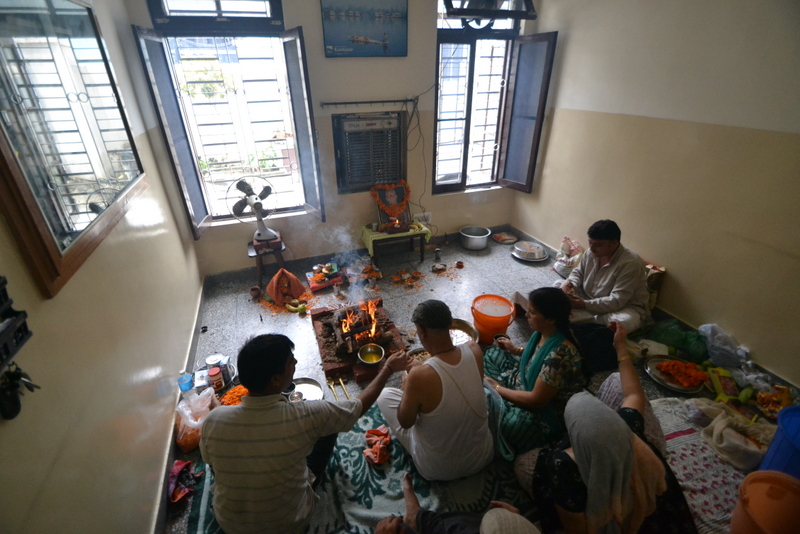
The departed is a Preta till it becomes a Pitr on completion of all the rites and joins the realm of previous Pitrs. A process that takes a year. The main rituals last for 13 days. There are talks among Kashmiri Pandits that 13 is becoming too difficult to manage. Working people can’t be home for 13 days, that it should be reduced to 4. But the old guards and priests don’t agree. 

Garuda Purana is remembered and recited.
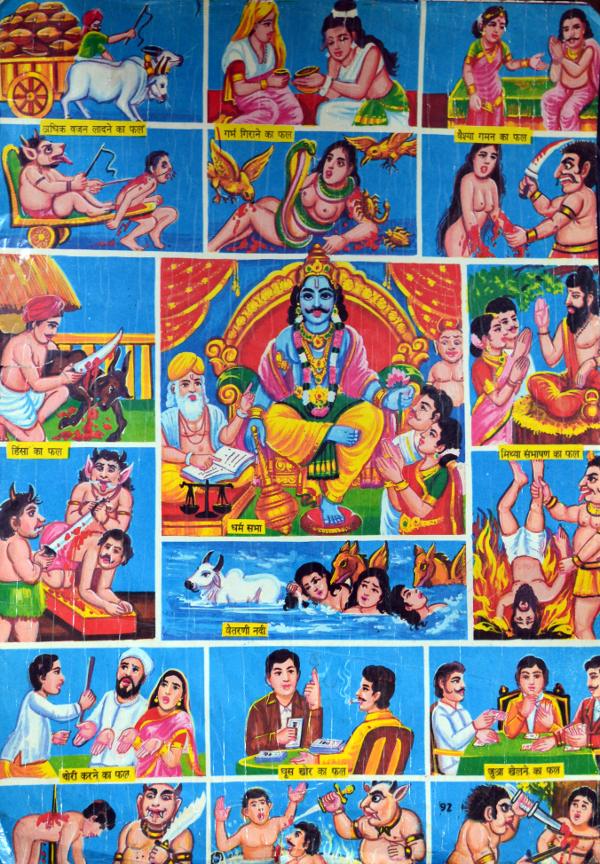
Hindu afterlife Punishments given in Garuda Purana.
A poster found at a little shop in Jammu.  Febuary 2012.
Mother tells me punishment for those who waste salt is that they pick you up by your eyelashes.
An interesting custom on this day has the sons walking in between rows of relatives lined up on two sides. The relatives are supposed to put money in their pockets discreetly as they walk past. In a way they help them bear the cost of feast for relatives that follows the next day. 

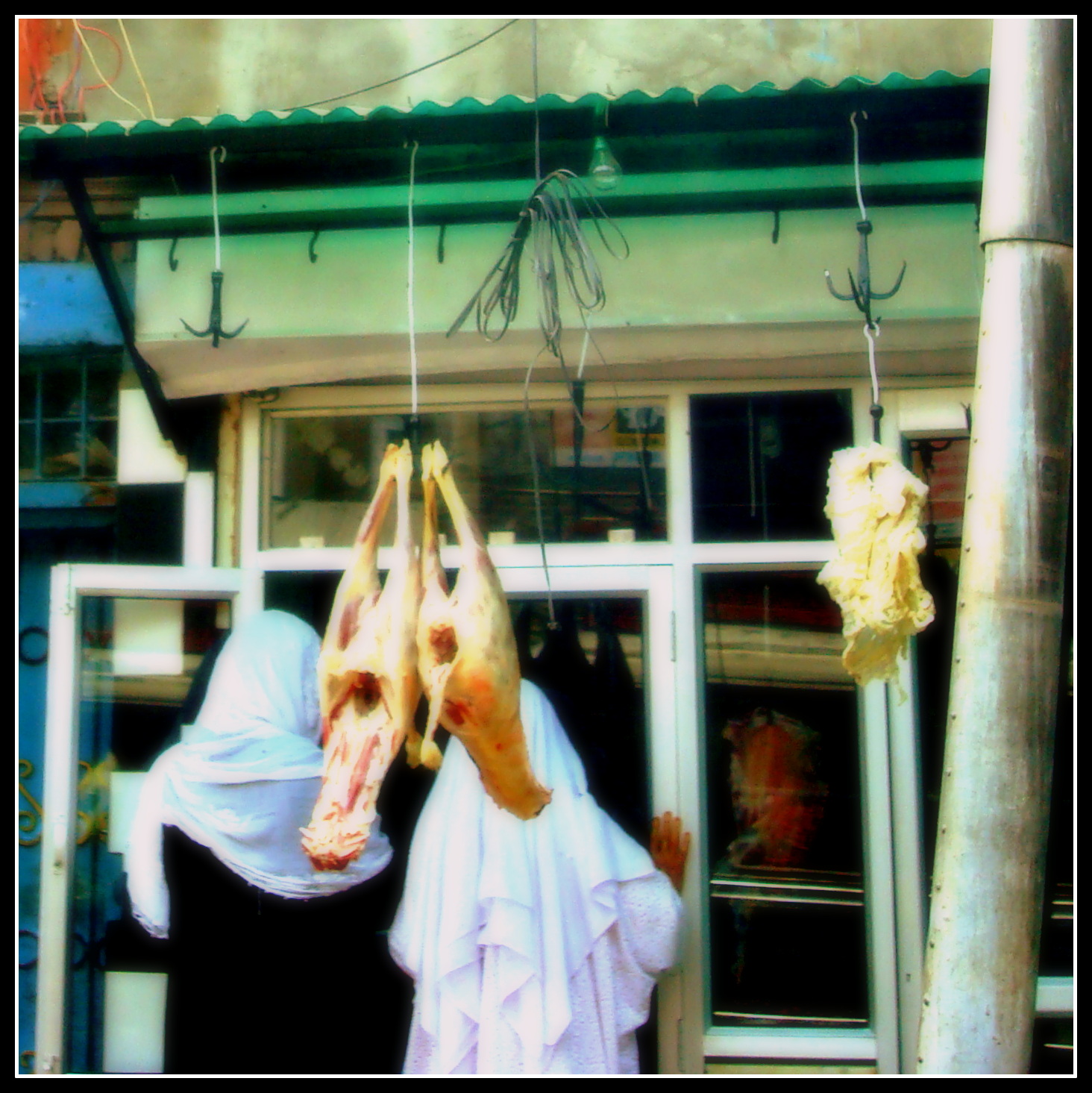
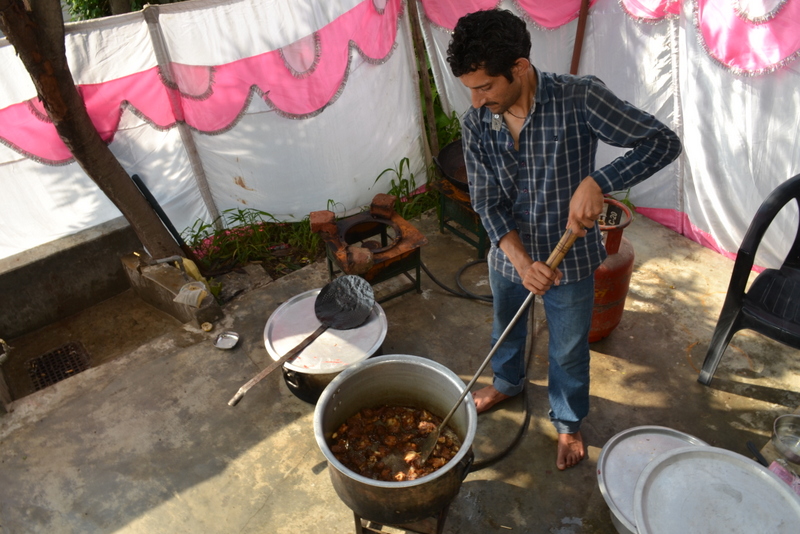
Meat being prepared. 
In Kashmiri tradition if the meat is not prepared on this day then no meat can be prepared for next 5-6 months. So meat is prepared.

The cook was earlier worried because a relative of his was badly injured in a recent earthquake in his hometown Kistwar. By the end of the day, he is worried because there is news of communal disturbances in his town. By evening the disturbance spreads to Jammu. Mahaul goes Kharaab. In evening I go out to city to get some more Mooli from Mandi but return back half way because there are gangs on bikes roaming around with knives.

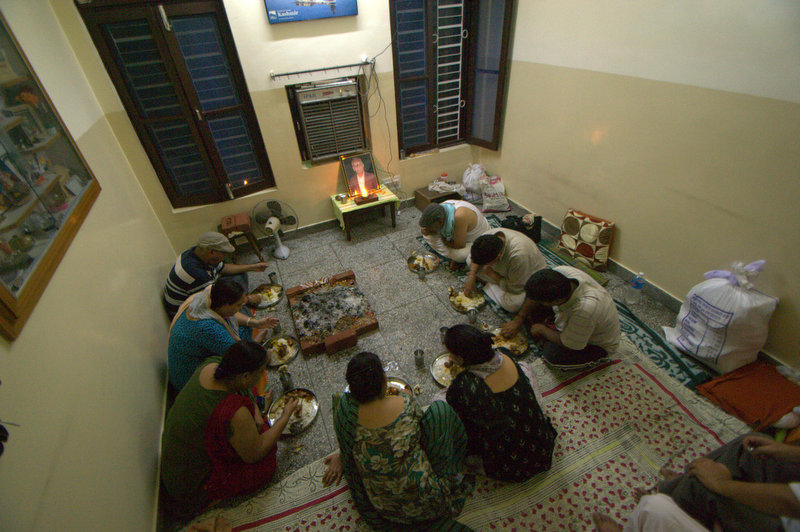
Evening feast. The Pandit ji also eats meat. 
Day 11. Army is out on the streets. The cook doesn’t come. Aunts take charge of cooking.

The news in local paper is confusing. All it talks about is ‘majority community’ and ‘minority community’. If you don’t know the demographics of the area, you are forced to imagine who killed whom.

When the last ceremony is over and the Pandit ji leaves, a token pebble is thrown at him as he crossed the main gate…probably so that he does not return soon.

In none of these ceremonies is my grandmother involved. She was married to the man for about 64 years.

Day 12.

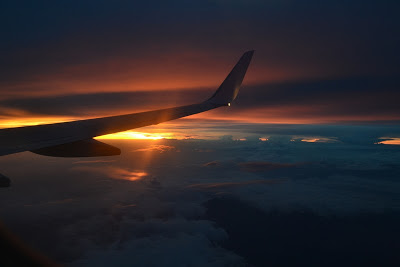
The entire city is shut. Early morning, I start out on a long walk to airport with father to catch my flight out of a trishanku’ian town.

-0-

January 17, 2014

It’s been six months. Today, we cook fish in dinner,  offer it to the dead and feast. Pandits call it the day of ‘till‘. 

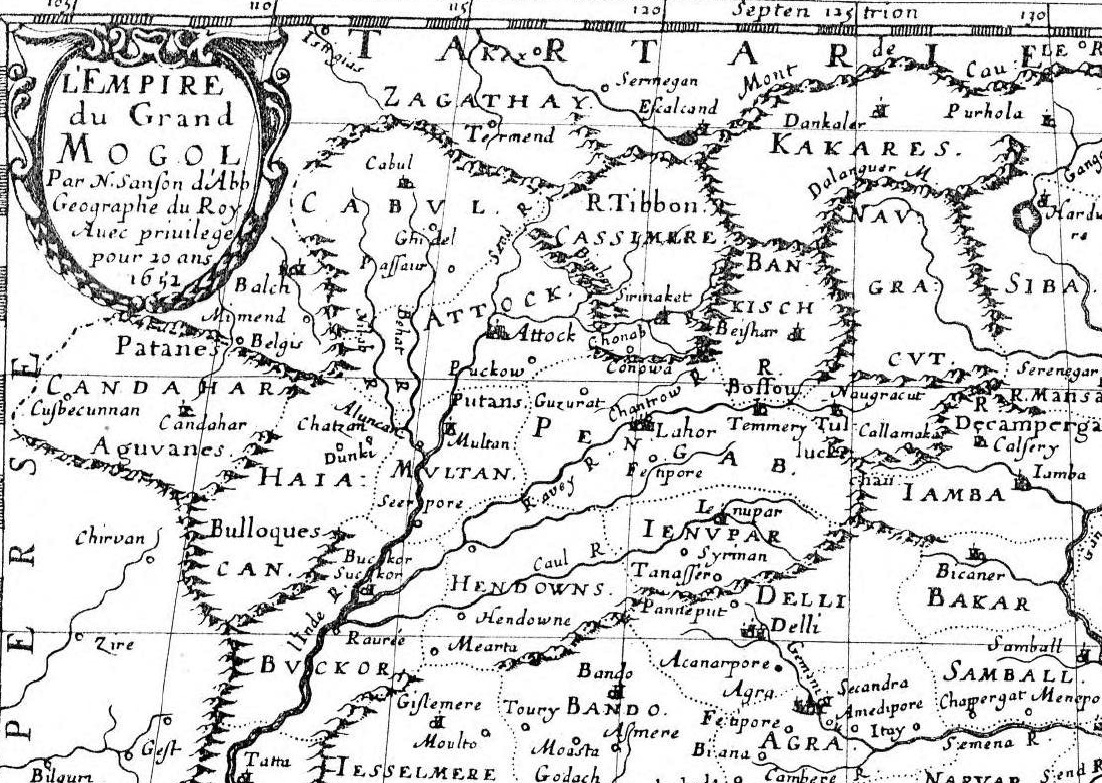
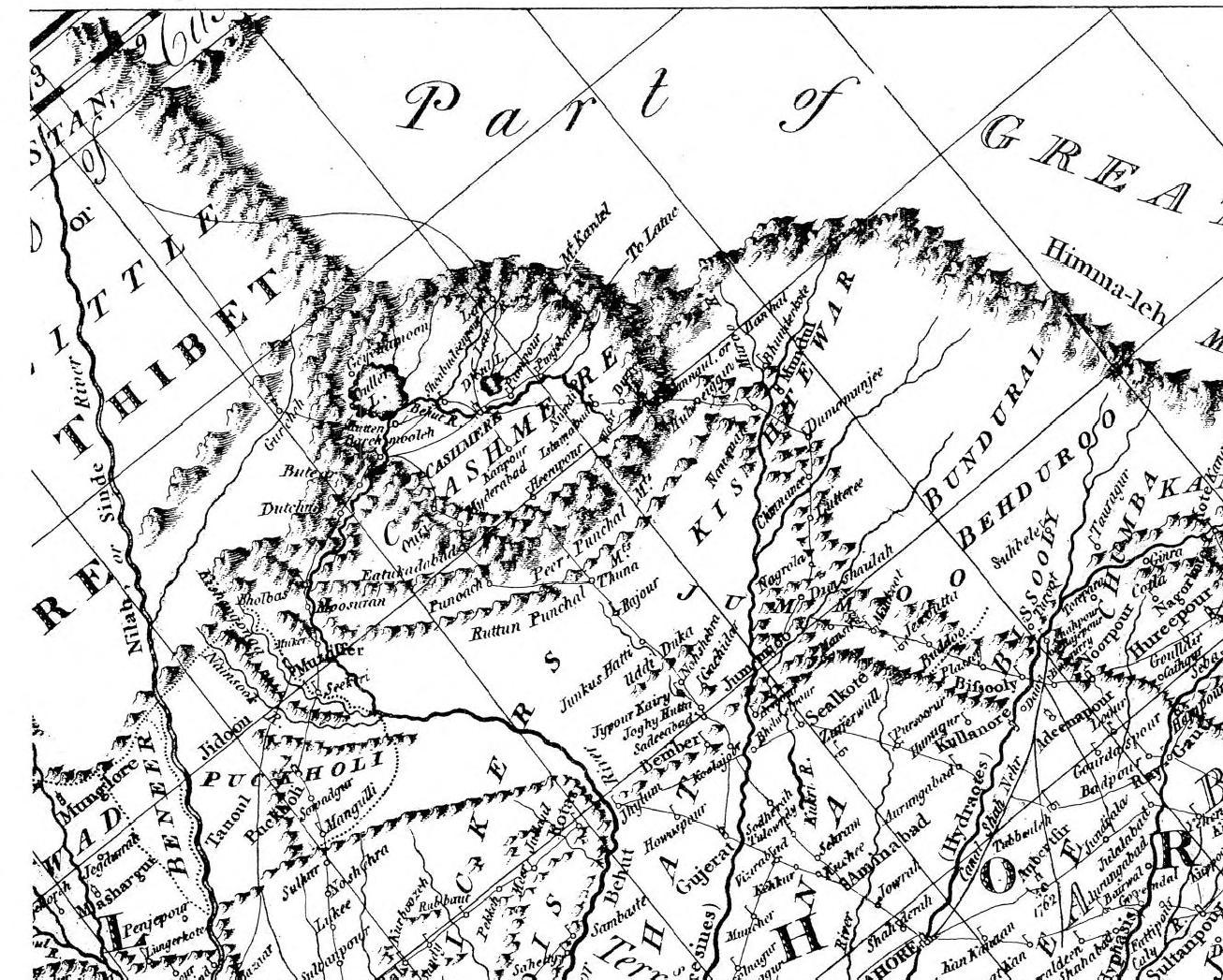
Jehlam flows into Bay of Bengala


Goof-up from a time when East India Company had just arrived at Mughal courts:

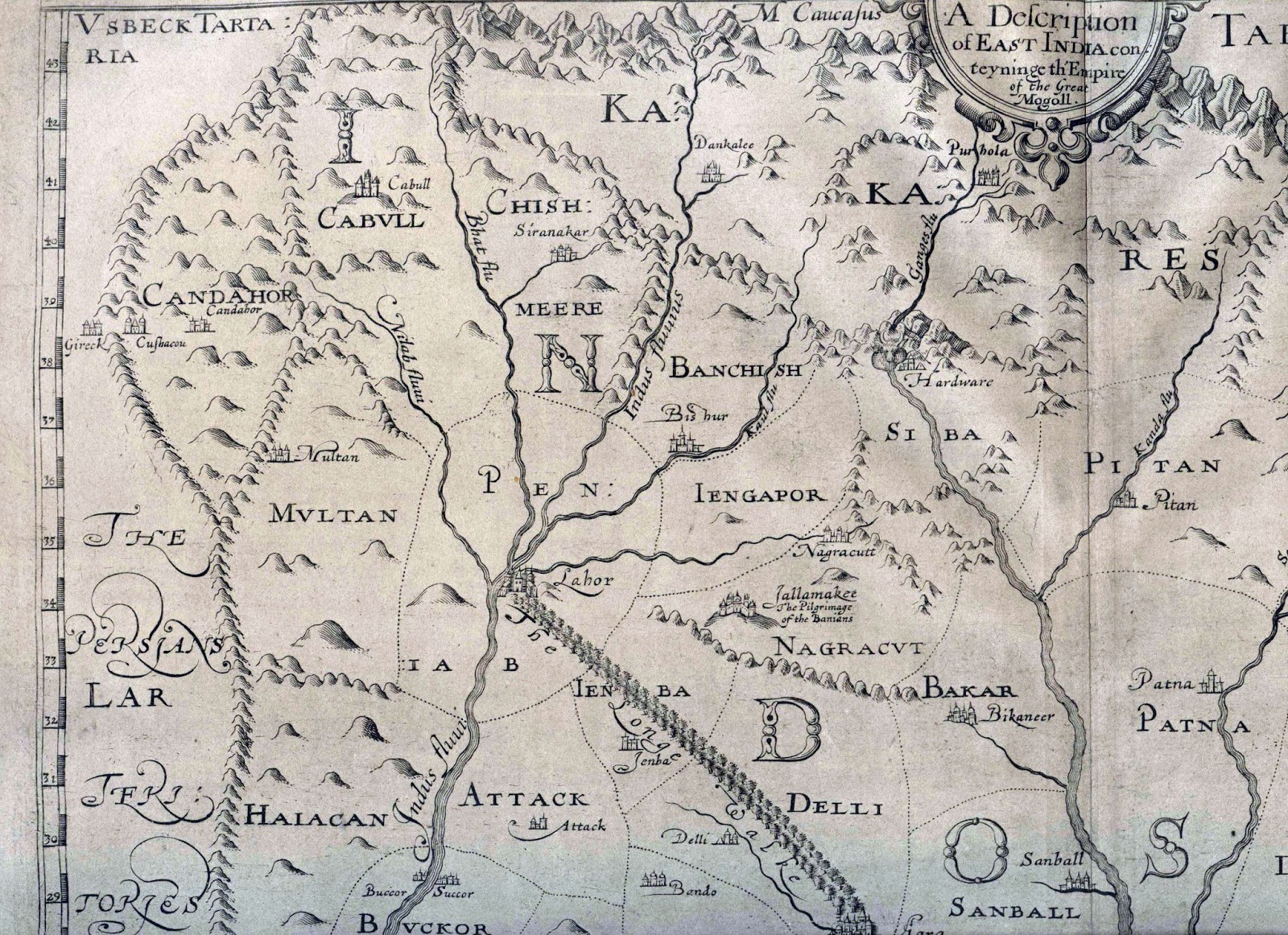
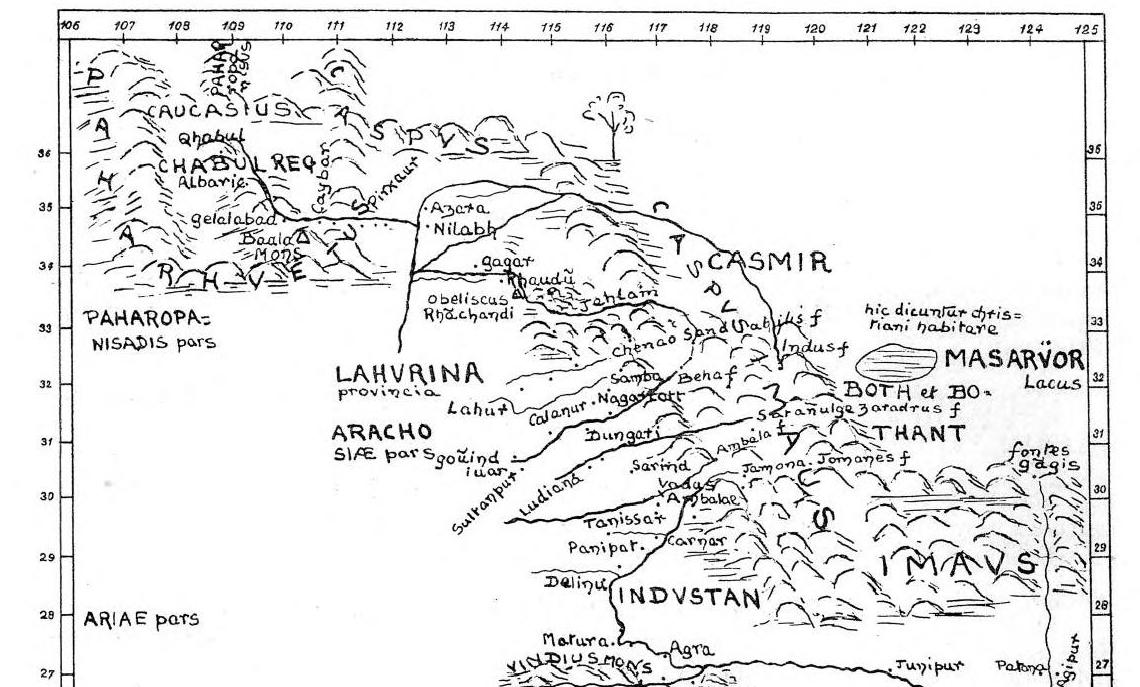
Kyshmier [Kashmir]. The Cheefe Citty is called Sirinakar [Srinagar]. The Riuer of Bhat [Behat or Jehlam] passeth through it and findeth the Sea by Ganges or, some say, of it self in the North Part of the Bay of Bengala. It bordereth Cabul to the East Southerly. It is all Mountaines.

From the Appendix to ‘The embassy of Sir Thomas Roe to the court of the Great Mogul, 1615-1619, as narrated in his journal and correspondence’ (1899).

A note in the book does point out the obvious error in sending Vitasta eastwards and mentions that William Baffin’s map from 1619 of Mughal empire , based on Sir Thomas Roe’s account did get the direction of the river right.

William Baffin’s Map
[via: columb
ia.edu]

-0-

Kashmiri Opera Performers, tracing 1955/2013


It’s 1955. First Kashmiri opera Bombur ta Yambarzal (The Narcissus and the Bumble Bee) by Dina Nath Nadim, that has already had a few re-runs, is again put up at Nedou’s Hotel for special guest – military leader and Marshal of the Soviet Union Nikolai Bulganin who is accompanied by First Secretary of the Soviet Communist Party’s Central Committee Nikita Khrushchev. By the end of 1956 Uzbek communist leader Sharaf Rashidov brings out his interpretation of the story in a novella titled ‘Kashmir Qoshighi’ ( also known as Song of Kashmir/Kashmir Song/Kashmirskaya song) acknowledging Nadim’s work. Almost a decade later, in 1965 , the year of second Kashmir war between India and Pakistan, USSR’s famous Soyuzmultfilm studio produces an animated film called Наргис based on Rashidov’s Song of Kashmir. Interesting the film retained the original Kashmiri names of all the characters sketched originally by Dina Nath Nadim, all the names except Yambarzal who is given the popular name Nargis, the name of this film.

[More details at a post from 2011: ‘Bombur ta Yambarzal’. From Russia. With Love.1965.]

A group photograph of the artists who gave performances in honour of the visit of Soviet leaders at Srinagar.

Image from Photo division India.
[Date of event via a Russian archive at visualrian: 05/11/1955]

-0-

Within an hour of posting this photograph to Facebook page of the blog, I started getting comments identifying the people in the photograph, words along the way painting a beautiful picture of connections and relations:

Archana Kaul That is my mom( Nancy Kaul now Nancy Dhar) when she was in college, and is seated first from the left!!
5 hours ago
Puneet Dhar I wonder if Zia Durrani is also here? Bindu check with Ma? Is that her next to Ma?
5 hours ago
Indira Rao Archana, your mom looks absolutely lovely! I still fondly remember her teaching us music. One of the ghazals she taught us (hum apne gham ka fasana) continues to be one of my favorite
4 hours ago
Zia Durrani I am the one standing all the way to the right!! My cousin Farkhanda is the fifth standing from the left. She died last year. Gargi is the second standing from the left. I recognise some other faces, but can’t remember their names.
4 hours ago
Sudha Koul Principal Mahmuda ( Govt. College for Women, Srinagar.), the tall one standing in the middle, so young and striking! Thanks Bindu!
26 minutes ago

-0-
Comment in July, 2018

Roshan Dass Raj Dulari the one sitting in the middle of front row must be around 77 now. she is a bundle of talent 

double gilaas

Cherry Earrings
July. 2013.
I had to promise my little cousin a ‘pizza treat’ for posing


My mother remembers
in spring
she would run around with cherry earrings.

-0-

Cherry Picking. Kashmir. 1953
(From  the archive of Indian Photo Division)

-0-

dimyo dilaas
gandyo walaas
peirtho gilaas kulni tal

-0-

Kashmiri word for Cherry comes from Persian word for Cherry: gilaas

-0-
Update: April, 2016

Mohsen Makhmalbaf’s Irania film “The Silence” (1998)

Kashmir in Sven Hedin’s Trans-Himalaya, 1906

Man Mohan Munshi Ji shares some scans from his copy of Sven Hedin’s Trans-Himalaya : discoveries and adventures in Tibet (1909). On way to Tibet, Sven was in Kashmir in mid of 1906. Among the scans are two old photographs of famous Nedou Hotel of Srinagar. I add some recent photographs of the hotel sent in by another friend.


Sven Hedin who entered Tibet even after having been denied official permission to enter; The British Government allowed him to proceed via Jammu & Kashmir on his way to Eastern Turkistan from where he crossed into WesternTibet and carried explorations in areas never visited till than by any white man. His publication “Trans Himalaya” published in two volumes in 1909 is a master piece [in fact he later brought out a third volume covering mostly his visit to the source of Indus. Read the books here via archive.org: V1 (covering start of his journey from Kashmir), V2, V3]. He made his preparations for his journey in Kashmir initially. He is profuse in his thanks to a Kashmiri gentlemen Pandit Daya Kishan Koul Diwan Sahib who arranged everything from supplies, equipment, mules ponies and four soldiers as body guards. He has also acknowledged the services rendered by about thirty six Asians mostly Ladakhis who accompanied him to Tibet where when discovered by local authorities they did face trouble. Besides others, he also thanks Sir Francis Younghusband, the then British Resident at Srinagar who had explored Muztag and other passes of Karakorum Range between Eastern Turkistan and Jammu and Kashmir and also led the British Expedition to Lhasa in 1905-6.


title cover


Portrait of the then Maharaja of Jammu & Kashmir [Pratap Singh]


view of the then Srinagar Palace now old Secretariat


view of Fateh Kadal, 3rd bridge of Srinagar. The building on the left with the flag is the C.M.S School, Srinagar. On the right the minaret of Shah Hamdan’s Ziarat is visible with North Kashmir or Sogput Range in the distant background


Sven Hedin in front of the Nedou’s hotel Srinagar with his baggage


Some of the mules being loaded at Nedou Hotel

Four body guards for Sven Hedin arranged by Pandit Daya Kishan. Sitting: Ganpat Singh, Khairullah from Peshawar. Standing: Bikom Singh and Basgul from Kabul. Both Singhs are Dogra Rajputs

starting off from Ganderbal


The Road to Baltal.


-0-


Some recent photographs (June 2013) of Nedou Hotel that was last year vacated by CRPF. And is now under renovation with possible plans of reopening. Shared with me by cartoonist Sumit Kumar of Kashmir Ki Kahani.


-0-

Previously:
Sven Hedin in Kashmir [From Pole to Pole: A book for young people by Sven Hedin]