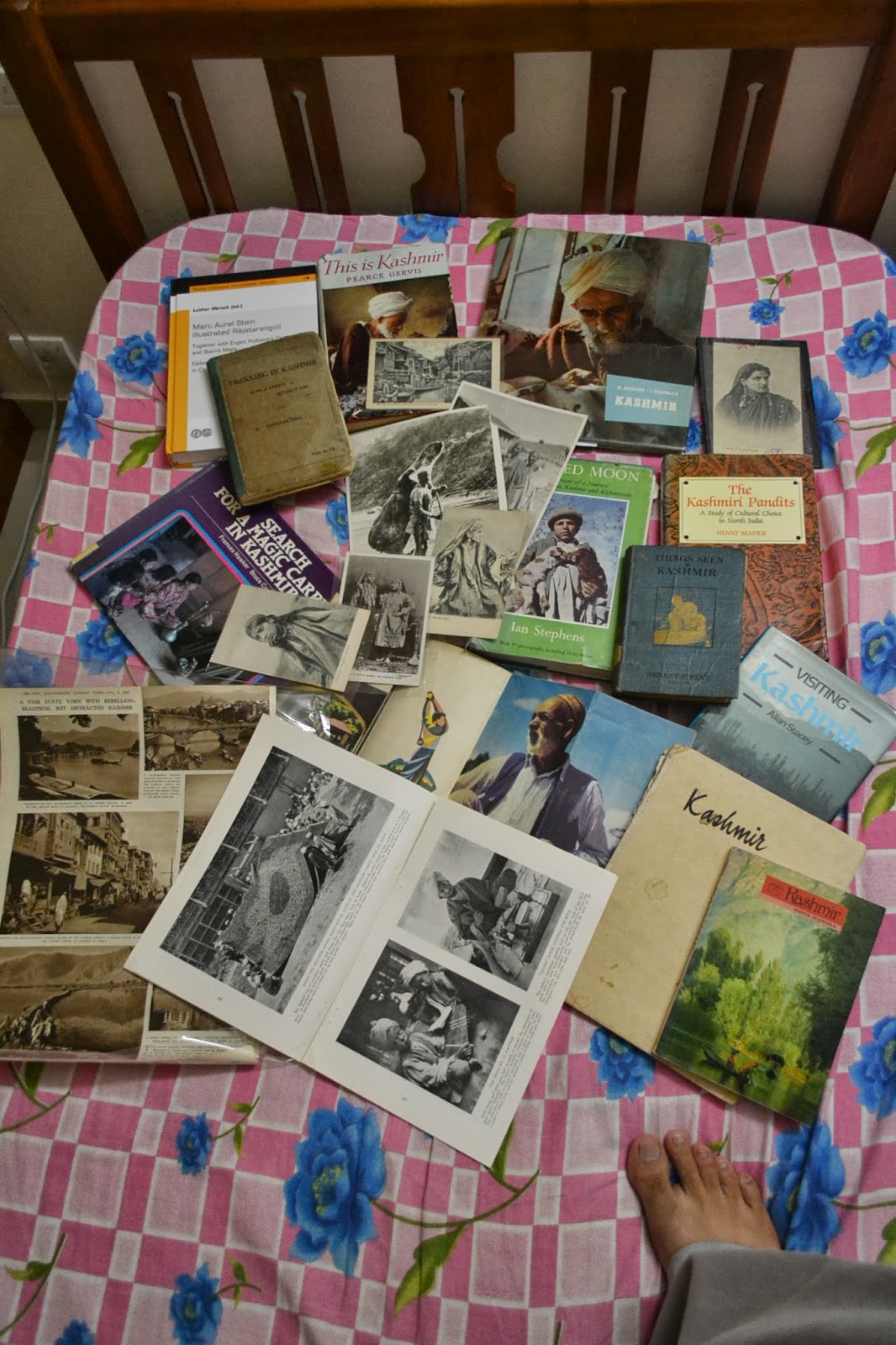
She of Gilgit


In summers, our small garden would come alive with colors of red amarnath, yellow marigold, purple salvia, white alyssum and roses of all colors. At that time of the year, an old woman from Delhi would come visit us in Kashmir. She would stay with us for weeks and then return. I remember it used to take her forever to cross the courtyard, walk past that garden and get to the house. Even with her sleek brown walking stick with a cursive handle, it would take her ages. My grandfather and his brothers would walk patiently behind her, watching her steps anxiously, one of them always holding her hand. At the door everyone would dutifully lineup to greet her. Calls of warm ‘Wariays’, would ring out. Once inside, happening of the year would be passed on to her.

I learnt her story only a couple of years ago.

Ben’Jighar was my grandfather’s elder sister. She was the only sister of four brother. Since, my grandfather’s father died at a young age, my grandfather and his brothers were raised by his mother and the elder sister. After the death of their mother, Ben’Jighar, even though already married, was the titular head of our family. She was loved and respected by the brothers for all she had done for them. Since my grandfather was the youngest, he was especially fond of her. She look out for him. And in his own way my grandfather looked out for her.

In 1947, when war broke out between India and Pakistan, Ben’Jighar was in Gilgit along with her husband who was a minor government employee, a teacher in Bunji. As the news of war reached Srinagar, people started counted their losses, all those caught on the other side were considered as lost.

The general narrative of the conflict in that region tells us this story:

There was uprising against the Maharaja in Poonch, and much bloodshed. Masood tribemen were preparing for Srinagar. The Maharaja was still fiddling with his options. The news of partition violence from Punjab was to add further fuel to this combustive situation. Meanwhile, Gilgit, remote from these happening, but not untouched, was starting to rumble. Gansara Singh, the Wazir of Gilgit, a cousin of the Maharaja, acknowledging his vulnerable position tried negotiating with locals. The local feared an attack from Maharaja’s garrison at Bunji in Astor. In October 1947, when Maharaja finally went with India, the people of Gilgit decided to act fast. On 1st November, after taking their two young British officers in confidence, the Gilgit Scout staged a coup. Telephone lines were cut, the Governor was put under house arrest and the Hindus interned. Soon, India, probably thinking less about regaining the region and probably more thinking about cut-off the support Gilgit Scout were providing to raiders in Ladakh region, was air dropping 500 Lb bombs on Gilgit. Gilgit’s transfer to Pakistan was simple affair compared to other war zones in the region. People representing Pakistan arrived two weeks later to take charge of the treasury on 16th. After almost a year of fighting and a UN intervened ceasefire, a political prisoner exchange program was carried out. As part of this deal, Gansara Singh finally reach India in 1949. On reach back, much to the embarrassment of India, he refused to state that he was ill-treated by the enemy side.

In all these official narratives, I try hard to imagine Ben’Jighar in Gilgit. Did she hear the bombs drop?

After a certain time, a conflict becomes a summation of moments in lives of the lead actors of the war theater. The common people and their woes, apparently the good basic cause over which a conflict usually starts, in the end just become a dead mass of props on the grand stage, a number, of dead, wounded, killed, missing, looted, stabbed, burnt, raped; a date, of wins, defeats and ceasefire.

Even we don’t remember. This all history becomes just another vague family anecdote told in passing.

Her brothers had given up hope of finding Ben’Jighar alive. These were desperate times. But after months of fighting refugees from the other side started tickling into Srinagar. This was taken as a sign of hope in distressing times. Return of someone from the other side was treated as a second coming. ‘Duba’re Yun’, as they say in Kashmiri.

Ben’Jighar and her husband reached Srinagar almost after eight months. How? What did they experience? Nothing is told, or remembered. What is remembered is the state in which they arrived and how they were welcomed. The first thing my grandfather did was to hire a tailor and have them measured. They were to be given new clothes. They arrived destitute. A Shamiyana was set, cooks hired, relatives invited, a feast was organised. It was like organising a marriage. This part was important to get them back into the family and the society. Similar procedures were followed by other pandits housing refugee relatives. Kashyap Bandhu set up a group of volunteer in Srinagar to look after the refugees. Given the strict caste rules of Pandits, it was important to show publicly that they were welcome. That the refugees were ready for a new life.
Then it was all forgotten like a bad dream. 
-0-

The Shikaris


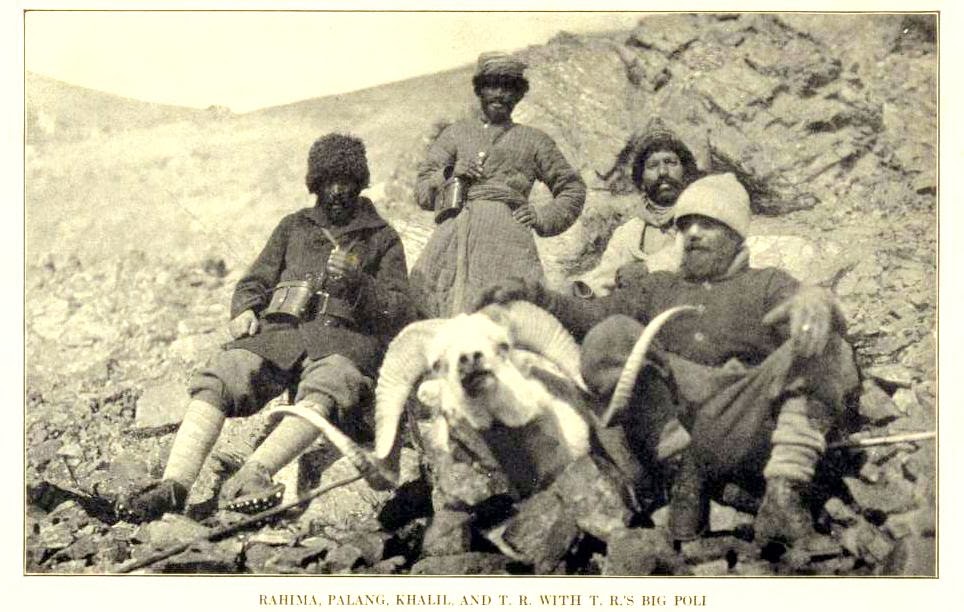
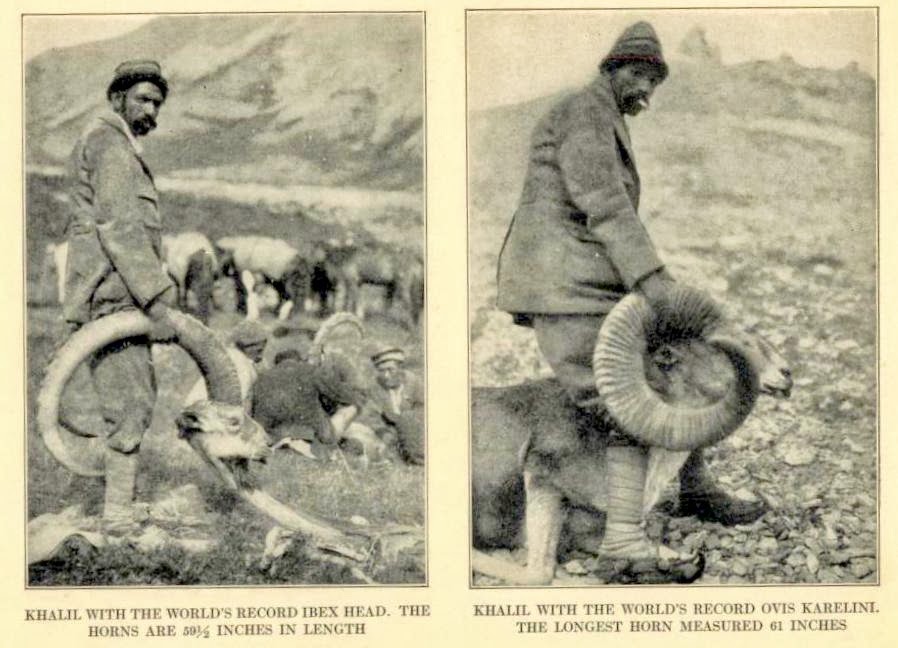
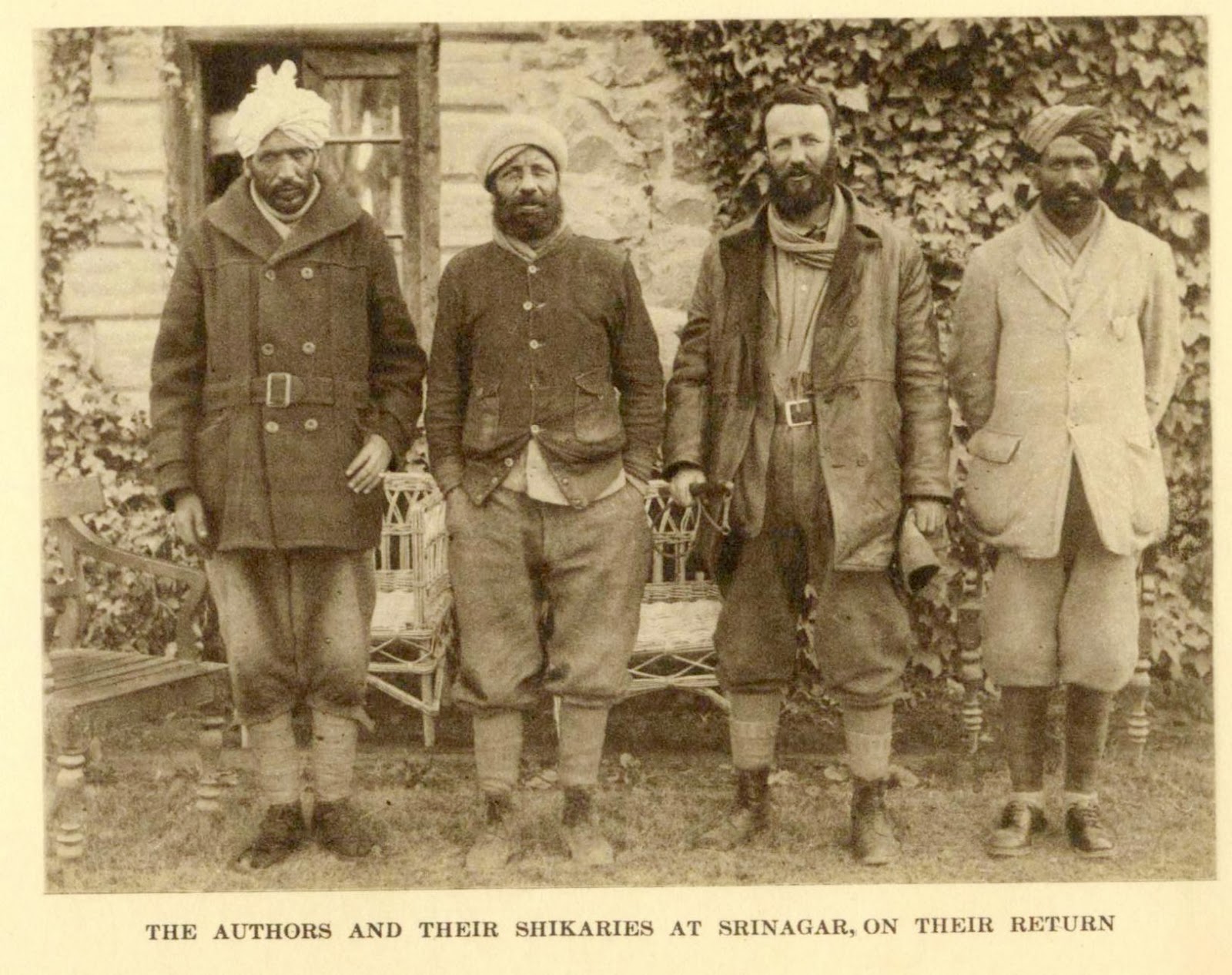
From the book ‘East Of The Sun And West Of The Moon’ (1926) by Theodore and Kermit Roosevelt, story of Shikari duo from Kashmir who travelled far and wide for the kills.

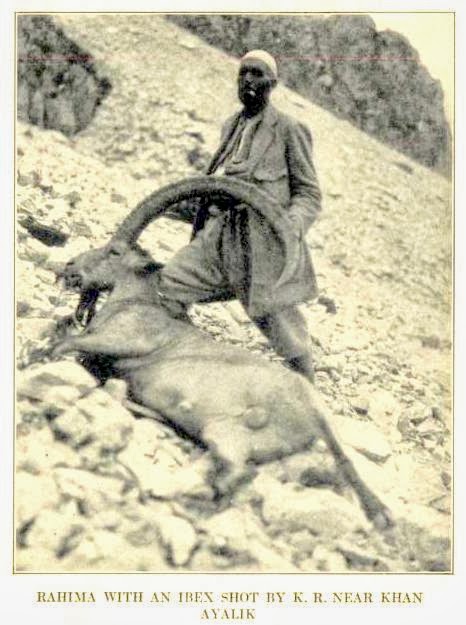
Rahim Lone and Khalil Lone of Bandipore. After returning from expedition
 to the Pamirs, East Turkestan and other remote central Asian destinations.

“Ted and I hired six arabas, and shortly after mid- night on the 14th of July we piled ourselves and our belongings in them and set out with all the speed feasible for Aksu. We loaded the carts lightly, and hoped to make long marches. Besides Rahima Loon and Khalil, we took with us the second cook, Rooslia with Loosa and Sultana. Sultana had received sad news at Yarkand. In a letter to Rahima from Bandi- par he heard of the death of one of his children, a boy of fourteen. The ravages of cholera had been frightful-more than 700 of the villagers had died. Our Kashmiris reminded me of the crew on a New Bedford whaler in the old days, when almost every member was related by marriage or blood. This of course made it sadder still for the Kashmiris, as each one had a relative or close friend to mourn. We had become much attached to our followers. Aimed Shah, who was to take charge of Cherrie’s caravan, had proved himself most efficient on the trail across the passes. Feroze was an excellent little fellow; he had a keen sense of humor, and was a merry companion.”


“Our Kashmiris were a patriarchal group, well led by Rahima Loon. To his many other qualities, he superadded that of diplomacy. A born diplomat, he managed to be ever smoothing our way, and yet getting us along with amazing speed, for which he fully realized the necessity. He watched over the finances with an eagle eye, and time and again saved us many rupees. Not only did he cut down the larger expenditures, but he also kept well under control the small daily sums that have such a tendency to mount.”

                           Rahim Lone at Ayalik, Turkestan
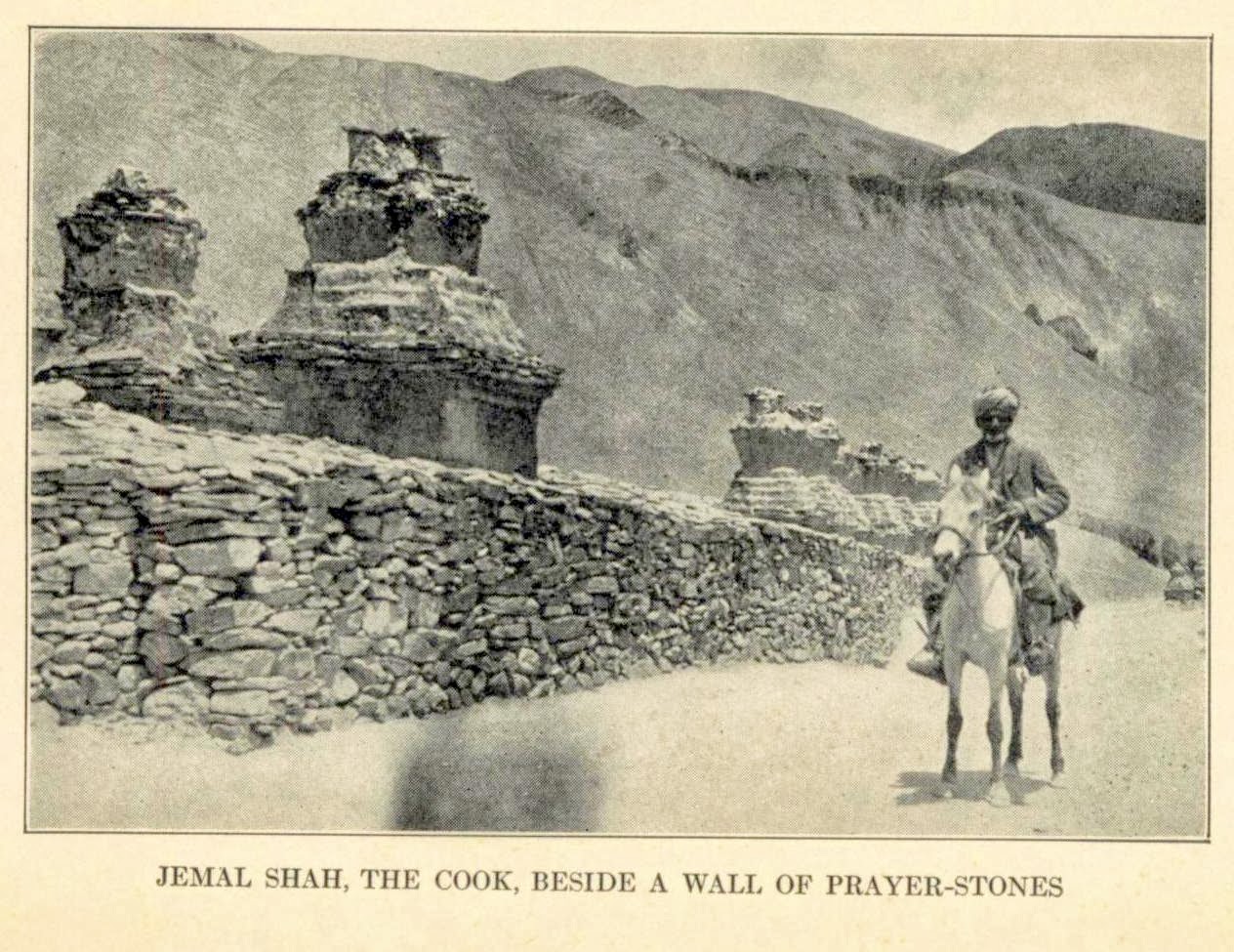
Jemal Shah, the cook. In Ladakh.

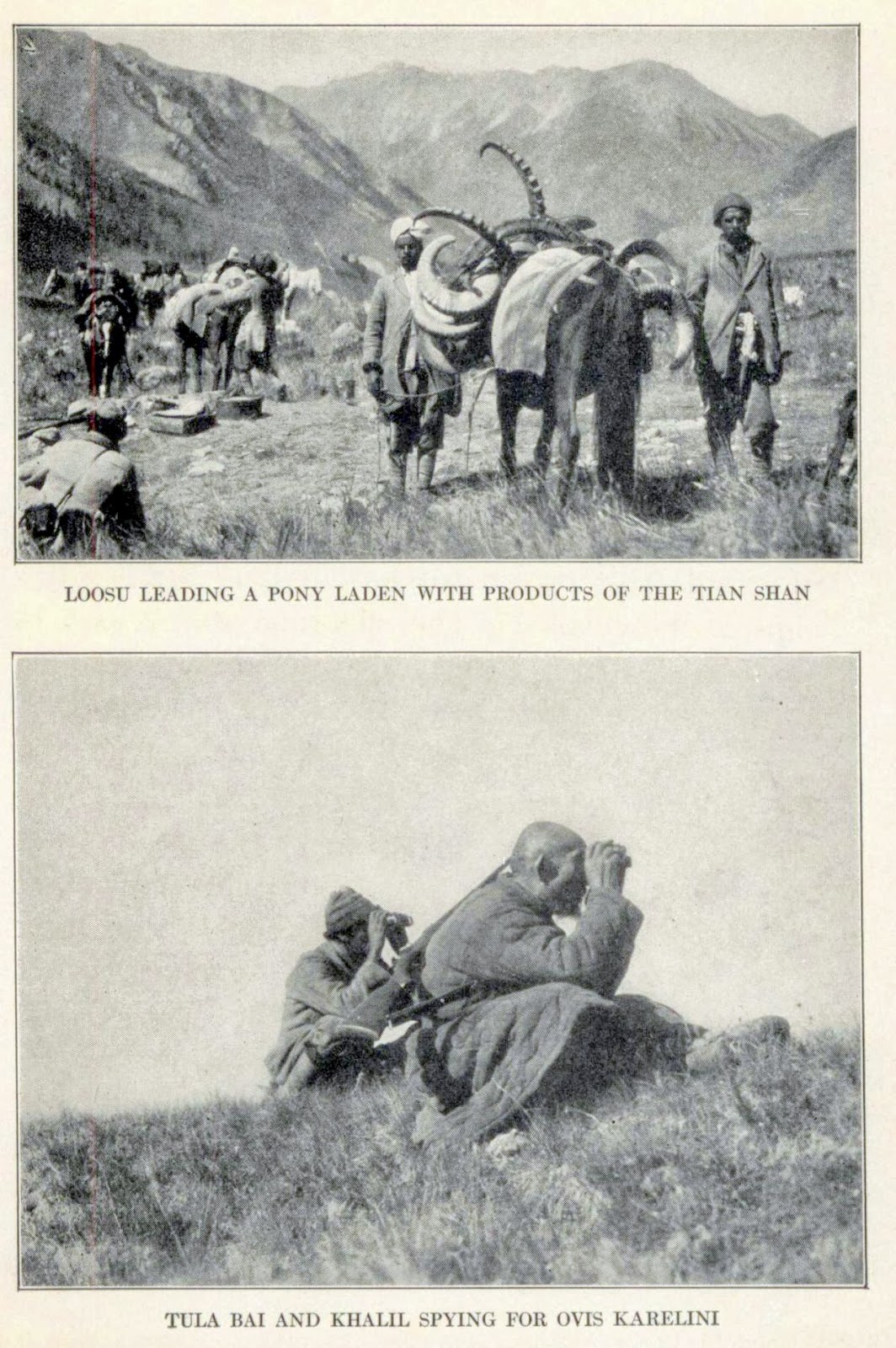
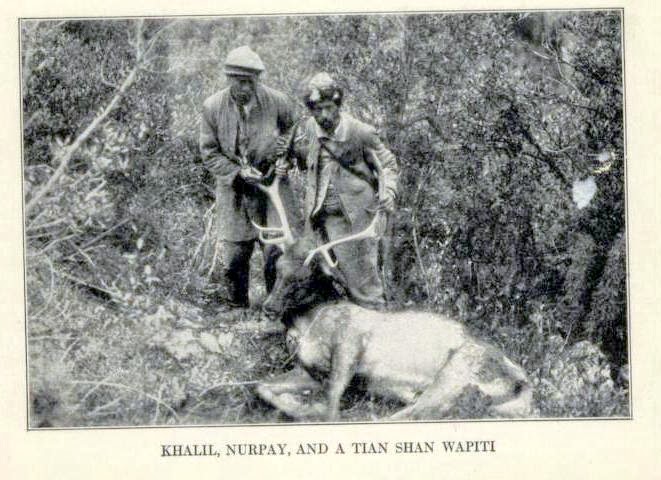
At Tian Shan

“It would have both interested and amused Father [The American President ] to find our native American name bestowed upon the wapiti’s Asiatic cousin. Our Kashmiri shikaries, getting the name from British sportsmen, referred to the big deer as wapiti. The general native name was boogha, a slight variation, if any, of the name for Yarkand stag. Our Kashmiris called ibex “ibuckus,” and it was as that we usually referred to them. Their native name in the Tian Shan is “tikka.” Siberian roe is known as “illik,” and when Rahima first talked of it we believed that he was Kashmirizing elk and was speaking about the wapiti.”

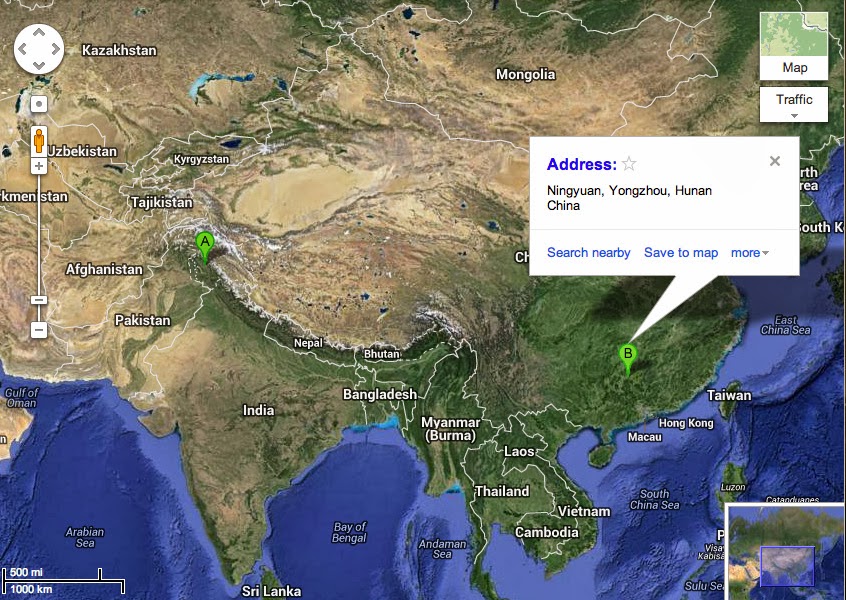
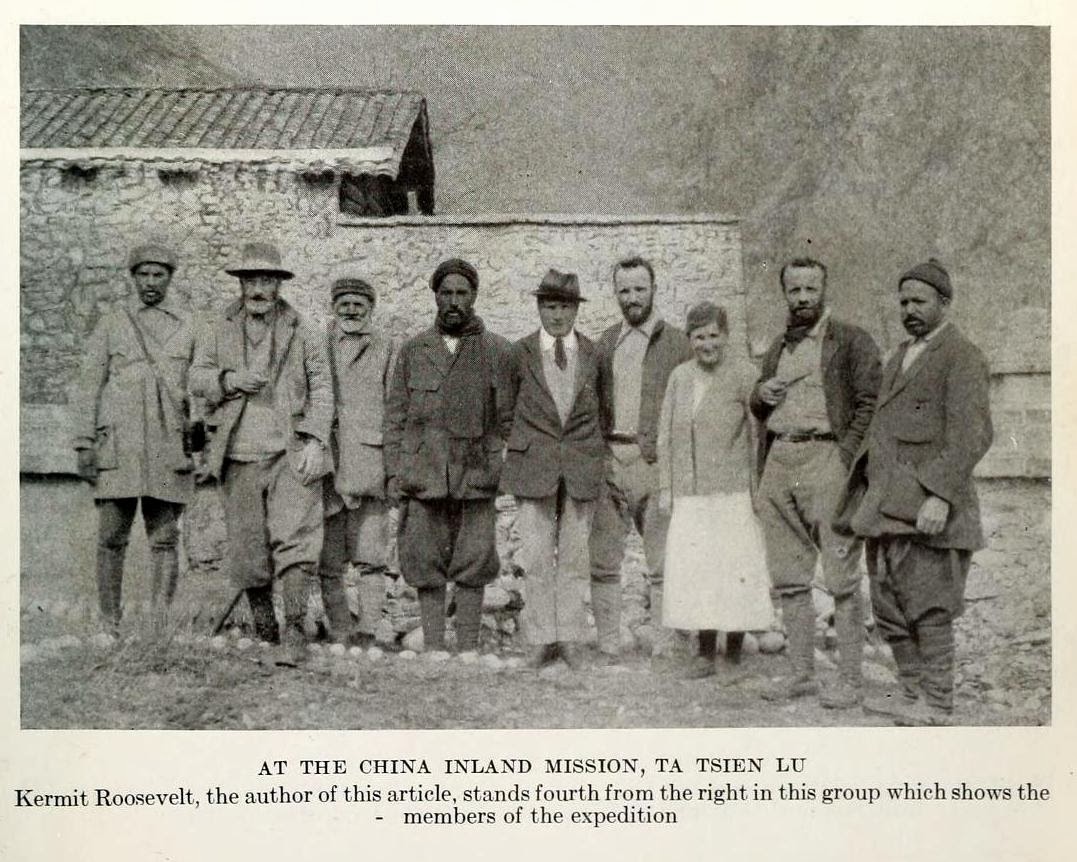
The next adventure of Roosevelt brothers had another duo of Kashmiti hunters, this time out hunting a Beishung  in Ningyan,  China. This was the first time any white man had seen a Giant Panda, or shot it.

Photograph from ‘The search for the Giant Panda’ by Kermit Roosevelt (Natural History, Vol. 30, 1930). The Kashmiri crew included Shikaris Mokhta Lone and Ghaffar Sheikh.

“The beishung does not hibernate. We found fresh signs in regions where the brown and black bears were hibernating, and the one we shot was living in a locality where the black bears had not yet awaked from their winter’s nap. We came upon his tracks one morning in the newly fallen snow. They were partly obliterated, for four or five hours had passed since he went by. Three hours’ trailing through dense jungle brought us to the spot which he had selected for his siesta. We caught sight of him emerging from the hollow bole of a giant fir tree, and fired simultaneously.

The giant panda, from all we could learn, is not a savage animal. After the shooting, our Kashmir shikarries remarked that he was a sahib, a gentleman, for when hit he had remained silent, and had not called out as does a bear.”

-0-

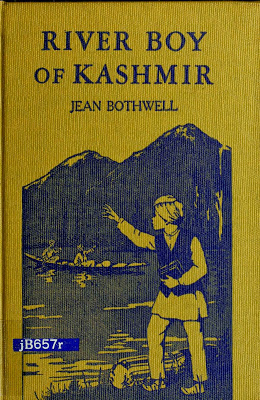
River boy of Kashmir, 1946


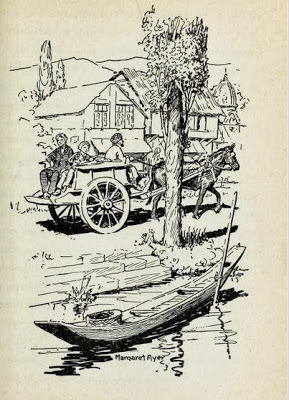
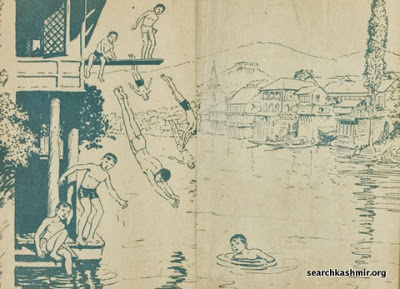
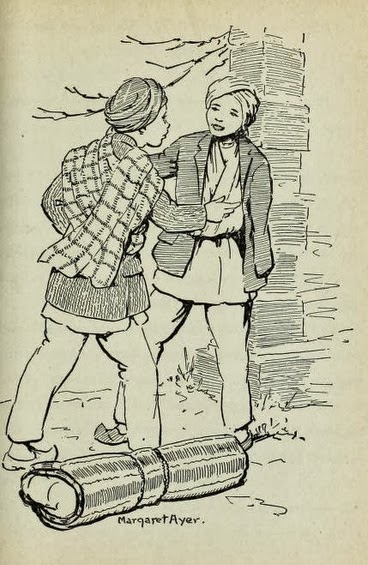
Some illustrations by Margaret Ayer for Jean Bothwell’s ‘River boy of Kashmir’ (1946)

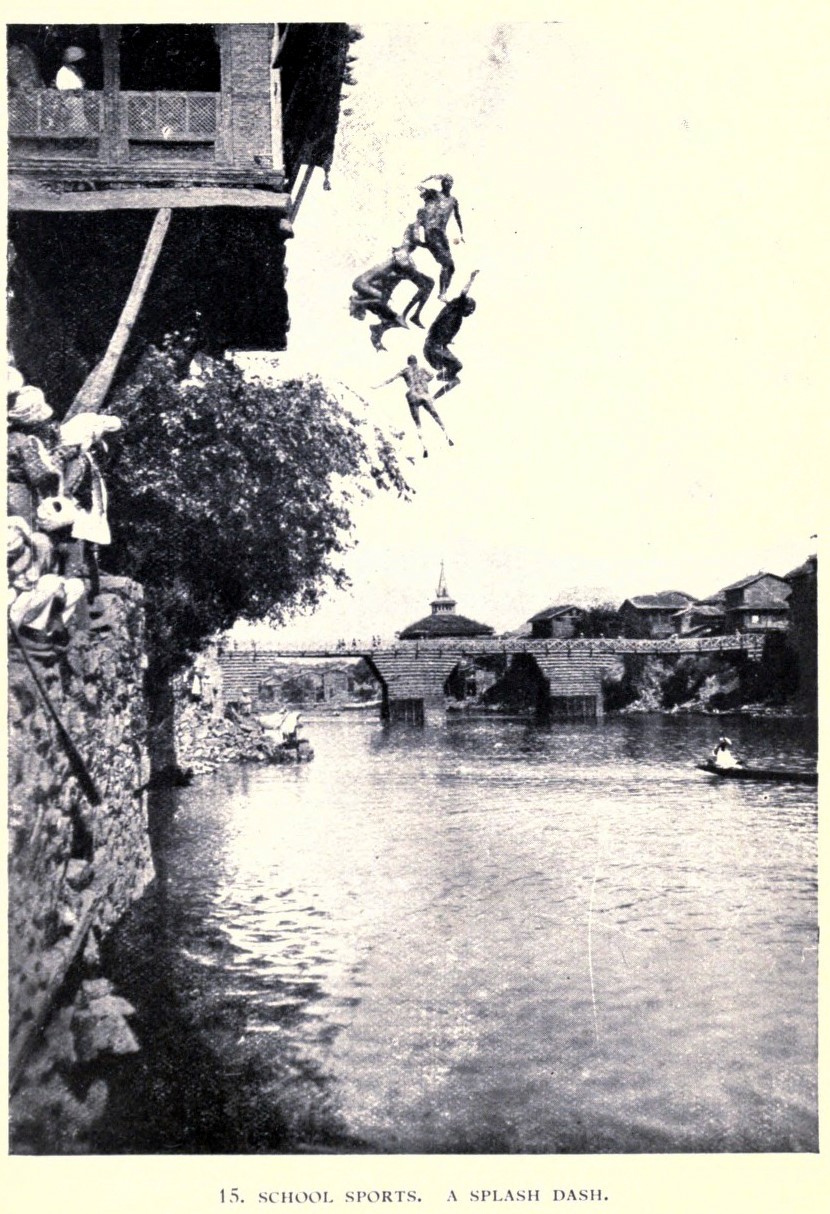
It is interesting to note that a lot of the illustrations in such books were based on the imagery created by photographs of Kashmir that were reaching Kashmir.

The above illustration is based on a photograph by Randolph B. Holmes in around 1915

from Tyndale Biscoe’s book ‘Character Building in Kashmir’ (1920)

-0-

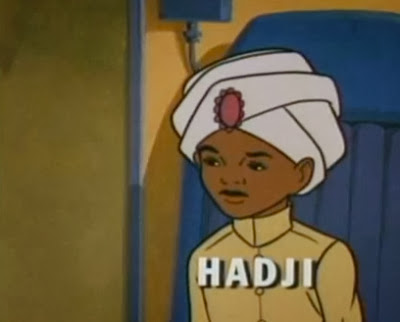
Something aside: This is funny…it took me sometime to remember where I have seen that face…

Doug Wildey’s Hadji Singh of Calcutta from the cartoon series Jonny Quest

-0-

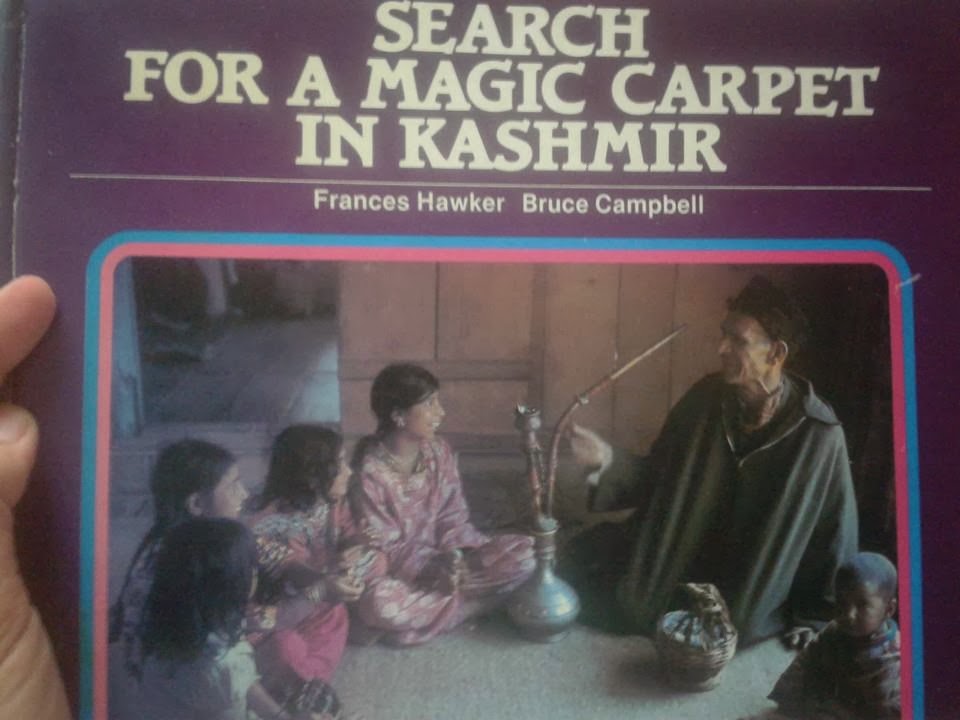
Search for a Magic Carpet in Kashmir, 1981


‘Search for a Magic Carpet in Kashmir’ (1981) by Frances Hawker and Bruce Campbell was probably the last of its kind – a children’s book meant to introduce young ones in west to the exotic east, to Kashmir, all using some beautiful images and a simple story.
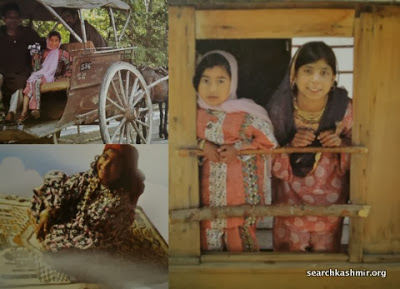
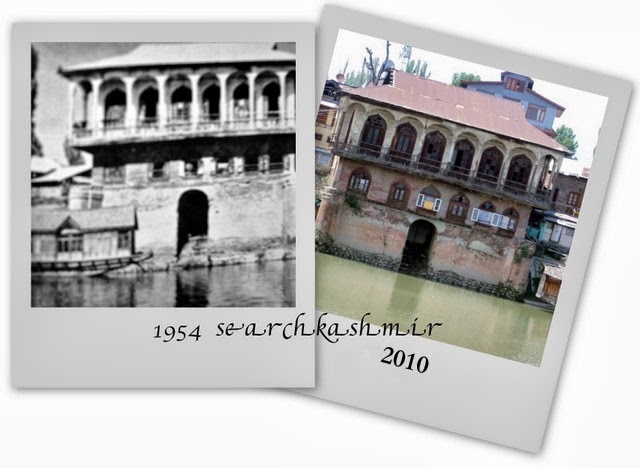
This one is weaved around photographs of two little girls Shukila and Hanifa, and send them on a quest for a Magic carpet of their grandfather’s stories.

The camera follows them as they walk around the city asking everyone about it. So, along the way we get glimpses of the city. But, the magical flying carpet remains untraced, or so it seems till…

“Hanifa drifted into deep sleep. She felt herself floating upwards. Suddenly the mountains and lakes of Kashmir seemed far below her. Was this a dream, or had she really found the magic carpet?”

-0-

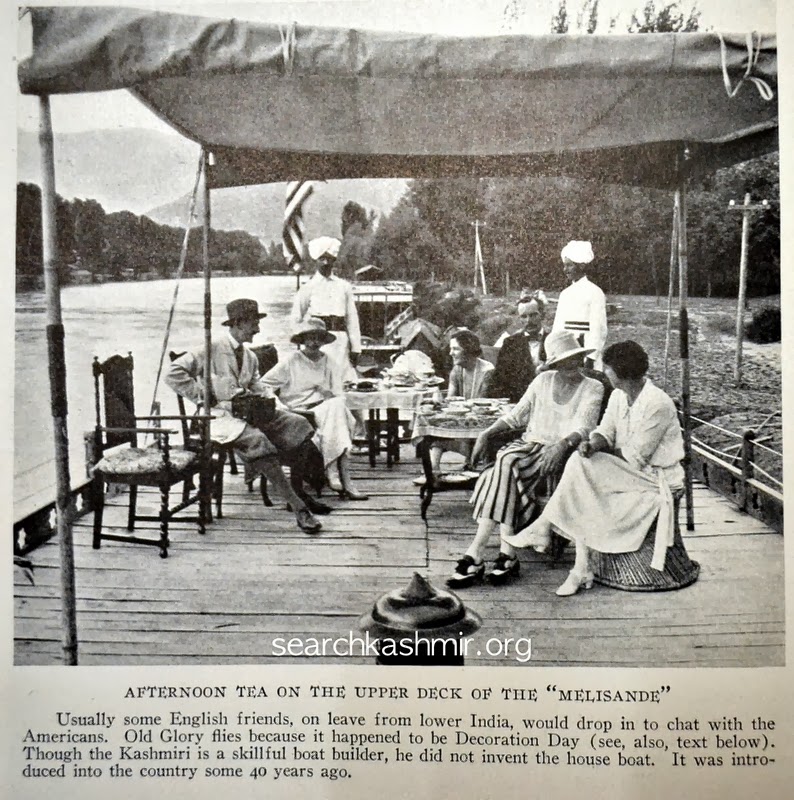
Aboard “Melisande”, 1929

“There is magic in names. Who of us has not felt the lure hidden in such words as Samarkand, Peshawar, Khartoum, Peking – the far-flung places of the earth, which call us in our hours of dreams? So I felt about Kashmir, that beautiful vale which lies in the lower Himalaya, north of the Indian Punjab”

~ ‘House-Boat Days in the Vale of Kashmir’ by Florence H. Morden (photographs by Herford Tynes Cowling), for National Geographic Magazine, October 1929.

Afternoon Tea on the Upper Deck of the “Melisande’
Usually some English friends, on leave from lower India, would drop in to chat with the Americans. Old Golry flies because it happened to be Decoration Day [Memorial day/first Monday of May]. Though the Kashmiri is a skillful boat builder, he did not invent the house boat. It was introduced into the country some 40 years ago.

-0-

Previously:
Vintage Kashmir in National Geographic Magazine

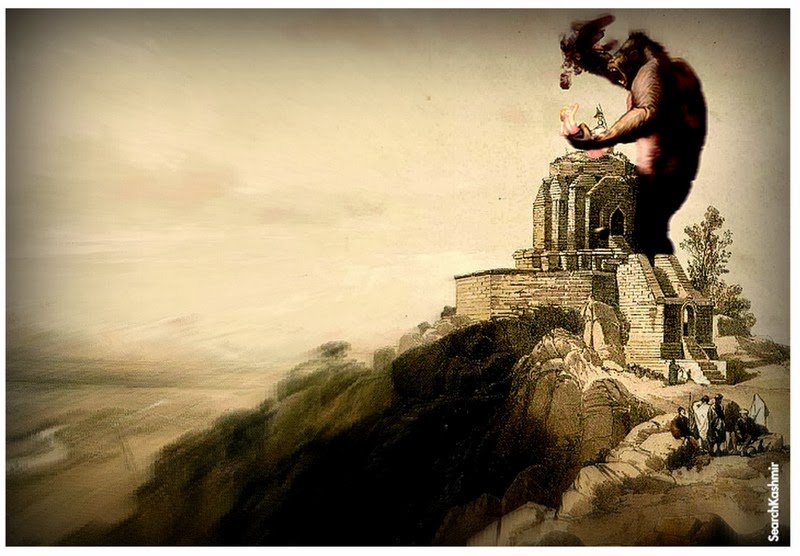
Monkey business on the Hill


In the beginning was the Word and the Word was with God, and the Word was Kashmir. This was beginning with God and the duty of every faithful monk would be to repeat every day with chanting humility the one never-changing event whose incontrovertible truth can be asserted. But we see now through a glass darkly, and the truth, before it is revealed to all, face to face, we see in fragments (alas, how illegible) in the error of the world, so we must spell out its faithful signals even when they seem obscure to us and as if amalgamated with a will wholly bent on evil.

Hari Parbat is in Faridabad. Koh-e-Maran is in Balochistan and in Kashmir. Takht-e-Suleman is in Iran, Kyrgyzstan, Balochistan and now officially in Kashmir.  And Adi Shankaracharya broke and re-built a temple in Srinagar of Gharwal, where they tell stories of a demon who died of head injury after getting hit by a divine rock.

To call everything by its true name and the trouble to be reminded that everything is a double.

Shankracharya and Takhht-e-Suleimani have both been used for a long time. But both names are essentially just names which people have given to it relatively recently. Name Shankracharya became a currency during Sikh/Dogra time. A name which Pandits, having recently regained ground, happily adopted. Thanks to work of Sir Stein, all kind of ancient places were getting reclaimed during this era. Takhht-e-Suleimani became a currency during Mughal/Afghan time. During Dogra time a inscription declaring the temple as ‘Takhht-e-Suleimani’ was destroyed by the soldiers. The inscription had come up during Mughal times probably when Noorjahan got the ancient stone stair case leading to the temple destroyed and had the stone used for her Pathar Masjid (which in turn provided stones for building Sher-Grahi palace by Afghans). By the time British arrived, re-naming war was already on, for the hill, both name were in currency. Based on which religious group you asked, a convenient name was provided.  That’s how the dual name system gained currency. What about the one true name? The temple it is believed was originally known as Jyeshteswara and was first built by Jaloka, son of Asoka around 220 B.C. One of the old name of the hill was Sandhimana-paravata named after Sandhimana, minister of Jayendra (ruling from A.D. 341 to 360). In between, it is believed, Gopaditya (A.D. 238 to 253) repaired the old temple on the hill…giving the name ‘Gopadri’ to hill. Then there is a theory ( by James Ferguson countering the previous theory of A. Cunningham) that the temple we see now was commenced by a nameless Hindu during Jahangir’s time but remained incomplete when Aurangzeb arrived on the scene. This unfinished state gave it the ancient and misleading look. This assumption came from some Persian inscription on its staircase. But then there were other writing on the staircase too which read, other claims likes “the idol was made by Haji Hushti, a Sahukar, in the year 54 of the Samvat era”, while at the foot of the same pillar there was another scribble stating that “he who raised this temple was Khwaja Rukn, son of Mir Jan in the year___.”

Then there is theory that the spot was actually Buddhists and is still revered by them and called as ‘Pas-Pahar’. So it goes on…

-0-