
-0-

in bits and pieces
-0-
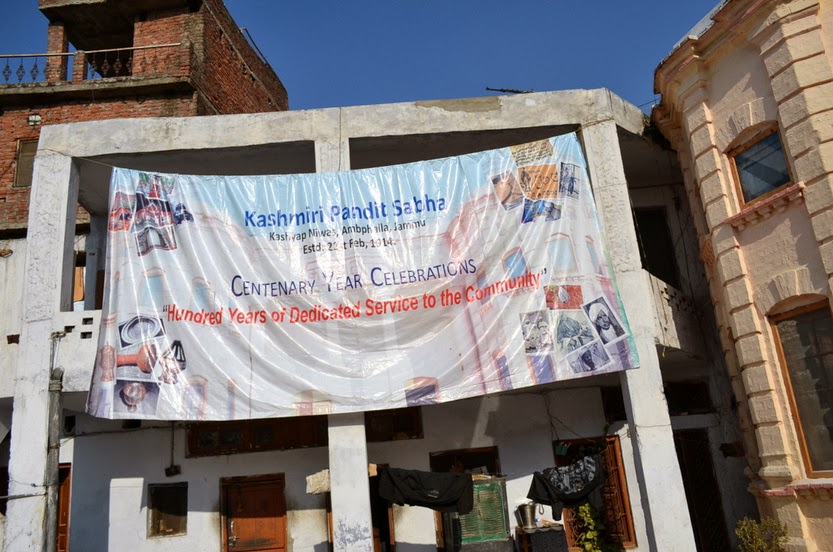
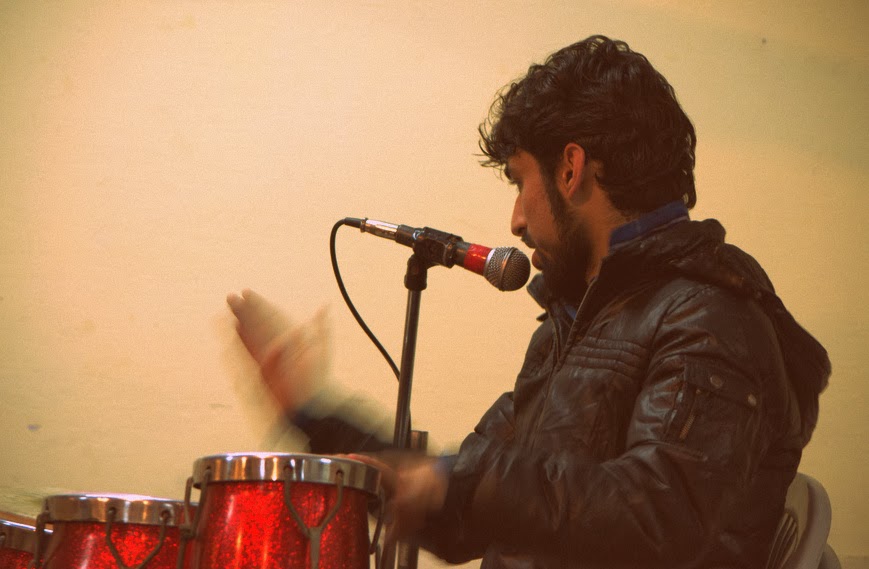
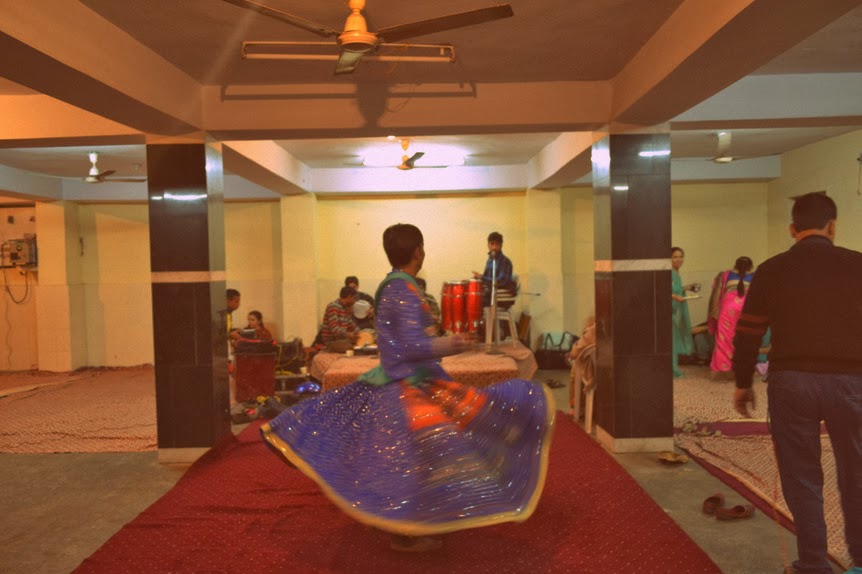
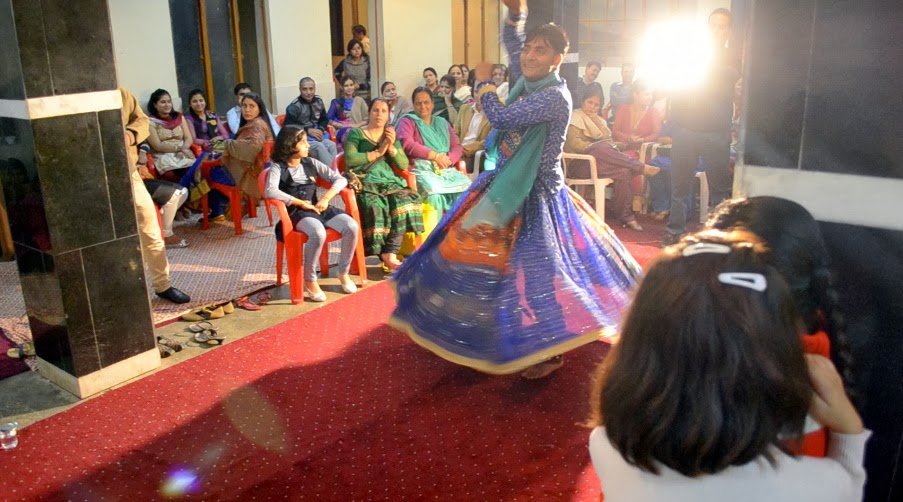
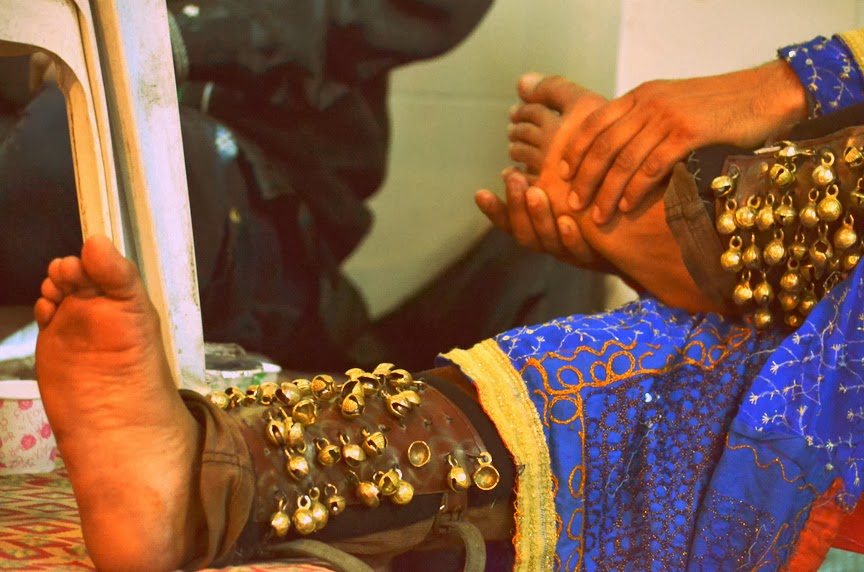
If those walls aren’t enough, on a recent visit to Jammu I found some on the walls of a community centre.
 |
| Kashmiri Pandit Sabha, Nov. 2013 |
P.S. A cousin sis tells me she saw my Mekhal pics in an ad for hairloss treatment in Bangalore. Internet is weird.

-0-
Previously:
Kashmir by V.V. Vereshchagin, 1885
Kashmiri Opera Performers, tracing 1955/2013
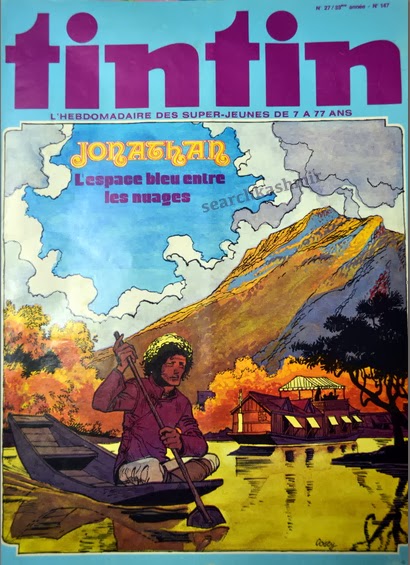
Kashmir in Jonathan series ‘L’espace bleu entre les nuages‘ (The blue space between the clouds) by swiss artist Cosey (Bernard Cosandey) for Tintin Magazine No.147, July 4, 1978.

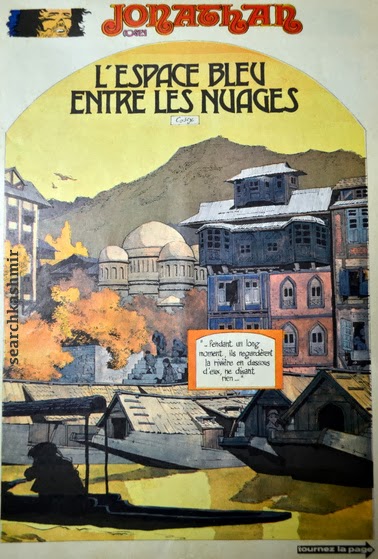
The plot revolves around sale of rare European paintings meant to fund a militant movement run from Srinagar. The movement in this case happens to be a veiled reference to ‘Free Tibet’ movement whose main agents have taken refuge in Kashmir.
Much like the old European travellogues, Srinagar here is presented as the springboard to the roof of the world. The comic comes from a time when comics were art, this collection apparently is supposed to be read with the background score of Beethoven (Concerto No. 3 in C minor op. 37) and Chopin (Concerto No. 2 in F minor op. 21).
Tintin Magazine was meant to be a space where new and future comic works by various artists could be showcased. ‘L’espace bleu entre les nuages’ as a complete work came out later in 1980.
At that time the west seemed to be much taken by Tibet, in this particular issue of the magazine, I would find two more comics themed around Tibet.
-0-
Previously:
Kashmir in Indian Comics
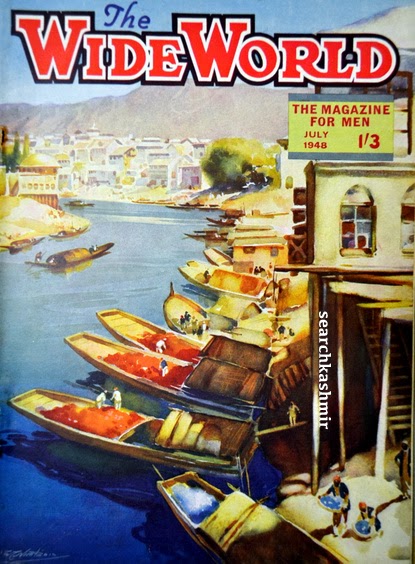

From my personal collection, Kashmir on the cover of July 1948 issue of a London based magazine called The Wide World.
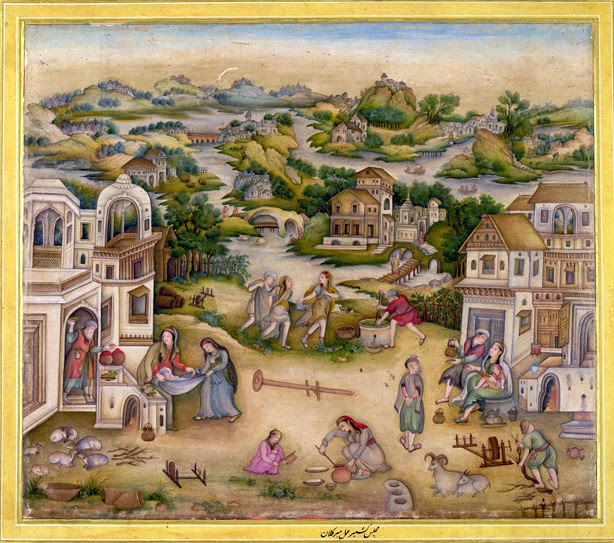

Village Life in Kashmir, c. 1760. By Mughal painter Mir Kalan Khan. A painting imitating European style, explaining why Kashmiri village here looks more like an alpine village.
Via: British Library:
“Gouache painting with gold of village life in Kashmir, by Mir Kalan Khan, working in the Lucknow/Faizabad style, c.1760. Inscribed on the border in Persian: ‘majlis-i kashmir, ‘amal-i mir kalan’ (A Kashmiri assembly, the work of Mir Kalan).
This painting depicts scenes of village life and in the centre a group of people are shown gathering grapes and wood while also cooking. On either side are several multi-storied buildings, and numerous waterways can be seen in the distance with buildings on the land in between. Mir Kalan Khan’s distinctive Europeanised style was adopted by other Lucknow artists, yet this kind of scene and subject matter remained unique to Khan. The source of his European influence is uncertain, but his extensive scenes often relate to Dutch and Flemish paintings. The facial type is distinctive, with frequent use of three-quarter face instead of profile. The artists place of origin is uncertain, but he may have been trained at the Delhi court, indicating that he came to Faizabad or Lucknow later in his life.”
-0-
 |
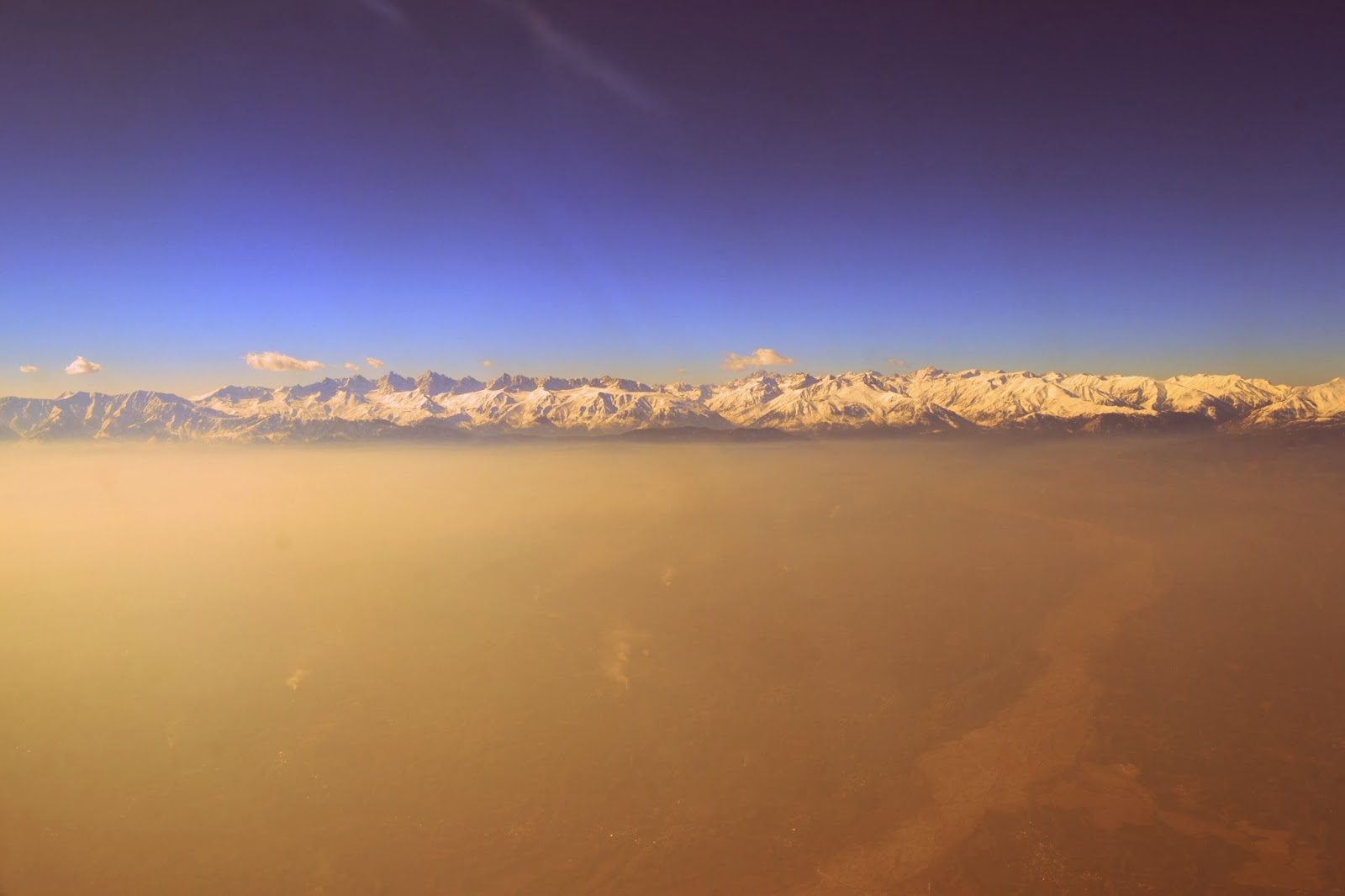
| Pir Panjal, looking from Valley. November, 2013. |
-0-
A song from the oldest story here. The original muse.
-0-
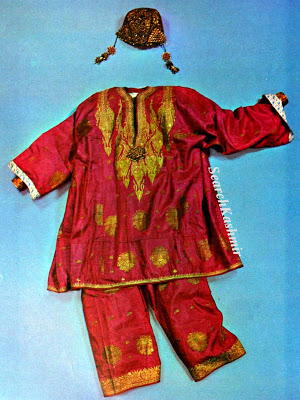

“Kashmir. Woman’s costume, nineteenth century, worn by upper classes. Hat is usually covered by a white silk scarf. Silk brocaded with metallic gold, floral and medallion pattern. Hat is made of gold-colorer paste with red paste “jewels,” seed pearls, and metal tear-shaped pendants. “
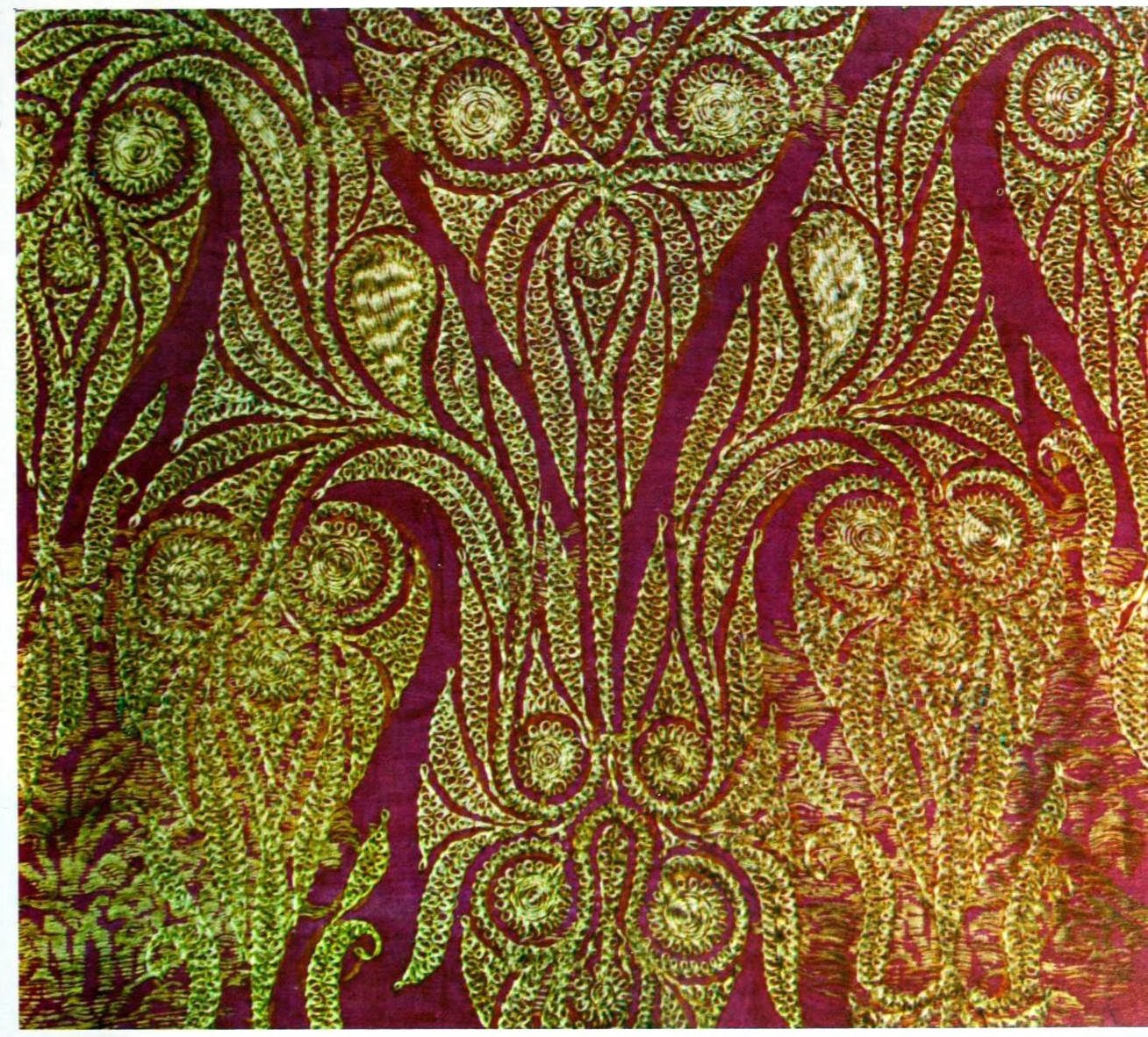
From ‘Costumes of the East’ by Walter Ashlin Fairservis, Jr. 1971
-0-
Interesting read: Kashmir issue of Design magazine Pool (Nov, 2013)
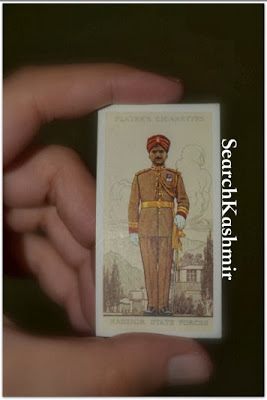

Cigarette Cards published by John Player & Sons, 1938
From the reverse:
“Indian State Forces:
Kashmir State Forces
The Maharaja of Kashmir maintains a larger number of State Forces than any other Ruler of any Indian State. These forces are organized into the Jammu and Kashmir Brigades, the latter of which is commanded by the officer in our picture, in Full Dress. They comprise one Bodyguard Cavalry regiment, two Mountain Batteries, seven active and one training Battalions of Infantry and a Transport unit consisting of both pack and mechanized transport. Several of these units served with distinction on the North-West Frontier of India and overseas during the Great War. Jammu and Kashmir lie to the north of the Punjab and cover nearly 85,000 square miles. The population exceeds 3,500,000. The background shows a view of Srinagar.”
“