Kashmiri bepiri

Old Hindustani Proverb: Bangali jangli, Kashmiri bepiri, i.e. ‘The Bengalee is ever an entangler, the Cashmere without religion.’
Source:
Hobson Jobson: A Glossary of Colloquial Anglo-Indian Words and Phrases, and of Kindred Terms, Etymological, Historical, Geographical and Discursive (1903), by Henry Yule and Arthur C. Burnell and first published in 1886.
Source, a note in : Seir Mutaqherin: or a View of Modern Times, being a History of India from the year 1118 to 1195 of the Hedjirah. From the Persian of Gholam Hussain Khan, V1-4. 1789. A history pf Muslim nobel families of Bengal. Translated by Nota Manus alias Raymond alias Haji Mustapha, a French-born Muslim convert.
Note from Volume 2, page 181:
“The Cashmirians, as well as Bengallees, bear a strange character all over Hindostan, for faithlessness, roguery, and impudence. The proverb says : Cashmiri, bi Piri; Bengallee, Djendjali. The Cashmirian acts as an Atheist ; but the Bengallee is always one from whom there is no disentangling one’s self. However, there is a still more formidable adage against Cashmirian women : an adage, which seems to set at nought those engaging countenances, those elegant shapes, those charming features, and that ingenious fertility in love contrivances, which nature has so largely bestowed on them ; and it is this : Cashmiri, bi Piri ; ne Lezzet, ne shiri. The faithless Cashmirian affords neither taste nor flavour.”
-0-
Another addition to the list of Rascally Kashmiri

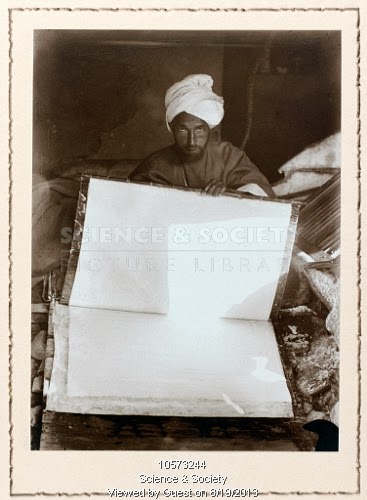
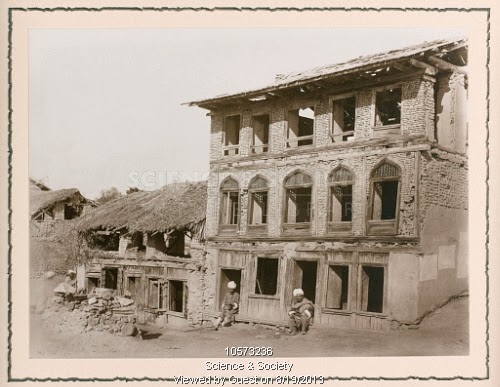
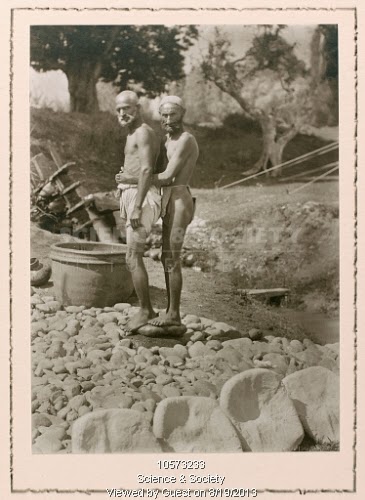
Kashmiri Papermaking Photos, 1917


During Mughal time Kashmir was considered the place that produced the finest paper in India. Bud Shah is attributed for brining the art of paper making and book binding into Kashmir from Samarqand. The art survived during Afghan time. But by 20th century it was already in a state of decline. In 1917, Mr. William Raitt, f.s.c, Consulting Cellulose Expert attached to the Forest Research Institute, Dhera Dun, U. P., came in Srinagar at the request of the Kashmir Durbar, to give advice in regard to the improvement of the paper industry. He took about 26 photograph during his visit detailing the entire process of paper making. He later published them in 1939 under the title ‘Kashmiri Papermaking Photos’.

Kashmiri ‘Rag’ Paper Maker
“The pulp is mixed with water and placed on a framed porous screen. The water drains away leaving the paper which is then pressed and dried. This method of paper-making was also used in Europe until the end of the 18th century, when machines for making continuous rolls of paper were introduced. Wood pulp and cellulose have largely been used in paper manufacture since the 19th century, but plant fibres and rags are also still used, as well as recycled paper.”
Paper Factory
Make Paper

Check entire set of photographs of the process at: scienceandsociety.co.uk]

-0-

Letters to Dead Poets

To Kshemendra,

You were funny. How come no one tried to kill you for it?

To Kalhana,

You will be surprised to know how often Kashmiris were bought with money. And did you ever talk to common folks on the street? You should have read Marx first.

To Lal Ded,

Winters must have been tough for you. But then, you do sound like a warm person.

To Rupa Bhawani,

You know they say something similar happened to Kabir’s body. And a few others. What’s with the flower act?

To Arinimaal,

Sad Kashmiri wives with stupid husbands always made good poets. Much before you, there was one Vikatanitamba too (Bad Mandal in Kashmiri for you. Hideous Butt). But unlike you she wrote really naughty poems. You know they say you never existed. Just a figment of imagination. If it is a consolation, no one has even heard about your husband’s highbrow persian poetry.

To Habba Khatoon,

This is a personal question. Now, I read Chaks were Shias. I know you loved him and everyone loves you…but did anyone ever question your religious beliefs. And let me tell you where he was while you were wandering around singing songs about him. He was in Bihar holding the Mughal flag. It’s sad. Write a poem about that.

P.S. Did you know about Kshemendra’s wandering heroine Kankali? She was quite a heartbreaker.

To Ghani, 

You should have locked the doors. Even after death they stole from you. Even Ghalib took a line

To Parmanand, 

Have you seen tractors ploughing the fields? Try to write about that.

To Mahjoor,

I appreciate the sentiment but you do know what happens to sugar when you add it to milk. It dissolves and disappears. It seems they took it too literally. I am out of the great solvation equation.

To Abul Ahad Azad,

I know poets, especially Kashmiri poets always had a thing for seven veil dance with words, but you could have been a bit more clear about your views on religion. With all this polarization, it’s tough to fit you in. And not a lot of people now take your name. Only ‘Azad’ with an ‘i’. Mahjoor with his birds and the bees is more comforting.

To Nadim,

Lo! Another revolution. Stop singing.

To Master ji,

In the last days, from your window, did you see Tawi or Jhelum? What are your views about antidepressant pills?

To Mahav,

Did people give you wet ones on your dirty mouth?

-0-

Lyrics: Rum Gayam Sheeshus

1–2 minutes
 

Continuation from previous post related to Kashmiri songs by Chicago based band Lamajamal. This particular song stood out from the album.

The authentic Kashmiri version by Raaj Begum and Naseem Akhtar. The poet is Mirza Ghulam Hassan Beg Aarif, a scientist who wrote poetry.  The ghazal was particularly popular on Radio Kashmir in 60s and 70s.

Lyrics shared by Abid Mohmood Shafiee (Thanks to Pickee Kaul for getting him to share it over at the Facebook page of this blog)


Rum gayem sheehshass
begour govaa baane meoun
Sakiyaa, waiyieth rateyaa jaanaan meoun
Aaminee khaasen, thaevoemas mas barieth
Maetch be tas path, ye Aamni mastaani meoun
Sakiyaa, waiyeth rateyaa jaanaan meoun
Zev kaleyem , az kautin kadenum shaahas
Maetch be tas path, tasspatii mastaan meoun
Sakiyaa, waiyeeth rateyaa jaanaan meoun,
Ulfattche tal waahi kadneum, yaari aaem
Chaesmanan manz kusii wanies afsaane meoun
Sakiyaa, waiyeeth rateyaa jaanaan meoun,
Rum gayem sheehshass
Begour govaa baane meoun
Sakiyaa, waiyieth rateyaa jaanaan meon

-0-
Update
2017

Young Kashmiri Pandits singing it in Delhi!


video link

Update July 2024 Rum Gayam produced by me.

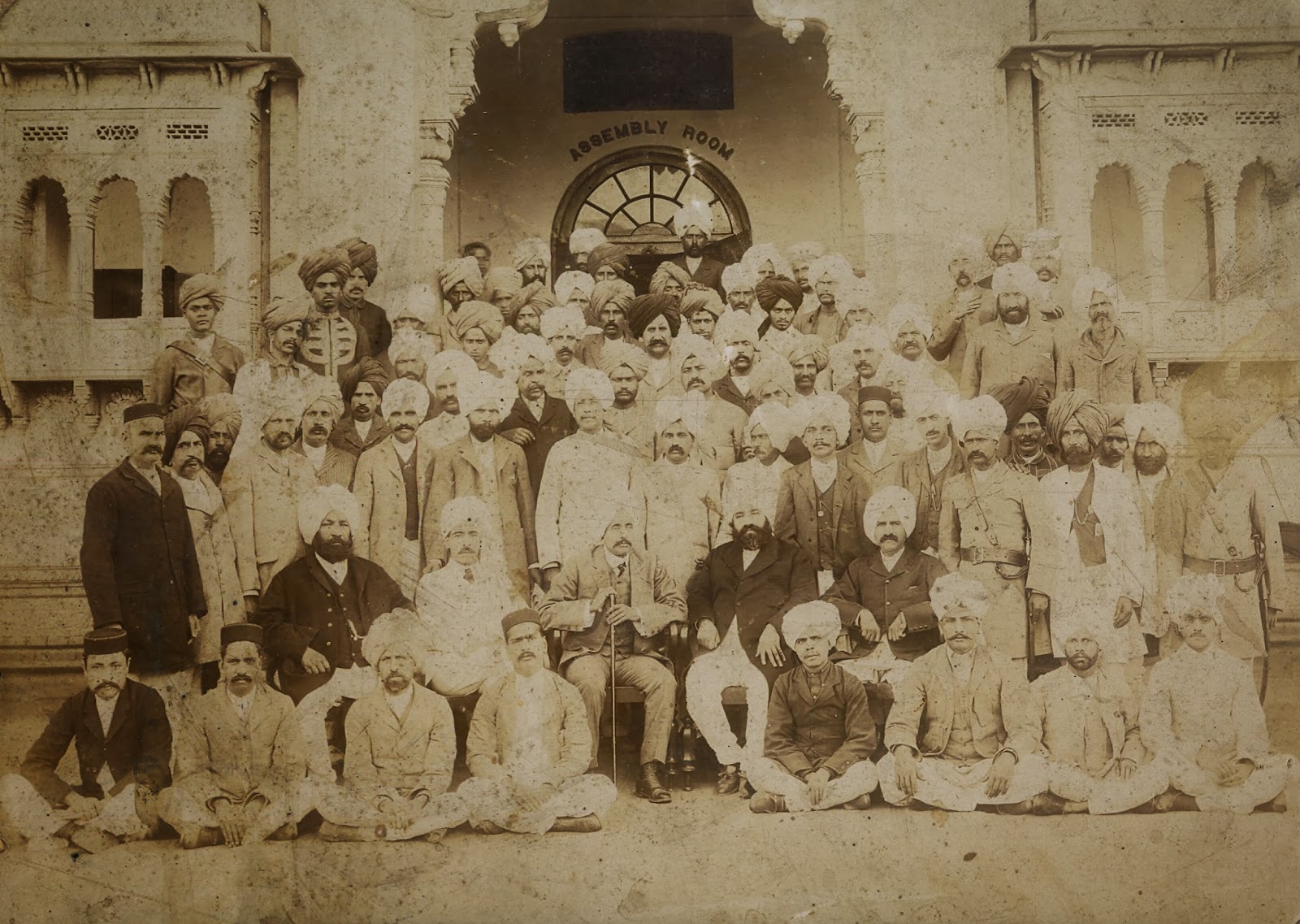
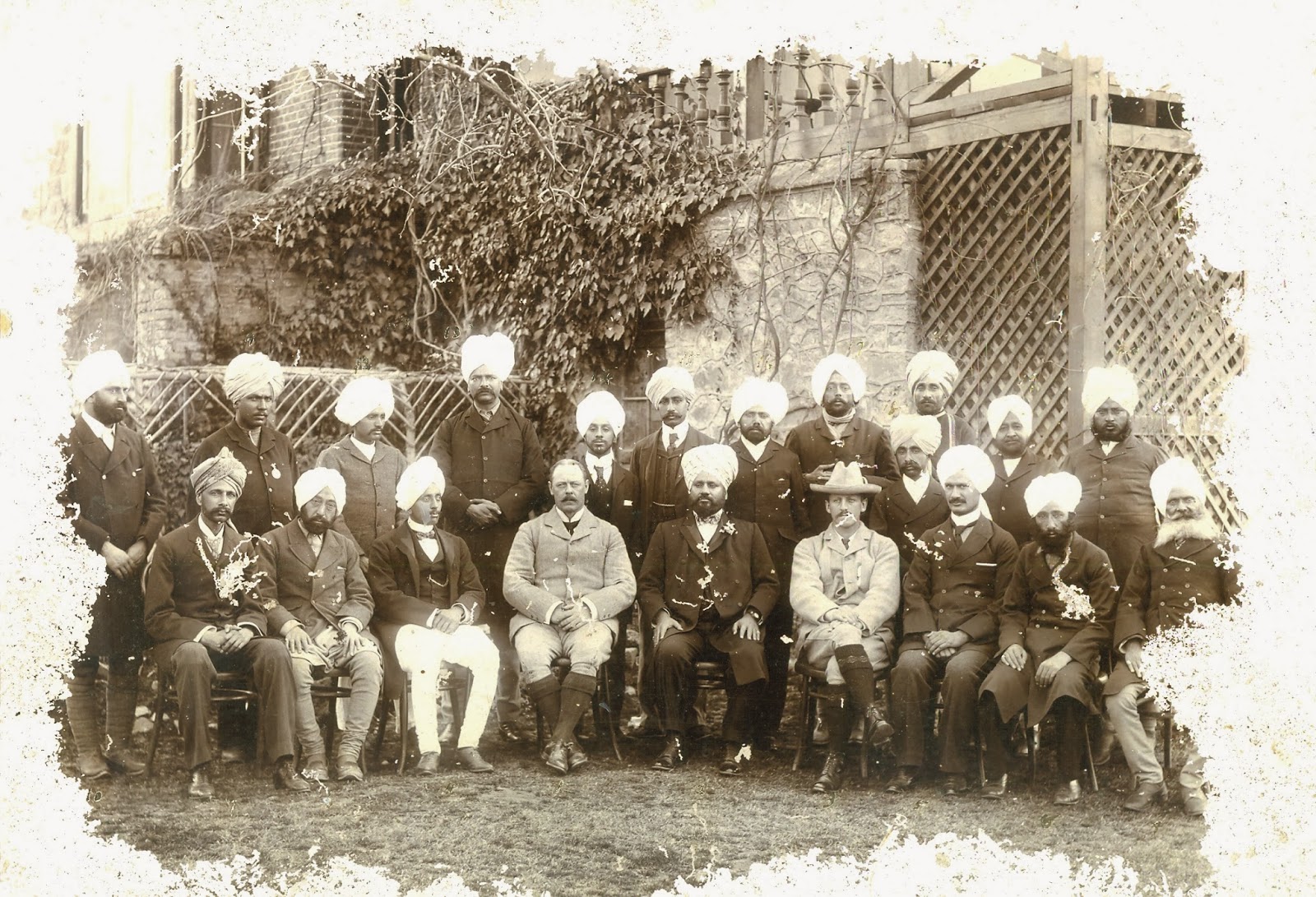
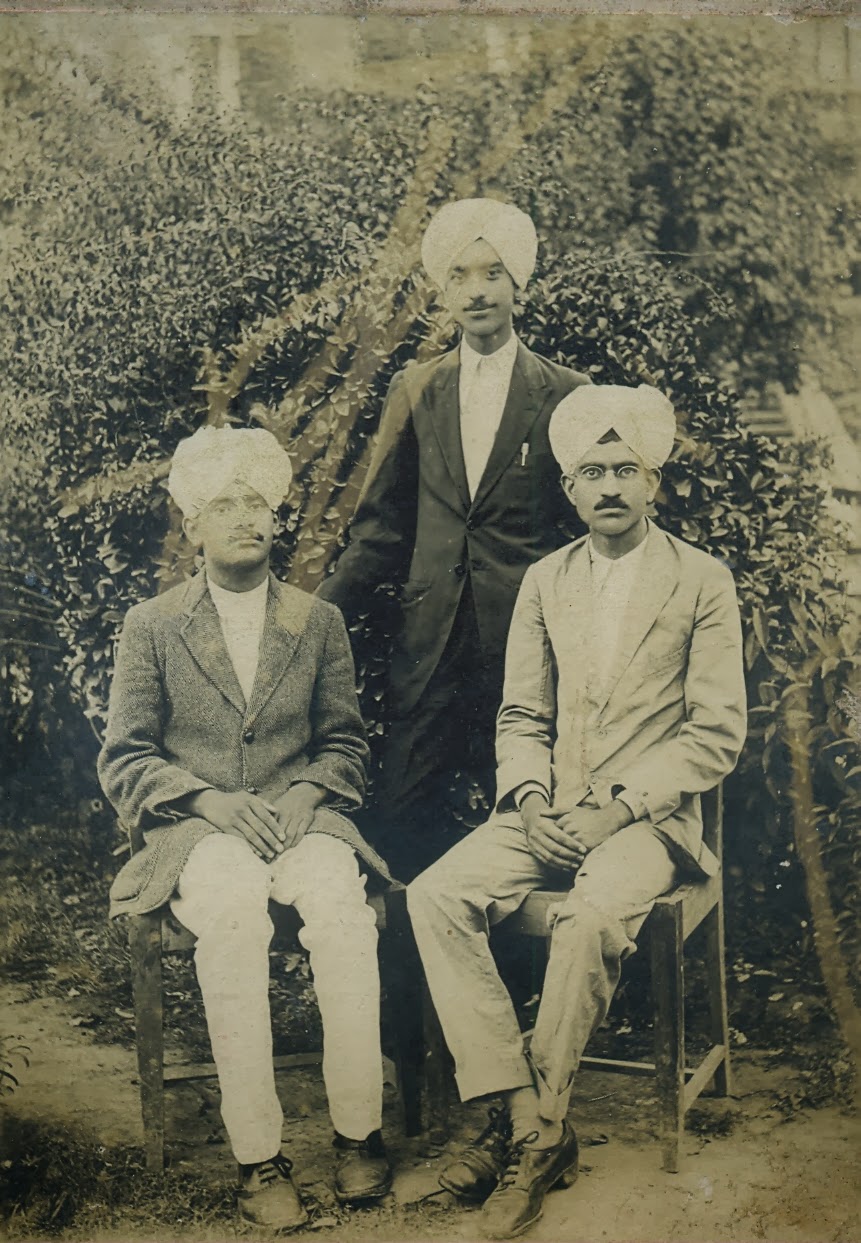
Group Photographs, Early 20th century

Guest post from Man Mohan Munshi Ji. Some old group photographs he recently came across at his home. He shares…

Photograph taken in front of the Assembly Hall at Jammu.
 I can’t identify anybody nor can surmise any date

Group photograph taken on a farewell function or retirement of an official of Jammu & Kashmir Government probably round about 1908. Please note two Europeans in the chairs.
I can identify only one person in the last row on the extreme left – Munshi Amarchand, who retired from service in 1926. 
A picture taken in 1920s
From L to R. in chairs B.N.Munshi, Prof Sarwanand Thussu and standing in the center unidentified.
-0-

Saazuk Safar by Lamajamal

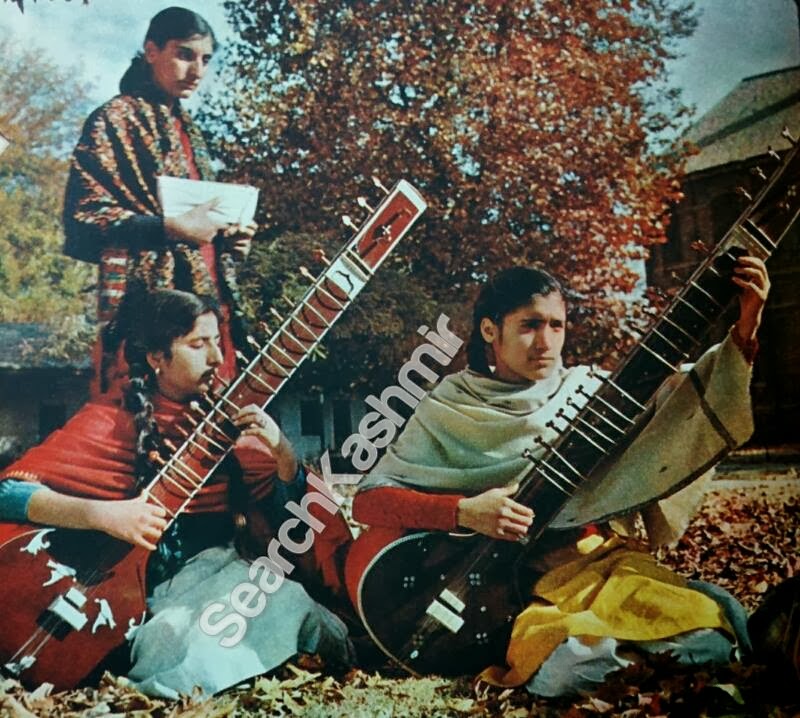
Kashmiri folk songs by Chicago based band Lamajamal (arabic word for ‘beauty’) [Youtube]. The album ‘Saazuk Safar’ (2012) was commissioned by funkar.org. It’s like debut of Kashmiri music on modern world music scene. Listen to traditional sound in a new way…I particularly liked the tracks ‘Rum Gayam Sheeshus‘ (sung by Asal Monfared) and instrumental ‘Hay Vayas

-0-

Original version of ‘Rum ghyam sheeshas byegur gav bane myon‘ by Raaj Begum and Naseem Akhtar at Funkaar

Here

Note: Repercussion of Kashmiri habit of not having any formal credit system for artistic works and too much dependence on oral culture, as no one introduces the poet before reciting his/her work: Four decades ago, the name of the poet who composed it and the song was on lips of every Kashmiri. Now, it took me hours to find the name of the poet who composed this ghazal. I finally found it in a book by S.L. Sadhu on Kashmiri literature published in 1974. The poet is Mirza Ghulam Hassan Beg Aarif.

-0-

An alternate version:

Ghalib’s letters to his Kashmiri friends


Extracts from ‘Urdu Letters of Mirza Asadu’llah Khan Ghalib’ (1987) by Daud Rahbar
Be it known to you, dear young friend Munshi Shiv Narain, that I had no idea that you were who you truly are. Now that I discover that you are the grandson of Nazir Bansi Dhar, I recognise you as my beloved son. Thus, from now on, if I address you in my letters as “Benevolent and Honored Friend,” it will be a sin. You are undoublty unaware of the close ties between your family and mine. Listen. In the days of Najaf Khan and Hamadani, the father of your paternal grandfather was a constant companion of my maternal grandfather, the late Khwaja Ghhulam Husain Khan. When my maternal grandfather retired, your great-grandfather too unbuckled his belt, quit service, and never accepted employment again. All of this happened before I had reached the age of reason. When I became an adult, I encountered Munshi Bansi Dhar in the constant company of Khan Sahib. The latter initiateed a lawsuit against claimants to his estate of perpetual title, the village of Kaitham, and Munshi Bansi Dhar acted as his attorney in the case. Munshi Sahib and I were about the same age – he may have been a year or so older or younger. We played chess together and became fast and loving friends. It was not unusual for us to be together until midnight. Since his house was not far, I went there whenever I liked. Between their hues and ours, the only intervening buildings were the home of Machhya Randi and two blocks of rented homes owned by my family. Our larger mason is the one which is now owned by Lakhi Chand Seth. The baradari of stone which is joined to the main entrance of this mansion was my sitting-room and lounge. Then there was the mansion known as Ghatya-vali haveli and near Salim Shah’s hovel, another mansion and another adjoining the Kala Mahal, and beyond that there was another block of rented houses called the Gadaryon-vala Katra and then another similar block called the Kashmiran vala Katra. On the roof of one of the houses in his last block, I used to fly kites and we used to have kite matches with Raja Balvan Singh. There was a veteran soldier named Vasil Khan in your family’s employ who used to collect the rents from the tenants of the block of rented houses which belonged to your grandfather.
Keep listening, for I have more to tell. Your grandfather became very wealthy. He purchased extensive farmlands and established himself as a zamindar. He paid between ten and twelve thousand rupees as revenue to the government annually. Did his holdings come into your possession? Write to me in detail telling me what happened to those estates.
Asadullah
Tuesday, October 19, 1858
~ Ghalib’s letter to Munshi Shiv Nara’in Aram
Ghalib’s association with Aram began in 1858 when Ghalib negotiated with him to publish the Dastanbu (Bouquet of Flowers), Ghalib’s account of his experiences during the uprising of 1857 (covering happening between May 11, 1857 and July 31, 1858), after which the two enjoyed a warm correspondence for the next five years. As we learn in this letter, Ghalib had enjoyed the friendship of Aram’s grandfather, Munshi Bansi Dhar, though neither Aram nor Ghalib had apparently thought to make this connection before entering into their own relationship.
-0-
“Exalted Sir,
    Today is Monday, the third of January, 1859. Clouds enveloped the atmosphere near the end of the first quarter of the day. Now it is drizzling and a cold wind is blowing. And I have nothing to drink. Disinterestedly, I have eaten a meal.
December clouds
Flood the horizon;
Yet my clay cup
Has not a drop of wine.
Sad and sorrowful was I sitting when the postman brought your letter. I recognised your personal handwriting on the envelope. This gladdened me. I read the letter. It contained no mention of obtaining my objective. This saddened me.
Tyranny has drive us abroad.
No news from home is happy.
In those low-sprites moments, I said, “Let’s have a chat with His Eminence,” and I began to write even though the letter needed no reply.
…”
~ Ghalib in a letter to his close friend Khwaja Ghulam Ghaus Bekhabar.
Khwaja Ghulam Ghaus Bekhabar (1824-1904). is said to have been descended from Sultan Zainu’l-Abidin Bad Shah, one of the kings of Kashmir. Born in Nepal, Bekhabar was raised and educated in Benaras, finding employment at the age of seventeen under his maternal uncle, Sayyid Muhammad Khan, Mir Munshi to the Lieutenant Governor of the Province of North and West, making his home in Agra, the capitol city of that Province. In 1843, during the regime of Lord Ellenborough, Bekhabar was transferred for a brief period to the Vernacular Secretary’s office at the Governor General’s headquarters. He eventually succeeded his uncle as Mire Munshi on the latter’s retirement in 1885, at which time he moved to Ilahabad where he spent the remaining years of the life.
Bekhabar kept a hospitable table and was a most sociable and entertaining conversationalist.  His home was daily gathering place for many lovers of literature, including his close friend, the poet Miraza Hatim Ali Beg Mihr. Himself a poet and writer of prose in both Persian and urdu, Bekhabar played a major role in the publication of Ghalib’s ‘Ud-i-Hindi’, a selection of the poet’s Urdu prose [ 1868, his letters mostly, something that Aram also wanted to publish around a decade ago. ].
-0-