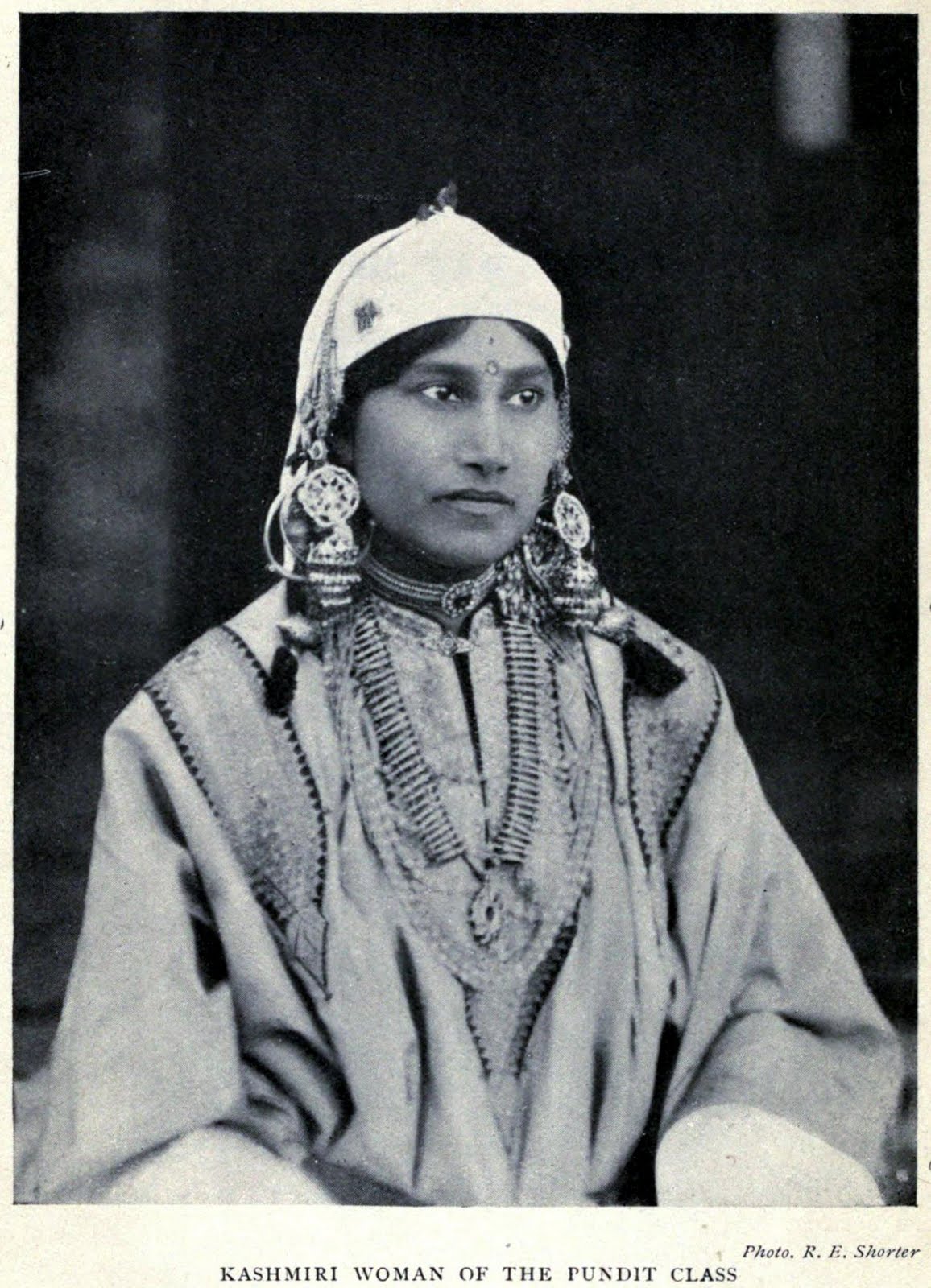
Habits in Precious Metal and still more precious Money

“The Panditanis, the Brahman women, never like to wear silver ornaments, but they may prefer brass to pass it as gold.”
Ever New Kashmir by Prof. Devendra Satyarthi (for The Modern Review, February, 1935) [Entire article here]
I read a rather interesting thing in Pandit Anand Koul’s ‘Kashmiri Pandits’ (1929). At the end of the book, there is section of ‘gifts’ due in a daughter’s marriage. Apparently, there was some kind of a official scale set for it. And among other things, and an elaborate ‘gifting’ system, we read that on the higher end a first class bride was expected to bring in 150 tolas of Gold while on the lower end a grade seven would bring in 5 tolas. 
Prior to 1898, Indian currency was tied to silver, later tied by British to Gold. In 1929: Gold was trading at around $20 per gram. And Rupee was at .3620 (1 Dollar = 22.53 Rupees). So, 1.749571875 Kgs (150 Tolas) back then meant about 34990 Dollars or about 788324.7 Indian Rupees [ lower end, 5 tolas comes to about 26278.56]. Today, based on gold, thats like 4194038 Lakh Rupees on higher end and 139801 on lower end. [Pretty much the same scale today!]
Now, just for the fun of it, I had a little ‘tolas of Gold’ talk with some of my uncles. Of course they laughed. Even now 150 tolas sounds quite big. They imagined stuff. What it all meant. Then they recalled. In memories, no one came across as rich. Some maybe better then other. Yet, I teased some more. 
In was obvious what had happened. Among Pandit families, thanks to the gifting system, Gold was getting divided over and over. With no new value getting added, it was used as the backup, a reserve. And women were something that consumed this precious gold reserve. And son was the one who increased it. 
Then, one of them remembered an interesting practice among Pandits for ‘marriage gold’. ‘Pah Son‘: borrowing (pah: borrowed) gold for daughter-in-law by the husband’s side. So, if in normal scenario some amount of gold was going to come back to the girl, in this case, she was left with none.
Another one pointed out that often brass was used as pretend gold. He said brass was so common that in 1947, during Kabali attack, the tribals actually looted a lot of brassware thinking it was gold.
Same old stories…
-0-

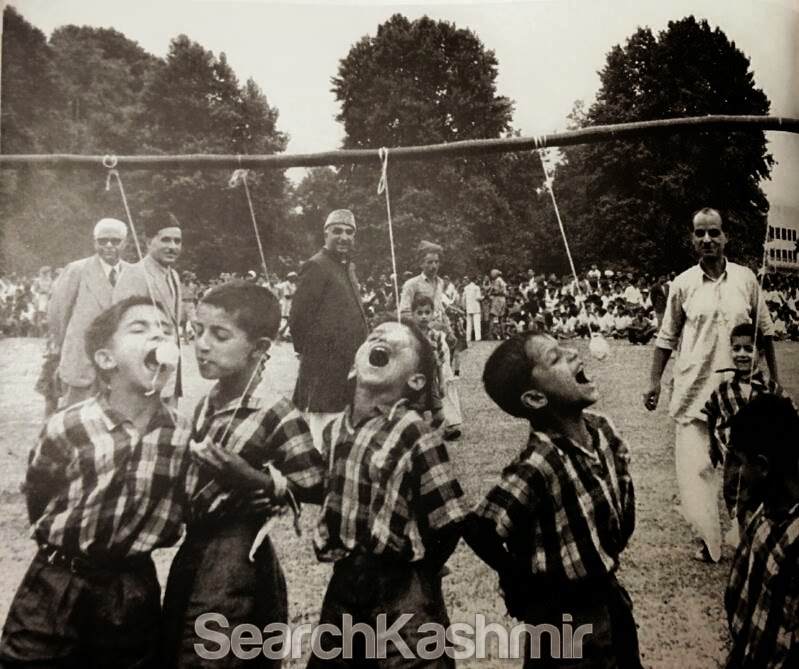
Apple eating competition, 1957


I now have the November 1958 issue of National Geographic Magazine in Brian Brake’s Kashmir photographs appeared. [for those coming late, read this detailed previous post]

And actually found some more unseen photographs even though most of his work is now available online.

Apple eating competition’. Brian Brake. 1957. In the background can be seen (and ignored) G.M. Bakshi. The photograph is from one of his ‘jash-e-kashmir’ festivals. I don’t know about now, but even in late 1980s, ‘apple eating competition’ was a popular school game event…at least at Biscoe. I remember losing it once.

-0-

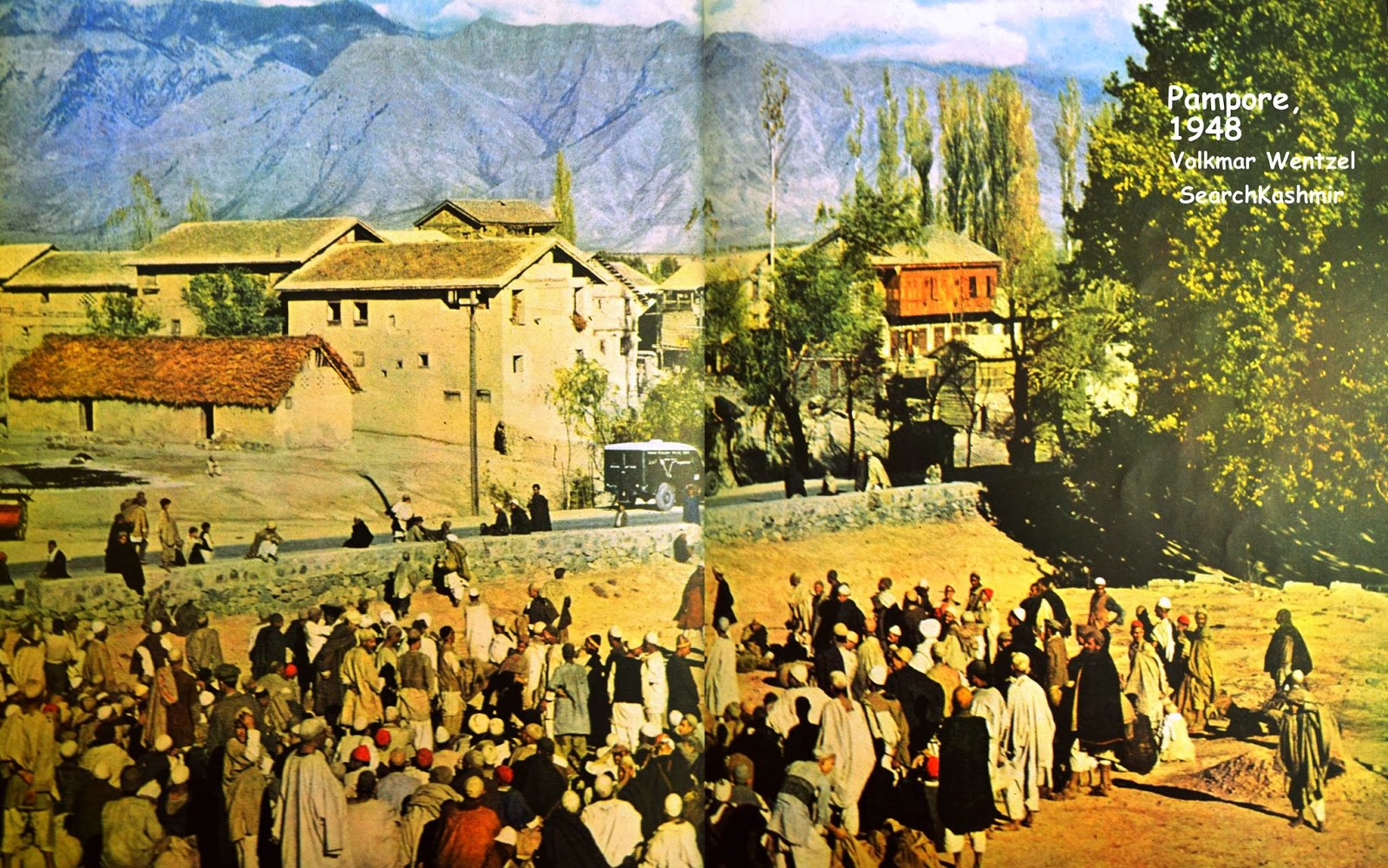
Saffron Market. Pampore, 1948

I now finally have all the old issues of National Geographic Magazine in which Kashmir was majorly featured.

Here’s a sample from year 1948:

‘Saffron Market’. Pampore, 1948. By Volkmar Wentzel. For National Geographic.
[Created by combining a two page spread]
Caption read: “At Autumn Harvest, Farmers, Pickers, and Buyers Swarm in Pampur’s Saffron Market. Homer sang of the “saffron morn,” Solomon of “spikenard and saffron.” Greeks perfumed theaters with saffron, a royal color; Romans tossed it in Nero’s path. England once cultivated the plant at Saffron Walden.”

Clear Dal Postcard

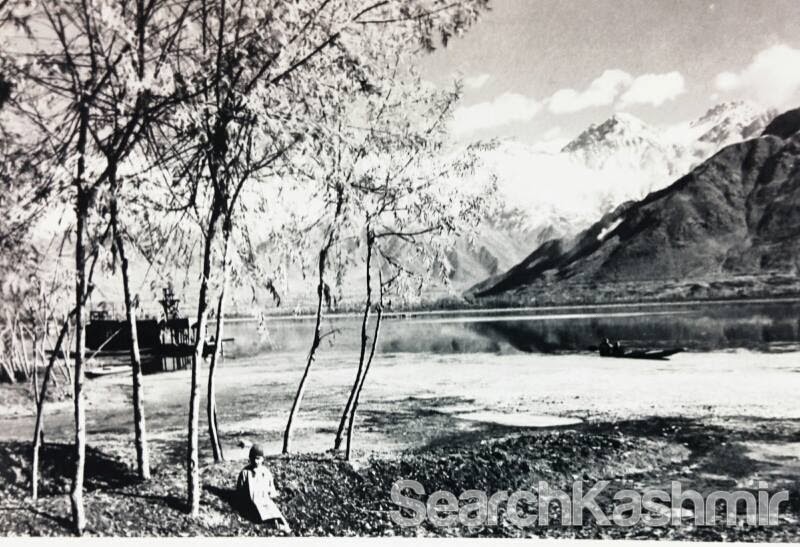
Another recent addition to my collection….a post card of Dal Lake from Mahattas. 
Undated. But probably from 1920s.

My friend Yaseen Tuman adds: Small hillock in photo is Shankaracharya Hill. Exact corner where Nehru Park Shikara Ghat Stands today and Hotels from this point to Dalgate.

-0-

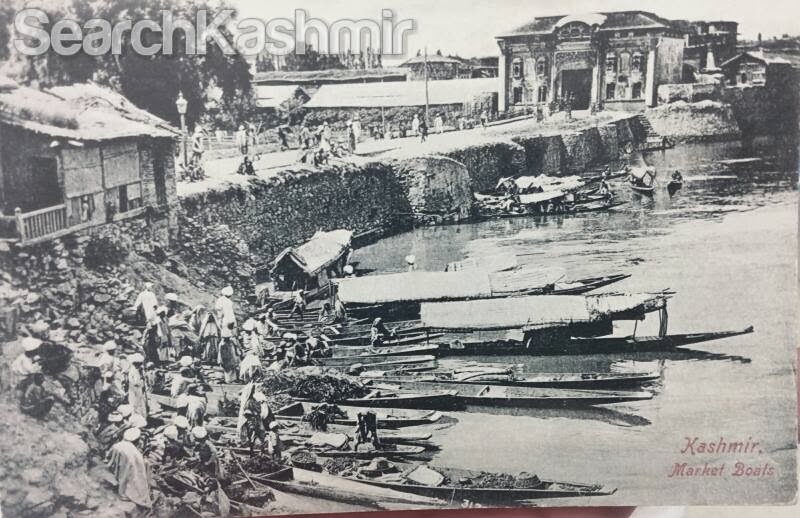
Kashmir Market Boats, 1920s

 A recent addition to my collection…

This postcard came with very little information. It was published by ‘Bombay Phototype Company’, which was in business around 1910-20. The place…I don’t know…that building in the background should be a good clue. I was hoping someone will be able to identify it.

-0-

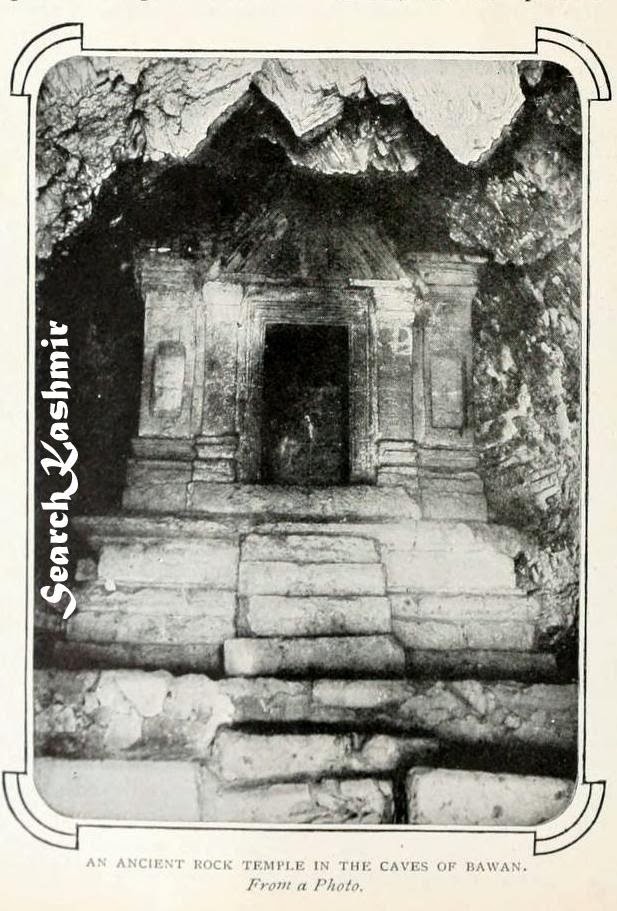
Bumzu cave temple, 1902

Bumzu cave Temple, Bhawan  Kashmir 1902
Bumzu cave Temple, Bhawan
1902

“The following day was spent in exploring the Bawan caves and the massive temple ruins of Martand.

The first cave I entered with much inward trepidation lest our touchwood torches should go out or loose stones be showered on us from the roof. We were shown the recess where a devotee of old lived his strange life and left his bones. A few yards beyond this further progress, except by crawling, was stopped by a recent fall of stones, and so we sought the entrance and made our way to the last and largest cave, which contains what is, perhaps, the very earliest Kashmiri temple. The porch has been cut out of the solid rock, and thence a gloomy passage leads to a flight of steps ascending to the little temple itself. A climb up the hill bought us to the plateau where the grand ruins of Martand stand sentinel, as they have done through countless ages. “

~ Photograph and text: ‘A walking tour in Kashmir by Miss. A.V. Stewart. Nursing sister in the Indian Army.’ For ‘World Wide Magazine. Volume 10. 1902.

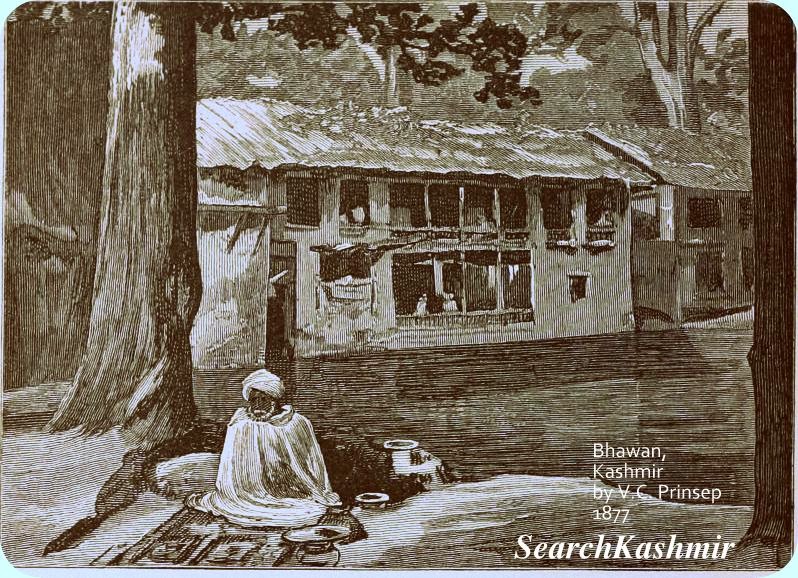
Bhawan, 1877

Bhawan [Mattan] by V. C. Prinsep. 1877.
From ‘Imperial India; an artist’s journals’ (1879)

“The modern Martand, or Bawan, is over the edge of the plateau at another source of the Jhelum, which, having escaped the eye of the garden-making Jehanghire, has been turned by the pious Hindoo through two sacred tanks, and is now a holy shrine. The tanks are full of fish, a kind of tench, I should think, which it is the duty of the pilgrim to keep well fed with baked Indian corn. It is delightful to see the shoals of these dark green fish in the brilliant azure of the water. I made a sketch of the place from one corner, where squats each day an aged and very holy man, before whom the pilgrims come in flocks to prostrate themselves till their foreheads touch the ground. Unlike most holy men, this one is clean, and is moreover a very superior person, for seeing me surrounded and inconvenienced by fakirs, he sent his own servant to clear them away. I painted him into my sketch as an acknowledgement, and when I had finished made my lowest salaam. The old gentleman, being probably absorbed in a contemplation of the Deity, did not respond; or are piety and good manners incompatible?”