 |
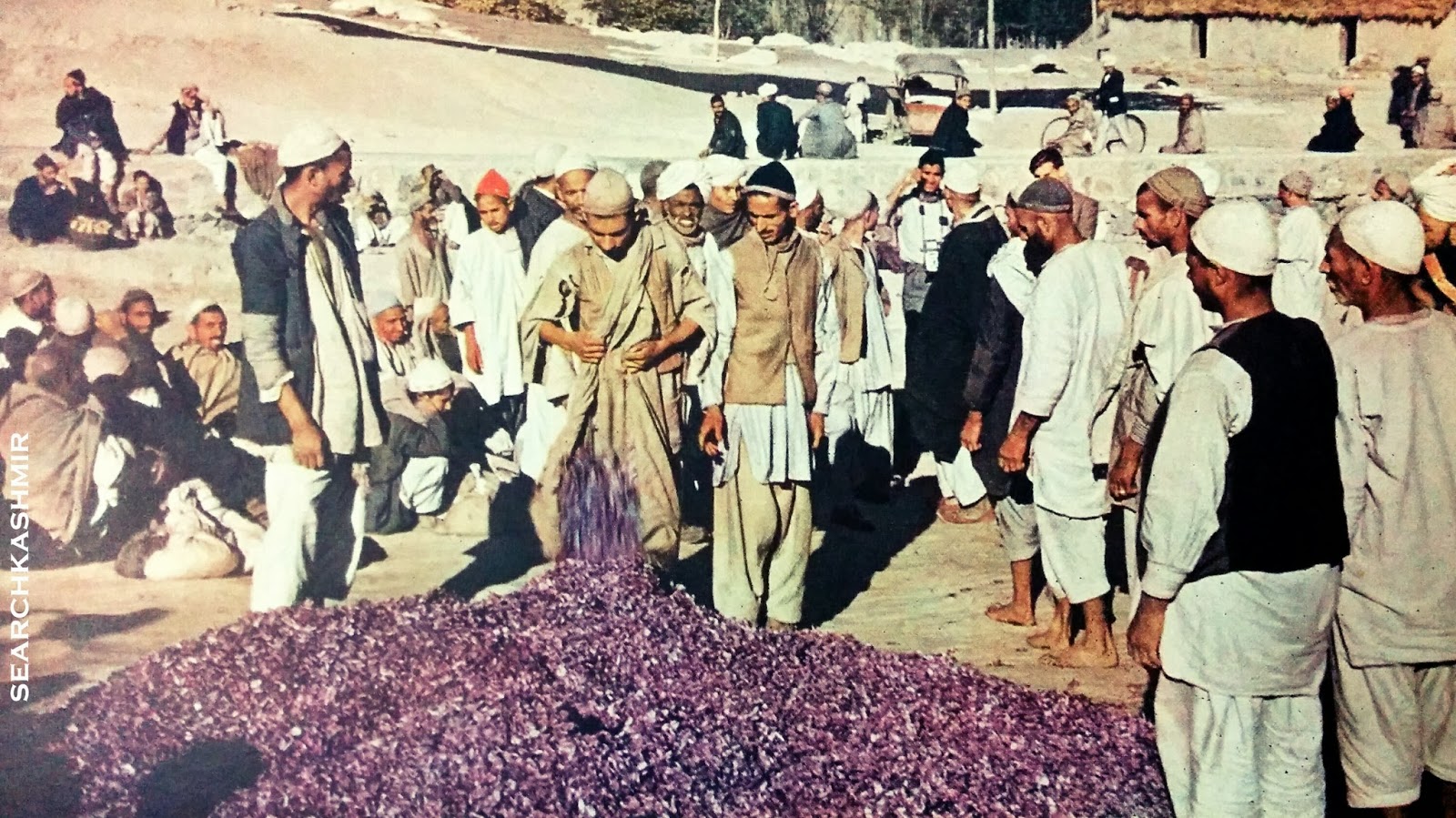
| ‘Saffron Market’. Pampore, 1948. By Volkmar Wentzel. For National Geographic. |
-0-

in bits and pieces
|
| ‘Saffron Market’. Pampore, 1948. By Volkmar Wentzel. For National Geographic. |
-0-
This window of a memory is held by four hinges.
Hinge 1: Victim
In accordance with the law of those time, the death sentence was announced to Radhakrishan in a whisper. Somewhere between January and February 1990, one morning, Radhakrishan was picked up from his home and taken to the ghat, the river bank, for a quick trial. It wasn’t long before the entire neighbourhood heard about it. Maybe it was the wails of his wife and children. Foreboding a judgement, people shut themselves in.
Hinge 2: Judge, Jury and Executioner
The men who knocked on Radhakrishan’s home and dragged him to the river bank remain unknown, unidentified.
Hinge 3: Litigator
Mohd. Yusuf had bought a state of the art VCR from his trip to Dubai. Around this he built a small business. He started a Video and TV rental service. Given the love of Kashmiris for moving images, it wasn’t long before his venture became a success. Soon he started a TV repair counter too. A technician came all the way from Punjab to work the counter in summers. The video shop of Mohd. Yusuf was right next to our house. The cassette for the first ever English movie I ever saw came from his shop. The film was a ‘B-grade Sci-Fi Action-Opera meets Cowboys-on-bikes’ flick called Megaforce. The only reason this film probably reached that corner of the world was because it starred Persis Khambatta. But what stuck with me was the starkness of its deserts and the crassness of the people who inhabited it. I liked it. From this shop came the cassettes for Dracula, the 1977 TV series version produced by BBC keeping the original written work in mind. It’s ending gave me my first nightmare. Guns and horses.
Hinge 4: Witness
All trivial details in which the true meaning is lost. All junk and pulp. These useless but strong hinges that support meaningless memories. Until a few years ago, that’s all I knew about Mohd. Yusuf – the video seller. And I hadn’t even heard about Radhakrishan’s trial. I heard the story over a phone, thousands of miles away from the scene of crime.
Towards the end of 2012, one afternoon, my niece came home with a school friend of hers. A girl just her age. Both of them were born in 1996 in Jammu, safe and far removed from the event of 1990. My grandmother got talking to the girl. The usual questions. She asked the girl about her family. Where she lived? The girls lived nearby. Where was her family based in Kashmir, originally? Chattabal. From the further answers she got, my grandmother realized that this girl was grand-daughter of her friend Nirmala who used to live near our place in Kashmir.
In 1990 Nirmala’s husband Radhakrishan was picked up by those unknown men. He was taken to the ghat near Bharav Temple. His throat slit. It was Mohd. Yusuf who ran to the ghat, reaching it just in time. Radhakrishan was still alive. They were playing with him. Mohd. Yusuf pleaded with those blighted men. He vouched for the innocence of the man who lay on ground slithering in pain. Radhakrishan was saved that day by Mohd. Yusuf. A judgement averted.
Unhinged:
In a farce trial, a simple mind only asks, ‘But what was the crime?’ There’s a jury and executioners, a litigator and a witness, an accused, an innocent and a hero. Surely, there must be a crime. The structure and constructs only allows us questions.
-0-
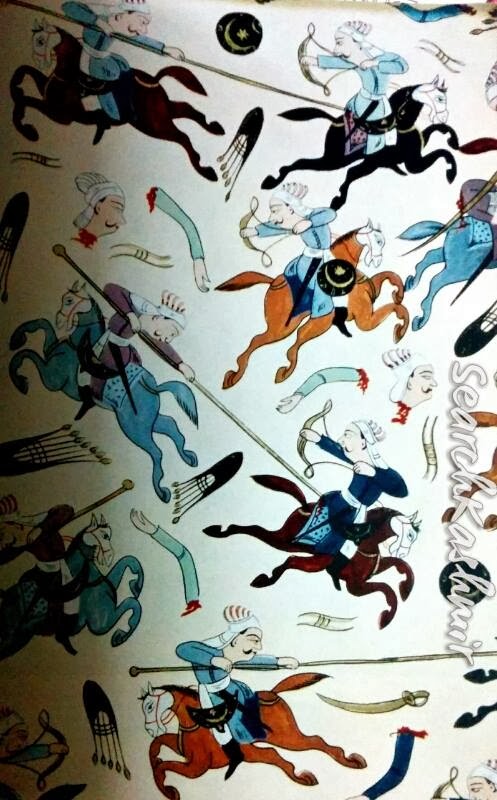

Papier-mâché. Papier-mache. Knights fights with Lance, Bows, and Arrows. 1958. Brian Brake for National Geographic.
“Kashmiris adopted papier-mâché making from the Persians and made it a high art. Artists create durable trays, boxes, candlesticks, and bowls, coating them with varnish. This painted cartoon on a box copies a motif of the Moguls, 16th-century Mongol conquerors of India and Afghanistan. Spearmen and archers duel to the death, littering the ground with sabers, shields, quivers, and severed arms and heads.”
 |
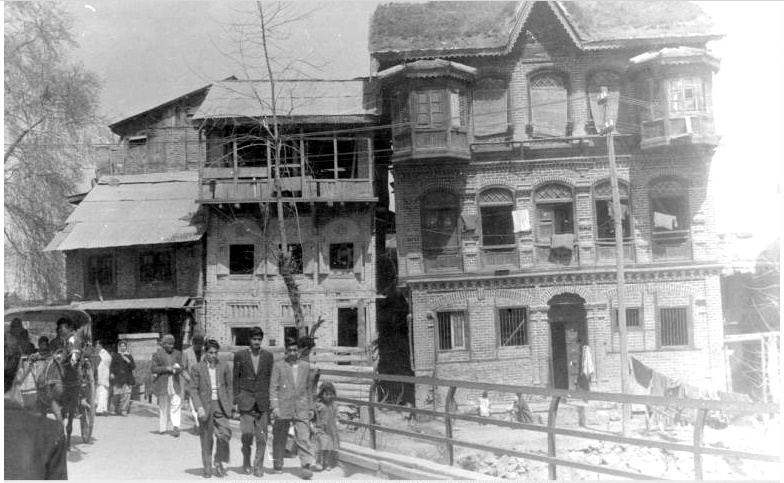
| Gow Kadal. 1950s. |
Based on an account I heard in 2013 from a cousin of my father. The family lost a member in the violence that erupted in 1990 and is now what would be considered right wing in political outlook. And yet, this is the account I got…
January 21st
The house was on Nai Sadak. From the main window of the house you could see the bridge that connected the locality to Maisuma Bazaar, the place that was going to be the epicenter of violence in 1990, the bastion of JKLF. This is the bridge known as Gaw Kadal or the Cow Bridge. The line of sight from the house was such that if someone was standing on the center of bridge, you could see him completely, but further down, the other side only partially visible.
That day inmates of the house were glued to the window as they tried to fathom the sounds. They could see a large sloganeering crowd on the other side of the bridge, approaching their side. On this side, they could see a picket of about twelve CRPF men blocking their way. The city was under a curfew. These men were issuing orders warning the people disperse and move back to their houses. The people were protesting exactly against such orders. The inmates of the house thought maybe the security men were worried about their security. There were a couple of Pandit households in this vulnerable area. The men watching the procession from the window were a bit anxious. But this was Kashmir, even this was normal. They had seen may such processions in their lives. The people in the crowd had probably taken part in too many processions in their life. It was just another average Kashmiri day. The neighbourhood mosque which was under JKLF control was time and again advising the crowd over the loudspeaker to not touch the Pandits and their houses, to maintain peace and to march forward. The crowd continued to move forward.
Suddenly, without a rhyme, shots rang out. At first a tickle of loud bursts. From the window you could see a figure taking position, a quick thinking uniformed sikh man who hinged his semi-automatic gun to the railing of the bridge, and squeezed his finger to unleash death. In the later news reports, this action came to be described as ‘indiscriminate firing’. The inmates of the house, with reflex of a cornered animal, ducked and lay flat on the floor. The wooden walls of the house it seemed had been blown away, it was as if the fire was directed at them. And the firing just wouldn’t stop. It was like rain, like a thunder storm, even maybe like a cloud burst. Ashok Ji, a neighbour, another watcher in the house next door, was a bit slow in deciphering the scene. A bullet flew past him and glazed his ear. The reports were to say that the firing on the crowd was carried out from both ends of the bridge. People were caught in the middle. Initial official reports said about thirty people were killed. Over the years, as the stories grew, the number grew to about two hundred. Out of blood came accounts of people jumping into river and drowning, injured executed at point plank range, people chased and shot dead. The man blamed for ordering fire was given a name: Allah Bakhsh, SSP of J&K Police, with family ties to all the high and mighty of Kashmir state bureaucracy.
When it was over, the entire neighbourhood was drowned in sound of wailing. Up until now, a Pandit was still expected to join his neighbours in grief. And most of them did join. But not after that day. Bloodletting of that day, changed the core of the people. When an inmate of the house showed up at a neighbour’s house to offer condolence, he was chased away. ‘Battov, ye korov telephone‘, ‘Pandits, you telephoned them!’, was intermixed with the wailing sound. People swore revenge. The Pandits were suspects. The rumor blamed the pandits for calling the security men and somehow ordering the massacre. Over the next few days a new phenomena was observed in the city, people climbed up the telephone poles and pulled apart the wires. City was now plunged into a blackout of another kind. Every family was marooned, on its own and drifting in an unending nightmare in which monsters of all kind took life. Monsters that were to haunt Kashmir for a long time to come.
-0-
-0-
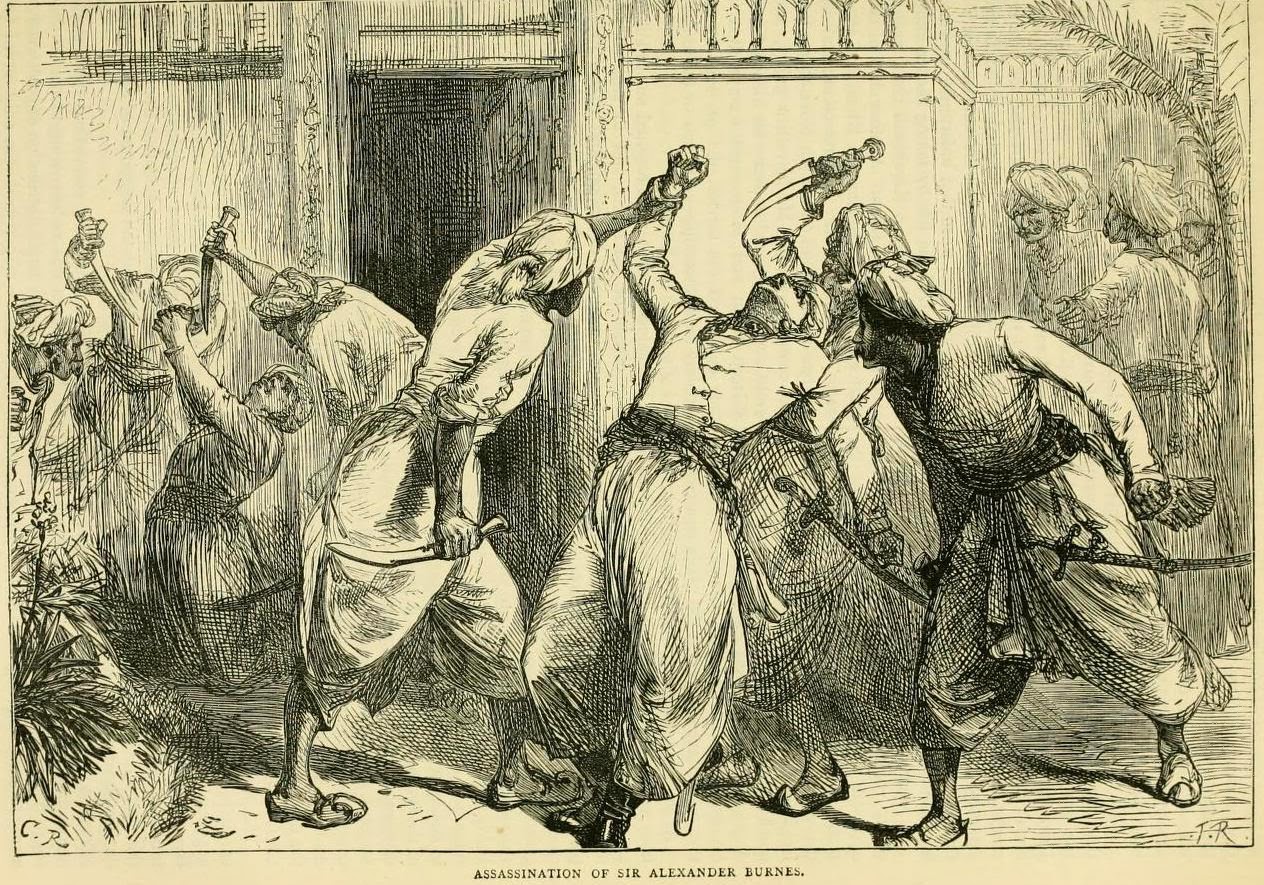

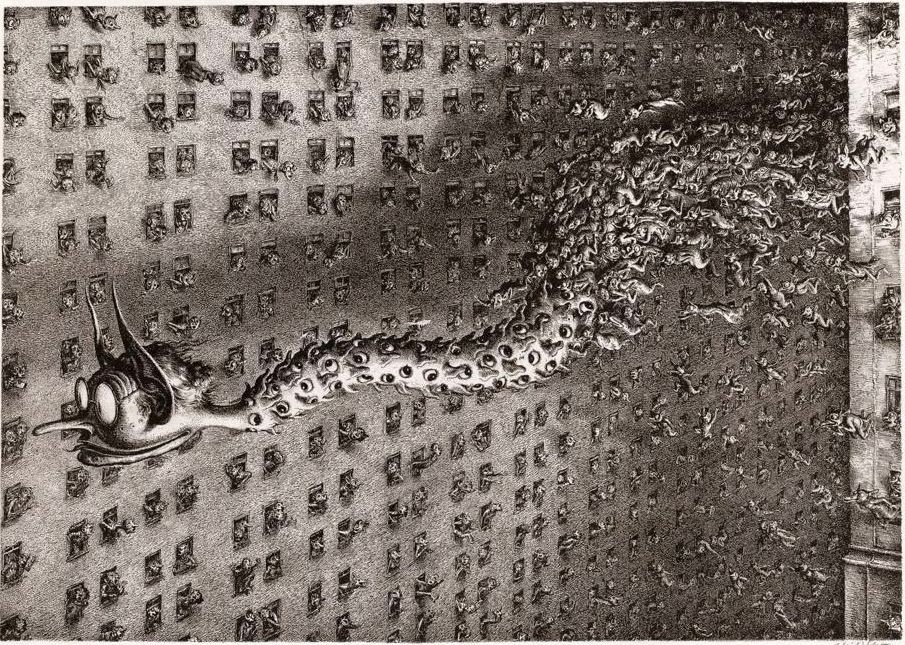
From ‘Cassell’s Illustrated History of India’ (1880) by James Grant.
Here too a ‘rascally’ Kashmiri was blamed.
-0-
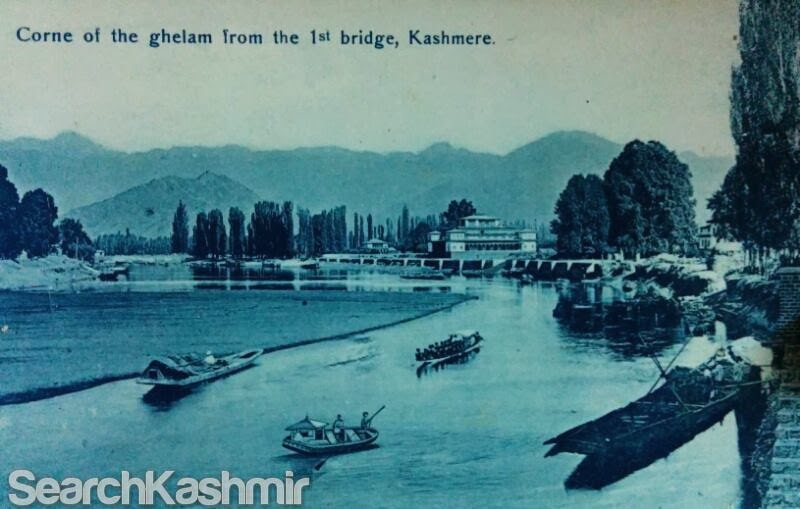
 |
| Corne of the ghelam from the 1st bridge, Kashmere |
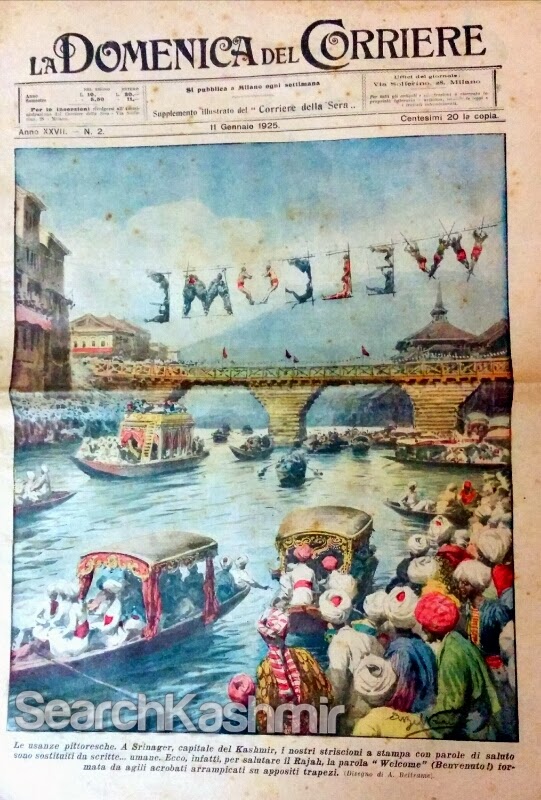
 |
The original photograph on which the illustration is based:
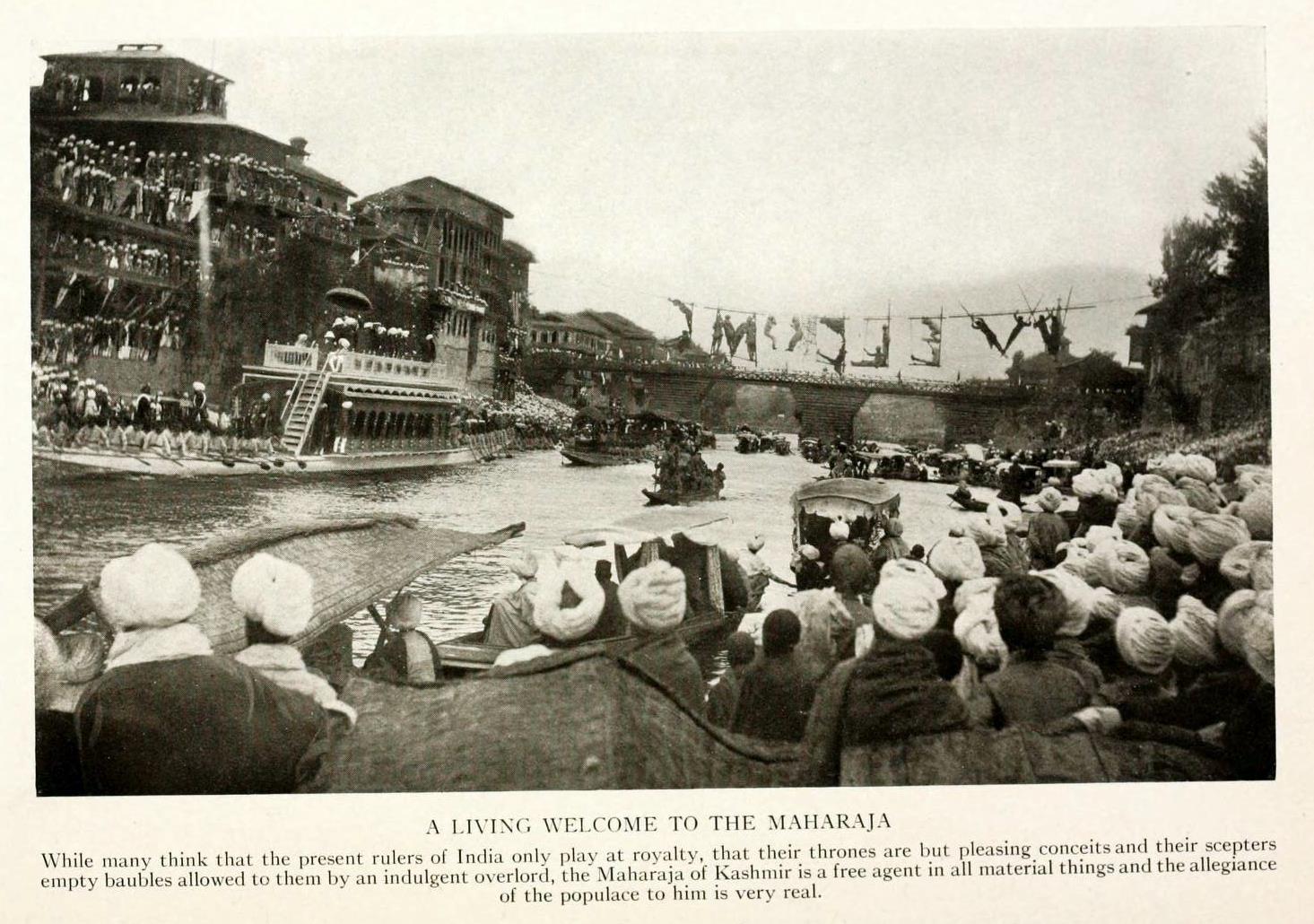 |
|
|
Another inspired illustration:
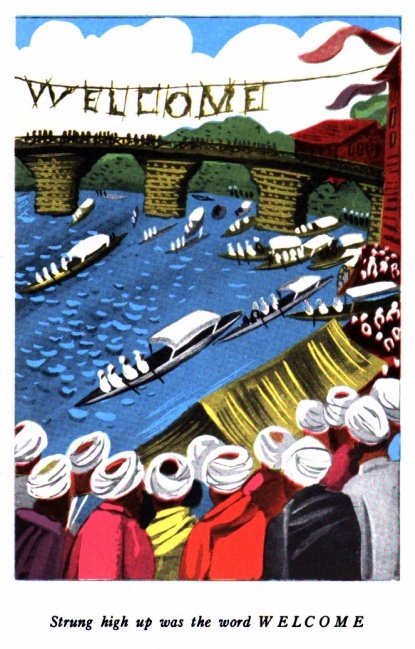 |
| An illustration from ‘Rhamon a boy of Kashmir by Heluiz Washburne, pictured by Roger Duvoisin’ (1939). |
Music courtesy of RaviMech Studio
-0-
Although I have added captions to the video, here’s the listing details of 36 images provided by Michael Thomas.
1
00:00:05,000 –> 00:00:09,000
Srinagar, Kashmir – writing on side. 1903.
2
00:00:10,000 –> 04:06:40,000
Shepherdess, Kashmir. [Also, known as ‘the shepherd’s daughter”, from the book ‘The Charm of Kashmir’ (1920)]
3
00:00:29,400 –> 00:00:40,000
Mur Canal. Nalla-e-Mar.
4
00:00:46,000 –> 00:00:50,000
Nautch Girl
5
00:00:58,000 –> 00:01:04,000
A Kashmir Boat Girl
6
00:01:07,000 –> 00:01:20,000
A Boatman
7
00:01:22,000 –> 00:01:26,000
Kashmir Dungas
8
00:01:28,000 –> 00:01:34,000
Kashmir Woman Spinning
9
00:01:35,000 –> 00:01:45,000
A Peasant Girl, Kashmir
10
00:01:50,000 –> 00:01:54,000
Srinagar Above 7th Bridge, Kashmir
11
00:01:55,000 –> 00:01:59,000
Srinagar, River View from bridge
12
00:02:00,000 –> 00:02:11,000
Mar Canal
13
00:02:12,000 –> 00:02:16,000
Srinagar and bridge of Shops
14
00:02:18,000 –> 00:02:24,000
City and the third Bridge
15
00:02:26,000 –> 00:02:34,000
Shalamar Gardens
16
00:02:36,000 –> 00:02:42,000
Nishat Bagh
17
00:02:45,000 –> 00:02:47,000
Bara Mola (Baramulla/Varmul)
18
00:02:48,000 –> 00:02:53,000
A houseboat at Baramulla
19
00:02:55,000 –> 00:03:00,000
Town of Baramulla (Wrong caption, actually view of Srinagar)
20
00:03:03,000 –> 00:03:12,000
Dal Lake
21
00:03:16,000 –> 00:03:21,000
Crossing Woolar Lake
22
00:03:23,000 –> 00:03:30,000
Kashmir in Winter
23
00:03:34,000 –> 00:03:40,000
Srinagar, The Palace
24
00:03:43,000 –> 00:03:48,000
A Dungar or Kashmir Boat
25
00:03:50,000 –> 00:03:53,000
Lotus Lilies, Dhal Lake
26
00:03:56,000 –> 00:03:58,000
Photograph of Dal Lake. 1946.
27
00:04:01,000 –> 00:04:06,000
Boatman, Dall Lake
28
00:04:09,000 –> 00:04:14,000
Kashmir, Moonshee, Bach, Commissioner’s Boat
29
00:04:17,000 –> 00:04:23,000
Dall Lake. 1930
30
00:04:27,000 –> 00:04:31,000
The Presidency, Srinagar
31
00:04:33,000 –> 00:04:40,000
Srinagar, Another Bridge [Probably, Baramulla Bridge ]
32
00:04:43,000 –> 00:04:50,000
Gulmarg
33
00:04:54,000 –> 00:04:58,000
Pastoral View, Sind Valley
34
00:05:00,000 –> 00:05:03,000
Ladakhis and Yaks, Sind Valley
-0-
Maybe, sometime soon I will make another presentation on the postcards in my collection.
On a side note, I wish more Kashmiris would start using captions for their video, especially on music video.
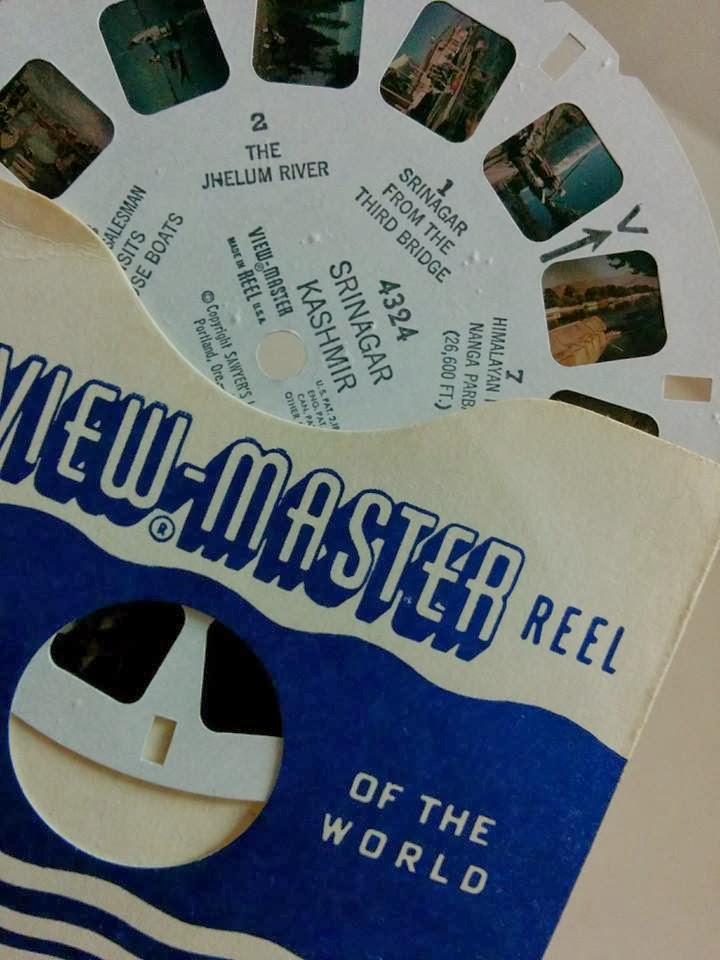

An interesting addition to the archive.
A View-Master Reel of Kashmir from 1952. There are seven images (14 for 3d effect) shot on full color Kodachrome film.
Right now, I don’t have the viewer for it so spent the day hacking up a basic viewer out of a card box.
The result….an experiment in color and sound.
Update: 16th Jan 2014
Finally got a viewer.
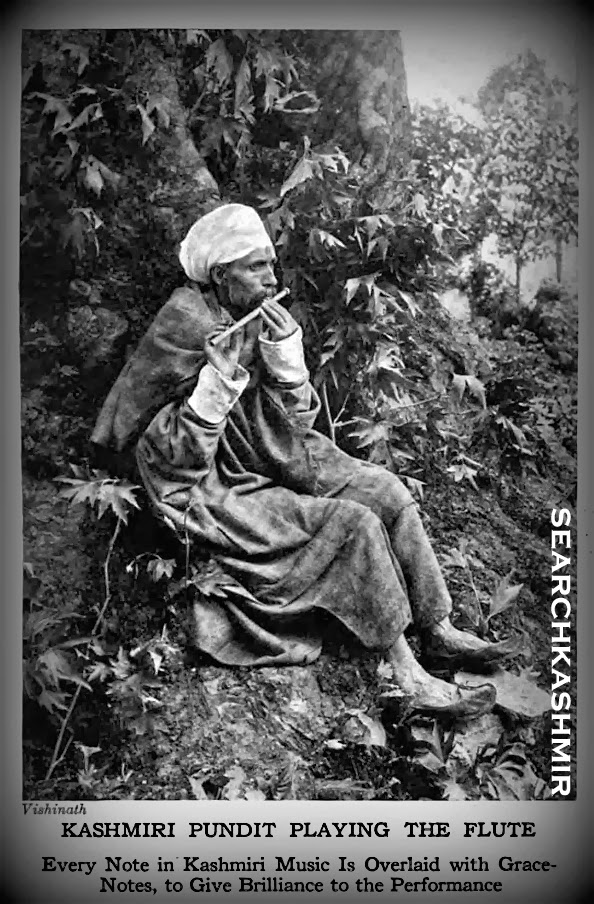
 |
| Kashmiri Pundit Playing the Flute Every Note in Kashmiri Music is overlaid with Grave Notes, to give brilliance to the performance Photograph by Pandit Vishinath Kampassi |
“The melodies belonging to the lakes and rivers are of course unlike those of the mountains. Never shall I forget the charm of being paddled in our shikara, one beautiful moonlight night on the Dal Lake in Kashmir, with our crew singing softly a well-known boatman’s song punctuated by the rhythemic stroke of the paddles. An equally idyllic memory springs to my mind of the fine forests on the mountainous sides of the Lolab valley, and, seated beneath the shade of a lofty pine, a slender stripling playing plaintively upon his simple wooden flageolet. This mournful melody was called “The Parrot” and its theme was a tale of a lady taken captive to Kashmir, who released her favourite parrot to carry a chenar leaf in its beak as a message to her lover. “
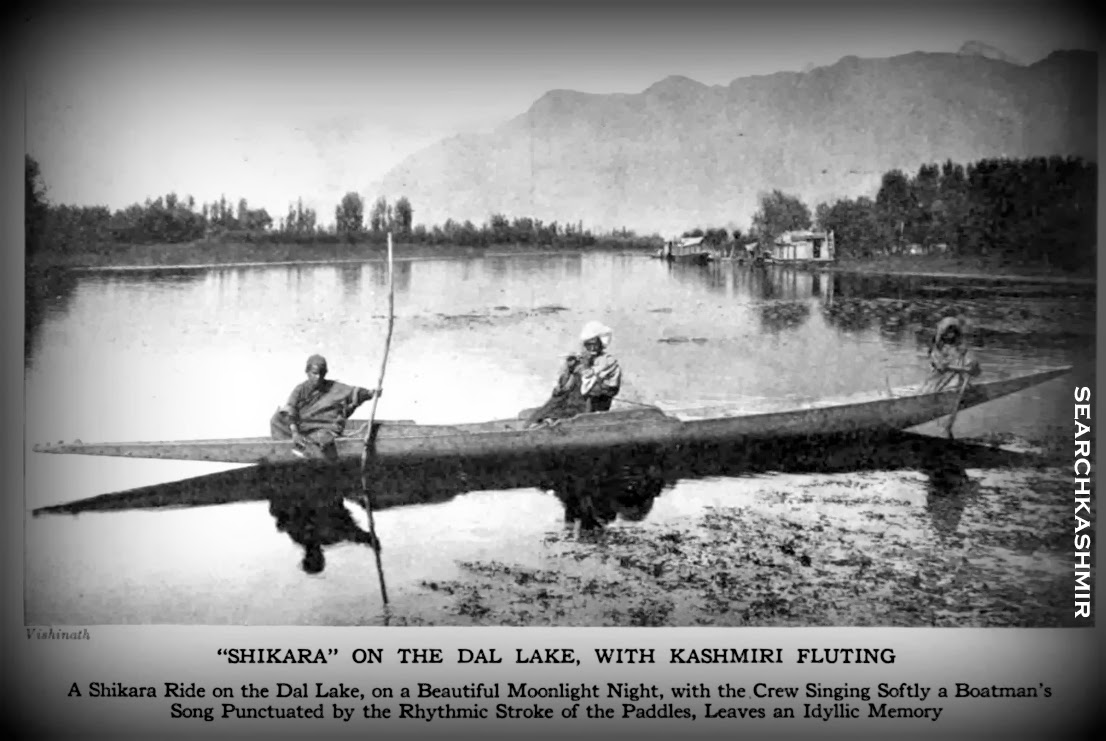 |
| “Shikara” on the Dal Lake with Kashmiri Fluting A Shikara Ride on the Dal Lake, on a Beautiful Moonlight Night, with the Crew Singling Softly a Boatman’s Song Punctuated by the Rhythmic Stroke of the Paddles, Leaves an Idyllic Memory Photograph by Pandit Vishinath Kampassi |