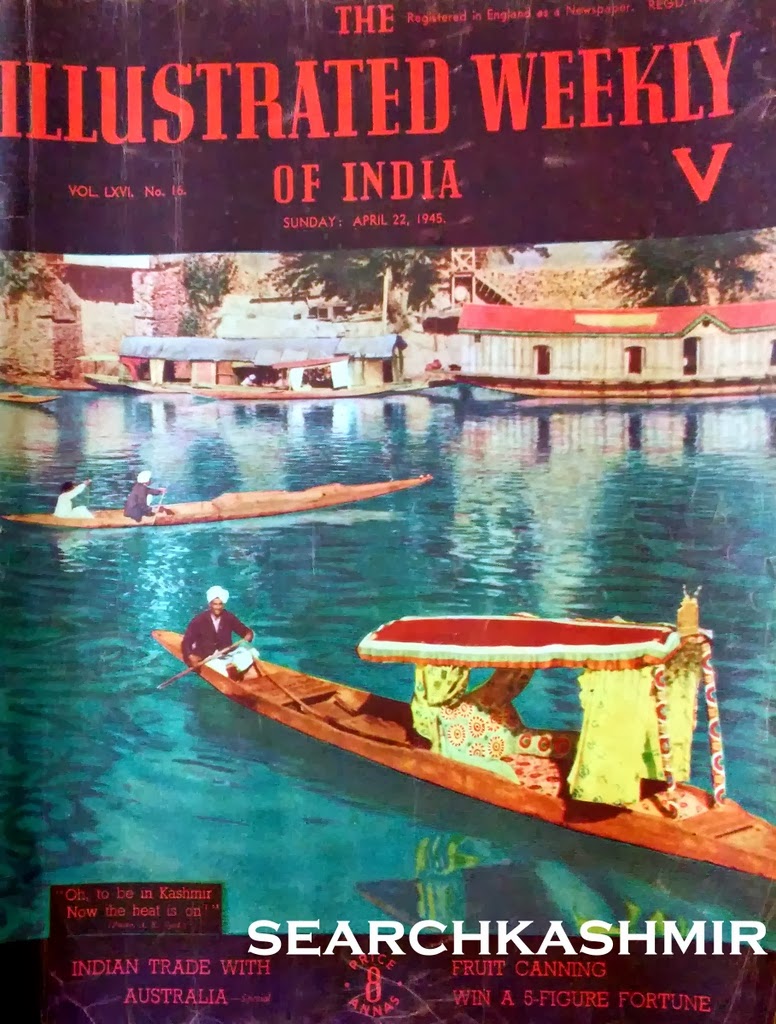
Tourist Guide, 1960

Video: A travel guide for Kashmir published in September 1960 by Directorate of Advertising and Visual Publicity,, Ministry of I&B., for the Deptt. Tourism, Govt. of India, New Delhi. Printed in Bombay.

Audio: Kashmiri music from film ‘Magic of the Mountains’ (1955) by Mushir Ahmed for Film Division. The first song is the famous lament of Habba Khatoon (16th century).

-0-

SearchKashmir Free Books Project


Over the years, like a famished beast, I have devoured books listed at archive.org. The Kashmir image archive was built primarily out of material from there. But often, while searching for some subject, I ran into books that were still not digitalised or not publicly available outside of foreign libraries. So, not too often, I ending up buying a rare book. Now, I want to give a little back to the project.

The idea is simple. Every month I will be uploading one rare and out-of-print book about Kashmir to archive.org, so that others can read it for free.

January: A test run. Something that I had shared previously via images only. With archive.org, now the book is also available in easy to search text format

February: A book by Pandit Anand Koul that provides interesting information of industries of the state.

March: After ‘Beyond the Pir Panjal life and missionary enterprise in Kashmir’ by Ernest F. Neve (1914, first published in 1912, here) went out of print, in 1931 he came up with a small concise and updated version in 1931 and titled it ‘Things Seen in Kashmir’.

Things Seen in Kashmir (1931) by  Ernest F. Neve

The Mallinson School Recipes

A book shared by reader from his personal collection. Now complied and uploaded to the archive.[Details] Probable date mid-1960s.

April: A photo book published by Publication Division in November 1956. This is the second edition that came out in May 1962.
Kashmir, 1956

May: An anthology of photographs, verse, and description, mainly of India including Kashmir, Delhi and now Af-Pak region published by a British soldier towards the end of World War 2. [Details]

Of Hills (1944)  by Tom Ashley Lakeman

June: A travel guide by a former student of Biscoe.[Details]

Holidaying and Trekking in Kashmir (1969) by N. L. Bakaya

July: A School report for C.M.S. School from year 1926 [Details]

Lake and River Scouts in Kashmir

August: A rare trekking guide written by a woman and meant for women. [Details]

Trekking in Kashmir, with a family, or without one” (1930) by Barbara Earl.

September: A school booklet from year 1944 published by Church Mission School, Srinagar.

Tackling The Impossible

October: A book on first Kashmir war of 1947-48

Defending Kashmir (1949)

November: A travelogue by a British woman about her visit to Ladakh in 1926

Magic Mountain (1945)

December: A book on farmers of Jammu, Kashmir and Ladakh

Farmers Of Jammu, Kashmir And Ladakh (1959)

-0-

Bandobast Sahib’s Nightmare

Kashmir was my paradise, for the work was a constant pleasure. But in a way it unfitted me for the life outside paradise, and though I have had the happiest chances and the most delightful experiences since I left the happy valley, I always compare my life now with my life then, and nothing has rivalled Kashmir. When the Kashmiris weave their lovely carpets they always leave one thing undone, for their religion teaches them that nothing done by man must be perfect. I finished my work in the valley, but there was a tract of beautiful country not belonging to the State which I had promised to “settle,” and when the end came I left this unsettled. And now year by year I have a vivid dream that the boat is ready and that all my plans are made. I have chosen my best men for this last piece of work, have sent on my tents and supplies, and am going to make no mistake this time, and the map and the settlement of the land shall be perfect. But I always wake before my boatmen shout “Yo pir” and make the boat tremble with the strong stroke of the heart-shaped paddles, and I know that if the boat ever does start, it is “finis,” or as the Moslems write on their tombs, “Khatm“.

~ ‘The India We Served’ (1928), Walter Rooper Lawrence.

-0-

By a singular coincidence, this chance halting-place under the chinars of Panzin, brought me also across the foot-prints of another man whose name is engraved upon the history of Kashmir. For as the evening grew the Village Headman came and sat by the brook, and conversed about his fields.

“Sir,” he said, “since Laren we have had great peace. He came walking along this very road on his way to Wangat, and I stood before him, thus, with folded hands, and said :

‘”Huzoor, here is great zulm; yon field is mine, but another from the next village, who has friends at court, has stolen it from me.’

 “And Laren said, ‘What is your name ? ‘ and I said Sobhana, the son of Futto and he put it down in his note book ; and then he said:

“‘What is the name of your field ? ‘”

“and I laughed and said, ‘ Huzoor, they call my field Bamjoo.'”

“And he put that also in his book, but said no more and took his way ; and lo ! in the fullness of days when the Settlement was accomplished, my field was given back to me, and Justice was done.”

” And who was Laren ? ” I enquired —

” Laren,” he replied, ” was the great Sahib who made the Settlement ; the friend of all Zemindars. Since his time a deep confidence has settled upon our hearts. It was he who said ‘ O Wise Ones do not part with your lands for they will one day become gold.’

~ The Charm of Kashmir’ (1920) by V.C. Scott O’connor

-0-

“I saw the Mullah step with great dignity into the ferry boat: I saw the boatman prostrate himself, as had the crowd bowed down as he passed along. He was a man of about fifty, clad in white, and when we met by my tent I noticed that, though his face was austere and ascetic, his eyes had a twinkle in them. We sat down for some time in absolute silence, and without any order on my part everyone went to a respectful distance. Then he spoke in good clear Hindustani. He had heard from his people of my work, and though I and my officials through our ignorance had made many mistakes, and though at first he had thought we should fail, he now had some hope that we should succeed. He had been told of my collision with Colonel Natha, and that I had vowed that if he remained in the State service I would resign. He was pleased that I had kept my vow, and it was for this that he and his people trusted me. “But,” he added, “you must be careful. Careful of the hate of the city and the officials, and careful not to free my people too quickly. They are under the curse and are well called the worshippers of oppression. For if they become absolutely free and careless of their rulers, they will be lazy and improvident. And one other matter you have taken on yourself affairs that do not belong to you.”

~  ‘The India We Served’ (1928), Walter Rooper Lawrence, the Land settlement officer in Kashmir from 1889 to 1895.

-0-

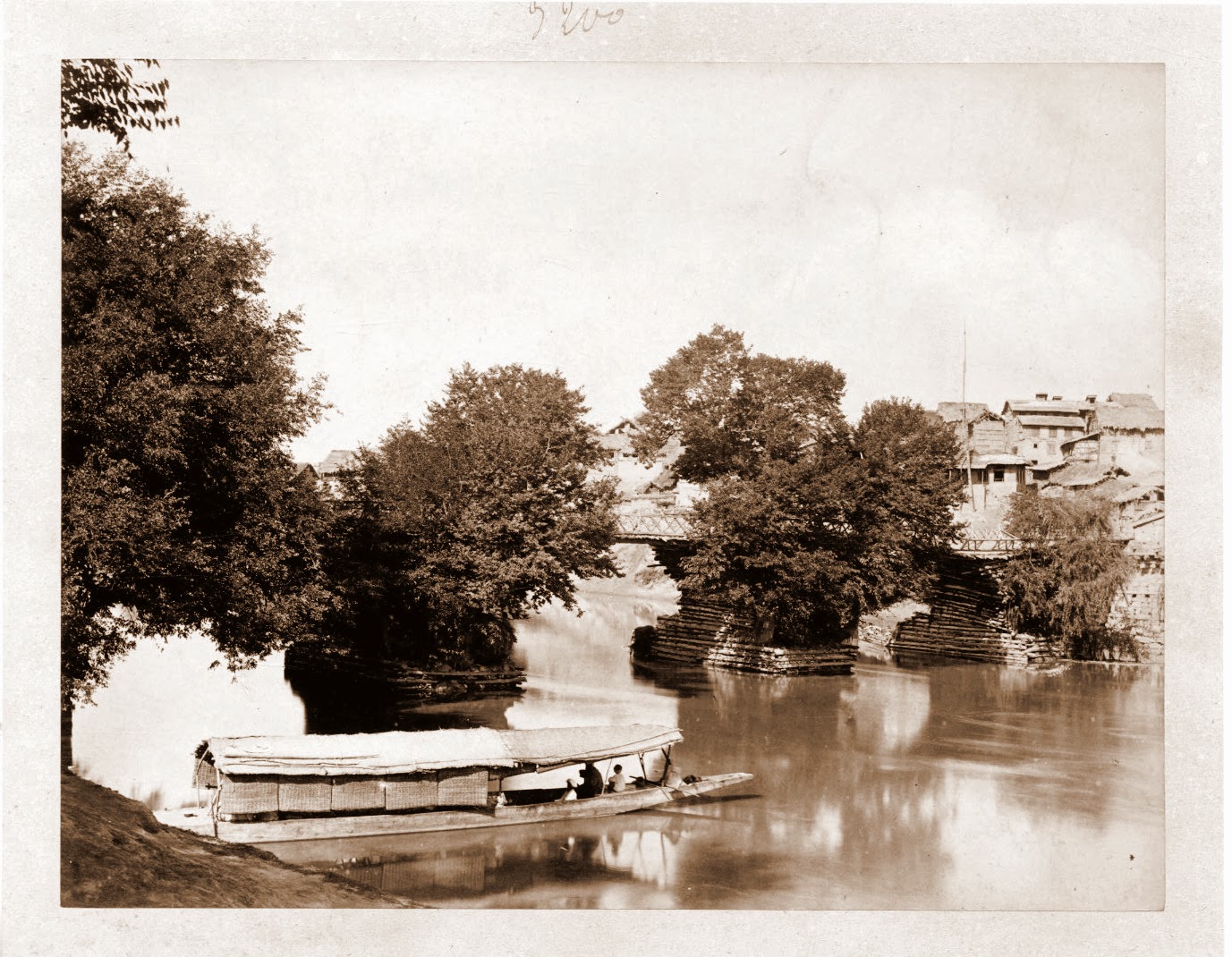
Tree Bridge: Bijbehara Bridge, 1870


Came across this image over at ebay. It was getting sold without much detail besides a date. Took sometime to identify the place. But in the end , its distinctive look, trees growing on the bridge, made it easy.

Bijbehara bridge,
1870
Photographer: Unknown. (Probably Bourne)
[Update: Photographer: Francis Frith. An album dating around 1850s to 1870s. via: Victoria and Albert Museum.]

About the Bijbihara Bridge, Pandit Anand Koul in his book ‘Geography of The Jammu and Kashmir State’ (1925)’ given the date of erection of the bridge as 1631 and name of builder as Mughal Prince Dara Shikoh. In additional remarks he states that the bridge was originally a little higher up.

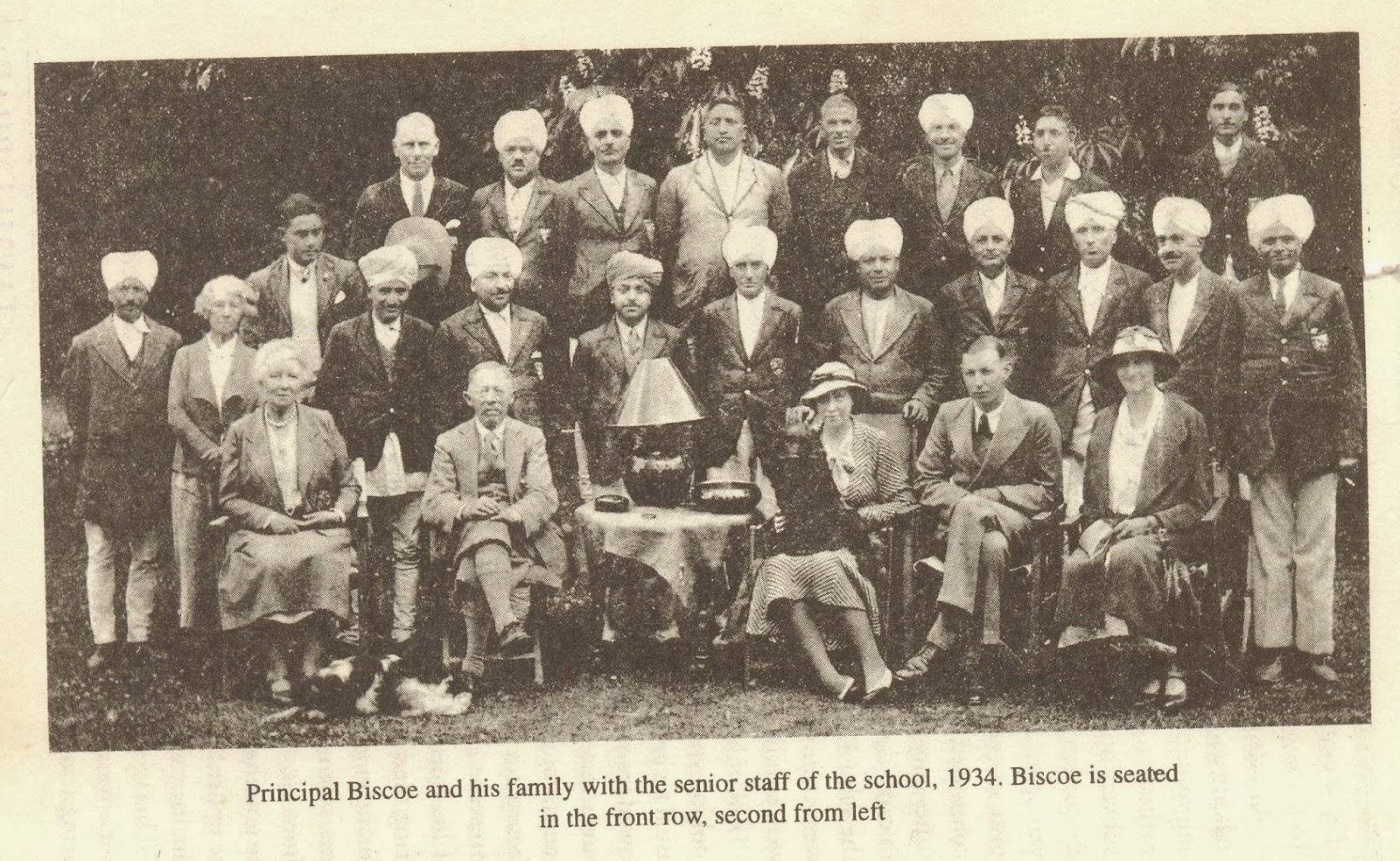
Biscoe Assemblage, 1934

“Principal Biscoe and his family with senior staff of the school, 1934. Biscoe is seated in the front row, second from left.”
From P. N. Dhar’s autobiographical book, “Indira Gandhi, the “Emergency”, and Indian Democracy. (2009)
Image shared by Rudresh Kaul.
-0-

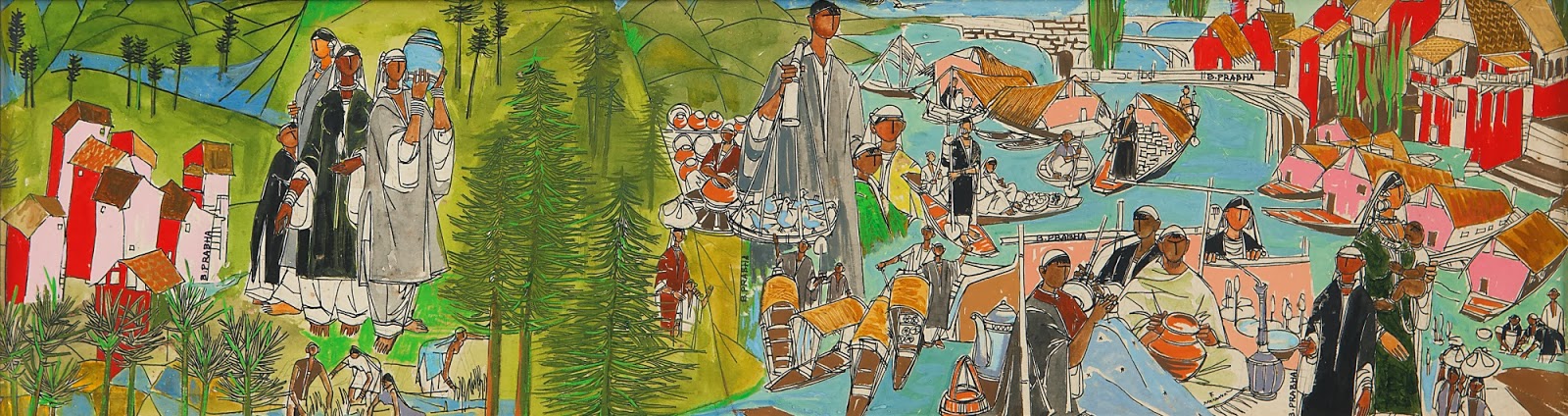
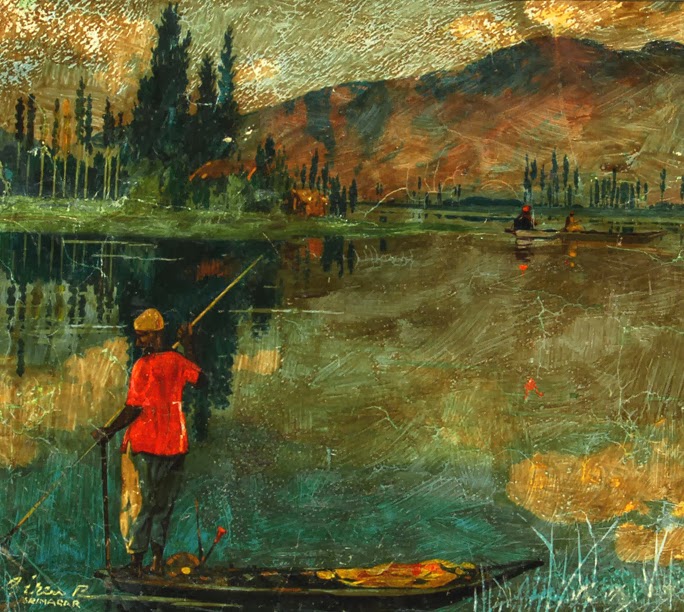
Kashmir by Modern Painters

Kashmir by B. Prabha (1933 – 2001) 
via: bonhams
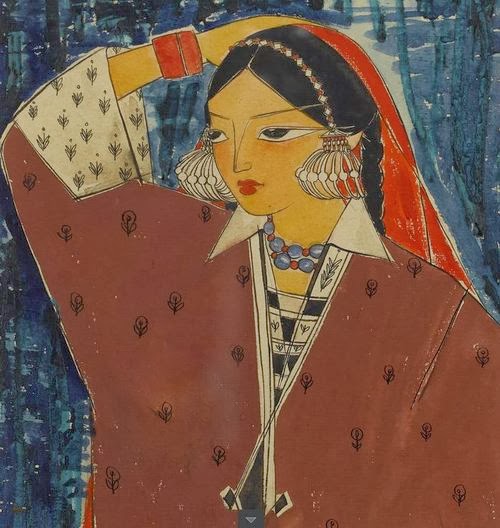
Kashmiri Woman by B. Prabha.
via: bonhams

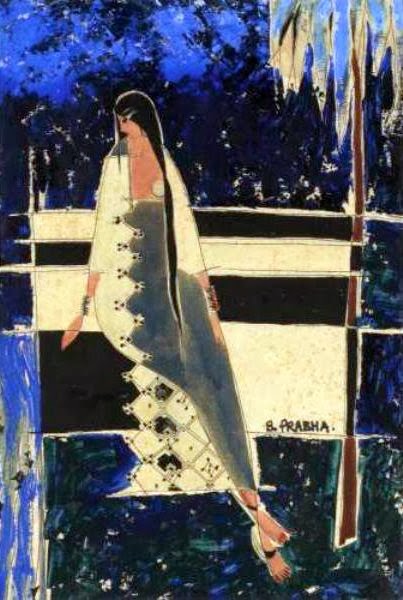
 From ‘Kashmir Series’ by B. Prabha.
via:
Sotheby’s
Kashmir by N.S. Bendre (1910-1992)
source: saffronart.com
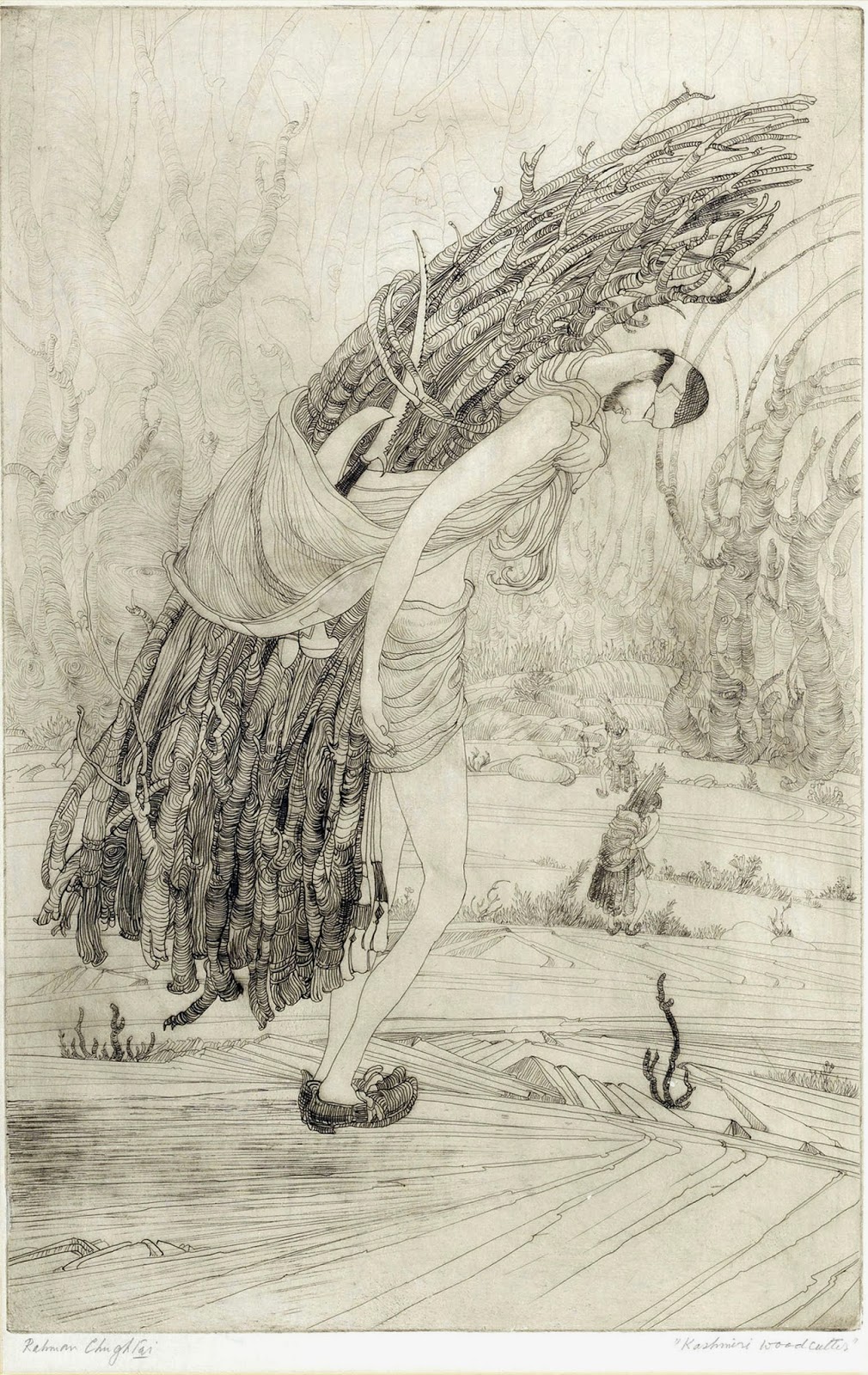
‘Kashmiri Woodcutter’ by Abdur Rahman Chughtai (Pakistan, 1897–1975)
via: 
bonhams

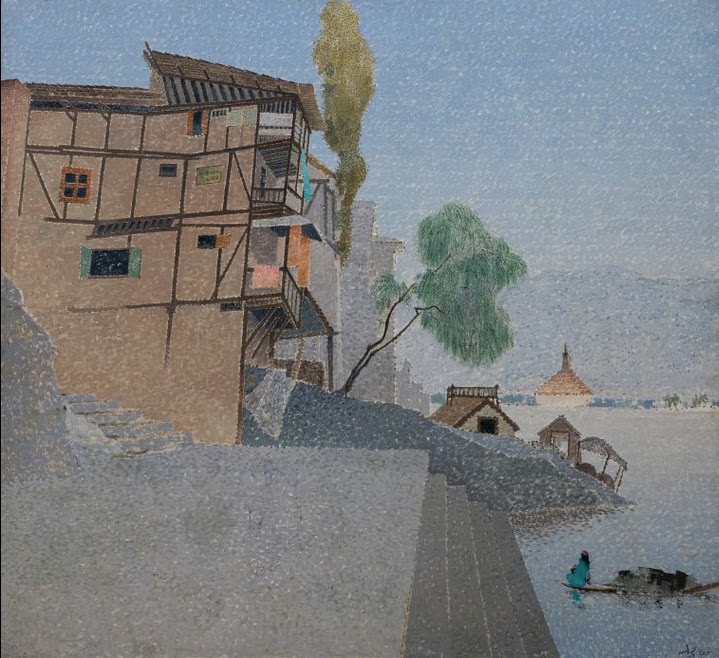
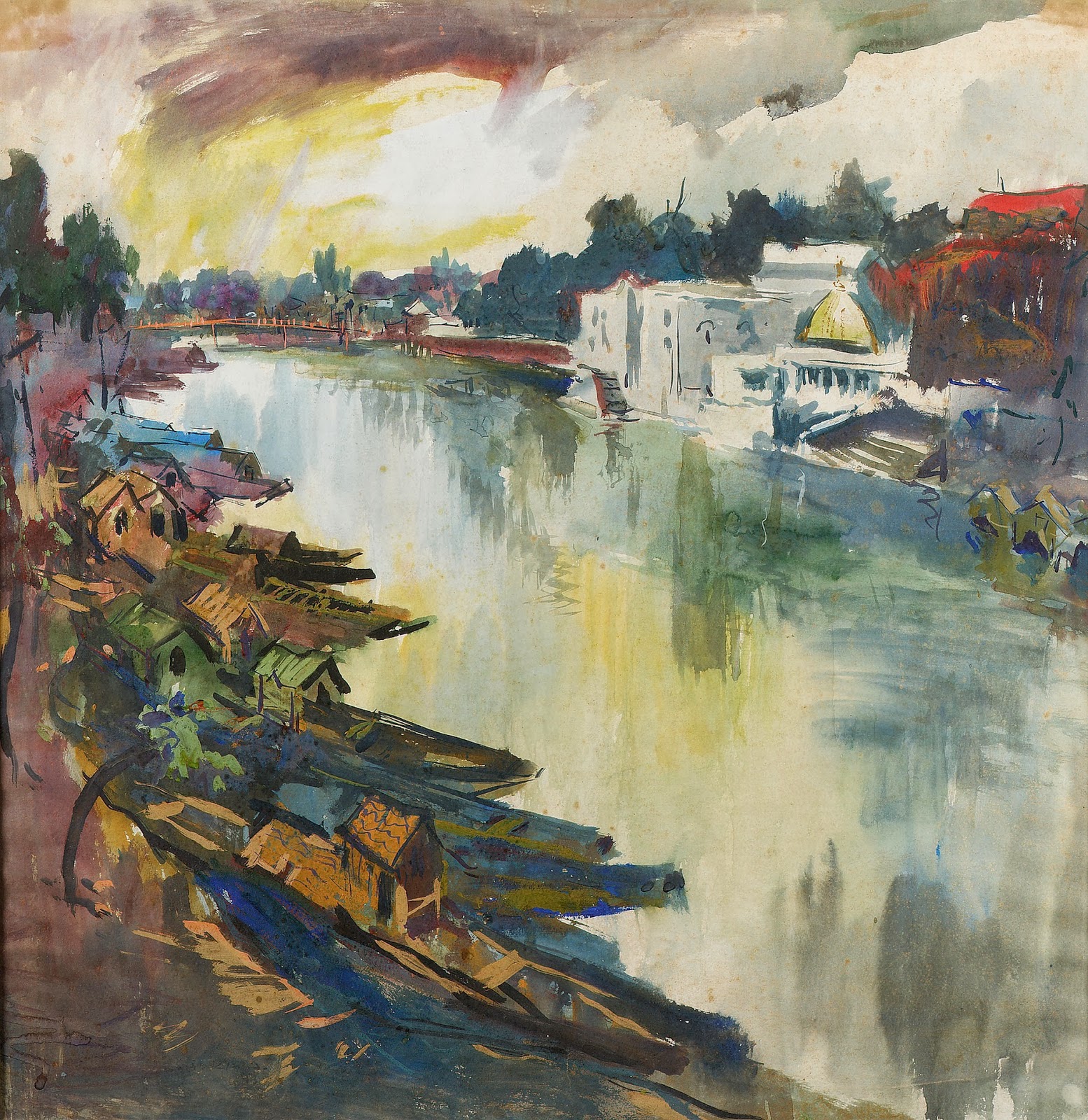
Srinagar by Biren De (1926-2011)
Source: techsoftlabs.com
Previously: Srinagar Post Card by Biren De 
‘In the snows of Kashmir’ by G.R. Santosh (1929-1997).
Source: sothebys.com

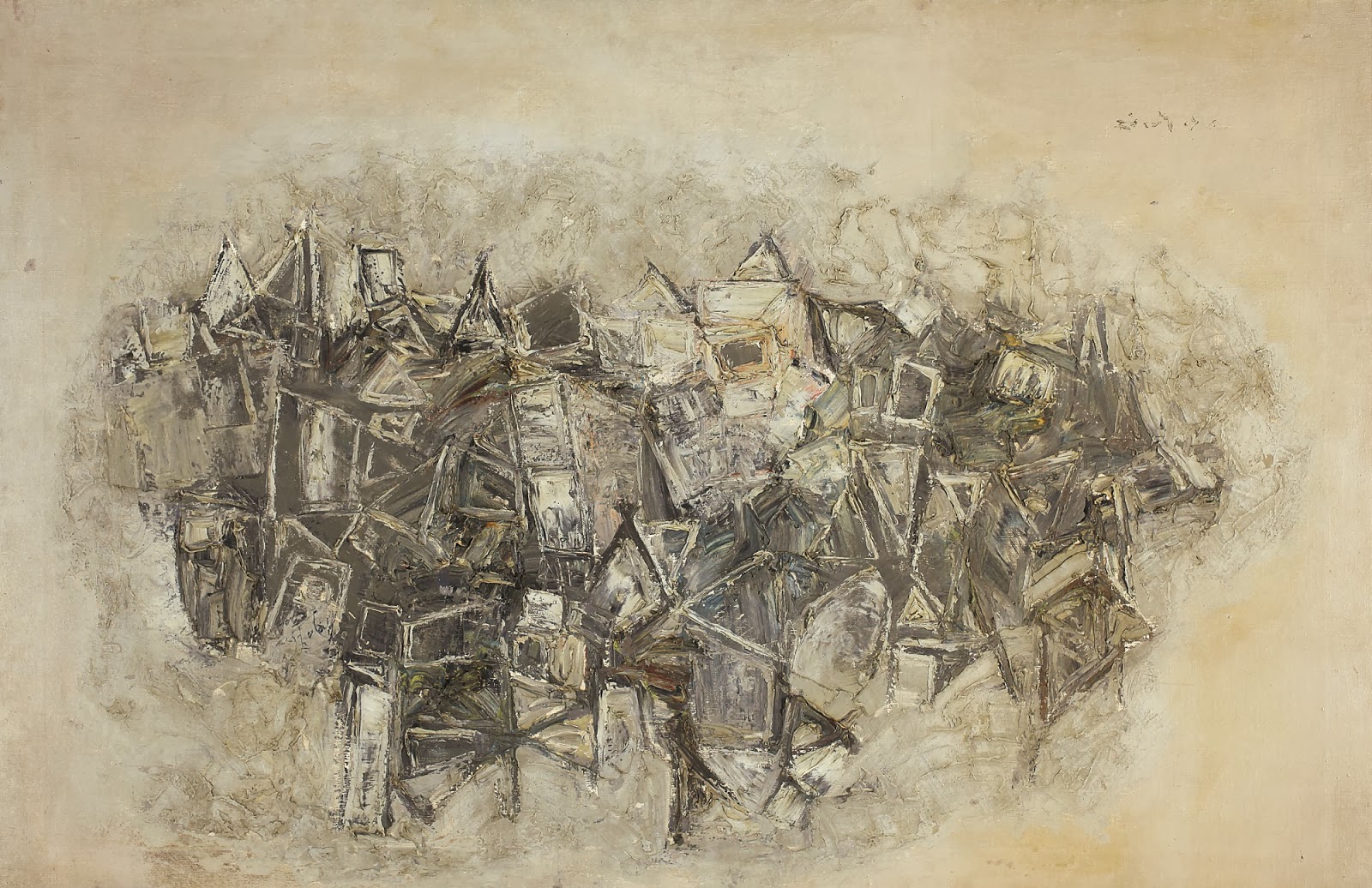
Kashmir Valley by Syed Haider Raza (India, b.1922)  FOOTNOTES Provenance- Private UK-based collection. Acquired directly from the artist in Bombay in 1951. 

via: bonhams.

-0-