Kashmir by Robert Baden-Powell, 1915

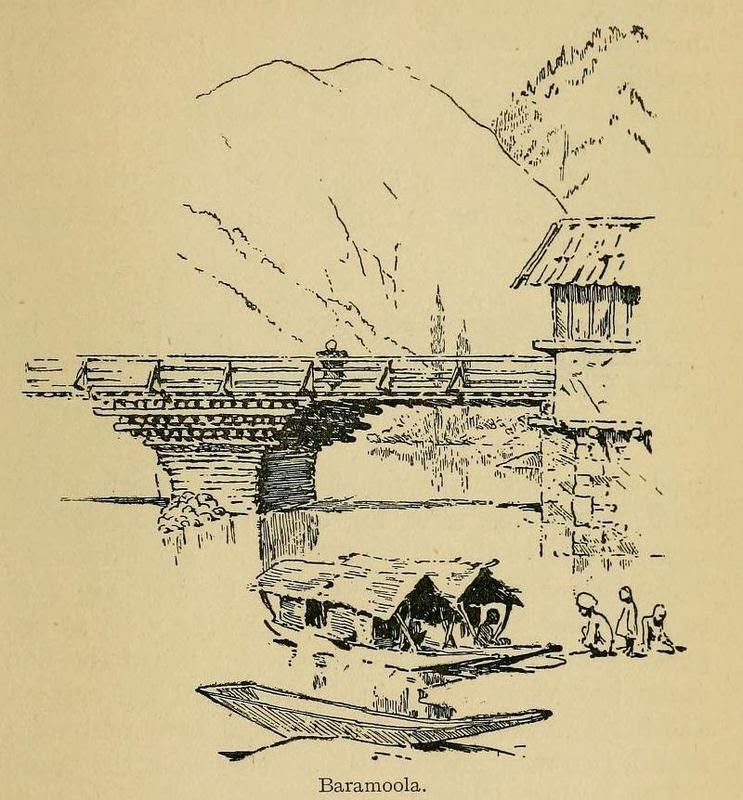
Baramulla

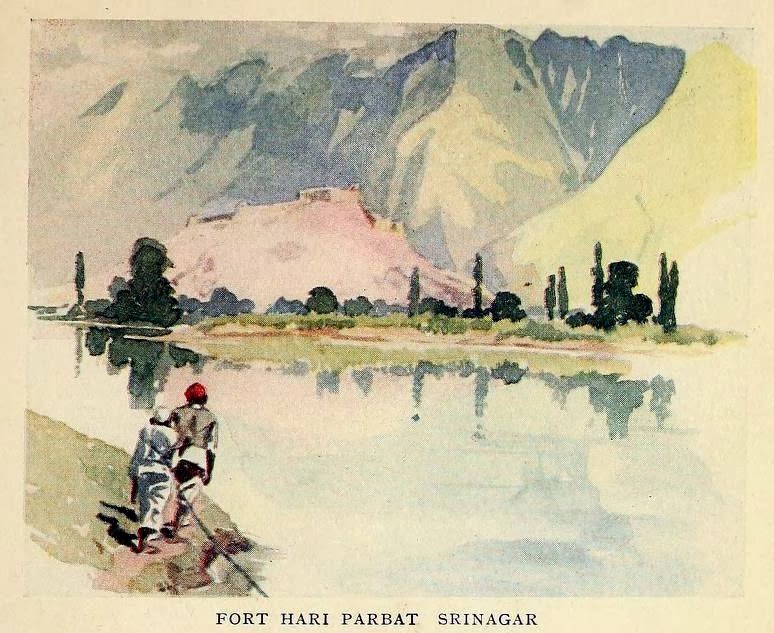
Background, Fort Hari Parbat, Srinagar

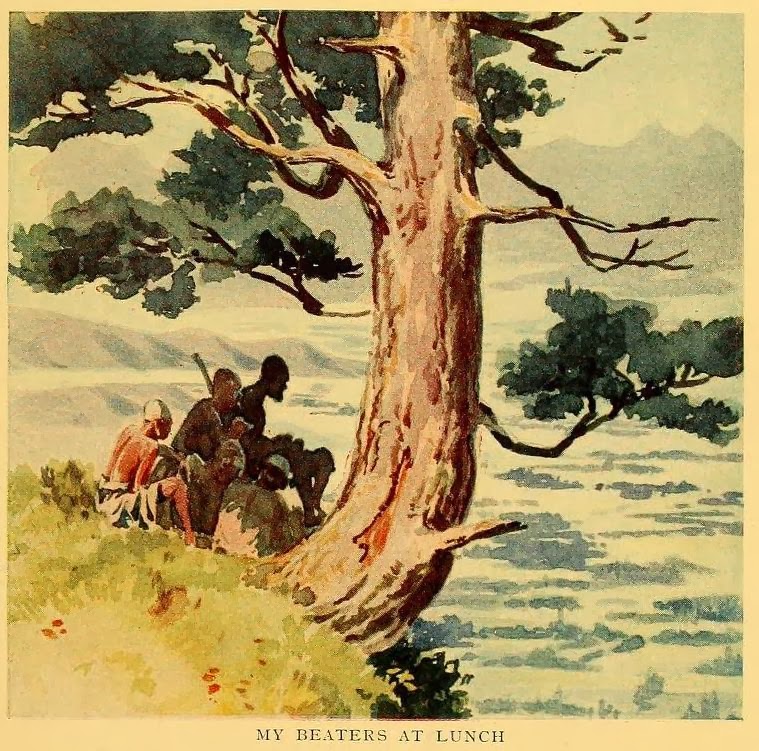
Beaters at lunch during a hunt

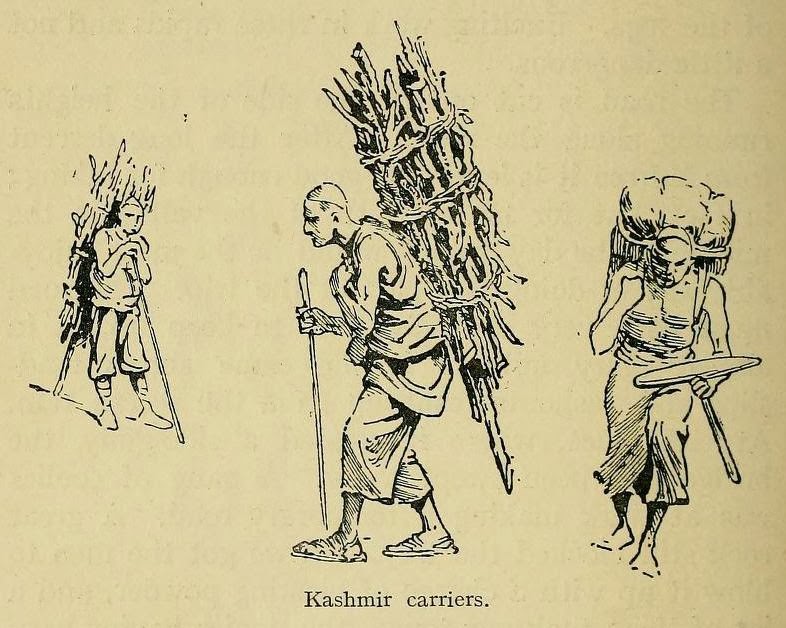
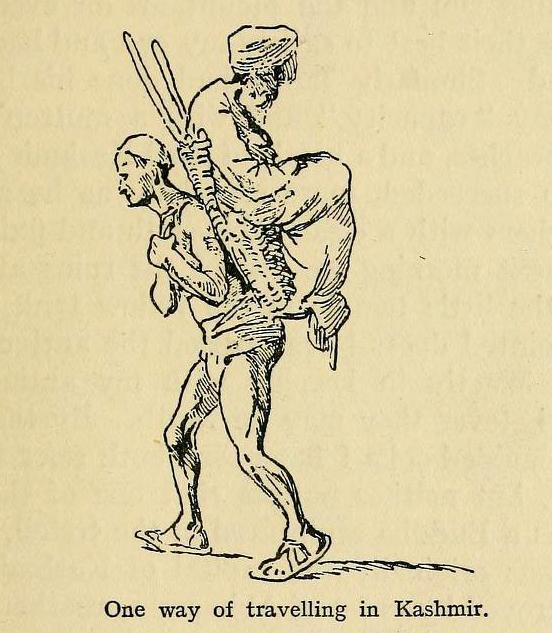
Kashmiri Carriers

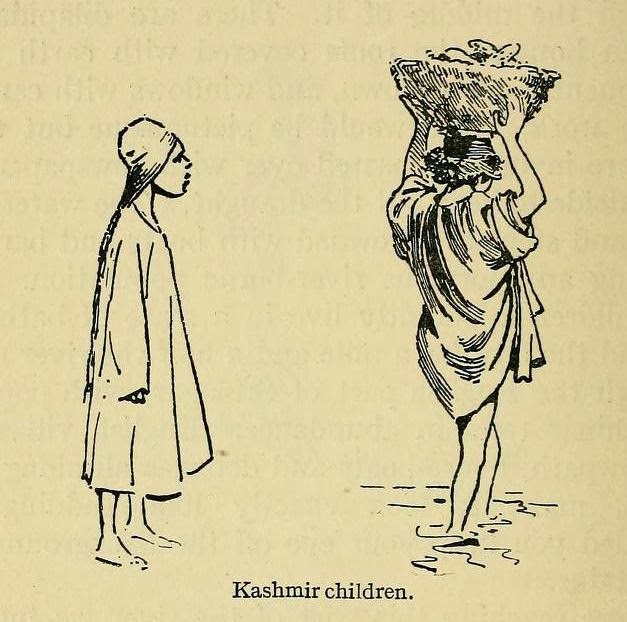
Kashmiri Children

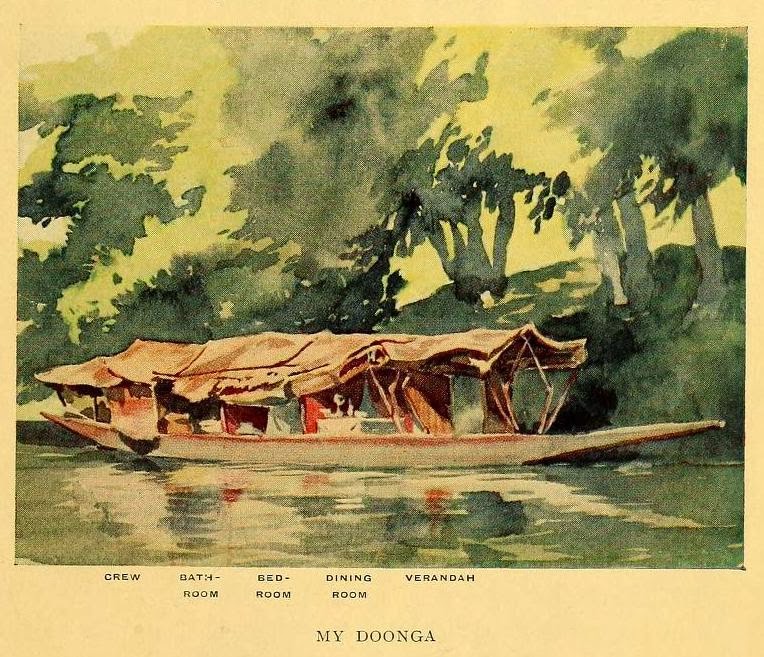
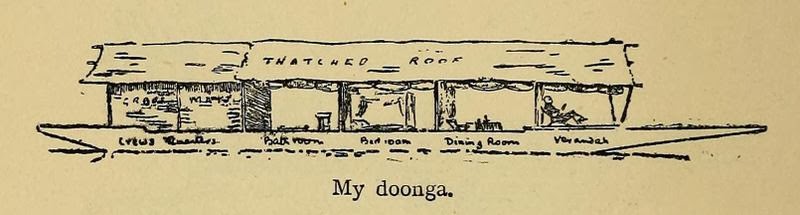
Doonaga

Design of a Doonaga

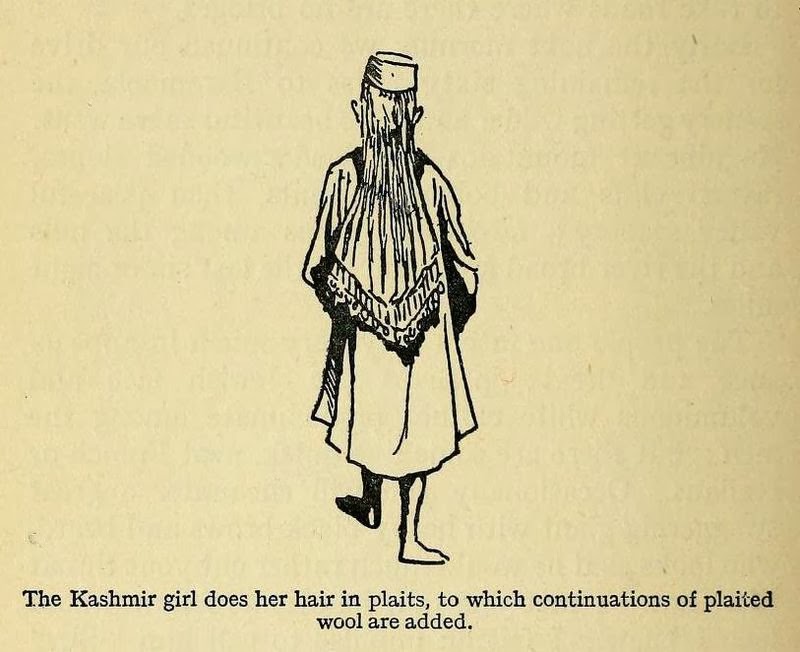
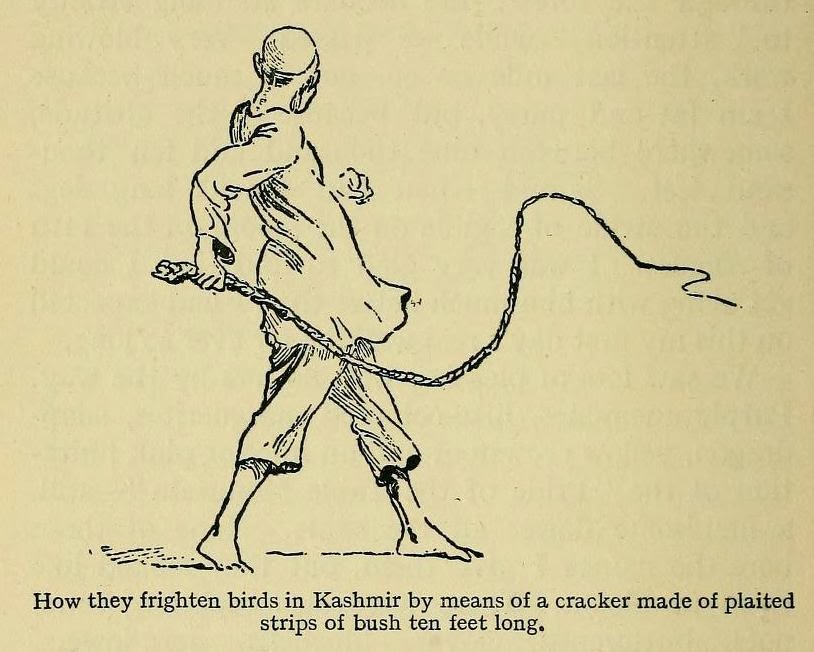
Plaits

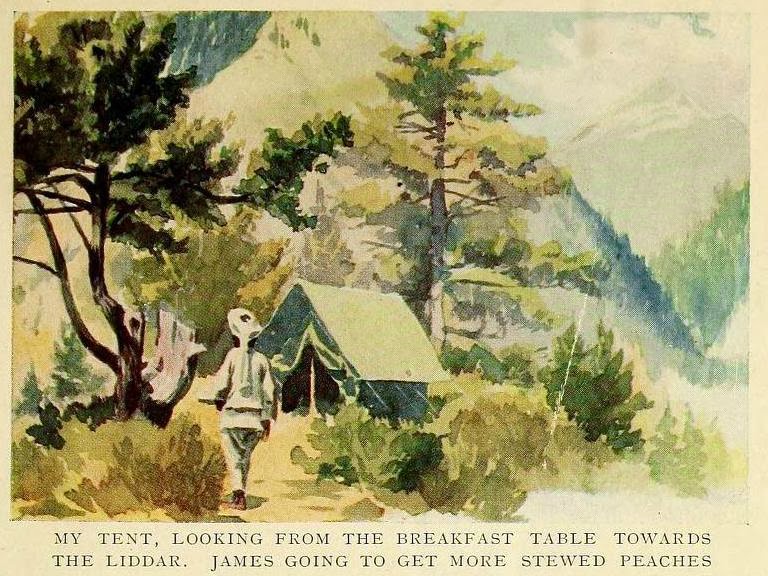
Breakfast Camp

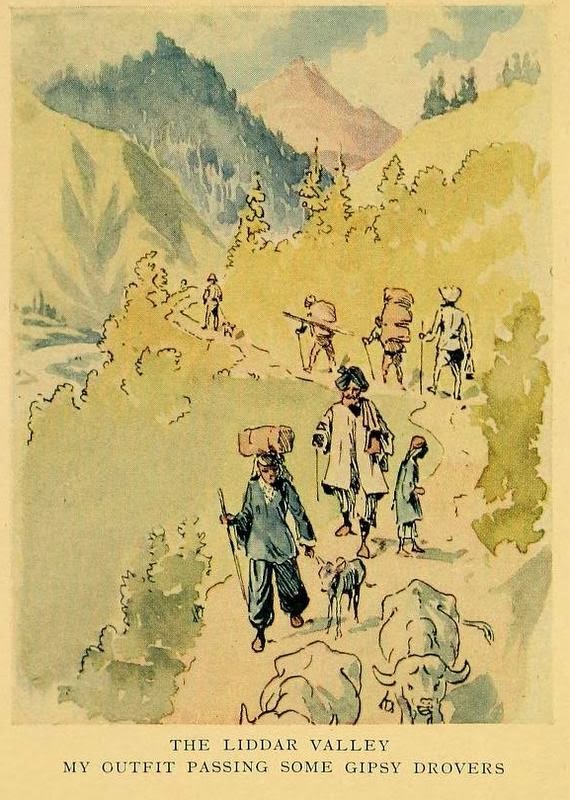
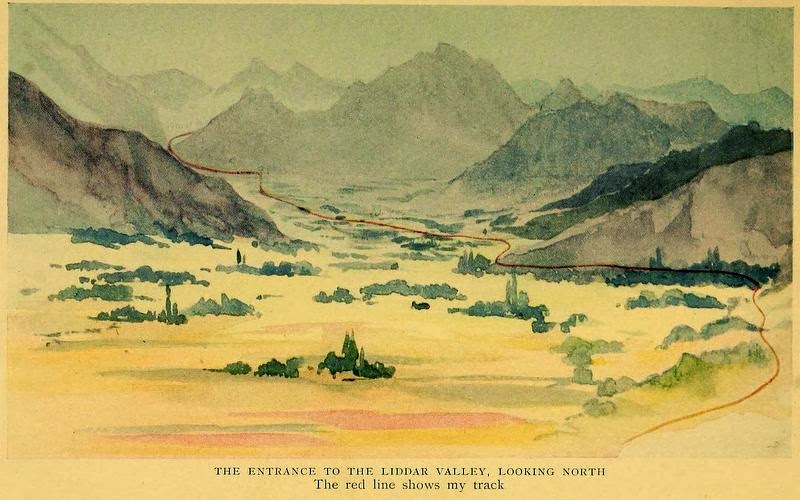
Liddar Valley

Entrance to the Liddar Valley

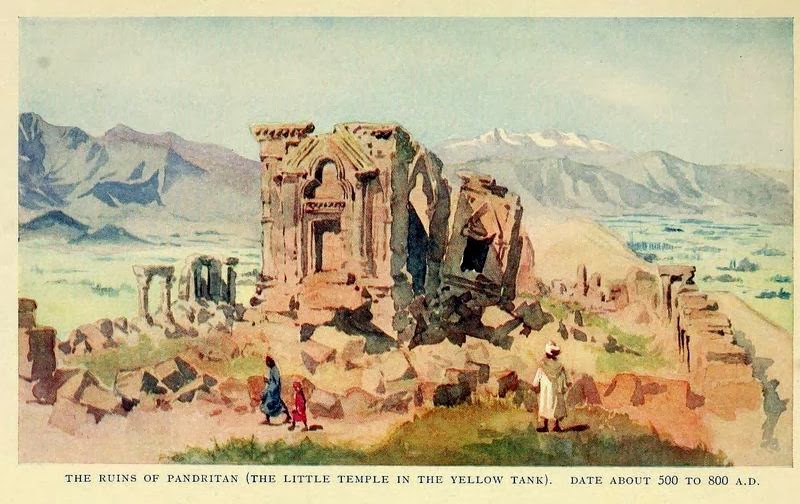
Pandritan Temple ruins

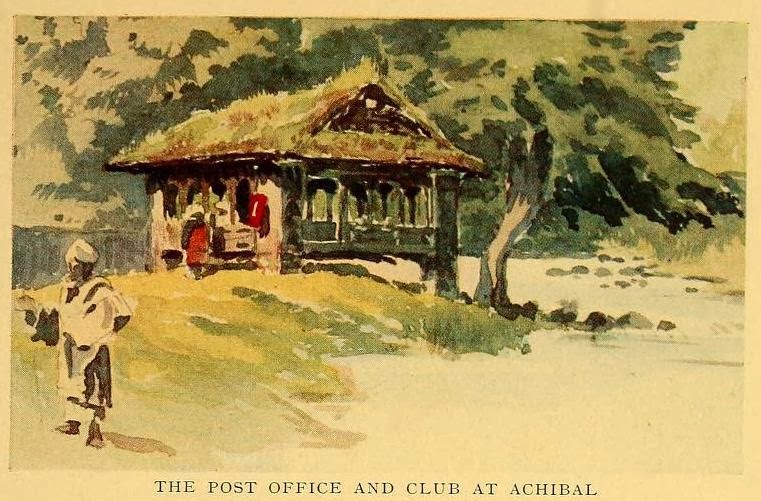
Post Office and club at Achibal

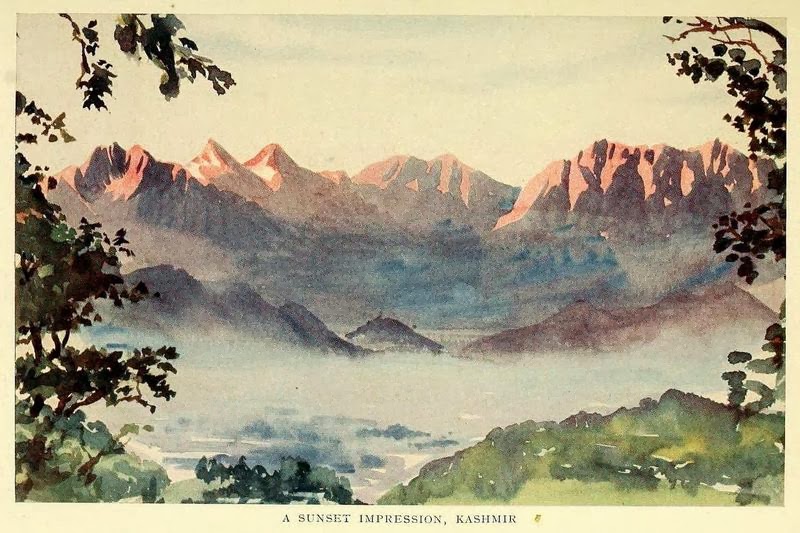
Sunset

From ‘Indian Memories: Recollections of Soldiering Sport, Etc.’ (1915) by Sir Robert Baden-Powell

-0-

Mahmud Gami’s Azme

from a book published in 1959
The following song by Mahmud Gami [1750-1855] may be given as an example of a real love song, though even this can be interpreted in Sufi wise. The story goes that Gami wrote the song about a girl of Kutahar (a village in the Maraz pargana of Kashmir) named Azme, and that it became the occasion of trouble for its author. Complaints were made about Gami, and his father reported the matter to the Tahsildar of the district; but the poet explained that Azme meant ‘to-day’ and that the whole song had only a Sufi significance.
Azme
‘Azme lil am vuchh-haet vare
‘Azme hawih di dare, lo lo, ‘Azme…
Azme, love of thee came to me, fortunate vision!
Azme, show me thy face, O darling. Azme love of thee…
Shangas augam van kati prare
Badnam gos kutahare, lo lo, ‘Azme…
Say where shall I wait, in Shangas or Naugam?
An ill name I got in Kutahar!  Azme love of thee…
Achhavala neb am brang kutahare
Lachha baedi laegim kola tare, lo lo, ‘Azme…
I sought thee in Achhaval, Brang, Kutahar –
Lakh of hardships I suffered, my darling! Azme love of thee…
Rokh chon sazaposh guli anare
Chashma chani kya chhi ab, dare lo lo, ‘Azme…
Pomegranate thy cheeks, or saza-posh-
How dark are thine eyes, my darling! Azme love of thee…
Guma hatsa bomba chani kya chhi moj dare
Nasti chani kari mare, lo lo, ‘Azme…
Shining thy brows as though with sweat-
How many a one thy nose has slain, my darling! Azme love of thee…
bar taq bhit kong-posh tsaran
Melum chhum na kanhzi ra’e, lo lo, Azme…
Sitting by the door, choosing saffron flowers,
I know not for whom, my darling! Azme love of thee…
Kolagam indrah kya chhi nam dare
Tsakra chhas bedare, lo lo, ‘Azme…
What a famous spinning wheel is there in Kolgam,
Matchless its handle, Azme love of thee…
Indarad chonis rapa sanza tare
Vucch-vaen ta ga’e bemare lo lo, ‘Azme…
Silver are the strings of thy spinning wheel,
Those who see it fall ill with wonder, my darling! Azme love of thee…
Zovilis tumalas dogdivare
‘Azme Hund sarvi qad rutiye lo lo, ‘Azme…
Skilfully pounding the rice so fine,
The good shape of the cypress has Azme my darling! Azme love of thee…
Nol kya chhuy tse lalan trotiye
‘Azme Hund van kapan tsotiye lo lo , ‘Azme…
Bright is her dress as a pearl,
Short are the plaits of Azme, my darling! Azme love of thee…
Zovilis mastas Kaugan fidivare
Vankan karay shumare lo lo. ‘Azme…
Slowly combing her hair so fine –
I will count up thy plaits, my darling! Azme love of thee…
Sor lok yem ga’e avare lo lo, ‘Azme…
[Probably a missing line]
Kamadev has passed through Kutahar,
All folk must yield (?), my darling! Azme love of thee…
Mahmud Miskina ha Van prare
Badnam gos kutahare lo lo, ‘Azme…
Hapless Mahmud, where shall he wait for thee?
An ill name I won in Kutahar, my darling! Azme love of thee…
~ From ‘Thirty Songs from the Panjab and Kashmir’ (1913) by Ratan Devi and Ananda Coomaraswamy.
-0-

Kshemendra’s Smayamatrika by Edward Powys Mathers

Although Edward Powys Mathers is more famous for ‘Bilhana: Black Marigolds’ (1919), which was later used by John Steinbeck for dramatic purposes in his American novel ‘Cannery Row’ (1945), Edward Powys Mathers was also one of the first translators of Kshemendra’s Smayamatrika.

His english version came out as ‘Harlot’s Breviary’ in volume 2  of book ‘Easter Love’ (1927).

-0-
The book was available at Digital library of India but the reading method provided there is not too easy. So I have recompiled and uploaded the book to archive.org

-0-
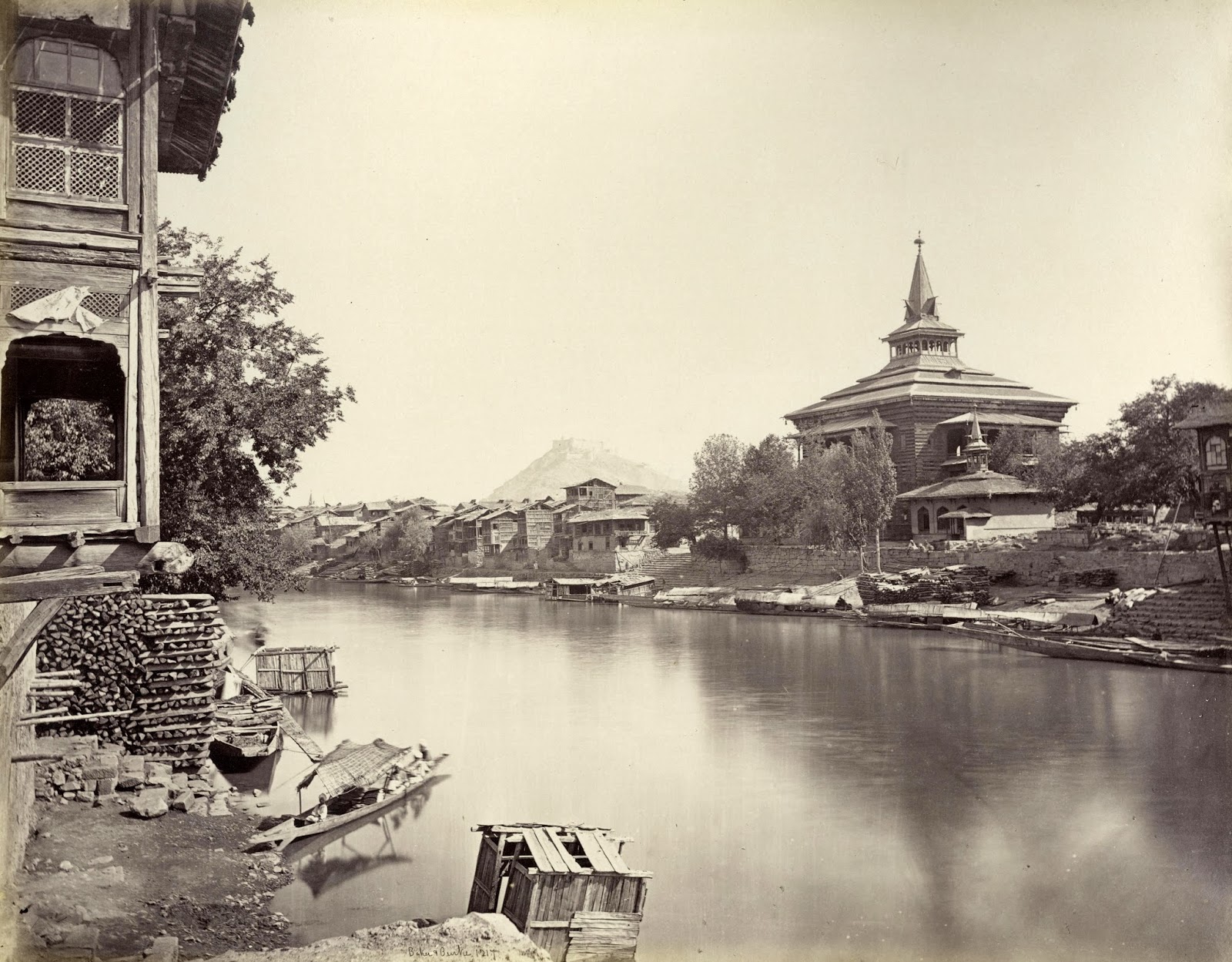
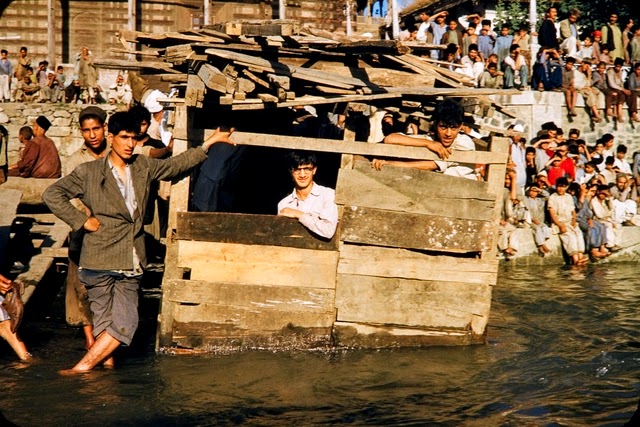
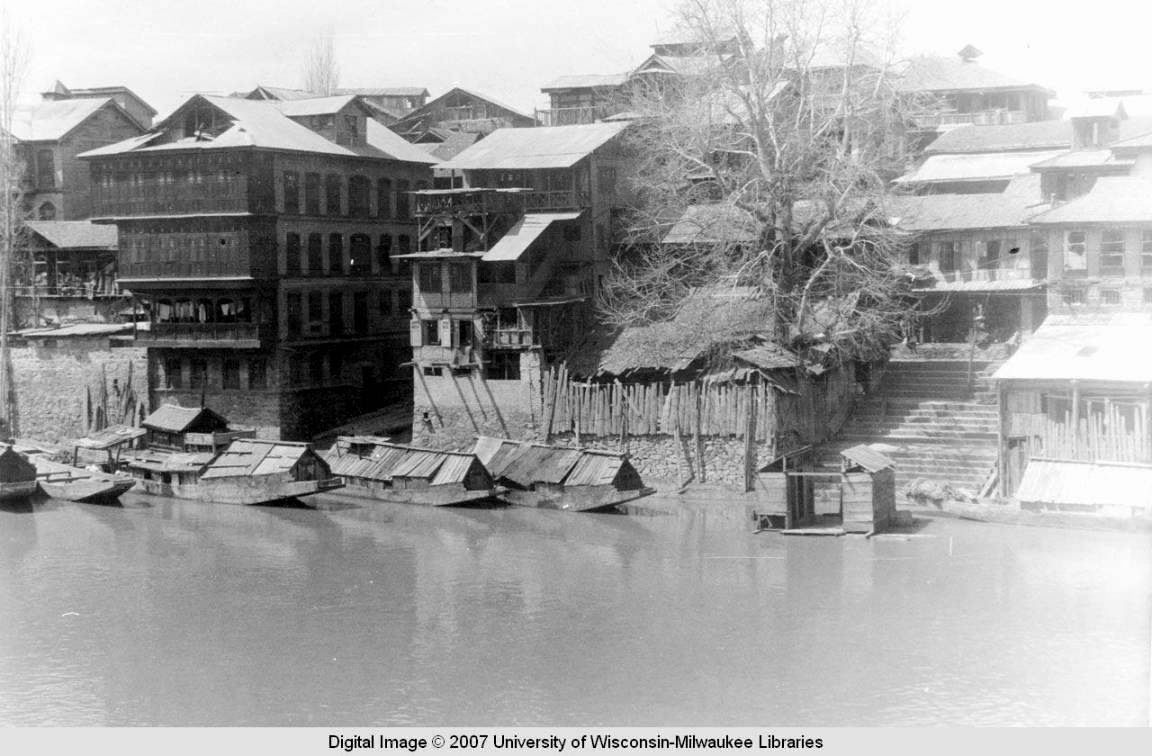
Bath-Houses along Vitasta

John Burke, 1868-69


By Geoffroy Millias.
from ‘Irene Petrie : Missionary to Kashmir’ (1903)

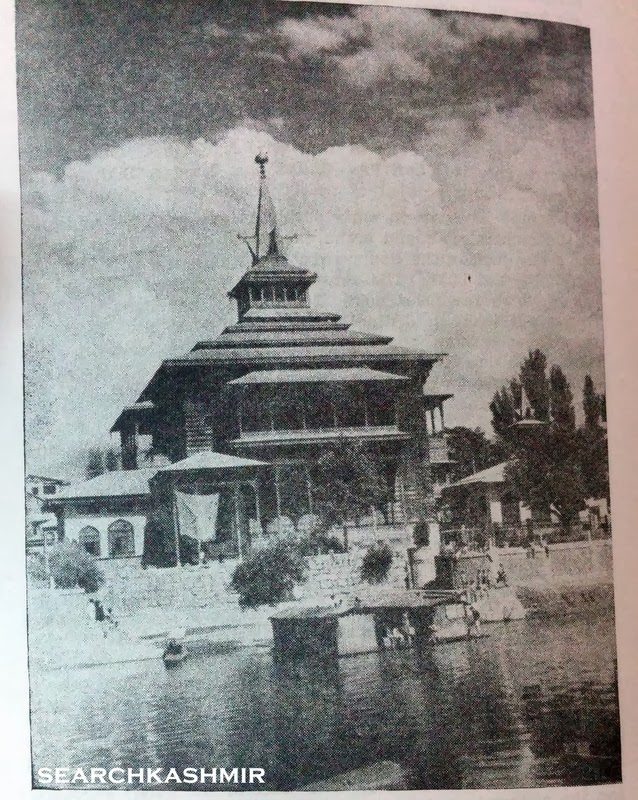
At Shah Hamadan
By Brian Brake, 1957

by Douglas Waugh (late 1950s, early 1960s)

From the book
“Tikkus’ tourist & shopping guide of Kashmir covering Jammu, Kashmir, Ladakh ” (1970) by Bharat Tikku.
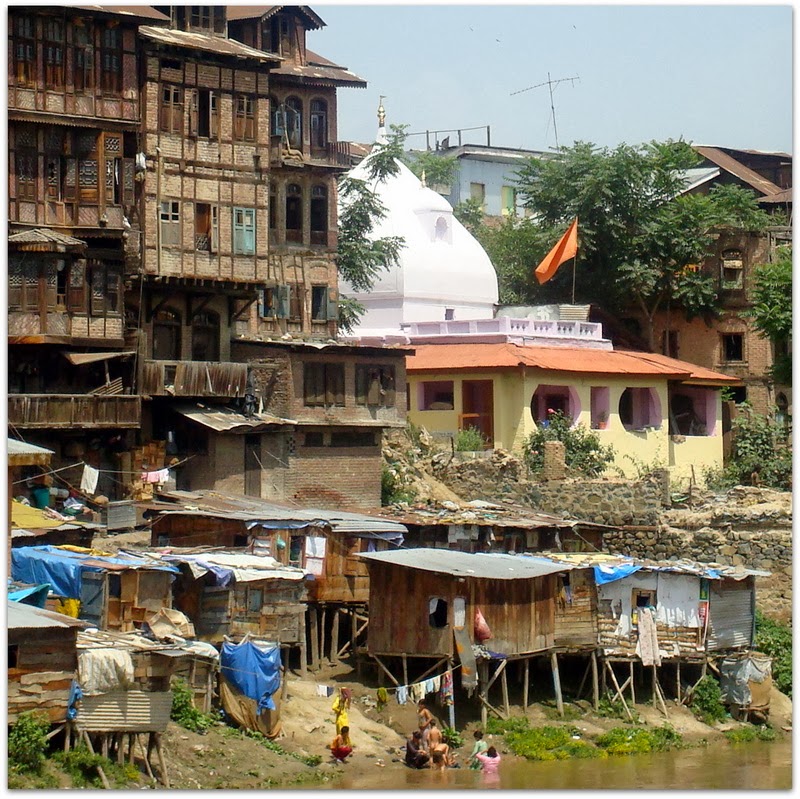
2008

“In the upper part of the city the banks are lined with houseboats in which the visitors live. But lower down these banks, which are sometimes twenty and thirty feet high, have a very interesting and varied life at the water’s edge, where you find laundrymen and laundrywomen at intervals all the way along, and bathers, sometimes composed of groups of men, others of groups of women, and again men and women together. As a rule this bathing takes place at the foot of some of the wide stone steps that lead up from the water to the upper level of the bank, and frequently in the vicinity of a temple or mosque. There are also a number of small bath-houses, without roofs, and divided into very tiny little cabinets that are hardly large enough for a single person. These are indulged in by the more fortunate, or the better-to- do classes, who constitute but a very small percentage of the total bathing population.

This bathing, too, is a very interesting process to witness, especially the dressing, for, while the men are rather indifferent as to how much or how little clothing they may have on, the women are exceedingly modest and rarely, if ever, is there the least exposure of any portion of the body besides the arms, and head and feet. They go into the river with one dress on and when they have bathed they have not only washed their bodies but the garments they have been wearing, and when they come out they have on the bank, or steps, another garment which they put on, and so skillful are they in making this change that it is almost impossible to tell how it is done. One moment they are clad in the wet, clinging clothes which they have worn in the river, and the next by a rapid sleight- of-hand transformation they are dressed in dry garments of most pleasing hue.”
~ ‘Our summer in the vale of Kashmir’ (1915) by Frederick Ward Denys

-0-

Tourist Guide, 1960

Video: A travel guide for Kashmir published in September 1960 by Directorate of Advertising and Visual Publicity,, Ministry of I&B., for the Deptt. Tourism, Govt. of India, New Delhi. Printed in Bombay.

Audio: Kashmiri music from film ‘Magic of the Mountains’ (1955) by Mushir Ahmed for Film Division. The first song is the famous lament of Habba Khatoon (16th century).

-0-
SearchKashmir Free Books Project


Over the years, like a famished beast, I have devoured books listed at archive.org. The Kashmir image archive was built primarily out of material from there. But often, while searching for some subject, I ran into books that were still not digitalised or not publicly available outside of foreign libraries. So, not too often, I ending up buying a rare book. Now, I want to give a little back to the project.

The idea is simple. Every month I will be uploading one rare and out-of-print book about Kashmir to archive.org, so that others can read it for free.

January: A test run. Something that I had shared previously via images only. With archive.org, now the book is also available in easy to search text format

February: A book by Pandit Anand Koul that provides interesting information of industries of the state.

March: After ‘Beyond the Pir Panjal life and missionary enterprise in Kashmir’ by Ernest F. Neve (1914, first published in 1912, here) went out of print, in 1931 he came up with a small concise and updated version in 1931 and titled it ‘Things Seen in Kashmir’.

Things Seen in Kashmir (1931) by  Ernest F. Neve

The Mallinson School Recipes

A book shared by reader from his personal collection. Now complied and uploaded to the archive.[Details] Probable date mid-1960s.

April: A photo book published by Publication Division in November 1956. This is the second edition that came out in May 1962.
Kashmir, 1956

May: An anthology of photographs, verse, and description, mainly of India including Kashmir, Delhi and now Af-Pak region published by a British soldier towards the end of World War 2. [Details]

Of Hills (1944)  by Tom Ashley Lakeman

June: A travel guide by a former student of Biscoe.[Details]

Holidaying and Trekking in Kashmir (1969) by N. L. Bakaya

July: A School report for C.M.S. School from year 1926 [Details]

Lake and River Scouts in Kashmir

August: A rare trekking guide written by a woman and meant for women. [Details]

Trekking in Kashmir, with a family, or without one” (1930) by Barbara Earl.

September: A school booklet from year 1944 published by Church Mission School, Srinagar.

Tackling The Impossible

October: A book on first Kashmir war of 1947-48

Defending Kashmir (1949)

November: A travelogue by a British woman about her visit to Ladakh in 1926

Magic Mountain (1945)

December: A book on farmers of Jammu, Kashmir and Ladakh

Farmers Of Jammu, Kashmir And Ladakh (1959)

-0-