
Sindhū River near Nimmu.
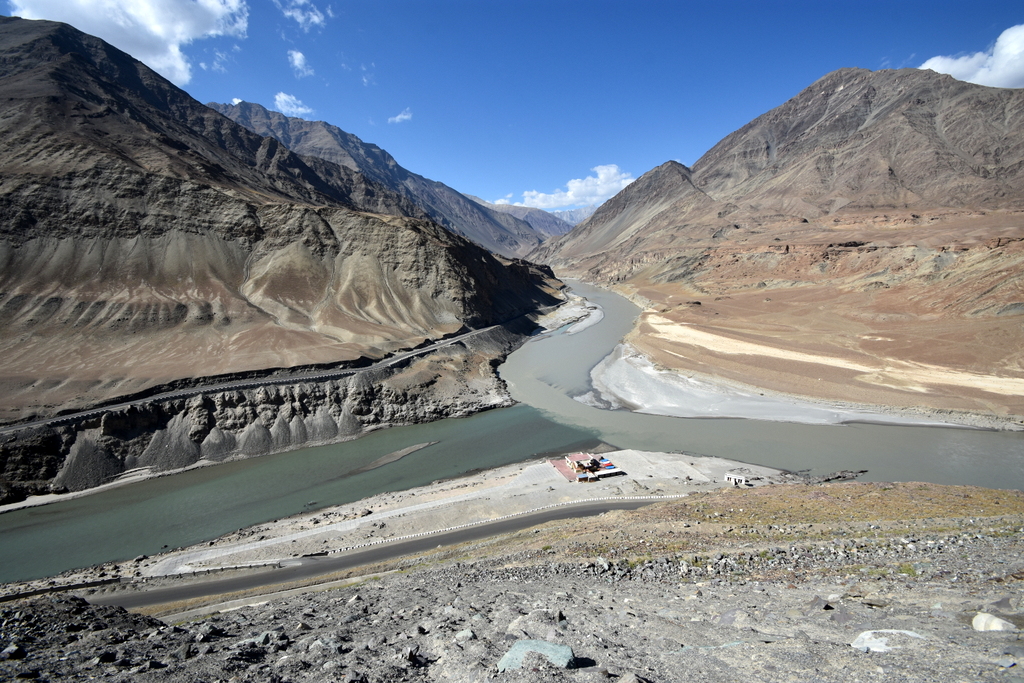
Confluence of Sindhu (Indus, green coming from left) and Zanskar (muddy white coming from top).
Near Nimmu.

in bits and pieces
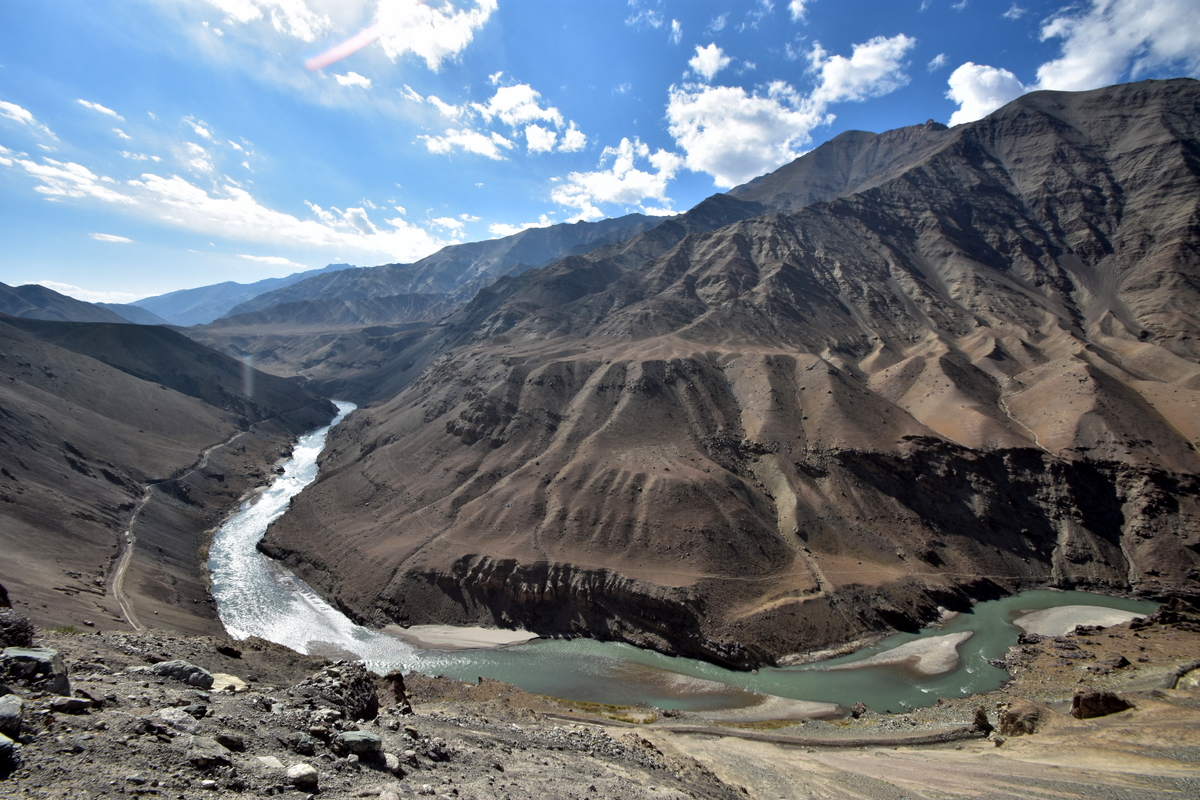
Confluence of Sindhu (Indus, green coming from left) and Zanskar (muddy white coming from top).
Near Nimmu.
Next couple of posts are going to be about bits and pieces from the place.

1456.
Then there appeared a comet, a sign of calamity, extending over the sky with its tail towards the east. It was first seen by Vahramakhana. Its tail was like the bearded lance of death, and its wide extending form was seen even in the day time, towards the west. A mare in the king’s stable gave birth to twins, and the king, in order to remove the animal from the country, gave it away to the Yavanas. Lions and other animals of the forest wandered about during the day in Shrinagara town, a bitch gave birth to kittens. The Sadanandi tree, which had been barren, bore fruits and flowers grew on the roots of pomegranate trees near the palace. A rain of blood fell on the clothes that were in the garden, and when men saw this, they felt as if salt has been sprinkled on a wound.
In the the meantime the Hindus, excited to anger by Parna the barber, were guilty of severities on Saidakhana Agaha and others who were residing in the town. When the Yavans heard of this, they became angry and went to the king and lamented aloud, and the king ordered a persecution of the Brahmanas. In his fury the king cut off the arms and noses of Ajara, Amara, Buddha and others, and even those Brahmanas who were his servants. During this time of the pillage of the property of the Brahmans, that gave up their cast and dress and exclaimed, “I am not a Bhatta, I am not a Bhatta.”
1986
The comet again appeared in western sky, a sign of calamity, extending over the sky with its tail towards the east. It was first seen by Vinayak Razdan at Chanpore. The bearded lance of death now had a name: Halley. Pakistan needed four runs to win the match off the last ball, Javed Miandad hit a six off Chetan Sharma to win. Shers driven from the beautiful Golden temple, now roamed around Srinagar, ready to cross border. Bearded kids of downtown were seen always walking in trekking shoes, talking in whispers to moneyed agent provocateurs. A fatherless child was born with an AK-47 in hand. A hand-grenade grew on a pomegranate tree. In two years it was going to burn the roots of a barren Chinar. The sweet water of Chamashahi garden, it was said had turned sour, someone it was claimed had added a certain poison that dried your nutsacks. The clown king was seen driving a scooter with an Indian actress. Gull’e Raid’e, the new king held onto his brief reign using curfews and tear gas. Dancers were ashamed to dance and sing. Even old women now were often seen in black burqas. Old men claimed they were all headed for heaven. Hearts of generational neighbours were turning stiff.
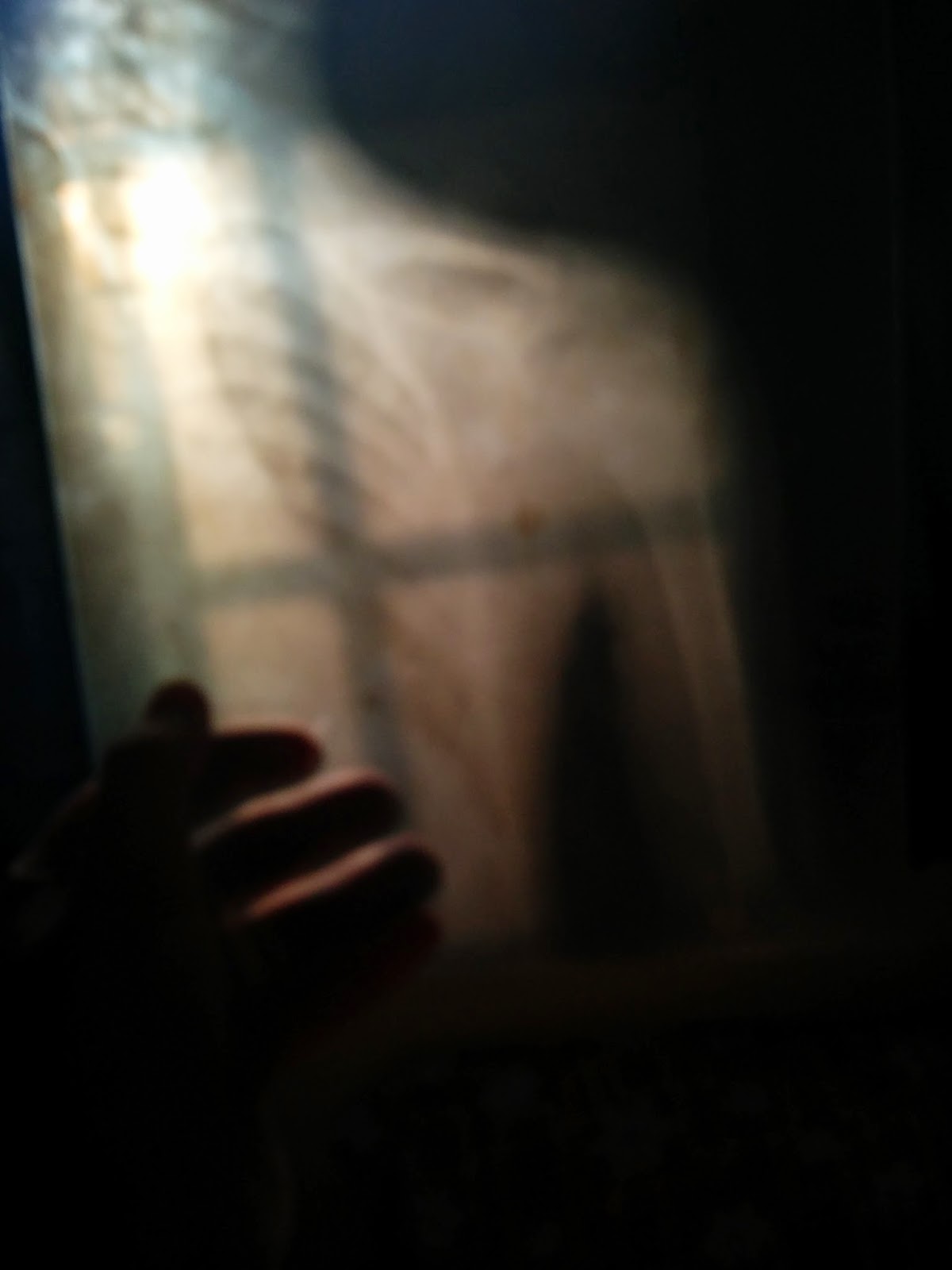

Somewhere around 1989, I dislocated my left shoulder after falling from a broken chair while dancing. In 1990, while leaving Kashmir, among the important things taken along was this X-ray. Things that have to be borne. I think my shoulder is still a little off balance-0-
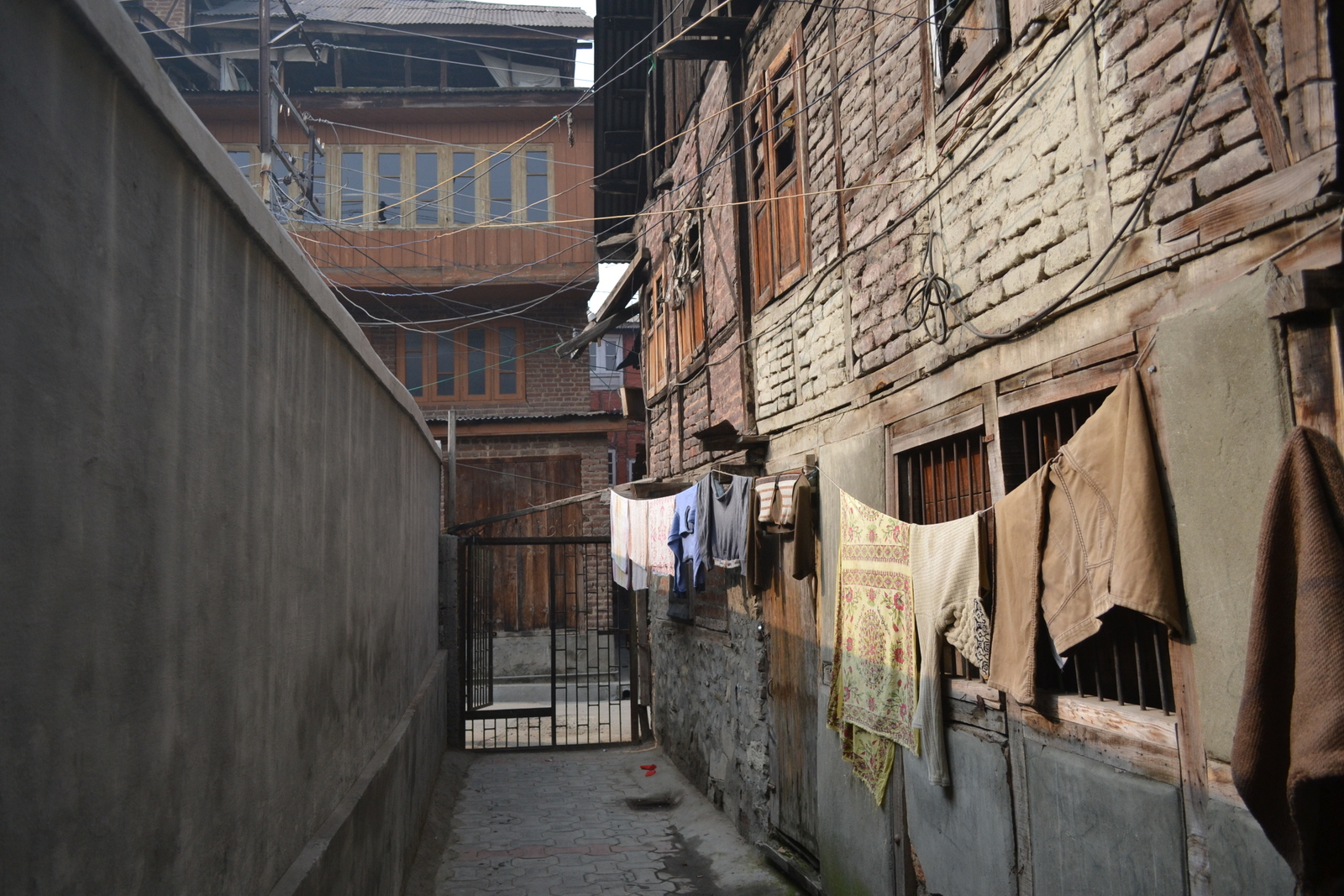
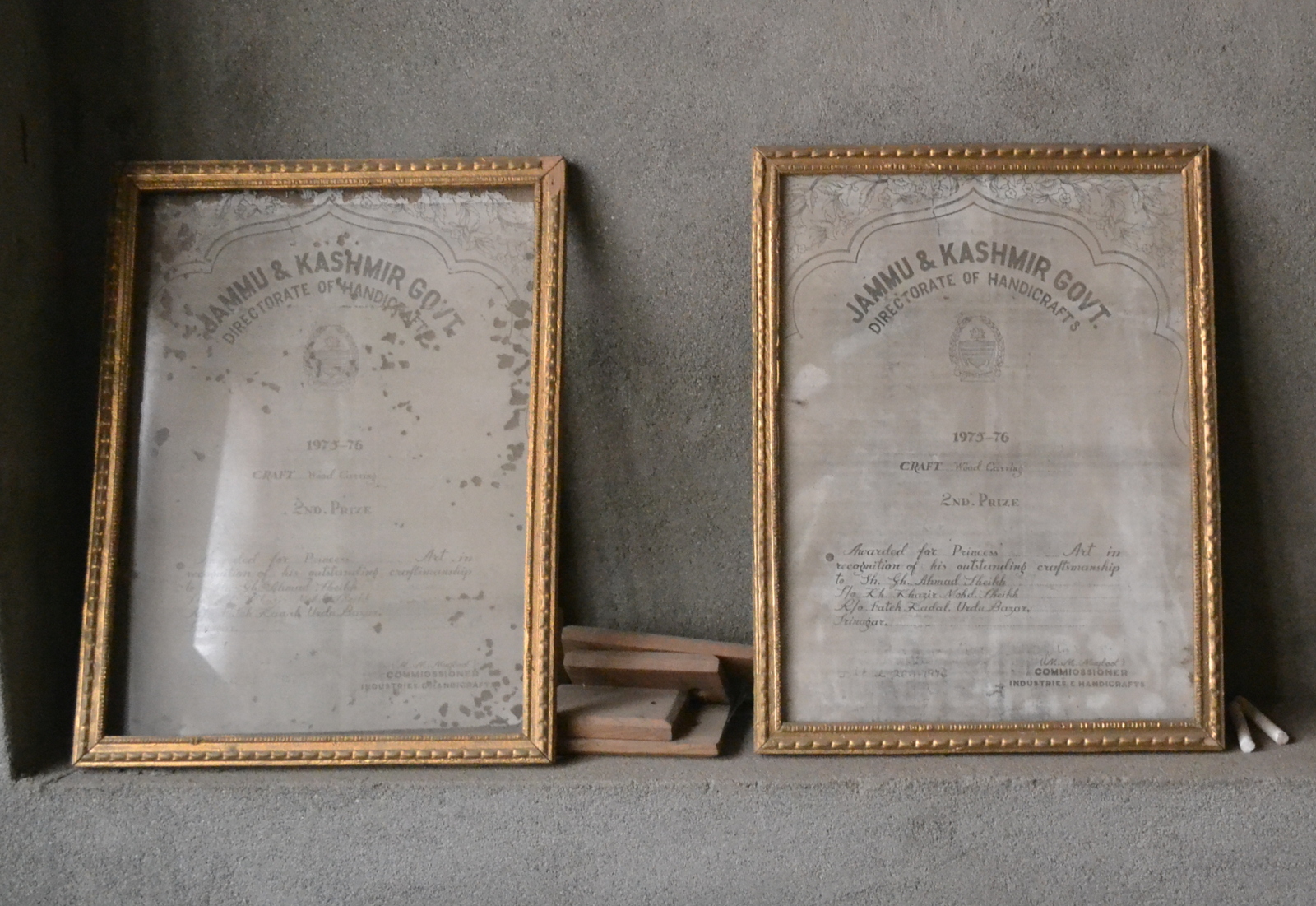
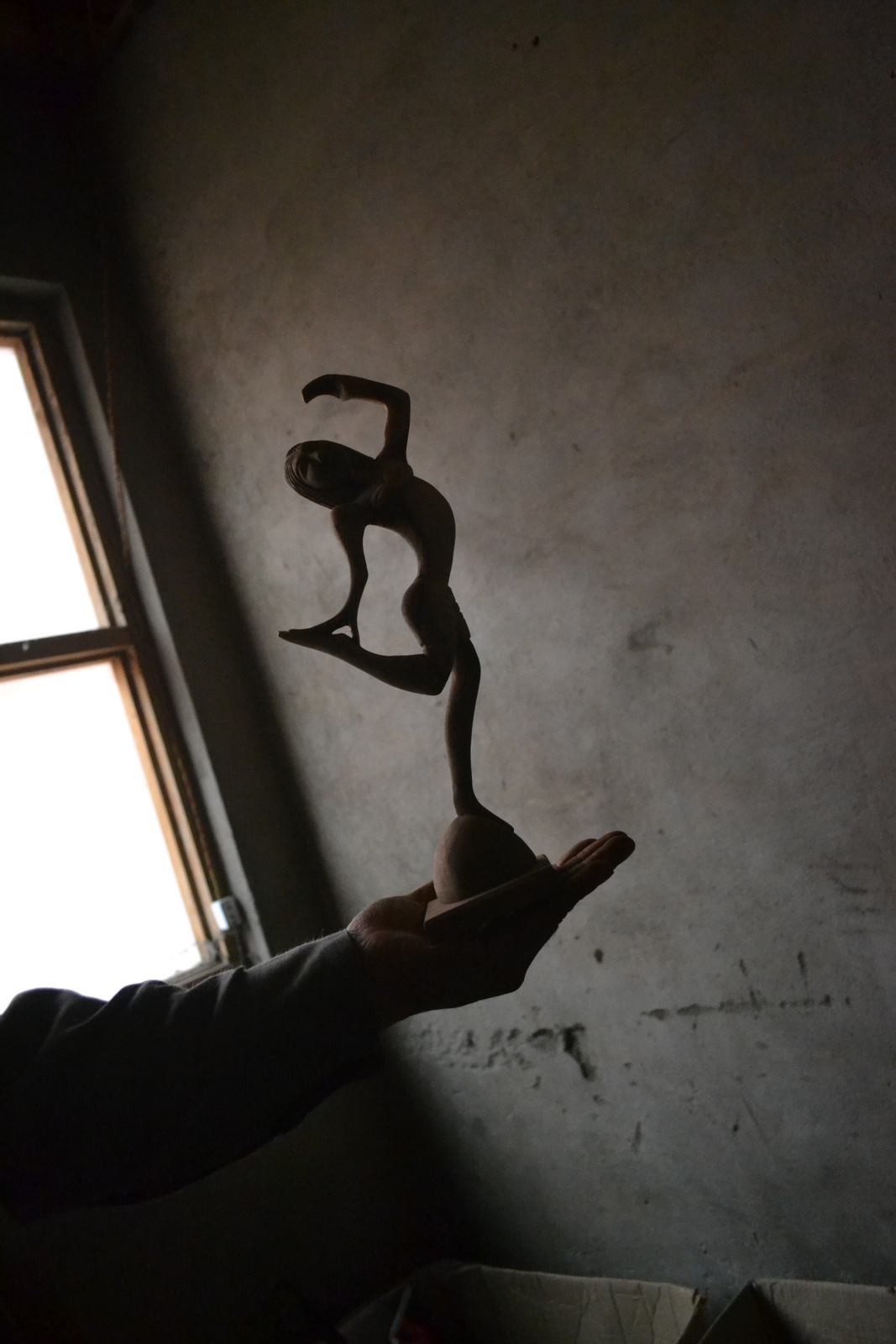
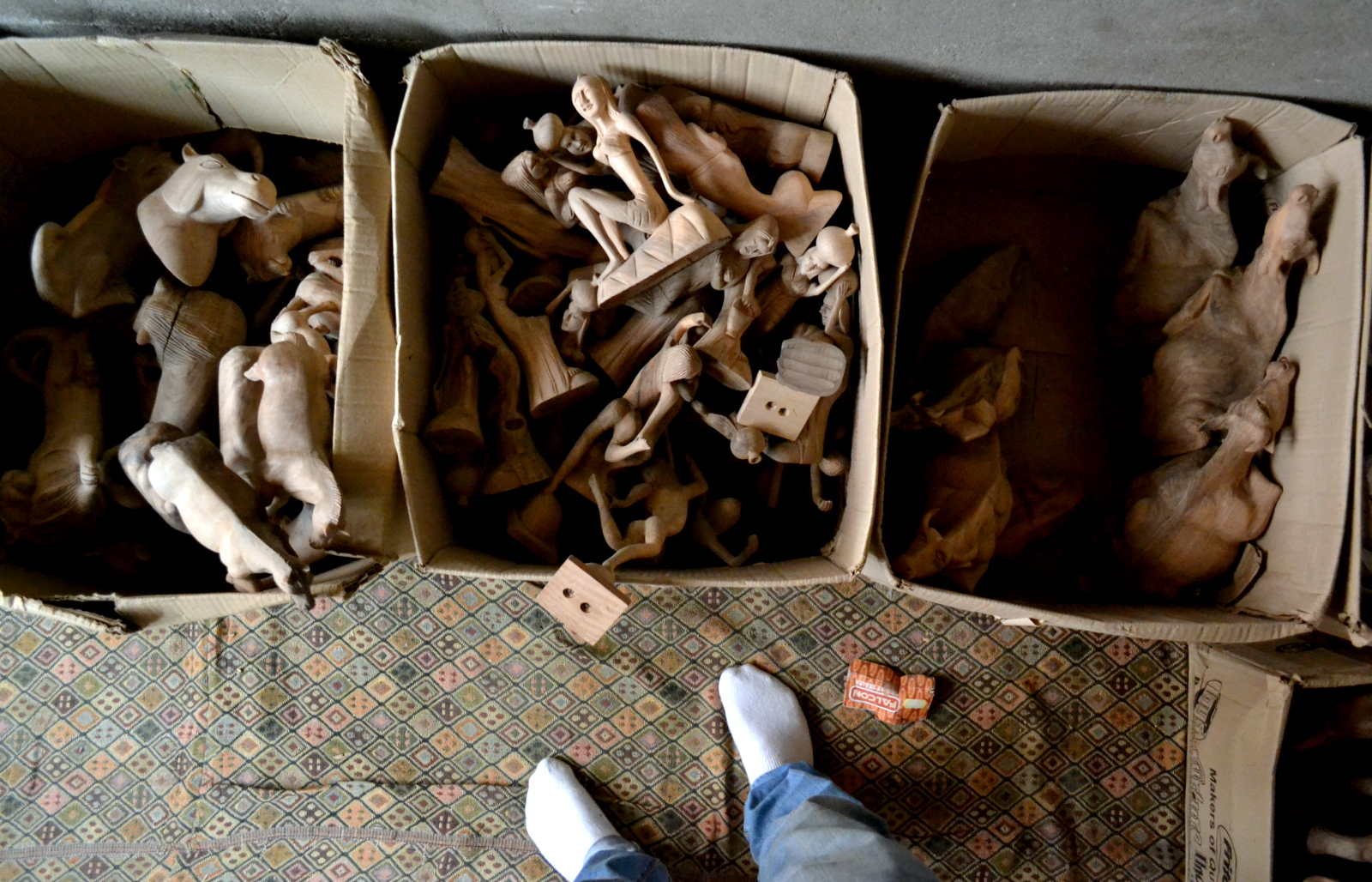
Wood carving workshop on Jhelum river.
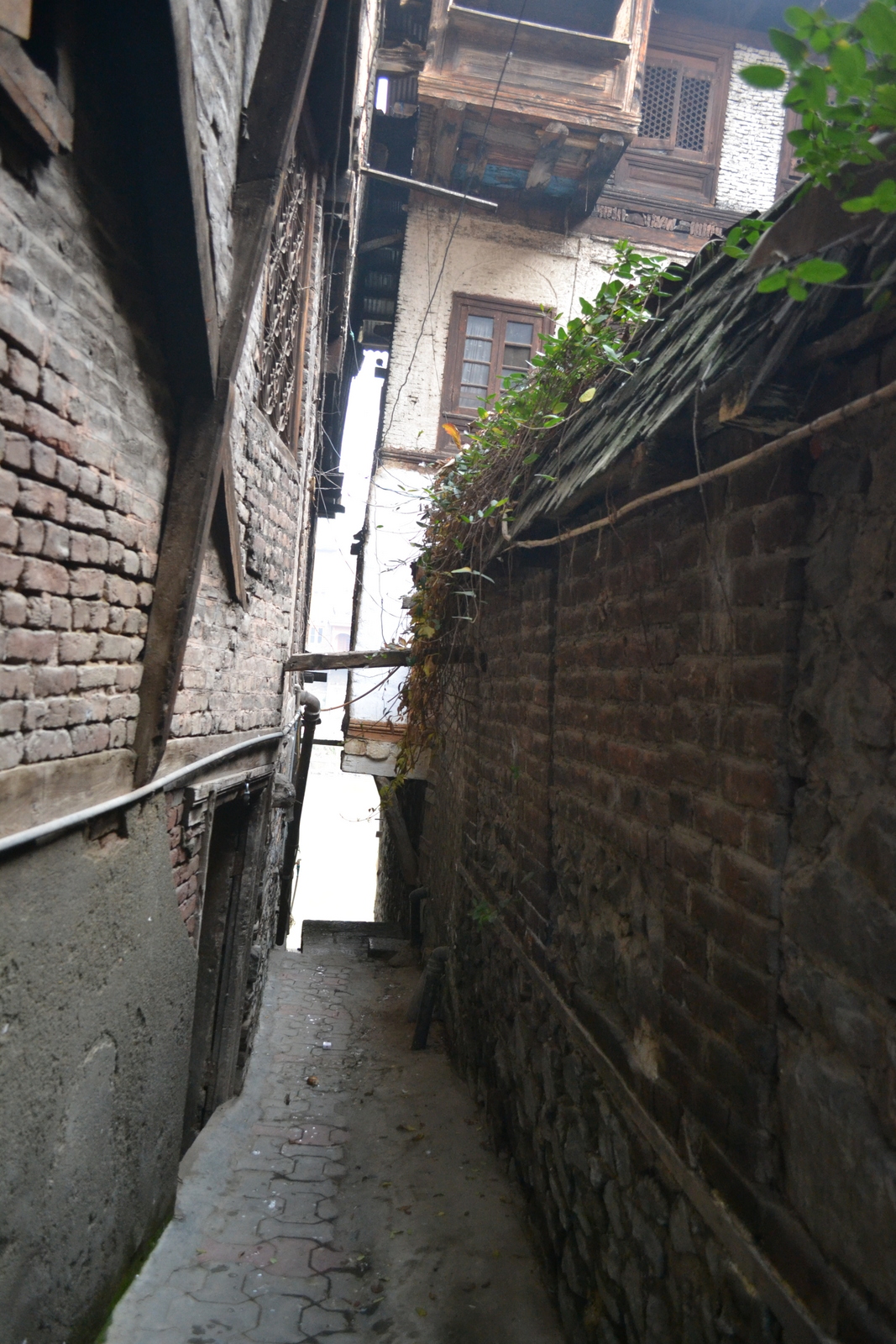
Fateh Kadal, Urdu Bazaar.

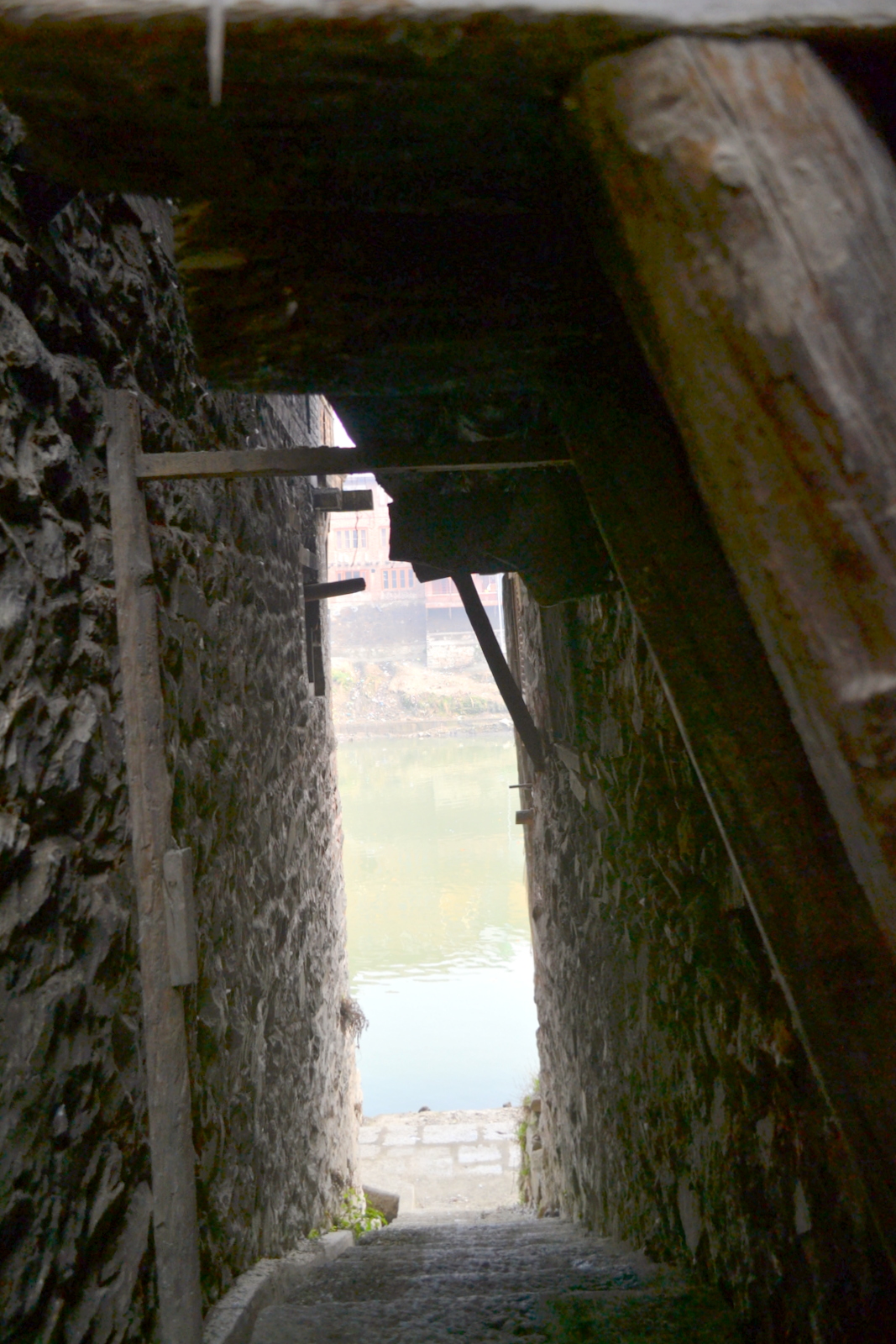 |
| Way to the Ghat |
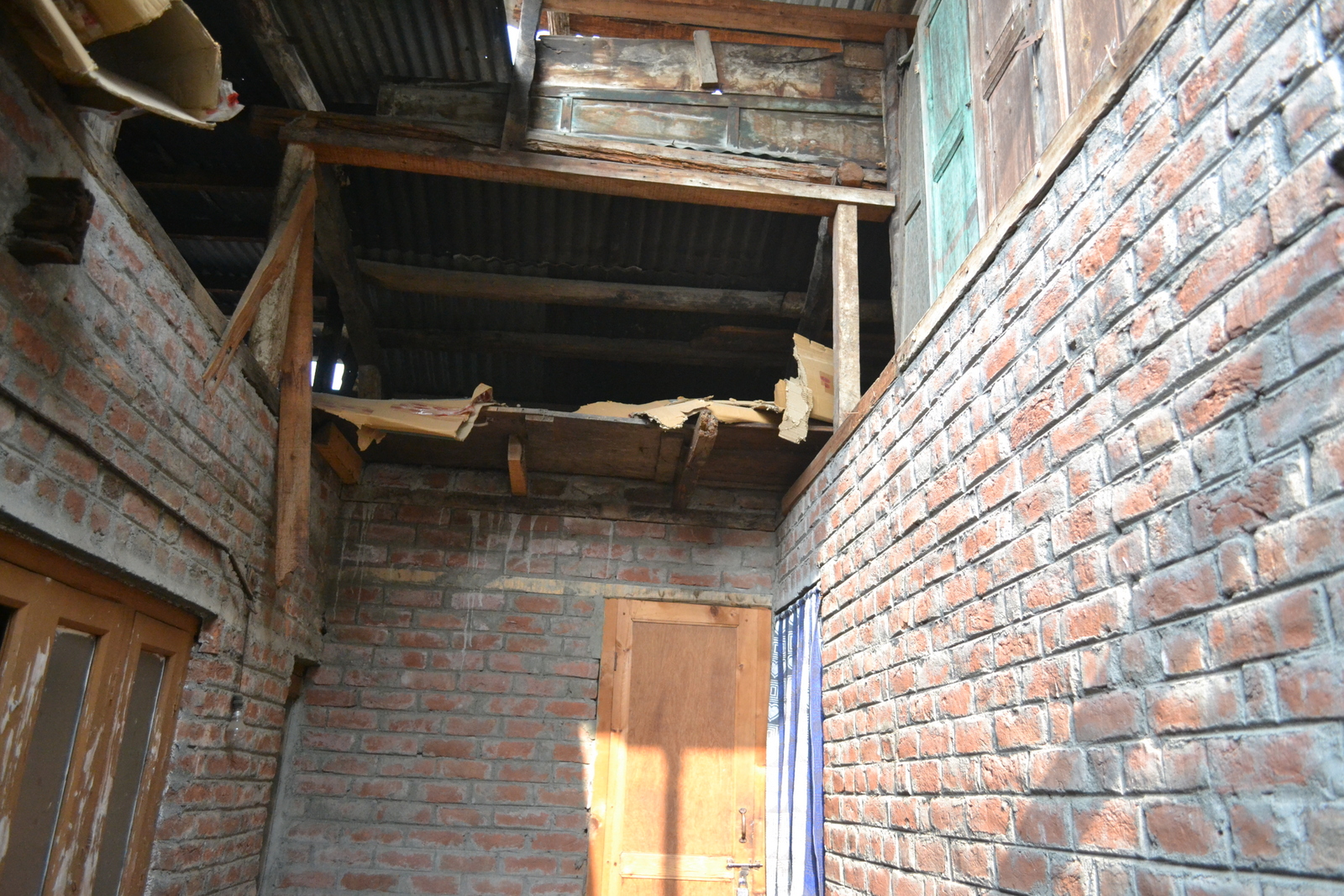 |
| Upper floor |
The entire building used to be wooden. It is now being remade in cement and bricks. The upper floor was still under works. If I could get into that floor, the view would have been something like this:
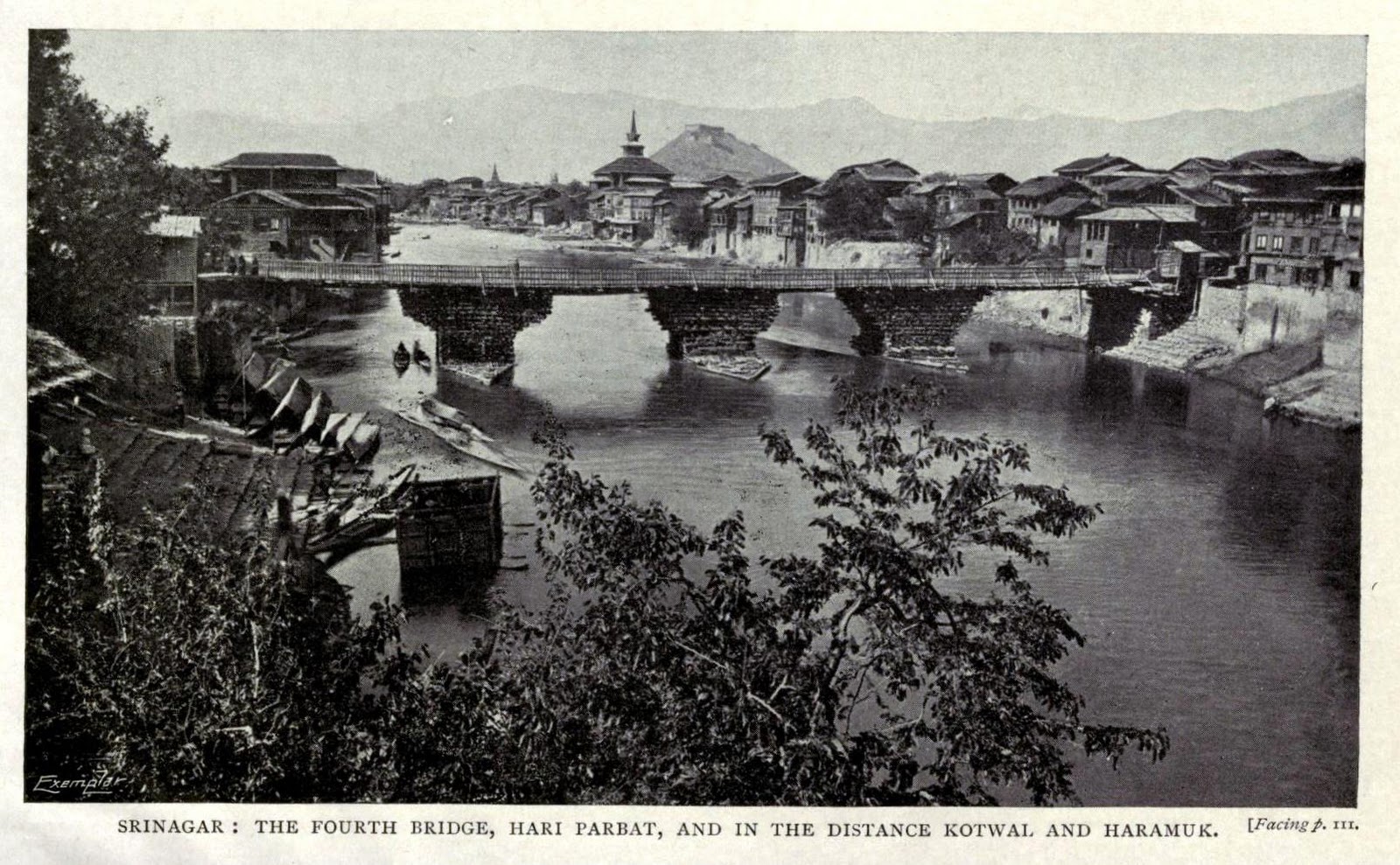 |
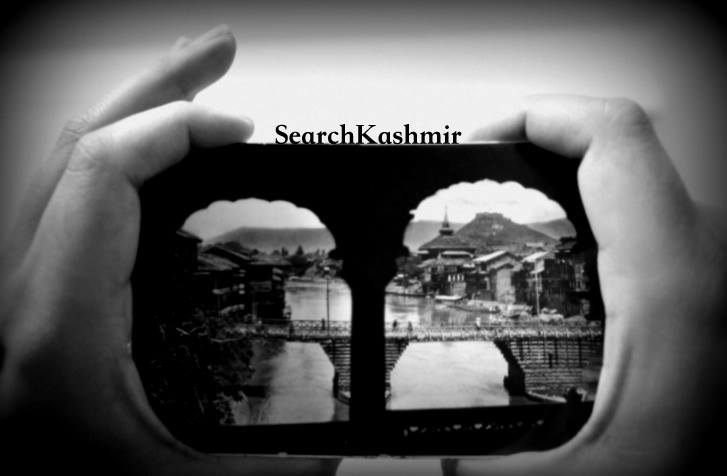
| from the book Irene Petrie : Missionary to Kashmir (1903). Photographs by Geoffroy Millias. Had been trying to find the spot for quite sometime Only other option left is to find Ahmed Joo’s Shop |
 |
| Stories from Kashmir |
This entire floor was under water in the flood of 2014
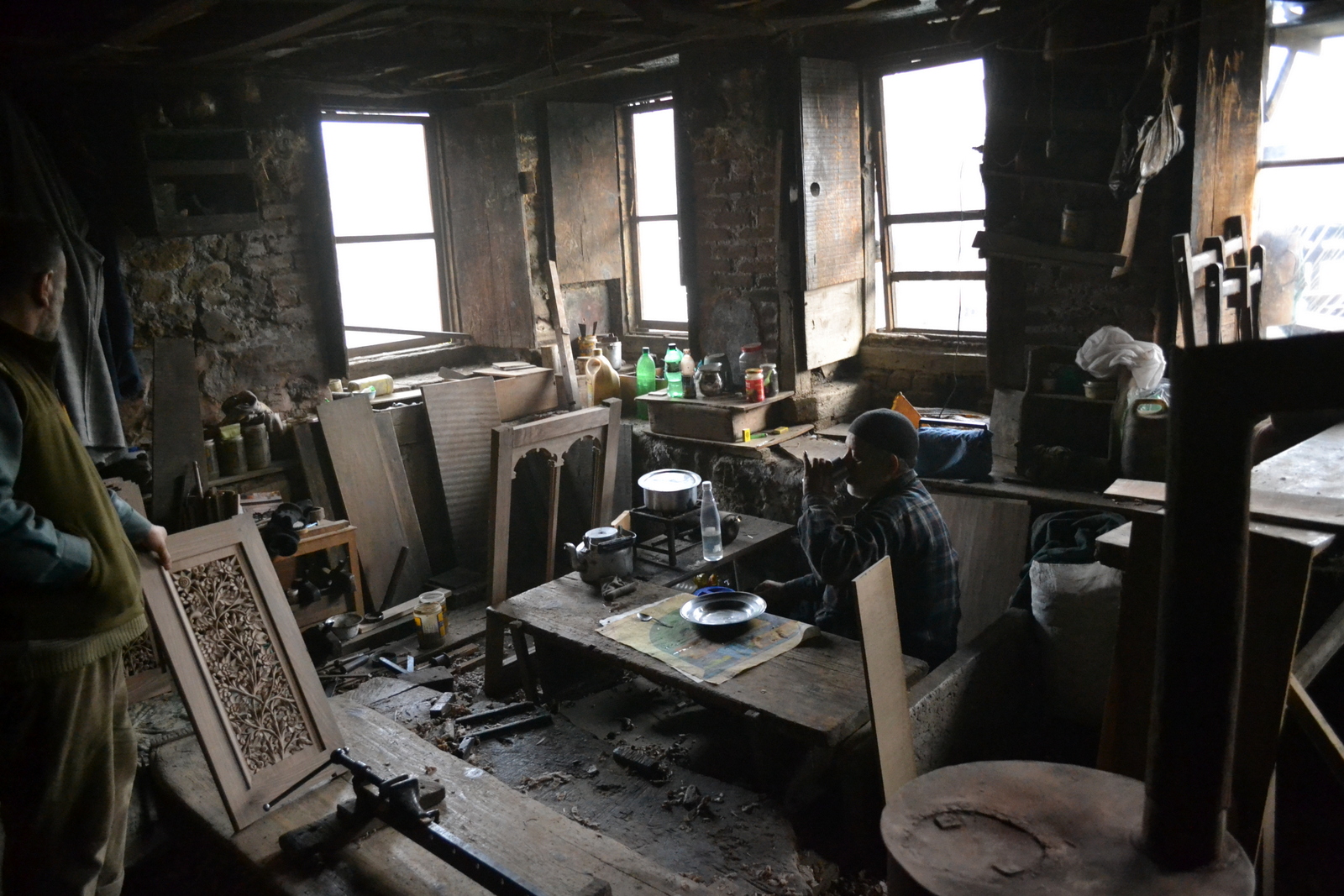
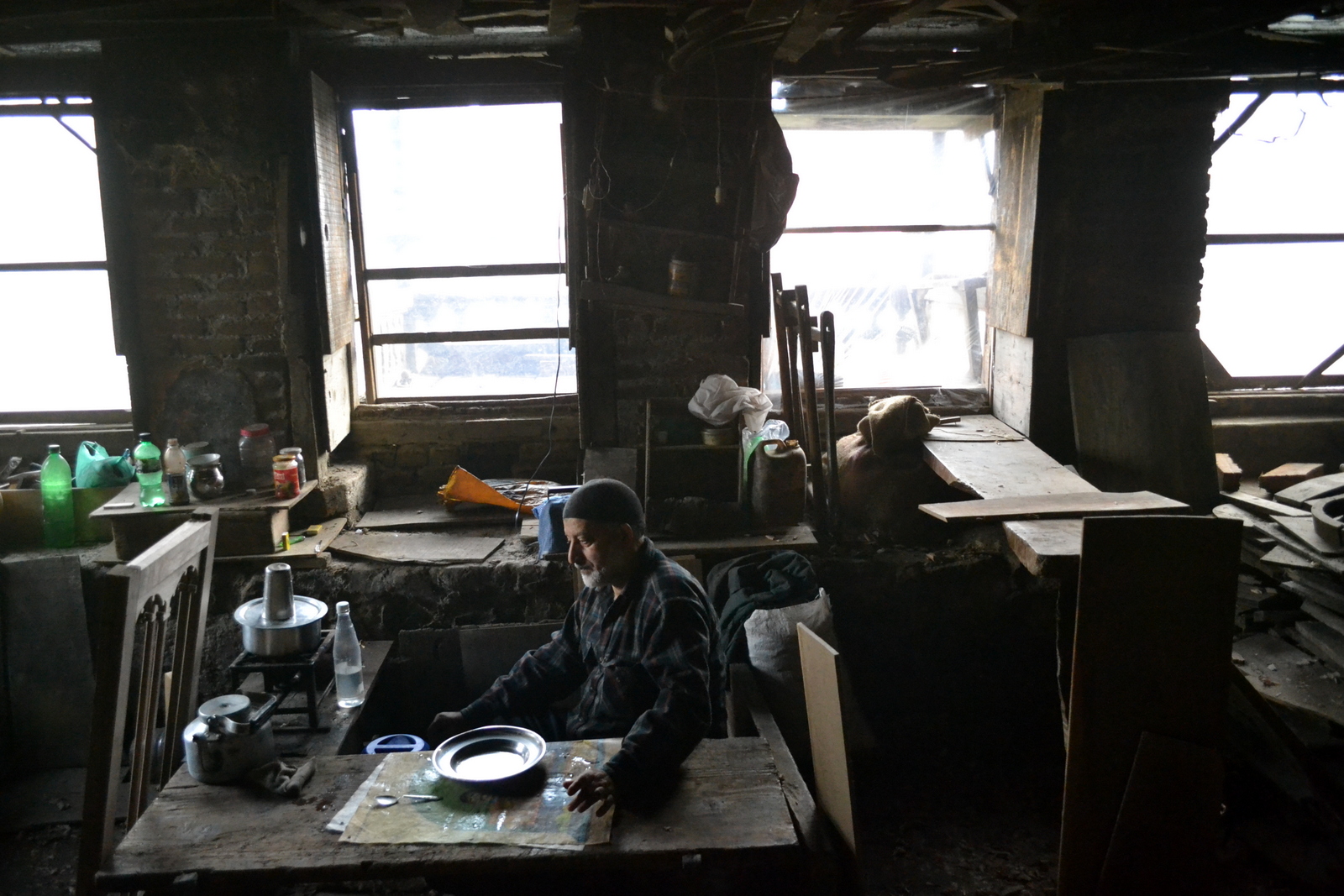
He was kind enough to tell me that the shop/house once belonged to a Pandit family long ago.
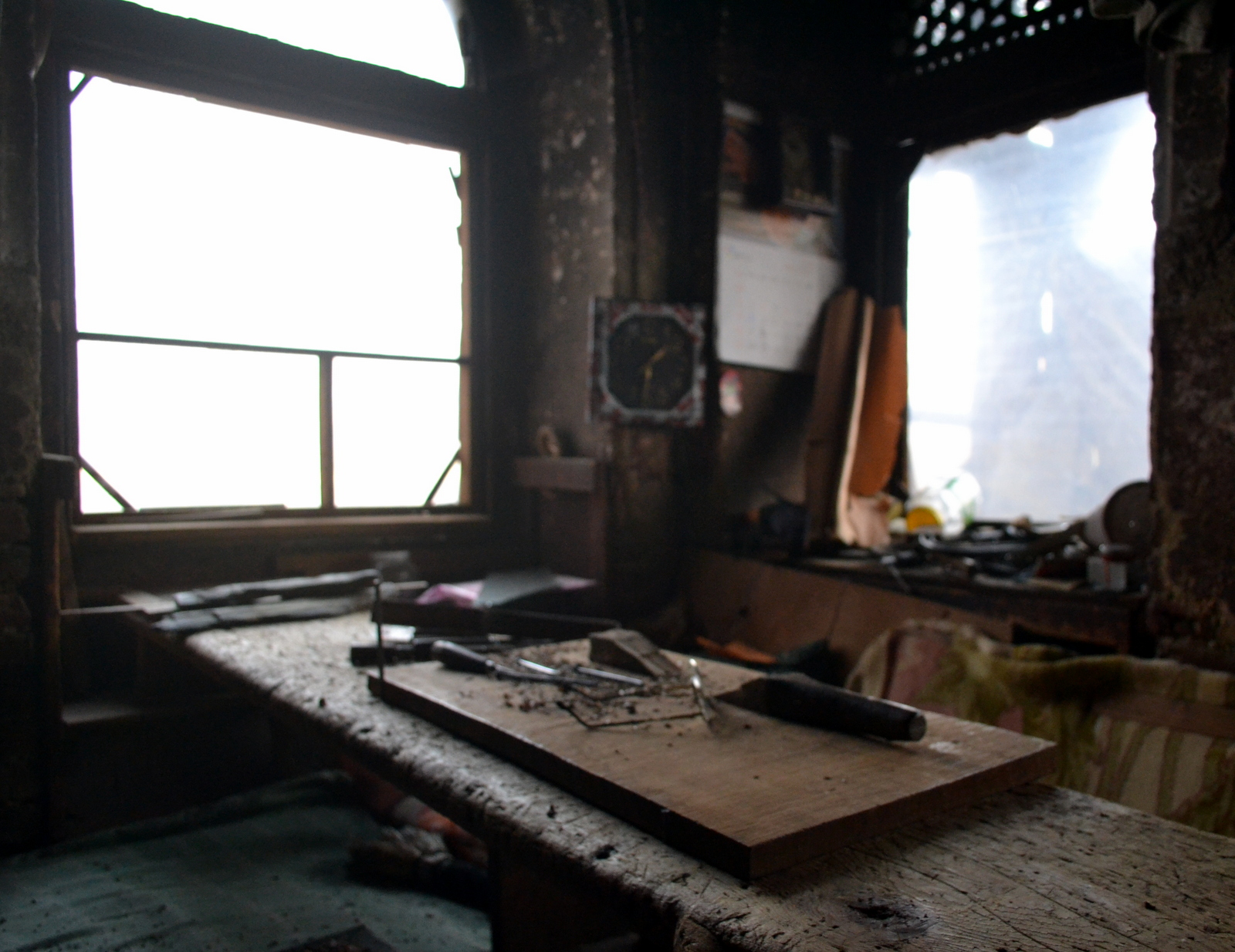
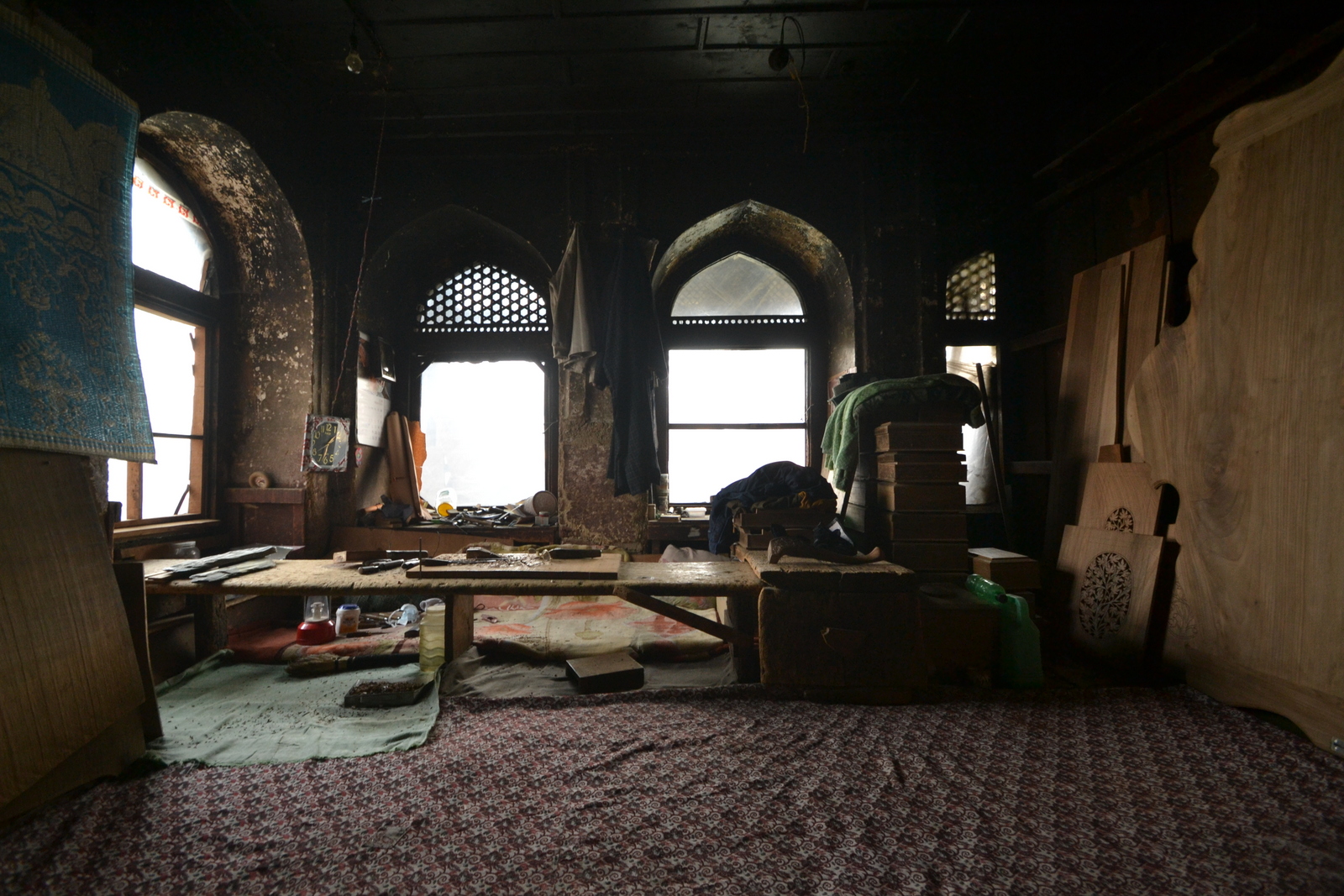
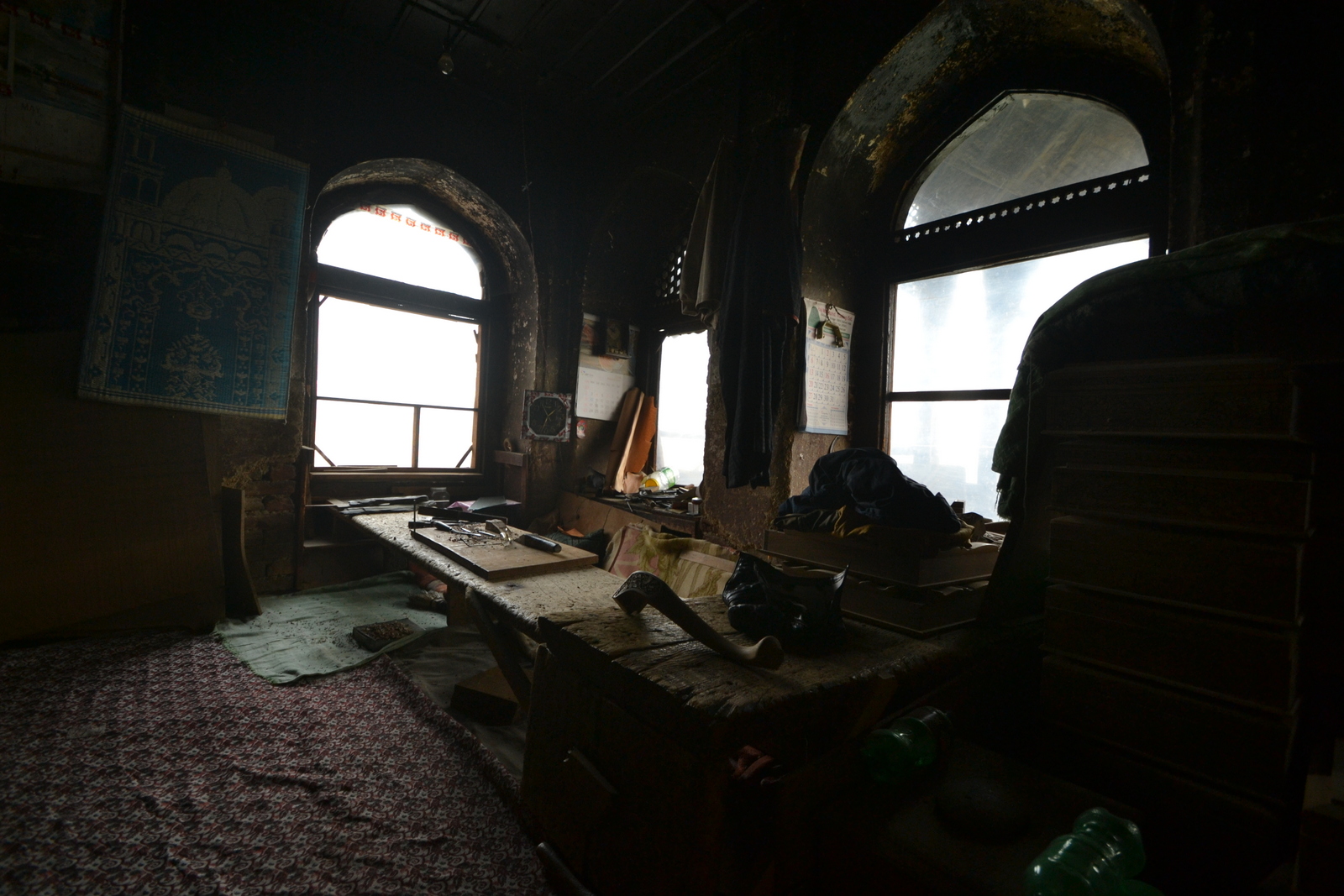
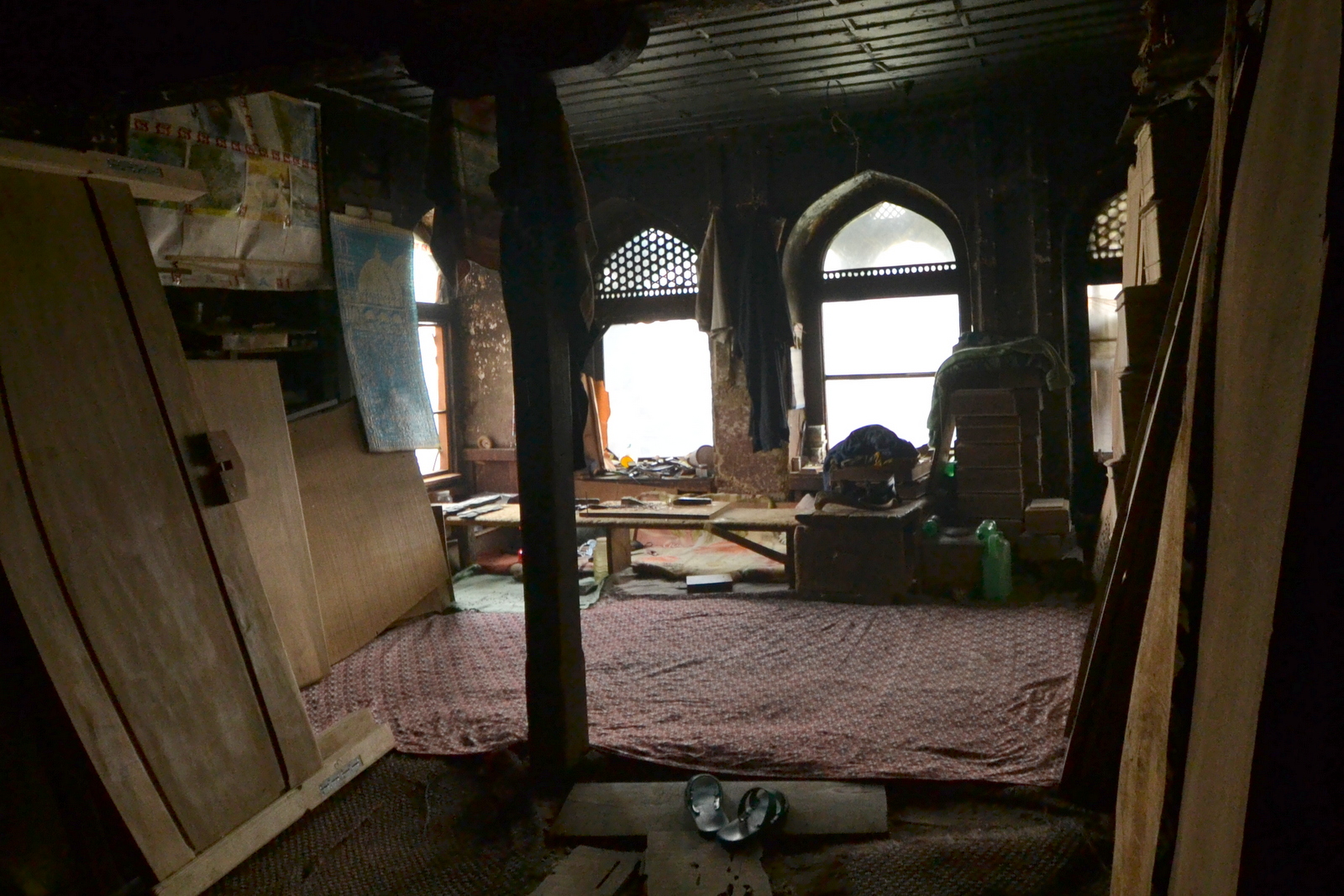
-0-
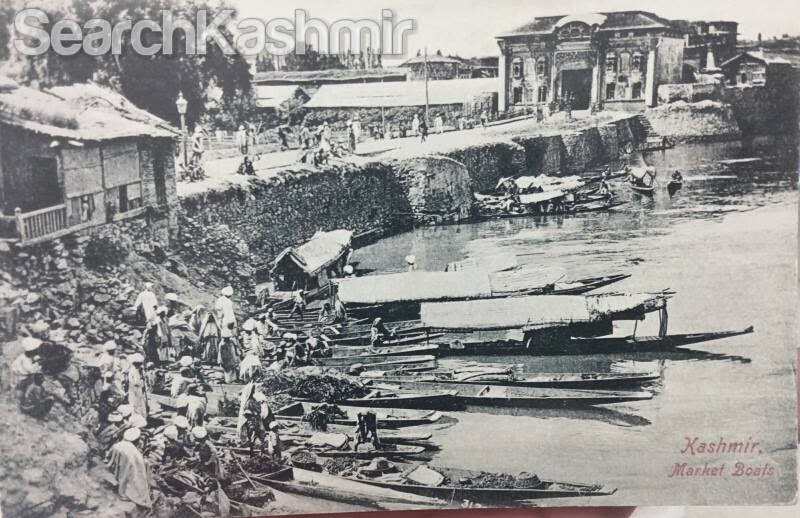
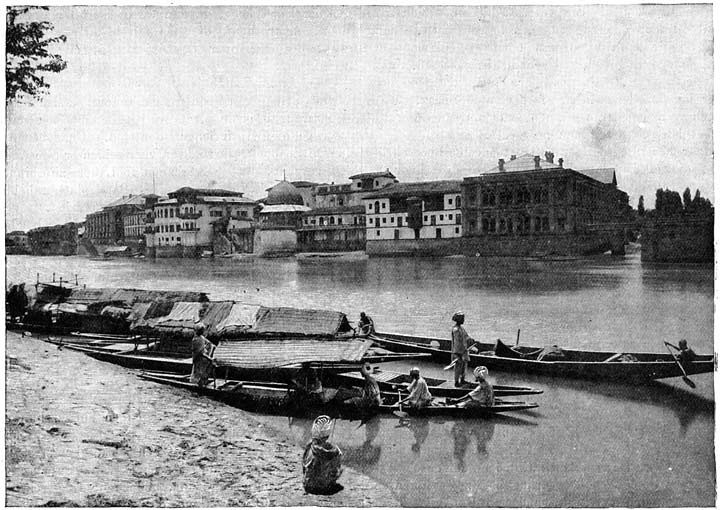
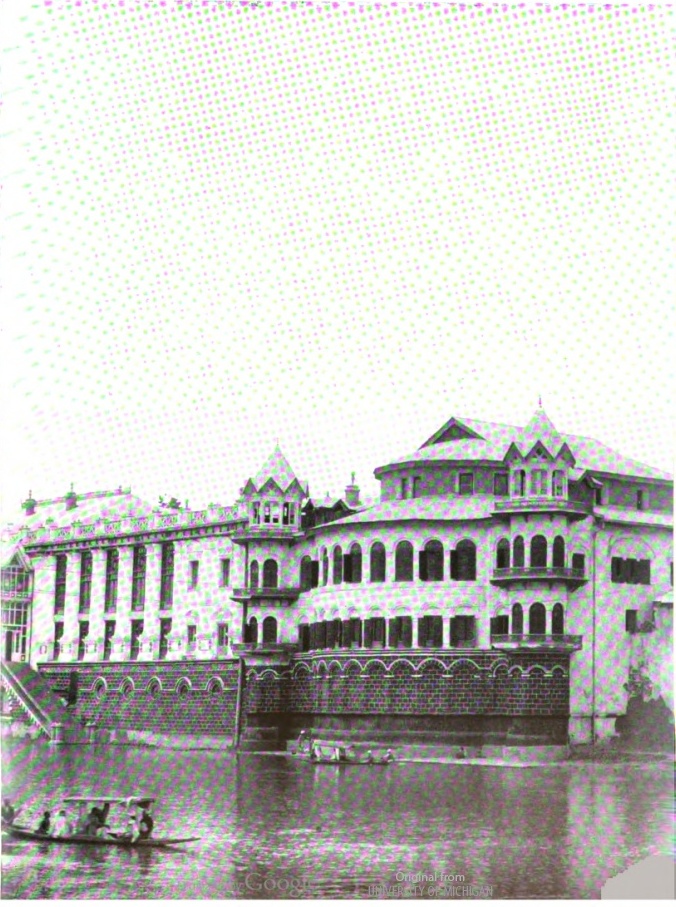
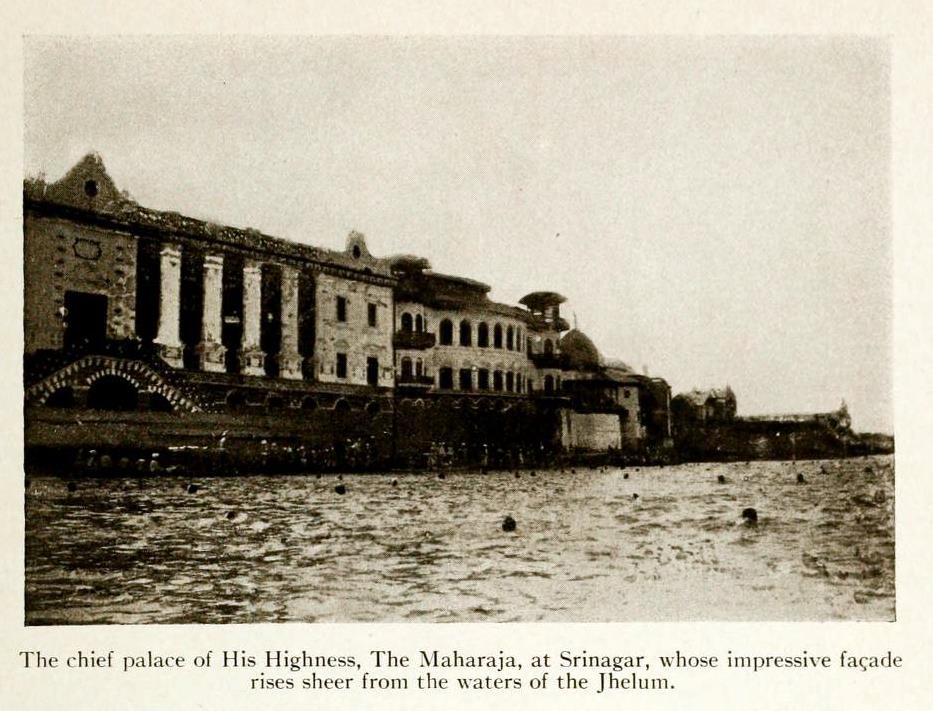
Last month received an email from INTACH (Srinagar), they will be using the images shared by SearchKashmir to help with the renovation of Sher Garhi Palace. Here are the images and some elementary back info. about the place.
Pursuing our course down the river the sides of which in former days were em- banked from the first to the last bridge, by an embankment composed of large blocks of limestone, of which at present the ruined remains are all that is left we soon come to a large building, the Sher Garhi, the city fort and palace. Situated on the left bank, it presents to the river, which flows along its eastern side, a long loop- holed wall, with bastions rising between twenty and thirty feet above the general level of the water, surmounted by roomy, but lightly-built, houses. Its southern and western sides are protected by a wide ditch ; the Kut-i-Kul canal bounds it on the north, and in its interior are grouped a number of dwelling- houses for the officials of the court, government offices, and barracks. On its wall, facing the river, and perched upon one of the bastions, is a large double-storied house, the abode of the Dewan or Prime Minister, and just below his residence is a long lofty building, the government treasury, containing shawls, ‘pushmeena,’ coin, and other valuable property. A curious-looking wooden building comes next, the Rang Mahal or ‘audience hall,’ a part of the royal residence, which is just below it, styled the Baradarri, and which is unquestionably the most important modern structure in Srinagar. It is a large irregular building of a peculiar style, for while partly of native architecture, one portion, with a large projecting bow, partakes somewhat of an European character. A flight of wide stone steps leads up from the water’s edge at the angle of this building, and conducts into the palace. Adjoining is the temple frequented by the ruler and family, called the Maharaj-ke-Mandir, the domed roof of which is covered with thin plates of pure gold, which glitters in the sunlight, causing it to be plainly perceptible a long distance away. To reach the interior of the palace, one ascends by the before -mentioned steps, which at all times of the day appear thronged with people, some waiting to prefer petitions to the sovereign or his ministers as they descend to their boats, others to obtain a hearing or justice, which is here administered in open court daily by the governor. To the more private portion of the palace they have no access ; for, guarding the gateway at the top of the stairs which leads directly into the royal abode, stands a sentry, a warrior belonging to the Kashmir, army, and near by is the guard-room, what we should call in our service the main-guard.
 |
| View of the Place before the last renovation Probably by Samuel Bourne in around 1860s |
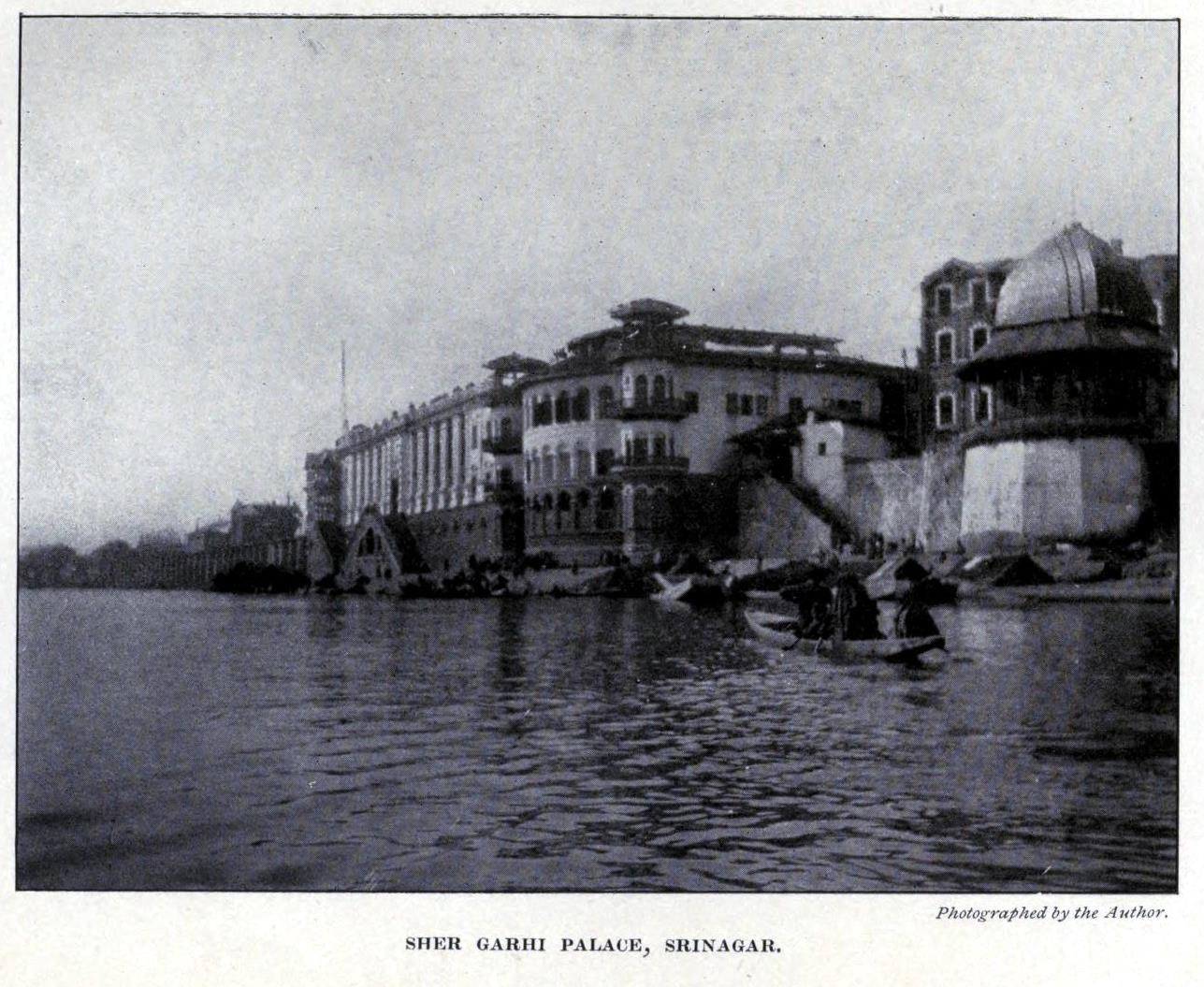 |
| Sher Garhi Palace, the Summer place of 19th-century Dogra ruler, Pratap Singh. From ‘The Romantic East: Burma, Assam, & Kashmir’ by Walter Del Mar (1906 |
 |
| Sher Garhi Palace. From Dutch travelogue ‘De zomer in Kaschmir : De Aarde en haar Volken’ (Summer in Kashmir: ‘The Land and its Peoples) by F. Michel (1907) |
 |
| From ‘The road to Shalimar’ by Carveth Wells, 1952. |
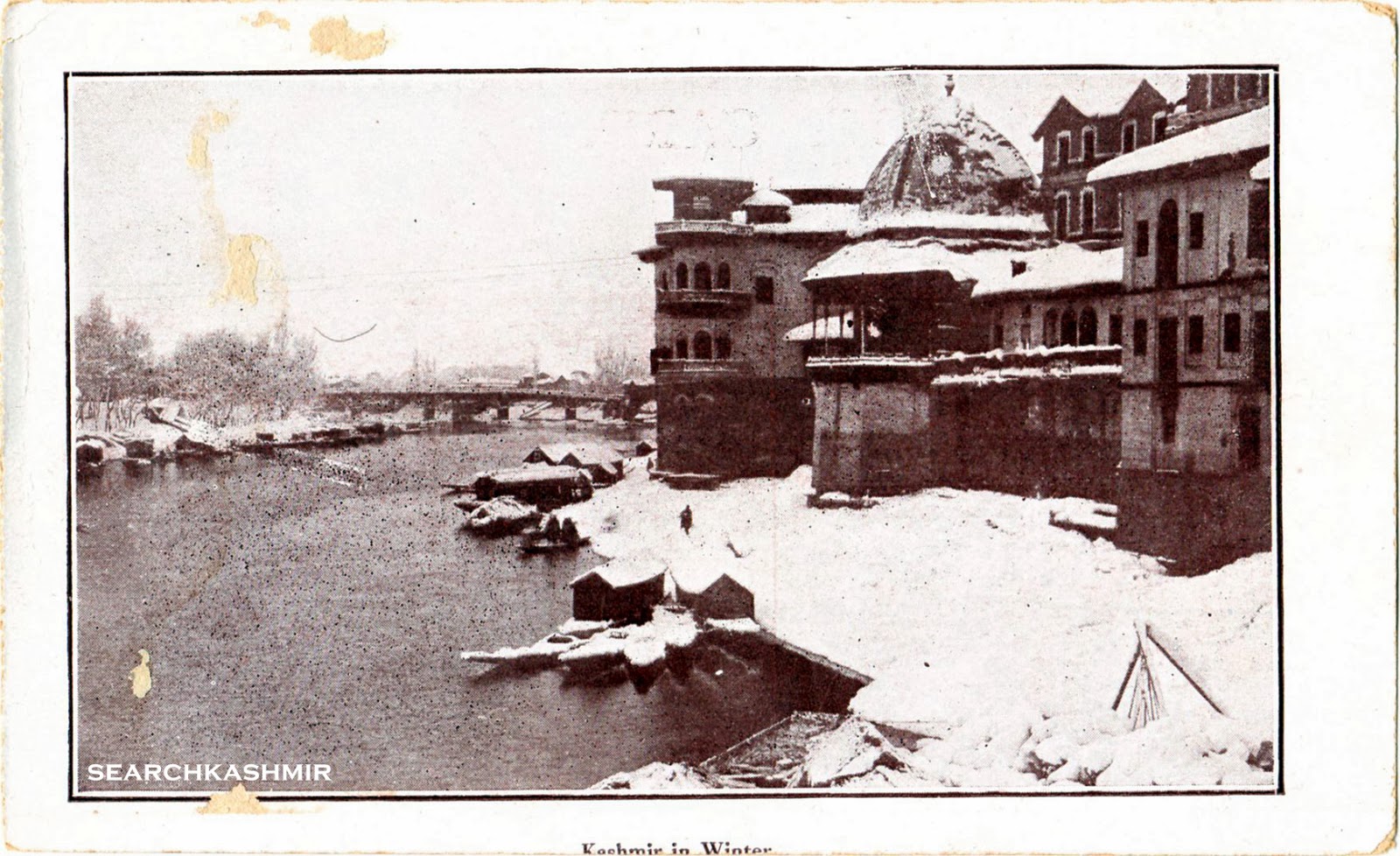 |
| view of Sher Garhi Palace in winter. Postcard. Early 20th century. [courtesy: Micheal Thomas] |
 |
| from ‘Our summer in the vale of Kashmir’ (1915) by Frederick Ward Denys. |
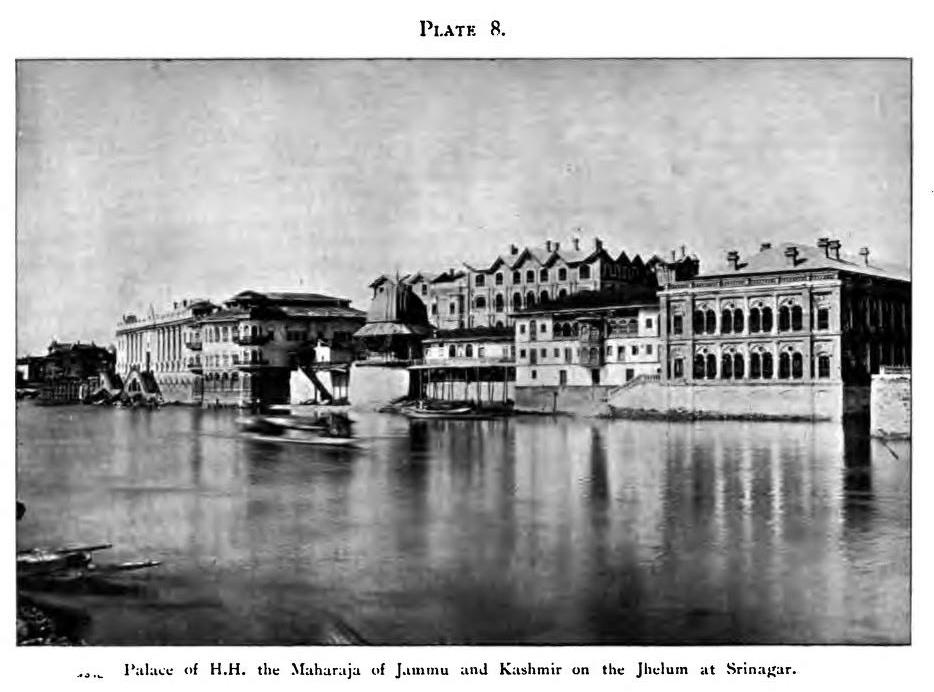 |
| From ‘Kashmir: Its New Silk Industry’ by Sir Thomas Wardle (1904) |
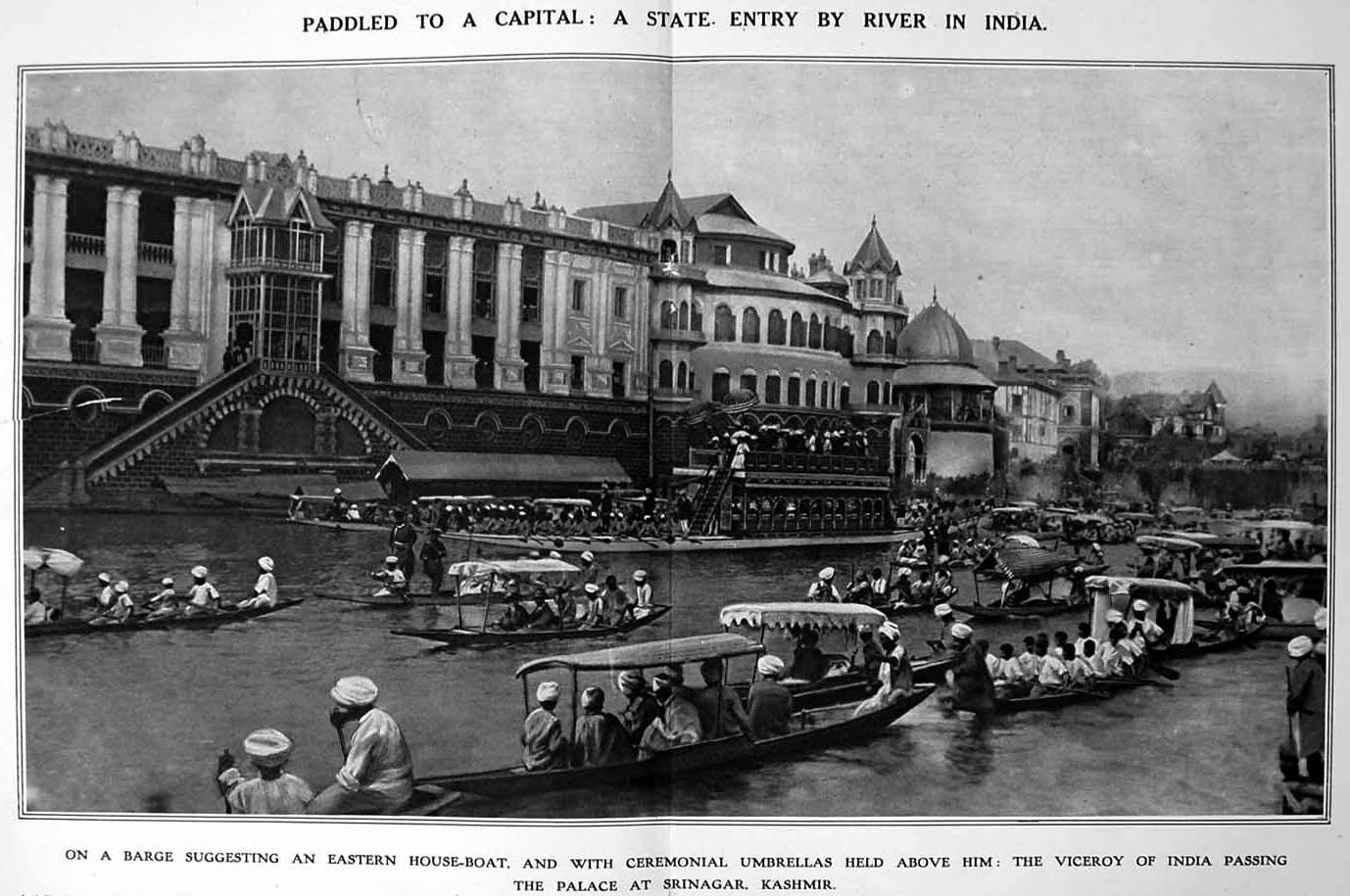 |
| Illustrated Weekly of London. 1921. |
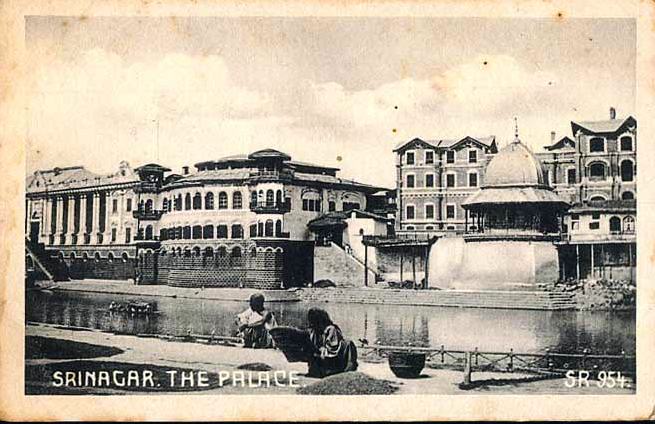 |
| Postcard. 1920s. [via: ebay] |
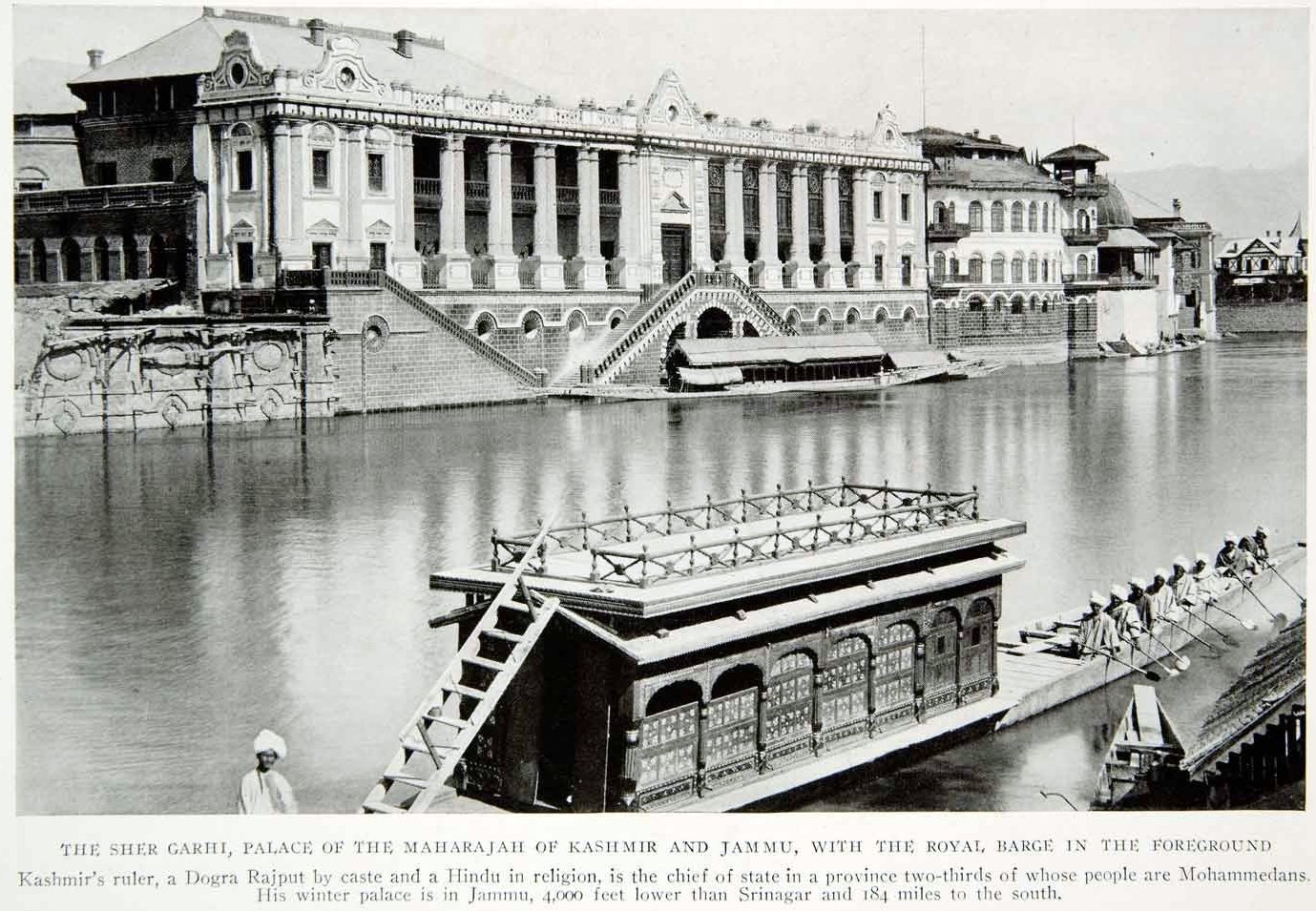 |
| From National Geographic. 1921. |
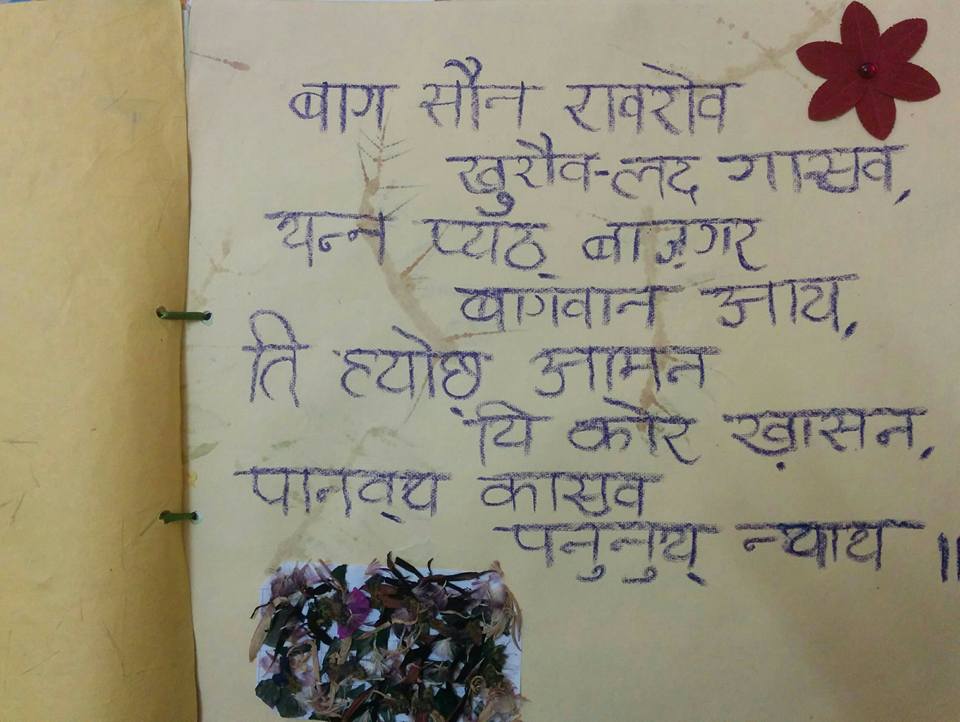
And on my angreez vohorwod, the woman I am marrying gave me this. A scrapbook with Kashmiri verses.
 |
| Weeds have laid our gardens waste, since conjurors became the gardeners. The commoners learnt the dirty tricks from elites. Among ourselves let us crop our own candour. ~ Abdul Ahad Azad |
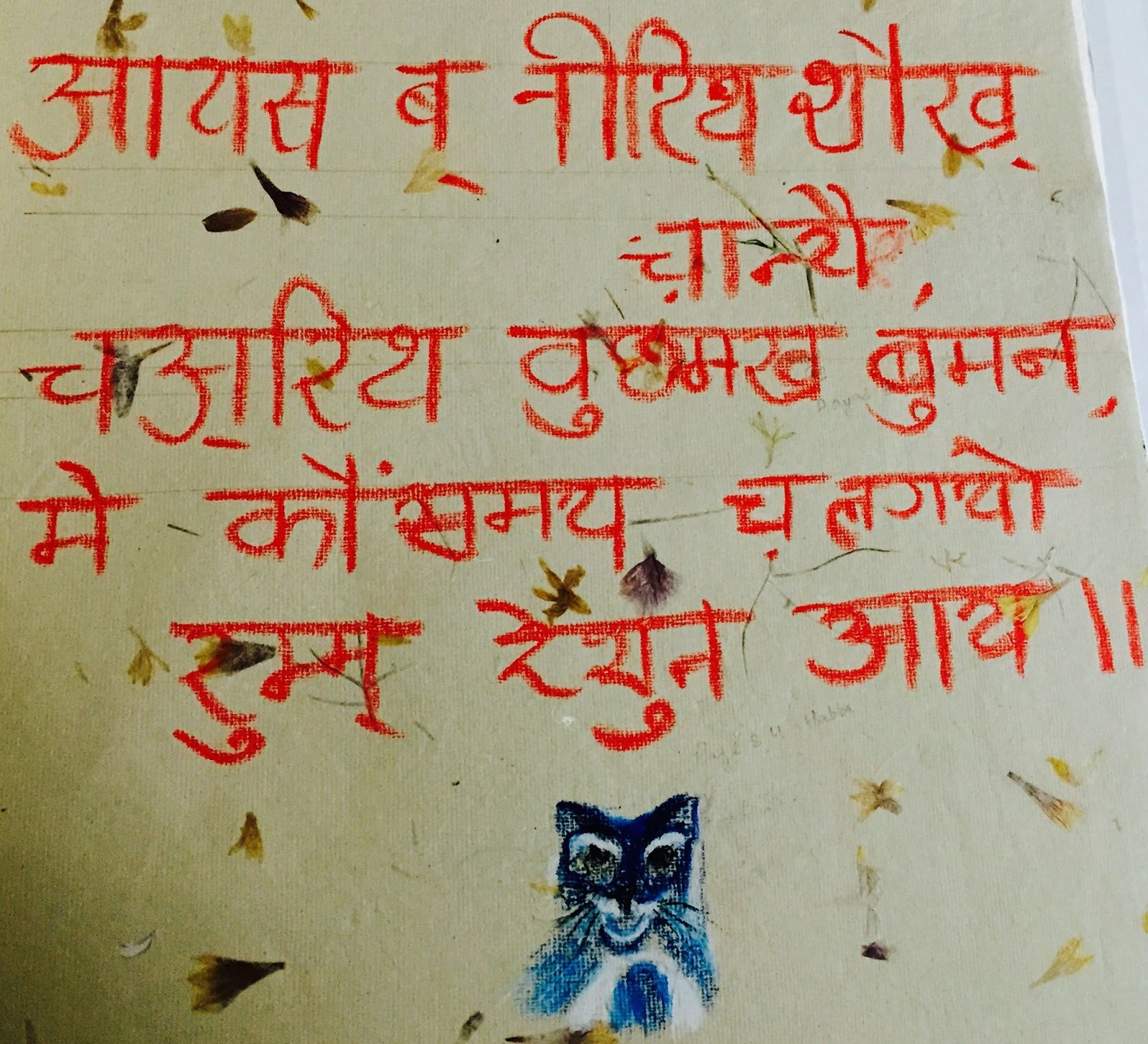 |
| A yearning dragged my steps to you, To be greeted with wrinkled brows, And a wish sprang from deep within me. “May you live long as Rum Rishi” (a Kashmiri Rishi said to have lived a very long life.) This one is by a poetess named Arnimaal, a woman who had a bright but stupid husband. |
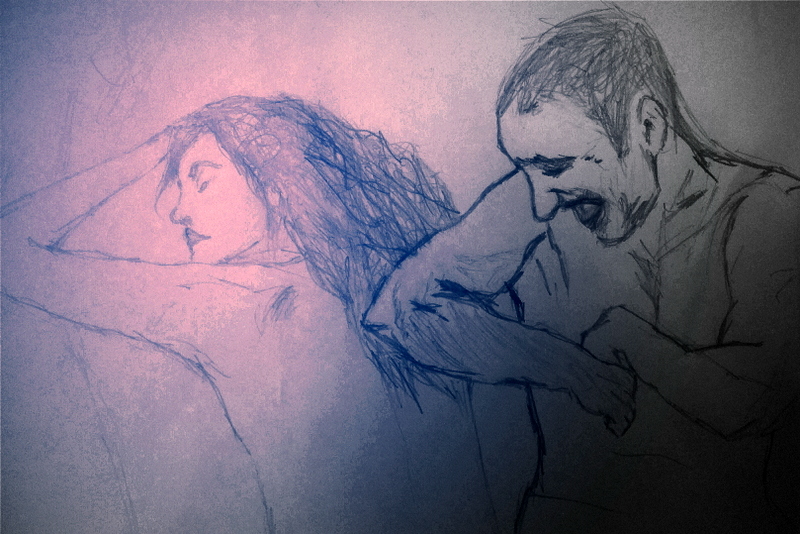
SearchKashmir is going into an unchartered territory of Kashmiri language. Intimacy.
Things you can call your Kashmiri lover. Interestingly, a bulk of them come from Persian.

Janaan/Janaano (Joonam of Persian, Jaanam of Hindustani)
Can be used for male as well as female
Dilbaro (Dilbar of Persian, Charmer)
Haer (myna bird of Hindi)
Used for female
Shereen (Sugar. ‘sweetie’ of English)
Used for female
Myaen Maetch (my madwoman)
Myaani Mastaano (my mad man/my drunken lover)
Mout (madman). Koul’a Mout could be offensive but myon Mout should be fine. Kashmiri apparently love been called mad.
One can use phrases like:
Lol Naraey (let me love you)
Mukk Naas Khyamay (‘I will eat you small flat nose’. Often said to small children, but can be used on a lover)
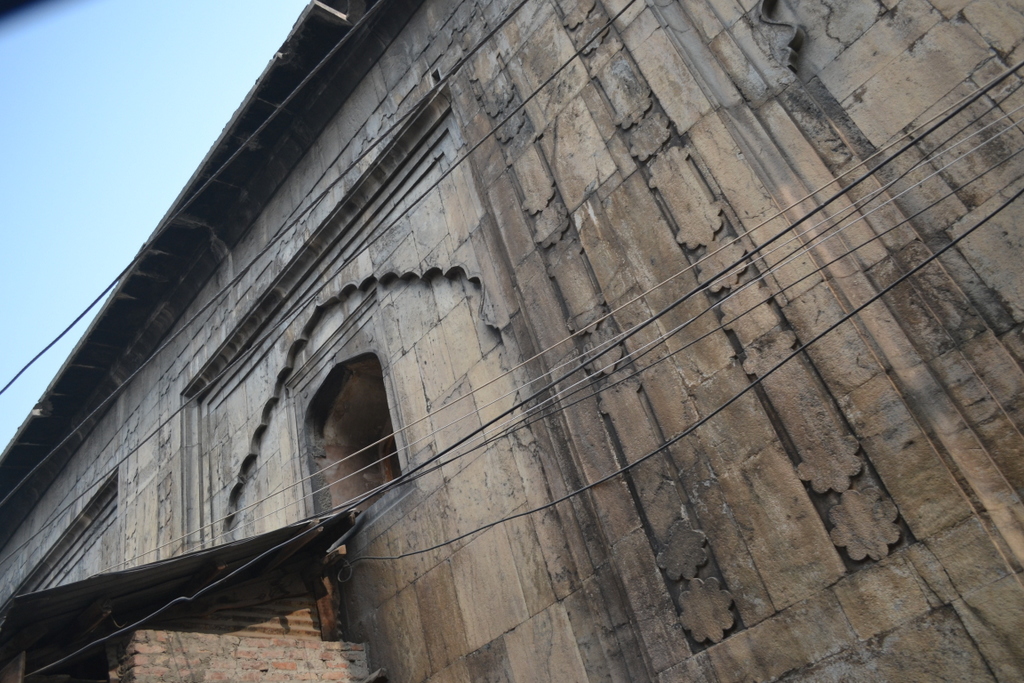

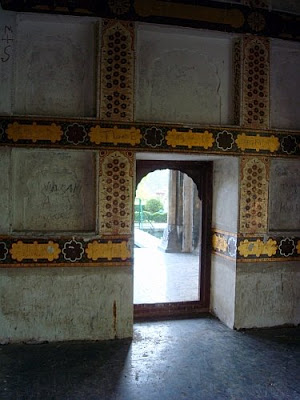 |
| Same pattern inside the pavilion at Shalimar Garden built in 1619 on order of Jahangir |
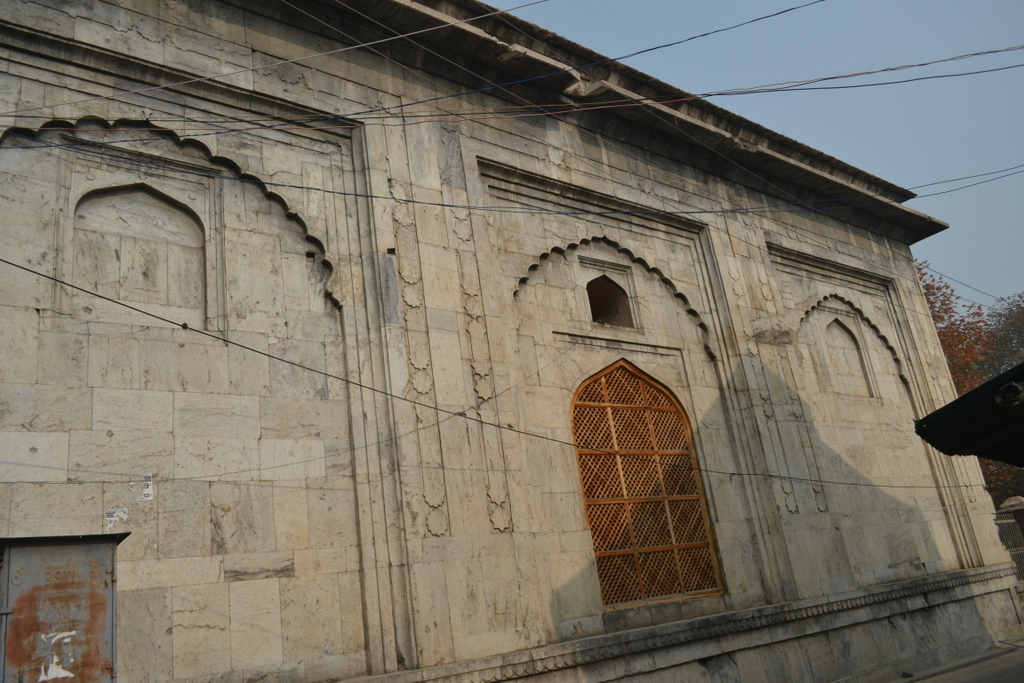
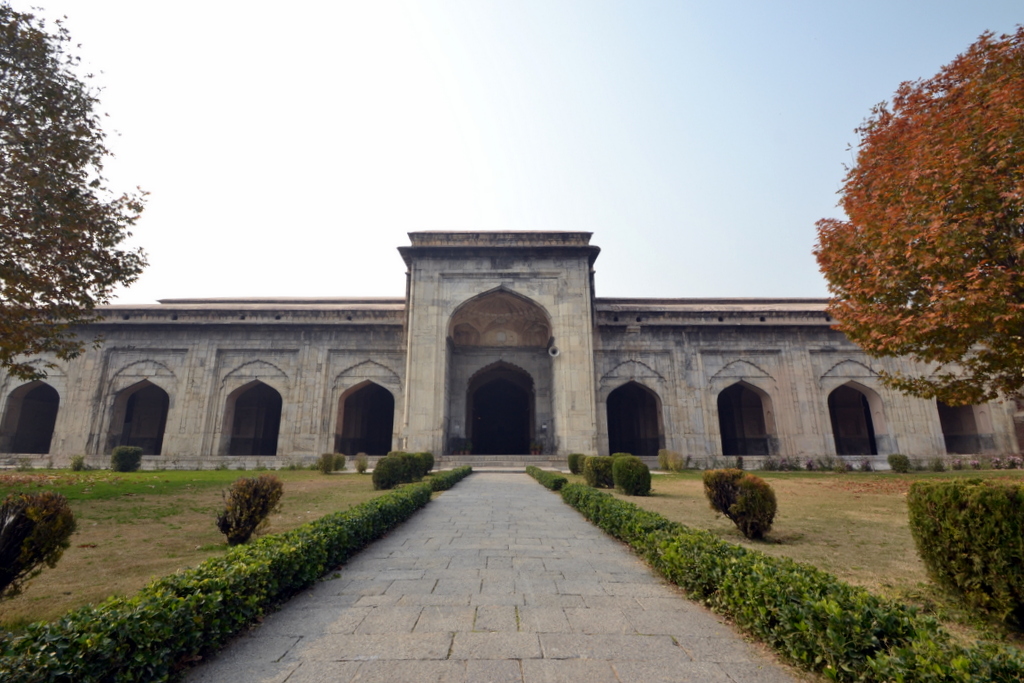
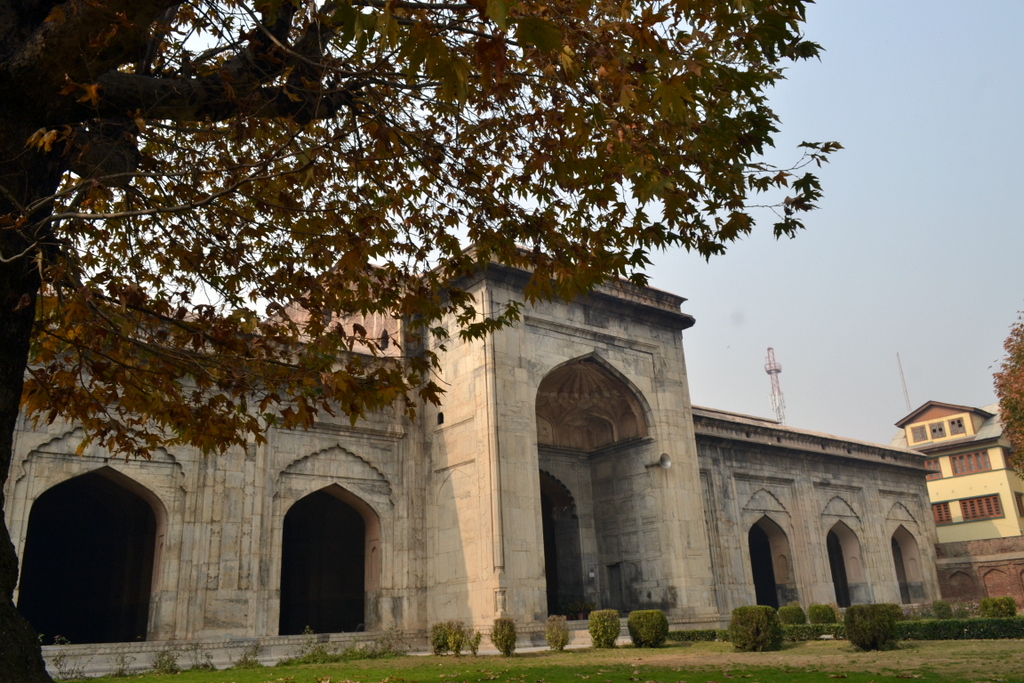
In 1623, Noor Jahan built a Masjid in Srinagar on the left bank of Jhelum near Zaina Kadal opposite Shah Hamdan mosque.
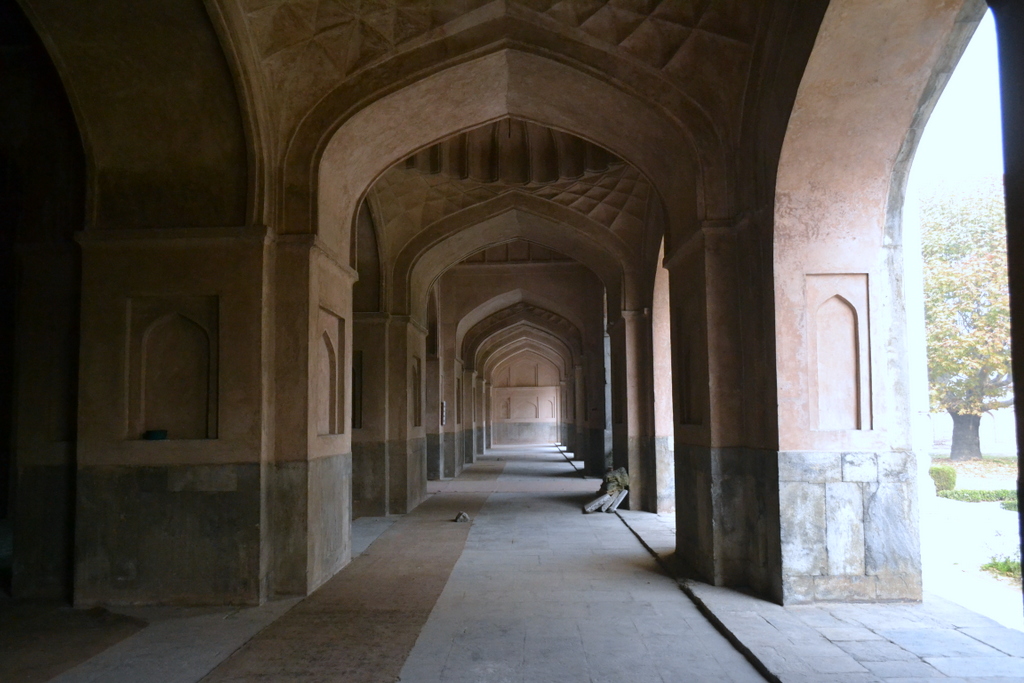
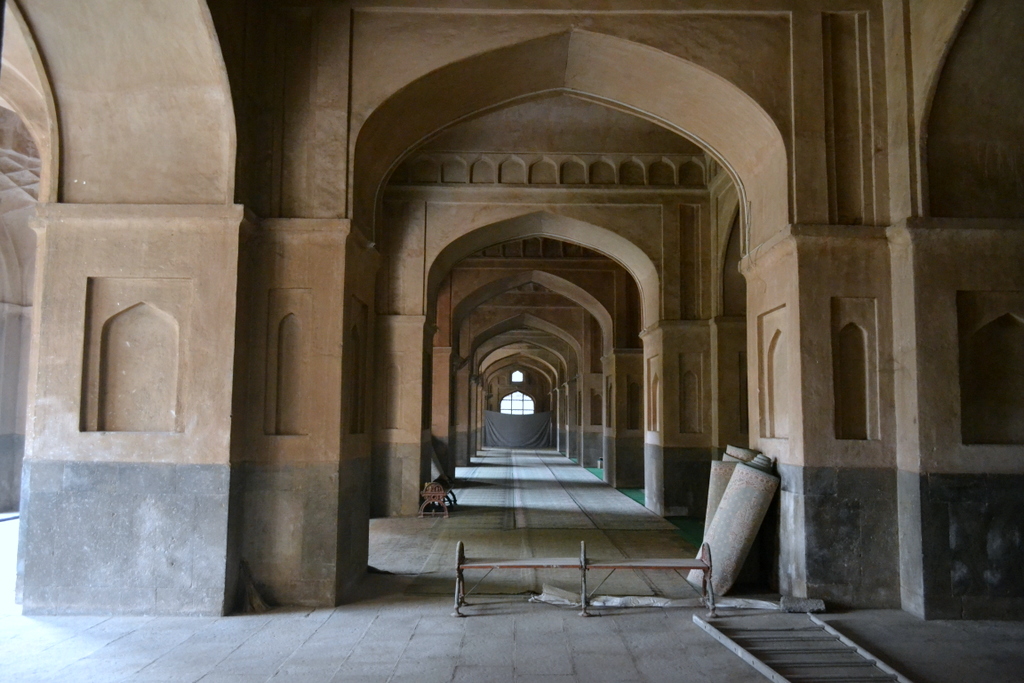
“Nur Jehan Begum (the light of the world), the Nur Muhul (the light of the palace) of Lallah Rookh, is the most renowned name in the valley, that of her august consort, Jehan Gir, not excepted. In spite of the more authentic story of her birth which is to be found in Ferishta, the Kashmirians would have us believe that she was a native of the valley: a daughter of the Malek of Chodra, a large ruined village in the centre of the centre of the southern side of the valley, and situated on the Dud Gunga (milk river). The only fact that that I heard that I heard of, that could be any possibility be brought forward in support of this assertion is, that near Chodra there are some ruins, said to be those of a house that once belonged to her; but in which there is nothing in any way remarkable. I have already oticed the palaced at Vernag and Shahbad, which were built by here or her husband. The Musjid, or new mosque, in the city, was built by her, and is, in fact, the only edifice of the kind that can vie in general aspect and finish with the splendour of the Moti Musjid, or the pearl mosque, at Agra. A handsome flight of stone steps leads from river to the door of the courtyard, which surrounds it. The interior of the building is about sixty-four yards in length, and of a proportionate width, the roof being supported by two rows of massive square piers, running through the entire length of the building, the circular compartments between them being handsomely ribbed and vaulted. When I was in Kashmir it was used as a granary or storehouse for rice.”
Unlike other Masjids in Kashmir that were made of wood, this, this masjid was made of stone or Pathar, and hence came to be known as Pathar Masjid. And unlike the native Kashmiri mosques, it didn’t have a pyramidical dome at top.
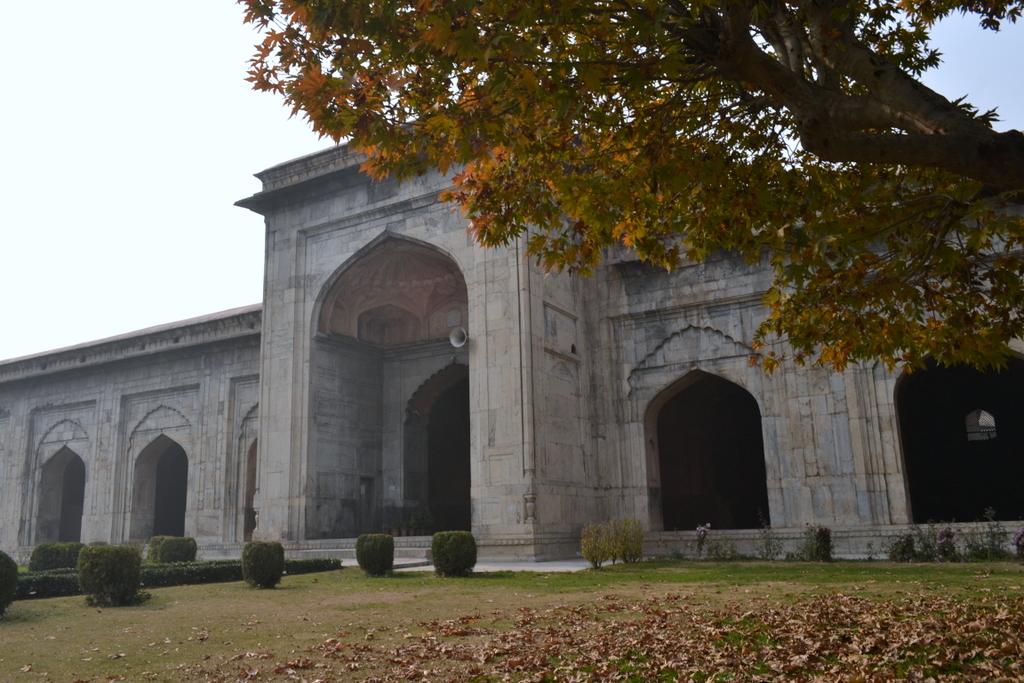
A description of the mosque is given by Ram Chandra Kak in his ‘Ancient Monuments of Kashmir’ (1933):
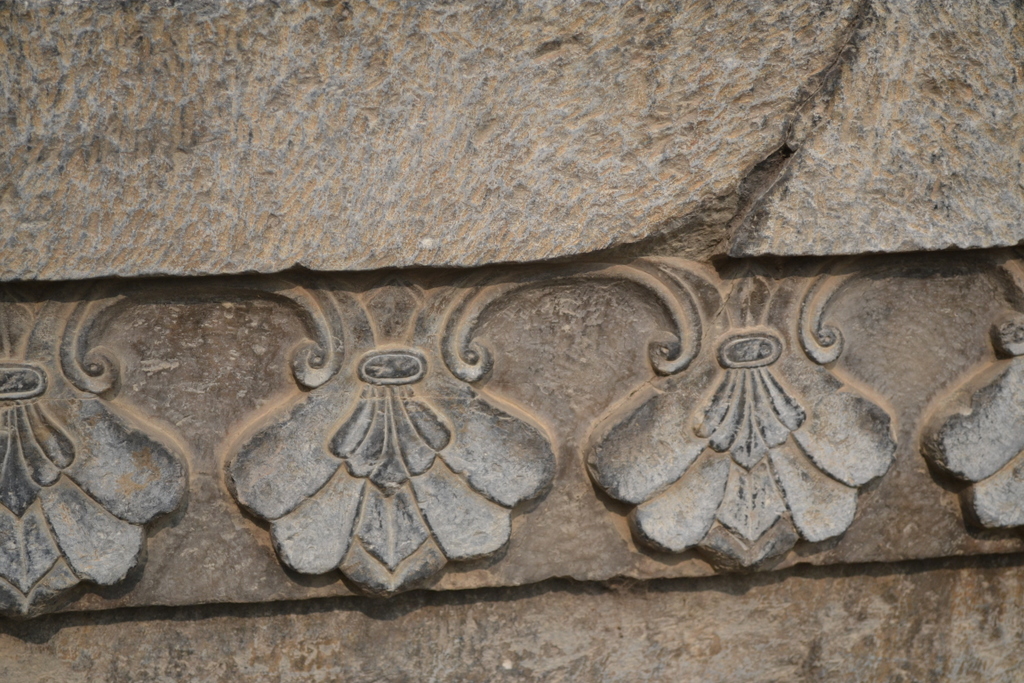
The half-attached “bedpost” columns in the two outer angles of the jambs of the entrance are noteworthy. The plinth, which is now mostly underground, is surmounted by a lotus-leaf coping.
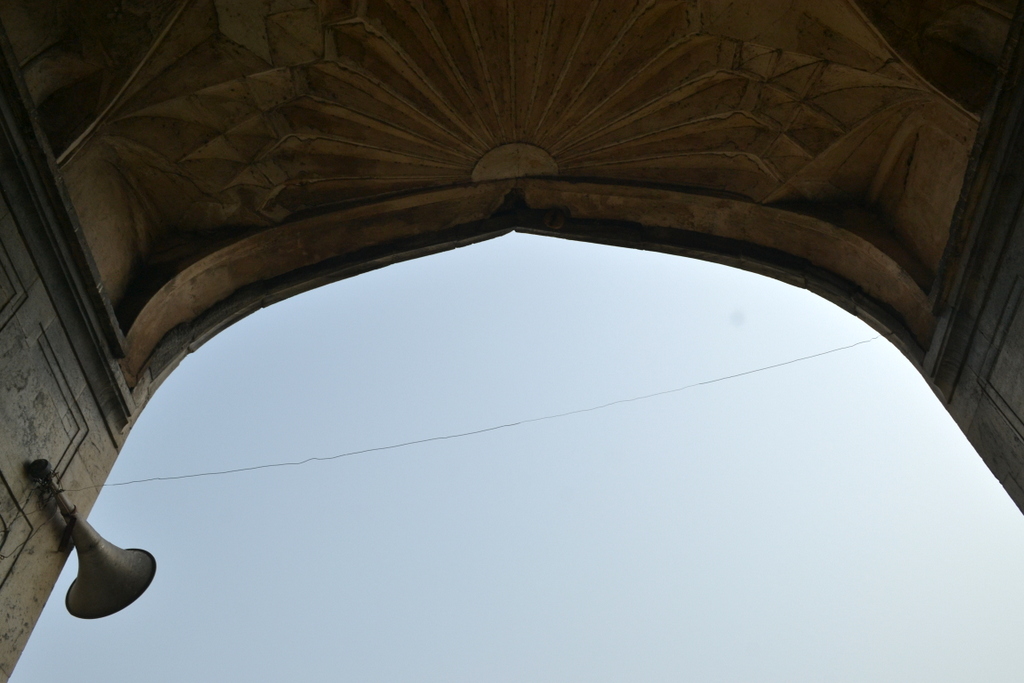
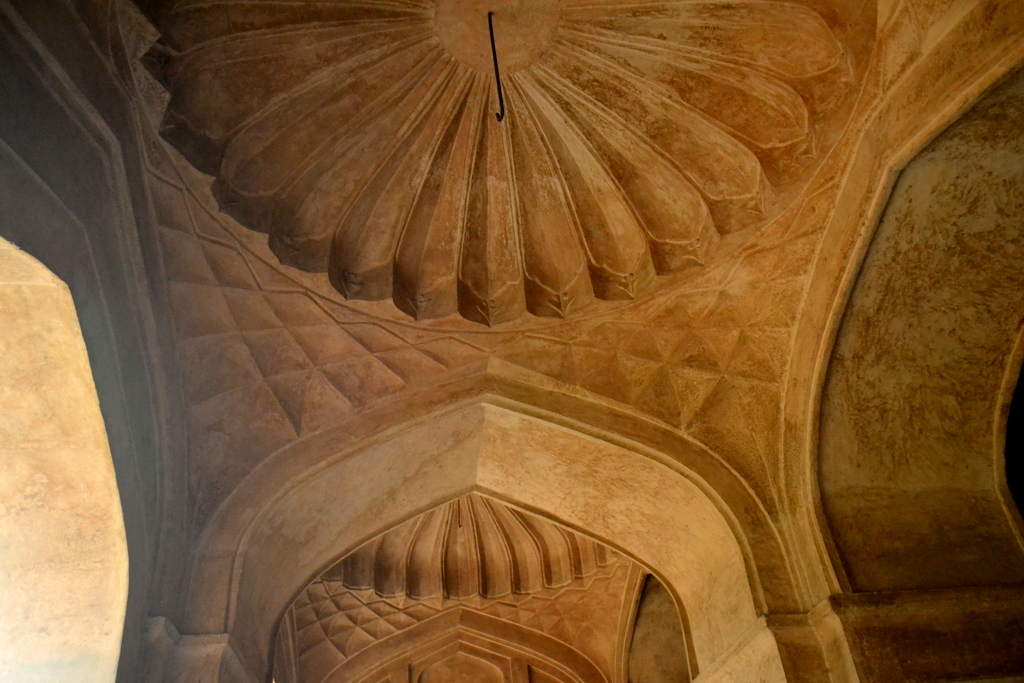
The frieze between the projecting cornice and the eaves is decorated with a series of large lotus leaves, carved in relief, some of which have been pierced, and thus made to serve the purpose of ventilation apertures. A flight of steps in each jamb of the entrance gives access to the roof, which is, as usual in Kashmir, sloping, except in the centre, where there was originally a dome which was later dismantled by the Sikhs. The roof consists of twenty-seven domes, the central one of which is the largest. The domes are mostly ribbed inside, though there are some which are flat or waggon-vaulted.
The roof is supported internally on eighteen extraordinarily massive square columns having projections on two sides. The lower portion of the columns is built of stone and the upper of brick covered by a thick coat of buff-coloured lime plaster.
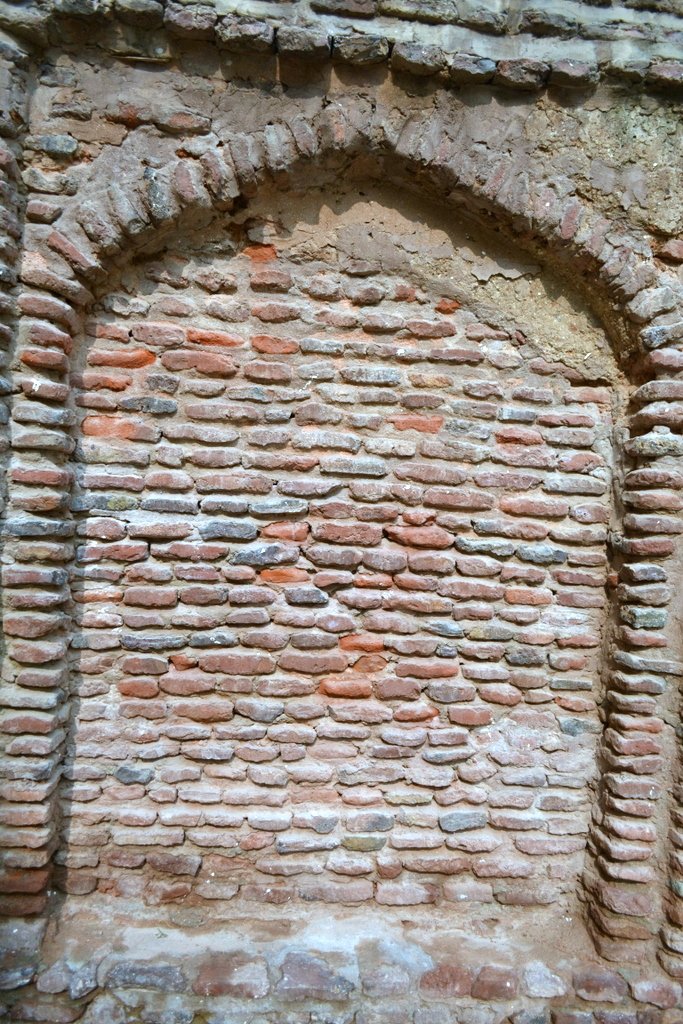 |
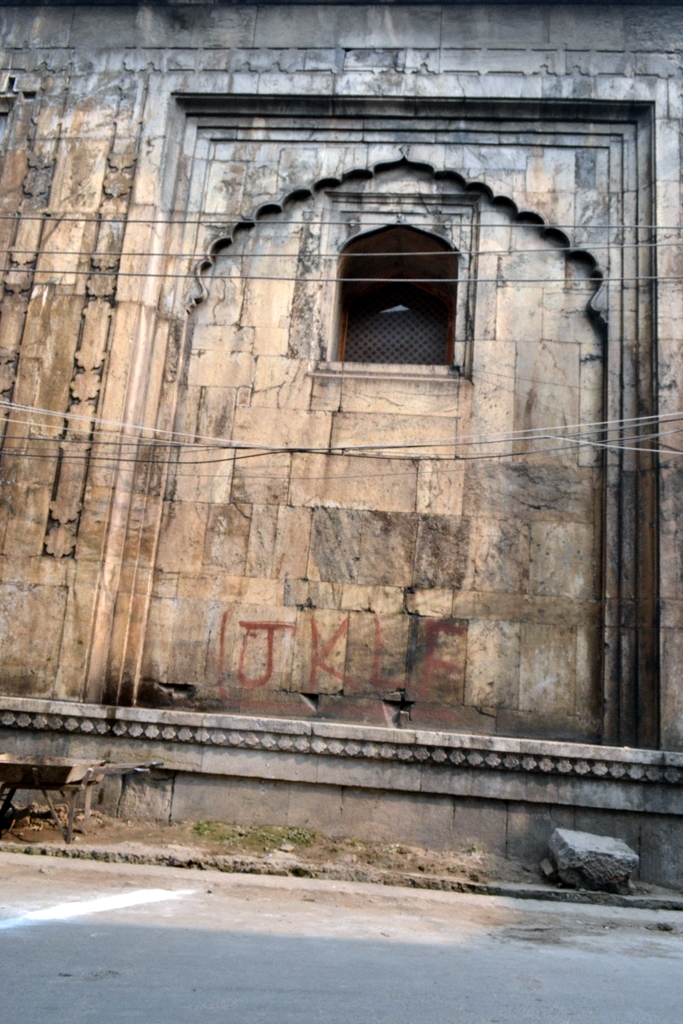
| “The enclosure wall is built of brick masonry, with a coat of lime plaster, adorned by a range of shallow arched niches.“ |
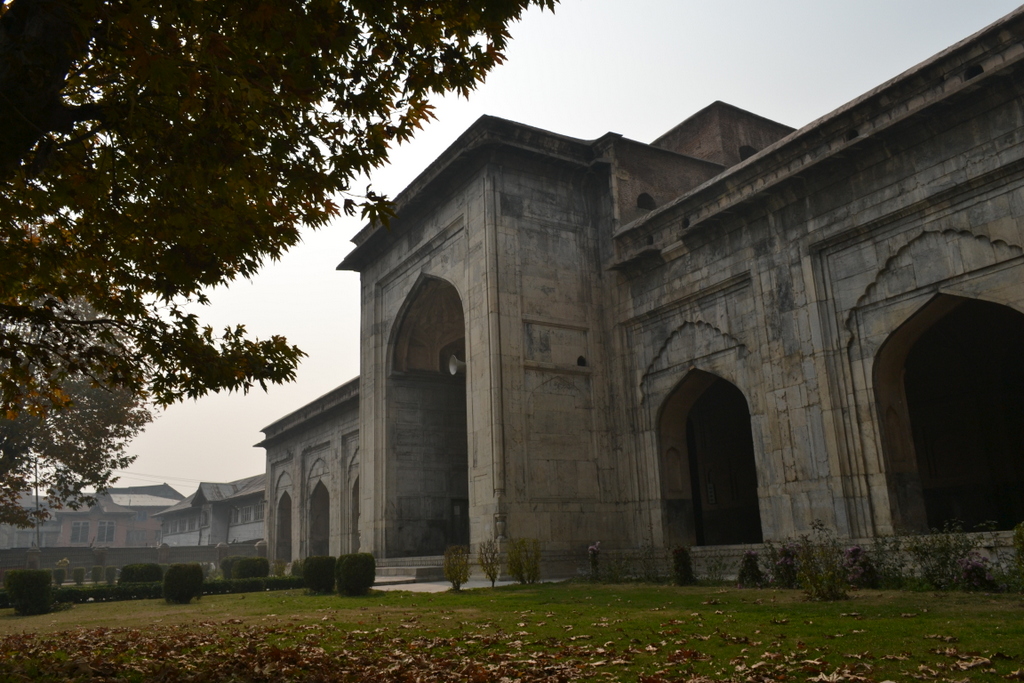
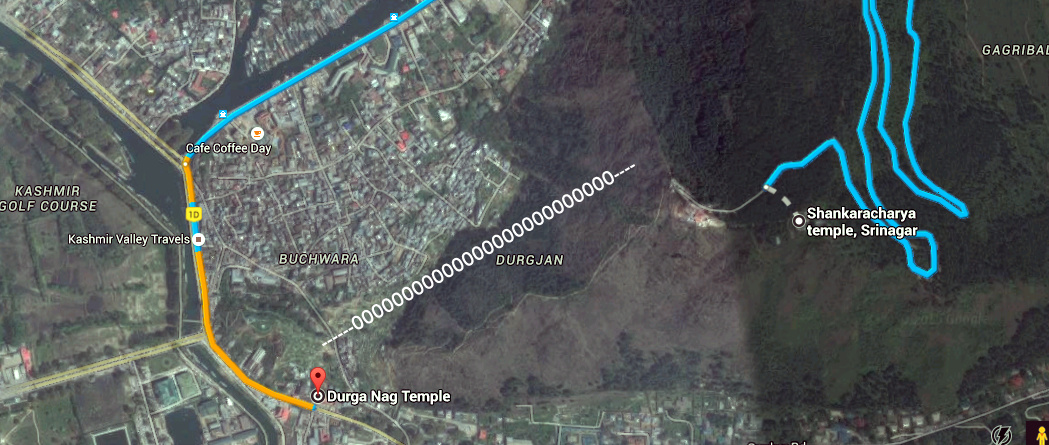
The mosque is said to have been built upon an ancient Buddha vihara. A mosque first came up here during Fateh Khan’s rule (1510-1517). It was a sunni mosque. In 1623, Nur Jahan, rebuilt it as a Shia mosque. It is said the stones for the mosque came from ancient stairway that linked Shankaracharya temple to river Jehlum near the present day Durga Nag temple.
-0-
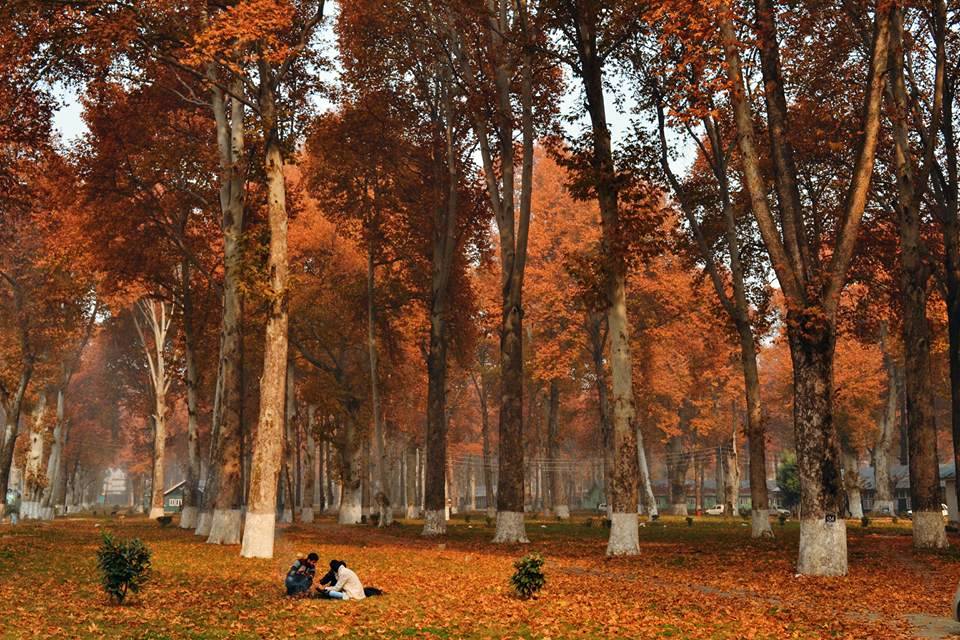
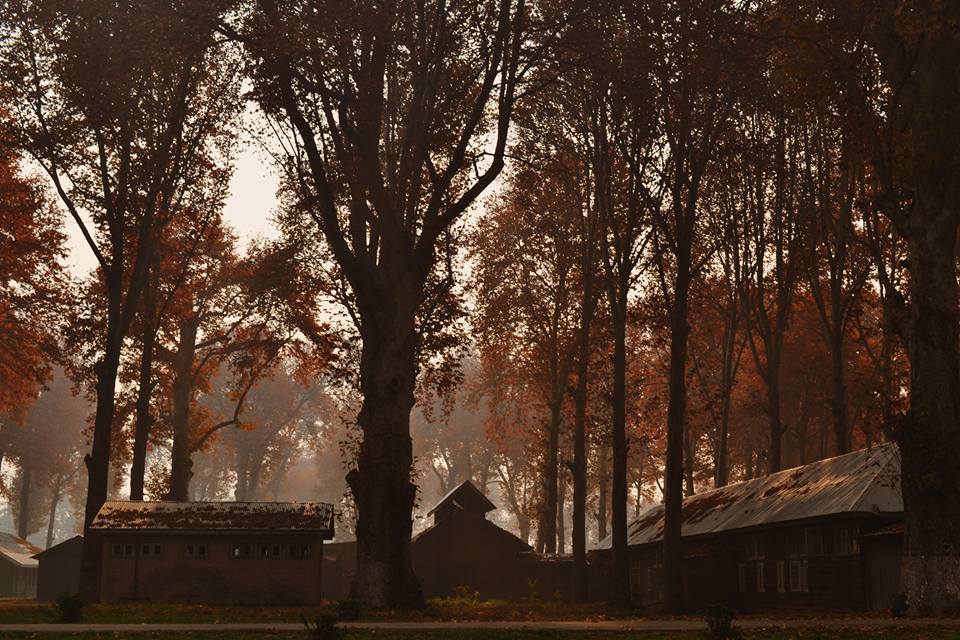
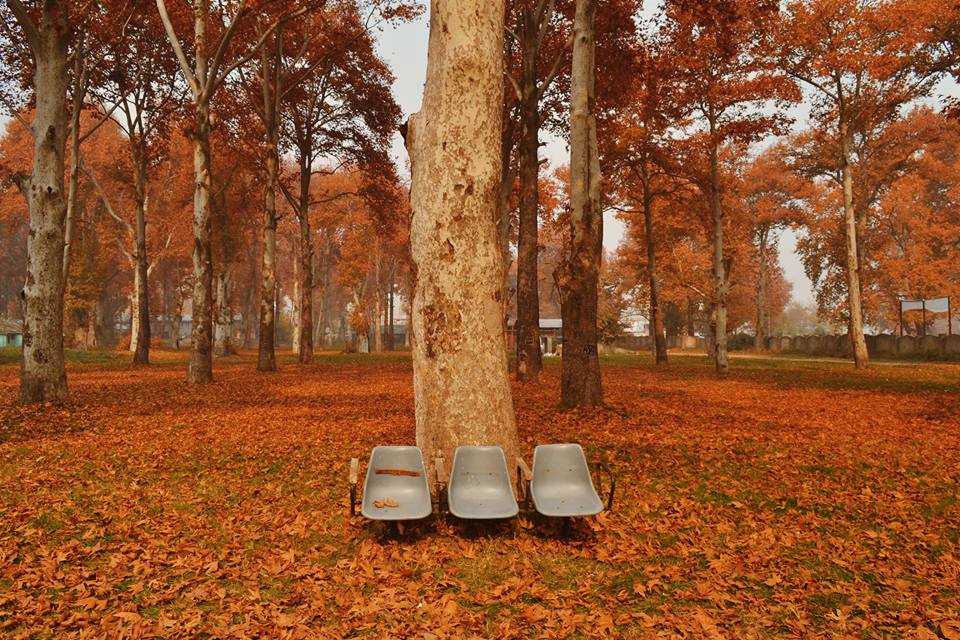
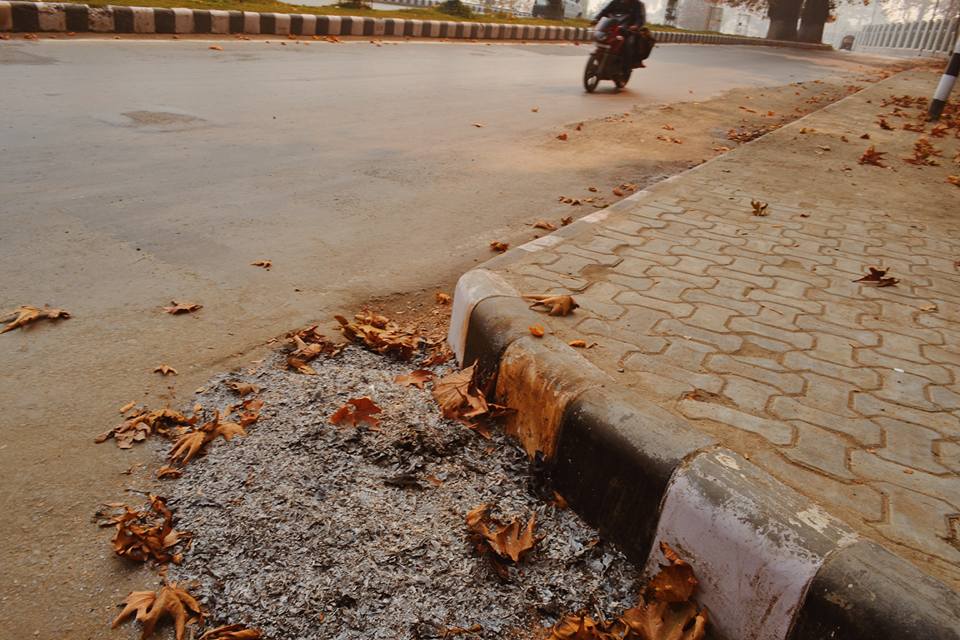
In summer of 1635, when Sun entered the Zodiac of Aries, northern vernal equinox, March 20-21, twelve hundred saplings of chinar were planted all at the same time. Laid out in classic ‘Char Chinar’ pattern, four chinars in four corners of a rectangular piece of land, so that a person in centre would be under shade at all hours of the day. The saplings were fed water and milk. A canal from Zukrah canal (canal now non-existent, near Batpora) was dug and brought in to water velvety green grass. A boundary wall was raised and fountains planted (both disappeared during Afghan time). This Mughal garden was named Nasim Bagh or the Garden of Breeze, for the gently breeze that blew though it.

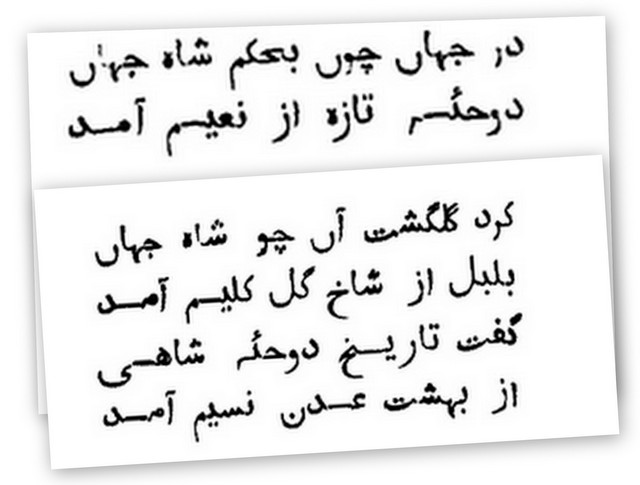
Subha dar Bagha Nashat o Sham dar Bagha Nasim,
Shalamar o lala-zar o sair-i-Kashmir ast u bas
Morning at Nashat Bagh and evening at the Nasim Bagh,
Shalamar, and tulip fields, – these are the places of
excursion in Kashmir and none else.
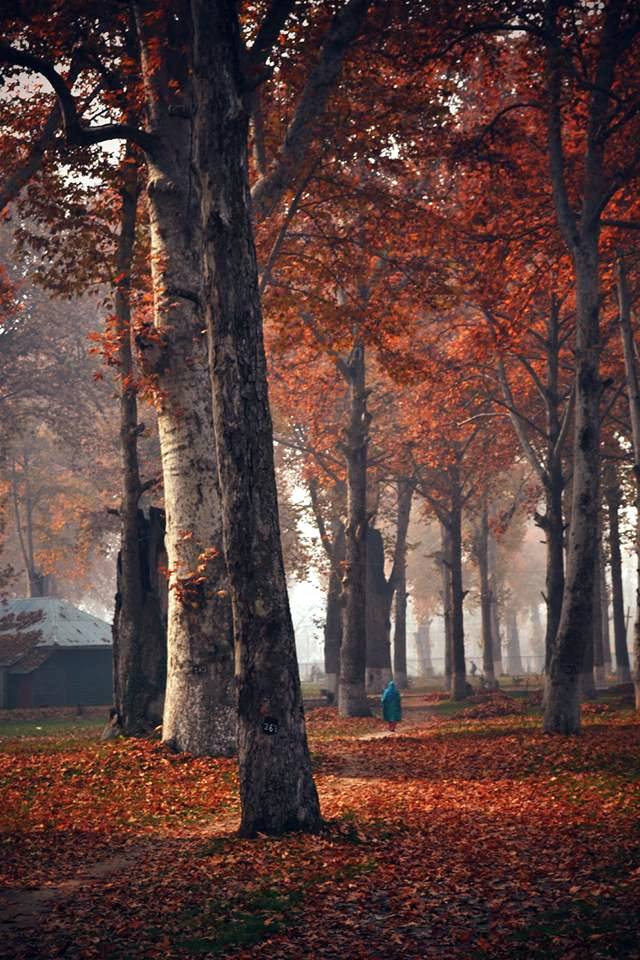 |
| Autumn, 2014 |
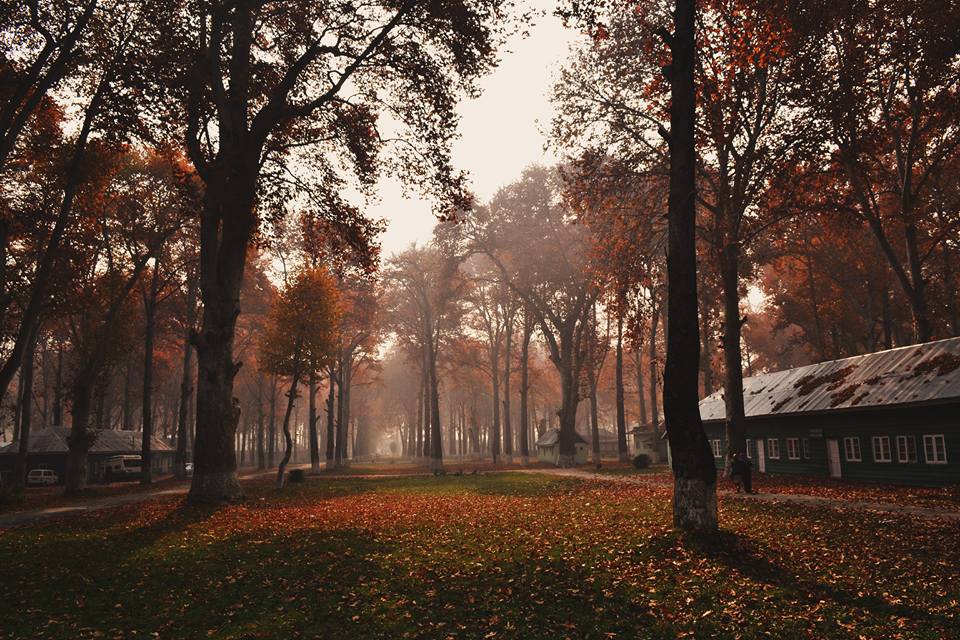
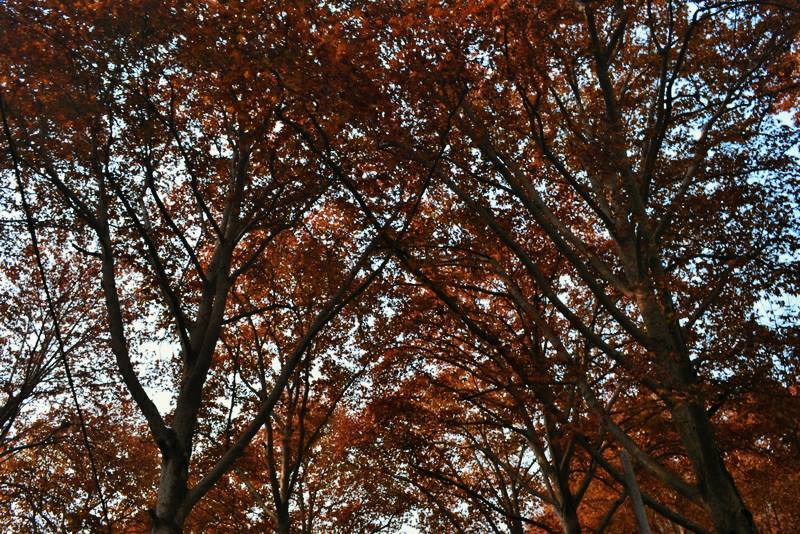
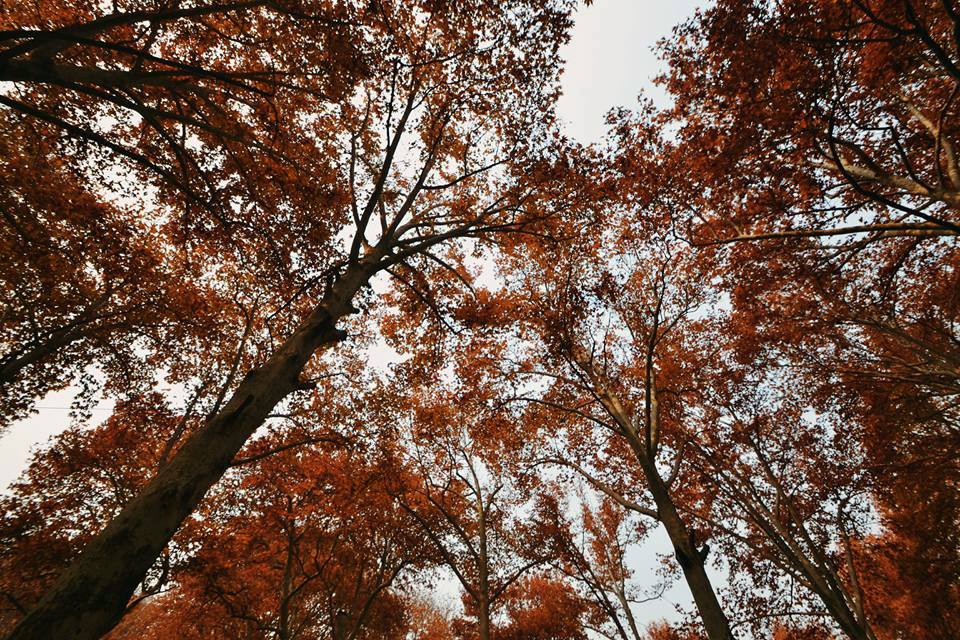
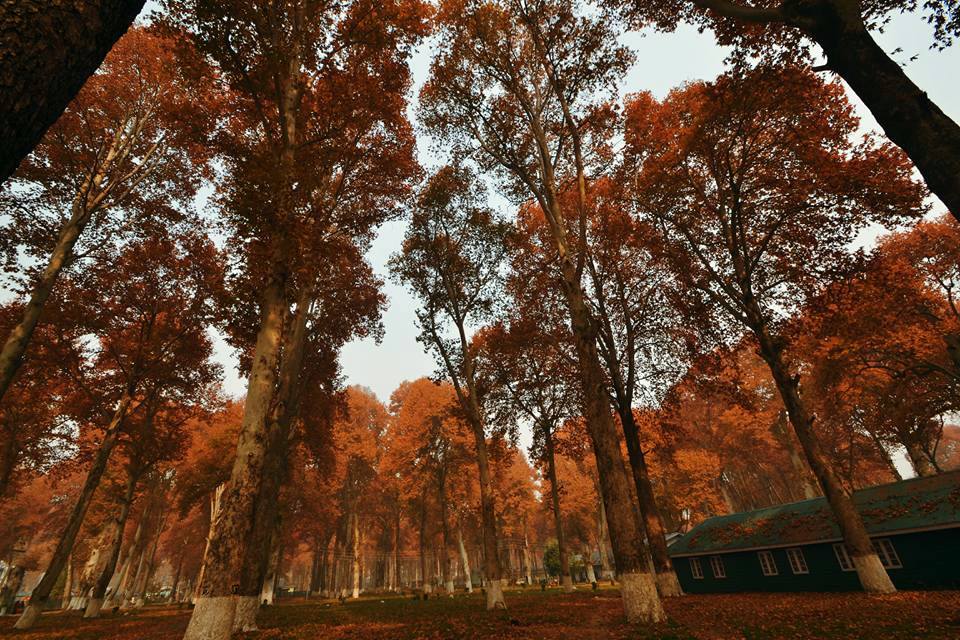
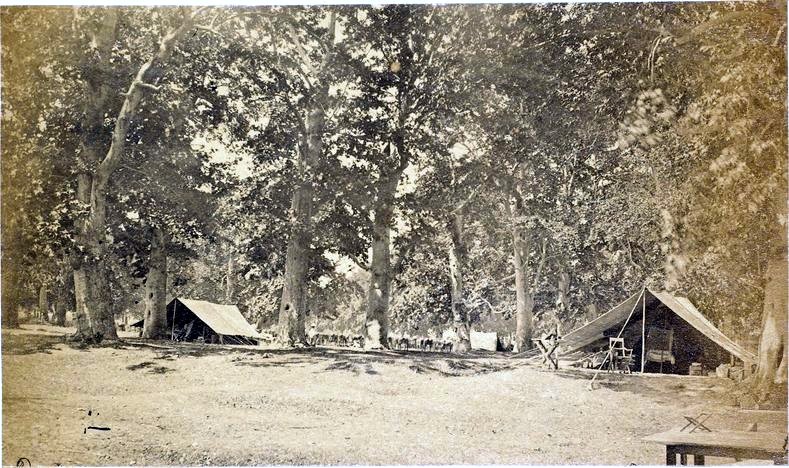 |
| Naseem Bagh 1875 [via: Japan Archive] It was a popular camping site for the British. |
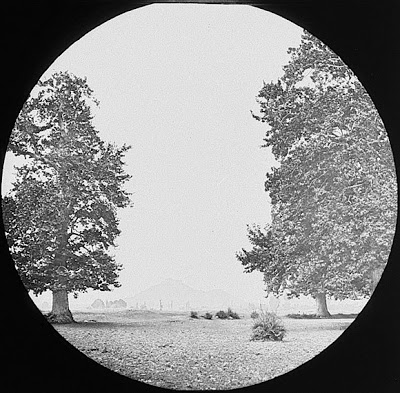 |
| Hari Parbat from Naseem Bagh 1890s [via: George Eastman House Photography Collections] |
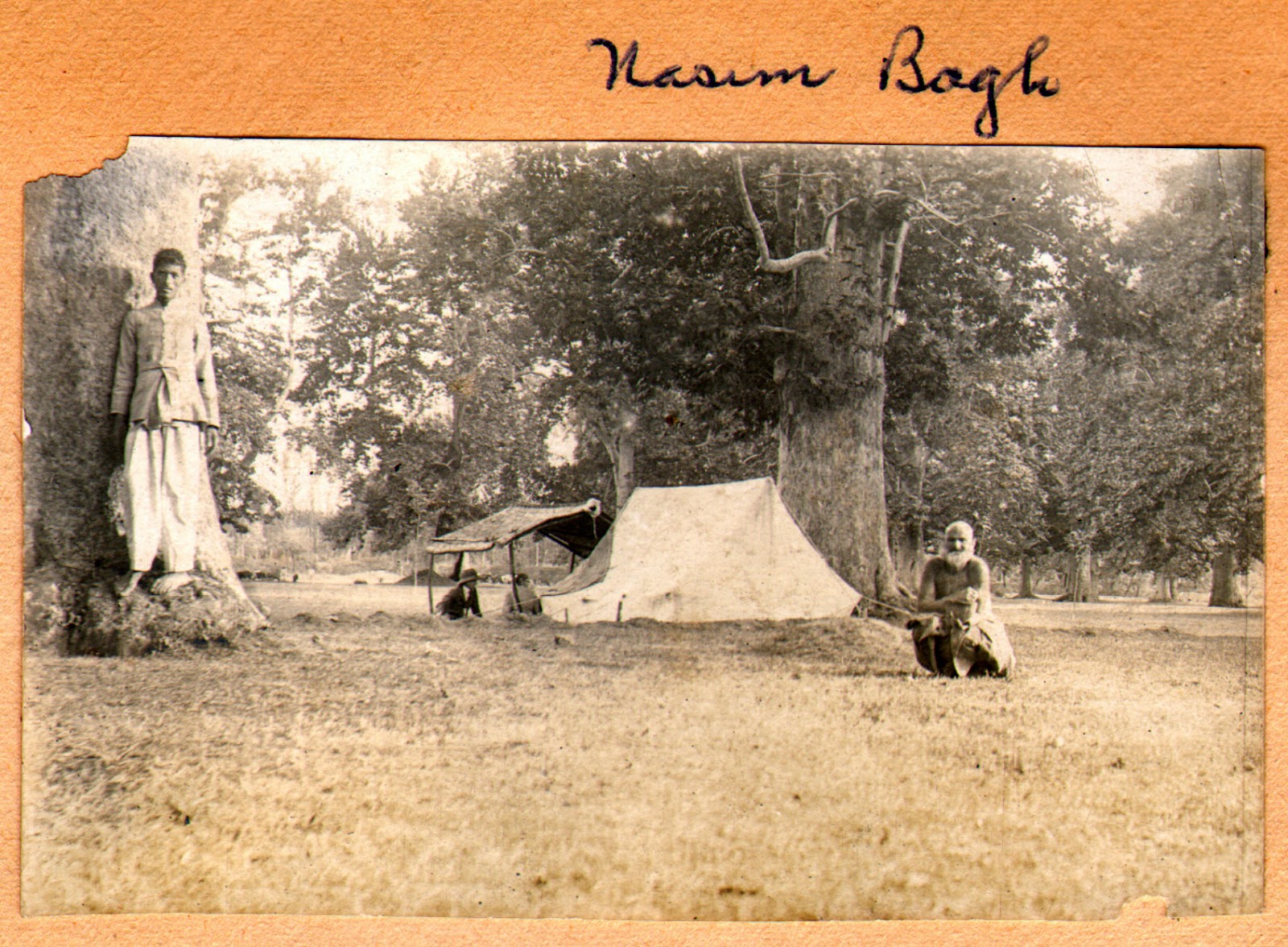 |
| Nasim Bagh by Ralph Stewart 1913 [via: pahar.in] |
-0-
Historical account based on ‘Tarikh-i- Hasan’ of Moulvi Ghulam Hasan Shah (1832-1898). And translations provided by Pandit Anand Koul in 1920s.