
People and Trees
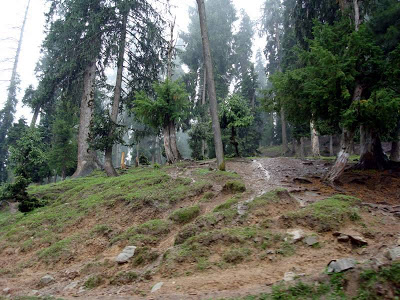
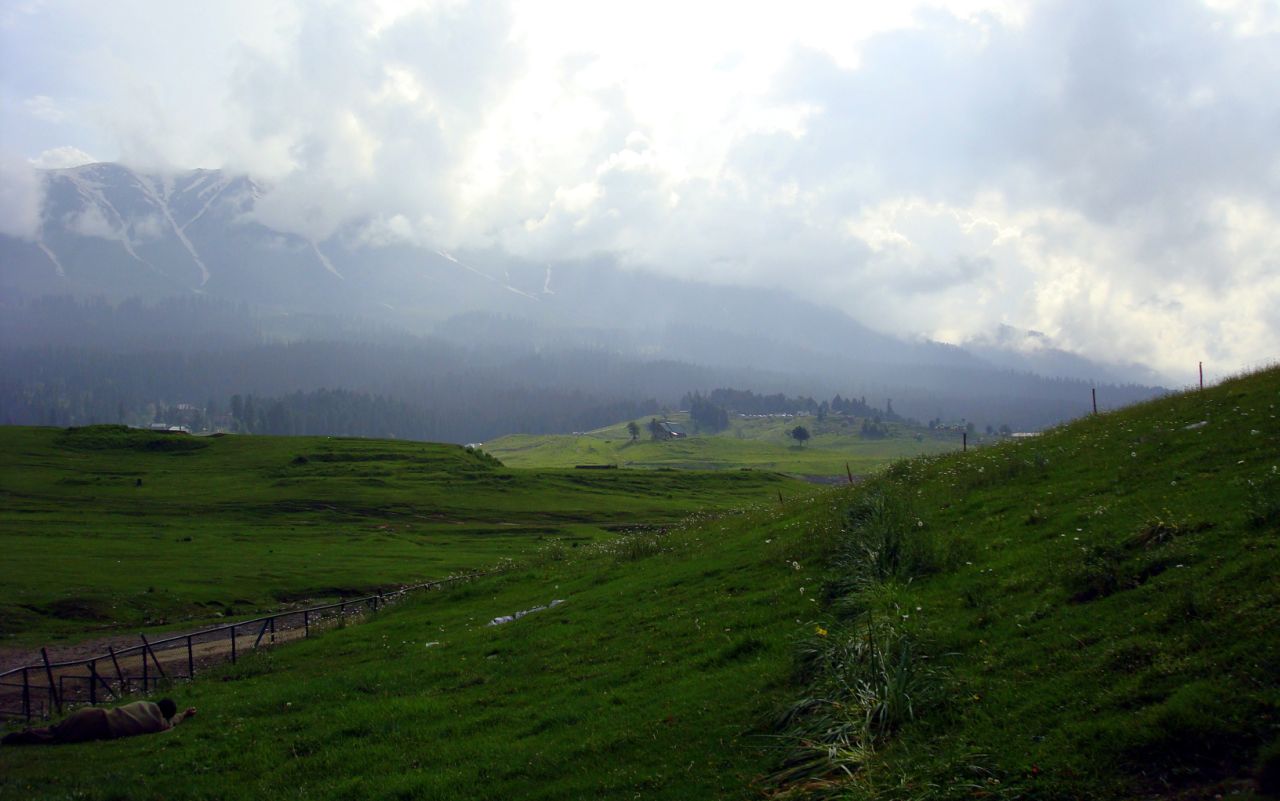
It was pouring at the time
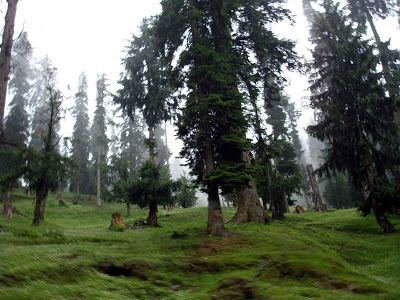
As often happens – Green looked greener

in bits and pieces
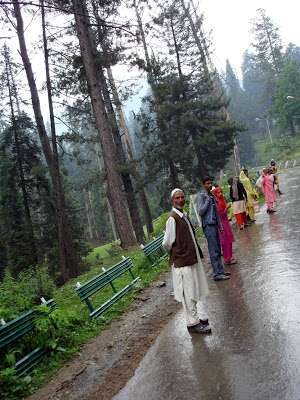
meenu kya ows?
A,B,C ti X,Y,Zed
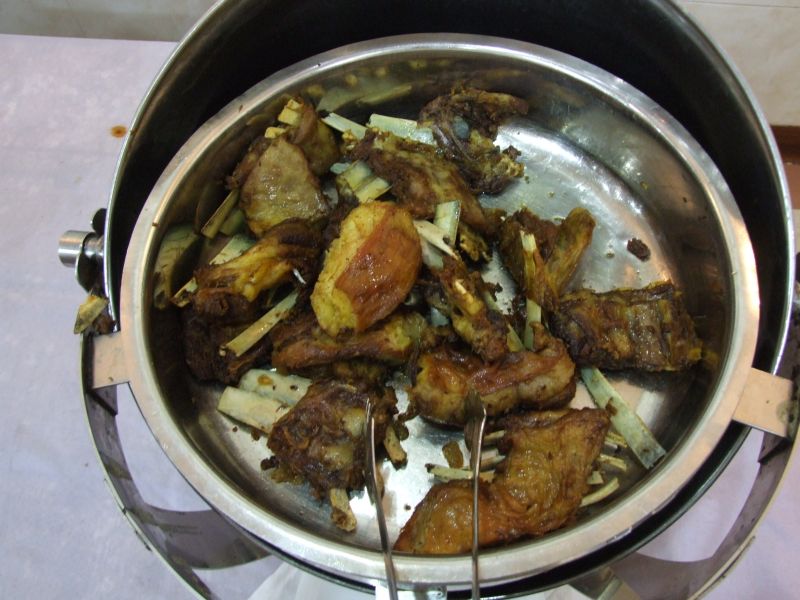
Conversation goes something like this. Conversation went like this for a couple of years. I would hear my father and uncle talk in these codes after each time one of them would return for a marriage ‘reception’ lunch. They wouldn’t tell me what ABC and XYZed stood for. It was some sort of code for the’ standard’ dishes served at these functions. My guess: ABC stood for three vegetarian dishes – Rajma, Chaman (Paneer), and Dum Aloo; XYZ stood for Rogan Josh, Mutsch (how the hell does one write Kashmiri words in Angreez script! It’s the mince meant dish.) and Yakhani. Even if the dishes on the menu were different or more in number, the ABCXYZed code would remain unchanged. I infer it actually means – the feast was a standard belly and artery fulfilling affair. And I guess they would add LMNOPQ…nah A to Z and 0-9 to the code if someday they talk about thirty-six dish Wazwan.
Anyway, here are the photographs of some of these dishes.

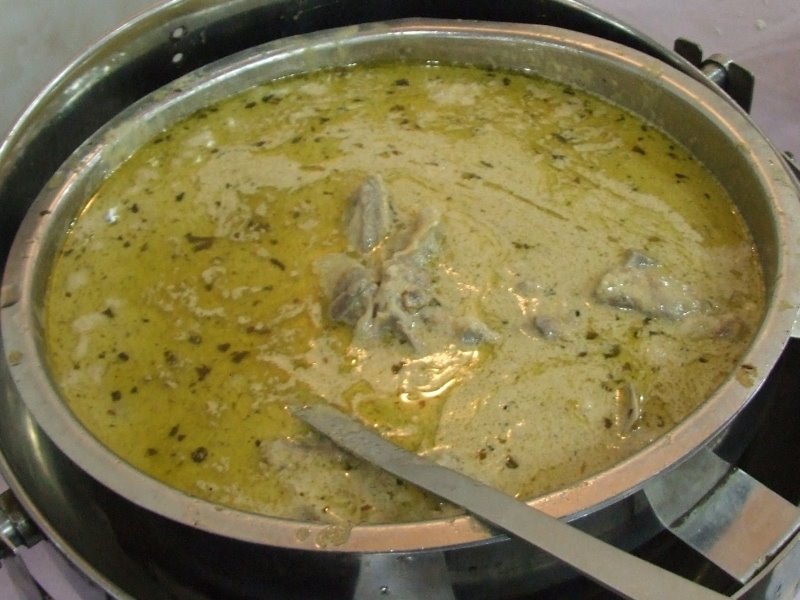
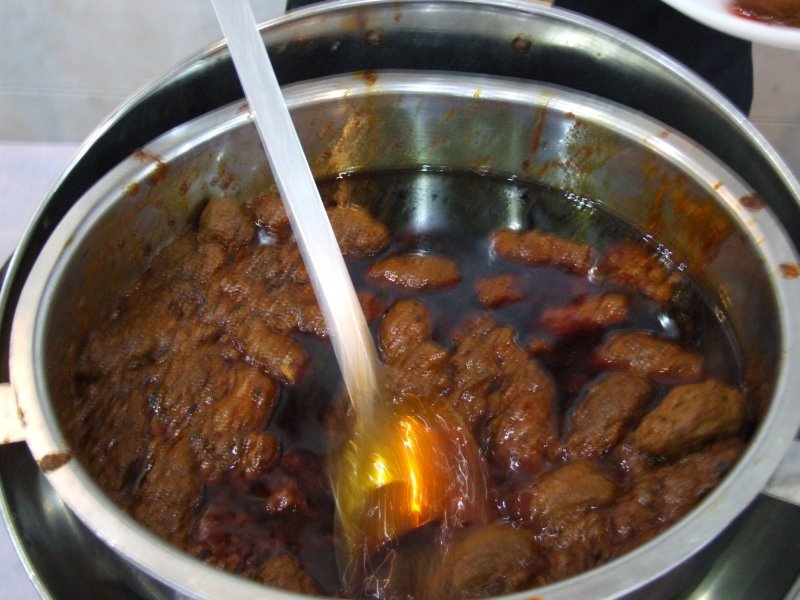
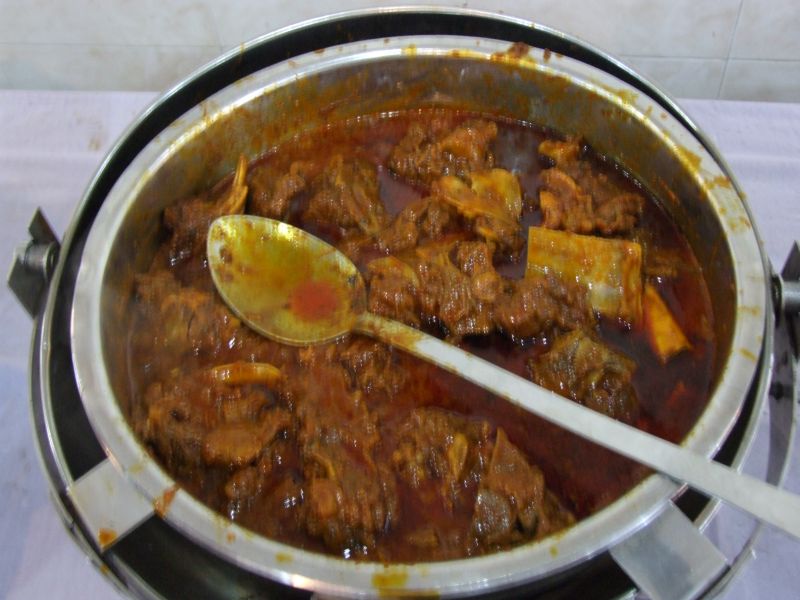
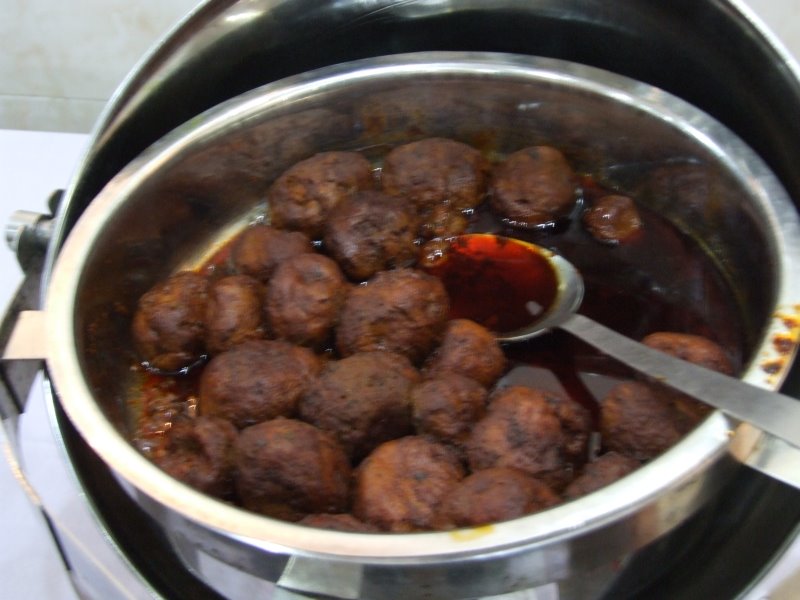
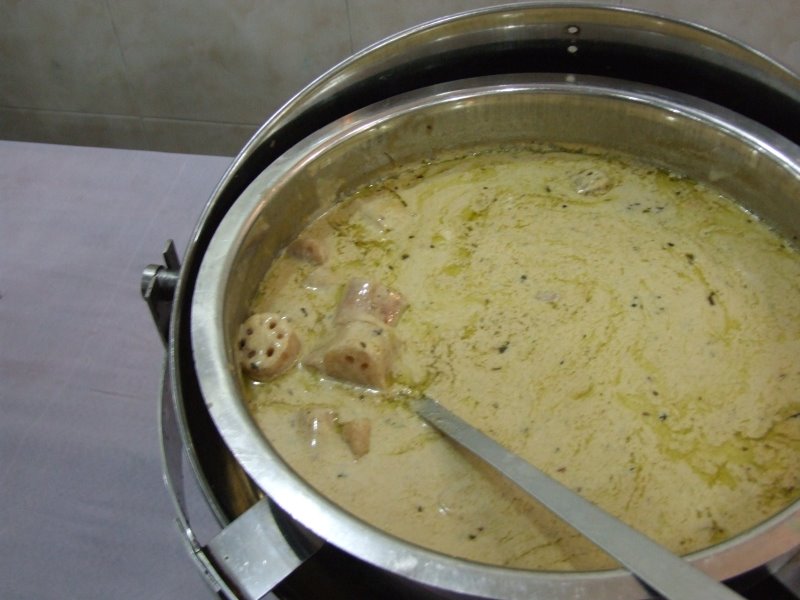
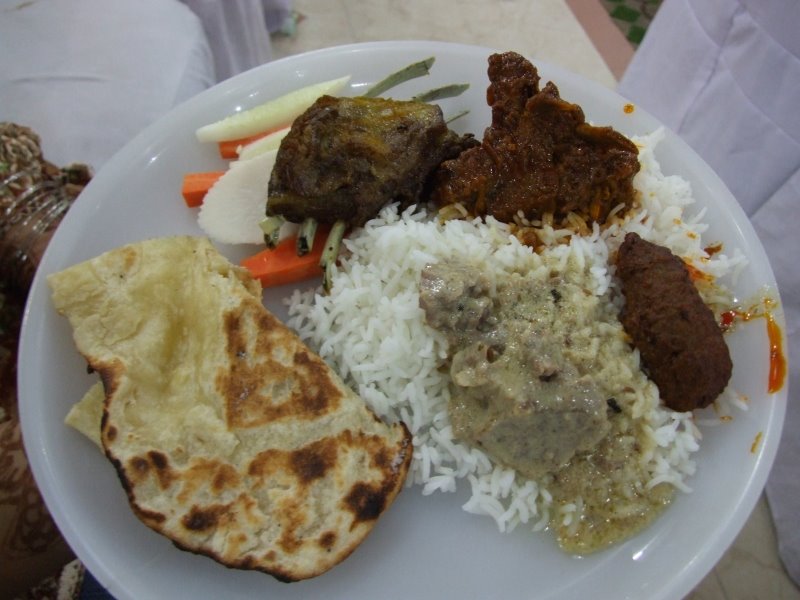
-0-
Yes, it was all Boofay. Had ABC and XYZed. And yes there was Macaroni and some other dishes too. Would that be Alpha, Beta, Gamma?
-0-
For Kashmiri recipes check out koshursaal.com
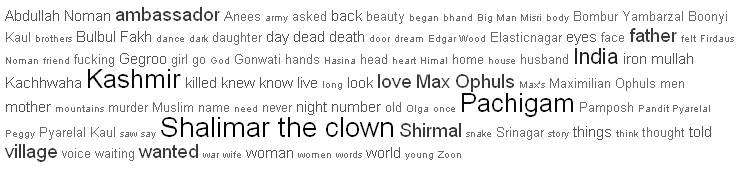

Common Terms and Phrases most used in Shalimar the Clown
Via. Google Books
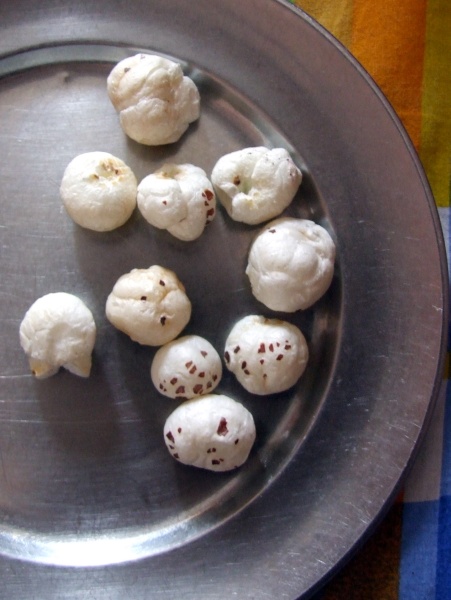

Kashmiri word for Makhanay – Jewer’go’tch. These are usually consumed – raw, roasted or cooked – on holy ‘fast’ days as they are considered to be ‘Kand mool‘, food-root , hence Sroo’tch or pure. Makhanay are a actually seeds of plant that belongs to lily family and to the English speaking world these are better known as Fox Nut
-0-
Kand Mool khati thi woh, Kand Mool khati thi
– a Hindi saying.

sleepy
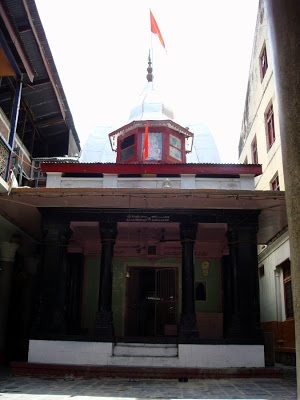

Ganpatyar Temple, Ganpat Yarbal, near Habba Kadal
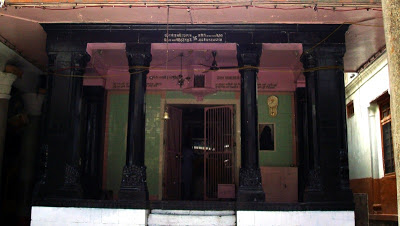
An ancient Ganesh temple of Kashmir.
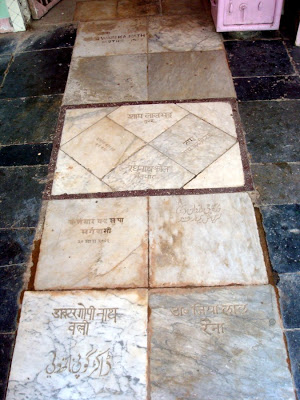
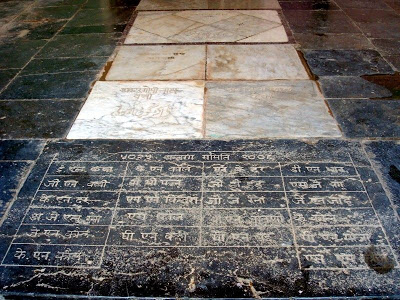
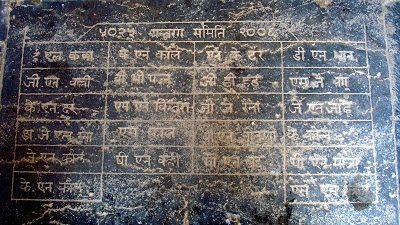
Names engraved in stone.
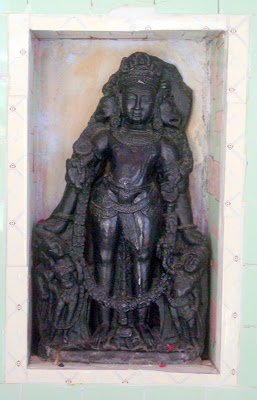
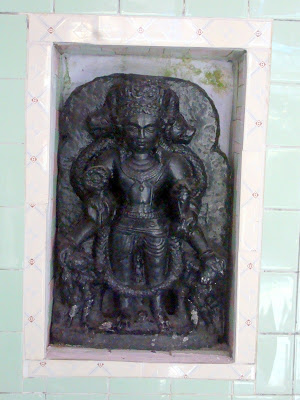
Ancient deities at the door – Bhairav(? Update [2017: Vishnu, one face boar, one face lion, similar found from Martand temple]) keeps guard.
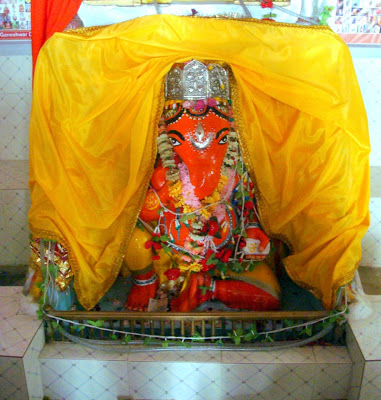
Ganeesh of Ganpatyar.
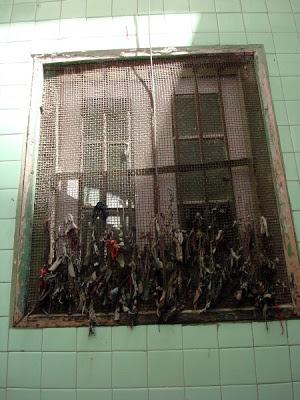
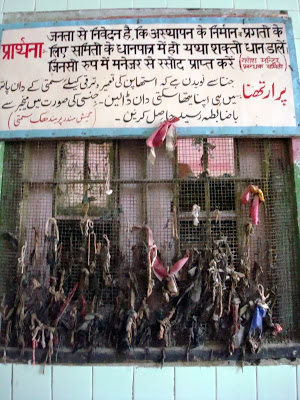
Wish.Threads tied to the window.
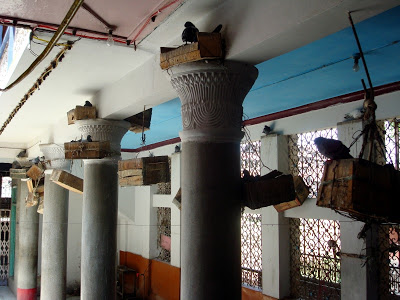
Residents.
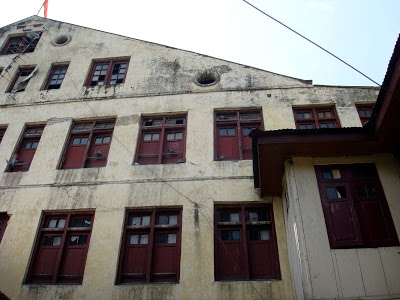
Ganeesh Ghat School, right side wall of the temple.
Markings on the window indicate that it’s used as a camp by the security people.
I was told my maternal grandfather studied here till his third or second grade.
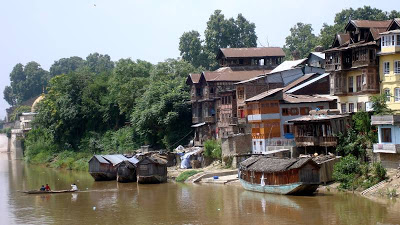
Right bank of Jehlum as seen from the Ganpatyar temple (also on the right).
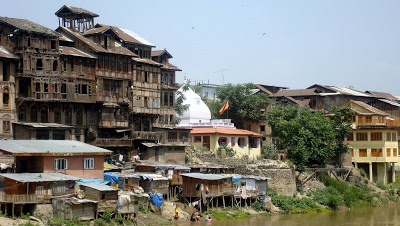
Left bank of Jehlum
Jehlum, as it flows through Srinagar, is lined with ancient temples on its banks.
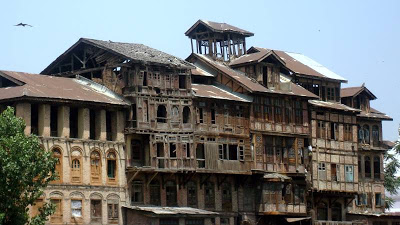
An empty house.
-0-
A security man posted at the gate said he’s from Chandrapur. I know the place, it’s near Nagpur in Maharashtra. In summers the temperature can go up to 47 degree Celsius and burn the skin off your back . He knows why he is here and doesn’t mix words while explaining it to the visitors. He said that the day they are out of here,’ none of this would stand’.
As I looked for the ghat, a Sikh security man explained that the ghat isn’t accessible from the temple.
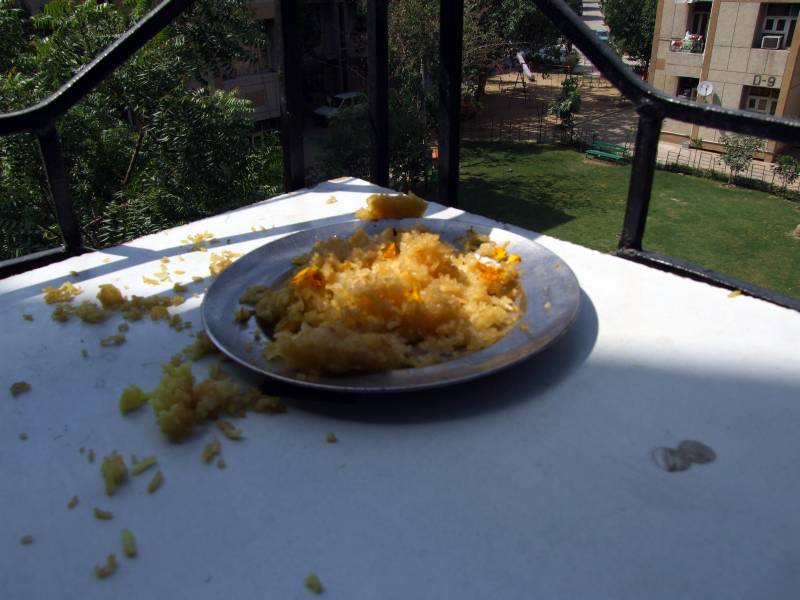

Monday was a big day, she kept a plate of yellow rice out in the balcony…not on the roof. its an offering to a god, birds and now some squirrel too. I come from a family of fire worshipers.
Monday was the day of my family’s Isht Devi – Jawalaji of Khrew, a place about 13 miles from Srinagar.
Here the temple dedicated to this volcanic goddess is built atop a 200 feet high hillock. I read that the kul devi cult arrived in kashmir in around 12th century with the rise of Shakti worship.
[Read more here]
I have never been to the place, but I have been told that the temple is actually in forest area and in old days big cats used to haunt the trails. I read that the last great volcanic flame, no less than two feet, was last recorded here in 1962. A six feet stone kept in the temple has turned black, facing fire all this time. It is holy.
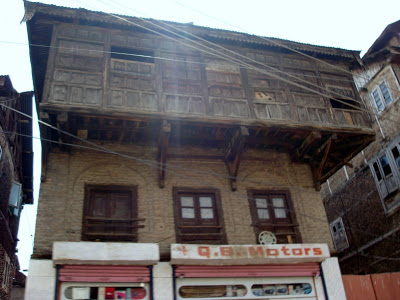
Some desolate looking old Kashmiri pandit houses and some new houses in the process of build. I knew we won’t be stopping to look at these monuments, we were heading for the temple at Ganpatyaar. So, as the mini-van drove down these ancient lanes of Habba Kadal, I clicked frantically. Terrible thoughts. Everyone glum. Van moves on. Fast. Only good thing: camera had some sort image stabilization that worked, almost.

That top floor is a dub construction – in which you get extra floor space.
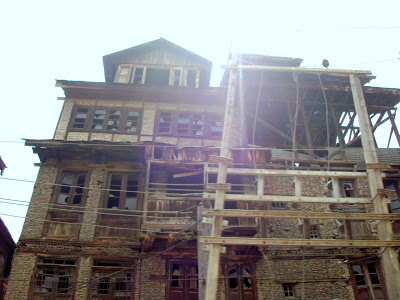
Cry rings out: Batte ghar. Batte ghar.
Gatkaar
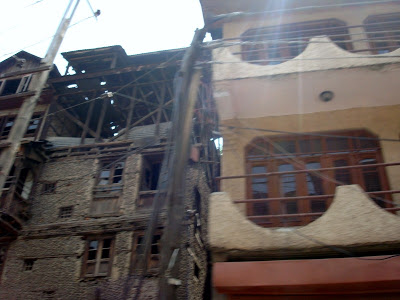
House next door.
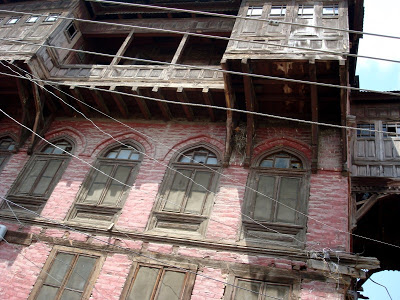
Another dub. More floor space. Great joy sitting at the window on a warm and sunny winter day.
How do people manage to take wire free photographs. You won’t see them here.
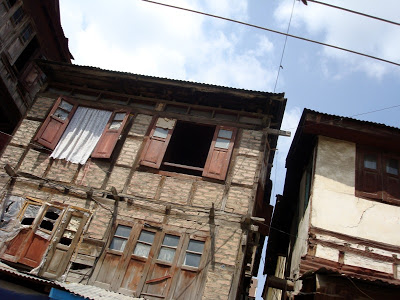
Two houses in intimate conversation.
Last night food had no salt. When he enquired, she told him, “Old fool, you have lost your mind. Just Eat.” So how was your last night. No they don’t share bed anymore. So how was your last night.
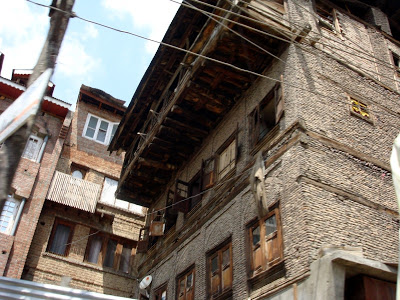
Old style brick work.
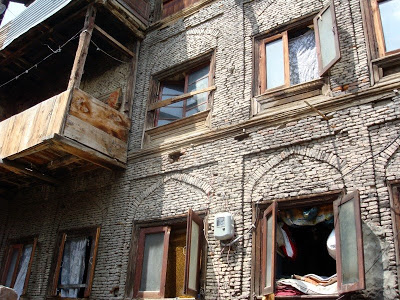
See how the bricks fall in place and window fit in.
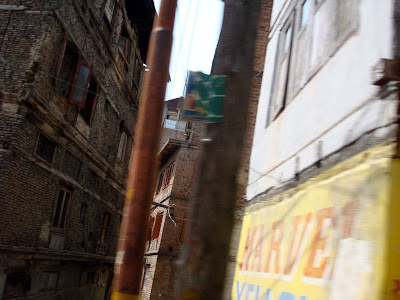
A by lane.
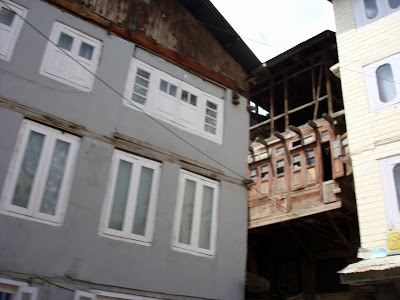
Snubbed out of frame.
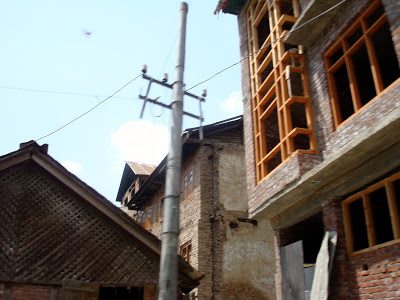
New brick work. It means hotter summers.
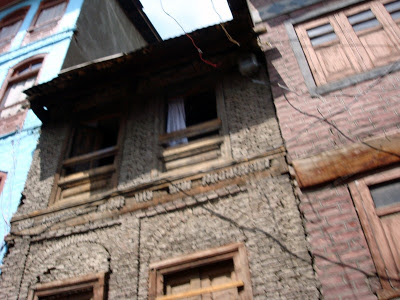
Squeeze.
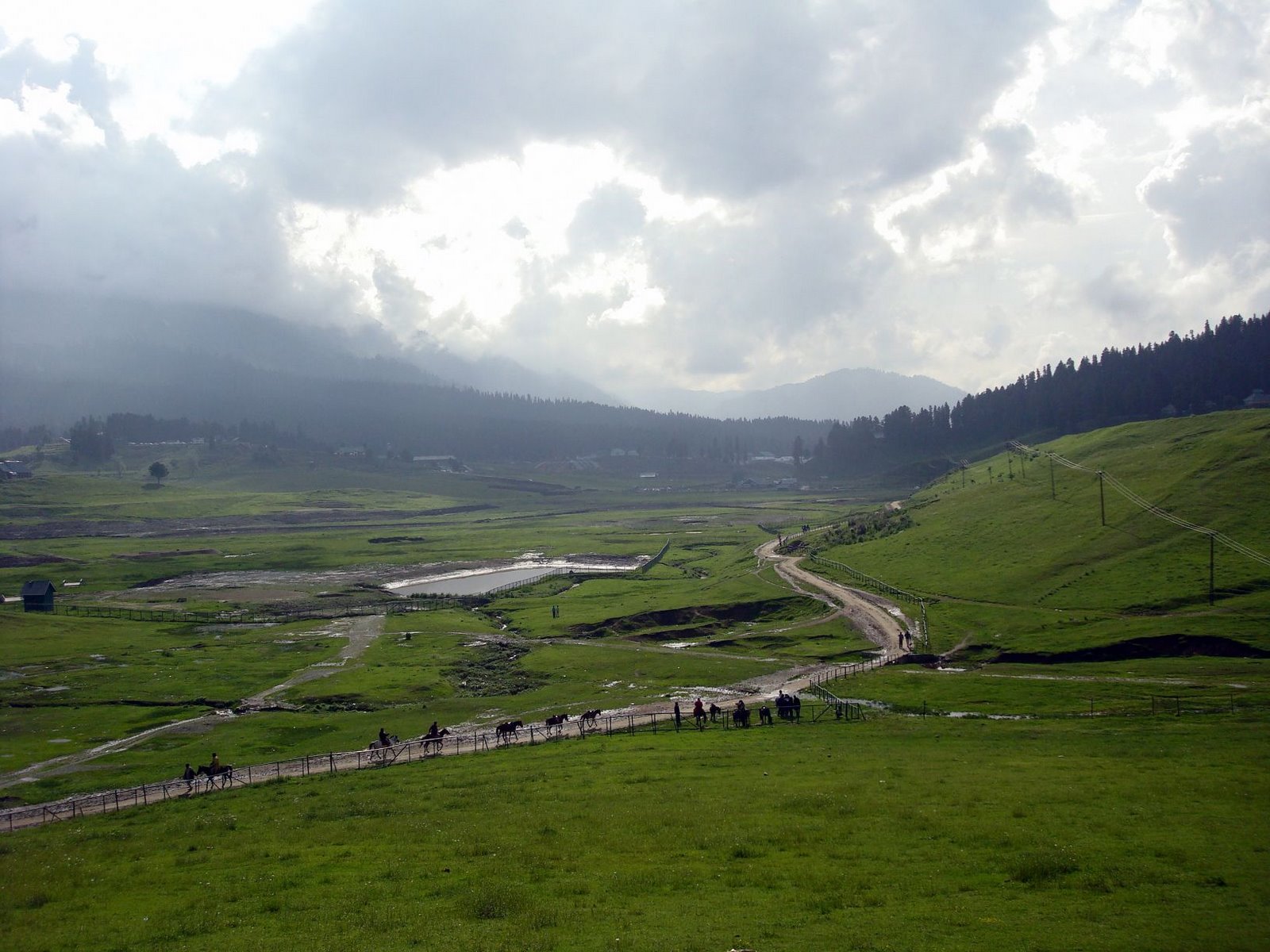

How green was my valley! That summer.
Gulmarg. June, 2008.
Giving it out in big Wallpaper size.
-0-
Some people may recall its former glory.
Funny thing is that in year 1906, Francis Younghusband, then resident of Kashmir, was already documenting how ‘modern’ tourist spot of Gulmarg came into being and how some people (though he was not one of them) Gulmarg was getting ‘spoilt’. He preferred the festive electric environment. In his book Kashmir (1911) he wrote:
WHAT will be one day known as the playground of India, and what is known to the Kashmiris as the “Meadow of Flowers,” is situated twenty-six miles from Srinagar, half-way up the northward- facing slopes of the Pir Panjal. There is no other place like Gulmarg. Originally a mere meadow to which the Kashmiri shepherds used to bring their sheep, cattle, and ponies for summer grazing, it is now the resort of six or seven hundred European visitors every summer. The Maharaja has a palace there. There is a Residency, an hotel, with a theatre and ball-room, post office, telegraph office, club, and more than a hundred ” huts ” built and owned by Europeans. There are also golf links, two polo grounds, a cricket ground, four tennis courts, and two croquet grounds. There are level circular roads running all round it.There is a pipe water-supply, and maybe soon there will be electric light everywhere. And yet for eight months in the year the place is entirely deserted and under snow.
Like Kashmir generally, Gulmarg also is said by those who knew it in the old days to be now ” spoilt.” With the increasing numbers of visitors,with the numerous huts springing up year by year in every direction, with the dinners and dances, it is said to have lost its former charms, and it is believed that in a few years it will not be worth living in. My own view is precisely the opposite. I knew Gulmarg nineteen years ago, and it certainly then had many charms. The walks and scenery and the fresh bracing air were delightful. Where now are roads there were then only meandering paths. What is now the polo ground was then a swamp. The ” fore ” of the golfer was unknown. All was then Arcadian simplicity. Nothing more thrilling than a walk in the woods, or at most a luncheon party, was ever heard of.
And, doubtless, this simplicity of life has its advantages. But it had also its drawbacks. Man cannot live for ever on walks however charming and however fascinating his companion may be. His soul yearns for a ball of some kind whether it be a polo ball, a cricket ball, a tennis ball, a golf ball, or even a croquet ball. Until he has a ball of some description to play with he is never really happy.
So now that a sufficient number of visitors come to Gulmarg to supply subscriptions enough to make and keep up really good golf links, polo grounds, etc., I for my part think Gulmarg is greatly improved. I think, further, that it has not yet reached the zenith of its attractions. It is the Gulmarg of the future that will be the really attractive Gulmarg, when there is money enough to make the second links as good as the first, to lay out good rides down and around the marg, to make a lake at the end, to stock it with trout, and to have electric light and water in all the ” huts,” and when a good hotel and a good club, with quarters for casual bachelor visitors, have been built.
All this is straying far from the original Arcadian simplicity, but those who wish for simplicity can still have it in many another valley in Kashmir at Sonamarg, Pahlgam, or Tragbal, and numerous other places, and the advantage of Gulmarg is that the visitor can still if he choose be very fairly simple.
-0-
I was told my maternal great grandfather used to work as a keeper in a tourist club at Gulmarg. My nani recalls her samawar tea parties held on these green meadows. She also recalls how angreez used to excitedly taking their photograph – kashmiris and their samovar. She also recalls how the fertile land here offered great crop of potatoes. She recalls the luxuries that the job offered – water, electricity, fine cloths and great perks. My great-nana, one Tarachand Raina, worked in Gulmarg right till 1947, right till the kabayli attack after which the club ceased to exist.
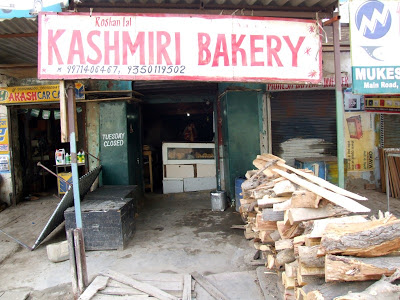

Sector 53. In middle of rows of car repair shops.
Roshan Lal Kashmiri Bakery
Tuesday Closed
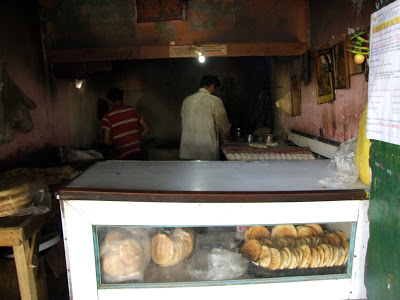
Took these photographs one early Sunday morning.
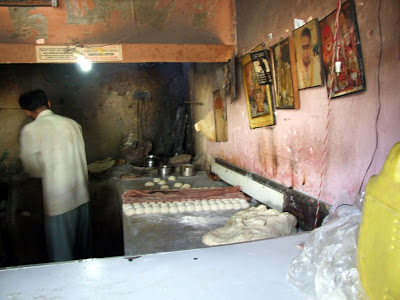
As I walked towards the delivery counter of the bakery, nearby, their previous customer – a balding, portly well-past middle age gent wearing checkered Bermudas (or what resembled Bermudas), a T-shirt horizontal striped in two hues of blue and sporting a pair of rubber chappal, who (I noticed) had bought a bagful of girdas and lavasas, kick started to life his turquoise painted, JK three-digit number plated, late 1980s model Bajaj Chetak scooter and left; bag of girdas and lavasas packed safe in the front dicky.
Next in line was a domestic help of some family, a ‘jeer bai‘, placing an order for rotis.While her order was getting ready, the shop help discussed weather and this and that with her. After she left, I had the entire shop to myself, so I took some photographs while my order for girdas and lavasas was getting ready.
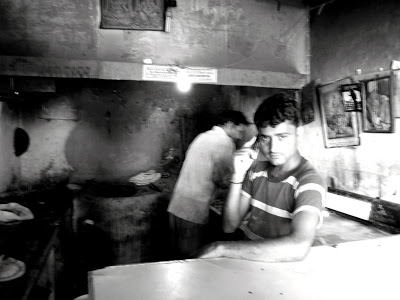
Taking orders on mobile.
They are planning to open a branch at Greater Noida.