Made from rice flour. Get its name because of the Tchir or sizzling sound that it makes on the tava (or Taaw, in Kashmir) while being prepared. I like to have it in the morning with a cup of Kahwa.

in bits and pieces
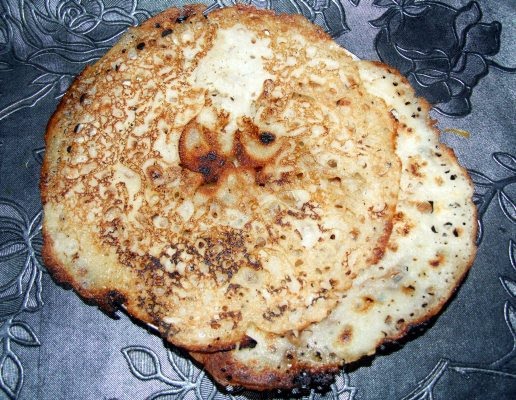
Made from rice flour. Get its name because of the Tchir or sizzling sound that it makes on the tava (or Taaw, in Kashmir) while being prepared. I like to have it in the morning with a cup of Kahwa.
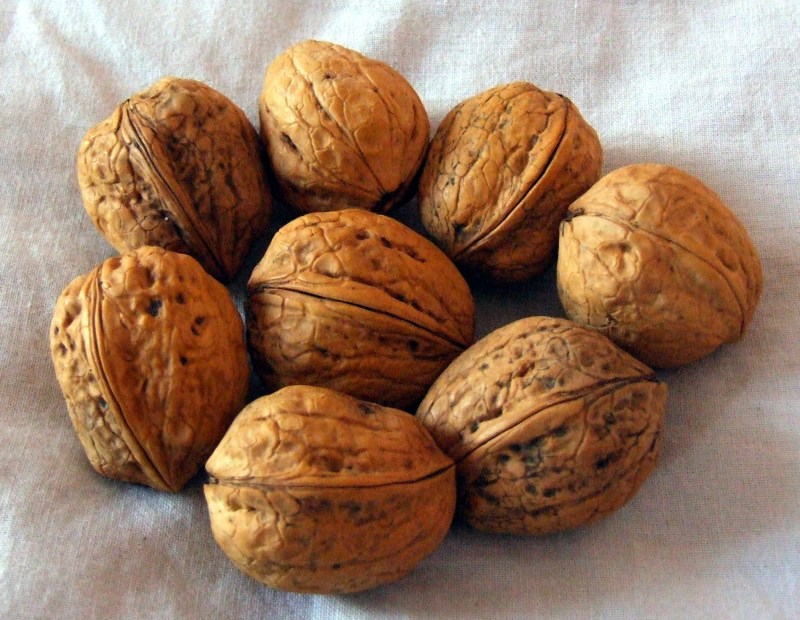

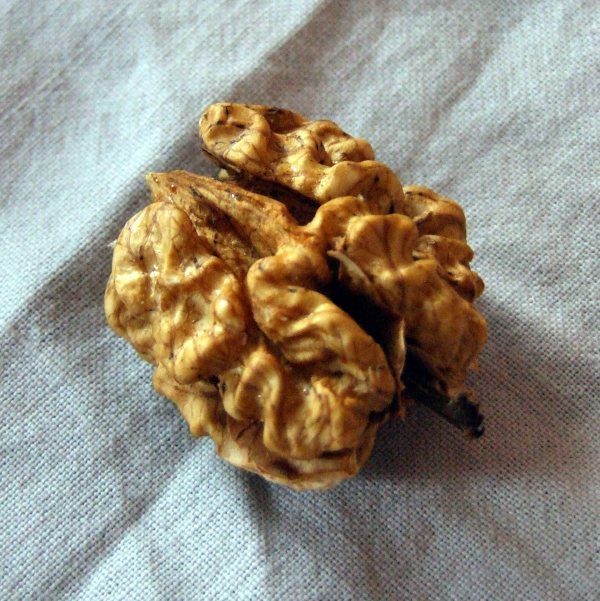
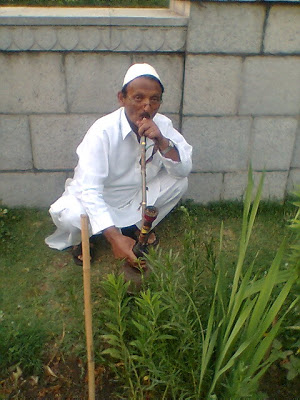
The thing that goes: good good good

A Kashmiri with his Hookah.
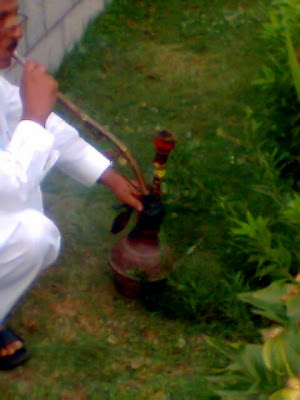
If he coughs, he takes another drag. ‘It is good. Relieves the cough. Clears the chest. Just like a medicine.’ Takes another drag. Good Good Good.
-0-
Jahamuk tamok
Tobacco from Jaham (ie, splendid tobacco).
Jaham tobacco is said to be the finest in the valley
– A Dictionary Of Kashmiri Proverbs and Sayings
(1885)
J. H. Knowles
-0-
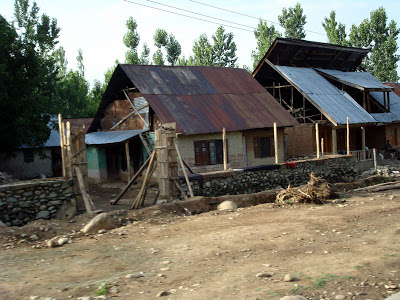
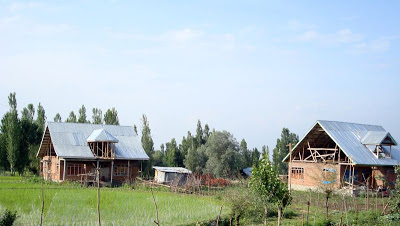
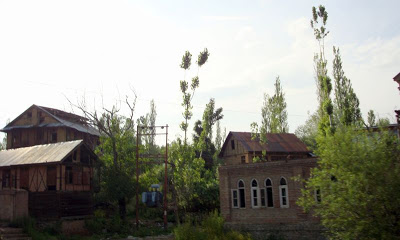
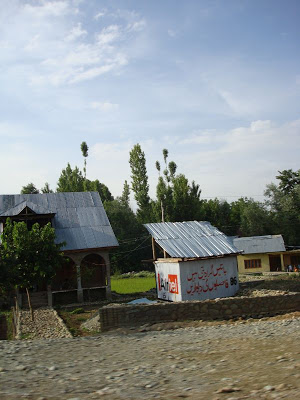
Photographs are by my father.
An old angrez, all the way from England, had come to inspect the Biscoe school. Boys from different classes were gathered in a hall and the guy would ask them various questions. In variable the question that gets asked is: What do you want to become? So after he asked this question to a bunch of boys, each time nodding his approval appreciating there replies – A Doctor, A Scientist, An Engineers, IAS, KAS, A Minister, A Lawyer, An Actor, A Singer – almost contend, other teachers wearing a proud smile, old geese stopped in front of a young boy who looked like he may have prepared and practiced his answer for days. This was his big day when the world will know.
‘What do you want to become when you grow up, Young Man?’
‘Sir, I was to become a big Smudgeler when I grow up.’
‘Goo…what?Sorry son, I didn’t catch your reply’
‘Sir, I was to become a big Smudgeler when I grow up.’
‘A Smudgeler!’
‘Yes, Sir’
The faces of teachers, looking at the baffled face of Angrez, went through a range of emotions, Surprise, Dumbstruck, Shocked, Angry, Refaced, Embarrassed, ‘What-did-he-say’ look, wait-till-I-get-my-hand-on- you’ Look.
Old Englishman asked around,’Can someone tell me what he wants to become? What the hell is a Smudgeler?” The faces of all teacher changed to ‘Could-you-repeat-the-question?’ look. Then an idea struck the Angreaz (but the teacher later claimed they all got the idea simultaneously). He walked the boy to the blackboard, handed him a chalk and asked him to right it down. The boy, shocked at their stupidity, confidently screeched away on the blackboar, in bold letter, the word –
S M U G G L E R.
Turning around he again spoke the word aloud in his mind: smuGG LER.
As he began to write each letter, some of them began to suspect but and then the word hit them. When the boy turned around with a ‘I-am-right.’ look (which the teachers read as ‘Now-you-know’ look) the full force of the words, each letter, hit them. It was the era of Haji Mastans whose great exploits were regularly in those films made in Bombay. The boy wanted to be a smuggler. Principal wished the earth to swallow him whole or at least let him bury his face into it. He did not want to face the Englishman. At least he got the spelling right, no one can fault the school for that. Angrez turned around and asked, ‘ Mr. Principal, now can you tell me what is this Smudgel that this gent here wants to smuggle into Kashmir?
-0-
A cousin shared this funny story that apparently did take place for real.
-0-
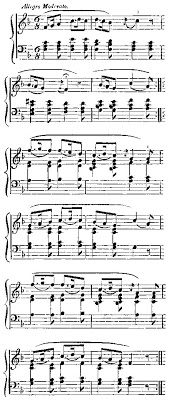
When I first saw that small sheet of music given in G.T. Vigne’s ‘Travels in Kashmir, Ladak, Iskardo ‘( see my post about nautch girls of Kashmir ), a strange thoughts occurred to me, ‘What song had G.T. Vigne heard that day? Wouldn’y it be nice to some how recreate that tune! Would it sound familiar?’.
With no knowledge of sheet music, I set about doing something about it.
(Sheet for Kashmirian Dancing Girl’s Song given in Travels in Kashmir, Ladak, Iskardo)

After experimenting with a number of software, I settled with a software called SharpEye2 that reads sheets from images and converts them to Midi format. The music sheet generated by the software isn’t perfect. Facility for editing the notes is provided but it isn’t very flexible. After tweaking the sheet, the end result looked something like this:
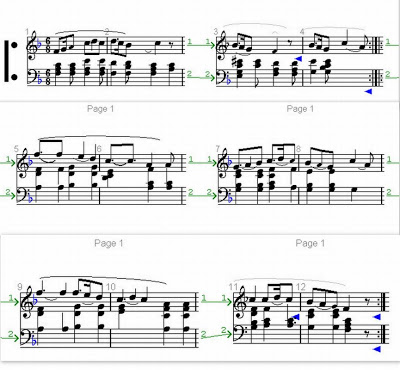
It isn’t pefect but still good enough.
And here is the sound generated (MP3 converted from Midi format):
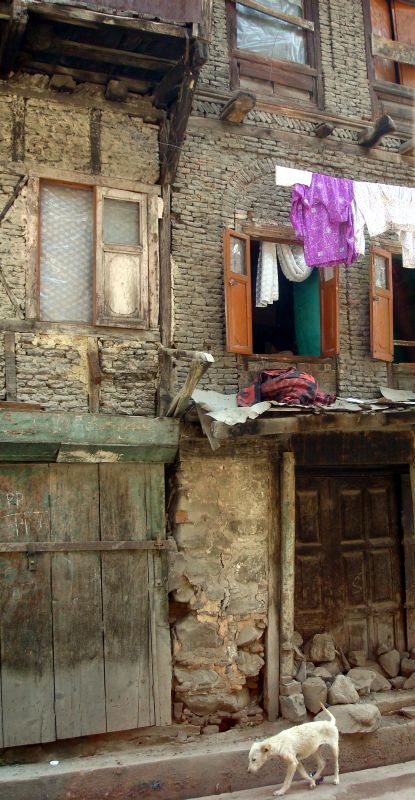

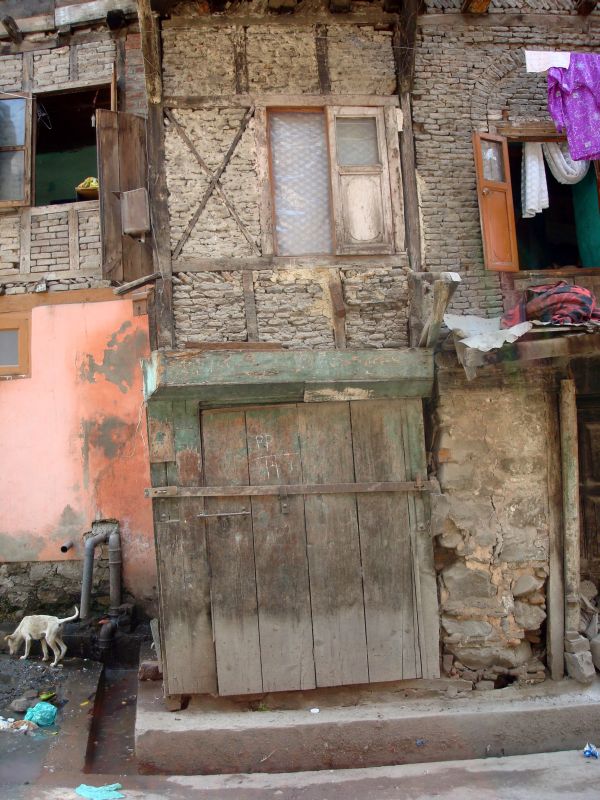
– Just outside Ganpatyar.
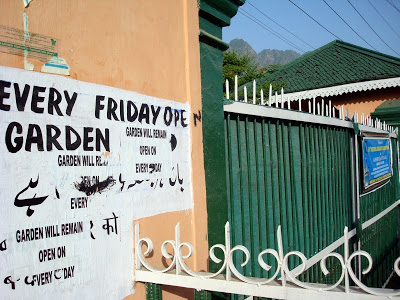

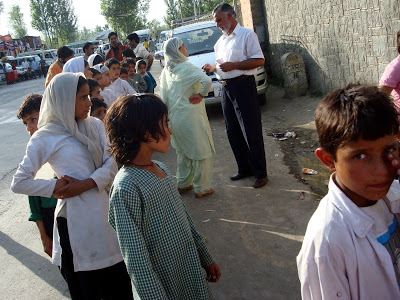
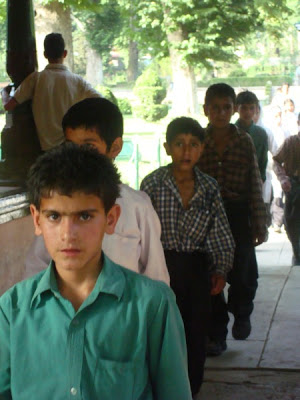
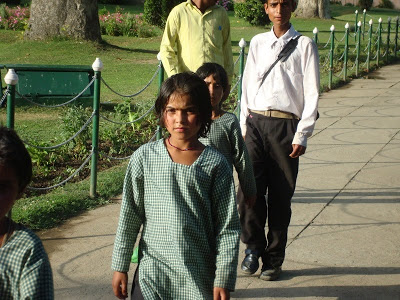
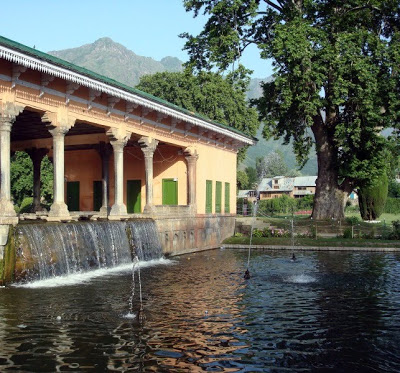
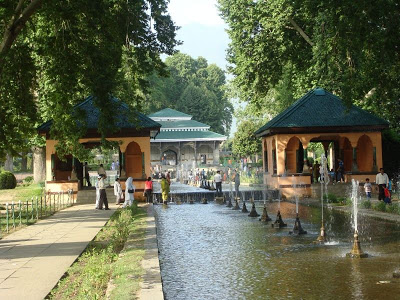
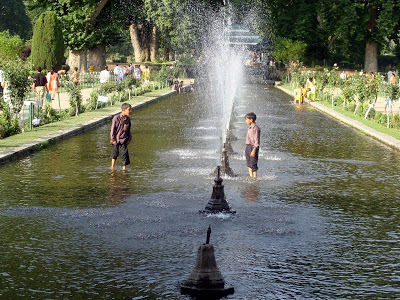
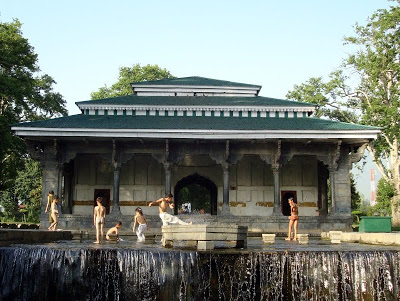
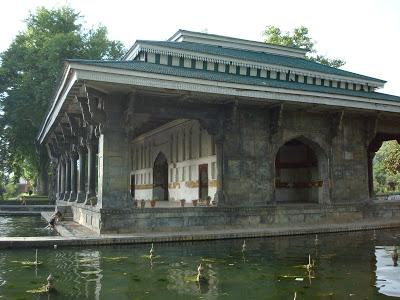
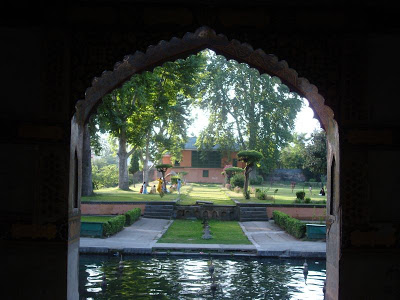
As stood on the ancient terrace, a little girl walked unto the place where I stood, confident, she went, ‘Execuseme!’. I realized I was blocking the entry to the monument. The right thing to do is – walk aside.
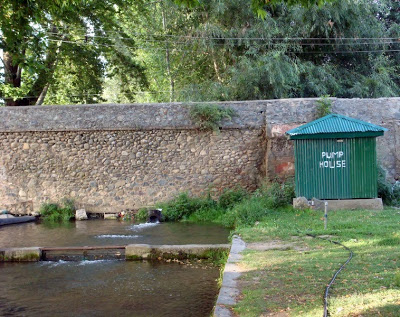
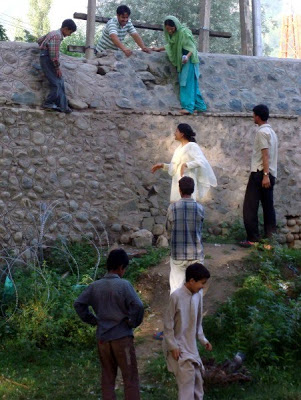
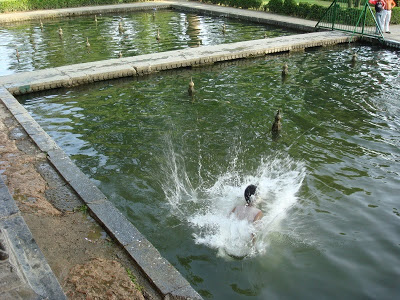
Alternate entry point. No entry fee. And it is fun. Again, stupidly enough, it was not included in the original garden plan by the great Mughals.
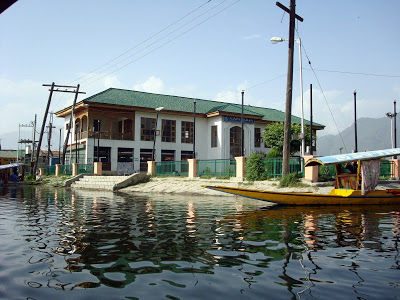

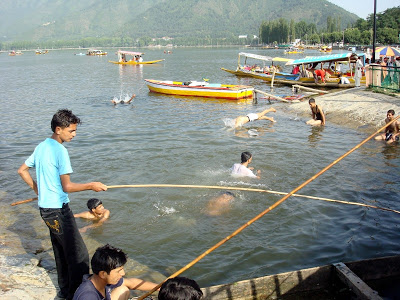
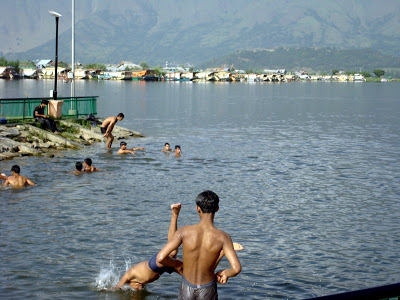
The boy kept pushing his friends into the water. Finally, they all ganged up on him, caught hold of his legs and arms and swinging his body in air, prepared to throw him into the water. The boy started screaming, ‘I don’t know how to swim! I will die! I will die!’ His friends got tired of his drama. They let him be. Some minutes later, one of his friend talked him into going into the water. He agreed. Once in water, he almost drowned his friend by riding onto his head. ‘What’s wrong with you! You want us to get killed. Nothing will happen! I won’t let you go’. The boy wasn’t so sure, he kept repeating, ‘I don’t know. A boy drowned at this very spot a couple of days ago. Swear on your mother you won’t let go of my hand. I will die. Die’ The boy was a genuine dramabaaz, anybody could tell. There was also a slight chance that he even knew swimming. A couple of minutes later he was (while still holding onto his friend’s neck) splashing his legs wildly in water, exclaiming, ‘I can swim! I can swim!’. His other friend, standing at shore, threw a brick (deliberately mis-directed) at him. Of course, it missed and hit the water, creating a big sploosh. The boy looking genuinely offended told them, ‘Swear on mother, you won’t do that again. You want to see dead!’ All the boy were in their late teens. If you witness a scene like this anywhere else in this part of the world, boys having fun like this, there is a good chance that they will also be rhyming insults at each other’s mother and sister – it’s almost a way of showing endearment among males. It seems Kashmir (at least most of it) is still too idyllic to move in that direction. Pleasures are simple. Friends are friends. Mothers are mothers. Swimming is swimming.
“Waliyu, waliyu (come, come).” Little Aadesh welcomes this writer at his house on the edges of the forlorn village Haal, about 30 km south of Srinagar.
It is a typical home with a wooden door in this village of 3,000 people and their burnt-out, collapsing brick-and-timber structures, once inhabited by 150 Kashmiri pandit families.
Adeesh’s family is the last.
The three-year-old is the grandson of Omkar Nath Bhat, 72, the only Kashmiri pandit to have decided to stay back in this once-vibrant village of friendly people and views of snow-clad mountains and forests.
The other pandits, Kashmiri Hindus, of Haal left in the winter of 1989, the year militancy exploded across the valley.
– A piece on ‘Remaining Pandits of Kashmir’ by Arun Joshi for Hindustan Times (September 14, 2009)
It’s not ‘Waliyu, waliyu’. It’s ‘Wal’yuur, Wal’yuur‘.