
Swimming
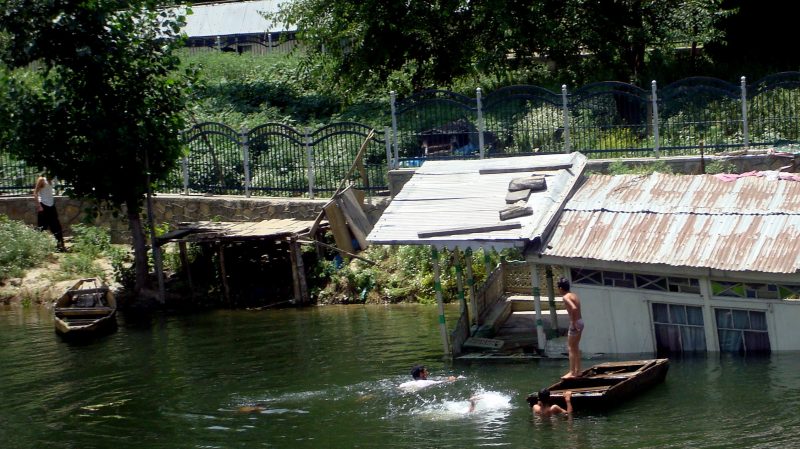

in bits and pieces
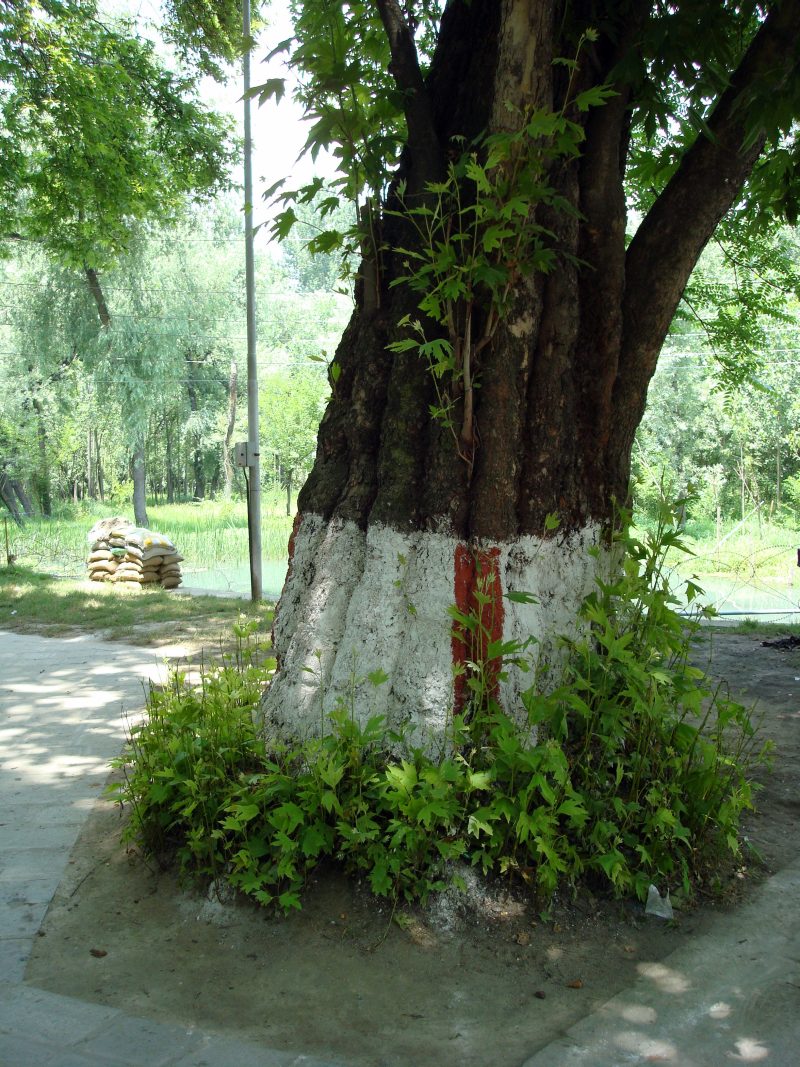

Saplings and Sandbags.
Khir Bhawani. June 2008.
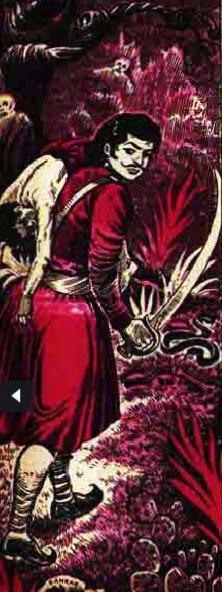

‘Wan Raaz Trivikramasen! Answer King Trivikramasen’ Baital needles the king into answering his trick questions in a 1960s (?) Kashmiri production of Baital Pachisi for Radio Kashmir. The popular radio show was probably based on Kashmirian Somadeva’s Vetalapanchavirhsati in which the hero, the King is called ‘Trivikramasena, the son of Vikramasena’ ** but still refers to the semi-legendary Vikrama or Vikramaditya of Jain tradition.
More about Vetalapanchavirhsati Here


She stands in front of the wall, looks at the door, stopped, a little confused. She call the waiter over.
‘There used to be toilet here! Where did it go?’
‘Madam the toilet is now down stairs. This is the…’
She looks around. At the ceiling, at the walls. I look away, miss the last word. I believe the word was ‘lift’. Her old legs slowly lead her downstairs.
 The little woman must have been in her early Sixties. When we took a table, she was sitting at a nearby table with two men who looked like her sons. They were having a full table, a full meal. Dinner.
‘They are Kashmiris too. Must be Punjabis.You know the business class. Stayed here for generations.’
I know.
She did the ordering. This was her place. The place. She must have been here a lot -“We must try this, the place served best of this.’
Tea arrived at our table in a metal kettle. Milk. Sugar.We prepare cups of tea.
‘They will bring a fresh hot kettle when this one runs cold. Great service! They have the best tea. Try it.’
This is embarrassing but true. As I take the first sip, the taste on my tongue makes me feel like I have never had tea before in my life. ‘What leaves do they use? This is almost a new taste.’
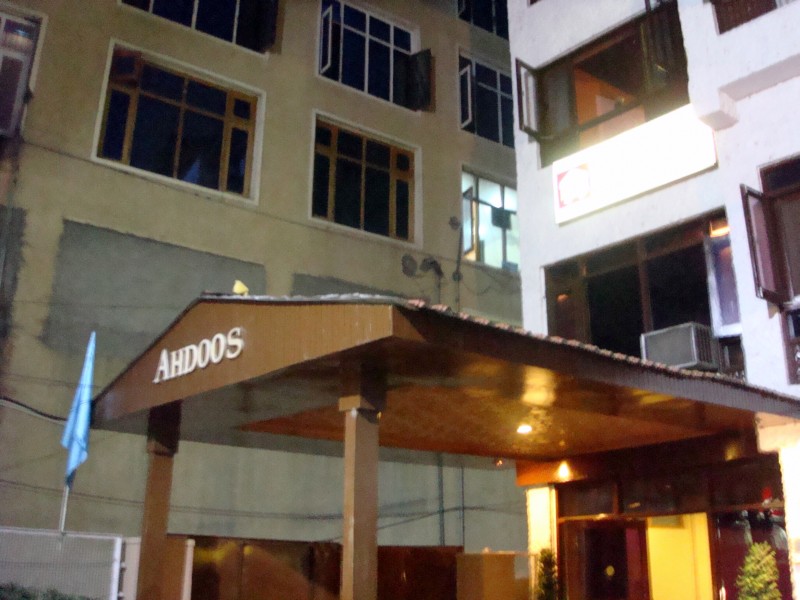
‘After four in the evening, this place used to be alive with people. They would crawl out of various government offices, in groups, alone and head for Ahdoos. The place would be filled with cigarette smoke. On one table a group would loudly be pro-government. At a nearby table a group would be loudly subversive. Tea kettles would turn cold and be duly replaced with a hot bellied one. Discussions went on.’
My father remembers. This was Ahdoos.
It’s late evening. The table to the left is occupied by two men, in early thirties. Kashmiris. Almost done about to leave. Newspapers on the table. The two are still talking, but both in friendly conceding tone. I don’t notice them leaving.
Waiter arrives with Chicken patties.
‘ Ah! Chicken patties! Try them’
Chicken is soft, unlike leather and strangely has a taste. It has been minced to butter.
‘The size has become smaller. They used to be bigger.’
Waiter smiles a little. Almost detached from his environment, the man was an old fashioned waiter, in his forties, a pencil moustache, he could have been a government employee. ‘Would you like to order anything else?’
‘Yes, a serving of Gushtaba.’
‘Anything to go with it. Rice. Roti.’
‘Nothing.’
Waiter comes to life. ‘Nothing. Okay. If you had told me earlier that you were going to have Gushtaba I would have kept tea and patties for after.’
‘It’s okay. And you are right. But who knew?’
‘Anything else?’
‘No. That’s it’
‘Soon.’
Father looks at me and say, ‘We will be having dinner with the rest at the hotel. They won’t be pleased to know that we came here without them. Hotel owner has been specially asked to prepare a non-veg dinner tonight. So we can’t have anything heavy. But Gushtaba will do’
Will more than do.
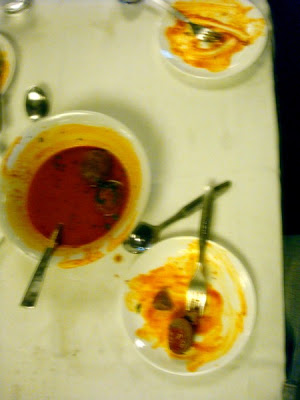
We were soon digging into those soft meatballs called Gushtab. Dense and Delightful. Stupendous. Before leaving we ordered another serving, around twelve balls, for the folks back at the hotel. To return empty handed from Ahdoos would have been unforgivable.

Broadway near the Army cantonment area,
Neelam at the back of the Civil Secretariat,
Shiraaz at Khanyaar,
Palladium and Regal at Lal Chowk,
Naaz near Iqbal Park,
Shah in Qamarwari,
Firdaus in Hamwal,
Khayyam near the chowk of same name.
Then there was:
Heaven/Hewaan in Anantnag,
Thimaya in Baramula,
and Samad/Summer Talkies in Sopore.
-0-
Kapra in Sopore
Amrish/Regal Talkies at Residency Road:
Regina cinema of Baramulla
Marazi cinema in Kupwara
Heemal at Handwara
Nishat at Anantnag
Zorawar Theater on Srinagar-Baramulla Highway near Pattan,
run by army
These thanks to commenters (see below). Now the total is about 19.
-0-
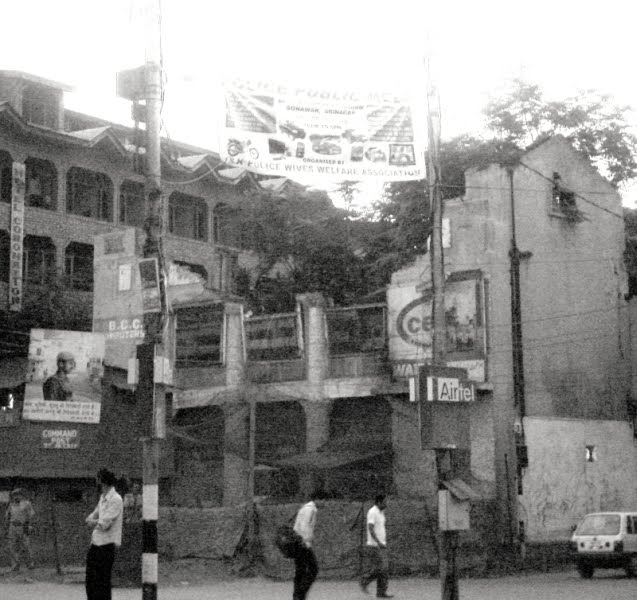
Image: Remains of Palladium Cinema Hall, Lal Chowk, Srinagar. June, 2008. Burnt down in 1992.

As bombs burst outside,
faint-hearted Jakie ran inside.
Her ears couldn’t bear the sound.
Diwali is always loud.
It was, even in Kashmir.
She ran for her life.
Crossing vot,
she made an instinctive dash
for the safest place in the house.
Eyes and some legs followed her.
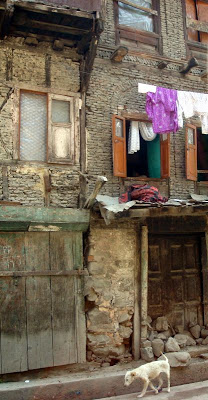
Jackie ran for thokur-kuth.
The God room, the holy kitchen.
Among the framed family portraits of smiling gods
from the Himalayas, Plains and the Heaven,
Jackie stood moaning right next to the unlit
(but still warm for autumn night) daan.
Howling.
A canine inside a Hindu Kitchen.
‘Jackie isn’t very fond of Diwali. Jakie went mad.’
They were all now laughing.
Jakie was led out of the Kitchen.
But nothing could make her come out of the house.
(Weak-hearted Jackie)
So she stayed inside all that night.
‘Tomorrow, she may go back to roaming the streets.’
Old lady of the house again cleaned the Kitchen.
Poured water and swept the floor
Purified.
A diya still burning in front of gods. She bolted the door shut.
‘You weren’t born when this happened.’
I heard this story, every Diwali, every year,
while I was growing up not in that house.
‘Jackie must have died a year or two after you were born.
She used to play with you.
You wouldn’t remember that (do you)!
Killed.
Someone from the neighborhood fed her something.
A needle in her throat.’
And then the post scripts.
‘Then when your sister was born, around that time, we took in a dog.’
I remember the litters. The dog was really shy.
-0-

July, 2009
‘Sarkar gir gai! Sarkar gir gai! The government has fallen!’
At Amira Kadal, a young newspaper vendor was screaming at the top of his voice. The paper was selling briskly. Only paces away from him, on the same pavement, a distraught looking old man, another newspaper vendor, was trying to grab the attention of faceless morning crowd. He was beating the palm of his one hand on his head while the other hand was pointed towards his young competitor.
‘Ha yemis kya sa gao! Ha yemis ha’sa niyn ra’tith! What is wrong with him? They will get him! The government hasn’t fallen. He is lying through his teeth. Look at him. Stop him.’
People kept walking. He competitor kept making the pitch.
Previous day, the Chief Minister of the state, amid an uproar, had angrily walked out of the assembly house and later submitted his resignation. The resignation was rejected by the governor and the government did not fall.
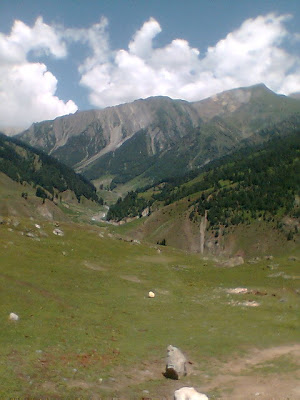
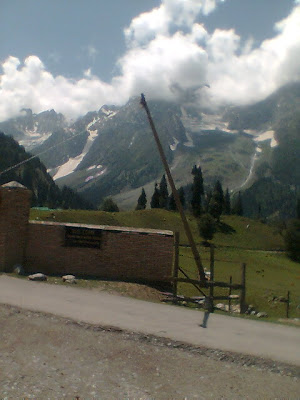
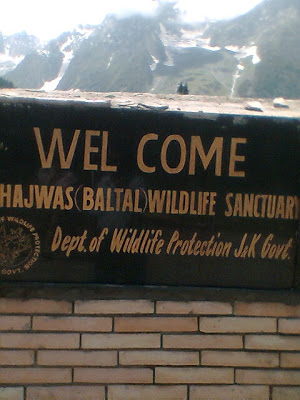
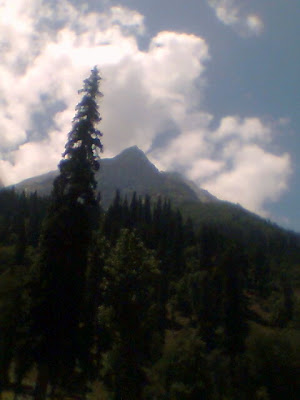
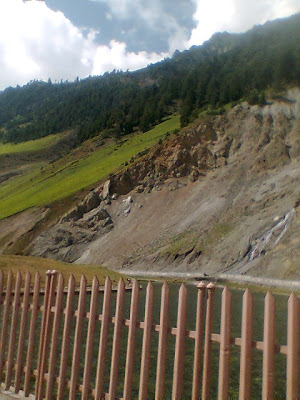
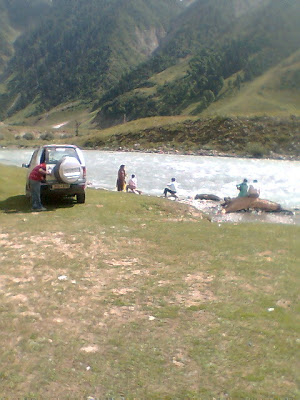
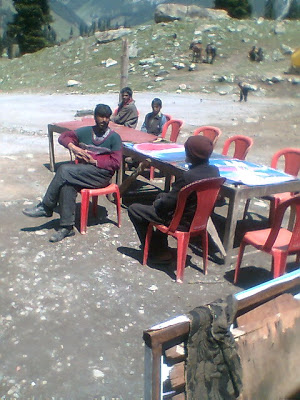
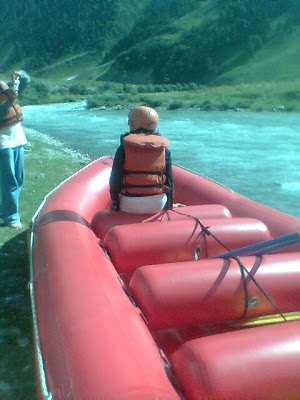
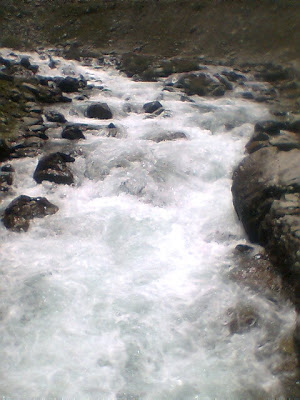
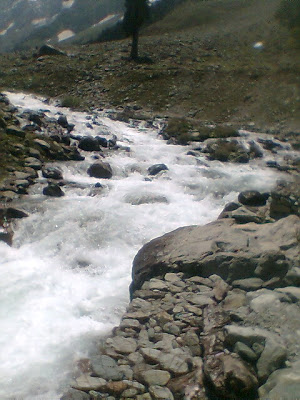
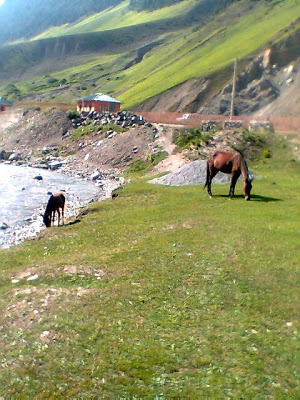
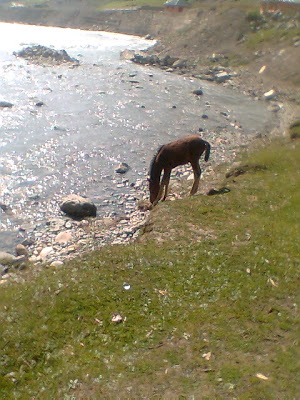
Views on way to Baltal via Sonamarg
July 2009.

-0-
Shared by my father.

-0-