Visiting Baba Reshi

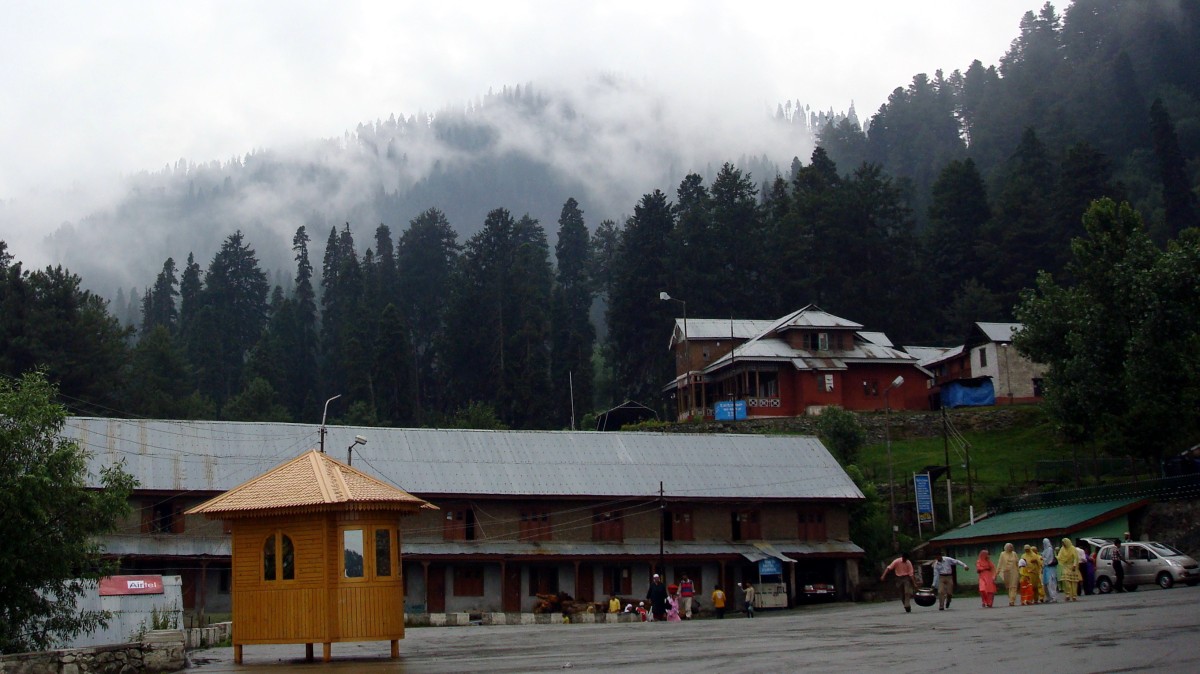
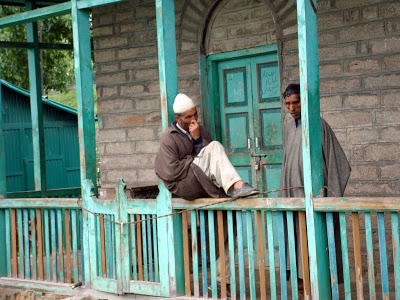
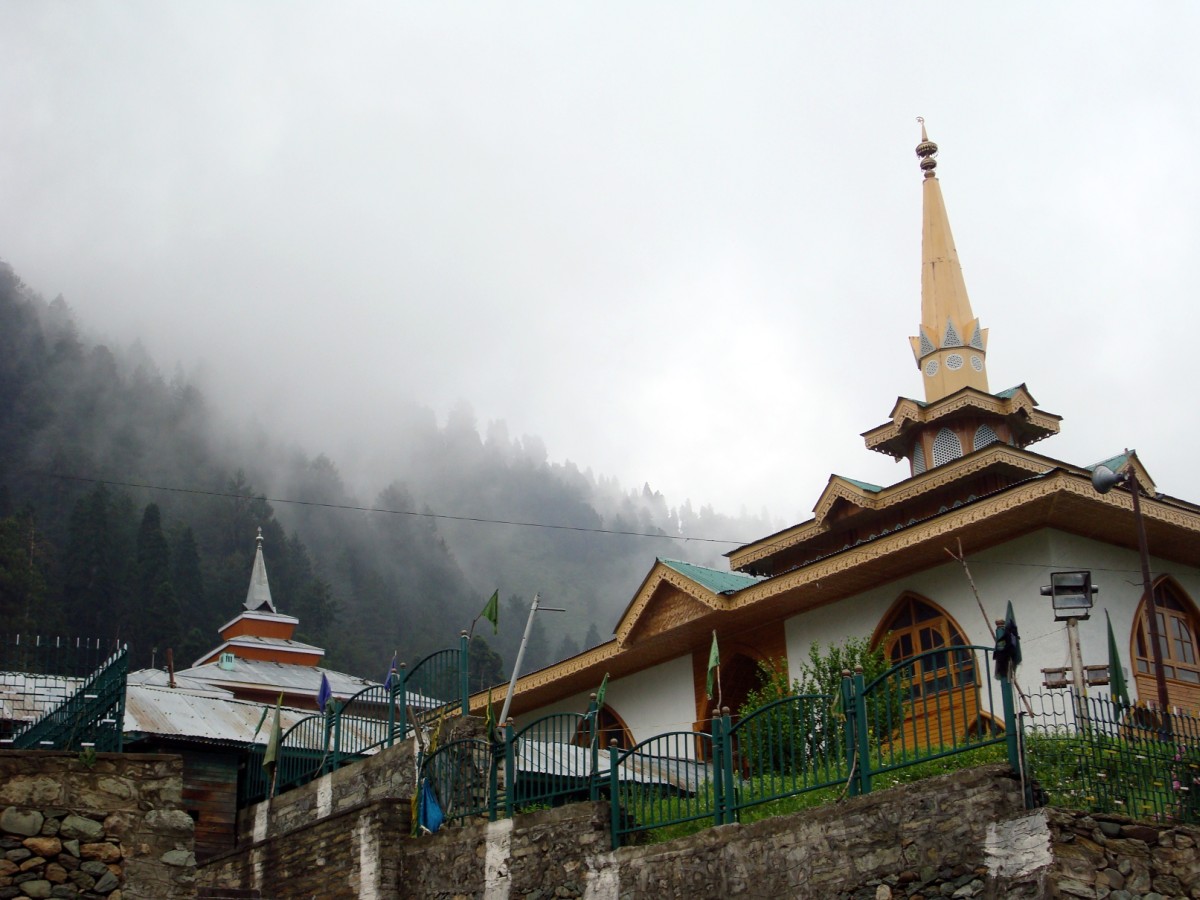
Near Ramboh village in Baramulla District, three miles from Tangmarg, on way to Gulmarg, the shrine of Baba Reshi is situated at about 7,000 ft. The tomb (Ziarat) is of an ascetic actually named Baba Payamuddin (Pam Din) and to whom the Chak Dynasty Rulers of Kashmir paid courtesy visits during the Mughal period.

Born around 1411, he is said to have died around 1480. This Reshi, a highborn son of a nobleman but turned ascetic after observing hardworking ants too closely one day, was a disciple of  Baba Zainuddin Rishi (born Ziya Singh or Jaya Singh, some say) of Aishmuqam who was one of the principal disciples of Sheikh Nur-ud-din (Nund Rishi) – the first of the Reshis; the disciples, his four Jewels: ‘Buma’ Baba Bamuddin Rishi, ‘Nasar’  Baba Nasruddin Rishi, ‘Zaina’  Baba Zainuddin Rishi and ‘Latif ‘ Baba Latifuddin Rishi.

In  his later years, on the direction of Zainuddin Rishi, Baba Payamuddin moved to village Ramboh, and like others of the order, performed miracles, helped the common people and spread the name. Baba Reshi famously built a daan, a fire place at this place. People came from far and wide to plaster  this daan, to offer sacrifices. They still do. All to have their wishes granted.

In the 90s, this place also faced fire.

On way to Gulmarg, I had no idea we were going to make a stopover here. So it came as a pleasant surprise. After visiting the house that wasn’t there anymore, it came as a pleasant surprise from my parents. My mother couldn’t stop gushing about the place. I guess she has inherited the devotion to this place from her mother who must have been here often thanks to Nana’s job at Gulmarg.
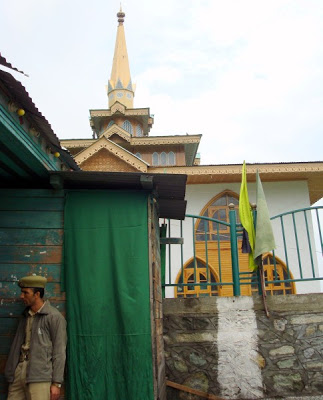
Inside the shrine, in the center of the hall, there is some wonderful woodwork around the tomb of the saint. As I walked around the tomb, circling it, appreciating the art, ‘Is it walnut wood?’, noticing something strange, I  came to a sudden embarrassing halt. There was something wrong with the place where I stood. One look around and I realized that I had been circling in the outer circle and had unwittingly walked into the women section. There were women sitting all around. The right side of the hall seemed women only. Women praying, crying. Baba Reshi is famous for granting ‘child wish’. According to an old tradition of this place, the children thus born, taking a vow of celibacy is attached to the shrine for life and at any given time forty such saints (Reshis) are supposed to serve the shrine.

I traced back my steps and this time started to walk the other side. My mother took up a corner and did her own bit of praying and crying. I walked into the inner circle, taking a closer look at the tomb, ‘Is it a tomb?’, again I realized something wrong. This time it was the direction. Circling, left to right, I found myself facing a teenage boy coming from the other direction. The boy, praying under his breadth, was cleaning the woodwork using his fingers, measuring the woodwork inch by inch, picking up pecks of dust. An old practice, I have seen Pandits do it at the new shrines of old saints, at Jammu.

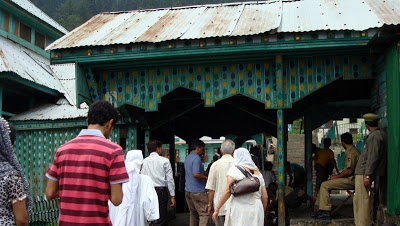
After spending some more time inside the shrine, as I started to step outside, I noticed an attendant at the door was handing out something wrapped in Newspaper to the people walking out of the shrine. Prashad? Prasadam? Something sweet? Something to eat?Tabarruk? I too streached my arm for the handout. Walking a distance outside, I opened the paper packet. Inside I found broken down stones and rocks. Others found ash, dust and soot. 

Later someone told me a funny little anecdote. A couple of years ago, a small group of Pandit families had come to visit the shine on the urs, death anniversary, of the saint. A group of separatists was also present. After the common prayers, the separatists raised their hands and asked the saint to grant their wish, ‘Kashmir bane Pakistan, Let Kashmir be Pakistan’. The crowd said, ‘Ameen, Amen’. The Pandits shaking their sideways, under their breath added, ‘Zah ti ne, Zah ti ne, never, never’

Eminent Kashmiri Pandits of the Past

Some incredible old photographs sent in by Man Mohan Munshi Ji. Will keep this post to publish more stuff on this theme.
-0-

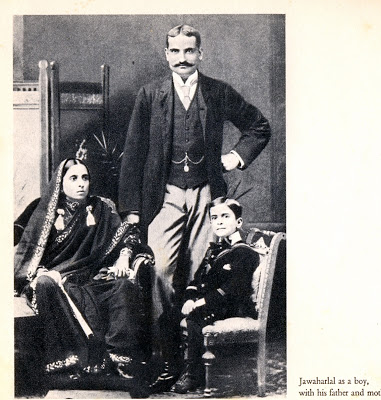
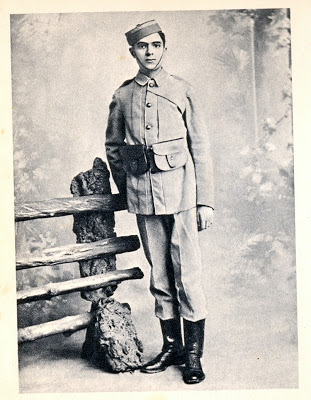
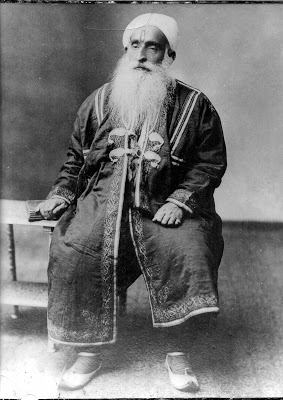
Pandit Mahanand Joo Dhar   (1828-1908) 
 He took over the land settlement department of Jammu & Kashmir Govt. from Sir Walter Lawrence
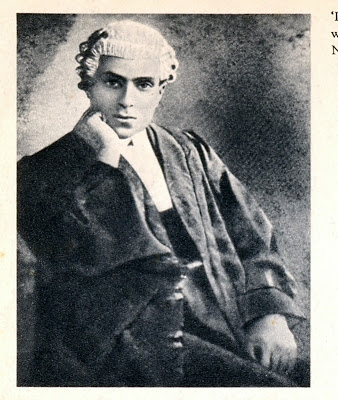
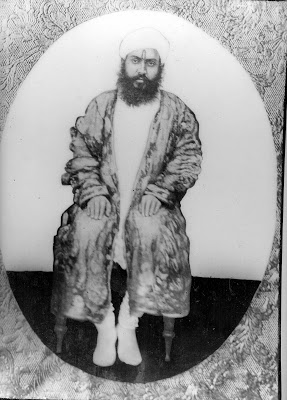
Pandit Sat Ram Joo Dhar (1845-1875)
Revenue Commissioner Kishtwar  S/O Pt Mahananad Joo Dhar
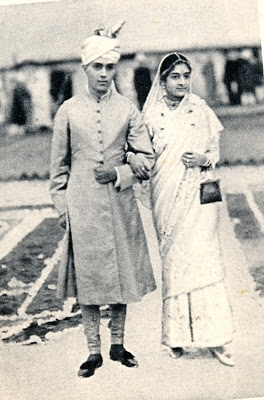
Smt. Sonamal Dhar w/o  Pt. Sat Ram Dhar

Pt Mahanand Joo Dhar was the great grandfather and Pt. Sat Ram Dhar was grandfather of Maj-Gen. (retd) B.N.Dhar.

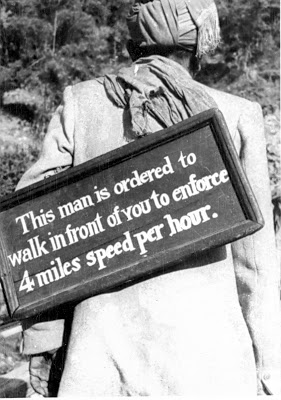
4 miles speed per hour, 1958

I couldn’t stop smiling. An awesome post by Man Mohan Munshi Ji. 
-0-

‘This man is ordered to walk in front of you to enforce 4 miles speed per hour.’
In 1958 I came across a road bridge somewhere near Jammu & Kashmir – Himachal Pradesh border  where speed limit  was  enforced by a man walking in front of any vehicle crossing the bridge.

-0-

Photograph and drawing of Nanga Parbat

Guest-post by Man Mohan Munshi Ji.
-0-

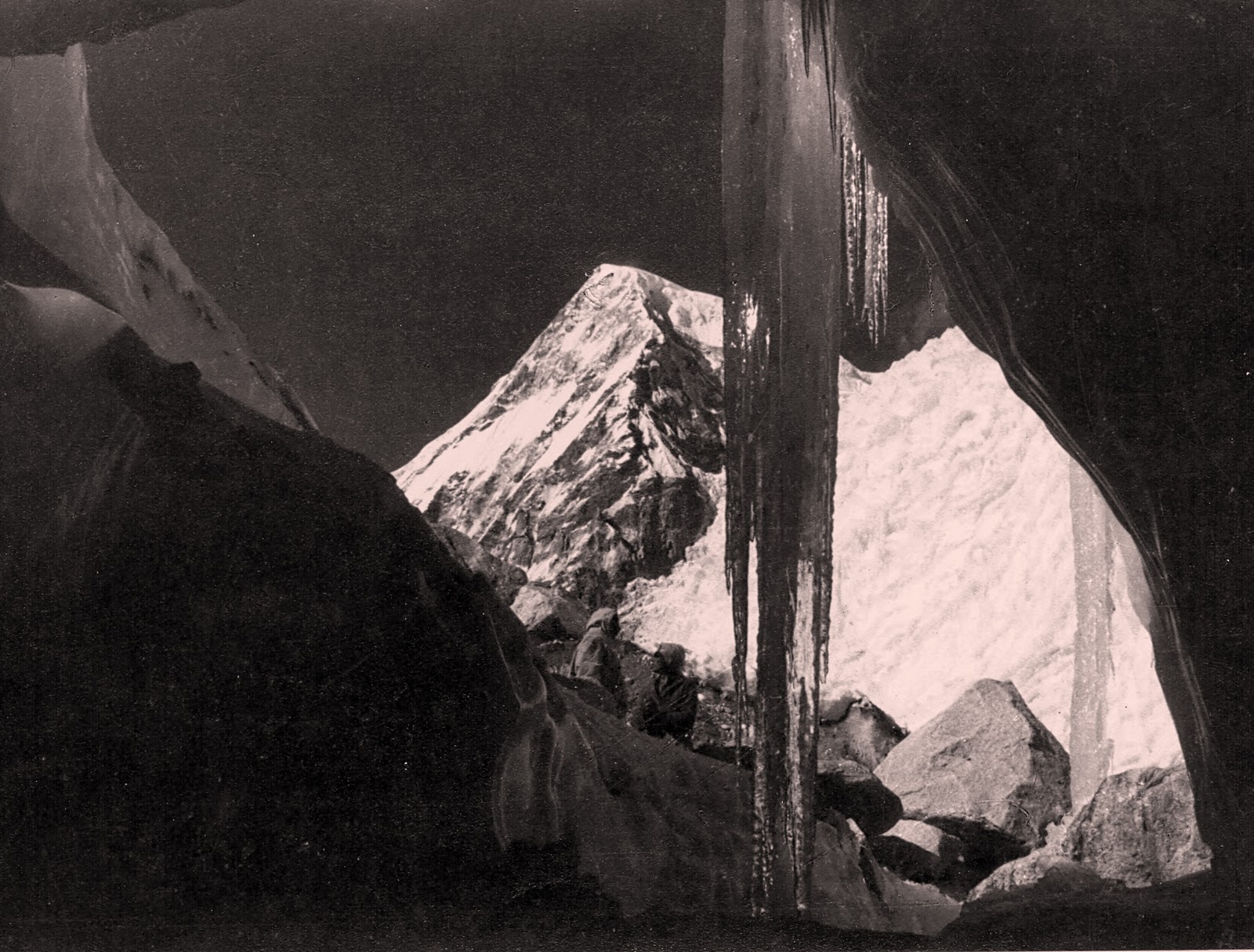
A view of the worlds 14 the highest peak known at present as Nanga Parbat (Naked
  Mountain). It is also called by the natives as Dyamur (Moor’s head).
 View of Nanga Parbat drawn by Alexander Cunningham published in his book Ladakh published in 1854

During the Purana times it was known as Dumra Lohita (The king of mountains ) which can be visualized by the fact that submit of Nanga Parbat 26,660 ft above the msl with its base at the side by the side of Sindu (Indus) at about 3,500 ft. exposes a fall of about 23,160 at the Astor valley or one of the passes connecting Kishenganga valley with that of Indus valley. The unparalleled view is more impressive than that of Grand Canyon of Colorodo USA and Namchebarwa Peak and Bed of river Tsangpo(Brahmaputra). The fall of more than 23,000 ft exposed to the gaze of observers during the purana times led to the belief that Dumraluhita (Nanga Parbat ) is the highest mountain in the world.

Simurgh in Kashmir

A couple of days ago Man Mohan Ji sent me this wonderful painting.

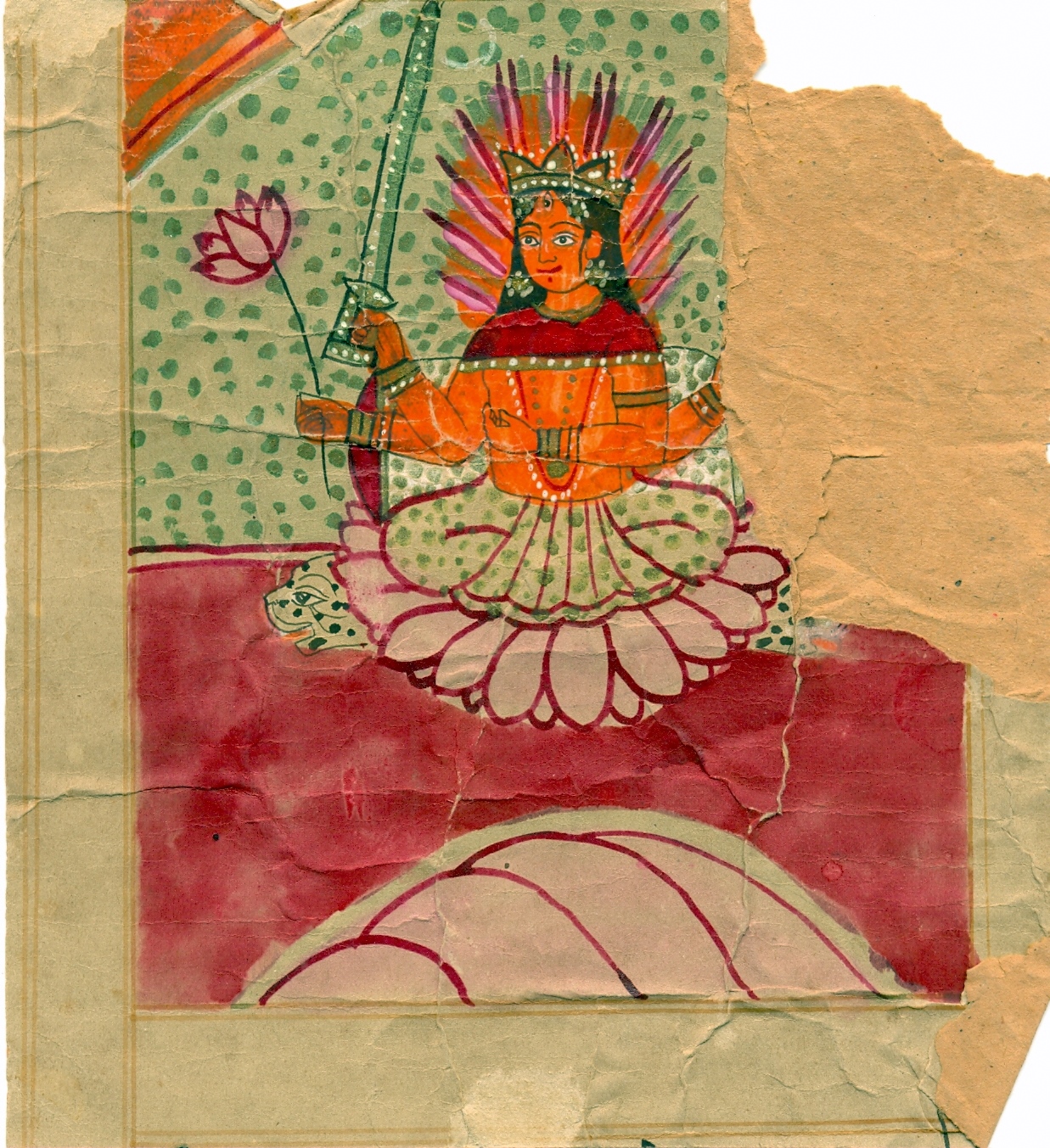
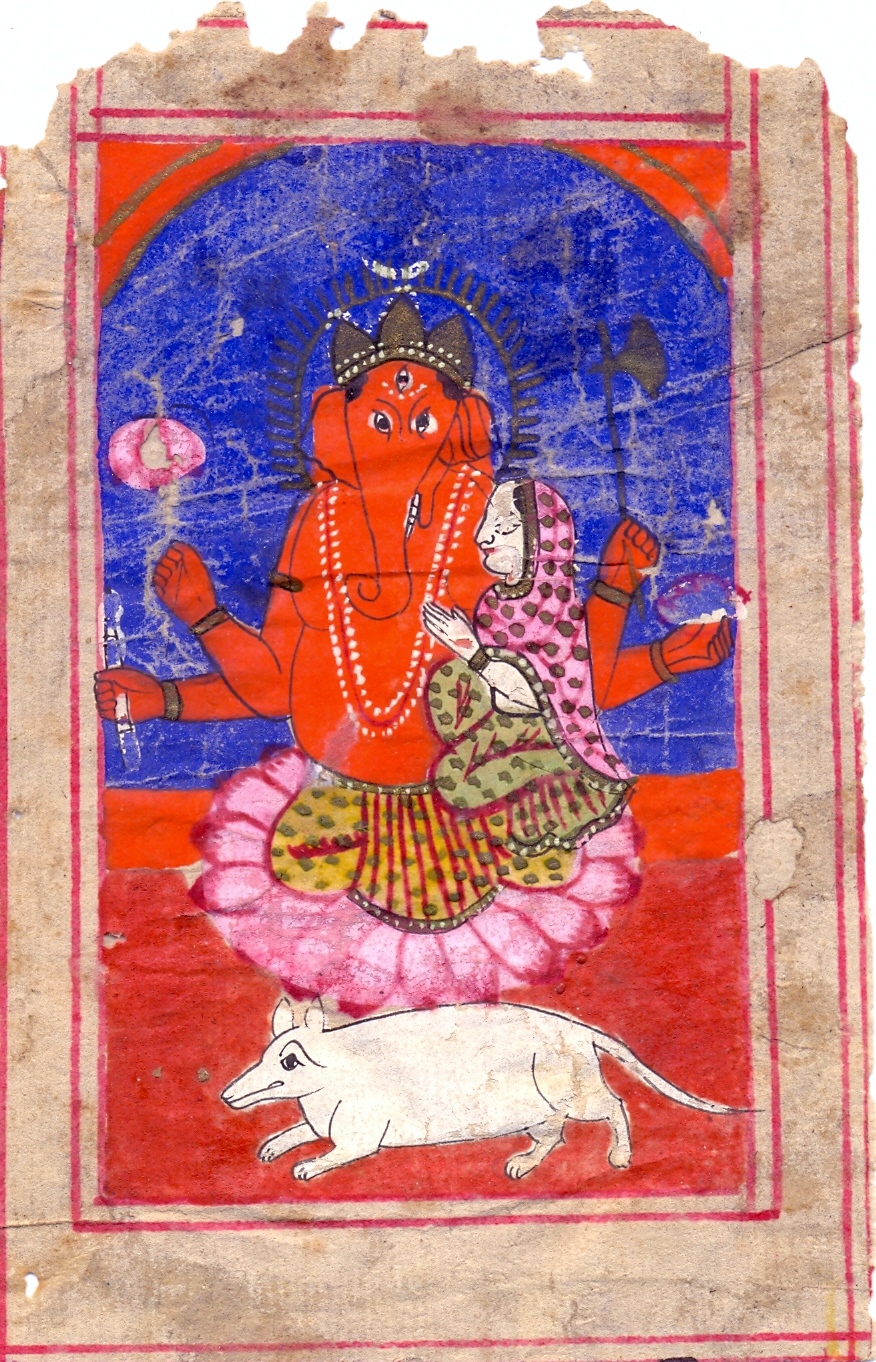
The originally Persian mythical bird, Simurgh, holding fast nine elephants symbolizing lower constituents of the partial self. Kangra school, 19th century. Gouache on paper.

I came across stories of Simurgh a couple of times while reading things about Kashmir. And interestingly in these stories Simurgh was a very lose term that was easily applied to many kind of  mythical birds.

The story titled ‘Good King Hatam’, narrated to Reverend James Hinton Knowles by a barber of Amira Kadal named Qadir, revolves around a golden egg-laying bird Huma. In the footnote to the story Knowles tells us that Huma is ‘A fabulous bird of happy omen peculiar to the East. It haunts the mountain Qaf. It is supposed that every head it overshadows will wear a crown. The Arabs call it ‘anqa’ and the Persians simgh (lit. of the size of thirty birds).’


Another story about Kashmir and Simurgh comes all the way from ancient China.

According to a Chinese legend, a king of Kashmir named Chi-pin caught a Simurgh and caged it, but the bird never sang a single note for three years (in an Indian original the bird would be a kalavinka , a melodious songbird). The king’s wife then tells him that Simurghs only sing when they see their own kind, so the king deceives the bird by putting a mirror in its cage. Mistaking its own reflection for the lost mate, Simurgh sings a mournful song and dies. The story about the “single simurgh” (ku-luan) is from Liu Ching-shu’s Garden of Anomalies (I-yilan). *

* from ‘The age of Eternal Brilliance: Three Lyric Poets of the Yung-ming Era’ (Richard B. Mather, Yue Shen, Tiao Xie, Rong Wang ) and ‘The oceanic feeling: the origins of religious sentiment in ancient India’ (Jeffrey Moussaieff Masson)

Boat Bridges

“Over the Vitasta this King had the Great Bridge constructed and only since that time the design of such boat bridges become well known.”

– 354, Third Taranga. From Ranjit Pandit’s translation of Kalhan’s Rajatarangini.The king was Parvarasena.

An old photograph of Habba Kadal Zaina Kadal (check the note below) with boat design.

-0-
Correction by Man Mohan Munshi Ji:

This bridge cannot be HabbaKadal (2nd Bridge) by any chance . The Tomb of Zain-ul-abdin’s mother/(Sikandar Butshikan’s queen) located in Mazar Salatin is clearly visible in the background and as such the bridge is Zaina Kadal the fourth bridge.

-0-

Update: This is what a boat bridge would have looked like:

Bridge of Boats over Indus at Khushal Garh [District Kohat, now in Pakistan]

From: Asia (Volume 1, 1885) by Elisée Reclus (1830-1905)