Strange case of Mrs. Aziza

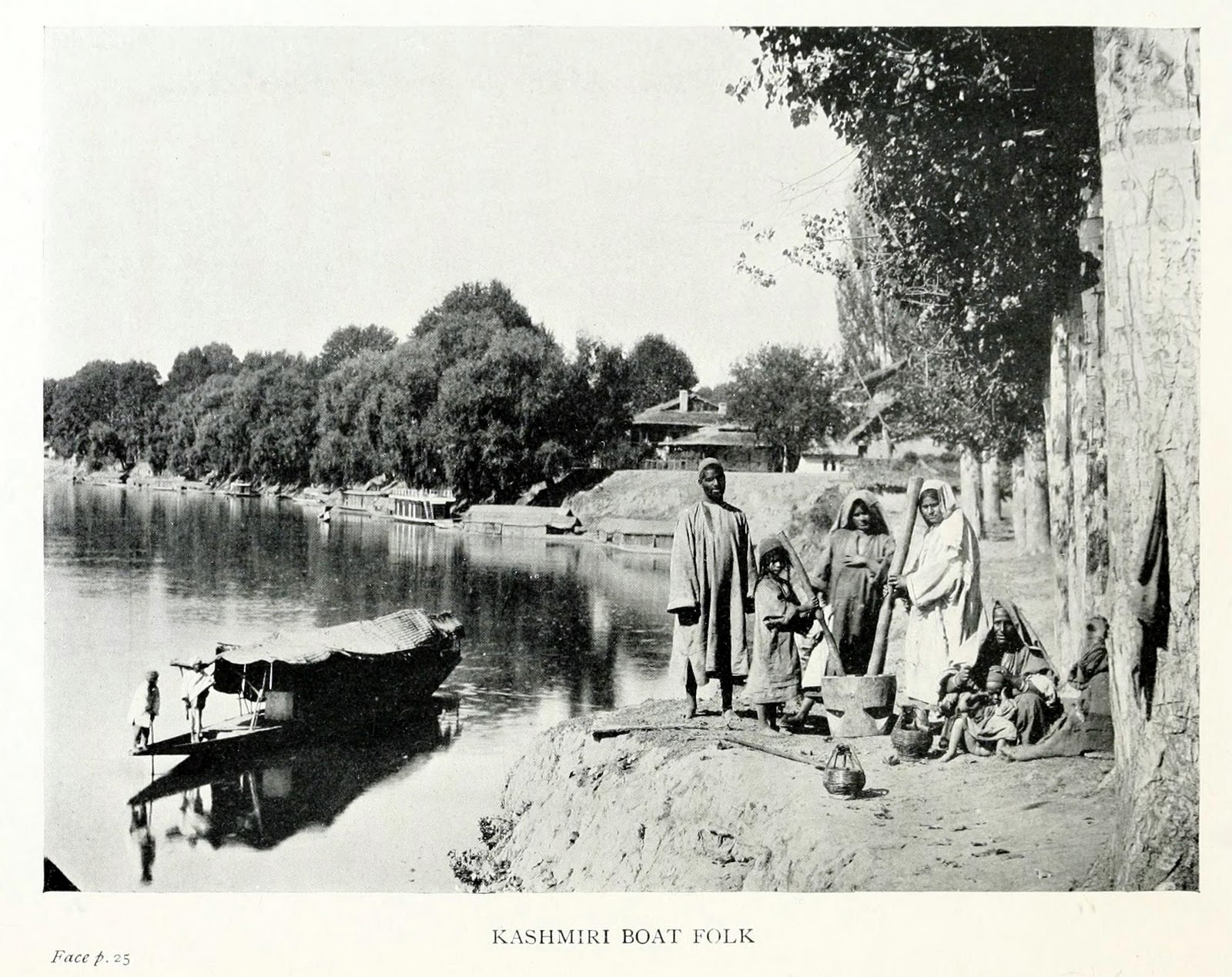
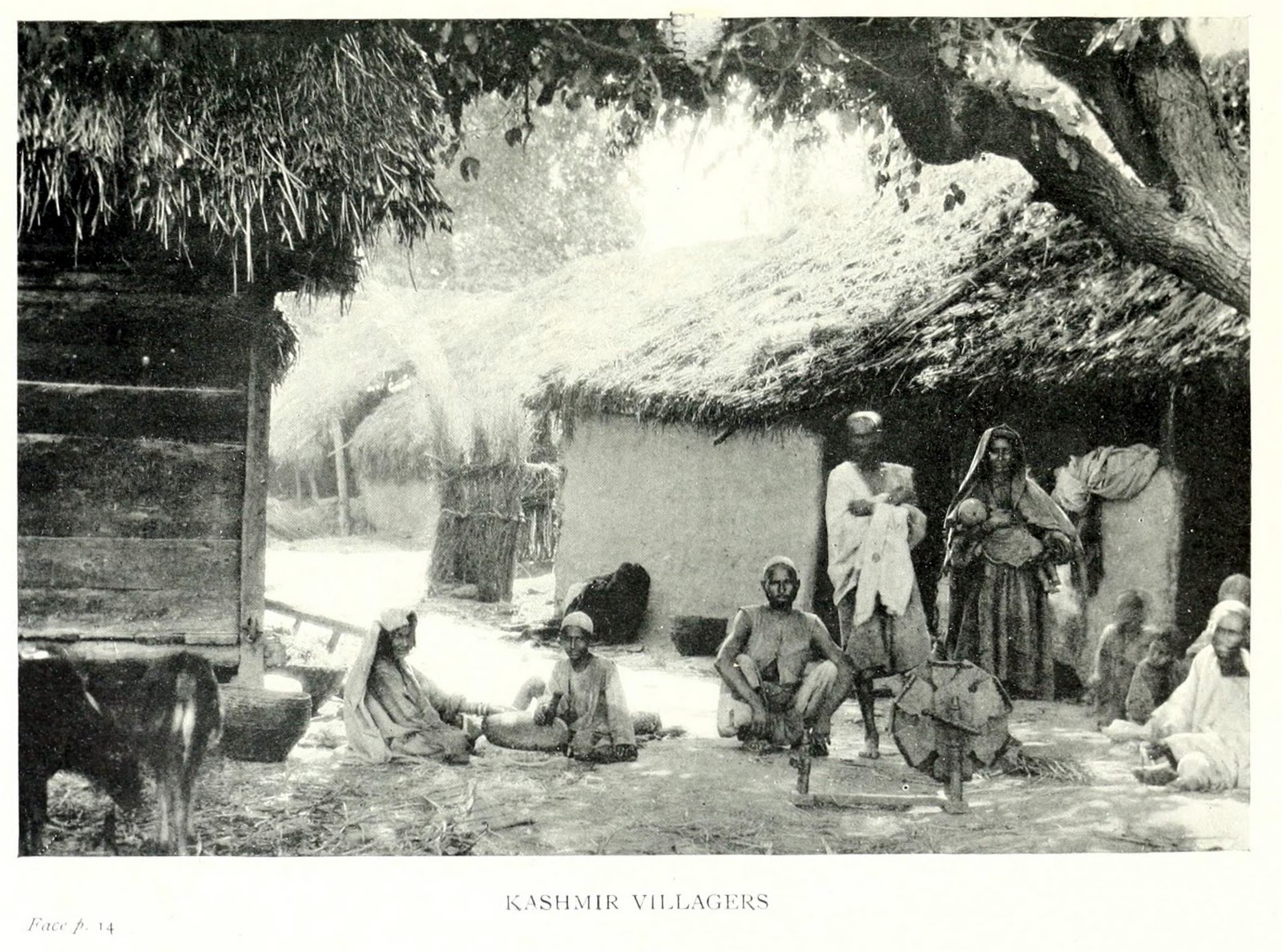
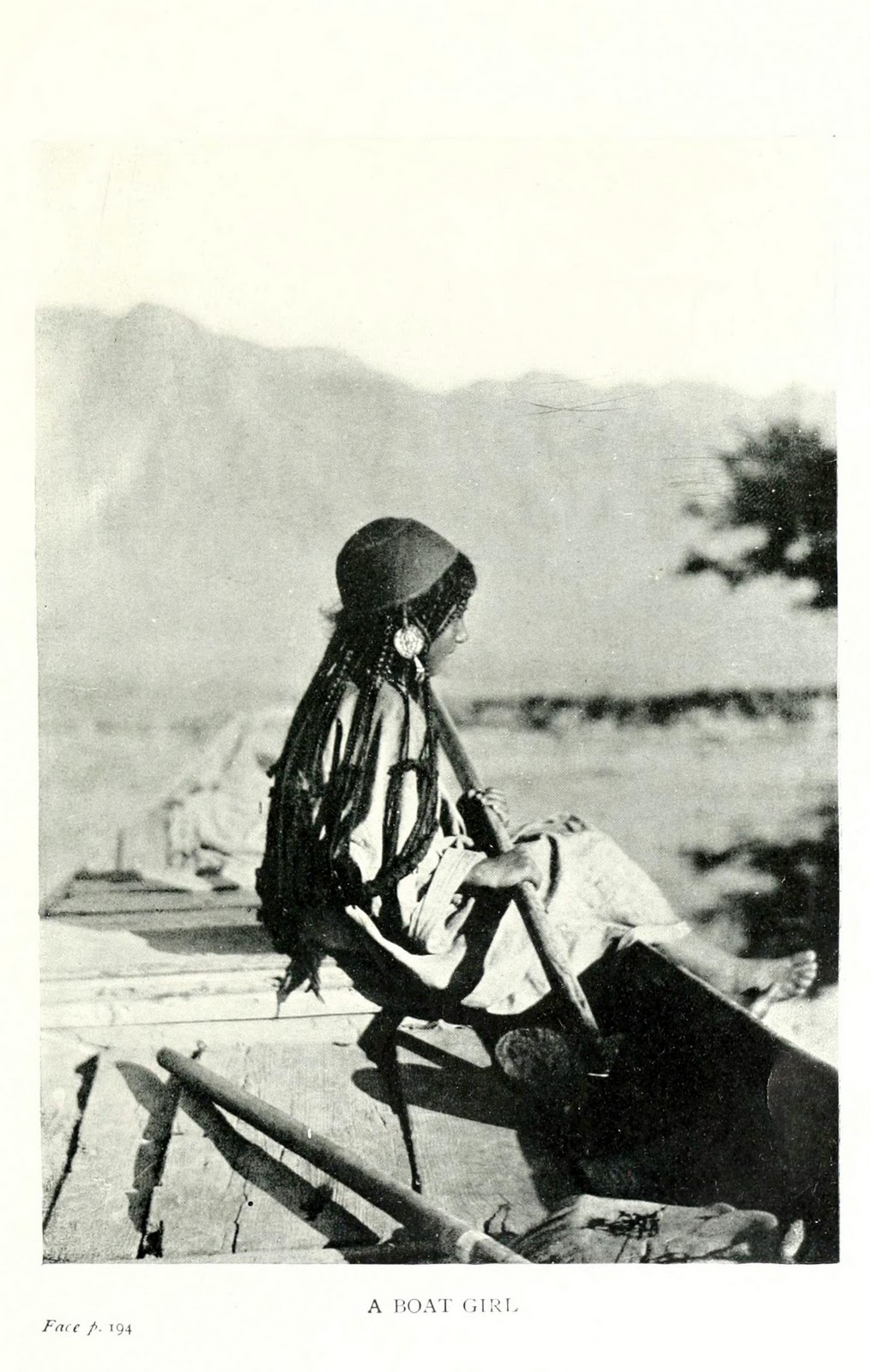
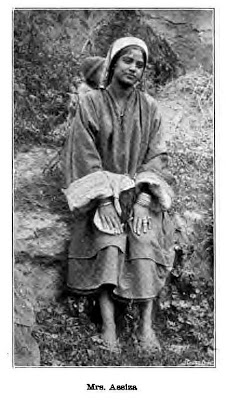
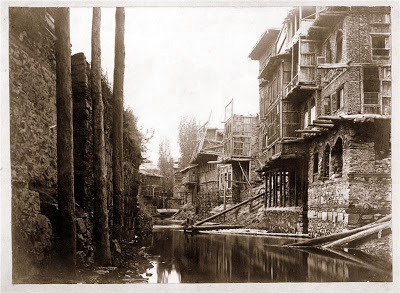
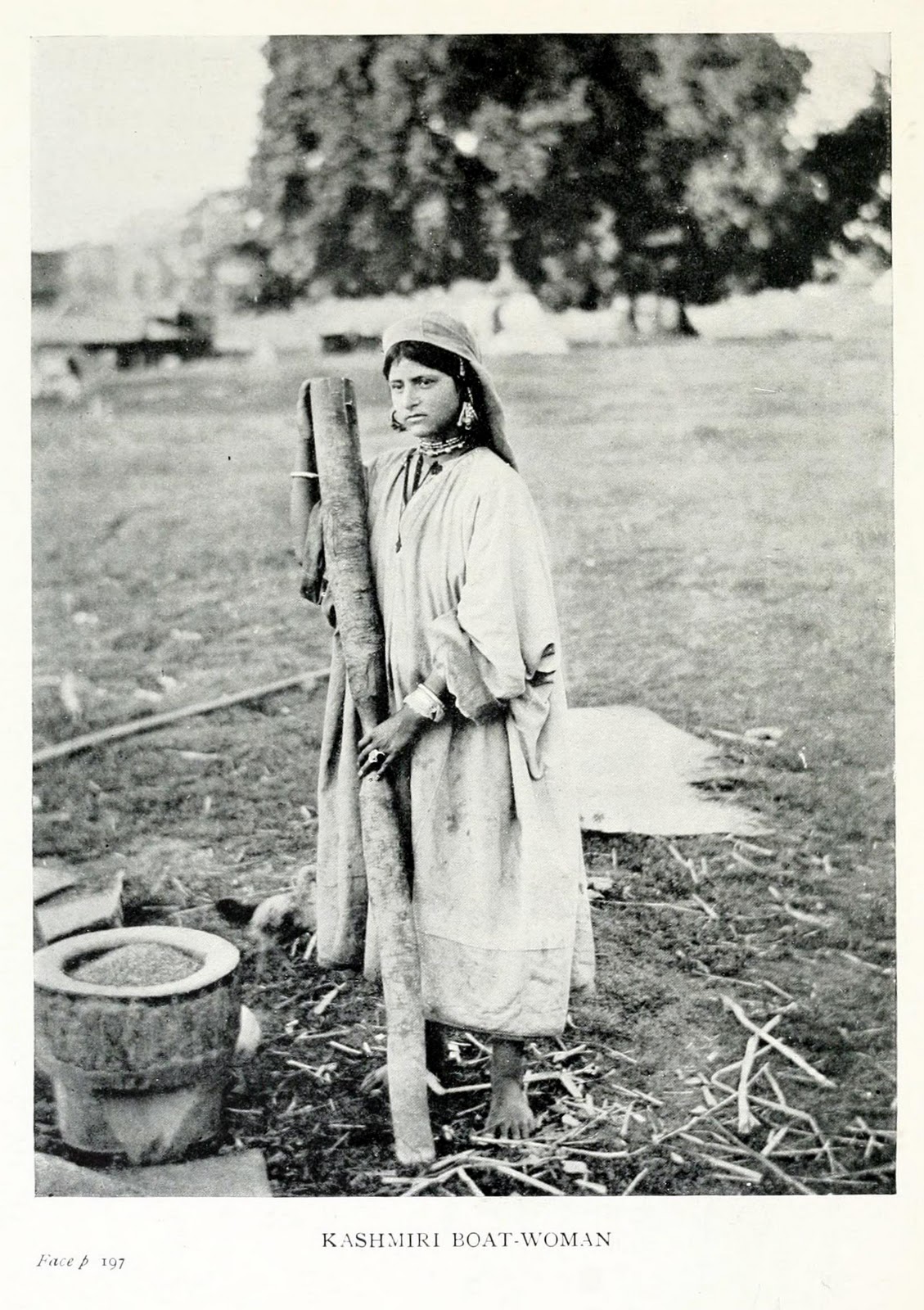
Trusting for some means of escape when the hour had approached, and with a brief command not to create any delicacy that could not be made to get comfortably on my small dish, I tried to improve my acquaintance with the female portion of my crew. My task was not easy, for Mrs. Assiza suffered from shyness and a complete ignorance of all languages save Kashmirian; but I was able, as I tried to make myself understood, to admire her clear, rose-tinted, olive skin, the straight nose and brows, and the fine, brown eyes, set off by the tiny read cap worn under the homespun head-covering folded squarely on the head. The universal frock of puttoo disguised effectively her figure, but the short sleeves turned back with white displayed her well-firmed arms, and the brevity of her “pheran” showed her splendidly-developed calves. Good-looking and strong, like most of her compatriots, the little lady was well up to taking paddle or steering the boat, and during the day worked the long, heavy wooden pestle with astonishing energy as she crushed the grain in her wooden mortar with long, regular movements. The child toddled up to say, “Salaam, Sahib,” nearly falling over its toes in its efforts to bow with reverence and elegance, while clutching tightly a bunch of great purple iris, recently gathered from a Mahomedan graveyard, covering the whole of a small mound near by.

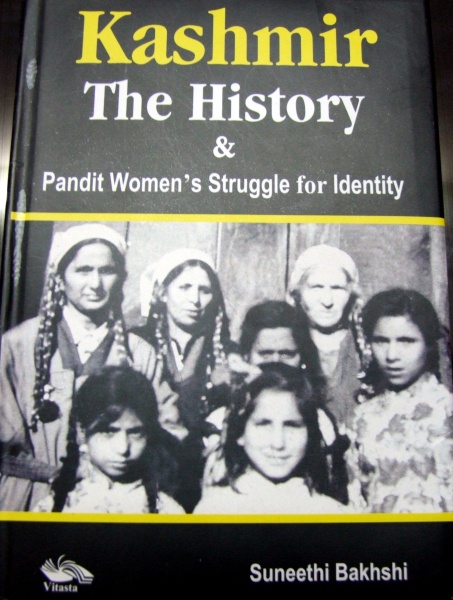
The passage and the photograph is taken from the book ‘Afoot Through the Kashmir Valleys’ (1901) by Marion Doughty. Everything is fine with the Sahib’s description except from one minor detail that can be observed in the accompanying fine photograph of beautiful Mrs. Assiza. The pheran that Assiza is wearing has a fold at the lower end below the knee. The fold is called laad’th and is unique to the pheran of Kashmiri Pandit woman. Even though on first glance the dresses of all Kashmiris may seem same, there were always some distinct differences between the dressings of the two communities. Kashmiri Muslim woman never wear a pheran with laad’th. The actual name of the woman is not given, she is just the wife of one Mr. Aziza, boatman of the writer. In fact that name should be Aziz, Kashmiris tend to add an a at the end of the name when calling out for a person, more so if the name happens to be Aziz.

So what were you writing Memsaab and what’s the story of Mrs. Aziza.

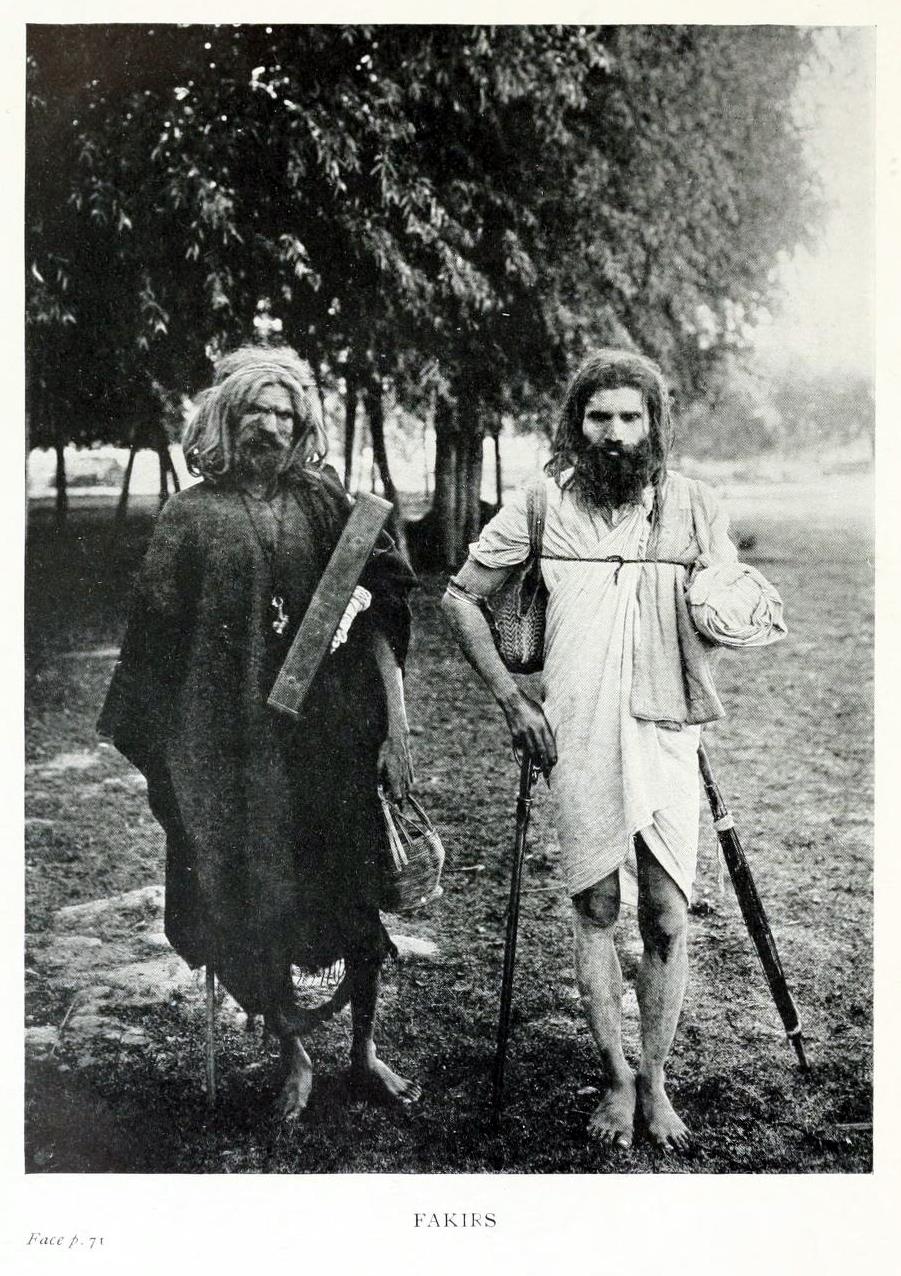
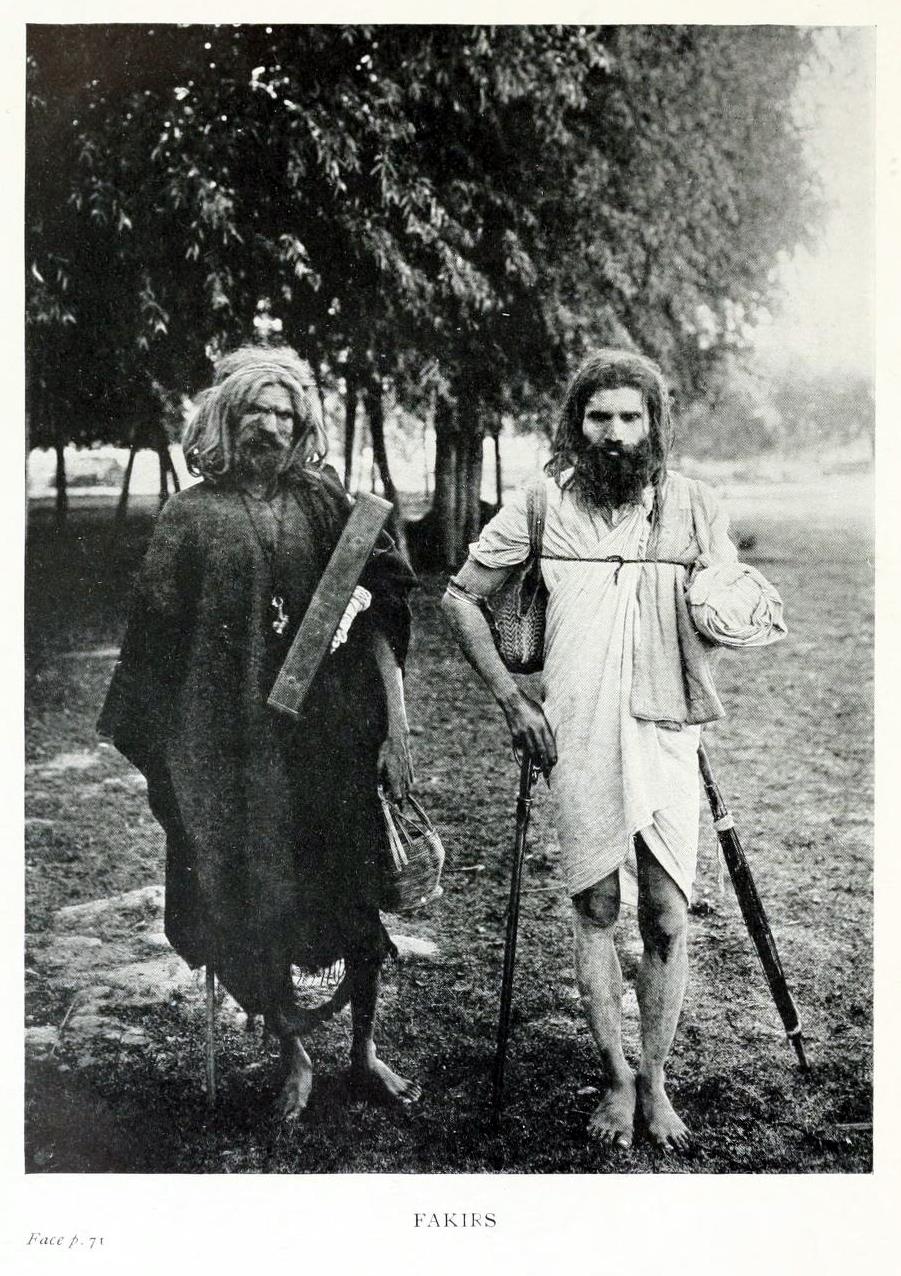
Fakir Kashmir, 1904

Found the photograph in A lonely summer in Kashmir (1904) by Margaret Cotter Morison

‘Is he still around?’
‘Yes,’ the teenage boy took he eyes off the road, one hand still on the steering, turned back and with a victorious smile added,’they tried to shoot even him. But he just swirled and the bullets passed right through his pheren. Not a single bullet touched his body. Yes, he is still around. Wandering.’
‘Are you talking about the one that roamed in Ganderbal area?’
‘No. There were more with that name?’
‘It seems so.’

-0-

On his one shoulder he always carried around a pot of burning coal. Whether summer or winter.  As he walked past, one could see the molten flesh of his bare back.

On a bridge one day, he stopped an angrez couple and much to their shock, announced that within an year they would have a baby boy. Married or not, whether they understood what he said or not, together or not. In an year, a boy was duly born.

-0-

Anini sui, wavum sui, lajum sui panasui.
I brought the nettle, I sowed the nettle, and then the nettle stung me.

In explaining the origins of this Kashmiri proverb about “Ingratitude”, James Hinton Knowles in his book ‘A Dictionary of Kashmiri Proverbs and Sayings’ (1885) tells the story of a Kashmiri fakir who grew soi on his palm.

In olden times there was a famous fakir in Kashmir, who punished himself in the following way. He uprooted a nettle, and fixing some mud upon the palm of his hand, planted the nettle therein. All the day and all the night for several years he held out his hand with the palm uppermost, and the nettle in it. The plant grew and was strong and by reason of this, thousands of Hindus used to visit the fakir, and give him alms. The fakir had a disciple, who eventually became very jealous of the honour which his master received ; and one day in a fit of anger, he hit the nettle, earth and all, out of his master’s hand. The fakir then spoke the above saying concerning both the nettle and the disciple, whom he had brought up and nourished from his infancy. The sting-nettle is a plant sacred to Shiva, who is said to have first planted it. Hindus pluck the leaves, and throw them over the god’s favourite symbol, the lingam.

-0-

Earthquakes, Gods, Bulls and Mosquito Buzz

Kashmir Earthquake 1900 by Captain Benson

In one hand she held a steel glass and with the other,praying in whispers to gods, she was sprinkling the cemented ground with water. With the spring of childhood in my feets, I didn’t realize it was earthquake. It was my first earthquake and I had witnessed my aunty perform an old ritual. She was pacifying the angry gods. This was the day that I believed I had seen a UFO but now I believe it must have been just a CEMA tubelight fitted lamppost.

An early western visitor to Kashmir wrote a strange scene he witnessed in a village somewhere in Kashmir. There had been an earthquake that had turned one of the nearby village springs into a hot spring. When this news reached the village, the visitor noticed that the pandits of the village left for the spring with their batte deechas, big metallic pot with rice gains and placing them in the hot water proceeded to prepare race. Rice was going to absorb the furious energy of the gods. And bellies were going to have a fill.

As I retold the incident, I was informed that Kashmiri Muslims believed that the earthquakes were caused when the celestial bull that holds the earth on its horns is irritated by a (must be) celestial mosquito.

Following this lead I came an interesting belief from Judaic world.

Verrier Elwin, an early authority on Indian tribal people, in his book Myths of Middle (1949) wrote:

The traditional Hindu view of earthquakes is that Varaha, the board incarnation of Vishnu who supports the earth, is shifting the burden of the world from one tusk to another.

In Sylhet [now in Bangladesh] the Hindus say that below the earth is a tortoise; upon this a serpent and upon this an elephant. Should anyone of them move, there is an earthquake. The ordinary Mussalman of the same area is said to believe that the earth rests on the horns of the bull which has a mosquito at its side.

This Muslim belief finds its origins in Judaism.

Howard Schwartz tells the story in his book Tree of souls: the mythology of Judaism (2007)

Once, when Aaron the Priest, brother of Moses, was offering sacrifices on Yom Kippur [Day of Atonement], the bull sprang up from beneath his hands and covered a cow. When that calf was born, it was stronger than any other. Before a year was out, the calf had grown bigger than the whole world. God then took the world and stuck it on one horn of that bull. And the bull holds up the worlds on his horn, for this is God’s wish. But when people sin, their sins make the world heavier, and the burden of the bull grows that much greater. Then the bull grows tired of its burden, and tosses the world from one horn to the other. That is when earthquake take place, and everything is uncertain until the world stands secure on a single horn.

May be the mosquito buzz part was the Indian touch.

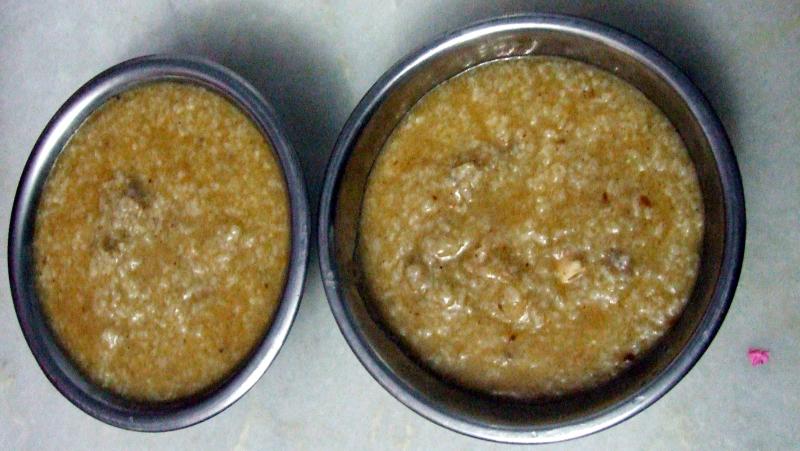
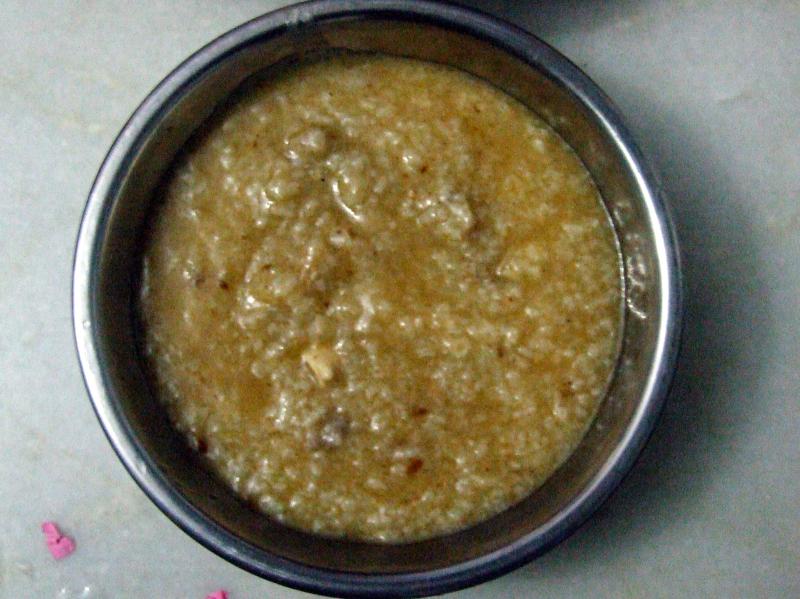
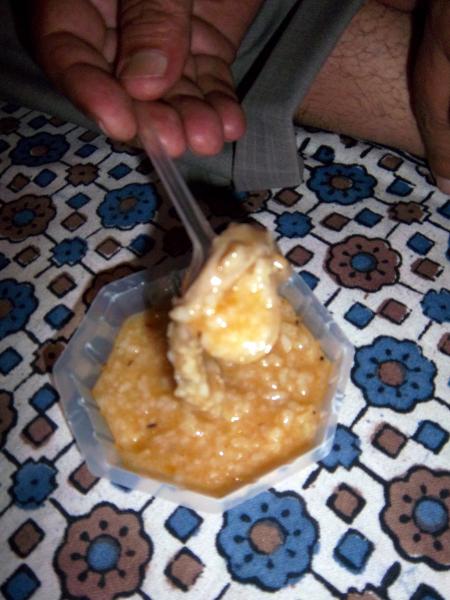
Byel Tamul

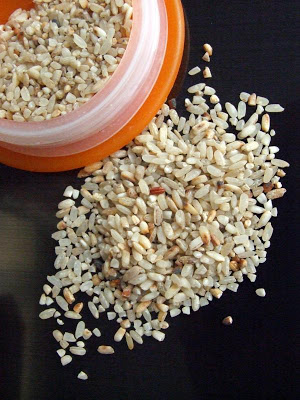
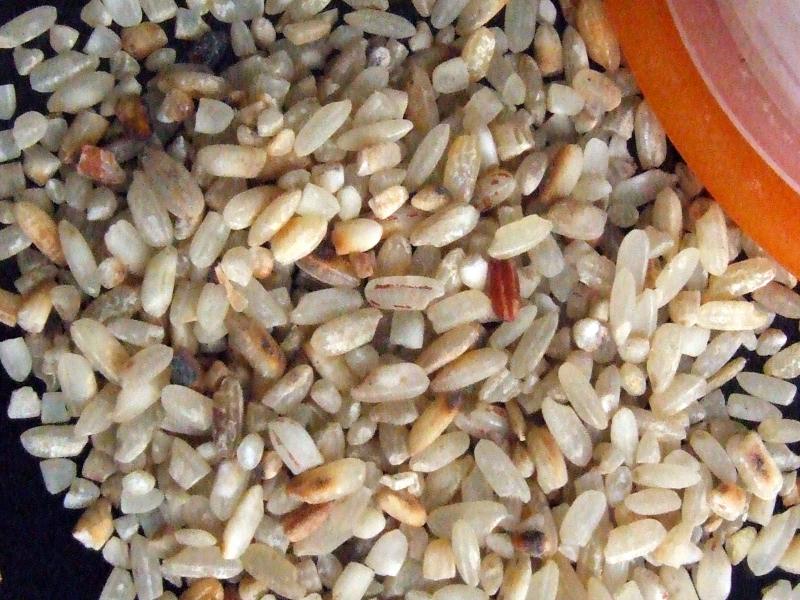
Grains used for sowing rice

Raw grains leave a sweet smoky taste
/Byel Tamul/chrim tumul

-0-

Update July 1, 2018

Around 200 years ago there were about 94 varieties of rice grown in Kashmir.
Here’s are names of some given in Gulzar-i-Kashmir by Dewan Kripa Ram of Jammu (1870s):


Larbyol
Mushkabudji
Lolianzun
Reban
Yimbirzal
Pothibrar
Sukhdas
Basmat (famous fine basmati)
Shalkav
Braz
Zag-Danyi
Rani
Kunji-Danyi (one of the finer variety)
Gurukoen
Chogul (said to be very soft and sweet, very popular)
Mokhtahal
Lachahal
Shahguzu Guru tanzi
Lal Krahna
Kenu Puthau
Nur
Karhana Shesher
Suirmal
Chata braz
Kamad
Tachitachee Mukhtabraz
Dudhakrid
Neka beyol
Barenbezol
Nihali
Bud Braz
Malwar
Chatazar
Gurah
Ghunder
Chata newar
Kawhamah
Maitarahel
Babeer Mohiwan
Kawa Krishna
Keoziv
Moglubeyol
Chandahal
Sukal
Mohiaznun
Munkahashahd
Shalanzun
Oozulkrid
Baidanzun
Karalanzun,
Bathal
Nekanzun Lenahzag
Nekahzag,
Kranahzag
Zazid Zekahtatar
Talaibyol

-0-

Reads on Facebook provided some additional info and some more names:

Suneel Jailkhani Mushkabudgi is being grown again with the support of the j&k govt. Recently I found it being sold in srinagar in sealed packets of two kgs. About Rs 160 per kg.


Vikar Malik Mushkbudji n kamad is used in marriage ceremonies

Like


Love


Haha


Wow


Sad

Angry


Satish Munshi Gulu zug,nounu byoul,pireu,khoutch not in the list

Madan Lal Thakur Hokhal,zag ,lagud

Karam Vir “Gulzag” 
Not in the list…grown in upper reaches of beerrwah

Pradiman Koul And then……….. China… 1039 ,k… 39 also……..now the agricultural land has been lost due to constructions and turning this land into orchards and poppy production

Mithan Lal Hanjura Mazeth kathwor gulzag tilzah and mushkbadij was sown during our times also but the production was less

Sheikh Gulzar Some r ougman Bahar 
Farmee
K39

Char bahar
Naz bahar
Barkat bahar


Farooq Nazki
 Gazur. Kadir Khan

Sanjay Koul One of d varieties my father tells me was kaedir ganie.

Bimal Misri Even Rajtrangini has listed about fifty varieties of rice. An aromatic variety called ” Noon build” is still cultivated in some niches of Budgam district and we had about a Quintal of it in our home when in Kashmir. When you cook it the entire neighborhood knows.

Ishfaq Hydar bide china, cxadie china,k41,k45, safaid china


Maryam Jan i know Eetal n cheena beoul we hd this in our paddy feilds n many more i will try to remember if possib


-0-

Old Photographs of Kashmir, 1903

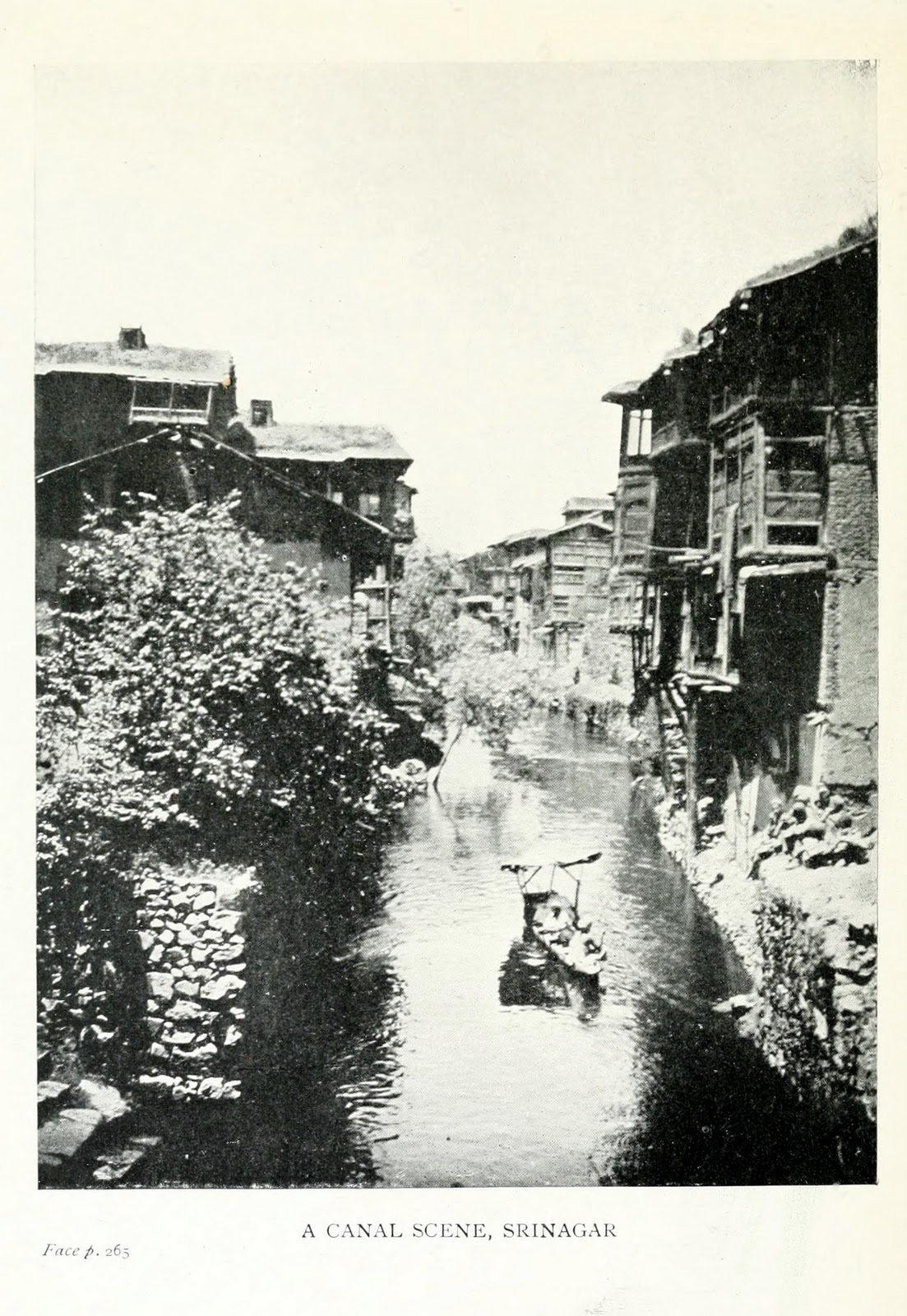
Following images are from the book Irene Petrie : Missionary to Kashmir (1903). Includes some rare photographs by Geoffroy Millias.

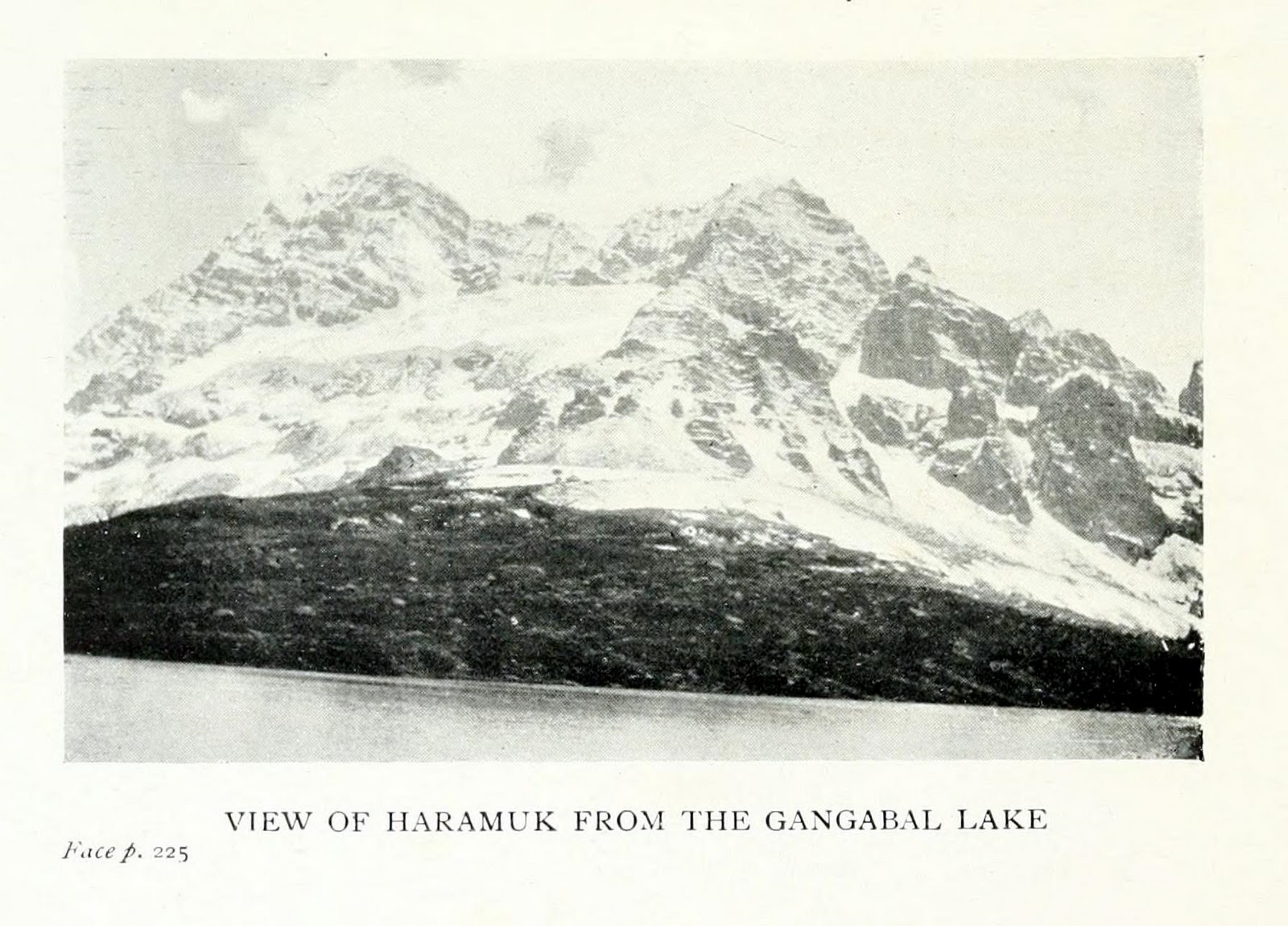
Srinagar: The Fourth bridge, Hari Parbat, and in the distance Kotwal and Haramuk

Dal Lake at Gagribal

Maharaja passing the C.M.S. School on his state entry into Srinagar

Pandit Oarsmen

Holton Cottage

St. Luke’s Chruch (built in around 1896 ) and the C.M.S hospital. 

High Street, Leh


Gopal Kaul Presents

Cross posted to my other Blog.
-0-
Late 1960s, Gopal Kaul was one of the earliest and famous faces of Doordarshan. According to one of the most intriguing and famous stories from the early days of Doordarshan, Gopal Kaul, in a somewhat comic way, was the reason why Salma Sultan became a newsreader. The story goes that Gopal Kaul, who was already a known face on Doordarshan, didn’t want to be a newsreader, he wanted to be a producer and was always was often at loggerheads with the DD people. One day to put an end to his newsreading tussle, in a unique way of protest, Gopal Kaul reported to job with his head completely shaved off. An emergency replacement was found nearby in Salma Sultan.

In my post about ‘Famous old faces of Doordarshan‘ Gopal Kaul was one big and obvious missing name as I couldn’t find a single image of him online. But then recently, Gopal Kaul’s son Ashutosh Kaul wrote to me and generously offered to share his personal collection with this blog. He also informed me that among many other things Gopal Kaul also used to read President’s speech in Hindi.

Thanks to Ashutosh Kaul here are some rare and wonderful images of Gopal Kaul at work:

Gopal Kaul in a play (with turban on right corner) along with Pandit Jawaharlal Nehru and  Babu Rajendra Prasad.
Gopal Kaul with Raj Kapoor.

Gopal Kaul with Manna Dey

Gopal Kaul after retirement.
Ashutosh Kaul informs that Gopal Kaul finally retired from Lucknow Doordarshan and  settled down in that city.
He passed away in year 1999. And he did became a Producer in Doordarshan.