Sitcz

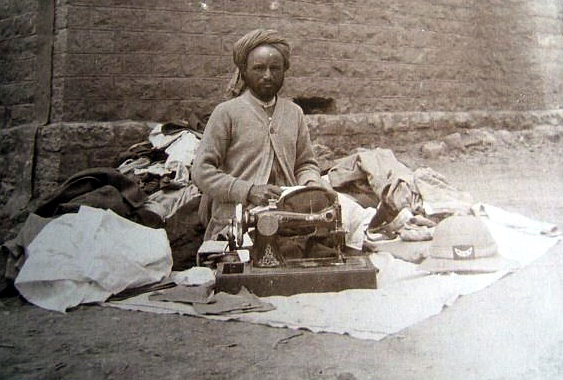
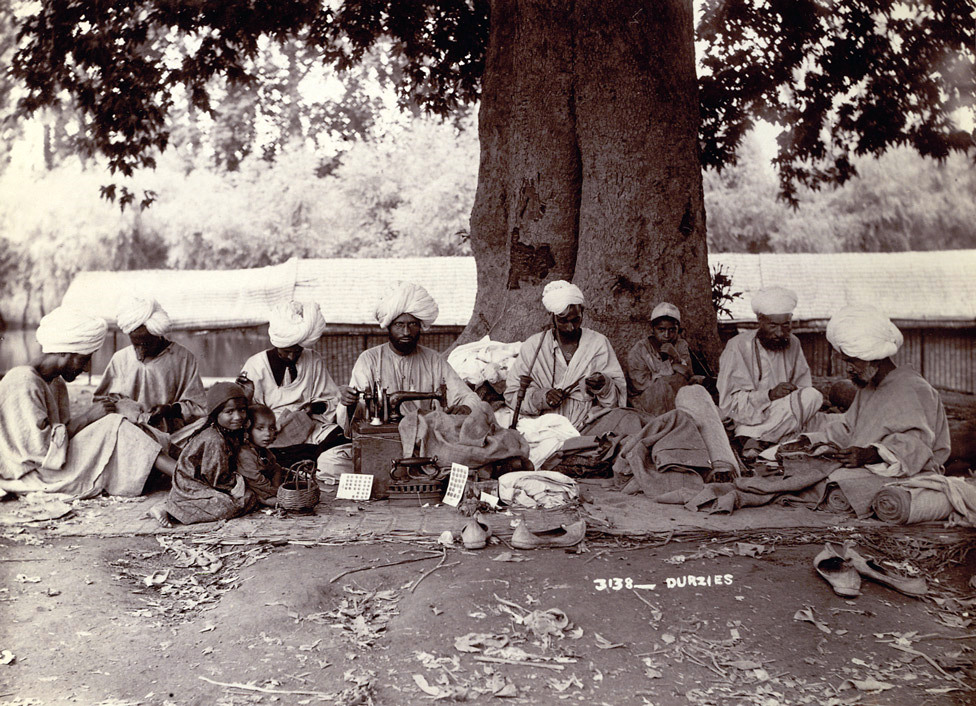
Kashmiri Durzies/Tailors/Sitcz, 1890s

A tailor at Jammu. 1917. Found these two ar Cobumbia.edu site
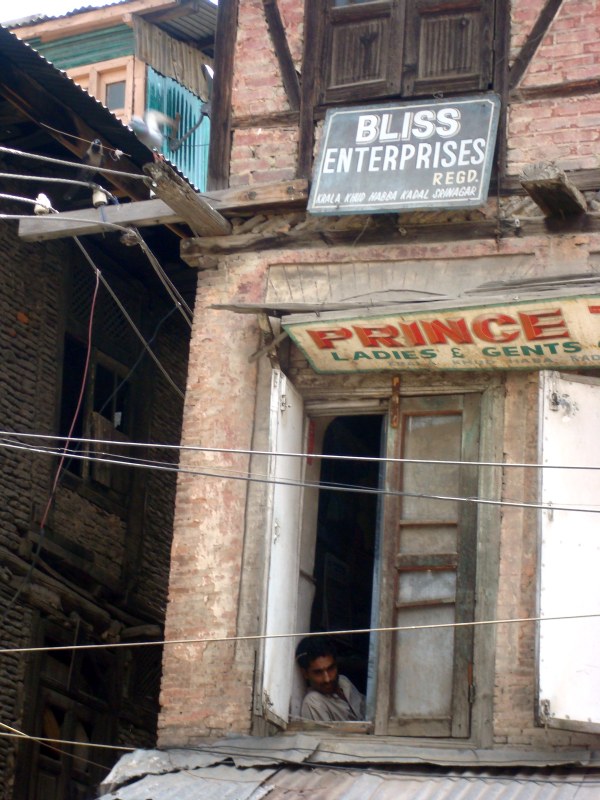
A Tailor Shop, 2008

-0-

The shops where carved furniture, silver, bronzes and brasses are to be found are for the most part in private houses, or what have been private houses and changed into shops. The tailors, however — and there are a great many of them — have shops in the bazaars, and these are frequently, like the bazaars themselves, open to the street, although the more important ones that cater to European trade have arranged rooms in the rear of the front where their goods are to be seen in greater privacy and where the measurements are taken and the garments are tried on. At some of these it is quite surprising to find such excellent materials, and even more so to see how well the garments are cut and made, especially if the purchaser has a garment of a certain style that he can give the tailor as a sample. One of these men, for instance, has a cutter who was taught, or learned his trade, in a London shop where there were many American patrons ; and some of the garments made by this tailor are so well cut and shaped that it is impossible to realize, or to believe, that they have not come from London, or Paris, or New York.

More astonishing, however, than all else, and seemingly incredible to many, is the cost of these articles. For instance, one gentleman had a suit of homespun that had been made in America and for which he had paid eighty dollars. As this was getting a little old he asked one of the tailors if it would be possible to get any more cloth like it. The tailor said:
“Certainly, I can get you some exactly like that.” The gentleman asked how long it would take, and was told about three weeks. The gentleman exclaimed: “What! is this possible? How can you get cloth out from England in so short a time as that?” “Oh!” the tailor replied, “it would not be brought out from England. It would be made here.” “What!” the gentleman questioned, “can cloth like this be made here in Kashmir?” “Yes,” said the tailor, “and if it is not satisfactory you need not take it. The only thing necessary will be to loan me one of your garments so that I can give it to the weaver who will make the cloth.”

This was done and in less than a month a piece of cloth large enough for a couple of suits of clothes was shown the gentleman, and so nearly like his own was the material that it was almost impossible to distinguish one from the other, the only difference being in favor of the native product, which seemed somewhat nicer in quality. This suit of clothes was made and lined with silk, there being three garments — a coat, waistcoat and trousers — and when it was finished it fitted just as well as the suit that he had been wearing. For this suit of clothes, made of cloth that had been especially woven for him and lined with an excellent quality of silk, he paid only the equivalent of a little more than six dollars as against eighty dollars. His wife was so pleased with this experiment that she took the balance of the cloth and had it made into a dress that would have cost her at least a hundred and fifty dollars at home, and for which she paid seven dollars.

And what is true of this suit is true of all the clothes and cloth made in the Valley by the natives, and though it really seems incredible that such could be the case, it is an absolute
fact. These, however, represent the expensive and extravagant suits, as a homespun suit without silk lining could be bought for from between three and four dollars, and with such suits
a cap, or hat of some sort is made of the same material without charge.

– Our summer in the vale of Kashmir. By F. Ward (1915)
winter treat

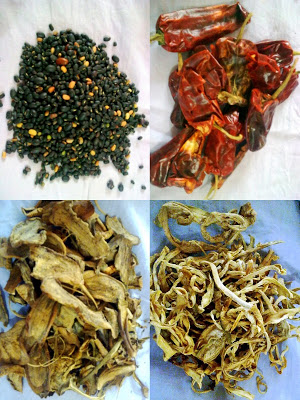
My Mother and Massi hit the I.N.A market, a blessing for immigrants in Delhi, and came back with loads of Var’muth (or Krehin Dal, as Kashmiri Muslims usually call it), dried Kashmiri Chilly (Hotch’ Mar’tchWangun), Wangan Hat’ch, Al’Hat’ch and Kasher Wari. And not not to forget, a Kangri. The winter is officially here.

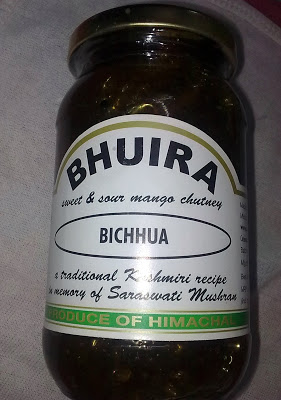
Bichhua, a Kashmiri chutney from Himachal

A product of EarthyGoods, this mango chutney with the catch line ‘a traditional Kashmiri recipe in memory of Saraswati Mushran’ presents an intriguing mystery. A Kashmiri recipe for Mango chutney!

-0-

Update August 2018

This was in fact a German product marketed as “Kashmiri”

Nandita Haskar discusses this post in a passage from here book The Flavours of Nationalism (2018).

She write:

Saraswati Mushran was my father’s older sister. She taught Linnet, her English daughter-in-law, the art of Kashmiri cooking. Many years later Saraswati Mushran died, Linnet bought my father’s apple orchard in Himachal and started making jams, just the way her German mother, Katherine, had taught her. The jams are famous as Bhuira jams – Bhuira is the name of the village in Himachal Pradesh where the orchard is situated.”

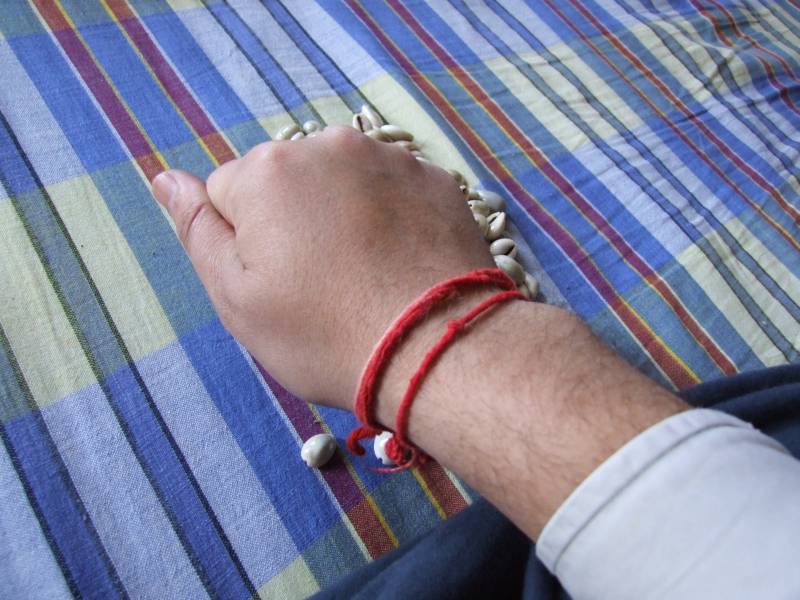
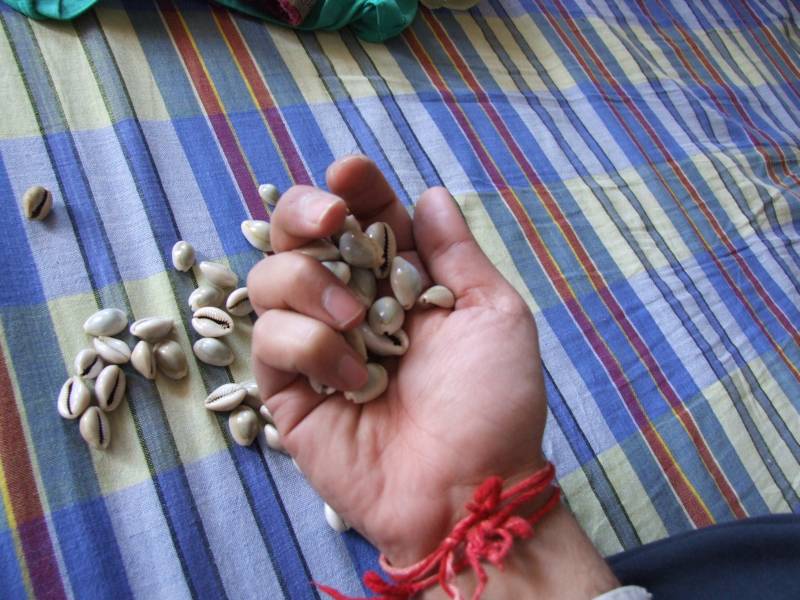
Playing an ancient game with Haar’e

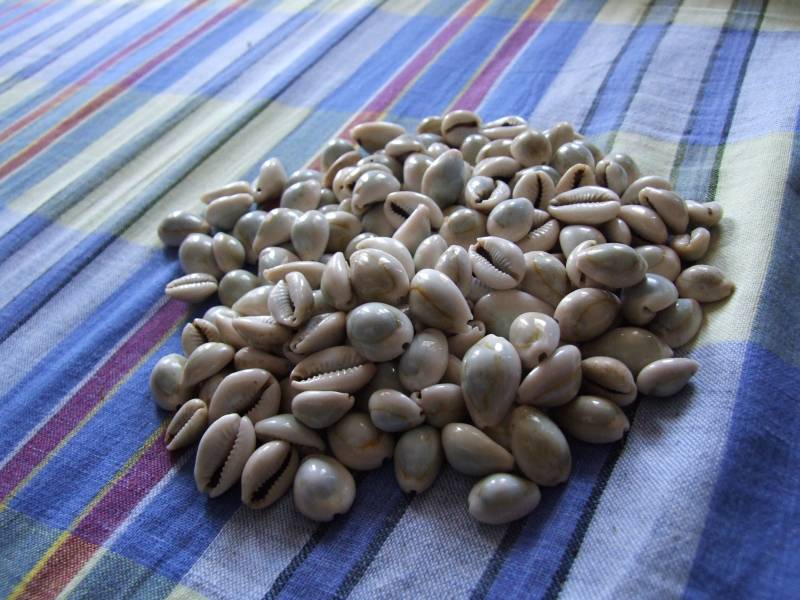
She walked away from the dark crowded room that was drowning in screams of game induced frenzy. Shivratri was days away and people of the house had already been playing the game for weeks now. In the room on the third floor, young boys were standing in the outer circle as the old men in center rolled shells and prayed for luck. The legend, the old man of the house, much to the amusement of the young and learning, was rolling a big hand of Cowries. It was a win all-lose all situation. The old man filled both his hands with Cowries, without giving the shells a shake, even though his big hand could still easy manage it, with an easy flick action he threw the shells down on the floor. As the shells rolled, tossed and turned on the smooth mud floor, old man bent his head down, he was  going to lose, his experience told him that much, rest what he did was all instinct, his eyes locked onto a shell, still rolling- but it was going to be a Slit, he needed a Mount for Quin, old man’s will dropped down on the shell, sitting on his two feet like a giant bird, he put his mouth near the shell that had almost stopped in a Slit and screamed his lungs out. He screamed out the words, his war-cry: Cht’ye Pat’e Tekri Astin’da.
Like a miracle, the shell turned, one more time. A Mount. It was Quin complete. He won. Wild celebrations broke out. Cht’ye Pat’e Tekri Astin’daCht’ye Pat’e Tekri Astin’da. Most of the old onlookers had a look of astonishment, the old timers were still astonished by this trick. They would have wanted to discuss if it was fair play. But the young saw it as a fete, a miraculous win. They were screaming with joy.

The young bride walked away from the dark crowded room that was drowning in screams of this game induced frenzy. She heard the young singing a strange song. She had her own song to sing. And old song. She walked to the big window, took in the sight, it was still a new sight, this was going to be her new house and new family, the house was old, its mores still older. She looked down to the street, the sight of her on the window had already started a motion down on the street. Young kids of the neighborhood, poor old urchins, all Muslims were gathering. She smiled. She reached for the inside of the fancy little bag that she was carrying in her one hand. She took out Haar’e from the bag that she had brought with her from her father’s house, a bagful of Haar’e just for this day. She filled her hand with Haar’e and started to throw them down on the street. They say in the old days these shells were the currency, the money. While she showered Haar’e down on the street and onto the lapping crowd of little boys, she sang:

Baz’e Chek’e Haar’e Ma’e
Yus Tul’e
Tsu’e Pa’helwaan

For the Eagles
I sprinkle these Cowries
The one who picks them
the one be a strong man

-0-

How to Play with Haar’e/ Haran Gindun

Objective: Take all the shells of your opponents.

Number of players: No limit.

Start: At the start all players contribute a fixed number of shells (usually four) each to form a pool of playable shells for the round. The unit that each player contributes is known as Tchakh. When the playable shells are finished each player again contributes his share of Tchakh till he or she can no longer offer any and hence is out of the game.
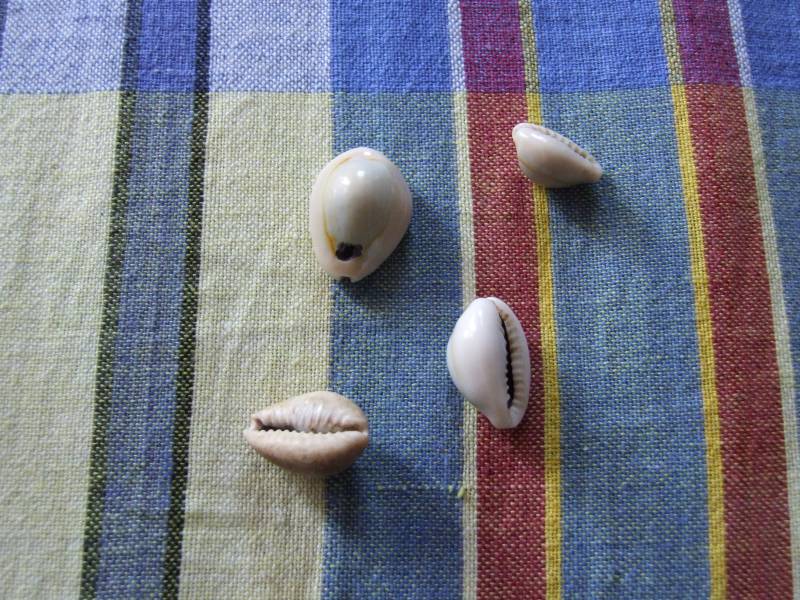
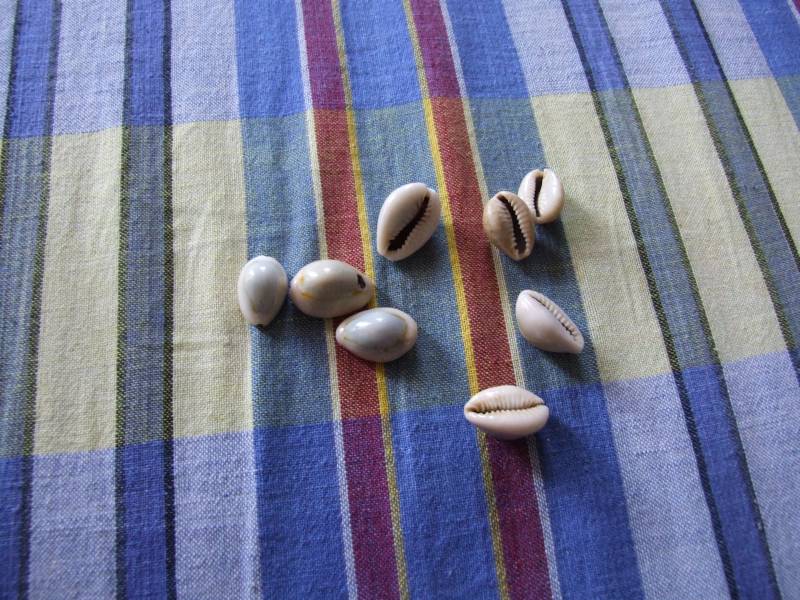
First turn: To decide who will throw first a special throw of shells is arranged. Each player contributes a special, uniquely identifiable shell, say a shell with a broken edge or a hole. This shell is known as Botul. To decide who will go first, players take turns to roll the collected Botuls. You win the right to go first if your Botul stands out. The entire game is about shells standing out. A stand out would typically mean that all the other shells are in Mount state and your shell is in Slit state or vice versa.

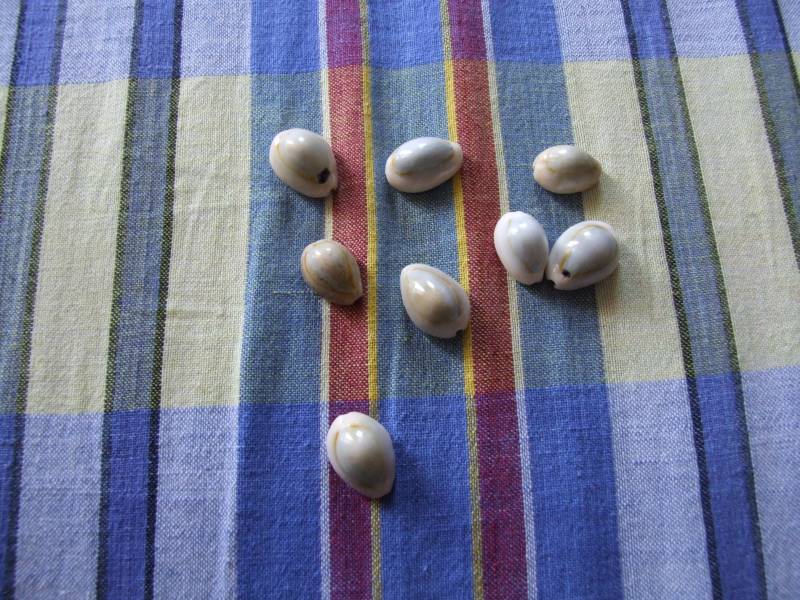
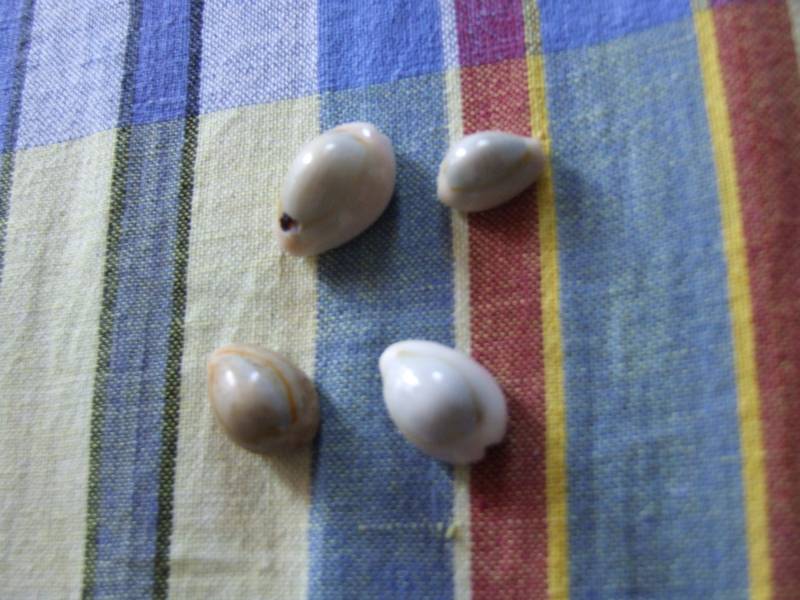
In the scenario presented in the above image we can say that the owner of the shell with the hole can go first. his Botul won. The next turn may be decided in the same way or you can choose to have turns clockwise or anti-clockwise.

Each Botul is returned to its respective owner. And the play begins.

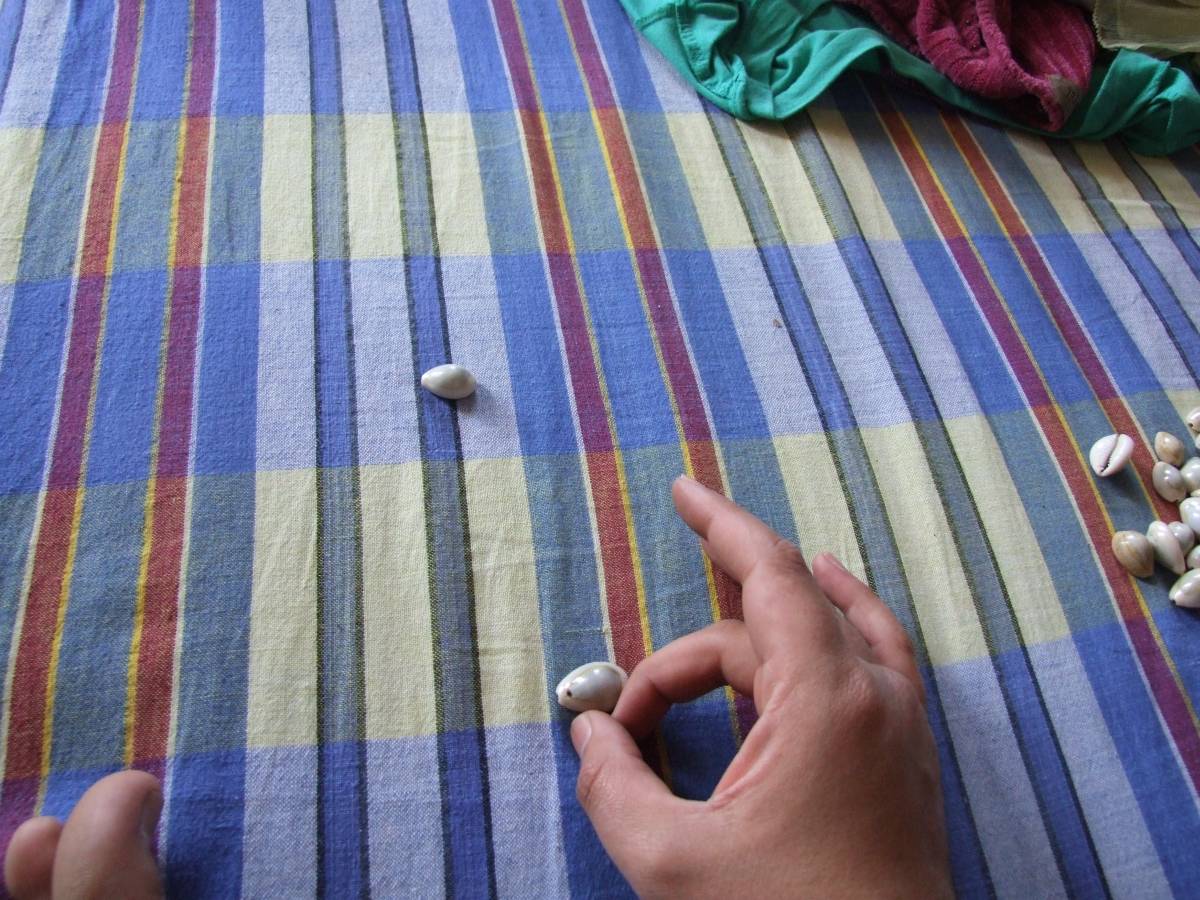
Play: Each player takes turns to roll the shells.

There is no particular way to throw the shells, only rule is do not obviously turn the shell for your benefit.

The outcome of the each turn, whether you won or won nothing, is based how the shells turned, whether you turned a certain number of shells to Mount state or Slit state.

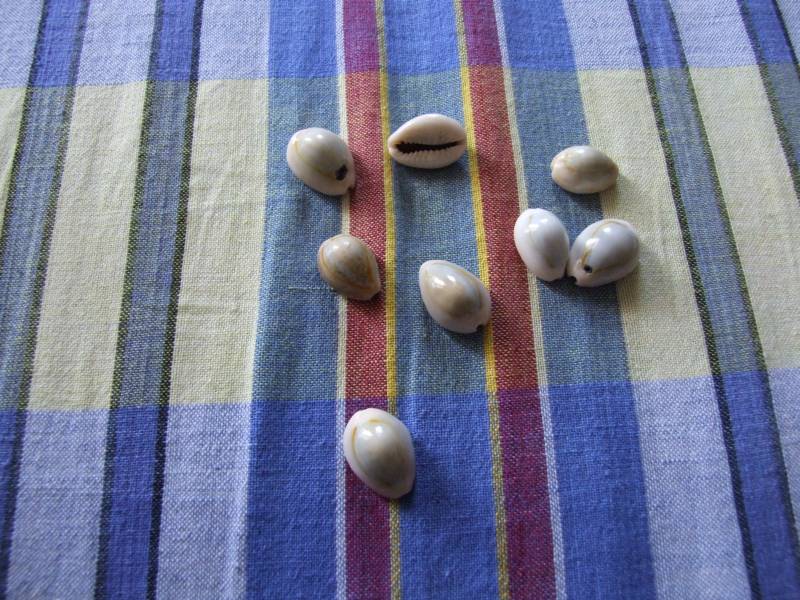
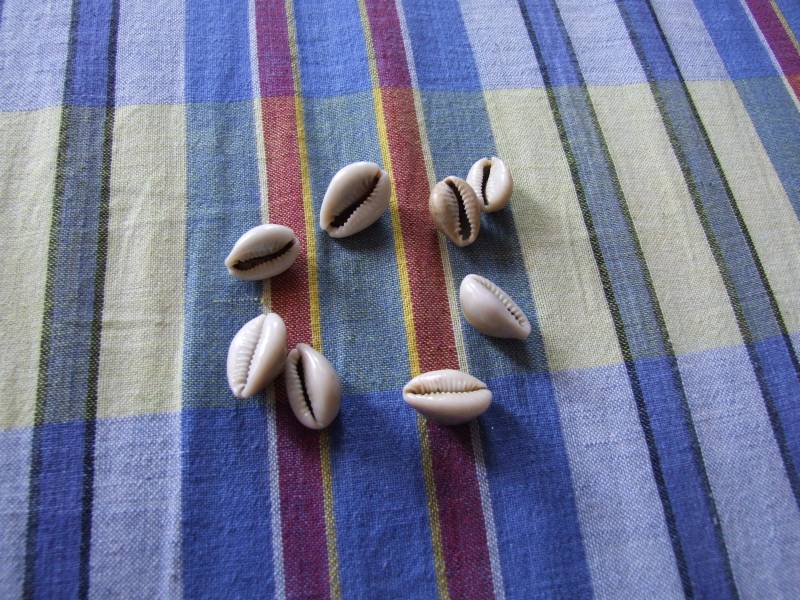
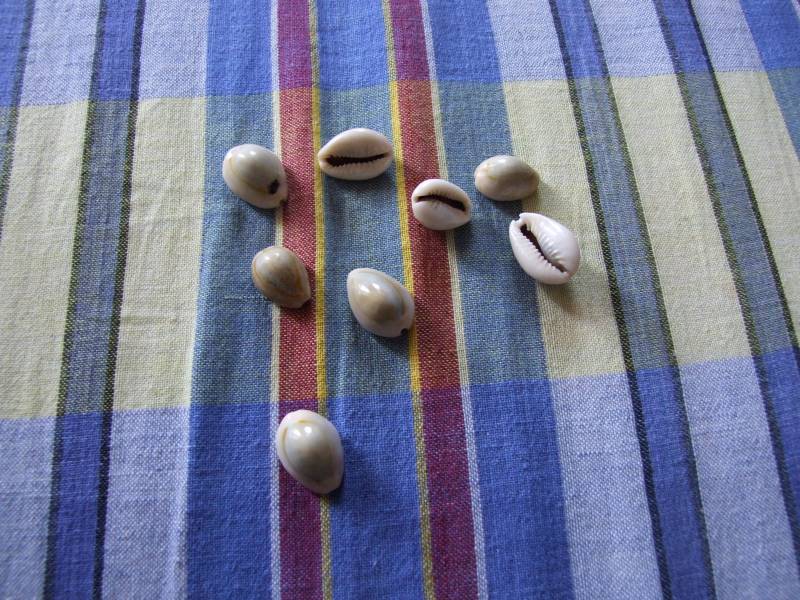
In the above scenario the player rolling the shells got one shell in Slit state and rest all in Mount State. This is the best possible scenario. It is known a Quin. The scenario in which one shell is in Mount State and all the rest are in Slit state is also a Quin. The player wins all the shells on the floor. In this case eight shells. Other players pool more shells based on the pre-decided quantity of Tchakh. The turn of the winner continues and the the game continues. If the player had turned one more shell to Slit, he could have only picked two shells.

In the above scenario the player threw a dud, all the shells are in Mount state. This is known a Tsooyt.

The above scenario is also a Tsooyt as all the shells turned Slit.

In case of Tsooyt the player does not get to pick up any shells from the floor and the turn passes onto the next player.

In the above scenario player got three eyes or To’l Tr’y – three slits. The player loses. If it had been four Slits, he could have picked four shells and the turn (Baaz in Kashmiri or Baazi in Hindustani ) would have shifted to the next player.

Another To’l Tr’y scenario. Three Mounts and rest are Slits. One more mount and he could have picked four shells. And so the game goes one until everyone else has lost all his shells and you are sitting on a huge pile of shells.

In this way, a good game of Haar’e is played and enjoyed.

Also, if one finds the rules too tough to follow, or if one is looking for some simple fun with Shells. One can also play with them like this:

Hit the Shell to claim it.

-0-

Vinayak Razdan is a Game Developer.

Kashmir of Lawrence, 1889 to 1895

Walter Rooper Lawrence was the Land settlement officer in Kashmir from 1889 to 1895. In all he spent just about six years in Kashmir but from his mammoth tome on Kashmir, a classic simply titled ‘Valley of Kashmir’ (1895), those years seem to have been well spent taking in Kashmir in all its glory and with all its warts. These were years that he relished all his life, a reason why to Charles Dickens’ daughter, an old lady already and an acquittance of his, he would say that he would like to live his life all over again. In his later year book ‘The India We Served’ (1928), a book much less often read and remembered, talking about Kashmir that was at a crossroad of modernity, changing to modern times, changing forever, he writes:

“It is difficult for me to write about Kashmir, for I have already written a large book on the subject, and just as one scorns to take ideas and advice from one’s own family, so still less can I condescend to quote from “The Valley of Kashmir.” But to live six splendid years in that valley, unspoiled by railways and roads, innocent of factories and coal, and long streets and concrete houses, sleeping in boats or in tents always pitched on green turf under the shade of plane or walnut trees, and always within sound of running, singing water that is a life to live over again. Such a climate, with the sun at its best ! The Capital is well named the City of the Sun, for summer or winter the sun smiles and sparkles in Kashmir. The air is no mere compound of gas, but a blend of dance and laughter, smiling even in drear December when the temperature is below zero: is blue, like the sapphires from Zanskar, but I never knew whether the blue came from the sky or from the rivers and lakes, or from the iris, which is the flower of the valley. And from each of the countless valleys which pass on the waters of the encircling snow range to the fabulous Hydaspes, there is the view of the naked majesty of Nanga Parbat, and the sheen of jagged Haramukh, which seemed to be always to the north. The Easterns have known the magic of Kashmir for centuries. The Moguls knew it, but Kashmir, like Corinth, was not approachable by everyone, and, though twice I have heard august consent given to the making of a railway, the tutelary divinities of this happy valley have intervened. Since I last saw Kashmir, roads have been made, and motor cars now run. But I doubt if even a railway could rob the valley of its strange and unique charm. I have said all I can say of its colour, its flowers and its fruits, and in the days when I first visited Kashmir, the only jarring note the censorious critic could hazard was that the people were Kashmiris.”

In his words, words that might now be branded ‘colonial’, he did give Kashmiris a good character certificate – decent people, at time too wrapped up working up a subterfuge,who were who they were, god-fearing hardworking folks, in-spite of all the sufferings that they had had to suffer. He made an interesting observation that might still ring true:

“I have given my testimony regarding the Kashmiris in “The Valley of Kashmir.” It was the Fashion to say hard words of them, but none, English or Indian, who berated the Kashmiris, knew anything about the villages, and it was only fair that I should say what I could ; and six years continuous camping in the valley gave me opportunities for forming an opinion.”

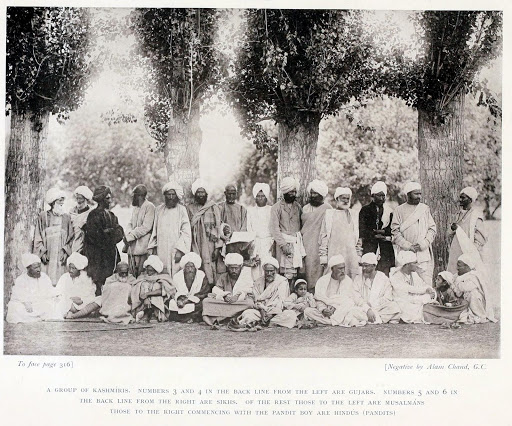
This is the Kashmir that he saw. Photographs from the book ‘Valley of Kashmir’ (1895). These were taken by Major Hepburn, Captain Allan, Captain Godfrey and Alam Chand, the State photographer.

A group of Kashmiris.