 |
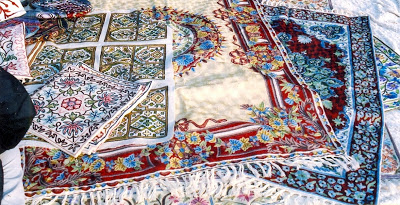
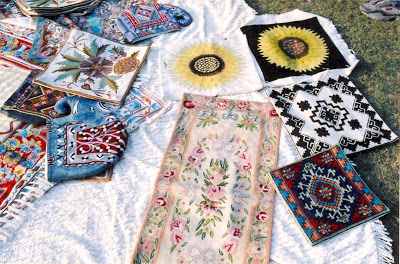
| Namda with Gabba Design |

in bits and pieces

|
| Namda with Gabba Design |




 |
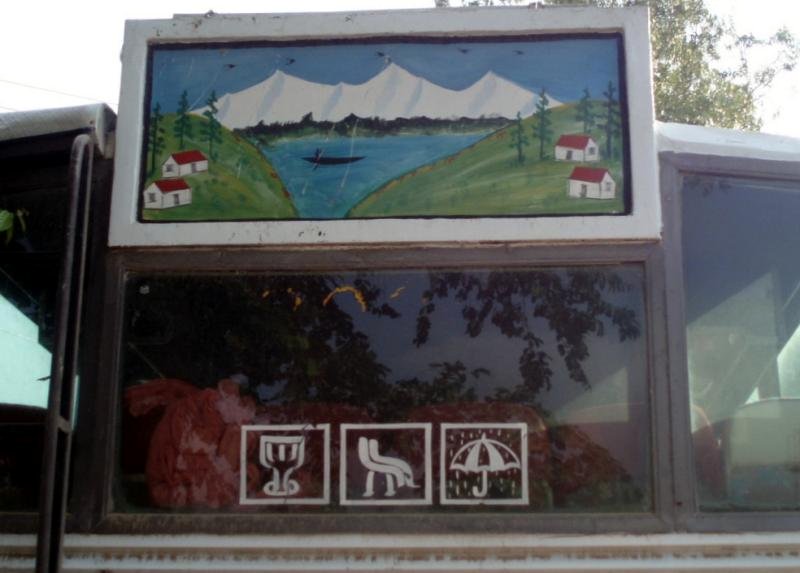
| A bus running up the road somewhere in Haridwar |
“Now the Sirens have a still more fatal weapon than their song, namely their silence. And though admittedly such a thing never happened, it is still conceivable that someone might possibly have escaped from their singing; but from their silence certainly never. Against the feeling of having triumphed over them by one’s own strength, and the consequent exaltation that bears down everything before it, no earthly powers could have remained intact.”
-Franz Kafka, The Silence of the Sirens (1917)
-0-
“The valley is full of legends and superstitions, one of which is that certain stones to be seen beneath the waters of the lakes were at one time men, who for their evil deeds were condemned to die as rocks beneath the clear water until the lakes dried up. One is often shown the “stone men,” which look very much like any other large rocks to our western eyes. Another legend is of a siren living on the border of the Dal Lake, who sings enchantingly if she sees one man alone, and beguiles him away with her, and he is never seen again, but if two men are together she does not try to ensnare them, or if the one lone man happens to have a gun and dog, so apparently she is a coward fay.”
– ‘Valley of Kashmir: India’s Most Delightful Spot (Special Correspondence)’, published in an American local daily ‘The Logan Republican’ (Logan, Utah) 1903, November 04. (Source: chroniclingamerica.loc.gov)
-0-
“Proof that inadequate, even childish measures, may serve to rescue one from peril.
To protect himself from the Sirens Ulysses stopped his ears with wax and had himself bound to the mast of his ship. Naturally any and every traveller before him could have done the same, except those whom the Sirens allured even from a great distance; but it was known to all the world that such things were of no help whatever. The song of the Sirens could pierce
through everything, and the longing of those they seduced would have broken far stronger bonds than chains and masts. But Ulysses did not think of that, although he had probably heard of it. He trusted absolutely to his handful of wax and his fathom of chain, and in innocent elation over his little stratagem sailed out to meet the Sirens.”
-Franz Kafka, The Silence of the Sirens (1917)
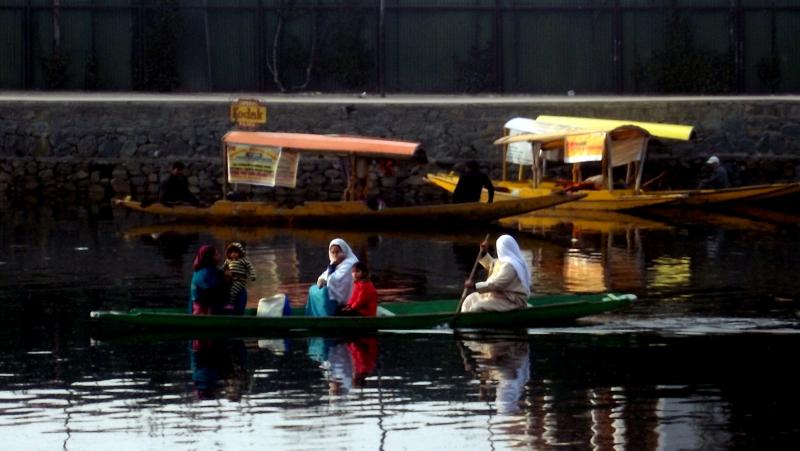
15:08-15:24 is quite a puzzle.
-0-
Previously :
 |
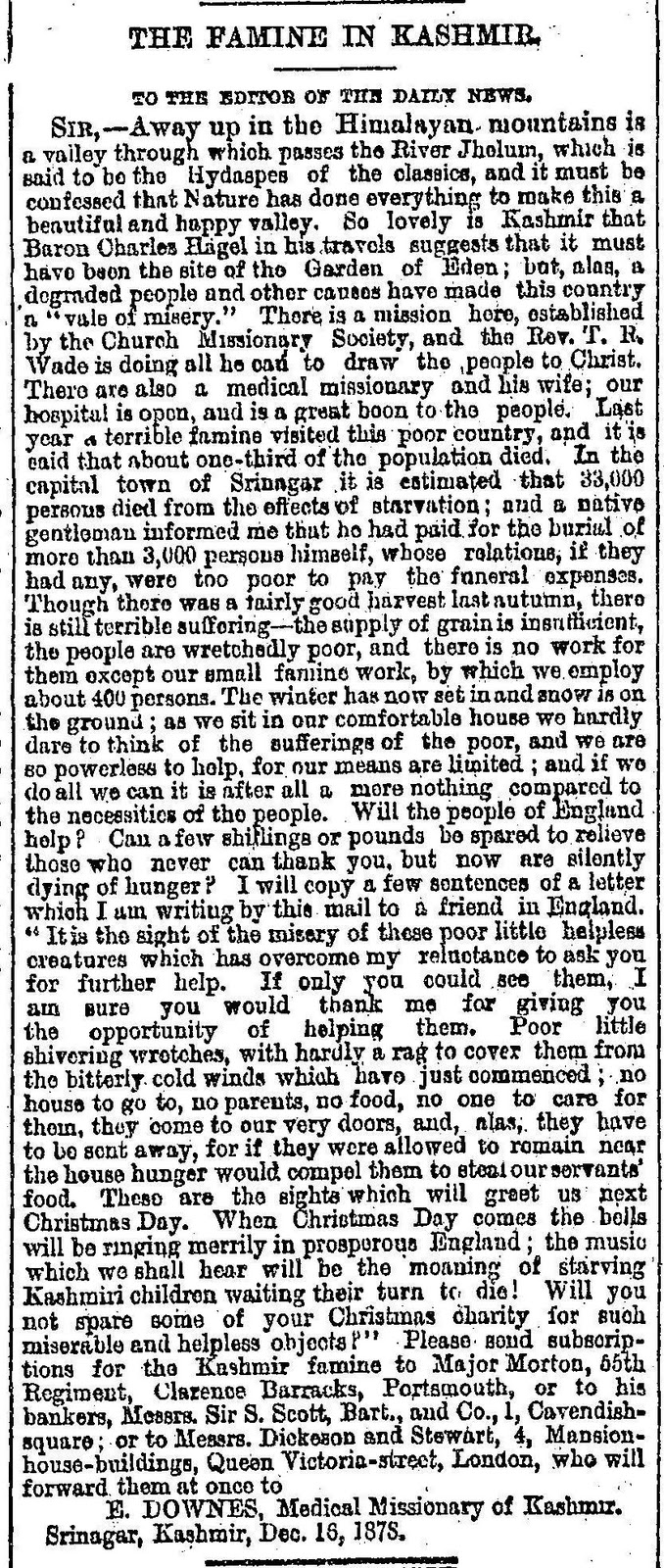
| ‘The Famine in Kashmir’ – Daily News. 25th January, 1879. Famous missionary educationist Tyndale Biscoe in his writings mades an interesting observation about Kashmiri people. In times of natural calamity, famines and pandemics and earthquake, he found Kashmiris mourning silently, without any public display of grief. |
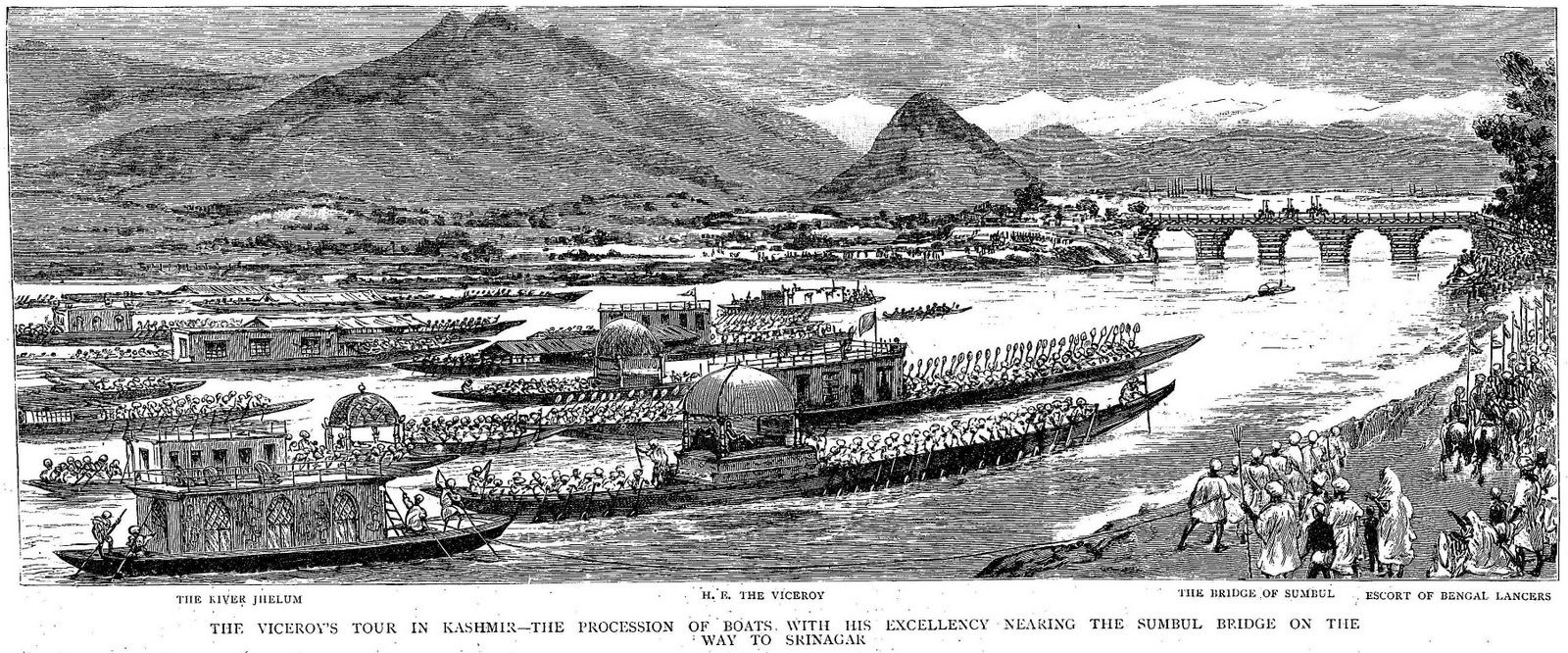 |
| ‘The Viceroy’s tour in Kashmir – The procession of boats with his excellency nearing the Sumbul Bridge (Sumbal in Baramulla district) on the way to Srinagar’ -The Graphic. 18th December, 1891. Lord Lansdowne (1888 – 1894) was the viceroy at the time and setting up of Durand Commission for defining boundary of British India and Afghanistan was one of the high-points of his career. |
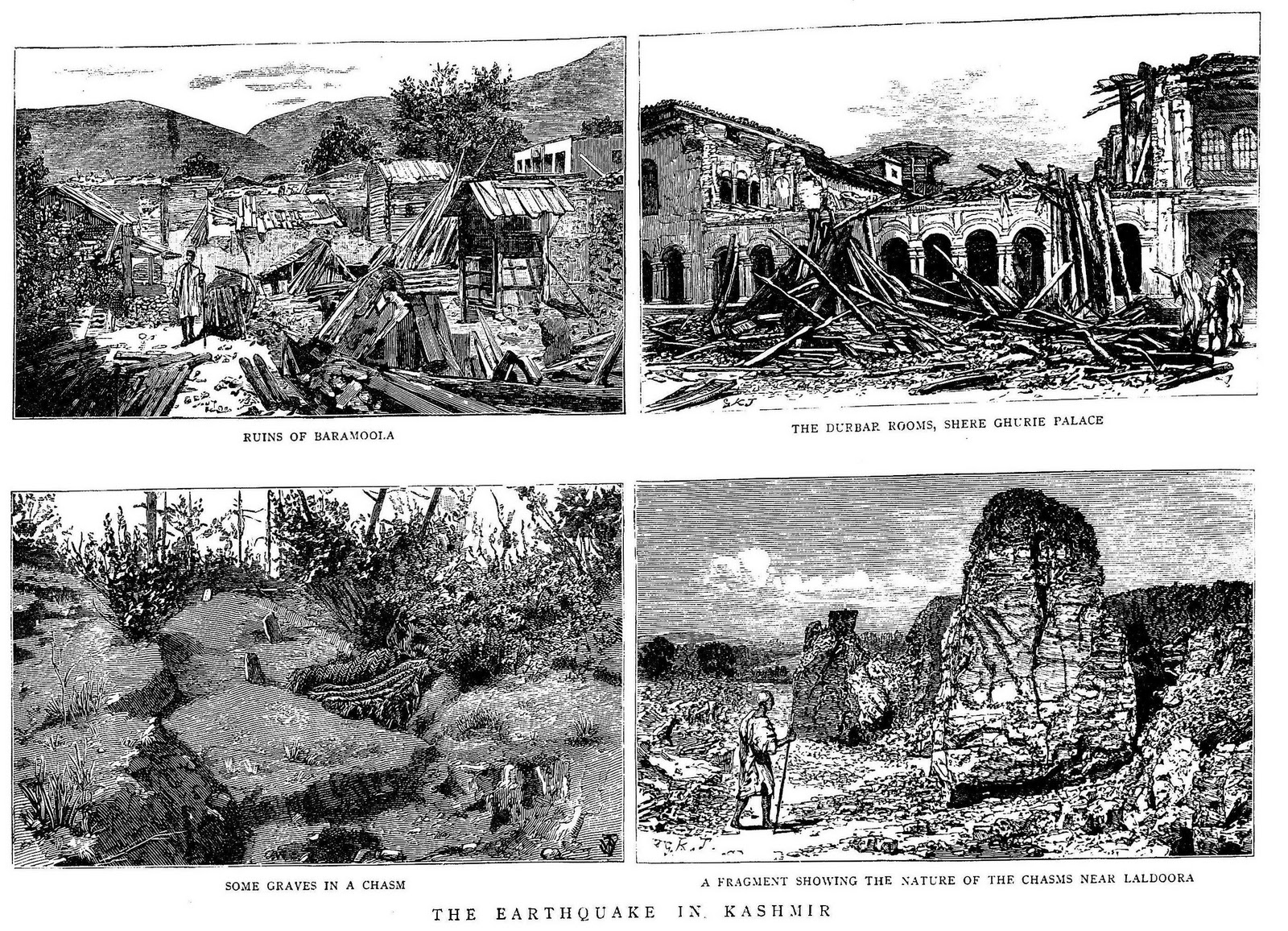 |
| The Earthquake in Kashmir The Graphic. 22th August, 1885. One of the most terrible earthquakes ever to hit Kashmir ( an intensity III ). “The earthquake of 1885 commenced on May 30 and shocks more or less violent were felt up to August 16. Houses were destroyed and there was general panic, people sleeping for many days out of doors. It is said that 3,500 persons were killed , and the number of cattle, ponies and other domestic animals crushed by falling buildings was enormous. Baramula and Patan seem to have suffered the most, and large earth fissures were caused, from which it is reported that sulphur fumes and inflammable gasses were emitted. Many old water springs disappeared and landslips occurred, one of which at Lari Dura in the Krihun Tahsil, revealed fossil Singhara nuts at an elevation of about 1500 feet above the level of the Wular Lake. It has been suggested that the style of architecture in Kashmir is not calculated to withstand the shocks of an earthquake , but the inhabitants claim that the apparently frail structures escape when heavier and more massive buildings would succumb, and it must be remembered that the temples of Patan and the Palace of Srinigar suffered in 1885. Even now I have noticed in the courtyards of many villagers houses a temporary wigwam, which is always kept in readiness for shelter in times of shocks, and the dread of another earthquake is always present.” –Walter R. Lawrence in his book The Valley of Kashmir (1895) |
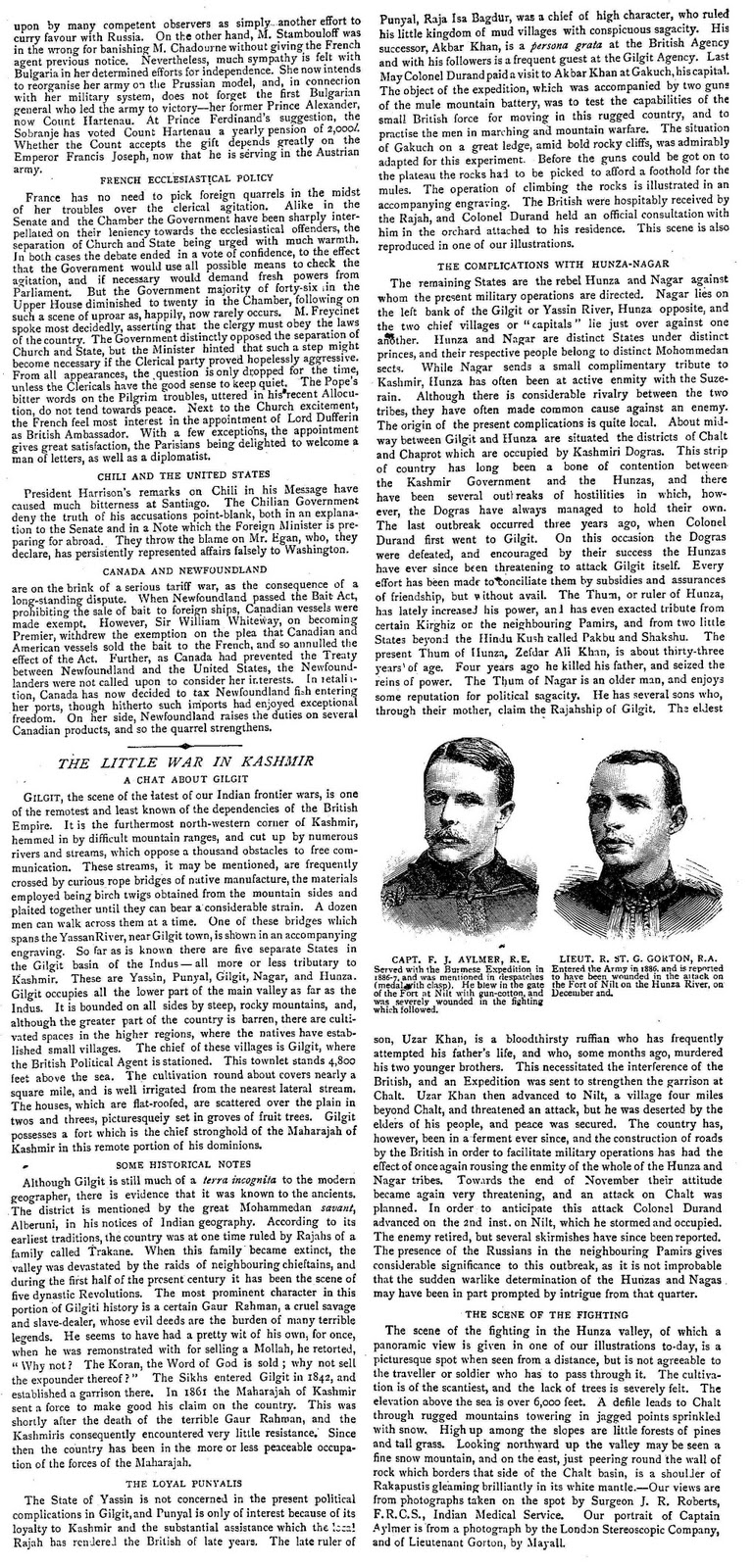 |
| ‘The little war in Kashmir: a chat about Gilgit’ –The Graphic. 19 December, 1891. Interesting peek into the politics of the region in those day. Durand was right in the middle of it all. |
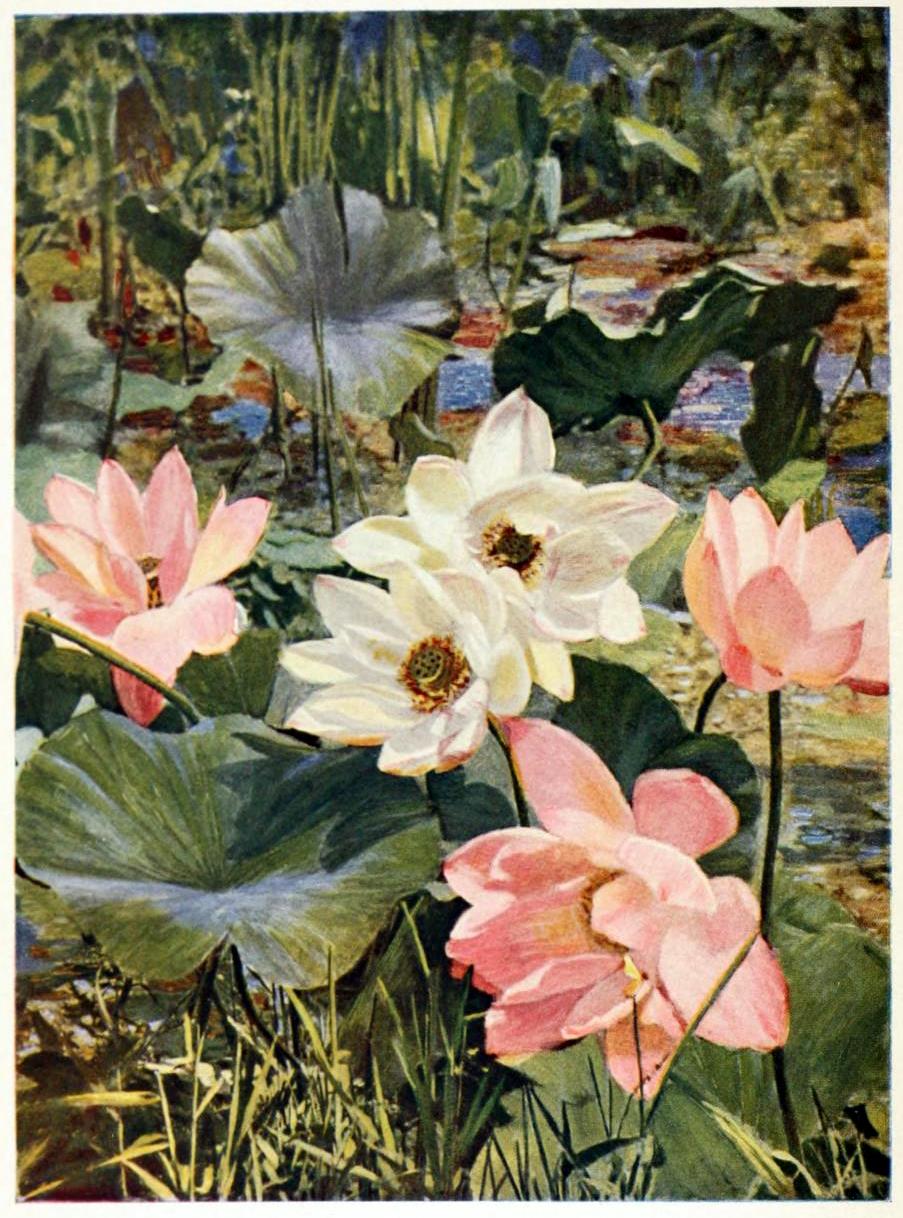
 |
| ‘Lotus Flowers of Dhal Lake’ Frontispiece of the book |
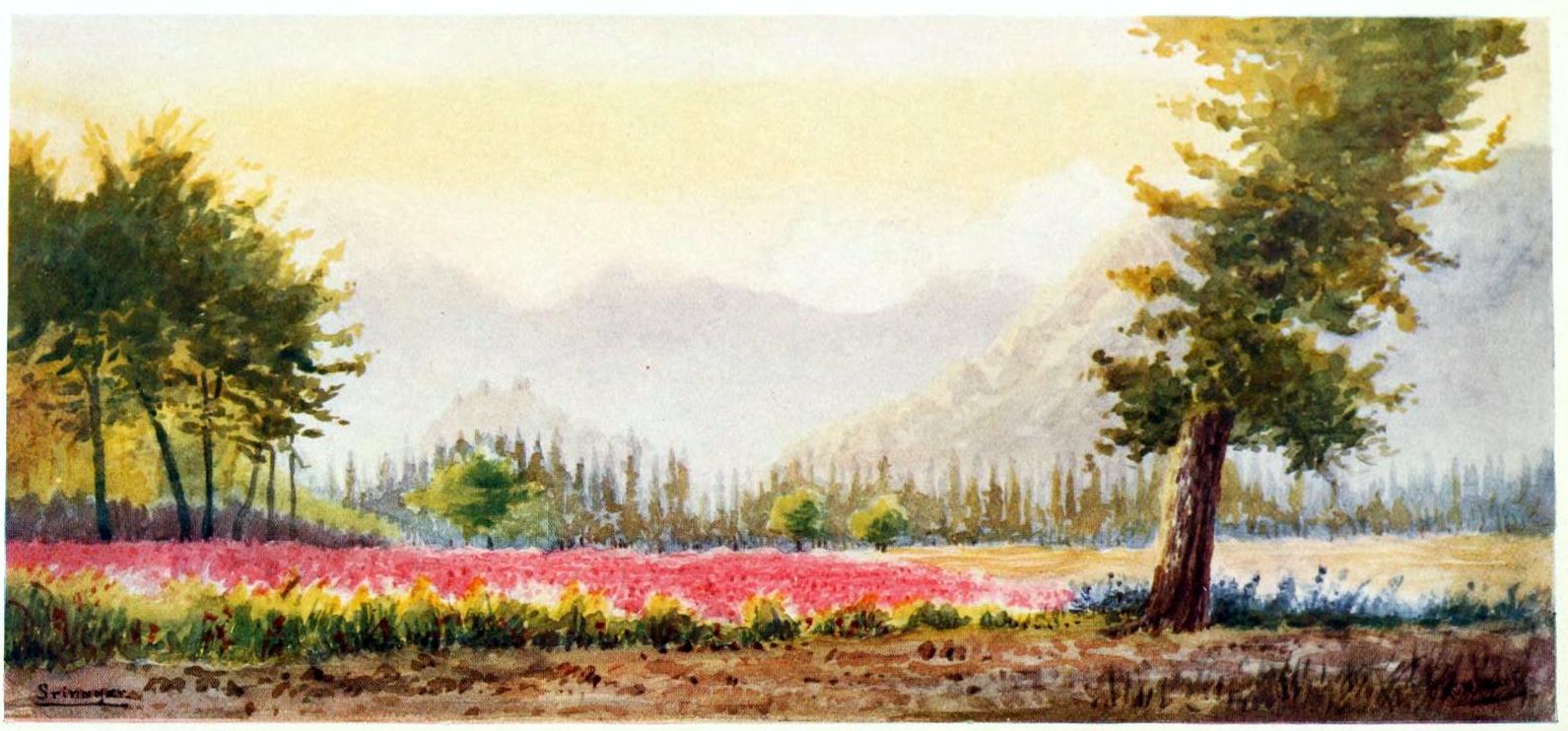 |
| ‘Warmth of Color, Pearly Mist and Snow-Capped Mountains’ Srinagar by Col. H.H. Hart, R.E. |
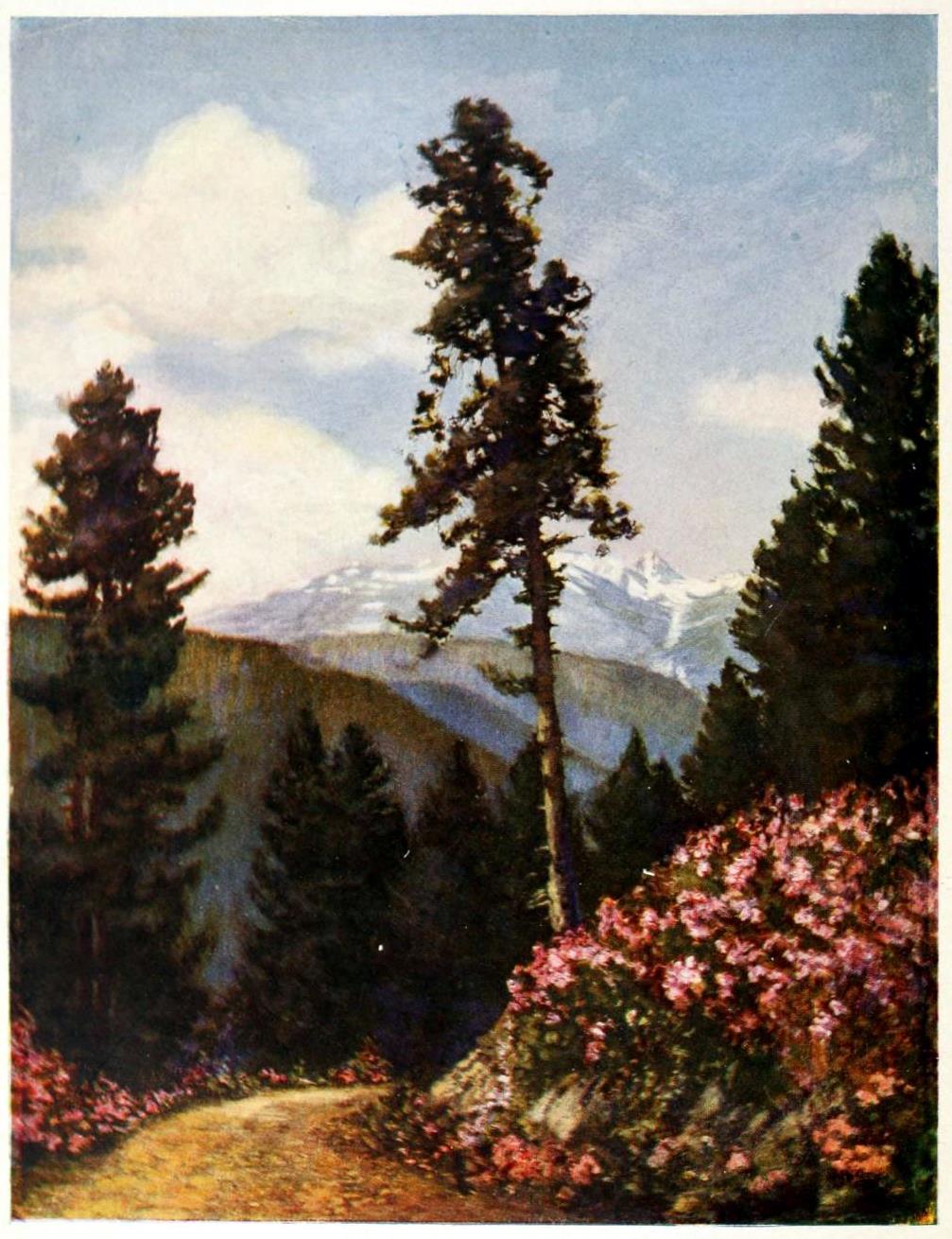 |
| ‘The Outer Circular Road’ |
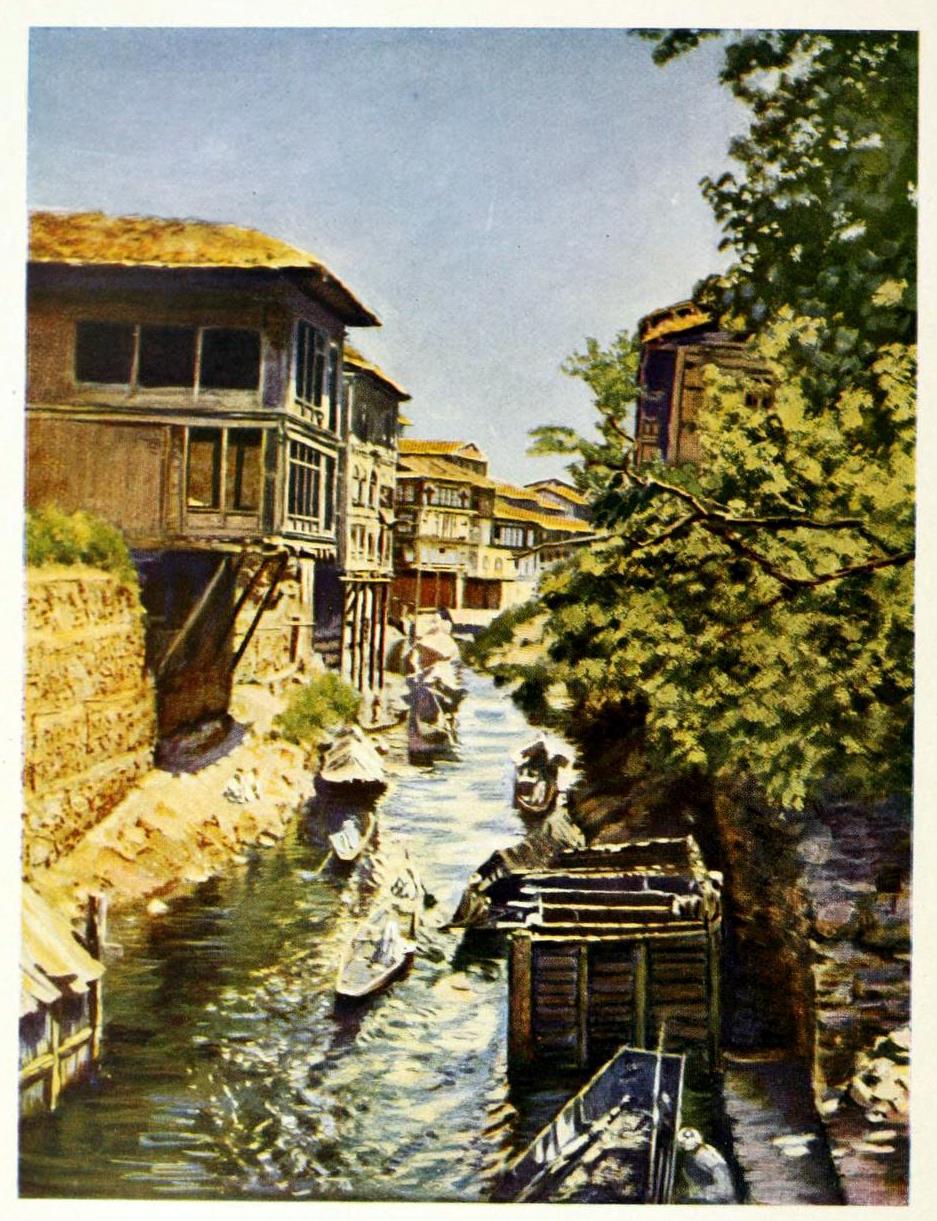 |
| ‘A Water Highway of Kashmir’ The Mar Cana, Srinagar |
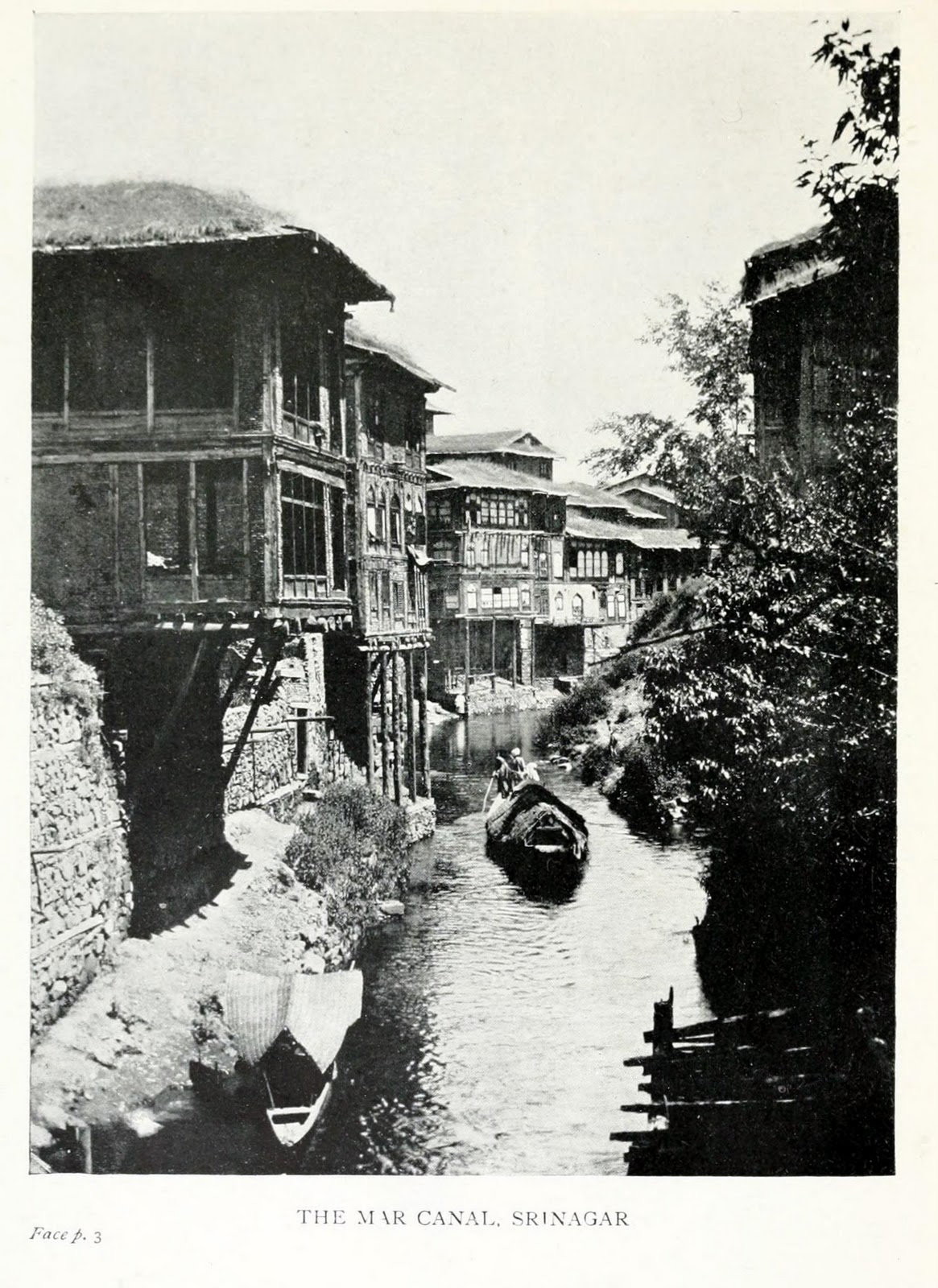 |
| A photograph of mar canal as found in ‘A lonely summer in Kashmir (1904)’ by Margaret Cotter Morison. |
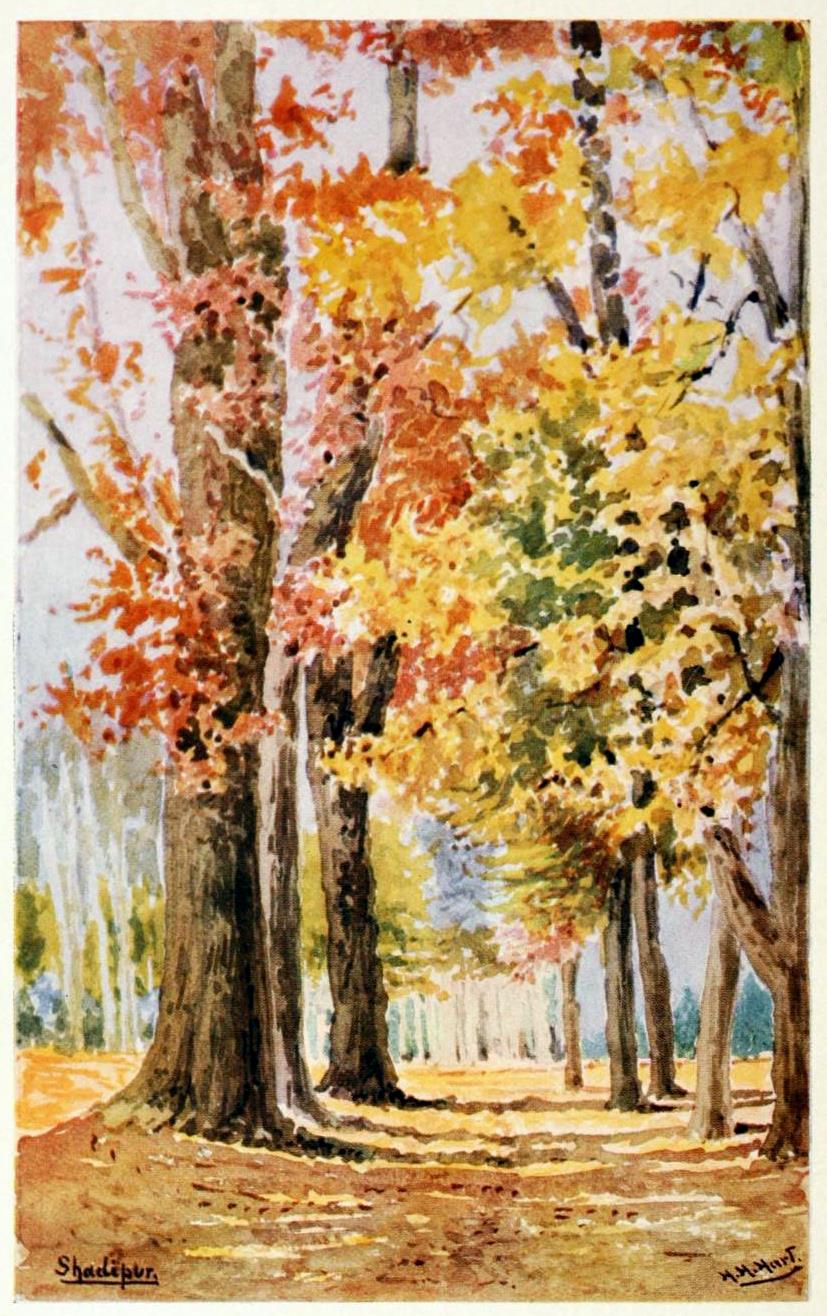 |
| “We linger in beauties that never are gone” by Col. H.H. Hart, R.E. Shadipur |
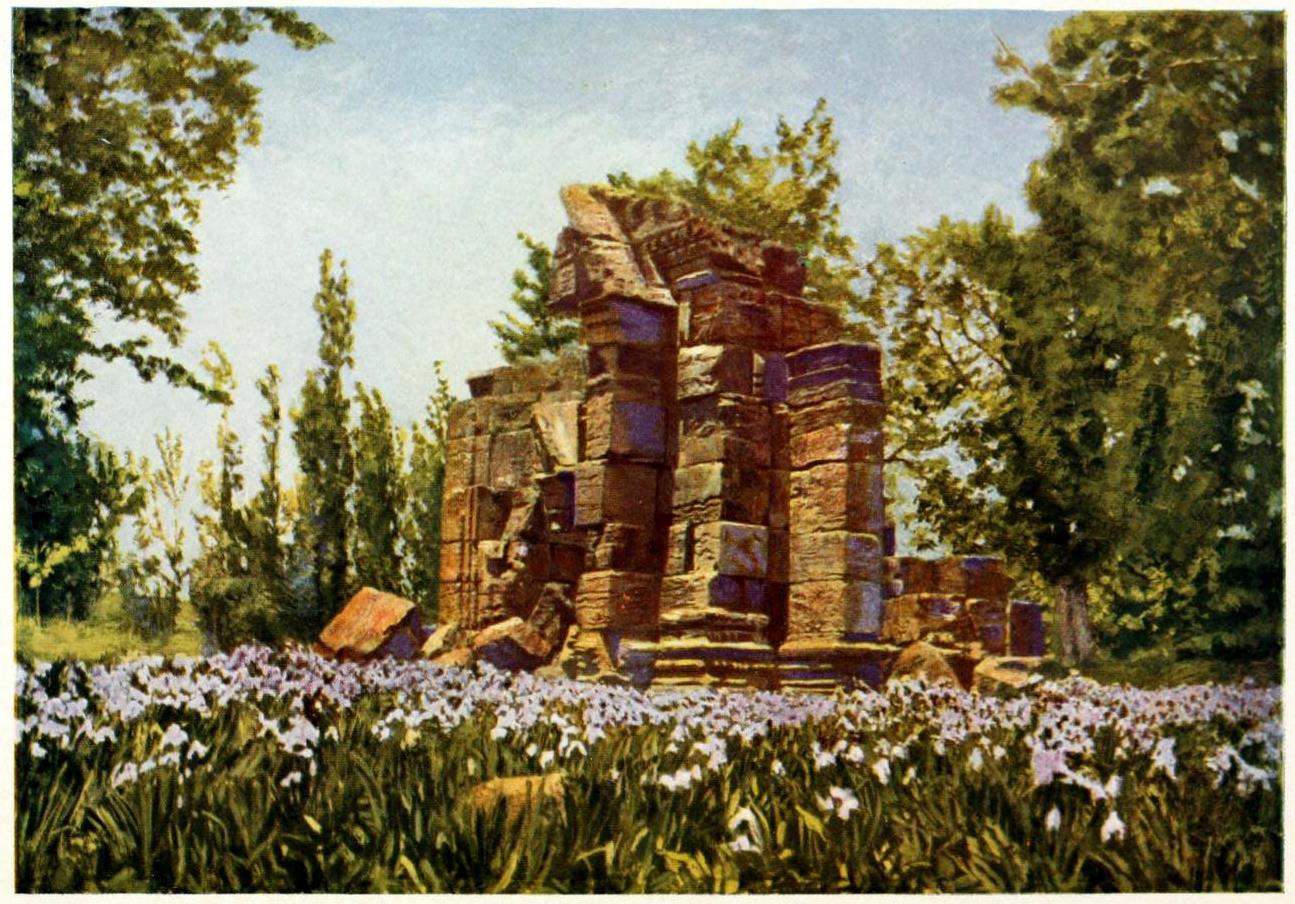 |
| ‘The Ancient Temple Ruins at Patan’ [Sugandhesa Temple] |
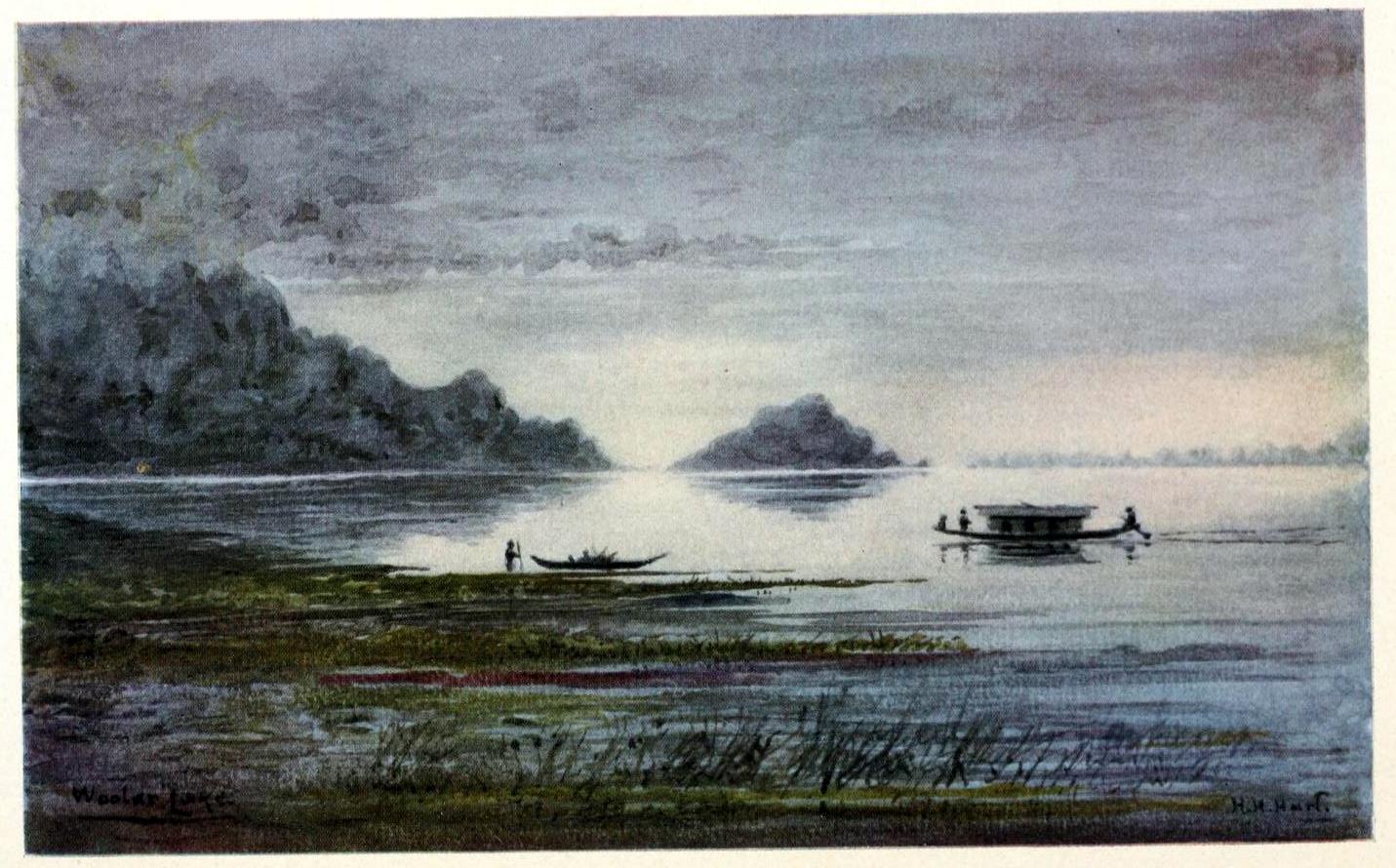 |
| ‘Nightfall on Wular Lake’ by Col. H.H. Hart, R.E. |
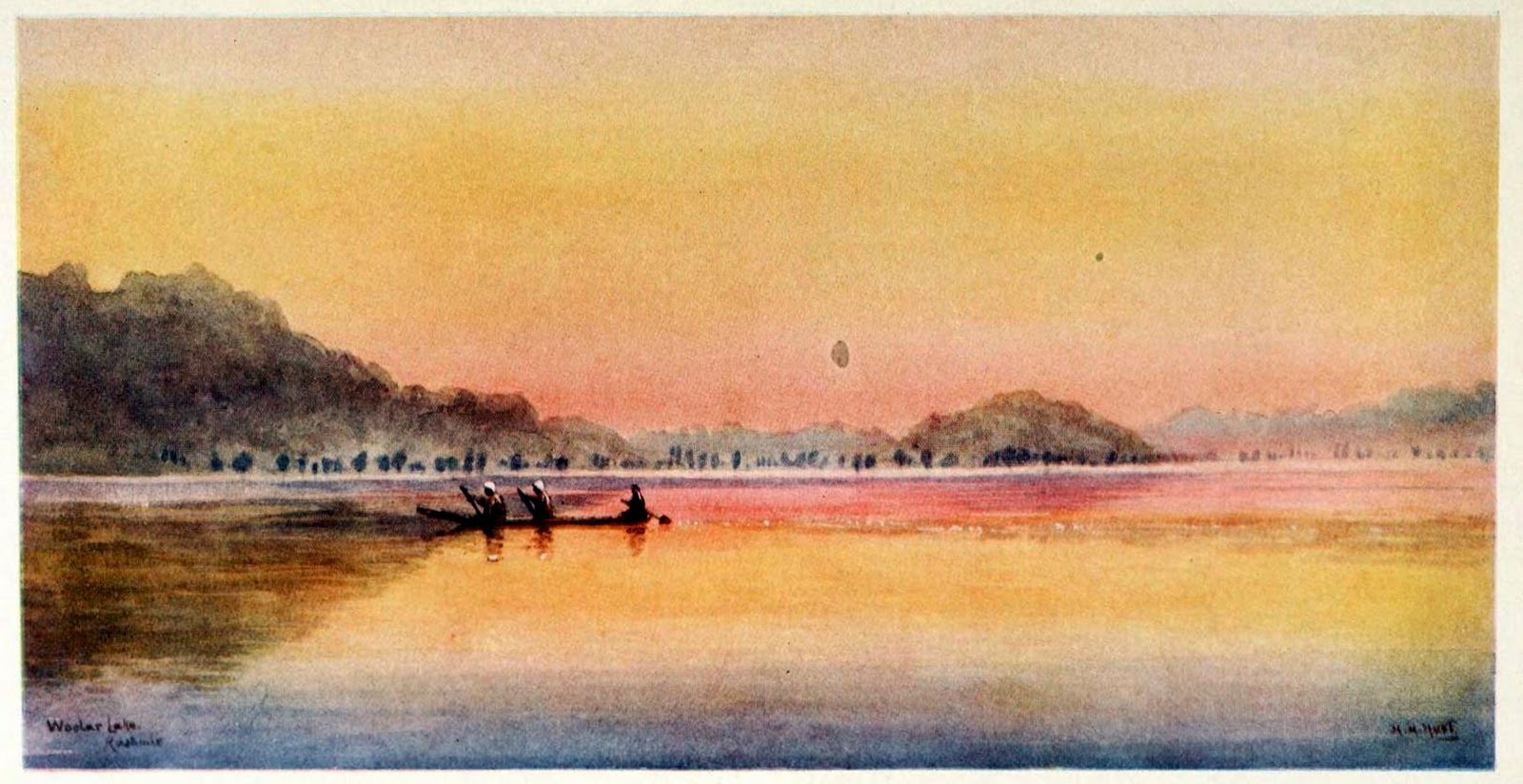 |
| ‘An artist Paradise’ by Col. H.H. Hart, R.E. Wular Lake |
-0-
 |
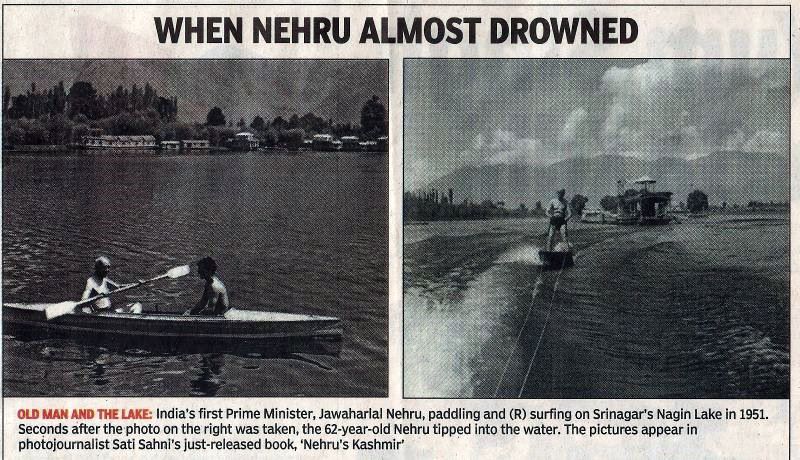
| India’s first prime Minister, Jawaharlal nehru, daddling (R) surfing on Srinagar’s Nagin Lake in 1951. Seconds after the photo on the right was taken, the 62-year-old Nehru tipped into water. The pictures appear in photojournalist Sati Sahni’s just-released book, ‘Nehru’s Kashmir” |
from TOI dated 30th Jan 2011.
-0-
Previously: Rare photographs of Nehru
-0-
Update: TOI dated 13th Feb 2011.
 |
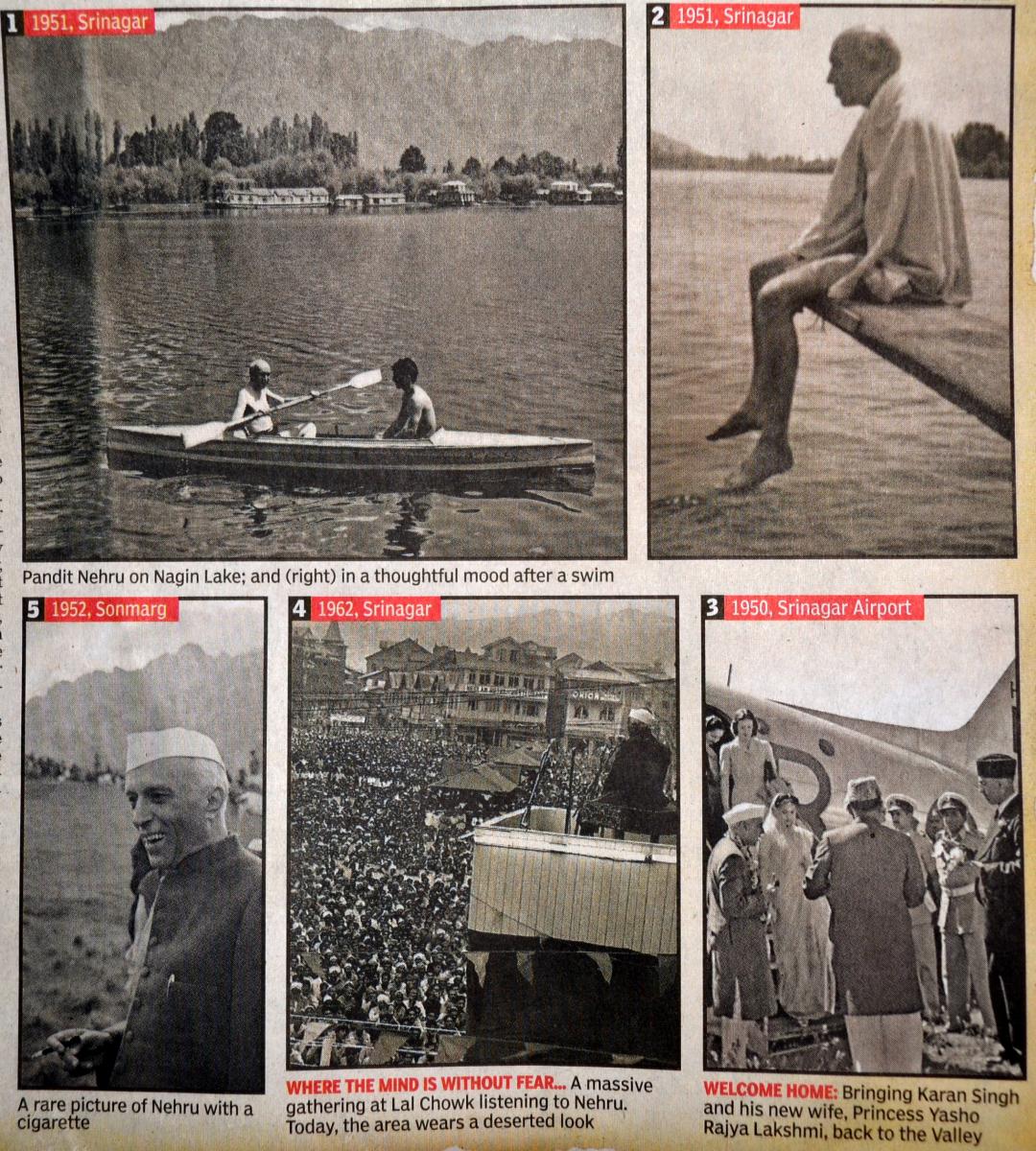
| Morning at Zero Bridge |
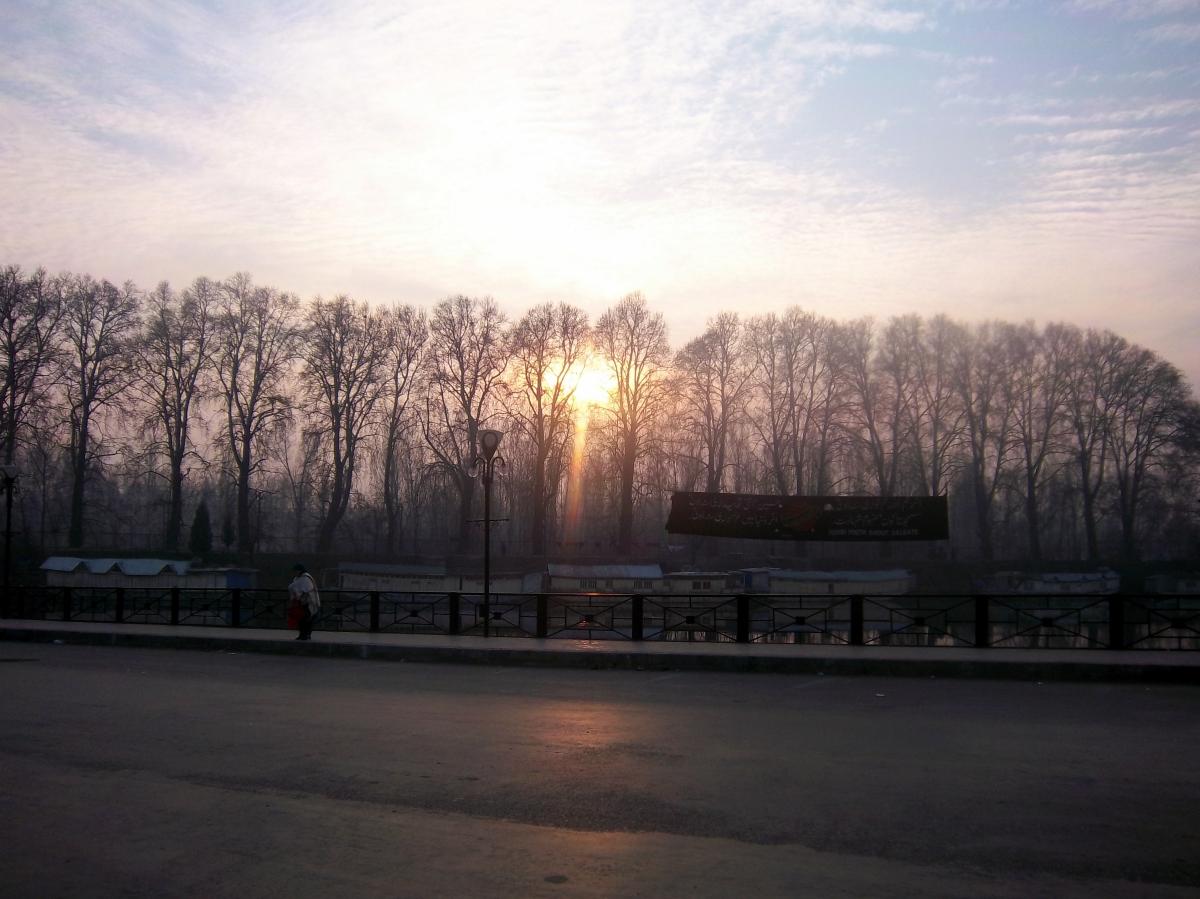 |
| Morning at Dal Gate |
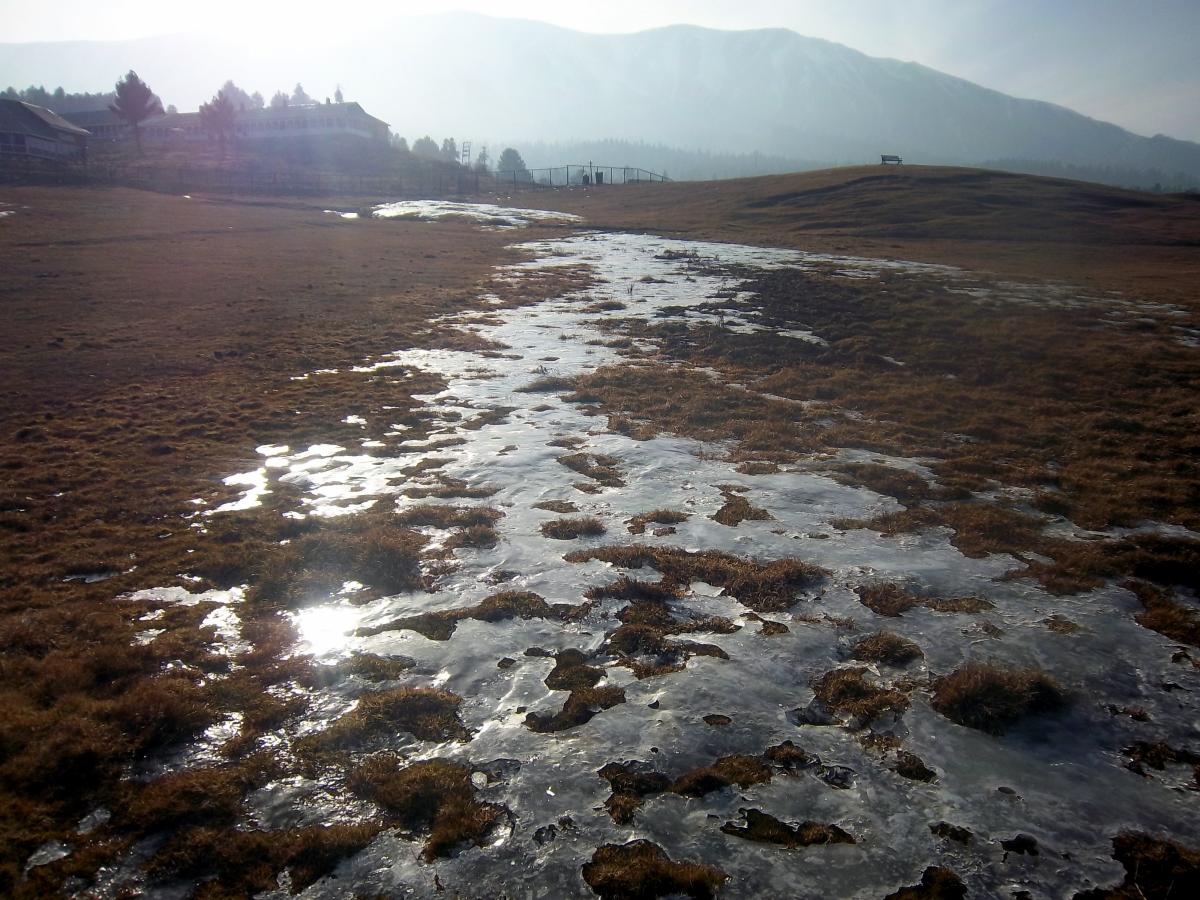 |
| Morning at Gulmarg |
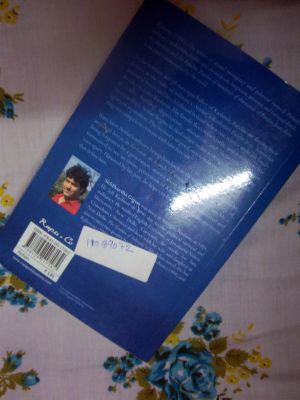

I took my weekly winter bath, packed my stuff into a travel bag and headed for my mother’s place. On the way I planned to pick up this book from a store in CP inner circle, close to MakDee outlet outside which on any given weekend you are likely to find young teenage Kashmiri Muslim boys hanging out in groups of three or four. The store was closed. Realized it is always closed on Sundays. I still had this book to pick, so I looked for it else where. There are two Jain Book Depots at CP, both of them claim to specialize in ‘Law Books’. I must have been desperate. I walked into the first one, the one right on the circle. Two steps into the shop and I felt like an intruder. It was full of people carrying little chits that had names of course books scribbled furiously on them, chits which the buyers tried to hand out to a busy looking person behind the counter. Two minutes later I was out of that place. The display window of this shop certainly didn’t lie. They were serious. The other Jain Book Depot looked slightly more promising with a bit more variety of books on display through its glass windows.
‘Which Book?’
‘gardenofsolitude.’
‘Hmm…’
‘It’s a new book,’ I added trying to be helpful as the shop help led me towards ‘Gardening’ section.
There was still one hope. The book store in Noida at GIP. A great place. Last winter while picking up Basharat Peer’s Curfewed Night from the store I witnessed this incredible sight: a women in blue jeans, purple sweater and these golden dejhoors let loose, slow-dancing, hanging from her ear as she walking down an aisle of books. Couldn’t see her face.
With its great population of Kashmiris, and not just Pandits, I was sure this was the place to be for this book. And indeed they had the book. I was told to wait, someone was going to fetch it for me. Half-an-hour later, I had picked up an extra – The Absent State, read half the chapter on Valley but still no news about the Garden. I walked to the counter. One of the guys at the counter, kindly taking a break from his paying customers, checked the system, typing gigu, hitting Backspace-Backspace-Backspace-Backspace, typing g-i-g-o-o on a keyboard with loose, rickety keys; in microseconds a decade-old-but-already-monolithic blue screen revealed that the book was certainly present in the store. But where? I was directed to the guy who was searching for the book.
‘I hope you are not looking for it in gardening section.’
‘What kind of a book is it?’
‘Fiction.’
‘Chetan Bhagat type?’
I must have cringed as I thought to myself – I hope not – because the man went on to explain what he meant even as he kept going through various piles and boxes of new arrivals.
‘I mean the size. What is the size? Is it Chetan Bhagat size?’
I had no ready answer as I spit a, ‘pata nahi.’
‘Someone else was also looking for it a couple of days ago,’ added another guy who had joined our search. ‘That customer bought one and I think we still have four more. ‘
‘That was the copy kept at the counter. Another customer who came looking had to return empty handed. I think he left his phone number at the counter in case the book is found. Sir, why don’t you leave your number with us?’
‘I am here only for the weekend. I don’t know when I will be able to pick it. Where could you guys have kept it. This is the ‘Rupa’ corner, right?’
‘We looked there but it is not here…You, where did you put…’
The conversation went on as we looked for Garden of Solitude in piles of books stacked without any rhyme on shelves. I had spent more than an hour in the shop now. I was kind of enjoying my little quest. Sometime later, while I was going through a book of bad poetry, someone exclaimed, ‘Found it’ while pulling out four copies of the book buried under debris of Chetan Bhagats.
‘ It is Chetan Bhagat type’
-0-
‘What will you do with my things after I am gone?’ asks an ancestor in a book within this book.
In the Epilogue to this book, the protagonist reads out a passage from his book, a book titled ‘The Book of Ancestors’, to a gathering of Kashmiri Pandits. ‘A strange silence’ falls into the auditorium. Not one pandit whispers – ‘ Ye gaya Naval‘ – as the protagonist steps out of the auditorium holding the hand of his wife and his two-year-old- daughter, and walks to a bus stop, even as far away sleep ‘the town he would never forget for the rest of his life.’
Even though this ending ties perfectly with the ‘Buddhist’ opening lines of the novel – For the exile who said,’All I dream of now is a garden of solitude, where I get a morsel of rice in the morning and a morsel of rice in the evening.’ – the end had me thinking some thoughts. First the trivial: Still no sex. Sex is still out of reach for Kashmiri writers. It is ironic in a way given that the mating rituals of Kashmiri people, in its perverse form, hit the seedy underbelly of the Internet first and are yet to find place in lines of modern literature created by people hailing from the region. And by mating ritual I don’t mean dreaming about holding hand of your beloved, thinking about her, sticking to describing her above neck region, she not even thinking about him, him writing about her cherry lips in an all assorted style picked from ancestors. But then that would be deemed very unkashmiri. Basharat Peer in his book wrote about a guy whose sexual life is destroyed because of torture. Siddharth Gigoo writes about perverse sexual thoughts inflicting an old migrant living in a camp. So in a way the conflicts of that space have started finding place in this modern English literature being created by Kashmiri people but the actual space itself is still out of reach, undocumented, untouched, untouchable. There is no need. A protagonist can suddenly at the end of the story get a wife and a kid, find peace and not just ‘a live happily even after’.
Bab’a, Moj’a, ti Bakay kya, Cha’ya, Cigarette’ta, ti Bakay kya.
Father, mother, tea and cigarettes, what else do I need. That can be a parallel Kashmiri reading of the opening quote of this book. Cigarettes bring me to the really interesting bit about the book. Protagonist walking aimlessly at night, leaning against lamp-post, deep dragging his cigarette: this might all seem very dramatic, in fact too dramatic, even irritatingly trifling, he could as well be singing Sahir’s ‘Na Tu Zameen Ke Liye‘ to himself but this scene reminded me of a Delhi camp boy I once knew (and whose ‘friend request’ I still decline) who one day had a very strange thought. While walking down a road, on seeing a fast approaching truck, he somehow got into his head the idea that the truck had no power over him, it was his version of a definitive universe – ‘that truck cannot hurt me’. And just to prove to himself that he was not mad to think such an idea, he stood in the middle of the road on a definite collision course with that truck. He lived, jolted out of his deep meditation by a profanity spiting truck driver.
There are experiences in this book with which the Pandits of a certain generation can relate. Author gives us pieces from the collective memory of a community and weaves them into a story. It seems the displaced community was having the same dreams, nightmares, fears, biases, hopes and aspirations at that period in time. They even seem to have the same fads. And not just the Pandits. Kashmir people in general seem to have common fads, or at least common bouts of inspiration. In Peer’s book you find a person who at one time in his youth was in grip of Ayn Rand, as a late remedy the author offers his friend Orwell’s Homage to Catalonia (1938). This I find interesting because of a personal experience – in my teenage years I got Fountainhead from my father and a couple of years ago Catalonia from a cousin – and not because Orwell is the fad among Kashmiri people these days. Orwell and Russian writes. Last summer, the summer of ‘fresh unrest’, I picked a Kashmiri newspaper, found it full of quotes from Pushkin and Co. and news reports written in Turgenevian style, reports which are basically accounts in which even crossing a street has elements of passive resistance and then writing about it is passive resistance. And when it first came out Peer’s writing was described as Turgenevian.
When I was a kid the fad among my friend was reading books of ‘Unsolved Mysteries’ brought out by a publishing house in Delhi. We were young and the real world wasn’t mysterious enough I guess. One of the mysteries presented in one such book was about a strange learning pattern allegedly observed among mice. A mice was left in a maze, a puzzle, in which it had to figure out the way to a piece of cheese. The time it took mice to figure out the problem was timed. Overtime it was observed that in a new mazed the first mice always took the longest time to reach the piece of cheese while the mice that went in later kept taking less and less time. The information, the solution, was somehow telepathically getting transferred. Mystery.
I believe things are simpler among humans. Thoughts come to a community in waves, they appear as fads, people learn and adapt and believe. History of people can be traced in these fads. And Sridhar of Siddhartha Gigoo bears witness to some of these fads. He stays silent when Pandits around him talk about their Kashmir and when they talk about bitter things. Interestingly the only real conversation that he has in this book is when he is back in Kashmir among his people, on a pilgrimage, and for rest of the book we mostly have his thought and his ancestors’ thoughts and what he would do with them. He writes a book – The book of Ancestors. And somehow it is this book that one yearns for in the end. A book of definitive collective memories. A story in which a man travels to foreign lands and a woman slaps a lion right in the face. A story told many times while having shalfa in winter. The fact that this is not that book tells you everything about
-0-
P.S. Every Kashmiri knows at least one mad Kashmiri. Much to the horror of Sir Richard Burton, Afghans are still very much sodomites. When a conversation turns to difficult subjects, Kashmiris tend to skip talking about it out of love and respect. And when a Kashmiri protester screams ‘mot*******er’, one wonder what is the actual Kashmiri word used by him.
-0-
Purchase link: