
“Yusuf left Kashmir, and on January 2, 1580, appeared before Akbar at Fathpur-Sikri, and sought his aid. In August he left the court armed with an order directing the imperial officers in the Punjab to assist him in regaining his throne. His allies were preparing to take the field when many of the leading nobles of Kashmir,dreading an invasion by an imperial army, sent him a message promising to restore him to his throne if he would return alone.
He entered Kashmir and was met at Baramgalla by his supporters. Lohar Chakk was still able to place an army in the field and sent it to Baramgalla, but Yusuf, evading it, advanced by another road on Sopur, where he met Lohar Chakk and, on November 8, 1 580, defeated and captured him, and regained his throne.
The remainder of the reign produced the usual crop of rebellions, but none so serious as those which had already been suppressed. His chief anxiety, henceforth, was the emperor. He was indebted to him for no material help, but he would not have regained his throne so easily, and might not have regained it at all, had it not been known that Akbar was prepared to aid him. The historians of the imperial court represent him, after his restoration, as Akbar ‘s governor of Kashmir, invariably describing him as Yusuf Khan, and he doubtless made, as a suppliant, many promises of which no trustworthy record exists. His view was that as he had regained his throne without the aid of foreign troops he was still an independent sovereign, but he knew that this was not the view held at the imperial court, where he was expected to do homage in person for his kingdom. In 1581 Akbar, then halting at Jalalabad on his return from Kabul, sent Mir Tahir and Salih Divana as envoys to Kashmir, but Yusuf, after receiving the mission with extravagant respect, sent to court his son Haidar, who returned after a year. His failure to appear in person was still the subject of remark and in 1584 he sent his elder son, Ya’qub, to represent him. Ya’qub reported that Akbar intended to visit Kashmir, and Yusuf prepared, in fear and trembling, to receive him, but the visit was postponed, and he was called upon to receive nobody more important than two new envoys, Hakim ‘All Gllani and Baha-ud-din.
Ya’qub, believing his life to be in danger, fled from the imperial camp at Lahore, and Yusuf would have gone in person to do homage to Akbar, had he not been dissuaded by his nobles. He was treated as a recalcitrant vassal, and an army under raja Bhagwan Das invaded Kashmir. Yusuf held the passes against the invaders, and the raja, dreading a winter campaign in the hills and believing that formal submission would still satisfy his master, made peace on Yusuf’s undertaking to appear at court. The promise was fulfilled on April 7, 1586, but Akbar refused to ratify the treaty which Bhagwan Das had made, and broke faith with Yusuf by detaining him as a prisoner. The raja, sensitive on a point of honour, committed suicide.
Ya’qub remained in Kashmir, and though imperial officers were sent to assume charge of the administration of the province, attempted to maintain himself as regent, or rather as king, and carried on a guerrilla warfare for more than two years, but was finally induced to submit and appeared before Akbar, when he visited Kashmir, on August 8, 1589.
Akbar’ s treatment of Yusuf is one of the chief blots on his character. After a year’s captivity the prisoner was released and received a fief in Bihar and the command of five hundred horse. The emperor is credited with the intention of promoting him, but he never rose above this humble rank, in which he was actively employed under Man Singh in 1592 in Bengal, Orissa, and Chota Nagpur.”
~ The Cambridge History of India:Turks and Afghans Volume 3 by Sir Wolseley Haig (1928).
-0-
It is as story as it is not often told, for example the last of Bhagwan Das never made it to popular telling of the story.
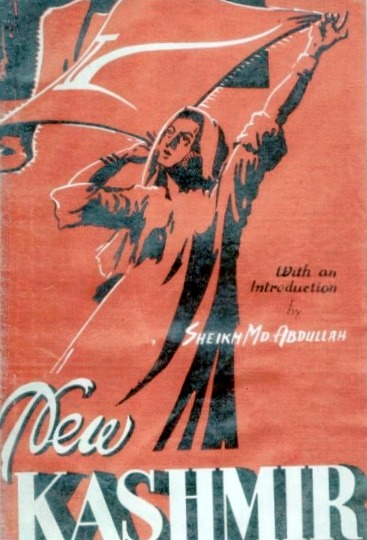
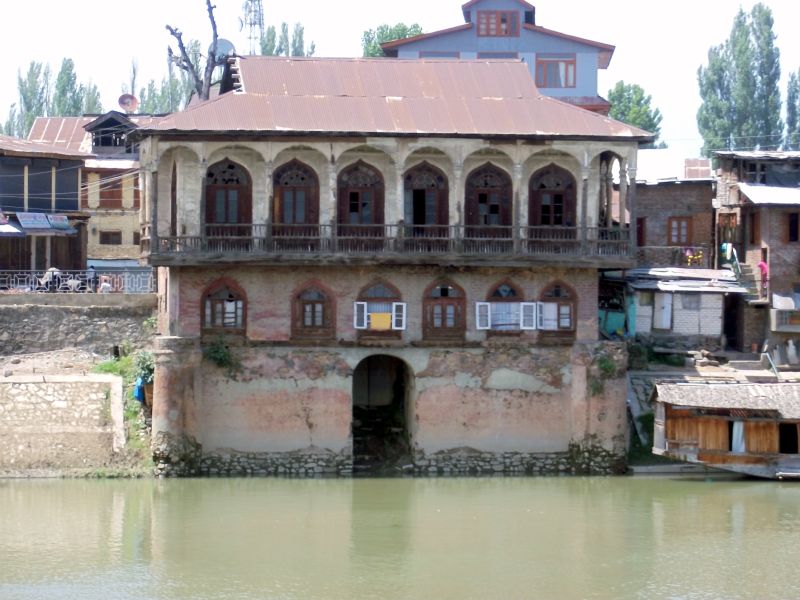
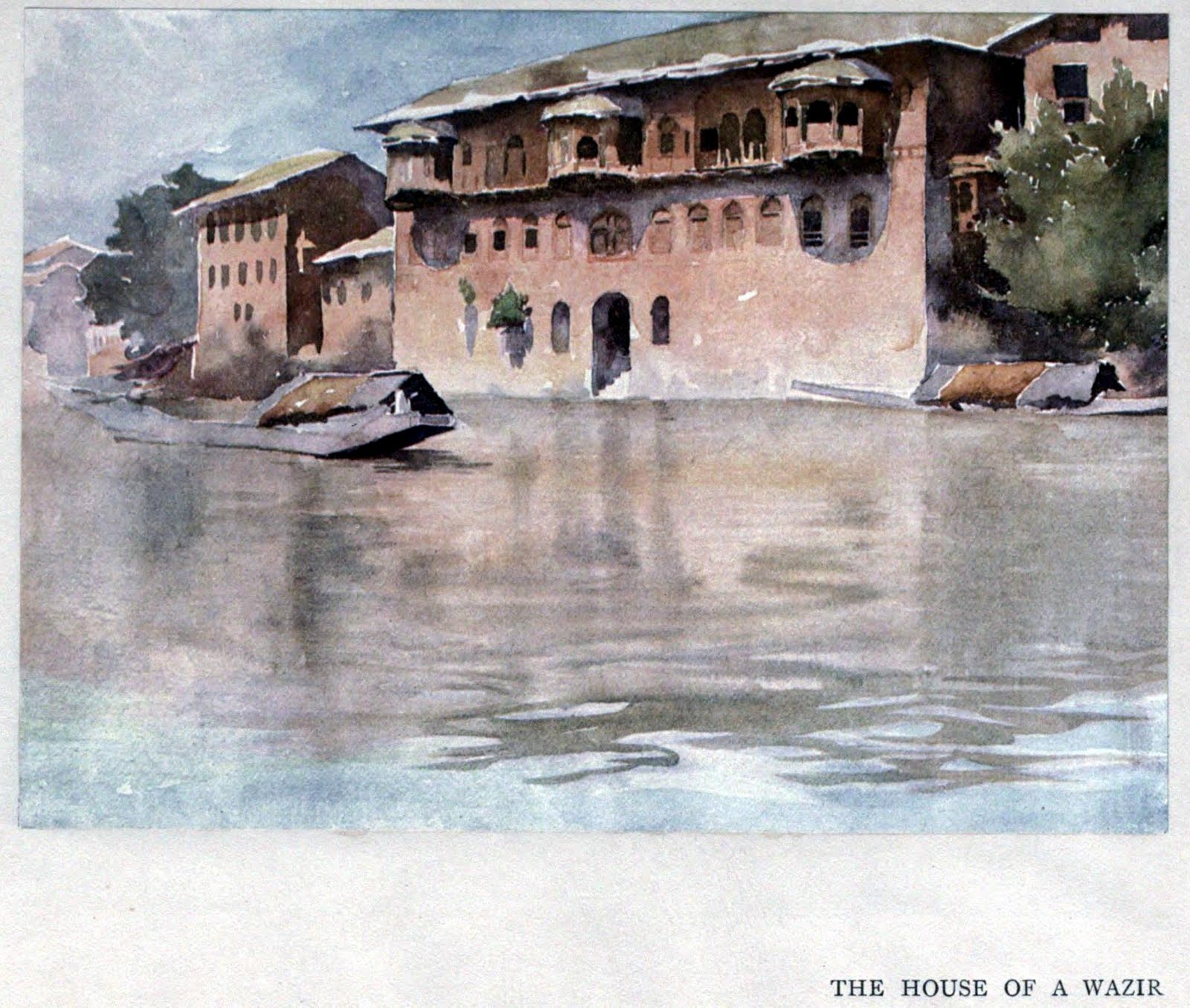
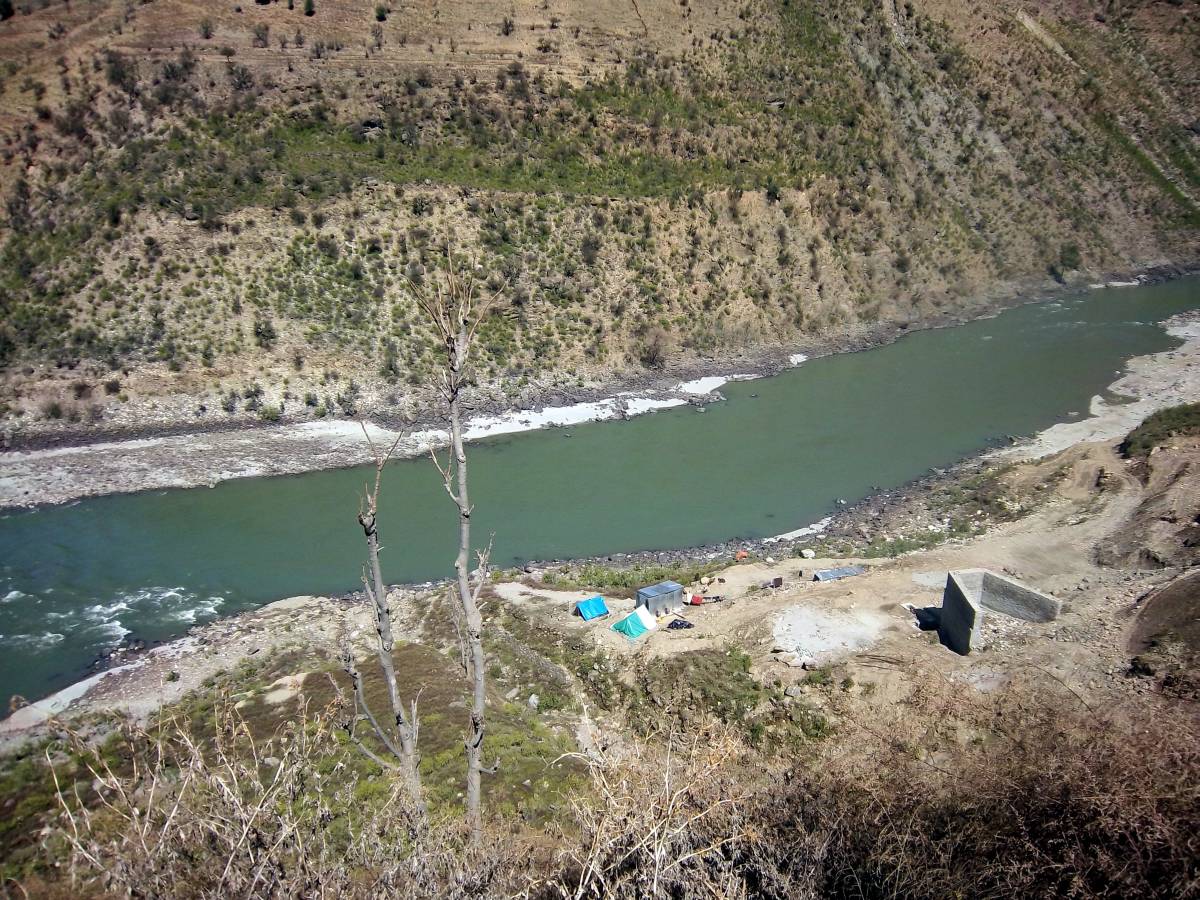
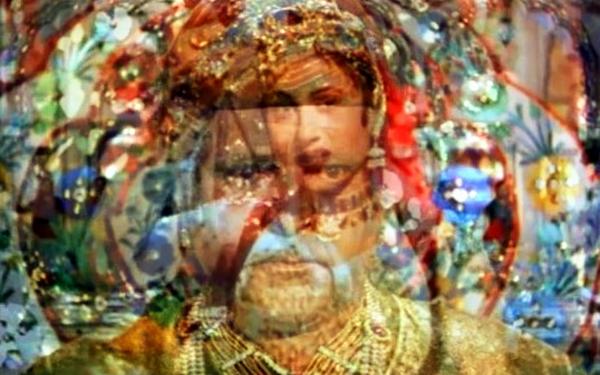
Image: Collage based on K. Asif’s Mughal-e-Azam – a work essentially (derived form popular lore) about Akbar’s conduct and how he went about the business of running an empire and of course how this business ruins love. The popular Kashmiri story of Yusuf and Habba Khatun finds some parallels in that story. If one considers the ending of the film Mughal-e-Azam – Akbar providing a safe passage, an anonymous escape and a popular death, to Anarkali and if one considers the alternate (unpopular) ending of Yusuf Chak and Habba Khatun story – graves of the two lovers side by side at a desolate place in Biswak village in Nalanda, Bihar and not the version that sees Habba Khatun pinning for her lost King’s love till the last of her breath, the parallels, rather inversions, are unsettling. In popular memories, love stories with happy ending are no love stories at all.
-0-