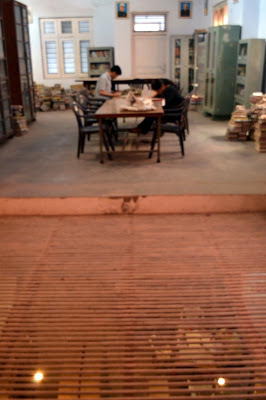
Sent in by Man Mohan Munshi Ji.

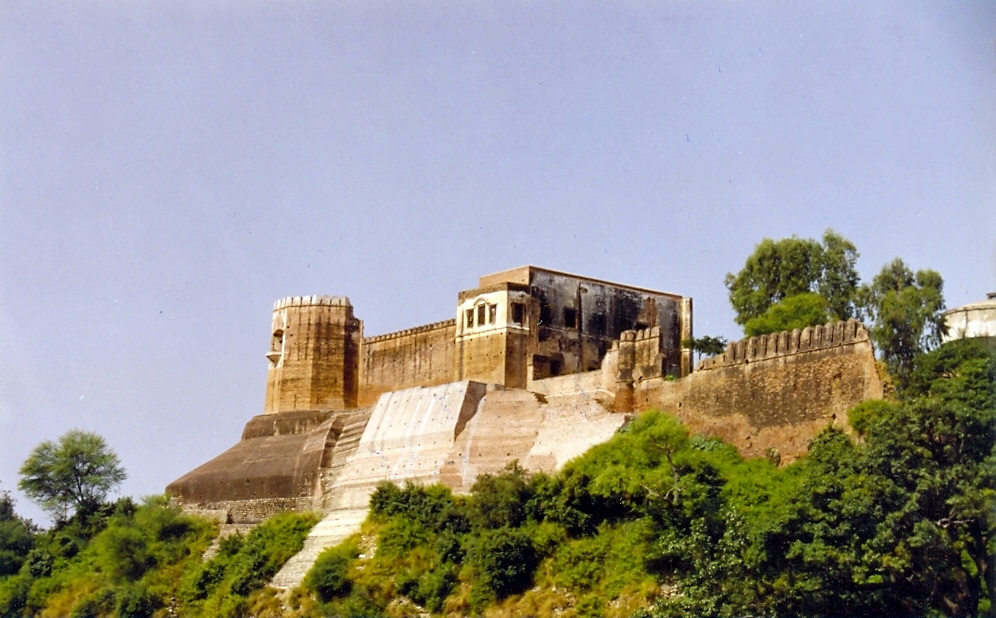
Two views of the Historic Akhnur Fort on the bank of Chenab (Chandrar Bagha) River. Raj Tilak of Raja Gulab Singh, the founder of Dogra Dynasty, was performed here by Maharaja Ranjit Singh.

in bits and pieces
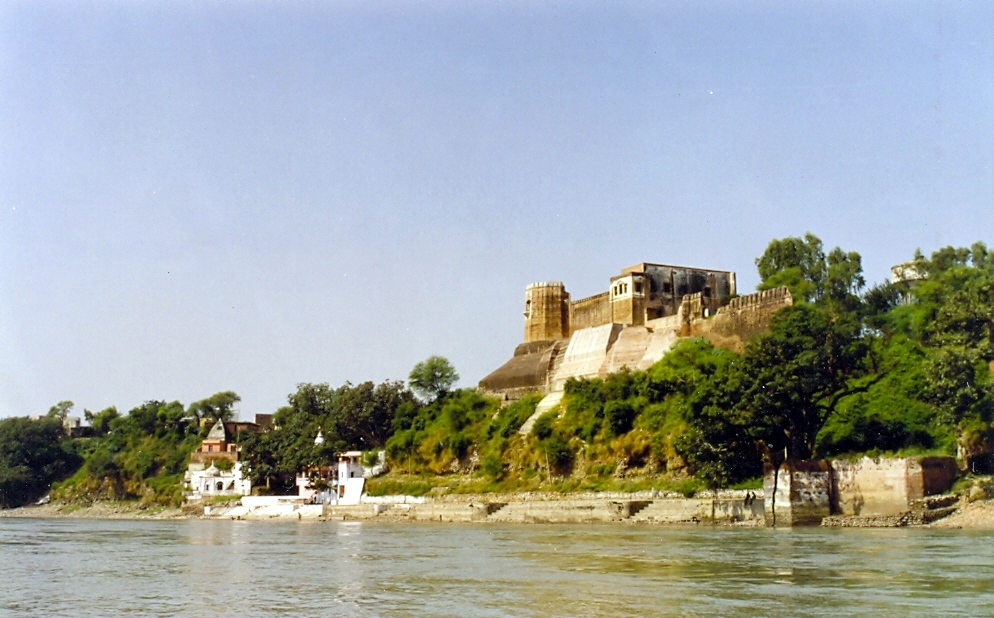
Two views of the Historic Akhnur Fort on the bank of Chenab (Chandrar Bagha) River. Raj Tilak of Raja Gulab Singh, the founder of Dogra Dynasty, was performed here by Maharaja Ranjit Singh.
 |
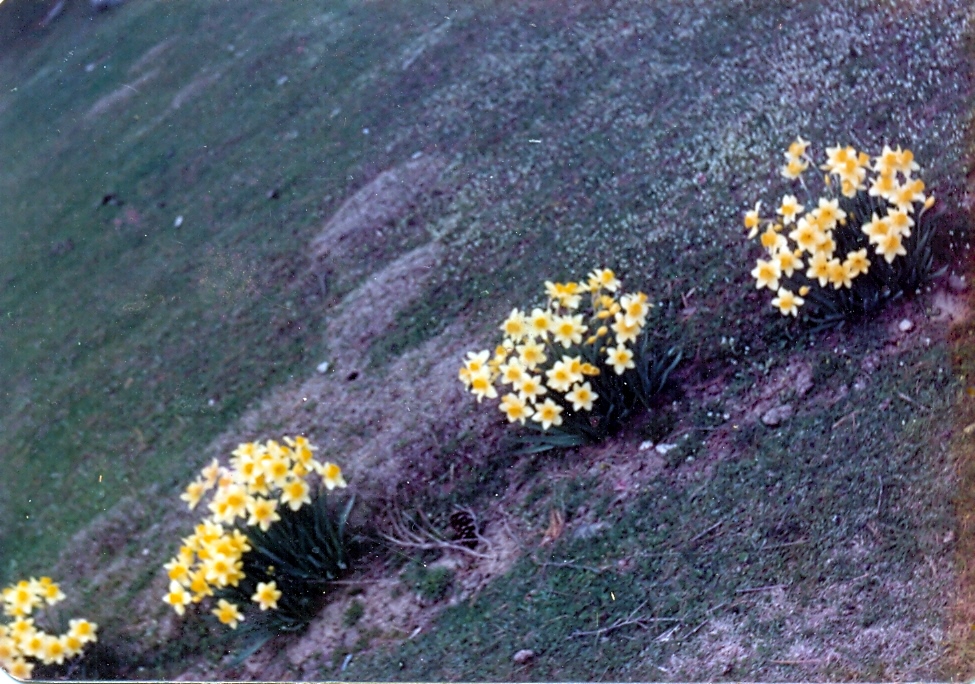
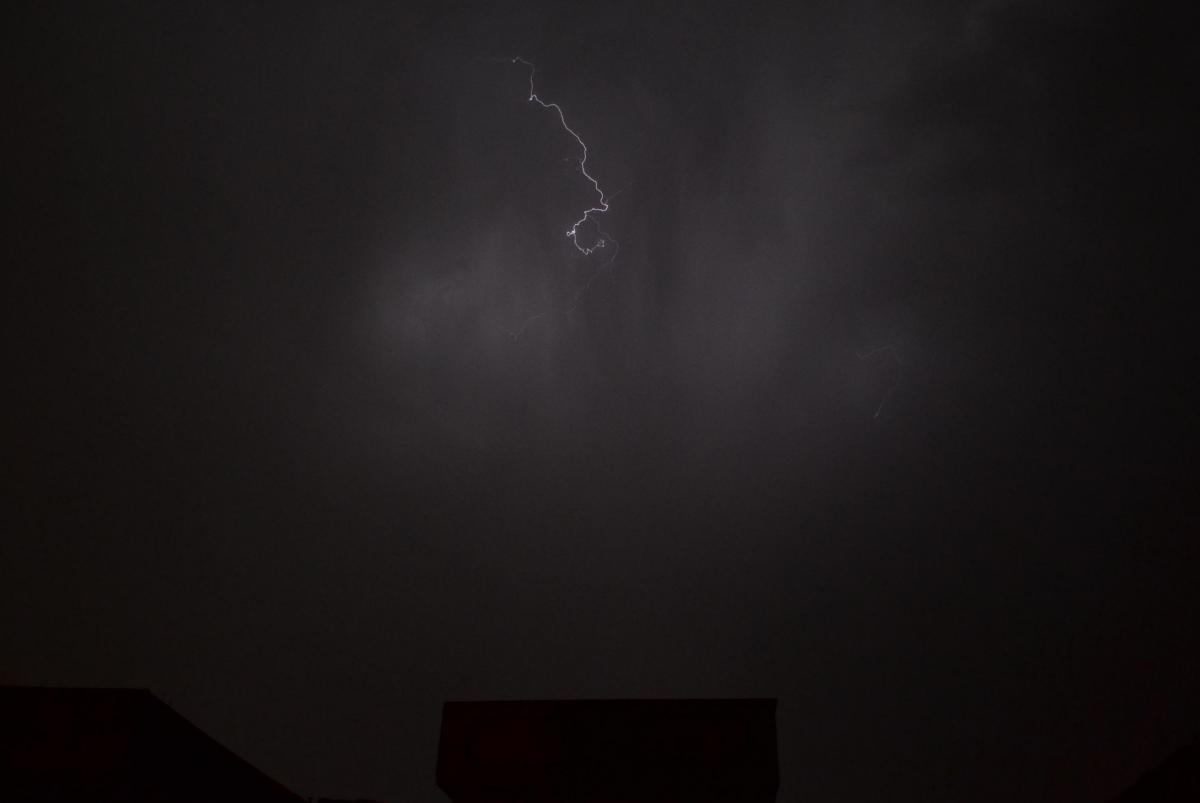
| Lightning. Gurgaon. 18/5/11 |
tsaalun chu vzmala ta trattay
Tsaalun chu mandinyan gattakaar
Tsaalun chu paan-panun kaddun grattay
Heyti maali santuush vaati paanay.
Patience to endure lightning and thunder,
Patience to face darkness at noon,
Patience to go through a grinding-mill —
Be patient whatever befalls, doubting not
that He will surely come to you.
~Lal Ded (via KOA)
-0-
Life is like a road which is difficult, full of trials, sorrows, pains but if u fall, just stand up straight, b confident & say “Trath Yath Sadki”.
– A Kashmiri SMS
-0-
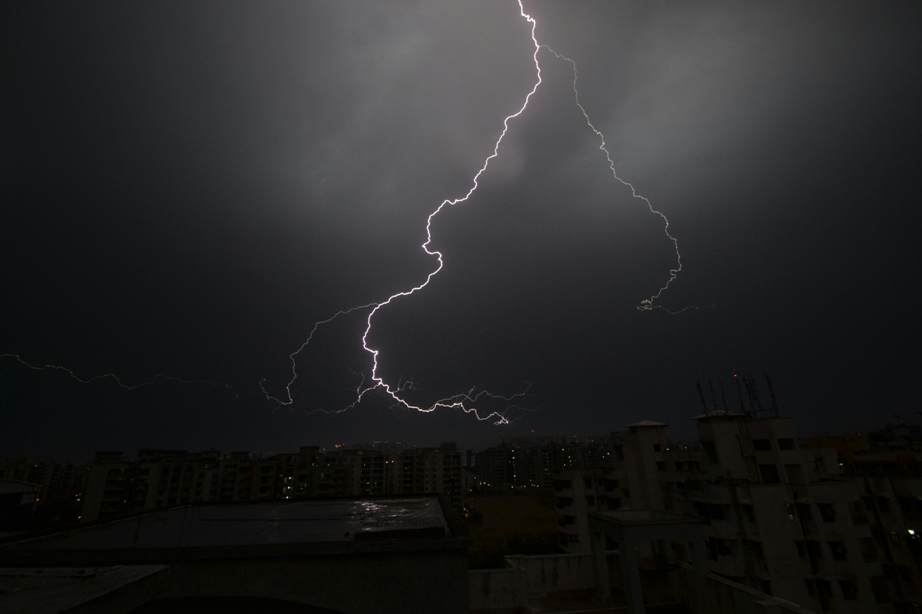 |
| Lightning. Gurgaon. 4/2/13 |
-0-
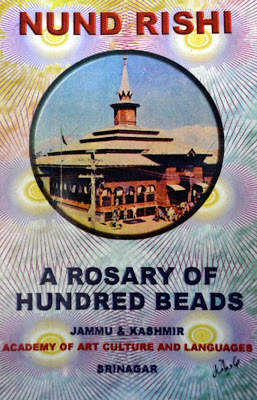
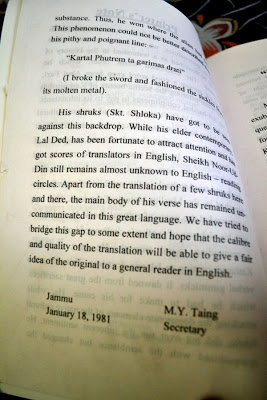
 “Kartal Phtrem ta garimas drati”
The book was first published in 1981. It opens with a short ‘Printer’s Note’’ by noted Kashmiri scholar M.Y. Taing. He writes,”Sheikh Noor-Ud-Din’s was an era of intense cultural clash. Islam had won its political victory but it had yet to overcome the spiritual and cultural resistance of Native streams. Its task was not made easy by the preachers of the new gospel, who came from alien lands and tried to bask in the sunshine of swords, out-sheathed by the Muslim victors of the land. This only compounded the sense of cultural shock. Noor-Ud-Din with his alchemy of synthesis challenged both and won a resounding moral triumph. He gave a distinct Kashmiri coating to Islamic doctrines. This was not a verbal gimmick.”
The note was written in 1981 while he was in Jammu. Nund Rishi’s sayings are now often read in the above given context: He basically came up with a distinct Kashmiri flavor of Islam.
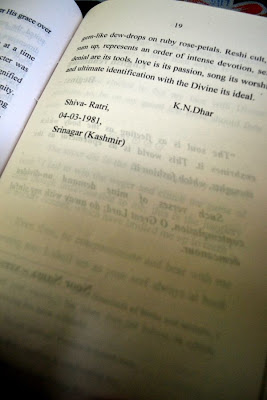
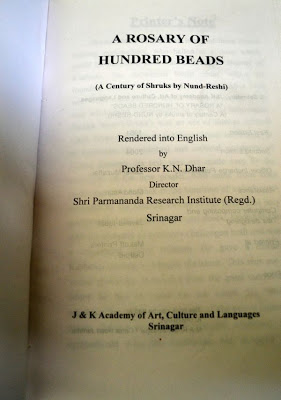 Professor K.N. Dhar (it must be mentioned, Director of Shri Parmananda Research Institute Srinagar), the man behind this book of translation of Nund Rishi’s Shruks, in the ‘Synopsis’ to the translations, adds another, less mentioned, dimension to the context. He alludes to an old conflict within Islamic world, a question that strangely enough is still often asked, a conflict revolving around the questions whether Sufis were into free interpretation of Islamic tenants and whether that made them less Islamic and more of something else. He mentions Sufis (Shah Hamadan and his Son, and the Syeds) and their initial contribution to the spread of Islam in Kashmir through their missionary efforts that weren’t necessary so popular or effective in Kashmir. He mentions Sufi Syeds and their supposed aversion for Reshis (as documented by Dr. Mohibul Hassan and a claim apparently contested by K.N. Dhar). K.N. Dhar writes,”In this context, we should make it abundantly clear that Reshis of Kashmir derive their inspiration from the word of ‘Quran’ and the life of Prophet Mohammed. It has been wronly asserted that Reshi literature represents the amalgam of whole thinking on the terse subject of Divinity current in Kashmir from dawn of civilization. While going through the ‘Shruks’ of the originator of this Reshi Cult “Nund Rishi” the emphasis on tenets of Islam, reverence for Prophet Mohammed and also the attributes of a true Mussalman are the loudest. The language employed and approach made towards Divinity might have cut across the barriers of religions at times, but it is a common feature with all great religions and needs to be underwritten. Assimilation and in no way rejection forms their attitude to life. ”
 K.N. Dhar wrote this on Shivratri of year 1981 while living in Srinagar.
And then begins the writer’s English rendering of Noornama , which seems at times seem like a simple but earnest man’s mediation on Death, Doomsday and hereafter, Hell and hence the need for man to behave proper, redemption. These rendering interestingly come with footnotes (with Hindi, Persian, Urdu, Sanskrit wordings) that make esoteric references to Koran, Shariat, Gita, Vedanta and its Yogic breathing exercises, Hindu concepts of light and so on.
Sample this:
At the appointed hour of bidding farewell to this feeting world, you will be torn between the obligation you owe to your own self and those to Super-Self; even if, belated realization of yoking yourself to spiritual pursuits, will dawn upon you, yet you would be lamenting your lot in leaving behind your loving wife and riches; through the sorcery of faulty perception. If you would opt for overcoming this embarrassment, the inner perennial effulgence of unerring comprehension is the ready-made ool for you – a sinless soul inherently-to groom your inborn innate faculties to reach up to that mental beautitued called self-consciousness.
The note with this one reads:
 Herein explicit reference has been made to shaivistic Monism, wherein the ultimate object laid down for the realiser is to cultivate ‘Sat Prakash’ – unending and unquivering innate light – a synonym for self-consciousness. Herein yogic practice of controlling breath has been alluded to. Vedanta is at pains to exhort to the realiser the urgency of ‘Pranayama’ and through this physical and mental drill reach upto the tenth pinnacle of yogic excellence where self and super-self become one indissoluble whole.
Sitting in Ghaziabad, in middle of a power-cut, as I read these heavy worded lines in second edition of this book, printed at Delhi-6 in 2004, given to me as a gift by an uncle who I suspect is no friend of Islamists, I lament my inability to comprehend any of it. As each year passes, I am finding it more and more difficult to relate to these great Kashmiri concerns and their beautiful poetic motifs. But I also realize, as each year passes by I am drowning in more and more of these dead motifs.
“I was brought to life simply to rise above the temporal level, but my mind unbridled of course, was allured by the objects of sense. Behold! How a full baked experience of mine even got deceived? What I have, for sooth, gained by being born into this world”
I am told about things like: Hazrat Bal was seat of power for ‘Sher’ National Conference, Jamia Masjid was for ‘Bakra’ Moulvis and Nund Rishi’s Trar Sharif, giving an ironic twist to Nund Rishi’s sickle saying, was seat of power for ‘Marxist’ G.M. Sadiq.
I am drowning in mutilated motifs rendered long irrelevant. The stories are not linear, not anymore, that audience is gone, and we now read: even if sword was followed by sickle, sickle was broken and sword reformed, what if sword is broken and sickle remade, to hell with sickle, to hell with sword. Poet you are dead, irrelevant, your grave a block of cement, a shrine, rejoice, your words a line carved in quick lime, mourn, you are still revered.
“The soul is as fleeting as the body which enshrines it. This world is as ephemeral as the thoughts, which fashion it.
Such verses of mine demand un-divided contemplation, O Great Lord: do away with my sinful demeanor.”
-0-
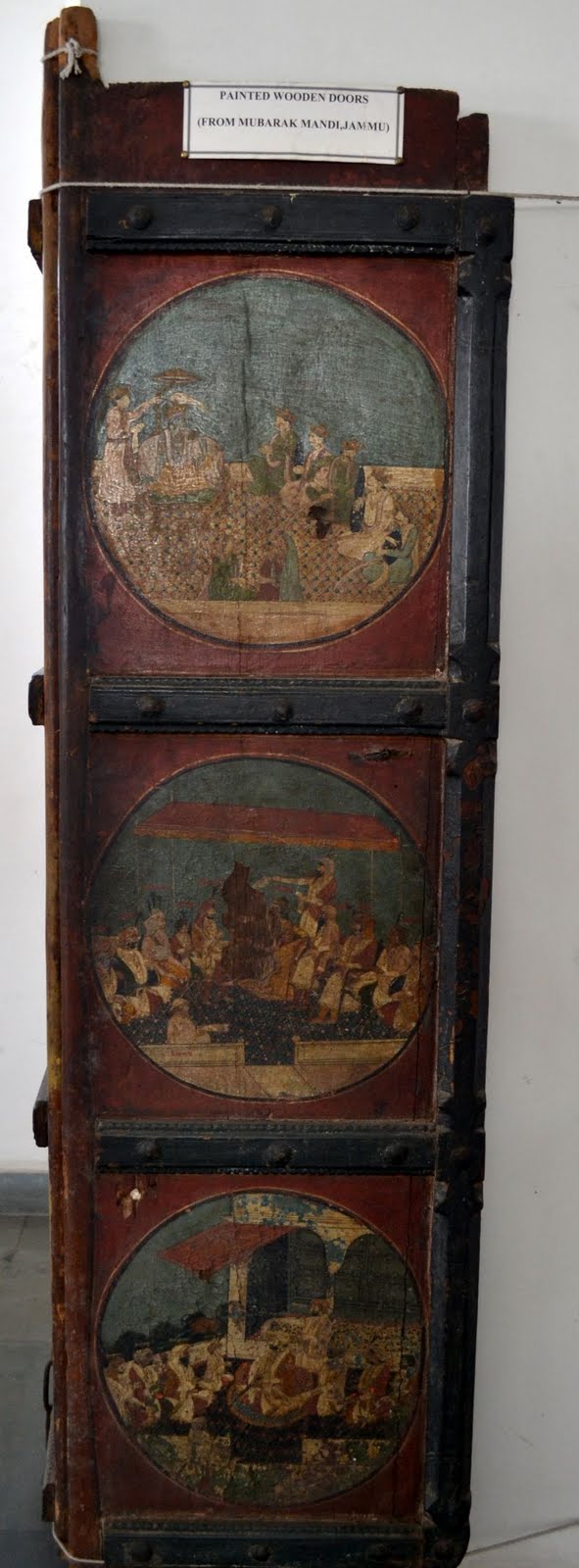

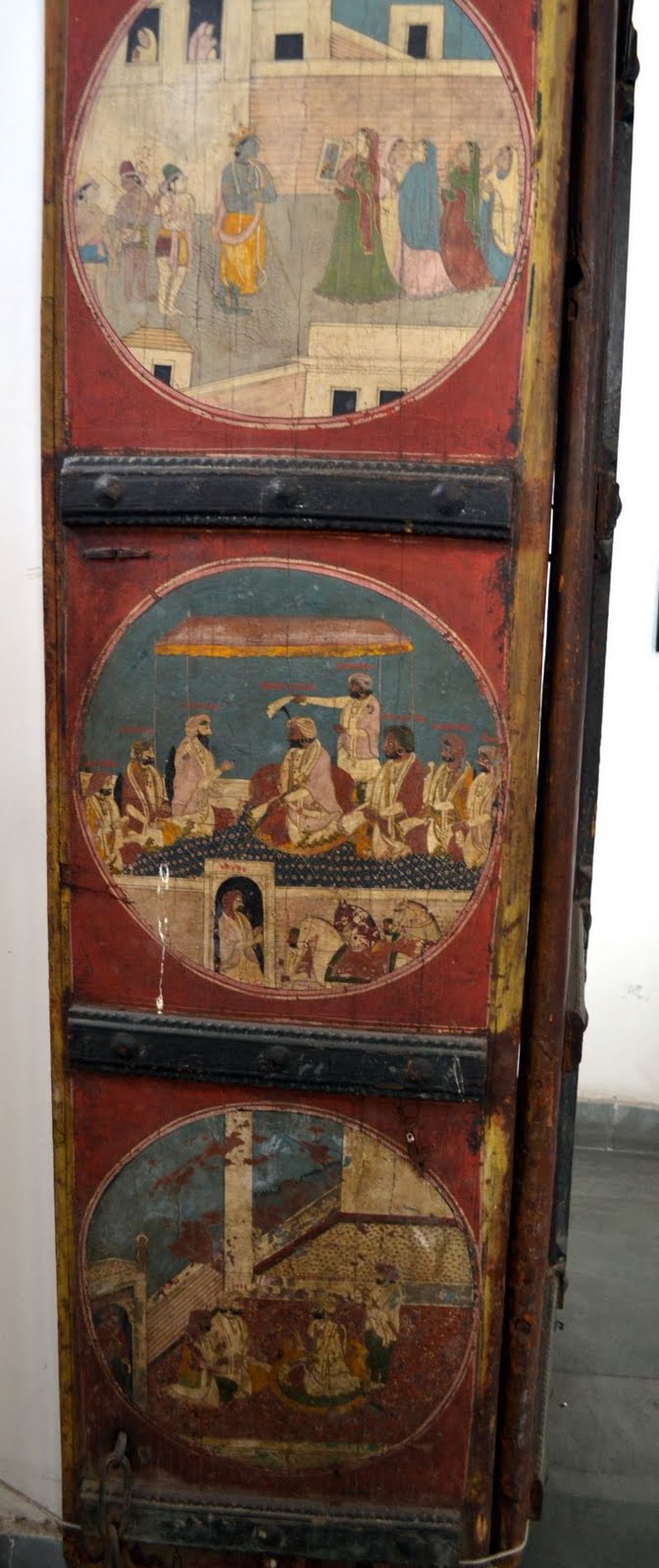
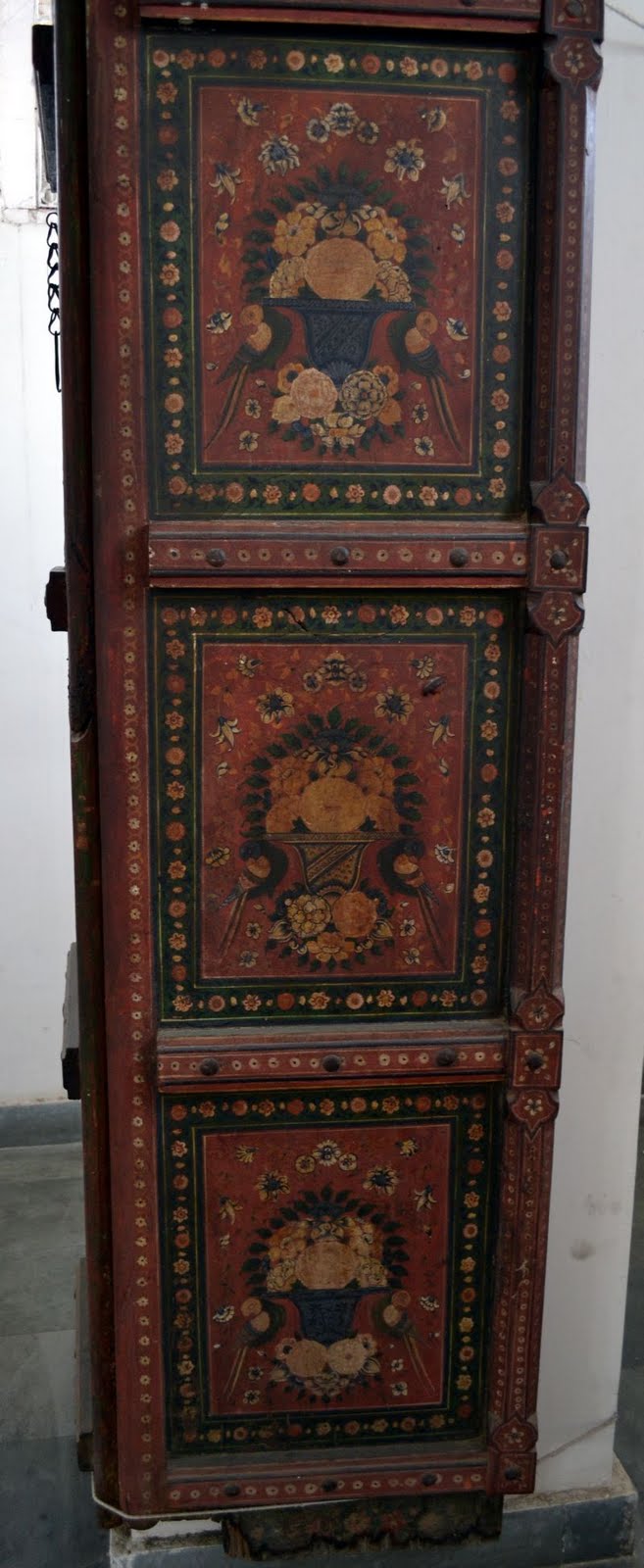
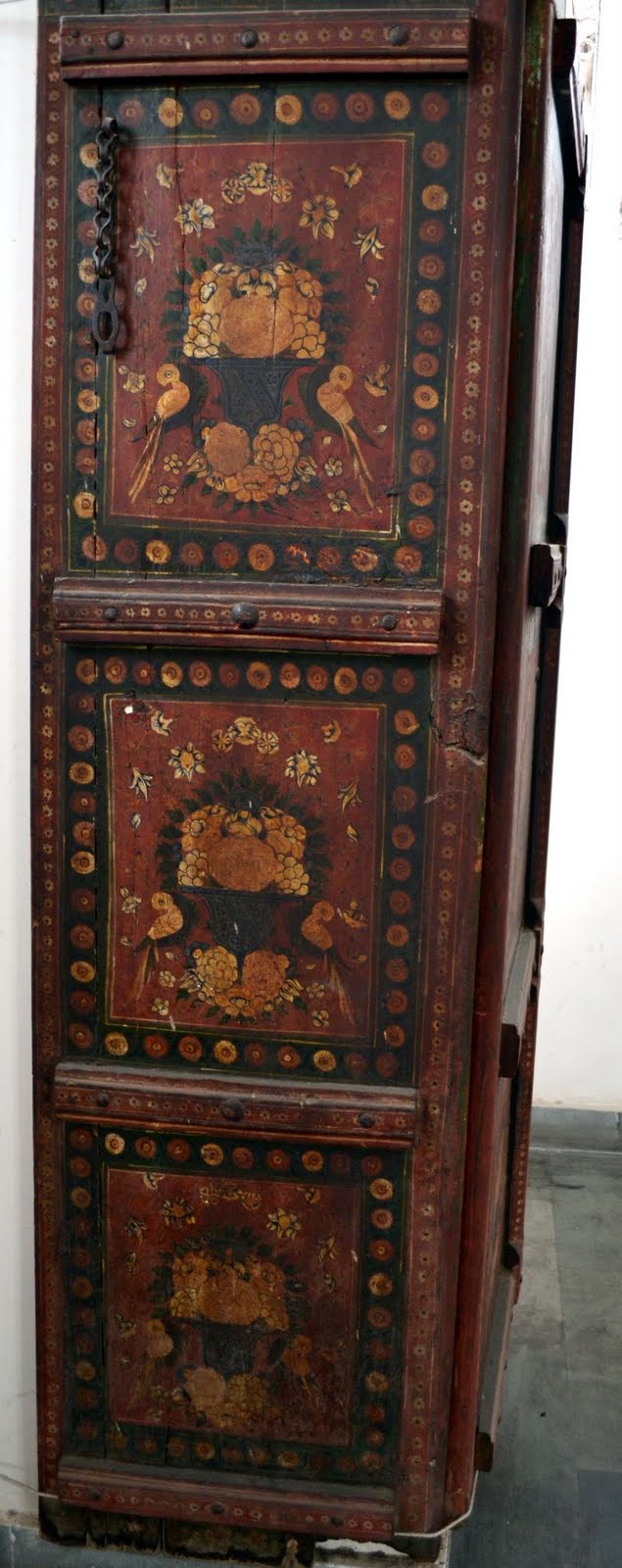
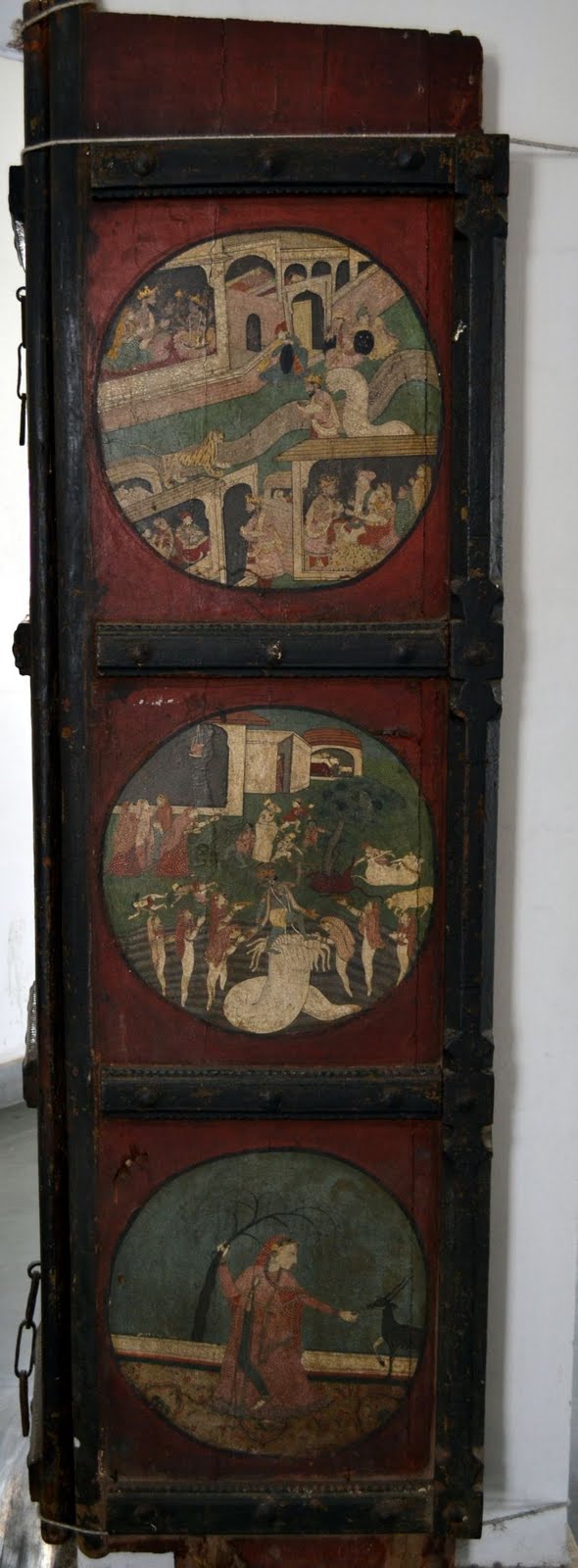
Placed at Kala mandir, Jammu.
-0-
 |
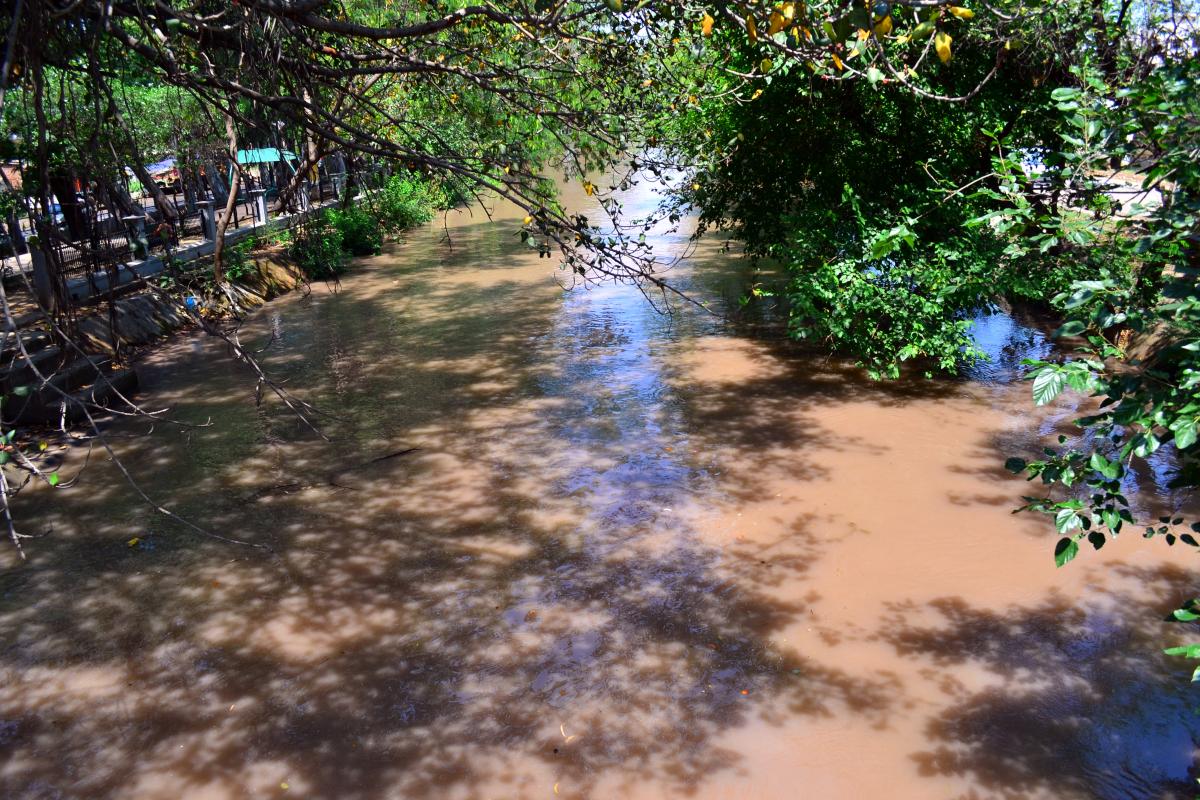
| Ranbir Canal, Jammu |
 |
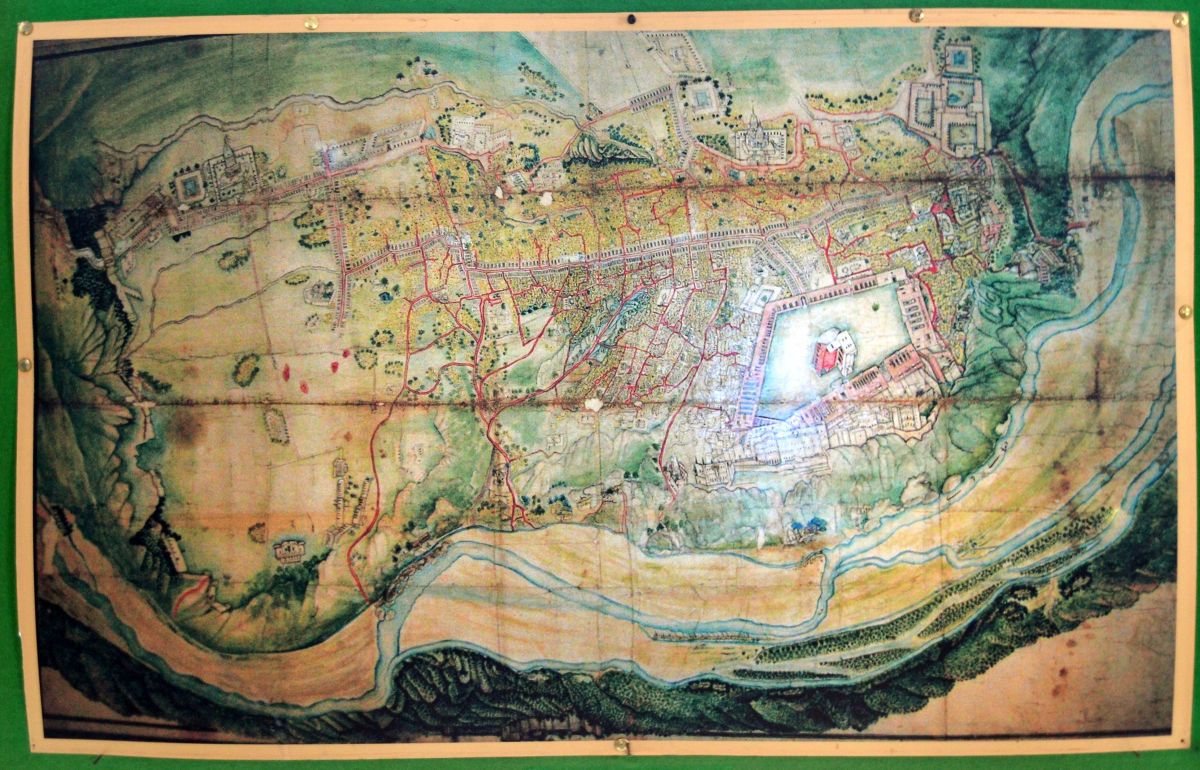
| Map of Jammu City. Company Period Punjab. 1880-90 A.D. |
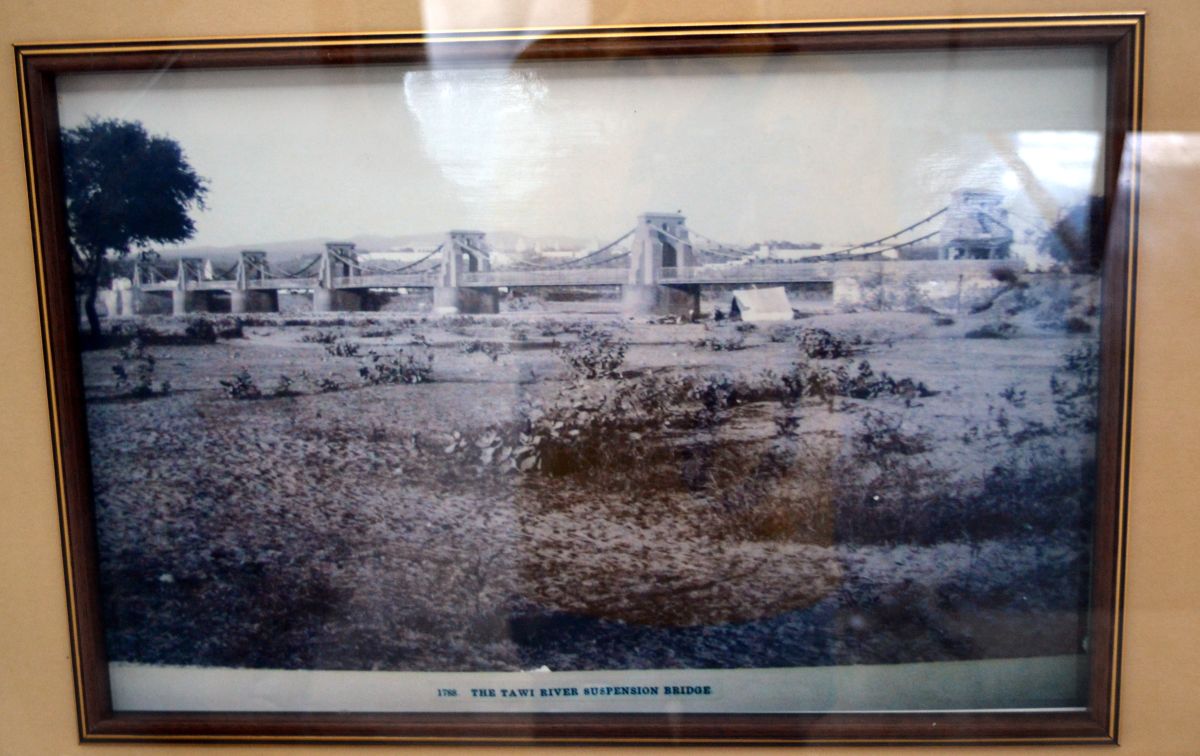 |
| First (Suspension) Bridge over River Tawi, Jammu. (1788 A.D.) |
 |
||
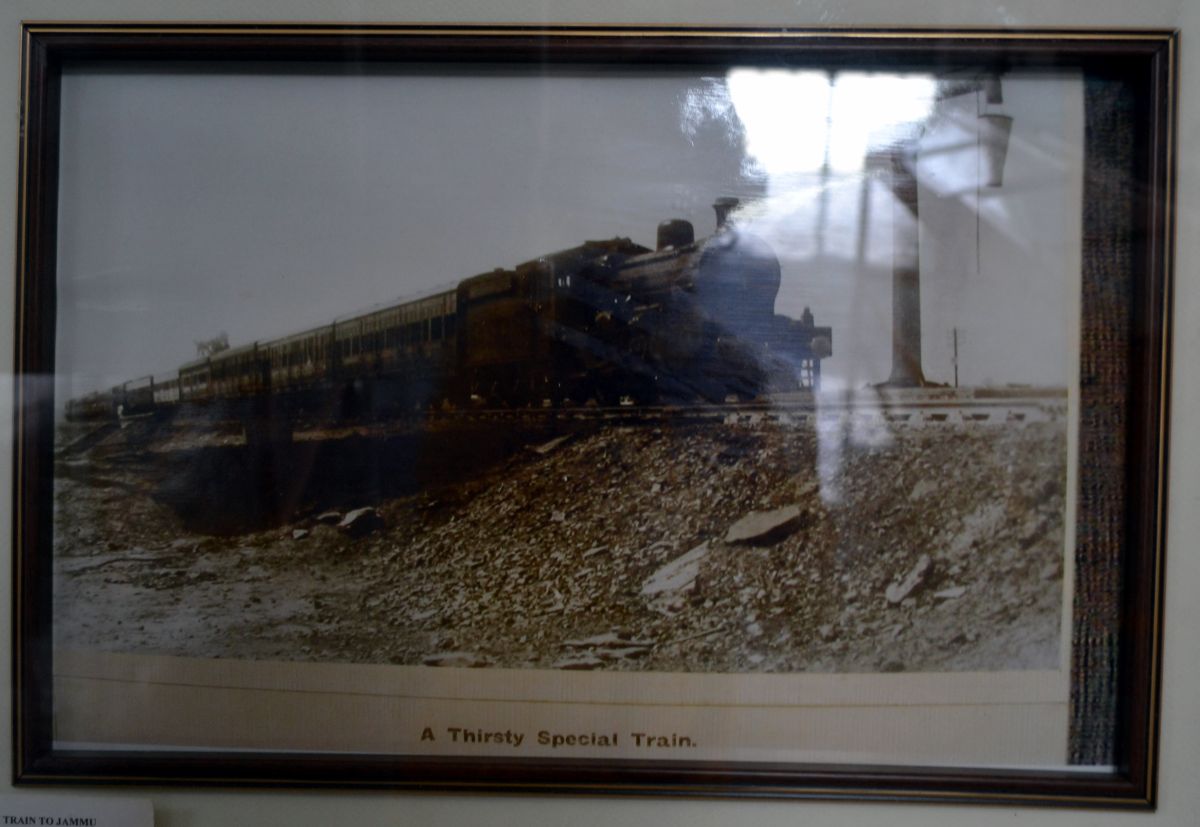
| A Thirsty Special Train. First Train to Jammu from Sailkot. 19th Cent. A.D.
|
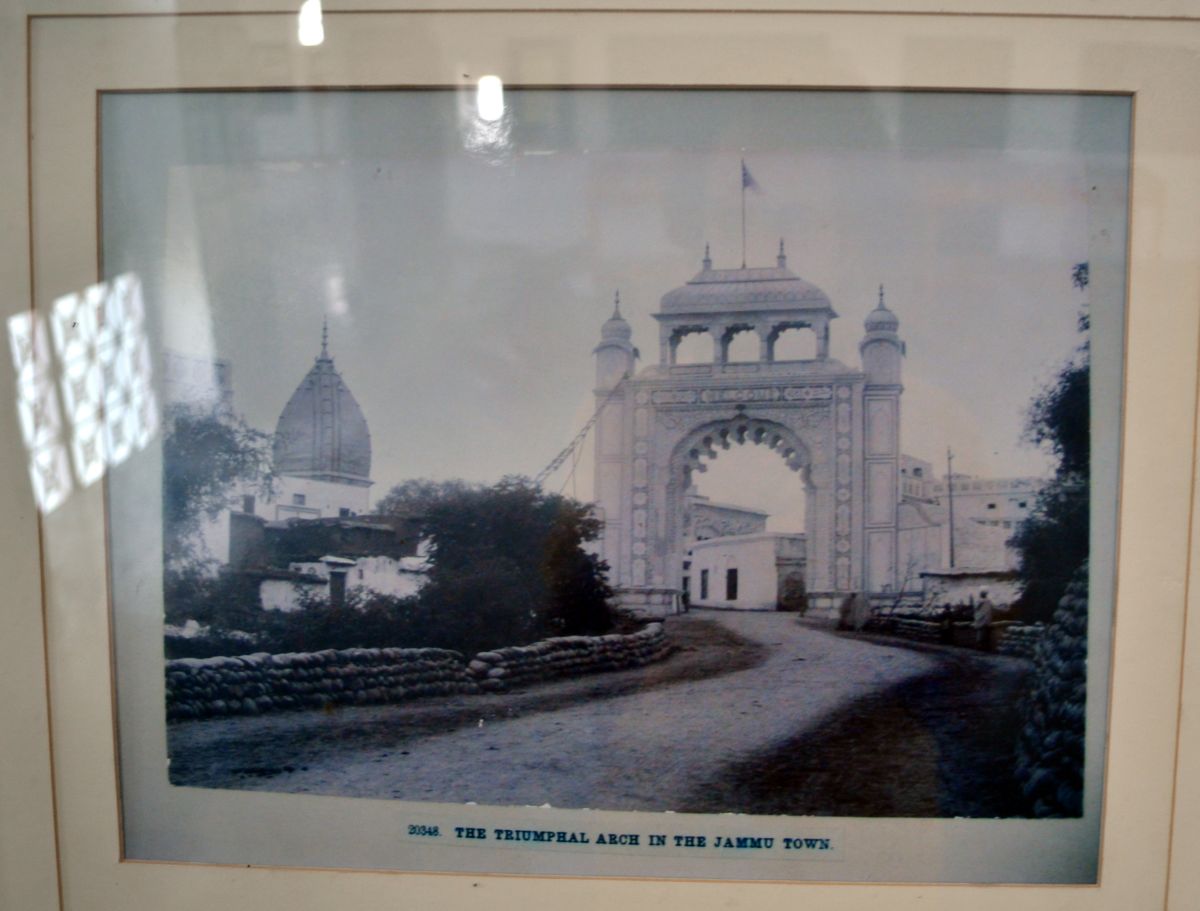 |
| The Triumphal Arch in the Jammu Town. |
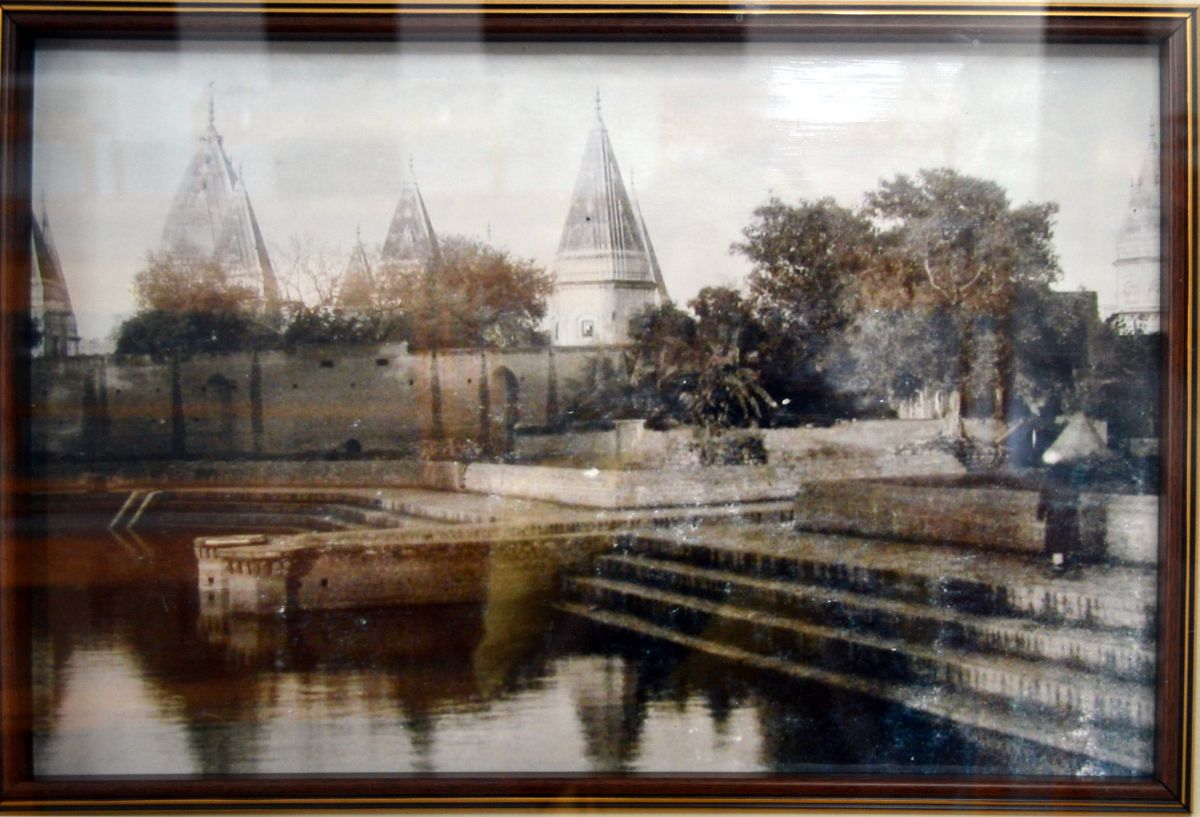 |
| Water Tank (Now Vanished) attached to Raghunath Mandir Jammu. 19th Century A.D. |
-0-

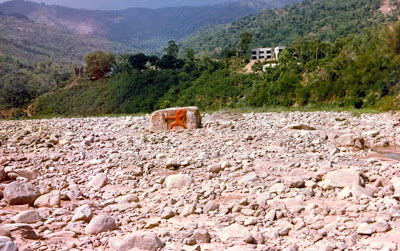 |
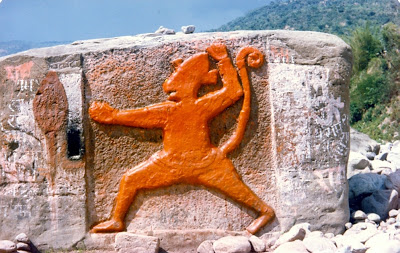
| Carving of Hanuman on a boulder in Dry river bed near Billawar (formerly Vallapura) in Kathua District |
Next six photographs are of temple ruins at Chediai (North of Tikri on Jammu-Srinagar Highway). Needless to say that the site is in need of restoration and preservation.
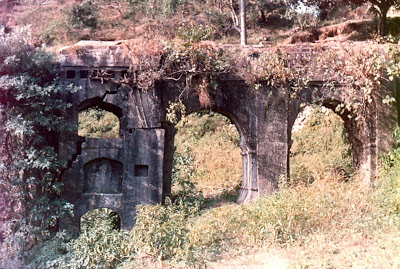 |
| A channel for water erected on arches for a waterfall( now dry) |
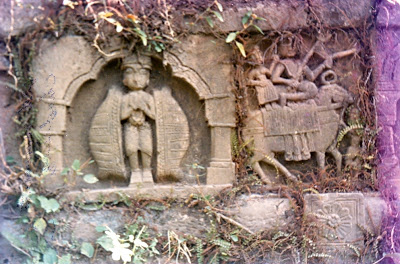 |
| Statues of Lord Shiva and Parvati mounted on Nandi and Garuda |
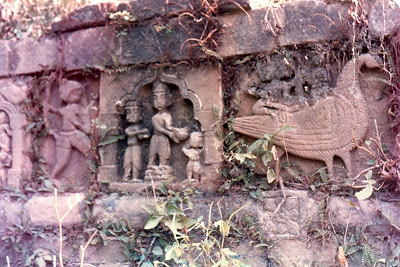 |
| Lord Kama (Hindu God of love ) mounted on peacock |
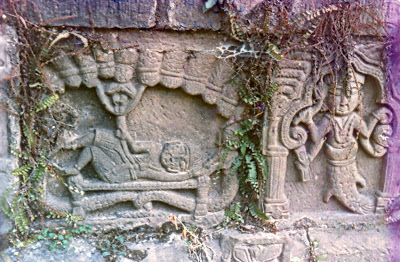 |
| Lord Vishnu and Brahama. And Vishnu as Matsya Avatar |
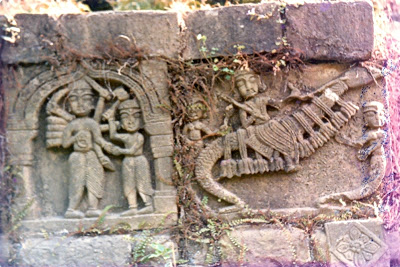 |
| Unidentified. [Right one is probably Krishna riding Kalia the serpent] |
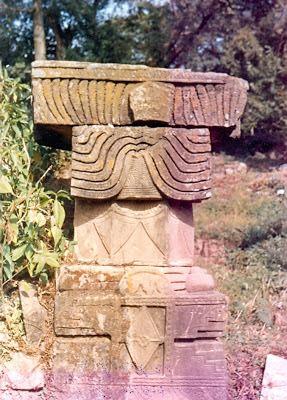 |
| A Pillar partly broken |
Next set of photographs are of other places of interest around Jammu.
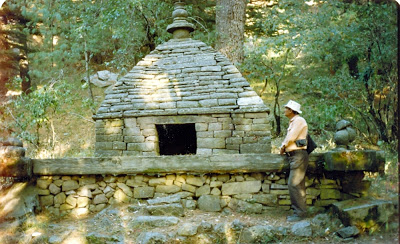 |
| Temple of Sankpal (a local Deity) close to Sanna Sar |
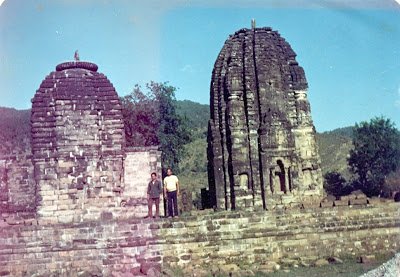 |
| Temple at Cheni( architecture resembling to that of Kirmachi) |
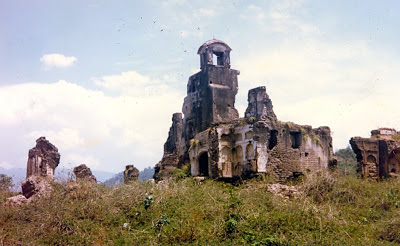 |
| What is left of Basoli Palace cum fort |
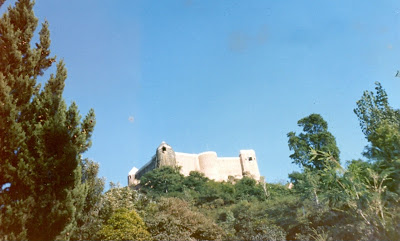 |
| Riasi Fort recently renovated |
-0-
Jammu is an old city. Or rather now a city of the old.
During last couple of years, on my in-frequent trips back to the city, going through his book shelf, I realized my grandfather’s pick had gone down to mostly books like ‘Vairagya Satakam’ by Bhartari and maybe a book on Kashmir. Checking the library card told me his trips to the library weren’t religiously regular anymore.
Last week, on my most recent short trip to the city, he complained about watery eyes and blurred vision. Not to be outdone, I told him I have the same problem somedays. I am told on some days he forgets that he has already had lunch. I am told only on some days it is because of memory, rest of the time he is in fact hungry. Decade and a half of diabetes (which he has managed quite well with his active and clean lifestyle) and two operations for cerebral hemorrhage, second one just after a trip to Kashmir a couple of years ago, have taken a toll on his health.
Still. At Menzraat function of a cousin sister, pulling me aside, an uncle told me to accompany my grandfather to the banquet hall and have him eat something. So I slow walked with my grandfather to the hall, taking one step at a time, climbing stairs, him holding my hand. Inside, as I prepared to have a plate ready for him, I asked him what would he like to have. He smiled and took the thumb of his right hand to his mouth. Confused for a moment, I realized he was signing for booze. Signalling again, he asked, ‘Where are they drinking tonight?’ He wanted to know where were the men of the house drinking. In a typical Kashmiri manner, most of the drink on such family events is done in private, away from the women and elders, probably in some corner room next to the kitchen. As I laughed my heart out, I walked my grandfather, a life long ‘almost teetotaller’, who was now in a celebratory mode looking to ‘wet his beak’, and led him straight to the lair of drinkers.
-0-
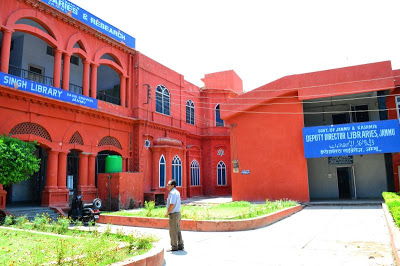
This time I had the opportunity to re-visit the library with an Uncle, my Mamaji, who wanted me to check out some old photographs of Jammu that were shown in a recent exhibition at Kala Kendar of Jammu (apparently it had a surprisingly good response from the city dwellers) and that are now placed in the ‘Reference Section’ of the library. The last time I remember going out on such an outing with Mamaji on his Scooter, we were in Kashmir, I must have been seven and he took me to surprise trip to ‘Exhibition Ground’ where I got to see ‘maut ka kuan‘ and cocoons getting boiled for silk.
This trip wasn’t as dramatic but it was just as fun. My Mamaji had reference of someone, a reference always helps in such endeavors, but that someone had since been transferred to some other office. The new person in his seat, wasn’t in office, so to see (and possibly photograph the collection) instead we had to deal with two kindly looking aunties who (probably intimidated by a camera and beguiled by my ‘educated’ air) kept asking if I hadn’t photographed their official desk that had a bunch of tiffin boxes, half-open, placed over newspapers. It was almost lunch time. I told them it is understandable. They thought I was from some cable channel or such. (Ah! My educated air!)
I told them the purpose of the visit. There were complications. In absence of a senior officer they couldn’t let me photograph the collection. They had strict orders prohibiting it. In Jammu, photography is prohibited even in exhibitions. The reason, an old official one: if we let everyone have what we have, who will come to us. And so history remains in offices.
It told them I understood and dropped my camera next to a tiffin. As we discussed copyright issues, some how conversation took an interesting turn (actually you just have to say, ‘Look at west’ ). One of the women went to tell an anecdote that according to her summed up the issue: Tagore went to America, to its most famous library, and asked them to show him their most prized possession. They brought forth a book bound in golden (or something precious like that, she added in after thought). Tagore (that should be Vivekananda, was my early-thought) was expecting to see a Bible or something from the west, but he was astonished, and beaming with pride, to see The Bhagavad Gita. ‘We don’t care about out things,’ the woman added as she passed a big thickly bound catalogue of old images.
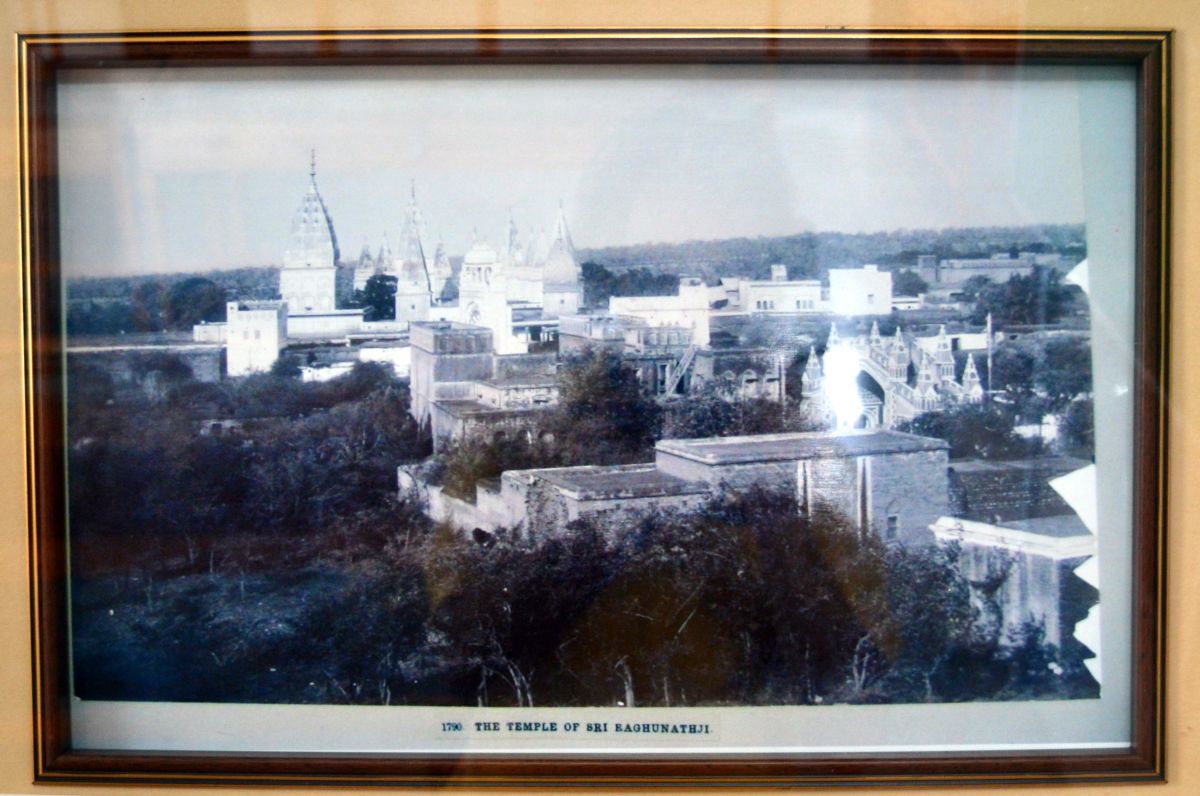
It was a collection photographs shot by lesser known Raj era photographers Herzog & Higgins and dated early 1920s. The collection has some incredible photographs of old Jammu – Mubarak Mandi, Raghunath temple, Tawi and some rare panoramic shot of Jammu city. Sadly, most of these panoramic shots are, for the sake of convince, cut into two in the pages of the book.
Another collection of old photographs included photographs of a royal marriage – Maharaja of Jammu & Kashmir on an invite to some other Kingdom (Kishangarh?). Kings shooting, riding elephants, stuff like that.
I was kind of disappointed that I couldn’t capture some of the incredible scenes I saw (those in the city must check it out). There were places I could recognize like the old secretariat at Mubarak Mandi, for sometime in early 90s, we lived in old area surrounding this place, view from Tawi river (although its sparseness was shocking), my father’s childhood favorite Ragunath Mandir ( but with a view an ancient water tank that is long gone).
I realize like most urban spaces in this region, Jammu too is essentially built upon an ancient tomb. A tomb not only whose last traces are getting fast buried but even the memory of which is fast fading, buried in forced apathy.
As I start to walk out of the library, one of the kindly women suggested that we should go to Kala Kendar where some of the old photographs are still on display. So my uncle kick stated his scooter and we were on our way to a building that all this time I believed to be a government hotel or a tourist center.