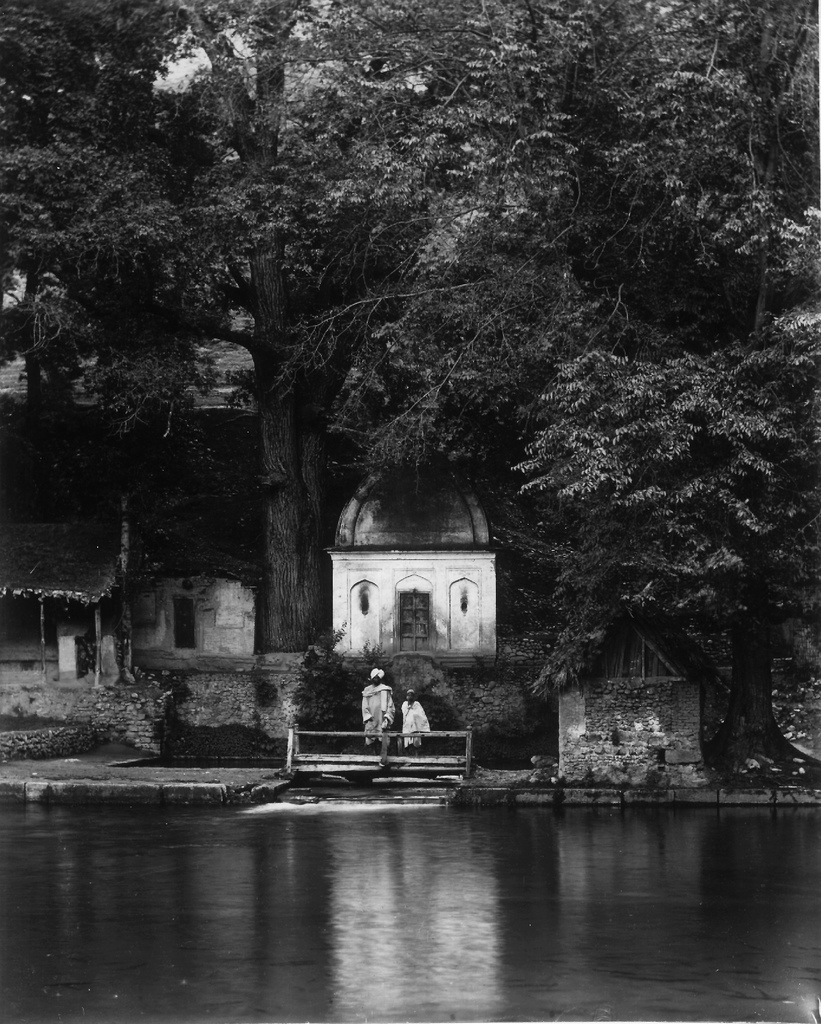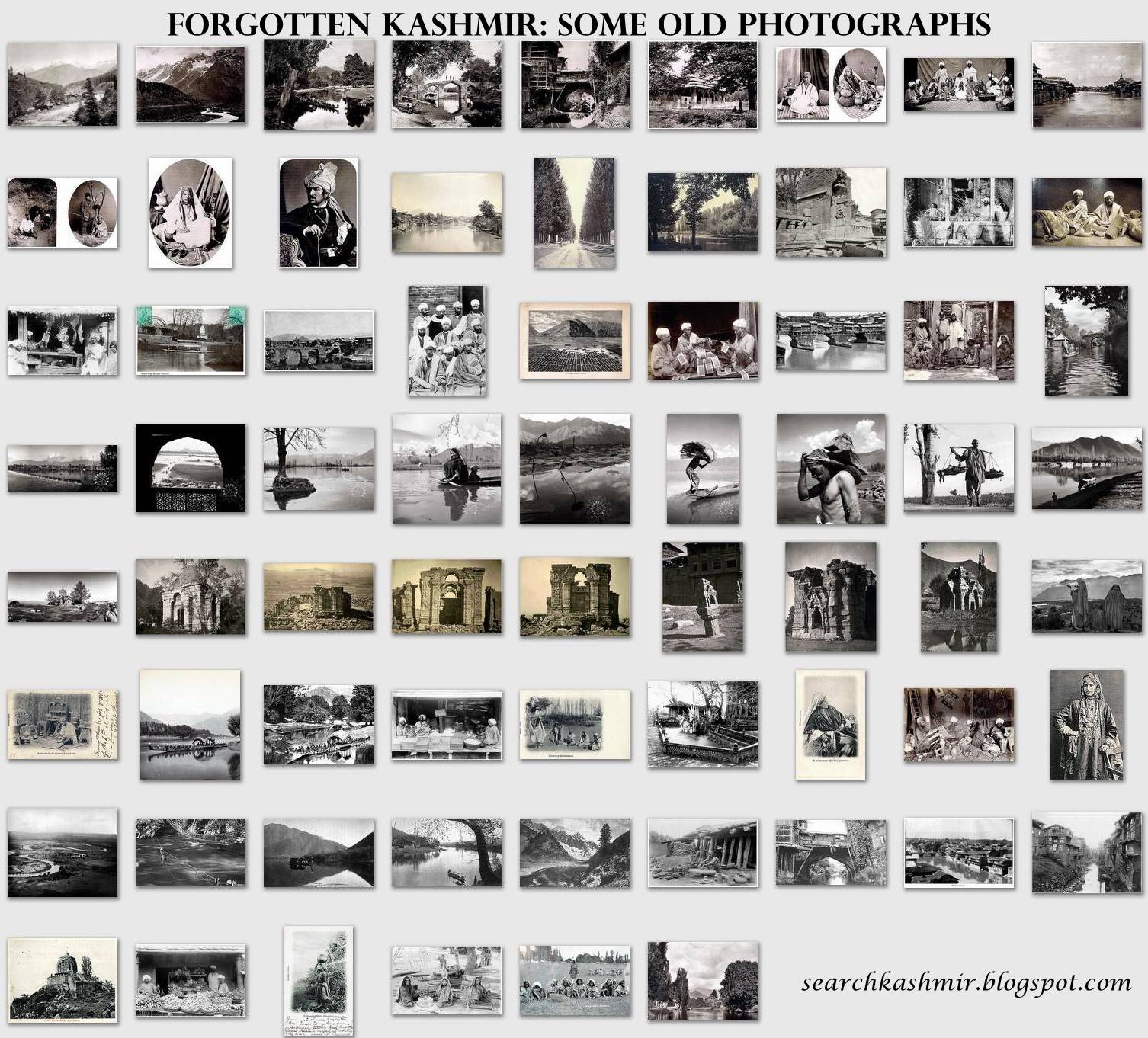
A Collage of Old Images

Old Photographs of Kashmir, Srinagar, Dal Lake, valley

(Click to enlarge)
(Originally posted long ago on my other blog
You may enjoy these photographs of Kashmir in a video presentation also!)

‘who has not heard of the vale of Cashmere,
With its roses the brightest that earth ever gave,
Its temples, and grottos, and fountains as clear,
As the love-lighted eyes that hang over their wave.’

— Popular lines from Thomas Moore’s poem Lalla Rookh

For a man who never visited Kashmir, Thomas Moore certainly had a clear image of the fabled Kashmir. He saw Kashmir through writings of other writer who had seen Kashmir. A generation later people were to be enticed by the images captured by the photographers traveling through the ‘happy Valley’ Kashmir.

This collage comprises of some of these very images and few of the oldest photographs of Kashmir.

About the Photographs:
Starting from Top Right, the photographs in first row are by Samuel Bourne, who visited Kashmir in 1864.

  • Kashmir – The Srinagar Bazaar on the Jhelum
  • Poplar Avenue – Srinagar, Kashmir
  • View on the Jhelum at Srinagar, Kashmir

Found these three photographs here at harappa.com

  • Photograph of a boat in Munshi Bagh, Srinagar from the Brandreth Collection: ‘Views in Simla, Cashmere and the Punjaub’ taken by Samuel Bourne in the 1860s. Srinagar the capital of Kashmir is a city of lakes and waterways, gardens and picturesque wooden architecture. The caption states, ‘One of the Maharaja’s boats such as lent to the Comr or Resident on duty & to others, as myself. He has several of these each with 20 rowers.

The next two rows of photograph are by Fred Bremner

  • Kashmiri Minstrels (called Bhand) , 1900
  • A Village Girl, Kashmir , 1905
  • Specimens of Kashmir Carving, 1900
  • Soonamurg, Top of the Sind Valley, 1900

He writes:

“I arrived at Soonamarg, top of the Valley, early in November, when their happened to be a fall of snow, and interesting were the pictures which I obtained there. Soonamurg is at an elevation of 8,000 feet and some years ago it was looked upon as the resort for a residence of several months, and many were the Europeans who used to camp in and around the meadow.”

(Forty Years, pg. 52)

  • The Jhelum River, Kashmir, 1900

“Passing through the Jhelum Valley and river the steep mountain sides are clad with pine, deodar and other trees of stalwart height, and in the depths of the valley below, some 3,000 feet, the river winds its tortuous way, just as the road winds through the mountains as far as the river below and rising again to the summit of a few thousand feet – their eye may sometimes rest on a figure slowly gliding through mid-air with no apparent support whatever. Coming to close quarters one sees a crossing by rope bridges. It is a curious way of engineering these people have. One of the bridges is merely a single rope made of tough twisted cowhide and secured at both banks of the river. The passenger is seated in a small suspended cradle. He then lets himself go and his own impetus carries him fully half-way over and he is pulled across the remaining distance by a smaller guiding rope.”

  • View on the Jhelum River near Srinagar, the capital of Kashmir, 1900

“Leaving the city one cannot do better than be rowed up to the Dhal Lake, which is aid to be one of the most beautiful spots in Kashmir. . .. Entering the Dhal Lake, which measures about 4 miles by 2 1/2, one cannot help but admire the works of nature which are depicted in a variety of beautiful ways in the stillness of the water combined with mirror-like reflections of the mountain ridges.”

(Forty Years, pp. 48-49)

  • The Dhal Lake, Kashmir, 1900

“The stillness and clearness of Dhal Lake make it comparatively easy to catch fish with the aid of a spear instead of by rod and line. Boatmen are the class with whom visitors to Kashmir come most intimately in contact. They are said to claim Noah as their ancestor, and certain it is that if they did not borrow the pattern of their boats from Noah’s Ark, Noah must have borrowed the pattern from them! Families live permanently on the boats, and they all have their little cooking places on board, and an enormous wooden pestle and mortar with which women and very often children pound the rice or grain.”

(Forty Years, pg. 48).

Next six rows of photographs are by John Burke and appear in the book From Kashmir to Kabul: The Photographs of John Burke

  • Ruins of the Small Temple at Pattan, 1864-68
  • Resident’s Boat on the Dhul Canal, Srinagar, Kashmir, 1868-72
  • Akbar’s Bridge on the Dal Lake, 1868-72
  • Old Bridge on the Mar Canal, Srinagar, Kashmir, 1868-72
  • Two Nautch women from Kashmir, 1862-64. The name of woman on the left is given as Sabie, a prominent Nautch woman of her time

  • A Group of Dancing Girls, Kashmir
  • Down the Jehlum river from the 3rd Bridge of Srinagar
  • The Fakir and Cave of manusbal(Manasbal) and the next photograph is of Ladakhians
  • Azeezie, seems to have been a popular nautch girl, a fact testified by her numerous photographs in the Burke collection. These Nautch girls were a prominent feature of Kashmir and most of them stayed and worked in Shalimar Gardens. ( Read more about Nautch girls of Kashmir)
  • A Gentleman, Srinagar, 1862-64

The next bunch of photographs are mostly uncredited:

  • Group of Famous Brahmin Pundits, circa 1900

Found it at Kamat.com

  • Two photographs of Brahmins of Kashmir. The second photograph one is from 1875.
  • Much extolled Beauty in Kashmir, 1910 (Read more about fables of Kashmiri beauty)

Back of the card reads – Printed: Views of India Series Printed in Saxony

Another set of Photographs by John Burke

  • Pillar Near the Jumma Masjid in Srinagar, 1868

    Gateway of enclosure, (once a Hindu temple) of Zein-ul-ab-ud-din’s Tomb, in Srinagar. Probable date A.D. 400 to 500 (?), 1868. John Burke. Oriental and India Office Collection. British Library. Photograph of the gateway and enclosure of Zain-ul-abidin’s tomb at Srinagar in Jammu and Kashmir, taken by John Burke in 1868. This photograph is reproduced in Henry Hardy Cole’s Archaeological Survey of India report, ‘Illustrations of Ancient Buildings in Kashmir’ (1869), when Cole wrote, ‘In the Panels of the Gateways, there is proof that buildings had previously existed, in which columns play a part…The break in the roof is also remarkable as occurring in conjunction with the simplicity of the enclosing wall, and indicates, I think, that the Gateway is probably more modern than the wall, and may perhaps have been set up by the Mahomedans out of some of the materials of other ruined temples of which a quantity lies strewn all over Srinagar.’ Zain-ul-abidin (ruled 1421-72) was one of Kashmir’s greatest rulers from its Islamic period, under whose reign it enjoyed peace and prosperity and progress in the arts. His father Sikandar has been tainted in Kashmiri history as Butshikan or idol-breaker, but Zain-ul-abidin was tolerant towards his Hindu subjects. The fertile valley of Kashmir offered a retreat from the crossroads of Asia in the high Himalayas, and developed its own distinctive architecture. Buddhism was established here from the 3rd century BC but was eclipsed by the 8th century AD by the flourishing Hindu Vaishnava and Shaiva cults. Kashmir finally became a great centre of the Shaiva religion and philosophy and a seat of Sanskrit learning and literature. By the 14th century Kashmir came under Islamic rule. Most of its early temples were sacked in the 15th century and their remains were sometimes incorporated in later Islamic monuments. The tomb of the mother of Zain-ul-abidin was built in c.1430 on the foundations of an old Hindu temple, and was decorated with glazed tiles. Immediately to the north of this building is an enclosing wall and gateway made of Hindu materials, which contains a number of tombs, one of which is said to preserve the remains of the Sultan himself.

  • Temple at Pathan (Pandrethan), 1868
  • Temple at Pandrethan, 1868
  • Three photographs of Sun Temple of Martand, 1868
  • Another photograph of the temple at Pandrethan

Found these photographs here at Harappa.com

Rest of the photographs are uncredited*

  • Butchershop called as pujwaan in Kashmiri Language, Kashmir
  • Chenar Bagh, Srinagar, Kashmir
  • Photograph of Fatheh Kadal, 1941
  • A typical rural household from Kashmir
  • Lotus flowers called as pamposh in kashmir, Dal Lake, 1943
  • Fisherman or Gad’e Henz., Dal lake, 1940.
  • Jhelum River winding through Kashmir Valley, 1890
  • A Labourer at Dal lake , 1941
  • Gade’wol Man with catch of fish, 1937.
  • Shankaracharya Temple, Kashmir. Also known by the name Tukt-I-Suliman or The Throne of Solomon

The oldest temple in Kashmir, both in appearance and according to
tradition, is that upon the hill of “Takt i Suliman,” or Solomon’s
Throne. It stands 1,000 feet above the plain, and commands a view of
the greater part of Kashmir.

The situation is a noble one, and must have been amongst the first
throughout the whole valley which was selected as the position of
a temple. Its erection is ascribed to Jaloka, the son of Asoka,
who reigned about 220 B.C.

The plan of the temple is octagonal, each side being fifteen feet in
length. It is approached by a flight of eighteen steps, eight feet
in width, and inclosed between two sloping walls. Its height cannot
now be ascertained, as the present roof is a modern plastered dome,
which was probably built since the occupation of the country by the
Sikhs. The walls are eight feet thick, which I consider one of the
strongest proofs of the great antiquity of the building.

From: Diary of a Pedestrian in Cashmere and Thibet by William Henry Knight

  • Dal Lake, 1937
  • Vegetable Shop or Sabzi’ wan. Wan being the Kashmiri word for ‘Shop’.
  • Woman rowing a Sikara, Dal Lake, 1944
  • Kashmiri potter, rural Kashmir
  • Saraf Kadal on Mar canal, Srinagar, Kashmir

Not without a reason was Srinagar called the ‘Venice of the East’

The Mar canal formed an interesting waterway meandering through the city. Wherever the back waters of the Dal lake flowed through the city, it was known as the Mar canal deriving its name from the beautiful Marsar. The major portion of the water of the Dal lake came from the Marsar lake situated beyond the Harwan water reservoir. There was a network of Mar canals flowing through the city. An interesting clustering existed along the canals, some of the houses belonged to the rich merchants, as can be deciphered from the scale and magnificance of the buildings along the waterway. The canal has since been filled up to form a road. An interesting feature here is the row of shops along the bridge which formed an interesting walking experience across the canal. The shops appear to project out along the length of the bridge, as can be seen, with the help of timber columns resting on the banks on both sides. At Sekhi dafar there was an interesting streetscape. It was probably an important street within the cluster along the waterway. There was a row of shops on the ground floor of the houses along the street. The houses overlooked the waterway on one side and the street on the of the houses along the street. The houses overlooked the waterway on one side and the street on the other.

Read more here

  • A view of Srinagar City
  • A locality in suburb of Srinagar
  • The Famous photograph by Cartier-Bresson – Muslim women on the slopes of Hari Parbat, Srinagar, 1948.
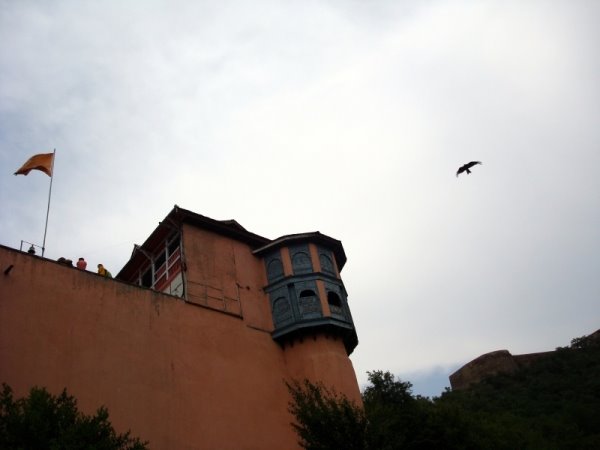
  • Shankaracharya Temple, 1942
  • Backwater of Dal Lake, 1941
  • The Maharajah’s State Barge, 1873
  • A Kashmiri grocery store or Kiryan’wan
  • The daily life of Kashmiri Woman in rural Kashmir
  • A Sketch of Floating Gardens of Kashmir. These are known as raadh in Kashmiri
  • Women working in field, weeding, while a royal guard looks on.
  • Papier machie work in progress
  • The weir at Chattabal, a suburb of Srinager ,1934. That’s the place where I was born.
  • Habakadal, Srinagar
  • On the Dhul canal with Tukht (throne), 1864-68 by John Burke.
  • The bank of river Jhelum, 1937

-0-

The pictures (towards the end) having the watermark India Pictures are from the website IndiaPictures 
. *Most of these photographs were taken by famous photographer Ram Chand Mehta  for Royal Geographical Society in 1930 and 1940s.

Also thanks to those that I may have missed!
-0-

V.S. Naipaul in Kashmir

During calmer times, Vidia wrote to his family from Hotel Liward. He told Mira and Savi that the Kashmiris, ‘barring the Tibetans, are possibly the dirtiest people in the world. They very seldom wash…They associated – like the Indians of Trinidad  and our family – cleanliness with godliness; only on religious days, therefore, they wear clean cloths…They have nevertheless a tremendous charm; perhaps they have this charm because of all their faults. Certainly there are few things more attractive than the friendliness and broad smiles of the Kashmiri children.’

The World is What it Is: The Authorized Biography of V.S. Naipaul by Patrick French, pp. 228

Patrick French in his brilliant ‘official’ biography of V.S. Naipaul quotes the above lines from a private letter sent by Naipaul to his two sisters while he was visiting Kashmir in 1962. Vidiadhar Surajprasad Naipaul stayed in the valley for around five months, staying well into the first few months of 1963. During his trip to Kashmir, stayed at Liward Hotel (later corrected to ‘Leeward Hotel’ in his 1990 book India: A Million Mutinies Now) built on the bank, and in the middle of Dal Lake. In this “Doll’s House on the Dal Lake” Naipaul wrote a short novel called Mr. Stone and the Knights Companions. Turning away from his usual West Indies settings for the first time, Naipaul gave this short novel an English setting.

Mr. Butt – the owner of Hotel Liward and his helpful nephew Aziz and Kashmir later found place in Naipaul’s An Area of Darkness written in 1964. The book also had an account a physically daunting and hazardous journey to the Amarnath cave that he took on the advice of Karan Singh.

Naipaul again visited Leeward hotel, Mr. Butt and Aziz in 1989, just before Kashmir blew up with unprecedented violence. This time he was working on India: A Million Mutinies Now (1990). The hotel, now, had got a new (present) building. 

-0-

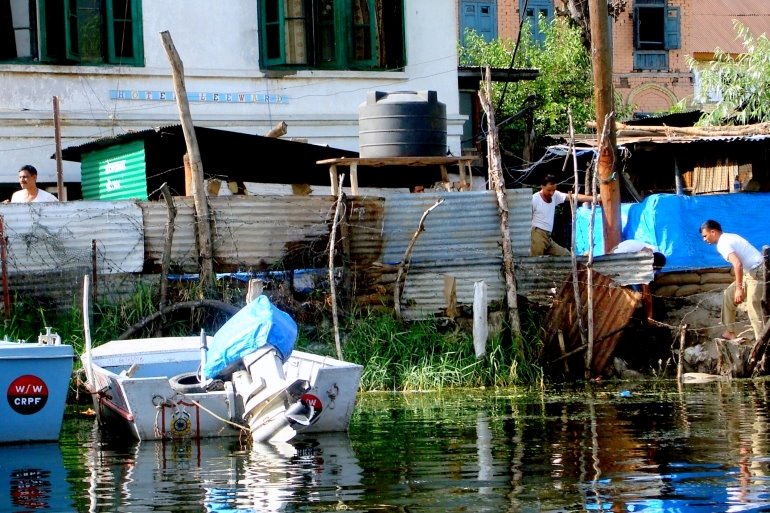
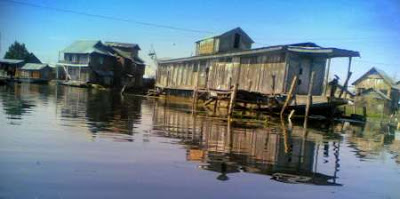
Hotel Leeward, Dal Lake, Srinagar, Kashmir
Photograph taken by me in June 2008.
Hotel Leeward is now a big military bunker for C.R.P.F (Central Reserve Police Force)
At that moment I didn’t know I was looking at the Hotel Leeward.
I took the photograph because of: sand bunkers, tin roofs, tin walls, barbwire, meditating ‘high speed’ boats and rested military men, in their clean white undershirts and khakis, unclogging a drainage pipe that goes into the lake. It is a beautiful lake.
While searching for a photograph of the hotel for this post, I realized I already had one with me.

-0-

Photographs of Kashmir from 19th and early 20th Century

Found a great flickr album of vintage photographs of Kashmir from 19th and early 20th Century.

The uploader of the great album Richardasplen, says:

I’ve had them for over 20 years. They were to be thrown out as junk. The Albums were in an appalling state of repair. Each Photo had to be lifted from it’s rotting support to be saved.They came into my possession with a pile of books, equally rotten, given by a friend. There are 2 Albums, the first produced in the early 1890’s, the second between 1905- 1910/12.This second album has been annotated on the reverse of each photo, the first unfortunately not, so I’m unsure where most were taken.
The collection consists of over 200 photos.

The photographs are probably by Fred Bremner.But, a lot of them are never seen before kind of stuff

Here is the link to the album of old photographs

And a big thanks to Richard!

-0-
Mattan. Probably 1910.

-0-
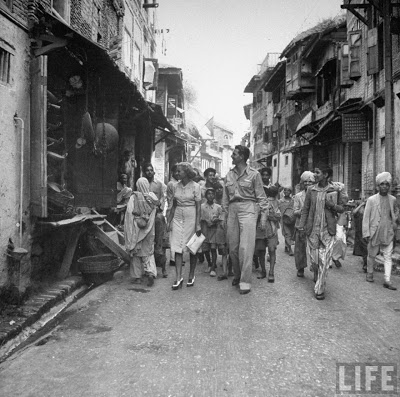
Kashmir in Life Magazine Photo Archives

Google recently announced “the availability of never-before-seen images from the LIFE photo archive. This effort to bring offline images online was inspired by our mission to organize all the world’s information and make it universally accessible and useful. This collection of newly-digitized images includes photos and etchings produced and owned by LIFE dating all the way back to the 1750s.”

Curious, I looked for old photographs of Kashmir and came across some unseen gems like:

US Soldier Vaden Carney and his date Pam Rumbold (CL), walking the streets of Kashmir.
Location: Kashmir, India
Date taken: 1943
Photographer: William Vandivert

In this photograph taken in1943, one can see a typical Srinagar suburban street. Looking at this photograph, one can say that these street have changed very little since then.

Check out the complete set of photographs of this American couple enjoying their time in Kashmir

It’s an unbelievably large collection of more than 200 photographs. A bulk of them were taken by photographer Howard Sochurek in 1951.

Along with capturing life scenes from Kashmir(see the beautiful photograph of a bunch of Kashmiri kids with their beloved Kandis ‘fire pots’), these photographs also give hints to the political environment of the time. There are photographs of “Free Kashmir” rallies in Pakistan, Kashmiris preparing to defend themselves against Kabaili intruders, UN peace folks, then there are photographs of political entities of the time like Sheikh Abdullah in better times and the young prince Karan Singh. The only color photographs of Kashmir in this collection of Life are by James Burke (died in 1964 after falling from a cliff while shooting a photo essay in the Himalayas) and are titled ‘Nehru in Kashmir’. The curious one in this set is: A NC (National Confrence) organized boat procession (were quite popular at the time) with NC and Indian flags going down the Jehlum river in Srinagar to welcome Nehru. No date is given , but were most probably taken during Nehru’s visit to Kashmir in May 1953 just before the time Bakshi Ghulam Mohammad became Prime Minister of Kashmir. There are also photographs of the pro- Abdullah protests that followed.

You can browse this entire wonderful unseen Kashmir collection here

Hari Parbat, in 19 images, 20 years later

video link

About the video presentation:
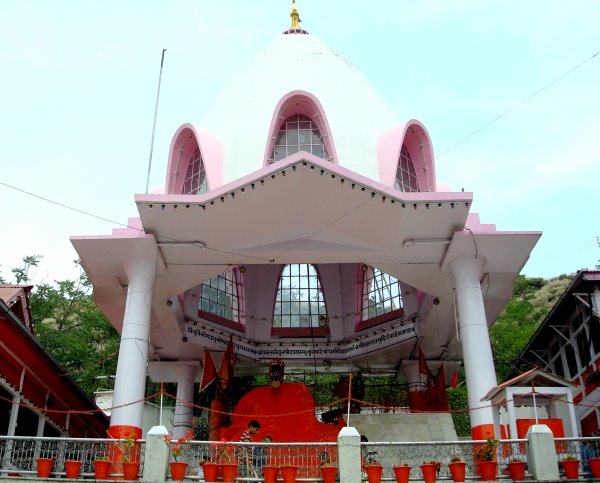
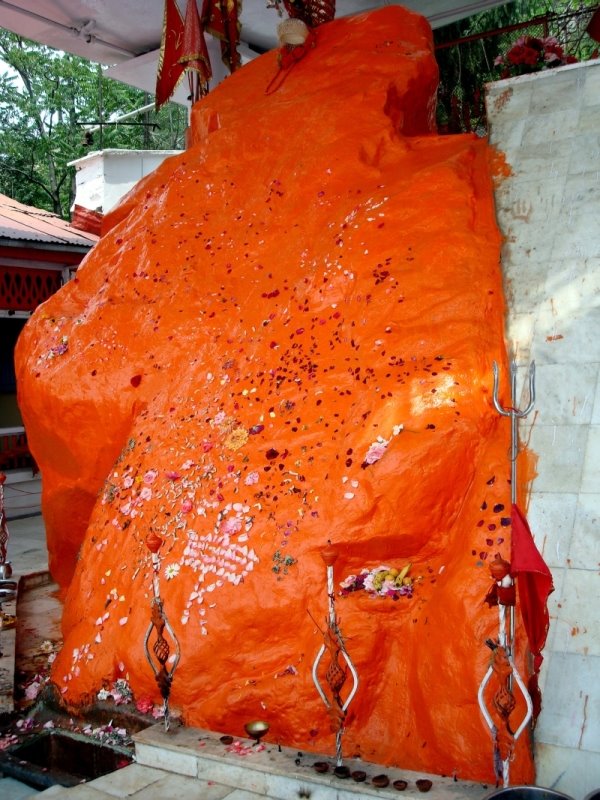
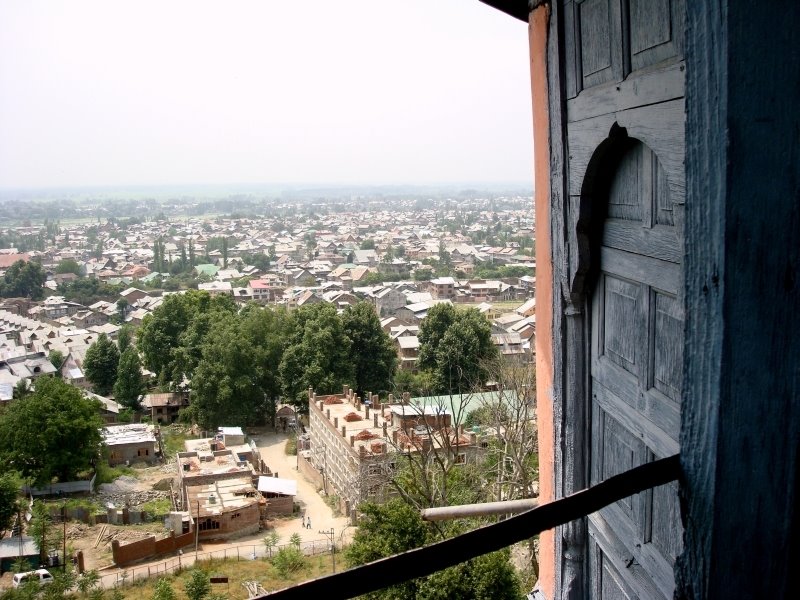
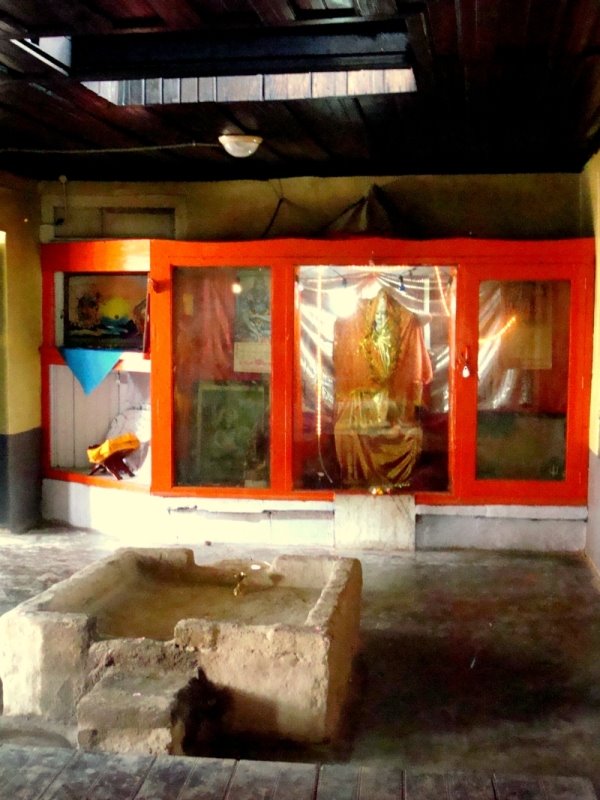
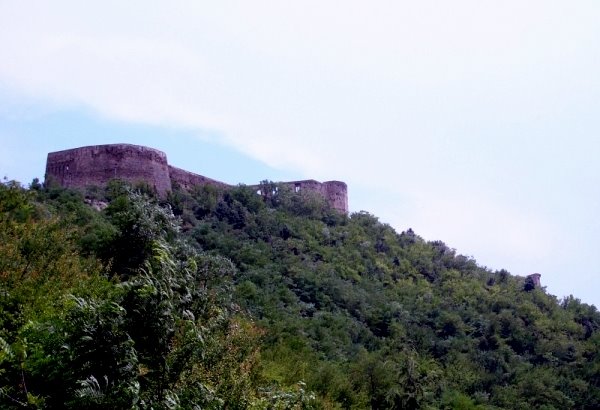
Photographs of Chakreshwari Sharika Devi temple at Hari Parbat, Srinagar, Kashmir.
All Photographs taken by me in June 2008.
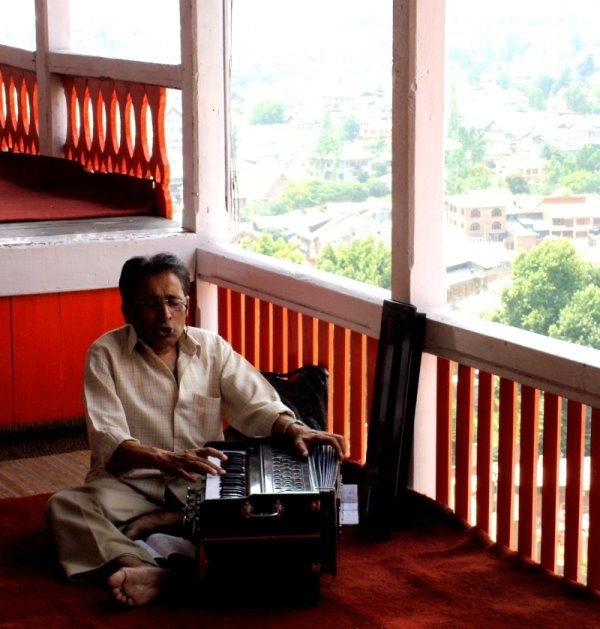
Sound: A Kashmiri prayer (aarti/bhajan) in praise of Goddess Tripura Sundari. Recorded live at Kheer Bhawani shrine Kashmir. 

-0-

Visit to parbat usually meant a visit to the big red rock at the top of the hill and/or a trip around the hill.

-0-

Five ancient hymns, collectively known as Panchastavi are still popular among Kashmiri Pandits.

Dress up like a Beautiful Kashmiri!

The statistics for this blog reveal that a lot of people end up at my blog looking for two particular things, their queries can be summarized in following lines:

  • “How to dress up like a Kashmiri?”

and

  • “How Beautiful Kashmiri Girls!

The reason they are directed here:

and

  • My post on fables of kashmiri Beauty. Here, in a long series, I looked inside journals of early western travelers to Kashmir and tried to find out how the stories of beauty of Kashmiri women started and spread in India and around the world.

Both these posts do not offer whta people are actually directed here looking for. Most people looking for beautiful kashmiri girls actually stay on the fable page for maximum 34 secs before they hop on to some other hyperlink.

So…
I am going to offer some more of what no one is looking for:

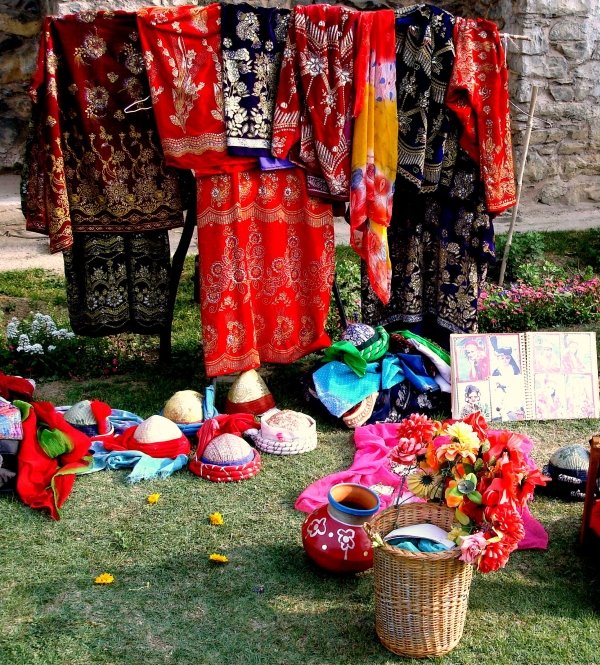
Taken at Pari Mahal, June 2008

A photographer’s complete set up for the tourists and visitors to dress up like an authentic Kashmiri.there are dresses for man, women, girls, boys and children. Hmmm…those head gears for men look a bit suspect.

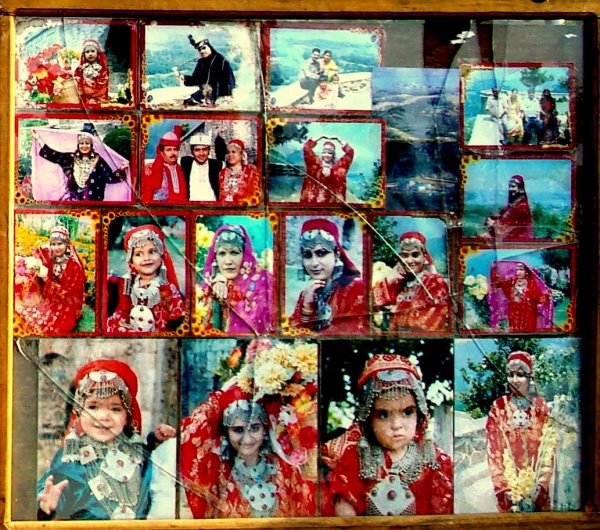
A photographer’s display album. Lucky few get featured here. A memento for posterity. You were in Kashmir and look Oooh…so much like a real Kashmiri.

Trip to Zeethyar Temple, Srinagar

 June, 2008:
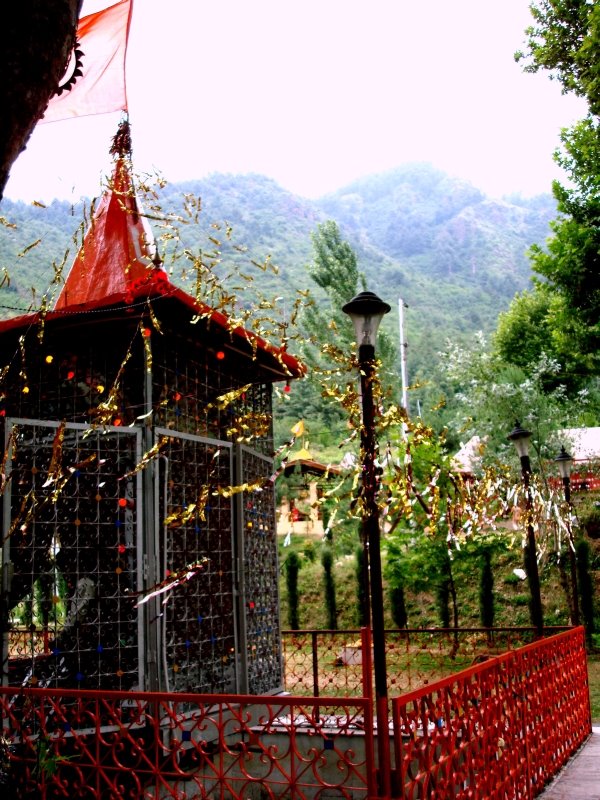
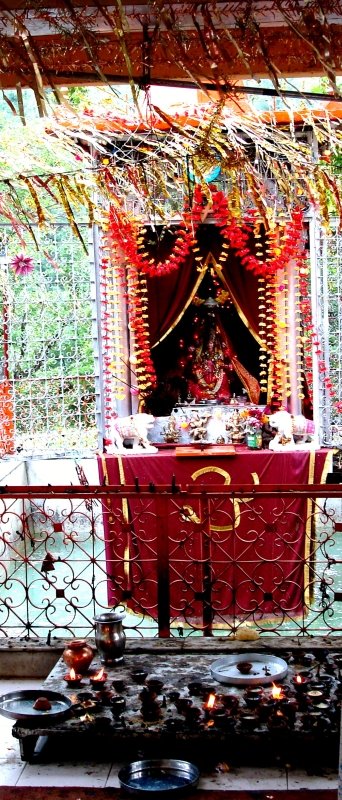
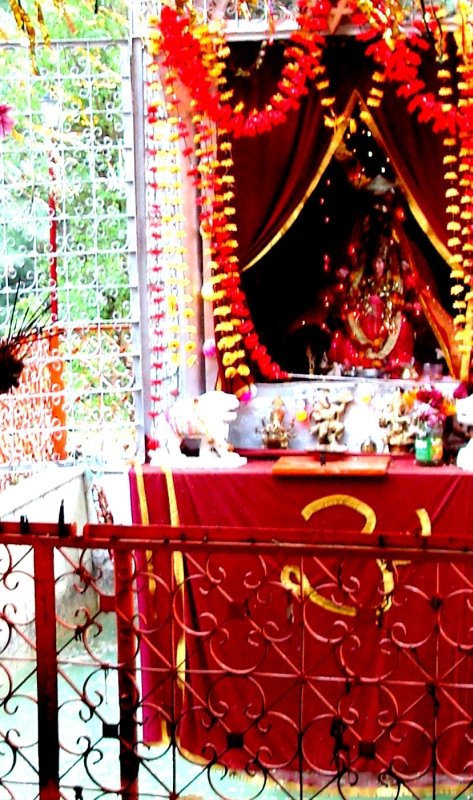
Zeestha Devi temple at Zeethyar ( Zeeth’yar/Jaishthethwar Shrine) in interior Srinagar at the foothills of Zabarwan mountain range. Earlier, one had to trek to this far off spot. But, now one can easily drive right up to the steps that lead to it. 

Zeestha Devi Temple Spring.

Unlike, Khir Bhawani spring, the water here is stagnant and needs to be cleaned frequently. And unlike Khir Bhawani Shrine and like the Chakrishwar temple atop Hari Parbat, meat -(particularly tcharvan (fried Liver) with Taher(turmeric yellowed rice), can be consumed here.  

Zeestha Devi. A lot of pandit families used to take Taher–charvan here. Government, circumventing few rules, on the initiative of a few pandit high officers, has recently built beautiful guesthouses on the slopes surrounding the temple.These guest houses are run by a trust. When I visited the place, it being a hindu, Indian tourist season – Summer, there were also a few non-kashmiri vendors selling Kehwa and frying thin Luchis in oil.

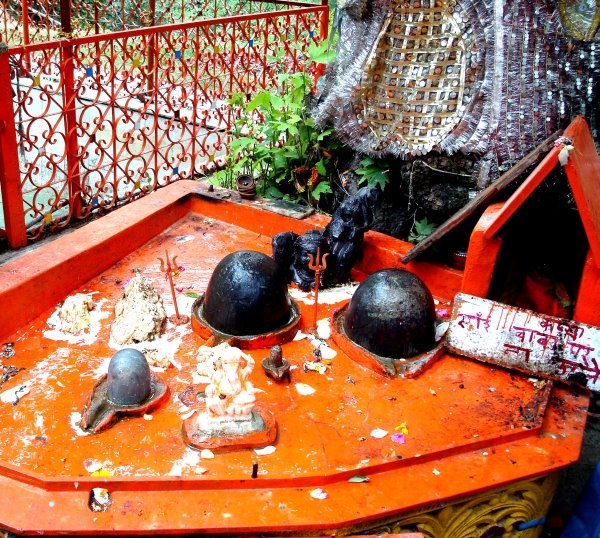
Gods, old and new, under the tree.

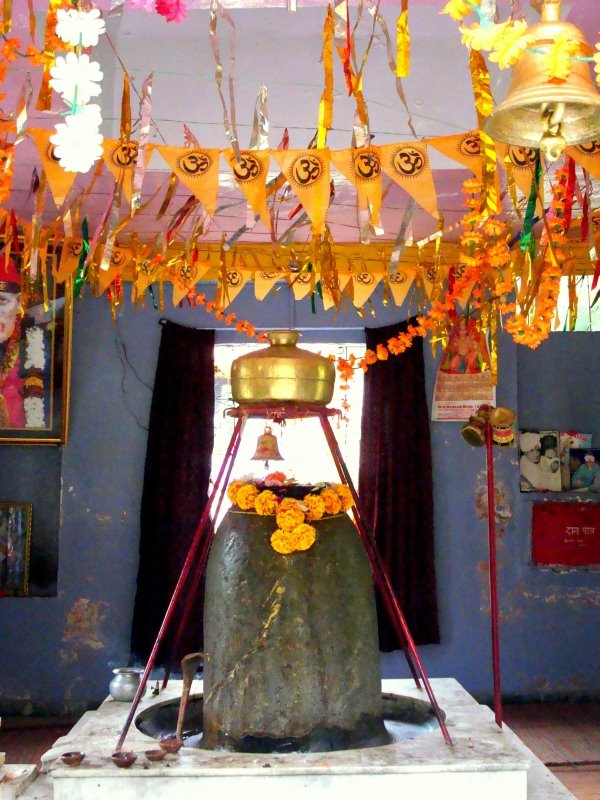
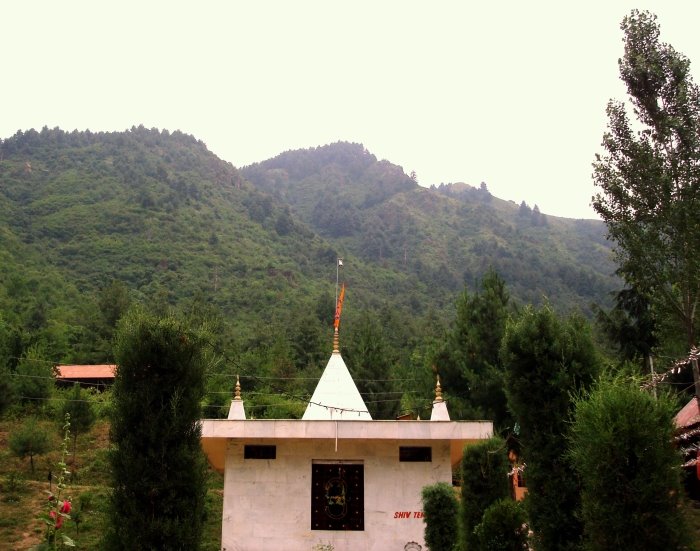
Shiv temple at Zeethyar against the back drop of Zabarwan hills.

A dense forest covers the nearby slopes and is home to a number of wild animals. A cousin of mine visited the place in 2001 and witnessed a very funny scene: A BSF guard on duty near the gate was regaining consciousness after having suffered a fear induced fainting attack. Moments ago, he had been approached by a leopard.

This Shiv Ling was earlier located at Ganpatyar temple and was moved to Zeeth Ya’r in around 1988. Most people remember it as Shiv-ling with a crack. 

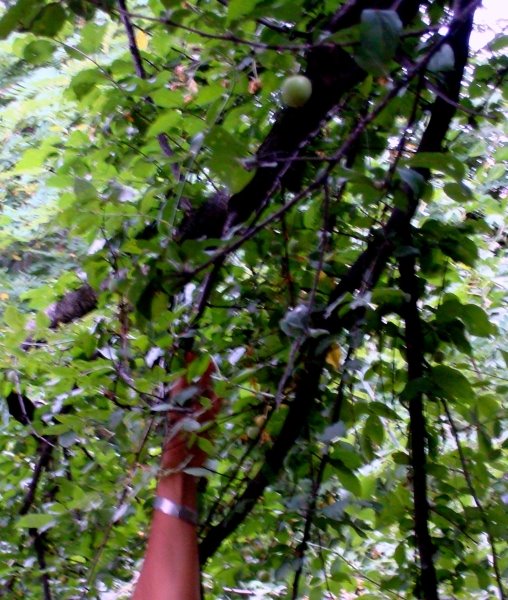
An old habit of picking gor-da’yel (some sort of local citrus fruit) from the wild trees near the entrance to shrine. Gor-da’yel are meant to be consumed after cooking. We took a lot of them and did cook and ate them later.

-0-
All Photographs taken by me in June, 2008.

George Harrison in Kashmir

George Harrison
We were talking – about the space between us all


And the people – who hide themselves behind a wall of illusion

Never glimpse the truth – then it’s far too late – when they pass away

Lennon had been making comments on Christ and Christianity; and George was taking a keen interest in all things India. These were tough times for The Beetles: there were even talks of retirement.

In July 1966, The Fab Four arrived at Delhi on what was to be the band’s first visit to India; it was a brief visit, and Harrison famously bought a Sitar from a music store in Connaught Circus, Delhi (now better known as Connaught Place or just CP, and the shop was Rikhi Ram and Sons.).

In September, seeking Sitar lessons from maestro Ravi Shankar, George Harrison returned to India on a six-week trip along with his wife Pattie Harrison (who later married Eric Clapton). He stayed at Taj Mahal Hotel in Bombay (now Mumbai) and commenced taking lessons from Ravi Shankar; but soon realized that he was too famous even in India: when mobs of Indian Beatles fan started descending to the Hotel, he decided it was time to move to a place that offered anonymity and peace. Kashmir with its natural beauty and general inaccessibility proved to be the perfect place.

Once in Kashmir, he moved into the retreat of the famous Kashmiri houseboats (invented at the start of the century for the luxury of European tourists) that still line the Dal Lake. In the serene background of still waters of Dal, for the next few weeks he started learning Sitar from Pandit Ravi Shankar, and this was the only extended period of training that Harrison received from Ravi Shankar. He practiced Hatha Yoga (to get over the discomfort of having to sit on the floor with the Sitar), he started reading Paramahansa Yogananda’s Autobiography of a Yogi and Vivekananda’s Raja Yoga. This was the start of his life long affair with Hinduism; and the immediate impact of the visit was for the world to see in the next Beetles’ album Sgt. Pepper’s Lonely Hearts Club Band. It was for this album that George Harrison created the beautiful song Within You Without You.

And the time will come when you see we’re all one,

and life flows on within you and without you.

Although the song did start the fashion of the ‘Indian sound’, generated western pop interest in ‘Indian thought’ and sent a million back backers on pilgrimage to Kashmir*; but the fact remains that the song, unlike its many successors, in many ways sounded like an outcome of genuine devotion to Indian music and thought.

-0-

*

George Harrison stayed with Clermont Houseboats, a famous tourist establishment (their office right next to Sheikh Abdullah’s grave)in Kashmir that over the years has played host to eminent guests like actress Joan Fontain, violinist Yehudi Menuhin, actor Michael Palin, former U.S. Vice President Nelson A. Rockerfeller and many more.

People still go to the place and look for the particular houseboat in which George Harrison stayed. Last year, Peter Foster, former South Asia Correspondent of Daily Telegraph, wrote about his trip to Kashmir and finding the George Harrison houseboat, now decrepit and sinking .

-0-

‘Hippie’yo kay lambay lambay baal’

It’s a singsong line that I, while growing, had to hear every time I indolently would refuse a visit the barber, naeevid.

Hippies have long,

really long hair.

-0-

Junoon in Kashmir:

Kashmir Valley on 25th May, 2008

According to the official Junoon website: the concert, to be organized by the non-governmental organization SAF (South Asia Foundation), will be held on the banks of the Dal Lake.

Needless to say, this going to be quite an event; that is, if everything goes well.

A Respite.

From George Harrison to Junoon, a long vacuous journey.

-0-

You may also like to read about Kashmiri Folk music

-0-

The information about George Harrison’s trip to Kashmir is from the book:

The Dawn of Indian Music in the West

By Peter Lavezzoli

-0-

Cross posted at At The Edge

Who hasn’t heard of the Valley of Kashmir?

House Boat on Dal Lake, Srinagar, Kashmir

Photograph: House Boat on Dal Lake, Kashmir. April 2006

Who has not heard of the Vale of Cashmere,

With its roses the brightest that earth ever gave,

Its temples and grottos and fountains as clear

As the love-lighted eyes that hang over their wave

Thomas Moore was born on 28th of May 1780 in Dublin, Ireland to a Roman Catholics couple. From as early an age as ten, he displayed an aptitude for verse. In 1793, the Irish Parliament opened Trinity College, Dublin, to Catholics and the following year Thomas Moore entered the College as a student. He became proficient in French and Italian, but showed little interest in Latin and other classic languages. He was to find fame as a poet, translator, balladeer and a singer.

In  1812, the idea of writing an oriental poem was first seriously entertained by Moore. Lord Byron (whose biography later Thomas Moore wrote) had already made Oriental Tales told in verses famous by inventing characters like Giaour, Abydos and Corsair.  Living at Mayfield Cottage near Ashbourne, Derbyshire, Lalla Rookh: an Oriental Romance took shape as an idea in Thomas Moore’s mind.

The poem earned him £3,150 from the publisher Mr. Longman even before he had started out to write it. At that time it was the largest sum ever offered for a single poem. However, it was a sound investment for the publisher as the poem, first published in 1817,  went through more than twenty editions during the author’s lifetime.

The Poem gets its title from the name of the heroine of the famed tale, Lalla Rookh, daughter of  Mughal emperor, Aurangzeb. Engaged to the young prince of Bucharia (Bukhara, in nowadays Uzbekistan), Lalla Rookh sets forth on a journey to Kashmir where her nuptial is agreed to be solemnized, but on the way she finds herself in a dilemma as she is smitten by love for a poet named Feramorz who regales her with wondrous tales as they journey together to a Kashmr. The dilemma is resolved in the end as it is reveled that the poet and the young prince are the same.

The poem consists of four interpolated tales supposedly sung by the poet: “The Veiled Prophet of Khorassan,” “Paradise and the Peri,” “The Fire-Worshippers,” and “The Light of the Haram.”

It is in the final section titled “The Light of the Haram”,  that we get to see Kashmir of Moore’s imagination.

Since Thomas Moore had never been to Kashmir (and was never to visit it in his lifetime),  in order to write his Oriental masterpiece, he read the works of two of the early travelers to Kashmir. The wealth of footnotes to the poem bear witness to this fact.

One of the traveler whom he read was a French physician named Francois de Bernier. Bernier visited Kashmir in 1664–65  as part of Mughal Emperor Aurangzeb’s Royal entourage and described Kashmir in the letters that he wrote. These letters later published as Travels in the Mogul Empire, A.D. 1656-1668, (Paris, 1670) are widely recognized as the first authoritative source on description of Kashmir. Mughals thought of Kashmir as ‘Jannat’ or ‘Paradise’ and so in the letters of Bernier the subject of Kashmir was covered  under the title: Journey to Kachemire, The Paradise of the Indies.

The other writer that Moore read was a little known traveler in service of the East India Company — George Forster. His “Letters on a Journey from Bengal to England, through the Northern Part of India, Kashmir, Afghanistan, and Persia, and into Russia, by the Caspian Sea” first published as a series of letters in 1798, was an interesting and entertaining narrative account of his two year long overland journey — starting in 1782 and ending in 1784. He traveled from Bengal to St. Petersburg disguised as a Mughal merchant, Turk, Arab and Georgian; and his work also chronicled his difficulties with language, customs and posing as a Muslim. Since foreigners were barred from entering the valley of Kashmir, George Forster tried unsuccessfully to escape the notice of spies of tyrannical Afghan ruler of Kashmir by donning the garb of a Turkish merchant. He left Calcutta on May 23, 1782 on his long and arduous overland journey to England and passed through the north-eastern hilly tracts of the Punjab in February – April 1783.

In 1783, on arriving in Kashmir, George Forster wrote about his first impression about Kashmiris:

On first seeing the Kashmirians in their own country, I imagined from their garb, the cast of their countenances, which were long and of a grave aspect, and the forms of their beards, that I had come among a nation of Jews.

Many other travelers including previous visitor like Bernier had voiced similar opinion on the subject. Bernier in particular discussed the matter at some length in his letters giving the impression that the subject must have been (even then) of a lot of interest to many westerners. Words from most of these works are now quoted in support of all kinds of Jewish-Kashmiri theories.

During his visit to Kashmir, Forster also wrote about the grave situation of Kashmiri Shawl makers. He estimated that in Kashmir there were 16,000 shawl looms in use compared with 40,000 in the time of Mughals. According to John Gorton’s A General Biographical Dictionary:

His information was derived from inquiry and observation than from books; and when he relates what he had seen, his veracity may be trusted; but his historical disquisitions are frequently inaccurate. He returned to India, and was preparing for farther researches in that part of the world, when his death took place at Allahabad, in 1792.

Between Bernier’s account of Kashmir written in 1664–65  and Forster’s account written in 1782 – 1784, the valley of Kashmir had in fact changed a lot. Although the account of beauty of the fabled land remained almost same, yet there were subtle changes in the life of people living in the valley. Forster’s comment on the Shawl makers was just an indication, Kashmir was already well past its glories and yet in the works of Bernier and Forster, Moore found just what he was looking for – an exotic land, and managed to create a compelling image of the fabled beauty of  Kashmir, an image that inspired many European travelers to journey to this distant land. Kashmir was changing again.

In 1835, an early English traveler to Kashmir, Godfrey Thomas Vigne wrote “that Kashmir will become the sine qua non of the Oriental traveller”. * He thought Kashmir could become “a miniature England in the heart of Asia”, a place were the “sports and games of England” could easily be introduced ( a task that was accomplished successfully by Cecil Tyndale Biscoe in around mid 1890s – although with some initial stubborn opposition from local populace of Kashmir, both Pandit as well as Muslim) and a place that could become the stepping stone for the world to “become subject to the power of the Christians”. In 1846 the Treaty of Amritsar saw British gain complete control of the Punjab and proxy control over Kashmir. The present situation in Kashmir can justifiable be traced back to this sardonic act of imperialism and yet it was this treaty that opened the doors of Kashmir to the European travelers. Vigne’s words proved to be true, travelers came in droves. But most of these travelers were not seeking the kind of pleasure that religion provides. British civil servants and military officers came to seek respite from the oppressive Indian summers. Kashmir offered: walk in the meadows and climb in the mountains, it offered music and dance, ride in lakes and rivers, forest for game and of course –  it offered parties.

Kenneth Iain MacDonald  writes in The Literature of Travel and Exploration: An Encyclopedia

With the arrival of summer travelers, Moore’s world came alive, at least textually. The mid 1850s mark the emergence of Kashmir as the Happy Vale replete with the imagery of Moore’s verse. Kashmir was not simply a respite from life on the plains but became a place of romance, and for displaced Europeans, the ‘Eastern’ equivalent of ‘Western’ places of leisure: “Venice of the East”, “Playground of the East”, “Switzerland of the East”.

Most of the travelogues of that era mention Thomas Moore and his poem. Most of the travelers thought of Moore’s verses regarding Kashmir to be true. There were some disappointed travelers too, most famous among them Victor Jacquemont, a French botanist who visited Kashmir in 1831, was so disappointed that he called Moore “a liar” and “a perfumer”.  However, such voices were few and far, in fact even Jacquemont’s opinion was taken with a pinch of salt. For most travelers, Kashmir of Thomas Moore was a reality and providently it became a reality soon after Moore’s death in 1852. By mid 1850s, Kashmir was a holiday destination.

-0-

THE LIGHT OF THE HARAM

Who has not heard of the Vale of Cashmere,

With its roses the brightest that earth ever gave,[278]

Its temples and grottos and fountains as clear

As the love-lighted eyes that hang over their wave?

Oh! to see it at sunset, –when warm o’er the Lake

Its splendor at parting a summer eve throws,

Like a bride full of blushes when lingering to take

A last look of her mirror at night ere she goes!–

When the shrines thro’ the foliage are gleaming half shown,

And each hallows the hour by some rites of its own.

Here the music of prayer from a minaret swells,

Here the Magian his urn full of perfume is swinging,

And here at the altar a zone of sweet bells

Round the waist of some fair Indian dancer is ringing.[279]

Or to see it by moonlight when mellowly shines

The light o’er its palaces, gardens, and shrines,

When the water-falls gleam like a quick fall of stars

And the nightingale’s hymn from the Isle of Chenars

Is broken by laughs and light echoes of feet

From the cool, shining walks where the young people meet.–

Or at morn when the magic of daylight awakes

A new wonder each minute as slowly it breaks,

Hills, cupolas, fountains, called forth every one

Out of darkness as if but just born of the Sun.

When the Spirit of Fragrance is up with the day

From his Haram of night-flowers stealing away;

And the wind full of wantonness wooes like a lover

The young aspen-trees,[280] till they tremble all over.

When the East is as warm as the light of first hopes,

And day with his banner of radiance unfurled

Shines in thro’ the mountainous portal[281] that opes,

Sublime, from that Valley of bliss to the world!

But never yet by night or day,

In dew of spring or summer’s ray,

Did the sweet Valley shine so gay

As now it shines– all love and light,

Visions by day and feasts by night!

A happier smile illumes each brow;

With quicker spread each heart uncloses,

And all is ecstasy– for now

The Valley holds its Feast of Roses;[282]

The joyous Time when pleasures pour

Profusely round and in their shower

Hearts open like the Season’s Rose,–

The Floweret of a hundred leaves[283]

Expanding while the dew-fall flows

And every leaf its balm receives.

‘Twas when the hour of evening came

Upon the Lake, serene and cool,

When day had hid his sultry flame

Behind the palms of Baramoule,

When maids began to lift their heads.

Refresht from their embroidered beds

Where they had slept the sun away,

And waked to moonlight and to play.

All were abroad: –the busiest hive

On Bela’s[284] hills is less alive

When saffron-beds are full in flower,

Than lookt the Valley in that hour.

A thousand restless torches played

Thro’ every grove and island shade;

A thousand sparkling lamps were set

On every dome and minaret;

And fields and pathways far and near

Were lighted by a blaze so clear

That you could see in wandering round

The smallest rose-leaf on the ground,

Yet did the maids and matrons leave

Their veils at home, that brilliant eve;

And there were glancing eyes about

And cheeks that would not dare shine out

In open day but thought they might

Look lovely then, because ’twas night.

And all were free and wandering

And all exclaimed to all they met,

That never did the summer bring

So gay a Feast of Roses yet;–

The moon had never shed a light

So clear as that which blest them there;

The roses ne’er shone half so bright,

Nor they themselves lookt half so fair.

And what a wilderness of flowers!

It seemed as tho’ from all the bowers

And fairest fields of all the year,

The mingled spoil were scattered here.

The lake too like a garden breathes

With the rich buds that o’er it lie,–

As if a shower of fairy wreaths

Had fallen upon it from the sky!

And then the sounds of joy, –the beat

Of tabors and of dancing feet;–

The minaret-crier’s chant of glee

Sung from his lighted gallery,[285]

And answered by a ziraleet

From neighboring Haram, wild and sweet;–

The merry laughter echoing

From gardens where the silken swing[286]

Wafts some delighted girl above

The top leaves of the orange-grove;

Or from those infant groups at play

Among the tents[287] that line the way,

Flinging, unawed by slave or mother,

Handfuls of roses at each other.–

Then the sounds from the Lake, –the low whispering in boats,

As they shoot thro’ the moonlight, –the dipping of oars

And the wild, airy warbling that everywhere floats

Thro’ the groves, round the islands, as if all the shores

Like those of Kathay uttered music and gave

An answer in song to the kiss on each wave.[288]

But the gentlest of all are those sounds full of feeling

That soft from the lute of some lover are stealing,–

Some lover who knows all the heart-touching power

Of a lute and a sigh in this magical hour.

Oh! best of delights as it everywhere is

To be near the loved One, –what a rapture is his

Who in moonlight and music thus sweetly may glide

O’er the Lake of Cashmere with that One by his side!

If woman can make the worst wilderness dear,

Think, think what a Heaven she must make of Cashmere!

Thomas Moore’s Footnotes to the poem:

[278] “The rose of Kashmire for its brilliancy and delicacy of odor has long been proverbial in the East.” –Foster. (Thomas Moore credits George Forster as George Foster. So do many later day writers and historians)

[279] “Tied round her waist the zone of bells, that sounded with ravishing melody.” –Song of Jayadeva.

[280] “The little isles in the Lake of Cachemire are set with arbors and large-leaved aspen-trees, slender and tall.” –Bernier.

[281] “The Tuckt Suliman, the name bestowed by the Mahommetans on this hill, forms one side of a grand portal to the Lake.” –Foster.

[282] “The Feast of Roses continues the whole time of their remaining in bloom.” –See Pietro de la Valle.

[283] “Gul sad berk, the Rose of a hundred leaves. I believe a particular species.” –Ouseley.

[284] A place mentioned in the Toozek Jehangeery, or Memoirs of Jehan- Guire, where there is an account of the beds of saffron-flowers about Cashmere.

[285] “It is the custom among the women to employ the Maazeen to chant from the gallery of the nearest minaret, which on that occasion is illuminated, and the women assembled at the house respond at intervals with a ziraleet or joyous chorus.” –Russel.

[286] “The swing is a favorite pastime in the East, as promoting a circulation of air, extremely refreshing in those sultry climates.” –Richardson.

[287] At the keeping of the Feast of Roses we beheld an infinite number of tents pitched, with such a crowd of men, women, boys, and girls, with music, dances, etc.” –Herbert.

[288] “An old commentator of the Chou-King says, the ancients having remarked that a current of water made some of the stones near its banks send forth a sound, they detached some of them, and being charmed with the delightful sound they emitted, constructed King or musical instruments of them.” –Grosier.

-0-

*

Prithivi Nath Kaul Bamzai made a note of Vigne’s writing in his comprehensive book Culture and Political History of Kashmir – Page 709

-0-

Read:

The complete poem Lalla Rookh

Acknowledgment:

The biographical sketch of Thomas Moore written by William M. Rossetti for The Complete Poems of Sir Thomas Moore.

-0-
Francis Younghusband in his book Kashmir (1908) mentions a town called Hassan Abdal as the location of real Lalla Rookh’s tomb. Hasan Abdal is a small town about 40 km. east of Attock, Paksitan.

-0-

You might also like to read about: